Buscar:gillespie

Estilos
Todo
TAV FALCO - DESIRE ON ICE

Tav Falco

DESIRE ON ICE

12inchORGMLP2322
ORG Music
12.09.2025
  • Prologue
  • Gentleman In Black
  • Cuban Rebel Girl
  • Sympathy For Mata Hari
  • Vampire From Havana
  • Doomsday Baby
  • Crying For More
  • The Ballad Of Rue De La Lune
  • Garden Of The Medicis
  • Lady From Shanghai
  • Chamber Of Desire
  • Epilogue

Im Februar 2024 kamen Tav Falco und seine unvergleichliche Band Panther Burns ins Sam Phillips Recording Studio in Memphis, Tennessee, um ihr 14. Studioalbum "Desire On Ice" aufzunehmen. Das Ergebnis ist eine Sammlung von Falcos Originalkompositionen, die seine gesamte Karriere umspannt und mit ausgewählten Songs verschiedene Phasen der 45-jährigen Karriere von Panther Burns neu beleuchten. Neben der aktuellen Besetzung der Band, darunter Gitarrist/Produzent Mario Monterosso, sind auf dem Album auch ehemalige Mitglieder von Panther Burns und Zeitgenossen wie Jon Spencer, Reverend Horton Heat, Kid Congo Powers, Bobby Gillespie und andere zu hören. Inspiriert von Künstlern, deren Vision und Musikalität gereift sind, gräbt dieses Werk die Unterströmungen einer Psyche aus, die für die Dekonstruktion mythischer Themen wie unerwiderte Liebe, Bruder gegen Bruder, verlorene Fälle und brennende Villen bekannt ist. "Desire On Ice" ist ein momentaner Ausschnitt aus unmittelbaren, schrägen Balladen, die bereits in die Zukunft geschleudert wurden.

Reservar12.09.2025

debe ser publicado en 12.09.2025

Various - Dolores: Salsa & Guaracha From 70's French West Indies

In Guadeloupe, many people think that jazz and ka music are like a ring and a finger. To some extent, the same could be said about so called Latin music and the music played in the French West Indies.

Both aesthetics were born in the Caribbean and bear so many connections that they can easily be considered cousins. In constant dialogue, there are lots of examples of their fruitful alliance and have been for a while. The English country dance that used to be practiced in European lounges came to be called kadrille in Martinique and contradanza in Cuba. They both featured additional percussion instruments inherited from the transatlantic deportation. Drawing from shared feelings about the same traumatized identity – later to be creolized – it would be hard not to assume that they were meant to inspire each other. The golden age of the orchestras that graced the Pigalle nights during the interwar period further proves the point. As soon as the 1930s, Havana-born Don Barreto naturally mixed danzón and biguine music in a combo based at Melody's Bar. In the following decade, Félix Valvert, a conductor who was born and raised in Basse-Terre in Guadelupe, also worked wonders in Montparnasse with La Coupole, which was an orchestra made up of eclectic musicians. Afro- Caribbean performers of various origins were often hired on rhythm and brass sections in jazz bands, which used to enliven the typical French balls of the capital. In the 1930s and onwards, Rico’s Creole Band was one of them.


Martinican violinist-clarinettist Ernest Léardée, who would become the king of biguine music as well as the main figure of French Uncle Ben's TV commercials (a dark stigma of post-colonial stereotypes), had musicians from the whole Caribbean sphere play at his Bal Blomet – and they all enchanted "ces Zazous-là" (according the words of Léardée's biguine-calypso piece). In les Antilles (French for French West Indies), music history started to speed up in the 1950s, when trade expanded and radio stations grew bigger. The Guadelupean and Martiniquais youth tuned in their old galena radio sets to South American and Caribbean music. As for the women traders, les pacotilleuses, they bought and sold goods across different islands (the "passing of items through various hands" was thought to be most pleasurable) and brought back countless sounds in their luggage. Such was the case of Madame Balthazar, who once returned from Puerto Rico with the first 45rpm and 33rpm to ever enter Martinique.

Out of this adventure was created the famous Martinican label La Maison des Merengues, a music business she opened and undertook with her husband and which proved to be a major landmark. At the end of the 1950s, in Puerto Rico, Marius Cultier competed in the Piano International Contest playing a version of Monk's Round 'Midnight. He won the first prize and this distinction foreshadowed everything that was to come. Cultier, the heretic Monk of jazz, was quickly praised for writing superb melodies, always tinged with a twist that conferred a unique sound to his music. It didn't take long for the gifted self-taught musician to get to play with Los Cubanos, making a name for himself thanks to his impressive maestria on merengues.

The rest is history. Besides, in the late 1950s, Frantz Charles-Denis, born into the upper middle class in Saint-Pierre and better known by his first name Francisco, went back home after working at La Cabane Cubaine – a club located rue Fontaine where he had caught the Latin fever. Francisco's music was therefore heavily marked by his Cuban cousins' influence, which gave the combos he led a specific style and also led to renewal. Things were swinging hard in La Savane, located in the main square in Fort-de-France. He set up the Shango club close by and tested out the biguine lélé there, a new music formula spiced up with Latin rhythms. Soon afterwards, fate had him fly to Puerto Rico and Venezuela.

As for percussionist Henri Guédon (percussions were only a part of his many talents), he was born in Fort-de-France in May 22nd 1944, the day marking the celebration of the abolition of slavery. As an old man, he could remember that in " his father's Teppaz, a lot of hectic 6/8 music was constantly playing...". In the opening lines of his Lettre à Dizzy, a small illustrated collection of writings published by Del Arco, he highlighted the huge impact that cubop had on him as a teenage boy, around 1960. He eventually turned out to be the lider maximo in La Contesta, a big band steeped in Latin jazz. He was also the one who originated the word zouk to describe music which brought the sound of the New York barrio to Paris. It was the culmination of a journey that started in Sainte-Marie: "a mythical place for bélé, the equivalent of Cuban guaguancó". In the early 1960s, the tertiary economy developed to the detriment of agriculture. Yet rural life was where roots music emerged in Martinique and in Guadeloupe.

Record companies played a major part in the process of Latin versions sweeping across the islands – before reaching everywhere else. Producer Célini, boss of the great Aux Ondes label, and Marcel Mavounzy, both the head of Émeraude records - a firm which was founded in 1953 - as well as the brother of famous saxophonist Robert Mavounzy, were big names to bear in mind. Although there were many of them - all of whom are featured on this record - Henri Debs was definitely the major figure in the recording adventure. He proved to be so influential that he even got compared to Berry Gordy. In the mid 1950s, when he acquired his first Teppaz, he worked on his first compositions: a bolero and a chachacha. Then, he became the one man who made people discover Caribbean music, from calypso to merengue. He was among the first ones to rush out to San Juan, Puerto Rico, to buy records and distribute them through a store run by one of his brothers in Fort-de-France. He had members of the Fania All Star come and perform there, which he was madly proud about. He was also the first one to pay attention to Haitian music, such as compas direct and various other rhythms which would soon flood the market. As a result, many of the combos hitting his legendary studio would end up boosted by widespread "Afro-Latin" rhythms. However, he never denied his identity: gwo ka drums were given a major role, although they were instruments which had long been banned from the "official" music spheres. The present selection bears witness to such a creative swarming. Here are fourteen tracks of untimely yet unprecedented cross-fertilization: all types of music rooted in the Creole archipelago have found their way, whatsoever, to the tracklisting. Whether originating from the city or being more rural, they all go back to what Edouard Glissant, in an interview about the place of West Indian music in the Afro-American scope, called "the trace of singing, the one which got erased by slavery." "It is so in jazz, but also in reggae, calypso, biguine, salsa... This trace also manifests through the drums, whether Guadelupean, Dominican, Jamaican or Cuban... None of them being quite the same. They all point to the idea of a trace, seeking it out and connecting to each other through it. This is the hallmark of the African diaspora: its ability to create something new, in relation to itself, out of a trace. It may be the memory of a rhythm, the crafting of a drum, a means of expression which doesn't resort to an old language but to the modalities of it." The opening track features one of the emblematic orchestras of this aesthetic identity, criscrossing many music types from the archipelago. The 1974 Ray Barretto guajira – Ray Barretto was a major New York drummer influenced by Charlie Parker and Chano Pozzo – is magnificently performed by Malavoi, a legendary Fayolais group (i.e from Fort-de-France). Additionally, the compilation ends on a piece by Los Martiniqueños de Francisco. It symbolically closes the circle as it is a genuine potomitan of Martinique culture which also functions as a tireless campaigner for Afro-Caribbean music. Practicing the danmyé rounds (a kind of capoeiria) to the rhythm of the bèlè drum, it delivers a terrific Caterete, a kind of champeta of Afro- Colombian obedience which was originally composed by Colombian Fabián Ramón Veloz Fernández for the group Wgenda Kenya. The icing on the cake is Brazilian Marku Ribas, who found refuge in Martinique in the early 1970s, bringing his singing to the last trance-inducing track. These two "versions" convey the whole tone of a selection composed of rarities and classics of the tropicalized genre, swarming with tonic accents and convoluted rhythms. It is the sort of cocktail that the West Indians never failed to spice up with their own ingredients. For instance, the Los Caraïbes cover of Dónde, a famous Cuban theme composed by producer Ernesto Duarte Brito, has a typical violin and features renowned Martinique singer Joby Valente and his piquant voice.


The track used to be – or so we think – their only existing 45rpm. The meaningful Amor en chachachá by L'Ensemble Tropicana, a band which included Haitian musicians among whom was composer and leader Michel Desgrotte, also recalls how Latin music was pervasive in the tropics in the mid-1960s. They were the ones keeping people dancing at Le Cocoteraie in Guadelupe and La Bananeraie in Martinique. Around the same time, another "foreign" band, Congolese Freddy Mars N'Kounkou's Ryco Jazz, achieved some success on both islands by covering Latin jazz classics – such as their adaptation of Wachi Wara, a "soul sauce" by Dizzy Gillespie and Chano Pozo whose interweaving of strings and percussions can have anyone hit the dancefloor. How can you resist Dap Pinian indeed, a powerful guaguancó by Eugene Balthazar, performed by the Tropicana Orchestra and published by the Martinique-founded La Maison des Merengues? It also acts as a symbol of the maelstrom at work. Going by the name Paco et L'orchestre Cachunga, Roger Jaffory used to play guaguancó too: his Fania-inspired Oye mi consejo is one example of his style. Baila!!!!! Dancing was also one of the Kings' focus points. Oriza is a Puerto Rican bomba and a "classic" originally composed by Nuevayorquino trumpeter Ernie Agosto, which reserves major space for brasses, giving it a special sheen.

Emerging from the New York barrios crucible was also La Perfecta, a Martinique group originating from Trinidad, whose name directly references the totemic Eddie Palmieri figure as well as his own band, also called La Perfecta. Here they borrow Toumbadora from Colombian producer and composer Efraín Lancheros and interpret it by emphasizing percussions, which set fire to the track even more than the wind instruments. The same goes for Martinique's Super Jaguars, who use Tatalibaba – a composition by Cuban guitarist Florencio "Picolo" Santana which was made famous by Celia Cruz & La Sonora Matencera – as a pretext for sending their cadences into a frenzy. In a more typically salsa vein, the Super Combo, a famous Guadelupean orchestra from Pointe-Noire that was formed around the Desplan family and had Roger Plonquitte and Elie Bianay on board, adapt Serana, a theme by Roberto Angleró Pepín, a Puerto Rican composer, singer and musician also known for his song Soy Boricua. Here again, their vision comes close to surpassing the original. In the 1970s, L'Ensemble Abricot provided a handful of tracks of different syles, hence reaching the pinnacle of the art of achieving variety and giving pleasure. They played boleros, biguines, compas direct, guaguancó and even a good old boogaloo - the type they wanted to keep close to their hearts for ever, "pour toujours", as they sang along together in one of their songs. Léon Bertide's Martinican ensemble excelled at the boogaloo which had been composed by Puerto Rican saxophonist Hector Santos for the legendary El Gran Combo.


Three years later, in 1972, Henri Guédon, with the help of Paul Rosine on the vibraphone, tackled the Bilongo made famous by Eddie Palmieri. Such a classic!!!!! And so were the Aiglons, the band from Guadelupe: choosing to execute Pensando en tí, a composition by Dominican Aniceto Batista, on a cooler tempo than the original, they noticeably used a wonderfully (un)tuned keyboard in place of the accordion. On the high-value collectible single – the first one released by Les Aiglons under the Duli Disc label – there is a sticker classifying the track under the generic name "Afro". Now that is what we call a symbol. Jacques Denis

No en stock

Haga su pedido ahora y le encargaremos el artículo en nuestro proveedor.


Ültimo hace: 53 Días
Clark Terry - Portaits

Clark Terry

Portaits

12inchEVLP078BL
Rhino
28.08.2025
  • 1: Pennies From Heaven
  • 2: Sugar Blues
  • 3: Finger Filibuster
  • 4: Little Jazz
  • 5: Jive At Five
  • 6: Ciribiribin
  • 7: I Can't Get Started
  • 8: I Don't Wanna Be Kissed

Released in 1989 by the noted audiophile label Chesky Records, Portraits is a testament to the prodigious talent of the legendary trumpeter, flugelhornist, and jazz educator Clark Terry.

The first of four albums for the Chesky label, Portraits was recorded when the St. Louis-born hornblower, then 68 years old, was a much-venerated jazz elder. By then, he had 35 albums under his belt and boasted a resume that included stellar collaborations with Duke Ellington, Charles Mingus, Quincy Jones, and Dizzy Gillespie.

For Portraits, produced by David Chesky, Terry assembled a quartet comprising pianist Don Friedman, bassist Victor Gaskin, and drummer Lewis Nash. With Terry alternating between flugelhorn and muted trumpet while also showing off his chops as an occasional vocalist, the quartet breezes through a blend of familiar jazz standards, like 'Pennies From Heaven,' and Terry's hard-driving original tune, 'Finger Filibuster,' where he shows off his athletic scat singing.

Other highlights include the Louis Armstrong favorite 'When It's Sleepy Time Down South' and 'Sugar Blues,' a nostalgic nod to New Orleans jazz. The album is reissued on 180g One Step Pressing Vinyl LP and SACD Hybrid Stereo.

Reservar28.08.2025

debe ser publicado en 28.08.2025

Lee Morgan - Original Jazz Classics Series Remastered 2025

Lee Morgan war ein amerikanischer Jazztrompeter und Komponist. Als einer der wichtigsten Hard BopMusiker der 1960er Jahre wurde Morgan bereits in seinen späten Teenagerjahren bekannt. Er nahm mit Bandleadern wie John Coltrane, Curtis Fuller, Dizzy Gillespie, Hank Mobley und Wayne Shorter auf und spielte in Art Blakeys Jazz Messengers. Morgan blieb bis 1961 bei Blakey und begann in den späten 50er Jahren, als Leader Platten aufzunehmen. Seine Komposition „The Sidewinder“, die auf dem gleichnamigen Album enthalten ist, wurde 1964 zu einem überraschenden Crossover-Hit in den Pop- und R&B-Charts. Nach einem zweiten Engagement in Blakeys Band arbeitete Morgan bis zu seinem Tod 1972 sowohl als Leader als auch als Sideman weiter. Ursprünglich 1960 auf dem Vee-Jay-Label veröffentlicht, ist ”Here’s Lee Morgan” Lee Morgans 10. Album. Auf der Sammlung von 6 Hard Bop-Stücken wird Morgan von Clifford Jordan (Tenorsaxophon), Wynton Kelly (Klavier), Paul Chambers (Bass) und Art Blakey (Schlagzeug) unterstützt. Diese Neuauflage des Albums erscheint als Teil der Original Jazz Classics Series auf 180-Gramm-Vinyl, das bei RTI gepresst wurde, mit analogem Mastering von den Originalbändern bei Cohearent Audio und einem Stoughton TipOn Jacket.

Reservar27.06.2025

debe ser publicado en 27.06.2025

Primal Scream - Come Ahead LP 2x12"

Come Ahead ist das 12. Album von Primal Scream. 11 neue Songs, mit denen Bobby Gillespie sich darauf
vorbereitet, einige der persönlichsten Songs der Bandkarriere zu veröffentlichen.
Der Songwriting-Prozess für Come Ahead begann 2019. Zu diesem Zeitpunkt hatte Bobby Gillespie noch
keine Ahnung, ob er noch einmal ein Album von Primal Scream machen würde. Zum ersten Mal kamen
die Texte vor der Musik. Die Geschichte kam zuerst. Bobby schrieb allein, mit einer Akustikgitarre. Die
Ideen flossen schnell, in langen Inspirationsschüben. Dieser Prozess, zusammen mit der Ermutigung durch
Produzent David Holmes, bot einen neuen Einstieg. In Zusammenarbeit mit Holmes und Primal ScreamGitarrist Andrew Innes wurden die Come Ahead-Sessions in Belfast, London und Los Angeles durchgeführt.
„Ich bin sehr aufgeregt über dieses Album, so als würde man seine erste Platte machen. Wenn es ein
Gesamtthema für Come Ahead gäbe, wäre es vielleicht ein Konflikt, ob innerlich oder äußerlich. Der Titel
ist ein Begriff aus Glasgow. Wenn jemand droht, mit dir zu kämpfen, sagst du: ‚Komm schon!‘ Es erinnert
an den unbezwingbaren Geist der Glasgower, und das Album selbst vermittelt diese aggressive Haltung und
Zuversicht. Sie haben da oben ein Wort dafür: gallus. ‚Come Ahead‘ ist auch ein ziemlich frecher Titel.“
Bobby Gillespie

Reservar20.06.2025

debe ser publicado en 20.06.2025

FRANCES WAYNE - Warm Sound (Ltd/Reissue Of Wpcr-25018) LP
  • A1: Early Autumn; Bass – Milt Hinton; Drums – Osie Johnson; Flute – Jerome Richardson; Guitar – Billy Mure; Piano – Billy Rowland, Written-By – Johnny Mercer, Ralph Burns, Woody Herman 3:09
  • A2: Round Midnight; Bass – Milt Hinton; Drums – Osie Johnson; Guitar – Billy Mure; Piano – Billy Rowland; Trumpet – Billy Butterfield, Written-By – B. Hanighen*, C. Williams*, Thelonious Monk 2:59
  • A3: Prelude To A Kiss; Bass – Milt Hinton; Drums – Osie Johnson; Guitar – Billy Mure; Piano – Billy Rowland; Trombone – Urbie Green; Written-By – Duke Ellington, Irving Gordon, Irving Mills 2:58
  • A4: My One And Only Love; Bass – Wendell Marshall; Drums – Don Lamond; Piano – Hank Jones; Tenor Saxophone – Al Cohn; Written-By – Guy Wood, Robert Mellin 3:28
  • A5: In Other Words; Bass – Wendell Marshall; Drums – Don Lamond; Piano – Hank Jones; Tenor Saxophone – Al Cohn; Written-By – Bart Howard 3:51
  • A6: Two For The Blues; Baritone Saxophone – Jerome Richardson; Bass – Milt Hinton; Drums – Osie Johnson; Guitar – Billy Mure; Piano – Billy Rowland, Written-By – J. Hendricks*, Neal Hefti 2:38
  • B1: Blue And Sentimental; Bass – Milt Hinton; Drums – Osie Johnson; Guitar – Billy Mure; Piano – Billy Rowland; Trombone – Urbie Green, Written-By – Count Basie, Jerry Livingston, Max David* 2:52
  • B2: Speak Low; Bass – Wendell Marshall; Drums – Don Lamond; Piano – Hank Jones; Tenor Saxophone – Al Cohn, Written-By – Kurt Weill, Ogden Nash 3:57
  • B3: Oh What A Night For Love; Bass – Milt Hinton; Drums – Osie Johnson; Guitar – Billy Mure; Piano – Billy Rowland, Written-By – Neal Hefti, Steve Allen (3) 2:55
  • B4: You Go To My Head; Bass – Wendell Marshall; Drums – Don Lamond; Piano – Hank Jones; Tenor Saxophone – Al Cohn, Written-By – Haven Gillespie, J. Fred Coots 3:04
  • B5: Caravan; Bass – Milt Hinton; Drums – Osie Johnson; Flute – Jerome Richardson; Guitar – Billy Mure; Piano – Billy Rowland, Written-By – Duke Ellington, Irving Mills, Juan Tizol 3:51
  • B6: Soft Winds; Baritone Saxophone – Jerome Richardson; Bass – Milt Hinton; Drums – Osie Johnson; Guitar – Billy Mure; Piano – Billy Rowlandm, Written-By – Benny Goodman, Fred Royal 2:36
Reservar16.06.2025

debe ser publicado en 16.06.2025

Sahib Shihab & The Danish Radio Jazz Group - OKTAV
  • A1: Di-Da (Sahib Shihab) 5’10
  • A2: Dance Of The Fakowees (Sahib Shihab) 4’14
  • A3: Not Yet (Sahib Shihab) 3’25
  • A4: Tenth Lament (Sahib Shihab) 6’20
  • B1: Mai Ding (Sahib Shihab) 4’50
  • B2: Harvey’s Tune (Sahib Shihab) 3’07
  • B3: No Time For Cries (Sahib Shihab) 3’52
  • B4: The Crosseyed Cat (Sahib Shihab) 3’34
  • B5: Little French Girl (Sahib Shihab) 2’35”

Recorded August, 1965, Copenhagen, Denmark.

Original LP issue: OKTAV – OKLP 111


Sahib Shihab (Edmund Gregory) played with many of jazz’s finest musicians. Shortly after he became one of the first jazz players to change their names due to an Islamic conversion, he joined Thelonious Monk for his Blue Note sessions. He also played with Art Blakey, Dizzy Gillespie, Oscar Pettiforn and Quincy Jones. A unique musician, he was at home in every musical style, from the experimentalism of Thelonious Monk to the more direct hard bop of Art Blakey. Sahib Shihab’s distinctive sound was rooted in his modernist compositions and arrangements, complemented by an intense, soulful playing style.


In 1959 he toured Europe with Quincy Jones after getting fed up with racial politics in USA and ultimately settled in Scandinavia. He worked for Copenhagen Polytechnic and wrote scores for television, cinema and theatre. He remained there until 1973. During this period, he recorded several albums as leader for European labels such as Vogue, Storyville and Futura.


In 1961 he joined The Kenny Clarke-Francy Boland Big Band and remained a key figure in the band for the 12 years it ran. He married a Danish lady and raised a family in Europe, although he remained a conscious African-American still sensitive to racial issues.


This record, on the Danish Oktav label, his second as a leader and also his rarest is a true masterpiece !!!


Personnel :

Sahib Shihab (Baritone saxophone, Flute, Cowbell)

Poul Hindberg (Alto saxophone, Clarinet)

Ib Renard (Baritone saxophone)

Bent Nielsen (Baritone saxophone, Flute, Clarinet)

Niels-Henning Ørsted Pedersen (NHOP) (Bass)

Alex Riel (Drums)

Allan Botschinsky (Trumpet)

Fritz von Bülow (Guitar)

Bent Axen (Piano)

Bent Jædig (Tenor saxophone, Flute)

Niels Husum (Tenor saxophone)

Svend Åge Nielsen (Trombone, Bass trombone)

Torolf Mølgaard (Trombone, Euphonium)

Palle Bolvig (Trumpet)

Palle Mikkelborg (Trumpet)

Poul Kjældgård (Tuba)

Louis Hjulmand (Vibraphone)

Reservar13.06.2025

debe ser publicado en 13.06.2025

JAMES MOODY - Running The Gamut LP

"James Moody gained early fame as a member of Dizzy Gillespie’s big band, with his legendary improvised solo on “I’m In The Mood For Love” which became the foundation for the classic vocalese hit “Moody’s Mood For Love.” A pivotal figure in the bebop era, Moody’s six-decade career showcased his mastery on jazz flute, alto and tenor saxophones, composer and arranger credits, and collaborations with icons such Quincy Jones, John Coltrane and Herbie Hancock. “Running The Gamut” was originally released in 1965, featuring Moody in quintet format alongside Thad Jones (tr.), Patti Bown (p), Reggie Workman (b) and Albert Heath (d). This first ever reissue comes pressed on heavyweight Color Vinyl, just in time for the record's 60th anniversary."

Reservar30.05.2025

debe ser publicado en 30.05.2025

Poncho Sanchez & His Latin Jazz Band - Live at the Belly Up Tavern
  • 1: A Bientot
  • 2: Poncho’s Beat
  • 3: Sabor, Sabor
  • 4: Llegue
  • 5: Night Dream
  • 6: Aunque Tu
  • 7: Poncho In The One Ways
  • 8: Boogaloo Joe
  • 9: Batiri Cha Cha
  • 10: Guachi Guara (Soul Sauce)

Legendary Latin jazz percussionist Poncho Sanchez returns with his 31st recording, Live at The Belly Up Tavern. Recorded at the iconic venue in Solana Beach, California, this electrifying live album captures the raw energy and passion that have defined Sanchez’s storied career.
A GRAMMY Award winner for Latin Soul (Best Latin Album, 1999), Sanchez has spent decades honoring and expanding the Latin jazz tradition. With a discography that includes classics like Soul of the Conga, Latin Spirits, Out of Sight!, and Psychedelic Blues, his music bridges Afro-Cuban rhythms, hard bop, and soul, bringing the spirit of legends like Dizzy Gillespie and Chano Pozo to a new generation.
Following his tribute album Chano y Dizzy! and the dynamic Live in Hollywood, Sanchez once again delivers a masterful live performance, full of infectious grooves, rich storytelling, and blazing solos. Live at The Belly Up Tavern is a must-have for jazz lovers and fans of high-energy, soulful Latin music.

Reservar16.05.2025

debe ser publicado en 16.05.2025

Branford Marsalis - Belonging LP 2x12"

Neu bei Blue Note Records ist mit Saxofonist Branford Marsalis einer der bedeutendsten Jazzkünstler
unserer Zeit. Neben seinen Alben unter eigenem Namen hat er mit Jazz-Legenden wie Miles Davis und
Dizzy Gillespie gespielt sowie wichtige Pop-Alben mitgeprägt. Speziell seine Zusammenarbeit mit Sting ist
legendär.
Marsalis’ Blue-Note-Debüt „Belonging“ ist nicht nur, wie man es von dem Künstler kennt, ein meisterhaftes Modern-Jazz-Album geworden, sondern auch eine echte Überraschung: zusammen mit seinem
Quartett hat er eine vollständige Neuinterpretation von Keith Jarretts gleichnamigem ECM-Album von
1974 aufgenommen.
„Belonging“ ist Branford Marsalis‘ erste Neuveröffentlichung seit 2019 mit seinem Quartett mit Pianist
Joey Calderazzo, Bassist Eric Revis und Schlagzeuger Justin Faulkner. Die vier Musiker beweisen mit „Belonging“, wie die Auseinandersetzung mit einem bewunderten Werk und die Freiheit des Jazz ein neues,
ebenso eindrucksvolles Werk schaffen können.

Reservar28.03.2025

debe ser publicado en 28.03.2025

Igmar Thomas' Revive Big Band - Like A Tree It Goes
  • 1: R&P
  • 2: Levels (Feat. Bilal & Igmar)
  • 3: Speak No Evil (Feat. Myron Walden)
  • 4: Words I Manifest (Feat. Raydar Ellis & Sean Jones)
  • 5: One Of A Kind (Feat. Ben Williams And Nicholas Payton)
  • 6: The Coming
  • 7: Infant Eyes (Feat. Jean Baylor & Marcus Strickland)
  • 8: Thelonious (Feat. Nicholas Payton)
  • 9: Thelonius (Feat. Talib Kweli)
  • 10: Lonius
  • 11: Mark’s Hope (Feat. Mark Whitfield)
  • 12: Fortress Of Hope (Feat. Mark Whitfield)
  • 13: Angst (Feat. Igmar & Marcus Strickland)
  • 14: To Kinda Lounge Around (Feat. Raydar Ellis, Terrace Martin & Nicholas Payton)
  • 15: Runnin Outa Time (Feat. Igmar & Marc Cary)
  • 16: Play It Back (Feat. Dr. Lonnie Smith, Cory Henry & Grégoire Maret)

When the late Jazz impresario and trailblazer Meghan Stabile first launched the Revivalist platform and Revive Da Live concert series in NYC, the goal was to bridge the gap between younger Hip-Hop audiences and traditional Jazz purists. Born from this vision in 2010 was the Revive Big Band, an inventive 20+ piece ensemble led by artistic director, trumpeter, and composer Igmar Thomas. Merging tradition with groundbreaking creativity since its inception, the multi-generational band’s world-class cadre of musicians unites for Like A Tree It Grows. As the Revive Big Band’s official full-length debut, this album represents not only a 14-year timeline of the Revive collective’s journey, but also a deeper tribute to the Black American Music lineage. It’s a celebration of community that uses the timeless power of music to tell a story of cultural legacy, innovation, and artistic collaboration. From original compositions like “R&P” and “The Coming”, to reinterpretations of classic records paying homage to musical legends (e.g. Wayne Shorter, Dizzy Gillespie, etc.) Like A Tree It Grows showcases Thomas’ intricate arrangements that blend Jazz, Hip-Hop, Soul, and a range of genres from the lineage of Black American music. With guest features from Talib Kweli, Dr. Lonnie Smith, Terrace Martin, Jean Baylor, Bilal, and more, the album provides a bridge between past and future, inviting listeners to explore the roots of Black music while reimagining its possibilities.

Reservar07.03.2025

debe ser publicado en 07.03.2025

THE LIMIÑANAS - Faded LP 2x12"

The Limiñanas

Faded LP 2x12"

2x12inchBEC5614669
Because Music
28.02.2025

Following "Shadow People" (2018) and "De Pelicula" (2021) done with Laurent Garnier , The Limiñanas are making their big comeback with their new album entitled "Faded" , whose first single is "Prisoner of Beauty" featuring Bobby Gillespie (Primal Scream), supporter of the band for years. The French psychedelic - garage duo has also gathered on " Faded" for duets artists such as Jon Spencer, Bertrand Belin, Rover, Penny, Anna Jean & Pascal Comelade.

No en stock

Haga su pedido ahora y le encargaremos el artículo en nuestro proveedor.


Ültimo hace: 14 Meses
THE LIMIÑANAS - Faded LP 2x12"

The Limiñanas

Faded LP 2x12"

2x12inchBEC5614668
Because Music
21.02.2025

Following "Shadow People" (2018) and "De Pelicula" (2021) done with Laurent Garnier , The Limiñanas are making their big comeback with their new album entitled "Faded" , whose first single is "Prisoner of Beauty" featuring Bobby Gillespie (Primal Scream), supporter of the band for years. The French psychedelic - garage duo has also gathered on " Faded" for duets artists such as Jon Spencer, Bertrand Belin, Rover, Penny, Anna Jean & Pascal Comelade.

Reservar21.02.2025

debe ser publicado en 21.02.2025

CONFUCIUS MC & SEBASTIAN KEB - SONGS FOR LOST TRAVELLERS

It’s written in the Agreement Terms. There’s no getting out alive in Life. And yet, mankind keeps striving for eternal life; through art, through power, through cryogenics, through singularity. In that misguided quest against the inevitable, we all fall into the category of lost travellers. No one is exempt. In that understanding, Confucius MC and producer Bastien Keb offer no misgivings about the destination on the somber “Time Will Come”: Time will come for all of us / try to take your time.

Songs For Lost Travellers is a collaborative album by Con and Bastien Keb that merges unexplored pathways between rap, folk, and jazz into a spiritual triumvirate. Each genre is a balancing force within the record. The result is an album unlike either artist have made previously, possibly unlike any record in existence. Songs For Lost Travellers opens with bedtime stories and fairytales. Both “Tell Me Lies” and “Fairytale” present the creature comforts that trick us into forgetting the truth. Con’s first words spoken are “tell me lies ‘til I swear I can’t remember” over Keb’s lo-fi plucking that feels like it was lifted from a handheld recorder capturing a nursery mobile above a crib. Third track “Time Will Come” resets the album after acknowledging on “Fairytale” there’s “no nourishment in half-truths / no sustenance in eating lies.”

Honest and direct, Con and Keb imbue Songs For Lost Travellers with knowledge and truth from their lived experiences. There is grief hidden in the notes, an inherent sadness that is balanced with an awareness that grief is a protest against the social machinery of remaining numb. The record lingers in a meditative state, unafraid of restlessness and embracing solitude, with the expectation that peace is just as imminent as death.

The production contains a complimentary authenticity. Neither Con nor Keb bothered much with the professional studio in making Songs For Lost Travellers. Instead they opted for the raw state of their home recordings and first takes, matching the intimacy of being alone and reflective in their creative energies. Room static on “Tell Me Lies” makes it feel like you’ve entered their apartments. The immediacy continues on “Gutters,” as Keb plays guitar while watching the tele and Con hums along to the vocal melody in search of the proper pocket for his verse. Someone snaps their finger to mark a cue, but the snap never returns to the mix to keep time.

More drawn to Keb’s recent folk recordings on the Songs For Lilla EP than his funk roots circa Dinking In The Shadows of Zizou or the cinematic soul of The Killing of Eugene Peeps, Con leaned into the spacial freedom he heard in Keb’s lo-fi production cobbled from field recordings and voice notes. Both artists placed their families into the tableau. Con wrote “Little Man” for his son, hoping to add a positive contribution to the canon of parental rap songs. Later, his son appears at the end of “Paramount” to deliver a passage from Kahlil Gibran’s The Prophet. Keb secretly recorded his mum playing saxophone and sampled his cousin playing sax as well. The result is a near-drumless album (save for “Toulouse” and light tapping on “It Would Speak”) in which Keb’s raw production (plus a few sessions with Kofi Flexxx) gave Con a liminal zone, unencumbered by beats per minute, to craft melodies that turn his philosophical rhymes into mantras.

Perhaps there’s a message in the presence of family? It would be one of many. Con and Keb’s reflective, somber approach to Songs For Lost Travellers does not wallow in the mire. Music is action and it’s taking them through a portal to the other side of grief. We are welcome to join (which is also in the fine print of the Agreement Terms), but first there’s a password in the final song, a single request to answer: Tell me what you care about.

Biography by Blake Gillespie
credits

Reservar14.02.2025

debe ser publicado en 14.02.2025

Don Hunerberg - Phase Murmur

"Self-released avant garde jazz – reissued for the first time! Recalling Kraftwerk precursor the Organisation, or contemporaries like Faust, Hünerberg employs flute, organ, bass and balloon to his DIY compositions.

Over top of Gillespie's nimble, pointillist drumming (he also plays piano and harpsichord), Hünerberg employs flute, organ, bass and balloon (that’s not a saxophone on “Cucumber”). The disorienting opener “Cro Magnon/Two” recalls Kraftwerk precursor the Organisation, or contemporaries like Faust. There’s a strange, disconsolate atmosphere to the proceedings, almost as if the air had been sucked out of a recording session booked for some avant-garde jazz heavies.

Instead of Impulse, Phase Murmur should have been bound for ESP-Disk. Alas, the duo were experimenting out in the relative vacuum of southwestern Ohio. Far from any bustling metropolis or curious record labels, Phase Murmur was truly a DIY affair. Not only did the duo press the LP up themselves (down the road at Cincinnati's Rite Record Productions), but the evocative and mysterious photo on the cover is by Gillespie while the layout, with accompanying poem on the back, was assembled by Hünerberg.

It was on Phase Murmur where Hünerberg first found his voice, and the rest is the sound of history, unspooling on a reel-to-reel tape machine.

Includes new liner notes by Erick Bradshaw (Host of Spin Age Blasters with Creamo Coyl on WFMU)"

Reservar31.01.2025

debe ser publicado en 31.01.2025

Rodney Jones - Articulation LP

The 1978 debut album Articulation meant the start of a fine recording career for guitarist Rodney Jones. Jones’ started working in and around New York with jazz giants Dizzy Gillespie and Tommy Flanagan, while at the same time working with his own quartet. On this album Rodney is accompanied by Wallace Roney III (trumpet), Arthur Blythe (alto sax), Bob Mintzer (tenor sax), Bernadine Davis (flute), Kenny Kirkland (piano), Kenwood Denard (percussion drums) and Bemshi Jones (vocals). The track “Hard New York Swing” also features Benjamin Brown (drums) and Bruce Johnson (bass).

Reservar31.01.2025

debe ser publicado en 31.01.2025

Various - Hua Hua Plays for You Vol. 1

John Gosling (aka Mekon) the English big beat/industrial musician and electronica producer, is set to launch his new label Hua Hua (pronounced wah wah) with an 11-track compilation album this July. A quick scan at some of the featured artists showcases a line up of legends - eighties rap sensation Schooly D sitting alongside Primal Scream mainstay Bobby Gillespie and John’s recently departed punk hero Alan Vega - even Roxy Music’s saxophonist and founder member Andy Mackay makes an appearance. And while John’s electronic alter ego Mekon is always on hand to remix and arrange, he’s far from the only producer behind the proverbial wheel.
“It’s stuff I had lying around and now I am finding ways to get it out of my system,” he says. “It’s all been brought to the world with brilliant new artwork by Isabelle de Jour, who also features on various tracks.”
Gosling is well known as a member of both Psychic TV and Coil (for the album Transparent). Gosling founded the groups Zos Kia with John Balance and Bass-o-Matic with William Orbit before recording as Mekon. He has also remixed under the name Sugar J. And that’s before we get to the fact that he has soundtracked some of the most forward-thinking fashion shows in the world - crafting the soundscapes for Alexander McQueen shows since the show Dante in 1996. Firstly working hand in hand with the late great Lee “Alexander” McQueen, then with his successor Sarah Burton. In the mid-to-late-nineties he was a core member of the group Agent Provocateur along with Matthew Ashman (originally of Bow Wow Wow), Dan Peppe, Danny Saber (of Black Grape) and Cleo Torez. He has also worked with artists such as Roxanne Shanté ('Yes Yes Y'All'), Marc Almond ('Delirious'), and Afrika Bambaataa. His third album “Something Came Up” featured artwork by Alexander McQueen.
John is as passionate about Suicide and Alan Vega and what he describes as “the new stuff”. Besides, he says, “that’s how people listen to music now. I think kids – my kids anyway – listen right across the board. People don’t see genres anymore. So it’s my definition of good music.” It’s safe to say that this is very much Volume 1. “Yes, it doesn’t cover everything and Volume 2 will be completely different.”

Reservar20.01.2025

debe ser publicado en 20.01.2025

Primal Scream - Come Ahead LP 2x12"

Come Ahead ist das 12. Album von Primal Scream. 11 neue Songs, mit denen Bobby Gillespie sich darauf
vorbereitet, einige der persönlichsten Songs der Bandkarriere zu veröffentlichen.
Der Songwriting-Prozess für Come Ahead begann 2019. Zu diesem Zeitpunkt hatte Bobby Gillespie noch
keine Ahnung, ob er noch einmal ein Album von Primal Scream machen würde. Zum ersten Mal kamen
die Texte vor der Musik. Die Geschichte kam zuerst. Bobby schrieb allein, mit einer Akustikgitarre. Die
Ideen flossen schnell, in langen Inspirationsschüben. Dieser Prozess, zusammen mit der Ermutigung durch
Produzent David Holmes, bot einen neuen Einstieg. In Zusammenarbeit mit Holmes und Primal ScreamGitarrist Andrew Innes wurden die Come Ahead-Sessions in Belfast, London und Los Angeles durchgeführt.
„Ich bin sehr aufgeregt über dieses Album, so als würde man seine erste Platte machen. Wenn es ein
Gesamtthema für Come Ahead gäbe, wäre es vielleicht ein Konflikt, ob innerlich oder äußerlich. Der Titel
ist ein Begriff aus Glasgow. Wenn jemand droht, mit dir zu kämpfen, sagst du: ‚Komm schon!‘ Es erinnert
an den unbezwingbaren Geist der Glasgower, und das Album selbst vermittelt diese aggressive Haltung und
Zuversicht. Sie haben da oben ein Wort dafür: gallus. ‚Come Ahead‘ ist auch ein ziemlich frecher Titel.“
Bobby Gillespie

No en stock

Haga su pedido ahora y le encargaremos el artículo en nuestro proveedor.


Ültimo hace: 15 Meses
Paquito D'rivera - Who's Smoking

Paquito D’Rivera's - NEA Jazz Master, multiple Gramm winner, Downbeat Hall of Fame Inductee - gained worldwide attention as member of the Grammy Award winning Cuban group Irakere, a revolutionary ensemble co-founded with Chucho Valdés in the early 1970s. Blending Afro-Cuban rhythms and jazz, the band was a seminal force and marked a new era in Cuban music. His defection to the United States in 1980 was a turning point, as he became an ambassador of Latin jazz around the world, fusing cultures and genres effortlessly.

A decade into his new status, D’Rivera entered a New York studio to record an homage to Bebop.

He enlisted Grammy award winner and Dizzy Gillespie alum James Moody, distinguished straight ahead jazzers Mark Morganelli, Harvey Swartz and Al Foster, and major Latin-jazz players of the day Claudio Roditi, Danilo Perez, and Pedrito Lopez. While his intentions may have been to make an album like “Monk, Bird, and Dizzy” as he states in the liner notes, the results here are undeniably in D’Rivera’s signature style.

The album features a mix of original compositions from featured players, alongside the ensembles take on Coltrane’s “Giant Steps”, and Monks “I Mean You,” all delivered with D’Rivera’s unique perspective and deep understanding of traditional jazz and Latin music traditions.

Reservar15.11.2024

debe ser publicado en 15.11.2024

Bobby Jaspar - Modern Jazz au Club Saint-Germain

Re-mastered from original mono master tapes.

Limited edition 1000 copies.

180 gr vinyl pressed by Pallas in Germany.

Deluxe high-gloss flipback album jacket.

Facsimile reissue using the original cover art.

Double insert using an original photo by JP Leloir from 1955.

Each record has been visually checked to prevent defects.

Recorded December 27 and 29, 1955 at the Pathé Magellan studio, Paris.

Original LP issue: Barclay 84.023.

After hitting Paris in 1950, saxophonist Bobby Jaspar enthralled jazz fans and jazzmen alike with his smooth, elegant playing, with the lyricism of his tranquil phrases heavily influenced by Stan Getz in particular. So when Jaspar began regularly performing with a small ensemble at the Club St-Germain five years later, he adopted the same instrumentation as that of his idol’s illustrious quintet, with Sacha Distel on guitar and René Urtreger on piano in the roles of Jimmy Raney and Al Haig, respectively.

Contrary to what its title might suggest, ‘Modern Jazz au Club St-Germain’ was actually recorded in the studio. It features compositions by Milt Jackson, Dizzy Gillespie and Miles Davis along with a handful of standards, in which the angular aridity of bebop gives way to the generous and yet sensitive idiom of cool jazz.

Jaspar’s premature death in 1963 robbed the jazz world of a promising talent; this record is among his best efforts as a leader. Bobby Jaspar is in top form here !!!

Text – Pierre de Chocqueuse

Bobby Jaspar (Tenor Saxophone & Flute)
Sacha Distel (Guitar)
René Urtreger (Piano)
Benoit Quersin (Bass)
Jean-Louis Viale (Drums)

Reservar11.11.2024

debe ser publicado en 11.11.2024

Primal Scream - Come Ahead LP 2x12"
También disponible

Black Vinyl

Red Vinyl


Come Ahead ist das 12. Album von Primal Scream. 11 neue Songs, mit denen Bobby Gillespie sich darauf
vorbereitet, einige der persönlichsten Songs der Bandkarriere zu veröffentlichen.
Der Songwriting-Prozess für Come Ahead begann 2019. Zu diesem Zeitpunkt hatte Bobby Gillespie noch
keine Ahnung, ob er noch einmal ein Album von Primal Scream machen würde. Zum ersten Mal kamen
die Texte vor der Musik. Die Geschichte kam zuerst. Bobby schrieb allein, mit einer Akustikgitarre. Die
Ideen flossen schnell, in langen Inspirationsschüben. Dieser Prozess, zusammen mit der Ermutigung durch
Produzent David Holmes, bot einen neuen Einstieg. In Zusammenarbeit mit Holmes und Primal ScreamGitarrist Andrew Innes wurden die Come Ahead-Sessions in Belfast, London und Los Angeles durchgeführt.
„Ich bin sehr aufgeregt über dieses Album, so als würde man seine erste Platte machen. Wenn es ein
Gesamtthema für Come Ahead gäbe, wäre es vielleicht ein Konflikt, ob innerlich oder äußerlich. Der Titel
ist ein Begriff aus Glasgow. Wenn jemand droht, mit dir zu kämpfen, sagst du: ‚Komm schon!‘ Es erinnert
an den unbezwingbaren Geist der Glasgower, und das Album selbst vermittelt diese aggressive Haltung und
Zuversicht. Sie haben da oben ein Wort dafür: gallus. ‚Come Ahead‘ ist auch ein ziemlich frecher Titel.“
Bobby Gillespie

Reservar08.11.2024

debe ser publicado en 08.11.2024

Drahdiwaberl - The Worst Of Drahdiwaberl LP

Die Serie der DRAHDIWABERL-Vinylneuauflagen findet mit dem Album "The Worst Of Drahdiwaberl" ihren krönenden Abschluss.Auf der streng limitierten und nummerierten, farbigen Vinyl (Naturfarbe mit weißen und schwarzen Splatter-Effekten) finden sich dreizehn der größten... Verzeihung - der hässlichsten, schlechtesten und grindigsten Hits der österreichischen Kultformation.Der grausliche Reigen erstreckt sich von "Mulatschag" über den ausgeflippten "Lodenfreak" und "Don't Touch Me There" (mit der wunderbaren Dana Gillespie) zu "Boring Old Fart", "Big Mac Donalds Massacre" und natürlich dem Klassiker "Lonely" mit "Kottan" Lukas Resetarits.Einfach "The Worst Of Drahdiwaberl"Ab 8.11.2024 auf limitierter, nummerierter und farbiger Vinyl!

Reservar08.11.2024

debe ser publicado en 08.11.2024

Peter Perrett - The Cleansing LP 2x12"

Nach dem 2017er Solo-Debüt "How The West Was Won", Perretts erstm Album nach fast 30 Jahren, und dem 2019er Nachfolger "Humanworld, erscheint nun Perretts drittes Solo-Album "The Cleansing" mit Gästen, wie Johnny Marr, Bobby Gillespie, Fontaines D.C.'s Carlos O'Connell uvm.

Nach dem 2017er Solo-Debüt "How The West Was Won", Perretts erstm Album nach fast 30 Jahren, und dem 2019er Nachfolger "Humanworld, erscheint nun Perretts drittes Solo-Album "The Cleansing", ein ambitioniertes Doppelalbum mit 20 Songs.
Neben seinem bewährten Team, bestehend aus seinen Söhnen Jamie (Gitarre/Produktion) und Peter Jr. (Bass) sowie Mitgliedern seiner Live-Band, wird Perrett von einer Reihe von Stargästen unterstützt, darunter Johnny Marr, Bobby Gillespie, Carlos O'Connell von Fontaines D.C. und Dream Wife-Gitarristin Alice Go.
Perretts einzigartige, narkotisierende und verführerische Melodien, sein hinreißender Süd-London-Ton und seine mitreißende Rock-Dynamik verbinden sich nun mit einer größeren Bandbreite an musikalischen Arrangements und lyrischen Anliegen - unter anderem zu Themen wie Kunst, Sucht, Altern, Social Media und Hexenprozessen.


[h] B2 Survival Mode
[i] B3 Mixed Up Confucius

Reservar01.11.2024

debe ser publicado en 01.11.2024

Benny Golson - I'm Always Dancin' To The Music LP

Philadelphian Jazz legend Benny Golson, an American bebop/ hard bop jazz tenor saxophonist, composer, and arranger, has had a long and storied career.

He has played with luminaries such as John Coltrane, Dizzy Gillespie and Art Blakey, to name just a few.

With his 1978 album “I’m Always Dancin’ To The Music,” Golson took a unique turn. Known primarily for his hard bop roots and classic compositions like “Whisper Not”

and “Killer Joe,” Golson steps into the realms of jazz-funk and disco with this release.

The title song is a stellar dance groove, holding heavyweight status among underground soul, funk, and jazz aficionados—a true ‘rare groove’ indeed.

Produced by George Butler, the instrumental hook of this title song has been sampled many times by artists such as Naughty by Nature, Logistics, Leona Lewis, and many others.

This is a real hidden gem and well worth seeking out!

This release comes as a limited edition of 750 copies on light green coloured vinyl.

Reservar18.10.2024

debe ser publicado en 18.10.2024

Art Blakey & The Jazz Messengers - A Night In Tunisia

Art Blakey & The Jazz Messengers - A Night In Tunisia
Dieser Albumklassiker ist ein Paradebeispiel dafür, wie Art Blakey den jungen Talenten in seiner Band eine
Plattform zur eigenen Entfaltung bot. Er lässt sie nicht nur ausführlich in ihren Soli zu Wort kommen,
sondern vertraut auch blind auf ihr Können als Komponisten. Einzige Ausnahme im Repertoire ist der
Bebop-Klassiker von Dizzy Gillespie, der diesem Album aus dem Jahr 1960 seinen Titel verlieh.

Reservar18.10.2024

debe ser publicado en 18.10.2024

Nothing In Rambling - Live At Bush Hall	LP

Captures a night at London’s well known vintage venue Bush Hall when the stage was shared with Jerron ‘Blind Boy’ Paxton. Takes you on a musical journey through Mississippi and Louisiana performing music by artists such as Memphis Minnie, Blind Boy Fuller, Rev Gary Davis. Acoustic duo project of Sister Suzie and Andy Twyman. Part of a growing movement in the UK presenting stripped back acoustic blues. Be ready to be transported back to the 1920s with a show of early folk blues evoking the playfulness, power and soul of the music and the people who created it. The duo are singer/songwriter, guitarist, occasional member of Dana Gillespie’s Blues Band and sometime one-man-band Andy Twyman, and Sister Suzie, singer/songwriter and frontperson of The Right Band; both busy and popular artists in their own right. They have toured the UK and Europe extensively.

Nothing In Rambling as the project name is taken from a Memphis Minnie song which Sister Suzie describes as “very poignant – and like so many in that era, it sounds deceptively cheery and upbeat, but the lyrics are dark, telling a tale of danger and bravery in taking to the road rambling especially as a black person. and the struggles that women, especially black women, faced in that era.” Sister Suzie published a dissertation “Women In The Blues, Pre-1960’ detailing the struggle that women, especially black women, had against the ‘patriarchy’ and in their own sexual liberation. The latter element was often written about observing the ‘racy’ side of life, and on songs such as ‘Me And My Chauffeur’ and ‘Kissing In The Dark’ Sister Suzie takes the cue to deliver with particular juke joint panache. PRESS / ADDITIONAL SALES POINTS: Launched at The Sound Lounge (Sutton) September 12th - Feature published in September issue of Blues In Britain magazine - Reviews in Rock n Reel, Blues In Britain, Blues Matters - Radio play on IBBA and RMR stations - Live shows, and Festival appearances through 2024 – Red Rooster, Ealing Blues, Upton Blues, Tenby Blues, Glastonbury

Reservar11.10.2024

debe ser publicado en 11.10.2024

Sahib Shihab - Summer Dawn

It is summer dawn . . . and you are alone. Here is music for your strange mood. The piano starts the first track, slow tempo beat, a strict beat, a swinging beat. Lillemor—here minor harmonies give the tune a rural, romantic feeling of some place in Spain or France. The tempo changes to medium fast—the flute solos. Light phrasing contrasts beautifully to the earthy, swinging beat of the rhythm section and the repeating piano figures. The trombone adds a new color, a counterpoint of sound and phrasing, backed by the pulsating beat of this wonderful rhythm and the driving piano. Summer dawn . . . This music has more to offer, because it shows the personality of Sahib Shihab at its best. Sahib is a universal musician who reflects musical experiences in jazz since the end of the thirties. He lived through the important periods of modern jazz with his heart and mind wide open toward everything that was good music, regardless of being termed "Mainstream", "Bop", "Cool", "Westcoast", "Eastcoast", "Hard Bop'', et cetera. When you listen closely to his music, you will find traces of all these, but they are immersed in his deep musicianship and his true jazz personality. Sahib Shihab's background reads like the record of a master of advanced studies. Furthermore he played and collaborated with the coolest jazz musician of that period. Above all let's name Budd Johnson, Theolonius Monk, Tadd Dameron, Milt Jackson, Dizzy Gillespie, Illinois Jaquet, Elmer Snowden, Luther Henderson, Larry Noble, Fletcher Henderson, Roy Eldridge. In his early professional years, Sahib was heard mostly on alto sax; later, more often on baritone sax and flute. Today, his name is inseparably connected with these two instruments. The unity of his jazz performances is not alone bound up with the com¬positions and the arrangements of Sahib Shihab, though in their understated simplicity they have a melodic beauty that is seldom found in jazz of today. The rhythmical subtleties add to the overall qualities of being relaxed vehicles for free-blowing, but there is an immediacy that you hear and feel every moment when listening which defies analysis. The playing of the rhythm section helps greatly to promote the sense of flux and contrasting constant renewal that makes listening to this record so invigorating an experience. Well, this is no surprise, with Kenny Clarke as the nucleus of the rhythm group. Kenny 'Klook' Clarke is a major figure and contributor in jazz, one of the founders of modern jazz, and is ranked as one of the all-time great drummers. He influenced a whole generation of musicians with his playing, though living in Paris since the middle of the fifties somewhat dimmed his name to the general American public. Nevertheless, his name alone will assure a connoisseur to expect top class musical experiences. Talking of the rhythm section we have to name Jimmy Woode's bass, which together with Kenny's drumming, is the driving force for the group and the reliable harmonic anchor for the improvisors. By the way, Jimmy has been with the Duke quite a while, and this alone is an award for extraordinary craftsmanship and artistry. The good sounding rhythm with its full-bodied color is also a result of the added bongos of Joe Harris, who manages to stay out of the way of the players—a quality not often found with drummers—but his playing is felt through the set. There are two members of the group not yet mentioned. Two Europeans, pianist-composer-arranger Francy Boland from Belgium, and trombonist Ake Persson from Sweden. Francy Boland this time is a sideman, though normally he is a leader of recording sessions, both as composer-arranger and as musical director of the band. In the fifties he was in the States writing arrangements for different name-bands, such as Basie and Goodman. In Europe, he is famous for his swinging modern big band arrangements; and his inventiveness as a writer is reflected in his piano playing. He has the talent of using the right dynamic approach every moment, thus making his playing helpful to soloists and interesting for listeners as well. Ake Persson has been Scandinavia's out-standing trombone player for about ten years. There are only a few trombonists in Europe who might match his talents at times, but they lack the consistency of his playing. He is impressive, whether playing in a big band, or whether main soloist in his own small groups. American musicians love the sound of his slide trombone and his easily flowing romantic improvisations, so he often joins American name-bands as they travel in Europe. The music speaks alone . . . , we said it before. You have your soul to feel the beauty, to follow lines and structure, and to enjoy the spiritual excitement. Whether you enjoy the flowing, easy sounding theme of "Please Don't Leave Me", or the climaxing piano solo in the same piece—the bass solo in "Waltz For Seth" or the swinging baritone sax—listen to the first bars of this solo and pay attention to Kenny. Whether you listen to "Campi's Idea", (named after Gigi Campi, the well known Cologne jazz enthusiast who organized this recording) with the romantic flute solo of Sahib, the interesting tempo changes, the piano comping, the moving trombone solo; or to the up-tempo "Herr Fixit", with the cooking Kenny and humorous, driving flute solo, you know that these six musicians where in the right mood, in the right stimulating surroundings to feel what we all feel when it's: SUMMER DAWN.

Reservar04.10.2024

debe ser publicado en 04.10.2024

EGLE MARTIN - EL DOMBE

Egle Martin

EL DOMBE

12inchVAMPI45105
Vampisoul
30.09.2024

Egle Martin enjoyed a long career as a dancer, actress, singer and played an important role in the promotion of Afro roots in Rio de la Plata and in reclaiming Afro-Argentine culture. Her performances were fresh and powerful, showcasing diversity and, later on in her career, her desire to diffuse Afro-Latin American culture. By the time this single was recorded, Egle Martin had already performed in several plays and films; she had already sung with Dizzy Gillespie and the Berlin Symphony Orchestra; she had already released an album with composer and bandoneon player Astor Piazzolla. And she was already beginning to frequent the Casa Suiza, with its gatherings and carnivals in the neighborhoods of San Telmo and San Nicolás in the beautiful Buenos Aires of the 1960s, teeming with happenings and avant-garde galleries. Egle sings in Spanish and her voice dazzles with a very distinctive sound and texture as she performs these rhythms; you can clearly appreciate the freedom and power in her vocals. In 'El Dombe' tenderness permeates the lyrics as she tells the world what this dance and its cadenced rhythm is all about. 'Dombe Bariló' is bolder and more sweeping in scope: the ritual and empowering message is uplifting... Roberto Montiel's arrangements are a prime example of the brilliant fusion of soul, funk and Latin American music, all linked through Afro roots. Originally released in 1970 on Music Hall in Argentina, it has become an elusive and sought-after record over the years, at the top of many collectors wants list due to its amazing dance floor energy. First time 7” reissue. TRACKLIST Side A EL DOMBE Side B DOMBE BARILO

Reservar30.09.2024

debe ser publicado en 30.09.2024

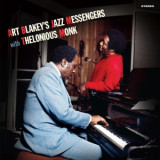
Art Blakey & the Jazz Messengers - With Thelonious Monk

This album marks Thelonious Monk's sole recording as a member of Art Blakey's celebrated Jazz Messengers. The pianist and drummer were very close friends who understood each other well on both a personal and musical level. In fact, Blakey was present on both Monk's first and last studio sessions, spanning a period of 24 years from the 1947 quintet and trio recordings to the last sets taped in London in 1971, when Blakey and Monk were touring with the group called the "Giants of Jazz" (which also included Sonny Stitt, Dizzy Gillespie, Kai Winding and Al McKibbon). With the exception of Johnny Griffin's "Purple Shades", all of the compositions on this album are classic Thelonious Monk tunes.


[d] In Walked Bud [First Version]


[h] Evidence [Solo Piano Version]

Reservar27.09.2024

debe ser publicado en 27.09.2024

Cinema Paradiso - Empty Empty

Empty Empty is Cinema Paradiso's 3rd album. Cinema Paradiso functions as a trio without a leader, consisting of Kurt Van Herck (Brussels Jazz Orchestra, Dizzie Gillespie Big Band, Bert Joris Quartet), Eric Thielemans (A Snare is a Bell, EARR, Talking About the Weather) and Willem Heylen (KRAKk, Aki, Sargam).

After his guest contributions on several tracks during the recording sessions that resulted in the compilation of the first two albums (Volume I and Volume II), Jozef Dumoulin (Lidlboj, The Red Hill Orchestra, True Company) was involved in the entire creation and recording process of Empty Empty.

Now focusing on original compositions (along with some Indian chants and a piece by Claude Debussy), this album also distinguishes itself from the previous two albums by presenting a new sonic landscape. Blending the rich timbres and textures of both the acoustic and electric sonic worlds of the musicians, we were looking to get a strong, direct, full sound that still retains enough detail and acoustic warmth.

The album was recorded and mixed by Joris Caluwaerts (Stuff) at his Finster Studio in Antwerp.

Reservar06.09.2024

debe ser publicado en 06.09.2024

Paul Weller - 66 (Ltd. Remix V12)

Paul Weller – der „Godfather of Brit-Pop“ ist zurück!
„66“ heißt sein neues und mittlerweile 17. Studioalbum, welches zu seinem 66. Geburtstag erscheint. Das
Cover wurde von Sir Peter Blake gestaltet. Der ehemalige Sänger und Gitarrist von „The Jam“ zeigt auf
dem Album seine reflektierte Seite, mit viel Melancholie und dennoch auch einem positiven Kern. Die
12 Songs auf ”66” wurden im Laufe von drei Jahren in Wellers Black Barn Studio mit einer Reihe von
Gastmusikern (Suggs, Noel Gallagher, Bobby Gillespie, Erland Cooper, Duo White Label, Hannah Peel,
Christophe Vaillant, Say She She, Dr Robert, Richard Hawley, Steve Brooks, Max Beesley) aufgenommen.
Paul Weller wurde bisher mit 4 BRIT – Awards ausgezeichnet, einen für „Outstanding Contribution to
British Music“

No en stock

Haga su pedido ahora y le encargaremos el artículo en nuestro proveedor.


Ültimo hace: 21 Meses
Buddy Rich Big Band - North Sea Jazz Concert Series 1978

Buddy Rich (1917 - 1987) was described and announced around the world as 'The World's Greatest Drummer.' Rich is still considered one of the most legendary drummers of all time. A master of his instrument, his technique, energy, and speed were praised globally. The jazz drummer and bandleader began his drumming career as a child. When Rich was 18 months old, he started playing the instrument and later performed as a child, becoming known as 'Traps the Drum Wonder.'

Buddy Rich always sought to surpass himself; the next show was always better than the previous one. Nothing could hinder this goal—not even a broken arm or a heart attack could stop Rich from giving a better performance than the last.
In 1978, Buddy Rich and his 14-piece big band played a spectacular show, and thanks to NSJ Records, NTR, AVROTROS, and MOJO, this legendary concert is now available on LP!

Buddy Rich is one of the LPs that is part of the North Sea Jazz Concert Series. Other concerts in this series feature artists like Dizzy Gillespie, Ray Charles, Dexter Gordon, and Jan Akkerman.

The North Sea Jazz Concert Series will include officially licensed releases that will be released as standard on 180-gram white vinyl in a sleeve of heavy paper and printed on reversed board. The records will be captured in mainly black-and-white artwork by Hans Pol in his signature style of the festival with inspiration from the covers of classic older jazz releases from the Blue Note label, for example. The liner notes are written by journalist and jazz expert Jeroen de Valk.

Reservar20.07.2024

debe ser publicado en 20.07.2024

Cliff Jordan - Cliff Craft LP

BLUE NOTE CLASSIC VINYL EDITION: Mono (Thad Jones) bzw. Stereo (Clifford Jordan), von Kevin Gray gemastert, bei Optimal auf 180g-Vinyl gepresst, im Single-Sleeve.

Der 1986 gestorbene Trompeter Thad Jones ist Jazzfans vor allem durch seine großartigen Arbeiten mit dem Count Basie Orchestra (dem er als Solist, Arrangeur und Komponist von 1954 bis 1963 angehörte) und seinem eigenen Thad Jones/Mel Lewis Orchestra in Erinnerung. Doch er konnte sich auch als Leader kleinerer Ensembles immer wieder glänzend in Szene setzen. Und nirgends besser als auf dem 1956 mit einem All-Star-Quintett aufgenommenen Album “The Magnificent Thad Jones”, mit dem sich der Trompeter endgültig als einer der führenden Musiker und Komponisten des modernen Jazz etablierte.

Als Clifford Jordan 1957 nach New York zog, um im Quintett von Max Roach Sonny Rollins zu ersetzen, eilte ihm der Ruf voraus, eines der größten Chicagoer Talente auf dem Tenorsaxofon zu sein. Noch
im Jahr seiner Ankunft erhielt der 25-Jährige die Chance, drei Alben für Blue Note einzuspielen, auf denen er sein Können unter Beweis stellte. Auf “Cliff Craft”, einer wunderbar entspannten Quintett-Aufnahme, präsentierte Jordan neben drei eigenen Kompositionen auch exzellent interpretierte Klassiker von Charlie Parker, Dizzy Gillespie und Duke Ellington.

Reservar19.07.2024

debe ser publicado en 19.07.2024

Thad Jones - The Magnificent Thad Jones LP

BLUE NOTE CLASSIC VINYL EDITION: Mono (Thad Jones) bzw. Stereo (Clifford Jordan), von Kevin Gray gemastert, bei Optimal auf 180g-Vinyl gepresst, im Single-Sleeve.

Der 1986 gestorbene Trompeter Thad Jones ist Jazzfans vor allem durch seine großartigen Arbeiten mit dem Count Basie Orchestra (dem er als Solist, Arrangeur und Komponist von 1954 bis 1963 angehörte) und seinem eigenen Thad Jones/Mel Lewis Orchestra in Erinnerung. Doch er konnte sich auch als Leader kleinerer Ensembles immer wieder glänzend in Szene setzen. Und nirgends besser als auf dem 1956 mit einem All-Star-Quintett aufgenommenen Album “The Magnificent Thad Jones”, mit dem sich der Trompeter endgültig als einer der führenden Musiker und Komponisten des modernen Jazz etablierte.

Als Clifford Jordan 1957 nach New York zog, um im Quintett von Max Roach Sonny Rollins zu ersetzen, eilte ihm der Ruf voraus, eines der größten Chicagoer Talente auf dem Tenorsaxofon zu sein. Noch
im Jahr seiner Ankunft erhielt der 25-Jährige die Chance, drei Alben für Blue Note einzuspielen, auf denen er sein Können unter Beweis stellte. Auf “Cliff Craft”, einer wunderbar entspannten Quintett-Aufnahme, präsentierte Jordan neben drei eigenen Kompositionen auch exzellent interpretierte Klassiker von Charlie Parker, Dizzy Gillespie und Duke Ellington.

Reservar19.07.2024

debe ser publicado en 19.07.2024

Clarke Boland Sextett - Music For The Small Hours LP

Formed by Kenny Clarke and Francy Boland, the Clarke-Boland Sextett, with the participation of numerous musicians from both Europe and the United States, made significant contributions to the development of jazz in Europe. At the core of this ensemble, the powerhouse sextet consisting of Kenny Clarke, Francy Boland, Sahib Shihab, Jimmy Woode, Joe Harris, and Sadi came together to record the album "Music For The Small Hours" in 1967, and it is now set to be reissued with an obi.

This album spans a wide range of styles, from standards like Burt Bacharach's "Wives & Lovers" to Brazilian and Afro-Cuban influences such as Luiz Bonfá's "Ebony Samba" and Dizzy Gillespie's "Tin Tin Deo." Additionally, it features original compositions like Shihab's "Please, Don't Leave," where he takes on vocal duties. The entire recording exudes a sophisticated and relaxed mood, showcasing the utmost skill of this formidable sextet. "Music For The Small Hours" is a masterpiece that deserves a place in the history of European jazz, boasting the ultimate level of refinement.

Reservar03.07.2024

debe ser publicado en 03.07.2024

Miles Davis - The Miles Style LP

Miles Davis

The Miles Style LP

12inchWNTSC11931B
WNTS
28.06.2024

If I had to do it all over again, I wouldn't listen to records. I very rarely listen to jazz records because they all do the same thing. I only listen to original musicians like Ahmad Jamal and Duke Ellington, musicians like Clark Terry, Dizzy Gillespie, Sonny Rollins and John Coltrane." A true icon, Miles Davis left an indelible mark on the genre through his recordings. "The Miles Style" is a compilation of his masterpieces, the timeless quality of the album and Miles Davis' ability to reshape jazz make it a classic

Reservar28.06.2024

debe ser publicado en 28.06.2024

New Regency Orchestra - New Regency Orchestra LP

Announcing the debut album from one of London’s most electrifying acts, New Regency Orchestra. An 18-piece Afro-Cuban big band, inspired by the musical melting pot of NYC in the 1950s, but with the punch and power of a whole host of London’s best Latin and jazz musicians. Blowing new life into these compositions, the album is a reimagining of some of the finest music from that golden era. From early 1950s René Hernandez and Tito Puente, through to the 1970s salsa of Rafael Labasta and Orlando Marin, produced and performed with fresh fire.

NRO is the brainchild of its artistic director, and the man behind Total Refreshment Centre and Church of Sound, Lex Blondin. Through a long-held passion for jazz, Lex discovered the explosive Afro-Cuban rhythms of mid-1940s NYC via the godfather of Afro-Cuban jazz, Mario Bauzá. A time when two musical worlds collided in a fusion of creativity and energy, jazz luminaries like Dizzy Gillespie and Charlie Parker joining forces with Cuban greats like Machito and Chano Pozo. This vibrant sound was music to dance to and found a home at The New York Palladium, a formative space of freedom and expression that was key to the scene’s development.

Although dance-focussed in their makeup, those early recordings are not often heard in modern club environments and Lex dreamt of retelling their story with a contemporary dynamism. A slice of serendipity followed, as a slot at a new festival opened up and Lex jumped at the chance to make this idea a reality, an 18-piece big band breathing new life into these beloved songs.

Enlisting the expertise of some of the capital’s finest talent, Lex and co-captain Andy Wood, of Como No fame, put together a world-class line-up of talent. Bringing in Eliane Correa as musical director and bandleader, a fluid and interchanging 18-piece band was formed.

The album itself is a hand-picked selection of timeless Afro-Cuban jazz classics, reimagined with NRO’s unbridled energy. It contains ten incredible instrumental tracks including 'Pregon' with its anthemic horn stabs and the addictive head nod bounce of 'Mambo Rama', alongside two scorching vocal numbers in 'Papa Boco' and 'Labasta Llego'. Coupling a heavyweight rhythm section with a wall of horns, they provide a fresh spin on songs from Tito Puente and Chico O'Farrill, René Hernandez through to Rafael Labasta.

“Some of the tunes like Tito Puente’s ‘Mambo Rama’ and ‘Scarlet Mambo’ might sound like they went to a gym as extra drums and bass synth were added to them whilst the tune ‘Sahib & Tito’ is a mix of Tito’s ‘Mambo Buda’ and Sahib Shihab’s ‘Nus’. Our intention is to be both respectful to the innovators and inventors of this incredible music and to pay our dues, but also to add something special from London where the city’s new jazz scene connects with its Latin American musicians and the musical influences around us.”

This pure collective joy, shared experience and music you can’t help but move to.

Reservar14.06.2024

debe ser publicado en 14.06.2024

QUINCY JONES - BIG BAND BOSSA NOVA LP

First exposed to the sounds of Samba and Bossa Nova while
touring South America with Dizzie Gillespie in 1956, Jones recalls
hearing Gillespie sitting-in with a Samba combo at Rio's Gloria
Hotel and how he was fascinated by the thrilling fusion of Jazz and
Samba. Some years later in 1962, he took a stellar big band into
NYC's A&R Studios to record the Big Band Bossa Nova album. It
was the culmination of a dream for Jones, who had never
forgotten the musical experiences he had encountered in Brazil.

No en stock

Haga su pedido ahora y le encargaremos el artículo en nuestro proveedor.


Ültimo hace: 23 Meses
Barney Wilen Quintet - Guilde du Jazz - 1957 LP

Recorded in 1957, Paris.
Original LP issue: Guilde du Jazz J-1239.
When Miles Davis heard Barney Wilen for the first time during a jam session at the Club Saint-Germain in Paris, he exclaimed: “This is the best tenor saxophone I’ve heard in Europe, he plays tenor in an authentic way, much better than many current stars in the States.”

Barney Wilen’s mother was French, his father a successful American dentist-turned-inventor. He grew up mostly on the French Riviera; the family left during World War II but returned upon its conclusion. According to Wilen himself, he was convinced to become a musician by his mother’s friend, the poet Blaise Cendrars. As a teenager he started a youth jazz club in Nice, where he played often.

He moved to Paris in the mid-’50s and worked with such American musicians as Bud Powell, Benny Golson, Miles Davis, and J.J. Johnson at the Club St. Germain. His emerging reputation received a boost in 1957 when he played with Davis on the soundtrack to the Louis Malle film Lift to the Scaffold. Two years later, he performed with Art Blakey and Thelonious Monk on the soundtrack to Roger Vadim’s Les Liaisons Dangereuses (1960). He’s probably the first non-US musician to play at the Newport Jazz Festival – it was in 1959.

In 1957 he made his very first album as leader, The Barney Wilen Quintet for the US label Guilde du Jazz / Jazztone at the age of 20. Unfortunately, this record was not widely distributed in France because Barney was under contract with the French label Vogue. This album reflects joy and sadness on an emotional level by the subtletly of Wilen’s musical imagination and physical releasing the essential siprit of jazz swing. On this so rare record, Barney plays with : on alto Hubert Fol, who recorded couple of times with Django Reinhardt. On Piano Nico Buninck, born in Amsterdam, is considered one of the best Young pianist in his country. Lloyd Thompson is a Young talented bassist who played with Lester Young, Dizzy Gillespie and Kenny Clarke. On drums Al Levitt, 25, has already toured in the USA with Charles Mingus, Lennie Tristano, Stan Getz and Lee Konitz.

Reservar22.03.2024

debe ser publicado en 22.03.2024

Artículos por página
N/ABPM
Vinyl