Ordina ora e ordineremo l'articolo per te presso il nostro fornitore.
Last In: 17 months ago
Ordina ora e ordineremo l'articolo per te presso il nostro fornitore.
In the late 90s, the bands that Mike Badger had been part of vanished in the rear-view mirror. The La’s and The Onset were no more. With a young family and his tin-can sculptures emerging as his primary source of income, the evenings in Allerton (south Liverpool) found him quietly strumming his acoustic guitar, careful not to disturb the sleeping children. Weekends often led to the Penny Lane Wine Bar and later to Henry Epstein’s residence, a haven for revelry after closing time. A place where acoustic guitars adorned the walls, and impromptu musical sessions unfolded. In the midnight hours at Henry Epstein’s house, Paul Hemmings conceived the idea of compiling an album featuring Mike’s new tunes, which seemed to carry a basic “pastoral” theme reflective of settled domestic life. Demos were recorded on a porta-studio, and the album, initially titled “Naked and Beyond,” was crafted with starkness and simplicity, adorned with selected embellishments contributed by associates who shared drinks and stages. Recording took place at “The Lab” studio just north of the city, utilizing a Teac 24 Track machine and the warmth of analogue recording. The studio featured an old Italian “Eko” acoustic guitar, a classical guitar, Louis Johnson’s cello arrangements, and Tommy Scott’s backing vocals. Once the core of the album was laid down, the journey continued to Anglesey, to Henry Priestman’s “Gossamer Dome” Studio, where a baby grand piano, Farfisa organ, and “Parrot” accordion were added to enrich the songs with colors, harmonies, and magic, all against the backdrop of a sea view. The front cover of the album was adorned with an objet d’art created from a spiraled frying implement, part of Mike Badger’s “Lost and Found” exhibition. As the need to release the album arose, Mike Badger and his collaborators established their own label, “Viper,” and secured a distributor. The album, titled “Volume,” reflected its creation – from its initial sound considerations to the organic body of work composed in recent years. The recording process, though thorough, embraced imperfections, as Mike Badger believed that completeness emerged from these flaws, giving the performance its distinct character. The spirit of the performance took precedence over perfection, resulting in a product that felt genuine, unfettered, and honest – created simply because it was meant to be made. Now the album turns 25 it is released on vinyl for the first time via Nine X Nine Records.
dovrebbe essere pubblicato su 30.06.2024
First single from Ekowmania's upcoming album "Dr. Afrodub" is the grand Roots/Reggae track "Kwame Nkrumah". This Jimi Tenor production is simply a classic Roots track thatmight have it all; tight big horns, riding drums, a strong voice and magnificent backing choir support elegant and Class-A song writing rarely surfacing in our days. B-side of this 7" is a DJ Sotofett Mix where only the vocals, choir and horns are used for full effect choral version. Ekowmania aka Ekow Alabi Savage from Ghana is the drummer and percussion player in KabuKabu who plays with Jimi Tenor since almost 20 years. Also he is one of the founding members of one the first Afro-Reggae bands in Germany back in 1982. Album released by Ronet Records later in 2024.
Ordina ora e ordineremo l'articolo per te presso il nostro fornitore.
“A corollary is a statement that follows naturally from another statement”
Presenting Corollary1, the first release in a new remix series flipping cuts from O.M.Theorem’s Lemma projects.
For this one we invited good friends DJ Sotofett and Ossia. Regular conspirators in bacalao and dosa dinners, monthly hangouts at Globus-Tresor and sound system parties in Milano & Bristol. Through appreciation of similar frequencies and shared experiences, friendships grow. It felt natural to invite the two to do remixes for us. One evening we bumped into them on the dancefloor during a live concert by Senegalese percussion outfit Ndagga Rhythm. This was a sign. BAM! The EP came alive.
On the A-side, we hear two fresh takes on Lemma1-B2. DJ Sotofett with his dub heavy output on Honest Jon's and Sex Tags Amfibia invites Ghanese Afro-Dub drummer Ekowmania for vocals and usual collaborator LNS for keyboard work on his sub-deep club-stepping colourful remix. We bet the infectious vocals will linger in your mind for a long time. Play it LOUD for full sub bass effect! The second interpretation of the same track is from O.M.Theorem. A techy dubstep banger, this one!
On the B side, Bristol and Peng! Sound's Ossia picked his favorite Lemma1-B1 and drove the mixing desk in true Dub-style fashion with a classic riddim that meets an avant garde melody going in and out of the mix. This is a remix that deserves attention, with every listen revealing new layers and details. Even the premasters sounded phat as a greasy hamburger on the German capital’s legendary Super Power Soundsystem! The second interpretation is from O.M.Theorem, rebuilding percussion and bass from Lemma1-A1. Liberating himself from all restrictions the result is a footwork-reminiscent 160 cut, ready for the dance floor.
Ordina ora e ordineremo l'articolo per te presso il nostro fornitore.
Forest Green Vinyl. Als uneheliches Kind von Elvis und Lux Interior hat der israelische Gitarrist Charlie Megira während seiner viel zu kurzen 44 Reisen um die Sonne ein berauschendes Amalgam aus 50er-Jahre-Trash-Rock, Surf-Tremolo und hallgetränktem Goth gebraut. In 15 Jahren nahm er sieben Alben auf, die hauptsächlich auf CD-R veröffentlicht wurden, die meisten davon sind heute unlesbar oder liegen auf einer Mülldeponie. Nur mit einer Eko-Gitarre, einem schwarzen Smoking und seiner charakteristischen Sonnenbrille bewaffnet, war Charlie Megira ein Künstler, der sich in Luft auflöste, während wir alle auf unsere Telefone starrten. Auf seinem Debütalbum "Da Abtomatic Meisterzinger Mambo Chic" aus dem Jahr 2000 kanalisiert Megira den Optimismus der amerikanischen Nachkriegszeit, narkoleptischen Surf und den Soundtrack von Twin Peaks zu einem ganz eigenen Lo-Fi-Meisterwerk. "Mambo Chic", das sowohl auf Hebräisch als auch auf Englisch gesungen wird, bewegt sich in einem bedächtigen Tempo, unbekümmert um den Verkehr der modernen Welt und eingehüllt in eine Decke aus Tascam-4-Spur-Rauschen. Auf "Tomorrow's Gone" gelingt Megira das Kunststück, so weit in der Vergangenheit zu sein, dass er irgendwie in der Zukunft lebt und darauf wartet, dass der Rest von uns ankommt.
dovrebbe essere pubblicato su 22.03.2024
Hailing from Brittany, historical center of France's industrial scene and in close proximity to Belgium's infamous rave and EBM innovations, Ekors set out to deliberately blacken and burn the sophisticated sounds emanating from Paris. With releases on Amsterdam's harsh Leyla imprint, fellow French hardcore iconoclast Umwelt's Flesh or Die, and JoeFarr's User Experience, the trio undoubtedly made their name in their lonely redoubt in the timberland, and Rant & Rave is honored to host their theme EP, Forest Killers, as our fifth release.
'Woodchip' conjures nightmares of dead bodies run through a woodchipper rather than more pastoral scenes, its distorted kicks, bone-crushing bass and blasted-apart leads chopping air and anyone unlucky enough to stand in its way. Title track 'Forest Killers' is murderous, the lurching breakbeat and shrapnel percussion approaching like axe falls ever closer until the horror score melody enters, then accelerating frantically as the killers close in. 'Evil Sapp' only seems subdued in comparison, its hammering techno pulse providing scant breathing room as industrial machinery fells nearby trees. Self-explanatory 'Chainsaw Requiem' ups the discomfort as the titular tool buzzes overhead, more Texas Chainsaw Massacre than weekend warrior woodpile work. Amidst squalling leads, ricocheting percussion, fearful blasts of noise, and pounding bass and kicks, Ekors escort us out of the haunted wood, sighs of relief and evil laughs joining in chorus.
Ordina ora e ordineremo l'articolo per te presso il nostro fornitore.
Optimo (Espacio) started life as a weekly club night. It was born at The Sub Club in Glasgow on a wet, windy, wintry November Sunday night in 1997. Run by JD Twitch and partner in crime Jonnie Wilkes. Optimo was a reaction against what felt like an increasingly conservative musical soundtrack in clubs here at that time. Clubland felt as if it had become very bland and a bit too serious; it was the era of the dawn of the Superstar DJ. Clubs often felt like bastions of male energy. It seemed dance music and culture was going somewhere far, far away from where it was meant to be. The notion of fun had got lost.
It was no longer the world they had devoted ten years of their lives to already, and lots of their friends felt the same. When the opportunity came up to do a Sunday night at The Sub Club it felt like the perfect opportunity to rip it all up and start again. So they did. There was nothing in the city (or possibly anywhere) like it. As the club believed wholeheartedly in what they were doing, there was no pressure from The Sub Club to fill the club. So, they embraced the freedom. Groups of people who had never been in the same room at the same time before came together. A community of kindred spirits started to emerge.
Word spread, slowly. Lots of people checked it out. Many loved it, some hated it. The core of the Optimo idea was to embrace music they loved that might work on the dancefloor from whatever era or genre they thought felt right. It might not seem very radical now but at that time it was revolutionary.
After about a year and a half, the club went from having 100 people attending most nights to suddenly one week having 500 people turn up. It was very weird. It was as if a collective light bulb went off in people’s heads in Glasgow. From that week on, until the very last weekly Sunday night at the Sub Club, in 2010, over a decade later, it was packed.
There were 550 Sunday Optimo nights. A LOT of music was played. So, what was the music? People often find it hard to pin down exactly what Optimo is. This has been a positive but also a negative as we live in a world where people want easily defined “brand identities”. The simplest definition of the music played is “music for dancing”, which of course is a very broad definition. Even better than trying to define it in words, we have these 2 volumes of music that give a hint of what that might be.
This is not a “Best of Optimo” or a “Greatest Hits of Optimo” compilation. For people who come to, or used to come to the nights there are of course “Greatest Hits”. But, over such a long timespan they are “hits” belonging to a certain moment in time and space. Someone who came to Optimo in 1997 would have a completely different notion of the big tracks at the club to someone coming in 2003, or 2010, or today. This compilation is just a snap shot missing several genres that might make up the DNA of Optimo. There is though a broad sweep through lots of music Optimo loves, that they believe is amazing. Music that they know will rock a dancefloor, that they have played between 1997 and 2023. Of course Optimo nights were not all about rocking the dancefloor. The first hour was always a time for them to play music they loved that often was far removed from the dance. Side 1, Volume 1 of this compilation is the kind of music one might hear at the very start of an Optimo night.
Optimo have always loved a good slogan. The most long lived, and fitting Optimo slogan is "We Love Your Ears", which is in essence what it is all about to them.
Ordina ora e ordineremo l'articolo per te presso il nostro fornitore.
For new beginnings, one must sometimes look into the past. Amb.Caveti has done such thing by inviting producer Martin Abrahamsson to the label under the moniker Deltidseskapism. Originally released in 2004 on Source Records, Martin’s aptly titled ‘Nattmusik’ mimics exactly that - the long drawn out winters of Sweden.
Floating basslines and ethereal high’s leave the imagination to roam, whilst rhythmic clicks and cuts maintain focus on the journey ahead. It’s one for the drive home or late night wander, amidst the icy fog and solitary streetlights.
Ordina ora e ordineremo l'articolo per te presso il nostro fornitore.
Spanish label DiscoGram hits release number 30 in fine style here, not least because it is their first ever vinyl release. The in-house production team here go big with some fiery sounds coloured by Afro, funk and soul. 'Eko' is a whirlwind of big vocals, wild synths and live sounding drums then 'Affair' goes straight for the hips with its big horn stabs and slinky drum work. On the flpside the busy cut up loops of 'Love Gayle' will get hands in the air like you just don't care and 'To Be Dancing' slips into a classic era disco groove with lush strings and more vibe-fuelled horn work. A real doozy.
Ordina ora e ordineremo l'articolo per te presso il nostro fornitore.
New album from indie heavyweight Chris Webby - the culmination of his year long 'Wednesday' campaign, and the sixth in the series. The focus track is “Euphoria.” There will be extensive digital marketing and several videos rolling off the project. The album features Paul Wall, Bun B, Dizzy Wright, Millyz, Ekoh, ANoyd, and more. It's been another HUGE year for Chris Webby!
dovrebbe essere pubblicato su 19.05.2023
Berlin-based French-Irish sound artist Zoë Mc Pherson levels up on their third full-length "Pitch Blender", mangling years of experience DJing and performing live into a tight set of cybernetic soundsystem experiments that flicker between the rave and the art space. Described as a "vanguard" by DJ Mag and "fearless" by Hyponik, Mc Pherson has performed tirelessly across the world, appearing at Berlin's CTM Festival, Madrid's LEV, Malmö's Intonal and presenting installations at Berlin's Silent Green and Monom. They also curate the ambitious A/V-focused imprint SFX with visual artist Alessandra Leone and maintain creative partnerships with Jessica Ekomane and Ciarra Black (as Carbon 96).
Pulling in influence from British bass music and the outer fringes of experimental sound art, "Pitch Blender" is Mc Pherson's most ambitious album to date, splicing bold vocal performances with psychedelic modular synth flourishes, illusory environmental recordings and relentlessly abstract polyrhythmic beats. It's music that's able to balance a constant exploration for newness with a rhythmic pulse that never ignores the dancefloor, connecting the nodes between artists like aya, Elvin Brandhi, ZULI and Slikback. Cinematic and sub-heavy, "Pitch Blender" is a dizzying work of sonic fiction that's permanently in flux, dissolving breaks, beats and acidic leads into queasy, pressurized tracks that act as an antidote to contemporary malaise.
Ordina ora e ordineremo l'articolo per te presso il nostro fornitore.
Deluxe 180gram vinyl edition comes in a foil-embossed and die-cut cardstock jacket with printed inner sleeve and additional 12x12 art cards featuring the collages of Maciek Szczerbowski. All the art interacts with the die-cut jacket framing. Edition of 300. Rooted in a distinct and immediately identifiable sound_with the cello of Rebecca Foon (Saltland, Set Fire To Flames, Thee Silver Mt Zion) and the marimba of ex-Godspeed You! Black Emperor percussionist Bruce Cawdron at its core_Esmerine has long embroidered emotive chamber works using threads of post-classical, post-rock, Minimalism, neo-Baroque, jazz, pop and a wide array of folk traditions. Multi-instrumentalist Brian Sanderson, who joined the group in 2012, has furthered Esmerine's melodic and ethnomusicological sensibility ever since, expanding the ensemble's palette as its third core member with guitars, ngoni, ekonting, hulusi, brass horns of all sorts, and more. Since 2003, six stately and filmic instrumental albums have inscribed compositional landscapes through epigrammatic miniatures, longform multi-movement chronicles, and all manner of evocative musical prosody between. Marked by an inimitably turbid yet tempered pastoralism, alternately lit by dappled dawn and disquieted dusk, Esmerine's musical narratives balance asceticism and romanticism, melancholy and hope, stillness and wanderlust. Esmerine now shares Everything Was Forever Until It Was No More, its seventh full-length album and first in five years. The band surprise-dropped the full album digitally on 06 May 2022, with the CD and Deluxe 180gram LP editions hitting stores on official release date 26 August 2022. Following an acclaimed run of mid-career records on Constellation through the 2010s_the last three of which have all been finalists or winners of Juno Awards for Instrumental Album of the Year and/or Album Packaging of the Year_Esmerine began working on new music at decade's end. Under the auspices of a grant from the Canada Council for the Arts, and a summer 2019 residency at Le Château de Monthelon (an artist commune in France where the band has cherished long-standing spiritual, creative, and personal connections), compositional seeds were planted_and then pandemic rooted everyone in place. In between lockdown waves, at the respective rural Québec homesteads of Cawdron and Foon, longtime co-producer Jace Lasek (The Bernard Lakes) began capturing the band in various stripped-down configurations with spartan remote equipment. More fulsome arrangement and overdub sessions at Foon's converted barn during the summer of 2021 brought the album to full fruition_where a notable increase in the use of acoustic piano also poured forth, with just about every band member having a go. The record also signals the definitive integration of bassist Philippe Charbonneau_having joined Esmerine as a touring member pre-pandemic, he plays throughout the album on upright and electric bass, with turns on piano and synth, as well as sound design contributions via tape echo and other processing. Everything Was Forever Until It Was No More grapples with the existential tensions between atmosphere and airlessness, seclusion and claustrophobia, forbearance and coalescence. In many ways it is one of Esmerine's most restrained records. Only a few passages are driven by full percussion. There is palpably less Sturm and Drang or overt crescendos compared to its recent predecessors. The new album roils with a different sort of dynamic intensity, where instrumental densities ebb and flow within an overtonal centre, melding into each other with gauzy timbral warmth, sometimes tracing fleeting tendrils outwards, but always rotating around a saturnine gravitational force. Everything Was Forever Until It Was No More is like a dark forest lit by a closely-orbiting opalescent planet; it could be the alternate score to Von Trier's Melancholia or Cormac McCarthy's The Road.
dovrebbe essere pubblicato su 02.09.2022
(Cargo Collective Title) RIYL: Silver Mt Zion, Rachel’s, Grails & Do Make Say Think. 180g LP, custom window-cut letterpress jacket with artworked 300gsm inner + DL. Esmerine presents Everything Was Forever Until It Was No More, its first album in five years, following a celebrated run of Juno Award winning and nominated records throughout the preceding decade. Founded by ex-Godspeed You! Black Emperor percussionist Bruce Cawdron and cellist Rebecca Foon (Saltland, Silver Mt Zion, Set Fire To Flames), the acclaimed instrumental music ensemble and has long embroidered emotive chamber works using threads of post-classical, post-rock, Minimalism, neo-Baroque, jazz, pop and a wide array of folk traditions. Esmerine conjures a distinctive and immediately identifiable sound that consistently defies the trappings of “fusion”, forging emotive cinematic soundtracks under the overriding sonic sensibilities of postpunk grit, Wall-of-Sound, drone and dark ambient. Recorded by longtime co-producer Jace Lasek (The Besnard Lakes), the new album manifestly carries on in this fine tradition. Everything Was Forever Until It Was No More completes Esmerine’s “Anthropocene” triptych: a series of album-length meditations that began in 2015. The album title itself has minor meme status in eco-artistic circles, appropriated from its original context Alex Yurchak’s 2005 book about the collapse of Soviet Russia by several exhibitions and works interrogating artistic production in the age of environmental crisis. (Foon is also well-known for her climate activism as co-founder of Pathway To Paris.) The album grapples with existential tensions between atmosphere and airlessness, seclusion and claustrophobia, forbearance and satiation, scarcity and abundance; it is one of Esmerine’s most restrained and wistful works. Instrumental densities ebb and flow, melding into each other with gauzy timbral warmth, sometimes tracing fleeting tendrils outwards, but always rotating around the saturnine gravitational force of a darkly glowing sonic center. Everything Was Forever Until It Was No More is like a somber forest lit by a closely-orbiting opalescent planet; it could be the alternate score to Von Trier’s Melancholia or Cormac McCarthy’s The Road.Esmerine planted these compositional seeds before pandemic rooted everyone in place, under the auspices of a grant from the Canada Council for the Arts and a 2019 residency at Le Château de Monthelon in France. Lasek then began documenting the band between lockdowns in various stripped-down configurations with spartan remote equipment at the rural Québec homesteads of Cawdron and Foon, culminating in final sessions at Foon’s converted barn in summer/fall 2021, notably with extensive use of the barn’s resonant acoustic piano. Brian Sanderson appears on his fourth Esmerine album since joining in 2012, continuing to expand the ensemble’s ethnomusicological sensibility and melodic sound palette with guitars, ngoni, ekonting, hulusi, and brass horns of all sorts. Everything Was Forever… also signals the full integration of bassist Philippe Charbonneau, who joined Esmerine as a touring member pre-pandemic and plays throughout the new album, along with sound design contributions via synth, tape echo and other processing. Everything Was Forever Until It Was No More features the pandemic collage artwork of Maciek Sczcerbowksi, in a second Esmerine album art collaboration following their Juno award for Album Package of the Year for Lost Voices in 2015.
dovrebbe essere pubblicato su 02.09.2022
Petter Eldh's explosive ensemble Koma Saxo continues their adventures with a new album "Koma West", out on We Jazz Records, 18 March 2022. The album sees Koma Saxo expand on their previous sound with the addition of vocalist Sofia Jernberg and a strong cast of featured artists, including cellist Lucy Railton, violinist Maria Reich, pianist Kit Downes and accordionist Kiki Eldh (Petter's mom!). The hard-hitting key quintet remains, including Eldh on bass and assorted instruments, Christian Lillinger on drums, plus saxophonists Otis Sandsjö (of Y-OTIS), Jonas Kullhammar and Mikko Innanen bringing the SAXO to the KOMA operation.
At 14 tracks, "Koma West" is a full menu of monumental compositional ideas that could spawn entire albums. True to his chop & go production style, Eldh relies on continuous movement while presenting another all killer no filler program taking Koma Saxo on a sonic outing not quite like anything that had previously appeared under the band's name. That being said, there's very much the Petter Eldh touch here, one which might be hard to pinpoint and verbalise, but nevertheless a recognisable style of composing, producing and arranging.
Thematically, the album is rooted in the West Coast of Sweden, where Eldh grew up – he's from a tiny town called Lysekil. There's a thread of Swedish folk song tradition that has been part of the Koma Saxo DNA from the get-go and you can hear that here as well, especially on cuts such as "Närhet", beautifully sung by Sofia Jernberg.
Petter Eldh says:
"In a way, it's a concept album and a celebration of the Swedish West Coast. The first single is called 'Koma Kaprifol', and kaprifol is the landscape flower of Bohuslän on the West coast, where I grew up. I'm not too wild about attaching strong narratives to my music but there's no way around it this time. The oysters, a common snack around the coast, are a strong conceptual presence here. Anyway, they seem to pop up here and there quite often already thus far in the Koma Saxo narrative, even though it's not always so obvious. Koma Vocals! Koma Strings! I love the presence of Sofia Jernberg here and I love writing string arrangements, too, although I never thought I would do it for Koma, but of course, Koma should have some strings, why not?. Koma Saxo should and can become anything."
Ordina ora e ordineremo l'articolo per te presso il nostro fornitore.
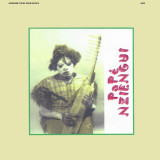
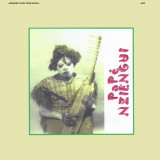
Kadi Yombo, published in 1989, is the most successful album in the quest for a fusion between tradition and modernity in Bwiti harp music of the Tsogho people of Gabon. Combining beating rattles with a layer of synthesizers, Papé Nziengui blends in a contrapuntal dialogue characteristic of harp playing: male song in appeal and female choir in response, male voice of the musical arc and rhythms of female worship. But above all it’s Tsogho ritual music and modern studio orchestration. The result is an initiatory itinerary of 10 musical pieces which are all milestones likely to be simultaneously listened to, danced, meditated on, and soon acclaimed. In the years since, Nziengui has traveled he world from Lagos to Paris, from Tokyo to Cordoba, from Brussels to Mexico City to become a true icon, the emblem of Gabonese music.
Like Bob Dylan, "electrifying" folk and Bob Marley mixing rock with reggae, some purists have criticized Nziengui for having distorted the music of harp by imposing a cross with modern instruments. They even went so far as to claim that Nziengui was just an average harpist covering his shortcomings with stunts that were only good for impressing neophytes; like playing a harp placed upside down behind his back or playing two or three harps simultaneously. Sincere convictions or venomous defamations, in any case, Nziengui never gave in to such attacks, imposing himself on the contrary to pay homage to the elders (Yves Mouenga, Jean Honoré Miabé, Vickoss Ekondo) while instructing the maximum of young people. He is thus the promoter of many young talents, the most prominent of which is certainly his nephew Jean Pierre Mingongué. In a conservative society where the sacred is confused with secrecy, exposing the mysteries of Bwiti in broad daylight can be punished by exclusion or even execution.
Papé Nziengui has always claimed that he faces such risks because he never felt enslaved to a community that governs his life, that regulates his conduct, that has a right of censorship over his activities. Like Ravi Shankar, the famous sitarist, Papé Nziengui is a man of rupture but also of openness, a transmitter of culture. As proof, he has established himself in Libreville, Gabo’s capital, as the main harpist for sessions and concerts, accompanying the greatest national artists (Akendengué, Rompavè, Annie-Flore Batchiellilys, Les Champs sur la Lowé, etc.) as well as foreign artists (Papa Wemba, Manu Dibango, Kassav', Toups Bebey, etc.). In 1988, he was the first harpist to release an album in the form of a cassette produced by the French Cultural Center (Papé Nziengui, Chants et Musiques Tsogho). At the same time, he created his own group (Bovenga), combining traditional music instruments (musical bow, drums, various percussion instruments, etc.) in the framework of a true national orchestra, which gave the first concert and the first tours of a traditional music that was both modern and dynamic, thus "democratizing" the harp, to the dismay of certain purists.
On the other hand, in modern music, dominated by the logic of profit or even commercialism, artistic creation must often be adjusted for a specific audience based on reason rather than heart. But instead of allowing himself to be distorted, Papé Nziengui has always tried to produce music that is not a caricature, worthy in its expression as in its content, of the sacredness and transcendence of the music of the Origins. This is what makes Nziengui not only the musician, but the man someone whose age hasn’t altered any of his freshness or authenticity
dovrebbe essere pubblicato su 08.04.2022
Kadi Yombo, published in 1989, is the most successful album in the quest for a fusion between tradition and modernity in Bwiti harp music of the Tsogho people of Gabon. Combining beating rattles with a layer of synthesizers, Papé Nziengui blends in a contrapuntal dialogue characteristic of harp playing: male song in appeal and female choir in response, male voice of the musical arc and rhythms of female worship. But above all it’s Tsogho ritual music and modern studio orchestration. The result is an initiatory itinerary of 10 musical pieces which are all milestones likely to be simultaneously listened to, danced, meditated on, and soon acclaimed. In the years since, Nziengui has traveled he world from Lagos to Paris, from Tokyo to Cordoba, from Brussels to Mexico City to become a true icon, the emblem of Gabonese music.
Like Bob Dylan, "electrifying" folk and Bob Marley mixing rock with reggae, some purists have criticized Nziengui for having distorted the music of harp by imposing a cross with modern instruments. They even went so far as to claim that Nziengui was just an average harpist covering his shortcomings with stunts that were only good for impressing neophytes; like playing a harp placed upside down behind his back or playing two or three harps simultaneously. Sincere convictions or venomous defamations, in any case, Nziengui never gave in to such attacks, imposing himself on the contrary to pay homage to the elders (Yves Mouenga, Jean Honoré Miabé, Vickoss Ekondo) while instructing the maximum of young people. He is thus the promoter of many young talents, the most prominent of which is certainly his nephew Jean Pierre Mingongué. In a conservative society where the sacred is confused with secrecy, exposing the mysteries of Bwiti in broad daylight can be punished by exclusion or even execution.
Papé Nziengui has always claimed that he faces such risks because he never felt enslaved to a community that governs his life, that regulates his conduct, that has a right of censorship over his activities. Like Ravi Shankar, the famous sitarist, Papé Nziengui is a man of rupture but also of openness, a transmitter of culture. As proof, he has established himself in Libreville, Gabo’s capital, as the main harpist for sessions and concerts, accompanying the greatest national artists (Akendengué, Rompavè, Annie-Flore Batchiellilys, Les Champs sur la Lowé, etc.) as well as foreign artists (Papa Wemba, Manu Dibango, Kassav', Toups Bebey, etc.). In 1988, he was the first harpist to release an album in the form of a cassette produced by the French Cultural Center (Papé Nziengui, Chants et Musiques Tsogho). At the same time, he created his own group (Bovenga), combining traditional music instruments (musical bow, drums, various percussion instruments, etc.) in the framework of a true national orchestra, which gave the first concert and the first tours of a traditional music that was both modern and dynamic, thus "democratizing" the harp, to the dismay of certain purists.
On the other hand, in modern music, dominated by the logic of profit or even commercialism, artistic creation must often be adjusted for a specific audience based on reason rather than heart. But instead of allowing himself to be distorted, Papé Nziengui has always tried to produce music that is not a caricature, worthy in its expression as in its content, of the sacredness and transcendence of the music of the Origins. This is what makes Nziengui not only the musician, but the man someone whose age hasn’t altered any of his freshness or authenticity
dovrebbe essere pubblicato su 08.04.2022
Kadi Yombo, published in 1989, is the most successful album in the quest for a fusion between tradition and modernity in Bwiti harp music of the Tsogho people of Gabon. Combining beating rattles with a layer of synthesizers, Papé Nziengui blends in a contrapuntal dialogue characteristic of harp playing: male song in appeal and female choir in response, male voice of the musical arc and rhythms of female worship. But above all it’s Tsogho ritual music and modern studio orchestration. The result is an initiatory itinerary of 10 musical pieces which are all milestones likely to be simultaneously listened to, danced, meditated on, and soon acclaimed. In the years since, Nziengui has traveled he world from Lagos to Paris, from Tokyo to Cordoba, from Brussels to Mexico City to become a true icon, the emblem of Gabonese music.
Like Bob Dylan, "electrifying" folk and Bob Marley mixing rock with reggae, some purists have criticized Nziengui for having distorted the music of harp by imposing a cross with modern instruments. They even went so far as to claim that Nziengui was just an average harpist covering his shortcomings with stunts that were only good for impressing neophytes; like playing a harp placed upside down behind his back or playing two or three harps simultaneously. Sincere convictions or venomous defamations, in any case, Nziengui never gave in to such attacks, imposing himself on the contrary to pay homage to the elders (Yves Mouenga, Jean Honoré Miabé, Vickoss Ekondo) while instructing the maximum of young people. He is thus the promoter of many young talents, the most prominent of which is certainly his nephew Jean Pierre Mingongué. In a conservative society where the sacred is confused with secrecy, exposing the mysteries of Bwiti in broad daylight can be punished by exclusion or even execution.
Papé Nziengui has always claimed that he faces such risks because he never felt enslaved to a community that governs his life, that regulates his conduct, that has a right of censorship over his activities. Like Ravi Shankar, the famous sitarist, Papé Nziengui is a man of rupture but also of openness, a transmitter of culture. As proof, he has established himself in Libreville, Gabo’s capital, as the main harpist for sessions and concerts, accompanying the greatest national artists (Akendengué, Rompavè, Annie-Flore Batchiellilys, Les Champs sur la Lowé, etc.) as well as foreign artists (Papa Wemba, Manu Dibango, Kassav', Toups Bebey, etc.). In 1988, he was the first harpist to release an album in the form of a cassette produced by the French Cultural Center (Papé Nziengui, Chants et Musiques Tsogho). At the same time, he created his own group (Bovenga), combining traditional music instruments (musical bow, drums, various percussion instruments, etc.) in the framework of a true national orchestra, which gave the first concert and the first tours of a traditional music that was both modern and dynamic, thus "democratizing" the harp, to the dismay of certain purists.
On the other hand, in modern music, dominated by the logic of profit or even commercialism, artistic creation must often be adjusted for a specific audience based on reason rather than heart. But instead of allowing himself to be distorted, Papé Nziengui has always tried to produce music that is not a caricature, worthy in its expression as in its content, of the sacredness and transcendence of the music of the Origins. This is what makes Nziengui not only the musician, but the man someone whose age hasn’t altered any of his freshness or authenticity
dovrebbe essere pubblicato su 08.04.2022
Launching Hakuna Kulala's new club white label series, is young Congolese, Kampala-based DJ & producer Oyisse. Oyisse drops a pure gem of a debut EP featuring 4 fresh tracks of slower and somber forward-thinking club music bridging abstract electronics, obscure gqom and trap with various Central African influences, rude esoteric voices from Congolese singer, Sekelemebele and a cascade of futurist imagination. A clever, harmonious balance of kicks and sophisticated experimentation that will grace our ears and bodies on the floor.
Ordina ora e ordineremo l'articolo per te presso il nostro fornitore.
At an age of plastic and digital screen reigning, when it is almost impossible to feel anything in front of a contemporary art piece, it is still possible to be moved by a drum machine …. and a keyboard……
There are still artisans and sunday painters who will put a little of their troubles and their humanity at the service of their art. Certainly a merchant of colors in a previous life, Med paints his songs with a Benedictine patience, distilling its doubts in its small pop compositions with soft water reflections where everyone could see themselves as in a mirror.
MED is Médéric Gontier, guitarist of Tahiti 80, first solo effort. Where the band had not often ventured outside English, Med uses the French language and caresses it in the direction of its melodies. Produced with the help of Pedro Resende, these are ten pieces both aerial and aquatic, light but finally of a real consistency.
Immediately pop («Dans ses yeux»), reminiscent of the great French composers of the sixties («Avec toi») and with them that of the English of Broadcast to Vanishing Twin («Muzak»).
It’s a bit time for the Norman to make a pause and for that, to put his nose out, it’s freetime, the one of those who will never claim to be better than the others but whose records will be kept close to the heart.
dovrebbe essere pubblicato su 26.02.2021
Black Vinyl Repress
47 celebrates 5 years of forward thinking techno with a 12 track various artist compilation entitled 5Y. The triple vinyl release features several early label contributors such as Headless Horseman as well as recent regulars Swarm Intelligence and Scalameriya, plus new additions to the roster, EKORS and NN. The V/A also sees the return of Overlook and Positive Center’s alias, Carrier, as well as a collaboration between Ancient Methods and 47 label head, Tommy Four Seven.
Ordina ora e ordineremo l'articolo per te presso il nostro fornitore.
Mind Control: Making people believe by shaping what they hear; a sonata for the age of acceleration morphosis; a music born under punches. Play at any required speed.
Cristian Vogel is a life-long innovator in the design, composition and performance of electronic sounds. His independent career in music and audio technology has won prizes and awards establishing him as an outstanding influence in the field of composition for studio, club culture and stage. He performs, remixes and produces original music and sound design at an international level. He has lived in Brighton, Barcelona, Berlin and Geneva and is now permanently based in Copenhagen where he continues creating technologically based music, sound and audio technology at his design studios Ekometic and NeverEngineLabs.
Ordina ora e ordineremo l'articolo per te presso il nostro fornitore.
Finnish multi-dimensional artist Jimi Tenor is back with a new 7" on Philophon to announce the upcoming album Aulos, which is going to be released in October.On Sugar And Spice he reunited with Ghanaian drummer Ekow Alabi and German producer Max Weissenfeldt.
Sugar And Spice is the perfect summer hit for Jazz, Boogie, Soul and Afro-Beat lovers. A bouncy bass with hip chords, some sharp horns and a sweet voice are driven forward by Ekow's rolling beat. On Lover's Bridge Jimi creates some reminissence to the classic Sun Ra compositions from the 50s and early 60s. A singing organ calls some heroic horns, carried away by a rhythm section, which practice the power of repetition formula par excellence.
Ordina ora e ordineremo l'articolo per te presso il nostro fornitore.
Hailed by none other than Seun Kuti as "one of the best things to come out of Lagos", Nigerian trumpeter, composer and bandleader Etuk Ubong has developed an original style he calls "Earth Music". Weaving together a unique combination of not only afrobeat, highlife and jazz, but also the ritualistic drumming of Ekombi, the result is urgent and highly energetic, yet spiritual; his compositions reflecting his heritage and life philosophy of goodwill, peace and love for humanity. Ubong's music is so vibrant and propulsive that one can easily make comparisons with leading lights of the UK scene, such as the Shabaka Hutchings-led Sons of Kemet, but at the same time it is distinctly Nigerian.
Ordina ora e ordineremo l'articolo per te presso il nostro fornitore.
Carving out an enviable reputation across the globe for his distinctive and highly personal brand of House music, Kiko Navarro's voyage of sonic discovery has been going strong for almost three decades now. From London to the Far East, Kiko has travelled far and wide with his music, embracing sounds from each continent as he goes. Kiko's new album, Afroterraneo- also named after his music label- defines the sound of his home. The album incorporates sounds touched by the Mediterranean Sea, drawing influences from Europe, Africa and his roots in the Balearic Islands. Afroterraneo is all about fusion. It includes Afro-Cuban songs like "Okere", "Karabali" and "Ekobio Monina", Midwest-African flavour on "Ihabogi Rawaly" and "Beréde", Flamenco with "La Fatiga", Balearic emotions with maestro Joan Bibiloni on "El Salto Del Martin" and "Vida", South African vibes on "Olwakhuthando", Afro Mbira lines with European TB303 acid blips on "Cacao Ceremony" and it all ends with his own tribute to his mother on "Para Mama". Born on Mallorca, Kiko's sound reflects the sun-drenched, slow living atmosphere of the Balearic island he still calls home. Obsessed from an early age with the more soulful side of US House music, Navarro's DJ skills soon attracted the attention of nightlife behemoth Pacha who offered him club residencies both in Palma and in Ibiza. Next came a monthly gig at Space Ibiza and the rest, as they say, is history. A true Renaissance Man; now also a family man, today's Kiko Navarro is perhaps even more focused and dedicated to his life in music than ever before. An album tour this year will see him play DJ sets in Italy, Bulgaria, Macedonia, Greece, Japan, South Korea, China with many more to be confirmed. Whether in the studio crafting records or in the club controlling the dance-floor, Kiko's musical mission has become the habit of a lifetime.
Ordina ora e ordineremo l'articolo per te presso il nostro fornitore.
Once more we're ready to take flight on Africa Airways, for this sixth journey we're taking you above 5280 feet and laying on the funk.
The flight opens with the punchy horns, afro rhythms & groovy bass of Eko Roosevelt's "Ndolo Embe Mulema". Keeping the tempo high we usher in fellow Cameroonians JM Tim & Foty for another punch of brass with the funky "More And More (Ye-Male)". We stay in Cameroon with Ngalle Jojo, here he lays down another funktastic bass heavy stomper with "Ngigna Loko". Jude Bondeze hails from Bangui, Central African Republic and is probably best known for his more traditional Tene Sango album... but his debut 1981 release saw him in a very funky mood indeed!

Next up, Nigerian Vicky Edimo gets his thumb out and lays down some glorious slabs of deep funk... along with a rather splendid bass solo! JK Mandengue played bass off & on for the British Afrobeat band "Osibisa", playing on the uber funky "Super Fly TNT" Motion Picture Soundtrack album.. Certainly putting him on a path to the Wahahwah'tastic "Kosa Mba" taken from his 1979 self-titled album.
Slow percussive classic raw street funk from Nigeria's Akwassa, who's line up is the same as "Heads Funk Band", are up next. Another outing for Vicky Edimo on this 1978 beauty from Mike Kounou. Also on guitar duties for Mike Kounou is Francois Amadou Corea, who's funky chops can be heard on "Ngigna Loko" & "Njonjo Mukambe".
Hi-Octane funk from Airto Fogo, percussion, rhodes & horns aplenty on this 1974 instrumental cut "Black Soul". As we prepare to start our decent Francois Misse Ngoh drops in some filth with this 1980 bass face monster "Njonjo Mukambe"... head nodding isn't essential, but it's best to brace yourself for impact.
Your next Africa Airways departure will be ready for boarding soon,
so keep your passports at the ready!
Ordina ora e ordineremo l'articolo per te presso il nostro fornitore.
Oráculo Records proudly presents “OMBRA FESTIVAL Unusual Sounds Gathering Volume 1”, a vinyl compilation created to celebrate the very upcoming second edition of OMBRA FESTIVAL, that will take place next november 29th and 30th in different spots of Barcelona. Released in a one-off limited edition of 300 copies it includes unreleased material by some of the artists that joined OMBRA FESTIVAL project and that majorly will be part of the scheduled OMBRA FESTIVAL live shows. Featuring new music by THE PRESENT MOMENT, CELLDÖD, PSYCHE, RNXRX and WE ARE NOT BROTHERS. All tracks has been specially remastered by Eric Van Wonterghem at Prodam Berlin.
Ordina ora e ordineremo l'articolo per te presso il nostro fornitore.
Hyperdub launch new sub-label Flatlines for the release of ‘On Vanishing Land’, an audio-essay by Justin Barton and the late Mark Fisher. ‘On Vanishing Land’ evokes a walk along the Suffolk coastline in 2006, from Felixstowe container port ("a nerve ganglion of capitalism") to the Anglo-Saxon burial ground at Sutton Hoo. A walk under immense skies, through zones of deep time, and within sunlit, liminal terrains, into the eerie. Everywhere there are charged atmospheres, shadowy incursions, enigmatic departures. A derelict radar base, coastal heathland, drifting thistledown, towers of overgrown shipping containers - music haunted by wider levels of reality, narrations about rarely visited zones and potentials, voices of dreams and stories. This music includes newly-composed tracks by John Foxx, Gazelle Twin, Baron Mordant, Raime, Pete Wiseman, Farmers of Vega, Skjolbrot, Eerie Anglia, Ekoplekz and Dolly Dolly. Alongside these are glimpsed views toward M.R.James’s ‘Oh Whistle and I’ll Come to You My Lad’ (1904), Joan Lindsay’s ‘Picnic at Hanging Rock’ (1967), and Brian Eno’s ‘On Land’ (1982). Beyond the surface of the day something becomes visible, a way forward, an escape-path from capitalist reality. ‘On Vanishing Land’ is about following the lines of terrains and dreams. It is about a micropolitics of escape, of disappearance. A micropolitics of waking the faculties. ‘On Vanishing Land’ was initially part of an exhibition commissioned by The Otolith Collective and The Showroom in London, and after ‘londonunderlondon’ (2005) it was the second audio-work collaboration by Justin Barton and Mark Fisher.
The LP cover features photos taken by Mark Fisher, and a short essay by Justin Barton. Pressed on 180g vinyl, in deluxe rigid board sleeve, with free mp3 download code.
dovrebbe essere pubblicato su 26.07.2019
It's that time again. The skies are calling and its time to board our trusty jet for the 5th outing of Africa Seven's premiere class compilation Africa Airways. For volume 5 its time to brace yourselves for 10 slices of Afro boogie goodness.
We up the boogie time groove with The Black Bells Group (the first band of lead singer Sidney 'Patrick Duteil' who went on to become the godfather of French hip-hop and a well know TV presenter. Here the groove is swinging... the perfect opener. Next up is German-based Cameroonian musician and cousin of Manu Dibango, Charly Kingson with this bass-synth boogie stomper. Big brass and jazzy trumpets add layers of sparkle too.
Next its time for some highlife inspired boogie from Ghanian Gyedu Blay Amboley. Highlife fused with reggae, disco, boogie and jazz just as the lyrics say.
Next we pair up with Africa Seven friend Eko once more under his Dikalo guise. The Cameroonian master musician is on fine form with his heavy brass and deep percussion with a driving afro boogie groove. To round off Side A its off to Cameroon again to groove with Jean 'Mekongo President'. Think Bernard 'Chic' Edwards on the bass with some African style and you can see it's the bottom end groove and afrobeat drums that power this gem along.
We open the second side slowly and purposefully with the highly sought after 'French Girl' from Fotso. Drippy bass synth grooves and a wondrous percussion and drum shuffle pair with piano riffs to make this a unique sounding track. Our friend Tala AM is next with the foot-stomping 'Sugar Lump'. JK Mandengue is next with most definitely the catchiest chorus you will hear today. Nigerian Jide Obe gets synth and clavinet rich with his doe to sensible dating advice 'Too Young'. We close off the album with a track from label good friend Jo Bisso under his Mulamba guise. Sounding like a long lost TV theme from a late night TV show circa 1977. Let's get down and boogie with the brand new dance in town folks... the Dashiki.
Until Volume Six takes flight it is time to unbuckle those seat belts folks.
Ordina ora e ordineremo l'articolo per te presso il nostro fornitore.
Jimi Tenor delivers another 7" on Philophon. This time he teamed up with the two glorious gospel queens Florence Adooni and Lizzy Amaliyenga from Bolgatanga/Northern Ghana. This release is a first insight into the next album by Jimi on Philophon, which will be released later the year.
Vocalize My Luv is a charmingly presented lure for love. The secret of the song is that drummer Ekow Alabi Savage's upfront high-life beat is triggering a Jimi-operated Korg MS-20 bass synth. Man and machine are melting down into a light and sportive groove, which irresistibly invites you to do some frisky aerobic moves on the 3am dancefloor. Ki'igba is a classic Frafra gospel song by Alogte Oho, completed with some jubilating flute by master Jimi.
Ordina ora e ordineremo l'articolo per te presso il nostro fornitore.
ABOUT THE 'LIBRARY TOOL KIT' SERIES
The new sub-label from WNCL Recordings features 12 short 'tools' per release, for use on discotheque sound systems and home stereos alike. Released on 10' vinyl with digital to follow at a later date
ABOUT THIS RECORD
EKOPLEKZ contributes to the Library Tool Kit series with 12 unique transmissions, live and direct from his radiochronic workshop.
Ordina ora e ordineremo l'articolo per te presso il nostro fornitore.
Jimi Tenor's mind will travel where his body can't go. Living in isolation in east-Helsinki suburb he picks mushrooms and has exotic musical fantasiesin the calmness of the endless. He has made a quantum connection in Berlin with rhythm geniouses Ekow Alabi Savage and Max Weissenfeldt to create his latest tour de force "Order of Nothingness".
Mind travel is easy and music is a perfect way to illustate the possibilities. Using historical failed experimental keyboard Extravoice from Hammond organ company has opened the floodgates of Jimi's creative passages. Philophon studios in Berlin has a plethora of exotic instruments and they have been extensively used in making this album. JIMI likes to switch between wind instruments and keyboards to get a creative edge.
Is there any meaning in Mysteria Did Salvador Dali design the Chupa Chups logo Was Finland part of the Soviet Union Order of Nothingness might not aswer these question, but instead will confuse you a little bit more.
Ordina ora e ordineremo l'articolo per te presso il nostro fornitore.
Presenting 'Envelope'. Album written, produced & mixed by Milan W. and pressed on 180g vinyl, by Ekster. Coming out on the 6th of June 2018, with foil-stamped cover-drawing by Gerard Herman. Mastered & cut by Helmut Erler at Dubplates & Mastering.
.
Milan W (AKA Milan Warmoeskerken) is an Antwerp-based musician. In 2015 he released the Slo Mo cassette, on local label JJ Funhouse. The Intact LP a year later. Compositions constructed from gentle, yet persistent, rhythms. Intricately textured downtempo echoes. Brain-dancing, rather than four-to-the-floor raving. 2017`s split with Ekolalis, for The Hague`s BAKK, made clear the direction Milan`s headed in. His contribution being a seventeen minute float. The kick largely removed. The textures cut-up, expanded and magnified. Envelope, for Ekster, builds on this work.
The harlequin turns the handle. The contraption sucks in air, and breathes. Blows out tone poems. Wordless ballads that soundtrack enchanted scenarios. Issues forth magic. A sorcerer`s apprentice casting its spell. Animating the inanimate. To everything a life. Sets the frozen fluttering. Pirouetting in red shoes. Illuminates what was dark. Astma sings a Gamelan lullaby. Summons comforting angels to a post-Industrial landscape. Glaasjes has Jazz ghosts inhabit an empty bar room. Spirits stealing excuse-me`s under its deserted spot. In Limbo amplifies their whispers. Lead soldiers court jewellery-box ballerinas behind shuttered shop fronts. On Heraldic Snippets, a tin infantry marches. Ten thousand men up to the top, and back down again. Keys make-believing that they are massed brass and fife.
The bellows pump, and the pipes all the while wheezing. An automaton philharmonic at the bidding of a steam-punk master. Analogue and digital. Clockwork and glitch. Malady finds sounds isolated, extrapolated, mutated. Orchestral`s organ-grinder moves with urgency, and alchemy. Spinning straw into gold. Snare rolls become bubbling mercury. Metallic, yet fluid. Racing at the speed of flight and escape. Slope is the music of water chasing through crystal caves. Slow Runner, a funeral crawl. Shoved into motion by a drama of strings remembered.
Like the charismatic Rat-Catcher of Hamelin, the harlequin turns the handle, and we bang the cup.
Ordina ora e ordineremo l'articolo per te presso il nostro fornitore.
Born in Cameroon, Vicky began banging the drums at the age of 9. By 13 he had moved onto bass and within a couple of years he was playing every night from 10pm to 5am in the Castel Douala Cabaret. At the age of 19 Vicky moved to Paris to study Banking and Commerce and cram in even more music. He took classes at Épinay-sur-Seine Conservatoire music school and it was here that he met Bandmates of his Dikalo project.
Word spreads and he soon becomes one of the most sought after bass players in the Afro arena. His session work features on many scenes stars, Manu Dibango, Eko Tala AM, Kemayo, Sammy Massamba, Toto Guillaume and many more. A chance meeting with the Gibson brothers also see him play on two of their hit albums. In the 80's Vicky moved to the US for spell and excels as a session bassist and touring musician.
We pick up the story in 1981. With his stature as a musician and bass player riding high he takes a detour to Nigeria to record with the Afrodisia label in Lagos. The "Thank U Mamma" album is the result. It is repressed for the first time, here in 2018 on the revitalised Afrodisia label.
Musical proceedings open up with the heartfelt ode to his mother "Thank U Mamma", smooth pop meets afrobeat boogie. "Marina Drive" slows things down with its smoldering jazz. Side Two opens with "Its Not Serious" a catchy vocal number underpinned with funky guitars and striding basslines. "Stormy Rain" is lazy guitar jazz swansong. We close off the album with the ever so funky "You". Slick funk grooves powered along with a dose of slap bass. As a side note Vicky actually plays left handed but with a "upside down" right handed bass. This upside-down precursor making his effortless slap playing even more impressive.
Vicky went on to record a two other albums and still tours and plays as an ever-in-demand session musician.
Ordina ora e ordineremo l'articolo per te presso il nostro fornitore.
With their second album Kin Sonic, Jupiter and Okwess transcend the Congo's unexplored musical heritage and dive into a pool of modernity. We're invited to savour his latest recipe, the Okwess ('food' in the Kibunda language) which is the fruit of all the encounters and influences he has absorbed during his many journeys around the world. It's a recipe based on perfect alchemy.
Ordina ora e ordineremo l'articolo per te presso il nostro fornitore.
Ekoplekz returns with his fourth album for Planet Mu, in the shape of 10-tracker "Bioprodukt". The unique lo-fi, woozy sound of Bristol's Nick Edwards stays intact while he veers towards the nineties for inspiration: the bleep and bass sound of the north of England is one touchpoint and the acid gurgles of the 303 are another. While the murky lo-fi production levels and evocative melodies remain, they are now bolstered by a more muscular rhythmic chassis. Snappier kicks and snares mingle with dense layers of percussion and deep undulating sub-basslines adding a funkier edge, as typified by opening track "Elevation" where playful beats interlock with breezy keyboard flourishes to create something uncharacteristically upbeat. Similarly, the gentle, fluid motion of "Slipstream" and "Calypzoid" represent some of the most appealingly chilled grooves in the Ekoplekz canon to date. But the darker-edged material remains. "Expedition" has a pensive, percussion-heavy feel whilst "Acrid Acid" is a dirt-encrusted slow-mo techno meltdown. "Transcience" displays the Ekoplekz trademark dub-fx in full flight over a driving lo-end, before "Descent" leads down to the final section, where the beats fade out, replaced by rippling layers of spectral ferric ambience on the epic "Low-X Over", before finishing with the radiant looped stasis of "Denier Daze". The albums shifting, mperfect patterns and muted colours are visually mirrored in the beautifully realised sleeve by the Print Project.
Ordina ora e ordineremo l'articolo per te presso il nostro fornitore.