
15
non in magazzino
Ordina ora e ordineremo l'articolo per te presso il nostro fornitore.
Last In: 5 years ago
Ordina ora e ordineremo l'articolo per te presso il nostro fornitore.

At the heart of Christian Stadsgaard's solo project Vanity Productions is a voracious emotive charge that's forever tempered by an austere and self-disciplined approach to composition. His new album for Posh Isolation, the label and project that he authors with Loke Rahbek, is the most thoroughgoing realisation of the tendencies and processes captured in the guise of Vanity Productions to date. Entitled 'But All Spiked,' the album presents a suite of five pieces that veer surely yet subtly through a complimentary range of acousmatic environments. Of his recent works its perhaps 'Only The Stars Come Out At Night' that most resembles a preliminary route in to the arena of his new album. Sometimes overtly, though often with a cryptic veneer, he modulates a central refrain across each piece that comes to engulf the stereo field with different intentions. Citing the influence of American minimalist composers, Stadsgaard has refigured some of the compositional practices towards his particular context and oeuvre. A medley of strings and electronics waver in and out of place on the opening piece, 'White Ribbons On The Ceiling,' introducing the careful preparation and treatment of sound as a means of articulating a profound though compassionate melancholy. The album is drenched in sorrow and seeks its expression with great economy. And it's around this detail that there's perhaps some slight indication of the album's turbulent personal context and the major life changes that underpin it. Stadsgaard's restraint proposes a wealth of wistful invocations. This control, once combined with the subdued presence of his penchant for glaring noise, is what organises 'But All Spiked' into the meditative and dynamic work that it is.
Ordina ora e ordineremo l'articolo per te presso il nostro fornitore.

Green Vinyl
'2016 - My Generation”?: a momentous comeback for Mirwais, two decades on from his classic “Production” album.
It all started in 2016 with an idea Mirwais had for a music video to promote his upcoming single ?“2016 - My Generation”?.
The idea led Mirwais and co-founder of graphic design studio H5/creator of the Oscar-winning ?“Logorama”? animated short
Ludovic Houplain? ?to work together on a fascinating ten-minute short entitled “?My Generation?”.
Since its 2017 release, the film “?My Generation?”, produced and scored almost liturgically by Mirwais, made the rounds of
festivals, winning several prizes worldwide.
It presents itself as a backwards travelling shot during which all of our pop culture moment’s gimmicks collide at 100 km/h:
sex, the net, art, politics, sports, stocks, big pharma and big porno – from Hitler’s speeches to Trump’s contemporary
analogues.
Flash forward to 2020, and it is this very six-minute ?pop-litical ?critique of our era’s societal excesses that Mirwais chose
as the music video for his new single ?“2016 - My Generation”?, set to be released during the coming fall’s American
presidential election.
A sonic deflagration that heralds a new album from one of Madonna’s most iconic collaborators, succeeding, two decades
later, the now-classic ?“Production”?. A punchy, percussive single poised between hard techno and electronic disco,
sprinkled with choirs and distorted, psychedelic synths ?“2016 - My Generation”? is a dance floor-ready opus bearing
Mirwais’ inimitable signature. This way of mixing genres, of conjugating past and future, and of making pop experimental
and vice-versa, cements Mirwais’ reputation as one of times’ most singular composers.
Ordina ora e ordineremo l'articolo per te presso il nostro fornitore.

Libreville Records is proud to present a focus on legendary electronic swiss project Mega Wave Orchestra in the form of a compilation LP including unreleased material.Originally released privately in Geneva in 1988 as a box set containing five LPs by The Mega Wave Orchestra and five prints by the artist H. Richard Reimann. The Mega Wave Orchestra, the brain-child of musician, mathematician and composer Christian Oestreicher, was conceived as an multi-media electronic music big-band. It was comprised of seven multi-instrumentalists Christine Schaller, Vincent Barras, Jacques Demierre, Olivier Rogg, Rainer Boesch, Roger Baudet, and Benoit Corboz, with Oestreicher as arranger and producer.The Mega Wave Orchestra created a new hybrid music. It was a music with roots in the jazz and classical traditions, but one which also drew on the sonic freedom of musique concrete and the kind of total experience offered by psychedelia. The diverse backgrounds and specialisms of each of the band leaders/writers resulted in a wide variety of music across the five discs: from austere drones and granular aural detail to warm oddball fusion and gorgeous but cracked vocal jazz. There are useful contemporary comparisons to be made: zoned synth jazz like the Azimuth LP on ECM or Karin Krog’s Freestyle; Larry Heard’s sequencer dreamtime; the Valium minimalism of Pep Llopis or Jun Fukamaki; Dexter Wansel’s shimmering arrangements for Loose Ends, or even the FM sheen meets cold war threat of Donald Fagen’s Night Fly. Here, too, is the sound of music technology about to snowball and define its own aesthetic, unknowingly prefiguring auteurish bedroom producers like Black Dog or The Detroit Escalator Company.Lovely crafted tip-on sleeve. Remastered from Master tapes. 600 copies.
Ordina ora e ordineremo l'articolo per te presso il nostro fornitore.

German techno and house composer Tim Engelhardt takes you on a deep dive into his peculiar-yet-relatable world of musical meanderings with ‘Idiosynkrasia’. True to the nature of idiosyncrasy, the album is more than the sum of its parts.
‘Idiosynkrasia’ is an ode to the inspiration Tim finds in all kinds of spaces and places: each cut woven from the same cloth of meticulously formed melodic structures and expertly crafted harmonies, gently amplified and unfettered by genre. From the opening track it’s clear that Tim has a profound awareness of rhythm and sound, his background as a pianist lending an easy fluidity to the album as it expands and contracts to tell a story which is gentle, humble and reflective.
Using granular processed recordings of piano, floating strings and other instruments to transmute emotions like love, nostalgia, vulnerability and longing, the album shifts through meditative, flow-state inducing tracks, morphing into cuts designed for dancing it all out.
Take it straight, mix it up or down: ‘Idiosynkrasia’ is cinematic in form and orchestral in structure, each track is marked with Tim’s unique sonic signature and careful attention to instrumentation.
Inhale the spirited and lively flow; exhale and surrender into epiphanic moments: this is an album which will catalyse deep breaths, reflection and a different way of thinking.
Ordina ora e ordineremo l'articolo per te presso il nostro fornitore.

Counterchange presents 'Eigenlicht' by Portuguese-German multi-instrumentalist, producer and award-winning film composer John Gürtler.
Gently teetering between krautrock-influenced synth mantras and saxophone improvisations, down-tempo electronica, sound design experiments and moments of rich ambience, 'Eigenlicht' is a diverse album of electro-acoustic music. The 11 tracks were recorded between two studios and on location at Berlin's infamous Teufelsberg, the abandoned Cold War era US spy-radio and radar outpost named 'Field Station Berlin', surrounded by forest to the west of the city.
A document of Gürtler's development, many of the pieces here were first laid down in his bunker-like former basement studios at Drontheimer Straße in north Berlin, before he eventually elevated above ground - both physically and musically - building his current Paradox Paradise studio and becoming an established film music composer. In 2019 John won the European Film Academy Award for Best Score, for his soundtrack for Nora Fingscheidt's debut feature 'Systemsprenger' (System Crasher).
In recent years John collaborated on a number of projects with acclaimed German producer and composer Phillip Sollmann aka Efdemin, performing live and releasing the 'Gegen Die Zeit' EP on Sky Walking, a subsidiary of Dial records where he also remixed Efdemin's 'Parallaxis' under the moniker The Borderland State.
In part an ode to the Macbeth Systems M5 modular synthesizer, with its three oscillators, much of the album features the towering instrument, whose uniquely rich tone and rumbling, pure bass end characterises tracks like 'Eigenlicht', 'M5', 'Synthetics' and 'Five Voice'.
"The M5's built in spring reverb and huge sliders and faders - as opposed to all the tiny knobs on Eurorack synths - make it as playable as any acoustic instrument."
John's primary background is in acoustic music, coming from woodwind and keyboard instruments, improvisation and composition. The leap into working with computers and electronic instruments found him exploring ways to make synths and samplers sound as organic as possible.
Ordina ora e ordineremo l'articolo per te presso il nostro fornitore.

„Gianmarco Liguori has created his own fascinating niche in music which exists at a place where jazz, soundtracks and improvised art music intersect … mesmerising, sometimes eerily ambient … grounded in electronica soundtracks, experimental Miles Davis of the Seventies, slightly funky Eighties jazz-rock with a nod to minimalism and impressionism … Albums by Liguori offer the indefinable and stand at some distance from just about everything else going on in New Zealand music.”
Graham Reid, NZ Herald
Duga-3, composed and produced by New Zealand-based multi-instrumentalist Gianmarco Liguori, was originally released in 2011 in an edition of 200 copies. The album quickly sold out, with original copies sought after by collectors and fans of Murray McNabb and Kim
Paterson (who appear on the LP), both pioneers of jazz rock in New
Zealand in the early 1970s.
Co-producer Murray McNabb (1947-2013), keyboardist with legendary NZ jazz rock group, Dr Tree in the
1970s, recorded his album Song For The Dreamweaver with ECM artists
Ron McLure and Adam Nussbaum in New York (1990), and had performed with the
likes of Don Cherry, Ed Blackwell, Charlie Haden, Joe Henderson and Sam Rivers. He
was also a top-tier composer/arranger for film, television and radio.
Ordina ora e ordineremo l'articolo per te presso il nostro fornitore.

For Dekmantel Festival 2019, The Netherlands Institute for Sound and Vision’s RE:VIVE initiative and Dekmantel teamed up for the third time to invite four artists to bring fresh music to a curation of Dutch archival films. As debuted live in Amsterdam’s Eye Filmmuseum, 2019 featured new scores from Safe Trip eclectic left-of-centre DJ / producer, Max Abysmal, 80s pastiche, keyboard wizard duo, Lamellen, Italian contemporary composer and saxophonist, Laura Agnusdei and heavy-hitter, Identified Patient. 2019’s films were as diverse as the invited artists. Three of the films come Academy Award winning Dutch producer, Nico Crama whose collection is held by The Netherlands Institute for Sound and Vision while Comeback (Poppenfilm) was made by amateur Dutch filmmaker, Otto Laan.
Comes with liner notes inlay and pressed on 180 grams vinyl.
Ordina ora e ordineremo l'articolo per te presso il nostro fornitore.

Absorbing new album from this very special artist. Hand printed sleeves. Very limited edition.
Marta De Pascalis is an italian composer living and working in Berlin. Her solo works employ analog synthesis and tape loops, incorporating free playing into steady, repetitive patterns. She has produced two albums of Berlin School minimal synth excursions: the self-released Quitratue (2014) and Anzar (The Tapeworm, 2016). Her new piece ‘Her Core’ has been published on spring 2018 by The Wormhole. Marta creates densely layered collages of glowing melodic shards and growling bass lines, her hypnotic minimal synth figures warping and whirling around each other before dissolving into entropic oblivion. For her compositions she uses improvisation on a tape-loop system, in which patterns of repetition create a sense of a dense, dynamic and cathartic distance.
All music by Marta De Pascalis Recorded at WORM Sound Studios in Rotterdam, artist's studio and Big Snuff Studio in Berlin, between 2019 and 2020. Mastered by Giuseppe Ielasi. Artwork by Lorenzo Mazon Studio. All rights reserved to the respective owners. doser039LP - Morphine Records 2020
Ordina ora e ordineremo l'articolo per te presso il nostro fornitore.

A virtuoso pianist and composer of seminal works in early electronic and experimental classical music, Jocy de Oliveira’s musical output has had a great influence within Brazil and abroad. Her sole contribution to Brazilian popular music, her 1959-recorded album, ‘A Música Século XX de Jocy’ in many ways stands apart from the rest of her artistic oeuvre.
The original vinyl release marketed the record as adding to Brazil’s samba heritage with a ‘simple and original dialectic’, naming its style ‘vanguard samba’, which differs from both traditional samba and Bossa Nova, in its infancy at the time.
Listening to Jocy’s ‘20th century music’ in the context of the contemporaneous and vastly more influential Bossa Nova style is especially striking. Where Bossa Nova’s innovators incorporated influences from jazz and French piano music to a samba foundation, Jocy de Oliveira took a greater leap, wedding her century’s classical music to samba. Where Bossa Nova dawned a new epoch of poetic lyricism in Brazilian popular songs with great poets such as Vinicius de Moraes and themes of longing, love and nature, Jocy de Oliveira’s lyrics are concerned with scenes of urban tragedy and decay, presenting an alternative vision to Brazil’s stereotypical tropical paradise image almost 10 years before the emergence of the Tropicália movement.
The sounds and lyrics of Jocy’s landmark release still shock today. Put in the context of a conservative Brazil on the eve of Brasília’s inauguration, it is even more startling that this record ever got made. An unconventional mix of classical and popular musical influences combined with socially critical, ironic and at times journalistic lyrics make for a unique listening experience.
A unique representation of Brazilian popular music, Jocy de Oliveira’s masterpiece ‘A Música Século XX de Jocy’ is reissued for the first time. Meticulously remastered, the record is pressed on high-quality 45-RPM vinyl, with a modernised back cover and printed inner sleeve including previously unseen pictures taken for the record’s release in 1959.
Ordina ora e ordineremo l'articolo per te presso il nostro fornitore.

(25th Anniversary Edition) Originally released on F Communications 1997. Opack premier Ep on F Communications had already stood out for its unique programming and production. It had traced a furrow for French electronica "and established Readymade as an essential composer / producer / arranger, developing a falsely crazy and deeply melancholy universe fed by hip-hop, pop, electronica, dub, house and techno.
Ordina ora e ordineremo l'articolo per te presso il nostro fornitore.

‘Evolve’ is the first full length album from composer, music producer and violinist Vito Gatto, a concept album that guides the listener on a one-way journey through the various phases of an imaginary evolutionary process. Gatto graduated in Violin from the Milan Conservatory of Music, his research starts from the unconventional application of a classical background into both making music in the studio, and live performances. For this work, Vito decided to put himself in a restricted composing and technical environment; all the arpeggiated sounds on the album are made from one single violin note that Vito sampled. He transforms the same note throughout the entire album, using the different treatment of this micro sample and the arpeggiator programming as the construction of a mutating and evolving structure. The album is Instinctively executed, almost improvised, and elements like distorted bass lines, hardcore inspired percussions, whistles and alienating string melodies represent unexpected alterations. Vito decided to keep these instinctive additions clean from excessive control as a representation of the beauty of the unpredictable. The album track list is an expression of evolutionary phases. From the minimalistic piano piece ‘Decomposition’ to ‘Quiete’ which expresses the state of calm after a shift has occurred, ‘Nostalgia’ and ‘Stasi’ represent a hazy trance like state. Vito challenges the listener to ask questions like ’am I in the right place? Is this who I set out to become? Do I have to keep evolving, or should I try to regress?’ ‘Evolve’ creates continuous connections between traditional and experimental music, creating dialogue between classical instruments and industrial techno, ambient, noise and de-constructed sounds. The Album will be released in both digital and vinyl formats via NeMu, a fresh new label founded by Vito Gatto himself. The label will focus on experimental projects based on the exchange between acoustic, concrete and electronic sources. The Artwork is part of ‘Jewels’, a series of ceramic sculptures by Benni Bosetto, courtesy of the artist and ADA Project, Rome
Ordina ora e ordineremo l'articolo per te presso il nostro fornitore.

Ordina ora e ordineremo l'articolo per te presso il nostro fornitore.

Following 2019’s release of Azymuth’s Demos (1973-75), two more home-recorded demo tracks by the Brazilian psychedelic jazz-funk masters have surfaced from a tape in drummer Ivan Conti’s private archive. These five-decade old recordings by the young band show the maturity, musicianship and distinctive style that saw Azymuth become one of the most important groups in Brazilian history.
Featuring an instrumental take on Roberto and Erasmo Carlos’ 1969 Jovem Guarda hit “As Curvas da Estrada de Santos”, and spacey psych-folk oddity “Zé e Paraná”, the new 7” release via Far Out Recordings shines yet more light on this critical period for Azymuth.
As is the case with many of Brazil’s pop icons, Roberto and Erasmo Carlos had been backed by Bertrami, Malheiros and Conti either on stage, in the studio, or with compositions (in Bertami’s case) since the late sixties. Conti notes that “As Curvas da Estrada de Santos” was a big hit in Brazil when it came out in ‘69 and had already been covered by Elis Regina a year later.
But where both Elis’ version and the original were grand pop-rock ballads, Azymuth’s take is a moody, melodic jazz excursion, featuring Bertami’s incredible Hammond organ, Fender Rhodes and grand piano juggling, Ivan Mamao Conti’s distinctively tough drums, and unusually, Alex Malheiros plays a double bass instead of an electric one.
As the title suggests, “Zé e Paraná” is guitarist João Américo (Paraná) playing alongside Bertami’s Rhodes comping, synth embellishments and dreamy wordless vocals. While credited as the composer and guitarist on “Linha do Horizonte” a track from Azymuth’s debut album which would become the theme tune for a famous novella, Paraná has to this day, remained relatively unknown.
Both tracks were recorded in Jose Roberto Bertrami’s house in Rio de Janiero at some point between 1973-75. These tracks were not recorded in a professional studio, meaning the sound quality differs from other Azymuth releases. At Far Out we take great pride and extreme care in ensuring our releases and reissues are produced to the best possible sound quality. In this case the original source material had not aged well and was considerably damaged. The sound has been restored to the best possible condition but there is still some noticeable tape hiss and slight distortion on ‘Zé e Paraná’. For this reason, we strongly advise listening to preview clips before buying this release.
Keyboards: José Roberto Bertrami
Guitar: João Américo ‘Paraná’
Produced by Azymuth and José Roberto Bertrami
Recorded at José Roberto Bertrami’s home studio in
Laranjeiras, Rio De Janeiro, Brazil 1973
Issue and project co-ordinator: Joe Davis
Additional tape restoration by Daniel Maunick at the Sugar Shack
Mastered by Frank at Carvery Cuts
Ordina ora e ordineremo l'articolo per te presso il nostro fornitore.

West coast composer, artist, and producer Kaitlyn Aurelia Smith has chartered a pioneering career with multiple critically-acclaimed albums since 2015. Following the release of The Kid in 2017, Smith focused her energy in several directions. She founded Touchtheplants, a multidisciplinary creative environment for projects including the first volumes in her instrumental Electronic Series and pocket-sized poetry books on the practice of listening within. She's continued to explore the endless possibilities of electronic instruments as well as the shapes, movements, and expressions found in the physical body's relationship to sound and color. It is this life-guiding interest that forms the foundational frequencies of her most recent full-length, The Mosaic of Transformation, a bright, sensorial glide through unbound wave phenomena and the radiant power discovered within oneself. "I guess in one sentence, this album is my expression of love and appreciation for electricity," says Smith. While writing and recording, she embraced a daily practice of physical movement, passing electricity through her body and into motion, in ways reflecting her audio practice, which sends currents through modular synthesizers and into the air through speakers. Not a dancer by any traditional definition, she taught herself improvisatory movement realizing flexibility, strength, and unexpectedly, a "visual language" stemming from the human body and comprised of vibrational shapes. Understood as cymatics, as Smith says, "as a reference for how frequencies can be visualized," much like a mosaic. Smith describes her first encounters with this mosaic; "the inspiration came to me in a sudden bubble of joy. It was accompanied by a multitude of shapes that were moving seamlessly from one into the other...My movement practice has been a constant transformation piece by piece. I made this album in the same way. Every day I would transform what I did yesterday...into something else. This album has gone through about 12 different versions of itself." As it has arrived, in a completed state, The Mosaic of Transformation is a holistic manifestation of embodied motions. Smith's signature textural curiosity that fans have grown to adore pivots naturally into a proprioceptive study of melody and timbre. Airy organ and voice interweave with burbling Buchla-spawned harmonic bubbles. "The Steady Heart" quivers to life, peppering blasts of wooden organ between winding vocal affirmations. As with a body, moving one portion requires a balance and counterbalance; here, subtle tonal twitchy signals fire in conjunction with coiling arias to create a mesmeric core. When the beat arrives at the midway mark, a swooping and jittery waltz, a sense of stasis in motion, a flow state, is sonically achieved. As soon as it syncs, it disappears back into the swirling ebbs of electric force. Other tracks stray into more ruminative physical realms. "Carrying Gravity" is built around string-like pads that expand and contract like a solar plexus, becoming taught and then loose. If the record could be summarized in a single movement, it is the 10-minute closing suite, a rapturous collage called "Expanding Electricity." Symphonic phrases establish the piece before washes of glittering electric peals and synthesized vibraphone helix into focus. Soon, Smith's voice grounds it all with an intuitive vocal hook, harmonized and augmented by concentric spirals of harp-and-horn-like sounds. Smith's music doesn't capture a specific emotion as much as it captures the joys of possessing a body, and the ability to, with devotion and a steady open heart, maneuver that vessel in space by way of electricity to euphoric degrees.
Ordina ora e ordineremo l'articolo per te presso il nostro fornitore.

Notes From The Forest Floor was originally premiered in a different form in July 2015 at The ICA as part of an evenings event dedicated to the work of Italian composer Giacinto Scelsi. Played in almost pitch dark the hour long piece was played prior to a concert of work by and inspired by Scelsi. Chris responded to Scelsi's microtonal works using recording of insects and other wildlife/environmental sounds from La Selva tropical rain forest reserve in Costa Rica. An edited shorter piece from this installation was on the Scelsi Ep titled Invertebrate Harmonics which gathered great reviews from the Quietus to the Vinyl Factory. Whilst working with Chris again this year having had the stereo ICA installation version sitting on his hard drive for 5 years Adrian Corker asked Chris if he would be interested in releasing it.Chris was soon after heading back to Costa Rica working with David Attenborough and offered to make new recordings and develop the original piece.
Georgia Rodgers Line Of Parts was originally premiered at Huddersfield Contemporary Music Festival in 2019 as part of the Huddersfield Professional Development Programme for Female Composers of Electronic Music project. Originally having trained a an acoustician Rodgers work is concerned with" timbral detail". She has had work performed by ensembles such as Apartment House and The Riot Ensemble but for Line of Parts worked with the Huddersfield Immersive Sound System(HISS) using its network of 48 channels and 66 speakers.The piece and stereo mix down of this work is composed of field recordings made in the Cairngorms and North London, sine waves and voice.
Ordina ora e ordineremo l'articolo per te presso il nostro fornitore.

‘Nordic Soul’ singer, producer, composer and DJ Astrid Engberg feels the light on new album, Tulpa. Overcoming a life-changing brain trauma through sonic explorations of contemporary electronic-organic jazz layered with strings, horns and percussive minimalism. Interplaying between contemporary soul, classical, electronic music, jazz improvisation and her hiphop roots, Astrid sketches sonic landscapes that are both steeped in her Scandinavian roots and infused with the kaleidoscopic hues of her many travels.
Ordina ora e ordineremo l'articolo per te presso il nostro fornitore.

Caiphus Semenya, AKA Mr Letta Mbulu, is a South African legend, and Listen To The Wind, his iconic debut album, is simply a superb modern-soul/boogie album. It’s also incredibly rare, especially in good condition, so Be With is delighted to present this reissue.
Now a revered composer, musician, and arranger, Caiphus left apartheid South Africa in the 60s for self-imposed exile in Southern California together with his wife, Letta Mbulu. Settling in Los Angeles he started working with the likes of Hugh Masekela and Miriam Makeba and other exiled and semi-exiled South african artists, as well as, of course, his wife Letta.
Caiphus also found himself working with and composing for a broad range of jazz and pop artists, including Lou Rawls, Nina Simone and Cannonball Adderley. His facility with both jazz and African forms served him well. His LA stay was also the beginning of an ongoing collaboration with Quincy Jones, the fruits of which can be tasted in Caiphus’s African compositions for the scores to Roots and Spielberg’s adaptation of The Color Purple.
Given his decades of work behind the scenes, it’s no surprise that it took until 1982 for Caiphus to get around to putting out the first album of his own. But all that experience shows. Listen To The Wind is a deeply impressive synthesis of early 80s US production and instrumentation together with his traditional South African musical roots.
It’s stylistically diverse but the ingredients are never diluted. There are elements of boogie, soul, funk and jazz, all shot through with pan-African flavour, and moving effortlessly from uptempo floor fillers to more meditative, slower soulful tracks. Produced by Caiphus himself, he makes full use of a stellar line up of session musicians including Nathan East, Michael Stanton, Sonny Burke and Paulinho DaCosta. And of course, there are Letta’s show-stopping vocals. To our ears, Listen To The Wind is just one big party, and lord knows we need that more than ever right now.
Opener “Angelina” is one of Caiphus’s most beloved tracks at Be With HQ. It’s a breezy, feel-good SA boogie-funk classic. Harmonic and horn heavy, it sounds as fresh today as it would’ve done in the early 80s. If this one doesn’t make you move, you may need your pulse taking. The drum breakdown alone, a little over halfway through, is sensational.
It’s followed by the gentle reggae lilt of “Play With Fire”. A real melodic slo-mo delight, carried by the tropical vibes and, above all else, by the extraordinary performance of Caiphus himself and his backing singers.
Closing out side one, the spectacular “Umoya” is driven by triumphant horns and slick bass. With its proto-Graceland vibes, we reckon Paul Simon must’ve been listening. Hard. Caiphus trades verses with the unmistakable tones of Letta, and it sounds divine. Yes, it’s as good as anything on Letta’s canonical In The Music… The Village Never Ends. A wide-eyed wonder, made for unity and togetherness, it’s all infectious, smiling faces for nearly nine minutes. But never mind nine, we could party to this for ninety minutes and “Umoya” would leave us re-energised for ninety more.
Elegantly firing up side two is perhaps the album’s best known track. “Without You” is a heavenly slice of modern soul, an end-of-nighter to end them all. Smooth strutting, disco-fied funk with that unmistakably South African sound, it’s just sublime, with those lyrics that keep coming back to smiling faces and community, “without You the sun won’t shine”. Big with the likes of Rush Hour’s Antal, this is aural perfection.
“Ziph’inkomo” is a soul-soothing, swooning epic. Gently building throughout, its final few minutes are genuinely stirring as the backing vocals and instrumentation swell. Jaw-dropping. The irresistible groove of frantic, percussive workout “Gumba Boogie” closes out what must surely be one of the greatest artistic statements of the 1980s. If his friend Quincy wasn’t feverishly taking notes for Thriller, then you could’ve fooled us.
With Simon Francis handling the mastering of this Be With edition, you know it sounds as fantastic as ever. The cover art, as breezy as the music, has been faithfully restored. All that’s missing is you.
Ordina ora e ordineremo l'articolo per te presso il nostro fornitore.

Black Truffle is pleased to announce Ashioto, the first international solo release from Japanese drummer-percussionist-composer Tatsuhisa Yamamoto. Active for over a decade, Yamamoto has performed and recorded extensively with artists such as Jim O’Rourke, Eiko Ishibashi and Akira Sakata, as well as participating in innumerable improvised and ad hoc groups.
Ashioto presents two wide-ranging pieces that combine Yamamoto’s percussion work with piano, field recordings, electronics, and contributions from guest musicians Daisuke Fujiwara and Eiko Ishibashi.
Beginning with a passage of chiming metal percussion, the first side slowly builds into a rolling, open groove reminiscent of Yamamoto’s work on Eiko Ishibashi’s acclaimed Drag City LP The Dreams My Bones Dream. Spacious piano and synth notes, along with Ishibashi’s spare melodic figures on processed flute, hover above this propulsive rhythmic foundation, the whole effect adding up to a more abstract take on the area explored on Rainer Brüninghaus’s ECM classic Freigeweht. The LP’s second side opens up a cavernous space filled with ominous electronics and shimmering metallic percussion, which organically transitions into a passage of rumbling piano chords and mysterious concrète sound. Later in the piece, Daisuke Fujiawara’s saxophone enters, playing melancholic melodic fragments that are looped and layered, creating a seasick swaying effect familiar to listeners of James Tenney’s works with tape delay systems. Beginning as delicate bass drum pulses, Yamamoto’s accompanying percussion eventually builds the piece into a raging torrent of free-improv splatter, processed sax and fizzing electronics.
Though grounded in instrumental performance, Ashioto is very much a studio construction, making inventive use of electro-acoustic principles in its editing and mixing. Together with its sister Ashiato – a different take on the same ‘script’ released simultaneously on Japanese label Newhere – Ashioto demonstrates to an international audience for the first time the true breadth and ambition of Yamamoto’s work.
Mastered by Jim O’Rourke. Cover photos by Kuniyoshi Taikou. Design by Lasse Marhaug.
Ordina ora e ordineremo l'articolo per te presso il nostro fornitore.

BAFTA Award-winning actor Matt Berry has been the star of a number of high profile TV series including Toast Of London, The IT Crowd and most recently What We Do In The Shadows. Concurrently he has
cultivated a career as a musician that has seen him release six solo albums and collaborate with the likes of Bond composer David Arnold, Jean-Michel Jarre and most recently Josh Homme, who invited him to perform on the Desert Sessions.
His most recent album ‘TV Themes’ was a UK Top 40 hit and was awarded four stars by Will Hodgkinson writing for The Times. His reinterpretation of British TV themes of the past was no mere wallow in nostalgia but an exploration of recording techniques and a joyous celebration of the music.
‘Phantom Birds’ was inspired by a fascination with Bob Dylan’s ‘John Wesley Harding’, the way it was recorded with the minimum of musicians to draw attention to the songs. For the recording Matt worked with drummer Craig Blundell - known for his work with
Steven Wilson and Steve Hackett - and legendary pedal steel player BJ Cole, yet the tinges of Americana are never allowed to overwhelm Matt’s own distinctive style.
dovrebbe essere pubblicato su 18.09.2020

Ltd. Purple Edition
Out 18th September, ‘What It Is’ is the second LP from Brooklyn- based multi-instrumentalist, composer, arranger and producer Sly5thAve; his first new music since the critically acclaimed project ‘The Invisible Man: An Orchestral Tribute to Dr. Dre’. The recording had been first devised as a benefit concert in LA which was attended by Dr. Dre who took to the stage to express thanks for Sly5thAve’s arrangements. Having spent the past three years performing the project with orchestras around the world, ‘What It Is’ sees Sly5thAve retain the high-quality that fans and critics alike have come to expect from him while stepping out with something considerably different, delving deeper into the worlds of hip hop, jazz and soul. Celebrating not only his own versatile musicianship but that of his collaborators and friends, ‘What It Is’ is a collection of tracks showcasing the best of the multi-faceted musician. A sought-after collaborator himself, Sly5thAve has attained much respect from his work with a host of highly fêted musicians including; Prince (as a member of the New Power Generation Band), Stevie Wonder, Gladys Knight, The Dave Brubeck Quartet, Taylor Swift, Janelle Monáe, Freddie Gibbs and Quantic.
Ordina ora e ordineremo l'articolo per te presso il nostro fornitore.

Steve Von Till has charted an extraordinary musical path over the last several decades, from his main duties as singer and guitarist of the boundary-breaking Neurosis to the psychedelic music of his Harvestman project and the gothic Americana he's released under his own name. But No Wilderness Deep Enough is truly like nothing you've ever heard from him before—an album that's devastatingly beautiful and overwhelming in its scope, reminiscent of the tragic ecstasy of Nick Cave and the Bad Seeds' recent work as well as the borderless ambient music pioneered by Brian Eno, late composer Jóhann Jóhannsson's glacial compositions, and the electronic mutations of Coil.
FOR FANS OF : MARK LANEGAN/MICHAEL GIRA/NICK CAVE.
Over the course of recent time, an aching, growing void has developed where our normal way of life has resided. Uncertainty abounds, and Steve Von Till's No Wilderness Deep Enough provides a voice of existential wisdom and experience to offer comfort and perspective in an era of uncharted territory. These six pieces of music shape a hallucinatory landscape of sound that plumbs the depths of the natural world's mysteries and uncertainties—questions that have vexed humanity since the dawn of time asked anew amidst a backdrop that's as haunting as it is holistic.
Von Till’s fifth solo album is a swirling and iridescent blend of ambient, neo-classical, and gothic Americana that swan-dives into the darkness of modern life, with the resulting emergence a sonic document of rural psychedelia that transcends the physical world—towards a greater spiritual acceptance that connects naturalism, spiritualism, and the corporeal form.
With a foundation of simple melancholy piano chord progressions embellished with mellotron, cello, french horn and electronic treatments Von Till's scorched ache spreads across the terrain of No Wilderness Deep Enough like a brushfire, adding a tactile level to his sonic creation as well as an inviting level of friction to the burning beauty painted across the album's framework.
With a foundation of simple melancholy piano chord progressions that came to fruition during jetlagged nights in his wife’s childhood home in Germany, No Wilderness Deep Enough was further embellished with mellotron and electronic treatments in Von Till’s home studio in North Idaho. Viewing the emerging result as an ambient instrumental album, he consulted friend and engineer Randall Dunn (Marissa Nadler, Earth) about adding live cello and french horn and piano in a proper studio. After enlisting Brent Arnold on cello and Aaron Korn on french horn, he challenged Von Till to sing over the music and make it his next solo album—which is exactly what happened, with final work being completed at Tucker Martine’s (the Decemberists, Neko Case) Flora Recording and Playback in Portland.
Ordina ora e ordineremo l'articolo per te presso il nostro fornitore.

Lounge is the third in a series of five double vinyl releases that bring together some of Ennio Morricone’s greatest soundtrack music. Each collection centres on a different movie genre, together they allow the listener to rediscover the unmatched genius of the greatest movie composer of all time. The Maestro. This collection was announced before Ennio Morricone passed away on July 6, 2020. We’ll continue to release the series to honour this great composer.
The term Lounge Music is not one that Ennio Morricone would have heard at the time he was composing these pieces for the movies that they enhanced, but it is one that has been retrospectively applied to a certain type of music, and it is a style that Morricone has contributed a great deal towards.
Lounge is available as a limited edition of 3000 individually numbered copies on solid orange vinyl. The package includes a 4-page insert with liner notes written by Claudio Fuiano. The gatefold sleeve contains a velvet spot varnish on the outside and images of iconic movie posters on the inside.
Ordina ora e ordineremo l'articolo per te presso il nostro fornitore.

Led by French B3 Hammond maestro Guillaume Metenier and featuring an all-star lineup of musicians from the extended Mocambo fam, Pigalle Connection connect the dots between instrumental funk, b-boy breaks and cinematic soundscapes. After their celebrated and battle proven 45 "Paris Breakdown", this fantasy funk supergroup is finally back with a new double delight on 7 inch wax.
"Casino & Church" / "Vendetta James" is a nod to Peter Thomas and Ennio Morricone, two massively influential score composers who both sadly passed away in 2020. A-side "Casino & Church" is a blistering blend of afro-boogie, breakbeat funk, blaxploitation and eurocinema, led by hypnotic percussion and an infectious guitar. Flip to the B-side for "Vendetta James", where Mediterranean funk meets Italo Western and b-boy breaks in a sequence of hazy atmospheres and alluring moods.
Recorded live to 8-track tape with vintage equipment and instruments, both sides of Pigalle Connection's new 45 showcase the band's unique sound and deep appreciation for great film scores and heavy funk.
Ordina ora e ordineremo l'articolo per te presso il nostro fornitore.

Faitiche presents a new album by Frank Bretschneider. abtasten_halten was made as part of the raster.labor installation first presented at CTM Festival in 2019. It is perhaps the most radical work in Bretschneider’s distinctive oeuvre: abtasten_halten is a self-generating composition for synthesizer modules whose sole sound source is the movement of two VU meter needles. The resulting percussive sounds coalesce into rhythmic combinations – all random, without repetition. The album resembles a meditation on infinite rhythmic variation. abtasten_halten is Frank Bretschneider’s first release on Faitiche.
One sound can give birth to thousands of tones through self-fertilization. Pierre Henry, 1982
Frank Bretschneider on abtasten_halten:
abtasten_halten (sample_hold) is a largely self-generating composition for a modular synthesizer system. Self-generating here means that as soon as a current flows, the various modules interact, but within limits set by the composer via the connections between the modules (patches): timing, tempo, timbres, dynamics. These conditions are kept variable to a certain extent or left to chance, so that the composition created is always similar but never the same. On the one hand, the use of random generators opens up possibilities that would not otherwise have been considered. On the other, it offers the fascination of the unfinished and the unique: totally unexpected musical events that you might hear only once.
abtasten_halten combines my preferences for percussive music in general and electronic music in particular. Largely avoiding repetitive structures, the piece is more like a free improvisation, quiet and diffuse, but also extremely dense, in ever-changing contrasts and transformations.
The tone generators are two modified VU meters whose needles, driven by trigger impulses, create a simple one-bar pattern by hitting against a metal spring that is connected to a piezo element (thanks to Gijs Gieskes / Gieskes.NL). The tempo is continuously varied over a period of about ten minutes by several mutually modulating LFOs, ranging from about 0.06 Hz up to the lower audio range of about 18Hz.
The percussive sounds thus obtained are then passed through low-pass filters with moderate resonance and random frequency modulation to additionally colour the sound. Further processing is then executed by an echo module whose tempo and repetitions are again determined by random parameters. Finally the audio signal is occasionally enriched with reverb to add more spaciousness to the sound.
The concept for the installation raster.labor was developed by Olaf Bender, Frank Bretschneider and David Letellier. Many thanks to raster - artistic platform.
On Frank Bretschneider:
Frank Bretschneider works as a musician, composer and video artist in Berlin, making mainly electronic work based on complex rhythmic structures and interlocking textures, whose many-layered sound is inspired by the experimental set-ups of modern physics, often supplemented by perfectly synchronized computer-generated visualizations. In 1986, he founded AG Geige, one of the most influential underground bands in East Germany. In 1996, he co-founded the label raster-noton and has since released many solo albums.
Ordina ora e ordineremo l'articolo per te presso il nostro fornitore.
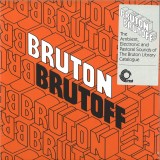
Rare musical magic from the Bruton library catalogue – ambient, spacey, pastoral and electronic. Music by John Cameron, Alan Hawkshaw, Fran-cis Monkman, Brian Bennett and more – all total masters of the scene. All very cool. All very now. All will sell very fast.
Over the last three decades Jonny Trunk has collected and written about library music. But he’s never had a great deal of luck with the Bruton catalogue. By this he means that he’s never stumbled across a massive stash, or lucked-out buying a huge run for practically nothing –that’s the kind of thing that used to happen in the 1990s and the early noughties if you were out there looking hard for library music. But he did manage to get about 25 in one hit about 20 years ago when the BBC shut down their “TV Training Department” near Lime Grove and also when a box of Brutons ended up being dumped at a hospital radio, and they didn’t want the records, so Jonny got a call.
There are lots of Bruton albums in existence – over 330 LPs in the vinyl catalogue, issued between 1978 and 1985. That’s a lot of music to wade through if you are looking for sublime modern day sounds. For many years now the “trophies” from the Bruton catalogue have been the beat or action driven LPs – the two Drama Montage albums (BRJ2 and BRJ8) have always been the big hitters, and others such as High Adventure (BRK2) too.
But Jonny has always found himself drawn to the lime green LPs, the pastoral, peaceful albums (The BRDs), which were full of the kind of gentle, lovely music that would turn up in Take Hart as Tony was paint-ing a woodpecker or a badger or an Autumn tree. The other Brutons he likes are the orange ones (The BRIs) simply because they are full of ex-perimental futuristic electronics and would remind him of 1980s ITV backgrounds. This LP series includes Brian Bennett’s cosmic classic Fantasia (BRI 10). Jonny has been knows to refer to this style of library music as “Krypton Factor library”, because it’s exactly what that strange but successful 1980s TV quiz show sounded like.
In recent years as interest in library music has expanded, we’ve watched
the price of a handful of Brutons really going through the roof - not the just the action and drama ones, but the more esoteric and experimental LPs too – like the BRDs and the BRIs. Jonny gets the vibe that people fi-nally want to hear this other more interesting and experimental side of the Bruton catalogue. So what better time than now to put together a compilation of such sublime period sounds.
Not only does this album bring together a set of fabulous cues that would cost the average man in the street a month’s wages (if the origi-nals were all wanted and if you could even track them all down), but it also chops out the need to listen to other tracks on library albums that are nowhere near as good.
The cues here all date from between 1978 and 1984. They come from the BRD, BRI, BRH, BRJ, BRM, BRR and BRs catalogues.
The composers are all legends within the genre, and here, were doing what great library composers do best – fulfilling a brief and utilising modern studio equipment to both commercial and beguiling effect.
Ordina ora e ordineremo l'articolo per te presso il nostro fornitore.

Through a cascade of field recordings over deep waves of Ambient and Classical meditations, "After Life" by British composer & producer Suplington is a grand yet forbearing course charted through the currents of one's final moments. His second album to chance a curious glance beyond the veil of waking life, "After Life" paints a nautical panorama with a variety of guest appearances, including flutist Nadiya Darling and Brooklyn-based Archie Pelago members, cellist Greg 'Cosmo D' Heffernan and saxophonist Kroba. "After Life" comes on 140 gram black opaque 12" LP with a special sleeve featuring poetic vignettes & track credits in a smooth, glossy jacket featuring a colorful collage by Suplington built from his own photographs taken on the British coast. All records include a card with a one-time use download code.
Ordina ora e ordineremo l'articolo per te presso il nostro fornitore.

Following the release of Milton Nascimento’s Maria Maria, Far Out Recordings proudly presents Nascimento’s 1980 follow up. With the success of Maria Maria in 1976 behind them, Nascimento reunited with his writing partner Fernando Brant in 1980 to produce another ballet, ‘Ultimo Trem (Last train)’. This time, they chose to tackle a more contemporarily relevant subject, the impact of the closure of a train line that connected certain towns and cities in the North East of Minas Gerais to the coast. “The military government shut down the route and the whole region began to fade away,” explains Milton. “I love train rides” adds the composer, “But today there are almost no trains to Brazil. So when I go to the US and Europe, any time I can, I go by train. The longer the journey the better.”
Featuring much of the same all-star line-up as Maria Maria – including legendary Brazilian musicians Naná Vasconcelos, João Donato, Paulinho Jobim and members of Som Imaginário, amongst many others, like Maria Maria, the album holds what Milton himself considers to be the definitive versions of some of his most beloved tracks, including 'Saídas E Bandeiras' and 'Ponte de Areia'.
The title track, ‘Ultimo Trem’ – performed exquisitely by Zezé Mota with a choir and piano – is a mournful lament about the human consequences of the axed line. The ballet brought great media attention to the campaign against closure. “Most of Fernando’s lyrics have some political tone,” says Milton, “This one helped the area a lot because the politicians grew concerned about the subjects.”
Fernando’s and Milton’s shared passion for the sounds, smells and memories of trains, inspired the soundtrack for the production which premièred in 1980. ‘A Viagem (The trip)’, launched with a train’s steam whistle, sees Milton’s guitar moving to a train’s rhythm. In contrast to the usual lyricism, ‘Bicho Homen (Beastly man)’ and ‘Decreto (Degree)’ are atypically upbeat and funky, their vocals a mesh of wordless male voices resembling the then fashionable Swingles Singers’ renderings of Bach. ‘E Daí? (And so what?)’, and ‘Olho d’Agua (Water’s Eye)’ were both drawn from ‘Clube Da Esquina’. ‘Olho d’Agua’ is mellow and delicate and Milton’s homage to the great voices of Brazil whilst ‘E Daí? (And so what?)’ is a stunning mosaic of voices. The unusual ‘O Velho (The Old Man)’ conjures up an image of an old shaman singing alone into the wind against the cries of nature. Perhaps the most affecting songs are Nascimento’s ‘Itamarandiba’ and ‘Oração (Prayer)’. The latter is a cry for a change in the situation whilst ‘Itamarandiba’ ends with an upbeat, whirling Hammond organ and guitar timepiece. The closing track ‘Ponta de Areia (Sand Edge)’, was based on one of Fernando’s newspaper stories and became one of Milton’s most famous pieces, covered by musicians across the planet, including Wayne Shorter and Earth, Wind and Fire. It reappeared as a ghostly 45-seconds memory on the ‘Milton e Gil’ album, his millennial collaboration with Gilberto Gil.
After 27 years of being locked inside contracts and record company legalities, these sublime songs were finally released in 2003 as a double CD package, along with Maria Maria. Set for its first ever vinyl release for this year’s Record Store Day, on limited edition red vinyl, Ultimo Trem sounds as fresh and relevant now as when Brazilian music was still a South American secret.
Ordina ora e ordineremo l'articolo per te presso il nostro fornitore.

in a trio of records by Andrew Wasylyk which unearth and reshape the landscape of Eastern Scotland as shimmering and inventive instrumental music.
Where Themes for Buildings and Spaces (2017) toured the architecture and industry of Dundee, evoking a place caught between decay and regrowth, the Scottish Album of the Year Award shortlisted The Paralian (2019) explored the littoral exchanges between sea and shore on the North Sea coastline.! !
Fugitive Light And Themes Of Consolation carries a trace of this arc on a return upriver, drifting back inland along the River Tay's inner estuary: a record of the low light on winter fields, empty suburban streets at dawn, the deep clear waters of the quarry excavated to build the city.
Ten songs circling landscapes for meaning, channelling half-heard melodies and misremembered memories; caught somewhere between settling down and setting out towards the shining levels of the estuary and beyond.! ! The record is threaded with the influences of people, place and musical lineages – David Axelrod, John Barry, Virginia Astley, Mark Hollis, Alice Coltrane – yet as with all of Andrew's solo work it has a deft, clear voice all of its own. Recorded between Summer 2019 and January 2020, Fugitive Light…
displays his talent as a multi-instrumentalist and composer: all hushed drum grooves, rolling waves of plucked acoustic guitar, cascading upright piano, Bob James-inspired Fender Rhodes, rippling clàrsach harp, and ECM-worthy electric guitar motifs. As on The Paralian, string arrangements are by fellow Tayside musician Pete Harvey, known for his work with King Creosote, Modern Studies and The National Theatre of Scotland.! !
Ordina ora e ordineremo l'articolo per te presso il nostro fornitore.

Black Truffle is very proud to present Peaks by Australian cellist Judith Hamann, her debut release of electro-acoustic music. Known mostly for her live performance work with composers including Sarah Hennies, Yvette Janine Jackson, Alvin Lucier, Tashi Wada, and La Monte Young, here she steps away from the cello, moving into an intimate dreamscape woven from recordings gathered over years of itinerant touring.
Peaks is a work in two distinct parts, crossfading between different landscapes and apertures; from rooftop to church, from stasis to flares of momentary romanticism. Peaks considers summits as being both above and below, reframing the idea of apex from a more intimate perspective. Hamann considers how our domestic and personal geographies might form their own apogees, meridians, or nadirs.
Assembled in 2019 while an artist in residence in Krems, Austria, Peaks begins with Hamann’s more familiar cello but soon unravels into resonant electronic interiors; Southern California nightscapes heard through windows, San Francisco bathroom fans, snatches of recordings of friends, hand organs, and engines. signal/centinela draws primarily on recordings from Hamann’s time living in San Diego, and carries with it a certain sense of nostalgia in the sense of homesickness, longing, and displacement of distance and time. Side B is composed from recordings gathered on a different continent, Europe, weaving piano with recordings of sleep, breath, church organ, and the act of climbing. under/over emerges as it recedes, overlapping moments of arrival to create another kind of ‘spire’ in the sense of spir (breath). Peaks, with its omission of any recordings from Hamann’s home of Australia, hints at how the very construction of home itself, might be restless, untethered, changeable, and malleable.
On Peaks, Hamann interrogates tropes of ambient concrète musics, intentionally pivoting formally around material which teeters on the edge of cliche. This exploration asks whether familiar frames of harmony, field recordings and narrative trajectories can excavate new territories, or be ruptured. Peaks untangles a very personal sense of tension between beauty and shame in experimental music: treating lushness and harmony as possessing potentially muscular musical properties that might wrestle with or construct senses of belonging and home.
Ordina ora e ordineremo l'articolo per te presso il nostro fornitore.

The Danish label/imprint arbitrary announces the release of Framework 3 (arbitrary11) by Mads Emil Nielsen. Framework 3 is the latest instalment in Nielsen’s sequence of graphic scores and recordings. The series includes the Danish composer’s own subjective translations of visual materials and sound pieces accompanied by visual notations.
On this release he collaborates with Katja Gretzinger and Nicola Ratti. Published as a limited edition art print folder, Framework 3 consists of risographed scores and recordings on 10” vinyl and CD – with recordings by Nielsen, along with graphic scores by Gretzinger and contributions by Ratti.
Raised in a family of architects Nielsen has for several years been occupied with the question of “how do you intuitively sonify an image?” along with the complementary processes of translating sounds and music into illustrations and scores. In early 2019, he produced various drawings and sound pieces which formed the starting point for the three tracks on this 10” vinyl EP. The audio is derived from synthesizer recordings and basic electronic sound sources (sine waves, feedback, noise) and percussive loops combined with recordings made in the studios at EMS (Elektronmusikstudion, Stockholm).
The audio material was translated by graphic designer Katja Gretzinger into a series of visual notations made while listening to the music. Gretzinger developed various symbols, forms and structures, such as points, bars, 3D balls, irregular patterns / “swarms” and regular patterns (vertical hatchings). These were combined with found image materials and cut-outs from old prints and layered with large geometric forms, which define the individual character of each of the three parts. The resulting 18-page graphic score is included in the release in the form of risograph printed sheets.
Nielsen then invited musician Nicola Ratti, who is also trained as an architect, to create sonic re-interpretations of the graphic score. Ratti reinterpreted the imagery as a selection of sound elements positioned in a three-dimensional area; which he visualized as the space between the composer / artist, Ratti himself and the loudspeakers. These recordings are included on the CD.
1, 2, 3 written & produced by Mads Emil Nielsen, Copenhagen / Berlin, 2019 / 2020 (reworked and combined with a live recording from Standards, Milan, September 2019). Recording by + thanks to URSSS. CD: 1, 2, 3 written & produced by Nicola Ratti, Milan, 2020.
Scores by Katja Gretzinger. Artwork/design (packaging, discs, text) by Mads Emil Nielsen.
Ordina ora e ordineremo l'articolo per te presso il nostro fornitore.

"Tonada de Luna Llena" is a classic song by Venezuelan folkloric singer/composer Simón Díaz that speaks of the calm beauty of the full moon. It's a spiritual anthem ingrained in the Venezuelan DNA & it's finally re-released on 10" vinyl along with the heavy deep bass & slow techno touches of Pablo Sánchez & Alexi Delano under their production moniker "Basic Need," released with the blessing of the Díaz family.
Simón Díaz was a legendary Venezuelan folk singer, songwriter, composer, comedian, and actor, among other things, who had a career spanning over 50 years. Known colloquially as "Uncle Simón," Díaz has been extremely influential in repopularising the traditional music of the Venezuelan llanos, or plains, and was the recipient of numerous awards and accolades including a Latin Grammy Lifetime Achievement Award, and "The Great Ribbon of the Liberator's Order," the highest recognition of Venezuela. Pablo Sánchez is a DJ and producer from Caracas; Alexi Delano is a Chilean-Swedish electronic music artist known for his unique techno sound. The two musicians are both currently based in Brooklyn, New York, and collaborate under the moniker Basic Need.
Ordina ora e ordineremo l'articolo per te presso il nostro fornitore.

Recumbent Speech, Ezra Feinberg’s second album, opens with a lament. Named for the Robert Frost poem, “Acquainted with the Night” was written during one of the many devastating spectacles of injustice under our current regime. Repeating flutes and synths beam out of a low-end darkness, reflecting a collective sense of loss and alienation. Rising slowly, thickening with guitars and strings, “Acquainted with the Night” lifts off, and so too does the album from there. The second track, “Letter to my Mind,'' features the dynamic interplay of Feinberg's guitar with the loose and playful drumming of Tortoise's John McEntire, both pushing and pulling atop a looping bass figure. "Palms Up" begins with a lockstep pulse recalling early Terry Riley before jumping into an Ashra-like jam with Afrobeat accents. Side B opens with "Ovation," a tryptic with McEntire on drums which sets a wide lens onto a sweeping landscape, with soaring flutes, wordless vocals, and a hypnotic bassline played on a humming fretless that recalls classic ECM jazz-fusion. The piece plunges into an ambient, interior space before reemerging with a guitar solo fried through an old Space Echo effects processor, conjuring lidded Pompeii-era Pink Floyd. The album's title-track finale, "Recumbent Speech," features the magical pedal steel of Chuck Johnson. Unwinding atop a Balearic analog synth pattern, Feinberg stretches textures of Fender Rhodes and acoustic guitar around Johnson’s lyrical steel, with nods to Japanese ambient legend Hiroshi Yoshimura, as well as Cluster & Eno. Recumbent Speech refers to the possibilities, pleasures, fears, and fantasies that occur the moment the noise dies down, when we are recumbent, in repose but still awake, still speaking, and still aware of ourselves as part of the maddening world. Ezra Feinberg is a guitarist, composer, and psychoanalyst living in Jackson Heights, NY. Feinberg was the founding member of the San Francisco psychedelic rock collective Citay, releasing albums on Important Records and Dead Oceans throughout the 2000s. After relocating to NYC, he issued his first solo record, Pentimento and Others, on his imprint Related States and on cassette on Stimulus Progression in 2018. The release, his first since Citay folded in 2012, earned praise from numerous music outlets including Paste Magazine, The Wire, Stereogum, Vice, and Aquarium Drunkard. In recent years, Feinberg has performed and toured near and far with Jefre Cantu-Ledesma, Steve Gunn, Alexander Turnquist, Cruel Diagonals, Daniel Carter, Jonas Reinhardt, Christopher Tignor, Kath Bloom, Robbie Lee, High Aura’d, Glasser, Ava Mendoza, Buck Curran, Real Estate, and many others, and has ongoing studio collaborations with Jefre Cantu-Ledesma and Arp, contributing both guitar and songwriting to the last Arp album Zebra.
Ordina ora e ordineremo l'articolo per te presso il nostro fornitore.

Avant-garde percussionist, singer, self-taught trumpet player, composer and author,
Edmony Krater, since the late 1970s has been a go to reference for French Caribbean music and all things Gwakasonné.
This Guadelopean great had been somewhat quiet since the mid 80s, however in 2019, after the recording of a live show for Cult Berlin club night, African Acid Is The Future that received a release via The Vinyl Factory, his light was relit.
Prior to this, in 2015, along with Diggers Digest, Paris based Heavenly Sweetness reissued the highly sought after 1988 album, ‘Ti Jan Pou Velo’ and Edmony began to stir up rumours of new material coming.
2018 saw his first foray into new recordings, Heavenly Sweetness released ‘An Ka Sonjé’, a record garnishing praise from Pan African Music, and he now readies his second for the label with, ‘J’ai Traversé La Mer’ (I’ve Crossed The Sea)
Like the hundreds of thousands before him, Edmony Krater also crossed the sea. Pulled from Africa, caught up in the violent and absurd logic of triangular trade. Slaves were forced to America, the Caribbean and Europe, where many descendants have since become famous writers, poets, leaders, athletes and of course, musicians.
Ordina ora e ordineremo l'articolo per te presso il nostro fornitore.

Multi award-winning saxophonist and composer Nubya Garcia is back with her much anticipated debut album, SOURCE. Her first release on Concord Records, under the iconic Concord Jazz imprint. The album follows her 2018 self-released EP, WHEN WE ARE, the title track of which was described as “effervescent” by The New York Times and named one of NPR’s Best Songs of 2018. Her debut EP, NUBYA’s 5IVE, released in 2017, was hailed as “exceptional” by The Vinyl Factory and sold out on vinyl within 24 hours. In 2018, Garcia also featured on five of the nine tracks on WE OUT HERE, the Brownswood compilation project celebrating London’s young and exciting jazz scene. She won the Jazz FM Breakthrough Act of the Year Award and the Sky Arts Breakthrough Act of the Year Award in 2018, and the Jazz FM UK Jazz Act of the Year Award in 2019.
A collection of sonic mantras to live by, SOURCE is a deeply personal offering in which Garcia maps cartographies around the coordinate points of her identity, her family histories, grief, afro-diasporic connections and collectivism. SOURCE is fundamentally about getting grounded within yourself, so that you can be present with others. It's about a realization of personal and collective power: the evolution of the saxophonist’s values as she re-connects with herself, her roots and her community. Garcia digs deep to present an album with a global outlook: from London to Bogota, Caura to Georgetown, it's a record drawing inspiration from the many places Garcia calls home.
Ordina ora e ordineremo l'articolo per te presso il nostro fornitore.

Hoshina Anniversary returns to MUSAR Recordings under a new cloak, Shifting Gears.
Toyko's Hoshina Anniversary has risen to particular prominence in recent years with his self-titled brand of 'Watechno'. Stylistically fusing traditional Japanese instrumentation with Chicago and Detroit sensibilities, his works have found homes on ESP Institute, Young Marco's Safe Trip and Amsterdam-based MUSAR Recordings.
Landing on the latter, MUSAR, little over a year ago with 'Zangai' EP, Hoshina returns under a new cloak, Shifting Gears, to present 'Evil' EP.
Named after the 1975 'Gears' LP of jazz and hard bop organist, Johnny Hammond, the Shifting Gears moniker focuses heavily on principles of Jazz and raw musicianship, with a continued exploration of machine-reared club sounds. How the two can take shape as one.
Across 'Evil' EP, Hoshina's native culture remains, as heard on 'Miyatsukomaro', where traditional Japanese strings harmonise with crisp hats and jazz keys. Inspired by the early works of keyboardist and composer, Bob James, all is underpinned by intrinsic Chicago synth work.
A recurrent theme throughout, the Chicago vibe most notably takes hold on title track 'Evil'. An insidious
march, the floor-pummeling kick and shoulder-tickling toms marry seamlessly with dracula-esque chords and dizzying piano arrangements. Nodding to the mischievous bassist Jaco Pastorius of jazz fusion band, Weather Report.
Informed by the pacey creations of a revered duo, The Brecker Brothers and the 70's rock music that soundtracked Hoshina's youth, opener, 'Senor Senorita' wraps swathing reverb around a raucous melody and jiving percussion. Meanwhile, the seedy 'Syndicate' closes out amid eerie synth sneers and quirky, funk-flecked modulations.
Ordina ora e ordineremo l'articolo per te presso il nostro fornitore.

Dark Morph is a collaboration between sound and visual artists Carl Michael von Hausswolff and Jón Þór "Jónsi" Birgisson. Today they have announced a new release ‘Dark Morph II’, for release on May 1st via Pomperipossa Records – the Swedish record label led by von Hausswolff’s daughter, Anna von Hausswolff.
The release is dedicated to the oceans of planet earth and to the lifeforms that live in and around them, with the duo stating: “The exploitation of the oceans, in conjunction with the heavy pollution (from plastic waste to nuclear radio-activity) has to stop, and be replaced by collaborative manners co-operating with all life on or globe.”
Carl Michael von Hausswolff is a renowned artist, active in the art and music world with solo and collaborative projects for many years, and Jónsi’s work in the Icelandic group Sigur Rós, as well as his collaboration with composer Alex Somers, is recognised across the globe. Dark Morph formed when the two artists met aboard the M/Y Dardanella ship in Fiji invited by TBA21–Academy in 2018. The ship is a creative platform equipped with sound and video recording systems, and the result of the duo’s first voyage was released in May 2019 at the Biennale di Venezia. This second album consists of material recorded in Fiji and Tonga and was produced and mixed in GeeJam Studios in Jamaica in January 2019.
Ordina ora e ordineremo l'articolo per te presso il nostro fornitore.

Bing & Ruth, the ever-evolving project helmed by New York composer David Moore, has announced details of a new album, scheduled for release this summer. Entitled Species, the 7-track, 49-min record will be released via 4AD.
While on a surface level, Species is an exploration of the sonic possibilities of the Farfisa organ, aided only
by a clarinet and double bass (played respectively by
founding members Jeremy Viner and Jeff Ratner), the
title Species is a nod to both humanity and humility –
a devotion to the godly intuition with which we are all
endowed, and the humbleness required of us to
perceive it. It’s also about suspended time and trance;
not just a steady movement from A to B, but as
something that flows, meanders and eddies, like
water.
Species, and the transcendental state it embodies,
was inspired by two recent loves of Moore’s: the
desert and long-distance running. Briefly relocating
from his New York base to Point Dume, between the
Pacific Ocean and the desert, Moore was able to
indulge in both passions, which in turn provided
stimulus for new work. He says, “I’d found myself in
places unfamiliar enough that I could easily lose all
sense of direction, size and, more than anything, all
sense of time. The music I was making became a kind
of reflection of these intentional detachments - and a
place to mirror that feeling of trance that had pushed
them out in the first place.”
Ordina ora e ordineremo l'articolo per te presso il nostro fornitore.

Ryan Lee West aka Rival Consoles announces details of his highly anticipated new album Articulation, released on Erased Tapes on 31 July 2020.
‘Articulation’, the lead track and album centrepiece, links the record back to the analogue fluidity and colour of 2016’s Night Melody. The division of varying time signatures, intertwined with a complex structure of notes, creates an expression of a moving structure and conjures a dreamy motorik energy. Ryan Lee West explains, "The title track is about articulation and playfulness with shape and time. Its structure is very machine-like, but I was really interested in how melody and sense of story could develop out of this, and it became an exploration of mathematical structures - patterns and shapes having a conversation. I love that something on paper can appear rigid and calculated, but then take on new meaning based on the context that surrounds it, or how it changes over time."
Articulation (which follows 2018’s Persona) was conceived with a very visual way of thinking, unusual for the London musician and producer. During the writing process Ryan drew structures, shapes and patterns by hand to try and find new ways of thinking about music, giving himself a way to problem-solve away from the computer. The album title references a piece by the avant-garde contemporary composer Györgi Ligeti, though not for its music, but for the non-traditional graphic score that accompanied it.
“I find electronic music is often battling to say something with integrity because technology and production can easily get in the way. I think the goal of a lot of electronic composers is to find a balance between the vision of the idea and the power of possibilities on the computer. With a pen and paper sketch you can compose and rethink ideas without technology getting in the way, so for me it acts as a very helpful tool to refresh the process.” - Ryan Lee West
The idea of using analogue drawings and tools to bolster digital creations can be heard in the structure of the pieces that make up Articulation from the broody techno opener ‘Vibrations on a String’ all the way to the album’s boundless closer ‘Sudden Awareness of Now’. While the anthemic rise and fall of ‘Still Here’ and the beatless ambient meditation ‘Melodica’ evoke a certain nostalgia, ‘Forwardism’ achieves the very opposite by burying its melody within the fast-paced rhythm of its pulsating synths.
Rising out of birdsong heard from his studio window, ‘Sudden Awareness of Now’ has a particular urgency about it and seems to perfectly capture a longing for escape. Built around a simple and repetitive melodic theme, expanding and retracting over the course of its seven-minute odyssey, Lee West explains; “I like the fact that if you say something over and over again in music, then over time it can become something else, something reflective.”
Since the release of Persona, Ryan Lee West has taken his captivating live A/V set to all corners of the world. Last seen live on stage with 17 players of the London Contemporary Orchestra for a sold-out orchestral performance at Southbank Centre’s Queen Elizabeth Hall in January 2020.
Meanwhile Lee West has kept busy. After contributing an exclusive track titled ‘Them Is Us’ to Adult Swim’s coveted Singles series, he recently shared the beautifully textured solo piano piece Winter’s Lament on this year’s Piano Day. He has also been in high demand as a composer, scoring Charlie Brooker’s much talked about Black Mirror episode Striking Vipers, composing original music for Secret Cinema presents Stranger Things as well as renowned choreographer Alexander’s Whitley’s groundbreaking new work Overflow which was set to premiere at London’s Sadler’s Wells Theatre this spring.
Articulation will be available worldwide on 31 July, with live activities to be announced as soon as the situation allows safe event planning
Ordina ora e ordineremo l'articolo per te presso il nostro fornitore.

Compilation album curated by Kaitlyn Aurelia Smith
The directive for the composers featured on Breathing Instruments was, in effect, to accentuate the ways in which instruments sound like they are breathing. Some have recreated the literal experience of feeling or hearing the human breath. Others take a more abstract approach, where “breathing” is more motif than object of emulation.
From hushed pulsations and distant vocals in Kathryn Shuman’s ‘Objects creating a womb-like environment to Julianna Barwick’s blissful ‘Newborn’ the tracks give sonic form to the experience of emerging from the womb.
There is also a striking concurrence of woodland sounds throughout this collection from the ghostly tones of Emily A Srague’s ‘Flew’ to Cool Maritime and Kaitlyn Aurelia Smith’s dew dripped ‘Daybreak’.
Meanwhile the undulating seascape of Geotic’s ‘Uncaught’ conjures moments of Evening Star by Fripp/ Eno, but supplants that album’s crystalline production with the warm crackle of vinyl.
If we learn anything from Breathing Instruments it is that we are inextricable from the natural world.
Ordina ora e ordineremo l'articolo per te presso il nostro fornitore.
