Buscar:ce

Estilos
Todo
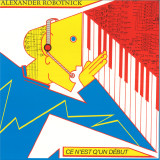
Alexander Robotnick - Ce N'est Q'un Debut

This Mini-LP was originally released on Materiali Sonori in 1984 in Italy and is long out of print. Alexander Robotnick (aka Maurizio Dami) is an Italian electronic musician. He made his debut on the Italian music scene as the founding member of Avida, a dance-cabaret band featuring Daniele Trambusti and Stefano Fuoch. in 1983 he attained international popularity with his track “Problèmes d’amour”, published first by the Italian label Materiali Sonori and then by Sire-Wea. “Problèmes d’amour” went on to become a “cult track” of the disco scene. After 40 years Spittle Records in joint venture with Materiali Sonori re-issues the mini album and the 12” with its original artwork.

"Once I was in Chicago, it was around 2010, I was just finishing my set and went outside the club to light a cigarette. Suddenly a police car stops nearby. I thought the policeman was here to fine me (I was more than 20 meters outside the venue), but he just lifted a poster of mine and asked to sign it. Then I realized that "Problèmes d’Amour" has been for a longtime the opening theme for a popular radio broadcast well-known between the black community (hence the policeman was black)”. - Maurizio Dami

Disponible

En el almacen y preparando para el envío

Various - ce Notes 002

Various

ce Notes 002

12inchVN002
Voice Notes
21.03.2023

Voice Notes 002 – and this time , in time honoured memorial of our sister label London housing Trust (that we finished a few years ago after 10 releases ) . we present a 5 track Various Artist ep – featuring 5 artists – and introducing Dance , Rodney Bennet and Pyramids of Space to the label .

The A side begins with a track from label boss Toby / Alphonse – called Rujac – a deep bleepy( Roland Juno 60 for the nerds ) breakbeat trip that had a very early outing from Truly Madly in his Dimensions mix and picked up a few ID requests… followed by another Voice Notes behind the scenes facilitator… Rodney Bennet – with some straight up - old fashioned deep house goodness – rolling bass and just wait for that floating hook .

On the B side a track we ve been sitting on a long time finally sees the light of day – from Toby Tobias – Streets of Gold – with an Alphonse remix – a looping , hypnotic breakbeat acid builder with a huge bass line and a pleasant surprise at the end – this track features a hand from former LHT man Façade as well …
Next up is Pyramids of Space first outing on the label , watch out for much more of them on the next release , some early ambient techno pioneers from Cornwall – if you are one of the holders of the rare Green Tape then lucky you – also might know them from Mordant Music – anyway I digress – this track Quantis perfectly sums them up – deep and dark , soothing techno to transport you to another place .This unreleased gem comes from 1999, but a future version of 1999…

And finally friend of the label – head man of Blank Mind records and all round DON – Dance ( Sam Purcell ) –we managed to prise a favourite from his sick Blowing up the Workshop mix .. and gave it a slight extension – a wonderful way to finish off the ep , slow bassline orientated ambient house of the highest order .


Check your Voice Notes …

No en stock

Haga su pedido ahora y le encargaremos el artículo en nuestro proveedor.


Ültimo hace: 2 Años
LALA & CE, LOW JACK - BAISER MORTEL

Lala&Ce,Low Jack

BAISER MORTEL

12inchPAN129LP
PAN RECORDS
09.12.2022

Baiser Mortel is the soundtrack of a performance commissioned by the Bourse de Commerce - Pinault Collection, performed in Paris in October 2021. PAN presents Baiser Mortel, the original soundtrack to the acclaimed theatrical performance of the same name. Staged at the Bourse de Commerce - Pinault Collection over four days last October, the original production - collaboratively realized by composer and director Low Jack, composer and rapper Lala &ce, choreographer Cecilia Bengolea with costumes designed by Marine Serre and Oriana Bekka as creative director and co- director of the performance - merged ballet and urban folklore; sound art and soap opera. A modern-day danse macabre, Baiser Mortel (trans. "The Kiss of Death") cast Lala &ce in the title role. Unfolding over thirteen songs, the musical narrative follows Death as she navigates the realm of the living, and the encounters - desire, romance, spiritual awakening, and adventure - which validate the human experience. "I brought in people who are close to me personally and musically in order to tell a story that speaks to humanity," Lala &ce says in a video uploaded to Bourse de Commerce - Pinault Collection's YouTube channel. Performers Jäde, Rad Cartier, BabySolo33, and Le Diouck joined Lala &ce on stage and in the booth at La Place - Centre Culturel Hip Hop in Paris, where the official soundtrack was recorded. A sonic representation of the musical's themes, Baiser Mortel the album - produced by Low Jack and written by Lala &ce with artwork by Pierre Debusschere - moves through the distorted strings of its opening track, "Goûter" and gathers sonic and lyrical intensity on each successive song. "Lune," the melancholically autotuned midpoint of the album, marks the beginning of the musical's second act and sets the tone for its tragic resolution. Mechanical sounds mix with sonic influences spanning the Global South throughout the album, honoring both Low Jack and Lala &ce's musical heritage and influences, while developing a new musical lexicon that defies comparison. As a theatrical production, Baiser Mortel represents a departure for both artists. A veteran of Parisian subculture, Low Jack's collaboration with Lala &ce represents a new model of artistic mentorship based not on age but on experience, with each artist leaving a distinct signature on the work.

No en stock

Haga su pedido ahora y le encargaremos el artículo en nuestro proveedor.


Ültimo hace: 3 Años
Alexander Robotnick - Ce Nest Q'un Debut

Repress

Alexander Robotnick (aka Maurizio Dami) is an Italian electronic musician. He made his debut on the Italian music scene as the founding member of Avida, a dance-cabaret band featuring Daniele Trambusti and Stefano Fuochi.In 1983 he attained international popularity with his track Problemes d'amour, published first by the Italian label Materiali Sonori and then by Sire-Wea. Problemes d'amour went on to become a cult track of the disco scene. It became quite an import hit in America's underground club scene, and sparked the mini-LP Ce N'est Qu'un Debut that same year (originally released on Materiali Sonori in 1984 (Italy). It consists of 6 captivating tracks including the hit Problemes d'amour as well as the track Dance boy dance which has appeared on other cult disco compilations.

No en stock

Haga su pedido ahora y le encargaremos el artículo en nuestro proveedor.


Ültimo hace: 2 Años
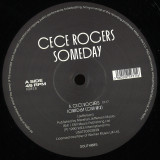
Ce Ce Rogers - Someday

Ce Ce Rogers

Someday

12inchSOUTH005
SOUTH STREET
28.08.2018

Ce Ce Rogers' spine tingling, seminal hit 'Someday' gets a much-welcomed official remastered, reissue 31 years after it first took the scene by storm. Produced by Chicago's master, Marshall Jefferson, every element is unmistakable - from the dynamic bass and sweeping flutes that set the scene for that instantly recognisable piano riff, to the raw soulful beauty of Rogers' vocals. 'Someday' is a record that truly captures the euphoric, loving nature of the early house music scene - epitomising a timeless spirit and hope for future harmony within society.

Often cited as one of the greatest dance records of all time, it's influence is clear to be seen from the sheer number of covers and records that have since sampled it. An indisputable masterpiece, complete with dub mix and accainstrumental versions, this is an essential 12" for any record collector out there - house head or not.

No en stock

Haga su pedido ahora y le encargaremos el artículo en nuestro proveedor.


Ültimo hace: 5 Meses
Takao - Stealth

Takao

Stealth

12inchEM1180LP2
EM Records
27.03.2026

''Stealth' is certainly an apt title for this disarming collection of crypto-New Age. From its opening, one might be forgiven for assuming that what follows is a tableau of digital disruption, and noise in one of its less offensive iterations.
However, Takao instead presents a rich and detailed tapestry of compositions that take New Age affectations, fashioning them into something far grander. There's a penchant for the nai¨ve, the more garish of digital instruments in the vein of James Ferraro - but importantly, Takao steers away from submitting to gestures themselves nai¨ve or garish, opting instead to focus attention to a more nuanced, delicate style.
Indeed, a more intrinsic tradition to posit 'Stealth' as an inheritor of would be the Impressionism of Debussy, or even Satie, with Takao's approach drawing light and composure from his instruments at their most bare and unadorned. Ever so pleasing and atmospheric, 'Stealth' is remarkably affecting in its subtlety.' (Nico Niquo)

Reservar27.03.2026

debe ser publicado en 27.03.2026


Ültimo hace: 6 Años
Various - French Disco Boogie Sounds Vol. 3 (2x12")

Repress

They say that good things come in threes... it must be true and Favorite Recordings also proudly presents the third edition of its acclaimed French Disco Boogie Sounds compilation series.

Like on prior volumes, the complete tracklist is selected by label head honcho, Charles Maurice (aka Pascal Rioux), who's unearthed 13 more forgotten and hidden tracks, all produced whether in France, in French, or by French artists between 1977 and 1987.

With most of these titles now very hard to find in their original edition and unknown by many, this compilation should be a must have for any Disco-Boogie-Funk music lover and collector.

Fully remastered from originals at The Carvery Cut (UK), French Disco Boogie Sounds Vol.3 (1977-1987, selected by Charles Maurice) is presented by Favorite Recordings in a gatefold vinyl double LP and as CD.

Disponible

En el almacen y preparando para el envío

Alain Meunier - Voyage Aux Fonds De La Mer

Issued on le Kiosque d'Orphée in 1979, Voyage aux fonds de la Mer is the only LP by Alain Meunier (not to be confused with French classical music cellist of the same name), and is one of the most elusive collector pieces of the 1970s electronic experimental French scene.

This rare sought after album starts with an instrumental guitar introduction but from the second track onwards it becomes a totally electronic experimental psychedelic trip that can be aligned with the most kosmische side of kraut rock, and of course also with other works by French experimentalists of the era like Pascal Comelade's Fluence or Richard Pinhas' production (including Heldon). Guitar comes in now and then showing also a certain Robert Fripp influence.

Instruments used according to the insert sheet that came with the LP are a Korg 800 DV synthesizer, a K.O. Welson Clavinet, effects like a Fender Echo or a Electroharmonix Small Stone phaser and a fuzz pedal, plus Meunier also used a Gibson Les Paul Custom Guitar, a 12 string acoustic Eko guitar and a 6 string Morris guitar.

First ever vinyl reissue. Limited edition to 500 copies only. Remastered sound.

No en stock

Haga su pedido ahora y le encargaremos el artículo en nuestro proveedor.


Ültimo hace: 12 Meses
Various - Comrade Detective LP

'Comrade Detective' ('Tovaraul Detectiv') is an
American buddy cop series created by Brian
Gatewood and Alessandro Tanaka.
Each episode is a different 'lost' episode from a
fictional Romanian television show that had been
commissioned by the Communist Party to promote
communism during the Cold War.
The episodes were filmed in Romania with local
actors and later dubbed into English for effect.
The episodes feature the voices of Channing
Tatum, Joseph Gordon-Levitt, Nick Offerman,
Jenny Slate, Jason Mantzoukas, Chloë Sevigny,
Jake Johnson, John DiMaggio and others.
The soundtrack features rare versions of
'Flashdance, What A Feeling', 'Obsession' and the
smash hit 'I Can't Wait' by Nu Shooz along with
Joe Kraemer's original score

No en stock

Haga su pedido ahora y le encargaremos el artículo en nuestro proveedor.


Ültimo hace: 7 Años
Corridor - Supermercado

Repress!

Supermercado: a mosaic, tangible, colourful to the point of saturaton, anchored in a very real present.
Behind the metaphor that gives the new album its ttle, Corridor examines modernity, takes on this transitonal transiton by looking at where it went wrong: pushed around by big data, apathy induced by oversaturaton, the speeding up of cycles, efort stripped to its bare minimum, physical detachment.
Afer giving the art-rock and jangle-pop treatment to their frst two eforts Un Magicien en toi and Le Voyage Éternel, Corridor stcks to its signature sound: upfront, dissonant guitars upheld by minimal beats and syncopated bass lines, yet also marks a new directon. Supermercado leans on repeated strong melodies, slow progressions, bolstered by two distnct voices, yielding a more hypnotc, sharper, and strangely, poppier result. Corridor recorded this new record in the hallowed halls of Montreal's Breakglass Studios, with Emmanuel Ethier (Chocolat, Bernhari, Peter Peter) assuming producton dutes.

Reservar08.12.2023

debe ser publicado en 08.12.2023


Ültimo hace: 2026 Años
Various - The Test Of Time
 
40

The return of A Turntable Friend Records starts with an opulent 40 track retrospective compilation of their heydays in the 1909s. Peers of Sarah Records and Slumberland Records but far from copying their style, ATF Records always had their own musical identity allowing for a roster as diverse as Boyracer (with Even As We Speak), Secret Shine, The Claim, The Ropers, the Hellfire Sermons + Lorelei.

This compilation is a feast of highlights from the long-deleted back catalogue plus 8 unreleased tracks from the period. Many of the original 7s & 12s are much sought after collector items and several tracks appear on cd for the first time.
Indie guitar popof the best variety delivered by bands from the UK< USA, Australia + Japan.
The release is luxuriously packaged in a tri-fold sleeve for the triple vinyl, strictly limited to 500 for the world. It includes a 12 x 12 full colour booklet and a download code.
The double cd comes with the same tracks also in a gatefold sleeve with full colour booklet.
This compilation is a fundraiser for the William Wates Memorial Trust in the UK with all profits being donated.

No en stock

Haga su pedido ahora y le encargaremos el artículo en nuestro proveedor.


Ültimo hace: 6 Años
BENJAMIN LEW - LE PERSONNAGE PRINCIPAL EST UN PEUPLE ISOLÉ

'Benjamin Lew was an enlightened amateur, in the noble and almost Renaissance-like sense of the word: he dabbled with equal grace in photography, writing, visual arts ... and worked part-time as a cocktail mixer in a tropical bar which was one of the favourite watering holes of Brussels' thriving artistic community of the early '80s. Tuxedomoon had just moved to Brussels, and Steven Brown was among the many musicians, designers & artists who patronized the bar. Benjamin had a secret passion: he wasn't a musician, but had acquired a small analog computer, with which he had started creating these strange mysterious little pieces. Benjamin played them to Steven and asked him if he'd agree to record with him. Steven was taken with them and accepted. The Douzième Journée was largely created in the studio by both protagonists, with the help of Gilles Martin and myself, in the spring of '82. Listening to his albums (he went on to record four more with Crammed) is like embarking on a dream journey to the Sahara or the Far East. You'd think that some of the pieces feature non-European musicians or samples but: no... this is just Benjamin's imagination, his synths, and his friends...'

Marc Hollander, Feb. 2019

No en stock

Haga su pedido ahora y le encargaremos el artículo en nuestro proveedor.


Ültimo hace: 6 Años
O - Olivier Margerit - à Terre!

For those who like pop music and French music it is getting hard not to know about Olivier Marguerit aka 'Ô'. He played he countless acts from the new French pop scene, from Syd Matters to Mina Tindle, Thousand and Chelvarex. He's also highly praised by his peers and iconic French singers such as Etienne Daho and his first album 'Un Torrent La Boue' has been critically acclaimed by press, radio and web journalists upon its release. With this new album, in which is imagine himself falling down only to bounce back stronger, Olivier Marguerit's once again demonstrates his talent to craft exhilarating pop melodies, confirming his status as one the keystones of the rising scene of the genre in France.

No en stock

Haga su pedido ahora y le encargaremos el artículo en nuestro proveedor.


Ültimo hace: 7 Años
Brigitte Fontaine & Areski Belkacem - Vous et Nous

Art is a matter of different phases and influence. The artists' core reaches out like heat waves. And very rarely do these artists' core merge like Brigitte Fontaine and Arseki Belkacem have. Their Saravah Era lasted ten years (1969 to 1979), ten years of "folle sagesse" (crazy wisdom), above all genres and song limitation.

"Le plaisir secret que donne une chanson, dessin à la craie sur le mur de tes sons" (the personal delight within song, a chalk drawing on your wall of sounds) whispers Areski, right after Brigitte's voice on the penultimate song of the double album "Vous et nous". Released in 1977, this free flowing record contains 33 songs, it's their 6th album after "Comme à la radio", "Brigitte 4", "Je ne connais pas cet homme", "L'incendie" and "Le bonheur", and it continues to spread the wide and generous spectrum of the couple fully blossoming talent. Electronic experiments, North African trance, refined acoustics and medieval drones gracefully blend with the acid and candid tongues of the singers, surprising us each step along the way. The making of this record was also full of twists and turns. It started out as a solo effort by Areski at Jean-Pierre Chambard's studio. Little by little, as Areski was filling tapes with poems and improvised skits, Brigitte would sneak into the studio at nightfall, adding her voice here and there, her whispers then became screams, giving fuel to the fire in a total blaze, a surreal blaze. The solitary work ("je") thrived to become us ("nous") and you ("vous") ...

Benjamin Barouh, June 2018

No en stock

Haga su pedido ahora y le encargaremos el artículo en nuestro proveedor.


Ültimo hace: 7 Años
Les Negresses Vertes - Trabendo

Les Negresses Vertes

Trabendo

2x12inchBEC5543327
Because Music
05.10.2018

Original year of release: 1999. Features the tracks 'Easy Girls', 'Leila', 'Ce Pays', etc. Les Négresses Vertes was the biggest French act touring the world in the beginning of the 90's. The band has just reunited and will tour Europe this year to celebrate the 30th anniversary of 'Mlah". The album 'TRABENDO' has been unavailable on vinyl since their first original pressing.

No en stock

Haga su pedido ahora y le encargaremos el artículo en nuestro proveedor.


Ültimo hace: 7 Años
Mikado - Forever

Hailing from Paris, Mikado featured singer Pascale Borel and instrumentalist Gregori Czerkinsky. As well as cult debut single Par Hasard, issued by Crepuscule in October 1982, the remastered collection includes subsequent singles Naufrage en Hiver, Carnaval and La Fille du Soleil as well as debut album Mikado from 1985, executive produced by Haruomi Hosono of Yellow Magic Orchestra.

Bonus tracks include b-sides, jungles, and several demo songs for an unfinished second album. There is also an English language version of Par Hasard (Romance), Christmas album track Noel Sous le Soleil, plus a previous unreleased cover version of the theme from Night of the Hunter.

Cover photography is by Pierre et Gilles, the famous French artists celebrated for creating a world where painting and photography meet. The 2xCD edition is housed in a 6 panel digipack with a 12 page booklet. The double vinyl set comes in a gatefold sleeve and includes a free digital copy.

No en stock

Haga su pedido ahora y le encargaremos el artículo en nuestro proveedor.


Ültimo hace: 8 Años
Martial Canterel - Navigations LP 3x12"

Medical Records proudly presents a special limited edition of all 3 "Forgotten Tracks, Sketches and Unfinished Work 2002-2004" by Martial Canterel as a triple gatefold set. Volume I was released previously in 2013, and Volume II and III are simultaneously being released by Medical Records as standalones. Sean McBride has been producing work under the Martial Canterel moniker dating back to 2002 as well as working as half of Xeno And Oaklander. These tracks capture the allure and depth of Sean's early work exploring rhythms and perfectly crafted pop songs using a very early incarnation of limited instrumentation. Fans of Martial Canterel's early work (think "Austerton" and "Sister Age") will be instantly elated. This is the first time these tracks have been released on vinyl and have been remastered for this release by Martin Bowes at the Cage, UK. Contains special bonus insert with lyrics. Fans of early Martial Canterel as well as other cold wave icons such as A Blaze Color, Snowy Red, and the like will need this collection. Presented on high-quality 180gram classic vinyl in a triple gatefold pack.

No en stock

Haga su pedido ahora y le encargaremos el artículo en nuestro proveedor.


Ültimo hace: 8 Años
Les Fils Du Calvaire - Rester Avec Toi (feat. Miss Kittin) 10"

Special Remarks: 10'' vinyl in a cardboard sleeve with 3mm spine. CD included.
Les Fils du Calvaire is a Parisian trio (Jo, Damien & Clément. Nowadays they spend their time between the French capital and Berlin. They are also the creators of the hybrid electronic music project, dOP, signed on Circus Company, the label who released the first album of Nicolas Jaar. Les Fils du Calvaire is hybrid, transversal between elegant French Pop, decadent club music and outgoing cabaret. They compose for people who are singing in the shower, those who drive by night, for the charming ones while dancing upside down. Especially for those who understood that present may be our last freedom. And all this without any nostalgia. They also know how to pick their cast: they called Ash Workman for his production skills (Metronomy, Christine and the Queens...) to do the mixing of their first album. Rester avec Toi' is a perfect flavour extract from the forthcoming album ' Fils de ,

No en stock

Haga su pedido ahora y le encargaremos el artículo en nuestro proveedor.


Ültimo hace: 5 Años
Chebran - French Boogie 1981-1985
 
6

This is France in the Mitterrand years: fashions fleet as fast as governments. In the early eighties, the happy-go-lucky gather the nectar of each and every new release.
Believing in a bright future for videotex, and loosened up by the sexy talks broadcasted on the budding pirate radios, the new generation dreams of dance floors and holiday clubs. French Boogie, which preserves the spirit of these years of boodle and bunkum, is the ideal soundtrack to their dreams.

What the web now refers to as French Boogie is some synthetic funk reflecting the spirit of those days when nothing was impossible, or so it seemed. Its syncopated flow heralded the dawning of French rap. Often considered as some kind of post-disco, inspired as much by black music as by new wave, this carefree pop music with bawdy lyrics indulged in simple pleasures: holidays, swank and sun were recurrent themes. Totally in tune with its time, it incidentally glorified luxury, success, and a certain consumerism embodied, for instance, in Bernard Tapie.

In popular clubs such as La Main Bleue in Montreuil, or L'Echappatoire in Clichy-sous-Bois - where Micky Milan could be seen behind the decks - an enthusiastic audience discovered this new sonic wave, influenced as much by French pop as by Sugar Hill Gang or Kurtis Blow. The artists who first launched the movement engaged in it wholeheartedly, but as often the case with new music trends in France, humour and casualness quickly became a decoy to impose a new style. This explosive mixture, in which startling and typically Frenchy French lyrics go along New-York-style tunes, is sometimes reminiscent of the kinky comedies directed by Max Pécas or Claude Zidi. On this prolific scene, partly originating from the Jewish community, everybody was looking for success, trying to hit the jackpot with what was to hand. Famous media personalities, one-hit wonders or John Does in quest of fame, all had a go at French Boogie - more or less successfully. Apart from « Vacances j'oublie tout » by Elégance, « Un fait divers et rien de plus » by Le Club, or « Chacun fait ce qui lui plaît » by Chagrin d'amour (produced by Patrick Bruel), very few songs became hits: the story of funk in France is that of a half-baked robbery.

In this myriad of new musicians, the very young François Feldman and Phil Barney pioneered a fresh and hybrid style. Other well-known artists like Gérard Blanc from Martin Circus (Attaché Case), Richard de Bordeaux (Ich), or Jean-Pierre Massiera (Anisette, Pirate Scratch Band, Mandrake, Scratch Man...) added an eccentric touch to this sound-wave, making it often entertaining, and sometimes showy.

Capture d'écran 2015-10-26 à 12.55.43Singers like Agathe (the author of 'La Fourmi' and of the hit song 'Je ne veux pas rentrer chez moi seule') were far more than just window dressing. They even tried to give an ironic and subversive twist to this rather harmless genre. The very vindictive rebel Gérard Vincent shared in this spirit, but as a whole, French Boogie became associated with nonchalance and sauciness. Thus, Stéphane Collaro, Gérard Jugnot, Alain Gillot Pétré and other TV clowns would clumsily contribute to this French variation on funky sounds. In a few but intense years, French Boogie gave all the tips to party with style.

If some hits made it possible for the happy few to get a real house under truly exotic palm trees, the wave actually ebbed away very quickly, leaving quite a few musicians stranded on the shore. Whether they were sincerely motivated, or simply opportunistic, they had failed. In 1984, French Boogie was already breathless, and got merged with other genres: on the one hand, rap and breakdance adapted its flow to a more urban world, especially with Sydney's show, H.I.P.H.O.P, and Dee Nasty's broadcasts on Radio Nova; on the other, italo, new beat and house began to rule over dance floors, even more strongly asserting the will to develop music for clubs.

Squeezed in between the age of disco and that of modern electronic music, French Boogie was a transitional phase, but it remains an amazingly refreshing testimony to the intermingling of pop and underground cultures. The genre was hastily categorized as anecdotal in spite of its pioneering synthetic groove and matchless bass lines. An attentive ear will discover the poetry of the ephemeral beyond the eccentricities of the genre, as well as a certain unexpected avant-gardism. At the origin of major music trends, always cheerful and catchy, French Boogie is what you need to party.

No en stock

Haga su pedido ahora y le encargaremos el artículo en nuestro proveedor.


Ültimo hace: 10 Años
The Pale White - Inanimate Objects of the 21st Century LP
  • A1: Moth In The Headlights
  • A2: Float Away
  • A3: Göbekli Tepe
  • A4: Absolute Cinema
  • A5: Oh Brother
  • A6: Medusa
  • B1: Carpe Diem
  • B2: Mannequin
  • B3: This Fascination
  • B4: Disappoint Me
  • B5: All I Have To Do Is Dream

With their third album, Inanimate Objects of the 21st Century, Newcastle’s The Pale White prove once again that there’s no slowing them down. Following the success of their introspective sophomore album The Big Sad, brothers Adam (vocals/guitar) and Jack Hope (drums) return louder, sharper, and more defiant than ever. This third full-length is their most expansive yet: a record that blends the anthemic punch of classic rock with the urgency and edge of modern alternative.The title, Inanimate Objects of the 21st Century, is a nudge to the uncomfortable irony of our time – as technology accelerates, humanity feels increasingly frozen in place. Lead singer Adam Hope says: “Technology is moving, but we are not. Human civilization entered the 21st century wide-eyed and naive with mobile phones that would barely fit in our pockets. Fast forward a few decades and we’re so far from where we were that it almost looks like a bad 80’s sci-fi movie. Back then, that film would be watched in packed-out cinemas after an eagerly anticipated release, but now they stand emptier than they once were, attended mainly as a nostalgic experience in the age of Netflix and doomscrolling.

The birth of AI, algorithms, cryptocurrency, drones, holographic concerts, autonomous cars… we’re living in a strange transitional period which is both fascinating and terrifying in equal measure. We humans have now in fact become the inanimate objects - mannequins.After our softer, melancholic second album ‘The Big Sad’, we felt it was only right to move as fast as our world is moving and release our next within the year. ‘Inanimate Objects of the 21st Century’ is the evil twin, the Yin to The Big Sad’s Yang.”

Reservar27.03.2026

debe ser publicado en 27.03.2026


Ültimo hace: 2026 Años
Black Label Society - Black Label Society LP 2x12"

For more than 25 years, Black Label Society has stood as one of heavy music’s most unshakeable pillars, delivering album after album of blues-soaked grooves, hard-hitting riffs, and soul-baring ballads. “Engines of Demolition” makes no exception to the steady rule of unrelenting commitment to pure, uncompromising, hard rock.


In 2022, Wylde was invited to honor his fallen brothers, the late great Dimebag Darrell Abbott and his brother Vinnie Paul, as part of Pantera Celebration. Writing and recording with Black Label Society over these last four years is when Engines of Demolition was born. Engines of Demolition follows the release of four singles, “The Gallows” (2024), "Lord Humungus" (2025), “Broken and Blind” (2025) and “Name In Blood” (2026), and marks the first full-length album release since Doom Crew Inc. (2021).


Black Label Society is the pure expression of the paradox of Zakk Wylde’s darkest, loudest riffs and softest soul crushing ballads. BLS is a relentless heavy, bluesy, unhinged hard-rock-metal circus quartet summoning caffeine-fueled cacophony on records and the stage. BLS songs are odes to celebration and mourning from the darkest depths to the highest of highs.


A charismatic hard rock and metal marauder recognized as a living legend and guitar icon, Wylde rose to prominence when Ozzy Osbourne chose him as his loyal axe man. Multi platinum albums, countless guitar magazine covers, Worldwide sold out tours, his own guitar and coffee brands add to Wylde’s ever-growing legacy. He gets as much joy from fronting his Black Label Society as he did playing on stage with his hero, Ozzy Osbourne, to his Black Sabbath cover band, Zakk Sabbath.


Seit mehr als 25 Jahren ist Black Label Society eine der unerschütterlichsten Säulen der Heavy-Musik und liefert Album um Album bluesgetränkte Grooves, knallharte Riffs und gefühlvolle Balladen. „Engines of Demolition“ fügt sich nahtlos ein in das unerbittliche Bekenntnis der Band zu purem, kompromisslosem Hardrock.


Im Jahr 2022 wurde Wylde eingeladen, im Rahmen der Pantera Celebration seine verstorbenen Brüder, den großartigen Dimebag Darrell Abbott und seinen Bruder Vinnie Paul, zu ehren. Während er in den letzten vier Jahren mit Black Label Society Songs schrieb und aufnahm, entstand „Engines of Demolition“. Das Album folgt auf die Veröffentlichung von vier Singles, „The Gallows“ (2024), „Lord Humungus“ (2025), „Broken and Blind“ (2025) und „Name In Blood“ (2026) - und ist das erste Studio-Album seit Doom Crew Inc. (2021).


Black Label Society ist der pure Ausdruck des Paradoxons von Zakk Wyldes dunkelsten, lautesten Riffs und sanftesten, herzzerreißenden Balladen. BLS ist ein unerbittliches, bluesiges, verstörendes Hardrock-Metal-Zirkusquartett, das auf Platten und auf der Bühne eine koffeinhaltige Kakophonie hervorruft. BLS-Songs sind Oden an das Feiern und Trauern, von den dunkelsten Tiefen bis zu den höchsten Höhen.


Wylde, ein charismatischer Hardrock- und Metal-Musiker, der als lebende Legende und Gitarrenikone gilt, wurde bekannt, als Ozzy Osbourne ihn zu seinem treuen Gitarristen machte. Multi-Platin-Alben, unzählige Titelseiten von Gitarrenmagazinen, weltweit ausverkaufte Tourneen, seine eigene Gitarren- und Kaffeemarke tragen zu Wyldes ständig wachsendem Vermächtnis bei. Er hat genauso viel Freude daran, seine Black Label Society zu leiten, wie er sie hatte, als er mit seinem Helden Ozzy Osbourne auf der Bühne stand oder mit seiner Black Sabbath-Coverband Zakk Sabbath spielte.

Reservar27.03.2026

debe ser publicado en 27.03.2026


Ültimo hace: 2026 Años
Various - Digging Central Asia: Musical Archaeology Along the Silk Road LP

Death Is Not The End collaborate with Uzbek label Maqom Soul to deliver an LP counterpart to last year's mixtape of the same title, compiling specially picked & fully licensed individual belters from the ex-soviet studios of Central Asian republics between 1978 and 1989 - incl. Uzbek, Tajik, Kurdish & Uyghur artists pulling traditional folk motifs together with pop & rock and psych elements.

"These recordings do not form a smooth or coherent history. They feel more like a sequence of discoveries made at different moments and in different circumstances. Songs and instrumental pieces that once lived inside specific contexts radio broadcasts, philharmonic programs, touring routes now sit side by side, revealing hidden connections as well as clear fractures between them.

Nasiba Abdullaeva appears here as a voice from the end of an era. Trained within a conservatory system, she worked inside the format of the Soviet pop song while filling it with melodic logic that did not come from Moscow or Leningrad. Her voice is soft and sustained, shaped by Eastern melisma, and it never functions as decoration. Even in tightly structured songs there is a sense of resistance, an effort to preserve a musical language rooted in Uzbek tradition rather than fully adapted to an all Union standard.

The ensemble Sintez, later renamed Navo, represents a different path. Beginning as a student rock group, the band was gradually absorbed into the official VIA system with all its limitations and compromises. Yet it was precisely within those boundaries that Sintez and Navo developed a recognizable sound. Electric guitars and jazz rock harmonies do not overpower the folk material but remain in tension with it. Their recordings feel like negotiations between what the musicians wanted to play and what they were allowed to perform.

The Tajik ensemble Gulshan reflects an institutional approach carried to a high professional level. Formed under television and radio structures, the group treated folk material almost as a written score. Carefully constructed arrangements, close attention to orchestration, and restrained use of pop techniques define their sound. There is less spontaneity here, but a strong sense of discipline and structure, where national melody becomes part of a carefully controlled sonic framework.

Koma Wetan occupies a very different space. Formed in the 1970s, this Kurdish rock group approached poetry and folklore as tools of cultural assertion. Their psychedelic rock never feels like a stylistic borrowing. Instead it functions as a contemporary vessel for language and themes that might otherwise have remained unheard. Even today these recordings sound fragile and stubborn at the same time.

The Uyghur ensemble Yashlik, closely connected to a musical drama theatre, operated somewhere between stage performance and popular music. Their songs are built on folk melodies but shaped for wide audiences. What emerges is a constant attempt to preserve the recognizability of Uyghur musical identity without freezing it in a folkloric frame. Yashlik's music exists in a state of balance between representation and development.

Digging Central Asia does not attempt to establish hierarchies or offer a single wayof listening. Names and dates matter less than the sound itself. Tape noise, abrupt transitions, and unexpected timbres remain part of the material rather than flaws to be corrected. This music existed at the crossroads of multiple routes geographic, cultural, and ideological. Heard today in a new context, it no longer feels peripheral. Instead it stands as a reminder that the history of popular music is far more fragmented, layered, and polyphonic than it is usually allowed to be."

Reservar27.03.2026

debe ser publicado en 27.03.2026


Ültimo hace: 2026 Años
The Kanpai Quartet - Sguardo Celestiale / Five Days (7")

Second release from London based jazz quartet and recorded at Abbey Road Studios. Sguardo Celestiale kicks things off with some heavy jazz funk vibes for the dancers. Five Days slows things down a little and veers more towards the bands library influence. Limited to 250 copies.

Reservar27.03.2026

debe ser publicado en 27.03.2026


Ültimo hace: 2026 Años
Black Label Society - Black Label Society LP 2x12"
  • A1: Name In Blood
  • A2: Gatherer Of Souls
  • A3: The Hand Of Tomorrows Grave
  • B1: Better Days & Wiser Times
  • B2: Broken And Blind
  • B3: The Gallows
  • C1: Above & Below
  • C2: Back To Me
  • C3: Lord Humungus
  • C4: Pedal To The Floor
  • D1: Broken Pieces
  • D2: The Stranger
  • D3: Ozzy's Song
También disponible

MARBLED VINYL


For more than 25 years, Black Label Society has stood as one of heavy music’s most unshakeable pillars, delivering album after album of blues-soaked grooves, hard-hitting riffs, and soul-baring ballads. “Engines of Demolition” makes no exception to the steady rule of unrelenting commitment to pure, uncompromising, hard rock.


In 2022, Wylde was invited to honor his fallen brothers, the late great Dimebag Darrell Abbott and his brother Vinnie Paul, as part of Pantera Celebration. Writing and recording with Black Label Society over these last four years is when Engines of Demolition was born. Engines of Demolition follows the release of four singles, “The Gallows” (2024), "Lord Humungus" (2025), “Broken and Blind” (2025) and “Name In Blood” (2026), and marks the first full-length album release since Doom Crew Inc. (2021).


Black Label Society is the pure expression of the paradox of Zakk Wylde’s darkest, loudest riffs and softest soul crushing ballads. BLS is a relentless heavy, bluesy, unhinged hard-rock-metal circus quartet summoning caffeine-fueled cacophony on records and the stage. BLS songs are odes to celebration and mourning from the darkest depths to the highest of highs.


A charismatic hard rock and metal marauder recognized as a living legend and guitar icon, Wylde rose to prominence when Ozzy Osbourne chose him as his loyal axe man. Multi platinum albums, countless guitar magazine covers, Worldwide sold out tours, his own guitar and coffee brands add to Wylde’s ever-growing legacy. He gets as much joy from fronting his Black Label Society as he did playing on stage with his hero, Ozzy Osbourne, to his Black Sabbath cover band, Zakk Sabbath.


Seit mehr als 25 Jahren ist Black Label Society eine der unerschütterlichsten Säulen der Heavy-Musik und liefert Album um Album bluesgetränkte Grooves, knallharte Riffs und gefühlvolle Balladen. „Engines of Demolition“ fügt sich nahtlos ein in das unerbittliche Bekenntnis der Band zu purem, kompromisslosem Hardrock.


Im Jahr 2022 wurde Wylde eingeladen, im Rahmen der Pantera Celebration seine verstorbenen Brüder, den großartigen Dimebag Darrell Abbott und seinen Bruder Vinnie Paul, zu ehren. Während er in den letzten vier Jahren mit Black Label Society Songs schrieb und aufnahm, entstand „Engines of Demolition“. Das Album folgt auf die Veröffentlichung von vier Singles, „The Gallows“ (2024), „Lord Humungus“ (2025), „Broken and Blind“ (2025) und „Name In Blood“ (2026) - und ist das erste Studio-Album seit Doom Crew Inc. (2021).


Black Label Society ist der pure Ausdruck des Paradoxons von Zakk Wyldes dunkelsten, lautesten Riffs und sanftesten, herzzerreißenden Balladen. BLS ist ein unerbittliches, bluesiges, verstörendes Hardrock-Metal-Zirkusquartett, das auf Platten und auf der Bühne eine koffeinhaltige Kakophonie hervorruft. BLS-Songs sind Oden an das Feiern und Trauern, von den dunkelsten Tiefen bis zu den höchsten Höhen.


Wylde, ein charismatischer Hardrock- und Metal-Musiker, der als lebende Legende und Gitarrenikone gilt, wurde bekannt, als Ozzy Osbourne ihn zu seinem treuen Gitarristen machte. Multi-Platin-Alben, unzählige Titelseiten von Gitarrenmagazinen, weltweit ausverkaufte Tourneen, seine eigene Gitarren- und Kaffeemarke tragen zu Wyldes ständig wachsendem Vermächtnis bei. Er hat genauso viel Freude daran, seine Black Label Society zu leiten, wie er sie hatte, als er mit seinem Helden Ozzy Osbourne auf der Bühne stand oder mit seiner Black Sabbath-Coverband Zakk Sabbath spielte.

Reservar27.03.2026

debe ser publicado en 27.03.2026


Ültimo hace: 2026 Años
Jennifer Warnes - The Hunter LP
  • A1: Rock You Gently
  • A2: Somewhere, Somebody
  • A3: Big Noise New York
  • A4: True Emotion
  • A5: Pretending To Care
  • B1: The Whole Of The Moon
  • B2: Lights Of Lousianne
  • B3: Way Down Deep
  • B4: The Hunter
  • B5: I Can’t Hide

Celebrating the 30th Anniversary of Jennifer Warnes' Pop Classic on Crystal Clear Green Vinyl!
All-Tube Mastering by Chris Bellman at Bernie Grundman Mastering from the Original Master Analog Tapes on 180 Gram Vinyl!
One-Time Pressing of 3,000 Individually Numbered Copies!
New Inner Sleeve and LP Labels!
Pressed at RTI!

Impex Records is celebrating the 30th Anniversary of The Hunter with a one-time, individually-numbered pressing of 3,000 in crystal clear green vinyl! Jennifer Warnes’ acclaimed follow-up to Famous Blue Raincoat features a Grammy-nominated recording by Elliot Scheiner and all-tube mastering by Chris Bellman at Bernie Grundman Mastering using Jennifer’s personal original analogue master tapes.

‘The Hunter’ was released five years after her breakthrough with ‘Famous Blue Raincoat’. A TOP 100 LP when first released in 1992, The Hunter’s audiophile credibility is best summed up by Elliot Scheiner’s Grammy-nominated recording and mix. It contains the charting single “Rock You Gently,” a sonically dense yet expansive cover of The Waterboy’s classic “The Whole of the Moon,” a soulful Jennifer Warnes/Leonard Cohen composition “Way Down Deep,” Todd Rundgren’s “Pretending to Care” and even a Donald Fagen tune (“Big Noise, New York”). She owns every tune here, backed by a-list session players who ground the songs with solid and unobtrusive authority, letting Jennifer’s peerless interpretive skills bring the soul of every lyric to the forefront. Ms. Warnes uses her voice to serve the lyrics, allowing the song to return the favour.

“The follow-up to Warnes’ FBR offers crisp percussion cues, solid bass throughout – but especially during “Way Down Deep” – and a surprise chamber quartet on the title track” – Neil Gader, TAS Guide to Audiophile Demo Disc

Arista (now Sony/BMG) never released The Hunter on vinyl in the U.S. A regular-weight LP floated around Europe for a while but is not noted for exceptional sound or quiet vinyl.

“Remastered by Chris Bellman at Bernie Grundman Mastering, the sonics are luscious. Warnes has always had an audiophile’s ear and was hands-on with this effort–one of the last from now-defunct Cisco Records. It soars effortlessly, restoring warmth and delicacy and easily besting the earth-bound but otherwise excellent CD. It’s an example of both an artist in full charge of her powers, and analogue art its very best.” – Greg Cahill, The Absolute Sound

Reservar27.03.2026

debe ser publicado en 27.03.2026


Ültimo hace: 2026 Años
Martina Bertoni - Electroacoustic Works for Halldorophone LP 2x12"

For her new and most radical album »Electroacoustic Works for Halldorophone«, Martina Bertoni used the electronic instrument at EMS Stockholm to create four pieces that are massive in scale and incredibly intimate, sonically restrained and emotionally overwhelming—almost ambient and always demanding your full attention.

Martina Bertoni returns to Karlrecords with »Electroacoustic Works for Halldorophone,« her most radical album yet. The foundation for the four electroacoustic pieces was laid during a residency at Stockholm’s legendary Elektronmusikstudion (EMS) that the Berlin-based cellist and composer used to explore the curious instrument, originally designed by Halldór Úlfarsson in 2008, as an algorithmic system in order to examine tunings and the mathematical relationships between Aiming to analyse and understand their interaction beyond the composer’s control, Bertoni sought to engage more deeply with the concepts of time, tuning, and, most importantly, control. Accordingly, her four »Electroacoustic Works for Halldorophone« seem both massive in scale and incredibly intimate, sonically restrained and emotionally overwhelming— almost ambient and always demanding your full attention.

While the halldorophone—famously used by Hildur Guðnadóttir for her »Joker« score—roughly resembles a cello and can be played like one, it is an electronic instrument. The vibration of its strings is being picked up, amplified, and then routed through a speaker. This creates a feedback loop that becomes increasingly complex depending on how much gain is added to individual strings. Úlfarsson gave Bertoni a carte blanche for how to handle the instrument, but she stresses that she relied on »minimal interventions—some string strumming and plucking« that set the interactions of different sounds and frequencies into motion. »I decided to not approach it like a cellist would,« she explains. »Instead I used it as a kind of generative organ by turning it into a feedback machine, with tuned feedback triggering more feedback depending on the tuning, which was based on tetraphonic scales that I could apply on the four main strings as well as the sympathetic group of strings.«

Bertoni recorded the material in the EMS studio, later composing and arranging the four complex pieces in her home in Berlin, after which they were mixed and mastered by Ciaran O’Shea. While this can be considered a compositional abstraction process, traces of her concrete work as a performer are firmly ingrained in the music. »The halldorophone doesn’t have a line output, just a double set of speakers, which is why I recorded all sounds with two microphones in the EMS studio,« she explains. »That’s why there’s plenty of breathing sounds here and there—label owner Thomas Herbst and I jokingly refer to the album as my ›chamber music record‹.« And indeed, there is a striking sense of intimacy to these four pieces throughout which individual sounds, harmonic frequencies, and even subtle rhythmic figures seem to move both on their own accord but also according to a underlying vision that steers their interplay.

Indeed, »Electroacoustic Works for Halldorophone« is an album built on and marked by contrasts. The soothing polylogue of single sounds in the higher register on opener »Omen in G« is counterpointed by massive bass drones, while the second piece, »Nominal in D,« plays a cunning game of repetition and difference by combining thick textures with all kinds of rhythmic elements. »Fades in C«—the longest of the four pieces, clocking in at 17 minutes—unlocks the emotional potentials of the sonic qualities of the halldorophone, sounding at once serene and anthemic, and »Organon in D« closes the album by underscoring how Bertoni’s unconventional approach allows her to seamlessly transform simple, quiet tones into complex, towering walls of sound.

Reservar27.03.2026

debe ser publicado en 27.03.2026


Ültimo hace: 2026 Años
PRIMAL SCREAM - Come Ahead: The Remixes Vol. 2 (Dubs) (2x12")
  • The Centre Cannot Hold (Lovefingers Chemical Dub)
  • Innocent Money (Lovefingers Root Of All Evil Dub)
  • Love Insurrection (Black Science Orchestra Dub)
  • Ready To Go Home (Hardway Bros Meet Monkton Uptown Dub)
  • Innocent Money (Radio Slave Remix Instrumental)
  • Innocent Money (Pet Shop Boys Remix Dub)
  • Ready To Go Home (Terry Farley, Wade Teo Dub Mix)
  • Love Insurrection (Terry Farley, Wade Teo Dub Mix)

For the first time on LP vinyl, Come Ahead: The Remixes Vol.2 (Dubs) brings Primal Scream’s club-ready reinventions into full analog glory. Originally released in FLAC format in 2025, this second volume dives deep into dub territory, reimagining tracks from Come Ahead with hypnotic grooves and spacious textures. Featuring reinterpretations by Lovefi ngers, Black Science Orchestra, Radio Slave, and Pet Shop Boys (in dub mode), each track pulses with low-end warmth and rhythmic experimentation. From the acid-drenched swirl of “The Centre Cannot Hold” to the narcotic haze of “Innocent Money,” this is Primal Scream at their most psychedelic and dancefl oor-minded. Specially mastered for vinyl, the sound is immersive and tactile — perfect for DJs, collectors, and audiophiles alike.

Eight tracks, nearly an hour of music, and a sleeve that nods to rave-era design make this a must-have for fans of dubwise house and experimental club culture. Limited pressing. Maximum impact. Come Ahead: The Remixes Vol.2 (Dubs) is available as 2LP Black Vinyl.

Reservar27.03.2026

debe ser publicado en 27.03.2026


Ültimo hace: 2026 Años
Iivana Mišukka & Arja Kastinen - Iivana Mišukka (Tape)
  • 01: Maanitus &Amp; Tšiižik
  • 02: Markka
  • 03: Melkutus
  • 04: Letška
  • 05: Kuuen Parin Hoirola
  • 06: Brišatka
  • 07: Tšiižik
  • 08: Kirkonkellot
  • 09: Kirkonkellot Korkea
  • 10: Hoirola, 3 Parin
  • 11: Lippa
  • 12: Kyngäkiža
  • 13: Ristakondra
  • 14: Vanha Polkka
  • 15: Viistoista
  • 16: Vanha Valssi
  • 17: Kiberä
  • 18: Maanitus Kuokan Kanteleella
  • 19: Tuuti Lasta Nukkumahe
También disponible

Vinyl


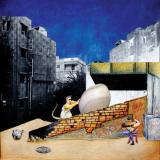
Death Is Not The End present a further volume of Arja Kastinen's eerie amalgamations of 110 year old wax cylinders with her own meticulously transcribed takes, this time focussing in on Armas Otto Väisänen's field recordings of kantele player Iivana Mišukka (b. 1861 d.1919).

"Ivana Mišukka (1861–1919) was one of the Karelian kantele players recorded by the folk music researcher Armas Otto Väisänen on wax cylinders in 1916 and 1917. In the early 20th century, the remote areas of Border Karelia were undergoing the final phase of a transformation in musical culture, with the ancient runo song tradition giving way to newer forms of music. This transition is reflected in Mišukka's repertoire and choice of instrument. The ancient small kantele, hollowed out of a single piece of wood, was already rare at the turn of the century. Mišukka's kantele was a new type of instrument with 26 strings, constructed of several parts, but he played it using the traditional plucking technique. Like other Border Karelian kantele players, his repertoire consisted of music rooted in runosong culture, as well as newer dances and songs from the east and west. Most of the recorded material falls into the latter category.

Ivan Bogdanov Mišukka was born out of wedlock in Suursara village, Suistamo, on 1 May 1861. He began playing the kantele at the age of five or six, quickly mastering the instrument. In adulthood, he was considered one of the area's best master players. Mišukka was landless for most of his life and lived in different parts of the Suistamo parish. His first wife, Tekla Markintytär, died in 1897 at the age of 40, and his second wife, Jevdokia Filipintytär Jeminen, died in 1907 at the age of 50. Seven children were born from the first marriage, two of whom died young. The third wife, Maria Ignatintytär Gurnan (Kuurnanen), was a well-known master of lamentations. Together with Maria, Iivana Mišukka worked as a tenant farmer in the village of Suursara. Mišukka suffered from rheumatism, which prevented him from participating in physical work like Maria. This was apparently partly the reason why Iivana Mišukka went to earn extra money by playing the kantele on gig trips. He often had other traditional artists from Suistamo as his travelling companions, such as the runosingers Konstantin Kuokka and Iivana Onoila. Iivana Mišukka died in Leppäsyrjä village, Suistamo, on 18 May 1919 at the age of 58, and his kantele was donated to Teppana Jänis.

Mišukka only used 14 of the 26 strings on his kantele, playing the same tunes either a fourth higher or lower. He tuned his kantele to the major scale using fifths, except for a low seventh scale degree on the upper strings, but not below the fundamental. Since he did not use the seventh note of the scale on the upper strings at all, he could use the major scale both lower and a fourth higher with this tuning. According to Mišukka, the sound of higher, or 'finer', strings is 'more beautiful', while that of lower ones is 'greater'. Among runosingers, the size of the thirds varied, ranging from major to minor to neutral. A similar phenomenon can be observed in kantele tunings, where the third, sixth and seventh scale degrees vary in a comparable way.

During a meeting, Väisänen suggested that Mišukka play the smaller kantele belonging to Konstantin Kuokka. The idea was to bring it closer to the horn to improve the recording quality. However, the kantele was completely out of tune, and now Mišukka tuned it to the Lydian scale (track 18).
Using the old plucking technique, Mišukka placed his right middle finger on the fundamental tone, his right index finger on the second scale degree, his left middle finger on the third scale degree and his left index finger on the fourth scale degree, and his right thumb on the fifth. The thumb also played the notes above the fifth note of the scale. As Mišukka remarked to Väisänen: 'Peigaloll' tuloo enemb ruadoa' (the thumb has to do more work). However, he did not use the seventh note of the scale on the upper strings at all. Below the fundamental note, he played the seventh and sixth notes of the scale with his right middle finger of and the fifth note of the scale with his right ring finger. This fifth scale degree below the fundamental is almost always used as a drone. Sometimes, when the melody required it, Mišukka, like other players, also varied the fingering. He would also occasionally strike the same string with the side of his fingernail after plucking it.

The wax cylinder recordings of Karelian kantele players are kept in the archives of the Finnish Literature Society in Helsinki, Finland. Copies were made of them onto reel-to-reel tapes in both the 1960s and 1980s. The 1960s copies are mono and the 1980s copies are stereo. However, not all kantele recordings from these decades have survived.

The sound of the kantele is difficult to hear in wax cylinder recordings due to its low volume, and it occasionally becomes completely obscured by noise. During the copying process, the cylinder sometimes rotates unevenly, resulting in breaks or jumps in the music. Additionally, the rotation speed of the cylinder in the copies does not correspond to the performance speed of the original music, which alters the pitch. However, since Väisänen's precise notes are available in the archive, it is possible to deduce the melodies, their speed, and the tuning level of the kantele in the recordings. Of the copies of the original recordings from the 1960s and 1980s, I have selected the one that best met the requirements of this publication and adjusted the speed of the recording to align with Väisänen's notes. To enhance the listening experience, I have replayed the songs, which now partly overlap the old recordings on this release."

— Arja Kastinen

Reservar27.03.2026

debe ser publicado en 27.03.2026


Ültimo hace: 2026 Años
Iivana Mišukka & Arja Kastinen - Iivana Mišukka LP

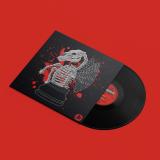
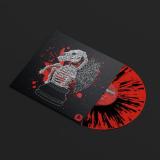
Death Is Not The End present a further volume of Arja Kastinen's eerie amalgamations of 110 year old wax cylinders with her own meticulously transcribed takes, this time focussing in on Armas Otto Väisänen's field recordings of kantele player Iivana Mišukka (b. 1861 d.1919).

"Ivana Mišukka (1861–1919) was one of the Karelian kantele players recorded by the folk music researcher Armas Otto Väisänen on wax cylinders in 1916 and 1917. In the early 20th century, the remote areas of Border Karelia were undergoing the final phase of a transformation in musical culture, with the ancient runo song tradition giving way to newer forms of music. This transition is reflected in Mišukka's repertoire and choice of instrument. The ancient small kantele, hollowed out of a single piece of wood, was already rare at the turn of the century. Mišukka's kantele was a new type of instrument with 26 strings, constructed of several parts, but he played it using the traditional plucking technique. Like other Border Karelian kantele players, his repertoire consisted of music rooted in runosong culture, as well as newer dances and songs from the east and west. Most of the recorded material falls into the latter category.
Ivan Bogdanov Mišukka was born out of wedlock in Suursara village, Suistamo, on 1 May 1861. He began playing the kantele at the age of five or six, quickly mastering the instrument. In adulthood, he was considered one of the area's best master players. Mišukka was landless for most of his life and lived in different parts of the Suistamo parish. His first wife, Tekla Markintytär, died in 1897 at the age of 40, and his second wife, Jevdokia Filipintytär Jeminen, died in 1907 at the age of 50. Seven children were born from the first marriage, two of whom died young. The third wife, Maria Ignatintytär Gurnan (Kuurnanen), was a well-known master of lamentations. Together with Maria, Iivana Mišukka worked as a tenant farmer in the village of Suursara. Mišukka suffered from rheumatism, which prevented him from participating in physical work like Maria. This was apparently partly the reason why Iivana Mišukka went to earn extra money by playing the kantele on gig trips. He often had other traditional artists from Suistamo as his travelling companions, such as the runosingers Konstantin Kuokka and Iivana Onoila. Iivana Mišukka died in Leppäsyrjä village, Suistamo, on 18 May 1919 at the age of 58, and his kantele was donated to Teppana Jänis.

Mišukka only used 14 of the 26 strings on his kantele, playing the same tunes either a fourth higher or lower. He tuned his kantele to the major scale using fifths, except for a low seventh scale degree on the upper strings, but not below the fundamental. Since he did not use the seventh note of the scale on the upper strings at all, he could use the major scale both lower and a fourth higher with this tuning. According to Mišukka, the sound of higher, or 'finer', strings is 'more beautiful', while that of lower ones is 'greater'. Among runosingers, the size of the thirds varied, ranging from major to minor to neutral. A similar phenomenon can be observed in kantele tunings, where the third, sixth and seventh scale degrees vary in a comparable way.

During a meeting, Väisänen suggested that Mišukka play the smaller kantele belonging to Konstantin Kuokka. The idea was to bring it closer to the horn to improve the recording quality. However, the kantele was completely out of tune, and now Mišukka tuned it to the Lydian scale (track 18).

Using the old plucking technique, Mišukka placed his right middle finger on the fundamental tone, his right index finger on the second scale degree, his left middle finger on the third scale degree and his left index finger on the fourth scale degree, and his right thumb on the fifth. The thumb also played the notes above the fifth note of the scale. As Mišukka remarked to Väisänen: 'Peigaloll' tuloo enemb ruadoa' (the thumb has to do more work). However, he did not use the seventh note of the scale on the upper strings at all. Below the fundamental note, he played the seventh and sixth notes of the scale with his right middle finger of and the fifth note of the scale with his right ring finger. This fifth scale degree below the fundamental is almost always used as a drone. Sometimes, when the melody required it, Mišukka, like other players, also varied the fingering. He would also occasionally strike the same string with the side of his fingernail after plucking it.

The wax cylinder recordings of Karelian kantele players are kept in the archives of the Finnish Literature Society in Helsinki, Finland. Copies were made of them onto reel-to-reel tapes in both the 1960s and 1980s. The 1960s copies are mono and the 1980s copies are stereo. However, not all kantele recordings from these decades have survived.

The sound of the kantele is difficult to hear in wax cylinder recordings due to its low volume, and it occasionally becomes completely obscured by noise. During the copying process, the cylinder sometimes rotates unevenly, resulting in breaks or jumps in the music. Additionally, the rotation speed of the cylinder in the copies does not correspond to the performance speed of the original music, which alters the pitch. However, since Väisänen's precise notes are available in the archive, it is possible to deduce the melodies, their speed, and the tuning level of the kantele in the recordings. Of the copies of the original recordings from the 1960s and 1980s, I have selected the one that best met the requirements of this publication and adjusted the speed of the recording to align with Väisänen's notes. To enhance the listening experience, I have replayed the songs, which now partly overlap the old recordings on this release."

— Arja Kastinen

Reservar27.03.2026

debe ser publicado en 27.03.2026


Ültimo hace: 2026 Años
Backyard Babies - Stockholm Syndrome LP
  • A1: Everybody Ready?!
  • A2: Earn The Crown
  • A3: A Song For The Outcast
  • A4: Minus Celsius
  • A5: Pigs For Swine
  • A6: One Sound
  • A7: Say When
  • A8: Year By Year
  • A9: Friends
  • A10: Be Myself And I
  • A11: You Tell Me You Love Me You Lie

Backyard Babies was formed in 1987 in Nässjö and can by rights be called Sweden’s most influential glam punk act. Between 1994 and 2019 they released eight studio albums of which Stockholm Syndrome is their fifth. Here we have another collection of bangers brought to you by the babies with reckless abandon. This time they invited a whole slew of guest musicians such as the Ramones, Danko Jones, The Cardigans, Turbonegro, and The Hellacopters, elevating the whole affair to another level with no signs of stopping. This is the first time the album is available again on vinyl since ten years and features the songs "Minus Celsius", "A Song for the Outcast", and "Everybody Ready?!". Stockholm Syndrome is available as a limited edition of 1000 individually numbered copies on crystal clear & black marbled vinyl and includes a 4-page booklet with lyrics.

Reservar27.03.2026

debe ser publicado en 27.03.2026


Ültimo hace: 2026 Años
Magma - 1001° Centigrades LP
  • 01: Rïah Sahïltaahk
  • 02: &Quot;Iss&Quot; Lanseï Doïa
  • 03: Ki Ïahl Ö Lïahk

Magma, is a French cross-genre, jazz-rock rooted, progressive rock and fusion band founded in 1969 by drummer Christian Vander. Magma have existed in two phases, the first was formed in the summer of 1969 and debuted on LP in 1970, continuing through to 1983. Kobaia was released spring 1970 and 1001 Centigrades was released April of 71.

Reservar27.03.2026

debe ser publicado en 27.03.2026


Ültimo hace: 2026 Años
Coil - Backwards (2x12")

Coil

Backwards (2x12")

2x12inchCSRLPW203
Cold Spring
27.03.2026

Double LP in matt-laminate gatefold sleeve with silver detail. We mark a decade since we first released COIL's landmark album 'Backwards', with a special 10 year anniversary vinyl reissue. After the ground-breaking release of 1990's "Love's Secret Domain" album, Coil were not dormant; the main project was "Backwards", which was started in 1992, updated considerably between 1993 and 1995, and transferred in 1996 to New Orleans, where it was finished in the magic of the Nothing studios of Trent Reznor (Nine Inch Nails). The album saw the fruition of Jhonn Balance's recent vocal coaching, producing haunting, passionate vocals, while reaching new heights. 23 years after its initiation, these tracks have been beautifully preserved by Danny Hyde and are finally available in highest quality audio. Differing substantially from the later, remixed incarnation, "The New Backwards" (2008), "Backwards" contains the original versions of Coil's much-loved tracks; 'A Cold Cell' and 'Fire Of The Mind', which have appeared on various compilations over the years, and are now presented as originally intended. his album is the essential bridge between "LSD" and the later "Musick To Play In The Dark" series. It is an essential conduit, to understand the journey that was taken. It was to be released... it should have been released... but because of issues with grey men it wasn't. It is now, so enjoy. (Danny Hyde).

Reservar27.03.2026

debe ser publicado en 27.03.2026


Ültimo hace: 2026 Años
GENNARO - ENGIMA EP

GENNARO

ENGIMA EP

12inchCEC074
Cecille Records
25.03.2026

Gennaro, formerly known as Blackchild, returns to Cécille Records with his second release on the label, delivering a confident and deeply musical four-track EP that captures the full scope of his sound.

Each track reveals a different facet of Gennaro's musical identity.from stripped-back, groove-driven club tools to more nuanced and emotive moments - all tied together by his unmistakable sense of rhythm and atmosphere. It's a release that feels focused yet expansive, showing an artist who knows exactly where he stands and where he's heading.

Nick Curly and Marc Scholl are proud to continue working with Gennaro and to welcome him back on the label with a release that underlines both artistic growth and creative consistency. This EP isn't about following trends; it's about personality, craftsmanship and club-ready music built with intention.

A strong statement, a natural progression and a clear reflection of Gennaro's range - this is his next step on Cécille Records

Disponible

En el almacen y preparando para el envío

Gigi - Illuminated Audio (2x12")

180g Heavy double vinyl LP with liner notes by Tyran Grillo. Limited Japanese Obi for the first pressing. Original artwork by Russell Mills and photography by Jean-Baptiste Mondino.

The third Time Capsule is a body of dub reinterpretations by celebrated producer Bill Laswell of Ethiopian singer Gigi. Curated by Tokyo record collector, music researcher and seasoned reissue supervisor Ken Hidaka, it is the first time Illuminated Audio is pressed to vinyl after its CD release in 2003.

Ejigayehu Shibabaw was born in 1974 in Chagni, northwestern Ethiopia and by pursuing a career as a singer, went against her father’s strict, traditional gender roles. As Gigi, she embraced the same musical freedom she had strived for in her personal life, incorporating the Ethiopian church, funk, hip-hop, West and South African music into her work. She first settled in Nairobi, then Addis Ababa, where she quickly established herself as one of the city’s leading singers. A move to San Francisco in 1998 led to a long and fruitful creative partnership with bassist and producer Bill Laswell.

Around the same time, Chris Blackwell had stepped away from Island Records to start the art house film company and label Palm Pictures. He took an interest in Gigi and together with Laswell, pulled together an all-star cast of musicians for her self-titled US debut album, including Herbie Hancock, Pharoah Sanders and Wayne Shorter. It won international critical acclaim, not just for its musicianship but for making Gigi a “defining voice for the Ethiopian expatriate community”, as journalist Tyran Grillo praises in his Time Capsule liner notes. From the nation-defining 1896 victory over Italian invaders to the quiet revolutionaries who wear simple shemma garments, Grillo believes the themes in Gigi make it “a shower of sunlight on her homeland for those ignorant of its struggles.”

After its success, Blackwell encouraged them to go back into the studio to rethink the album and Illuminated Audio was born. “Anyone can make a voice sound worldly”, Grillo remarks, “but rare are those who can make one sound inner-worldly.” Gigi was clear with Laswell to give her vocals a minor role “because it’s already been done.” Instead her Amharic verse is fleeting, exhaling through the textures like ghostly fragments; soaring yet muted. Yet the album is still titled under her name, an assertion by Laswell of her central role in the album’s creation. Not only was it a fully endorsed project by Gigi, but she would be present throughout its development, giving feedback on half-finished ideas as Laswell played them back in the studio. “It works perfectly”, she reflected after the album’s release. “We wanted to capture the whole spirit of each track, and Bill’s remixes create a different music language that really puts you in a pleasant place”.

This new vocabulary takes its lead from a technical approach that Laswell had been perfecting during a furtive creative period at the turn of the millennium. Much like his ambient interpretations of Miles Davis (Panthalassa, 1998), Bob Marley (Dreams of Freedom, 1997), and Carlos Santana (Divine Light, 2001), Laswell approached Illuminated Audio by returning to the original multitrack masters. Gigi wasn’t just reworked, but recomposed into an expansive lattice of instruments, submerged in a watery ambience of dub and trance undercurrents.

Sonically, this new language that Gigi refers to, is manifested by the original album’s more understated parts being pushed to the fore. Explaining his contrasting methods, Laswell saw Gigi as being “put together in a way that fits”. Contrastingly, in Illuminated Audio, “a lot of things that I featured in the remix weren’t as audible in the original.” Instrumentation laying near-dormant, deep in the mix, are brought to the fore: the acid rock guitar and Wayne Shorter’s saxophone on ‘Tew Ante Sew’, Graham Haynes’ flugelhorn on ‘Nafekeñ’, Laswell’s bass on ‘Kahn’, the melodica in Mengedegna or the floating synths and talking drums in ‘Gud Fella’.

Brought to his attention by mentor DJ Nori, Hidaka describes Illuminated Audio as a “masterful sonic exploration into ethereal ambience and dub” and made sure this reissue also contained a full remaster to give its “deep musicality” much better dynamics and density in the overall sound. Hidaka admits that Laswell's music “is sometimes so out-there, it is often misunderstood” and, indeed, to dub album non-believers this might seem like a prolific producer imposing himself on another artist’s work; eternally developing rearrangements that never quite get to its destination. But that’s missing its true power and triumph. This is more than the reissue of a remix, but “a wholly unique musical entity”, as Hidaka describes. Illuminated Audio refers to the illuminated manuscripts that comprise the major part of Ethiopian art and its new compositions stand in proud solitude as a rare body of reworks that both informs and enhances their originals.

Reservar27.03.2026

debe ser publicado en 27.03.2026


Ültimo hace: 2026 Años
Artículos por página
N/ABPM
Vinyl