
pre-order now05.10.2026
expected to be published on 05.10.2026
expected to be published on 05.10.2026
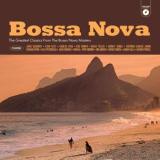
Mit der neuen Ausgabe der Vintage Sounds Vinyl Collection kehrt ein echter musikalischer Schatz zurück - diesmal ganz im Zeichen der Bossa Nova. Diese liebevoll kuratierte Zusammenstellung präsentiert 16 zeitlose Klassiker, die den unverwechselbaren Klang Brasiliens geprägt haben und bis heute weltweit für entspannten Groove und federleichte Eleganz stehen. Auf dem Album versammeln sich die wichtigsten Künstler einer Ära, die Musikgeschichte geschrieben hat: Joao Gilberto, Baden Powell, Silvia Telles, Quincy Jones und natürlich Antônio Carlos Jobim, dessen Kompositionen bis heute als Herzstück des Genres gelten. Freuen Sie sich auf unvergängliche Perlen wie "Chega De Saudade", "Garota De Ipanema", "Desafinado", "Corcovado", "A Felicidade", "Soul Bossa Nova", "O Barquinho" oder "Meditaçao" - alle sorgfältig ausgewählt und auf hochwertigem Vinyl neu erlebbar gemacht.
On Stock and ready to ship
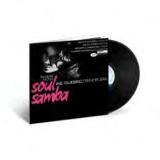
Im Oktober 1962, als das Bossa-Nova-Fieber in den USA gerade erst um sich zu greifen begann, gab
der Tenorsaxofonist Ike Quebec dem neuen Stil aus Brasilien auf seinem Album “Bossa Nova Soul Samba”
eine ganz eigene Note. Sein sinnlicher Ton durchdrang die luftige brasilianische Atmosphäre mit einer
seelenvollen Prise Blues und schuf so ein melodiöses Meisterwerk, zu dem auch der Gitarrist Kenny Burrell
erheblich beitrug. Dabei mied Quebec geschickt die Bossa-Nova-Hits von Tom Jobim, João Gilberto und
Luiz Bonfá. Stattdessen stellte er ein sublimes Repertoire aus Eigenkompositionen, weniger bekannten
brasilianischen Stücken sowie zwei klassischen Kompositionen von Antonín Dvořák und Franz Liszt zusammen. Umso tragischer war es, dass dies sein letztes Album sein sollte: Nur drei Monate später starb Quebec
im Alter von 44 Jahren an Lungenkrebs.
expected to be published on 07.08.2026

Ike Quebec’s Bossa Nova Soul Samba put the saxophonist’s unique spin on the bossa nova craze sweeping the jazz world in 1962. Ike’s sensual tone imbues the breezy Brazilian vibe with a soulful dose of the blues to create a masterpiece featuring Kenny Burrell, Wendell Marshall, Willie Bobo, and Garvin Masseaux.
This stereo Tone Poet Vinyl Edition was produced by Joe Harley, mastered by Kevin Gray from the original analog master tapes, pressed on 180g vinyl at RTI, and packaged in a deluxe tip-on gatefold jacket.
expected to be published on 07.08.2026

Not all tropical escapes are meant to soothe. Some are meant to seduce… and unsettle.
On Haunted Bossa Nova, Creepxotica reimagines the language of classic exotica through a darker, more cinematic lens—where swaying rhythms and lush melodies drift through shadows instead of sunlight. This isn’t background music for a carefree afternoon. It’s a late-night transmission from a hidden lounge at the edge of a dream.
Built on the bones of traditional bossa nova and mid-century exotica, the album pulses with nylon-string guitars, vibraphone shimmer, and hypnotic percussion—but everything feels just slightly off-center, like a memory slipping out of reach. There’s a tension beneath the beauty, a sense that something unseen is moving just beyond the music. Each track unfolds like a scene, contributing to a larger atmosphere that’s immersive, cohesive, and quietly haunting.
What sets Haunted Bossa Nova apart is its intention. This is not nostalgia for nostalgia’s sake—it’s a deliberate evolution. Creepxotica honors the lineage of the genre while pushing it into more mysterious territory, blending tropical warmth with ambient unease and cinematic depth. The result feels less like a throwback and more like a lost soundtrack—discovered, not created.
Sonically rich and meticulously arranged, the album invites deep listening. Every tone, every pause, every echo has purpose. It’s exotica for those who crave mood over kitsch, atmosphere over imitation.
For listeners drawn to the edges of jazz, lounge, and ambient soundscapes, Haunted Bossa Nova offers something rare: a fully realized world that lingers long after the final note fades.
expected to be published on 31.07.2026

Das 1962 erschienene ”Big Band Bossa Nova” ist Teil einer ganzen Reihe brasilianisch geprägter Alben
von Stan Getz (1962 ”Jazz Samba”, 1963 ”Jazz Samba Encore!”, 1964 ”Getz/Gilberto”), wobei er auf
dem von Creed Taylor produzierten und von Gary McFarland arrangierten und dirigierte Album mit der
Einbettung seines Tenorsaxofons in Big-Band-Arrangements überraschte. Für die Session verbanden Stan
Getz und Gitarrist Jim Hall, Trompeter Doc Severinsen, Bassist Tommy Williams und Schlagzeuger Johnny
Rae die Rhythmen von Samba und Bossa Nova mit packenden, kraftvollen orchestralen Arrangements.
Das Repertoire greift auf brasilianische Kompositionen zurück, wie Luiz Bonfás ”Manhã de Carnaval” oder
Antônio Carlos Jobim und Vinícius de Moraes’ ”Chega de Saudade”, sowie auf Material von McFarland
(”Balanço no Samba” oder ”Street Dance”) und mehr
expected to be published on 24.07.2026

Ever since the late 1950s bossa-nova revolution, Brazil’s influence on French music has been undeniable. Pierre Barouh, Georges Moustaki and a vast array of lesser known artists, all made the Musica Popular Brasileira (MPB) an axis of promotion at the service of a cool and metaphysical, modern and mixed Brazilian lifestyle. Some were seduced by the poetic languors of the bossa, some were looking for fun, and others just loved the American hybridization of jazz-bossa, jazz-samba.
What is bossa nova? One of its creators, Joao Gilberto said: "Its style, cadence, everything is samba. At the very start, we didn't call it bossa nova, we sang a little samba made up of a single note - Samba de uma nota so .... The discussion around the origins of bossa nova is therefore useless”. It is nevertheless useful to remember that these magnificent Brazilian songs, which the guitarist describes as samba, were shifted and balanced around improbable chords. "I like things that lean, the in-betweens that limp with grace," said Pierre Barrouh, quoting Jean Cocteau.
With emotion, arrangements for violin and supple guitar licks, bossa nova rapidly changed. A transformation that can be heard in the Tchic, tchic, French Bossa Nova 1963-1974 compilation, the result of a cultural reappropriation, which traveled through the United States and supplemented itself in France.
A musical revolution that has remained significant, bossa nova was born in Rio. From 1956 to 1961, Brazil lived through its golden years. In five years, the country had invented its modernist style. Elected president in 1956, Juscelino Kubitschek de Oliveira, an elegant man with a broad forehead, brandished a promising slogan: "Fifty years of progress in five years". He quickly got to work. Not worried about increasing debt, he launched the project for a new federal capital, Brasilia, designed by the communist architect Oscar Niemeyer. Volkswagen opened state-of-the-art factories and created the “fusquinha”, the Beetle. In Rio, the Vespa made its first appearance. The Arpoador Surf Club crew run into the “girl” from Ipanema, Helô Pinheiro - the tanned garota ("chick"), between a flower and mermaid, who at 17 walked by the Veloso bar, where the fiery author and composer, Tom Jobim and Vinicius de Moraes, were getting drunk on whiskey. From then on, bossa symbolized cool.
In 1958, Joao Gilberto recorded Chega de Saudade, which the directors of Philips denied, calling it "music for fagots". The marketing director, who believed in it, secretly pressed 3000 78-inch vinyls and distributed them at schools around Rio, creating a tidal wave.
American jazzmen then took over. In particular, trumpeter Dizzy Gillespie and guitarist Charlie Byrd. In November 1962, the Brazilian Ministry of Foreign Affairs funded a "Bossa-Nova" concert at Carnegie Hall in New York, inviting the genre’s pioneers. Unprepared, the show soon turned to disaster. But the troupe was invited to the White House by Jackie Kennedy. The first lady loved "the new beat" and in particular Maria Ninguem, a song by Carlos Lyra, later covered by Brigitte Bardot.
In Brazil, the 1964 military coup quickly ended this euphoria. The destructive atmosphere that ensued pushed many Brazilian musicians to leave, if not to exile. Thus, Tom Jobim, Sergio Mendes and Joao Gilberto arrived to the United States. In New York, Joao Gilberto met saxophonist Stan Getz. At the time, he was married to the Bahianese Astrud Weinert Gilberto, who had a German father. She had never sung before, but she knew how to speak English. Getz therefore asked her to replace her husband on The Girl From Ipanema. The Getz/Gilberto record with Tom Jobim on piano, was released in March 1964. Phil Ramone, the "pope of pop" was in charge of sound.
Bossa nova arrived in Paris through the classic “guitar-voice” channel (Pierre Barouh, Baden Powell, Moustaki…) But France loved jazz and Paris had already welcomed its American contributors. All these good people were to pass through Saint-Germain-des-Prés. The cabaret l'Escale became the Mecca of Latin American sound where one could find Pierre Barrouh and his friends, such as the Camara Trio, samba-jazz aces, whose only record was published by the Saravah label. With a band strangely called Les Masques (a band that included Nicole Croisille and Pierre Vassiliu, among others), the Camara Trio recorded an interesting Brazilian Sound, including the track Il faut tenir which is present on this tasty compilation of rarities.
Other enlightened musicians can also be found on the compilation, such as Jean-Pierre Sabar (songwriter for Hardy, Auffray, Leforestier ...) and the French pop rock organist Balthazar. In 1975, Sabar recorded Aurinkoinen Musiikkimatka on a Finnish label, which featured the crazy Vai, Vai, included on this record. We are now following the footsteps of Brazilian electronic musicians such as Sergio Mendes, Eumir Deodato or Marcos Valle who created funk and disco sounds on their keyboards and synthesizers. A style that influenced Véronique Sanson when she wrote Jusqu’à la Tombée de la nuit in 1969 for Isabelle de Funès, the niece of Louis and a great friend of Michel Berger - Sanson did end up singing this track on her 1992 Sans Regret record.
The pinnacle of exoticism and travel, Sylvia Fels’ Corto Maltese includes bongos, sea mist and ocean sounds. The title was taken from Jacky Chalard’s concept album written in 1974, Je suis vivant, mais j’ai peur (I am alive, but I am scared), based on Gilbert Deflez’s science fiction novel.
However, bossa nova extended the scope of popularity. "In the 1970s, I was a fan of Sergio Mendes, Getz / Gilberto. I fell in love with this music that I knew because I had been an orchestral singer, " explained Isabelle Aubret, who in 1971 delivered a composite record of covers by the very funky Jorge Ben, Orfeu Negro, Tom Jobim, Vinicius de Morais and Jean Ferrat. "I recorded this album for Meys Records in Paris, far from Brazil, with wonderful musicians, François Raubert, Roland Vincent, Alain Goraguer...". The latter wrote the arrangements for Casa Forte, a very percussive title borrowed from Edu Lobo, one of the initiators of the bossa who spent time in California. "Jazz and bossa came together and produced very rhythmic music. I love singing, it allows me to dream, to have fun, to feel a high on stage, and these songs brought me joy, made me swing, my singing felt like a dance.”
The world tours of French singers and their desire for the tropics, often brought them to Rio with its hills, forests, caipirinhas and tanned bodies. There are surprises though, like this Iemenja (Iemenja is the goddess of the sea in the Afro-Brazilian candomblé religion). Not unlike the composer and musician Jean-Pierre Lang, based in Sao Paulo, Claire Chevalier taught Brazil to Brazil. In 1970, the singer and painter published a 45-inch vinyl, Mon mari et mes amants (My husband and my lovers), under the improbable pseudonym of Clarinha (little Claire). She was then living in Rio, with her husband, Joël Leibovitz, who founded a band called Azimuth, and who owned a record label specialized in "sambas enredos" songs for samba school parades.
For its B side, she asked Pierre Perret to come up with lyrics for a song composed by Carlos Imperial: "Oh goddess of the sea, o goddess Iemenja, I bring a white rose to adorn your long hair ..." . "Perret came to see us, and we had fun, remembers Joël Leibovitz. We wrote Lemenja for fun, we recorded it at the Havaí studio, behind the Central do Brasil the central station. Erlon Chaves, the arranger who worked with Elis Regina, joined us" adding his share of Afro-Brazilian percussions and funky brass to the mix.
There is a common misunderstanding in Franco-Brazilian history: that bossa, admittedly hedonistic, is perceived as funny, even though the poets who wrote the texts are often philosophizing on the human condition. Its French interpreters pull it towards a carnival inspired universe, far removed from its fundamental essence. Thus, Jean Constantin covered the famous Samba da minha terra, an ode to the art of samba written by the classic Bahian composer Dorival Caymmi, renaming it with the enticing title of Pas tant de tchi tchi pompon: "On your pier there is no tchi tchi / when you arch your back, you know everything is alright ”(lyrics by Gérard Calvi). This expedited bossa aims for the absurd, but retains a certain elegance.
Indeed, Jean Constantin was not an idiot, the rather large man had a huge mustache and liked fantasy, (Les pantoufles à papa, Le pacha, inspired by cha-cha-cha-cha, salsa and jazz) but he was also the lyricist of Mon manège à moi interpreted by Edith Piaf, the composer of Mon Truc en plume by Zizi Jeanmaire and the soundtrack of François Truffaut’s 400 Blows. Le Poulpe, published in 1970, from which this bossa is extract, was arranged by Jean-Claude Vannier, an accomplice of Serge Gainsbourg’s Melody Nelson. In short: "There is enough of samba / By looking at the parasol / Because my poor cabeza / Is going to die in the sun".
Even the American actress Marpessa Down, who was at the heart of the bossa nova revolution with her role as Euridyce in Marcel Camus’ film Orfeu Negro, winner of the 1959 Cannes Palme d'or, fed the clichée with Je voudrais parler au petit cuica - "Tell me how you manage to always make people want to dance / It's true, I must admit that I cannot resist your magic" - in consequence, once can hear the cuica, a little drum inherited from the Bantu.
But bossa nova had many angles. Societal, of course, pushing actresses who were symbols of women's liberation like Brigitte Bardot, Jeanne Moreau, or Sophia Loren to engage in the exercise of accelerated bossa. In February of 1963, Sophia Loren made a record in French in Rome, Je ne t'aime plus, featuring the song De jour en jour, a bossa written by two Italians, Armando Trovajoli and Tino Fornai, which was released a little later by Barclay. Bossa accompanied the 1960s, a decade of moral liberation. Ann Sorel, who interpreted La Poupée des favellas, caused a sensation with L’amour à plusieurs, a provocative song written by Frédéric Bottom and Jean-Claude Vannier. As for the actress Andrea Parisy, she displayed her bourgeois cheekiness in Marcel Carné's Les Tricheurs before interpreting Les mains qui font du bien. And Magalie Noël, the friend of Boris Vian, who sung Johnny fais-moi mal, was hired to sing Une énorme Samba, composed by Alain Goraguer (arranger to Gainsbourg, Bobby Lapointe and Jean Ferrat) with lyrics by Frédéric Botton.
But in the end, of what wood is bossa nova made of? The answer is given by Christianne Legrand, daughter of Raymond the conductor, and sister to Michel the composer: "With me, with jà" - jà means "immediately" in Portuguese. In 1972, the singer, an expert in vocal jazz and a member of the Double Six, published Le Brésil de Christianne Legrand. Two songs included on the Tchic Tchic compilation that demonstrate how bossa, jazz, funk, rock, etc. work like a swiss army knife: the music is used to denounce broken systems, or miracles, HLM et ciné roman, Cent mille poissons dans ton filet, two songs from the O Cafona soundtrack, a successful telenovela broadcast, at the time in black and white, on TV Globo. The first was adapted in French by the fighter and friend of the Legrand tribe, Agnès Varda. The second is content with a play on words, jostling them into a summer fun.
Véronique Mortaigne
Order now and we will order the item for you at our supplier.
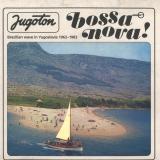
Rich musical history of Yugoslavia reveals a long-lasting love for the music of Latin America.
Entwined in Afro-Cuban rhythms, ballrooms were shakin', swayin' and swingin', gathering musicians who were heavily into jazz bands and orchestras, most notably in Ljubljana, Zagreb, and Belgrade. Jazz could be heard on the streets of Split way back in 1919 when dancing became a symbol of freedom. Radio was the most loved household item, newest sheet music was in demand and collecting records was hip like today. In the aftermath of Second World War, jazz went underground but little by little, things changed and Ella, Satchmo, Dizzy and Miles came to visit, among others. Music festivals shaped the music for entertainment and variety of popular styles showed influences from all over the world. In the early sixties, one particular rhythm crashed on the coast of the Adriatic Sea: the rhythm of bossa nova!
In the whirlwind of various musical styles, Latin American music still played important part of the scene in the early sixties Yugoslavia. Beguine, tango, rhumba, samba, calypso, mambo and cha-cha-cha all found their place on the festivals inspired by famous Sanremo, festival of Italian popular song that largely shaped the musical taste of Europe. It was the era of instrumental rock, R & B and rock'n'roll - sounds of "imperialist America" now played freely on imported and hand-made electric guitars. While dancing halls had been turning into concert venues, bossa nova has come! Eydie Gorme with Blame It on the Bossa Nova and Paul Anka with Eso Besso (That Kiss!) tried to make us learn some new dance moves but it was Joao Gilberto's gentle singing and his new way of playing samba songs, along with Tom Jobim's modern dissonant harmonies and poetry of Vinicius de Moraes that created the magic. When American alto saxophonist and flautist Bud Shank visited Zagreb and Ljubljana in 1963 (with Boško Petrović in his quintet) "it was the first time we heard bossa nova!" remembers Stjepan Braco Fučkar. Jugoton, the biggest record company in Yugoslavia, released 4-track EP Bossa Nova by Bogdan Dimitrijević and his ensemble that same year! While not being fully accepted or understood completely, the archives of Jugoton reveal to us various interpretations of this new trend from their vast catalogue.
Order now and we will order the item for you at our supplier.

expected to be published on 21.11.2025

expected to be published on 03.10.2025

expected to be published on 08.09.2025

expected to be published on 27.06.2025

expected to be published on 06.12.2024

expected to be published on 02.12.2024

Upon its release, Big Band Bossa Nova by the renowned American music producer, conductor, arranger, and composer Quincy Jones, released in 1962 received favorable reviews from critics, who praised its innovative arrangements and the seamless integration of bossa nova into big band jazz
It was noted for its lively and fresh sound, appealing to both jazz enthusiasts and fans of Latin music. Over the years, the album has been recognized as a classic in the realms of both jazz and Latin music. It continues to influence musicians who seek to explore the fusion of different genres. The album played a crucial role in popularizing bossa nova in the United States, introducing many listeners to Brazilian music. It paved the way for future collaborations and crossover projects between jazz and Latin music. It is often cited by contemporary artists and arrangers who are inspired by its innovative blend of styles. Its influence can be seen in various genres, including jazz, pop, and world music and is a testament to Jones's ability to adapt and innovate throughout his career. It solidified his status as a pioneer in the music industry, influencing countless artists across genres and generations. Big Band Bossa Nova not only captures the essence of its time but also continues to resonate with audiences today, highlighting the enduring appeal of both big band features contributions from several talented musicians.
expected to be published on 29.11.2024

expected to be published on 18.10.2024

expected to be published on 20.09.2024

Marking sixty years of Bossa Nova, and twenty years since Marcos Valle’s first release for Far Out Recordings, what better time to bring back this era-defining classic from the Brazilian master composer?
Throughout his astounding six-decade career, infiltrating pop, bossa nova, samba, delicate psychedelia, jazz and funk, Marcos Valle has consistently shown a dogged determination to transcend the traditions and structures of bossa nova, whilst never veering away from the movement’s inherent, fundamental spirit. To some extent, his epithet ‘the original Rio beach boy’ is a handy one: it reflects the origin and character of his often sun-soaked sound, but expounding his importance in the lineage of Brazilian music, he is more discerningly known as ‘the renaissance man of Brazilian pop’. He is indeed one the very greatest and most important composers, arrangers, writers and performers in Brazil.
Up until Nova Bossa Nova, Marcos Valle hadn’t released an album for well over a decade. After 1983, he resented the way the music industry had changed with commercialisation and new demands curtailing his creative freedom. This was until 1994 when Marcos met Far Out boss Joe Davis and they recorded a track for Far Out’s first Friends From Rio album. This new collaborative partnership resulted in a new solo album, which commenced recording in 1996.
Nova Bossa Nova brought Marcos bouncing back into the 90s, slotting nicely in place alongside the acid jazz movement as well as a voracious new demand for Brazilian music on dancefloors from London to Tokyo. It was witnessing the London club scene’s growing appetite for Brazilian music, as well as a lack of new sounds coming out of Brazil at the time, that a young Joe Davis put in a proposal to record a new album with one of his musical idols. Joe wanted to facilitate an album which would combine the latest technologies and production techniques, with live to analogue tape recording: a Marcos Valle album tailor-made for London’s clubs. Always open to modern influences and possibilities, Marcos agreed to the project, and Joe and his production partner Roc Hunter flew to Rio in ‘96. The record wasn’t released until ’98, as the original ½ inch tapes were stolen from Far Out’s London studio, meaning parts of the album had to be re-recorded.
Nova Bossa Nova was unveiled at the peak of the of the Brazilian movement, the record would also prove to be something of a revolution, inspiring a new generation of artists like Bebel Gilberto, Sabrina Malheiros, Da Lata and Bossacucanova, who continued to fuse Brazilian influences with modern electronic sounds.
Order now and we will order the item for you at our supplier.

First exposed to the sounds of Samba and Bossa Nova while
touring South America with Dizzie Gillespie in 1956, Jones recalls
hearing Gillespie sitting-in with a Samba combo at Rio's Gloria
Hotel and how he was fascinated by the thrilling fusion of Jazz and
Samba. Some years later in 1962, he took a stellar big band into
NYC's A&R Studios to record the Big Band Bossa Nova album. It
was the culmination of a dream for Jones, who had never
forgotten the musical experiences he had encountered in Brazil.
Order now and we will order the item for you at our supplier.

The Music Lovers collection brings you a cool selection of Bossa Nova hits for our greatest plaisure!
Order now and we will order the item for you at our supplier.

Moar is back with his Badlibs, this time covering a track composed by legendary producer Jay Dee aka J Dilla. This time the Badlibs are joined by pianist Floriant Pélissier, who covers the main theme on piano, accompanied by Elisabeth Jutel (Double Françoise) on backing vocals and Jean-Louis Potin on saxophone. Moar is behind the MPC to produce and arrange the track, while he entrusts his long-time friend King Most (SF / USA) with the task of remixing it for an explosive Samba version.
The artwork is by the young and talented Arthur Zupashaf, and the logo by friend Eno Kruger
Order now and we will order the item for you at our supplier.

Hideo Shiraki travelled to the US from Japan in 1962 and was bowled over by Horace Silver and the Bossa Nova Craze happening at the same time. When he returned to Japan he went straight into the studio and cut this Blue Note inspired Japanese Jazz Masterpiece.
With a selection of tunes ranging from the 1940's stylings of "Tico Tico" through to the samba infused "Orfeo Negro" and arriving in Silversville with "Sayonara Blues" Hideo Shiraki has hit all the sweet spots!
With sleeve notes translated into English for the first time and laid out in the Blue Note Style this release is going to be seen as a landmark re-issue.
A special Vinyl Only release on Jazz Room Records.
Order now and we will order the item for you at our supplier.

This collectors' special edition on 180g yellow vinyl presents 17 seminal
tracks featuring Vincius De Moraes' poetic lyrics set to music composed
by Antonio Carlos Jobim, longtime collaborates and icons of Brazilian
music
Brazilian poet, lyricist, essayist and playwright, Vincius de Moraes (1913-1980)
became a seminal figure in modern Brazilian music and literature. He served as a
national diplomat, composed his own bossa nova music and recorded several
significant albums. Along with his longtime collaborator, composer, arranger,
singer, and pianist/ guitarist Antonio Carlos Jobim, he composed hundreds of
songs that have become true classics and have transcended the bossa nova, as
they continue to be played and recorded by countless singers and
instrumentalists within Brazil and throughout the world.
expected to be published on 11.11.2022

First exposed to the sounds of Samba and Bossa Nova while
touring South America with Dizzie Gillespie in 1956, Jones recalls
hearing Gillespie sitting-in with a Samba combo at Rio's Gloria
Hotel and how he was fascinated by the thrilling fusion of Jazz and
Samba. Some years later in 1962, he took a stellar big band into
NYC's A&R Studios to record the Big Band Bossa Nova album. It
was the culmination of a dream for Jones, who had never
forgotten the musical experiences he had encountered in Brazil.
Order now and we will order the item for you at our supplier.

180g Coloured Vinyl Series Contains New Specially Prepared Liner Notes By Penguin Guide To Jazz Writer Brian Morton And By Paris’
Prestigious Jazz Magazine. Quincy Jones Big Band Bossa Nova + 2 Bonus Tracks (Yellow Vinyl) “Almost every track here is a small classic that you’re bound to have heard somewhere, without realising what it was. “Manha de Carnaval”, Luiz Bonf‘s peerless melody, is another that surfaces constantly in movies and behind commercials. Likewise, Jobim’s “One Note Samba”, which varies the metre and changes the pace most effectively. Jones recognised that he had something that could change the metre and flavour of almost any piece. “On the Street Where You Live” loses its slightly plonking sentimentality and turns into a celebration of community. “A Taste of Honey” acquires a new and exotic quality.” Penguin Guide to Jazz “There are few albums more enchanting than this one, which finds the perfect balance, among other things, to make everything swing, and to make us dance better. And you’ll be amazed to hear the voices of Roland Kirk, Paul Gonsalves, Jim Hall and Clark Terry. Yes, all of them are here.” Jazz Magazine Personnel: featuring Clark Terry (trumpet) Phil Woods (alto sax), Paul Gonsalves (tenor sax), Rahsaan Roland Kirk (Stritch, alto sax), Lalo Schifrin (piano), Jim Hall (guitar), Chris White (bass), Rudy Collins (drums), Jos Paula, Carlos “Bala” G
mez, Jack Del R o (percussion), Quincy Jones (conductor). Recorded in New York, August 13 & September 4-12, 1962. *BONUS TRACKS: Quincy Jones and His Orchestra. Similar personnel as Big Band Bossa Nova, also including Rahsaan Roland Kirk (flute, tenor sax, Stritch). New York, June 15, 1962. Original session produced by Quincy Jones. Originally issued in 1962 on the Mercury single 72012
b a2 | Boogie Bossa Nova Aka Boogie Stop Shuffle
Order now and we will order the item for you at our supplier.

expected to be published on 23.02.2022

Surprise!! This is number 7 of this 6 x 45s collection !!
With this new releases you will be able to complete your complete series, but be careful that you will not be able to fit it into the mosaic!
Do not hesitate as this new release in a limited edition of 500 copies will make you enjoy the sounds to the fullest.
TT Syndicate steps forward big time into the direction of early '60s rhythm'n'blues, with the addition of a solid stash of early soul.
expected to be published on 23.04.2021

The first release on ALIM Music is presented by BBE insider Mr Thing and features an extended edit of the J Dillaclassic 'Rico Suave Bossa Nova', with 'Come Get It' on the flip side; both taken from Dilla's stunning solo debut album 'Welcome 2 Detroit'.
ALIM Music releases will be issued on strictly limited, highly collectible, dinked and hand stamped 7' vinyl, available only at The BBE Store in Hackney or via the BBE Music website.
About Alim Music:
Celebrating its 22nd year of barely breaking even, respected underground label BBE announces the birth of ALIM Music, a daughter label releasing 7' vinyl in strictly limited numbers. Digging deep in the BBE archive as well as issuing exclusive edits and original material, Alim Music offers up a series of choice cuts on that most magical of formats, the vinyl 45.
Order now and we will order the item for you at our supplier.

Mid last century. Commercial Music is a machine that generates dances that run each other over in the urge to reach the audiences and mark their place in time and history.
A never-ending list of choreographies co-habit: hully gully, madison, rock, limbo, twist and a long etcetera, until a new dance, bossa nova takes over the dance floors. Joao Gilberto, Tom Jobim or Vinicius de Moraes reach stardom in Brazil with this mix of samba and jazz, but the genre doesn't explode internationally until a few American jazzmen decide to import it. From there it reaches Europe, via France, thanks to Sacha Distel, the first on the continent to record an EP completely dedicated to this phenomenon.
It is 1962.
Shortly after in Spain, the number of artists including original or adapted tracks in their albums, escalate: Tony Vilaplana, Mina, Duo Dinámico, Latin Combo, Los 4 Brujos, Gina Baró, Grau Carol, Salomé or Marisol, who popularizes the new trend by recording 'Marisol rumbo a Río', a blockbuster film partially filmed in Brazil. The maestro Augusto Algueró writes the films soundtrack.
For this compilation we have consciously dug into the archives of three Barcelona based labels like Belter, Discophon and Olympo to serve Spanish sung bossa nova songs that have never, inexplicably, been released on vinyl, all songs are recorded during those two (musically speaking) prodigious decades: the twentieth centuries sixties and seventies.
Order now and we will order the item for you at our supplier.

The backroom club was packed with the hottest kids from the street. The movers and shakers wore their finest clothes to get down to the boassanova rock whilst the gangsters and players watched on from behind luxurious red curtains. In the murky shadows some exchanged more than just pleasantaries in the form of parcels and goods. They were devilish figures who existed only by night, when the streets were no longer safe for the do gooders to walk. This was a rough and ready town.
CYRK is set to release a new EP on the infamous Rawax record label. A charming assortment of well crafted house and some sophisticated electro cuts for the club. Rounded up by a fantastci remix from Claude Young!
Order now and we will order the item for you at our supplier.

Sparrow's visit of Jamaica, The Isle Of Springs', during the month of June 1963, has left him with very pleasant and joyful reminiscences of the love, warmth and hospitality of its people. From the moment his plane tipped down at the Palisadoes Airport', at a lounge in the ultra-modern terminal building he was entertained with a Rum Punch', Significant of Jamaican's ability to produce rums that absolutely no connoisseur can despise. Well! And it's from there it all started, for like Oliver Twist, Sparrow continued, where ever he went to ask for more, and, obviously when the drinks are in, the wits are out. You are therefore left to deduce whatever you may during his presentation of this contribution.
I'll Be Around (Bossa-Nova)" is a warning to one of his lovers of her promiscuous traits towards him and the retribution she would eventually suffer for so doing.
Theses two calypso songs were recorded with the famous Bert Inniss National Recording Orchestra. This single 7' is absolutely impossible to find and will warm any dances in the world.
Order now and we will order the item for you at our supplier.
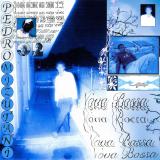
NOVA BOSSA: aquele abraço aos ratos vivos stands as a musical capsule centered around the life of a young adult. Moving between MPB, indie pop and alternative rock, its eclecticism perfectly reflects a thirst for discovery and new experiences, while highlighting a sincere search for identity.
NOVA BOSSA acts as a mirror to the contradictions of contemporary youth
between the desire for independence and the fear of abandonment
between rejecting norms and searching for meaning
between solitude and a deep craving for connection
between social disillusionment and creative resilience
The lyrics blend urban poetry, raw introspection and social critique, all carried by a musicality that oscillates between melancholy and energy. Pedro embodies a generation torn between the urge to burn through life and the fear of burning out, desperately trying to find his place in a world he often sees as absurd.
crédits
expected to be published on 02.10.2026
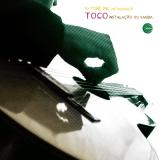
FIRST TIME ON VINYL! “Instalação Do Samba”, originally released in 2004, has become one of the defining albums in the history of Schema Records. With producer Stefano “S-Tone Inc.” Tirone, Toco created an album that embraced the essence of samba and bossa nova while allowing them to breathe naturally within a contemporary musical landscape, blending Jazz, soul, understated electronics and sophisticated arrangements. Released only on CD at the time, “Instalação Do Samba” is finally given the analogue home it always deserved. This first-ever vinyl edition also includes “Qui C’Est Celui-Là”, previously included in the French CD edition. Over the years, Toco has become the most streamed artist in the entire Schema catalogue, introducing his music to audiences beyond the traditional boundaries of Brazilian jazz and contemporary bossa nova. His songs continue to resonate with listeners around the world, proving that authenticity never goes out of style.
expected to be published on 02.10.2026

expected to be published on 02.10.2026

Wewantsounds is delighted to continue its Ziad Rahbani reissue program with Ana Moush Kafer, a classic album by the Lebanese legend Ziad Rahbani, recorded at his By-Pass Studio in Beirut during the height of the Lebanese Civil War in 1985. Showcasing Rahbani’s signature blend of Arabic music infused with touches of jazz-funk and bossa nova, the album has attained cult status over the years. Originally released on cassette, it has never before been available on vinyl. Newly remastered, this edition features the original Relax-In cassette artwork from 1985 and includes new liner notes by Mario Choueiry of the Institut du Monde Arabe in Paris.
Ziad Rahbani, who passed away in 2025, remains one of the most influential figures in modern Arabic music and a cultural icon in Lebanon. A musician, composer, pianist, producer and playwright, he helped modernize Arabic music over five decades. The son of composer Assi Rahbani and singer Fairuz, he shaped her late 70s–80s recordings producing Wahdon and Maarifti Feek, while building a major solo career with classics such as Abu Ali and Houdou Nisbi, which have become cult favourites for a new generation of DJs and music lovers.
Released in 1985 in Lebanon, Ana Moush Kafer stands as one of Rahbani’s key achievements. Recorded at his By-Pass Studio during the Lebanese Civil War, it blends Arabic melodic traditions with jazz-funk, bossa nova and Western arrangements. Originally cassette-only, it became one of his most revered releases. Throughout the album, Rahbani’s writing reflects the turbulence of wartime Beirut with a blend of sharp social observation, political satire and melancholy. It captures a moment in Lebanese cultural history where experimentation, satire and popular song intersected, giving the album its enduring influence among music lovers.
Sung by Rahbani and Sami Hawat, alongside Beirut-based musicians, the album features both Western and traditional Arabic instruments. It balances refined arrangements with lyrical irony, social commentary and political reflection, which remain deeply resonant in today’s context in Lebanon.
One of the highlights of the album is the song “Shou A’ada Ma Bada,” with lyrics by Joseph Harb, which reveals a clear bossa nova influence, while the closing track, “Al Mokawama Al Watania Al Lobnani,” offers a deeply human view of war, avoiding patriotic cliché in favour of a nuanced perspective rooted in lived experience.
As Mario Choueiry observes in his liner notes, “Ana Moush Kafer stands as one of the high points of modern Arab political songwriting, yet transcends its historical and geographical context through the universal relevance of its themes and the timeless quality of its music.”
Forty years on, Ana Moush Kafer remains a landmark of Arab music. Wewantsounds presents it on vinyl for the first time, newly remastered and featuring original artwork. This long-awaited reissue restores one of Ziad Rahbani’s most important works to circulation, reaffirming its place as a defining statement in modern Arabic music.
a 1. Ana Moush Kafer 5:03
[b] 2. Shou Hal Ayyam [5:46]
[c] 3. A'anitham [4:37]
[d] 4. Shou A'ada Ma Bada [3:45]
[e] 5. Yessa'ed we Yea'en [5:05]
[f] 6. Bi Halyawmayn [3:46]
[g] 7. Bharf Esheen [1:12]
[h] 8. Bhaneek [5:34]
[i] 9. Al Mokawama Al Watania Al Lobnani [3:06]
[a] 1. Ana Moush Kafer [5:03]
[b] 2. Shou Hal Ayyam [5:46]
[c] 3. A'anitham [4:37]
[d] 4. Shou A'ada Ma Bada [3:45]
[e] 5. Yessa'ed we Yea'en [5:05]
[f] 6. Bi Halyawmayn [3:46]
[g] 7. Bharf Esheen [1:12]
[h] 8. Bhaneek [5:34]
[i] 9. Al Mokawama Al Watania Al Lobnani [3:06]
[a] 1. Ana Moush Kafer [5:03]
[b] 2. Shou Hal Ayyam [5:46]
[c] 3. A'anitham [4:37]
[d] 4. Shou A'ada Ma Bada [3:45]
[e] 5. Yessa'ed we Yea'en [5:05]
[f] 6. Bi Halyawmayn [3:46]
[g] 7. Bharf Esheen [1:12]
[h] 8. Bhaneek [5:34]
[i] 9. Al Mokawama Al Watania Al Lobnani [3:06]
expected to be published on 09.10.2026

It’s not just since James Bond and the introduction of World Overshoot Day that we’ve known: The world isn’t enough. We need an Extrawelt! Arne Schaffhausen and Wayan Raabe have been tinkering with this celestial body for over two decades, and it seems to be slowly nearing completion. You certainly can’t accuse Extrawelt of lacking ideas. They are, so to speak, the legitimate descendants of the legendary planet designer Slartibartfast from Douglas Adams’ “The Hitchhiker’s Guide to the Galaxy”. No doubt, the downright insanely creative bossa nova-techno bastard “Honey Hunter” will be mentioned in the same breath as Slartibartfast’s award-winning Norwegian coastlines by future civilizations. The other three tracks aren’t half bad either. Take our word for it.
Nicht erst seit James Bond und der Einführung des world overshoot days wissen wir: Die Welt ist nicht genug. Wir brauchen eine Extrawelt! Die Herren Arne Schaffhausen und Wayan Raabe werkeln seit über zwei Jahrzehnten an diesem Himmelskörper und er scheint so langsam bezugsfertig zu sein. Man kann Extrawelt nun wahrlich keine Ideenarmut vorwerfen. Sie sind quasi die legitimen Nachkommen des legendären Planetendesigners Slartibartfast aus Douglas Adam’s “Per Anhalter durch die Galaxis”. Der geradezu irrwitzig kreative Bossanovatechno-Bastard “Honey Hunter” wird von künftigen Zivilisationen in einem Atemzug mit Slartibartfast’s preisgekönten norwegischen Küstenlinien genannt werden. Auch die anderen drei Tracks sind nicht von schlechten Eltern. Glaubt’s und werdet selig.
Downloads
expected to be published on 09.10.2026
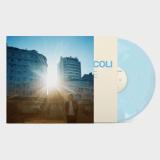
Mit A Kind Wave präsentiert Kid Francescoli sein bislang persönlichstes und klanglich vielseitigstes Album. Als zusammenhängende emotionale Reise erzählt das Werk von Liebe, Heimatgefühl, unvergesslichen Sommern, Fernweh und Heilung.
Zwischen Pop, Bossa Nova, Dance und cineastischen Klangwelten entstehen atmosphärische Songs, bereichert durch die Mitwirkung von Andréa, DEMIGOD und Samantha Alma Real. Begleitet von einer europäischen Tournee mit über 50 Konzerten unterstreicht A Kind Wave eindrucksvoll die künstlerische Reife des französischen Musikers.
expected to be published on 09.10.2026
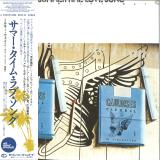
Wewantsounds is delighted to present the first official reissue of the highly sought-after 1979 classic, Summer-Time Love Song by The Milky Way. Originally released on the Seven Seas label in Japan and produced by the legendary Makoto Matsushita-the visionary behind the cult album First Light -the album is a premier example of the sophisticated sound that defined the era. Featuring the cream of Japanese musicians, including Yasuaki Shimizu, the record offers a superb mix of AOR, jazz fusion, funk, and bossa nova. Remastered for vinyl by Colorsound Studio, this deluxe reissue features the original artwork, an OBI strip, and a 4p booklet with a new introduction by Paul Bowler.
On Stock and ready to ship
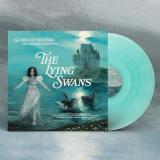
Das neue Album "The Lying Swans" der deutsch-brasilianischen Musikerin und bildenden Künstlerin Gloria de Oliveira entfaltet sich wie ein Werk des Magischen Realismus - bevölkert von Vögeln, Heiligen, Sirenen, blutigen Gesichtern, Geisterschiffen und gespenstischen Erscheinungen - und lädt die Hörer*innen in ihr bislang unmittelbarstes und komplexestes Werk ein. De Oliveiras drittes Album aber eigentliches Debut wirkt wie ein Werk der Gothic-Literatur, angestoßen durch das Bild einer Frau, die aus einem Spukhaus flieht; dieses zentrale Motiv prägte auch die visuelle Welt des Albums. Produziert von Randall Dunn (Anna von Hausswolff, Sunn O))), Marissa Nadler) und aufgenommen zwischen Island, New York und Berlin, ist das Ergebnis eine traumhafte Welt, in der Zauber und Gefahr nebeneinander existieren. Nach der EP-Compilation "Fascination" (2020, Reptile Music) sowie "Oceans of Time" (2022, Sacred Bones) - ihrer Zusammenarbeit mit David Lynchs langjährigem Sounddesigner Dean Hurley - führt "The Lying Swans" de Oliveira in neues Terrain. Sowohl thematisch als auch klanglich scheinen diese neun Songs aus den nebligen Gefilden von Hall und ätherischem Fuzz-Sound herauszutreten und eine erdige, greifbarere und damit verletzlichere Seite zu offenbaren. Dennoch bleibt ihre seraphische, sehnsuchtsvolle Stimme der Mittelpunkt, flankiert von einer beeindruckenden Riege an Musikern: Schlagzeuger Matt Chamberlain (David Bowie, Tori Amos, Pearl Jam), Gitarrist Lennard Zander, Cellistin Gyda Valtysdóttir (múm), Harfenistin Marilu Donovan (LEYA, Eartheater, Julie Byrne) und Keyboarder Ulfur Hansson wirken mit, während Ambient-Ikone Tor Lundvall eine seltene Spoken-Word-Darbietung beisteuert. Lina Andonovskas Querflöte spielt eine tragende Rolle und verleiht den Songs einen ebenso luftigen wie beunruhigenden Klang - inspiriert sowohl von de Oliveiras brasilianischen Wurzeln als auch von den Giallo-Soundtracks der 1970er und 1980er Jahre, jenen atmosphärischen italienischen Horror-Krimis, die stilisierte, drastische Gewalt und Voyeurismus mit prachtvoller Schönheit verbinden. Inspiriert von Lyrik, Literatur, Film und bildender Kunst ebenso wie von Musik, haben de Oliveira und Dunn ein Album geschaffen, das sich mühelos zwischen dem Spektralen und dem Pastoralen bewegt - ein Werk, in dem Anklänge an Fantasy- und Giallo-Soundtracks, alte Folk-Traditionen sowie die rhythmische Zartheit von Bossa Nova, MPB und Tropicália verschmelzen. Auch die Texte verweben Mythologie mit Anspielungen auf Miltons Paradise Lost*sowie die Lyrik von John Keats, Emily Brontë und Anne Sexton. Ein durchweg erhabenes Werk. Als CD (Digisleeve) mit Booklet oder auf LP (in klassisch Schwarz, Coke-Bottle-Green oder weiß-blau marmoriert) mit bedruckter Innenhülle & inside-out Sleeve.
expected to be published on 30.10.2026
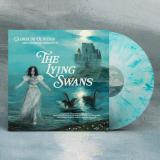
Das neue Album "The Lying Swans" der deutsch-brasilianischen Musikerin und bildenden Künstlerin Gloria de Oliveira entfaltet sich wie ein Werk des Magischen Realismus - bevölkert von Vögeln, Heiligen, Sirenen, blutigen Gesichtern, Geisterschiffen und gespenstischen Erscheinungen - und lädt die Hörer*innen in ihr bislang unmittelbarstes und komplexestes Werk ein. De Oliveiras drittes Album aber eigentliches Debut wirkt wie ein Werk der Gothic-Literatur, angestoßen durch das Bild einer Frau, die aus einem Spukhaus flieht; dieses zentrale Motiv prägte auch die visuelle Welt des Albums. Produziert von Randall Dunn (Anna von Hausswolff, Sunn O))), Marissa Nadler) und aufgenommen zwischen Island, New York und Berlin, ist das Ergebnis eine traumhafte Welt, in der Zauber und Gefahr nebeneinander existieren. Nach der EP-Compilation "Fascination" (2020, Reptile Music) sowie "Oceans of Time" (2022, Sacred Bones) - ihrer Zusammenarbeit mit David Lynchs langjährigem Sounddesigner Dean Hurley - führt "The Lying Swans" de Oliveira in neues Terrain. Sowohl thematisch als auch klanglich scheinen diese neun Songs aus den nebligen Gefilden von Hall und ätherischem Fuzz-Sound herauszutreten und eine erdige, greifbarere und damit verletzlichere Seite zu offenbaren. Dennoch bleibt ihre seraphische, sehnsuchtsvolle Stimme der Mittelpunkt, flankiert von einer beeindruckenden Riege an Musikern: Schlagzeuger Matt Chamberlain (David Bowie, Tori Amos, Pearl Jam), Gitarrist Lennard Zander, Cellistin Gyda Valtysdóttir (múm), Harfenistin Marilu Donovan (LEYA, Eartheater, Julie Byrne) und Keyboarder Ulfur Hansson wirken mit, während Ambient-Ikone Tor Lundvall eine seltene Spoken-Word-Darbietung beisteuert. Lina Andonovskas Querflöte spielt eine tragende Rolle und verleiht den Songs einen ebenso luftigen wie beunruhigenden Klang - inspiriert sowohl von de Oliveiras brasilianischen Wurzeln als auch von den Giallo-Soundtracks der 1970er und 1980er Jahre, jenen atmosphärischen italienischen Horror-Krimis, die stilisierte, drastische Gewalt und Voyeurismus mit prachtvoller Schönheit verbinden. Inspiriert von Lyrik, Literatur, Film und bildender Kunst ebenso wie von Musik, haben de Oliveira und Dunn ein Album geschaffen, das sich mühelos zwischen dem Spektralen und dem Pastoralen bewegt - ein Werk, in dem Anklänge an Fantasy- und Giallo-Soundtracks, alte Folk-Traditionen sowie die rhythmische Zartheit von Bossa Nova, MPB und Tropicália verschmelzen. Auch die Texte verweben Mythologie mit Anspielungen auf Miltons Paradise Lost*sowie die Lyrik von John Keats, Emily Brontë und Anne Sexton. Ein durchweg erhabenes Werk. Als CD (Digisleeve) mit Booklet oder auf LP (in klassisch Schwarz, Coke-Bottle-Green oder weiß-blau marmoriert) mit bedruckter Innenhülle & inside-out Sleeve.
expected to be published on 30.10.2026
