Cerca:art ensemble of chicago

Generi
Tutto
The Sorcerers & The Outer Worlds Jazz Ensemble - Exit Athens

ATA Records are proud to announce this new double A-side from The Sorcerers featuring, on the flip, the first release by The Outer Worlds Jazz Ensemble.

Exit Athens marks the start of a new era for The Sorcerers. Continuing their investigations of Ethio-Jazz and 60s and 70s European library music, the group is now formed around Joost Hendrickx (Kefaya, Shatner's Bassoon, Abstract Orchestra), Richard Ormrod (saxes, flute & keys) and ATA label head, bassist Neil Innes. Exit Athens features a driving funk engine room with exotic percussion, vintage keyboards, and the classic Addis Ababa combination of vibes, flute and horns. The aim is to double-down on previous album successes The Sorcerers and In Search of The Lost City of The Monkey God, expanding their tonal palette whilst tightening their focus, with the intention of producing multiple albums of solid analog cuts, every one of which will appeal equally to DJs and audiophiles alike.

On the AA side, Beg, Borrow, Play marks the debut of The Outer Worlds Jazz Ensemble. The first in an ongoing series of 45s and LP issues, each Outer Worlds release will feature the immaculate grooves of the hard-working, unsung sidemen of the Leeds Funk, Latin and Ethio/Afrobeat scenes. The Outer Worlds series was conceived to feature visiting soloists who have made a beeline to ATA in search of a specific setting for their material, and represents ATA's ambition to encompass the very best in contemporary jazz/club/rare groove/exotica sounds.

Beg, Borrow, Play kicks this off with ATA veteran Chip Wickham on baritone sax, and a slice of jazz exotica that owes as much to New Orleans Street Beat as to the Eastern moods of artists like Yusef Lateef and Ahmed Abdul-Malik. The result is loose and limber, with horns reminiscent of classic Art Ensemble of Chicago, and will appeal to fans of contemporary Afro-Futurist fusions

non in magazzino

Ordina ora e ordineremo l'articolo per te presso il nostro fornitore.


Last In: 2 years ago
Horace Tapscott with the Pan Afrikan Peoples Arkestra - Live At IUCC LP 2x12"

The music of Horace Tapscott and The Pan-Afrikan Peoples Arkestra is part Sun Ra Arkestra, part John Coltrane, part Art Ensemble of Chicago. This groundbreaking and monumental album explores the multi- faceted deep and spiritual jazz of Tapscott - Afro-centric rhythms, hypnotic bass lines, Tapscott's stabbing modal piano playing and stunning flute and horn arrangements. "The Pan-Afrikan
Peoples Arkestra - Live at I.U.C.C." is a true high point in the cannon of great independent underground jazz music recorded during this era.

pre-ordina ora01.09.2023

dovrebbe essere pubblicato su 01.09.2023

Natural Information Society - Since Time Is Gravity LP 2x12"

The next chapter of the Natural Information Society is here. Since Time Is Gravity, credited to Natural Information Society Community Ensemble with Ari Brown, presents a newly expanded manifestation of acclaimed composer & multi-instrumentalist Joshua Abrams nearly 15 year, 7 albums &-counting flagship ensemble. Joining the core NIS of Abrams (guimbri & bass), Lisa Alvarado (harmonium) Mikel Patrick Avery (drums) & Jason Stein (bass clarinet) are Hamid Drake (percussion), Josh Berman & Ben Lamar Gay (cornets), Nick Mazzarella & Mai Sugimoto (alto saxophones & flute), Kara Bershad (harp) & Chicago living legend of the tenor saxophone Ari Brown. Recorded live to tape at Electrical Audio & The Graham Foundation, cover painting Vibratory Cartography: Nepantla, by Lisa Alvarado. 2xLP on Eremite USA, 2xLP & CD on Aguirre/Eremite Europe. Out 14-04.

Since first developing Natural Information Society in 2010, Joshua Abrams has been gradually expanding the group’s conceptual underpinnings, its musical references & the sheer number of the group’s members. Its music is, in a sense, an expansive form of minimalism, based in repeated & overlaid rhythmic patterns, ostinatos & modality. Its roots, its scale & its meaning become clearer in time. If time is gravity, it also allows us to carry more. Having begun as fundamentally a rhythm section with Abrams’ guimbri at its core, the version here can stretch to a tentet, including six horns.

Abrams has been expanding his minimalism gradually, but he has long understood a key to minimalism’s potential: the breadth of its roots in the late 1950s & early 1960s, ranging from the dissatisfaction of young European-stream composers with the limitations of serialism to the simultaneous dissatisfaction of jazz musicians with the dense harmonic vocabulary of bop & hard bop. The former began exploring rhythmic complexity & narrow tonal palates in place of harmonic abstraction (Steve Reich’s Drumming, Philip Glass’ Music with Changing Parts; perhaps above all Terry Riley’s In C & his late ‘60s all-night organ & loop concerts); the later reduced dense chord changes to scales (signally with Miles Davis' Kind of Blue, but rapidly expanding with John Coltrane’s vast project). In the 1950s the LP record opened the world with documentation of Asian & African musics, key influences on both minimalists & jazz musicians. If John Coltrane’s soprano saxophone suggested the keening shehnai of Bismillah Khan, the instrument was rapidly taken up by two key minimalists, LaMonte Young & Riley, similarly appreciative of its flexible intonation, the same thing that kept it out of big bands.

If the guimbri, the North African hide-covered lute that Abrams plays with NIS, involves a rich tradition of hypnotic healing music associated with the Gnawa people, Abrams’ music also touches on other musics as well — other depths, memories & healings, different drones, rhythms & modes. As the group expands on Since Time Is Gravity, he has made certain jazz traditions in the same stream more explicit as well. If there is a mystical & elastic quality involved in the experience of time, both in direction & duration, you will catch it here. The parts for the choir of winds expand on the roles of Abrams’ guimbri, Mikel Patrick Avery & Hamid Drake’s percussion & Lisa Alvarado’s harmonium: at times, the winds are almost looping in the tentet version, each hitting a repeating note in turn, at once drone & distinct inflection on temporal sequence. The brilliance of the work resides in Abrams’ compositions, the NIS’ intuitive execution & in Ari Brown’s singular embodiment of the great tenor saxophone tradition, including the oracular genius of Eddie “Lockjaw” Davis, & Yusef Lateef. The three pieces by the expanded NIS featuring Brown —the opening “Moontide Chorus” & “Is” & the ultimate “Gravity”— have an immediate impact, & togther might be considered a kind of concerto for tenor saxophone. Here Brown presses almost indistinguishably from composed melody to improvised speech, getting so close to language that he might have a text. Everything here is a sign. Note the tap of the Rhythm Ace that links “Moontide Chorus” to “Is”, the attentive heart always present, even when signed by a machine. There’s a link here to the methodologies & meanings of dub music & the linear & vertical collage of beats, textures & tongues: treated with reverence, a sample of a beat-box can be as soulful, as hypnotic, as a mbira or a tamboura. If those pieces with Brown are heard as a suspended concerto, the three embrace & enfold the other works, like the sepals of a flower. That placement will also touch on the mysteries of our perception of time.

Particularly in “Is”, but elsewhere as well, a phenomenon of transcendence arises in which time appears to be tripartite, at once moving backwards & forwards & standing still. This is an act of technical brilliance certainly, but also an illumination of music’s ability to represent temporal consciousness through polymetrics. This particular listener has only heard it before in a few places, including the horn shouts & bowed basses of Coltrane’s Africa, in moments of Charles Mingus’ The Black Saint & the Sinner Lady, in certain pieces where tapes were literally running backwards, & earlier still in Dizzy Gillespie’s Cubana Be, Cubana Bop, in which the composer George Russell & conguero Chano Pozo found a music that spoke at once in the voices of Stravinsky’s Rite of Spring & the vestigial rites, rhythms & songs of the Yoruba language & Santeria religion of inland Cuba.

In Joshua Abrams’ compositions & the realization of them by the NIS, in the time of one’s close listening & memory thereof, distinctions between the “natural” & the “social”, the “quotidian” & the “transcendent” are erased, suspended or perhaps irrelevant. Consider two of the ensemble pieces, one named for nature, the other social science. In “Murmuration” the repeated wind figures of flute & alto saxophone combine with the interlocking patterns of harp, guimbri & frame drum (tar) to create a perfect moving stillness, not an imitation but a witness to the miracle of the starlings’ astonishing collective art, a surfeit of beauty that might be the ultimate defense tactic.

“Stigmergy” takes its name & concept from the Occupy movement’s Heather Marsh, who proposes a social system based on a cooperative rather than competitive models, one in which ideas are freely contributed & developed as ideas rather than an individual’s property. In its form, Abrams’ “Stigmergy” is the closes thing to traditional jazz, a series of accompanied solos by each of the wind players. However, the composed accompaniment is a radically collectivist notion: a repeated rhythmic figure, call it ostinato or riff, in which the different winds each play only a note or two of the figure, a concept both more collectivist & individualistic in its conception than any typical unison figure. It suggests another of the underlying recognitions that propel the Natural Information Society, the group as social organism, the teleology of hypnotic anarchy, all parts in place, functioning systematically, evolving & expressing itself, its nature & society, as a transformative organism.

George Lewis has described music as “a space for reflection on the human condition”. This suggests that, rather than a “distraction”, at least some music might serve as a distraction from distraction. It’s a focus, a clarity, a awareness, an external invitation to interiority, as if music itself is a model for form & contemplation, an organism contemplating for us or as us. If that is a possibility, & I am sure I have heard such musics, than this music is among them. How many of our rhythms, melodies & harmonies (cultural, historical, biological, psychic) might such music carry, translate & transform in the particulate ecstasy of our own murmuration? (Stuart Broomer, April 2022)

non in magazzino

Ordina ora e ordineremo l'articolo per te presso il nostro fornitore.


Last In: 2 years ago
M.Sage - Paradise Prick LP

Like a winding system of trails and paths cutting through a digital forest-scape, M. Sage's Paradise Crick is shaped by time. Full of wonder and charm, designed patiently and from a rich, curious mulch of synthesized and acoustic sound, the versatile American artist and magic realist's new suite of music is an imaginary destination and a pastoral fantasy that envisions the natural and fabricated worlds as one. Matthew Sage is a musician, intermedia artist, recording engineer and producer, publisher, teacher, partner, and parent. Assembling a sprawling and idiosyncratic catalog of experimental studio music between Colorado and Chicago since the early 2010s, recent highlights include The Wind of Things (Geographic North, 2021), an ensemble-recorded expression of bow-splashed nostalgia, and the four seasonal albums of Fuubutsushi, the improvisatory ambient jazz quartet he formed with friends from afar in 2020. Sage renders projects with nuanced velocity and a completist sensibility _ when it's finished, it's done _ which is what makes Paradise Crick, his debut for RVNG Intl., a compelling outlier. Sage first staked his tent in Crick's conceptual campground five years ago from his home studio in Chicago (he's since returned to Colorado, home to the mountains and prairies often personified in his work). He had just read Richard Brautigan's Trout Fishing in America, a kaleidoscopic reflection of pastoral America's shifting identity by way of magical fishing sojourns. Inspired by that feeling, of getting lost but finding oneself in through the outdoors, he amassed over seventy demos documenting a fictional soundtrack for camping. Pull up to this park, and the sign might read, "Welcome to Paradise Crick. Fire Danger Is Low." The sequence, pruned down to thirteen tracks, courses the dewy mornings, afternoon hikes, and firelit nights of a weekend expedition. While Sage is not a filmmaker, he views the method of making this album as a similar form of world-building via structure, narrative, formal elements, and editorial refinement. Contrasted with his collaborative craft, here he is a sole auteur reclined in total autonomy, able to improvise scenes and implement special effects at will. A parallel precedent for such unchecked imagination in the M. Sage canon is A Singular Continent, his 2014 album that tilted its compass to a faraway land. Where Continent built its world layering samples as composition, Paradise Crick deploys a balance of accessible song structures with experimental instrumentation and sound design. Speckled with harmonica, autoharp, chimes, penny whistle, voice, hand percussion, and other mysteries, Crick's texture is treated as a sensorial adventure; the swamps gurgle, the lakes glisten, and the valleys breathe in robust HD. The rhythms are loose and buoyant, bursting with a few `kick and snare' moments shaped by Sage's lifelong love for drumming and headphone prone electronic music. Crick bumps more than most anything he's done before; crackling static pulses and lush vibrations reveal an intrinsic groove, a hidden beat map. In the landscapes of Paradise Crick, science and magic co-exist, 5k boulders and midi frogs share the frame with real-life memories of Midwest camping trips and the desire to feel extra human in a digitized space. Sage strived for "nature in the holodeck" but couldn't help leaving fingerprints in the simulation, and it's these traces of spirit and character that give Paradise Crick its strange allure. The album's bubbling sense of play, melody, and timbre takes cues from left-field electronic lineage; synth pioneers like Tomita and Raymond Scott up through the more expressive pop tendencies of Woo, Stereolab and the Cocteau Twins, and into contemporary composers like Sam Prekop. The album's vocabulary is uncomplicated; the gestures are sweet and inviting, intended to lull the listener. As much as Sage continues to be an experimentalist by nature in his work, with Paradise Crick, he spins a narrative. Not necessarily a concept album, but rather an invitation to take off for a weekend. That's the modus operandi down here in the Crick, we stretch out. M. Sage's Paradise Crick will be released May 26, 2023 in LP, CD, and digital editions. A portion of the proceeds from this release will benefit Earthjustice, the premier nonprofit public interest environmental law organization.

pre-ordina ora26.05.2023

dovrebbe essere pubblicato su 26.05.2023

Moon Boots - Ride Away LP 2x12"

Moon Boots

Ride Away LP 2x12"

2x12inchANJLP128
Anjunadeep
24.04.2023

Exceptionally talented keyboardist, DJ and producer Moon Boots (Peter Dougherty) has revealed his third studio album ‘Ride Away’. The ten-track LP will land on March 17th on Anjunadeep. The first single, ‘Hot Minute’ featuring Black Gatsby, is out today. Written and produced over a nearly two-year period beginning in early 2021, ‘Ride Away’ contains themes of love, companionship, and personal exploration. Hauling in a crate’s worth of musical influences, Moon Boots has imbued ‘Ride Away’ with his characteristic blend of soul, disco, and house music, whilst also introducing the sounds of synthpop, breakbeats, and psychedelica. Marrying these eclectic styles is part and parcel of Moon Boots idiosyncratic sensibility, honed through years of living and DJing in Chicago, the birthplace of house music, and in the musical melting pot of Brooklyn. ‘Hot Minute’ is the first single and features the vocals of longtime collaborator Black Gatsby. With a sassy chorus that echoes Anderson Paak and Sylvester with a gospel-inflected breakdown, ‘Hot Minute’ shows off the full range of Black Gatsby’s talents and his unique musical rapport with Moon Boots. This bop is a tantalising taste of what Dougherty has been up to in the studio. ‘Hot Minute’ follows the recent release of ‘Come Back Around’ which featured indie darling Cherry Glazerr. The summer anthem was supported by the likes of KCRW, Triple J, and SiriusXM. ‘Ride Away’ follows in the footsteps of Moon Boots’s debut ‘First Landing’ (2017) and sophomore album ‘Bimini Road’ (2019). With an impressive catalogue atypical of the dance world, Dougherty’s third album represents both his tenacity and evolution as a producer and songwriter.

Featuring a swathe of colourful vocalists including the likes of Cherry Glazerr, Dope Earth Alien, and Nic Hanson, ‘Ride Away’ celebrates Dougherty’s longstanding affinity for collaboration, fun effervescent songwriting, and dance-focused production. Other international artists on the album include French singer Praa and Norwegian band Ora The Molecule, whilst longtime collaborators Ross Clark (St. Lucia) and Steven Klavier feature as writers and instrumentalists on the record, rounding out a global ensemble of incredible talent. Having accrued well over 100 million streams on Spotify alone, and having been championed by the likes of Annie Mac, Diplo, Danny Howard, and The Blessed Madonna, Moon Boots has established himself as a trailblazer of R&B-infused dance music.

non in magazzino

Ordina ora e ordineremo l'articolo per te presso il nostro fornitore.


Last In: 3 years ago
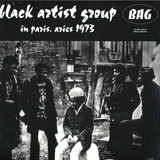
Black Artist Group - In Paris, Aries 1973

Repress!

Outstanding free jazz session recorded in 1973 in Paris by Chicago outfit BAG.

It was Lester Bowie, trumpeter with the Art Ensemble of Chicago, who suggested that the Black Artists' Group (BAG) should head for Paris. In 1972 several members of BAG took his advice and flew to France for an extended stay. The following year a concert featuring saxophonist Oliver Lake, trumpeters Baikida Carroll and Floyd LeFlore, drummer Charles Bobo Shaw and trombonist Joseph Bowie (Lester's younger brother) was recorded and subsequently issued as In Paris, Aries 1973, a strictly limited edition LP on the group's own label.

Since the formation of Black Artists' Group in 1968, the home of this multidisciplinary arts collective had been St Louis, Missouri, the city where the Bowie brothers had grown up. It was there that Lester Bowie had started to investigate the expanding horizons of jazz before moving, in 1966, to Chicago where he joined the recently established Association for the Advancement of Creative Musicians (AACM). His close friend Oliver Lake visited Bowie, attended AACM concerts and meetings and was inspired not only by their artistic vision and integrity but also by their efficient organisation. In Chicago musicians were making things happen for themselves, taking control of their own destinies and giving shape to their lives as creative artists.

In June 1969, the Art Ensemble of Chicago had taken their music to France. During the preceding decade Paris had established a reputation for audiences that were unusually well-informed and open-minded, receptive to the uncompromising music of black American innovators such as Cecil Taylor, Ornette Coleman, Albert Ayler and Sun Ra. The city that had nurtured not only Cubism and Surrealism, but also Jean-Luc Godard and contemporary cinema's Nouvelle Vague was well prepared for the sonic collage forms and stylistic dislocations of the Art Ensemble. During that same month violinist Leroy Jenkins, trumpeter Leo Smith and saxophonist Anthony Braxton also arrived in Paris, three further emissaries from the AACM.

The adventure of collective improvisation resonated with the Parisian zeitgeist. Enthusiastic audiences attended their concerts and coverage in the media. In Paris, Aries 1973 offers an isolated and fascinating glimpse into that phase of the group's existence. The album is dedicated to the memory of Kada Kayan, a bassist who had hoped to make the trip from St Louis to France but, tragically, had grown ill and died. His absence adds special poignancy to the sound of the bass when it appears on this recording, played by Baikida Carroll. Listeners keen to hear Kayan himself in the company of Lake, Bowie, Shaw, LeFlore and Carroll should seek out Red, Black and Green by the 10-piece Solidarity Unit, Inc. That album, recorded on 18th September 1970 and dedicated to Jimi Hendrix, who died on that day, features an earlier version of Shaw's composition 'Something to Play On.'

In Paris, Aries 1973 reveals BAG's musical affinities with the Art Ensemble of Chicago. Both groups preserved an independently minded approach to the notion of free jazz and a carefully filtered awareness of pan-African musical practices, while their creative interest in space, mobile structure, chance occurrences and simultaneity also suggests parallels with the concerns of leading experimental composers working at that time. These performances in Paris of Shaw's 'Something to Play On' and Lake's 'Re-Cre-A-Tion,' plus two collective compositions/improvisations, display the dedication to structural fluency and sensitivity to coloration that accompanied BAG's unorthodox group dynamics and their unconventional instrumental combinations. In this case the musicians embrace congas, log drums, marimbas, woodblocks, cowbells and gongs. This is not a showcase for solos, but a shape-shifting and multi-centred statement of togetherness, quest and discovery. Removed from BAG's original multidisciplinary context the music still exudes an exhilarating spirit of collaborative exploration and shared excitement.

non in magazzino

Ordina ora e ordineremo l'articolo per te presso il nostro fornitore.


Last In: 7 years ago
The Cinematic Orchestra - Every Day (Ltd Col. 20th Anniversary 3LP+MP3)

Red Vinyl

The Cinematic Orchestra haben anlässlich des 20-jährigen Jubiläums die erste Reissue ihres Klassikers, „Every Day“, angekündigt. Auf 3 LPs auf transparentem rotem Vinyl finden sich die Bonustracks „Oregon“ und „Horizon“ (feat. Niara Scarlett) sowie die beiden bisher unveröffentlichten Tracks „Semblance“ und „Flite“ (Original Version). Die Veröffentlichung enthält ein neues Artwork vom Designer des ursprünglichen Artworks von „Every Day“, Openmind, und eine Klapphülle mit Gilles Petersons Original-Linernotes. Außerdem wird eine Auswahl von bisher unveröffentlichten Fotos auf einer 12“-Karte präsentiert, darunter die Band im Rivoli Ballroom in London (fotografiert von Carl Fox) und J. Swinscoe mit Fontella Bass in der Nähe des Genfer Sees in der Schweiz (von Peter Williams).
In den zwei Jahrzehnten seit der bahnbrechenden Veröffentlichung des Albums ist der Einfluss der Band unüberhörbar geworden; Jazz ist überall um uns herum, mit gefeierten Künstler:innen, von Kamasi Washington über Tau5 und Koma Saxo bis hin zu Sons of Kemet und unzähligen mehr, London, Berlin und L.A. haben in letzter Zeit eine Szene hervorgebracht, die produktiver ist, als irgendjemand erwartet hätte. BADBADNOTGOOD haben Jazz-Soundtracks zu großen Modeschauen geliefert, und Kendrick Lamar hat - über den Rap-Umweg - das Genre an die Spitze der Charts gebracht. Die Art und Weise, wie sich The Cinematic Orchestra über ihre anfänglichen Jazz-Einflüsse hinaus zu einer Art transzendentaler Orchestrierung entwickelt hat, kombiniert mit der zeitgenössischen eleganten Elektronik, die heute von Künstler:innen wie Ólafur Arnalds und Floating Points verwendet wird - Künstler:innen, denen sie geholfen haben, den Weg zu ebnen - begann mit der Veröffentlichung von „Every Day“ wirklich Früchte zu tragen. Auf den sieben makellosen, schwebenden Tracks nimmt die Gruppe (angeführt von Gründungsmitglied J. Swinscoe und seinem langjährigen musikalischen Mitarbeiter Dominic Smith) die Hörer mit auf eine Reise durch klassischen Soul, Jazz, Chorsätze, versinkenden Horn-Riffs, pochenden Harfen-Linien, Minimalismus und vieles mehr - mit einer Seele, die tiefer als der Ozean ist. Und mit Gästen vom Kaliber eines Fontella Bass (Autor und Interpret des 60er-Jahre-Soul-Meisterwerks, „Rescue Me“ und Mitglied der Free-Jazz-Abtrünnigen, Art Ensemble of Chicago) und der britischen Rap-Legende Roots Manuva (dessen hochfliegender, philosophischer Beitrag zu „All Things To All Men“ ein absoluter Fan-Favorit ist) weiß man, dass man sich auf etwas Besonderes freuen darf. Pitchfork stimmte dem seinerzeit zu und bewertete das Album bei Veröffentlichung mit 8,6 von möglichen 10 Punkten.

Format: Limitierte rot-transparente Vinyl im Gatefold Sleeve mit vier Bonus Tracks von welchen einige bisher nicht auf Vinyl erhältlich waren inklusive 12” Fotokarte und Downloadcode

non in magazzino

Ordina ora e ordineremo l'articolo per te presso il nostro fornitore.


Last In: 3 years ago
Angel Bat Dawid - Requiem For Jazz LP 2x12"
 
24

Requiem for Jazz is a 12-movement suite composed and arranged by Angel Bat Dawid, inspired in part by dialogue from Edward O. Bland’s 1959 film “The Cry of Jazz.”

The original form of the music was premiered at the 2019 edition of the Hyde Park Jazz Festival in Chicago, where Angel conducted a multigenerational fifteen-piece instrumental ensemble (all Black musicians from Chicago’s creative music community) alongside a four- person choir (featuring singers from Black Monument Ensemble), dancers, and visual artists in performance.

Angel mixed and post-produced recordings from the performance – adding interludes, vocals and additional sounds, as well as transcribing a piece from “The Cry of Jazz” film. The final movement of Requiem for Jazz features Marshall Allen and Knoel Scott of the Sun Ra Arkestra. Their contributions were recorded remotely at the historic Arkestral Institute of Sun Ra in Philadelphia in late 2020.

The final Requiem for Jazz work in album form is an immersive 24-track, double LP experience. The physical package is a deluxe, heavyweight gatefold jacket with liner notes by South African writer Nombuso Mathibela, artwork by Damon Locks, and a large fold out poster designed by Jeremiah Chiu, featuring poetry written by Angel Bat Dawid in dedication to all of her collaborators on the project. Additionally, there is a limited Thy Kingdom Come purple color vinyl edition of Requiem for Jazz available for the first pressing only.

pre-ordina ora31.03.2023

dovrebbe essere pubblicato su 31.03.2023

Ariel Zetina - Cyclorama LP

Ariel Zetina

Cyclorama LP

12inchLOCLP023
Local Action
23.02.2023

Local Action is proud to present Cyclorama, the long-awaited debut album by Ariel Zetina.

A resident DJ at Chicago’s iconic Smartbar, a long-standing Discwoman family member and a key part of the city’s dance music and LGBTQ+ communities, Ariel has established herself as one of the most exciting electronic artists operating today - through releases such as 2020’s acclaimed MUAs at the End of the World and 2017’s Organism, and her meticulous approach to DJ mixes - as recently evidenced on Sestina, her 2020 contribution to Mixtape Club.

Written across 2021 and honed this Spring, Cyclorama is Ariel’s most impressive and all-encompassing work yet, showcasing her as a producer, vocalist and also curator, pulling together an ensemble cast of her peers in Chicago (Cae Monāe, Mia Arevalo, DANNN) and some of the most exciting names in contemporary club music (Violet, Bored Lord).

Conceptually, Cyclorama draws heavily from Ariel’s background as a theater writer and producer. Popularized in 19th century German theater, a cyclorama (or cyc) is a large curtain, placed on the back wall of the stage. This creates an illusion of extra depth in the background, and often is used to represent the sky. In Ariel’s words, “I imagine all the tracks on this as the lights and action projected onto the cyclorama. The whole album is like the cyc, a representation of the sky. Or an imagined sky. An imagined dancefloor. An imagined theatrical production.”

As well as drawing conceptually from Ariel’s background in theater, the album draws on a personal level from Ariel’s journey as a trans woman of color - most directly on Cyclorama’s three vocal tracks, ‘Gemstone’, ‘Slab of Meat’ and lead single ‘Have You Ever’.

On ‘Have You Ever’, Ariel collaborates with Cae Monāe, a dear friend and fellow trans woman of color. “‘Have you ever been with a girl like me before?’ and all the lyrics refers to the fear and anxiety that cis men who are attracted to trans women feel, and also any woman that doesn’t fit the mold of a stereotypical woman”, Ariel explains. “Cae and I - and many trans women - have been in so many situations where society tells cis men they cannot be with trans women and this explores that and gives power to all trans women in this situation. The techno reflects that, as well as the “Spell my name” section at the end, showing the true power of trans women.”

On ‘Slab of Meat’, Ariel delivers a hypnotic solo vocal performance that builds in intensity with each line (“I am treated like a slab of meat both emotionally and sexually sometimes, especially one left in the freezer on the back burner. Why did you bring this meat home from the market? For what? You’re wasting meat!”), while ‘Gemstone’, a collaboration with Mia Arevalo, continues the empowering themes of ‘Have You Ever’ in a different context:

“‘Gemstone’ is a call for trans women to take time with your transition because it will all happen eventually. As two girls who have started our transition almost a decade ago, I think we have both seen that we have always needed to take our time to take our time. Reminders not to rush or compare yourself to other girls. I love the metaphor of gemstone months representing different periods of transition. I’ve been so many different women in recent years, and I'm excited to continue my journey.”

It’s immediately followed by album closer ‘Tropical Depression’, the title of which is a reference to Ariel growing up with tropical depressions, storms and hurricanes affecting her hometown of Jacksonville, Florida as well as her family in Belize City:

“This track for me is about living day to day and continuing while dealing with my really intense clinical depression. The sample comes from “Why can’t you let me go?” but is supposed to be transformative and not necessarily legible. How we hold on to our trauma and depression like a protective shell. This is an attempt to deal with it in a different way.”

The Cyclorama album cover, directed by Dylan Bragassa, stars Ariel alongside Monāe and Arevalo in an imagined theater production. In Ariel’s words, “a theoretical performance starring only trans women of color - I wanted an ensemble shot to represent the ensemble nature of this album! Love how Dylan combines so many ideas to create a very unique image that asks so many questions.”

non in magazzino

Ordina ora e ordineremo l'articolo per te presso il nostro fornitore.


Last In: 3 years ago
Archie Shepp - Blasé

Archie Shepp

Blasé

12inchBYG529318
CHARLY
27.01.2023

Newly mastered to vinyl from original BYG tapes. Lacquers cut by Alchemy Mastering at AIR STUDIOS. Insert with exclusive liner notes by author, journalist and BYG-authority Kevin Le Gendre. CD: Original 1969 BYG album. Digitally mastered from original BYG tapes by Nick Robbins. 16-pages booklet with photos & exclusive liner notes by author and journalist Kevin Le Gendre. *** Florida-born saxophonist, composer, poet, actor and playwright Archie Shepp was one of the most articulate exponents of politicized black culture in the late ‘60s, a time of enormous upheaval and radical thought. Relocating to Paris he made a number of highly influential albums, such as Blasé, that broached the essential themes of freedom and racial equality, and tapped into the bedrock of African-American music. Gospel and blues were a major part of the work, which also had a strong avant-garde sensibility. The band featured stellar vocalist Jeanne Lee and members of Art Ensemble Of Chicago. These trailblazing artists who combined jazz, poetry and radical politics made a definitive musical statement. “This re-mastered version of a seminal album still has great musical and emotional power... “ Kevin Le Gendre, 2022

pre-ordina ora27.01.2023

dovrebbe essere pubblicato su 27.01.2023

Paul Murphy - The Jazz Room (2x12")

Paul Murphy

The Jazz Room (2x12")

2x12inchBBE465CLP
BBE
27.01.2023

UK jazz dance hero Paul Murphy teams up with BBE Music to deliver his first compilation on the label: a blazing selection of up-tempo jazz titled ‘The Jazz Room’.
Lauded by none other than Gilles Peterson as “the original messenger of jazz who found almost every dancefloor classic”, Paul began DJing in 1970s London. His passion and unique playing style placed him at the epicentre of an emerging jazz-dance scene in the city, popping off in spots like The Horseshoe (aka Jaffas), The Wag, The 100 Club, The Blue Note and The Electric Ballroom, where he founded the now famous ‘Jazz Room’, after which this album is named.

pre-ordina ora27.01.2023

dovrebbe essere pubblicato su 27.01.2023

Maajun - Vivre la Mort du Vieux Monde

Before Mahjun (of which Souffle Continu reissued, in 2016, the two albums released on Saravah), there was... Maajun. Five musicians (Jean-Pierre Arnoux, Cyril and Jean-Louis Lefebvre, Alain Roux and Roger Scaglia) and three times as many instruments at the service of an electric-poetic guerrilla group moulded from folk and blues. The group’s unique album, “Vivre la Mort du Vieux Monde” evokes an (imaginary) association of Frank Zappa and Jacques Higelin, of Sonny Sharrock and the Art Ensemble Of Chicago. Under these conditions, Long Live Death!

“The most French of all the French groups, determined to take Maurice Chevalier’s place in American hearts.” This was how Rock&Folk presented Mahjun in 1977. So be it. But when “Vivre la Mort du Vieux Monde”, was issued, it was 1971, and the name, though the same group, was still spelled Maajun. So, let’s look back at the story.

At the end of the sixties, five blues fans decided to form a French group ready to break down the barriers: Jean-Pierre Arnoux (drums, vibraphone, saxophone), Cyril Lefebvre (guitar, organ), Jean-Louis Lefebvre (bass, violin, guitar, vocals), Alain Roux (saxophone, flute, harmonica, vocals) and Roger Scaglia (guitar, vocals). This was Maajun, and Vivre la mort du vieux monde would be their only album, but which would (nevertheless) be followed by those of Mahjun created later by Lefebvre (Jean-Louis) and Arnoux.

Recorded for the Vogue label, “Vivre la Mort du Vieux Monde” would disturb a number of people. This is mostly due to the lyrics, many of which were written by Gérald Escot-Bocanegra, who, while summoning the spirit of Lautréamont and Rimbaud, turned the Maajun musicians on to rock and free jazz. Add a bit of politics into the mix, and the release of the album was delayed for several months. But then, wasn’t it worth waiting for?

Because “Vivre la Mort du Vieux Monde”, a real concept-album, is an important and iconoclastic statement made directly in the face of (francophone) dreamers of all countries. Over heavy guitar riffs, psychedelic interludes or fantasy-fuelled digressions, Maajun built mazes on the advice of alchemists known only to themselves before heading off on a long march on the “cracking walls”. It was an ambitious project, but Maajun could handle it, going so far as to proclaim: “Tomorrow will be a huge party!” But as we can see “tomorrow”, is now!

pre-ordina ora13.01.2023

dovrebbe essere pubblicato su 13.01.2023

Brahja - Watermelancholia LP

Brahja

Watermelancholia LP

12inchCORTIZONA018
CORTIZONA
16.12.2022

LP including booklet with extended liner notes. Channeling wild seventies Impulse vibes, even resonating the guts of early Art Ensemble of Chicago and the tempering spirit of Max Roach's 'We Insist' era: BRAHJA is soul searching their spirit on 'Watermelancholia'.

Devin Brahja Waldman is a New York saxophonist, drummer, synthesizer player and composer who leads the group BRAHJA. Waldman has accompanied his aunt, poet Anne Waldman, since the age of ten. Waldman is a co-founding member of Radical Reversal, Diva of Deva Loka, and Notable Deaths. He has performed with Patti Smith, William Parker, Nadah El Shazly, Malcolm Mooney, Thurston Moore, Godspeed! You Black Emperor, Charles Hayward, Luke Stewart and Yoshiko Chuma. Waldman is also a member of NYC's Heroes Are Gang Leaders (led by poet Thomas Sayers Ellis and saxophonist James Brandon Lewis), of Sam Shalabi's Land of Kush, and of the Norwegian hardcore group MoE.

As a youngster, Waldman was taken under the wing of avant-garde giant Paul Bley. Along with Anne Waldman and cousin Ambrose Bye, Waldman is a co-producer for Fast Speaking Music -a NYC poetry and music label which has released recordings with Amiri Baraka, Meredith Monk, William Parker, Laurie Anderson, Eileen Myles, CAConrad, Fred Moten, Daniel Carter, Clark Coolidge, Thurston Moore, Joanne Kyger and many others.

Ancient to the future 2.0

Watermelancholia is about the law of Karma:
a law so obvious that it often goes unspecified and ignored.
Neglecting this law invites a world of chaos.
It's been articulated in endless ways.
Some have called it Cosmic Law or Natural Law.
Others translate it as Do No Harm.

(liner notes excerpt)

The moment the first bass note of Luke Stewart kicks in on 'Watermelancholia', followed by the swelling drum roll of Malick Koly and the lush leading voice of Janice Lowe you feel Devin Brahja will take you on a deep mind-blowing spiritual journey.


Channeling wild seventies Impulse vibes on 'O.P.K' or, could we say, even resonating the guts of early Art Ensemble of Chicago and the tempering spirit of Max Roach's 'We Insist' era: BRAHJA is soul searching their spirit on 'Watermelancholia'.


A poetic stream of consciousness, backboned by top-notch musicians, transcending the cosmic universe, trying to find answers and musically connecting.


Watermelancholia is a meditation on healing the inner schism between the sense of self - the ego - and the inner being. It is about bringing the ego to justice; putting it on trial, as it were.

non in magazzino

Ordina ora e ordineremo l'articolo per te presso il nostro fornitore.


Last In: 2 years ago
VARIOUS - 15 YEAR ANNIVERSARY LP (3x12")
 
23

A new compilation titled Erased Tapes _+ù_¦ö, encompassing a two hour cross-section of the label"s 15-year history including hidden gems and previously unreleased material, will be available on November 4 to coincide with specially curated festivals in London and Berlin. The first offering comes from UK producer Kevin Richard Martin aka The Bug and Japanese voice artist Hatis Noit who share their paranormal first collaborative cut After the Storm amongst other unique pairings such as The Art Ensemble of Chicago featuring Moor Mother, Bell Orchestre interpreted by Colin Stetson, Douglas Dare joined by The London Contemporary Orchestra and Ben Lukas Boysen remixed by Kiasmos. Premiered exclusively via The Wire magazine in form of a free download ahead of their debut live performance at Le Guess Who? Festival 2019 in Utrecht, the track is now finally made available on vinyl and streaming platforms alongside other previously unreleased pieces from electronic producer Ryan Lee West aka Rival Consoles and Icelandic composer Högni. "As a solo vocalist and voice artist, I"d always dreamed of floating and being drowned in a beautiful sonic storm. And then I met Kevin Martin" - Hatis Noit The artwork is composed of the Japanese kanji for "15" - calligraphed by label founder Robert Raths and designed by Munich-based artist Bernd Kuchenbeiser.

non in magazzino

Ordina ora e ordineremo l'articolo per te presso il nostro fornitore.


Last In: 3 years ago
Simon Shaheen - The Music Of Mohamed Abdel Wahab LP

Reissue of the oud / viola virtuoso SIMON SHAHEEN's interpretations of pieces by one of the Middle East's most important 20th Century composers, MOHAMED ABDEL WAHAB. Produced by BILL LASWELL, remastered for vinyl at D&M Berlin.

MOHAMED ABDEL WAHAB (1902-1991) was "a giant in the world of Middle Eastern entertainment" (Al Jadid Magazine) - as singer, actor and composer – and is commonly considered "the father of modern Egyptian song". After a visit to Paris, he revolutionized the film industry by introducing the genre "musical film" to the Arabic world, the movie "The White Rose" in which he starred broke all records and to this day is frequently presented in Cairo's cinemas. But in 1950, WAHAB left the film industry to focus on singing and composing – he wrote over 1800 songs (among others for Umm Kalthoum, an iconic artist in the Arabic music in her own right) that were deeply rooted in classical Arabic music but also laid the foundation for a new era of Egyptian music as WAHAB was open to Western elements such as waltz rhythms or even rock'n'roll in Abdel Halim Hafez's song "Ya Albi Ya Khali". He also composed several national anthems (Tunisia, Oman, Libya, United Arabic Emirates) and re-composed the Egyptian national anthem "Belady Belady Belady", based on the original by Sayed Darwish. WAHAB received several decorations of Arabic states, and at his death in 1991, Egypt honored its famous son with a huge military funeral at the Rabia al-Adawiya Mosque in Cairo, the six-horse carriage procession carrying his coffin was actually led by the prime and foreign ministers, followed by the ministers of defense, interior and culture!


SIMON SHAHEEN (born 1955) is the perfect choice for WAHAB's compositions. Born into a family of gifted musicians, he learned playing the oud at the age of 5 and the violin shortly thereafter. He earned degrees in Arabic literature and music performance at the Tel Aviv University, and later pursued further studies at Hebrew University of Jerusalem and after his emigration to the USA (in 1980) at the Manhattan School of Music and Columbia University. SHAHEEN lives in New York where he founded the Near Eastern Music Ensemble and Qantara, a formation that blends traditional Arabic Music with elements of Jazz and classical music, and he also has been organizing the Annual Arab Festival of Arts called Mahrajan al-Fan since 1994. The same year he received a National Heritage Fellowship from the National Endowment for the Arts at the White House. Solo albums like Saltanah (Water Lily Acoustics), Turath (CMP) or Taqasim (Lyrichord) underline his importance as one of the most significant Arab musicians, performers, and composers of his generation. His work incorporates and reflects a legacy of Arabic music, while it forges ahead to new frontiers, embracing many different styles in the process. SHAHEEN has participated in many cross-cultural musical projects with artists as diverse as Henry Threadgill, Vishwa Mohan Bhatt, or the Jewish klezmer ensemble The Klezmatics, contributed to the soundtracks for The Sheltering Sky and Malcolm X and composed the entire score for the United Nations sponsored documentary, For Everyone Everywhere, celebrating the 50th anniversary of the United Nations Human Rights Charter. SHAHEENS biggest success was the Qantara album Blue Flame (2001) which has been nominated for eleven Grammy Awards.

Besides all his activities as performer, he dedicates a good part of his time to working with schools and universities, including Julliard, Columbia, Cornell, Princeton, Brown, Harvard, Yale, University of California in San Diego, University of Michigan in Ann Arbor and many others.
The Music Of Mohamed Abdel Wahab was originally released in 1990 on Axiom, the record label curated by iconic producer and bass player Bill Laswell, and has been carefully remastered for this vinyl reissue at D&M, Berlin.


Press quotes:
"Master oud player and composer Simon Shaheen finds the perfect mix on this collection of Mohammed Abdel Wahab's pieces … seven wonderful interpretations sparkling with oud and strings interplay." Stephen Cook / AllMusic


"Shaheen's violin soars over a slicing string section and a bed of percolating percussion, while accordion, oud, finger cymbals and a chorus of singers weave in and out. Produced with sparkling clarity by Bill Laswell … this record opens a new world of harmonic and melodic possibilities to ears accustomed to Western pop." Greg Kot / Chicago Tribune


Musicians:
Simon Shaheen: Oud, Violin, Viola
Najib Shaheen: Oud
Sheikh Taha: Accordion
Anton Hajjar: Ney
Paula Bing: Flute
Ramzi Bisharat: Tabla
Hanna Mirhige: Mizhar
Michael Baklouk: Daff
Bobby Farah: Sagat
Ibrahim Salman: Quanoun
Artemis Theodos, Gabriel Palka, Nessim Dakwar, Kamil Shajrawi: Violin
Mike Richmond: Double Bass
Michael Finkel, Vladimir Greenberg: Cello
Laura Shaheen, Louise Salman, Maurice Chedid, Nermine Rawi,
Simon Shaheen, Youssef Kassab: Chorus

non in magazzino

Ordina ora e ordineremo l'articolo per te presso il nostro fornitore.


Last In: 3 years ago
HORSE LORDS - COMRADELY OBJECTS LP

Horse Lords return with Comradely Objects, an alloy of erudite influences and approaches given frenetic gravity in pursuit of a united musical and political vision. The band's fifth album doesn't document a new utopia, so much as limn a thrilling portrait of revolution underway. Comradely Objects adheres to the essential instrumental sound documented on the previous four albums and four mixtapes by the quartet of Andrew Bernstein (saxophone, percussion, electronics), Max Eilbacher (bass, electronics), Owen Gardner (guitar, electronics), and Sam Haberman (drums). But the album refocuses that sound, pulling the disparate strands of the band's restless musical purview tightly around propulsive, rhythmic grids. Comradely Objects ripples, drones, chugs, and soars with a new abandon and steely control. This transformation came, in part, due to circumstance. Sidelined from touring their early 2020 album The Common Task in a world turned upside down, Horse Lords promptly returned to their Baltimore practice space and began piecing together the music that became Comradely Objects (Bernstein, Eilbacher, and Gardner have since relocated to Germany). Removed from their tried and true method of refining new music on the road, the quartet invested less energy ensuring live playability and more rehearsing and recording. The deliberate writing and tracking process, a rarity since the band's earliest days, led to a collection of pieces that signal a new peak of creativity and musical heft without devolving into studio sprawl or frippery. Comradely Objects reflects familiar elements of Horse Lords' established palette_the mantra-like repetition of minimalism and global traditional musics, complex counterpoint, the subtleties of microtonality, a breadth of timbres and textures drawn from all across the avant-garde_with some standout stylistic innovations. At different moments, the album veers closer to free jazz than anything else in the band's catalog, channels spectral electroacoustic tones, and throbs with unexpected yet felicitous synth. While these new elements are evidence of additional studio time and care, Comradely Objects retains the dizzying obsessive rhythmic energy that galvanizes the best moments of the band. Music for people who like Mdou Moctar, This Heat!, Battles, Ndagga Rhythm Force, Can, Captain Beefheart, Art Ensemble of Chicago, LaMonte Young.

pre-ordina ora04.11.2022

dovrebbe essere pubblicato su 04.11.2022

HORSE LORDS - COMRADELY OBJECTS LP

Horse Lords return with Comradely Objects, an alloy of erudite influences and approaches given frenetic gravity in pursuit of a united musical and political vision. The band's fifth album doesn't document a new utopia, so much as limn a thrilling portrait of revolution underway. Comradely Objects adheres to the essential instrumental sound documented on the previous four albums and four mixtapes by the quartet of Andrew Bernstein (saxophone, percussion, electronics), Max Eilbacher (bass, electronics), Owen Gardner (guitar, electronics), and Sam Haberman (drums). But the album refocuses that sound, pulling the disparate strands of the band's restless musical purview tightly around propulsive, rhythmic grids. Comradely Objects ripples, drones, chugs, and soars with a new abandon and steely control. This transformation came, in part, due to circumstance. Sidelined from touring their early 2020 album The Common Task in a world turned upside down, Horse Lords promptly returned to their Baltimore practice space and began piecing together the music that became Comradely Objects (Bernstein, Eilbacher, and Gardner have since relocated to Germany). Removed from their tried and true method of refining new music on the road, the quartet invested less energy ensuring live playability and more rehearsing and recording. The deliberate writing and tracking process, a rarity since the band's earliest days, led to a collection of pieces that signal a new peak of creativity and musical heft without devolving into studio sprawl or frippery. Comradely Objects reflects familiar elements of Horse Lords' established palette_the mantra-like repetition of minimalism and global traditional musics, complex counterpoint, the subtleties of microtonality, a breadth of timbres and textures drawn from all across the avant-garde_with some standout stylistic innovations. At different moments, the album veers closer to free jazz than anything else in the band's catalog, channels spectral electroacoustic tones, and throbs with unexpected yet felicitous synth. While these new elements are evidence of additional studio time and care, Comradely Objects retains the dizzying obsessive rhythmic energy that galvanizes the best moments of the band. Music for people who like Mdou Moctar, This Heat!, Battles, Ndagga Rhythm Force, Can, Captain Beefheart, Art Ensemble of Chicago, LaMonte Young.

pre-ordina ora04.11.2022

dovrebbe essere pubblicato su 04.11.2022

Makaya McCraven - In These Times LP

Today Chicago-based percussionist, composer and producer Makaya McCraven announces the details of his new album In These Times, which is set for release on September 23rd via International Anthem / Nonesuch / XL Recordings. The first offering from the new album is a song tiled "Seventh String," which encapsulates the various musical dimensions present on McCraven's new album, a career-defining body of work that is a remarkable new peak for the already-soaring McCraven. In These Times is a collection of polytemporal compositions inspired as much by broader cultural struggles as McCraven's personal experience as a product of a multinational, working class musician community. It's the recording that he's been trying to create for 7+ years, as it's been consistently in process in the background while he's put forth a prolific run of releases including: In The Moment (2015), Highly Rare (2017), Where We Come From (2018), Universal Beings (2018), We're New Again (2020), Universal Beings E&F Sides (2020), and Deciphering the Message (2021). With contributions from over a dozen musicians and creative partners from his tight-knit circle of collaborators - including Jeff Parker, Junius Paul, Brandee Younger, Joel Ross, and Marquis Hill - the music was recorded in five different studios and four live performance spaces while McCraven engaged in extensive post-production work at home. Featuring orchestral, large ensemble arrangements interwoven with the signature "organic beat music" sound that's become his signature, the album is an evolution and a milestone for McCraven, the producer. But moreover, it's the strongest and clearest statement we've yet to hear from McCraven, the composer. Profiled in the New York Times, Vice, Pitchfork, Rolling Stone, the Guardian, and NPR, among other publications, Makaya and the music he makes today is what Passion of Weiss explains, "is part of a necessary conversation about the next evolution of the Black improvised music known colloquially as 'jazz.' He's found the threads connecting the past with the present, and is either wrapping them with new colors and textures, or he's plucking them gleefully like the strings of a grand instrument." McCraven, who has been aptly called a "cultural synthesizer" and "beat scientist," has a unique gift for collapsing space, destroying borders and blending past, present, and future into poly-textural arrangements of post-genre, jazz-rooted 21st century folk music. In These Times encompasses his artistic ethos, his experiences, identity and lineage, while pushing his music to new heights.

pre-ordina ora20.10.2022

dovrebbe essere pubblicato su 20.10.2022

Philip Glass - The Hours OST 2x12"

Philip Glass

The Hours OST 2x12"

2x12inch0075597910292
NONESUCH
30.09.2022

‘Was there ever a more perfect film for Glass’s lyrical manner? He refers to his own past, but the way in which the material is treated transforms it inevitably into that eternal present. Such a feeling of fragile beauty is a rare achievement.’ – Gramophone

‘Simple and complex by turn, Glass’s score adds dignity and depth to the movie, and to the tragedies and triumphs, big or small, of ordinary life.’
– Guardian

‘Underpinning the anguish at the heart of The Hours a beautiful score. Glass’s motifs capture the passage of time and the universality of human experience.’ – Classic FM’s Best Soundtracks

Nonesuch releases Philip Glass’s award-winning soundtrack to The Hours on vinyl for the first time to coincide with its 20th anniversary and Glass’ 85th birthday concert season. Originally released in December 2002, Glass’s score to the Academy Award-winning film was itself nominated for an Academy Award, as well as a Golden Globe and a Grammy, and went on to win a BAFTA and a Classical BRIT.

Directed by Stephen Daldry, The Hours is the story of three women searching for more potent, meaningful lives. Based on Michael Cunningham’s 1999 Pulitzer Prize–winning novel, with a screenplay by David Hare, the film interweaves the stories of three women – a book editor in New York (Meryl Streep), a young mother in California (Julianne Moore), and the author Virginia Woolf (Nicole Kidman). Their stories intertwine, and finally come together in a surprising, transcendent moment of shared recognition.

Philip Glass’s score was conducted by Nick Ingman, with Michael Reisman on piano and the Lyric Quartet, and recorded at Abbey Road Studios and Air Studios, London. The score was a key element in this acclaimed triptych of dramatic tales. ‘The inter-cutting of personal stories over a wide span of time,’ said NPR, ‘is held together by a single music approach.’

In his original liner note, Michael Cunningham wrote, ‘Each novel I’ve written has developed a soundtrack of sorts; a body of music that subtly but palpably helped shape the book in question. The one constant since I started trying to write novels, however – my only ongoing act of listening fidelity – has been the work of Philip Glass. I love Glass’s music almost as much as I love Woolf’s Mrs. Dalloway. Glass, like Woolf, is more interested in that which continues than he is in that which begins, climaxes, and ends; he insists, as did Woolf, that beauty often resides more squarely in the present than it does in the present’s relationship to past or future. So, when I heard he’d agreed to contribute the music to the film version of The Hours, it seemed both inevitable and too good to be true. I’m not sure if I can offer any higher praise than this: When I saw the movie with the music added, I thought automatically of how I could use the soundtrack, when it came out, to help me finish my next book.’

“This is a movie about art and how art affects life," explains Philip Glass. “The story is very complicated and the music could take on a very important role in the film, as I saw it – to make it viewable, to make it comprehensible, so the stories of the three women in the film didn’t seem separate, that they were tied together. The music had to be the thread that tied the movie together. There’s no question that the emotional point of view is conveyed by the music. Music is the arrow you shoot in the air. Everything follows that.’

Born in Baltimore, Maryland, in 1937, Philip Glass is a graduate of the University of Chicago and the Juilliard School. By 1974, Glass had created a large collection of music for The Philip Glass Ensemble. The period culminated in the landmark opera, Einstein on the Beach. Since Einstein, Glass’s repertoire has grown to include music for opera, dance, theater, orchestra, and film. His scores have received Academy Award nominations (including Kundun and The Hours, both released on Nonesuch, as well as Notes on a Scandal) and a Golden Globe (The Truman Show). Recent works include Glass’s memoir, Words Without Music, Glass’s first Piano Sonata, opera Circus Days and Nights, and Symphony No. 14. Glass received the Praemium Imperiale in 2012, the US National Medal of the Arts from President Barack Obama in 2016, and 41st Kennedy Center Honors in 2018.

Nonesuch’s relationship with Glass began in 1985, with the release of the score for Paul Schrader’s Mishima. In addition to The Hours (2002) and Kundun (1997), over the years other Glass works on Nonesuch have included Einstein on the Beach (1993), Music in Twelve Parts (1996), the soundtracks for Powaqqatsi (1988) and Koyaanisqatsi (1998), Glass Box (2008), and Kronos Quartet’s Performs Philip Glass (1995), amongst others.

pre-ordina ora30.09.2022

dovrebbe essere pubblicato su 30.09.2022

Elijah McLaughlin Ensemble - II

The Chicago group, which features Elijah McLaughlin on 12 and 6 string guitars, Joel Styzens on hammered dulcimer, and Jason Toth on upright bass, blends elements of American primitivism guitar styles, with free jazz and modern classical music together into something daringly original and stunningly beautiful. -Record Crates United. If there was a silver lining to the cloud of uncertainty that was life during the early days of the pandemic, it was that all of the isolation provided a clear break from the entrenched routines of day to day life. This respite allowed me to see in sharp contrast all of the things that were important in my life, and all of the things that were trivial, and thus expendable. It was during this time that I began to write in earnest for this 2nd Elijah McLaughlin Ensemble record. Over the course of a year, I would bring my new compositions to my collaborators (Jason Toth and Joel Styzens), and usually after a very limited number of rehearsals we would enter the studio at the Fine Arts Building in Chicago and record the songs on an old Tascam ½” tape machine. There were four such studio sessions, in which all recorded material was culled down to these 9 songs. We recorded the material with a strong improvisational approach, and a couple of these songs are essentially first takes. I am very proud of the material on this album, and the energy we captured in the studio. I am glad to partner with Tompkins Square in sharing this album with the world.

pre-ordina ora30.09.2022

dovrebbe essere pubblicato su 30.09.2022

Makaya McCraven - In These Times LP

Today Chicago-based percussionist, composer and producer Makaya McCraven announces the details of his new album In These Times, which is set for release on September 23rd via International Anthem / Nonesuch / XL Recordings. The first offering from the new album is a song tiled "Seventh String," which encapsulates the various musical dimensions present on McCraven's new album, a career-defining body of work that is a remarkable new peak for the already-soaring McCraven. In These Times is a collection of polytemporal compositions inspired as much by broader cultural struggles as McCraven's personal experience as a product of a multinational, working class musician community. It's the recording that he's been trying to create for 7+ years, as it's been consistently in process in the background while he's put forth a prolific run of releases including: In The Moment (2015), Highly Rare (2017), Where We Come From (2018), Universal Beings (2018), We're New Again (2020), Universal Beings E&F Sides (2020), and Deciphering the Message (2021). With contributions from over a dozen musicians and creative partners from his tight-knit circle of collaborators - including Jeff Parker, Junius Paul, Brandee Younger, Joel Ross, and Marquis Hill - the music was recorded in five different studios and four live performance spaces while McCraven engaged in extensive post-production work at home. Featuring orchestral, large ensemble arrangements interwoven with the signature "organic beat music" sound that's become his signature, the album is an evolution and a milestone for McCraven, the producer. But moreover, it's the strongest and clearest statement we've yet to hear from McCraven, the composer. Profiled in the New York Times, Vice, Pitchfork, Rolling Stone, the Guardian, and NPR, among other publications, Makaya and the music he makes today is what Passion of Weiss explains, "is part of a necessary conversation about the next evolution of the Black improvised music known colloquially as 'jazz.' He's found the threads connecting the past with the present, and is either wrapping them with new colors and textures, or he's plucking them gleefully like the strings of a grand instrument." McCraven, who has been aptly called a "cultural synthesizer" and "beat scientist," has a unique gift for collapsing space, destroying borders and blending past, present, and future into poly-textural arrangements of post-genre, jazz-rooted 21st century folk music. In These Times encompasses his artistic ethos, his experiences, identity and lineage, while pushing his music to new heights.

non in magazzino

Ordina ora e ordineremo l'articolo per te presso il nostro fornitore.


Last In: 3 years ago
TORTOISE - TORTOISE LP

Tortoise

TORTOISE LP

12inchTHRILLX13
Thrill Jockey
29.07.2022

Tortoise has spent nearly 30 years making music that defies description. While the Chicago-based instrumental quintet has nodded to dub, rock, jazz, electronica, and minimalism throughout its revered and influential discography, the resulting sounds have always been distinctly, even stubbornly, their own. There is a always the pervasive element of group play, or ensemble?mindedness, as opposed to emphasis on a virtuoso soloist or frontman, despite the fact Tortoise is composed of members who could each easily have taken center stage in another group. In their debut, Tortoise is composed of Douglas McCombs, John Herndon, Dan Bitney, John McEntire, and Bundy K. Brown. This self-titled, incorporates many musical styles and influences, but no one style alone is sufficient to fully describe the distinct sound they craft. This unique blending of styles caused them to be recognized as the leaders of a new musical movement. Tortoise utilize the recording studio, not only to put their music to wax, but in a way that their recording process becomes a compostional tool described at times as the "sixth member", thus creating a boundless parameter in which to create and manipulate music. Tortoise's self-titled debut was originally released in 1994. This re-issue is re-mastered by Roger Seibel at SAE Mastering, in jacket with art insert, both designed by Sam Prekop as well as a free download card. 2022 version is available on limited edition white with hi-melt black vinyl

pre-ordina ora29.07.2022

dovrebbe essere pubblicato su 29.07.2022

Talking Therapy Ensemble - Talking Therapy

Das Talking Therapy Ensemble, das neue Projekt von Emma-Jean Thackray, die 2021 ihr gefeiertes Debütalbum 'Yellow' veröffentlichte, liegt irgendwo zwischen Free-Jazz-Wahnsinn und Groove, Komposition und Improvisation, dem Öffentlichen und dem Privaten. Durch den kathartischen Prozess der Improvisation finden es Befreiung von Stress und Leid, seine Sprachtherapie, inspiriert durch Blues, Crusty Punk, die bekennenden Dichter der 1950/60er und Künstler wie Art Ensemble Of Chicago, Sun Ra Arkestra, Albert Ayler, Irreversible Entanglements. Aufgenommen in den Abbey Road Studios im Zuge der Abbey Road x Pitchfork Studio-Session-Serie.

non in magazzino

Ordina ora e ordineremo l'articolo per te presso il nostro fornitore.


Last In: 3 years ago
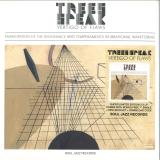
Trees Speak - Vertigo of Flaws: Emancipation of the Dissonance and Temperaments in Irrational Waveforms

Trees Speak are back!
Speak’s new album, “Vertigo of Flaws: Emancipation of the Dissonance and Temperaments in
Irrational Waveforms” comes as a double-vinyl edition, single CD and digital release. The limitededition first pressing only of the vinyl includes a bonus 45 enclosed in an 8-page 7”x7” booklet
insert housed within the gatefold sleeve with cover artwork created by Soviet Union propaganda
artist Lazar Markovich Lissitzky in 1911.
Trees Speak are back!
This new release is a vast leap into an ocean of space and sound, a quantum leap into cybernetics, biology, anti-gravity,
time travel, dream speech and transfiguration. A seriously next step release!
Showing no signs of slowing down their rapid creative pace – incredibly this is their fourth album in the space of just over
one year – ‘Vertigo of Flaws’ is a mighty 29 tracks, one and a half hours of music across one double album that is surely
going to be a defining point in their musical career, a giant leap into the sonic unknown, an epic exploration of intensity
and sound.
Alongside their now trademark German krautrock motoric-beat rhythms, angular New York post-punk attitude, tripped-out
60s spy soundtrack, psyche-rock, and 70s synthesizers and vocoders, here you will also hear a new cosmic spacial
awareness (both personal inner space and galactic outer space) and a truly wilful pushing of sonic boundaries - as police
sirens, static noise, alarms, radio signals, avant-garde voices, and orchestral string quartets, all collide to add beautiful
dissonance to uber-powerful, intense, addictive and propulsive rhythms - in the process creating a truly unique
soundscape that Trees Speak have made wholly their own.
If you ever wanted to hear Can, Hawkwind, Destroy All Monsters, Pere Ubu, electric eels, John Cage, Liquid Liquid,
Tangerine Dream, Suicide, Neu!, Laurie Spiegel, Art Ensemble of Chicago, John Barry, Mother Mallard’s Portable
Masterpiece Company, Sun Ra, Stockhausen, John Carpenter, Electro-Acoustic and Musique Concrete and Mars in one
band - then this is it!
Trees Speak are Daniel Martin Diaz and Damian Diaz from Tucson, Arizona and their music often draws on the cosmic nighttime magic of Arizona’s natural desert landscapes. ‘Trees Speak’ relates to the idea of future technologies storing
information and data in trees and plants - using them as hard drives - and the idea that Trees communicate collectively.
Special guests from the hyper-creative hub of the Tucson music scene on this release are Gabriel Sullivan, Ben Nisbet, Saul
Millan, Stephani Guilmette, and Davis Jones.
The album Vertigo of Flaws was recorded in Brooklyn, New York, and Tucson, Arizona during the plague of 2021.
Extract from Vertigo of Flaws sleevenotes:
‘As we travel through space and time, avoiding the discarded remains of the industrial period, the
deconstruction of social norms through the expression of art, music, and philosophy guide the human
experience towards the unknown.
All that remains are musical echoes scattered throughout the universe, like ancient vibrations that now
populate the cosmos. These waves now show signs of decay. Melody, beauty, tonality have all but fallen
away as dissonance blossoms. As John Cage wrote in 1937,
“Whereas, in the past, the point of disagreement has been between dissonance and consonance, it will be,
in the immediate future, between noise and so-called musical sounds. New methods will be discovered,
bearing a definite relation to Schoenberg’s twelve-tone system and present methods of writing percussion
music and any other methods which are
free from the concept of a fundamental tone”.
Similarly, George Van Tassel claimed the Integratron as capable of
rejuvenation, anti-gravity, and time travel. So, what remains of the
“people”? We have adopted from them our own Zeitgeber: their pulses
now guide our sun, our planets, our earths, and are the new circadian,
diurnal, and ultradian rhythms of the galaxy. Traumsprache, dream
speech, is now the internal language of trees.
Decaying metal and machines liberated the note unto nature’s table,
and we sip the delicious nectar of music once more irrational, elaborate,
violent, vast. The past is the future, musical disintegration its own rebirth.
We are nature, once more the computer of the Universe.’

non in magazzino

Ordina ora e ordineremo l'articolo per te presso il nostro fornitore.


Last In: 3 months ago
Yasuhiro Morinaga - Exploring Gongs Culture In Southeast Asia, Mainland And Archipelago
 
35

Gongs have played an integral role in the mythogeography of Asia. This is not music that aligns with national borders or ideas of homogenous populations, let alone racial stereotypes and exotic clichés. What connects all of these tracks is a simultaneous feeling of entrancement and social cohesion. Communal and collaborative, its form is hypnotically repetitious, melodies and rhythms spread out among the players using the technique of hocketing in which a flowing line is distributed among all the musicians. The effect is mesmerising, immediately intoxicating to anybody who loves Chicago footwork, free improvisation, Sun Ra or young hip hop producer Jetsonmade. The music is simple yet mysterious and enveloping, a sound world in which to disappear. A theory exists but this is not explained. - David Toop (extracts from the liner notes)

This project, Massif and Archipelago, is a field recording project initiated by Japanese sound artist Yasuhiro Morinaga, documenting traditional gong music by different Southeast Asian ethnic groups. The project aimed to examine the impact of the natural and social environment on the gong music culture of Southeast Asia. During the project, he visited over 50 different ethnic groups and made hundreds of recordings. This album presents a selection of the unique gong music from different ethnic minorities. The selected music has been divided into two broad sections: one focussing on the music from the Massif, i.e. mainland Southeast Asia (Central Highland of Vietnam and Northeast Cambodia), the other on music from the Archipelago, maritime Southeast Asia (the Luzon Islands of the Philippines, Borneo, Sulawesi, and the Flores Islands of Indonesia).

pre-ordina ora20.05.2022

dovrebbe essere pubblicato su 20.05.2022

KAINA - IT WAS A HOME LP

Kaina

IT WAS A HOME LP

12inchSLANG50353LPX
CITY SLANG
04.03.2022

Munich quintet Fazer are set to release their third album ‘Plex’ on City Slang in 2022. Moving freely between composition and improvisation, the band’s spacious, organic sound pitches lyrical melodies from guitar and trumpet over double-drummer polyrhythmic grooves and dub-like basslines.

Coming from different musical backgrounds ranging from bebop to electronic, Fazer met while studying jazz at the Academy for Music and Theatre in Munich. The German city has a rich history of improvised music; home to labels ECM (Keith Jarrett, Chick Corea, the Art Ensemble of Chicago, Steve Reich) and Enja (Archie Shepp, Eric Dolphy, Freddie Hubbard, Elvin Jones) and Krautrock icons Embryo. Today much of the scene in Munich revolves around Radio 80000, an online community radio station located in the east of

the city. There, dedicated diggers like Karl Hector (Now-Again) or Marvin & Valentino of Public Possession are doing regular shows and it’s this diversity that drives the band’s DNA

pre-ordina ora04.03.2022

dovrebbe essere pubblicato su 04.03.2022

KAINA - IT WAS A HOME LP

Kaina

IT WAS A HOME LP

12inchSLANG50353LP
CITY SLANG
04.03.2022

Munich quintet Fazer are set to release their third album ‘Plex’ on City Slang in 2022. Moving freely between composition and improvisation, the band’s spacious, organic sound pitches lyrical melodies from guitar and trumpet over double-drummer polyrhythmic grooves and dub-like basslines.

Coming from different musical backgrounds ranging from bebop to electronic, Fazer met while studying jazz at the Academy for Music and Theatre in Munich. The German city has a rich history of improvised music; home to labels ECM (Keith Jarrett, Chick Corea, the Art Ensemble of Chicago, Steve Reich) and Enja (Archie Shepp, Eric Dolphy, Freddie Hubbard, Elvin Jones) and Krautrock icons Embryo. Today much of the scene in Munich revolves around Radio 80000, an online community radio station located in the east of

the city. There, dedicated diggers like Karl Hector (Now-Again) or Marvin & Valentino of Public Possession are doing regular shows and it’s this diversity that drives the band’s DNA

pre-ordina ora04.03.2022

dovrebbe essere pubblicato su 04.03.2022

Anne Imhof, Eliza Douglas, Billy Bultheel - Sex

SEX was composed during the formation of Imhof’s art show of the same name, previously exhibited at Tate Modern, London, The Art Institute of Chicago and forthcoming at Castello di Rivoli, Italy, this September. Imhof, Douglas and Bultheel, reworked the songs from how they appeared in the exhibition ‘SEX’. The result is a compelling record that acts as an imaginative accompaniment to the ‘SEX’ performances, as well as standing alone as a progressive collection of contemporary compositions.

SEX references punk, industrial and grunge, and boldly juxtaposes these forms with music of the classical and baroque period. The album combines classical formals and orchestration with vocals that are rooted in subcultural traditions, thus beautifully overdrawing and overwriting these forms with the composer’s own. Harpsichord and oboe are combined with distorted electric guitar, or exuberant string ensembles with heavy industrial drums.

The amalgamation of genres contained in the album was also integral to the choreography of SEX, where walzes and tangos were contrasted with stage diving, slam dancing and moshpits. What resulted was a surreal ballroom, loaded with desire and aggression. In the same vein, the record fearlessly shapeshifts, blends genres and styles evoking an impressive array of moods. Oscillating between fragility and flamboyance, Imhof and Douglas’ versatile voices reinvent themselves from one song to the next, while singing songs of love and hate.

The last song on Sex is ended by a quote of the band LOW, `All you Pretty People, you`re all gonna die`. This ambiguous moment, a prophecy sung in Douglas’ vibrating baritone voice, rattles the listener despite the mundane truth of the statement. This complexity is reflected in the album itself, allowing for an unusual multiplicity of emotions and interpretations with impressive depth and dynamism.

The album is mixed & engineered by Ville Haimala and mastered by Rashad Becker, featuring design by ZAK Group and photography by Nadine Fraczcowski. All tracks by Anne Imhof, Eliza Douglas & Billy Bultheel, track 6* by Eliza Douglas & Ville Haimala.

pre-ordina ora24.09.2021

dovrebbe essere pubblicato su 24.09.2021

The Pharaohs - Awakening

The Pharaohs

Awakening

12inchLH025LP
Luv N Haight
20.08.2021

Ubiquity Records presents a limited repressing of "Awakeining" by the legendary Pharaohs which is highly sought after and has been out of print for several years. Awakening was originally released in 1971 and re-issued by Luv n’Haight in 1996 and quickly became a must-have for collectors of spiritual, deep, Afro-centric Jazz. "The legend of The Pharaohs starts at Crane Junior College on the West side of Chicago. Under the tutelage of James Mack a student band is formed- The Jazzmen- which in 1962 wins the best band category at Chicago's annual Harvest Moon Festival which translated into the early members finding success at Chess Records as studio musicians. After a while these musicians moved over to the South Side to the fledgling Affro Arts Theater where they joined the Artistic Heritage Ensemble, under the leadership of Phil Cohran and where they eventually merged after Cohran left to teach at Malcolm X Junior College. It was this version of the band: Louis Satterfield, Charles Handy, “Big” Willie Woods (Trombone), Oye Bisi (African drums), Shango Njoko Adefumi (African Drums), Black Herman Waterford (Quinto drum, alto sax), Don Myrick (saxes), Yehudah Ben Israel (guitar, vocals), Alious Watkins (trap drums, tuba), Derf Reklaw Raheem (percussion, flute), Aaron Dodd (Tuba); that in 197I recorded “The Awakening”. By 1972 when “In The Basement” was recorded the unit had expanded to include Derrick Morris (trap drums), Warren Bingham (guitar), Rahm Lee (trumpet) and Sue Conway (Vocal).

non in magazzino

Ordina ora e ordineremo l'articolo per te presso il nostro fornitore.


Last In: 4 years ago
Karkhana - Al Azraqayn

Karkhana

Al Azraqayn

2x12inchKR086
Karlrecords
23.07.2021

The furious double LP "AL AZRAQAYN" documents KARKHANA (with members of KONSTRUKT, THE DWARFS OF EAST AGOUZA, LAND OF KUSH, PETER BRÖTZMANN CHICAGO TENTET, "A" TRIO) at their very best and intense: live on stage.

Consisting of seven of the most adventurous and innovative artists from the Middle Eastern experimental scene (and a veteran jazz percussionist from Chicago), KARKHANA are surely among the most unique and interesting ensembles around. When MAURICE LOUCA (THE DWARFS OF EAST AGOUZA), SAM SHALABI (LAND OF KUSH, THE DWARFS OF EAST AGOUZA), UMUT ÇAĞLAR (KONSTRUKT), MAZEN KERBAJ ("A" TRIO, JOHNNY KAFTA ANTI-VEGETARIAN ORCHESTRA), MICHAEL ZERANG (PETER BRÖTZMANN CHICAGO TENTET), SHARIF SEHNAOUI ("A" TRIO, ORCHESTRA OMAR) and TONY ELIEH (ORCHESTRA OMAR, JOHNNY KAFTA ANTI-VEGETARIAN ORCHESTRA ) come together to perform and / or record, the result is as diverse as their individual musical backgrounds. The septet's sound is neither retro nor avantgarde, not folklore nor jazz or rock – it's an astonishing blend of all these different styles and elements where seductive oriental melodies can intensify and turn into a psychedelic freak-out, fuelled by reeds, guitars and electronics, only to re-start again from quiet sounds till the ensemble seeks catharsis in a collective improv outburst! Defying simple categorization, and in lack of proper terms for the intense experience of KARKHANA's music (as well as the member's other projects mentioned before), someone labelled it "free Middle Eastern music".

And it's not surprising that these skilled musicians are at their best live on stage – as documented on this live recording from a furious, highly energetic concert at Bimhuis / Amsterdam!

pre-ordina ora23.07.2021

dovrebbe essere pubblicato su 23.07.2021

DAMON LOCKS/BLACK MONUMENT ENSEMBLE - Now

CRIMSON/BLACK COLORED

Indie Retail Exclusive Crimson & Black color vinyl Originally conceived as a medium for Chicago-based multi-media artist/activist Damon Locks's sample-based sound collage work, Black Monument Ensemble (BME) has evolved from a solo mission into a vibrant collective of artists, musicians, singers, and dancers making work with common goals of joy, compassion, and intention. A genuinely multi-generational collective, ages of BME members range from 9 to 52 years old; members include instrumentalists and fellow IARC recording artists Angel Bat Dawid and Ben LaMar Gay. Their debut album Where Future Unfolds was released in 2019 by International Anthem glowing praise; landing at #3 on Bandcamp's "Best Albums of the Year," #25 on WIRE Magazine's "Best Albums of 2019," and being repeatedly dubbed "The Best Album of 2019" by BBC/Worldwide radio titan Gilles Peterson. Locks & BME's new album NOW was created in the final throes of Summer 2020, following months of pandemic-induced fear & isolation, the explosion of social unrest, struggle & violence in the streets, and as the certain presence of a new reality had fully settled in. Set up safely in the garden behind Chicago's Experimental Sound Studio, the music was recorded in only a few takes, capturing the first times members of BME had ever played or sang the tunes. For Locks, the impetus was more about getting together to commune and make art than it was about producing an album. In his words: "It was about offering a new thought. It was about resisting the darkness. It was about expressing possibility. It was about asking the question, 'Since the future has unfolded and taken a new and dangerous shape... what happens NOW?'"

non in magazzino

Ordina ora e ordineremo l'articolo per te presso il nostro fornitore.


Last In: 4 years ago
DAMON LOCKS/BLACK MONUMENT ENSEMBLE - Now

Originally conceived as a medium for Chicago-based multi-media artist/activist Damon Locks's sample-based sound collage work, Black Monument Ensemble (BME) has evolved from a solo mission into a vibrant collective of artists, musicians, singers, and dancers making work with common goals of joy, compassion, and intention. A genuinely multi-generational collective, ages of BME members range from 9 to 52 years old; members include instrumentalists and fellow IARC recording artists Angel Bat Dawid and Ben LaMar Gay. Their debut album Where Future Unfolds was released in 2019 by International Anthem glowing praise; landing at #3 on Bandcamp's "Best Albums of the Year," #25 on WIRE Magazine's "Best Albums of 2019," and being repeatedly dubbed "The Best Album of 2019" by BBC/Worldwide radio titan Gilles Peterson. Locks & BME's new album NOW was created in the final throes of Summer 2020, following months of pandemic-induced fear & isolation, the explosion of social unrest, struggle & violence in the streets, and as the certain presence of a new reality had fully settled in. Set up safely in the garden behind Chicago's Experimental Sound Studio, the music was recorded in only a few takes, capturing the first times members of BME had ever played or sang the tunes. For Locks, the impetus was more about getting together to commune and make art than it was about producing an album. In his words: "It was about offering a new thought. It was about resisting the darkness. It was about expressing possibility. It was about asking the question, 'Since the future has unfolded and taken a new and dangerous shape... what happens NOW?'"

non in magazzino

Ordina ora e ordineremo l'articolo per te presso il nostro fornitore.


Last In: 4 years ago
Creative Arts Ensemble - One Step Out

Nimbus West spirit jazz essential: the Creative Arts Ensemble's classic debut One Step Out. One of the most sought after and highly-regarded titles to have appeared on Tom Albach's celebrated Nimbus West imprint, One Step Out is a timeless work of spiritualized jazz. A true gem from the Los Angeles jazz underground, the album was pianist and composer Kaeef Ruzadun Ali's first recording as leader of the Creative Arts Ensemble, the only large ensemble group that emerged directly from Horace Tapscott's legendary Pan Afrikan Peoples Arkestra community jazz group. A Los Angeles native, Kaeef was introduced to the Tapscott circle in the late 1970s. His first experience of the Arkestra's ethos was through PAPA tenorist Michael Session, who took him to the famous "Great House" at 2412 South Western Ave., LA -- a large mansion house which members of the Arkestra had taken over as a space for communal living. Life in the Great House was a continuous stream of music, dance and community events. "When I walked in there," recalled Kaeef, "it was like this whole rush came over me, just from going in the front door -- It was like a very, very warm feeling of love. I went and I came out with 'Flashback Of Time', and that was my first arrangement." Kaeef quickly became a significant contributor of compositions to the Arkestra's songbook -- his piece "New Horizon" would be recorded by Horace Tapscott for the latter's Tapscott Sessions series. But "Flashback Of Time" would eventually appear on One Step Out, played by the new group he had put together from stalwart Arkestra members. Inspired by both Tapscott's example and by the Art Ensemble of Chicago, Kaeef had wanted to follow their lead by assembling a larger unit. Featuring seasoned Arkestra regulars including reedsman Dadisi Komolafe, drummer Woody "Sonship" Theus and altoist Gary Bias, with veterans Henry "The Skipper" Franklin on bass and George Bohannon on trombone, One Step Out is a key document of the Los Angeles radical jazz underground. Featuring the sanctified vocals of Kaeef's sister, B. J. Crowley, the album is a tour de force of spiritually energized independent jazz music.

pre-ordina ora30.06.2021

dovrebbe essere pubblicato su 30.06.2021

Kelan Philip Cohran & The Hypn - Kelan Philip Cohran & The Hypn

Cuernavaca / Stateville / Frankincense And Myrrh / Apsara / Ancestral / Spin / Zincali


Approaching his eighty-fifth birthday, sharp and lean, Phil Cohran lives a couple of blocks from the lake on the north side of Chicago. His modest apartment is filled with a palpable richness. His cornet and trumpets, zithers, French horn, harp and frankiphones (an electric kalimba of his own invention); his beloved telescope; African art; a mural of the Chinese monastery where Muslim monks bestowed on him the name Kelan ('holy scripture'); hand-printed posters from the culture wars of 1960s Chicago; all reflect a life dedicated not just to music, but also to science and astronomy, to history and activism. In its range of subject matter the track-list of Kelan Philip Cohran & The Hypnotic Brass Ensemble embodies this invigorating and all-embracing curiosity: a Mexican hill-town filled with perfume and flowers... an Illinois state prison where Cohran taught inmates in the 1960s... heavenly dancers in the temples of Cambodia... a tribute to a sixteenth-century Venetian musicologist. Welcome to the musical world of Kelan Philip Cohran.
Cohran was born in Mississippi and grew up in St Louis. In the immediate post-war years St Louis was a jazz heartland, home of stalwarts like Clark Terry and Oliver Nelson (both of whom he played with), not to mention a genius called Miles Davis. In 1950 Cohran moved to another heartland, Kansas City, where he played trumpet in one of the hardest swinging swing-groups, led by Jay McShann (who famously had given Charlie Parker his first job). With McShann he spent 'the best year of my life', touring as far as Mexico and playing proto-rock'n'roll in Texas with the likes of Big Mama Thornton on vocals. Back in St Louis Cohran led his own group, the Rajas Of Swing, whose show involved wearing red jackets, grey slacks, blue suede shoes and turbans.
Then in the mid-50s he moved to Chicago. He had a small group with a friend, the legendary tenor saxophonist John Gilmore, whose regular gig was to play at Sarah Vaughan's weekly 'birthday' parties, an excuse for the Sassy One to splash the cash and have some fun. ('What, Sarah Vaughan would sing with you and John Gilmore' 'No way, Sarah didn't sing, she was too busy partying.') And in 1959, through Gilmore, he was invited to join Sun Ra's Arkestra, at a crucial period in the evolution of that extraordinary group. Effortlessly wrapping traditions as divergent as boogie-woogie and electronica in an Afro-centric, intergalactic mythology of his own making, Sun Ra casts a huge shadow across conventional narratives of jazz history. 'With Sunny', Cohran simply says, 'I found my own voice'.
You can hear the emergence of this voice on the LP Angels And Demons At Play, recorded in 1960 - Sun Ra's masterpiece from the period. On the track Music From The World Tomorrow, against the urgent whipped and chopped percussion of the Arkestra, it is Cohran's zither, initially bowed and then plucked and strummed, which is the track's magic ingredient. More profoundly it was Sun Ra's example - his defiant self-confidence and sense of purpose - that set Cohran on his own (to quote another Ra composition) 'pathway to unknown worlds'. Indeed this spirit of self-belief led Cohran to turn down the invitation to accompany the Arkestra when Sun Ra moved east in 1961.
Staying in Chicago, Cohran founded the Affro-Arts Theater and performed with the Artistic Heritage Ensemble, recording the group for his own Zulu Records imprint. (Co-members went on to become Earth Wind & Fire; Cohran taught the group's leader Maurice White the mysteries of the frankiphone). The AACM, a musicians' collective of immense influence and importance, had its first meeting in Cohran's front room. With Oscar Brown Jr and Gene Page he wrote and performed in a show celebrating the nineteenth-century Afro-American poet Paul Lawrence Dunbar. He taught music tirelessly in schools and prisons. His studies into music theory and history led him to the discovery of a key book in his life, Gioseffo Zarlino's treatise on harmony, published in Venice in1558. Astronomy is another passion and another area of expertise. One of the gems of the Cohran discography is African Skies, with its lovely harp playing, commissioned by the Chicago Planetarium in 1993.
In Chicago he also raised a large family. Many of his children have gone on to become professional musicians; eight of them are the Hypnotic Brass Ensemble. For each of them, their first teacher was their father, who famously insisted on giving them music lessons not just for several hours after school, but for several hours before school as well. Their father's music was all around them as children; they all vividly remember lying in bed at night not being able to sleep because their father was rehearsing with the Jazz Workshop downstairs.
For the Hypnotic Brass Ensemble, the voyage to where they are now - whether tearing up festivals from Glastonbury to Melbourne, or touring with Gorillaz, or recording their first album on Honest Jon's - has involved a necessary stepping away from their father's shadow. Phil Cohran is the first to recognise this, happily allowing their sound - heavy on the funk, with the urgency of hip hop never far away - to blossom.
But likewise this album is for all of them a natural step. Recorded in Chicago in June 2011, the idea was beautifully simple - 'my music and their band' as Phil puts it, 'we don't have to rattle on more than that'. Only to point out perhaps that here - in the majestic surge of Zincali, for instance, or in the sheer verve and bounce of Cuernevaca - is music not just filled with the warmth of home. This is music that plumbs the depths and rings with joy.

'Cuernevaca is a town in the mountains south of Mexico City. I was there in 1950 when I was on the road with Jay McShann's band. It's a place close to paradise, a city filled with the fragrance of flowers. I always wanted to go back... In 1974 I taught workshops at the prison in Stateville, the Big House where Al Capone spent time. There's a huge wall around the prison, and once I took Hypnotic there - ha - to see what the future holds for them... Makeda, the Queen of Sheba, sent a caravan of gifts to King Solomon - a caravan that took more than a day to pass one point - and the main gifts were Frankincense And Myrrh... I wrote Apsara in 1967, when Jackie Kennedy was in the news with her visit to the temple of Angkor Wat in Cambodia. Apsara were celestial beings, dancers who brought forth the civilization of ancient Cambodia, by dancing in the holy nectar called Amrita... Ancestral is a meditation drone written for my Friday-night residence at the Ethiopian Diamond Restaurant in Chicago's Rogers Park... Spin is the latest of these compositions. Everything in the cosmos spins, from the smallest objects we can see in a microscope to the largest galaxies. Spin is the motion of all things whether it looks like it or not... Zincali is a name Spanish gypsies call themselves. 'Zin', East Africa; 'cali', the people. One of the offshoots in my research into Moorish Spain has led me to Gioseffo Zarlino, the sixteenth-century master of music at St Mark's in Venice. It's said that Bach lost his sight reading Zarlino's treatise on counterpoint. His greatest composition is his setting of the Song of Songs - 'Nigra Sum', 'I am black'. This is my tribute to Zarlino and to the zincali.'

non in magazzino

Ordina ora e ordineremo l'articolo per te presso il nostro fornitore.


Last In: 4 years ago
Alternative TV - Vibing Up The Senile Man

Possibly one of the weirdest experiment in the post-punk realm, Vibing Up the Senile Man (Part One) is the second studio album by English anti-heroes Alternative TV, released in March 1979 on small indie label Deptford Fun City. Forget about the influential 1978 debut - The Image Has Cracked – frontman Mark Perry is literally leaving the planet in this effort. ‘There are free jazz influences; I'd got into the Art Ensemble of Chicago, Sun Ra ..) I'd moved into this house with an amazing music room – pianos, clarinets, you name it – and we'd always be picking up stuff from junk shops.’ The description set the pace for a unique performance, not only the afro-american heritage , traces of the Canterbury school are almost evident as the early experiment of the BBC Radiophonic workshop. Is it safe to consider Vibing up The Senile Man on the same time-line as Robert Wyatt ‘The End Of An Ear’ and Throbbing Gristle ’20 Jazz Funk Greats’ (Genesis P-Orridge is on board on two tracks, playing assorted percussion) ? Judge by yourself and don’t be scared.

pre-ordina ora30.04.2021

dovrebbe essere pubblicato su 30.04.2021

Natural Information Society with Evan Parker - Descension (Out of Our Constrictions) 2x12"

Rich in musical associations yet utterly singular in its voice, joyous with an inner tranquility, the music of Natural Information Society is unlike any other being made today. Their sixth album in eleven years for eremite records, descension (Out of Our Constrictions) is the first to be recorded live, featuring a set from London’s Cafe OTO with veteran English free-improv great Evan Parker, & the first to feature just one extended composition. The 75-minute performance, inspired by the galvanizing presence of Parker, is a sustained bacchanalia of collective ecstasy. You could call it their party album.

This was the second time Parker played with NIS. Joshua Abrams: “Both times we played compositions with Evan in mind. I don’t tell Evan anything. He’s a free agent.”

The music is focused & malleable, energized & even-keeled, drawing on concepts of ensemble playing common to musics from many locations & eras without any one specific aesthetic realization completely defining it.

“The rhythms that Mikel plays are not an exact reference to Chicago house, but that’s in there,” Abrams says. “I like to take a cyclic view of music history, can we take that four-on-the-floor, & consider how it connects to swing-era music? Can we articulate a through line? I dee-jayed for years in Chicago & lessons I learned from playing records for dancing inform how I think about the group’s music. The listener can make connections to aspects of soul music, electronic music, minimalism, traditional folk musics, & other musics of the diaspora as well. It’s about these aspects coming together. I don’t need to mimic something, I need to embody it to get to the spirit, to get to the living thing.”

For jazz fans, the sound of Parker’s soprano & Jason Stein’s bass clarinet might evoke Coltrane & Dolphy, even though they didn’t necessarily set out to do that & they play with complete individuality. Abrams sees a bridge to the historical precedent, too. “Since we first met in the 1990s, one of the things that Evan and I connected on was Coltrane’s music,” he says. “I hoped that we would tap into that sound world intuitively. In this case, I think that level of evocation adds another layer of depth, versus a layer of reference.”

Indeed, this is a performance in which the connections among the ensemble & the creative tension between improvisation and composition build into a complex mesh of associations & interactions. While the band confines itself to the territory mapped out by Abrams’ composition, they are remarkably attentive & responsive, making adjustments to Parker’s improvisations. When Parker’s intricate patterns of notes interweave with the band, the parts reinforce one another & the music rockets upward. Sometimes, Parker’s lines are cradled by the group’s gentle pulse & an unearthly lyrical balance is struck.

Drummer Mikel Patrick Avery is locked-in, playing with hellacious long-form discipline, feel & responsiveness. Jason Stein’s animated, vocalized bass clarinet weaves in & out with Lisa Alvarado’s harmonium to state the piece’s thematic material; the pulsing tremolo on the harmonium brings a Spacemen 3 vibe to the party. Abrams ties together melody & rhythm on guimbri, a presence that leads without seeming to. Like his bandmates, he shifts modes of playing frequently, improvising & then returning to the composed structure.

“As specific as the composition is, the goal is to internalize it & mix it up,” Abrams says. “The idea is to get so comfortable that we can make spontaneous changes, find new routes of activity, stasis & byways every gig. It’s like a web we’re spinning. If someone makes a move, we all aim to be aware of it, make room for it. Experiencing & listening is what it’s about, & Evan supercharges that.”

& “supercharged” is the word for this album. With Parker further opening up their music, descension (Out of Our Constrictions) is the sound of Natural Information Society growing both more disciplined and freer, one of the great bands of its time on a deep run.

Aguirre edition: Mastered by Helge Sten, Audio Virus, Oslo. Lacquers by Dubplates & Mastering. Liner Notes by Theaster Gates. LPs pressed on premium audiophile-quality vinyl at Pallas Records. US 2xLP edition available thru Eremite records.

non in magazzino

Ordina ora e ordineremo l'articolo per te presso il nostro fornitore.


Last In: 4 years ago
Moontype - Bodies of Water

The three players in Chicago’s Moontype orbited each other for years before they came in phase. Bodies of Water, their debut album for local label Born Yesterday, documents travel, insecurity, friendship, and the titular element—all of which are representative of the band members’ strong connection to place and to one another. “Being rooted in the landscape became important to me while studying geology, which completely changed how I think about the world,” offers songwriter, vocalist and bassist Margaret McCarthy of the album’s central themes. The arrangements themselves feel like open-hearted negotiations; sparse fingerpicking gives way to saturated tube-screaming as naturally as the changing of tides. Over twelve tracks, Moontype revels in the woozy concoction of its many influences, but always lands on punchy hooks, shifting between arrangements both spacious and mystifying without abandoning their conversational warmth.

Conservatory students at Oberlin College’s prestigious music program, each member focused on exploring different sounds. Guitarist Ben Cruz, who came up on classic rock shredding and migrated into jazz performance, admired the indie pop of Fountains of Wayne, the groundbreaking composition work of pianist Vijay Iyer, and the genre-morphing folk of heavy hitters like Neil Young and Joni Mitchell. He played in several projects alongside Emerson Hunton, who’d drummed from age six and entrenched himself in the Twin Cities improvised music scene before even heading to college. Margaret—who grew up outside of Boston playing piano, singing in choirs and writing on guitar—spent her time creating knotty, riot grrrl-and-hyperpop inspired songs for bass and voice, as well as noise soundtracks for art installations. Inspired by artists like Adrianne Lenker and Gillian Welch, she recorded the EP bass tunes at home in an apartment over the town’s optician, releasing it upon graduation. A week later she migrated even farther west to Chicago, where Ben and Emerson had already enmeshed themselves in several projects, from avant garde ensembles to a country group.

Ben was instantly impressed by Margaret’s songs, at once “challenging and unlike anything I had played before.” The duo decided to try performing together, but knew this special music would be even better fortified with drums. Emerson was the obvious choice—as Ben puts it, “He’s our great friend and also the best drummer we know. Who else do you call?” Moontype-as-trio gigged around town, eventually embarking on a first fall tour in Emerson’s Prius. On that trip, they felt the music morph into something living, and the care and trust between them intensified. They decided to put together songs for a record, recorded at the end of 2019 with Jamdek Recording Studio’s Doug Malone, a dependable collaborator whose patient process perfectly captured the magic of their newfound familiarity. While Margaret’s skeletal demos still informed the bulk of Moontype’s full-band debut (some of which are re-recordings of bass tunes cuts), the resulting arrangements are songs reborn and strengthened by the three musicians’ absorption of one another’s ideas.

On Bodies of Water, Margaret’s soothing, unadorned alto is often peppered by the gliding, eerie harmonies of her bandmates. “We love the act of singing together,” explains Ben, who describes it as “connecting and grounding and wholesome.” The push-pull search for common ground characterizes the instrumentals as well. Round basslines occupy higher octaves, trading space with guitars chugging in lower registers, and all the while drums break apart and glue back together in idiosyncratic grooves that never lose the pocket. Of the complicated rhythms that sometimes result: “Any mathy moments are based on how the lyrics fall naturally, which feels like it frees us up from having to stay in one time signature,” says Emerson. “Rhythmic elements never feel like they’re being added in, more like they’re already there and we just float on through.”

Touring’s restlessness informed these songs, but so did the DIY scene that welcomed Moontype to Chicago—including, according to Margaret, the “wild harmonies” of Ohmme, the “deadpan explanatory rock” of Ratboys, and the “luxe math rock pattern music” of The Knees. Working at beloved venue Sleeping Village inspired Margaret’s observational vignettes; “We are sitting at the desk and you are mixing all the bands,” she reports in the middle of the dextrous folk hammer-ons of “3 Weeks,” gently admitting, “I am trying to have fun and I am trying to get paid” in a world of bikes, trucks, and velvet. “About You,” a robust power-popper written about a post-gig romp around Richmond with artist Bebé Machete, opens with a Phair-ian quip: “Looking at you with my fuck me eyes / Do you wanna get inside of mine?” Meanwhile, the spectre of lost camaraderie looms over “Ferry,” an atmospheric and anthemic standout that questions, “If I’m not your best friend / then who am I to anyone?” Alongside water, this preoccupation with friendship is a focal concern lyrically, but the palpable love between Moontype’s players is essential in communicating that desire for connection, and all three members are dedicated to exploring sound and meaning organically and together. Care and generosity are at the core of Moontype, and Bodies of Water is a clever album full of insightful music, as cosily enveloping as it is incisively honest.

pre-ordina ora02.04.2021

dovrebbe essere pubblicato su 02.04.2021

The Underflow - Instant Opaque Evening

‘Instant Opaque Evening’ is an epic offering from The Underflow, the new trio of Mats Gustafsson, David Grubbs and Rob Mazurek. It makes vast strides on the heels of their self-titled 2019 debut (Corbett vs. Dempsey/Underflow Records) with nearly 90 minutes of intensely focused live performances from January 2020 shows in France, Belgium, Italy and Poland. That tour was a revelation for all three members, experienced as they are, with this still-new group’s freedom to walk onstage each night determined to surprise one another, moving from long instrumental improvisations into and out of songs and covering a terrific amount of ground at each of these concerts.
‘Instant Opaque Evening’ conveys this broad sweep, from the full-tilt electronics of ‘Self-Portrait As Interference Pattern’ and the climax of the seventeen-minute ‘Instant Opaque Evening’ to the inspired, alternate universe chamber music of ‘Planks’ and ‘A Thin Eternity’ and the group’s spontaneous arrangements of three previously recorded songs by Grubbs, ‘Gethsemani Night’, ‘An Optimist Declines’ and ‘Cooler Side Of The Pillow’.
The short version of the long tale of intersecting paths bringing together these three musicians begins in Chicago in the 1990s, with all three active participants in numerous convergences among jazz, free improvisation, experimental rock and more. Both Gustafsson and Mazurek appear as guests on Gastr del Sol albums (‘Upgrade & Afterlife’ and ‘Camoufleur’ respectively; that’s Rob’s cornet taking ‘The Seasons Reverse’ to new heights) and shortly thereafter Grubbs and Gustafsson recorded two duo albums, including the deep minimalism of ‘Apertura’, a talismanic favourite of both musicians.
David Grubbs has played in Gastr del Sol, the Red Krayola and Squirrel Bait and performed with Tony Conrad, Susan Howe, Pauline Oliveros, Will Oldham and many others. He’s the author of the books The Voice in the Headphones, Now that the audience is assembled and Records Ruin the Landscape.
Saxophone player, improviser and composer Mats Gustafsson is known as a solo artist and for international tours and projects with, among many others, Sonic Youth, Merzbow, Jim O’Rourke, Barry Guy, Otomo Yoshihide, Yoshimi, Peter Brötzmann, Neneh Cherry, Christian Marclay, Albert Oehlen, Ken Vandermark and the working groups FIRE!, THE END, LUFT, ANGUISH and Gush, as well as collaborations with contemporary dance, theatre, art, poetry and projects with noise.
Rob Mazurek is a multidisciplinary artist with a focus on electro-acoustic composition, improvisation, performance, painting, sculpture, video, film and installation, who spent much of his creative life in Chicago and then Brazil. He currently lives and works in Marfa, Texas. He leads/co-leads many ensembles of various sizes and shapes including his flagship large ensemble Exploding Star Orchestra, Chicago Underground and São Paulo Underground. He has
collaborated with Bill Dixon, Pharoah Sanders, Roscoe Mitchell, Jeff Parker, Nicole Mitchell, Chad Taylor, Jim O’Rourke, Naná Vasconcelos and many others.

pre-ordina ora29.01.2021

dovrebbe essere pubblicato su 29.01.2021

Lafawndah - The Fifth Season

Lafawndah

The Fifth Season

12inchLTNC019
Latency
24.09.2020

“After a banner year that witnessed Lafawndah release her first album Ancestor Boy, the debut of her soundsystem Fara Fara, and further incursions into film, contemporary art and fashion, the ceaseless artist returns with another plot twist: The Fifth Season.

Inspired by her encounter with author NK Jemisin’s Broken Earth trilogy, Lafawndah both pays homage to and extends further the elemental, emotionally charged myths of Jemisin’s books. These are stories where a broken heart can tear apart a continent. In contrast to the precision- tuned industrial productions of Ancestor Boy, The Fifth Season breathes a different kind of volatility. Inviting a new degree of spontaneity and freedom into her process, Lafawndah’s collaborators - Theon Cross (tuba), Nathaniel Cross (trombone), Valentina Magaletti (percussions), and Nick Weiss (keyboards) - encircle her confrontational character studies with iridescent, cinematic chamber-bass moves.

These are torch songs for when it rains ash, creation ballads for when the earth turns inside out. Ghosts of Art Ensemble of Chicago and Rahsaan Roland Kirk color the air, yet Lafawndah’s mastery of pop songcraft, vocal production and razor-honed clarity of purpose cut through. In addition to the Lafawndah originals, The Fifth Season features interpretations of hybrid-folk godfather Beverly Glenn Copeland’s “Don’t Despair” and acid-impressionist prodigy Lili Boulanger’s “Old Buddhist Prayer.” Album highlight “You, at the End” deploys a poem by poet-performer Kae Tempest to aching, rift-tearing ends, and french dream-trap wraith Lala &ce features on “Le Malentendu”.

The Fifth Season anchors Lafawndah as a descendent of forebearers Brigitte Fontaine and Scott Walker - a born theatric whose acid humor warps the sub-continental undertow of her emotive storytelling. Lafawndah’s elementalism on The Fifth Season finds her imagination more agile than ever, and recent live shows have evinced a drive to push these compositions further out, deeper, and more aflame.”

non in magazzino

Ordina ora e ordineremo l'articolo per te presso il nostro fornitore.


Last In: 5 years ago
Muhal Richard Abrams - Celestial Birds

The compilation "Celestial Birds" reveals and focuses on the widely unkown electronic compositions of the AACM founder and jazz pianist MUHAL RICHARD ABRAMS. #5 in the Perihel Series, curated by zeitkratzer director REINHOLD FRIEDL.

Anybody interested in jazz knows that Chicago has always been an impressive hot spot for new talents – and still is. One essential landmark in the history and development of jazz was the founding of the AACM (Association for the Advancement of Creative Musicians) in May 1965. This non-profit organization was a melting pot (and starting point) for artists like ANTHONY BRAXTON, ROSCOE MITCHELL, GEORGE LEWIS or LESTER BOWIE and his ART ENSEMBLE OF CHICAGO but one of its actual founding members is known only to the deep connaisseurs: MUHAL RICHARD ABRAMS (1930 – 2017).
The autodidact pianist and composer left music school and university, deciding to learn music by himself.

From 1961 on, the EXPERIMENTAL BAND was his first ensemble, but it soon turned out that ABRAMS' interests went beyond jazz and that he was open to the avant-garde and new music and most of all: electronic music. Which led to a double problem: On the one hand, black musicians had almost no access to the rare electronic music studios located in and funded by universities or broadcasting corporations. On the other hand, there were strong reservations regarding electronic music in the black music community.

In his important book "A Power Stranger Than Itself – The AACM and American Experimental Music" GEORGE LEWIS writes that "the use of electronics … proved controversial and widely misunderstood in a world of jazz in which acoustic instruments became conflated with musical, and eventually, cultural and even racial authenticity." ABRAMS' response was to actually "hide" his electronic pieces on the B-sides of his albums, and this compilation focuses on some of his best electronic experiments: the 22-minute long epic "The Bird Song" from 1968 in its original version incl. the reverb that was removed on the later CD reissue on DELMARK, the synthesizer compositions "Conversations With The Three Of Me" (1989) and "Think All, Focus One"1995) plus " Spihumonesty" (1980) with a 2nd synthesizer played by GEORGE LEWIS and YOUSEF YANCEY on theremin.

"Celestial Birds" casts a new light on the underrated experimenter MUHAL RICHARD ABRAMS, his innovative approach to composition and pieces that lay dormant for way too long!

non in magazzino

Ordina ora e ordineremo l'articolo per te presso il nostro fornitore.


Last In: 6 years ago
Articoli per pagina:
N/ABPM
Vinyl