Поиск:around the west

Стили
Все
Andrew Pekler - New Environments & Rhythm Studies

New Environments & Rhythm Studies finds Andrew Pekler returning to the humid zones he explored on previous albums such as Sounds From Phantom Islands and Tristes Tropiques. Split between longer immersive compositions and shorter glimpse-like sketches, these 12 tracks feature new juxtapositions of Pekler's familiar palette of synthetic field recordings, warm, undulating electronic textures, shifting percussion patterns and serene melodies.

As with much of his recent work, Pekler's compositions here are structured around the beguiling effect of synthetic and non-synthetic sounds mirroring, mimicking and modulating one another. The teeming atmospheres within tracks such as Globestructures, Cymbals In The Mist or Globestructures: Option II are, despite their seemingly anthropogenic nature, entirely synthetic. Elsewhere, the lopsided grooves of Cumbia Para Los Grillos or Fabulation For K are derived from recordings of crickets and other insects which Pekler loops and uses to trigger electronic percussion – producing a pleasantly skewed rhythmic base for the fragments of melody which are layered on top. The six Rhythm Studies also follow the same principle – a playful interweaving of the organic and synthetic.

New Environments & Rhythm Studies is a further attempt to re-describe past tropes which laid claims to authentically represent music and sound from beyond the Western world (exotica, ethnomusicology, field recording) as undertakings of the imaginary.

Written and produced by Andrew Pekler, mastered by Giuseppe Ielasi, artwork by Morgan Cuinet, graphic design by Dmytro Nikolaienko.

нет на складе

Закажите сейчас, и мы закажем товар для вас у нашего поставщика.


Последний логин: 9 мес. назад
VARIOUS - NEW BREED R&B: MONEY TALKS
  • A1: Don't Try To Tell Me - Berna-Dean
  • A2: This Mornin' - The Jesse Stone Singers
  • A3: All Around The World - Vermettya Royster With James Brown's Band
  • A4: What's On Your Mind - The Four Bars
  • A5: Don't Look Now - Wilbur "Hi-Fi" White & King Kolax Band
  • A6: Money Talks - Kenny Smith
  • A7: Hey Little Girl Pt 1 - Roosevelt Lee
  • B1: Goin' Away Baby (Round Like An Apple) - Smokey Wilson
  • B2: Hey Hey Baby - T-Bone Walker
  • B3: I'm A Good Woman - The Afterglows
  • B4: You Make Me Mad - Johnny Madara
  • B5: Money Talks (Tell Me What I Say) - The Citations
  • B6: Tell Me Why - Richard Berry
  • B7: Mary Don't You Weep - The Delights

New R&B discoveries continue to emerge and entertain the many followers of the New Breed musical cult; nobody finds more than the Kent connoisseurs.
Berna Dean’s two previously unheard recordings are by far her best. They were laid down at Cosimo Matassa’s New Orleans’ studios by GNP Crescendo but eschewed in favour of two relatively average sides. The great 50s R&B songwriter Jesse Stone provides a rocker for the much-admired Jimmy Breedlove and a super-catchy ‘This Morning’ for an unknown mixed vocal group that has a joyous gospel feel. Jesse also penned ‘Private Eye’, a classic early 60s story-song, for Buddy Wilkins which was issued on Al Sears’ Tri-Ess imprint.
The title track is used twice, on two very different Fraternity recordings. Kenny Smith’s version was issued in 1964 and has many followers, but the equally meritorious Coasters-inspired composition by the Citations is newly discovered. Win Menifee’s ‘I’m Runnin’ Around’ from the same Cincinnati label comes complete with a fascinating back-story.
There are three cover versions. Vermettya Royster’s ‘All Around The World’ is backed by James Brown’s 1961 band, while Roosevelt Lee's 1970 update of the 1947-originated ‘Hey Little Girl’ funks the tune up a la Godfather of Soul. The cover that will make the biggest noise is undoubtedly west coast band the Afterglows’ version of Barbara Lynn’s evergreen dancer ‘I’m A Good Woman’ – this is a future monster.
Golden Crest provides two fabulous male vocal group sides – the swinging ‘What’s On Your Mind’ by Eddie Daye’s Four Bars and the delightful harmonies of the appropriately-named, but unknown Delights ‘Mary Don’t You Weep’.
Blues still thrived into the 70s as Albert Washington’s mean and moody ‘Case Of The Blues’ proves. Smokey Wilson took the music into the late 70s with the storming ‘Goin’ Away Baby (Round Like An Apple)’, which benefits here from a 45-style edit. His Pioneer Club on 88th Street in South Central L A provides the atmospheric photo for this collection.
More early 60s movers come from Wilbur “Hi-Fi” White with ‘Don’t Look Now’, future hit songwriter Johnny Madara’s raucous ‘You Make Me Mad’ and Big Boy Groves ‘Bucket O’ Blood’ which brilliantly describes the kind of club these tracks would fit right into.
The LP version loses a few tracks, but so many collectors have strong preferences we’ve thrown the vinyl junkies a lifeline.

Сделать предзаказ27.06.2025

он должен быть опубликован на 27.06.2025

CANZONIERI - ALL CREATURE LP 2x12"
  • Golem
  • Haunted Blue
  • Crown Yourself With The Stars At Night, Sorrow Comes Ev
  • The Hearing Trumpet
  • Soft By, Soft Slow
  • Rana Locusta
  • Animal Poetry
  • Pastorale
  • It'll Shine When It Shines
  • My Nightly Dreams

Folk isn"t exactly a genre and it isn"t always an aesthetic, it"s the lore that"s curled around the roots of myths, ballads and anecdotes, burying itself just inches beneath the surface of contemporary culture. On their debut album, Canzonieri brush away some of the dust from Western civilization, excavating forgotten sonorities, philosophies and motifs to figure out what impact this knowledge might have on a chaotic, apocryphal modern reality. Processing familiar acoustic instruments and utilizing an arsenal of idiosyncratic self-built devices, acclaimed artist Emiliano Maggi and musical artist Cosimo Damiano - both members of Italian surrealist quartet Salò - survey the uneven, challenging landscape that surrounds them, calling attention to the conflicts and illusions that underpin art in all its forms. They take a widescreen view of centuries of musical evolution, juxtaposing simplicity and complexity, past and present, city life and the pull of nature to distill the essence of folk - emotional histories that are whispered from person to person.

Сделать предзаказ27.06.2025

он должен быть опубликован на 27.06.2025

ELI PAPERBOY REED - SINGS WALKIN' AND TALKIN' AND OTHER SMASH HITS! (20TH ANNIVERSARY DELUXE EDITION) (DELUXE EDITION)
  • A1: Just Got To Know
  • A2: Walkin' And Talkin' (For My Baby)
  • A3: The Tips Of My Fingers
  • A4: Woman, Woman Blues
  • A5: Something You Got
  • A6: The Poor Side Of Town
  • A7: I'm Tired Of Wandering
  • A8: Fat Mama Rumble
  • B1: You're Gonna Make Me Cry
  • B2: Cool Drink Of Water Blues
  • B3: Don't Let Me Down
  • B4: A Dying Veterans Plea 2:16
  • B5: Lone Town Blues
  • B6: A Woman, A Lover, A Friend
  • B7: Roamin' And Ramblin' Blues
  • B8: Right Around The Corner
  • C1: She May Be Yours
  • C2: Brought Life Back To The Dead
  • C3: West Helena Blues
  • C4: Thirty Two Twenty Blues
  • C5: I'm Leaving You
  • C6: Big Fat Mama Blues
  • D1: I'm A King Bee
  • D2: Rollin' And Tumblin
  • D3: Stop Talking In Your Sleep
  • D4: I Can't Quit You Baby
  • D5: The Last Mile Of The Way
Сделать предзаказ27.06.2025

он должен быть опубликован на 27.06.2025

Gnarls Barkley - The Odd Couple LP
  • A1: Charity Case
  • A2: Who’s Gonna Save My Soul
  • A3: Going On
  • A4: Run (I’m A Natural Disaster)
  • A5: Would Be Killer
  • A6: Open Book
  • A7: Whatever
  • B1: Surprise
  • B2: No Time Soon
  • B3: She Knows
  • B4: Blind Mary
  • B5: Neighbors
  • B6: A Little Better

With its cinematic origins The Odd Couple is the natural title for the second album by a pair who seem to spend as much time in wardrobe as the studio and whose recordings are often compared to film scores. Their greatest hit, 2006's "Crazy" was even built around a chunk of a spaghetti western soundtrack. Yet after the success of 2006's excellent St Elsewhere, the collaboration of singer Thomas "Cee-Lo Green" Callaway and producer Brian "Danger Mouse" Burton has become a permanent institution.

Two years on, The Odd Couple stands up proudly alongside its predecessor. The basic recipe hasn't been drastically altered--Danger Mouse's skittering beats and snap-crackle-pop production still provide the perfect platform for Cee-Lo's mighty, soulful wail. If anything, the pair have refined and sharpened their approach to a razor's edge. The key is the way the musical flavors intersect: the Arthur Lee-meets-N.E.R.D. stroll of "Surprise," the jubilant jumble of gospel/soul/synthpop on "Going On," the Otis Redding-shares-a-treadmill-with-Outkast feel of the single "Run (I'm a Natural Disaster)." The cumulative effect is one of a group whose trick-bag has a never-ending supply of happy surprises.

Сделать предзаказ20.06.2025

он должен быть опубликован на 20.06.2025

Quinie - Forefowk, Mind Me LP

The record is largely sung in Scots language, one of Scotland’s three official languages along with Gaelic and English. “Scots gives me a way of expressing myself which is connected directly with the landscapes I love. It brings the songs alive and it is a fascinating language. The name of the record is in Scots - Forefowk means the people who came before, or ancestors. When we say ‘mind me,’ we can mean a few things- remind, remember, watch over or care for me. The record explores how tradition needs to be constantly reconnected with, built upon, looked after, and shared.”
Quinie sings with a style inspired by Scottish Traveller singers. “I began singing unaccompanied Scots Song in 2015 after hearing Scots Traveller singer Sheila Stewart on the radio. Initially I felt like I shouldn't sing these songs because I'm not a Traveller, and I saw people around me doing that in a way that made me uncomfortable. But on the other hand this music made sense to me and I felt driven to learn. Over the years I have met Traveller friends who taught me that settled people sharing these songs could contribute to raising awareness. Scottish Travellers are marginalised and discriminated against in modern Scotland, despite being custodians of so many of our important traditions. So I started to perform them and tell this story. From there I built on my repertoire and started writing my own songs”.
To develop this record, Quinie travelled across Argyll with her horse. They went on a pilgrimage of sorts through the ancient landscapes of the West of Scotland to explore the interconnected relationships between people, ancestors, animals, and place. The album’s vinyl release is accompanied by a book and film, documenting this unusual research process.
Forefowk, Mind Me was recorded in August 2024 at The Big Shed in Highland Perthshire with support from Creative Scotland. Quinie is accompanied by an ensemble of musicians: Ailbhe Nic Oireachtaigh (viola), Oliver Pitt (duduk, bouzouki, percussion), Harry Górski-Brown (small pipes, violin), and Stevie Jones (double bass, recording, and mixing). Each of these artists brings their own distinctive voice, bridging contemporary experimental practice with worlds of traditional and early music.

Сделать предзаказ17.06.2025

он должен быть опубликован на 17.06.2025

JasonMartin & DJ Quik - Chupacabra LP

Jasonmartin&Dj Quik

Chupacabra LP

12inchERE1077
EMPIRE
16.06.2025

DJ Quik & JasonMartin (formerly known as Problem), are back with their second collaborative project, Chupacabra. As can be the fear with fan-favorite follow-ups, Chupacabra refuses to copy the formula laid out on Rosecrans yet shares the same soul, steeped in the cores of West Coast G-Funk, but alive and grown up, in a more sophisticated tone. With an album that is LA to it’s core (sans a few tasteful features from artists that would get the nod despite not being from there), Chupacabra provides the sounds to a golden summer in the city of Angels. Like the chupacabra, JasonMartin & DJ Quik are both enigmatic and mystical figures in the hip-hop space. A star-studded list of features include The Game, Suga Free, Jay Worthy, Larry June, Channel Tres, Bun B, DOM KENNDEY, & more. 1xLP, pressed on Blue Vinyl.


j B1 | TWO HI (WAVES) feat Wiz Khalifa, Channel Tres, Free Nationals & George Clinton

нет на складе

Закажите сейчас, и мы закажем товар для вас у нашего поставщика.


Последний логин: 10 мес. назад
Ches Smith - Clone Row

I must admit to being a sucker for two-guitar bands. Ok, Hendrix pulled off a trio. But I don’t care what anybody says: The Yardbirds were a better band than anything that came out of them (Ok, maybe not Zep. But Cream?).

Maybe the reason I go back so far in my references is that, within the two-guitar band format, original new roles are difficult and rare. There’s the classic (socially problematic and often boring) “rhythm/lead” solution. There’s the JB’s or Nile Rodgers’ chicken pickin’ vs comping solution (which avoids chordal clashes by relegating one of the guitars to the role of single-note percussion instrument). There’s Ornette’s Prime Time division between Bern Nix’s rolled-off “jazz” tone and Charles Ellerbee’s trebly wah. Almost everything else is a variation on one of these.


In Ches Smith’s record Clone Row, each piece is built around a different concept for guitar interaction. The delightful and gifted weirdness of Mary Halvorson’s playing is counterpointed, contrasted, unisoned with, played off, juxtaposed (that is to say, enters every relationship possible) with Liberty Ellman’s equally amazing sound palette, chops, and imagination. This definitely ain’t your father’s guitar band.
The overall vibe of the record—despite Halvorson’s occasional noise outbursts or Ellman’s distorted guitar lines (see Mixed Fridge) is neither punk/funk, nor Zorn-ish metal—and certainly not the looser parameters of Ornette’s improvised harmolodics. Smith’s vibraphone playing, Halvorson’s guitar tone (whammy pedal squiggles aside), the brilliant electronics, and (most of all) the compositions themselves are somehow strangely West Coast cool. It’s as if I’m hearing a Jim Hall concert in which one of us did a lot of mushrooms, or (dare I write this?) some post-punk post-Dave Brubeck post-trip-hop experiment with classical form.

This recording is, most of all, about Ches as composer. He’s picked up a lot on his long, strange trip of the last few decades. The Haitian funkiness of his work with We All Break is audible—but deeply buried, encoded in the polyrhythms (check out Heart Breakthrough). His long-running side musician collaborations with John Zorn and Tim Berne are also evident but sublimated here into something new.

Not that improvising is absent. Check out the compelling collective statements in Sustained Nightmare and Ready Beat. Check out the brilliant interplay and bass soloing on Abrade With Me (a Weather Report for the age of extreme weather?) Nick Dunston is my favorite bassist of the new generation, and he plays brilliantly throughout. And Ches’ drumming here has all the groove, energy, and incredible range that have kept him in demand from Saturday night Vodou services to jazz and new music recording sessions (…the thinking man’s rock barbarian?).
The sus chords in Abrade With Me do build, for a moment, towards a fusion type of climax...but just at the moment I was gritting my teeth in anticipated defense against some horrible synth solo, the drums drop out, and we’re transported to the ambient lounge at the rave, and we suddenly understand we’re in the hands of a composer with the power to transport us just about anywhere.
So, this is a composer’s record most of all; a composer’s record performed by musicians who happen to be great improvisers. Ches Smith builds here on his reputation as a gifted new voice with an important vision, while showcasing some of the most creative musicians of our time.

Сделать предзаказ06.06.2025

он должен быть опубликован на 06.06.2025

De Frank Kakra - Finding De Frank LP 3x12"
  • 01: Call Me Frank
  • 02: The World Is One
  • 03: Psychedelic Man
  • 04: Think Of The Future
  • 05: Afe Ato Yen Bio
  • 06: Yare Ye Ya
  • 07: Sometimes We Love
  • 08: We Can Take Time
  • 09: Hippy Around
  • 10: Groovy In Groove
  • 11: Come On Baby
  • 12: Funky Train
  • 13: Ayee Menko
  • 14: Get On Tonite
  • 15: Dig This Way
  • 16: Dankasa
  • 17: Rain, Rain
  • 18: Worry
  • 19: Keep On Loving
  • 20: Sons Of Jehovah
  • 21: Baby Don&Apos;T Play Me Wayo
  • 22: Mefa Medo
  • 23: Rasudilahi
  • 24: Abusua

Not much is known about De Frank Kakra - let alone his birth name or where he is today. A few liner notes scattered across his records give a glimpse of his career as a backing vocalist and percussionist on the Ghanaian highlife scene of the 1970s, notably with Vis-A-Vis, K. Frimpong's band (Cubano Fiestas). He later formed his own bands, The Professionals and The Diggit Ways, alongside Sammy Copper, recording throughout West Africa. His recordings have now been unearthed, remastered and compiled in a triple LP anthology of his musical works. Although much remains unknown, RastaPastaRecords' goal is to ascertain several discoveries made about his life during the production of this record and to continue the research. "Call Me Frank" is a funky take on 1970s highlife set to a vintage Afro - rock fusion that evokes a time when West African dance floors vibrated with raw energy and relentless groove. "Psychedelic Man" is a full dive into the De Frank Kakra sound. With its hypnotic guitar riffs, cosmic organs and head- nodding drum rhythms, this infectious anthem will plunge you into a state of nostalgic psychedelia.

Сделать предзаказ30.05.2025

он должен быть опубликован на 30.05.2025

COMPUMA - HORIZONS

Compuma

HORIZONS

12inchSA008LP
SOMETHING ABOUT
30.05.2025

COMPUMA's new new album “horizons”now available on vinyl via his own label Something About!

The album “horizons” is a further development of COMPUMA's “horizons EP”, which was released in July 2023 as a digital-only EP on his Bandcamp. The songs are inspired by the scenery and environment of Lake Ezu, Kumamoto, where the artist's roots lie, and by his walks in various places around Japan.

Horizons 1”, in which the undulations of electronic sounds seem to represent a leisurely walk across a clear expanse of sky and lake scenery, and the vocoder voice somewhat reminds us of people's activities, and the piece changes to a more minimalistic play of rhythms and electronic sounds, as if focusing on introspection in the midst of walking. The album also includes “horizons 2,” which changes with exquisite salinity, “horizons 3,” which pays homage to early electronic music, and “horizons 4,” a more stoic minimal electro-dubwise piece that seems to be immersed in the act of walking, The last track on the album, “horizons 5,” is a non-beat ambient track with a hint of the waterfront, as if the artist is gazing at the vast sky, as if the steps of the first half of the album are expanding into a faint memory, and is accompanied by a field recording. The album includes “horizons 5”, a non-beating ambient taste that is covered by field recordings and depicts the atmosphere of a wandering waterfront, and five versions of “horizons” that remind us of the days of “walking”, sometimes immersed in the scenery and walking, sometimes lost in thought, with “horizons interlude” in between, which reminds us of the surface of a bobbing lake, and is a self-titled version of “View 2” from the previous album, “A View”. The album contains seven songs in total, including a self-remix of “View 2” and an electro version of “view 2 electro”, reminiscent of the shimmering surface of a lake.

Personally speaking, this work reminds me somewhat of Kraftwerk's “Autobahn,” which depicted the countryside of West Germany with minimal electronic sounds, and this work also seems to depict a scene of a “walk” with electronic sounds. However, what is different from “Autobahn” is that there is an element in the middle part of the album that seems to go into introspection in the midst of walking, and it is a work that shows various views (including feelings) throughout the album. From a macro perspective, this album is a new response to the recent environmental music revival and generalization of ambient music, which he has introduced as a DJ and record buyer for a long time.
The album was co-produced by hacchi, who also works with Deavid Soul, Urban Volcano Sound, and as a recording/mastering engineer, and mastered by Nakamura Soichiro of Peace Music, a studio that has produced many masterpieces, including Shintaro Sakamoto's solo work. The package artwork is by designer Seiichiro Suzuki. The package artwork is by designer Sei Suzuki. (The package artwork was designed by designer Sei Suzuki.)

******

Compuma is a Tokyo-based log-serving DJ whose extensive knowledge of obscure and left-field music across so many genres and different regions of the world established himself as one of the most respected record buyers in Japan,
a country well known as record collectors’ paradise. While he built his career in record business over decades, he has also been sharing his expertise in music as a DJ just as long. Not only the breath and the depth of where his selection derives are hard to compete, the way he blends them all together is also a state of art. Often intricately layered and collaged, Compuma is capable of sculpting something entirely new with bits and pieces of existing tracks in various forms such as ambient soundscapes to dubbed out club sets. In 2017, his unique ability caught the attention of Berlin Atonal directors and he was invited to play at the festival in Berlin.

He extends his skills into remixing which can be heard on the released from EM Records - “Compuma meets Haku” (2015) and “Bangkok Nights” (2017.) In June 2022, he released his first solo album, A View.
He is also an active member of a DJ trio called Akuma No Numa (which translates to “devil’s swamp”) in which he explores darker and more psychedelic periphery of dance music.

Сделать предзаказ30.05.2025

он должен быть опубликован на 30.05.2025

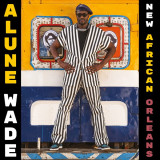
Alune Wade - New African Orleans LP

In his sixth and latest album “New African Orleans”, released by ENJA and Yellow Bird, bass guitarist and composer Alune Wade explores the multiple junctions between his native West African rhythms, the Afrobeat and juju rhythms from Lagos and the brass band repertoire immortalized in New Orleans. “I’m exploring a world that goes from my roots to the lost branches on the other side of the Atlantic,” explains the musician from Senegal. He has whittled down around 50 compositions – both original and standards - to a dozen which Alune recorded in Paris, Dakar, Lagos and New Orleans. “The idea first came to me during the Jazz à Gorée festival I organized back in 2014,” he explains. “It had me reflect on the notion of reversing the musical trip most people take from the United States to the African continent. I wanted to set out westward and begin a musical conversation with the best artists, both in Nigeria and the US.”
To achieve this, Wade has invited top artists from both sides of the Atlantic, including the Nigerian talking drummer Olaore Muyiwa Ayandeji, the percussionist Weedie Braimah and the jazz drummer Herlin Riley from New Orleans. The musical inspirations are equally transatlantic, ranging from Dr. John to Manu Dibango and Charlie Parker. But the 45-year-old also pays homage to his father who was a brass band star in his native Senegal back in the Sixties.
BACKGROUND

We only have a partial idea of the birth and remarkable development of the music born of the transatlantic slave trade. From Malinke ballads to Cuban son, from call-and-response patterns to field hollers and hip-hop, Yoruba rhythms to Argentinian tango, from Angolan percussions to the New Orleans brass band sounds… all have roots in Africa and a shackled migration that lasted four centuries. No more so than Congo Square in the Louisiana capital. In 2024, we mark the 300th anniversary of the implementation of the Code Noir which “gave enslaved Africans Sundays off to dance”. A drop in the ocean, but one which shows the importance of culture as a lifebuoy against this barbaric trade. As the Guadeloupian writer Daniel Maximin once claimed: “Our music guided us from the scream to the song, from dragging our chains to dancing.”

Сделать предзаказ30.05.2025

он должен быть опубликован на 30.05.2025

Tasti Box - Tasti Box LP 2x12"

The debut release of Collective Direction explores the incredibly broad and fascinating variety of work of Tasti Box, operating in San Francisco in the early 90’s.

This previously unreleased album, made in the early 90’s, captures the spirit of the San Francisco free party scene that exploded around that time. DJ Harvey, Doc Martin, the Hardkiss Brothers, the Wicked Crew and a host of international guests played at legendary all-night parties at locations such as under the Golden Gate Bridge, on huge custom-built sound systems. Helping to define not only the West Coast scene but also influencing the rest of the country throughout that decade. The cultural impact of this moment in time continues to inspire today’s dance music landscape.

Opening on the delicate and melodic ambient tracks Mim and Quetzcal, the A side closes on Dr Tripi, a house-infused track preluding the uniqueness and diversity of the emblematic Tasti Box sound, explored more broadly on the B side with the triptych of Desire, U Can Fly and Box, a trippy journey melting influences from breaks, house, experimental and techno, one that can be experimented at home or in a club setting. The C side opens with the killer trancey and psychedelic club track Feel It, one expected to be definitely heard on dancefloors over the Summer. It is complemented by the almost balearic Story of O and bleepy and esoteric Electrons. On the D side, some Daisy Glow tracks, showing strong late Tasti Box influence, close the musical journey with four tracks of joyful and melodic house music, a perfect ending to a night and to the double LP.
It’s a compilation for music collectors and dancers alike and those excited to explore the history of a sound not afraid to experiment. The vinyl includes a limited edition A4 design of the artwork cover, an exclusive conversation with the artists and two vinyl exclusive tracks. One not to miss!

нет на складе

Закажите сейчас, и мы закажем товар для вас у нашего поставщика.


Последний логин: 7 мес. назад
Quinie - Forefowk, Mind Me LP

The record is largely sung in Scots language, one of Scotland’s three official languages along with Gaelic and English. “Scots gives me a way of expressing myself which is connected directly with the landscapes I love. It brings the songs alive and it is a fascinating language. The name of the record is in Scots - Forefowk means the people who came before, or ancestors. When we say ‘mind me,’ we can mean a few things- remind, remember, watch over or care for me. The record explores how tradition needs to be constantly reconnected with, built upon, looked after, and shared.”
Quinie sings with a style inspired by Scottish Traveller singers. “I began singing unaccompanied Scots Song in 2015 after hearing Scots Traveller singer Sheila Stewart on the radio. Initially I felt like I shouldn't sing these songs because I'm not a Traveller, and I saw people around me doing that in a way that made me uncomfortable. But on the other hand this music made sense to me and I felt driven to learn. Over the years I have met Traveller friends who taught me that settled people sharing these songs could contribute to raising awareness. Scottish Travellers are marginalised and discriminated against in modern Scotland, despite being custodians of so many of our important traditions. So I started to perform them and tell this story. From there I built on my repertoire and started writing my own songs”.
To develop this record, Quinie travelled across Argyll with her horse. They went on a pilgrimage of sorts through the ancient landscapes of the West of Scotland to explore the interconnected relationships between people, ancestors, animals, and place. The album’s vinyl release is accompanied by a book and film, documenting this unusual research process.
Forefowk, Mind Me was recorded in August 2024 at The Big Shed in Highland Perthshire with support from Creative Scotland. Quinie is accompanied by an ensemble of musicians: Ailbhe Nic Oireachtaigh (viola), Oliver Pitt (duduk, bouzouki, percussion), Harry Górski-Brown (small pipes, violin), and Stevie Jones (double bass, recording, and mixing). Each of these artists brings their own distinctive voice, bridging contemporary experimental practice with worlds of traditional and early music.

нет на складе

Закажите сейчас, и мы закажем товар для вас у нашего поставщика.


Последний логин: 10 мес. назад
CHARLIE MEGIRA & THE BET SHE' AN VALLEY HILLBILLIES - BOOM CHAKA BOOM BOOM
  • Turn Around
  • Oops!
  • Haven't The Poor People Suffered Enough Bring Me The Head Of The Deckhand Boy
  • A Whole Lot Of Nothing But The Blues
  • Dunkel Party
  • Smile Now, Cry Later
  • The Death Dance Of The Busty Hot Lifeguard Vvinstructor Babe
  • At The Rasco
  • Schmücke Dih O Liebe Seele

Charlie Megira's self-reflexive final album found him far from his Beth She'an Valley home and surrounded by a new cast of Hillbillies. After spending 15 years toying with goth, sound collage, grunge, and dark wave, Boom Chaka Boom Boom is a sprawling mix of plunking country blues, Black Lodge terror, ambient montages, 17th century Lutheran hymns, and noodling spaghetti western kitsch. Deck his soul with gladness.

Сделать предзаказ09.05.2025

он должен быть опубликован на 09.05.2025

Jeff Bridges - Slow Magic, 1977-1978 (LP)

“Music is the weed that keeps popping out of the concrete in my life. It just seems to want to come out.” –Jeff Bridges

Extensive booklet including liner notes by Sam Sweet, new interviews with Jeff Bridges, and never-before-seen archival photos.

Featuring Burgess Meredith (Rocky, Batman), members of Oingo Boingo, and assorted characters from the West Los Angeles art and music underground
Culled from a single decaying cassette tape labeled “July 1978,” these recordings are a window into the secret musical life of the Dude. Even after becoming one of Hollywood’s biggest stars, Bridges spent all his free time jamming and recording with a trusted circle of musicians composed of childhood friends, artists, and assorted L.A. oddballs.

Imagine The Band playing at CBGB with The Exploding Plastic Inevitable. Or Arthur Russell and the Talking Heads collaborating on a suite of mutant disco. Though Bridges and his friends were brought up around the movie industry, they decided to create their own private musical universe, where they could be as weird as they wanted.

Their music opens a portal to a hidden world of outlandish creativity and camaraderie in 1970s Los Angeles. It’s the missing piece of his musical evolution, revealed here for the first time in all its joyful abandon.

Сделать предзаказ02.05.2025

он должен быть опубликован на 02.05.2025

Miles Davis - Black Beauty: Miles Davis At Fillmore West LP 2x12"

Dateline: April 10, 1970. Setting: The storied Fillmore West in San Francisco, CA. Context: Miles Davis, three days removed from his first session for Jack Johnson and, with newly recruited soprano saxophonist Steve Grossman in tow, opening shows for countercultural heroes the Grateful Dead on the latter’s home turf. Result: The initial rumblings of a thrilling era in which Davis and his cohorts would again upend jazz and popular conceptions of the genre with music steeped in groove, improvisation, and hang-on-for-your-life adventurousness. All captured on Black Beauty: Miles Davis at Fillmore West.

Mastered at MoFi’s California studio, pressed at Fidelity Record Pressing in California, and housed in a Stoughton gatefold jacket, Mobile Fidelity's numbered-edition 180g 33RPM 2LP set helps bring what went down that spring evening in Bill Graham’s venue to your listening room with exceptional clarity, balance, and presence. Originally only released in Japan in 1973 and unavailable in the United States until the late ‘90s on compact disc, this marks the first time Black Beauty has been issued on domestic vinyl. The wait is worth it.

Benefitting from quiet surfaces and excellent definition, these LPs present the band’s livewire energy and torrential storm of notes with captivating dynamics, pacing, and fullness. At its core, this audiophile reissue takes you into the walls of sound erected by a band learning on-the-fly the sheer power, will, and breadth of the electric jazz Davis was orchestrating and realizing, on the spot, would reach rock audiences that until that point had only a faint awareness of his mad-scientist experimentation. The sense of release and reach conveyed by these carefully restored records make it clear the veteran bandleader was in the process of a permanent shift that he’d chase for the next five years.

Given Davis was only a few months away from releasing the pioneering double album Bitches Brew, it shouldn’t come as a surprise that much of the fare here adheres to similar explorative approaches. Turbulent rhythms, provocative trumpet passages, and rich, saturated tonal colors that seemingly splash against a blank canvas take precedence over any traditional attempts at organization and melody. Davis and Co. intentionally play everything on a line with the bandleader signaling changes with his horn via coded phrases. The group speaks a common language — with each member having gone to achieve iconic status for their career contributions and technical prowess.

In the company of Grossman, Chick Corea (piano), Dave Holland (bass), Jack DeJohnette (drums), and Airto Moreira (percussion), Davis constructs themes around “Directions,” “Miles Runs the Voodoo Down,” “It’s About That Time,” the title track to Bitches Brew, and more from his then most-recent studio works and the in-progress Jack Johnson. His farewell to the popular standards that for nearly two decades remained a part of his repertoire arrive via a brief dalliance with “I Fall in Love Too Easily,” a shortened albeit aggressive “Masqualero,” and the “Theme” finale of “Spanish Key.” Initially, Black Beauty lacked specific track listings due to Davis’ increasing frustration with listeners over-analyzing his music.

In retrospect, it’s difficult to blame anyone for wanting to view what’s on display here with the aural equivalent of a magnifying glass. Leaning in rock directions, yet maintaining an ear for spaciousness and solos, Black Beauty survives as a snapshot of a thrilling moment amid a transitory period in which evolution came fast and furious. Just two months later, Davis would add another instrumentalist to the lineup in the form of organist Keith Jarrett, and the perpetually restless visionary would blast off to a more atmospheric and arguably more chaotic universe.

Consider, then, this live document a bridge to that galaxy and a breathtaking example of the possibilities of jazz itself.

Сделать предзаказ30.04.2025

он должен быть опубликован на 30.04.2025

Dustin Wong - Gloria (TAPE)

Dustin Wong

Gloria (TAPE)

CassetteCSHAUSMO147
Hausu Mountain
25.04.2025

LA-based composer/producer/guitarist Dustin Wong returns to Hausu Mountain with Gloria, his third album on the label since 2018. Wong has established a multifaceted career over the last two decades that encompasses his solo work centered around guitar performance and live looping, roles as a guitarist in Baltimore-based bands Ponytail and Ecstatic Sunshine, and a wide catalog of collaborations with artists including Takako Minekawa, Good Willsmith, and Patrick Shiroishi. In composing his solo music, Wong has always transmuted his own life experiences into the thematic source material for emotionally resonant works rippling with fine-grain details and intricate looping architectures. With Gloria, the composer channels specific memories and pieces of his family history into a deeply personal narrative arc focused on his grandmother Gloria Violet Lee Wong, who passed away in January 2024, just shy of her 96th birthday. Using a road trip they took together down the west coast of America in 2023 as the direct inspiration for the individual scenes and flashes of imagery that form the album’s continuously unfolding structure, Wong presents Gloria as a memorial to her storied life and a celebration of the warmth and kindness that characterized their close relationship. A moment-to-moment travelogue that zooms out in its full scope to evoke a multi-generational memoir that spans decades and continents, Gloria gives Wong space to open his heart and uncover his roots — all while experimenting with new techniques in live performance and sound design that lead his music into territories that he has never before explored.

Сделать предзаказ25.04.2025

он должен быть опубликован на 25.04.2025

SOICHI TERADA - APE ESCAPE ORIGINAPE SOUNDTRACKS IN A BOX (Boxset 4x12")
 
44

4XLP. Hardcover slipcase box. Liner notes from Soichi Terada, Colour: translucent red, clear, blue, and yellow vinyl

It has been 25 years since the release of Saru Get You (サルゲッチュ), known stateside and in the UK as Ape Escape. Ape Escape marked a significant milestone for the PlayStation, as it was the first game to require use of the PlayStation's DualShock (analog) controller. In Ape Escape, the use of the analogue sticks goes beyond camera rotation and acts as an extension of Kakeru's (Spike's) own character, controlling his many gadgets like the stun club, time net, and sky flyer. It's a unique form of control that, really, didn't become popularized until the release of the Nintendo Wii. It feels like a distinctly Japanese design, the sort of off-the-wall design that is either embraced or rejected on a global scale. In Ape Escape's case, the mechanic caught on.

Ape Escape is fast, frantic, and—at times—downright frustrating. Pipo monkeys dash, taunt, and swim away from your advances. They ride water monsters, fly UFOs, and even shoot uzis! Whether it's Kakeru, his friends, or the monkeys themselves, the characters are always running across the levels. This mad dash is enhanced by the game's soundtrack, composed by legendary composer Soichi Terada. As he recalls, the director of the production said, "Spike and his friends always have the image of running." In response, Terada happily produced fast songs with an average speed of over 170bpm. The resulting gameplay and audio is a match made in heaven.

Ape Escape is the first game soundtrack Mr. Terada ever created. The producers of the game heard one of his singles, "Sumo Jungle," and thought his frenetic drum-and-bass (Jungle) would be perfect for the game. The marriage of Ape Escape's charming overworld and Soichi's upbeat compositions is nothing short
of sublime. Especially now, it is difficult to separate the mischievous Pipos and fast-paced action from Soichi Terada's silky smooth synthesizer and heart-pounding bass. Earlier this year (2024), Soichi Terada's Ape Escape work was celebrated by the six-track EP Apes in the Net, which includes music from Ape Escape 1 and 3 (Terada did not compose the series' second installment). The label, Rush Hour Music, has prestigiously championed almost all of Soichi Terada's music, especially his (specifically non-VGM) house, jungle, and drum and bass releases (Sounds from the Far East, Asakusa Light, and more).
Before Apes in the Net, Terada's Ape Escape music was only available on CD, released in Japan around 2010. This release featured reconstructed tracks created by Mr. Terada himself, identical to the music arrangements featured in the game. The biggest difference, of course, was that they were of higher fidelity than was originally available on the PS1 disk format. Completing all of the aforementioned releases is this box set, released by Far East Recording in partnership with Cartridge Thunder and officially licensed by Sony Computer Entertainment. This box set release includes four LPs, housed individually by a hardcover slipcase. This box set includes every song from Ape Escape 1, except those available on Apes in the Net. This box set release also includes one bonus song, previously unreleased anywhere else (including the game itself!).

The music on this box set was meticulously mastered by Justin Perkins of Mystery Room Mastering. Using Mr. Terada's premastered source files, the music was completely and specifically mastered for vinyl. Rounding out the audio is absolutely stunning artwork created by Gobo3D. CT worked with Gobo to recreate some of Ape Escape's most iconic characters, referencing the original Japanese guidebook and other promotional materials. The result is visually delicious 300dpi artwork that takes you straight back to 1999. As uber-fans of the original PlayStation game, Cartridge Thunder and Far East Recording are proud to celebrate Soichi Terada's music and pay our respects to such a legendary PlayStation franchise—on the original hardware's 30th anniversary no less! It's with a happy heart, then, that Far East Recording and CT present to you Soichi Terada's Ape Escape Originape Soundtracks in a Box.

Please note: due to licensing exclusivity, this release does not include tracks previously released on Apes in the Net

нет на складе

Закажите сейчас, и мы закажем товар для вас у нашего поставщика.


Последний логин: 11 мес. назад
Rindert Lammers - Thank You Kirin Kiki
  • 01: Summer In Shibuya
  • 02: Opening Credits
  • 03: Thank You Kirin Kiki
  • 04: Thank You Hiroshi Yoshimura
  • 05: Closing Credits

Rindert Lammers' debut album is a heartfelt exploration of gratitude, blending personal narratives with cinematic imagery in a serene and soulful ambient jazz style. Inspired by Japanese cinema and the raw authenticity of YouTube confessions, the album captures a mood of introspection and appreciation. Central to the album is the track "Thank You, Kirin Kiki," which draws from a powerful scene in the film Shopliers. Lammers explains "It's one of my favorites. The Japanese actress Kirin Kiki plays the grandmother of a ‘chosen family’, all of whom have fled or lost their own families in some way. In this scene, one of her last scenes before her (real) death, Kirin Kiki (the grandmother) looks at her family and says, 'Thank You!' twice towards the children and the sea. Kirin Kiki improvised these words on the spot, and it's such a poignant moment in the film, but also indicative of her impending death. I found the gratitude so moving it fit perfectly with the gratitude I found in the voice clip from "Thank You Hiroshi Yoshimura. "The fourth song, "Thank You Hiroshi Yoshimura," opens with a voice clip that acts almost as the protagonist of a film, reflecting on a turbulent time of sleeping in parks and on the streets. This voiceover was inspired by a comment on a Hiroshi Yoshimura video on YouTube that began, “This album reminds me of...” Lammers noticed the deeply personal responses le on these videos, so he recorded various similar YouTube comments from people around the world, initially intending to set them to music. Though much of this idea evolved, this particular voice clip remained a central influence, ultimately inspiring a cinematic journey within the album. "Summer in Shibuya" sets the scene as a trailer, "Opening Credits" introduces the narrative, and "Closing Credits" gently brings it to a close. While there’s a Japanese and Tokyo theme running through the tracks, Lammers doesn’t view the album as a tribute to Japan or Tokyo specifically—he’s never visited and admits to knowing only fragments of the culture. Yet he's drawn to Japanese environmental music and is an avid Murakami reader, seeing Japan as a powerful, visual inspiration in his mind’s eye. In a way, the album is also his “thank you” to the beautiful art that Japan has shared with the world.

Сделать предзаказ18.04.2025

он должен быть опубликован на 18.04.2025

Various - Tsapiky! Modern Music From Southwest Madagascar
  • A1: Mamehy - Je Mitsiko Ro Mokotse (“Those Who Talk Dirty Behind Your Back Tire Themselves Out For Nothing”)
  • A2: Drick - Sinjake Panambola (“Dance Of The Rich”)
  • A3: Befila - Eka Ndao (“Let's Go”)
  • A4: Behaja - Marolinta (Name Of A Village On The South-Western Tip Of Madagascar)
  • B1: Mahafaly Mihisa - Fanoigna (“Heated Debate“
  • B2: Meny & Ando - Ka Tseriky Iha (“Don't Be Surprised”)
  • B3: Rebona - Zana-Konko
  • B4: Mirasoa & Mahapoteke - Bleu Bleu (“Blue Blue“)

Wild ecstatic vocals, distorted electric guitars, rocket bass, and the amphetamine beat! // Unlike anything else, this is THE high life music you've always wanted // Ceremonial music played with abandon and extreme intent, honoring the living and dead alike // Recorded on location in SW Madagascar by Maxime Bobo // “Tsapiky music from Southwest Madagascar features wild ecstatic vocals, distorted electric guitars, rocket bass, and the amphetamine beat! Unlike anything else, this is THE high life music you've always wanted - ceremonial music played with abandon and extreme intent, honoring the living and dead alike. In Toliara and its surrounding region, funerals, weddings, circumcisions and other rites of passage have been celebrated for decades in ceremonies called mandriampototse. During these celebrations – which last between three and seven days – cigarettes, beer and toaky gasy (artisanal rum) are passed around while electric orchestras play on the same dirt floor as the dancing crowds and zebus. The music, tsapiky, defies any classification. This compilation showcases the diversity of contemporary tsapiky music. Locally and even nationally renowned bands played their own songs on makeshift instruments, blaring through patched-up amps and horn speakers hung in tamarind trees, projecting the music kilometers away. Lead guitarists and female lead singers are the central figures of tsapiky. Driven as much by their creative impulses as by the need to stand out in a competitive market, the artists distinguish themselves stylistically through their lyrics, rhythms or guitar riffs. They must also master a wide repertoire of current tsapiky hits, which the families that attend inevitably request before parading in front of the orchestra with their offerings. This work, a constant push and pull between distinction and imitation, is nourished by fertile exchanges between various groups: acoustic and electric, rural and urban, coastal or inland. What results during these ceremonies is a music of astonishing intensity and creativity, played by artists carving out their own path, indifferent to the standards of any other music industry: Malagasy, African or global. Recorded live on location by Maxime Bobo, this vinyl LP includes a 4-page full-color insert with detailed liner notes plus photos of the musicians and surroundings.”

Сделать предзаказ18.04.2025

он должен быть опубликован на 18.04.2025

Malmin - Med Ashild Vetrhus

Malmin

Med Ashild Vetrhus

12inchKRSLP3101
Diger Distro
18.04.2025

Under the Malmin-moniker you’ll hear on “Med Ashild Vetrhus” original organic grooves and timeless tunes from three masters of the quite unheard ‘untamed, hypnotic, raw and chanting’ folk music of Rogaland: Olav Christer Rossebo, Anders Hana (also known from the bands Moha! and Naaljos Ljom) and vocalist Ashild Vetrhus. This record consists of traditional and spiritual music from the Rogaland region in Norway (in the south-west of the country, around the city Stavanger). The album includes upbeat ‘dance’ and nostalgic folk music with a religious touch here and there. The typical national and sometimes even regional instruments used on this record in addition to voice is: hardanger fiddle, langeleik (a zither-like instrument), microtonal mandolin and guitar, mouth harp and fiddle. The performers have learned the music directly from traditional sources, but most of the material on this record has derived from the study of archive recordings from the Ryfylke Museum (in the city of Sand).

Сделать предзаказ18.04.2025

он должен быть опубликован на 18.04.2025

JESS SAH BI - JESUS - CHRIST NE DECOIT PAS (TAPE)
  • A1: Ile De Gorée
  • A2: Il Veut Marcher Avec Toi
  • A3: Y Vou Balé Va
  • B1: Séhé Voulé
  • B2: Fortifie-Toi
  • B3: Il Veut Marcher Avec Toi (Remix)
  • B4: Loué
также имеющийся в продаже

Vinyl


Jess Sah Bi is well-known as half of the legendary duo Jess Sah Bi & Peter One who brought homegrown Country-Americana to the West African masses with their smash debut Our Garden Needs Its Flowers in the mid-1980s. Touring stadiums and reaching listeners worldwide, their music has racked up millions of spins on YouTube and remains imprinted in the hearts of Ivorians of a certain age. ATFA reissued their album in 2018, garnering critical acclaim from publications including Pitchfork and Rolling Stone and reaching a new generation of listeners outside Ivory Coast (Cote d'Ivoire). Sometime in the early 90s, Die Sahbi - or Jesse, as he known to friends-became gravely ill with an unknown ailment and almost died. He visited various doctors and all kinds of religious healers and nothing helped. One day he went down to an Evangelical Christian revival in his neighborhood. They prayed over him and he was delivered. He says, "Their prayers helped chase out whatever demons and unhealthy spirits were inside me. After that my illness went away. When I went to the United States a few months later on an exchange program I wanted to make music to thank God because I was saved." He recorded an album of music praising God in order to honor a promise he made to himself at the depths of his desperation in the hospital. The album Jesus-Christ Ne Deçoit Pas Jesus Christ Does Not Let Us Down came out in 1991 and sold around 3000 cassettes in Ivory Coast. The master tape was lost along the way so the recording has never been on digital platforms until now. Jesse didn't have much time to record while visiting South Carolina, hence the relatively short album, 6 songs including two reprises for filler. A local pastor connected him with a studio and some American musicians (Robert Fortner and Gary Davis) to help. They added acoustic guitar, percussion and keyboard accompaniment to Jesse's soaring French and Gouro vocals, harmonica and finger-picked acoustic. The resulting recording is deeply soothing and contemplative music that perfectly compliments the songs already embraced by millions. But he had to find the rest of the studio expenses-$600 total-which he secured drawing cartoons for UNICEF. Jesse is Ivory Coast's first political cartoonist, a vocation for which he was widely celebrated at the time. It also made him a few enemies which lead to him leaving the country permanently a few years later. Jesus-Christ Ne Deçoit Pas is Jess Sah Bi's first and only gospel album. Fortunately, fans responded with enthusiasm: widespread radio airplay and concerts followed, along with a growing solo profile in the country. The first big gospel artists in Ivory Coast were the duo Mathieu et Constance, who emerged in 1989. There was a bigger gospel music movement in English-speaking counties like Ghana and Nigeria (Christians make up roughly 40% of the population in Ivory Coast, slightly less than Muslims). Jesse didn't have any intention of working in Christian music but he realized, "You don't make music to make money-you want to send a message." In the years since Jesus-Christ's release, gospel music in Ivory Coast has grown to become a key part of music culture in the country. Spiritual music appears in community actives across the public and private spectrum from religious gatherings and parties to television broadcasts and music festivals. And, as it has evolved and indigenized locally, gospel music has picked up elements of traditional Ivorian music, reggae and soul. The album ultimately precipitated the demise of the duo, who were soon separated geographically as Peter One relocated to Nashville. He went on to become a nurse and release a successful solo album on Verve following the ATFA collaboration. Nowadays Jesse lives in the Bay Area and continues to record and perform music wherever and whenever he has the chance. He is publishing a new book of humorous cartoons in 2025 and his most recent album Never Give Up came out in 2020

нет на складе

Закажите сейчас, и мы закажем товар для вас у нашего поставщика.


Последний логин: 12 мес. назад
Aaron Landsman / Norman Westberg - Night Keeper LP

Night Keeper is a collaborative album by New York City-based artist Aaron Landsman and former Swans guitarist Norman Westberg that is based on the former's eponymous play. Westberg recorded it together with performer Jehan O. Young for the Swiss Hallow Ground label, with Landsman serving as the record’s producer. The original piece was first performed in the Spring of 2023 at The Chocolate Factory Theater in Queens and filled the stark industrial space with spoken text, choreography, projections, and music in dim light and, occasionally, complete darkness. Westberg and Young afterwards brought it to the studio to record it as a two-part
album in whose course his textural sounds, based on loops and samples, set the stage for her soothing, sonorous vocal performance. »Night Keeper« is a performance inspired by sleeplessness and the wanderings of the human mind at night—about time and memory.
Westberg and Young elegantly capture its essence in these roughly 44 minutes with a somnambulic album, letting sound and meaning flow into each other. The initial spark for Night Keeper was a run of almost sleepless nights in different neighbourhoods of a city that is perpetually insomniac. Instead of trying to force himself to go back to sleep by any means necessary, Landsman started writing down his thoughts. As he explains in the liner notes—accompanying the music along with drawings made by audience members during the performances—he started listening to the particular way in which the voice in his head navigates time and language. Accordingly, the texts that Young reads on the record form a diverse collection of specific moments, imagining different speakers and evoking different
situations. Westberg complements, accentuates, and juxtaposes these with different means. Ominous drones, soaring melodies, rhythmic bass sounds: the guitarist, whose latest release for Hallow Ground was 2021’s First Man In The Moon with Polish double bassist Jacek Mazurkiewicz, conjures up distinct sound worlds in which Young can let Landsman’s scenes unfold to gripping effect.
Landsman makes it clear that »Night Keeper« was intended as an invitation to »stay up, look out the window, let what’s happening outside spark reveries or predictions« or even take it on a stroll through the neighbourhood—at night, of course. Much like the original piece, this album is then one dedicated to wandering around, both mentally and physically.

Сделать предзаказ11.04.2025

он должен быть опубликован на 11.04.2025

Lawrence English - Even The Horizon Knows Its Bounds

»Even The Horizon Knows Its Bounds« explores sound’s relationship with architecture, inspired by the Naala Badu building at the Art Gallery of NSW. Created from sound prompts responded to by artists like Jim O’Rourke and claire rousay, the work reflects on space, collaboration, and the fluid nature of sonic environments.

I like to think that sound haunts architecture.

It’s one of the truly magical interactions afforded by sound’s immateriality. It’s also something that has captivated us from the earliest times. It’s not difficult to imagine the exhilaration of our early ancestors calling to one another in the dark cathedral like caves which held wonder, and security, for them.

Today the ways in which sound occupies space, the so-called liquid architecture, holds just as much wonder, albeit one that is often dominated by functionality and form. Beyond those constraints however, how sound operates in the material world is something that exists at the fundament of our understanding of music, and moreover within the broad church we know as the canon of sound arts.

Even The Horizon Knows Its Bounds is a record born out of these relations. In a direct sense, the record is the product of an invitation by curator Jonathan Wilson to create a sound environment, reflecting on the Naala Badu building at the Art Gallery Of NSW. The building’s name, which translates from the Gadigal language to ‘seeing water’, was opened in 2022 and this piece was offered as an atmospheric tint to visitors walking through the building throughout the year following its opening.

It’s also a record born out of a recognition for the porousness sound affords, especially as a device for collaborative endeavour. This composition is one born out of generosity and acoustic solidarity. Even The Horizon Knows Its Bounds is comprised not just of my sounds, but also that of an incredible array of artists who have also operated in the orbit of the Art Gallery Of NSW. The players include Amby Downs, Chris Abrahams, Chuck Johnson, Claire Rousay, Dean Hurley, Jim O’Rourke, JW Paton, Madeleine Cocolas, Norman Westberg, Stephen Vitiello and Vanessa Tomlinson.

The piece was constructed around two long form sound prompts that each musician responded and contributed to. These materials there when digested into the final piece you hear. The work could not exist without the substantial offerings these artists made, and I am immensely grateful to each of them.

I’ll finish with a little note that appears on the LP itself.

Place is an evolving, subjective experience of space. Spaces hold the opportunity for place, which we create moment to moment, shaped by our ways of sense-making.

Whilst the architectural and material features of space might remain somewhat constant, the people, objects, atmospheres, and encounters that fill them are forever collapsing into memory.

Lawrence English
Performed by Amby Downs, Chris Abrahams, Chuck Johnson, Claire Rousay, Dean Hurley, Jim O’Rourke, JW Paton, Madeleine Cocolas, Norman Westberg, Stephen Vitiello, Vanessa Tomlinson

Сделать предзаказ04.04.2025

он должен быть опубликован на 04.04.2025

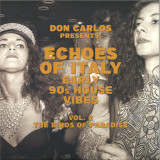
Various - ECHOES OF ITALY – THE BIRDS OF PARADISE – EARLY 90S HOUSE VIBES VOL.2 (2x12")

Googling “paradise house”, the first results to pop up are an endless list of European b&b’s with whitewashed lime façades, all of them promising “…an unmatched travel experience a few steps from the sea”. Next, a little further down, are the institutional websites of a few select semi-luxury retirement homes (no photos shown, but lots of stock images of smiling nurses with reassuring looks). To find the “paradise house” we’re after, we have to scroll even further down. Much further down.

It feels like yesterday, and at the same time it seems like a million years ago. The Eighties had just ended, and it was still unclear what to expect from the Nineties. Mobile phones that were not the size of a briefcase and did not cost as much as a car? A frightening economic crisis? The guitar-rock revival?! Certainly, the best place to observe that moment of transition was the dancefloor. Truly epochal transformations were happening there. From America, within a short distance one from the other, two revolutionary new musical styles had arrived: the first one sounded a bit like an “on a budget” version of the best Seventies disco-music – Philly sound made with a set of piano-bar keyboards! – the other was even more sparse, futuristic and extraterrestrial. It was a music with a quite distinct “physical” component, which at the same time, to be fully grasped, seemed to call for the knotty theories of certain French post-modern philosophers: Gilles Deleuze, Félix Guattari, Paul Virilio... Both those genres – we would learn shortly after – were born in the black communities of Chicago and Detroit, although listening to those vinyl 12” (often wrapped in generic white covers, and with little indication in the label) you could not easily guess whether behind them there was a black boy from somewhere in the Usa, or a girl from Berlin, or a pale kid from a Cornish coastal town.

Quickly, similar sounds began to show up from all corners of Europe. A thousand variations of the same intuition: leaner, less lean, happier, slightly less intoxicated, more broken, slower, faster, much faster... Boom! From the dancefloors – the London ones at least, whose chronicles we eagerly read every month in the pages of The Face and i-D – came tales of a new generation of clubbers who had completely stopped “dressing up” to go dancing; of hot tempered hooligans bursting into tears and hugging everyone under the strobe lights as the notes of Strings of Life rose up through the fumes of dry ice (certain “smiling” pills were also involved, sure). At this point, however, we must move on to Switzerland.

In Switzerland, in the quiet and diligent town of Lugano, between the 1980s and 1990s there was a club called “Morandi”. Its hot night was on Wednesdays, when the audience also came from Milan, Como, Varese and Zurich. Legend goes that, one night, none less than Prince and Sheila E were spotted hiding among the sofas, on a day-off of the Italian dates of the Nude Tour… The Wednesday resident and superstar was an Italian dj with an exotic name: Don Carlos. The soundtrack he devised was a mixture of Chicago, Detroit, the most progressive R&B and certain forgotten classics of old disco music: practically, what the Paradise Garage in New York might have sounded like had it not closed in 1987. In between, Don Carlos also managed to squeeze in some tracks he had worked on in his studio on Lago Maggiore. One in particular: a track that was rather slow compared to the BPM in fashion at the time, but which was a perfect bridge between house and R&B. The title was Alone: Don Carlos would explain years later that it had to be intended both in the English meaning of “by itself” and like the Italian word meaning “halo”. That wasn’t the only double entendre about the song, anyway. Its own very deep nature was, indeed, double. On the one hand, Alone was built around an angelic keyboard pattern and a romantic piano riff that took you straight to heaven; on the other, it showcased enough electronic squelches (plus a sax part that sounded like it had been dissolved by acid rain) to pigeonhole the tune into the “junk modernity” section, aka the hallmark of all the most innovative sounds of the time: music that sounded like it was hand-crafted from the scraps of glittering overground pop.

No one knows who was the first to call it “paradise house”, nor when it happened. Alternative definitions on the same topic one happened to hear included “ambient house”, “dream house”, “Mediterranean progressive”… but of course none were as good (and alluring) as “paradise house”. What is certain is that such inclination for sounds that were in equal measure angelic and neurotic, romantic and unaffective, quickly became the trademark of the second generation of Italian house. Music that seemed shyly equidistant from all the rhythmic and electronic revolutions that had happened up to that moment (“Music perfectly adept at going nowhere slowly” as noted by English journalist Craig McLean in a legendary field report for Blah Blah Blah magazine). Music that to a inattentive ear might have sounded as anonymous as a snapshot of a random group of passers-by at 10AM in the centre of any major city, but perfectly described the (slow) awakening in the real world after the universal love binge of the so-called Second Summer of Love.

For a brief but unforgettable season, in Italy “paradise house” was the official soundtrack of interminable weekends spent inside the car, darting from one club to another, cutting the peninsula from North to centre, from East to West coast in pursuit of the latest after-hours disco, trading kilometres per hour with beats per minute: practically, a new New Year’s Eve every Friday and Saturday night. This too was no small transformation, as well as a shock for an adult Italy that was encountering for the first time – thanks to its sons and daughters – the wild side of industrial modernity. The clubbers of the so-called “fuoriorario” scene were the balls gone mad in the pinball machine most feared by newspapers, magazines and TV pundits. What they did each and every weekend, apart from going crazy to the sound of the current white labels, was linking distant geographical points and non-places (thank you Marc Augé!) – old dance halls, farmhouses and business centres – transformed for one night into house music heaven. As Marco D’Eramo wrote in his 1995 essay on Chicago, Il maiale e il grattacielo: “Four-wheeled capitalism distorts our age-old image of the city, it allows the suburbs to be connected to each other, whereas before they were connected only by the centre (…) It makes possible a metropolitan area without a metropolis, without a city centre, without downtown. The periphery is no longer a periphery of any centre, but is self-centred”.

“Paradise house” perfectly understood all of this and turned it into a sort of cyber-blues that didn’t even need words, and unexpectedly brought back a drop of melancholic (post?)-humanity within a world that by then – as we would wholly realise in the decades to come – was fully inhuman and heartless. A world where we were all alone, and surrounded by a sinister yellowish halo, like a neon at the end of its life cycle. But, for one night at least, happy."

нет на складе

Закажите сейчас, и мы закажем товар для вас у нашего поставщика.


Последний логин: 6 мес. назад
Micky Finn & Vital Elements - Warehouse Days LP 3x12"

This incredible triple album is the result of decades of history, and many years of work, between the legendary Micky Finn and Vital Elements. It is a musical journey and a definitive document of the scene from the early rave years to modern jungle, in all its many aspects and styles, produced in a way that only a pioneers such as Micky Finn & Vital Elements could do.
Perfectly planned and beautifully executed, this album will never be repressed, and once stock is gone, it is gone.

нет на складе

Закажите сейчас, и мы закажем товар для вас у нашего поставщика.


Последний логин: 11 мес. назад
United Freedom Collective - Bright Patterns

Founded by Robbie Redway and psychedelic researchers Mathieu Seynaeve and WaiFung Tsang, UK-based 'United Freedom Collective' has grown into a network of artists including Jordan Stephens, Falle Nioke, Eliza Shaddad, Labdi, William Rees and Facesoul. Originally conceived around psychedelic therapy sessions, online yoga and breathwork channels, the musical scope has expanded on each of the four EPs released on Maribou State's 'Dama Dama' label, and here continues with their debut on Multi Culti. This time Robbie takes the lead on production and sole vocal duties on all five tracks, presenting a range of influences and style. Lead single 'Between Memories' blends tropes of ecstatic dance with uplifting vocal piano house, somehow making flutes fit in with Detroit strings to epic, hands-in-the-air effect.' Title track ‘Bright Patterns’ bridges the gap between Jungle, Jai Paul, and Jamiroquai, a fusion of funky filtered disco-house and electroclash with side-chained pop vocal hooks. ’El Yo’ smooths things out, a dope, laid back groove with a measured reflection on psychedelic healing and the perils of spiritual bypassing. ‘Higher Drums’ warms things back up for the dancefloor with trumpet, afro-latin percussion, and flute flourishes. Finally, ‘Moonshine’ is a soaring, Amapiano-inflected post-desert-house ballad. Influenced, in their words, 'by birds, trees, Buddhism, yoga, headless way meditations, Jungian analysis, Zen Taoism, Chinese plant medicines, indigeneity, Amazonian and psychedelic cultures, icaros and world healing traditions,' the music is eclectic, ranging from afro-inspired jazz to Chinese folk, psych-rock to dub and dance music, an ambitious and inclusive range, collabs that extend well beyond the borders of western musical traditions. Their sound was described by Clash Magazine as an 'aural mosaic that glitters with colour and potential,' and while the sheen of the production and precision of the arrangements might seem a departure from Multi Culti's left-field endeavours, the psychedelic idealism and global connectivity make it a natural fit with the open-ended ethos of the label. Having already had radio support from KEXP, BBC6 Music (Laverne, Ravenscroft, Charles, Nemone, Letts), Jazz FM and Worldwide FM (Gilles Peterson), with a live show that sold out Dalston Curve Garde and The Waiting Room as well as supporting Maribou State for their recent comeback show at Islington Assembly Hall in London the collective's future is looking exceptionally bright.

нет на складе

Закажите сейчас, и мы закажем товар для вас у нашего поставщика.


Последний логин: 10 мес. назад
Ebba Asman - When You Know
  • 1: Lately
  • 2: Did I Go
  • 3: When You Know
  • 4: No Answer
  • 5: Found You
  • 6: Time Out
  • 7: Open Your Eyes
  • 8: Grandma
  • 9: Go On
  • 10: What I Want

With a Swedish Grammy (GRAMMIS) nomination for her 2023 sophomore album ‘Be Free’ and a packed touring schedule, the in-demand trombonist, songwriter and producer sough to quiet the noise around her and challenge the jazz genre’s rigid rules for her next project.

The end result is ‘When You Know’; a smoky and melancholic 10-track cocktail of jazz, alternative R&B, indie, Hip-Hop and ambient sonics that experiments at every turn. On hand to co-produce the record and provide the electronic elements that move ‘When You Know’ away from the jazz world and into more avant-garde territory, Ebba collaborated with Berlin-based producer Lucy Liebe.

Packing a potent emotional punch, the 10 tracks are a reflection of Ebba herself: direct, driven, precise. Retreating to a cabin outside of her small hometown of Hammarö, 200 miles west of Stockholm, she recorded the album in the dead of winter. With the temperatures outside nearing minus-thirty degrees, Åsman logged off for a month – disconnecting from TV, social media and emails. Embracing with vigour both the deep sense of calm and the challenges that come with the cold but also the stillness and solitude that is yielded by being in the wilderness.

Сделать предзаказ21.03.2025

он должен быть опубликован на 21.03.2025

Wellen.Brecher - Liebeserklärung

Wellen.brecher

Liebeserklärung

12inchKILLEKILL030
Killekill
14.03.2025

Wellen.Brecher is an electronic band with punk attitude, which has been transcending and subverting electronic music genre boundaries for the past 6 years. After the release of Tierisch Verboten, which can confidently be described as the "soundtrack to inclusion", and a strong second release on our label Killekill, LIEBESERKLARUNG is the band's first full length album. Including a series of first-class remixes.
Refreshingly, the entire release is not based on the corny bad trance traditions loved by contemporary Buffalo shoe wearers. Instead - intentionally or not - it follows a series of almost historical musical quotations from over the last 40 years with each track on the album feeling like a new adventure.
The album opens with TUROFFNER, which has a kind of an Afrika Bambaataa intro, before turning into a wonderfully tresoresque/Detroit techno beast, always commented on or counteracted by the vocals - just like (almost) all the tracks on the album: a new round, a new crazy ride - bumper car lyrics on a powerful stomping reduction of a 90s track.
From here we leap backwards in time into grey West Berlin of the 80s with ROBOT GIRL which shifts and drifts like a bug in buttermilk somewhere between Grauzone and Alan Vega. Next track KAPUTT kicks in with a bang and smashes everything in the best EBM tradition - this could have been played in a techno club in Frankfurt, both in terms of lyrics and sound. Line up for Elektropogo please!
After all the stomping Wellen.Brecher bring in something completely different with VOICE OF A GENERATION: dramatic vocals over delicate breaks which gradually dissolve into arpeggios on a high-quality trance carpet. Challenge complete!
JULIA takes us back to the late eighties in the dark but fun Belgian-Detroit early trance with new beat appeal. TUNNEL TRANCE would have been a good fit for dancing around the Berlin Siegessaule in, let's say, 1998. Relentless 4/4 beats with a hook-line on speed surrounded by acidophilic bows and, on top, the vocal commentary arriving as if from the man behind the glass of the Ferris wheel. In
your mind's eye, you can see fur-shoed gym ravers in bright neon jumping through the Tiergarten like rubber balls. The cover version of the classic TECHNO DJ is an hommage to good old punk - torn apart and reassembled in true Wellen.Brecher style. The closer TIERISCH VERBOTEN brings all the emotion rushing back: fat beats beckon slowly from afar, before the curtain comes up for an epic synth finale.
The harsh, albeit true words really drive you in. It's not necessary, but perhaps it's good to point it out: Inclusion can easily be experienced with music like this. Fuck AfD!

нет на складе

Закажите сейчас, и мы закажем товар для вас у нашего поставщика.


Последний логин: 13 мес. назад
Wellen.Brecher - Liebeserklärung 12" + 7"

Wellen.brecher

Liebeserklärung 12" + 7"

12inchKILLEKILL030LTD
Killekill
14.03.2025

Wellen.Brecher is an electronic band with punk attitude, which has been transcending and subverting electronic music genre boundaries for the past 6 years. After the release of Tierisch Verboten, which can confidently be described as the "soundtrack to inclusion", and a strong second release on our label Killekill, LIEBESERKLARUNG is the band's first full length album. Including a series of first-class remixes.
Refreshingly, the entire release is not based on the corny bad trance traditions loved by contemporary Buffalo shoe wearers. Instead - intentionally or not - it follows a series of almost historical musical quotations from over the last 40 years with each track on the album feeling like a new adventure.
The album opens with TUROFFNER, which has a kind of an Afrika Bambaataa intro, before turning into a wonderfully tresoresque/Detroit techno beast, always commented on or counteracted by the vocals - just like (almost) all the tracks on the album: a new round, a new crazy ride - bumper car lyrics on a powerful stomping reduction of a 90s track.
From here we leap backwards in time into grey West Berlin of the 80s with ROBOT GIRL which shifts and drifts like a bug in buttermilk somewhere between Grauzone and Alan Vega. Next track KAPUTT kicks in with a bang and smashes everything in the best EBM tradition - this could have been played in a techno club in Frankfurt, both in terms of lyrics and sound. Line up for Elektropogo please!
After all the stomping Wellen.Brecher bring in something completely different with VOICE OF A GENERATION: dramatic vocals over delicate breaks which gradually dissolve into arpeggios on a high-quality trance carpet. Challenge complete!
JULIA takes us back to the late eighties in the dark but fun Belgian-Detroit early trance with new beat appeal. TUNNEL TRANCE would have been a good fit for dancing around the Berlin Siegessaule in, let's say, 1998. Relentless 4/4 beats with a hook-line on speed surrounded by acidophilic bows and, on top, the vocal commentary arriving as if from the man behind the glass of the Ferris wheel. In
your mind's eye, you can see fur-shoed gym ravers in bright neon jumping through the Tiergarten like rubber balls. The cover version of the classic TECHNO DJ is an hommage to good old punk - torn apart and reassembled in true Wellen.Brecher style. The closer TIERISCH VERBOTEN brings all the emotion rushing back: fat beats beckon slowly from afar, before the curtain comes up for an epic synth finale.
The harsh, albeit true words really drive you in. It's not necessary, but perhaps it's good to point it out: Inclusion can easily be experienced with music like this. Fuck AfD!

нет на складе

Закажите сейчас, и мы закажем товар для вас у нашего поставщика.


Последний логин: 58 дн. назад
Ultan O’Brien - Dancing The Line
  • A1: Iron Mountain Foothills
  • A2: Game Of Love
  • A3: The Boyne Hunt
  • A4: It Was In The Year Eighteen Hundred And Four
  • A5: Wayside Wonders
  • A6: Domhnall Na Griana / The Butcher’s March
  • A7: The Four Courts / Rolling In The Barrel
  • A8: Fisherman’s Garden
  • A9: Macha
  • B1: Packie’s Pandemonium
  • B2: Banbha’s Ruins
  • B3: Down In Whitestrand
  • B4: Secret House In Fintra Beg
  • B5: Death Doula Meet

WHO IS ULTAN O’BRIEN? Ultan O’Brien is a fiddle player and composer from the wilds of County Clare in the West of Ireland. Ultan is a performer as well as a regular at sessions all of Ireland and can be found by chance in any pub in Dublin, Cork or some remote village on the edge of nowhere, flying jigs and reels around the room. Ultan was reared in the rich tradition of Irish music which is so commonly found and heard in Co Clare, but he also delves deep into sound art and experimental music. He has often been heard in the back of a car after a few pints quoting lines from Alvin Lucier or speaking at length about improvisation and its place in modern Irish music. Ultan O’Brien is a fresh and vital player who has much to offer with his unique approach and technique to a tradition so old and ever ready for a subtle change every 100 years or so. Ultan has played and recorded with people and bands such as Skipper’s Alley, Eoghan Ó Ceannabháin, John Francis Flynn, Slow Moving Clouds, Cuar, Laura Jurd, Martin Green, Natalia Beylis, Paul Roe and Nic Gareiss. ‘in its Ultan’s fiddle playing sincerity of tone it reminds me somewhat of those great caoineadh which were played with such elusive grandeur by Denis Murphy and Pádraig O’Keefe’ Adrian Scahill ‘lets the heart brighten and the feet tap’ Richard Hollingum -KlofMag


ABOUT THIS WONDERFUL ALBUM: ‘This album, Dancing the Line, is my first solo album of music played on an alternatively-tune alto fiddle. I found that the resonance and growl of this lower tuned instrument sat me perfectly into the sound-world I wanted to be in, giving vibrancy to my own compositions and nestling into the traditional music I grew up with.’

Сделать предзаказ14.03.2025

он должен быть опубликован на 14.03.2025

Decide Today - Worldwide Intifada

I wrote The Shit Punx Hate for Realicide in 2005. This version was made for Decide Today around a decade later, maybe 2015? It was about the pathetic narrow-minded dogmas that were common in Cincinnati punk, being discriminated against when our approach defied dominant aesthetic criteria, chronically misunderstood and rejected without consideration.

This experience in my formative years led to a long path of thought as I entered adulthood. Those feelings of being "other"ed, treated poorly based on who I was, started to seem less significant compared to the prejudices I saw friends faced with. Targets of bigotry due not to a subcultural choice, but aspects of themselves they were born into. Of course I mean things like race, gender, class, abilities. If being dissed by punk rockers sucked for me, imagine what it must feel like being the only black kid in a social circle that can't even recognize its own racism, the only woman in places misogyny is the celebrated standard, having a non-white family at risk of deportation, growing up "male" or "female" when you've always known they are wrong about you, etc. This was my mental gateway into prioritizing these struggles, wanting to become an ally, then even more so an accomplice.

Revolutionary Reason was written in 2018 during my time working with Mass Action for Black Liberation, and revised abruptly this year while recording for this record, as it was inconceivable not to address the epitome of merciless colonial atrocity orchestrated by the state of Israel. While I write this, the IOF is massacring families in the West Bank. The death toll in Palestine is currently estimated at around 41,000 and it hasn't even been a year since this modern Nakba began. I hope these songs help make apparent that whatever you said you "would do" during Jim Crow America, Nazi Germany, Apartheid South Africa, any archetypal history now synonymous with wrongness, yes I can confirm NOW IS THAT TIME to do it ...if you were for real about it that is.

Big respect to my Arab friends who are so patient while I learn the stuff my school conveniently omitted, to my Jewish friends tirelessly combating the violence of their ethnicity being shackled to a cult of Zionism, to native resistance across Turtle Island that articulates so well that this fight is also still/always very domestic, to contemporary hiphop telling today's stories while rock music often merely offers retro fashion, and of course to Kieren and Borg my homies in OZ.

All my love to intifada direct action everywhere dismantling the imposed global suicide pact that is white supremacist capitalism.

~ Robert Inhuman 28 August 2024

нет на складе

Закажите сейчас, и мы закажем товар для вас у нашего поставщика.


Последний логин: 13 мес. назад
FUST - BIG UGLY

Fust

BIG UGLY

12inchDLRLP60
Dear Life Records
07.03.2025
  • Spangled
  • Gateleg
  • Doghole
  • Mountain Language
  • Sister
  • Bleached
  • Goat House Blues
  • What's His Name
  • Jody
  • Big Ugly
  • Heart Song

Fust--the lyrical powerhouse Southern rock band from Durham, North Carolina--announce their new album Big Ugly, out March 7th on Dear Life Records, the record label that launched the careers of MJ Lenderman and Florry and that has become a haven for contemporary songwriters. Big Ugly arrives after the release of 2024's Songs of the Rail--"one of the best alt-country compilations_in a long, long time" (Paste) -- and 2023's standout Genevieve, which unassumingly introduced new listeners to Fust's unmistakable blend of "small-town poetry" (Mojo) with a familiar yet probing "country-tinged folk-rock" (KEXP) that made it "one of the most fun rock records of the year" (Pitchfork). Genevieve was their studio debut, recorded with producer Alex Farrar (Manning Fireworks, Rat Saw God, Tomorrow's Fire) in Asheville, North Carolina. The reception was far better than the band expected, stirring them to immediately start working on Big Ugly, their second collaboration with Farrar. Recorded over ten days in June of 2024, Big Ugly is the explosive sound of Fust uncovering a freedom within their sincere form of loose and fried guitar rock, realizing more than ever before an intimacy within bigness. The members -- Aaron Dowdy, Avery Sullivan, Frank Meadows, John Wallace, Justin Morris, Libby Rodenbough, Oliver Child-Lanning--weave their voices alongside guests like Merce Lemon, Dave Hartley (The War on Drugs), and John James Tourville (The Deslondes) to form a music that sounds like a conversation between old friends. And that's exactly what it is. At its heart, Big Ugly is a story cycle, following tough-skinned characters who seem to inhabit a shared and fictional small town--Big Ugly--that in reality gets its name from a lowly populated and unincorporated area in southern West Virginia around where Dowdy's family has deep roots. The album cover_a mural from the Big Ugly Community Center just off the Big Ugly Creek--was painted by locals for a 2004 play performed by the children that interpreted their elders' stories. In a way, Fust's Big Ugly does something similar as it takes the same area as its backdrop and reimagines a life depicted in the mural between the bars, gas stations, general stores, and double-wides. Throughout the album, we join the characters in finding history and meaning in the banal theater of their own private jerkwater.The songs on Big Ugly are hearteningly varied, moving from beer-fisted radio country to elegiac drones to deconstructed ballads. Songs like "Spangled" take up the theme of past traumas and present desensitizations colliding, of the small and cosmic coinciding in the life of a heedless protagonist. "Bleached" finds the soul-searching narrator recalling the feeling of inner vacancy in their childhood: thoughtless, speechless, herded around like cattle in backseats. And "Mountain Language" laments the poverties of Southern life at the same time that it promotes a higher poverty, a country utopia that's just out of grasp, where we could live if we could only "make it up the mountain again." The mystical hermeticism and the dime-store everyday are two sides of every insignificant thing in the town of Big Ugly.

Сделать предзаказ07.03.2025

он должен быть опубликован на 07.03.2025

Bridget Hayden and The Apparitions - Cold Blows The Rain LP

In Todmorden, the oddly-named market border town in West Yorkshire with a habit for embracing the weird and wonderful, a burst of sunshine is a precious thing. Through the thick of Winter, through every season in fact, the town’s folk are used to the wind and rain, fog and mist. As much a part of the town as the trademark deep valley it sits in, here the lay of the land invites the weather in, just as it does the many musicians, artists, and unique characters that have come to call the place home over the centuries.
Bridget Hayden is one such soul who found a home among these hills. The experimental musician, who invites the ghosts in for the classic folk songs that make up her stunning new album, knows only too well about such weather, how rare and treasured the breaks from it are. Her favourite thing to do in the valley, she says, is “to make the most of every tiny minute of sunshine.”
Such aspirations nearly derailed the recording of Cold Blows the Rain, her new eight-song collection released via the Todmorden- based label Basin Rock. Having hired the town’s Oddfellow’s Hall to record these new songs in the late summer of 2022, Hayden says the weather was so good she ended up basking in every second of it, only moving inside to begin recording when the sun was setting, working deep into the night to make up the time.
There’s a good chance, however, that it had to be this way. The songs that make up Cold Blows the Rain are not made for the sunlight. They come, instead, wrapped in mist and coated with drizzle, those elements shaping the album as much as the voice and the instruments held within, as real but ambiguous as the ghosts that linger in the shadows. The sound of the dark valley floor.
Mostly centred around meditative and experimental improvisation, Bridget’s work to-date has seen her spend more than two decades recording and performing on the underground music scene. She’s also toured internationally both as a solo artist and as part of bands such as Schisms and The Telescopes, while working on various side-projects with the likes of Folklore Tapes.
For all of this sonic exploration, so much of her work has been formed around elements of traditional folk aesthetics and, over time, she began to piece together a collection of reinterpreted traditional songs that she absorbed as a child from her mother: through The Dubliners and Muddy Waters, to Bessie Smith and The Leadbelly Songbook. Harvesting her love for Nina Simone, Karen Dalton, Margaret Barry, and more, Bridget takes these traditional songs and transforms them into something uniquely evocative
"It goes back to the womb,” Bridget says of that connection. “I would not call it a memory as it is so deep within my blood and bones. My mum was the source, she sang all the time, as part of life. So it was a very lulling and natural introduction. It seemed common to hear her singing – unbeknownst to her – in time with a raindrop dripping at the window,” Bridget continues. “I’ve always wanted to do a folk record as I love these songs so much. It comes much more naturally to me to sing other people’s words, especially when they’re as beautiful as these old verses.”
Underpinned by waves of analogue reverb, and led by Bridget’s stirring and weather-beaten voice, the songs on Cold Blows the Rain drift and crawl like low heavy clouds on flat-top hills, shaped by the land. The backdrop is equally as arresting, all subtle gloom cast in shadow, a gentle but pronounced swirling of textures, crafted from harmonium and violin courtesy of The Apparitions (Sam Mcloughlin and Dan Bridgewood-Hill).
“The weather speaks the most eloquently about human loss,” Bridget says, articulating such sentiments. “It’s good to feel enveloped by something so much vaster than ourselves. The rain and the tears all become one.”

нет на складе

Закажите сейчас, и мы закажем товар для вас у нашего поставщика.


Последний логин: 14 мес. назад
Various - ECHOES OF ITALY - ARTISTS IN WONDERLAND – EARLY 90S HOUSE VIBES VOL.1 LP 2x12"

Volume 1 of this expertly curated project of 90s Italian House - put together by Don Carlos.

If Paradise was half as nice… by Fabio De Luca.

Googling “paradise house”, the first results to pop up are an endless list of European b&b’s with whitewashed lime façades, all of them promising “…an unmatched travel experience a few steps from the sea”. Next, a little further down, are the institutional websites of a few select semi-luxury retirement homes (no photos shown, but lots of stock images of smiling nurses with reassuring looks). To find the “paradise house” we’re after, we have to scroll even further down. Much further down.

It feels like yesterday, and at the same time it seems like a million years ago. The Eighties had just ended, and it was still unclear what to expect from the Nineties. Mobile phones that were not the size of a briefcase and did not cost as much as a car? A frightening economic crisis? The guitar-rock revival?! Certainly, the best place to observe that moment of transition was the dancefloor. Truly epochal transformations were happening there. From America, within a short distance one from the other, two revolutionary new musical styles had arrived: the first one sounded a bit like an “on a budget” version of the best Seventies disco-music – Philly sound made with a set of piano-bar keyboards! – the other was even more sparse, futuristic and extraterrestrial. It was a music with a quite distinct “physical” component, which at the same time, to be fully grasped, seemed to call for the knotty theories of certain French post-modern philosophers: Gilles Deleuze, Félix Guattari, Paul Virilio... Both those genres – we would learn shortly after – were born in the black communities of Chicago and Detroit, although listening to those vinyl 12” (often wrapped in generic white covers, and with little indication in the label) you could not easily guess whether behind them there was a black boy from somewhere in the Usa, or a girl from Berlin, or a pale kid from a Cornish coastal town.

Quickly, similar sounds began to show up from all corners of Europe. A thousand variations of the same intuition: leaner, less lean, happier, slightly less intoxicated, more broken, slower, faster, much faster... Boom! From the dancefloors – the London ones at least, whose chronicles we eagerly read every month in the pages of The Face and i-D – came tales of a new generation of clubbers who had completely stopped “dressing up” to go dancing; of hot tempered hooligans bursting into tears and hugging everyone under the strobe lights as the notes of Strings of Life rose up through the fumes of dry ice (certain “smiling” pills were also involved, sure). At this point, however, we must move on to Switzerland.

In Switzerland, in the quiet and diligent town of Lugano, between the 1980s and 1990s there was a club called “Morandi”. Its hot night was on Wednesdays, when the audience also came from Milan, Como, Varese and Zurich. Legend goes that, one night, none less than Prince and Sheila E were spotted hiding among the sofas, on a day-off of the Italian dates of the Nude Tour… The Wednesday resident and superstar was an Italian dj with an exotic name: Don Carlos. The soundtrack he devised was a mixture of Chicago, Detroit, the most progressive R&B and certain forgotten classics of old disco music: practically, what the Paradise Garage in New York might have sounded like had it not closed in 1987. In between, Don Carlos also managed to squeeze in some tracks he had worked on in his studio on Lago Maggiore. One in particular: a track that was rather slow compared to the BPM in fashion at the time, but which was a perfect bridge between house and R&B. The title was Alone: Don Carlos would explain years later that it had to be intended both in the English meaning of “by itself” and like the Italian word meaning “halo”. That wasn’t the only double entendre about the song, anyway. Its own very deep nature was, indeed, double. On the one hand, Alone was built around an angelic keyboard pattern and a romantic piano riff that took you straight to heaven; on the other, it showcased enough electronic squelches (plus a sax part that sounded like it had been dissolved by acid rain) to pigeonhole the tune into the “junk modernity” section, aka the hallmark of all the most innovative sounds of the time: music that sounded like it was hand-crafted from the scraps of glittering overground pop.

No one knows who was the first to call it “paradise house”, nor when it happened. Alternative definitions on the same topic one happened to hear included “ambient house”, “dream house”, “Mediterranean progressive”… but of course none were as good (and alluring) as “paradise house”. What is certain is that such inclination for sounds that were in equal measure angelic and neurotic, romantic and unaffective, quickly became the trademark of the second generation of Italian house. Music that seemed shyly equidistant from all the rhythmic and electronic revolutions that had happened up to that moment (“Music perfectly adept at going nowhere slowly” as noted by English journalist Craig McLean in a legendary field report for Blah Blah Blah magazine). Music that to a inattentive ear might have sounded as anonymous as a snapshot of a random group of passers-by at 10AM in the centre of any major city, but perfectly described the (slow) awakening in the real world after the universal love binge of the so-called Second Summer of Love.

For a brief but unforgettable season, in Italy “paradise house” was the official soundtrack of interminable weekends spent inside the car, darting from one club to another, cutting the peninsula from North to centre, from East to West coast in pursuit of the latest after-hours disco, trading kilometres per hour with beats per minute: practically, a new New Year’s Eve every Friday and Saturday night. This too was no small transformation, as well as a shock for an adult Italy that was encountering for the first time – thanks to its sons and daughters – the wild side of industrial modernity. The clubbers of the so-called “fuoriorario” scene were the balls gone mad in the pinball machine most feared by newspapers, magazines and TV pundits. What they did each and every weekend, apart from going crazy to the sound of the current white labels, was linking distant geographical points and non-places (thank you Marc Augé!) – old dance halls, farmhouses and business centres – transformed for one night into house music heaven. As Marco D’Eramo wrote in his 1995 essay on Chicago, Il maiale e il grattacielo: “Four-wheeled capitalism distorts our age-old image of the city, it allows the suburbs to be connected to each other, whereas before they were connected only by the centre (…) It makes possible a metropolitan area without a metropolis, without a city centre, without downtown. The periphery is no longer a periphery of any centre, but is self-centred”.

“Paradise house” perfectly understood all of this and turned it into a sort of cyber-blues that didn’t even need words, and unexpectedly brought back a drop of melancholic (post?)-humanity within a world that by then – as we would wholly realise in the decades to come – was fully inhuman and heartless. A world where we were all alone, and surrounded by a sinister yellowish halo, like a neon at the end of its life cycle. But, for one night at least, happy.

нет на складе

Закажите сейчас, и мы закажем товар для вас у нашего поставщика.


Последний логин: 6 мес. назад
High Pulp - Days In The Desert LP

High Pulp

Days In The Desert LP

12inch880001
ANTI
07.02.2025

Los Angeles-based experimental jazz collective High Pulp will release
their new album Days in the Desert in peak sweltering summer heat on
July 28
The titular desert is both literal and metaphorical: it's the Mojave Desert that the
band powers through on their many DIY tours around the country, and the band's
founder / drummer Bobby Granfelt perceives the desert as "a spiritual quest" as
well. Amid the trials of our present moment, you must look within, relying solely
on your own instincts to keep moving forward. "You're in the desert and it's a long,
lonesome process and a lot of times you have to check yourself to ask 'Is this
right? Is this good? Is it too out?'" he says.
High Pulp's Days in the Desert makes this vision come true, finding the West
Coast band fully emerging into their own sound. Rooted in the jazz tradition while
also smitten by indie- rock and electronic music, High Pulp was willing to grab
from all these sounds at once to pursue something truly their own. Their third fulllength album (following 2022's promising Anti- debut Pursuit of Ends), Days in the
Desert reveals the band realizing their strengths, deepening their own bonds, and
pushing all these skills into a thrilling new sonic vista all but unimaginable just a
few years before

нет на складе

Закажите сейчас, и мы закажем товар для вас у нашего поставщика.


Последний логин: 14 мес. назад
DJ 1985 - We Trippin'

Especial welcomes new artist DJ 1985 to the label. As so often, the idea of pushing new music has been the raison d'etre of the past decade. An EP of a love for Acid, from the breaks anthem of the title We Trippin’ to exploring the ethereal and even mind-melting Ambient House and Balearic of how the Roland TB-303 has become a fundamental element in the history of electronic music.

Soviet born; Belgrade exile Stanislav Grishchuk is DJ 1985. A man of many monikers, came to House later, originally progressing from Breaks, Hardcore and onto Drum and Bass as DJ Saint Man, a Mixmaster in the truest sense, switching it up to include Ghetto House and Booty, DJing led to producing, finally seeing DJ 1985 emerged to encompass Acid, Bleep, Breakbeat, Chicago and beyond.

A DJ supreme from the old school – check his Boiler Room mix for live vinyl dexterity – his productions nod to Aphex Twin and the Rephlex / UK lineage, the Techno. Electro of masters Underground Resistance and Drexciya and on to Italo, Italian House and early 90s New Jersey and New York’s golden period and of course the masters Kraftwerk, all influence the sounds of this debut EP.

Starting as 808 and 909 Electro and Techno jams, all the tracks are recorded live, MPC, synth and drum machines, no computers involved. We Trippin’ is built around the “Think” break, with trippy 303 line, some 808, synths and off we go “we trippin”.

Dolphin and Sirens was inspired by the Boka Bay dolphins of Montenegro, near where the recording was made. A flotation bath of warm dreamy acid beats and aquatic found sound, fast, shifting breaks, the Adriatic Sea of Croatia and beyond beckoning.

Catland’s title is a nod to Stanislav’s love of all the feline, but the breaks’n’303 cut is an endlessly uplifting spark, celestial, a cosmic evolutionary odyssey.

DJ 1985 completes his debut EP with the aptly titled The Last One. Spherular, mysterious, this rise of spatial breaks is a reawakening of symbolic music that is touched by both East and West. Stanislav’s music intersects, trans-national, almost spiritual and psychedelic. Live jamming, more hearted, the snap electro percussion, dream-laden pads are twinned with an ethereal otherness via the endless possibilities of the TB-303.

нет на складе

Закажите сейчас, и мы закажем товар для вас у нашего поставщика.


Последний логин: 9 мес. назад
Rami Imam - Safara

Rami Imam

Safara

12inchPONDA001
Ponda Records
05.02.2025

DJ Support: Carlita, Dar Disku, Disco Arabesquo & Moving Still

Melbourne-based producer Rami Imam unveils Safara, the latest release on his own label, Ponda Records, which he founded in 2020 as a platform for his cross-cultural sound explorations. Drawing from the rich traditions of the Middle East, North Africa, and the Mediterranean, Safara is a six-track odyssey of energetic and euphoric house and disco house, deeply rooted in both nostalgia and innovation. Safara is the culmination of Imam's immersion into the golden eras of global music, channelling the soulful rhythms and melodies of Afro-Funk, West African Highlife, Arab Disco, Bollywood, Afro-Cuban Jazz, Libyan Reggae, and Algerian Rai. By blending these timeless influences with a modern, dancefloor-oriented focus, Imam creates a sound that is both steeped in history and refreshingly new.

With a sonic palette that includes iconic synths such as the Juno 106, Super 6, SH 101, Moog Model D, and the 303, Imam weaves the analog warmth of these instruments into lush, modern productions. Piano and strings—his favourite classical instruments—add an organic layer of emotional depth, connecting the pulse of the dancefloor with the timeless elegance of traditional composition.

Safara is more than a collection of tracks; it is a journey across continents and eras, where the pulse of the past meets the driving force of the present. Recorded in Melbourne but influenced by sounds from around the world, Safara invites listeners to traverse vast musical landscapes—from the hypnotic grooves of North African rhythms to the sun-drenched melodies of Mediterranean shores—culminating in a transportive experience that lingers long after the final beat fades.

By balancing the ancient with the futuristic, Imam has crafted a record that feels both comfortingly familiar and daringly innovative. Safara is a testament to the endless possibilities of blending cultures, genres, and eras into something that is not just heard but felt—music for the soul as much as for the dancefloor.

нет на складе

Закажите сейчас, и мы закажем товар для вас у нашего поставщика.


Последний логин: 6 мес. назад
Ocean Moon Group - Call for Peace

All money generated by this project goes to HEAL Palestine

In November 2024, Ocean Moon Group along with friends Ricky Romain and Paul Chivers (Ramjac Corporation) convened at Shearwater Studios in the South West of England to create a collective message of peace. The resulting project is the next instalment of Lo Recordings' ongoing SPACIOUSNESS series of lovingly produced limited cassettes.

'CALL FOR PEACE' is a clarion call to seek a peaceful solution to the conflict in Gaza - and to all conflicts around the globe.
The album was recorded by the group over a single exploratory studio performance, one that was shared with friends and family of the bandmates, who attended the live session to share in this peaceful expression. Jon Tye (Lo Recordings, MLO, Seahawks) had shared with the group a suite of music with differing textures and movements of drones, samples and bell-like tongue drums which served as the foundation of the piece, to which master sitarist Ricky Romain added melodic inflection and counterpoint.

Further percussion was deftly handled by Paul Chivers, who used a wide array of drums from around the world to add his own unique rhythmic inflections. Jack Harman provided harmonic chordal work by incorporating the beautiful Shearwater piano, as well as the differing tonality of both electric and acoustic guitars. Weaving between these mixed motifs was the ambient percussion techniques of Graham Guy Robinson who used rain sticks and chimes to decorate the piece with contrasting punctuations.

'CALL FOR PEACE' was created with the deepest intention that, through music, we can travel beyond borders, beyond words and beyond politics and instead reach out with our humanity and put an end to suffering.

"What we do really affects the world. Most of us think we can’t do anything, but it really isn’t true." - Yoko Ono

Сделать предзаказ31.01.2025

он должен быть опубликован на 31.01.2025

Lilly Hiatt - Forever

Lilly Hiatt

Forever

12inchLPNW5867
New West Records
31.01.2025

Forever was a record that was written and recorded one track at a time with my husband Coley. After scrapping about 20 songs or so I had written the last few years, I wanted to get to the heart of things. I had a great talk with a friend on the phone and she mentioned she just wasn’t sure where I’d been. I realized I wasn’t really certain of that either. It’d been a foggy few years after 2020, and the pieces seemed to just be starting to be picked up. I had fallen in love, gotten married, had a dog, a house…things I had always dreamed of. But it took my quite some time to accept them as my life. For a bit, I felt like an outsider watching myself stumble though everything, and was constantly critiquing myself, to the point where I could hardly leave the house for a bit. But then I realized my life was passing me by, and the love I was living in required presence to accept. I started to do the little things you have to do to just show up for people: listen, grow, change, write….get outside of my own problems. Time is flying, and I want to be here for it all rather than lost in my thoughts all the time. My love is forever. When I was a kid I used to say to my mom and dad “I love you forever and always” then neurotically changed it to “I love you forever and always and it’s true and I mean it”…because I wanted to make sure they knew how much I wasn’t messing around! I still feel that way when I say “I love you” to anyone and hope it comes across on this record. Love y’all forever!

Сделать предзаказ31.01.2025

он должен быть опубликован на 31.01.2025

Продуктов на странице:
N/ABPM
Vinyl