Search:ancient future now

Styles
All
Johannes Klingebiel - It's Such A Beautiful Day

After shooting out his introspective album NACHT, AFN-Head Johannes Klingebiel goes for something completely different with his first full solo EP for his label. The title track "It's such a beautiful day" and "Dream" follow roughly the patches of that genre labeled "Lo-Fi-House" without simply imitating them. On the flipside you'll get Johannes' trademark melodic melancholic house vibes with slow-burner "Here + There" and cosmic beast "Under The Hood". Four tracks ready for a festival summer that wasn't meant to be. But maybe we can still enjoy this very beautiful day...

out of Stock

Order now and we will order the item for you at our supplier.


Last In: 5 years ago
Alma & Mater - Please Don´t Intend To Let Your Intellect Dominate You (Ada Remix)

On the heels of the success of their very sought-after Edits EP
ALMA & MATER are providing their first full-on solo EP for Ancient
Future Now. And they have an urgent message they like to convey:
PLEASE DON’T INTEND TO LET YOUR INTELLECT DOMINATE YOU, freely
adapted from a quote by the one and only Susan Sontag. And
the music follows suit; no heady over-complication, instead we
get no-nonsense basslines and grooves and marimba melodies that
will surely dominate your feet.On the flip we have ADA
(Pampa, Areal)and HADE for two very different but equally charming
remixes, which perfectly complement each other.

out of Stock

Order now and we will order the item for you at our supplier.


Last In: 6 years ago
Ancient Future Now - Remixes 3

For the third and (for the time being) final part of our remix series
we've got the two and only TUFF CITY KIDS working their magic with their extremely smooth "Eau De Remix" for Sunrom, which goes down like Kölnisch Wasser. We've got MARBOD shaving Rhytch's head in a very big and dark beauty parlor. We've got ZILLAS ON ACID living up to their name with their "Ultramodern heartbreaker mix". We've got DJ GROUND doing his very unique DJ Ground thing with his "Kofun" Remix, which translates to "ancient grave", if you were wondering. We've got happy faces. We've got pleased ears.How about you

out of Stock

Order now and we will order the item for you at our supplier.


Last In: 7 years ago
Ancient Future Now - Remixes 1

It's remix time! We open our vaults to let our favourite producers from 'round the globe play around with our releases. This is the first of 3 remix EPs, with fantastic reworks by the hanseatic hedonism force of RSS DISCO, the Australian psychedelic vibes of DREEMS, the Austrian psychedelic vibes of TIGHT PANTS and the Mexican dreams of SAINTE VIE.Tune in, drop out!

out of Stock

Order now and we will order the item for you at our supplier.


Last In: 4 years ago
Various - Archeo 10 Years Anniversary - Volume 1

As the tenth candle flickers atop the torta alla panna, Archeo Recordings play the Uno reverse card, breaking with tradition to give us a gift in celebration of its birthday: the first in a series of exquisite EPs on which the label's favourite contemporaries pay homage to past masters. Each re-polished gem is plucked either directly from the beatific back catalogue of the fine Florentine label or is at least Archeo-adjacent, perhaps a sign of future wonders to come. Like a musical version of Janus, who can be found at the heart of Bertoldo di Giovanni's frieze in the Medici villa, Archeo Recordings will continue to look forwards and backwards to provide sublime sounds for us all.
Pepe Maina officially joined the Archeo family in 2019 with the much-needed reissue of his 1979 masterpiece Scerizza (AR015), but his astounding music has been a constant companion to label head Manu for much longer. An inter-dimensional, multi-instrumental maverick, Maina weaves the frayed edges of prog rock, new age, organic jazz and global minimalism into a shimmering tapestry all of his own. The results are spread across fifty years and almost as many albums, largely self-released and always absolutely untarnished by commercial concerns.
Based in a small village in the hills of Brianza, just north of Milan, Maina translates the beauty of his surroundings into transformative tone poems, and the folkloric fusion of "The Infinite", originally released on his 2014 CD Tales From The Hill, is the perfect example of his practice. It opens with a recitation of Giacomo Leopardi's 1825s poem "L'Infinito" by famed Italian actor Vittorio Gassman. A leading figure in the romantic movement, Leopardi explores the idea of time and space within the natural world, and the peace that comes with an appreciation of the immensity of eternity. Manu, longtime digger and now a burgeoning producer, expands upon the original with tribal percussion, chirping electronics and a spheric bassline, folding Maina's elegant strings and gossamer pads into a new arrangement suited for a slow dance under the stars.
Unless you had a well-trained ear tuned to Italy's avant-jazz scene, chances are your first encounter with innovative flautist Roberto Aglieri came via the 2017 Archeo reissue of hisalmost untraceable LP Ragapadani (AR011). It's a true testament to Manu's digging credentials that he snatched this masterpiece out of the esoteric atmosphere and brought it attention it so richly deserved. A delicate union of digital synthesis and versatile flute - be it soft and silvery or
brilliant and clear - the 1987 album was a shapeshifting masterpiece, replaying scenes from Virgil, Verdi, Visconti and Pasolini with a neon glow. Quintessentially Italian, but uncanny and previously unimagined - Penthouse and Portico perhaps. Powered by a percolating prototechno sequence, cascading keys, hallucinogenic vocal snippets and a variety of tonal timbres from Roberto's reed, "Danza N. 1" long deserved the praise reserved for Jean-Luc Ponty's pinnacle, so many thanks to Manu for our collective introduction. The tall task of reinterpreting this particular paragon falls to Perugian polymath Daniele Tomassini AKA Feel Fly, whose peerless skills as both producer and musician have delighted DJs and dancers alike. Hot on the heels of his diverse and definitive remixes of Tony Esposito for AR027, Daniele delivers a radical rework of "Danza N. 1" perfect for both day rave sunshine and full moon party alike. Enhanced by snapping breaks and a rattling kick, the bassline gurgle emerges as a progressive powerhouse, laying the foundation for the trilling flute and circular keys to cast a psychedelic spell. As the slow-Goa revival picks up pace, this one is way ahead of the pack.
Archeo take us all the way back to the start of its story here - well almost. Though it bore the stamp AR001 (2015), this Radio Band reissue actually hit shelves months after Tony Esposito's "Je-Na' / Pagaia"; a false start perhaps but a true classic all the same. Radio Band were a group of DJs from Florence who all sailed the airways of Radio Fantasy in 1984 and whose one and only release was this super groovy slice of Italo-boogie. Following the example of Milanese DJs Band of Jocks but far surpassing their formulaic funk fizzle, Radio Band employed an intergalactic bassline, cosmic keys and that undeniably Italian style of rapping to deliver a sophisticated party-starter which even found its way to disco deity Ron Hardy. Back to the here and now, and if you've found yourself pumping an ecstatic fist to a supercharged Italian epic of late, chances are its from the mind of the mysterious Radiomarc. Operating on the ascendent Popcorn Groove imprint, this shadowy figure steers his country's lost classics into peaktime territories, finding a sweet spot between late Italo-disco, early Italo-house and contemporary cool. Pushing the tempo with a club-ready 4/4, setting the sequencer to stun and supplementing the original melodies with a series of synth riffs, the mystery producer send this one into orbit. Radio Band - Radio Rap - Radiomarc, the circle is complete.
Few have done more to develop cross-cultural musical exchange than Futuro Antico. A collaborative venture from musician, archeologist and ethnomusicologist Walter Maioli, keyboardist and tonal theoretician Riccardo Sinigaglia and multi-disciplinary artist and composer Gabin Dabiré, Futuro Antico formed in Milan in 1979, combining ancient international folkloric traditions with otherworldly electronics. The result is an arresting melange of Mediterranean, African and Asian instrumentation, mimicked by esoteric synth tones and hypnotic minimalism, which the group perfected on their acclaimed 1990 LP Dai Primitivi All'Elettronica. The meditative and transportive "Pan Tuning" belongs to their largely overlooked 2005 CD only release Intonazioni Archetipe, and has been amongst Manu's most loved tracks from the first moment he heard it. Who else is better placed to reshape this evocative opus into an immersive, transcendental dance floor journey than label favourites Mushrooms Project? The duo sows the original elements into a sprawling fifteen minute fusion of séance and science, at times propulsive with a ritualist rhythm of tuned percussion and crunching drum machine at others drifting off into ethereal ambience. Mushrooms Project continue to push the boundaries of the Afro-cosmic style, and this remix marks a new zenith.

In Stock

On Stock and ready to ship

Attilio Zanchi - Mingus Portrait LP 2x12"

2LP LIMITED DELUXE EDITION 500 COPIES NUMBERED

Charles Mingus’ music contains multitudes. Multitudes in constant evolution. It is not possible to capture the Proteus-Mingus in a snapshot that fixes his essence forever. We need more work, we need more inspiration. It takes an act of love and courage.

And this is what Attilio Zanchi- a long-time jazz player and educator of musical talents in the most prestigious Italian Conservatories – has done. He fixed on this record an ancient passion for Mingus,
who he followed and almost touched in life, creating - despite the title - much more than a portrait: a real live gallery of “ways of being Mingus”. “If I have to make one last record, now that I’m 70,” he said, “I want it dedicated to Mingus. In such a poor musical age, his music - in which traditional jazz, classical and contemporary, but also
dixieland and 'free', coexist - contains all the twentieth century”.
The gallery of the many possible Minguses, curated and recreated by Zanchi after being brought live on stage, with exceptional formations in which he combines great names of Italian jazz with younger
talents that he met in his path as an educator, grants a visit that leaves amazed for variety and intensity: Mingus is not for the faint of heart.

From the political vibes of “Remember Rockefeller At Attica”, up to the melodic tribute of “Sounds Of Love”, along the lines of the song that Mingus himself dedicated to Duke Ellington, up to the
transcendence of “For Harry Carney” by Sy Johnson, this album offers a constant heartfelt homage and interpretation of the multifaceted genius of Mingus, rigorous, personal and contemporary at the same time.

The act of love and talent of Attilio Zanchi is a door to the sonic, human, political and cultural universe of Charles Mingus. A tribute to the past and a seed for the future that, like his music, is changing all
the time. “Let my children have music! Let them hear live music. Not noise. My children! You do what you want with your own!”
Charles Mingus from the liner notes of “Let My Children Hear Music”
Enrico Sola

In Stock

On Stock and ready to ship

2lanes - Tincture / My Simulacra

2lanes is proud to announce the next single, TINCTURE/ MY SIMULACRA, from his recently minted label AUTO SHOP. The two-tracker finds the artist both deepening his expansive sound and honing it to weave seamlessly into any DJ set. “TINCTURE / MY SIMULACRA” solidifies the cinematic textures and rusty low-end percussive drive of 2lanes’ earlier releases this year, “Diamond Rain EP'' & “Sid Ranger Redux EP.” Spending much of this past year on the road, 2lanes dove headfirst into the contemporary electronic music world, meeting an array of new and exciting producers, some of which are featured remixers on this release.

On the A side, take a dose of TINCTURE and see just how far the rabbit hole goes. Inspired by raving all night with friends, 2lanes linked with Detroit-based singer AKILLACO for a wild talking track like none other. We all know those moments at the party when both nothing and everything makes sense. You want to be prophetic but you just make everyone laugh. You think about the past, future, & present all at once. This is the ultimate message of TINCTURE, which AKILLACO emphatically points out. The long-winded musing is underlined by a heavy swung style beat that 2lanes fans have come to know well. Frequent 2lanes collaborator Salar Ansari joins the fun for the steamy, guitar-laden Howling Diablo remix that could as easily be played at a forest rave as a sleazy dive bar a la Coyote Ugly. Purelink’s MILLIA reduces the solution to an even dubbier chill out mix that begs to be played in the early mornings.

On the B side, we have the bass-heavy vision quest MY SIMULACRA. Ancient percussion meets modern sub bass–and together, they transport you to a new plane of being. This track also features performances from a few regular 2lanes sonic cohorts. Detroit keyboard prodigy Ian Fink (Scott Grooves Ensemble, Omar S) evokes celestial moments with a memotron solo, and Jonah Baseball (Overtone Series) provides a stargate-sounding break beat. MY SIMULACRA features two amazing remixes. The First is from Baltimore-based club aficionado JIALING and the second is a prime cut of rough and ready machine phunk from Los Angele’s 1morning.

Initially recorded at 2lanes’ home studio over Halloween in 2021, TINCTURE has since evolved to its final form that we see now. The tune has even shown up in sets from electric selectors like Scott Zacharias and Livwutang. The record label features beautiful artistic renditions by Norway-based Sverre Brand, whose work can be found on releases by Priori and Dust E-1.

In Stock

On Stock and ready to ship

Franky Wah - This Is SHÈN LP 2x12"

Franky Wah

This Is SHÈN LP 2x12"

2x12inch5054197413926
SHEN Recordings
28.02.2023

Franky Wah is now striking out on his own by starting his own label, SHÈN Recordings, which first surfaced at the beginning of 2022 and has since been used as an outlet for his productions. After a string of singles, he quietly put out the label's first album, aptly named This Is SHÈN.

In Stock

On Stock and ready to ship

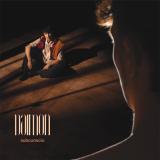
SUBCONSCIO - Daimon

SUBCONSCIO

Daimon

12inchSGH00018
Irma Records
13.02.2026

Subconscio left the smallest town in Gargano to begin a new life in uncharted Bologna.
Leaving mother earth, he still retains a strong sense of that distant world, expressed through the senses of his inner child. The Subconscio
project finds its expression in music, where it blends Neo Soul, Hip Hop, and Electronica into a sound deeply influenced by individual experiences. Soft vibrations and relaxed lyrics are the means through which he expresses his devotion to creative freedom, moving with the urgency of someone who has finally found his voice. The word dáimōn originates from Ancient Greek and means divine messenger, a guiding
spirit that hovers in a middle ground, called metaxu, the same place where the soul resides, and acts as a link between God and humanity.*
"Daimon" is Subconscio's debut album, produced by Luzee. It's the intimate vision of a person suspended in his imagination, questioning
the identity of his own memory and how the places that led him to his NOW are actually his future. The present doesn't exist in the narrative.
It exists only in the connection between childhood memories and the adult perspective.
Giulio is his son and also his parent: the Subconscious; the "daimon" is the musical journey that connects these two ways of observing the
same memory. Nostalgic turmoil meets the desire to recognize oneself and fuel the obsession with music, because only this—albeit the least
apparent art—is the only one that can be the voice and bearer of the dimensions of consciousness.
Featuring on the album: Madbuddy and Claver Gold

pre-order now13.02.2026

expected to be published on 13.02.2026


Last In: 2026 years ago
Christal Zone - Rai Rai / Kanashiyana (7")
  • A1: Rai Rai
  • B1: Kanashiyana

Since 2018, BBE Music’s J Jazz Series of compilations and album reissues has been at the forefront in focussing attention on the hitherto cloistered and rarified world of Japanese jazz. True to the ethos of the series, curators Tony Higgins and Mike Peden have once again dug up a truly rare gem in the form of a 45 from the mysterious Christal Zone, originally released in 1971 only as a promo and reissued here for the very first time. Several years before pianist Tohru Aizawa and brothers Tetsuya and Kyoichiro Morimura formed the now-celebrated Tohru Aizawa Quartet — whose 1975 private- press spiritual jazz LP Tachibana Vol 1 has become a cornerstone of the J Jazz canon and previously reissued by BBE — they were already venturing into bold, experimental territory. Their 1971 single Rai Rai, released as a promotional 7-inch on Liberty Records under the short-lived moniker Christal Zone was written and arranged by koto player and composer Hideakira Sakurai. An almost unclassifiable hybrid of jazz, Japanese folk, Algerian raï, and free improvisation. Sakurai’s visionary approach dominates the track, blending traditional Japanese instrumentation with a dense polyrhythmic groove that evokes not only avant-garde jazz but also the raw street energy of Algerian raï — celebratory, unfiltered, and joyfully unrestrained. The story behind the recording of Rai Rai is as spontaneous as the music itself. While casually rehearsing at Sakurai’s villa, the group was overheard by producer Kunihiko Murai, who was so stunned by what he heard that he arranged a studio session for them the very next day. The resulting 7-inch — Rai Rai / Kanashiyana, released under the one-off Christal Zone name — is now one of the rarest artefacts in Japanese jazz, with original copies fetching astronomical prices among collectors. BBE Music has faithfully reproduced the original artwork and packaging to celebrate this extraordinary and super rare piece of J Jazz history. A piece that bridges the ancient and the future, Japan and North Africa, in under four minutes of controlled chaos. A truly one-of-a-kind artefact, Rai Rai is a manifesto from a generation unafraid to rip up the rulebook and follow their own path.

pre-order now30.01.2026

expected to be published on 30.01.2026


Last In: 2026 years ago
BUILT TO SPILL - WHEN THE WIND FORGETS YOUR NAME LP

Limitierte Loser Edition, gepresst auf "Misty Kiwi Fruit Green" farbiges Vinyl. "When The Wind Forgets Your Name" ist das erste neue Built to Spill -Album seit der Veröffentlichung von "Untethered Moon" aus dem Jahr 2015 und das achte Studioalbum dr langlebigen Band um Mastermind Doug Martsch. Es wurde von Martsch produziert, von Martsch, Lê Almeida, Joao Casaes und Josh Lewis gemischt und von Mell Dettmer gemastert. Das Cover Artwork wurde von dem Comiczeichner Alex Graham (Dog Biscuits; Fantagraphics Books) gestaltet, der auch den fünfzigteiligen Comicstrip für das Klappcover des Albums illustriert hat (erhältlich mit den CD-, LP- und MC-Ausgaben des Albums). Seit 1992 wollte Doug Martsch, Gründer von Built to Spill, dass seine geliebte Band ein gemeinschaftliches Projekt ist, eine sich ständig weiterentwickelnde Gruppe von unglaublichen Musikern, die gemeinsam Musik machen und live spielen. Nach mehreren Alben und EPs auf Independent-Labels stand Martsch von 1995 bis 2016 bei Warner Brothers unter Vertrag. In dieser Zeit nahmen er und seine wechselnden Mitstreiter sechs unbestreitbar großartige Alben auf - "Perfect From Now On", "Keep It Like A Secret", "Ancient Melodies Of The Future", "You In Reverse", "There Is No Enemy", "Untethered Moon". "When The Wind Forgets Your Name" setzt nun die Erweiterung des Built to Spill -Universums auf neue und aufregende Weise fort. Im Jahr 2018 brachten Martschs Glück und seine Intuition ihn mit dem brasilianischen Lo-Fi-Punk-Künstler und Produzenten Le Almeida und seinem langjährigen Mitstreiter Joao Casaes zusammen, beide von der psychedelischen Jazz-Rock-Band ORUA. Als Martsch ihre Musik entdeckte, verliebte er sich sofort in sie und bat sie bei Built to Spill mitzumachen, als er eine neue Begleitband für Auftritte in Brasilien brauchte. Die Auftritte in Brasilien liefen so gut, dass Martsch, Almeida und Casaes beschlossen, 2019 weiter zusammen zu spielen und durch die USA und Europa zu touren. Bei Soundchecks erlernten sie neue Songs, die Martsch geschrieben hatte, und als die Tournee zu Ende war, nahmen sie die Bass- und Schlagzeugspuren in seinem Proberaum in Boise auf. Nachdem sie nach Hause geflogen waren, begann Martsch selbst mit dem Overdubbing von Gitarren und Gesang. Das gemeinschaftliche Abmischen fand während der Pandemie übers Internet statt, in dem die Tracks hin und her geschickt wurden. Herausgekommen ist "When The Wind Forgets Your Name", eine komplexe und schlüssige Mischung aus den unterschiedlichen musikalischen Ideen der Künstler. Neben den poetischen Texten und Themen von Built to Spill sorgen die Experimente und die Liebe zum Detail für ein Album voller einzigartiger, lebendiger und zeitloser Klänge.

pre-order now30.01.2026

expected to be published on 30.01.2026


Last In: 2026 years ago
BUILT TO SPILL - WHEN THE WIND FORGETS YOUR NAME LP
  • 1: Gonna Lose
  • 2: Fool's Gold
  • 3: Understood
  • 4: Elements
  • 5: Rock Steady
  • 6: Spiderweb
  • 7: Never Alright
  • 8: Alright
  • 9: Comes A Day

"When The Wind Forgets Your Name" ist das erste neue Built to Spill -Album seit der Veröffentlichung von "Untethered Moon" aus dem Jahr 2015 und das achte Studioalbum dr langlebigen Band um Mastermind Doug Martsch. Es wurde von Martsch produziert, von Martsch, Lê Almeida, Joao Casaes und Josh Lewis gemischt und von Mell Dettmer gemastert. Das Cover Artwork wurde von dem Comiczeichner Alex Graham (Dog Biscuits; Fantagraphics Books) gestaltet, der auch den fünfzigteiligen Comicstrip für das Klappcover des Albums illustriert hat (erhältlich mit den CD-, LP- und MC-Ausgaben des Albums). Seit 1992 wollte Doug Martsch, Gründer von Built to Spill, dass seine geliebte Band ein gemeinschaftliches Projekt ist, eine sich ständig weiterentwickelnde Gruppe von unglaublichen Musikern, die gemeinsam Musik machen und live spielen. Nach mehreren Alben und EPs auf Independent-Labels stand Martsch von 1995 bis 2016 bei Warner Brothers unter Vertrag. In dieser Zeit nahmen er und seine wechselnden Mitstreiter sechs unbestreitbar großartige Alben auf - "Perfect From Now On", "Keep It Like A Secret", "Ancient Melodies Of The Future", "You In Reverse", "There Is No Enemy", "Untethered Moon". "When The Wind Forgets Your Name" setzt nun die Erweiterung des Built to Spill -Universums auf neue und aufregende Weise fort. Im Jahr 2018 brachten Martschs Glück und seine Intuition ihn mit dem brasilianischen Lo-Fi-Punk-Künstler und Produzenten Le Almeida und seinem langjährigen Mitstreiter Joao Casaes zusammen, beide von der psychedelischen Jazz-Rock-Band ORUA. Als Martsch ihre Musik entdeckte, verliebte er sich sofort in sie und bat sie bei Built to Spill mitzumachen, als er eine neue Begleitband für Auftritte in Brasilien brauchte. Die Auftritte in Brasilien liefen so gut, dass Martsch, Almeida und Casaes beschlossen, 2019 weiter zusammen zu spielen und durch die USA und Europa zu touren. Bei Soundchecks erlernten sie neue Songs, die Martsch geschrieben hatte, und als die Tournee zu Ende war, nahmen sie die Bass- und Schlagzeugspuren in seinem Proberaum in Boise auf. Nachdem sie nach Hause geflogen waren, begann Martsch selbst mit dem Overdubbing von Gitarren und Gesang. Das gemeinschaftliche Abmischen fand während der Pandemie übers Internet statt, in dem die Tracks hin und her geschickt wurden. Herausgekommen ist "When The Wind Forgets Your Name", eine komplexe und schlüssige Mischung aus den unterschiedlichen musikalischen Ideen der Künstler. Neben den poetischen Texten und Themen von Built to Spill sorgen die Experimente und die Liebe zum Detail für ein Album voller einzigartiger, lebendiger und zeitloser Klänge.

pre-order now30.01.2026

expected to be published on 30.01.2026


Last In: 2026 years ago
Demetrio Stratos - Box-set, includes LP, Book and Poster (Limited)
  • A1: Filastrocca (Nursery Rhyme) 1:11
  • A2: Scuola Di Retorica (School Of Rethorics) 2:08
  • A3: Retarius In Lotta (Retarius' Fight) 2:13
  • A4: Scena, Fiaba, Pantomima (Scene, Tale, Pantomime) 5:24
  • A5: Quartilla 0:31
  • A6: Quartiere Dei Bordelli (Brothels' Quarter) 2:26
  • A7: Mercato, Nebbia (Market, Fog) 1:02
  • A8: Orgia (Orgy) 2:34
  • B1: Bali 7:02
  • B2: Epitaffio (Epitaph) 1:09
  • B3: La Nave (The Ship) 1:34
  • B4: Inizio Tempesta (Storm Begins) 1:04
  • B5: Tempesta Violenta (Violent Storm) 1:30
  • B6: Succhiata (Sucking) 0:12
  • B7: Naufragio (Shipwreck) 1:33
  • B8: Giardino Di Circe (Circe's Garden) 0:43
  • B9: Proseleno 0:51
  • B10: La Maga (The Witch) 1:19
  • B11: Mangiando Il Cadavere + L'uccello (Eating The Corpse + The Bird) 2:27

Within the world of theatrical archives, there are the known, the unknown, the forgotten, and the lost. Demetrio Stratos' stage compositions for Teatro dell'Elfo's groundbreaking 1979 production Satyricon - directed by future Oscar winner Gabriele Salvatores - represents one such lost artifact now wondrously returned to life. This radical sonic work, integrating extended vocal techniques, Balinese instruments, and pioneering whale song recordings, stands as the final masterpiece of Italy's most visionary vocal experimenter, lost for over four decades until Die Schachtel's extraordinary recovery. As Stratos himself explained: "The musical operation performed on Satyricon is particular: the composer-musician here does not compose, but borrows ready-made music, vivisects it, melts it, intervenes and recomposes it on magnetic tape. The structure of the signifier, from a morphological point of view, presents itself as a conceptual collage." The music is obtained by utilizing compositions and musical elements from David Behrman, Joan La Barbara, Balinese Ketyak, Turkish Nay flute, Yugoslavian bagpipe, Pan flute, and whale song, with synthesizer interventions by Paolo Tofani. It began as part of something known - a wild, immersive theatrical event that inaugurated Teatro dell'Elfo's historic venue in 1979, was almost entirely forgotten, becoming lost and then unknown. The original production marked a radical departure for the company: no longer popular street theatre, but a dark, immersive, sophisticated spectacle that transformed their space into a rough wooden arena with a sand floor. Demetrio Stratos, working with Paolo Tofani (fellow Area member), created an entire sonic universe that subverted every conventional function of stage music. Their composition wasn't accompaniment, but autonomous sonic dramaturgy that integrated extended vocal techniques, archaic electronic elements, Nay flutes, Balinese instruments, and pioneering whale song recordings. The result was a three-dimensional soundscape that enveloped audiences, creating an otherworldly acoustic dimension. Stratos' score even intervened in the actors' vocal delivery, with the recordings capturing both the performance and his coaching sessions with the cast. The production featured young actors destined for fame - Elio De Capitani, Ferdinando Bruni, Cristina Crippa, Corinna Agustoni, Ida Marinelli - guided by Gabriele Salvatores in this adaptation of Petronius' ancient novel. Shortly after the Satyricon performances, Stratos was hospitalized for the condition that would lead to his death at just 33 years old. This work represents his final composition - a haunting farewell from one of Italy's most innovative sound artists. Die Schachtel presents this recovered work in collaboration with Teatro dell'Elfo, pulled from the original magnetic tape and carefully restored. Satyricon '79 is one of the great artifacts of 1970s Italian avant-garde - a wild, grinding sonic expose which sucks the ear into its depths, made in the spirit of collaboration and creative risk-taking. The edition includes critical apparatus with essays, testimonies from protagonists, and period photographic documentation, documenting an unrepeatable moment where theatre, vocal research and sonic experimentation converged. This release marks a poignant moment in experimental music history - Stratos' final work, now rescued from the archives and restored to its rightful place in the canon of Italian avant-garde masterpieces. A true wonder of towering historical importance. As essential as it gets for any fan of experimental music, or the history of the Italian avant-garde. Fully restored and newly mastered from the original analog tapes. Absolutely essential.

pre-order now21.11.2025

expected to be published on 21.11.2025


Last In: 2026 years ago
Paris 1942 - Paris 1942 LP 2x12"
  • Paris 1942
  • Hex
  • Headhunter
  • Radar
  • Damon
  • Ancient Time Foretold
  • Animale
  • Move Out Of Wichita
  • Catherine
  • Life Is A Killer
  • Conversation With My Girlfriend
  • Voodoo Blues
  • Pontius Pilate
  • Lions Paw
  • Boy From The North Country
  • Fossil In My Pants
  • What I Think I Mean
  • Lisa's Whip
  • Southwind

Difficult as it may be to imagine, there was a time when Sun City Girls did not exist. Prior to the Bishop brothers teaming up with drummer/shaman Charlie Gocher to form SCG's classic trio lineup, there were various ad-hoc assemblages of local Phoenix-area freaks and weirdos – groups which existed only long enough to play a single gig, open mic or house party before disbanding without a trace. Hatched from this milieu was Paris 1942, a short-lived band formed by guitarist Jesse Srogoncik that included Alan Bishop, Richard Bishop and former Velvet Underground drummer Maureen Tucker.

Paris 1942 would play only four shows in as many months, but between April and August of 1982, the band would gather several times a week in Tucker's living room, where the group feverishly wrote and rehearsed with a kind of quotidian discipline. While P42 didn't release anything during their brief tenure, a 7" EP and LP (both self-titled) surreptitiously surfaced on the Majora label in the mid to late '90s. Until now, those two titles – as well as an appearance on Placebo's Amuck comp in late '82 – would be the only documented evidence that this improbable, serendipitous and magnificent band ever existed.

While those expecting P42's music to sound like a tantalizing combination of Sun City Girls' iconoclastic hoodoo havoc and the Velvets' primal drug-chug certainly won't be disappointed, Paris 1942 more often than not transcends even these nearly impossible expectations. Srogoncik's songs, in particular, are a revelation, displaying as much in common with the exuberant raunch of The Gun Club and the chapbook punk of Peter Laughner as they do any of the more obvious touchstones.

The group's foresight to document and capture this meeting of musical minds – a meeting as unlikely as it was short-lived – provides a missing link between the Velvets and the Voidoids, between the Dead Boys and the Dead C, between ESP-Disk' and DNA. Far more than a historical curiosity, Paris 1942 provides a fresh perspective on an embryonic and sadly vanishing US underground. It is music that blinks at the past and anticipates a thousand possible futures.

– James Toth (excerpt from the liner notes)

pre-order now31.10.2025

expected to be published on 31.10.2025


Last In: 2026 years ago
TANITA TIKARAM - LIAR (LOVE ISN'T A RIGHT)

37 years after the release of her multi-million selling debut album "Ancient Heart" Tanita Tikaram will release the sequel entitled "LIAR (Love Isn"t A Right)". The long-awaited new album reveals the emotional and societal differences between the woman Tanita was at just 18 when she made "Ancient Heart" to the woman she is today, taking in four decades of life experience. Her first album in almost a decade, "LIAR (Love Isn"t A Right)" is an album of haunting beauty and exquisite musicianship underplaying her unique voice that tells a masterful story of emotional, political and personal truths. When it was released in 1988, the multi-million selling "Ancient Heart" was the story of an uncertain 18-year-old brown gay woman living in middle England feeling like a stranger in her own home. Almost 40 years later that same woman, now feeling like a stranger in her own country as politics and society become more divisive. "LIAR (Love Is A Right)" is a full circle moment: a comment on community and its importance for all our futures and the perfect accompaniment to her classic breakthrough.

pre-order now10.10.2025

expected to be published on 10.10.2025


Last In: 2026 years ago
TANITA TIKARAM - LIAR (LOVE ISN'T A RIGHT)
  • Turn The Lights Down Low
  • Fais Moi La Solitude
  • This Perfect Friend
  • I See A Morning
  • Fear And Chills
  • Love Isn't A Right
  • Lover Don't Come Around
  • Sweet Feather & The Storm
  • Wild Is The Wind
  • Sailboats
also available

PINK/RED Color Vinyl


37 years after the release of her multi-million selling debut album "Ancient Heart" Tanita Tikaram will release the sequel entitled "LIAR (Love Isn"t A Right)". The long-awaited new album reveals the emotional and societal differences between the woman Tanita was at just 18 when she made "Ancient Heart" to the woman she is today, taking in four decades of life experience. Her first album in almost a decade, "LIAR (Love Isn"t A Right)" is an album of haunting beauty and exquisite musicianship underplaying her unique voice that tells a masterful story of emotional, political and personal truths. When it was released in 1988, the multi-million selling "Ancient Heart" was the story of an uncertain 18-year-old brown gay woman living in middle England feeling like a stranger in her own home. Almost 40 years later that same woman, now feeling like a stranger in her own country as politics and society become more divisive. "LIAR (Love Is A Right)" is a full circle moment: a comment on community and its importance for all our futures and the perfect accompaniment to her classic breakthrough.

pre-order now10.10.2025

expected to be published on 10.10.2025


Last In: 2026 years ago
Fabio Nobile - Sankofa Soul

Fabio Nobile is a drummer and multi-instrumentalist who has been active on the music scene for over 25 years. Today, his musical
exploration draws from the deep roots of Afro traditions and the expressive freedom of jazz—two musical cultures that are an integral
part of his identity.
Sankofa Soul is a musical project born from the encounter between jazz, African traditions, and the search for a profound connection
between past and present. The term “Sankofa” comes from the Akan language (spoken in Ghana) and means “to go back and fetch what
is good” —an invitation to look to the past to better understand the future.
In an era where music is evolving at a rapid pace, Sankofa Soul looks to a rich and multifaceted cultural heritage, while also embracing a
modern voice—a universal call to reconnect with our European origins through the lens of African legacy.
Each track on Sankofa Soul reflects Fabio Nobile’s experiences, studies, and roots, forming a dialogue between past and present, the
sacred and the profane, individuality and community.
Sankofa Soul is a heartfelt tribute to West Africa, with a special focus on Nigeria.
Zuma Rock leads us into the rich and ever-changing soundscape of West Africa—a space where tradition meets innovation, and rhythm
tells stories older than words. Here, the legacy of Fela Kuti’s Afrobeat pulses through every beat, anchoring the music in political fire and
deep ancestral roots. At the same time, the unmistakable horn section weaves a vibrant fusion of Afro-Funk and Jazz. In Zuma Rock, we
enter a dialogue between past and present—a musical return to the source.
And then appears Kalakuta Republic, a heartfelt homage to the self-declared commune that was home to the legendary Fela Kuti—a
reminder not to forget the rebellious spirit of the Kalakuta Republic. This track gives voice to the very essence of Afro-jazz, wrapped in a
hypnotic 12/8 rhythm that echoes ancient African traditions. Its immersive pulse blends seamlessly with jazz’s boundless expressive
freedom, creating a vibrant, compelling dialogue suspended between ancestral roots and modernity.
Landed in Lagos and I Read the Stars naturally embrace the distinctive sound of Manu Dibango, while Say Your Prayer Now reminds us
how the evolution of Jamaican reggae—and its cultural and musical foundations—remains deeply linked to Mother Africa.
This is Sankofa: the soul’s journey back to the past to move forward.

out of Stock

Order now and we will order the item for you at our supplier.


Last In: 5 months ago
Me Lost Me - This Material Moment

FOLLOW UP TO THE CRITICALLY ACCLAIMED 2023 ALBUM ‘RPB’ (UTR151):

- #4 MOJO FOLK ALBUMS OF THE YEAR+ FOLK ALBUM OF THE MONTH:
“ IT MELTS TRAD TECHNIQUES AND MINECRAFT BURBLE INTO ‘A MASSIVE, MULTI-PLAYER ONLINE DREAM’ . INCOMPREHENSIBLE/IRRESISTIBLE’

‘ME LOST ME’S RPG (UPSET THE RHYTHM) IS AN EXCITING, IMAGINATIVE ALBUM EXPLORING THE LINKS BETWEEN TRADITIONAL INFLUENCES AND ELECTRONICS IN FERTILE WAYS.’ THE GUARDIAN - FOLK ALBUMS OF THE MONTH.

'FROM NEWCASTLE, VIA UPSET THE RHYTHM, JAYNE DENT EXPLORES FOLK ART AND FUTURISM TO SPELLBINDING EFFECT' THE QUIETUS

FULL PAGE REVIEW IN WIRE MAGAZINE:"ME LOST ME'S NEW ALBUM RPG IS FILLED WITH STORIES OF ADVENTURE AND SELF-DISCOVERY IN VERDANT NATURAL LANDSCAPES, SUNG WITH FEELING AND CLARITY"

Me Lost Me - the project of Newcastle-based artist Jayne Dent - delights in experimenting with songwriting, creating a beguiling mix of soaring vocals and atmospheric electronics that playfully push the boundaries of genre.

On Me Lost Me’s fourth full-length, This Material Moment - arriving on Upset the Rhythm on 27th June - she has created an “emotionally raw” album, her most honest and vulnerable yet.

Concerned with physicality, interpretations, and, yes, materiality, This Material Moment is an album akin to rummaging through a box of long-forgotten trinkets. With each song, Me Lost Me extracts something from the box and asks us to consider it from every angle. "This is an album which uses words as a material, a playful tool for experimentation, full of metaphor, abstraction and analogies.” Jayne says, “it has softness and anger, humour, hope and despair, intensity of feeling in all directions expressed as textures, objects, places."

With the release of This Material Moment Me Lost Me puts into practice the automatic writing techniques she developed during a workshop with Julia Holter, and in the process has spun her music in different directions that draws on poetry, psalms and using mesostic poems and phonetic translations to generate words. “Despite the chance-based writing strategies throughout, it feels like the most emotionally raw album I've ever made,” she says, likening the process to a Rorschah test which revealed things to her she wasn’t expecting to express. “I wanted to hide in stories, but I saw things plainly when I tried to write.” Having finished the writing process, Jayne realised that she had an unexpectedly personal album on her hands, into which her feelings of burnout and overwhelm had crept unconsciously. “Several of the songs for me express a kind of inner conflict, where you’re trying to keep hope and desire and beauty and art near to your heart, to live a meaningful life, but finding that increasingly hard to hold onto in a world that’s so fucked up.”

Whilst Jayne Dent’s music as Me Lost Me has previously presented time stretching back and forwards in opposition (noticeably on 2023’s album RPG), on This Material Moment she does away with linearity altogether, evoking rather than narrating, and presenting feelings, happenings and moods with no clear beginning or end point - “like experiencing a vista, trying to capture a moment that is unfolding all at once”. Instead, each track on This Material Moment exists entirely in media res, adjacent to past and future, and instead sprawling across the endless now.

This Material Moment was written and arranged solo, but played with a core band of John Pope on electric/double bass, Faye MacCalman on clarinet, and now with the addition of Ewan Mackenzie (Dextro/Pigs x7) on drums - bringing in live drums and electric bass for the first time. The album was recorded by Sam Grant at Blank Studios in Newcastle, who also worked on RPG.

out of Stock

Order now and we will order the item for you at our supplier.


Last In: 8 months ago
MARY SUE AND THE CLEMENTI SOUND APPRECIATION CLUB - PORCELAIN SHIELD, PAPER SWORD
  • Intro
  • Oracle Bone Script
  • Mosquito
  • Thief And The Bell
  • Horse Accupuncture (Ft. Agung Mango & Nakama.)
  • The Well
  • Haste
  • Interlude
  • Dragon Tail
  • Minesweeper
  • Tiger And The Ceiling
  • Snake Head
  • Crabs
  • Iron Butterflies
  • Grace
  • Libations/Roots

This is what you get when an emcee/producer is fed on a diet of abstract hip-hop, Southeast Asian samples, and Taoist folklore. Together with the Clementi Sound Appreciation Club (a five-piece band of up-and-coming musicians schooled in jazz from the local scene in Singapore), Mary Sue melts samples with live instrumentation on 'Porcelain Shield, Paper Sword.' At the core of the album is the tale of a time-traveling oracle, struggling to find meaning in the modern world-where ancient wisdom feels fragile, and truth is ever-shifting. A reinterpretation of idioms shapes its journey, where spiritual pursuits feel performative, and where the weight of the past clashes with an uncertain future. The music mirrors this tension: phrases of Gamelan music dissolve into smoky brass, spectral melodies unravel over off-kilter drums, and time bends through layered textures. 'Porcelain Shield, Paper Sword' is both a reckoning and a dream, where echoes of the past find new life in the chaos of now. A porcelain shield shatters on impact; a paper sword folds before it cuts. It's about the constant, fragile push-and-pull between aesthetics and money, tradition and progress, meaning and spectacle. "Like the oracle, we're all stuck in a world where spiritual longing gets tangled up with consumerism, where authenticity is blurred by performance, and where finding real meaning feels shakier than ever," rapper and producer Mary Sue explains. "'Porcelain Shield, Paper Sword' lives in that field of tension. The album drifts between beauty and collapse, truth and illusion, and past and present, without ever landing on solid ground."

pre-order now13.06.2025

expected to be published on 13.06.2025


Last In: 2026 years ago
Maara - Big Whoops

Maara

Big Whoops

12inchAR-001
Ancient Records
14.04.2025

GIVE IN TO SIN. From within the long-locked tombs of lesbian lore smoke rises
and draws its whispering curtain across the wide open sky…and where there’s
smoke, there’s fire. Secrets concealed by thick drunken clouds resurfaces naked
truths in the last gasps of smouldering ashes.

Oh you thought it would stay a secret? We’ve let sleeping lezzies lie long enough.
It’s time to face the music. Welcome to BIG WHOOPS… Maara’s inaugural
offering on her new label, Ancient Records. With this driving debut, Maara
excavates the scrolls, archives, and dossiers upon which our past was built and our
future depends.

A wish for a world of sweet sapphic symbiosis—a fantasy, perhaps, or a waking
dream? Nothing is promised except for right now. The past manifests in the
present, both a blessing and a curse. Ancient Records fulfills your dark club
fantasies as Maara unearths simmering secrets and hidden truths in a rapturous
ushering in of a new era. Never forget where you came from, and just wait until
you see where we’re going…

“Peace and Harmony in the Lesbian Community” — Ancient Records

out of Stock

Order now and we will order the item for you at our supplier.


Last In: 12 days ago
HEKLA - TURNAR LP

Hekla

TURNAR LP

12inchPHNTM42
Phantom Limb
28.02.2025
  • A1: Inni
  • A2: Kyrrð
  • A3: Ókyrrð
  • A4: Var
  • B1: Í Ösku Og Eldi
  • B2: Ólga
  • B3: Gráminn
  • B4: Flækjur

“Eerie, wailing sounds over distorted feedback drones… Vibrato-heavy harmonies chirrup and throb in agonisingly slow motion.”
The Guardian, Album of the Month

“Cinematic...carefully orchestrated...delicately explores unfamiliar territory with uncanny finesse.”
The Wire

Acclaimed Icelandic theremin musician Hekla returns with Turnar, her third album of devastatingly heavy, spectral soundscape-songwriting, entering a sublime paranormal plane of haunting dread.

Now augmenting her virtuosic solo theremin work with cello, voice, and the sacred church organ of Icelandic master Kristján Hrannar, the evolution of Hekla’s unique magic summons new worlds with Turnar. The album was recorded partly in (and named after) a medieval castle tower in rural France, its ruinous black broken in spare beams of angelic stained-glass light. But, writes Hekla, “the sound of theremin kind of opens up a portal into a new realm that both looks into a dark old world and to the future.” The record is an alternately beautiful and crushing space voyage into a glacial underworld cascading with phosphorescence and cave drip, conjuring ancient choral ritual just as readily as redolent sci-fi gloam.

Opener “Inni” begins with swooning and shimmering lines of theremin that shiver with electrified energy before subfrequency bass elevates them into a glowing plasma, hovering above a crystallised surf. Key moment “Gráminn” wails with ghostly harmonics while distorted drones crash together in a stormy and blackened netherworld sea. It traces a neat progression from Hekla’s last album - the acclaimed Xiuxiuejar - while also welcoming an expanded timbral palette and flourishing compositional confidence. At the end of side A, “Var” delicately places sonic artefacts about a desolate negative space, creating a dense inverse gravity. As with the rest of the record, a claustrophobic gauze hangs over music that could otherwise be called subverted songwriting, aligning Hekla’s sonics with avant-garde, musique concréte and sound-art.

pre-order now28.02.2025

expected to be published on 28.02.2025


Last In: 2026 years ago
Ethnic Heritage Ensemble - Open Me, A Higher Consciousness of Sound and Spirit LP 2x12"

Celebrating 50 years of Kahil El'Zabar's Ethnic Heritage Ensemble's legacy and unwavering contribution to Great Black Music. 'Open Me, A Higher Consciousness of Sound and Spirit' is a new Ethnic Heritage Ensemble sound, constantly shifting gears and tempos in a jazz-blues continuum, in perpetual spontaneity, combining their meaningful music history with an innovative approach to arrangements, performance and improvisation. This is Ancient / Future Music for the Now and Beyond.

Open Me is a joyous honoring of portent new directions of the Ethnic Heritage Ensemble; it's a visionary journey into deep roots and future routes, channeling traditions old and new. It mixes El'Zabar's original compositions with timeless classics by Miles Davis, McCoy Tyner, and Eugene McDaniels. Thus, the Ethnic Heritage Ensemble continues affirming their indelible, half-century presence within the continuum of Great Black Music.

For Open Me, El'Zabar has chosen to push the sound of the EHE in a new direction by adding string instruments --the addition of strings opens new textural resonances and timbral dimensions in the Ensemble's sound, linking the work to the tradition of improvising violin and cello from Ray Nance to Billy Bang, Leroy Jenkins, and Abdul Wadud.

Open Me contains a mixture of originals, including some El'Zabar evergreens such as "Barundi," "Hang Tuff," "Ornette," and "Great Black Music" (often attributed to the Art Ensemble of Chicago but is, in fact, an El'Zabar composition).

As a milestone anniversary celebration and a statement of future intent, Open Me effortlessly carries El'Zabar's healing vision of Higher Consciousness of Sound and Spirit.

out of Stock

Order now and we will order the item for you at our supplier.


Last In: 13 months ago
Christopher Willits - OPENING

Across seven tracks of widescreen ambient music, 45 minutes of visuals shot over four years in multiple countries, seven photographs, and a multi-sensory, multiple channel live performance, Willits has created something which might better be thought of as an experience than a simple album. OPENING features Willits latest music since Ancient Future, his 2012 collaboration with Japanese pianist Ryuichi Sakamoto, and his recent production and mastering work on Tychos Awake. The vibrant, enveloping sounds we have come to expect from him are on full display. The vinyl LP includes a download code.

pre-order now14.11.2024

expected to be published on 14.11.2024


Last In: 2026 years ago
Xylitol - Anemones LP

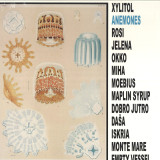
Xylitol is the alias of Catherine Backhouse, producer and DJ under the name DJ Bunnyhausen. She was a resident DJ at Kosmische, the now dormant Krautrock club and is a fan of jungle and hardcore. She currently co-hosts the radio show Slav To The Rhythm, which focuses on vintage central and eastern European pop and electronica and she's also co-writing a book on Yugoslavian pop culture. 'Anemones' is a total project from the cover to the music. Backhouse is fascinated by early botanical illustrations of anemones and other aquatic fauna, and how the act of taxonomy reveals as much about human psychology, desire and sublimation as it does about the organic specimen as a thing in itself. Each track is a microcosm of this 'other life', an allegory for the extraordinary potential latent within bodies that the dancefloor has the power to activate. Using early jungle and garage as starting points to connect dots and open up contrasts between dance music and vintage electronics, Backhouse finds a sweet spot which, in her words "feels like something that's simultaneously still and ancient yet propulsive and ecstatic." Not afraid of letting the the hiss and flutter of the music show, 'Anemones' holds attention with ancient bubbling synths and gracefully drifting arpeggiations, occasionally brought to heel by charming melodies, all accompanied by breakbeats that explode like fireworks. 'Anemones' has a lively and unpolished aesthetic that's a kindred spirit to Nondi_'s 2023 album of smeary, water-damaged footwork, 'Flood City Trax'. 'Moebius' pits the spaced out neon chords of the track's namesake against absolutely tearing breaks, allowing time for this almost overwhelming combination to become near enough transcendental, while the bleeping melody and sad slavic chorus motif in 'Okko' feels like an artifact from an alternative future. The Drexciya meets 2-step garage of 'Dobro Jutro' creates a welcome respite at the album's midpoint before the flow builds up again to 'Daša' with its glassy sounds from a lost radiophonic workshop miniature meeting bruising kicks and snares. Meanwhile 'Iskria' has purring synth chords and 8-bit melodies evoking the cosmonaut age. The subliminal influence of the Yugo era is felt in DIY synthesis and Mitteleuropean melody and seen in song titles such as 'Jelena', 'Miha', 'Daša' (named after novelist Daša Drndič) and 'Iskria' (taken from the fictitious Balkan region in Ottessa Moshfegh's bleak fable 'Lapvona'). 'Anemones' very effectively folds experimental genres from different times and places into a very enjoyable new sound.

out of Stock

Order now and we will order the item for you at our supplier.


Last In: 17 months ago
Rufo - Crónicas Del Milenio Pasado

For the next edition under the number twenty-two we have Peruvian mastermind Rufo, coming up to steer the spaceship into the right direction as he always does. Currently based in Barcelona being the resident of the legendary project Mad Radio that is expanding rapidly with the clear vision of electronic underground music. Therefore, our artist has learnt and studied the ancient methods of best of the best. The extend play is called chronicles of past millennium and explores the sound of the past with a modern twist on it. It’s sounds splendidly fresh now and with full confidence could be said it will sound fresh in all the upcoming future millenniums. The record features a vast range of sounds which shows the maestro is very versatile at the executing stunning audio puzzle pieces that are ready to blast the dancefloors of big clubs, illegal raves or the afterparties all over the globe.

out of Stock

Order now and we will order the item for you at our supplier.


Last In: 68 days ago
Paradise Cinema - Returning, Dream LP

returning, dream’ is the second album from Paradise Cinema – the‘Fourth World’ inspired project led by multi-instrumentalist Jack Wyllie (Portico Quartet/Szun Waves). While Wyllie’s other projects move between tightknit electronica, widescreen minimalism and improvised ambient sounds, ‘returning, dream’ contains nods to Jon Hassell, Terry Riley, Don Cherry and Midori Takada as well as more contemporary electronic, ambient and non-western music and even draws inspiration from physics and science fiction.

The first, eponymous, Paradise Cinema record, released in 2020, was recorded in Dakar (Wyllie lived in Senegal for a while in the late 2010s) and featured the dense rhythms of Mbalax music combining with Wyllie’s textural saxophone and synth playing, but here he takes a step into the unknown:

The music is no longer built primarily around the rumbling
propulsiveness of Mbalax, but takes its inspiration from the Many-Worlds Interpretation of quantum mechanics, which suggests that there are many different worlds that branch off from our own. Wyllie explains: “It is an imagining of what music could be like in a different time and space, ancient and futuristic from everywhere and nowhere at once. I was listening to a lot of physics podcasts when I created this record. I loved the many-worlds interpretation of quantum mechanics; about the multiple paths we are taking each time a quantum decision is taken. The different worlds then splitting off like branches on a tree. I could imagine different histories and worlds and multiple versions of myself, others and even other societies existing. In this album I’ve dug into these ideas andattempted to make music that would come from those different spaces, trying to poke my finger through to the other selves and stories. Effectively a form of composed science fiction, the music is an idea of what might be occurring or have occurred on a branch of the tree in a different world. But I like to think the tracks might actually have been composed somewhere or sometime.”

Created in London by Jack Wyllie with additional recordings from Dakar and Sydney, ‘returning, dream’ blends sounds that do not typically live together. It features Khadim Mbaye (sabar drums) and Tons Sambe (tama drums) who provide the dense Sengalese rhythms, plus Szun Waves colleague Laurence Pike, also on drums.

pre-order now13.09.2024

expected to be published on 13.09.2024


Last In: 2026 years ago
Paradise Cinema - Returning, Dream LP

returning, dream’ is the second album from Paradise Cinema – the‘Fourth World’ inspired project led by multi-instrumentalist Jack Wyllie (Portico Quartet/Szun Waves). While Wyllie’s other projects move between tightknit electronica, widescreen minimalism and improvised ambient sounds, ‘returning, dream’ contains nods to Jon Hassell, Terry Riley, Don Cherry and Midori Takada as well as more contemporary electronic, ambient and non-western music and even draws inspiration from physics and science fiction.

The first, eponymous, Paradise Cinema record, released in 2020, was recorded in Dakar (Wyllie lived in Senegal for a while in the late 2010s) and featured the dense rhythms of Mbalax music combining with Wyllie’s textural saxophone and synth playing, but here he takes a step into the unknown:

The music is no longer built primarily around the rumbling
propulsiveness of Mbalax, but takes its inspiration from the Many-Worlds Interpretation of quantum mechanics, which suggests that there are many different worlds that branch off from our own. Wyllie explains: “It is an imagining of what music could be like in a different time and space, ancient and futuristic from everywhere and nowhere at once. I was listening to a lot of physics podcasts when I created this record. I loved the many-worlds interpretation of quantum mechanics; about the multiple paths we are taking each time a quantum decision is taken. The different worlds then splitting off like branches on a tree. I could imagine different histories and worlds and multiple versions of myself, others and even other societies existing. In this album I’ve dug into these ideas andattempted to make music that would come from those different spaces, trying to poke my finger through to the other selves and stories. Effectively a form of composed science fiction, the music is an idea of what might be occurring or have occurred on a branch of the tree in a different world. But I like to think the tracks might actually have been composed somewhere or sometime.”

Created in London by Jack Wyllie with additional recordings from Dakar and Sydney, ‘returning, dream’ blends sounds that do not typically live together. It features Khadim Mbaye (sabar drums) and Tons Sambe (tama drums) who provide the dense Sengalese rhythms, plus Szun Waves colleague Laurence Pike, also on drums.

out of Stock

Order now and we will order the item for you at our supplier.


Last In: 18 months ago
Gregory T.S. Walker - Minstrels & Minimoogs LP

Gregory T.S. Walker’s Minstrels & Minimoogs was self-published by a young, nomadic composer and virtuoso in 1988 to accompany an immersive multimedia performance at the University of Colorado Boulder’s Fiske Planetarium. Created with this outer, and other, world setting in mind, the four tracks find Walker stretching toward an ancient-to-future vision where Egyptian myths and Hieronymus Bosch-ian tableaus are rendered in a screaming three dimensional circuitry of electronic drums, synth guitars, and, of course, Minimoog. Given the musical terrains and outmoded topics traversed, and that this entirely DIY effort was originally released as a micro one-sided 12” edition, Minstrels & Minimoogs is as perplexing and euphoric a document lost-to-time as it is now found.

Born in 1961 into an intensely musical family spanning four generations, Gregory’s mother Helen Walker-Hill was a noted musicologist specializing in the rediscovery and work of historical Black female composers, while his father, George Walker, was the first African American composer to win the Pulitzer Prize for music. Both parents studied with the famed (and famously strict) Nadia Boulanger in Paris in the 1950s, and held to lofty aesthetic standards in their home life. Walker began studying the violin as a child, but when a burgeoning interest in the electric guitar and rock music as a teen manifested, it was largely verboten in the household. The rule was that the music played in the home was to be acoustic and classical. Although the elder Walkers eventually relented and allowed Gregory’s guitar to be plugged in for a brief interval on the weekends, the remaining days he settled for strumming it sans amplification.

Gregory, conditioned and eager for a life in music but looking to get out from under the influence and yoke of his famous composer father, ultimately chose to study computer music at the University of California at San Diego, where he earned a Master of Arts. This was followed by another MA in electronic music composition at that hotbed of West Coast experimental music, Mills College. Intermedia and multimedia in the arts was the rage in the 1980s, and Mills was one of the centers for it; audacious spectacle meeting visionary performance, such as one of the realizations for Anthony Braxton’s music for multiple orchestras a young Gregory performed in with his violin.

After a series of solo synthesizer concerts around California, Gregory followed a girlfriend on a mid-country move to Boulder, Colorado. After picking up yet another composition degree at University of Colorado Boulder, his life as a composer really started, writing a piece for extended technique for guitar, a passacaglia for vocoder and orchestra, as well as Minstrels & Minimoogs.

Envisioned as a multimedia performance such as the kind he’d experienced at Mills (which was all but unknown in Boulder at the time), Gregory roped in a number of college going or aged friends of varying skill levels and musical sympathies to accompany him with distorted sax or oblique spoken interludes. Confronted with a lack of finances, but driven to get his ideas captured in a complete musical package, the album was recorded in his brother’s apartment. If not every player assembled was on Gregory’s virtuosic level, so be it; it was more about capturing the spirit of his intentions and embracing the serendipity of mistakes.

An inspired attempt at world building, Minstrels & Minimoogs draws on the deep well of musical knowledge Gregory gathered from his parents and teachers, but all the while subverting that historical basis by incorporating mutant strains of prog and pop music. The work accumulated is not unlike the playful 1980s work of Gregorio Paniagua, where medieval estampies and rondeaus are wrenched into an anachronistic present where Hildegard Von Bingen and Kate Bush are contemporaries. Ars nova, new art, a 20th century minimalist jester and troubadour.

A one sided LP was the cheapest option Gregory found to have Minstrels & Minimoogs memorialized on vinyl, so somewhere between 50 to 100 copies were pressed. There was no distribution, outside of copies that were handed out to friends or sold at the performances at the planetarium. Gregory T.S. Walker’s cosmic-futuristic forays into oblique pop and baroque subversion could forever reside perfectly in both the domed simulacrum of our universe for which it was composed, in the formats it is being reintoduced now, and our own biblical firmament. For in the words of Gregory, straight from the original liner notes: “God Is A Minimoog”

Gregory T.S. Walker’s Minstrels & Minimoogs arrives again August 23, 2024 on vinyl and digitally as part of uncommon¢ (“uncommon sense”), an open-ended, serialized endeavor from Freedom to Spend that provides new meaning for rarefied recordings from music's outermost fringe.

pre-order now23.08.2024

expected to be published on 23.08.2024


Last In: 2026 years ago
Various - Whispers Of An Ancient World I 2022

Originally a digital-only project back in 2022, Whispers Of An Ancient World now makes the magical leap to vinyl as Mystic & Quantum press it up in hugely limited quantities for those lucky enough to cop it quickly. This is a green version with artwork by Kilian Eng. Musically it is a delightful escape. Ambient soundworlds and suggestive ancient rituals sit next to ambles through humid jungles, soothing acoustic string lullabies and more turbulent dub sounds that speak of a dystopian future looming on the horizon with artists like Diagonal, Mason Bee, State Azure and more all adding to its charms.

pre-order now29.07.2024

expected to be published on 29.07.2024


Last In: 2026 years ago
Better Corners - Continuous Miracles, Vol. 2

Dream team trio Better Corners – Valentina Magaletti, Sarah Register and Matthew Simms – have completed a staggering new album Continuous Miracles: Vol. 2 for state51 Conspiracy, and where their debut LP joyfully opened the door to a brand new room, this one strides purposefully inside.

Renowned drummer/percussionist Magaletti (Holy Tongue, Vanishing Twin, Moin), avant rock musician and in demand mastering engineer Register (Kim Gordon, Talk Normal) and multi-instrumentalist and modular obsessed Simms (Wire, MEMORIALS) inject an all-too-rare sense of childlike wonder and joy into their own inimitable collage of experimental rock, wonky dream pop, analog ambient, tape experimentation, avant percussion, modular electronics and noise music.

It is this sense of fun that led to one of the band’s “uncovers”: ‘Modulating De Niro’ began with a solo piano version of Bananarama’s ‘Robert De Niro’s Waiting’ which was then sent on a very long journey through modular synth patches and FX chains until it became the unrecognisable to the original and the majestic beast it is now. The album centres round the colossal 16- minute-long ‘Career Test’, a dynamic trip through glitch-enhanced noise, machine dub and the ambience of amplified rock music, to a transcendent, mind-expanding modern raga.

Like an industrial Gamelan played by a future civilisation who have never heard it, only read about it in ancient books, the song is formed from bowed treated guitars, hypnotic hand drums, water bowl and bells. It also has a suitably macabre genesis, as Register reveals: “I was visiting my aunt's house and slept in her bedroom. In the headboard of her bed are places for curiosities and heirlooms. In these spaces she had box after box of the ashes of pets of hers that I had known over the years…”

out of Stock

Order now and we will order the item for you at our supplier.


Last In: 22 months ago
Me Lost Me - RPG LP - Blue Vinyl

ME LOST ME led by Newcastle-based artist Jayne Dent announces a new album RPG via Upset The Rhythm on 7th July, and is touring across the UK including support dates with Pigs x7. RPG (recorded in Blank Studios with Sam Grant of Pigs x7) is ME LOST ME’s fourth outing as a collective, having transitioned from an ambitious solo project in 2017, Jayne now regularly collaborating with acclaimed North-East jazz musicians Faye MacCalman and John Pope.
ME LOST ME delights in experimenting with songwriting and storytelling, creating a beguiling mix of soaring vocals and atmospheric electronics that playfully weave together disparate genres, drawing influence from folk, art pop, noise, ambient and improvised music. Hauntological in part, RPG is concerned with tales and with time - are we running out of it? Does insomnia cause a time loop? Do the pressures of masculinity prevent progress? Jayne Dent asks these questions and more on RPG, her homage to worldbuilding and the story as an artform, calling back to those oral traditions around a campfire, as well as modern day video games - bringing folk music into the present day as she does so.
ME LOST ME presents sound reaching in opposite directions, straddling time towards the archaic and timeless traditions of folktales, and towards the possible and potential futures of pastoral Britain and the world at large. Part speculation, part reminiscence, what results on the new album RPG is music that sounds ultimately displaced and yet omnipresent, adjacent to a hapless Vonnegut hero whose life is scattered throughout time and history, but full of wonder and curiosity rather than fear.
On track “The Oldest Trees Hold The Earth”, we see time stretched out between the branches of impossibly old beings in the woods. This track was co-written in Aarhus, Denmark with fellow Newcastle folk musician (with Danish heritage) Ditte Elly. The pair wordlessly passed a sheet of paper between each other to write the lyrics, inspired by Højbjerg and Mosegård, the woods they were sitting in. “How long should I wait/Before the moss grows?/On my skin, on my outstretched arms,” the lyrics are sung in a round, the close harmonies delicate and detailed.

A central thesis of this album is the joy of creation, something which is paid homage to in the album’s final track, “Science And Art” (Not because we need it to last/just because we needed to make it - so we invented the words/this language). It is also reflected in the definition that Jayne gives for “folk” itself. She comments, “To me, folk is quite an expansive idea. I think of it as creative work that's often made ad-hoc, with things that are at hand and more often than not it's born of a DIY ethos. It is songs and stories of the people, as in the traditional sense, but also creative coding, game design etc. Whatever outlet someone has for their creative expression could be described as folk. It's the things we make because humans need to make things, and the stories we tell about ourselves and the world around us.”
Crucially, on latest album RPG, Dent expands her songwriting and looks towards the unreal locations of worldbuilding in video games for inspiration. She comments, “I think the main similarity is the importance of a song's setting/environment to inform its narrative and textures, I'm often most inspired when out walking in the natural landscape, in cities and travelling to places I've never been before - the environment I'm in really impacts the work I make. While writing this album, however, I found myself inspired by imaginary landscapes, those in video games, paintings, etc. I was writing stories into these unreal locations instead. Even the songs inspired by real places, like The Oldest Trees Hold the Earth, have a very surreal quality to them in the songs, like they're being warped and turned into something not of this world. I think that's the main difference for me in terms of the thematic content and inspiration behind this album - I've been getting more and more interested in balancing surreal and fantastical environmental elements with ordinary and everyday settings.”
RPG upends the concept of the eternal return - we may be in the midst of inevitable repetition, but we tell stories whilst awaiting the passage of time.
"Being familiar with, and a fan of Jayne's earlier work, it was great to get the opportunity to work with her on the production of her new record. I had in mind a sense of what the record might be, but what came of the sessions, led by the vision Jayne had for the record, totally exceeded my expectations. As far as albums go, it has a breadth of writing and a sonic depth that made it a truly brilliant record. Having Jayne join us on a leg of the Pigs x7 tour in April is going to be ace. The creative nature, the sincerity and bold strokes of ME LOST ME put it in that space outside of any genre pigeonholes, and between our two sets I imagine the audience is going to have a proper sonic bath..."
Sam Grant, Pigs Pigs Pigs Pigs Pigs Pigs Pigs, 2023
“The music of Me Lost Me is beguiling, idiosyncratic and cinematic - or should that be video-game-omatic? This suite of songscapes often hits the sweet spot between ancient and modern with its masterful blend of stark folk, neon electronic burbling and unusual arrangements. Jayne's singing is refreshingly straightforward and nuanced - it's exquisite! - and perfectly punctures the nebulae of synths and brass which billow around the old wooden frames of the songs. Whilst listening I had images in my mind of what Northumberland might look like through the eyes of Simon Stalenhag - foggy moors, a robot looking across the sea to Lindisfarne, twinkling lights on metal towers.... that sort of thing. It's a really great album.”
Richard Dawson, 2023

out of Stock

Order now and we will order the item for you at our supplier.


Last In: 10 months ago
Bonnacons Of Doom - Signs LP

Traversing the everyday in 2023, the need for ritual catharsis only grows stronger. The need to lose oneself in a force bigger than ourselves, and to venture into inner space the better to sculpt armour for the battles outside. Luckily this is the job of Bonnacons of Doom, aural soothsayers and progenitors of Trans Pennine hypnotic music. ‘Signs’ - their second album for Rocket Recordings - marks both a portent of things to come, and a roadmap of the psychic pathways to survival. This masked troupe, subsumed to mystery and amassed from across the North of England, have stepped up their mission accordingly. Building on the intimidating intensity of their self-titled 2018 debut, this series of fiercely charged mantras and premonitory transmissions is possessed of a new level of communal intensity. The band’s choice of weapons- the monomaniacal intensity of the riff, the liberating binary spirit of electronics and the incantatory vocals of ceremonial leader Kate Smith - here coalesce into a metaphysical force which stands defiant of easy categorisation. Within these otherworldly manifestations lurks solace in a place where the transcendent power of heavy amplification, cosmically aligned sonic explorations and strange forces darker and more unknowable can coalesce to cathartic and redeeming effect. ‘Signs’ marks out a supernatural landscape where ancient and modern, earthly and alien congregate in the eternal now, whilst Bonnacons Of Doom transcend era to light a path for the future

pre-order now08.11.2023

expected to be published on 08.11.2023


Last In: 2026 years ago
ANATOLIAN WEAPONS - EARTH LP

The Athenian producer Aggelos Baltas alias Anatolian Weapons captures on the album Earth the feeling of an optimistic future that grows on the soil of the sweet bitterness of the present and the past.

Under his pseudonym Anatolian Weapons, Baltas combines polyrhythmic percussion and wailing tones of Greek folk music with a thrilling and open Krautrock attitude. The album Earth takes us on a mystical journey through the northern Greek highlands, backed by Baltas’ unique machine-assisted folk, infused with psychedelic drones and exuding an aura that is neither then nor now, neither there nor here. Instead, it exists in a small pocket of its own cosmos. A crossroads of dimensions. A mystical offering to nature and the divinities.

Baltas has explored and reframed various Greek scenes of yesteryear in the past, such as with his Fantastikoi Hxoi project, which created Krautrock mutations from 60s and 70s pop, but Earth is an even more far-reaching expedition. It is a folk reckoning with ancient Greek musical traditions with a modern upgrade. The album reconstructs a sonic narrative of ancient traditions, enhanced with psychedelic and space-rock elements. In the reverb cycle, one hears a certain agrarian reinterpretation of the world, filled with harvest rituals and celestial incantations.

It is with great pleasure to welcome Anatolian Weapons to the label. During a longer stay in Athens, a friendship developed that led to a variety of musical projects and ideas. One of them is the release of the album Earth.

out of Stock

Order now and we will order the item for you at our supplier.


Last In: 18 months ago
A.R. Kane - A.R. Kive LP 4x12"

A.r. Kane

A.R. Kive LP 4x12"

4x12inchRGIRL133
ROCKET GIRL
08.09.2023

A.R. Kive collates the three most astonishing works from that most miraculous of duos - A.R. Kane - comprising the ‘Up Home’ EP from 1988 that signified the band’s dawning realisation of their own powers and possibilities, their legendary debut LP ‘sixty nine’ (1988) and its kaleidoscopic, prophetic double-LP follow up ‘i’ (1989).

In founder-member Rudy Tambala’s new remastering, the music on these pivotal transmissions from the birth of dream pop, have been reinvigorated and re-infused with a new power, a new depth and intimacy, a new height and immensity. Vivid, timeless and yet always timely whenever they’re recalled, these records still force any listener to realise that despite the habits of retrospective myth-making and the
safe neutering effects of ‘genre’, thirty years have in no way dimmed how resistant and dissident to critical habits of categorisation A.R. Kane always were. Never quite ‘avant-pop’ or ‘shoegaze’ or ‘post-rock’ or any of those sobriquets designed to file and categorise, A.R. Kive is a reminder that those genres had to be coined, had to be invented precisely to contain the astonishing sound of A.R. Kane, because
previous formulations couldn’t come close to their sui generis sound and suggestiveness. This is music that pointed towards futures which a whole generation of artists and sonic explorers would map out. Now beautifully repackaged, remastered and fleshed out with extensive sleeve notes and accompanying materials, ‘A.R. Kive’ reveals that 35 years on it’s still a struggle to defuse the revolutionary and inspirational possibility of A.R. Kane’s music.

A.R. Kane were formed in 1986 by Rudy Tambala and Alex Ayuli, two second-generation immigrants who grew up together in Stratford, East London. From the off the pair were outsiders in the culturally mixed (cockney/Irish/West Indian/Asian) milieu of the East End, with Alex and Rudy’s folks first generation immigrants from Nigeria and Malawi, respectively. The two of them quickly developed and fostered an innate and near-telepathic mutual understanding forged in musical, literary and artistic exploration. Like a lot of second-generation immigrants, they were ferocious autodidacts in all kinds of areas, especially around music and literature. Diving deep into the music of afro-futurist luminaries such as Sun Ra, Miles Davis, Lee Perry and
Hendrix, as well as devouring the explorations of lysergic noise and feedback from contemporaries like Sonic Youth and Butthole Surfers, they also thoroughly immersed themselves in the alternate literary realities of sci-fi and ancient history (the fascination with the arcane that gave the band their name), all to feed their voracious cultural thirsts and intellectual curiosity.

It was seeing the Cocteau Twins performing on Channel 4 show the Tube that spurred A.R. Kane into being - “They had no drummer. They used tapes and technology and Liz Fraser looked completely otherworldly with those big eyes. And the noise coming out of Robin’s guitar! That was the ‘Fuck! We could do that! We could express ourselves like that!’ moment”, recalls Tambala - and through a mix of
confidence, chutzpah, ad hoc almost-mythical live shows and sheer innocent will the duo debuted with the astonishing ‘When You’re Sad’ single for One Little Indian in 1986. Immediately dubbed a ‘black Jesus & Mary Chain’ by a press unsure of WHERE to put a black band clearly immersed in feedback and noise, what was immediately apparent for listeners was just how much more was going on here - a
tapping of dub’s stealth and guile, a resonant umbilicus back to fusion and jazz, the music less a conjuration of past highs than a re-summoning of lost spirits.
The run of singles and EPs that followed picked up increasingly rapt reviews in the press, but it was the ‘Up Home EP’ released in 1988 on their new home, Rough Trade that really suggested something immense was about to break. Simon Reynolds noted the EP was: Their most concentrated slab of iridescent awesomeness and a true pinnacle of an era that abounded with astounding landmarks of guitar-reinvention, A.R. Kane at their most elixir-like.

If anything, the remastered ‘Up Home’ that forms the first part of ‘A.R. Kive’ is even more dazzling, even more startling than it was when it first emerged, and listening now you again wonder not just about how many bands christened ‘shoegaze’ tried to emulate it, but how all of them fell so far short of its lambent, pellucid wonder. This remains intrinsically experimental music but with none of the frowning orthodoxy those words imply. A.R. Kane, thanks to that second generation auto-didacticism were always supremely aware about the interstices of music and magic, but at the same time gloriously free in the way they explored that connection within their own sound, fascinated always with the creation of ‘perfect mistakes’ and the possibilities inherent in informed play.

‘sixty nine’ the group’s debut LP that emerged in 1988 had
critics and listeners struggling to fit language around A.R. Kane’s sound. As a title it was telling - the year of ‘Bitches Brew’, the year of ‘In A Silent Way’, the erotic möbius between two lovers - and as originally coined by the band themselves, ‘dream pop’ (before it became a free-floating signifier of vague import) was entirely apposite for the music A.R. Kane were making. Crafted in a dark small basement studio in which Tambala recalls the duo had “complete freedom - We wanted to go as far out as we could, and in doing so we discovered the point where it stops being music”. There was an irresistibly dreamy, somnambulant, sensual and almost surreal flow to ‘sixty nine’s sound, but also real darkness/dankness, the ruptures of the primordial and the reverberations of the subconscious, within the grooves of remarkable songs like ‘Dizzy’ and ‘Crazy Blue’. Alex’s plangent vocals floated and surged amidst exquisite peals of refracted feedback but crucially there was BASS here, lugubrious and funky and full of dread, sonic pleasure and sonic disturbance crushed together to make music with a center so deep it felt subcutaneous, music constructed from both the accidental and the deliberate, generous enough to dance with both serendipity and chaos. ‘sixty nine’ remains - especially in this remastered iteration - ravishing, revolutionary.

The final part of this ‘A.R. Kive’ contains 1989’s astonishing double-LP ‘i’ which followed up on ‘sixty nine’s promise and saw the duo fully unleash their experimental pop sensibilities over 26 tracks, plunging the A.R. Kane sound into a dazzlingly kaleidoscopic vision of pop experiment and play. Suffused with new digital technologies and combining searingly sweet and danceable pop with perhaps the duo’s strangest and boundary-pushing compositions, the album did exactly what a great double-set should do - indulge the artists sprawling pursuit of their own imaginations but always with a concision and an ear for those moments where pop both transcends and toys with the listeners expectations. Jason Ankeny has noted that “In retrospect, ‘i’ now seems like a crystal ball prophesying virtually every major musical development of the 1990s; from the shimmering techno of ‘A Love from Outer Space’ to the liquid dub of ‘What’s All This Then?’, from the alien drone-pop of ‘Conundrum’ to the sinister shoegazer miasma of ‘Supervixens’ — it’s all here, an underground road map for countless bands to follow.” Perhaps the most overwhelmingly all-encompassing transmission from A.R. Kane, ‘i’ bookended a three year period in which the duo had made some of the most prophetic and revelatory music of the entire decade.

After ‘i’ the duo’s output became more sporadic with Tambala and Ayuli moving in different directions both geographically and musically, with only 1994’s ‘New Clear Child’ a crystalline re-fraction of future and past echoes of jazz, folk and soul, before the duo went their separate ways. Since then, A.R. Kane’s music has endured, not thanks to the usual sepia’d false memories that seem to maintain interest in so much of the musical past, but because those who hear A.R. Kane music and are changed irrevocably, have to share that universe which A.R. Kane opened up, with anyone else who will listen. Far more than other lauded documents of the late 80s it still sounds astonishingly fresh, astonishingly livid and vivid and necessary and NOW.

pre-order now08.09.2023

expected to be published on 08.09.2023


Last In: 2026 years ago
Ron Trent - Raw Footage Part 2 (2x12")

The tone always makes the music. But only those who actually make the sound An ancient-house-avantgarde dream has always been there since the legendary -Warehouse- days of Ron Hardy, to bring more sounds and tones constantly to an independent, repetitive development. And thus beyond the limits of an executive creative artist on the otherwise purely commercial sense what we call in common -beyond imagination-. -Raw Footage-, the latest album concoction of Chicago house legend Ron Trent (Prescription) on his new imprint -Electric Blue- works in the best sense of Stanislav Lem heroes Trurl & Klapauciusals, cruising like those two metal brains frantically invented by the universe of 4/4-Sounds to get insane tracks out of the new material matter located there, and put them together to brand new ones. This trackwerk varies as well as of course between classical Chi-Town to the context of contemporary, epic house dubs and lives in a perfidious manner from the interaction of various computer
modules that constantly spits out new and exciting interactions. In the end, the software sings only as digital output of great analog sounds, which may well be understood as a mocking voice to the majority of contemporary Homeboy wackiness formats.-Unpredictable- and less -cryptic- might fit here as a keyword excellent, where you kick out of the rough house plant a significant entertainment value must, without the need to posess necessarily the same nerves of steel. Anyone who has ever really wondered what House sound could be appropriate for a journey through the vastness of the universe is, gets there now at this point completely to his fullest expense. Trent 2012 and its tracks on this album reflect a lot about the revolutionary founder of -Spirit of music- from the mid-80s, who is recorded then as now but with inadequate slogans such as -light years ahead of its time-. For as
Trents body of work -Raw Footage- is also particularly scary genius material, although still of totally solid stress field and background from the musical spectrum between the Windy City and the Motor City engine bridled her.-But heres to the Future- For Sir Trent more than twenty years after -Altered States- and the relevant follow-ups, thats not really a problem!
Der Ton Macht immer die Musik. Nur wer macht eigentlich den Ton Ein uralter-House-Avantgarde-Traum war und ist es seit den legendären
:Warehouse: Tagen eines Ron Hardy, Sounds und Töne immer ständig neu zur selbstständigen, repetitiven Entfaltung zu bringen und somit die kreativen Grenzen des exekutiven Künstlers über die sonst im rein kommerziellen Sinne gängige Vorstellungskraft hinaus zu sprengen.
:Raw Footage:, das neueste Album-Machwerk von Chicago House-Legende Ron Trent (Prescription) auf seinem neuen Imprint :Electric Blue: kommt im besten Sinne der Stanislav Lem Heroen Trurl & Klapauciusals, und cruiost wie jene beiden Metallgehirne wie wahnsinnig durch das All der 4/4-Sounds, um aus dem dort befindlichen Materiematerial neue, wahnsinnige Tracks zu erfinden und zusammenzustellen. Dieses Trackwerk variert denn auch wie selbstverständlich zwischen dem klassischen Chi-Town-Kontext bis zu kontemporären, epischen House-Dubs, und lebt auf perfide Art
und Weise aus der Interaktion verschiedenster Computermodule, die dabei ständig neue aufregende Interaktionen ausspuckt. Am Ende singt eine digitale Software nur noch als Output großer analoger Sounds, die durchaus als Spottgesang auf den Großteil eitgenössischer Homeboy-Frickelei Formate verstanden werden dürfen.:Unberechenbar: und weniger kryptisch mag hier als Schlagwort vortrefflich passen, wo man dem rohen Housewerk ganz erheblichen Unterhaltungswert abgewinnen muss, ohne das man dazu unbedingt gleich Nerven wie Drahtseile benötigt. Wer sich je
eigentlich gefragt hat , welcher House-Sound so für eine Reise durch die endlosen Weiten des Universums angemessen sein könnte, kommt an dieser Stelle jetzt völlig(st) auf seine Kosten. Trent 2012 und seine Tracks reflektieren mit diesem Album zwar viel von dem revolutionären Gründerspirit einer Musik aus der Mitte der 80er-Jahre, die damals wie heute dennoch nur unzureichend mit Slogans wie ihrer Zeit um Lichtjahre voraus zu erfassen ist. Denn wie Trents Gesamtwerk ist eben auch :Raw Footage: insbesondere furchteinflößend genialer Stoff, wenngleich auch immer noch vom ganz und gar soliden Spannungsfeld und Background des musikalischen Spektrums zwischen der Windy und der Motor City her aufgezäumt. :But here's to the future: - Für Trent auch mehr als zwanzig Jahre nach :Altered States: und den einschlägigen follow-ups nicht wirklich ein Problem!

out of Stock

Order now and we will order the item for you at our supplier.


Last In: 21 months ago
Me Lost Me - RPG LP - Pink Vinyl

ME LOST ME led by Newcastle-based artist Jayne Dent announces a new album RPG via Upset The Rhythm on 7th July, and is touring across the UK including support dates with Pigs x7. RPG (recorded in Blank Studios with Sam Grant of Pigs x7) is ME LOST ME’s fourth outing as a collective, having transitioned from an ambitious solo project in 2017, Jayne now regularly collaborating with acclaimed North-East jazz musicians Faye MacCalman and John Pope.
ME LOST ME delights in experimenting with songwriting and storytelling, creating a beguiling mix of soaring vocals and atmospheric electronics that playfully weave together disparate genres, drawing influence from folk, art pop, noise, ambient and improvised music. Hauntological in part, RPG is concerned with tales and with time - are we running out of it? Does insomnia cause a time loop? Do the pressures of masculinity prevent progress? Jayne Dent asks these questions and more on RPG, her homage to worldbuilding and the story as an artform, calling back to those oral traditions around a campfire, as well as modern day video games - bringing folk music into the present day as she does so.
ME LOST ME presents sound reaching in opposite directions, straddling time towards the archaic and timeless traditions of folktales, and towards the possible and potential futures of pastoral Britain and the world at large. Part speculation, part reminiscence, what results on the new album RPG is music that sounds ultimately displaced and yet omnipresent, adjacent to a hapless Vonnegut hero whose life is scattered throughout time and history, but full of wonder and curiosity rather than fear.
On track “The Oldest Trees Hold The Earth”, we see time stretched out between the branches of impossibly old beings in the woods. This track was co-written in Aarhus, Denmark with fellow Newcastle folk musician (with Danish heritage) Ditte Elly. The pair wordlessly passed a sheet of paper between each other to write the lyrics, inspired by Højbjerg and Mosegård, the woods they were sitting in. “How long should I wait/Before the moss grows?/On my skin, on my outstretched arms,” the lyrics are sung in a round, the close harmonies delicate and detailed.

A central thesis of this album is the joy of creation, something which is paid homage to in the album’s final track, “Science And Art” (Not because we need it to last/just because we needed to make it - so we invented the words/this language). It is also reflected in the definition that Jayne gives for “folk” itself. She comments, “To me, folk is quite an expansive idea. I think of it as creative work that's often made ad-hoc, with things that are at hand and more often than not it's born of a DIY ethos. It is songs and stories of the people, as in the traditional sense, but also creative coding, game design etc. Whatever outlet someone has for their creative expression could be described as folk. It's the things we make because humans need to make things, and the stories we tell about ourselves and the world around us.”
Crucially, on latest album RPG, Dent expands her songwriting and looks towards the unreal locations of worldbuilding in video games for inspiration. She comments, “I think the main similarity is the importance of a song's setting/environment to inform its narrative and textures, I'm often most inspired when out walking in the natural landscape, in cities and travelling to places I've never been before - the environment I'm in really impacts the work I make. While writing this album, however, I found myself inspired by imaginary landscapes, those in video games, paintings, etc. I was writing stories into these unreal locations instead. Even the songs inspired by real places, like The Oldest Trees Hold the Earth, have a very surreal quality to them in the songs, like they're being warped and turned into something not of this world. I think that's the main difference for me in terms of the thematic content and inspiration behind this album - I've been getting more and more interested in balancing surreal and fantastical environmental elements with ordinary and everyday settings.”
RPG upends the concept of the eternal return - we may be in the midst of inevitable repetition, but we tell stories whilst awaiting the passage of time.
"Being familiar with, and a fan of Jayne's earlier work, it was great to get the opportunity to work with her on the production of her new record. I had in mind a sense of what the record might be, but what came of the sessions, led by the vision Jayne had for the record, totally exceeded my expectations. As far as albums go, it has a breadth of writing and a sonic depth that made it a truly brilliant record. Having Jayne join us on a leg of the Pigs x7 tour in April is going to be ace. The creative nature, the sincerity and bold strokes of ME LOST ME put it in that space outside of any genre pigeonholes, and between our two sets I imagine the audience is going to have a proper sonic bath..."
Sam Grant, Pigs Pigs Pigs Pigs Pigs Pigs Pigs, 2023
“The music of Me Lost Me is beguiling, idiosyncratic and cinematic - or should that be video-game-omatic? This suite of songscapes often hits the sweet spot between ancient and modern with its masterful blend of stark folk, neon electronic burbling and unusual arrangements. Jayne's singing is refreshingly straightforward and nuanced - it's exquisite! - and perfectly punctures the nebulae of synths and brass which billow around the old wooden frames of the songs. Whilst listening I had images in my mind of what Northumberland might look like through the eyes of Simon Stalenhag - foggy moors, a robot looking across the sea to Lindisfarne, twinkling lights on metal towers.... that sort of thing. It's a really great album.”
Richard Dawson, 2023

pre-order now07.07.2023

expected to be published on 07.07.2023


Last In: 2026 years ago
Spider Bite - The Rainbow And The Dove

Warmongers run the newspapers, the daily podcasts, the social media feeds. Capital creates and harvests our despair. Cultural heroes are as money-mad as bankers, standing on corpses, wearing diamonds. The songs of this age are hopeless. In this world of lies, Spider Bite celebrate truth: raw, ragged, and full of brave energy, bravely dreaming of possible futures in the immediate and active now, in this exact and ever active present: after the flood, in the ruins of love.

Spider Bite is the sound of Daniel Romano (The Outfit, Ancient Shapes, Attack In Black), Ian Romano (Daniel Romano’s Outfit, Career Suicide) and Steven Lambke (Constantines) returning to their roots in the thriving pit of DIY punk with a perspective, skill, and energy that can only be gained from long experience in music, art, and stubborn cultural creation. Spider Bite began in the depths of the first COVID-19 lockdown, a world poised between protests and rebellions, when a fearful silence held its breath, twitching the curtains, and strange imaginations ran unleashed through dark streets. Long-time collaborators Daniel Romano and Steven Lambke, who together established the artist run record label You’ve Changed Records in 2009, and monster drummer Ian Romano chose this moment to indulge their shared love of energetic street punk, releasing the self-titled debut as a Bandcamp-only release in May 2020. The album was enthusiastically embraced and even cracked the best of lists on some of the more adventurous independent music blogs.

But still. Time passes. More wars. More storms. More ruin caused by greed. Spider Bite reconvened in the spring of 2022, recording The Rainbow and The Dove, an album that assembles the wisdom teachings of punk elders into a passionate rejection of settler-colonialism, environmental racism, and the general exploitation of the world by monarchs and resource extraction companies. Every moment is historical. Spider Bite celebrate a continuity of protest and refusal, and the communal joy of loud energy. Animated by a surprising humor and immense instrumental power, Spider Bite create a vibrant portrait of living in violent times.

pre-order now09.06.2023

expected to be published on 09.06.2023


Last In: 2026 years ago
Psyché - Psyché LP

Psyché

Psyché LP

12inchFLIES59
Four Flies
22.05.2023

Drop a needle on Psyché's debut album and you'll see visions, or rather Mediterranean visions, be they of waves of heat shimmering above dunes of sand, or of women dancing around a bonfire on a rocky plain, or of bushy cliffs overlooking emerald-green and turquoise sea. The name Psyché is of course ancient Greek for 'soul' or 'mind', signifying the band's love of psychedelic funk, but also the wide range of Mediterranean influences – from Southern Europe to the Balkan Peninsula, and from Anatolia to the Maghreb – that provide an endless source of inspiration for their hypnotic sound and minimalist style.

Psyché members Marcello Giannini (Guru, Nu Genea, Slivovitz), Andrea De Fazio (Parbleu, Nu Genea, Funkin Machine) and Paolo Petrella (Nu Genea) have been active in the Naples music scene for almost two decades, most notably during the first wave of the new Neapolitan Power movement (Slivovitz, Revenaz Quartet). Over the years they have often crossed paths and collaborated on side projects in various genres (math-rock duo Arduo and, more recently, synth-pop duo Fratelli Malibu), before working together as the rhythm section of Nu Genea's live band. Following their first tour with Nu Genea in 2018, they started Psyché with the intent of exploring more minimalist styles and making music with just a few elements.

A unique combination of psychedelia, groove and improvisation, the music of Psyché goes back to the roots of our future; it evokes visions of a mythical past, blending centuries-old music traditions and mixing them with modern genres. Like a warm Mediterranean breeze, it travels across lands, seas and eras, distilling essential rhythms and cosmic pulsations.

The album's opener "Kuma" (titled after the first ancient Greek colony on the Italian mainland, now an archeological site near Naples) is like a vibrant, magical wave. With its deliberately simple harmony and sharp guitar riffs, it travels across the Mediterranean from Italy to North Africa, first lapping gently on Greek and Turkish shores – with some compositional elements reminiscent of Italian pop legend Lucio Battisti – and then speeding up and landing on the driving, syncopated rhythms of afrobeat. While listening to it your eyes fill with images of small white houses shining in the sun, of fig trees heavy with fruit, of spice bazaars and colourful medinas, and you can almost feel the desert wind blowing in your hair.

The journey continues with two examples of Psyché's bold and elegant approach to contemporary afrobeat and cumbia fusion: "Cumbia Mahàre" and "Amma". The former combines minimal synths and exhilarating rhythmic patterns of drums, percussion, guitar and bass, drawing us into the movements of an imaginary ritual dance (the term mahàre was used in Southern Italian dialects to indicate witches). Next is the cinematic and mysterious ambiance of "Angizia" (a snake goddess worshipped by the Marsi in ancient Italy), another fascinating mixture of different sonic traditions and cultures where hip-hop/funk drums are blended with Maghreb influences, Balkan echoes, and hypnotic, Theremin-like synths that have sort of a sci-fi movie quality to them.

The title track "Psyché", with its uptempo afro-rhythms, ethereal vocalizations and refined percussion, is almost a manifesto of the band's style and confirms the freshness of their minimalism, which is not afraid of taking in the sun of lands confined between the sea and the desert. The following "Manea" (named after the Roman-Etruscan goddess of the dead) is an afro-funk number with smooth and introspective dreamy jazz touches, and with an arrangement dominated by a guitar that, dripping notes like drops of water, creates a delicate, cinematic sound. Next, we come to "Hekate" (the Greek goddess of magic, witchcraft and crossroads), a track that fuses psychedelia, spacious Latin guitars and a fast, tight groove. The album comes to a close with the exquisite melodic ballad "Kelebek", which seamlessly combines hip-hop drums and dreamy guitars, and whose warm, flowing sonorities and evocative atmospheres conjure the image of a butterfly (which is what kelebek means, in Turkish) floating over the Mediterranean and, from there, the world.

out of Stock

Order now and we will order the item for you at our supplier.


Last In: 2 years ago
Kammerflimmer Kollektief - Schemen LP

11th album by the one-of-a-kind collective: psychedelia and free form jazz (not jazz) trigger a sophisticated excursion into weird textures with drastic turns. Dislocated dense music full of secret connections!

Kammerflimmer Kollektief – "Schemen"

Before reason prevails, invoked by those who want everything to remain as it is, Kammerflimmer Kollektief disrupts the established supply chains of sound. It seeks more interesting ways to assemble them. Trusting in this, because of the fact that every sound that still comes out of a guitar, a bass, a harmonium, drums and electronic devices has already been taken into the common mangle of meaning anyway. Enough of all that. Here, nothing is explained. Here we speak in schemes. Polished and jerky.

The images that Kammerflimmer Kollektief conjures up therefore happen not in the focus of consciousness, but rather in its outer realms. In those to which one does not give one's full attention at the moment, but which are nevertheless perceived. For example, when a leaf falls from the ground back up to the tree in the corner of your eye, and for an instant you think this is possible, before you realize it was a small bird flying into the tree; it is in just such irritating moments between perception and realization that the art of the Kollektief also unfolds. On "Schemen", familiar fragments float gently around their core – a Fender Rhodes tone, a bass figure, a guitar motif, a masterful drum shuffle, a moment of icy stasis borrowed from the harmonium playing of Christa 'Nico' Päffgen. Triggering brief associations, they slowly rush off in other directions through free jazz-informed editing work, whereupon such zones can also arise in which perception has a few tricks ready and earlier experience suddenly breaks into the now in a completely different way. Half suspected, half seen.

Half-music like Can from Cologne – also masters of improvised editing – sometimes produced a few decades ago in their in-between moments. The first minutes of "Future Days" for example, which fade in gently, sketch a barely graspable figure emerging from all directions of the room. Kammerflimmer Kollektief also engages in similarly open moments of development. Loosely, it eludes the first formative impressions, keeping itself ready for moments that do not follow any logic of appointment. This looseness in handling makes Kammerflimmer Kollektief so fluidly audible, even when dissonant peaks and free playing arise. What Karlheinz Stockhausen is to Can's understanding of composition, the recordings of The Cocoon are to Kammerflimmer Kollektief. The Cocoon, a meeting of garage psychedelics from the Hannover area with free jazzers from the Galaxie Dream Band, whose album "While The Recording Engineer Sleeps", recorded in 1985 in unguarded moments, operates in a very similar way with decentralized perceptual ambivalences and only appeared more or less secretly four years later on Wilhelm Reich Schallspeicher. Other traces of "Schemen" lead to the debut album of Quicksilver Messenger Service. The guitars of Gary Duncan and John Cipollina, which refer to themselves in an unforced manner, are instructions to let go. They don't want to be traced in every note as a solo, but they give their music a sense that the essential takes place off center, in the mutual and intuitive gift of loving attentions. Consciousness-free.

Loving turns like the little guitar phrase that, like a kind of leitmotif, is repeatedly ghosting more or less unchanged through all of the Kammerflimmer Kollektief albums. A Coricidin induced, very catchy slide idea filtered out of ancient Æther, which – who knows – maybe even centuries ago found its way from somewhere to America – the old, the eerie – and from there wafted on through the ages to southern Germany, to a smoky studio in the Upper Rhine lowlands. A memory of which even the memory no longer knows what it once reminded. Unsaid, then forgotten.

In Kammerflimmer Kollektief you will also find a friend of slowly building, unhurried music, which probably would have been appreciated by the old Franz Mesmer, who 200 years ago, after tranquilizing treatments, sometimes used to play for his patients ambient melodies on the enormous glass harmonica. However, in order not to surrender completely to the flow of one's own life energy, as Mesmer had in mind with his therapies, Kammerflimmer Kollektief occasionally adds hectic tensions, gently embraced by the droning of a sine wave generator, as if a trance could briefly refesh. This old analog sine wave generator is new in the Kammerflimmer assortment of sounds. So, the art of the Kollektief likes to dock occasionally in modern times, yet with the past in mind. Mental states begin to flicker between imagination and certainty, between culture-bound art expression and coincidences: A cawing and scraping can always just be a cawing and scraping with Kammerflimmer Kollektief, the way Andy Warhol's mushroom eater just eats a mushroom.

Heike Aumüller's cover works, which illustrate all the Kammerflimmer Kollektief albums, additionally act as amplifiers of unexplained refractions. Her style consists of eye-corner art that remains so, even when looked at directly. Her shots remain disquieting because they do not jolt themselves into a reassuring order, even in retrospect. Rather than evading the fear that arises when looking at them by trying to impose some irrational rhyme or reason, that fear must simply be endured. This strategy of endurance is equally applicable to the music. The trick is to let parts be parts without compulsively seeking delusional patterns that lull us into a false sense of security and in doing so, possibly delude ourselves. In this context, freedom means not having to anxiously attach a fantasized superior meaning to everything. "Schemen" has an conspiracy disintegrating effect.


b A2 Zweites Kapitel (ruckartig) [feat. Heike Aumüller]

pre-order now28.04.2023

expected to be published on 28.04.2023


Last In: 2026 years ago
Trevor Beales - Fireside Stories (Hebden Bridge circa 1971-1974)

‘’Ace Todmorden label makes a significant discovery on its own doorstep: a superb cache of ‘loner folk’ songs recorded in the early-70s by Hebden Bridge’s answer to Nick Drake’’ UNCUT PLAYLIST

"This is music that can confidently hold its own with pioneers such as Davey Graham, Michael Chapman, Bert Jansch and Jackson C Frank, as influenced by jazz, blues and steel guitar as any of the old songbook classics from ancient Albion.” Benjamin Myers
"Defiantly Northern and out of this world" Folk Radio

Anti-counter culture loner folk from a teenage attic in the heart of rural Northern hippiedom.
Today the valley town of Hebden Bridge in West Yorkshire is world-renowned as something of a bohemian backwater. It wasn’t like this back in the late 1960s and the early 1970s, when a disparate selection of radicals, drop-outs, heads, musicians, artists and writers started to be attracted to the Calder Valley. Local lad and future poet laureate Ted Hughes called the area “the fouled nest of industrialisation”.
Over time, those seeds of radicalism and collectivism ensured Hebden Bridge evolved into a place where people could be themselves and all shades of individual oddness not only tolerated but actively encouraged. But back at the turn of the dreary 1970s it remained a monochrome world defined by its unforgiving surrounding landscapes, where the old gritstone over-dwellings were stained with soot and rain lashed down for weeks.
It was here that Trevor Beales, who was born in 1953, grew up, and from where he drew musical and lyrical inspiration.
Perhaps it was this dual nationality heritage, unusual in the valley’s largely white working class population at the time, that gave the teenager Trevor Beale’s music an outsider’s perspective. The discovery of Bob Dylan, Django Reinhardt, The Byrds and James Taylor at a young age, lead to him picking up a guitar at the age of ten, and he was soon writing his own originals and performing them at local (though often remote) folk clubs and pubs.
Recorded in the attic of the family home at Ivy Bank in Charlestown on the verdant wooded slopes at the edge of Hebden Bridge between 1971 and 1974, these early recordings are collected here for the first time and mark Trevor Beales long-overdue solo debut.
In these songs is a suffer-no-fools sense of realism that is defiantly Northern, yet also expresses a worldliness that belies Beales’ young years, whilst also showcasing an inherent storyteller’s ear for narrative. Here is a postcard from the past at that crucial musical period of transition, when the idealistic exponents of the 1960s emerged into an austere new decade that was to be shaped by strikes, rising unemployment and economic upheaval.
Two aspects of this music make it remarkable: Beales’ natural ability showcases a sophisticated guitar-picking style that was leagues ahead of many of his (older, more recognised) contemporaries. This is music that can confidently hold its own with pioneers such as Davey Graham, Michael Chapman, Dave Evans, Bert Jansch and Jackson C Frank, as influenced by jazz, blues and steel guitar as any of the old songbook classics from ancient Albion.
Secondly, his lyrics are a far cry from either the naïve bedroom scribblings of a teenager who has barely left his upland home, nor do they fall foul of the type of lazy cliches and sub-Tolkien imagery that was still in abundance in the early 1970s. Most remarkably the earliest songs here were laid down less than a year after he left school (an unearthed report written by his headteacher on July 3rd 1970 noted he had “a considerable ability and interest in music”, though his education ended abruptly when he simply walked out of a science lesson one sunny day while at sixth form, never to return).
Trevor’s music is grounded in reality – his reality. ‘Then I’ll Take You Home’, for example, considers the Guru Marajai, who encouraged his acolytes to give over their worldly possessions, yet who drove a Rolls Royce and lived like a playboy. Unsurprisingly, this latest in a long line of spiritual charlatans found several followers in Hebden Bridge, and Beales casts a disdainful eye over the growing popularity for such false prophets.
With its ancient narratives and propensity for myth-making, folk has certainly produced it’s fair share of cult figures who have enjoyed rediscovery or career resurgence and with this debut compilation of home recordings, rescued from cassette tapes, Trevor Beales might just be the latest addition. Certainly he was the real deal.
Crucially, Beales' music is never jaded or cynical, but instead possesses a poet’s ear, a strong sense of self and some sound critical faculties. And much of it recorded at an age when he could neither vote nor order a pint of heavy.
Trevor Beales died suddenly and unexpectedly on March 29th 1987, aged 33. He left behind Christine and their young child Lydia.

pre-order now14.04.2023

expected to be published on 14.04.2023


Last In: 2026 years ago
Items per Page:
N/ABPM
Vinyl