
Сделать предзаказ15.06.2021
он должен быть опубликован на 15.06.2021
он должен быть опубликован на 15.06.2021
Molecular Recordings – Structure Series 3
The framework expands.
Structure Series 3 marks the next instalment in Molecular Recordings' ongoing vinyl series, bringing together a selection of artists connected by a common language: deep, functional, uncompromising techno.
Forged between machine pressure, hypnotic movement, and warehouse energy, the release continues the label's tradition of spotlighting both respected figures and emerging producers without distinction. The focus remains where it has always belonged — on the music itself.
Across four cuts, Structure Series 3 moves through shifting textures and intensities, balancing raw groove, atmospheric depth, and precise rhythmic architecture. Built for sound systems rather than algorithms, these tracks are designed to reveal their full weight in the physical space of the dancefloor.
Three decades after its foundation, Molecular Recordings continues to operate beyond trends and short-lived cycles, remaining committed to authentic underground techno and the artists shaping its future.
Structure Series 3 is another transmission from the Molecular network: Built from experience, driven by instinct. Structured for the underground
Есть у нас в наличии и готов к отправке
Newly remastered version of Oren Ambarchi’s long out-of-print classic Hubris originally released on Editions Mego in 2016. Expertly remastered by audio wizard Joe Talia who worked with the original mixes, highlighting the myriad details of the audio with forensic precision, previously unheard up until now.
From the 2016 press release:
Hubris continues the exploration of relentless, driving rhythms heard on Ambarchi’s Sagittarian Domain (2012) and Quixotism (2014). Where those records looked to Krautrock and techno for their starting points, the sidelong opening track here begins from the perhaps unlikely inspirations of disco and new wave, drawing particularly from Ambarchi’s love of Wang Chung’s soundtrack to William Friedkin’s To Live and Die in L.A. Leaving behind the song-forms of these reference points, Ambarchi weaves a sustained and pulsating web of layered palm-muted guitars from which individual voices rise up and recede, eventually setting the stage for some lush guitar synth from Jim O’Rourke. Arnold Dreyblatt collaborator Konrad Sprenger contributes overtone-rich motorized guitar, pushing the piece into a satisfying intersection of shimmering minimalism and rhythmic drive that smoothly builds up until the entrance of Mark Fell’s electronic percussion in its final section.
After a short second part, in which Ambarchi, O’Rourke and crys cole pay tribute to the skewed harmonic sense of Albert Marcoeur with a track built from layered guitar figures and abstracted speech, the long final piece pushes the concept of the first side into darker and denser areas. Joined by electronics from Ricardo Villalobos and the twin drums of Will Guthrie and Joe Talia, the layered guitars of the first piece are transformed into a raw and tumbling fusion-funk groove that calls to mind early Weather Report or even the first Golden Palominos LP. As this stellar rhythm section rides a single repeated chord change into oblivion, a series of spectacular events emerge in the foreground: first, aleatoric synthesizer burbles from Keith Fullerton Whitman, then slashing skronk guitar from Arto Lindsay, until finally Ambarchi’s own fuzzed-out harmonics take center stage as the piece builds to an ecstatic frenzy. Few artists could hope to include such an incredible variety of collaborators on one record and still hope for it to have a unique identity, but Ambarchi manages to do just that, crafting three pieces that emerge directly out of his previous work while also pushing ahead into new dimensions.
Players: Oren Ambarchi, crys cole, Mark Fell, Will Guthrie,
Arto Lindsay, Jim O’Rourke, Konrad Sprenger, Joe Talia, Ricardo Villalobos, Keith Fullerton Whitman.
Есть у нас в наличии и готов к отправке

Есть у нас в наличии и готов к отправке
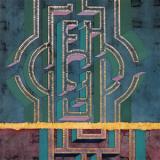
Courant Zéro is the new moniker of Montréal multi-media installation artist and Kohlenstoff label co-founder Maxime Corbeil-Perron, signalling his return to purely recording-based electronic music production following several years focused on award-winning experimental film and audio-visual works. Solari channels his cinematic sensibility and decade-long exploration of sound art and electroacoustic counterpoint into deep cuts of maximalist ambient electronica. Drawing on his early background as a pianist and jazz drummer, Corbeil-Perron weaves a fabric of melodic and rhythmic vectors with his unique timbral palette, intersecting modern composition, IDM, ambient, glitch, and noise on a debut album brimming with sonic detail and emotive resonance. A fixture of Montréal's sound art community as both creator and curator since the early 2010s, Corbeil-Perron's work has ranged from "hypnotic A/V onslaught" (FACT Magazine) to the "richly nuanced acousmatic journey" of his 2018 EP Polychrome (Bandcamp Best Contemporary Classical Of The Month), with earlier electronic and techno-adjacent projects like Political Ritual, Dresden, and Le poisson d'argent garnering accolades from avant-music outlets A Closer Listen, Silence and Sound, and Musicworks, among others. Courant Zéro mobilizes this cumulative wealth of explorative sonic experience in the service of distinctive compositional architectures and electronic music pathways that fans of Floating Points, Jan Jelinek, Squarepusher, Tim Hecker, and Oneohtrix Point Never should find compelling. Title track "Solari" opens the album with a cavernous ambient glitch-drone soundscape that envelops ever-shifting timbres of modular arpeggiation, serving as introduction to the clarion call of "En deçà du réel", an homage to video artist Manon Labrecque, where layers of interweaving melodic counterpoint played on Buchla and other synths slowly build to widescreen immersive intensities; "I have this vision of Labreque vibrating eternally between two frames of magnetic VHS tape_ the slow pace of the piece also inspired by Tarkovsky's approach to scenography" says Corbeil-Perron. "Strange Aorta" is ectoplasmic ambient with wistful melody lines transmuting along a central filament, awash in shifting waves of low-end and ricocheting tonal glitch, the title a reference to "the thumping rhythm beating around the main melody_and the heavy remnants of grief related to my father's passing and a brutal confrontation with my own mortality a few years back." Tracks like "La peau des dents" and "Eroding Us" are more firmly rooted in electroacoustic and aleatory systems music, where colliding loops are shaped into unstable flows of deconstructed slippage and reconvergence. Those two pieces bookend the album's pivotal center: the gorgeous piano digitalia of "Horizon n'arrête" and the skittering electronica of 9-minute opus "Unyeldd", its loping broken beat and cascading melodic glitter like a cluster of wind-up music boxes in a dappled forest _ and for Corbeil- Perron also partly inspired by now fellow Constellation labelmates Do Make Say Think: "I spent a lot of time rediscovering their records after seeing them last September 2024 which definitely influenced this piece." Courant Zéro's debut is a vibrant sonic rebus at the junction of electronic, electroacoustic, noise and ambient music that resists easy categorisation. Solari strikes a compelling balance of unsettled disorientation and hospitable warmth, teeming with real feeling throughout. The album's cover art painting Cryptography I by Yen-Chao Lin represents this prevailing sensibility, its mazelike circuitry distinctly carved and crisply rendered, while filigreed with handmade detail and artisanal patina. Thanks for listening.
он должен быть опубликован на 25.09.2026

Poem by Alea Coble (February 2026) - Written for Andrew Weathers, Chattonooga Recording Project
Listen to my story and everything will come out true. - Bessie Smith
35° 02' 44.27" N -85° 18' 34.85" W:
Howl. Hammer strikes firing pin. Its echo ricochets over river bend. The woodpecker’s syncopated pop-pop-pop clink and thwap in time with cops practicing prayer at the firing range.
Quick. Sketch a few constellations onto a postcard: empty shotgun shells, these pre-forgotten fossils snaking rusted railroad spikes, like snagged rosary, fallen poplar petals draped over cerulean glass ashtray scattered along glittering fractures, ignored like a treaty. Train tracks reverberate necrophilic boomerang-hunger for mountain air without that coal dust. Eat. Eat. Everything is real estate. Even the air is for sale. Buy it cheap while I.C.E. carves through the valley along the Trail of Tears in unmarked SUVs, traffic stops.
Howl. Callback to estranged entanglements oscillating over holler and highway. Meet on the porch. Haint-blue ceiling. Some ghosts can’t get through anyway. They got tied up on the Walnut Street Bridge by a mob of white spit. Howl. The South should scare you.
But the woodpecker is still nesting, hungry, typing uncannied punctuation marks into black oak: a deed. Home? Takes a side-eyed knowing to call by name. The moon sickles in a sweating glass of iced tea.
Speculation cycle: symmetry as ancient as sour-dank betrayal of the tongue, bitter bones binding blood and lead, alchemical forgetting like I found a hairbrush in the yard while planting wild irises, like someone is charging $10 for an old glass Coke bottle, like semicolons itching restless under new sod from no-one-knows-where. Howl. Sing back. History is soil-in-stereo.
How will this line end? Like riverbank? Like atlatl arching hope smash-through a stained glass window? Words fall out of the sky, and 30 American flags snap at attention on the bridge. Howl. A shift in the wind gallops through the streets tossing her head back, laughing.
Tennessee River, who once kissed Pangea, how she softens at the knuckle-suck of it all, that secret-sweet stowed in the feathers of sandhill cranes lifting up on warm summer breeze: slow-shooting stars bending toward unbothered brevitas.
Howl. The red wolf knows her truest kin is always her shadow’s shadow.
он должен быть опубликован на 04.09.2026

"Chance animates the smallest parts of the universe: the scintillation of the stars is its power, a wildflower its incantation."
—Georges Bataille, Le Petit
"Even on my way to the gambling hall, as soon as I hear, two rooms away, the clink of the scattered money I almost go into convulsions." —Fyodor Dostoevsky, The Gambler
Video gambling addicts, academic researchers, and industry professionals alike describe the trancelike state into which problem gamblers suspend themselves with remarkable consistency: they unanimously call it the machine “zone,” a kind of inner experience during which the rhythmic flow of human-machine collusion borders on mysticism. Time is abolished in the act of contemporary video gambling —simulated slot reels roll, virtual poker decks deal, and all worldly concerns are lost—leaving only the aura of total zone immersion in its wake. Sometimes characterized as the crack cocaine of gambling, the intensity of the machine zone is a symptom of casino ergonomics: emotionally manipulative fragrance-saturation, mesmerizing lights, subtly controlling walkways and, as captured here, meticulously engineered sonic environments all play a role in evoking the timeless void of the zone.
Although I was not yet aware of the extent to which casinos tailor their environments for maximum comfort (and, correspondingly, profit), I did know as I crossed the threshold of my first casino floor last year that I would be back for more. Hit by a cornucopia of slot machine tones, triggering aleatorically and coalescing into shimmering masses, I was struck by the need to return and record the sounds that so entranced me. It wouldn't prove to be easy—casino security is intense—and due to the clandestine nature of the operation, my recording techniques were by no means sophisticated. Equipped with nothing but an Olympus LS-11 recorder's internal microphone stashed in a sweaty coat pocket, I allowed the lure of the zone to guide me through a series of ambling recording sessions, the best of which are included here.
I learned a lot about casino sonics in the process: game designers, for example, once tuned all their machines to the key of C major in order to optimize harmonic cohesion (strict adherence to the key is no more but C still dominates the game floor); one team of designers, the story goes, even spent a month perfecting a single 'ding' sound on one machine. In the interest of preserving the true ambient sounds of the casino these recordings are untreated, but lost in the sea of chance I did exert some affirmative control by means of meandering intent and my actual playing of the machines. And by participating in the games myself I got a taste of the financially debilitating consequences that accompany the enchantment of video gambling. The cassette in your hands represents my endeavor to bring you the zone experience without the harsh comedown of its unfortunate reality.
—Adrian Rew
он должен быть опубликован на 19.06.2026
,Manifestations in the Shadow of an Uncertain Land" entfaltet sich durch aleatorische Komposition und intuitive Prozesse, geprägt von tief miteinander verflochtenen politischen und ästhetischen Traditionen. Verwurzelt in den gelebten Erfahrungen von Körpern und Köpfen, die sich mit der lokalen und globalen Last des Imperialismus auseinandersetzen, schöpft das Werk zudem aus der zeitlichen Logik von Film und Literatur, in der Erinnerung, Angst und Vorfreude nebeneinander existieren. Mit Stimme und modularer Elektronik arbeitet Lowe und behandelt Klang als skulpturale und filmische Kraft, geprägt von der entfremdeten Erinnerung an Chris Markers ,Sans Soleil", der politischen Desorientierung in Peter Watkins' ,Punishment Park" und der prozeduralen Gewalt in Kafkas ,In der Strafkolonie". Anklänge an elektroakustische und zeitgenössische klassische Traditionen kommen eher durch die Atmosphäre als durch direkte Zitate zum Vorschein und führen die Musik durch Zustände der Kontemplation, des Schreckens, der Feierlichkeit und der Dynamik. Das Ergebnis ist ein spannungsgeladenes Klangfeld, das sich einer festen Bedeutung widersetzt und von Bruch und der Möglichkeit der Transformation geprägt ist.
Закажите сейчас, и мы закажем товар для вас у нашего поставщика.

Stern Records is proud to announce the first-time reissue of the self-perpetuating plunderphonic classic, Right Into The Sun by Pol Maló.
Originally released on CD-R in 1999 by Cha-Bashira Records Tokyo under the alias "Orange Head," this new 2xLP edition features fully remastered audio and new cover art by Pol. The release also includes a special riso print edition of the original artwork.
Recorded using 3-6 portable record players, plus one MD player on tracks 2 and 4. All records used were melted, warped or broken by briefly placing them on a gas heater. The records were randomly altered this way to allow the styluses to find and stay in their own loops themselves on the wavy record surfaces. No samplers or editing - live aleatoric playback recordings only.
Raw, cacophonous kinetic sound!
Pol's thoughts on the making of the album:
"Difficult to say what it was that made me interested in making music or actually audio art. In comparison, making visual art had always been there for me. But meeting several now generally known musicians as a student certainly left a very deep impact on me. While doing a DIY label and later kind of music store too, I became fascinated in accidental music, experimental sounds and all kinds of improvisations and bricolages. I think I wanted to try to make sound pieces from scratch, with the bare minimum and resulting in a way in found music. Rhythm and repetition seemed to go well with random audio coming from broken things. This way, I thought, I could create new meaning out of something existing by letting it come apart and back together again anew almost by itself. The album "Right into the Sun", I feel, can be listened to and read on various levels and I hope playback of it in all kinds of environments now will add to the original "spark" of it."
он должен быть опубликован на 22.05.2026
Faitiche welcomes a new artist: Christina Kubisch belongs to the first generation of sound artists. Her practice ranges from performances, concerts, to works with video and visual art, but she is best known for her sound installations and electro-acoustic compositions.
TUNING brings together three pieces by Christina Kubisch from different periods of her oeuvre. What they have in common is the way they transform sound phenomena originally considered “non-music” into compositions.
Jan Jelinek: Gaming in Silence (2024) is the most recent work on this compilation. It’s a collage of electromagnetic waves, voice, and abstract sound textures. How did this combination come about?
Christina Kubisch: Gaming was commissioned as a fixed-media composition for the Sound Dome at ZKM Karlsruhe. Since Resonances: The Electromagnetic Bodies Project (2005), I’ve been making recordings in the old and new server rooms at the ZKM and in their permanent collection of historical computer games. Computer games like Asteroids (Atari, 1979) and Poly-Play (VEB Polytechnik, 1986) have specially generated analogue electromagnetic waves that interest me in particular on account of their density, rhythms and textures. I originally studied painting and to me the work of composition often feels like painting an abstract picture. I alter my source material as little as possible, layering and overlapping until a distinctive sound space emerges. In recent pieces, I sometimes combine magnetic waves with field recordings or live instruments. In Gaming it’s my recording of a Chinese song about silence.
JJ: Two persons walking through a street in Madrid (2004) is a recording from your Electrical Walks series. Here we should give a brief explanation of one of your best known works: participants in an Electrical Walk move through public spaces wearing prepared headphones that allow them to receive electromagnetic waves from their surroundings – for example from security gates, ATMs or neon signs. They discover a situation that normally is inaudible to the human ear and they can actively shape it by choreographing their movements. I really admire this piece, not least because there’s no clear dividing line between participants and artist. What exactly do we hear in Two persons walking through a street in Madrid (2004)?
CK: With this early work, I wanted to understand what is heard by people participating in an Electrical Walk in the same place but moving in different ways. The Spanish composer Miguel Alvarez-Fernàndez and I set off from opposite ends of a major shopping street in Madrid, met briefly in the middle, and then continued to the end. We both recorded our walks and I then layered them over one another. You might call it a work of electromagnetic conceptualism.
JJ: Diapason (2009 version) is an installation that plays a composition based on sounds from fifteen tuning forks. This setting is audible in the recording: there’s no dramatic arc, no beginning or end – instead, it recalls a piece of aleatoric music focussing on the decay phase. How did you come to make this work and could you tell us something about your compositional method?
CK: Diapason is part of a series of three pieces that deal with “non-instruments” or instruments that no longer exist: electrical mine bells used to send signals to the workers underground; a historical glass harmonica originally used for medicinal purposes; and tuning forks that were used by doctors to test people’s hearing. All of these methods are no longer in use. The sound of the tuning forks, audible only if held close to the ear, was recorded at the electronic studio at Berlin’s Technical University in such a way that even their decay remained audible. The frequencies range between 64 and 2048 Hertz and they can be adjusted at micro-intervals using small movable weights. The sequence and the duration of the pauses are dictated by chance and were not defined in advance. The 2009 version was created for an installation in the historic Holy Cross Church (Korskirken) in Bergen. Visitors could enter and leave the space at any time, deciding for themselves where and for how long they wished to listen to the sounds played back over an array of small loudspeakers placed on the floor of the apse.
Credits:
Gaming in Silence: commission of the ZKM/Hertzlab, Karlsruhe 2023
elektronic sound processing: Tom Thiel
sound engineering and mixing: Eckehard Güther
Diapason: produced at Elektronisches Studio of TU Berlin
rearrangement: Eckehard Güther
Christina Kubisch, published by Edition Christina Kubisch / Random Musick Publishing
image front: Transitionen 2021 by C. Kubisch, sonagrams of electronic waves (courtesy: Galerie Mazzoli Berlin)
image back: Diapason Tuning Fork, property of Folkmar Hein, Photo: Archiv Christina Kubisch
design by Tim Tetzner
mastered by Giuseppe Ielasi
Thanks to Miguel Álvarez-Fernández, Folkmar Hein, Dominik Kautz and Mario Mazzoli
он должен быть опубликован на 17.04.2026
Una interpretación de Soinuarenbidea II debería partir de esta premisa: todo es posible, nada es aleatorio, y en sí mismo es un imposible de aleatoriedades. El escenario planteado explora la idea de realidad aumentada desde una percepción sonora, ambiental y colectiva. La obra transita hacia adelante y hacia atrás recreando experiencias extintas de porvenir incierto, tratando de facilitar un fin pacificador. Cada pieza sonora se crea, se despliega, se repliega y se destruye, en una torsión permanente de toda la realidad que hace posible cada fragmento musical, cada identidad acústica, cada espacio sonoro. Lo onírico, la ficción, y el viaje están continuamente presentes, y es en el transitar de cada fragmento donde se produce el diálogo de la exposición musical. Los elementos de esta ficción se recrean continuamente, en un continuum donde se entrelazan y se van contorsionando a medida que crecen o decrecen con cada fragmento de síntesis concreta. Los temas explícitamente musicales son el magma que conduce a dar voluptuosidad al disco, siendo la piel un contexto o límite que en sí mismo fluctúa indefinidamente en texturas y configuraciones posibles. Y la urdimbre del silencio es la síntesis que está continuamente presente y que trata de cohesionar los fragmentos en continua colisión expresiva. Las grabaciones de campo proporcionan el material sonoro concreto, y como un fractal sonoro cada una de ellas ofrece diferentes grados de interpretación que a su vez conduce a nuevos fragmentos y nuevas creaciones. Así que se puede pensar que esta es una síntesis de una posible realidad, pero interpretable en infinidad de maneras. Un movimiento y una estaticidad implícitas que generan estructuras y dinámicas acústicas. Lo que se escucha no es real, pero en sí mismo forma parte de la realidad, creando un escenario expectante. Lo cinematográfico, plástico y teatral, danzante y dinámico cobra importancia en este juego, porque se trata de contar una historia, una experiencia recreada desde los puntos de vista del arte visual. Es a su vez hilo conductor y entretenimiento, discurso político y puro divertimento. Es desde este espacio de convivencia artística que tiene sentido la totalidad y justifica el formato sonoro planteado. La contradicción de la obra es patente en el formato, y es a su vez el planteamiento de una accidentalidad en el devenir vital. Contenedor de Ruido recoge todas estas contradicciones y las manifiesta en la obra Soinuarenbidea II. Es una historia sonora, es un cuento acústico. Es un fragmento de vitalidad en imágenes audibles. Es una invitación a la reflexión, a la crítica, al disfrute, a la meditación, a la celebración. Y sobre todo es esperanzadora apreciación de la realidad como algo maleable que confeccionamos colectivamente, que requiere de una paciente observación y la participación colectiva global, en un mundo finito pleno de diversidades y del que ignoramos prácticamente todo, al que deberíamos volver con respeto y devoción.
Soinuarenbidea II-ren interpretazio batek premisa honetatik abiatu beharko luke: dena da posible, ezer ez da ausazkoa, eta, berez, ausazkotasun ezinezko bat da. Planteatutako agertokiak errealitate areagotuaren ideia aztertzen du, soinu-, ingurumen- eta talde-pertzepzio batetik abiatuta. Lanak aurrera eta atzera egiten du, etorkizun zalantzagarriko esperientzia desagertuak birsortuz eta helburu baketsua lortzen saiatuz. Soinu-pieza bakoitza sortu, hedatu, tolestu eta suntsitu egiten da, musika-zati bakoitza, identitate akustiko bakoitza eta soinu-espazio bakoitza ahalbidetzen dituen errealitate osoaren etengabeko bihurdura batean. Onirikoa, fikzioa eta bidaia etengabe daude presente, eta pasarte bakoitzaren joan-etorrian gertatzen da musika-erakusketaren elkarrizketa. Fikzio honen elementuak etengabe birsortzen dira, continuum batean, non sintesi zati zehatz bakoitzarekin hazi edo txikitu ahala elkar lotzen eta bihurritzen diren. Esplizituki musikalak diren gaiak diskoari atsegintasuna ematera eramaten duen magma dira, azala testuingurua edo muga izanik, testura eta konfigurazio posibleetan mugarik gabe aldatzen dena. Eta isiltasunaren irazkia etengabe presente dagoen sintesia da, zatiak etengabeko adierazpen-talkan kohesionatzen saiatzen dena. Landa-grabazioek soinu-material zehatza ematen dute, eta soinu-fraktal batek bezala, horietako bakoitzak interpretazio-maila desberdinak eskaintzen ditu, eta horrek, aldi berean, zati eta sorkuntza berrietara eramaten du. Beraz, pentsa daiteke errealitate posible baten sintesia dela, baina hamaika modutan interpreta daitekeena. Egitura eta dinamika akustikoak sortzen dituzten mugimendu eta estatikotasun inplizitu bat. Entzuten dena ez da erreala, baina, berez, errealitatearen parte da, eta agertoki espektakularra sortzen du. Zinematografikoak, plastikoak eta antzerkikoak, dantzariak eta dinamikoak garrantzia hartzen dute joko honetan, ikusizko artearen ikuspegitik birsortutako istorio bat, esperientzia bat, kontatzea baita helburua. Aldi berean, hari gidaria eta entretenimendua da, diskurtso politikoa eta dibertimendu hutsa. Elkarbizitzarako espazio artistiko honetatik osotasunak zentzua du eta planteatutako soinu-formatua justifikatzen du. Obraren kontraesana nabarmena da formatuan, eta, aldi berean, bizi-bilakaeran istripu-tasa bat planteatzea da. Zarata-edukiontziak kontraesan horiek guztiak jasotzen ditu eta Soinuarenbidea II obran adierazten ditu. Soinu istorio bat da, ipuin akustiko bat. Bizitasun zati bat da, irudi entzungarrietan. Hausnarketarako, kritikarako, gozamenerako, meditaziorako eta ospakizunerako gonbidapena da. Eta, batez ere, itxaropentsua da errealitatea modu kolektiboan egiten dugun gauza xaflakor gisa hautematea, behaketa pazientea eta partaidetza kolektibo globala eskatzen dituena, dibertsitatez betetako mundu mugatu batean, ia guztia kontuan hartzen ez duguna, eta errespetuz eta debozioz itzuli beharko genukeena.
An interpretation of Soinuarenbidea II should start from this premise: everything is possible, nothing is random, and in itself is an impossible randomness. The proposed scenario explores the idea of augmented reality from a sonic, environmental, and collective perception. The work moves back and forth, recreating extinct experiences of an uncertain future, seeking to facilitate a peaceful end. Each sound piece is created, unfolds, retreats, and is destroyed, in a permanent twisting of all reality that makes each musical fragment, each acoustic identity, each sonic space possible. The dreamlike, the fictional, and the journey are continually present, and it is in the transit of each fragment that the dialogue of the musical exposition takes place. The elements of this fiction are continually recreated, in a continuum where they intertwine and contort as they grow or diminish with each fragment of concrete synthesis. The explicitly musical themes are the magma that leads to the work's voluptuousness, the skin being a context or boundary that in itself fluctuates indefinitely in possible textures and configurations. And the warp of silence is the synthesis that is continually present and seeks to unite the fragments in a continuous expressive collision. The field recordings provide the concrete sound material, and like a sonic fractal, each one offers different degrees of interpretation that in turn lead to new fragments and new creations. So one can think of this as a synthesis of a possible reality, but interpretable in an infinite number of ways. An implicit movement and staticity that generate acoustic structures and dynamics. What is heard is not real, but in itself is part of reality, creating an expectant scenario. The cinematic, plastic and theatrical, dance and dynamic aspects take on importance in this game, because it is about telling a story, an experience recreated from the perspective of visual art. It is at once a common thread and entertainment, political discourse and pure entertainment. It is from this space of artistic coexistence that the whole makes sense and justifies the proposed sound format. The contradiction of the work is evident in its format, and it is, in turn, the presentation of an accidentality in the course of life. Noise Container gathers all these contradictions and manifests them in the work Soinuarenbidea II. It is a sound story, an acoustic tale. It is a fragment of vitality in audible images. It is an invitation to reflection, to critique, to enjoyment, to meditation, to celebration. And above all, it is a hopeful appreciation of reality as something malleable that we collectively craft, requiring patient observation and global collective participation, in a finite world full of diversity and of which we know practically nothing, to which we should return with respect and devotion.
Paisajes sonoros, diseño sonoro, drones y música grabada, realizada y arreglada para Contenedor de Ruido por David Aranaz. Coro: Basandere Ahotsak. Producido y mezclado por David Aranaz. Mástering: Estanis Elorza. Fotografía: David Aranaz. Texto: David Aranaz. Traducción: Saioa Aranaz Oreja. Trabajo y Diseño artístico: Cristina Martinez. Edición: Contenedor de Ruido Producciones y Sarbide Music. Distribución: Contenedor de Ruido.
Contenedor de Ruido agradece el apoyo en la realización de Soinuarenbidea II al coro Basandere Ahotsak y en especial a Eva Orbara Goicoa.
Soinuarenbidea II está dedicado al pueblo palestino.
Paisajes y objetos Sonoros, samplers y otras músicas transformadas para Soinuarenbidea II
Burlada: Paseos sonoros matinales por Merindad de Sangüesa, Calle Mayor, Capuchinas, Parque Uranga y varias iglesias y plazas. Pasajes del cotidiano: basura de papel, cristal y plástico.
Pamplona: Cementerio de San José. CEIP Sanduzelai /// Quinto Real: Fábrica de Armas, Puerto de Urkiaga y alrededores. Suite del silencio, bosques en movimiento /// Fábrica de armas de Orbaiceta: regatas, biosques, paseo sonoro hasta regata /// Belate: Puerto de Belate y alrededores. Vacas en pradera junto a las turberas /// Bardenas Reales: Suite de guitarra y Suite del silencio, estepa desértica /// Austria: Tranvías de Graz y Viena. Muchedumbre del metro de Viena.
Voces cinematográficas de: Matanza en Texas, Robocop, Espíritu Sagrado, Solo los Amantes Sobreviven, Voces de Gaza, Yojimbo, Terciopelo Azul, Los 7 Magníficos.
La pista A2 está dedicada a la memoria de David Lynch.
La pista B4 está dedicada a Eva Orbara Goicoa.
Pista A4: Contiene interpretaciones de piano de Three Piano Pieces Op.11 de Arnold Schoenberg.
Pista A5: Es una interpretación expandida con síntesis FM del Concerto Op. 24 - Etwas lebhaft - de Anton Webern.
Pista A7: Contiene la canción Besarkatu ninduzun (Letra de Josune López y música de Josu Elberdin) en interpretación de Basandere Ahotsak en la iglesia de Burutain bajo la tormenta.
Pista B2: Contiene la canción Recuerdos de la Alhambra (Fernando Tárrega) en interpretación torsionada de David Aranaz Sarasa.
Pista B14: Contiene la canción Agur María (Letra y Música de Estíbaliz Robles “Estitxu” y arreglo exclusivo de Alfonso Ortiz para Basandere Ahotsak) en interpretación de Basandere Ahotsak.
Equipamiento para Soinuarenbidea II.
Micros de condensador SE7, configuración XY y ORTF; Micros de cinta ORTIZ LUTHIER configuración XY y Blumlein; Grabadoras MARANTZ y ZOOM; Sintetizadores y samplers Elektron MONOMACHINE SPS-1, MACHINEDRUM SFX6 y MODEL:SAMPLES. Dave Smith MOPHO. Torso Electronics S-4. Sintetizador Modular 333 DIY; Guitarra clásica ALHAMBRA 6P; Esculturas Sonoras tipo Baschet, cristal y metales; Mesa Soundcraft FX16ii; Interface de Audio RME Babyface Pro FS; DAW Logic Pro; Procesamiento de modelado analógico con Acústica Audio, Waves, Softube, Brainworx, Sonible, Analog Obsesion, Tokio Dawn. Metering de Logic y RME DigiCheck . Amplificación Hafler PRO2400. Monitorización BW DM602 S3. Mezcla digital; Mastering híbrido.
он должен быть опубликован на 30.01.2026

EN/JP liner notes by Doran and a hyper-realistic cover by Japanese visual artist/graphic designer Kai Yoshizawa using 3DCG software.
"8 Automated Works", the first full release by Componium Ensemble, an "indeterminate chamber music" ensemble helmed by Spencer Doran of Visible Cloaks. The project is inspired by the long history of automated musical instruments, beginning with the ancient Greek Archimedes and further developed by the Banū Mūsā brothers in 9th century Baghdad, who "first perfected the concept of a programmable, automated musician: a mechanically controlled flute which used hydraulic water pressure and a system of arrangeable punchcards using a visionary proto-MIDI structure", as Doran explains in the liner notes. This mechanical music-making was extended a millennium later with the use of aleatoric principles by the European Dietrich Nikolaus Winkel, inventor of the self-composing Componium mechanical music system. Doran continues this lineage further, using the possibilities of digital technology and its ability to automate a huge range of virtual instruments and introduce aleatoric elements, moving beyond human impulses and limitations, allowing "new shapes to emerge". Dedicated also to Noah Creshevsky, pioneer of what can be considered cyber-human music, Componium Ensemble features a wide and intriguing range of instruments including prepared piano, bowed harpsichord, celesta, bass clarinet, flute, cello, Balinese tingklik, and more, often in multiple groupings. Despite this variety of instrumentation and the seemingly formidable theoretical underpinnings, the music is very accessible and attractive, spacious and fresh, with a light touch and a sophisticated melodic sense which will appeal to pop fans as well as classical/contemporary music listeners. The album is mixed by longtime collaborator Joe Williams (Motion Graphics, Lifted) and available in 10-inch vinyl, ,
он должен быть опубликован на 24.10.2025

Returning with its final instalments, Die Schachtel's Decay Music series extends its explorations of inspired contemporary experimental efforts of the ambient, ethereal, and emotively abstract with Luigi Turra and Elio Martusciello’s “Liminale” and Sergio Armaroli and David Toop’s “And I Entered Into Sleep”, two astounding electroacoustic gestures of blurred space and time, plumbing complexity of meaning bound to sonority. Creatively groundbreaking and inspired, radically rethinking the terms of what ambient music can be perceived to be, they stand among the most striking efforts to appear within the series to date.
An aural bridge between two distinct generations of Italian experimental musicians, “Liminale” is the debut collaborative outing from the creative partnership of Luigi Turra and Elio Martusciello. Active within the context for roughly two decades, Turra (b. 1975) is a reductionist/electroacoustic composer, noted from his tense deployment of concrete and acoustic sources — particularly small sounds and noises — whose work threads the balance between silence, tactile auditory perception, and aleatoric music. Martusciello (b. 1959), on the other hand, is a musician and composer working across the fields of acousmatic and electroacoustic composition, sound installation, multi-media and audiovisual art, and computer music improvisation, who is widely celebrated for both his solo efforts and his collaborations with Eugene Chadbourne, Mike Cooper, Alvin Curran, Chris Cutler, Rhodri Davies, Iancu Dumitrescu, Michel Godard, Tim Hodgkinson, Lawrence D. "Butch" Morris, Jérôme Noetinger, Tony Oxley, Evan Parker, Z'EV, and others.
A single, nearly 40 minute work, extending across the two sides of the LP, “Liminale” — as its title eludes — is an exploration of the liminal through sonic means: “places that exist on the threshold, transitional spaces suspended between a before and an after, between the real and the evanescent” conceiving the soundscape as “a liminal place, a space to be inhabited without the certainty of where it leads.” Unfurling like a labyrinth navigated in darkness, the piece’s first half is marked by sparseness and restraint, as slow-paced guitar tones and harmonics thread silences and resonant ambience within a sprawling sense of space, delicately populated by tiny sounds, fleeting punctuations drawn from undeterminable sources, vocal utterances, and the unexpected appearance of intoxicating piano tones.
As “Liminale” progresses into its second half, Turra and Martusciello enter a more densely populated notion of the in between. No less defined by the presence of space and mystery, discreet textures rustle and writhe within passages of pure concrete abstraction and a fragmented, stretched sense of musicality: long-tones, metallic pulses, minimal vibrations, processed vocalizations, guitar harmonics, and deconstructed piano melodies, buried in spectral, gauzy hazes drifting from beyond arm’s reach within an imagistic and immersive landscape of profoundly meditative scope, where each sonic element flirts the line between emergence and disappearance.
Intimate, fragile, and achingly beautiful, “Liminale”, Luigi Turra and Elio Martusciello’s debut collaboration, is a masterstroke in sound-craft and composition, revealing the potency of meaning locked within transitional spaces and the undefined, and imbuing silence with monumental gravity and weight. Mastered for vinyl by Giuseppe Ielasi, and taking electroacoustic minimalism to an etherial extreme, “Liminale” is issued as the ninth entry in Die Schachtel’s Decay Music series, highlighting inspired contemporary experimental efforts of the ambient, ethereal, and emotively abstract.
Закажите сейчас, и мы закажем товар для вас у нашего поставщика.

Carrboro, NC’s inimitable synthesizer duo MARV follow up their well-received 2021 opus Keyboard Suite I with a second volume co-released by enmossed and Softer Recordings. As a (regrettably) posthumous release, Keyboard Suite II documents MARV in their fully matured state with melodies that eschew easy categorization and a much-expanded studio effects and processing palette. But the same dreamy languidity marking their previous releases remains, drawing us into their visions of a summer day spent in the shade, by a babbling creek. As a storm approaches from the distance - keyboards saturated by tape into distortion, bursts of noise from idiosyncratic electronics, aleatoric stuttering - MARV grants us an album’s worth of sonic sublimation.
он должен быть опубликован на 03.10.2025

For the first time, a representative anthology of Eduardo Polonio's early electroacoustic works is available in vinyl format. The anthology "Eduardo Polonio: Obra electroacústica 1969-1981" revives the early stages of the innovative composer with a curated selection of eight restored pieces, spanning from his experiments at the Alea Laboratory in Madrid to his works at the Phonos Laboratory in Barcelona. A limited edition celebrating his profound impact on Spanish experimental music. Eduardo Polonio (1941-2024) was one of the foundational figures in the emergence and development of electroacoustic music in Spain. The anthology "Eduardo Polonio: Obra electroacústica 1969-1981" revives his legacy with a selection of essential pieces from his early electroacoustic period. The album includes eight compositions created between 1969 and 1981, spanning from Polonio's early experiments at the Alea Electronic Music Laboratory in Madrid to his later work at the Phonos Laboratory in Barcelona. From the raw electronic textures of "Para una pequeña margarita ronca" (1969) to the timbral subtleties of "Flautas, voces, animales, pájaros..." (1981), this collection showcases Polonio's artistic evolution and highlights different facets of his work as a composer and musician. Polonio's life and work parallel the history of electroacoustic music in Spain. As one of the most significant composers of his generation, he was both a witness and participant in the technological evolution and various aesthetic movements of the late 20th century. From his beginnings at Alea, Spain's first electronic music laboratory, to his collaborations with figures like Horacio Vaggione and Josep Maria Mestres Quadreny at Phonos, Polonio carved a unique path in the history of Spanish experimental music.
он должен быть опубликован на 28.03.2025

On their most explicit venture into music for moving image, Miles Whittaker & Sean Canty rudely fracture piano and vocal recordings by US filmmaker-musician Kristen Pilon in a short-circuiting of style and pattern.
Shredding up definitions of electro-acoustic opera, spectralist chamber musique and concrète rave, Demdike hit square between the eyes/ears of film music vernaculars on a startlingly strong addition to their unique oeuvre, now in its 16th year of elusive psychoacoustic strafes and jump-cuts across putative borders. The 13-part, hour-long album dislodges source material made for the experimental film ‘To Cut and Shoot’, by Kristen Pilon, an NYC-based musician and filmmaker, to farther refract the film’s themes of serendipity and the nature of ghosts and dreams with a flickering flux of sound-imagery and aleatoric weirdness appropriate to her original meditations, but also freely messing with their forms.
Situated just a few miles north of Houston, Cut and Shoot is a relatively insignificant Texas town with an unforgettably bizarre name. Pilon grew up not far from Cut and Shoot, and it's there where she ran into 65-year-old machinist and motorcyclist Robert Lewis Stevenson, better known as Bobbo, who's pictured on the album's cover. The meeting occurred a few months after Pilon recorded her improvisations on piano, strings and voice in the basement cellar of the Halle in Manchester, with Bobbo providing the necessary narrative heft the trio needed to inspire an experimental film and its accompanying soundtrack.
Responding to Kristen’s initial piano and operatic vocal recordings, Demdike return a volley of discrete parts tilting from typically cantankerous mayhem to quieter, more clandestine buzzes sliced with crazed interstices of the imagination, all marbled with the plasmic contrails of the paranormal which have long been peculiar to their work. With a poetic flair reflecting Pilon’s own phrasing and melding of mediums, Demdike unfold and expand her melodic fragments into temporal mazes, variously resembling the most messed-up ends of The Caretaker in ‘A Grave Fall (January)’, but also liable to skew into buckshot club turbulence, as with ‘Belly Up’, or the bittersweet bruk contortions of ‘Twist’.
The storyline wickedly frays and loops into itself with a non-linearity that recalls the mid-to-latter stages of Lynch’s ‘Mulholland Drive’ or waking from a sweaty fever dream only to pitch back into its thorny bush of ghosts, often within the space of one track. It’s testament to the ever-tighter binds of Demdike’s symbiotic vision that the results nevertheless hold a thread of logic that weaves in everything from their Jon Collin jams to reams of mixes and Gruppo edits with an unresolved, open-ended quality that still keeps us on our toes, perhaps more so than ever here.
Закажите сейчас, и мы закажем товар для вас у нашего поставщика.

T. Gowdy returns with a major statement and luminous stylistic expansion on his third album for Constellation. Trill Scan is an exquisite suite of songs literally and figuratively about alchemy, where Gowdy melds his background in choral and medieval music with his trademark analogue electronics. Following the acclaimed Miracles (Bleep Album of the Week / Albums of the Year 2022), Gowdy's bar-raising new LP centers human voice for the first time. Choral set-pieces and solo lead vocals, along with his own lute playing, are novel elements in Gowdy's work, and draw on strains of Middle Ages polyphony and the Baroque "broken style" to further distinguish Trill Scan from anything in his discography to date. Gowdy sees "the modal language of medieval Europe as a less distant cousin to indigenous traditional music practice" compared to a Classical-colonial "patriarchal order of tonality that honours a system of domination." The 12th century Notre Dame School of choral music and 17th century style brisé each carry tonal materiality, heterodox technique, and cultural-historical symbolism central to Trill Scan's conceptual and compositional alchemy. Gowdy coheres these beautifully into his palette of serpentine slowburn electronics, a minimal analogue-driven techno shaped by aleatory strategies and tinged with post-punk grit. Gowdy's sound has been aptly described as "gently transportative, flickering like a busted halogen lamp" and his overriding pursuit of psychoacoustic immanence likened to "getting your brain massaged" and praised as "blissful work that bristles with effervescent energy, like brain waves coming in and out of focus." Trill Scan expands this sonic sensibility with more conspicuous harmonic complexity, stylistic variety, and humanistic narrative arc. Alternately sacramental and intimately personal vocals, sometimes wordless and sometimes lyrical, are worked into superlative instrumental tracks, yielding a warmly immersive concept album that's equally Gowdy's most musical. Gowdy sings explicitly of alchemy on the hypnotic album centerpiece "Novus Lumen" with lyrics that gesture at these medieval processes of material investigation. The tension between the scientific and esoteric is crucial; the separation and synthesis of physical substances in medieval alchemy maps onto his fixation with the interplay between the materiality of sound and psychoacoustics. Gowdy follows the Jungian interpretation of classic alchemical texts as an historical bridge to theories of the psyche, where consciousness itself is treated as materiality and similarly subjected to methodical analysis and experimentation, to deconstruction, dissolution, transformation, reintegration, metamorphosis. Song titles like "Arislei Bone" and "Materiadiscipuli" further reference these mythopoetic throughlines from medieval alchemy to modern psychology. Gowdy chooses disruptive forms from the history of Western music that symbolize and prefigure the modern psychological subject and its struggle for/against order, even as they also evoke liturgy and the Renaissance court. The sacramental adds a potent dimension to his pursuit of psychoacoustic activation, meditation, and transcendence, as choral passages intersperse with electronic drone and pointillism throughout the album. His gorgeous Fennesz-meets-lute rendition of the Baroque composition "Courante" by François Dufault offers idiomatic salon-secular counterpoint. Album closer "Strewn" is bookended by a final recurrence of choral invocation, with pulsing earworm motorik techno in between, over which Gowdy whisper-sings a dreamlike vision quest of mythic-alchemical imagery: "as I washed my eyes they turned to metal / and the memories melted to the metal / the metal of my heart." A mesmerizing final song that explicitly invokes Gowdy's search for materialized abstraction and substantive musical immanence wrought from his own psycho-therapeutic subjectivity, and encapsulates the album's turn towards more harmonic, historicized, and humanistic elements. Trill Scan commingles empyrean and earthly electronic songcraft to genuinely original and absorbing effect. Thanks for listening. RIYL: Coil, Nicolás Jaar, Alessandro Cortini, Pantha Du Prince, Fennesz, Visible Cloaks, Actress,
он должен быть опубликован на 14.03.2025

Unequal cycles in search of synchronous experiences: On his new album »Pounding«, Frank Bretschneider tells of distance, convergence and congruence in a continuous, ever-changing flow of events. What is often regarded as an unquestionable dogma in club music (for which Bretschneider has provided significant impetus since the 1990s) – the groove – appears precarious, unstable, and in motion. Pulse and accent are volatile encounters and have to be found again and again for short, delightful moments. Music becomes a constant process of negotiation.
In search of new sound spaces, Bretschneider has recently worked a lot with modular synthesizers, both solo (for example on »abtasten_halten«, 2020) and in collaborations, including the project Beispiel together with Jan Jelinek. »Pounding« was created using similar means – conceived in 2020 for the Pochen Biennale in Chemnitz, subsequently developed further and recorded in March and April 2023 on a sample-based modular system. And in fact, Bretschneider is once again exemplarily scanning his own sound material, such as dub effects that listen to themselves disintegrate; but also the human voice, or more precisely: the stuttering of fragments of speech, far in the distance but omnipresent, like a mysterious narration. Aesthetically, the eleven pieces form part of a series of works with a focus on percussion. Bretschneider has already perfected this approach with albums like »Rhythm« (2007) and has been shifting the perspective ever since, for ever new results.
Shifting is the basic principle of »Pounding«. Bretschneider combines elements that are in different aggregate states, changing their relationship to each other and thus ensuring the complex overall movement. He lets one to two-bar loops run against each other and through small manipulations, develops a network of rhythms that creates a hypnotic state in the counterplay of repetition and mutation, between clearly recognizable meter and disorientation. There are comparable approaches in aleatoric music. Bretschneider combines them with sounds and patterns that are reminiscent of step sequencer logic and at the same time go far beyond it. The result is relational techno. Never obvious, always restless and exciting.
Закажите сейчас, и мы закажем товар для вас у нашего поставщика.

Inspired by the winter sunrises in the city of Porto, MURK AT DAWN VA marks the beginning of a new chapter in the electronic music scene, embracing the passion for the obscure and its intrinsic beauty. The first release by the newly established Rapture label consists of a spatial composition from Maria Callapez that inherits the melancholy from those foggy mornings, followed by the intensity and vigor from two renowned Georgian artists, Hecate Legacy and Downwell. To fulfill the work from the previous producers, Alessandro Adriani presents us some of his dark hypnotic finest art, preceded by the industrial and vibrant pace of the Portuguese Dust Devices, a sonority already considered his trademark. Artwork crafted by Serafim Mendes. Tracks written and produced by Aleassandro Adriani, Downwell, Dust Devices, Hecate Legacy and Maria Callapez Mastering by João Rodrigues @ Tema Mastering Artwork by Serafim Mendes
Закажите сейчас, и мы закажем товар для вас у нашего поставщика.

Globally renowned for his wealth of intricate productions and an expansive musical catalogue that strikes the perfect balance between power and grace, award-winning producer Rodriguez Jr. now announces his latest full-length studio album project, Feathers & Bones - set for worldwide release via his newly launched imprint of the same name.
An extensive, ten-track opus that dives deep into the Frenchman's complex sonic identity, Feathers & Bones was recorded over the course of two years, conceptualized while living in Paris and completed from his new home, Miami. Pivoting towards a new chapter in his illustrious career, the album houses a collection of new Rodriguez Jr. solo productions, two singles with Cuban-American singer, songwriter and multi-instrumentalist Liset Alea, his collaboration with multifaceted Italian artist Giorgia Angiuli, as well as an eagerly-anticipated debut collaboration with legendary English hip hop / electronica outfit, Stereo MC's.
Закажите сейчас, и мы закажем товар для вас у нашего поставщика.

Ben Glas (b. 1992) is an experiential composer based in Berlin. Through ephemeral compositions Glas' work questions preconceived notions between the acts of passive hearing and active listening. In seeking to discover open ended forms of music and pragmatic listening perspectives, Glas' compositions focus on the realms of subjective perception and cognition, via the use of acoustics, psychoacoustics and space as tools for sonic composition. His work has been exhibited and performed internationally, including the Portland Institute for Contemporary Art (PICA), Glasgow's Radiophrenia Festival, the Soundwave Biennial (SF) and the Czong Institute for Contemporary Art (CICA). He is currently receiving his M.A. in Sonic Studies at the UdK.
Ben Glas writes… "Anonymous Sextet for Perverted Piano is a conceptual performance piece that combines a traditional grand piano, six long-distance remote controlled vaginal/anal vibrators and the prolonged use of the piano's sustainer pedal.
The six vibrators were strategically (and preparedly) placed atop of the strings of a various grand pianos (and one harpsichord), while random strangers around the globe connected to and operated the sex toys remotely. After the random and unwitting performers had befriended and synced-up with a catfishing account linked to the six individual vibrators and controlled by three different smartphones, they then sent vibrational patterns and pulses to stimulate their assumed target. The then-kinetic vibrators bounced, slid and bopped aleatorically through the tonal possibilities that the piano and piano's soundboard itself permits. The piano's sustain pedal was held down throughout the performance, elongating the triggered notes and the good vibrations.
All tracks on side A are performed by those unwitting performers, while side B's single track was performed with (more than) a little help from my friends (Anonymous (1), Genesis Victoria, Harry Hudson-Taylor and Hayden Dean)." – Ben Glas, Berlin, 16 February 2023.
Закажите сейчас, и мы закажем товар для вас у нашего поставщика.

Since the late aughts, Helsinki-based multi-instrumentalist, linguist, and skateboarder Olli Aarni has released a steady stream of diverse and remarkably consistent recordings via labels such as Mappa, Longform Editions, Cotton Goods, Laaps and Superpang. “Koko maailma” constitutes a major new work in his discography, finding a fertile middle ground between what might be understood as his two primary compositional modes: organic/chaotic/aleatoric music and rule-based, longform works of minimalism. The source material for these compositions was recorded exclusively using the Serge system at EMS Stockholm, but the timbres that Aarni arrives at do not recall archetypal Serge music as most know it. Meticulous editing and processing of the material with an array of digital tools has resulted in music that preserves the erratic and cybernetic character of the Serge system but sounds totally unique unto itself. The first piece, “Ylhäällä,” has the sonic character of fireflies at dusk or ants in the dirt — mercurial, hypnotic, flittering, and scattering tones presented in the spirit of the best environmental music. “Alhaalla” functions almost like a zoomed out impression of what precedes it, with just intonation tuning applied to sine wave generators to create grid-like, harmonically rich, and surprisingly emotive drone music. Micro and macro — two pieces of music, two perspectives of a world.
Закажите сейчас, и мы закажем товар для вас у нашего поставщика.

Jerry Hunt, Philip Krumm, Jerry Willingham, James Fulkerson, Larry Austin, Dary John Mizelle, BL Lacerta, Gene DeLisa, Robert Michael Keefe, Rodney Waschka II Irida Records: Hybrid Musics from Texas and Beyond, 1979-1986 Irida Associates U.S.A., an obscure and short-lived record label formed by composer-performer Jerry Hunt, offers a glimpse into the revelatory world of new music and composition in the artist's native Third Coast. Based first in Dallas and later in Hunt's home outside the rural town of Canton, Texas, Irida presented the innovative and daring experiments_into aleatoric methods, environmental acoustics, improvisation, homemade technologies, and more_pursued by Hunt and his select collaborators, primarily working in or near Texas between 1979 and 1986. Irida's brief and compact output_seven non-sequentially numbered LPs released in unknown quantities_shared work by artists whose practices often challenged the limitations of vinyl recording. Hunt called the label a "vanity project" and frequently talked of a tax loophole he could claim if it all went belly up, but in its short lifespan Irida captured a tremendous period of creative experimentation by the artist and his friends and collaborators. This boxed set gathers Irida's complete discography for the first time. These records include early attempts by Hunt to record his generative and highly permutable scores and performances on vinyl in Cantegral Segment(s) 16.17.18.19. / Transform (Stream) / Transphalba / Volta (Kernel), as well as his only composition for piano, "Lattice," on Texas Music (both records 1979). The label distributed solo and group recordings by those in Hunt's circle as well, including Larry Austin's electroacoustic, syncretic compositions in Hybrid Musics; James Fulkerson's unique, extended techniques for the trombone on Works; a fusion of three overlaid compositions in Dary John Mizelle's Music of Dary John Mizelle; spontaneous pieces and riff-based "character improvisations" in Music of BL Lacerta by the four piece "orchestra in miniature" BL Lacerta Improvisation Quartet; and experiments in compositional "mapping" by external structures in Cartography, featuring Austin, Gene De Lisa, Robert Michael Keefe, and Rodney Waschka II. Accompanying the boxed set is a richly-illustrated reader with a detailed essay on on the label by Lawrence Kumpf and Tyler Maxin; never-before-published archival materials; newly commissioned reflections by Fulkerson and the composer Jerry Willingham; as well as an interview with Hunt and ephemera including album and concert reviews, artworks, posters and flyers, and correspondences from the musicians and composers involved.
он должен быть опубликован на 07.10.2022

2022 repress, 45 rpm
incl. download code
Second Woman is a new collaborative project featuring Turk Dietrich of Belong and Joshua Eustis of the renowned Telefon Tel Aviv. As one would imagine, Second Woman is a nonpareil debut of futuristic electronic music fusing the coveted genetics of the duos respective previous endeavors into an alluring new enigma of ASMR-inducing kaleidoscopic dub. Second Woman is a fully realized entity; a well-crafted sound world and a refreshing shared effort which is inspiring in its purity and painstaking in its design.
The opening "100407jd7" wastes no time exhibiting mastery in both sound and structure, contorting the frequency spectrum into a psychoactive mirage with its mutating tectonics and vaporous tone clouds. Cuts like "200601je6" and "700358bc5" are bar-raising examples of veteran craftsmanship and vision, refining and reengineering the blue prints of their early works to create an original and dynamic album. The deliberation and control over every particle is obsessive, but the end results of each individual track unfold with an organic temperament unparalleled in a grid-locked world of DAW shaped musics and rat's-nest modular aleatory. Words fail where essential sonics are concerned, and this vital new creation speaks for itself.
Закажите сейчас, и мы закажем товар для вас у нашего поставщика.

Clear Vinyl
2022 repress, ltd. edition of 300 copies, 45 rpm
incl. download code
Second Woman is a new collaborative project featuring Turk Dietrich of Belong and Joshua Eustis of the renowned Telefon Tel Aviv. As one would imagine, Second Woman is a nonpareil debut of futuristic electronic music fusing the coveted genetics of the duos respective previous endeavors into an alluring new enigma of ASMR-inducing kaleidoscopic dub. Second Woman is a fully realized entity; a well-crafted sound world and a refreshing shared effort which is inspiring in its purity and painstaking in its design.
The opening "100407jd7" wastes no time exhibiting mastery in both sound and structure, contorting the frequency spectrum into a psychoactive mirage with its mutating tectonics and vaporous tone clouds. Cuts like "200601je6" and "700358bc5" are bar-raising examples of veteran craftsmanship and vision, refining and reengineering the blue prints of their early works to create an original and dynamic album. The deliberation and control over every particle is obsessive, but the end results of each individual track unfold with an organic temperament unparalleled in a grid-locked world of DAW shaped musics and rat's-nest modular aleatory. Words fail where essential sonics are concerned, and this vital new creation speaks for itself.
Закажите сейчас, и мы закажем товар для вас у нашего поставщика.

Mark Korven's original soundtrack for 'The Lighthouse,' starring Robert Pattinson and Willem Dafoe, marks his second collaboration with director Robert Eggers (The Witch).
"Robert Eggers and I were rather like the two wickies that went insane in The Lighthouse, musically speaking. We travelled to some very dark harmonic and textural places. We both enjoy not just breaking the rules, but blowing them to smithereens. The spirit of experimentation was always present."
-Composer Mark Korven
"Composer Mark Korven and I developed a shorthand working together on The Witch. This made collaborating on The Lighthouse an incredibly enjoyable process. But it was not without its many challenges. Originally, I wanted a score with no strings at all. The Witch soundtrack was so string-prominent that I wanted a full departure. I only wanted horns, pipes, conch shells, concertina - things that sounded like the sea - or the lighthouse station's ominous foghorn. It would be a minimalist aleatoric soundtrack with a nod to sea shanties and ancient Greek music. As Mark and I embraced the sound of big brass sections, it quickly became a maximalist aleatoric soundtrack.
он должен быть опубликован на 24.06.2022

"The exquisite corpse shall drink the new wine", wrote the French Surrealists almost 100 years ago, and from this missive stems the parlor game in which we partake here. Through obscuring the tower itself, they cobble together meandering staircases in which to ascend with absent-minded haste; spontaneous line-weaving amasses figures and phrases into new planes of thought, therefore holding captive the illusion of creative reciprocity. Although housed in unrecognizable quarters, dull rain now tallies itself upon your window panes just as it once kept count on theirs. Apparitions unknown sound instruments of winding origin in celebration of the ink dry in the well. A graffito of tea leaves stains the porcelain cup.
This cloven tall-tale traces an epistolary journey between id and consciousness upon a page that has been adorned and wiped clean again and again and again. The wet meadow expands and contracts within a breath, moving through the windpipe to expel upon the glistening dew. From this dew rises anthills of diminishing complexity, and busying themselves within insanity, the occupants labor to hold fast against the unseen wave of oblivion.
An exercise in aleatoric sentence-finishing between two aligned performers, The Exquisite Corpse Shall Drink the New Wine mimics the economics of unconscious beauty-making to such a degree that light will neither pass through it nor divert its path. Draw upon it what you will, and ready yourself for the unrelenting ataraxy.
он должен быть опубликован на 29.04.2022

"_Acid blues punk meets freeform drone raag transcendentalism" JONNY HALIFAX is an untutored aleatoric free blues outsider. His new collection of sound is an instrumental departure into godless raag brut improvisations, layered, manipulated and sculpted into heavily immersive feral sonic collages. Invocations of an hallucinatory apocalyptic near future. Previously the creator of junkshop blues skronk one man band HONKEYFINGER, which then mutated into the gospel fuzz psych of Julian Cope endorsed JONNY HALIFAX & THE HOWLING TRUTH with their ""slitherin' electro -programmed slide guitar driven mung worship", alongside the ambient drone metal noisescapes of DEATHENTEREDINERROR, now THE JONNY HALIFAX INVOCATION channel heavy meditations on the present into an uncompromising free blues transcendentalism that burn raga-shaped holes into your chakra with searing psychedelic intensity. Inspired by Henry Flynt's avant bluegrass experiments fusing country blues with eastern acoustic musical stylings, Spacemen 3's contemporary sitar music, and the monolithic drone doom immersion of Sunn 0))), THE JONNY HALIFAX INVOCATION build hypnotic instrumental soundscapes using lap steel and homemade slide guitars, harmonica and alto sax. Underpinned by layers of acoustic and electronic drone instruments and fed through an arsenal of pedalboard electronics that would make Dave Gilmour weep. The blues are transmogrified, unhinged, reduced and re-imagined as intoxicating, trance-inducing, feedback-drenched noise paintings. AÇID BLÜÜS RÄÄGS Volume 1 plays like a psychedelic western movie soundtrack, frenzied electric lap steel guitar suites play to melting cowboy minds. Flaming tumbleweeds blow in slow motion across wide open concrete vistas. Jodorowsky's El Topo meets Ballard's High Rise in an apocalyptic knife edge disintegrating urban landscape. Shut your eyes and conjure the best nightmares you've never had. The JONNY HALIFAX musical CV also includes studio contributions to releases by Andrew Weatherall's TWO LONE SWORDSMEN, UK metal behemoths ORANGE GOBLIN, hardcore thrash upstarts HECK (formerly BABY GODZILLA), and pan european psych noise titans MELTING HAND.
он должен быть опубликован на 25.03.2022

Die internationale Power-Metal-Formation kehren zurück mit ihrem kraftvollsten und ideenreichsten Werk ihrer bisherigen Karriere, mit massenhaft tollen Gitarrenriffs, groovenden Rhythmen und hymnischen Melodien.
„Diesmal haben wir wirklich an jeder Stellschraube gedreht, um das bestmögliche Resultat zu bekommen. Und ich denke, der große Aufwand hat sich nachweislich gelohnt!“ so fasst Bassist und Gründer Mario Lochert das die Arbeit des Kommenden Serious Black Albums „Vengeance Is Mine“ zusammen.
Einer der neuen Songs der kommenden Serious Black-Studioscheibe ‚Vengeance Is Mine‘ nennt sich ‚Album Of Our Life‘ und trifft damit wohl den Nagel auf den Kopf, zum einen ist der internationalen Power-Metal-Formation um Bassist und Gründer Mario Lochert das wohl kraftvollste und ideenreichste Werk ihrer bisherigen Karriere gelungen, andererseits geht es textlich in für die Band bislang unerforschte Tiefen. Lochert: „Wie nie zuvor habe ich diesmal Einblicke in mein Innen- und Privatleben zugelassen, also: wie ich denke, wie ich fühle, wie ich bin, und wie schwierig es sein kann, eine Band am Laufen zu halten, wenn es einem selbst nicht gutgeht. Die Texte auf ‚Vengeance Is Mine‘ spiegeln die zurückliegenden vier, fünf Jahre wider. Dies wiederum hatte natürlich Auswirkungen aufs Songwriting, das noch intensiver und emotionaler geworden ist.“ Mit dem ausdrucksstarken Timbre von Sänger Nikola Mijic, den rasanten Riffs und Hooks ihres Gitarristen Dominik Sebastian, vielen treibenden Grooves von Schlagzeuger Ramy Ali und dem abwechslungsreichen Songwriting von Bassist und Bandleader Mario Lochert avanciert ‚Vengeance Is Mine‘ zum Paradebeispiel eines tiefmelodischen und zugleich kraftstrotzend-dynamischen Power-Metal-Albums.
он должен быть опубликован на 25.02.2022

Die internationale Power-Metal-Formation kehren zurück mit ihrem kraftvollsten und ideenreichsten Werk ihrer bisherigen Karriere, mit massenhaft tollen Gitarrenriffs, groovenden Rhythmen und hymnischen Melodien.
„Diesmal haben wir wirklich an jeder Stellschraube gedreht, um das bestmögliche Resultat zu bekommen. Und ich denke, der große Aufwand hat sich nachweislich gelohnt!“ so fasst Bassist und Gründer Mario Lochert das die Arbeit des Kommenden Serious Black Albums „Vengeance Is Mine“ zusammen.
Einer der neuen Songs der kommenden Serious Black-Studioscheibe ‚Vengeance Is Mine‘ nennt sich ‚Album Of Our Life‘ und trifft damit wohl den Nagel auf den Kopf, zum einen ist der internationalen Power-Metal-Formation um Bassist und Gründer Mario Lochert das wohl kraftvollste und ideenreichste Werk ihrer bisherigen Karriere gelungen, andererseits geht es textlich in für die Band bislang unerforschte Tiefen. Lochert: „Wie nie zuvor habe ich diesmal Einblicke in mein Innen- und Privatleben zugelassen, also: wie ich denke, wie ich fühle, wie ich bin, und wie schwierig es sein kann, eine Band am Laufen zu halten, wenn es einem selbst nicht gutgeht. Die Texte auf ‚Vengeance Is Mine‘ spiegeln die zurückliegenden vier, fünf Jahre wider. Dies wiederum hatte natürlich Auswirkungen aufs Songwriting, das noch intensiver und emotionaler geworden ist.“ Mit dem ausdrucksstarken Timbre von Sänger Nikola Mijic, den rasanten Riffs und Hooks ihres Gitarristen Dominik Sebastian, vielen treibenden Grooves von Schlagzeuger Ramy Ali und dem abwechslungsreichen Songwriting von Bassist und Bandleader Mario Lochert avanciert ‚Vengeance Is Mine‘ zum Paradebeispiel eines tiefmelodischen und zugleich kraftstrotzend-dynamischen Power-Metal-Albums.
он должен быть опубликован на 25.02.2022

After a trilogy of spectacular explorations of relentlessly driving rhythms – Sagittarian Domain (2012), Quixotism (2014) and Hubris (2016) – Simian Angel finds Oren Ambarchi renewing his focus on his singular approach to the electric guitar, returning in part to the spacious canvases of classic releases like Grapes from the Estate while also following his muse down previously unexplored byways. Reflecting Ambarchi's profound love of Brazilian music – an aspect of his omnivorous musical appetite not immediately apparent in his own work until now – Simian Angel features the remarkable percussive talents of the legendary Cyro Baptista, a key part of the Downtown scene who has collaborated with everyone from John Zorn and Derek Bailey to Robert Palmer and Herbie Hancock. Like the music of Nana Vasconcelos and Airto Moreira, Simian Angel places Baptista's dexterous and rhythmically nuanced handling of traditional Brazilian percussion instruments into an unexpected musical context. On the first side, 'Palm Sugar Candy', Baptista's spare and halting rhythms wind their way through a landscape of gliding electronic tones, gently rising up and momentarily subsiding until the piece's final minutes leave Ambarchi's guitar unaccompanied. While the rich, swirling harmonics of Ambarchi's guitar performance are familiar to listeners from his previous recordings, the subtly wavering, synthetic guitar tone we hear is quite new, coming across at times like an abstracted, splayed-out take on the 80s guitar-synth work of Pat Metheny or Bill Frisell. Equally new is the harmonic complexity of Ambarchi's playing, which leaves behind the minimalist simplicity of much of his previous work for a constantly-shifting play between lush consonance and uneasy dissonance. Beginning with a beautiful passage of unaccompanied percussion dominated by the berimbau, the side-long title piece carries on the first side's exploration of subtle, non-linear dynamic arcs, taking the form of a gently episodic suite, in which distinctive moments, like a lyrical passage of guitar-triggered piano, unexpectedly arise from intervals of drifting tones like dream images suddenly cohering. In the piece's second half, the piano tones becomes increasingly more clipped and synthetic, scattering themselves into aleatoric melodies that call to mind an imaginary collaboration between Albert Marcoeur and David Behrman, grounded all the while by the pulse of Baptista's percussion. Subtle yet complex, fleeting yet emotionally affecting, Simian Angel is an essential chapter in Ambarchi's restlessly exploratory oeuvre. --- Oren Ambarchi - guitars & whatnot Cyro Baptista - percussion & voice Recorded by Randall Dunn, Joerg Hiller, Iuri Oriente and Oren Ambarchi. Edited by Joerg Hiller and Oren Ambarchi at Choose Studios, Berlin. Mixed by Joe Talia and Oren Ambarchi at Good Mixture, Tokyo. Cut by Rashad Becker at D&M, Berlin. Executive Producers: Konrad Sprenger & Dick Wolf. Photography by Traianos Pakioufakis. Design by Lasse Marhaug.
Закажите сейчас, и мы закажем товар для вас у нашего поставщика.

Motoko & Myers is the collaborative project of Bay Area-based duo Wonja Fairbrother and Daniel Letson. “Colocate” follows their 2018 debut release on the Open Hands Real Flames imprint, further developing their distinctive style which combines melodic, pop song structures with live improvisation and odd or no-meter approaches to rhythm and timing. It is a collection of bright, addictive listening, full of tracks that manage to feel at once hooky and aleatory, naive and rigorously arranged.
Recorded and assembled sporadically over a period of several years, the album’s idiosyncratic palette was achieved through much technical and methodological eccentricity: “4-handed” collaborative keyboard playing; 12-bit sampling and archaic presets; field recordings of cicadas in Louisville, Kentucky and church bells in Freiburg im Breisgau. The album’s nine tracks exude a homespun quality that is rare to find in contemporary electronic music – hazy, warm, and disarmingly organic.
он должен быть опубликован на 03.09.2021

180g schwarzes Vinyl, Cover auf 300g GC1 INSIDE/OUT, gefütterte Innenhülle, 2seitiges Insert, Downloadcode. Tony Conrads Konzept von Minimal Music als Maximalismus des Ausdrucks ist eine der Inspirationen für TRIALOGOS. Die Musik entsteht aus der Spannung zwischen den Beiträgen der drei Akteure Conny Ochs, Sicker Man und Kiki Bohemia, die aus unterschiedlichen musikalischen Subszenen stammen. Im Zusammenspiel ergeben sich so musikalische 'Trialoge'. Das Ergebnis sind kinematografische Klangflächen, die sowohl helle Interferenzen schaffen, als auch düstere, verzerrte Wirklichkeiten verbergen. Dabei wirken die Stücke des Debüt-Albums "Stroh zu Gold" hoch emotional. Sie sind das Ergebnis einer kollektiven Improvisation und Instant Composition, und eben keine Konstruktion. TRIALOGOS sind: Conny Ochs, Sicker Man and Kiki Bohemia. Conny Ochs ist längst fester Bestandteil der Exile-On-Mainstream-Familie. Zeugen sind seine Solo-Alben und natürlich die Kollaborationen mit Doom-Legende Scott "Wino" Weinrich. Tobias Vethake ist Multiinstrumentalist und Komponist. Als Komponist von Schauspiel- und Filmmusiken arbeitete er u.a. am Volkstheater Wien und dem Imperial War Museum London und schrieb Soundtracks u.a. für Muxmäuschenstill (D), Bye Bye Berlusconi (I) und Seance (US). Er ist auch Produzent und Co-Autor diverser internationaler Vero?ffentlichungen (z.B. Serengeti (US / Anticon), SchneiderTM (D / Editions Mego), Gregor Schwellenbach (D / Kompakt). Die Berliner Musikerin und Sängerin Kiki Bohemia produziert und veröffentlicht eigenes Material und kollaboriert mit internationalen Künstlern unterschiedlichster musikalischer Genres (z.B. Yann Tiersen, The Brian Jonestown Massacre, Blainbieter, The Crack-Up Collective). Echtzeitkompositionen, Live- Filmvertonungen, Musik fu?r Kunstinstallationen, Performances und Live-Ho?rspiele sind Zeugnisse ihrer Affinität zu experimentellen und aleatorischen Auffu?hrungsansa?tzen und Improvisation (u.a. Documenta Kassel 2012, Schauspielhaus Hamburg, Sophiensaele Berlin, Kater Holzig, Deutschlandradio Kultur).
он должен быть опубликован на 18.06.2021

The fourth album by Rhys Celeste aka Microlith on Fundamental. "We always tried to release all the tracks Rhys sent to us as best as possible and this new album follows the same concept, design and the same quality standards, the best." Fundamental Records has the authorization and full support of the Rhys family to release this album and also the previous albums that Rhys composed during the years 2015 and 2016, albums that never were released on vinyl before. "We can proudly say we did all we can to keep the music of Rhys alive and available on vinyl in the best possible quality. All tracks have been thoroughly mastered for the best possible sound quality." This is the last project that will be released under the Fundamental Records label. As you can imagine they wanted to say good bye with something really special. Limited to 300 copies. No re-press.
Закажите сейчас, и мы закажем товар для вас у нашего поставщика.

Wonderful. „I wanted my first long form album to represent the joys of life, strength of positivity, the wonderfulness of nature, and celebrate how music plays an intricate part in sewing all of that together.“
From the subtle rhythmic brush strokes of South American music to the sounds of Bern’s underground scene. Mirabile Dictu pulls from those spheres of influence and more to succinctly capture the translation of Adriano’s surname perfectly.
Закажите сейчас, и мы закажем товар для вас у нашего поставщика.

"Secretsundaze continue their quest to uncover amazing new music with the signing of exciting young Dominican artist Boundary. At just 19 years old Boundary aka Josue Suero makes music that is brimming full of ideas and influences that belie his young age. The 'Interlazados' EP is his debut release for a UK label.
Taking cues from his fascination with video game music, his first real gateway to electronic music, the four track EP showcases Boundary's melodic sensibilities and ear for a killer rhythm.ALead track 'Opticamente Avanzando' unwinds over 12 minutes of deep, mesmeric melodic, contemplative electronica with hints of 90's UK rave influences.ACheck the grins when the killer bassline drops half way through!A
The glossy melodies, jazzy motifs and hip-tugging bass of 'OP.AV' and the breakbeat house of 'Interlazados' channel more lo-fi, ambient house influences but all sent through that unique Boundary filter. Finally, the brain-warming, hypnagogic, tempo-changing rhythms of 'Planos de Ausencia Casualidad' could be the EP highlight and recalls the work of Lone and Actress.
You could listen to these tracks and be mistaken for thinking this is an artist who has maybe been lost in the throws of extended Villalobos DJ set or the deep pads of old Sun Electric records, but as an artist who is an outsider to the European dance scene, his inspiration comes from closer to home, as Boundary explains:
"For this EP I was interested to see if i could hit close to the feelings i have when I listen to certain video game music, how I could convey the amazing and deep storytelling in these songs. I really wanted them to feel like a ride/adventure. 'Opticamente Avanzando' ('Optically Advancing' in English) for me is like a venture into a machine that analyses a bunch of electronic music genres and it outputs as many different variations of these genres it can, each with their own little quirk/details, creating something unique in the process."
With previous releases on LA based label, Point Records, and Paris' Third Try label (Axel Boman, SFV Acid) Boundary's emergence represents a promising prospect for the electronic music world and 'Interlazados' another essential release on Secretsundaze."
Закажите сейчас, и мы закажем товар для вас у нашего поставщика.

"Minor Planets completes a trilogy of cosmically themed electro-acoustic albums by UK and Berlin based trio Twinkle3, 15 years in the making. This third installment is once again all about the unique synergies the group discover in combining free group improvisation with studio and musique-concrete techniques. The group's combined love of everything from Lee Perry to Noh Theatre via Karlheinz Stockhausen and King Sunny Ade lead them to respond musically to create a single universe where they all coexist and interact. Aleatoric analogue sequencing, chamber-like acoustic improvisation and dub treatments become distilled into a distinct and emotive narrative that takes us on an exhilarating hyperspace cruise to the outer reaches.
Clive Bell is a virtuoso of the Shakuhachi. His aesthetic takes us on a timbral journey between noise and pitch, expressed and phrased rhythmically by the contour of human breath. This creates a perfect context and focus for a music that moves seamlessly between rhythm, suspension, time modulated analogue states, dissonance and melody. Richard Scott and David Ross share a background in acoustic free improvisation and have pioneered new approaches to rhythm using self-designed analogue systems. On Minor Planets these seemingly paradoxical orthodoxies cross-pollinate in a spirit of wonder and optimism to produce original and experimental music that is both life affirming and uplifting.
Album artwork by Benjmain Kilchhofer captures the feeling of peering through the vacuum of space and catching a rare glimpse of the mysterious alien biomes, fossils, and silhouettes cast by dwarf planets, asteroids, Kuiper belt, and other trans-Neptunian objects."
Закажите сейчас, и мы закажем товар для вас у нашего поставщика.

After spreading several music videos and EPs all year long, Jumo starts the decade with a first much anticipated album. More than a compilation of his past works, “Et le vent?” extends the artist’s experiments and add new colors to his palette.
Featuring Léonie Pernet, Pénélope Antena, Hyacinthe.
Staying on the line traced by the previous tracks, “Et le vent?” perpetuates Jumo’s taste for narration with all its forms.
Six years ago Clément Leveau gave birth to Jumo a musical avatar with whom he asserted a singular identity characterized by a sophisticated production of heady melodies and a cinematographic atmosphere allowing him to give free rein to his passion for the image. The release of the Radio Nova hit 'Aléa' marked the beginning of a fruitful collaboration with the Parisian label Nowadays Records (Fakear, La Fine Equipe, Clément Bazin, Leska). As a graphic designer Clément makes Jumo a true transdisciplinary project in which sound and video feed off each other, putting his collective Cela at the service of a dark and arty visual universe that perfectly matches the contours of his music.
After spreading several music videos and EPs all year long, Jumo starts the decade with a first much anticipated album. More than a compilation of his past works, “Et le vent?” extends the artist’s experiments and add new colors to his palette.
Staying on the line traced by the previous tracks, “Et le vent?” perpetuates Jumo’s taste for narration with all its forms. “L’exode”, first single of the album, is a perfect example. It gives the album’s tone and also dives us into Jumo’s powerful aesthetic thanks to the music video.
“Steve (Ft. Léonie Pernet), is a tribute to Steve Maia Caniçot, young man who dramatically died during a police charge on Nantes docks on June 21st, 2019. A track on which Jumo confronts with Léonie Pernet’s grunge intonations, an unexpected collaboration sounding like an evidence.
Another main track of the album is “Une Belle Personne (Ft. Oré)” where the producer’s synths converse with the French singer and offer us an original and efficient pop song.
The great Awir Leon, the French rapper Hyacinthe, Hier Soir (Jumo’s side project) and Penelope Antena complete the cast of an album that goes from the calm contemplation of the world to the underground clubs filled with energy.
Закажите сейчас, и мы закажем товар для вас у нашего поставщика.

2 mental progressives tunes on the A Side. The flip opens with a very psychedelic track, naturally sounding as if you were irie... The last track is a dub tune, quiet collector of a style ! A very active processus... Sonic illusion confirmed ! And then will come teh first Reggae track on mackitek ! With Malcom & Jerash, Dub Sensi style !
Закажите сейчас, и мы закажем товар для вас у нашего поставщика.

Clear Vinyl.
Raime explore exquisitely honed rhythmic instincts with scintillating results on the 2nd release on their RR label.
Where the London duo’s 2018 EP and RR debut ‘We Can’t Be That Far From The Beginning’ evoked a meditative mood from the info overload of their home city that left acres of space to the
imagination, the ‘Planted’ EP rejoins the dance with four tracks that icily acknowledge strong influence from Latin American and Chicago footwork styles in a classically skooled mutation of hardcore British dance music.
In four fleetingly ambiguous dancefloor workouts they carry on a conceptual theme exploring the digital subconscious with persistently invasive, alien ambient shrapnel - half-heard voices, aleatoric prangs, and tag-covered signposts - woven into and thru their tightly coiled and reflexive drum programming.
UPTOWN, ’Num’ flexes tendons and hips like a Leonce riddim that danced all the way from NOLA and ATL to the wintery dawn of a LDN warehouse, while the lip-biting tension of minimalist 160bpm jungle/ footwork patterns and jibber-jawed vocals in ‘Ripli’ suggests the Alien film’s protagonist lost in a mazy rave space, chased by H.R. Giger-designed face huggers (or gurning energy vampires).
DOWNTOWN, ‘Kella’ then catches them on a grimy dubtech bounce, cocked back and straining at the harness, before ‘Belly’ shuts down the dance with invasive, demonic motifs exploding over dark blue chords and palpitating jungle subs with impeccable darkside style.
Закажите сейчас, и мы закажем товар для вас у нашего поставщика.
