Search:african band

Styles
All
Various - I Had the Craziest Dream: Modern Jazz and Hard-Bop in Post War London, Vol. 3

The third volume in a survey of the modern jazz & hard-bop scenes that emerged in the new cultural melting pot of post war London, with recordings from the end of the 1940s through to the early 1960s.

Featuring representations from players whose roots lay in the East-End's jewish community alongside a wealth of talent of Caribbean and African descent playing and recording in post war London during this period.

Made in partnership with the Barbican to coincide with the exhibition Postwar Modern: New Art in Britain 1945-1965.credits

out of Stock

Order now and we will order the item for you at our supplier.


Last In: 6 months ago
Galina Juritz - One Weird Trick

British South African composer & producer Galina Juritz presents 'One Weird Trick', her debut solo album on London's home for interdisciplinary oddballs, Kit Records.

As a classically trained violinist, Galina has worked in bands and ensembles such as ShhArt Ensemble, Inclementine, and in various combinations featuring leading musicians from Cape Town and Johannesburg's classical and jazz scenes.

Galina composed the music for Madness: Songs Of Hope and Despair, a cantata made in collaboration with Dizu Plaatjies, with a libretto by psychiatrist Dr Sean Baumann. Madness debuted at the World Psychiatry International Congress in 2016, and had a two week run at Cape Town's Baxter Theatre in 2017. As a composer she writes frequently for film, animation and ensemble.

She has collaborated with the likes of composer Neo Muyanga, Mr Beatnick, Cara Stacey, Kelpe, Juliana Venter, Violeta Garcia, Kit Records head Richard Greenan & more. Galina has been remixed by the likes of Photay, Memotone and Tom Skinner (Sons of Kemet, The Smile).

'One Weird Trick' is the culmination of her solo material. Still rooted in the ornate, technical world of string composition and arrangement, the album is stubbornly unclassifiable.

Opening with time-dilated ambient ('Leaves') before segueing into rippling, florid techno ('Skeleton and Tiger fighting'), Galina twists again and again, shifting gears through stoned, jazz-inflected r'n'b ('Things I Know to be True'), string-led widescreen songcraft ('Come Back') and orchestral minimalism for standing on vast shorelines ('Time Split at the Seams of Your Departure [everything is now before and after]').

On the B side, Galina flexes her composition chops with the storming jazz of 'Spirit Level', recorded by Cape Town-based musicians Buddy Wells, Andrew Lilley, Jonno Sweetman & Stephen de Souza. Galina is then joined by the Stockholm Sax Quartet on 'In Rebellion of Time', a stately Reichian revelation that moves from solemn ballet to ecstatic multiharmonic denouement. To close, Galina retrieves oozing electronics and smeared journal entries from the guts of a black hole - a fitting conclusion to a truly unique, unpredictable, delightful, sad, infectious, and bizarre record.

Influences / sounds like: Louis Cole, Matthew Herbert, Darkside, Thundercat, Eiko Ishibashi, ECM, Oliver Coates.

'One Weird Trick' is out 7th November 2025 via Kit Records, available on vinyl & digital formats.

Kit Records will throw an album launch party at Servant Jazz Quarters in Dalston, London on 30th October 2025. Tickets TBC.


[g] 07: Time Split at the Seams of Your Departure (Everything Is Now Before and After) [feat. sir kay]

pre-order now07.11.2025

expected to be published on 07.11.2025

Awkward Corners - A book of imaginary beings (TAPE)

Chris Menist pares his sound right back for A book of imaginary beings, his fourth Awkward Corners outing with a project of electronic and abstracted global grooves. Experimenting with simple melodies and uncluttered arrangements, as well as taking inspiration from the Borges' short stories alluded to in the title, the project took shape in the early part of 2025, in the shorter days and dark evenings of January.

The initial challenge was to knock a basic track into shape each evening after work, then refine it later. There's a melancholy in the air in late winter, compounded by the creeping threat of national and geopolitical instability. Ulla, Natural Information Society, Jabu, Torso and Dawuna formed some of the background soundtrack as each tune took shape.

The track titles came after sitting with the sounds for a while, giving shape to images of people, creatures and their stories for a book that is yet to be written.

Two former friends sets the tone for the album perfectly as a minimal electronic piece with a slowly simmering synth bassline underpinning the groove whilst the trademark Awkward sound of the Shahi Baaja enters drenched in effects. It's the first demonstration of Chris' unique ability to create a world from apparently very little.

Dance of the silver beetles is completely unique in that we can hear chopped up Illimba samples seemingly playing backwards and forewords sometimes alone, sometimes together in duet with Chris' conga rhythms. Add to that a more conventional Illimba melody and added shaker percussion and you have one of A book of imaginary beings most curious chapters.

Anxious shadow puppets is closer to the Awkward Corners sound from previous albums as electronic pulses move around the arrangement with the urgency that the track title suggests. Chris' percussive roots move to the fore with the congas that tie down the Paradise Bangkok Molam International Band's sound. Here, the bassline is more playful and works together with one of Chris' many African Illimbas.

Fans of Chris' adventures on his Roland 808 will dig A leopard with no spots, although the minimal mood continues to flow through on this track. The lolloping, but hard-hitting rhythm track provides the grounding for strange and twisting feedback-sounding tones to work the soundscape.

Abandoned boy (left in charge of the family business) is Awkward Corners at his atmospheric best. Drift off to the sublime sounds of Chris exploring the Shahi Baaja, whilst a soft, repetitive synth line and abstracted pads give the listener that feeling of meditation and peace.

Flamingo with bandaged neck is A book of imaginary beings' perfect coda and is exclusively Shahi Baaja draped in reverbs and delays. It feels like the resolution and the closing of a book that – as of yet – remains unwritten.

Awkward Corners is Chris Menist, a musician, DJ and writer. It started life as a small project in Islamabad, where Chris was living at the time. Initial recordings were made with local musicians in Pakistan and then subsequently in Thailand. This culminated in the Sweet Decay LP that came out on Finders Keepers' Disposable Music in 2014, and in turn led to a limited tape release on Boomkat/Reel Torque of original compositions and re-edits of Thai 45s the same year. Chris released – Dislocation Songs – his second LP proper with Shapes of Rhythm in May 2020, collaborating on many of the tracks with award-winning performer Sarathy Korwar. The LP was picked up by many radio stations including NTS, Resonance FM, BBC 6 Music, Balamii and many more. It made Tom Ravenscroft's LPs of 2020. Amateur Dramatics, Chris' second LP arrived just a year later in 2021 and was a more ambitious project featuring more jazz-focussed compositions and featuring Tamar Osborn and Kitty Whitelaw. Shortly after that came another pivot with the heavier, dancefloor-friendly EP Somebody Somewhere. Somebody Somewhere is Dancing in a Field brought the House (yes House!) vibes, whilst Hector Plimmer turned in a remix of No Words in the same club mood.

As one of NTS Radio's longest-standing presenters, Chris continues to hold down the Paradise Bangkok show. Playing drums and percussion since he was a kid, Chris is the percussionist for The Paradise Bangkok Molam International Band as well as co-founding the record label of the same name. Chris has curated compilations for labels such as Finders Keepers, Soundway and Dust-To-Digital. He has been featured on the Boiler Room, Vinyl Factory Collections, played at the Four Tet curated Nuits Sonores festival, and has put together an edition of Volumes which featured unreleased Awkward Corners compositions.


[d] 04: All the Goodbyes (You Tried to Defer) [Original]


[j] 10: Abandoned Boy (Left in Charge of the Family Business) [Original]

pre-order now31.10.2025

expected to be published on 31.10.2025

AYALEW MESFIN - HASABE - MY WORRIES

AYALEW MESFIN

HASABE - MY WORRIES

12inchVAMPI333
Vampisoul
24.10.2025

"Hasabe" is a thoughtfully curated collection of Ethio-groove recordings from one of the overlooked pioneers of 1970s Addis Ababa's vibrant music scene-Ayalew Mesfin and his Black Lion Band. Expect trap drum kits, jazz big-band styled horn sections, funky guitars played through wah wah and fuzz pedals- all seasoned with a unique Ethiopian touch_ For many, the music created in 1970s Ethiopia will sound both familiar and alien: while the trappings of '70s Ethiopian music carry some aspects that those in the West will easily identify with-trap drum kits, jazz big-band styled horn sections, guitars played through wah wah and fuzz pedals-the Ethiopian style of singing, and the modes in which the musicians move, may confound. Perhaps some who have delved into the instrumental Ethio-Jazz of Mulatu Astatke-a well-known Ethiopian musical export, relatively unknown in his homeland-will have a context in which to engage this great compilation of '70s Ethiopian music by Ayalew Mesfin. The music Mesfin created with his Black Lion Band is amongst the funkiest to arise from Addis Ababa; his recording career, captured in nearly two dozen 7" singles and numerous reel-to-reel tapes, shows the strata of the most fertile decade in Ethiopia's 20th century recording industry, when records were pressed constantly by both independent upstarts and corporate behemoths, even if they were only distributed within the confines of the unconquerable East African nation. Ayalew was forced underground by the Derg regime that took control of the country in 1974. Until recently, only four of Ayalew Mesfin's tracks had been reissued, appearing in the well-known "Éthiopiques" series. "Hasabe", a carefully curated collection of his singles, marks the first comprehensive release of this powerful and long-overlooked body of work by an artist whose originality and resistance defined a genre: Ethio-groove. More than four decades later, this album offers the rare opportunity to rediscover a vital and beautiful chapter in global music history. We are now reissuing "Hasabe" once again thanks to a collaboration with Now Again. Pressed on 180g vinyl.

pre-order now24.10.2025

expected to be published on 24.10.2025

Langendorf United - Undercover Beast

"Bandleader Lina Langendorf has been known in Sweden for a long time as one of the most skilled and forward thinking saxophone players. She has been staying in both Mali and Ethopia for longer periods and has performed in concerts with legendary artists like Alemayehu Eshete, Vieux Farka Touré and...Mulatu Astatke who, at his club African Jazz Village (in Addis Ababa/Ethiopia), introduced Lina to people in the audience with the words: 'Amazing saxophone player, big respect! We should play together some day'. Some minutes later they go on stage together. Joined by the legendary piano player Dawit Yifru and the bass player from Roha Band, Giovanni Rico Bonsignori. 'Fantastic. You're so strong. Everybody loves you, they say you are ethio-jazz' was Mulatu's words after the jam session.
Lina has also been invited to the live club Le Hogon in Bamako numerous times for jam sessions and concerts with Toumani Diabaté and his band. And for Lina, these jam sessions in Addis and Bamako has been a crucial part of shaping (and sharpening) her musical vision. Last year she was also touring the UK as part of James Yorkston, Nina Persson and the second hand orchestra.
But it wasn't until feb 2023 we got to hear her own music. The debut album with her newly formed band Langendorf United was co-released between Italian label Black Sweat records and Swedish label Sing A Song Fighter and it immediately resonated with music lovers around the world (Radiohead drummer Philip Selway called it 'as if Tinariwen and Fela Kuti had a Blue Note session').
But the band is not just the composer/Saxophone star and band leader Lina Langendorf. Oh, no. The other four musicians are all highly praised musicians in various jazz bands in Sweden and Norway and together they form this sacred thythmic unity with the pulsating bass at the centre.
Langendorf United's music is vibrant and spiritual and on fire!"

Lina Langendorf - saxophone
Daniel Bingert (son of legendary South American musician Hector Bingert) - keys, guitars
Martin Hederos (The Soundtrack Of Our Lives, Tonbruket) - keys, viola
Ole Morten Vågan (Trondheim Jazz Orchestra) - upright bass
Andreas Werliin (Fire!, Wildbirds & Peacedrums) - drums

pre-order now10.10.2025

expected to be published on 10.10.2025

The Rhythm Makers - Soul On Your Side LP

The Rhythm Makers's Soul On Your Side is flawless proto-disco funk. The Bronx-based band - that later went on to form heavyweight disco outfit GQ - originally released this treasure in 1976 and it's long been a hard to find record. It's also rare to find a record this hard. Captivating funk at its rawest, no doubt.

Storming out the gate with the rollicking Loft/Garage staple "Can You Feel It (Part 1)", the listener is immediately put on notice that this LP is just a little bit special. The title track, "Soul On Your Side", is a classic dancer and the basis of GQ's future hit "Disco Nights". But it's perhaps "Zone", a huge Baldelli track, that the record is best known for. Hypnotic psyched-out cosmic-disco / cosmic funk, it's an unrelenting groove that really thrusts the party into hyperdrive. With doses of scintillating Latin and pulsating African rhythms driving the pumping tune, atop an unstoppable bassline and imaginative, soul-slathered keyboard figures, it's basically a full-on funk assault. You might need a lie-down after this.

But there's no let-up on the B-Side, immediately grooving thanks to "Funk-N-You", a laidback glider that just rolls in the sleek style. Gorgeous harmony skills are displayed on "Street Dreamin'". Beautiful and gritty funk, by turns. "You're My Last Girl" is an airy ballad with two leads before the legendary "Monterey" enters the fray. A much-sampled instrumental and heavy disco-funk nugget, it contains an amazing B-Boy drum break making the whole LP worth the price of admission. "Can You Feel It (Part 2)" closes out this spectacular set.

The Rhythm Makers had been gigging around New York City since the late ’60s, having initially come together as Sabu and the Survivors, named after bassist Keith “Sabu” Crier. They eventually - for this album at least! - settled on The Rhythm Makers and cut one record for the small De-Lite subsidiary Vigor. The core lineup featured Crier, keyboardist Herb Lane, drummer Kenny Banks and rhythm guitarist Rahiem Leblanc.

Mastered for vinyl by Simon Francis, cut by Cicely Balston for Alchemy at AIR Studios with artwork restored at Be With HQ, this new edition should hopefully bring this album into the homes and record boxes of many more people.

out of Stock

Order now and we will order the item for you at our supplier.


Last In: 8 months ago
Star Feminine Band - Jusqu'au Bout Du Monde

Star Feminine Band

Jusqu'au Bout Du Monde

12inchBBLP185
Born Bad Records
12.09.2025

Star Feminine Band, hardest working women in Beninese show business, are releasing their third album on Born Bad, who went all out for their first. Some get malaria at the sight of that sticky world label : rest assured, the world is all they deserve after nine years of hard work. These eight young women, from a village that even Beninese can't quite place, started out in hard mode.

They had to convince themselves that it was worth a shot, but also their family, their village and an entire continent.

André Balaguemon, composer, manager and lyricist, does a lot, while remaining in the background. He put the group together, included his three daughters, houses everyone with his wife Edwige who also manages dances and costumes. He gave them a musical training, and created the framework for them to continue school while rehearsing hard. From local heroes to UNICEF ambassadors, the group has made it. The very existence of this new album is a testament to the perseverance of Grâce, Anne, Urrice, Bénie, Angélique, Sandrine, Julienne and Ashley. The personnel of this family affair has changed a bit : two new women have joined the group, which conquered bigger stages (Glastonbury in the summer, the X-mas BBC special).


This new album brings simple joys : watching them grow from Benin's first girl band to a band in its own right. And never forgetting why they took to the stage in the first place. Star Feminine Band makes straightforward music, taking no detours to express what's missing in the country. When Grâce advocates for kids getting a chance to get to school it's because there's nothing else more important to say that day. Teachers, don’t leave the kids alone, after all.


As they said on their first album, « music is our job », let them be that : musicians having a lot of fun on this album. It wanders through the vast territory of the countless West African styles. They even make a quick foray into reggae to talk about marriage (with a little rap thrown in), and interweave their voices in multiple languages (Waama, Ditamari, Bariba, Fon, Yoruba). And boy do they have hits. To each is own, but “L'enfant c'est un don de Dieu » (Child is god’s gift) is a mighty steamroller, methodically smoothing out the ground for dancing together to its final chorus, singing « debout-les-en-fants / get up, kids ! » along.


Smoother than the first two albums, supported by fine arrangements, ambitious keyboard parts and more complex vocal harmonies without losing any of their spontaneity, this third opus quietly adds to Benin's musical heritage. As they make clear in « Jusqu'au bout du monde », clever little number that we can already hear swelling up on stage: « oui, c’est Star Feminine Band qui a gagné - o / Star Feminine Band won».

pre-order now12.09.2025

expected to be published on 12.09.2025

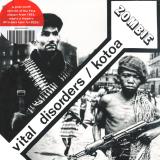
Vital Disorders & Kotoa - Zombie (7")

Vital Disorders & Kotoa

Zombie (7")

7"-VinylWAH7065
Wah Wah 45s
11.09.2025
  • A1: Vital Disorders - Zombie
  • B1: Kotoa - Zombie

Wah Wah 45s present a unique moment from 1982 where New Wave and Post Punk collided with Afrobeat in the shape of Norwich DIY outfit Vital Disorders and their subversive yet instantly memorable version of the Fela Kuti classic, Zombie.

Band member Suzy Cox explains more:

"The song came to the band through our vocalist Lenneka Van Gilst who was in the group between January 1980 and December 1981. Lenneka grew up in Nigeria and had the original track on vinyl. When she moved to Trowse House, Norwich, the flat under Chris, the VD's bass player, he heard the vibes floating through the floorboards. One thing led to another and it was in our set for ages. Lenneka had left the band to travel to Mexico by the time we recorded the track. We did well to choose it as the song has really stood the test of time. Lenneka had a lot of African Beat which was a big influence on us."

The track came to label boss Dom Servini's attention having been unearthed by BBC 6 Music DJ Gilles Peterson in late 2024, and a vinyl reissue of this rare and one-off gem was the obvious choice. Rather than pairing it with its original punky B-side though, Dom enlisted new signings to the label - young Afro-dub outfit Kotoa - to record their take on the Kuti classic. The quintet delivered what is a three minute, intense take on the Afrobeat genre, complete with youthful voices of protest echoing those of over 30 years ago.

The 7-inch vinyl only release of Zombie comes with re-worked art courtesy of our award winning designer Animisiewasz, taking the home-made look of the original cover and updating it respectfully for 2025.

out of Stock

Order now and we will order the item for you at our supplier.


Last In: 79 days ago
Various - Dolores: Salsa & Guaracha From 70's French West Indies

In Guadeloupe, many people think that jazz and ka music are like a ring and a finger. To some extent, the same could be said about so called Latin music and the music played in the French West Indies.

Both aesthetics were born in the Caribbean and bear so many connections that they can easily be considered cousins. In constant dialogue, there are lots of examples of their fruitful alliance and have been for a while. The English country dance that used to be practiced in European lounges came to be called kadrille in Martinique and contradanza in Cuba. They both featured additional percussion instruments inherited from the transatlantic deportation. Drawing from shared feelings about the same traumatized identity – later to be creolized – it would be hard not to assume that they were meant to inspire each other. The golden age of the orchestras that graced the Pigalle nights during the interwar period further proves the point. As soon as the 1930s, Havana-born Don Barreto naturally mixed danzón and biguine music in a combo based at Melody's Bar. In the following decade, Félix Valvert, a conductor who was born and raised in Basse-Terre in Guadelupe, also worked wonders in Montparnasse with La Coupole, which was an orchestra made up of eclectic musicians. Afro- Caribbean performers of various origins were often hired on rhythm and brass sections in jazz bands, which used to enliven the typical French balls of the capital. In the 1930s and onwards, Rico’s Creole Band was one of them.


Martinican violinist-clarinettist Ernest Léardée, who would become the king of biguine music as well as the main figure of French Uncle Ben's TV commercials (a dark stigma of post-colonial stereotypes), had musicians from the whole Caribbean sphere play at his Bal Blomet – and they all enchanted "ces Zazous-là" (according the words of Léardée's biguine-calypso piece). In les Antilles (French for French West Indies), music history started to speed up in the 1950s, when trade expanded and radio stations grew bigger. The Guadelupean and Martiniquais youth tuned in their old galena radio sets to South American and Caribbean music. As for the women traders, les pacotilleuses, they bought and sold goods across different islands (the "passing of items through various hands" was thought to be most pleasurable) and brought back countless sounds in their luggage. Such was the case of Madame Balthazar, who once returned from Puerto Rico with the first 45rpm and 33rpm to ever enter Martinique.

Out of this adventure was created the famous Martinican label La Maison des Merengues, a music business she opened and undertook with her husband and which proved to be a major landmark. At the end of the 1950s, in Puerto Rico, Marius Cultier competed in the Piano International Contest playing a version of Monk's Round 'Midnight. He won the first prize and this distinction foreshadowed everything that was to come. Cultier, the heretic Monk of jazz, was quickly praised for writing superb melodies, always tinged with a twist that conferred a unique sound to his music. It didn't take long for the gifted self-taught musician to get to play with Los Cubanos, making a name for himself thanks to his impressive maestria on merengues.

The rest is history. Besides, in the late 1950s, Frantz Charles-Denis, born into the upper middle class in Saint-Pierre and better known by his first name Francisco, went back home after working at La Cabane Cubaine – a club located rue Fontaine where he had caught the Latin fever. Francisco's music was therefore heavily marked by his Cuban cousins' influence, which gave the combos he led a specific style and also led to renewal. Things were swinging hard in La Savane, located in the main square in Fort-de-France. He set up the Shango club close by and tested out the biguine lélé there, a new music formula spiced up with Latin rhythms. Soon afterwards, fate had him fly to Puerto Rico and Venezuela.

As for percussionist Henri Guédon (percussions were only a part of his many talents), he was born in Fort-de-France in May 22nd 1944, the day marking the celebration of the abolition of slavery. As an old man, he could remember that in " his father's Teppaz, a lot of hectic 6/8 music was constantly playing...". In the opening lines of his Lettre à Dizzy, a small illustrated collection of writings published by Del Arco, he highlighted the huge impact that cubop had on him as a teenage boy, around 1960. He eventually turned out to be the lider maximo in La Contesta, a big band steeped in Latin jazz. He was also the one who originated the word zouk to describe music which brought the sound of the New York barrio to Paris. It was the culmination of a journey that started in Sainte-Marie: "a mythical place for bélé, the equivalent of Cuban guaguancó". In the early 1960s, the tertiary economy developed to the detriment of agriculture. Yet rural life was where roots music emerged in Martinique and in Guadeloupe.

Record companies played a major part in the process of Latin versions sweeping across the islands – before reaching everywhere else. Producer Célini, boss of the great Aux Ondes label, and Marcel Mavounzy, both the head of Émeraude records - a firm which was founded in 1953 - as well as the brother of famous saxophonist Robert Mavounzy, were big names to bear in mind. Although there were many of them - all of whom are featured on this record - Henri Debs was definitely the major figure in the recording adventure. He proved to be so influential that he even got compared to Berry Gordy. In the mid 1950s, when he acquired his first Teppaz, he worked on his first compositions: a bolero and a chachacha. Then, he became the one man who made people discover Caribbean music, from calypso to merengue. He was among the first ones to rush out to San Juan, Puerto Rico, to buy records and distribute them through a store run by one of his brothers in Fort-de-France. He had members of the Fania All Star come and perform there, which he was madly proud about. He was also the first one to pay attention to Haitian music, such as compas direct and various other rhythms which would soon flood the market. As a result, many of the combos hitting his legendary studio would end up boosted by widespread "Afro-Latin" rhythms. However, he never denied his identity: gwo ka drums were given a major role, although they were instruments which had long been banned from the "official" music spheres. The present selection bears witness to such a creative swarming. Here are fourteen tracks of untimely yet unprecedented cross-fertilization: all types of music rooted in the Creole archipelago have found their way, whatsoever, to the tracklisting. Whether originating from the city or being more rural, they all go back to what Edouard Glissant, in an interview about the place of West Indian music in the Afro-American scope, called "the trace of singing, the one which got erased by slavery." "It is so in jazz, but also in reggae, calypso, biguine, salsa... This trace also manifests through the drums, whether Guadelupean, Dominican, Jamaican or Cuban... None of them being quite the same. They all point to the idea of a trace, seeking it out and connecting to each other through it. This is the hallmark of the African diaspora: its ability to create something new, in relation to itself, out of a trace. It may be the memory of a rhythm, the crafting of a drum, a means of expression which doesn't resort to an old language but to the modalities of it." The opening track features one of the emblematic orchestras of this aesthetic identity, criscrossing many music types from the archipelago. The 1974 Ray Barretto guajira – Ray Barretto was a major New York drummer influenced by Charlie Parker and Chano Pozzo – is magnificently performed by Malavoi, a legendary Fayolais group (i.e from Fort-de-France). Additionally, the compilation ends on a piece by Los Martiniqueños de Francisco. It symbolically closes the circle as it is a genuine potomitan of Martinique culture which also functions as a tireless campaigner for Afro-Caribbean music. Practicing the danmyé rounds (a kind of capoeiria) to the rhythm of the bèlè drum, it delivers a terrific Caterete, a kind of champeta of Afro- Colombian obedience which was originally composed by Colombian Fabián Ramón Veloz Fernández for the group Wgenda Kenya. The icing on the cake is Brazilian Marku Ribas, who found refuge in Martinique in the early 1970s, bringing his singing to the last trance-inducing track. These two "versions" convey the whole tone of a selection composed of rarities and classics of the tropicalized genre, swarming with tonic accents and convoluted rhythms. It is the sort of cocktail that the West Indians never failed to spice up with their own ingredients. For instance, the Los Caraïbes cover of Dónde, a famous Cuban theme composed by producer Ernesto Duarte Brito, has a typical violin and features renowned Martinique singer Joby Valente and his piquant voice.


The track used to be – or so we think – their only existing 45rpm. The meaningful Amor en chachachá by L'Ensemble Tropicana, a band which included Haitian musicians among whom was composer and leader Michel Desgrotte, also recalls how Latin music was pervasive in the tropics in the mid-1960s. They were the ones keeping people dancing at Le Cocoteraie in Guadelupe and La Bananeraie in Martinique. Around the same time, another "foreign" band, Congolese Freddy Mars N'Kounkou's Ryco Jazz, achieved some success on both islands by covering Latin jazz classics – such as their adaptation of Wachi Wara, a "soul sauce" by Dizzy Gillespie and Chano Pozo whose interweaving of strings and percussions can have anyone hit the dancefloor. How can you resist Dap Pinian indeed, a powerful guaguancó by Eugene Balthazar, performed by the Tropicana Orchestra and published by the Martinique-founded La Maison des Merengues? It also acts as a symbol of the maelstrom at work. Going by the name Paco et L'orchestre Cachunga, Roger Jaffory used to play guaguancó too: his Fania-inspired Oye mi consejo is one example of his style. Baila!!!!! Dancing was also one of the Kings' focus points. Oriza is a Puerto Rican bomba and a "classic" originally composed by Nuevayorquino trumpeter Ernie Agosto, which reserves major space for brasses, giving it a special sheen.

Emerging from the New York barrios crucible was also La Perfecta, a Martinique group originating from Trinidad, whose name directly references the totemic Eddie Palmieri figure as well as his own band, also called La Perfecta. Here they borrow Toumbadora from Colombian producer and composer Efraín Lancheros and interpret it by emphasizing percussions, which set fire to the track even more than the wind instruments. The same goes for Martinique's Super Jaguars, who use Tatalibaba – a composition by Cuban guitarist Florencio "Picolo" Santana which was made famous by Celia Cruz & La Sonora Matencera – as a pretext for sending their cadences into a frenzy. In a more typically salsa vein, the Super Combo, a famous Guadelupean orchestra from Pointe-Noire that was formed around the Desplan family and had Roger Plonquitte and Elie Bianay on board, adapt Serana, a theme by Roberto Angleró Pepín, a Puerto Rican composer, singer and musician also known for his song Soy Boricua. Here again, their vision comes close to surpassing the original. In the 1970s, L'Ensemble Abricot provided a handful of tracks of different syles, hence reaching the pinnacle of the art of achieving variety and giving pleasure. They played boleros, biguines, compas direct, guaguancó and even a good old boogaloo - the type they wanted to keep close to their hearts for ever, "pour toujours", as they sang along together in one of their songs. Léon Bertide's Martinican ensemble excelled at the boogaloo which had been composed by Puerto Rican saxophonist Hector Santos for the legendary El Gran Combo.


Three years later, in 1972, Henri Guédon, with the help of Paul Rosine on the vibraphone, tackled the Bilongo made famous by Eddie Palmieri. Such a classic!!!!! And so were the Aiglons, the band from Guadelupe: choosing to execute Pensando en tí, a composition by Dominican Aniceto Batista, on a cooler tempo than the original, they noticeably used a wonderfully (un)tuned keyboard in place of the accordion. On the high-value collectible single – the first one released by Les Aiglons under the Duli Disc label – there is a sticker classifying the track under the generic name "Afro". Now that is what we call a symbol. Jacques Denis

out of Stock

Order now and we will order the item for you at our supplier.


Last In: 80 days ago
THE RADA'S OLD BOYS - MANOS

THE RADA'S OLD BOYS

MANOS

12inchLBR131
LITTLE BUTTERFLY RECORDS
02.09.2025

Ruben Rada played a pivotal role in the development of Uruguayan music. By blending Afro-Uruguayan traditions with rock, soul, jazz, and funk, he paved a new musical path that began in the 1960s and continues to evolve today. Throughout his career, he has consistently been surrounded by talented musicians who have been integral to his sound. This was especially true with Daniel "Lobito" Lagarde, bassist and founding member of the iconic band Totem in the early 1970s; Ricardo Nolé, keyboardist, arranger, and musical director of Rada's band in Argentina during the 1980s; and Nelson Cedréz, the drummer who has been by Rada's side since the 1990s. In 2016, these three musicians reunited to form Rada's Old Boys, releasing an album of jazz-infused reinterpretations of Rada's songs that earned rave reviews. Now, they return with Manos, a bold new album that reimagines Rada's works from every phase of his career, featuring deeply personal renditions and a special guest appearance from Rada himself on one track.

out of Stock

Order now and we will order the item for you at our supplier.


Last In: 9 months ago
Various - Habibi Funk: A Selection From Libyan Tapes (LP 3x12")

Habibi Funk is more than happy to announce our 31st release which happens to be our 3rd various artists compilation. The album is dedicated to the cassette tape scene in Libya from the late 80s to early 2000s, from disco to reggae to pop. All songs previously unreleased outside of Libya and not available on any DSP platforms.

This compilation isn’t a sweeping history of Libyan music — it’s a personal journey into the sounds we fell in love with while digging through tapes, conversations, and stories across Libya and beyond. Rather than spotlighting the country’s most famous musical exports, the compilation brings forward a mix of overlooked gems and local classics of the cassette era: artists whose work thrived despite political limitations, and scarce international exposure. The music featured here blends reggae rhythms, synthy disco grooves, gritty pop, house, and funk, a vibrant collision of genres that reflects Libya’s unique sonic landscape from the 1980s to the early 2000s. Many of these recordings were recovered from the TK7 cassette factory in Sousse, Tunisia, a now-demolished site that once played a quiet but vital role in distributing and manufacturing Libyan music. Other tracks were digitised in a Cairo hotel room in 2021, where we transferred nearly 100 tapes over the course of three days, on-site using a high-grade cassette deck brought into Egypt with us. From that trove emerged artists like Ahmed Ben Ali, Cheb Bakr, and Najib Alhoush & The Free Music, who have already featured on our earlier releases. Their sounds sit alongside contributions from this release from the likes of Khaled Al Melody, Fathi Aldiyqz & Sons of Africa Band, City Lights Band, Libya Music Band, and Group Hewaya. During this era, Independent artists relied on makeshift home studios or travelled abroad to record in Tunisia and Egypt, gradually building their own infrastructures for creativity. By the 90s and early 2000s, as access to digital equipment increased, a few of the artists began setting up their own studios — a shift that gave rise to a more self-sufficient recording culture across the country. The resulting sounds are anything but homogeneous. They reflect Libya’s geographic and cultural crossroads: North African rhythms meet Arab melodies and deep African roots. Reggae, in particular, took on a local Libyan flavour — not just musically, through the slowed-down cadence of traditional shaabi beats, but socially, as a vehicle for expressing identity and pride. What ties all the artists on this comp together is a boundary- pushing approach to genre and style: recorded in small studios, exchanged by hand, and shaped by a cross-pollination of influences, from Benghazi to Tripoli and beyond. All tracks are licensed from their creators and in the case of the artists being deceased from their estates. All profits are being split 50:50 between us in the licensors and ownership remains with the creators, we only licensed the music.

out of Stock

Order now and we will order the item for you at our supplier.


Last In: 5 months ago
ESPLENDOR GEOMÉTRICO - TARIKAT LP 2x12"

First-ever double vinyl release of TARIKAT, featuring 16 tracks recorded between 1986 and 1989, originally released on the now out-of-print 1997 double CD (Daft Records) and innitial 1991 cassette. This release features 16 tracks, remastered for this edition, showcasing E.G.'s unique sound from the eighties, reminiscent of other albums like Arispejal Astisaró, Nador, and Sheikh Aljama. This is a period especially appreciated by E.G. fans, where they developed their original and unique style that influenced many later groups and artists of industrial music and even certain forms of techno. Rough, primitive and minimalist, the tracks are constructed on distorted and noise rhythms, sometimes industrial, sometimes with tribal and African influences using synthesizers and analog electronic instruments. Gabriel Riaza, founding member of E.G. until 1991, worked in Melilla (North Africa) during those years, and this influenced the conception of many of Tarikat's tracks. The images used in this release are by Andrés Noarbe, who was responsible for Esplendor Geométrico's graphic design during the eighties and also served as the band's manager. The overall design is by Alonso Urbanos. Recorded by Arturo Lanz and Gabriel Riaza in Madrid and Melilla (North Africa) between 1986 and 1989. Tarikat is available as a limited edition double LP, a key release for fans of E.G., capturing their innovative and influential style that shaped industrial music and techno.

out of Stock

Order now and we will order the item for you at our supplier.


Last In: 9 months ago
Monzanto Sound - The Channel

Monzanto Sound are a rising South East London-based music collective fusing together different styles from the African Diaspora with a hypnotic, psychedelic edge and a passion for the alchemical practice of sonic storytelling. Traversing through jazz-inflected funk, psychedelic trip-hop and cosmic neo-soul; they connect the dots using pulsating grooves, hypnotic polyrhythms and soaring vocals. The band consists of Mimi Koku on vocals, Mali Baden-Powell on keys, Wazoo Baden Powell on drums, Anthony Boatright on bass and Rachel Asafo-Agyei on guitar and supporting vocals.

Set for release in August, debut album 'The Channel' explores themes of love and conflict, justice and injustice, fantasy and mythology. Its title is a reference to many things: a journey, a portal or window to another place, a connection, a transformation. It also makes links, conceptually and sonically, between the organic and the technological, the material and immaterial.

pre-order now15.08.2025

expected to be published on 15.08.2025

Various - Afrocolombia Remix Vol 3

The third volume of the AfroColombia Remix series merges African and Colombian sounds with contemporary electronica. It's a collaboration between Colombian labels Galletas Calientes and Palenque Records that celebrates Palenque's 20+ years of activism and Galletas Calientes' two-decade legacy while honouring the late Abelardo Carbono with a remix of his track 'La PiNa Madura' by Voilaaa - it's a standout here with hints of funk, soul and disco all bringing the sunshine. The compilation also reinterprets Nigerian Igbo Highlife and Ekobe music thanks to producers Captain Planet, Uproot Andy and Caribombo. They bring new, funky energy to timeless classics while preserving the original cultural essence.

out of Stock

Order now and we will order the item for you at our supplier.


Last In: 5 months ago
Giuseppe Ielasi / Jack Sheen - The Vestige LP

The Vestige is the first fruit of a new intergenerational collaboration between Giuseppe Ielasi, a quietly prolific key contributor to the European experimental music scene for over twenty years, and Jack Sheen, a young composer-conductor-sound artist from Manchester whose recent projects have seen him moving seamlessly from enigmatic chamber music composition and installations to conducting the London Symphony Orchestra. Their materials and working methods differ significantly, with Ielasi having focussed for many years on electro-acoustic techniques alongside his ongoing commitment to the guitar, and Sheen primarily composing for traditional instruments. More important, though, is what they share: a fascination with what Sheen calls “mysterious, liminal musical material,” using irregular repetition and cyclical forms to create structures at once alive with activity and almost static, as well as a rigorous exploration of spatial diffusion and the interaction of sound event and environment. Working individually with a library of acoustic instrument sounds from Sheen’s recent projects and Ielasi’s guitar, the pair eventually met for several days at Ielasi’s home studio in Monza, sculpting the fourteen pieces that make up The Vestige. Like Ielasi and Sheen’s solo works, the record shows an exquisite attention to details of sequencing and pacing, the sound palette and compositional approach consistent throughout while each piece asserts its own identity. The twenty-five seconds of the opening piece serve as an entrée into the record’s distinctive world of sound: repeated chirps fluctuate in volume as they move across the stereo spectrum, woven between strangled snatches of string glissando against a backdrop of percussive ticks, long tones, and white noise. Across the remaining thirteen pieces, Ielasi and Sheen sketch further dimensions of the ambiguous space, where distinctions between pitch and noise, repetition and irregularity, electronic and acoustic remain pointedly unclear. As the record’s title suggests, the origins of the sounds we hear have become remote: while at moments we get flashes of timbres and attacks that could come from wind instruments, bowed strings, or prepared guitar, these remain vestigial traces, glimpsed through a veil of shifting white noise textures. These textures are themselves difficult to trace, suggesting artefacts of the recording process, electronic synthesis, amplified room sound, rubbed instruments or objects. The Vestige shows an unusual degree of attention to frequency range as a compositional tool, something it shares with the hyper-subtle variations of Ielasi’s electroacoustic works and the deliberately ‘unbalanced’ midrange-heavy ensemble of Sheen’s Sub. Here, movement between episodes is as much about adding or removing a frequency band as it is about changes in density, harmonic content, or instrumental texture. Tracks are marked by the sudden appearance of subbass or exaggeration of high frequencies in otherwise similar material, contributing to our sense that these fourteen pieces are like different views on a scene that we can never quite see clearly. While calling up a range of past music, from the early works of Rolf Julius to Simha Arom’s recordings of layered polyrhythms embedded in the background sounds of central African villages to the temporal distortions and layered hiss of DJ Screw, the alluring and disconcerting world of The Vestige is entirely its own.

out of Stock

Order now and we will order the item for you at our supplier.


Last In: 9 months ago
Various - MUSIC FOR A REVOLUTION VOL 1 - GUINEA'S SYLIPHONE RECORDING LABEL (1967-1973)

On October 2 1958, after over 60 years of colonial rule, Guineans voted overwhelmingly for their independence, and Guinea was declared a Republic with Sékou Touré as President. Guinea was the first of West Africa’s Francophone colonies to gain independence. To free Guinea from its colonial legacy, president Touré sought to restore dignity to his nation and give cause for Guineans to take pride in their culture, history and newfound freedom. To achieve this, he instructed his government to implement new cultural policies that were intended to revitalise and celebrate indigenous culture. The focus of these new policies was on music.

In 1961, President Touré launched authenticité, the name of his new cultural policy for Guinea. One of its first acts was to assemble the best Guinean musicians into a new state-sponsored orchestras that were tasked with presenting traditional Guinean music in a new and modern style. All musicians in Guinea’s orchestras were officially designated as members of the public service. During the years of Sékou Touré’s presidency (1958 – 1984), the government’s cultural policy of authenticité was applied strictly to the creative arts. Guinea’s sole political party, the Parti Démocratique de Guinée exercised complete authority over artistic production. The scale of the Guinean government’s commitment and efforts to invigorate its indigenous musical cultures was unmatched in Africa, and it presented a clear contrast to the minimal endeavours undertaken by Guinea’s former colonial rulers.

From 1967 to 1983, Guinea’s government presented selections of songs from the Voix de la Révolution catalogue on its own recording label, Syliphone. These recordings were described as ‘the fruit of the revolution’. Syliphone was revolutionary in many aspects: it was the first recording label to feature traditional African musical instruments such as the kora and balafon within an orchestre setting; it was the first to present the traditional songs of the griots within an orchestre setting; and it was the first government-sponsored recording label of post-colonial Africa. Syliphone represented authenticité in action, and over 750 songs were released by the recording label on 12-inch and 7-inch vinyl discs. All are highly sought after by collectors worldwide.

This first volume of a two-volume series presents a selection of the best of early Syliphone recordings. The songs demonstrate not only the essence of Guinea’s authenticité policy and of its subsequent Cultural Revolution, but of a confluence of musical styles from Cuba, jazz, highlife and the diverse influences of Guinea’s cultural groups.

out of Stock

Order now and we will order the item for you at our supplier.


Last In: 4 months ago
THE MAYTALS - MONKEY MAN

The Maytals

MONKEY MAN

12inchMOVLPY2721
Music On Vinyl
01.08.2025
  • A1: Peeping Tom
  • A2: Revival Reggae
  • A3: Give Peace A Chance
  • A4: Gold And Silver
  • A5: The Preacher
  • A6: Bla Bla Bla
  • B1: African Doctor
  • B2: Sun Moon And Star
  • B3: She’s My Scorcher
  • B4: Monkey Man
  • B5: Pressure Drop
  • B6: I Shall Be Free

The Jamaican musical group The Maytals can be considered as one of the best known and most important ska and rocksteady groups of all time. Frontman Toots Hibbert penned an impressive catalogue of songs during his time in jail, and after his release he reunited with his bandmates and entered the studio with the brilliant producer Leslie Kong. Some of the great tracks he recorded during that time are included on this record, like “Monkey Man” (covered by the legendary Amy Winehouse) and “Pressure Drop”. The quality and great energy of this band is very well represented on this release.

pre-order now01.08.2025

expected to be published on 01.08.2025

Various - Edna Martinez Presents Picó: Sound System Culture From The Colombian Caribbean LP 2x12"
 
19

Berlin-based Colombian DJ, producer, and curator Edna Martinez presents a sonic journey into the electrifying world of Picó—the vibrant and dynamic sound system culture that has defined the streets of Cartagena and Barranquilla for decades. More than just a musical movement, Picó is a way of life, a bold expression of identity, community, and resistance. From its roots in the working-class neighbourhoods of Colombia’s Caribbean coast to its deep connections with Africa and the Caribbean, this compilation captures the pulse of a culture where music is played at full volume, rhythms travel across oceans, and dance is both a form of celebration and storytelling. For those unfamiliar, Picós are hand-painted sound systems, often adorned with dazzling colours and striking imagery, each with its own name and sonic identity. These mobile discos became the heart of neighbourhood bailes, where the sounds of champeta, highlife, soukous, mbaqanga, zouk, soca, and cumbia would turn every street corner, market, and terrace into a dancefloor. Initially built by local craftsmen using modified speaker components, Picós became legendary for their powerful bass and exclusivity, with DJs sourcing rare vinyl from African and Caribbean ports and rebranding them with unique piconemas—new names adapted to local slang, making the tracks instantly recognisable within the community.

This compilation brings together a carefully curated selection of these rare and sought-after tracks, tracing the deep-rooted musical exchanges between Colombia, West and Central Africa, and the Caribbean. Featuring artists like Los Corraleros De Majagual, Peacocks International Highlife Band, Pedro Lima, Zaïko Langa Langa, and more, the album also includes edits by Edna Martinez, reimagining these timeless rhythms for contemporary audiences while staying true to their original spirit.

Strut presents ‘Picó! Sound System Culture From The Colombian Carribbean’ across 2LP Vinyl, 1CD & Digital focusing on a celebration of the raw, undiluted energy of Picó culture. Through Edna Martinez’s curation, and extensive liner notes, this compilation offers a powerful and authentic glimpse into one of the most vibrant musical traditions of the Colombian Caribbean

out of Stock

Order now and we will order the item for you at our supplier.


Last In: 8 months ago
The Impossible Dreamers - Spin

Emotional Rescue completes the series of non-defined reissues where the label licenses an all-time favourite, remasters and then reappraised with new interpretations by contemporary producers for today’s collectors.

After the series started back in 2019 with Hawkwind’s sprawling psychedelic electronics, featuring deep drone mixes by the esteemed digger Cherrystones (ERC074), the bouncing cosmic-Balearics of Thomas Leer with wonderful reworkings by friend and producer Bullion (ERC075) and then the post punk dubs of The Embrace and Timothy J Faiplay’s brooding italo-dub excursions (ERC076), there was always one artist and producer left out. Finally, then the percussive excursion of the early 80s band The Impossible Dreamers and their cult B side jam, Spin, coming with 9 minutes percussion-dub extravaganza of an extended reversion, plus a dub heavy reprise, by label go-to Dan Tyler (Idjut Boys /Noid), under his NAD moniker.

Started by a group of friends while at Exeter University that centered around Caroline Radcliffe, James Hood, Justin Adams and Nick Waterhouse, their debut 12” record is one of just three on the 100 Things To Do label. The other two releases have already been covered with the Hamburger All Stars ‘Swinging London’ 12” (ERC114) of 2022.

Recorded before the move to West London, ‘Life On Earth’ was a raw post punk vocal pop cut, with influences of dub, funk, hip-hop and African music shining through, there were in their own words, “young music fans starting out, with no agenda”.

However, it was on the B side that things got interesting. Enamored by the growing trend of extended 12” singles, they decided, with the A side wrapped up, to have some studio experimentation by recording a drumming jam, with all the members playing percussion, followed by some overdubbing. Memories are hazy, but at the time the band was an 8-piece, so the results a chaotic explosion, capturing the essence of that time. Featuring Nick and James on 4 hand piano, plus Caroline on Oboe, with some additional hollering and wooping vocals, Spin was a 5-minute burst of energy.

In effect, self-released in 1982, the band didn’t expect much to come of it, but the 12” acted as a calling card leading them to London and later signing for RCA. At the same time, Spin was being discovered in the early eighties alternative club world. On a trip to New York, the track was heard being played Downtown, and on enquiring it was discovered the DJ was playing a 7” that was never an official release but cut in the US solely for the club DJs there.

Its resonance extended further, to Italy and the Cosmic club of the resident, an ever-searching Danielle Baldelli, before being picked up a few years later by a young Andrew Weatherall during his pursuit of an alternative “Balearic” beat during the late eighties Summers of Love and has even recently received the Joe Clausell edit treatment back again in NYC.

For the remake to fit the label series, it was only right to ask label friend Dan Tyler to do what he does so well, putting the original through his array of dub machines and pedals, extending and cutting with aplomb to create an incendiary ‘Reversion’ that will send dancefloors literally in a spin. Teasing the percussion incandescent, looping and teasing, the piano held back before finally releasing in a haze of dub effects.

This is followed by the ‘Riddim Reprise’. Working with London based drummer Matt Bruce (Claptrap), this is the perfect DJ tool, taking the original idea of the band, to just jam see what happens, twisting it full of space echo and reverb, to offer a perfect 12” Extended Mix.

out of Stock

Order now and we will order the item for you at our supplier.


Last In: 10 months ago
PROHIBITION - COBWEB-DAY (REVISITED)

In 1995, when Cobweb-day was released, Fabrice Laureau was 24, Nicolas Laureau 21, Ludovic Morillon 22, and Quentin Rollet, who had just joined them on this new album, was 21. Prohibition, founded in 1989, had already released two albums: Turtle in 1993 and Nobodinside in 1994, on the Distorsion label. Cobweb-day, literally "Spider-web Day," is poetic, satirical, and libertarian. A title conceived by Nicolas to express all the feelings and themes explored on the album, this neologism also echoes the artwork on the cover. The lyrics describe, in vitriolic poetry and with a touch of self-deprecation, a world based on the powers of commodification and order, on submission to modern Molochs. Thirty years ago, it addressed themes such as the trade in minds and bodies, Kafkaesque justice, state violence, and Western blindness. Is this a coincidence that might raise a smile? Fabrice and Nicolas were both conscientious objectors at the time the album was written. The deceptively childish drawing that adorns the cover was created by Fabrice in 1989. It evokes African art and the skyscraper where the brothers grew up. Its title? "Glances on the Horizon." Yet, in these naive eyes, locked in a rhizomic matrix, there is the disturbing sensation of being observed, scrutinized, or perhaps imprisoned. This is Cobweb-day. During this period, the band spent its entire life touring with the British post-punk trio Headcleaner and the furious Lyon-based Condense. Their correspondence, followed by a meeting in 1994 with Guy Picciotto, singer-guitarist in Fugazi, led to a series of concerts with the Washington, DC quartet, around the time of the album's release in the spring of 1995. Quentin Rollet gradually joined the band, first on stage and then on the records. The concerts of this era often ended with long improvisations featuring saxophone, sitar, bass, and drums. Prohibition had emerged from the shadows, but chose to continue evolving underground, with the Laureau brothers creating their label Prohibited Records. Cobweb-day serves as the first reference. Thirty years ago, then. The album was recorded at Ark Studios near Paris in January 1995, along with eight other previously unreleased tracks. This new mix was created at Black Box Studios by Peter Deimel and Nicolas from 24-track analog tapes in August 1998, shortly before the release of 14 Ups & Downs, Prohibition's fifth and final album, and their US tour. All tracks were remastered by Fabrice and Nicolas Laureau in March/April 2025.

pre-order now11.07.2025

expected to be published on 11.07.2025

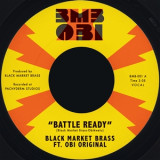
BLACK MARKET BRASS & OBI ORIGINAL - BATTLE READY / WHAT YOU MAKE IT
  • Battle Ready
  • What You Make It

'BMB x OBI' marks a new venture for the long-time instrumental powerhouse Black Market Brass. Teaming up with Obi Original, the young and visionary Minneapolis talent with a mission to share the heart of African music with the world, Black Market Brass delivers both proverbial and prophetic messages for the year to come - 'You've got to be Battle Ready!'. Inspired by the raw energy and messages of Fela Kuti and indebted to Orchestre Poly-Rythmo de Cotonou for their heavy fusion of voodoo-infused Afro-beat, Black Market Brass points in both directions towards the resurgent history of West African funk and the future of where a younger generation can lead us. These tracks are bursting at the seams with energy and force the listener to wise up and march along as soon as the drums thunder and the horns blare their first notes. The A-side, 'Battle Ready,' is what it claims: a band armed and ready to take on whatever may come. Strapped to the hilt with three drummers, this infectiously rhythmic track simmers, if not boils, under Obi's demands to mount up. The energy is high, edgy, and proves that getting nine musicians in the same room to track live captures a passion that bulldozes through anything placed in its way. The B-side, 'What You Make It,' encapsulates a musical quality that Black Market Brass has refined over its many years together, with polyrhythmic ideas you don't have to understand to know it feels good. Infused with elements of ethno-funk and classic highlife, this Ebo Taylor & Pat Thomas inspired work approaches the listener with a simple message amongst a danceable cacophony of sounds - 'Life is what you make it.' Move in 4, dance in 3, or sway in 6. Whichever you choose, choose it deliberately; the music will be there to support you.

pre-order now20.06.2025

expected to be published on 20.06.2025

Lagoss & Abagwagwa - Island Slang

Lagoss&Abagwagwa

Island Slang

12inchCREP117
Discrepant
20.06.2025

A meeting of minds and bodies on a heady percussive trip with no clear destination, captured live at Espacio Cultural El Tanque in Tenerife. With both imaginary and lived in tropical sceneries coalescing the two units, both Tenerife's Lagoss and Kampala's Abagwagwa (aka Nihiloxica) find a common thread to disentangle cartographies. As if it was bound to happen. As it did.

Taking Abagwagwa's relentless barrage of polyrhythms as a starting point to jammin' excursions that never falter into self indulgence, brimming with ideas and spirits pulled from East African traditions, Free Jazz cosmologies, Dub tactics, urban sonic warfare and different strains of psychedelia through a vast array of drums, percussion, flutes, skewed synths, ecstatic vocals and electronic processing.Blessed with the xamanic drumming of João Pais Filipe on two tracks and feeling equally indebted to both bands' vision all the while commiting to a newfound sense of wonder, 'Island Slang' is a celebration that's truly alluring in its search for some sort of 'Universal Consciousness' - to quote Alice Coltrane - for which we're now invited to tag along. You are all welcome.

pre-order now20.06.2025

expected to be published on 20.06.2025

Sinouj - Hak Dellali

Sinouj

Hak Dellali

7"-VinylLMNKV120
Lovemonk
17.06.2025

Madrid-based ensemble Sinouj fuses the deep-rooted traditions of the Mediterranean with the driving force of contemporary jazz, funk, rock and West African grooves. Their open-door vision draws in musicians from across the spectrum – from flamenco and Iranian classical music to soul and cutting-edge jazz – creating a dynamic, ever-evolving sound that is both global and unmistakably their own.

Their latest release shines a spotlight on 'Hak Dellali', a traditional North African tune that first rose to fame in the 1980s thanks to Tunisian star Hedi Habbouba and later Emirati singer Hussain Al Jassmi. In Sinouj's hands, this classic song becomes a transformative ritual, pulsing with the festive sway of Moroccan chaabi rhythm, Tuareg rock grit and the spontaneous spark of jazz. Over the years, it has consistently ignited the band's concerts into ecstatic celebration.

Backed with a psych-tinged and club-oriented remix by Berlin's Voodoocuts, with 'Hak Dellali' Sinouj continue to blur lines between genres and geographies, offering a fresh take on tradition.

out of Stock

Order now and we will order the item for you at our supplier.


Last In: 8 months ago
MADALITSO BAND - MA GITALA LP

Madalitso Band

MA GITALA LP

12inchBJR110LP
Bongo Joe
13.06.2025
  • Anafera Chiboda
  • Princess Wanga
  • Ma Gitala
  • Chemwa
  • Mwadala
  • La Bwino
  • Zili Komweko
  • Po Lankhula

For their third album on Bongo Joe, Madalitso Band takes a new direction.

After two records capturing the raw intensity of their live performances, the Malawian duo ventures for the first time into the possibilities of the studio — without ever compromising their signature style or energy.

Armed with their handmade babatone, a guitar, and their interwoven voices, Yobu and Yosefe craft a sound at the crossroads of banjo music, kwela, gospel, and African folk. An acoustic trance that’s both minimal and vibrant, deeply rooted in tradition yet undeniably fresh and contemporary. On Ma Gitala, they add new textures: layered vocals, playful percussion, melodic surprises, and guests from their close and family circles.

Always guided by instinct, the band reveals a more intimate and narrative side of their universe — full of memories, spontaneity, and close-knit complicity. An album that captures the joy and creativity of two artists who turned the street into a stage, and the stage into a playground.

pre-order now13.06.2025

expected to be published on 13.06.2025

MADALITSO BAND - MA GITALA
  • Anafera Chiboda
  • Princess Wanga
  • Ma Gitala
  • Chemwa
  • Mwadala
  • La Bwino
  • Zili Komweko
  • Po Lankhula

For their third album on Bongo Joe, Madalitso Band takes a new direction. After two records capturing the raw intensity of their live performances, the Malawian duo ventures for the first time into the possibilities of the studio - without ever compromising their signature style or energy. Armed with their handmade babatone, a guitar, and their interwoven voices, Yobu and Yosefe craft a sound at the crossroads of banjo music, kwela, gospel, and African folk. An acoustic trance that"s both minimal and vibrant, deeply rooted in tradition yet undeniably fresh and contemporary. On Ma Gitala, they add new textures: layered vocals, playful percussion, melodic surprises, and guests from their close and family circles. Always guided by instinct, the band reveals a more intimate and narrative side of their universe - full of memories, spontaneity, and close-knit complicity. An album that captures the joy and creativity of two artists who turned the street into a stage, and the stage into a playground.

pre-order now13.06.2025

expected to be published on 13.06.2025

Sahib Shihab & The Danish Radio Jazz Group - OKTAV
  • A1: Di-Da (Sahib Shihab) 5’10
  • A2: Dance Of The Fakowees (Sahib Shihab) 4’14
  • A3: Not Yet (Sahib Shihab) 3’25
  • A4: Tenth Lament (Sahib Shihab) 6’20
  • B1: Mai Ding (Sahib Shihab) 4’50
  • B2: Harvey’s Tune (Sahib Shihab) 3’07
  • B3: No Time For Cries (Sahib Shihab) 3’52
  • B4: The Crosseyed Cat (Sahib Shihab) 3’34
  • B5: Little French Girl (Sahib Shihab) 2’35”

Recorded August, 1965, Copenhagen, Denmark.

Original LP issue: OKTAV – OKLP 111


Sahib Shihab (Edmund Gregory) played with many of jazz’s finest musicians. Shortly after he became one of the first jazz players to change their names due to an Islamic conversion, he joined Thelonious Monk for his Blue Note sessions. He also played with Art Blakey, Dizzy Gillespie, Oscar Pettiforn and Quincy Jones. A unique musician, he was at home in every musical style, from the experimentalism of Thelonious Monk to the more direct hard bop of Art Blakey. Sahib Shihab’s distinctive sound was rooted in his modernist compositions and arrangements, complemented by an intense, soulful playing style.


In 1959 he toured Europe with Quincy Jones after getting fed up with racial politics in USA and ultimately settled in Scandinavia. He worked for Copenhagen Polytechnic and wrote scores for television, cinema and theatre. He remained there until 1973. During this period, he recorded several albums as leader for European labels such as Vogue, Storyville and Futura.


In 1961 he joined The Kenny Clarke-Francy Boland Big Band and remained a key figure in the band for the 12 years it ran. He married a Danish lady and raised a family in Europe, although he remained a conscious African-American still sensitive to racial issues.


This record, on the Danish Oktav label, his second as a leader and also his rarest is a true masterpiece !!!


Personnel :

Sahib Shihab (Baritone saxophone, Flute, Cowbell)

Poul Hindberg (Alto saxophone, Clarinet)

Ib Renard (Baritone saxophone)

Bent Nielsen (Baritone saxophone, Flute, Clarinet)

Niels-Henning Ørsted Pedersen (NHOP) (Bass)

Alex Riel (Drums)

Allan Botschinsky (Trumpet)

Fritz von Bülow (Guitar)

Bent Axen (Piano)

Bent Jædig (Tenor saxophone, Flute)

Niels Husum (Tenor saxophone)

Svend Åge Nielsen (Trombone, Bass trombone)

Torolf Mølgaard (Trombone, Euphonium)

Palle Bolvig (Trumpet)

Palle Mikkelborg (Trumpet)

Poul Kjældgård (Tuba)

Louis Hjulmand (Vibraphone)

pre-order now13.06.2025

expected to be published on 13.06.2025

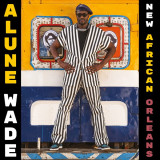
Alune Wade - New African Orleans LP

In his sixth and latest album “New African Orleans”, released by ENJA and Yellow Bird, bass guitarist and composer Alune Wade explores the multiple junctions between his native West African rhythms, the Afrobeat and juju rhythms from Lagos and the brass band repertoire immortalized in New Orleans. “I’m exploring a world that goes from my roots to the lost branches on the other side of the Atlantic,” explains the musician from Senegal. He has whittled down around 50 compositions – both original and standards - to a dozen which Alune recorded in Paris, Dakar, Lagos and New Orleans. “The idea first came to me during the Jazz à Gorée festival I organized back in 2014,” he explains. “It had me reflect on the notion of reversing the musical trip most people take from the United States to the African continent. I wanted to set out westward and begin a musical conversation with the best artists, both in Nigeria and the US.”
To achieve this, Wade has invited top artists from both sides of the Atlantic, including the Nigerian talking drummer Olaore Muyiwa Ayandeji, the percussionist Weedie Braimah and the jazz drummer Herlin Riley from New Orleans. The musical inspirations are equally transatlantic, ranging from Dr. John to Manu Dibango and Charlie Parker. But the 45-year-old also pays homage to his father who was a brass band star in his native Senegal back in the Sixties.
BACKGROUND

We only have a partial idea of the birth and remarkable development of the music born of the transatlantic slave trade. From Malinke ballads to Cuban son, from call-and-response patterns to field hollers and hip-hop, Yoruba rhythms to Argentinian tango, from Angolan percussions to the New Orleans brass band sounds… all have roots in Africa and a shackled migration that lasted four centuries. No more so than Congo Square in the Louisiana capital. In 2024, we mark the 300th anniversary of the implementation of the Code Noir which “gave enslaved Africans Sundays off to dance”. A drop in the ocean, but one which shows the importance of culture as a lifebuoy against this barbaric trade. As the Guadeloupian writer Daniel Maximin once claimed: “Our music guided us from the scream to the song, from dragging our chains to dancing.”

pre-order now30.05.2025

expected to be published on 30.05.2025

De Frank Kakra - Finding De Frank LP 3x12"
  • 01: Call Me Frank
  • 02: The World Is One
  • 03: Psychedelic Man
  • 04: Think Of The Future
  • 05: Afe Ato Yen Bio
  • 06: Yare Ye Ya
  • 07: Sometimes We Love
  • 08: We Can Take Time
  • 09: Hippy Around
  • 10: Groovy In Groove
  • 11: Come On Baby
  • 12: Funky Train
  • 13: Ayee Menko
  • 14: Get On Tonite
  • 15: Dig This Way
  • 16: Dankasa
  • 17: Rain, Rain
  • 18: Worry
  • 19: Keep On Loving
  • 20: Sons Of Jehovah
  • 21: Baby Don&Apos;T Play Me Wayo
  • 22: Mefa Medo
  • 23: Rasudilahi
  • 24: Abusua

Not much is known about De Frank Kakra - let alone his birth name or where he is today. A few liner notes scattered across his records give a glimpse of his career as a backing vocalist and percussionist on the Ghanaian highlife scene of the 1970s, notably with Vis-A-Vis, K. Frimpong's band (Cubano Fiestas). He later formed his own bands, The Professionals and The Diggit Ways, alongside Sammy Copper, recording throughout West Africa. His recordings have now been unearthed, remastered and compiled in a triple LP anthology of his musical works. Although much remains unknown, RastaPastaRecords' goal is to ascertain several discoveries made about his life during the production of this record and to continue the research. "Call Me Frank" is a funky take on 1970s highlife set to a vintage Afro - rock fusion that evokes a time when West African dance floors vibrated with raw energy and relentless groove. "Psychedelic Man" is a full dive into the De Frank Kakra sound. With its hypnotic guitar riffs, cosmic organs and head- nodding drum rhythms, this infectious anthem will plunge you into a state of nostalgic psychedelia.

pre-order now30.05.2025

expected to be published on 30.05.2025

SAULT - 5 LP

SAULT

5 LP

12inchFLO0002LP
Forever Young Originals
20.05.2025

The incredibly elusive band Sault release their debut album 5 on Vinyl via independent record label Forever Living Originals. The record fuses African, soul, funk and post-punk vibes amongst other flavours. With support from Radio 6's Lauren Laverne and USA's KWRC and KEXP, the band are set to go from strength to strength becoming one of the most prolific bands of 2020 with a barrage of material up their sleeves

Dean Josiah Cover aka Inflo has been composing for Michael Kiwanuka, The Kooks, Tom Odell, The Jungle and Little Simz

stock from09.06.2026


Last In: 11 days ago
FAT FREDDY’S DROP - WAIRUNGA 2x12"

Wairunga finds the Freddy juggernaut digging deep to debut five songs and revisit two classics captured in an outdoor performance sans audience but with wild weather elements playing an important creative role in producing this unique live album.

Recorded in Wairunga, high above Waimarama Beach in New Zealand, it is place etched into the DNA of Fat Freddy’s Drop who’ve roamed here for over 20 years; to party, relax between tours, make a song Wairunga Blues in its honour and even to get married. Farmed by the Parker family for a century, Wairunga is an oasis of green pasture and native tree filled valleys that fall away to the ocean below.

In inimitable Freddy's fashion the new tunes run a gamut of genre busting styles. Coffee Black is layered with cosmic hot buttered soul and cinematic wigged out psyche-blues while Shady continues Freddy's Afro-Acid adventures with Fitchie’s beat-making tapping into a South African township brand of techno Freddys experienced on tour.

Bush Telegraph is a reggae classic featuring MC Slave aka Mark Williams on the mic with freshly minted yum char spiced rhymes of hope. The other new tracks Leave Your Window Open and Dig Deep are loose rhythmic experiments that the band have been working on for a long time. Versions were developed, rehearsed, but then set aside – dismissed, demonised - only to be revived with new energy in some future moment of creative cohesion. The results are loose-limbed; broken and bruised beats smashing into subterranean bass and twisted up melodies.

Bones and Wairunga Blues are the two classics from Freddy's vast back catalogue. Off the Blackbird album, Bones has aged beautifully - like a fine wine - the song’s component parts matured and melded together in harmony and balance. DJ Fitchie rates this 2021 vintage superior to the 2013 original. Wairunga Blues has been a work-in-progress since it was released on Bays in 2015. Kuki dials up some appropriately off-kilter keys to match the wonky-funk laid down by Fitchie’s bass line and the horns. It’s a mighty comeback – and a fitting tribute to this magical place.

out of Stock

Order now and we will order the item for you at our supplier.


Last In: 12 months ago
SONIC INTERVENTIONS - DO YOU REMEMBER? LP

Sonic Interventions is a diaspora-futuristic band of interdisciplinary artists from five continents. Emerged in 2020 from the transcultural Berlin Jazz scene, the group unites diverse languages, instruments, rhythms and dance for collective meditation and healing, improvisation and groove.

Since then, the band has established itself as one of Berlin's most acclaimed underground Jazz collectives. Known for inclusive live spectacles, in which moments of meditation and trance rise into heavy grooves, traditional rhythms of the African and Latin American continents coalesce with urban styles such as Hip Hop, Trap and House. The band combines poetry and dance inspired by the cosmos, ancient alchemy and world mythologies.

out of Stock

Order now and we will order the item for you at our supplier.


Last In: 12 months ago
The Anchors - Black Soul

Ground-breaking afro-rock and jazz with Memphis soul roots on this lost 1972 gem. Lovingly restored and reissued by Matsuli Music


'Black Soul' from 1972 is the third and last known album by The Anchors, a soul group originally formed in Johannesburg's Alexandra township in 1968. Their first two albums, 'Soul Upstairs' from 1969 and 'Everything' from 1971, were issued on Teal's City Special label alongside other prominent South African soul groups of the era like The Beaters, The Movers and The Flaming Souls.

On 'Black Soul', The Anchors undergo a notable shift, moving away from their early Memphis soul influences towards a pioneering African-driven sound. These changes laid the foundations for an emerging afro-fusion scene in the years to come from groups like Batsumi, The Drive and Harari.

'Black Soul' features a who's who of intergenerational musicians from great South African bands over the decades. In addition to Zacks Nkosi, the renowned bandleader of the Jazz Maniacs and long-time member of the African Swingsters in the 1940s and 50s, this album includes kwela star Little Kid Lex Hendricks, known for his Columbia recordings of the late 1950s; as well as Zack's son Jabu Nkosi who would go on to play with The Drive, Roots and Sakhile; and Banza Kgasoane later a member of The Beaters, Harari and then Mango Groove.

Now remastered for its first release since the original 1972 pressing, this lost gem offers a revealing glimpse into the evolution of South African music during a transformative era.

Zacks Nkosi (Sax), Patrick Jabu Nkosi (Organ and Flute), Anderson Nkosi (Lead Guitar), Given Sabela (Bass Guitar), Kid Lex Hendrix (Sax), Banza Kgasoane (Trumpet), Peter Morake (Drums), Hamilton Nzimande (Musical Director).
Original LP issued in South Africa on GRC’s CBS label (LAB 4037) in 1972.
Produced for reissue by Chris Albertyn and Matt Temple at Matsuli Music, and Siemon Allen at Flatinternational.
Original vinyl sourced from the Flatinternational Archive.
Artwork restoration and design by Siemon Allen.
Audio restoration, mastering and lacquers by Frank Merritt at The Carvery.
Manufactured at Pallas, Germany.

out of Stock

Order now and we will order the item for you at our supplier.


Last In: 12 months ago
ICE (LAFAYETTE AFRO-ROCK BAND) - AFRO AGBAN

Ice(Lafayette Afro-Rock Band)

AFRO AGBAN

12inchSTRUTLP345
STRUT
02.05.2025
  • Oda Mimian
  • Ozan Koukle
  • Afon
  • Alow Aton
  • Afro-Love
  • Sikiliza
  • Racubah

Strut proudly presents a long-coveted gem from the discography of the legendary Ice, AKA Lafayette Afro-Rock Band, now available on vinyl LP. Afro Agban is the closest album in Ice"s catalogue to capturing the signature sound of the Lafayette Afro Rock Band. It showcases the band"s hallmark intricate rhythms and masterful soloing, delivering a collection of solid compositions that defined their first four records. Blending funk, jazz, and African rhythms across seven mostly instrumental tracks, and once again produced by the prolific Pierre Jaubert - one of 1970s France"s most influential producers - Afro Agban is an essential addition to the Topomic/Parisound catalogue.

pre-order now02.05.2025

expected to be published on 02.05.2025

Marina y su Melao - Rezo al agua

Marina Y Su Melao

Rezo al agua

12inchLMNK83LP
Lovemonk
25.04.2025

Marina y su Melao is a band from Barcelona led by Puerto Rican Marina Molina. After a period of live activity, in 2025 they will release their debut album, "Rezo al agua", where Puerto Rico's bomba, an eminently rhythmic genre, expands to fuse with the colours and flavours of other Afro-Caribbean sounds. Tradition and folklore are embodied in a powerful and innovative conception.

In "Rezo al agua", Marina Molina expresses an attachment to the land, the landscape, the culture, the beliefs and the environment where she was born, Puerto Rico. She does this through bomba, one of the country's most identifying musical expressions. Bomba is as old as the slavery of those who gave birth to it in order to tell their tribulations and hopes, armed with the instrument they had at hand: the drums. It is a kind of meta-genre that includes a multitude of rhythmic varieties.

But Marina is something more than bomba, the legacy she received from her elders and which she does not wish to turn into a frozen object of veneration, an untouchable totem, mystical and ruled by norms bequeathed by the years. Marina, who has Colombian blood in her veins, is an artist of today, of a world in which cultures can mix, people migrate, influence each other, travel, exchange their cultural traces, can see online what happens at the other end of the world and thus open the window that facilitates the mixing of identities. These mixtures redraw borders and genres, allowing popular music to avoid its fossilization.

Marina grows in this fertile territory. She has a ductile and powerful voice, as clear as her strong, independent mindset. This is a remarkable element in the lyrics of the album, which despite being written from a current perspective, contain the sense that popular lyrics have always had: they explain life with the small letters of the everyday. And all this is presented in the bomba genre. Impure. There is an African guitar, a pedal steel guitar, a Wurlitzer, an accordion and everything that Marina and Miguelito Superstar, the album's producer, thought was necessary to accentuate the musicality of a full voice and drums that resonate raw with the vibration of tradition. A tradition now in the hands of a woman who aspires to her own space in life, to write her own chapter.

pre-order now25.04.2025

expected to be published on 25.04.2025

Deniis Mpale - Our Boys Are Doing It
  • A1: Our Boys Are Doing It 19:33
  • B1: Dennis Groove 10:03

  • B2: Orlando 9:52

By the mid-1970s, trumpeter Dennis Mpale was a consummate musician with an auspicious resume that located him at all the key turning points in the evolution of modern South African jazz. In his mid-20s, he led the trumpet section of Chris McGregor’s Castle Lager Big Band and participated in the ensemble’s landmark 1963 album Jazz/The African Sound. 1968 saw him recording I Remember Nick with The Soul Giants, which joined a wave of notable late-1960s releases, including The Mankunku Quartet’s Yakhal' Inkomo and The Chris Schilder Quintet’s Spring, that ignited the ambitions of South African jazz artists and producers in the 1970s. In 1975, Mpale co-founded the “rock jazz” ensemble Roots, inaugurating the era of jazz fusion in South Africa and opening the door for Pacific Express and Spirits Rejoice.

By 1977, Mpale had earned the right to an album of his own and, having participated in the 1975 recording of Abdullah Ibrahim’s African Herbs, turned to producer Rashid Vally of the As-Shams/The Sun label for his solo debut. Vally financed the project and seized an opportunity to license it to the local subsidiary of a major international label. As such, Our Boys Are Doing It was issued in South Africa on the Mercury label in 1977. Featuring saxophone heavyweight Kippie Moketsi, the album was a response to the global direction taken by trumpeter Hugh Masekela on The Boy's Doin' It in 1975. In contrast, seeped in the bump jive style of popular urban township music, Our Boys Are Doing It was a manifesto for an authentic, exuberant, homegrown variety of South African jazz.

pre-order now18.04.2025

expected to be published on 18.04.2025

C'MON TIGRE - C'MON TIGRE LP 2x12"
  • Rabat
  • Federation Tunisienne De Football
  • Fan For A Twenty Years Old Human Beingb
  • A World Of Wonder
  • C'mon Tigre
  • December C
  • Commute
  • Queen In A
  • Life As A Preened Tuxedo Jacketd
  • Building Society - The Great Collapse
  • Building Society - Renovation
  • Welcome Back Monkeys
  • Malta (The Bird And The Bear)

Drawing inspiration from a wide range of cultures and musical traditions, C"mon Tigre is a dynamic duo that developsits identity into a collective of musicians and artists from all over the world. Along the years, they have collaborated with musicians such as Colin Stetson, Seun Kuti, Arto Lindsay, Xênia França and artists Gianluigi Toccafondo, Harri Peccinotti, Danijel Zezelj and Paolo Pellegrin to name a few. TEN, which stands for Tenth Edition Newness, is an expanded edition of their iconic Self Titled debutalbum, which was initially publishedin 2015 through Africantape on a limitedvinyl pressing. It sold out quickly, was later repressedby the band and sold out again. Today, it finds its chance to be reissued with the Computer Students_äó treatment. Fans will love this remastered version, which sounds substantially better than the original. The album"s expansion features a slightly altered record cover in addition to a 12-page booklet with a number of writings and images. TEN will be offered on double blackvinyl, audiophile quality pressing 180-gram, inside a gatefold cover. The entire package is housed in a unique heat-sealed aluminum Type-2 foil bag, courtesy of Computer Students_äó.

pre-order now18.04.2025

expected to be published on 18.04.2025

Various - Tsapiky! Modern Music From Southwest Madagascar
  • A1: Mamehy - Je Mitsiko Ro Mokotse (“Those Who Talk Dirty Behind Your Back Tire Themselves Out For Nothing”)
  • A2: Drick - Sinjake Panambola (“Dance Of The Rich”)
  • A3: Befila - Eka Ndao (“Let's Go”)
  • A4: Behaja - Marolinta (Name Of A Village On The South-Western Tip Of Madagascar)
  • B1: Mahafaly Mihisa - Fanoigna (“Heated Debate“
  • B2: Meny & Ando - Ka Tseriky Iha (“Don't Be Surprised”)
  • B3: Rebona - Zana-Konko
  • B4: Mirasoa & Mahapoteke - Bleu Bleu (“Blue Blue“)

Wild ecstatic vocals, distorted electric guitars, rocket bass, and the amphetamine beat! // Unlike anything else, this is THE high life music you've always wanted // Ceremonial music played with abandon and extreme intent, honoring the living and dead alike // Recorded on location in SW Madagascar by Maxime Bobo // “Tsapiky music from Southwest Madagascar features wild ecstatic vocals, distorted electric guitars, rocket bass, and the amphetamine beat! Unlike anything else, this is THE high life music you've always wanted - ceremonial music played with abandon and extreme intent, honoring the living and dead alike. In Toliara and its surrounding region, funerals, weddings, circumcisions and other rites of passage have been celebrated for decades in ceremonies called mandriampototse. During these celebrations – which last between three and seven days – cigarettes, beer and toaky gasy (artisanal rum) are passed around while electric orchestras play on the same dirt floor as the dancing crowds and zebus. The music, tsapiky, defies any classification. This compilation showcases the diversity of contemporary tsapiky music. Locally and even nationally renowned bands played their own songs on makeshift instruments, blaring through patched-up amps and horn speakers hung in tamarind trees, projecting the music kilometers away. Lead guitarists and female lead singers are the central figures of tsapiky. Driven as much by their creative impulses as by the need to stand out in a competitive market, the artists distinguish themselves stylistically through their lyrics, rhythms or guitar riffs. They must also master a wide repertoire of current tsapiky hits, which the families that attend inevitably request before parading in front of the orchestra with their offerings. This work, a constant push and pull between distinction and imitation, is nourished by fertile exchanges between various groups: acoustic and electric, rural and urban, coastal or inland. What results during these ceremonies is a music of astonishing intensity and creativity, played by artists carving out their own path, indifferent to the standards of any other music industry: Malagasy, African or global. Recorded live on location by Maxime Bobo, this vinyl LP includes a 4-page full-color insert with detailed liner notes plus photos of the musicians and surroundings.”

pre-order now18.04.2025

expected to be published on 18.04.2025

Andreas O. Hirsch - The Salamander Treaty LP

ver the years, Andreas O. Hirsch has shaped a distinctive sound, exploring the possibilities of the electro-acoustic instruments he const- ructs. The Carbophone as well as the Electrified Palm Leaf are plucked instruments akin to the African Kalimba or Mbira. In combination with effects and loops, Hirsch creates an experimen- tal space, influenced by early electronics, Asian and African music as well as the possibilities of editing and collage. The majority of the pieces on The Salamander Treaty were made using the Carbophone Jr., a small traveling version of his original Carbophone which was the basis of the previously released Early Carbophonics. Shaped by the joy of discovery, the eight tracks traverse peculiar worlds of sound, carried by a warm downbeat and analogue vibe. Alongside the Car- bophone Jr., other instruments come into play: a vibrato-soaked guitar leads through the slowly evolving ‘Rise’, marked by a recurring Shepard tone and sounds made by striking the bars of an antique wall clock. In the straightforward yet sub-aquatic ‘Te- atime Unlimited’, a pitch-shifted Morse key wanders erratically in the background. Tape-delayed har- monicas serve as a flying carpet for ‘Drifting Newts’, and rubber bands make their melodic-rhythmical appearance through ‘Back Door Minimal’.

The Salamander Treaty refers to War with the Newts, a prophetic and black-humoured science fiction novel by Karel Čapek from 1936, which tells the story of the rise of the salamanders, who become in- creasingly intelligent and eventually begin to compete with mankind. The album is a pacifist response to this dark scenario: Hirsch’s salamanders prefer to hang out under the stars (‘Drifting Newts’), drink tea (‘Tea Time Unlimited’) and — as illustrated on the back cover — write conspiratorial-pacifist demands instead of calling for war (e.g., ‘Teaoism International’, ‘White Lilies’, ‘For Congress’). In image and word, the album invites looking at the term ‘treaty’, which phonetically contains the words ‘tree’ and ‘tea’, as a friendly reminder that the drafting of every treaty and agreement on this planet should be accompanied by a peaceful spirit.

Music, mix and artwork by Andreas Oskar Hirsch. Mastered by Volker Hennes. Pressed on BioVinyl by Optimal, who state that their manufacturing process reduces CO2 emissions by approximately 90% for the PVC component. 12“ LP, coloured sleeve, download code included,

LIMITED TO 100 COPIES!.

pre-order now11.04.2025

expected to be published on 11.04.2025

Dogo du Togo & the Alagaa Beat Band - Avoudé Remixes

Following up their critically-acclaimed 2024 LP Avoude (5 stars and 'Top of the World' on Songlines, Bandcamp top pick, Le Monde, BBC Radio, Pop Matters and more), Sol Power Sound is proud to present a blistering EP of remixes from the thrilling psychedelic West African outfit, Dogo du Togo & the Alagaa Beat Band.

Combining iconic traditional Togolese rhythms and melodies, Dogo du Togo’s sound is anchored in the country’s often overlooked, but extraordinary rich cultural history, reflecting the local Vodun religion and traditions that permeate everyday life in Togo.

For the remixes, Sol Power Sound enlisted a cast of renowned producers to rework the scorching originals into deeper club-friendly burners.

Captain Planet leads off the A side with a modern and percussive African house groove that will get any room with a pulse up and jumping

Sol Power All-Stars ask the question 'what if Prince joined Dogo du Togo in 1983?' and answer with a blistering dance funk track laced with synths, arpeggios, and Moog.

Rounding out the A-side is Detroit legend John Beltran, who transports Dogo and crew to Bahia for an Afro-Brazilian balearic heat rock. Perfect for your next sunset soiree.

Blair French, another Detroit icon, leads off the B-side with a deep and organic house groove that works equally well day, night, or early morning.

Sol Power All-Stars reappear again on side b with their mid tempo groovy Afrobeats flip of Von Na Agbeto, the one track that was not featured on Dogo’s LP.

Finally, DC mystery man Glenn Echo gets loose and trippy on the boards with a psychedelic digi dub (in 12/8!) that rattles your chest and puts your being directly into the echo chamber.

out of Stock

Order now and we will order the item for you at our supplier.


Last In: 12 months ago
POMRAD - SILVER BLUE LP

Pomrad

SILVER BLUE LP

12inchKOCO010LP
Rockoco
21.03.2025

Reinventing himself as a vocalist on his new album 'Silver Blue', Pomrad fuses 80s fusion funk, raw electro-dance, and 90s rave grooves to craft his unique style of cosmic crooners. For Fans of Prince, Hudson Mohawke and Herbie Hancock.

Drawing inspiration from a wide range of genres, the record pays homage to the iconic African American productions of the '80s-such as Prince, One Way, the Gap Band, and Whitney Houston-while also nodding to UK-styled genres like Street Soul (The Antipode), '90s R&B (Is It True) or even grotesque 2-step (Sad Dancer).

Throughout the album, layered synth textures from instruments like the Yamaha DX7, RolandD-50, Simmons SD-5, and Korg Opsix create otherworldly atmospheres (Silver Blue), as tracks swing from the playful funk naivety of an '80s TV show intro (How It Feels) to corny synth ballads (Sweet Dear Lucky) or happy clapping turned hardstyle (Suzy Got Lost).

Pomrad wrote the songs over the past few years in his home studio in the Antwerp area. After a seven-year hiatus, following his collaboration with Onra, he returns as a fearless singer and storyteller with a distinctly Belgian surrealist flair.

pre-order now21.03.2025

expected to be published on 21.03.2025

Items per Page:
N/ABPM
Vinyl