Search:where s the pope

Styles
All
  • 1
WHERE'S THE POPE? - Sunday Afternoon BBQ's LP
  • A1: We Want Your Beer
  • A2: Geek Attack
  • A3: Waiting Game
  • A4: Let Yourself Go
  • A5: Sick Of Regrets
  • A6: Judgement Day Is Near
  • B1: Sunday Afternoon Barbeques
  • B2: Parental Guidance
  • B3: Tourist Dream
  • B4: Scot Free
  • B5: A Night Out With Where's The Pope?
  • B6: Alcohol

Hailing from Adelaide, South Australia in 1985, the ‘debut’ full-length by Where’s the Pope? established the band as a bridge between greasy, hardcore punk thrills and manic thrash attacks. After a hiatus and a slight line-up change, Sunday Afternoon BBQs diverts from the typified, aural reference points in critical UK punk icons such as Disorder and Discharge but sees the band refined as they carve out a passage soaked entirely in their own electric stink. This is a record rejoicing in the lore of beery adolescents on the edge of the city streets with the dark, frenetic menace of ‘Geek Attack’, or the tumultuous sludge of ‘Tourist Dream’ insurmountably evidential in just how profoundly important the band was to the Australian circuit.

pre-order now09.02.2024

expected to be published on 09.02.2024


Last In: 2026 years ago
Various - Tchic Tchic: French Bossa Nova 1963-1974  Colored Edition LP 2x12"
  • A1: Les Masques - Il Faut Tenir (1969)
  • A2: Isabelle Aubret - Casa Forte (1971)
  • A3: Christianne Legrand - Hlm Et Ciné Roman (1972)
  • A4: Jean Constantin - Pas Tant D'chichi Ponpon (1972)
  • A5: Billy Nencioli & Baden Powell - Si Rien Ne Va (1969)
  • B1-: Marpessa Dawn - Le Petit Cuica (1963)
  • B2: Jean-Pierre Sabar - Vai Vai (1974)
  • B3: Sophia Loren - De Jour En Jour (1963)
  • B4: Isabelle - Jusqu’à La Tombée Du Jour (1969)
  • B5: Sylvia Fels - Corto Maltesse (1974)
  • C1: Frank Gérard - Comme Une Samba (1972)
  • C2: Ann Sorel - La Poupée Des Favellas (1971)
  • C3: Charles Level - Un Enfant Café Au Lait (1971)
  • C4: Andrea Parisy - Les Mains Qui Font Du Bien (1970)
  • C5: Audrey Arno - Quand Jean-Paul Rentrera (1969)
  • C6: Aldo Frank - T’as Vu Ce Printemps (1970)
  • D1: Christianne Legrand - Cent Mille Poissons Dans Ton Filet (1972)
  • D2: Clarinha - Lemenja (1970)
  • D3: Hit Parade Des Enfants - Aquarela (1976)
  • D4: Jean-Pierre Lang - Tendresse (1965)
  • D5: Magalie Noël - Une Énorme Samba (1970)
  • D6: Françoise Legrand - La Lune

Ever since the late 1950s bossa-nova revolution, Brazil’s influence on French music has been undeniable. Pierre Barouh, Georges Moustaki and a vast array of lesser known artists, all made the Musica Popular Brasileira (MPB) an axis of promotion at the service of a cool and metaphysical, modern and mixed Brazilian lifestyle. Some were seduced by the poetic languors of the bossa, some were looking for fun, and others just loved the American hybridization of jazz-bossa, jazz-samba.


What is bossa nova? One of its creators, Joao Gilberto said: "Its style, cadence, everything is samba. At the very start, we didn't call it bossa nova, we sang a little samba made up of a single note - Samba de uma nota so .... The discussion around the origins of bossa nova is therefore useless”. It is nevertheless useful to remember that these magnificent Brazilian songs, which the guitarist describes as samba, were shifted and balanced around improbable chords. "I like things that lean, the in-betweens that limp with grace," said Pierre Barrouh, quoting Jean Cocteau.


With emotion, arrangements for violin and supple guitar licks, bossa nova rapidly changed. A transformation that can be heard in the Tchic, tchic, French Bossa Nova 1963-1974 compilation, the result of a cultural reappropriation, which traveled through the United States and supplemented itself in France.

A musical revolution that has remained significant, bossa nova was born in Rio. From 1956 to 1961, Brazil lived through its golden years. In five years, the country had invented its modernist style. Elected president in 1956, Juscelino Kubitschek de Oliveira, an elegant man with a broad forehead, brandished a promising slogan: "Fifty years of progress in five years". He quickly got to work. Not worried about increasing debt, he launched the project for a new federal capital, Brasilia, designed by the communist architect Oscar Niemeyer. Volkswagen opened state-of-the-art factories and created the “fusquinha”, the Beetle. In Rio, the Vespa made its first appearance. The Arpoador Surf Club crew run into the “girl” from Ipanema, Helô Pinheiro - the tanned garota ("chick"), between a flower and mermaid, who at 17 walked by the Veloso bar, where the fiery author and composer, Tom Jobim and Vinicius de Moraes, were getting drunk on whiskey. From then on, bossa symbolized cool.

In 1958, Joao Gilberto recorded Chega de Saudade, which the directors of Philips denied, calling it "music for fagots". The marketing director, who believed in it, secretly pressed 3000 78-inch vinyls and distributed them at schools around Rio, creating a tidal wave.

American jazzmen then took over. In particular, trumpeter Dizzy Gillespie and guitarist Charlie Byrd. In November 1962, the Brazilian Ministry of Foreign Affairs funded a "Bossa-Nova" concert at Carnegie Hall in New York, inviting the genre’s pioneers. Unprepared, the show soon turned to disaster. But the troupe was invited to the White House by Jackie Kennedy. The first lady loved "the new beat" and in particular Maria Ninguem, a song by Carlos Lyra, later covered by Brigitte Bardot.

In Brazil, the 1964 military coup quickly ended this euphoria. The destructive atmosphere that ensued pushed many Brazilian musicians to leave, if not to exile. Thus, Tom Jobim, Sergio Mendes and Joao Gilberto arrived to the United States. In New York, Joao Gilberto met saxophonist Stan Getz. At the time, he was married to the Bahianese Astrud Weinert Gilberto, who had a German father. She had never sung before, but she knew how to speak English. Getz therefore asked her to replace her husband on The Girl From Ipanema. The Getz/Gilberto record with Tom Jobim on piano, was released in March 1964. Phil Ramone, the "pope of pop" was in charge of sound.

Bossa nova arrived in Paris through the classic “guitar-voice” channel (Pierre Barouh, Baden Powell, Moustaki…) But France loved jazz and Paris had already welcomed its American contributors. All these good people were to pass through Saint-Germain-des-Prés. The cabaret l'Escale became the Mecca of Latin American sound where one could find Pierre Barrouh and his friends, such as the Camara Trio, samba-jazz aces, whose only record was published by the Saravah label. With a band strangely called Les Masques (a band that included Nicole Croisille and Pierre Vassiliu, among others), the Camara Trio recorded an interesting Brazilian Sound, including the track Il faut tenir which is present on this tasty compilation of rarities.

Other enlightened musicians can also be found on the compilation, such as Jean-Pierre Sabar (songwriter for Hardy, Auffray, Leforestier ...) and the French pop rock organist Balthazar. In 1975, Sabar recorded Aurinkoinen Musiikkimatka on a Finnish label, which featured the crazy Vai, Vai, included on this record. We are now following the footsteps of Brazilian electronic musicians such as Sergio Mendes, Eumir Deodato or Marcos Valle who created funk and disco sounds on their keyboards and synthesizers. A style that influenced Véronique Sanson when she wrote Jusqu’à la Tombée de la nuit in 1969 for Isabelle de Funès, the niece of Louis and a great friend of Michel Berger - Sanson did end up singing this track on her 1992 Sans Regret record.


The pinnacle of exoticism and travel, Sylvia Fels’ Corto Maltese includes bongos, sea mist and ocean sounds. The title was taken from Jacky Chalard’s concept album written in 1974, Je suis vivant, mais j’ai peur (I am alive, but I am scared), based on Gilbert Deflez’s science fiction novel.


However, bossa nova extended the scope of popularity. "In the 1970s, I was a fan of Sergio Mendes, Getz / Gilberto. I fell in love with this music that I knew because I had been an orchestral singer, " explained Isabelle Aubret, who in 1971 delivered a composite record of covers by the very funky Jorge Ben, Orfeu Negro, Tom Jobim, Vinicius de Morais and Jean Ferrat. "I recorded this album for Meys Records in Paris, far from Brazil, with wonderful musicians, François Raubert, Roland Vincent, Alain Goraguer...". The latter wrote the arrangements for Casa Forte, a very percussive title borrowed from Edu Lobo, one of the initiators of the bossa who spent time in California. "Jazz and bossa came together and produced very rhythmic music. I love singing, it allows me to dream, to have fun, to feel a high on stage, and these songs brought me joy, made me swing, my singing felt like a dance.”


The world tours of French singers and their desire for the tropics, often brought them to Rio with its hills, forests, caipirinhas and tanned bodies. There are surprises though, like this Iemenja (Iemenja is the goddess of the sea in the Afro-Brazilian candomblé religion). Not unlike the composer and musician Jean-Pierre Lang, based in Sao Paulo, Claire Chevalier taught Brazil to Brazil. In 1970, the singer and painter published a 45-inch vinyl, Mon mari et mes amants (My husband and my lovers), under the improbable pseudonym of Clarinha (little Claire). She was then living in Rio, with her husband, Joël Leibovitz, who founded a band called Azimuth, and who owned a record label specialized in "sambas enredos" songs for samba school parades.


For its B side, she asked Pierre Perret to come up with lyrics for a song composed by Carlos Imperial: "Oh goddess of the sea, o goddess Iemenja, I bring a white rose to adorn your long hair ..." . "Perret came to see us, and we had fun, remembers Joël Leibovitz. We wrote Lemenja for fun, we recorded it at the Havaí studio, behind the Central do Brasil the central station. Erlon Chaves, the arranger who worked with Elis Regina, joined us" adding his share of Afro-Brazilian percussions and funky brass to the mix.

There is a common misunderstanding in Franco-Brazilian history: that bossa, admittedly hedonistic, is perceived as funny, even though the poets who wrote the texts are often philosophizing on the human condition. Its French interpreters pull it towards a carnival inspired universe, far removed from its fundamental essence. Thus, Jean Constantin covered the famous Samba da minha terra, an ode to the art of samba written by the classic Bahian composer Dorival Caymmi, renaming it with the enticing title of Pas tant de tchi tchi pompon: "On your pier there is no tchi tchi / when you arch your back, you know everything is alright ”(lyrics by Gérard Calvi). This expedited bossa aims for the absurd, but retains a certain elegance.

Indeed, Jean Constantin was not an idiot, the rather large man had a huge mustache and liked fantasy, (Les pantoufles à papa, Le pacha, inspired by cha-cha-cha-cha, salsa and jazz) but he was also the lyricist of Mon manège à moi interpreted by Edith Piaf, the composer of Mon Truc en plume by Zizi Jeanmaire and the soundtrack of François Truffaut’s 400 Blows. Le Poulpe, published in 1970, from which this bossa is extract, was arranged by Jean-Claude Vannier, an accomplice of Serge Gainsbourg’s Melody Nelson. In short: "There is enough of samba / By looking at the parasol / Because my poor cabeza / Is going to die in the sun".

Even the American actress Marpessa Down, who was at the heart of the bossa nova revolution with her role as Euridyce in Marcel Camus’ film Orfeu Negro, winner of the 1959 Cannes Palme d'or, fed the clichée with Je voudrais parler au petit cuica - "Tell me how you manage to always make people want to dance / It's true, I must admit that I cannot resist your magic" - in consequence, once can hear the cuica, a little drum inherited from the Bantu.


But bossa nova had many angles. Societal, of course, pushing actresses who were symbols of women's liberation like Brigitte Bardot, Jeanne Moreau, or Sophia Loren to engage in the exercise of accelerated bossa. In February of 1963, Sophia Loren made a record in French in Rome, Je ne t'aime plus, featuring the song De jour en jour, a bossa written by two Italians, Armando Trovajoli and Tino Fornai, which was released a little later by Barclay. Bossa accompanied the 1960s, a decade of moral liberation. Ann Sorel, who interpreted La Poupée des favellas, caused a sensation with L’amour à plusieurs, a provocative song written by Frédéric Bottom and Jean-Claude Vannier. As for the actress Andrea Parisy, she displayed her bourgeois cheekiness in Marcel Carné's Les Tricheurs before interpreting Les mains qui font du bien. And Magalie Noël, the friend of Boris Vian, who sung Johnny fais-moi mal, was hired to sing Une énorme Samba, composed by Alain Goraguer (arranger to Gainsbourg, Bobby Lapointe and Jean Ferrat) with lyrics by Frédéric Botton.

But in the end, of what wood is bossa nova made of? The answer is given by Christianne Legrand, daughter of Raymond the conductor, and sister to Michel the composer: "With me, with jà" - jà means "immediately" in Portuguese. In 1972, the singer, an expert in vocal jazz and a member of the Double Six, published Le Brésil de Christianne Legrand. Two songs included on the Tchic Tchic compilation that demonstrate how bossa, jazz, funk, rock, etc. work like a swiss army knife: the music is used to denounce broken systems, or miracles, HLM et ciné roman, Cent mille poissons dans ton filet, two songs from the O Cafona soundtrack, a successful telenovela broadcast, at the time in black and white, on TV Globo. The first was adapted in French by the fighter and friend of the Legrand tribe, Agnès Varda. The second is content with a play on words, jostling them into a summer fun.


Véronique Mortaigne

pre-order now17.04.2026

expected to be published on 17.04.2026


Last In: 2026 years ago
The Just Joans - Romantic Visions of Scotland LP
  • A1: ) Think Fast, Make Conversation
  • A2: ) Here Come The Rugby Boys
  • A3: ) Limpet
  • A4: ) Drinking On A Weeknight
  • A5: ) Back On The Meds
  • A6: ) The Day We Missed The Train
  • B1: ) Oh Veronica, How Right You Are
  • B2: ) Romantic Visions (Prepare For Disappointment)
  • B3: ) Strictly Presbyterian
  • B4: ) Everybody’s Moving To Australia
  • B5: ) Say You’ll Never Leave Me

The Just Joans' new album Romantic Visions of Scotland finds the Glasgow band in characteristically melancholic form, pairing shambling indie pop with sharp observations on romantic pratfalls and everyday dis-appointments, all delivered with sardonic Scottish wit, fronted by siblings David and Katie Pope, whose wry lyrics and heartfelt vocals remain at the heart of the band’s distinctive sound.
Originally inspired by a grandiose exhibition title spotted on Glasgow buses in 2019 for a show at the Nation-al Museum of Scotland called Wild and Majestic: Romantic Visions of Scotland, the new album arrives six years later as a collection of semi-autobiographical snapshots from the Central Belt of Scotland. Whilst some of the details have been exaggerated for comic (or tragic) effect, the songs are based on personal experience of mundane failings, bitter regrets and missed opportunities that make up an unremarkable life.
Recurring themes of nostalgia for a bygone era and the fear of being left behind by lovers, friends and peers run throughout the album. Musically and lyrically, the band channels Village Green-era Kinks, with nods to The Television Personalities, The Smiths and Dolly Mixture.
In the past they have always recorded by themselves in a variety of bedrooms, living rooms – and the occasional toilet. For the first time they have abandoned their DIY recording practices to create what songwriter David Pope calls, “a corporate behemoth in an actual studio.” The album was recorded at Chem19 in Blan-tyre with Paul Savage, who is best known as a founding member of local legends The Delgados. He has also produced and recorded the likes of Teenage Fanclub, Arab Strap and Camera Obscura, and has captured a slightly more muscular version of the band while retaining their ramshackle charm.
The album artwork by vocalist and painter Katie Pope depicts Motherwell Train Station – an ordinary, boring place that speaks to the subject matter of the songs, but with a hint of potential escape. As David Pope ex-plains, “For me, the painting reminds me of the ending of Billy Liar in which Billy tries and fails to leave his hometown for the bright lights of London. Half the band also live in Motherwell, so it seemed appropriate.”
Funded by Creative Scotland, the recording allowed the band to bring in bass and cello arrangements, adding depth and a sheen of musical proficiency to their signature sound.
About The Just Joans - The Just Joans were formed in Glasgow in 2005 by songwriter David Pope. Early demos were collected together and released as a loose concept album, Last Tango in Motherwell, in 2006. Chris Elkin joined on guitar and was followed shortly after by David’s younger sister, Katie, on vocals and Fraser Ford on bass. Over the years they have released EPs and albums on WeePOP! and Fika Records and have gained a cult following as Scottish pop miserabilists.
The current line-up consists of Katie Pope (vocals), David Pope (vocals, guitar), Chris Elkin (lead guitar), Fraser Ford (bass), Arion Xenos (keyboards) and Jason Sweeney (drums).
Press Quotes:
“They fit snugly into the scratchy, low budget Scottish indie tradition of The Delgados and Arab Strap… There’s mischief in this miserabilism.” - Mojo 4*s
“Glasgow’s The Just Joans have documented the romantic pratfalls of a generation of indie kids with sardonic wit and a shambling musical style where Stephin Merrit lies down with The Vaselines.” - Uncut
“Funny and sad, it’s the kind of song that made Red House Painters, The Magnetic Fields and The Wedding Present’s early albums so easy to embrace; an unpretentious sharing of relatable gloom.” - Record Collector

pre-order now23.01.2026

expected to be published on 23.01.2026


Last In: 2026 years ago
Me Lost Me - This Material Moment

FOLLOW UP TO THE CRITICALLY ACCLAIMED 2023 ALBUM ‘RPB’ (UTR151):

- #4 MOJO FOLK ALBUMS OF THE YEAR+ FOLK ALBUM OF THE MONTH:
“ IT MELTS TRAD TECHNIQUES AND MINECRAFT BURBLE INTO ‘A MASSIVE, MULTI-PLAYER ONLINE DREAM’ . INCOMPREHENSIBLE/IRRESISTIBLE’

‘ME LOST ME’S RPG (UPSET THE RHYTHM) IS AN EXCITING, IMAGINATIVE ALBUM EXPLORING THE LINKS BETWEEN TRADITIONAL INFLUENCES AND ELECTRONICS IN FERTILE WAYS.’ THE GUARDIAN - FOLK ALBUMS OF THE MONTH.

'FROM NEWCASTLE, VIA UPSET THE RHYTHM, JAYNE DENT EXPLORES FOLK ART AND FUTURISM TO SPELLBINDING EFFECT' THE QUIETUS

FULL PAGE REVIEW IN WIRE MAGAZINE:"ME LOST ME'S NEW ALBUM RPG IS FILLED WITH STORIES OF ADVENTURE AND SELF-DISCOVERY IN VERDANT NATURAL LANDSCAPES, SUNG WITH FEELING AND CLARITY"

Me Lost Me - the project of Newcastle-based artist Jayne Dent - delights in experimenting with songwriting, creating a beguiling mix of soaring vocals and atmospheric electronics that playfully push the boundaries of genre.

On Me Lost Me’s fourth full-length, This Material Moment - arriving on Upset the Rhythm on 27th June - she has created an “emotionally raw” album, her most honest and vulnerable yet.

Concerned with physicality, interpretations, and, yes, materiality, This Material Moment is an album akin to rummaging through a box of long-forgotten trinkets. With each song, Me Lost Me extracts something from the box and asks us to consider it from every angle. "This is an album which uses words as a material, a playful tool for experimentation, full of metaphor, abstraction and analogies.” Jayne says, “it has softness and anger, humour, hope and despair, intensity of feeling in all directions expressed as textures, objects, places."

With the release of This Material Moment Me Lost Me puts into practice the automatic writing techniques she developed during a workshop with Julia Holter, and in the process has spun her music in different directions that draws on poetry, psalms and using mesostic poems and phonetic translations to generate words. “Despite the chance-based writing strategies throughout, it feels like the most emotionally raw album I've ever made,” she says, likening the process to a Rorschah test which revealed things to her she wasn’t expecting to express. “I wanted to hide in stories, but I saw things plainly when I tried to write.” Having finished the writing process, Jayne realised that she had an unexpectedly personal album on her hands, into which her feelings of burnout and overwhelm had crept unconsciously. “Several of the songs for me express a kind of inner conflict, where you’re trying to keep hope and desire and beauty and art near to your heart, to live a meaningful life, but finding that increasingly hard to hold onto in a world that’s so fucked up.”

Whilst Jayne Dent’s music as Me Lost Me has previously presented time stretching back and forwards in opposition (noticeably on 2023’s album RPG), on This Material Moment she does away with linearity altogether, evoking rather than narrating, and presenting feelings, happenings and moods with no clear beginning or end point - “like experiencing a vista, trying to capture a moment that is unfolding all at once”. Instead, each track on This Material Moment exists entirely in media res, adjacent to past and future, and instead sprawling across the endless now.

This Material Moment was written and arranged solo, but played with a core band of John Pope on electric/double bass, Faye MacCalman on clarinet, and now with the addition of Ewan Mackenzie (Dextro/Pigs x7) on drums - bringing in live drums and electric bass for the first time. The album was recorded by Sam Grant at Blank Studios in Newcastle, who also worked on RPG.

out of Stock

Order now and we will order the item for you at our supplier.


Last In: 8 months ago
WAX POETICS - ISSUE 33 - THE PHILLY ISSUE

*2025 RE-PRINT - originally issued in 2008 ** No advertisements **

The Philly Issue commemorates some of the most influential and industrious musicians from the City of Brotherly Love. Issue 33 dives into Gamble and Huff, Teddy Pendergrass, and the Stylistics, among many others from the soul, jazz, and hip-hop communities that have long flourished in this cultural mecca.

You’ll find rare insights from legends like Thom Bell, Bunny Sigler, and The Delfonics, plus behind-the-scenes stories from the studios where TSOP - The Sound of Philadelphia - was born. We connect the dots from doo-wop to disco, soul to hip-hop—uncovering how Philly carved out a sound both timeless and revolutionary.

Contents Include:

Gamble & Huff, Teddy Pendergrass, Questlove, The Stylistics, Odean Pope, Vince Montana, Howard Tate, First Choice, Sonny Hopson, Jneiro Jarel and more.

pre-order now16.05.2025

expected to be published on 16.05.2025


Last In: 2026 years ago
Who's Who - Who's Who (LP)

Who's Who

Who's Who (LP)

12inchBEWITH186LP
Be With Records
28.03.2025

"Daft Punk brought me here, he brought me Daft Punk"

Just knowing that this slice of hyper-rare disco dynamite was crafted by Thomas Bangalter's dad should be enough for you to buy this on sight, if only to understand a little bit more about Thomas and Daft Punk's background. But this is so much more than a Daft Punk family curio.

Born Bangalter in 1947, Daniel Vangarde is a French songwriter and producer. In 1975, Vangarde founded his label, Zagora Records, who we have worked closely with on this lovingly curated reissue. For years, Vangarde wrote and produced songs that remained underground, under several pseudonyms and for various artists. Dubbed "the secret father of French disco" this here groove-fulled firecracker - using his Who’s Who moniker - is for disco-funk, library music and cosmic beat lovers.

The intense, evocative opener "Palace Palace" positively throbs with raw energy and sounds, honestly, like something off Daft Punk's Discovery. The title refers to the fashionable Parisian club Le Palace, essentially the Parisian Studio 54. "I’d been to a nightclub in New York, a big ring where people were roller skating with a whistle. The atmosphere was great. The music was all disco. I made this song when I came back. A vocoder transformed my voice. Back then, it wasn’t used much." The track rides a killer groove and is deceptively complex, with layers of fantastic percussion and ace synth work going on all over it. Listed to on repeat, it's brilliance is simply undeniable.

The louche, slo-mo heater "Hypno Dance" is, in Be With's opinion, *the* deadly dancefloor track. A svelte slice of ace space disco again geared towards the roller skating dance mania of the day. So deep, so disco, so instrumental. An unreal track and, as the title hints at, totally hypnotic. The side closes with the somewhat throwaway "Popeden" - it's a jaunty number that you're probably best skipping, in all honesty. Have we ever steered you wrong?

The B-Side opens with the frankly enormous "Roll Jacky Roll" is another thrilling, high class roller-rink jam with beautiful melodies that's adored the world over. The wonky, abstract "Ad Libitum 80" is a super dope, swirling, staccato electro-funk bounce which sounds light years ahead of its time. This might be the real lowkey sleeper gem on this record. CHECK! This remarkable LP rounds out with the huge "Dancin' Machine". It's got sleek drums that emit an absolutely ace swagger and elements of Italo synth funk feels. A relaxed, slow rhythm throughout ensures you can't help but get your funk on when this crashes soundsystems. We'll leave the final word on this to Daniel: "It amuses me to think that my son Thomas was influenced by "Dancin’ Machine" for "Around The World", he says. Both songs being based on an hypnotic repetitive refrain. Both songs being, of course, timeless pieces of Euro genius.

Who's Who really is a fantastic late-70s-early 80s roller disco-funk essential. The audio has been carefully remastered by Be With regular Simon Francis, ensuring it sounds better than ever. Cicely Balston's expert skills have made sure nothing is lost in the cut whilst the records have been pressed to the highest possible standard at Record Industry in Holland.

When it came to the sleeve for this we were presented with an unusual problem: we usually have to rely on an original sleeve as the starting point for the restoration, but instead we were able to scan the original 35mm transparency of the front cover photo. The problem is that with a modern scanner the results were far sharper than when they made the original sleeve. We’ve played around with the exposure and the colour grading but we’re sorry to say that our version of the front cover still ended up looking too good! Don’t hate us.

out of Stock

Order now and we will order the item for you at our supplier.


Last In: 11 months ago
IVAN THE TOLERABLE QUINTET - Water Music

Stars align and Oli Heffernan brings his ever-(d)evolving Ivan The Tolerable to Riot Season for two LPs of sublime entropic drift.
Having this time recruited Christian Alderson (The Unit Ama) on drums, John Pope (Ponyland) on double bass, Kevin Nickles (Ecstatic Vision) on flute and saxophone and Ben Hopkinson on electric piano - both works were recorded as a quintet almost instantaneously, the players barely brushing or breathing a note before the whole thing was done.

The first LP, Vertigo, is all claustrophobic, dense and disorientating - like Sun Ra sitting in with Exploding Star Orchestra
Whereas the second LP, Water Music, is the music of lapping waves, becalmed, creaking hulls, circling birds and gentle winds. - Equal parts Laraaji and Natural Information Society
Bob Fischer (Electronic Sound Magazine) on ‘Water Music’
"A summer's afternoon daydream of an album. Beautifully soothing psychedelic jazz overflowing with raga delights...immerse yourself in its charms"

John Hubner (Complex Distractions) on ‘Vertigo’
“An expansive collection of free-flowing sound and mood bringing to mind Coltrane (John and Alice) as well as the great Albert Aylor, while touching on the forward thinking compositions of Rob Mazurek's Exploding Star Orchestra. From the titanic soundscape of "New Worlds On Earth" to the Marc Moulin touches of "Liquid Voices" and the mysterious eccentricities of "Swimming", 'Vertigo' hangs in the air long after the final note plays.”

out of Stock

Order now and we will order the item for you at our supplier.


Last In: 15 months ago
Feldspar - Old City New Ruins LP

In the eternal city of Rome, where the whispers of cryptic ecclesiastical hierarchies still linger, FELDSPAR emerges as a musical enigma, delving into the shadows to unravel, with a certain dose of irony and creativity, the clandestine threads of power. Named after a mineral purportedly worn by a covert Roman clergy, this entity consists of six eclectic souls working tirelessly to expose the elusive puppeteers who have shaped the lives of millions of people since the beginning of time. Formed in late 2023 and based just a stone's throw from the Vatican, the Godless folk two blocks from the Pope, FELDSPAR's journey begins with the legendary Andrew Mecoli, founder of the iconic Growing Concern, Mecoli's guitar riffs echo the peculiar spirit of Italian hardcore. Joining him is Stefano Casanica, a prolific songwriter and producer, whose musical odyssey spans decades with undertakings in Undertakers, Craiving, Crude, and collaborations that transcend genres. Casanica's production magic is immortalized in Noyz Narcos cult classic 'Non dormire', a cornerstone of Italian hardcore rap with millions of streamings so far. Old City, New Ruins," the debut album of Feldspar, takes its title from Rome, the city where the band is based. It depicts the contemporary ruins of the capital, yet it's merely a pretext to expose the complexities of everyday life common to Western societies and their major cities, foremost among them.

pre-order now08.11.2024

expected to be published on 08.11.2024


Last In: 2026 years ago
Tyler Pope - Pay Attention to the Bass

Tyler Pope's latest EP is an absolute belter, and the primary concern these four tracks are asking of you is right up front: Pay Attention to the Bass. And, honestly, with a sense low-end like what's on display here, how could you not? This new release from Pope-a dance veteran who's also known as a full-time member of LCD Soundsystem as well as a collaborator with artists like Hercules & Love Affair and Pantha Du Prince-arrives on his always eclectic Interference Pattern label, an imprint that has previously spanned left-field electronic sounds, noise rock, and avant-R&B. As such, Pay Attention to the Bass is anything but straightforward, with ricocheting rhythms and alluring textures that are as easy to get lost in as they are to move your body to.

Listeners familiar with last year's Make Each Other Happy EP, which embraced dark disco grooves and crisp percussion, will be delighted at the new curveballs on display here: "Why Must I" euphorically merges the propulsive charge of UK funky with delicious piano-house stabs, while "OKay" anchors itself around a rubbery bass line like a lost cut from the Remain In Light sessions. The flip side gets dark and dank with it, as "Close the Door" echoes with spooky clatter and dubby wobbles before sprightly vibes break through-and the closing cut "Where r they Hiding" goes full-on tunnel techno with it, conjuring a mood that recalls the haunted house music of Sandwell District as well as the cold-sweat futuristic visions of jungle. With Pay Attention to the Bass, Pope expands his sound wider than ever, and it just so happens that it's an absolute blast to listen to as well.

out of Stock

Order now and we will order the item for you at our supplier.


Last In: 23 months ago
Kink - Playground LP 3x12"

Kink

Playground LP 3x12"

3x12inchRBLP10
Running Back
12.02.2024

repressed !

Say what you wanna say, but you have to give Strahil Velchev this: the man's a powerhouse. Recording and playing live under the KiNK alias, he went on to become one of finest purveyor's of funk in techno and house. What it is, by definition, ain't exactly clear. And that is the beauty of it.

KiNK's music is unifying in the best possible way. Channeling the spirit and feeling of a time where it didn't really matter who the faces behind the music were, KiNK plays with the elements of genres and sub-genres as if the future of it all is still wide-open. At the same time it could be accused of retro-fetishism, as much as the Pope himself is infallible.

The pure need to recreate moments, feelings and experience - rather than carbon copies of existing designs - was what started KiNK's production work. Hailing from Bulgaria, it was nearly impossible to get your hands on all the records and music that fed into a system of raves, clubs and record shops that seemed far away from Sofia, and financially it might as well have meant another galaxy. Wanting to DJ without having access to the tracks that spun the carousel meant that you had to create them yourselves. So, here we go with a private bootlegger gone public mastermind and one of the loudest voices in house, techno and beyond.

From KiNK's early productions with Neville Watson to his smash-hit for Ovum, a cerebral album for Macro, tons of remixes & tracks and his mind-bending live act, Playground seems to take all that into a blender. Simultaneously a sound-summary, the harvest of a field of ideas, and the exhibition of an artist in his prime, it also works as a sort of KiNK dictionary: avant-garde soundscapes stand next to boisterous bangers, classic club tracks and peak time emotions find their idiosyncratic and contemplative counterparts - all of it coming down like a torrent in a drought.

out of Stock

Order now and we will order the item for you at our supplier.


Last In: 20 months ago
Opus Kink - 'Til The Stream Runs Dry

Brighton sextet Opus Kink share their debut EP ‘‘Til The Stream Runs Dry’,
via Nice Swan Records (Sports Team, Pip Blom, FUR, English Teacher).
• Partnering up with the cult indie label for their first extended release, the
enigmatic collective - comprised of Angus Rogers, Sam Abbo, Fin Abbo, Jed
Morgans, Jazz Pope and Jack Banjo Courtney - lend a blend a dizzying
array of influences in their ever-evolving enigmatic style, producing an
experimental patchwork of explosive material that’s consistently earned
widespread plaudits since bursting onto the scene.
• With EP lead singles ‘I Love You, Baby’, ‘The Unrepentant Soldier’ and ‘Dog
Stay Down’ attracting praise from all corners of the press landscape (NME,
DIY, So Young, Dork, Clash, Gigwise), not to mention countless BBC 6
Music (Steve Lamacq, Lauran Laverne) spins, the six-piece are clearly
primed for a busy summer.
• Having already ticked off live dates alongside labelmates Malady and
Mandrake Handshake, in addition to a sold-out headliner at London’s
legendary 100 Club last month, the band have a slew of festival appearances
lined up in the months to come, as well as shows with FEET and Bull.
• Detailing their EP, Opus Kink stated: “You may begin by dipping one stained
and rancid toe, but you know that once those waters have been tasted
there’s only one way to go - into the stream, away down the valley like
flotsam and windfall. Here lie six songs of bad love, ill winds, possession,
stagnation and earthly delights.”
• “Horn-fuelled filth-funk, where punk & jazz combine in grimy circumstances” -
NME
• “A land where growled-jazz meets the blues in a showdown to end all
perceptions of genre… Opus Kink have succeeded in turning listeners on
their head” - So Young
• “A frenetic groove-filled glimpse of what’s to come” - DIY
• “Intense blast of guitar pop” - Clash
• “There is a sense that they are still only just beginning to hit their stride” - M
Magazine
 Tourdates - August 20 Beautiful Days, September 28 Oslo London, 29 Record
Junkee Sheffield, 30 YES (Pink Room), Manchester.

pre-order now09.09.2022

expected to be published on 09.09.2022


Last In: 2026 years ago
The A’s - Fruit

The A’s

Fruit

12inchPSY018LP
PSYCHIC HOTLINE
29.08.2022

Alexandra Sauser-Monnig and Amelia Meath have been yodeling together for upwards of fifteen years – in the backseat of a Prius while on their first cross-country tour, on back porches and backstages. It’s what led them to Fruit, their debut release as The A’s – a joyous ten-song collection spanning genre and decades, with interpretations of traditionals, lullabies, and an original song, it weaves between the weird and the wonderful. “Why I’m Grieving,” originally recorded by the DeZurik Sisters, was the inspiration for the A’s existence. The A’s reach into the past to hold hands with the DeZurik Sisters, two farm girls from rural Minnesota who taught themselves to yodel amongst all their animals, in a continuing celebration of the tradition of folk eccentricity and whimsy. The A’s played their first show together in 2013 after Sauser-Monnig first moved to North Carolina, where Meath had been living at the time, but it wasn’t until summer 2021 that they thought seriously about making Fruit. They decamped to Sylvan Esso’s Chapel Hill studio, Betty’s, for two weeks in the midst of a balmy and blooming Carolinian summer. They rehearsed during the day, deconstructing yodeling parts phonetically and staring absurdly into each other’s eyes as they practiced tongue twisting harmonies - and recorded in the nighttime, candles lit, a flickering glow against the windows framing the violet twilight outside. “There was a lot of giggling during the session,” Sauser-Monnig explains. “At one point I was getting a tangle out of my hair and was like, oh, my God, that sounds really cool – the sound of my hands in my hair. And then I thought, what if we recorded hair for a percussion track? And then it just sort of snowballed.” Across the record, the A’s employ a bizarre-o ghost orchestra of strange noises that are percussive and melodic. The credits include nylon shorts, string (singular), hair, shoes, ice chunk, gravel, frog sample, and shoelace, among other unexpected makeshift instrumentation. The backing band is built out by a more traditional group of players: saxophone from Sam Gendel on “Copper Kettle,” backing vocals from Jenn Wasner (Flock of Dimes, Wye Oak) on “When I Die,” string arrangements from Gabriel Kahane on “He Needs Me,” and more. Fruit is made up simply of songs the A’s love to sing – there are lullabies and love songs; “He Needs Me,” written by Harry Nilsson and first released by Shelley Duvall in the 1980 Popeye film; traditional ballads like “Swing and Turn Jubilee,” “Copper Kettle” and closer “Buckeye Jim,” a multiplying song about frogs and nature. The sole original track to appear on the album is the penultimate “When I Die,” written by Meath. It contains both wishes and instructions for the celebration of her death, a low synth bubbling beneath Sauser-Monnig and Meath’s voices. It’s a collection of ten seemingly incongruous songs, but with the throughline of Sauser-Monnig and Meath’s vocals and sense of humor working in tandem, they fit together into a cosmic yodeling-folk masterpiece. Fruit feels like blowing the dust off a precious artifact of decades past, but also winking and modern. Sauser-Monnig sums up their ethos on the project succinctly: “If it doesn’t make you cackle or cry, it doesn’t belong.”

pre-order now29.08.2022

expected to be published on 29.08.2022


Last In: 2026 years ago
Papé Nziengui et son Groupe - Kadi Yombo LP 2x12"

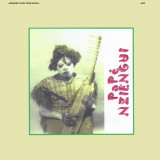
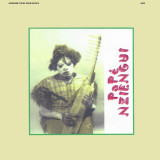
Kadi Yombo, published in 1989, is the most successful album in the quest for a fusion between tradition and modernity in Bwiti harp music of the Tsogho people of Gabon. Combining beating rattles with a layer of synthesizers, Papé Nziengui blends in a contrapuntal dialogue characteristic of harp playing: male song in appeal and female choir in response, male voice of the musical arc and rhythms of female worship. But above all it’s Tsogho ritual music and modern studio orchestration. The result is an initiatory itinerary of 10 musical pieces which are all milestones likely to be simultaneously listened to, danced, meditated on, and soon acclaimed. In the years since, Nziengui has traveled he world from Lagos to Paris, from Tokyo to Cordoba, from Brussels to Mexico City to become a true icon, the emblem of Gabonese music.

Like Bob Dylan, "electrifying" folk and Bob Marley mixing rock with reggae, some purists have criticized Nziengui for having distorted the music of harp by imposing a cross with modern instruments. They even went so far as to claim that Nziengui was just an average harpist covering his shortcomings with stunts that were only good for impressing neophytes; like playing a harp placed upside down behind his back or playing two or three harps simultaneously. Sincere convictions or venomous defamations, in any case, Nziengui never gave in to such attacks, imposing himself on the contrary to pay homage to the elders (Yves Mouenga, Jean Honoré Miabé, Vickoss Ekondo) while instructing the maximum of young people. He is thus the promoter of many young talents, the most prominent of which is certainly his nephew Jean Pierre Mingongué. In a conservative society where the sacred is confused with secrecy, exposing the mysteries of Bwiti in broad daylight can be punished by exclusion or even execution.

Papé Nziengui has always claimed that he faces such risks because he never felt enslaved to a community that governs his life, that regulates his conduct, that has a right of censorship over his activities. Like Ravi Shankar, the famous sitarist, Papé Nziengui is a man of rupture but also of openness, a transmitter of culture. As proof, he has established himself in Libreville, Gabo’s capital, as the main harpist for sessions and concerts, accompanying the greatest national artists (Akendengué, Rompavè, Annie-Flore Batchiellilys, Les Champs sur la Lowé, etc.) as well as foreign artists (Papa Wemba, Manu Dibango, Kassav', Toups Bebey, etc.). In 1988, he was the first harpist to release an album in the form of a cassette produced by the French Cultural Center (Papé Nziengui, Chants et Musiques Tsogho). At the same time, he created his own group (Bovenga), combining traditional music instruments (musical bow, drums, various percussion instruments, etc.) in the framework of a true national orchestra, which gave the first concert and the first tours of a traditional music that was both modern and dynamic, thus "democratizing" the harp, to the dismay of certain purists.

On the other hand, in modern music, dominated by the logic of profit or even commercialism, artistic creation must often be adjusted for a specific audience based on reason rather than heart. But instead of allowing himself to be distorted, Papé Nziengui has always tried to produce music that is not a caricature, worthy in its expression as in its content, of the sacredness and transcendence of the music of the Origins. This is what makes Nziengui not only the musician, but the man someone whose age hasn’t altered any of his freshness or authenticity

pre-order now08.04.2022

expected to be published on 08.04.2022


Last In: 2026 years ago
Papé Nziengui et son Groupe - Kadi Yombo LP

Kadi Yombo, published in 1989, is the most successful album in the quest for a fusion between tradition and modernity in Bwiti harp music of the Tsogho people of Gabon. Combining beating rattles with a layer of synthesizers, Papé Nziengui blends in a contrapuntal dialogue characteristic of harp playing: male song in appeal and female choir in response, male voice of the musical arc and rhythms of female worship. But above all it’s Tsogho ritual music and modern studio orchestration. The result is an initiatory itinerary of 10 musical pieces which are all milestones likely to be simultaneously listened to, danced, meditated on, and soon acclaimed. In the years since, Nziengui has traveled he world from Lagos to Paris, from Tokyo to Cordoba, from Brussels to Mexico City to become a true icon, the emblem of Gabonese music.

Like Bob Dylan, "electrifying" folk and Bob Marley mixing rock with reggae, some purists have criticized Nziengui for having distorted the music of harp by imposing a cross with modern instruments. They even went so far as to claim that Nziengui was just an average harpist covering his shortcomings with stunts that were only good for impressing neophytes; like playing a harp placed upside down behind his back or playing two or three harps simultaneously. Sincere convictions or venomous defamations, in any case, Nziengui never gave in to such attacks, imposing himself on the contrary to pay homage to the elders (Yves Mouenga, Jean Honoré Miabé, Vickoss Ekondo) while instructing the maximum of young people. He is thus the promoter of many young talents, the most prominent of which is certainly his nephew Jean Pierre Mingongué. In a conservative society where the sacred is confused with secrecy, exposing the mysteries of Bwiti in broad daylight can be punished by exclusion or even execution.

Papé Nziengui has always claimed that he faces such risks because he never felt enslaved to a community that governs his life, that regulates his conduct, that has a right of censorship over his activities. Like Ravi Shankar, the famous sitarist, Papé Nziengui is a man of rupture but also of openness, a transmitter of culture. As proof, he has established himself in Libreville, Gabo’s capital, as the main harpist for sessions and concerts, accompanying the greatest national artists (Akendengué, Rompavè, Annie-Flore Batchiellilys, Les Champs sur la Lowé, etc.) as well as foreign artists (Papa Wemba, Manu Dibango, Kassav', Toups Bebey, etc.). In 1988, he was the first harpist to release an album in the form of a cassette produced by the French Cultural Center (Papé Nziengui, Chants et Musiques Tsogho). At the same time, he created his own group (Bovenga), combining traditional music instruments (musical bow, drums, various percussion instruments, etc.) in the framework of a true national orchestra, which gave the first concert and the first tours of a traditional music that was both modern and dynamic, thus "democratizing" the harp, to the dismay of certain purists.

On the other hand, in modern music, dominated by the logic of profit or even commercialism, artistic creation must often be adjusted for a specific audience based on reason rather than heart. But instead of allowing himself to be distorted, Papé Nziengui has always tried to produce music that is not a caricature, worthy in its expression as in its content, of the sacredness and transcendence of the music of the Origins. This is what makes Nziengui not only the musician, but the man someone whose age hasn’t altered any of his freshness or authenticity

pre-order now08.04.2022

expected to be published on 08.04.2022


Last In: 2026 years ago
Papé Nziengui et son Groupe - Kadi Yombo LP

Kadi Yombo, published in 1989, is the most successful album in the quest for a fusion between tradition and modernity in Bwiti harp music of the Tsogho people of Gabon. Combining beating rattles with a layer of synthesizers, Papé Nziengui blends in a contrapuntal dialogue characteristic of harp playing: male song in appeal and female choir in response, male voice of the musical arc and rhythms of female worship. But above all it’s Tsogho ritual music and modern studio orchestration. The result is an initiatory itinerary of 10 musical pieces which are all milestones likely to be simultaneously listened to, danced, meditated on, and soon acclaimed. In the years since, Nziengui has traveled he world from Lagos to Paris, from Tokyo to Cordoba, from Brussels to Mexico City to become a true icon, the emblem of Gabonese music.

Like Bob Dylan, "electrifying" folk and Bob Marley mixing rock with reggae, some purists have criticized Nziengui for having distorted the music of harp by imposing a cross with modern instruments. They even went so far as to claim that Nziengui was just an average harpist covering his shortcomings with stunts that were only good for impressing neophytes; like playing a harp placed upside down behind his back or playing two or three harps simultaneously. Sincere convictions or venomous defamations, in any case, Nziengui never gave in to such attacks, imposing himself on the contrary to pay homage to the elders (Yves Mouenga, Jean Honoré Miabé, Vickoss Ekondo) while instructing the maximum of young people. He is thus the promoter of many young talents, the most prominent of which is certainly his nephew Jean Pierre Mingongué. In a conservative society where the sacred is confused with secrecy, exposing the mysteries of Bwiti in broad daylight can be punished by exclusion or even execution.

Papé Nziengui has always claimed that he faces such risks because he never felt enslaved to a community that governs his life, that regulates his conduct, that has a right of censorship over his activities. Like Ravi Shankar, the famous sitarist, Papé Nziengui is a man of rupture but also of openness, a transmitter of culture. As proof, he has established himself in Libreville, Gabo’s capital, as the main harpist for sessions and concerts, accompanying the greatest national artists (Akendengué, Rompavè, Annie-Flore Batchiellilys, Les Champs sur la Lowé, etc.) as well as foreign artists (Papa Wemba, Manu Dibango, Kassav', Toups Bebey, etc.). In 1988, he was the first harpist to release an album in the form of a cassette produced by the French Cultural Center (Papé Nziengui, Chants et Musiques Tsogho). At the same time, he created his own group (Bovenga), combining traditional music instruments (musical bow, drums, various percussion instruments, etc.) in the framework of a true national orchestra, which gave the first concert and the first tours of a traditional music that was both modern and dynamic, thus "democratizing" the harp, to the dismay of certain purists.

On the other hand, in modern music, dominated by the logic of profit or even commercialism, artistic creation must often be adjusted for a specific audience based on reason rather than heart. But instead of allowing himself to be distorted, Papé Nziengui has always tried to produce music that is not a caricature, worthy in its expression as in its content, of the sacredness and transcendence of the music of the Origins. This is what makes Nziengui not only the musician, but the man someone whose age hasn’t altered any of his freshness or authenticity

pre-order now08.04.2022

expected to be published on 08.04.2022


Last In: 2026 years ago
Cold Diamond & Mink - Here Today, Gone Tomorrow

Around the year, the sturdy red brick walls of an old Cable Factory stand there like a mountain, facing weathers of all kinds rising from the Gulf of Finland. It might be freezing winter winds whipping the whole shore line into submission, fog heavy as concrete, or the relentless sun of the summer months, softening the asphalt to a boiling point. Whatever the weather may be, the narrow courtyard of the old factory embraces those musicians, who are looking to get down. They gather from all directions, making their way towards a pair of doors that lead towards a flight of stairs, again through a few doors all the way to the last portal, where an open padlock and a loosely hangin crossbar signal that Cold Diamond & Mink are inside, locked in a groove.

Who could it be with them this time, perhaps the jazz prophet Jimi Tenor beaming out of his space ship, maybe it's the golden voiced knight of soul Tuomo "Pratt" Prättälä, the number one trumpet wielding dandy Jukka Eskola or the saxman Pope Puolitaival, who loses nothing in coolness compared to the former? The reel to reel is always there in the monitoring room, catching each analog layer of sound, even the silences and banter between takes. Seppo lays down the guitar and tries to catch the riff on organ instead, Jukka throws a rare tune on the turntable, hoping to guide their unit through that wobbly chorus, Sami waits there bass in hand, maybe already thinking about the next production.

After a whole lot of playing instruments, arranging and taking care of business, after the moon has travelled around the old industrial building for some rotations, Carlton Jumel Smith comes waltzing through those same doors. There's a handful of unnamed tracks waiting for him. He sits there listening and then starts writing, maybe echoes of soul classics from his own record collection in New York projecting inside his mind. Then the tape is rolling again. Starting with a short intro rap Carlton lets it out, singing on the edge of shouting "Woman you made me...". After the vocals are in the can, Carlton ascends out of the basement and heads out to entertain an audience somewhere. Some months later, after the mix is said and done, there's the question of the instrumentals. It seems they're pretty good as they are. And here they are.


d 04: Help Me (Save Me From Myself) Instrumental

out of Stock

Order now and we will order the item for you at our supplier.


Last In: 4 years ago
Wavves - Hideaway

Wavves

Hideaway

12inchFP17621
Fat Possum
16.07.2021

A little over a year ago, Nathan Williams found himself back in San Diego, writing what would eventually become Hideaway, his seventh album as Wavves, in a little shed behind his parents’ house. It was also the place where he made some of his earliest albums, before he became known for his uncanny ability to write songs that sneered at the world while evoking pathos, sympathy, and a deep understanding of how sometimes we’re our own worst enemies, and that can be okay. Williams’ return to his childhood home was not just a symbolic attempt at jumpstarting creativity. It came as a result of a series of major life changes. A decade ago, Williams released King of the Beach on the maverick indie label Fat Possum. The album was a cocky collection of pop punk gems that catapulted him into the public consciousness, eventually prompting a jump from Fat Possum into the major label system, where he released two albums before becoming disillusioned by the lack of creative agency available to him. In 2017, Williams self-released You’re Welcome on his label, Ghost Ramp. Now, Williams has returned to Fat Possum with a barbed collection of anxious anthems that grapple with the looming sense of doom and despair that comes with getting older in an increasingly chaotic world. “He’ll always skew toward the Bart Simpson character,” says Matthew Johnson, founder of Fat Possum. “But that does not mean that he doesn’t have some commentary, and once in awhile, it’s totally spot on.” Across its brief but impactful nine tracks, Hideaway is about what happens when you get old enough to take stock of the world around you and realize that no one is going to save you but yourself, and even that might be a tall order. The album features Williams’ most universal and urgent songs yet. “Honeycomb” lopes along sunnily, as Williams sings affecting lines like “I feel like I’m dying, it’s cool, it’s great, just pretend I’m okay.” His directness is shocking, and proof that Williams is the kind of songwriter who can capture pain and uncertainty with resonant brutal force. “It’s real peaks and valleys with me,” Williams says. “I can be super optimistic and I can feel really good, and then I can hit a skid and it’s like an earthquake hits my life, and everything just falls apart. Some of it is my own doing, of course.” It’s this self awareness that permeates each of Hideaway’s songs, marking them each as mature reckonings with who he is. After realizing the material he’d been working on in the hideaway was starting to take shape, Williams, along with bandmates Stephen Pope and Alex Gates workshopped the songs in a series of now-abandoned studio sessions, before linking up with musician and producer Dave Sitek of TV on the Radio to help fully realize their new songs.

pre-order now16.07.2021

expected to be published on 16.07.2021


Last In: 2026 years ago
JAMES MCALISTER - Scissortail

James Mcalister

Scissortail

12inch37D03D
37D03D
26.03.2021

LA-based producer, composer, songwriter and multi-instrumentalist James McAlister is a rare creator, and highly sought after collaborator. Perhaps best known for his work with Sufjan Stevens , McAlister has also appeared on record with Lorde amongst many others, and is a regular contributor to Aaron Dessner 's projects, including the latest albums from Taylor Swift, folklore and evermore . His regular work with film music includes The Two Popes, The Big Sick, and Ron Simonsen 's recent films. In 2018 he joined Stevens, Casey Foubert , St. Vincent and Moses Sumney for the Oscar performance for music from Call Me By Your Name, where he played piano and a bottle of cupcake sprinkles. With nearly countless projects to his name, it was in 2017 that his collaboration with Stevens, Nico Muhly, and Bryce Dessner entitled Planetarium was released by 4AD. Around the same time McAlister started a deep dive into a personal sonic realm that has manifested as an ambient project under his own name. 2018 saw the release of Three Breaths , the first offering from this exploration. 2021 will see the second installment, an album called Scissortail which vividly puts McAlister's evolving master craft on display. It is a collection of moving, meditative, immediately satisfying and quietly stunning work. It is the sound of an artist letting go entirely of pre-conceptions or expectations, instead mining the depths of that very real and abstract place of sound, texture, color and feeling. Some songs arrive almost intuitively, while others feel mechanically made, fed through the framework of synthesizers and the patchwork of recording gear. And with that comes a compelling duality to the work; a machine grace informing the on-going but subconscious dialogue between energy and material, sensitivity and asceticism.

pre-order now26.03.2021

expected to be published on 26.03.2021


Last In: 2026 years ago
Various - Endlich Normale Menschen Vol.1 2x12"

New 2x12" on Ear Clip Series.

E.N.M. steht fur Endlich Normale Menschen (E.N.M. stands for finally normal people, editor's note). This double opus, compiled by Low Bat, can be considered as a collection of friendships and encounters, where phlegmatism and melomania are intertwined. It includes tracks by F. Æmbient or Vamilienfa†er, two sheet metal artists from the Berlin experimental scene with their respective labels, Kashual Plastik and Bohemian Drips, as well as a track by Dame Area, a Barcelona duo that Low Bat booked during their 4 years of Berlin penitence.

The nine tracks oscillate between two main lines. The first record offers to discover a palette of more introspective feelings, where twilight layers cross broken rhythms and almost acidic progressions. The second, on the other hand, allows one to step by step to break away from this approach and look at introspection in a different way, alternating between unbridled joy (4K - Schabernak) and consistent melancholy (3H by Blume Attempt).

out of Stock

Order now and we will order the item for you at our supplier.


Last In: 4 years ago
Hitchhiker's Guide to The Galaxy - Hexagonal Phase
  • A1: Episode One - Fit The Twenty
  • B1: Episode Two - Fit The Twenty-Eighth
  • C1: Episode Three - Fit The Twenty-Ninth
  • D1: Episode Four - Fit The Thirtieth
  • E1: Episode Five - Fit The Thirty-First
  • F1: Episode Six - Fit The Thirty-Second

‘Oh, baby, this is where it gets good.’ - Zaphod

The last ever BBC radio series of The Hitchhiker’s Guide to the Galaxy makes its vinyl debut! Materialising in the lavish packaging style of the preceding five series (Primary Phase, Secondary Phase, Tertiary Phase, Quandary Phase and Quintessential Phase) the Hexagonal Phase will make its presence known to all humanity on heavyweight Neon Geen vinyl! First broadcast in 2018, the Hexagonal Phase is based on Eoin Colfer’s And Another Thing…, the first - and, to date, only – official sequel to Douglas Adams’s original book series. This is also the first ever publication of the original radio edits of the Hexagonal Phase, as heard on their original Radio 4 broadcast. Arthur Dent and friends are thrown back into the Whole General Mish Mash in a rattling adventure featuring Viking Gods and Irish confidence tricksters, taking in a rare glimpse of Eccenrica Gallumbits and a brief but memorable moment with The Ravenous Bugblatter Beast of Traal.
Starring John Lloyd as The Book, with Simon Jones as Arthur Dent, Geoff McGivern as Ford Prefect, Mark Wing-Davey as Zaphod, Sandra Dickinson as Trillian/Tricia McMillan, Samantha Béart as Random and Jim Broadbent as Marvin, with a guest cast including Jane Horrocks, Lenny Henry, Jon Culshaw, Mitch Benn, Ed Byrne, Toby Longworth, Professor Stephen Hawking and many more, with music by Philip Pope. Adapted, Directed and Co Produced by Dirk Maggs, based on the novel And Another Thing… by Eoin Colfer, with additional material by Douglas Adams.

Presented on 3 x 180g heavyweight neon green vinyl, and
presented in illustrated wallets inside a rigid, bound 20 page book,
including a perspective sleeve note by Geoff McGivern and a
concluding overview of the series’ development by Jem Roberts,
Adams’s official biograph

You’re home just in time for tea.’ - Fenchurch

out of Stock

Order now and we will order the item for you at our supplier.


Last In: 5 years ago
Cold Diamond & Mink - Here Today, Gone Tomorrow

Around the year, the sturdy red brick walls of an old Cable Factory stand there like a mountain, facing weathers of all kinds rising from the Gulf of Finland. It might be freezing winter winds whipping the whole shore line into submission, fog heavy as concrete, or the relentless sun of the summer months, softening the asphalt to a boiling point. Whatever the weather may be, the narrow courtyard of the old factory embraces those musicians, who are looking to get down. They gather from all directions, making their way towards a pair of doors that lead towards a flight of stairs, again through a few doors all the way to the last portal, where an open padlock and a loosely hangin crossbar signal that Cold Diamond & Mink are inside, locked in a groove.

Who could it be with them this time, perhaps the jazz prophet Jimi Tenor beaming out of his space ship, maybe it's the golden voiced knight of soul Tuomo "Pratt" Prättälä, the number one trumpet wielding dandy Jukka Eskola or the saxman Pope Puolitaival, who loses nothing in coolness compared to the former? The reel to reel is always there in the monitoring room, catching each analog layer of sound, even the silences and banter between takes. Seppo lays down the guitar and tries to catch the riff on organ instead, Jukka throws a rare tune on the turntable, hoping to guide their unit through that wobbly chorus, Sami waits there bass in hand, maybe already thinking about the next production.

After a whole lot of playing instruments, arranging and taking care of business, after the moon has travelled around the old industrial building for some rotations, Carlton Jumel Smith comes waltzing through those same doors. There's a handful of unnamed tracks waiting for him. He sits there listening and then starts writing, maybe echoes of soul classics from his own record collection in New York projecting inside his mind. Then the tape is rolling again. Starting with a short intro rap Carlton lets it out, singing on the edge of shouting "Woman you made me...". After the vocals are in the can, Carlton ascends out of the basement and heads out to entertain an audience somewhere. Some months later, after the mix is said and done, there's the question of the instrumentals. It seems they're pretty good as they are. And here they are.


d 4 Help Me (Save Me From Myself) [Instrumental]

out of Stock

Order now and we will order the item for you at our supplier.


Last In: 6 years ago
  • 1
Items per Page:
N/ABPM
Vinyl