
out of Stock
Order now and we will order the item for you at our supplier.
Last In: 16 years ago
Order now and we will order the item for you at our supplier.

mance joins the Time Is Now family, fresh off the back of a killer EP for Interplanetary Criminal & Main Phase's ATW label.
Passing the Impassable EP is modern day UKG at its finest, bass warpers meet rolling breaks and dub sirens, blending to create a four tracker of dancefloor weapons!
Order now and we will order the item for you at our supplier.

Order now and we will order the item for you at our supplier.
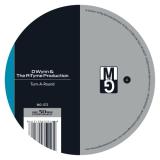
Moods & Grooves Records proudly announces Turn-A-Round, the long-awaited return of D. Wynn & The R-Tyme Production. Marking his first release since 2002 on KMS Records, D. Wynn reconnects with the deeply soulful Detroit sound that defined his earlier work—timeless, emotive, and built for the dancefloor.
At the center of the release is “Love Ain’t Easy”, a heartfelt, soul-driven track featuring vocals from Record Time favorite Lavell Williams. The song carries special significance as Williams’ final known musical recording prior to his passing in 2018, giving the record both emotional weight and historical importance. The EP also includes “Use Me (U Turn Remix)”, a fresh take on R-Tyme’s most recognized work—previously reimagined by Carl Craig—alongside “Funk N The Drums,” a raw, percussion-heavy cut driven by deep funk and rhythmic intensity.
A foundational figure in Detroit’s electronic music movement, D. Wynn was instrumental in shaping the culture as part of the legendary Music Institute era, alongside pioneers such as Derrick May, Alton Miller, and Chez Damier. As one half of R-Tyme with Derrick May, he helped deliver seminal recordings including “Use Me” and “Illusion/R-Theme” on Transmat, leaving a lasting imprint on the global electronic music landscape.
This is more than a comeback. It’s a continuation of a legacy.
On Stock and ready to ship

The new recordings from The Dengie Hundred unfurl on Tain Records after a busy year releasing a solo tape on Sagome and a collaborative LP and tape with Japan Blues on Demdike Stare's DDS imprint.
Lammas Land is an album which meditates on the Walthamstow Marshes, an ever-changing watery landscape, rich with history and wildlife. The Dengie Hundred writes:
"I am sitting at my table overlooking the marshes listening to Lammas Land in November 2023, watching crows fight a never-ending aerial battle with the gulls. In summer, you can see bats from here every evening, fluttering around the windows as the light begins to fade, but today it is colder so there is smoke rising from the boats on the River Lea and the dog walkers are wrapped up tight against the wind.
Most of Lammas Land was made sitting right here, playing guitar and recording the sounds passing by. I would hang a microphone out of the window to capture the ‘putput’ boat which delivers provisions, or the trains that rattle along the tracks that cut across the marshes and up to Stanstead, carrying passengers to the airport and away.
I wonder what tourists make of the marshes as they cross them, the landscape opening up for a moment between the urban sprawl of the East End and the rampant development of Tottenham. They offer a jarring pause of green and sky. I feel very lucky to be living in that pause, a resident, for now…
The album contains a whole year of found sounds recorded from the window and while out walking. It is full of bird song and radio sounds, singing, life.
Many others have been inspired by this space, this pause. The author Esther Kinsky who wrote River, published by Fitzcarraldo Editions, captures this area so perfectly. I borrowed the two track names for this album from her book. I hope she doesn’t mind.
Also, the photographer Paul Fuller whose work reflects the atmosphere I feel here precisely. On hearing the music he wanted to collaborate on the Lammas Land project, He spent a year filming the marsh through the seasons. Some of his images are included with the vinyl release, and there is an accompanying film close to completion. I am so pleased this project is continuing in new forms.
The vinyl also contains a piece of writing, ‘Sound Fishing’, by Gemma Blackshaw, an author, art historian and curator who in a twist of fate also found herself spending time on the marshes, but that is her story, for another day."
The Dengie Hundred
Lammas Land
LP, with essay insert + five photographic prints
Cat No: TAIN02
Price: £14.49
Due next week
A: A hand full of ever thickening twilight
(Sample clips 1 / 2 / 3)
B: A string of pearls pulling
the night away
(Sample clips 1 / 2 / 3)
expected to be published on 05.06.2026
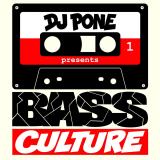
DJ Pone returns to his roots with Bass Culture (out March 6, 2026), a new 19-minute mixtape. A renowned turntablist, DJ Pone delivers an immersive and mesmerizing mix. Following his success with Birdy Nam Nam, he has released several genre-blurring projects, including the cinematic Radiant and the deeply introspective 1978. These albums showcase a producer with a meticulous ear for detail, atmosphere, texture, and storytelling—at times overshadowing the full extent of his talent and charisma behind the decks. With this new release, he reconnects with his first love: sound collage, razor-sharp cuts, and the magic of real-time manipulation. The mix fuses a burst of tracks into a seamless journey, punctuated by precise breaks and UK and tropical inflections. The sound design feels both cathartic and transient—a subtle blend of beats and sonic landscapes that echo and dissolve into one another with remarkable finesse. From an opening manifesto paying tribute to DJ Shadow and DJ Qbert to a rawer section infused with urbex textures, recalling the energy of Company Flow, Pone crafts a narrative that is as thoughtful as it is intensely joyful—yet paradoxically soothing. Mostly instrumental but never lacking soul, Bass Culture is filled with glitched melodies and vocal samples, echoes of his recent travels to Barcelona and beyond. The project stands as a personal, tactile canvas—instinctive and unembellished—pushing back against an era dominated by digital excess. It resonates as a true statement of faith in the art of DJing, reminding us that, even as a producer, DJ Pone’s touch on vinyl remains grounded and almost magnetic, far removed from today’s passing trends.
expected to be published on 05.06.2026

Taking place in the Paras district, Cangallo province, in the Ayacucho region of the Central-South Sierra of Peru - this is a recording of a ritual held on February 5th 2020 for the one year anniversary of the death of Mrs. Sofía Miranda de Bellido, recorded by her grandson Hánkel Bellido.
At noon the coffin of "Mamay Sofía" was presented, so that her relatives could say goodbye for the last time. Following tributes from family members, these songs dedicated to her life and her passing were sung.
The townspeople were notified of the events by the sound of bells that produce a peculiar and powerful sound, and that can be heard in the other nearby towns of Paras. It is said that these bells were greased with human fat, and brought from the Cerro de Pasco region during colonial times. The bells must be played all morning until the change of mourning takes place.
At midnight the songs of the Almakunapaq (also known as San Gregorios) mass began. These are unique to the Andean peoples - a fusion of Andean and Christian syncretic traditions - and are said to help the dead to enter the eternal Kingdom.
It was 4am when the change of mourning took place, and in accordance with traditions, the friends & family announce the presence of harp and violin players, to liven up the proceedings with songs of joy and merriment until the next day.
"Mamay Sofia, manan wañukunkichu, kawsakuchkankim sunquykupi; sichus qunqarusqaykiku, chaymi ichaqa wañukunki!"
"I have not died, I will die on the day that you forget me!"
expected to be published on 08.06.2026

Devoting an album entirely to the Persian poetry of Jami, aluminary of the Sufi tradition, was one of Haji Ghulam Farid Sabri"s cherished ambitions for a long time. This dream came true for the Qawwali icon when he visited Berlin in July 1991 at the invitation of the Heimatklänge ("Home Soundsfrom Home Planet Earth") festival, accompanied by his 14-year-old son Amjad. After Ghulam Sabri"s untimely death on the 5th of April 1994, Amjad Sabri became his musical successor, thereby passing on the Sufi Qawwali mastership of the Sabri family to the next generation. This all came to an end when Amjad was murdered for his Sufi beliefs in the streets of Karachi on the 22nd of June 2016. Thus, Jami is not only a memorial to the Sufi Muslim tradition and the Persian poet but also to Ghulam Farid Sabri and Amjad Sabri. It remains their only record in Farsi.
expected to be published on 08.06.2026

A fragile sense of time and memory runs through 'Thrill', the third collaborative album from Yana Pavlova and Pavel Milyakov. Recorded across four years and completed shortly before Pavlova's passing in February 2025, the collection expands the delicate language they introduced on Blue. The 14 scratchy, diaristic pieces move between ambient drift, field recordings and loose jazz inflections where haunted vocals, blurred guitars and faded textures surface then dissolve again. Rather than settling into fixed forms, the music unfolds patiently, revealing quiet emotional weight and space. It makes for a fitting closing chapter and a great document of Pavlova's singular, ethereal voice.
expected to be published on 08.06.2026
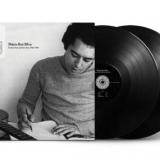
Originally released by Time Capsule in 2021 and long out of print, Stories From Another Time 1982-1988 returns in an upgraded edition following years of demand and rising collector prices on the secondhand market. Widely regarded as a modern cult classic, Mário Rui Silva’s visionary recordings blend acoustic folk, cinematic soul, spiritual jazz and saudade-filled Lusophone rhythm into a deeply timeless and universal work that transcends genre and geography.
This new edition features half-speed mastering cut at Metropolis alongside an expanded 4-page insert with a tribute essay and unseen photographs following Silva’s passing in 2024.
Double LP + 4-page insert
==========================================================
The roots of Angolan popular music explored in the meticulous guitar studies of Mário Rui Silva. For fans of Naná Vasconcelos, John Hassell’s Fourth World ambient, Eduardo Mateo’s psychedelic folk and Cameroonian electronic music visionary Francis Bebey.
Whether on mesmerising acoustic ballads or hypnotic groove-led tracks, the music of Angolan guitarist, researcher and intellectual Mário Rui Silva has a beguiling, melancholy quality, woven into the dynamics of his deft guitar playing.Rhythmically complex yet supremely effortless, the music collected here stems from three albums Mário released in Luanda in the 1980s that reflect his diverse range of influences, from traditional Angolan and West African rhythms to European jazz and classical instrumentation. It is united by a sense of low-key beauty, whether on the chugging opener ‘Kazum-zum-zum’, the jazz-funk keys of ‘Lembrança Dum Velho’, or the twinkling, late-night poly-rhythms of ‘Kizomba Kya Kisanji’.
Born in Luanda, Angola in 1953, Mário dedicated his life to Angolan popular music. His fifty-year career has seen him live between Angola and Europe, rub shoulders with Cameroonian musicians Francis Bebey and Ewanjé, record the seminal album Angola ’72 with fellow Angolan musician Bonga, and draw influence from Brazilian guitarist Baden Powell.
It was the teaching of Angolan legend and Ngola Ritmos co-founder Liceu Vieira Dias that Mário gained a technical, political and spiritual understanding of Angolan musical culture. In the hands of Liceu, the traditional Angolan semba and kazukuta rhythms of the 1940s and ‘50s helped create an emancipatory sense of national pride and collective agency that awakened its listeners to the racism and tyranny of colonial rule, underpinning the country’s push for independence in the process.
What might sound like the intonations of Brazilian influence are what Mário attributes to the “African rhythms taken by the slaves which gave rise to other musical cultures” around the globe. Instead, this music emerged from a collective instinct to assert a cosmopolitan Angolan identity free from the patronising falsehoods of Lusotropicalism.
“There was a need within me to contribute in doing new things,” Mário describes. “In the sense of solidifying the music of Angola that was the result of the meeting of two cultures, and wanting to value the Angolan part whenever possible.”A selection from Mário’s three 1980s albums, Sung’Ali (1982), Tunapenda Afrika (1985) and Koizas dum Outru Tempu (1988) have been compiled here as a 2xLP release by Time Capsule’s Sam Jacob and Kay Suzuki. Together, they provide a snapshot of one man’s journey to the core of his nation’s music, charged with the search for a culture uprooted by colonialism
expected to be published on 12.06.2026
"Imagine a classic singer/songwriter record loaded with the intimacy and grit reminiscent of Alex Chilton or Nikki Sudden." Shindig
Los Angeles singer-songwriter Tracy Bryant returns with his new album The Well, which is his first release since 2019’s critically acclaimed Hush. His fourth solo album, The Well marks a striking new chapter, trading his signature guitar-driven sound for piano-led songwriting that took root during the pandemic. The album was born out of one of the most turbulent periods of his life, written in the wake of his father’s sudden passing and birth of his first child. It was produced by longtime friend and compatriot Joo-Joo Ashworth at Studio 22 in Cypress Park, CA, and mastered by Dave Cooley at Elysian Masters. The nine songs are filled with raw emotion and driving motorik rhythm, telling tales of loss and love, relationships beginning and ending.
When the pandemic upended Bryant’s promotion for Hush and brought his 2019 European tour to a halt, he found himself at home rediscovering his musical roots at the piano, listening to Vince Guaraldi and Arthur Russell to take inspiration for the song structures. Without a band around, Bryant used the instrument to create both rhythm and melody, which resulted in a repetitive and precise backbeat, which was elevated when he began working with drummer Carmeron Gartung to rehearse the new songs. This different approach would define the style of The Well, creating an amalgamation of sounds with classic songwriting structures blended with post-punk, 90s indie, krautrock and psychedelia.
To produce the record, Bryant turned to Joo-Joo Ashworth, who share a friendship stretching back to 2011 (when Joo Joo was only 18) when both of their bands, Corners and Froth, were at the forefront of the bourgeoning Los Angeles/Echo Park music scene of the time and embarked on their first national tours together. Ashworth, who has since become one of underground music’s most respected producers, recorded the album throughout 2024/2025 on half inch tape at Studio 22 in Cypress Park, California, giving The Well a warm, considered sound that matches the weight of its subject matter.
The album’s emotional core was forged by two significant life events arriving in close succession. In January 2022, Bryant’s father passed away unexpectedly at the age of 67. Just three months later, Tracy and his wife welcomed their first child. The Well is a direct result of those experiences, a songwriter processing grief and joy, endings and beginnings in real time.
The nine songs take the listener on a meticulously crafted journey through the nooks and crannies of Bryant’s mind. Spanning 37 minutes, the album is an exploration of classic songwriting elements moving fluidly between driving beat punk, like “Weight” and “Widow”, and more melancholic tracks like “Halfway” and “Danny”. Album opener “Cold Floor” sets the tone immediately, Bryant’s lyrics confronting the day of his father’s death with unflinching directness – the breezy California piano sound is in direct contrast to the heavy theme. The Bowie-esque title track is perhaps the album’s most expansive moment – a fully realised epic composed with a dynamic flare.
The Well feels like an arrival. Dramatic and expansive, it is a true, visceral reflection of the life changing events that altered the course of Bryant’s life. Fans will be surprised by the heavy focus on piano but they will welcome the change as a bold turning point for an artist who has lived long enough to know exactly what he wants to say.
Some previous press:
"feels like a slice of California, down to its ringing post-surf guitars and bright melodies, but cross-cut with a folk sensibility more aligned to the work of Elliot Smith or, on occasions, Conor Oberst." Uncut - lead album review
"…sees the Los Angeles rocker confront both the finer and uglier aspects of love and life, combining classic rock with psychedelic tinges and catchy melodies." Evening Standard 4*s
expected to be published on 12.06.2026

For his sixth solo album, Ezéchiel Pailhès returns with a new collection of songs infused by a sunny wandering spirit.
Within each of the twelve songs on SOL is a thread of melancholic happiness that has permeated much of Pailhès’ music and songwriting. He addresses love, the passing of time, hope, lost illusions, fleeting moments of grace, the temptation of forgetting, a need to escape, and desire. All this is
insulated by understated orchestrations that blend acoustic and electronic instrumentation with deft confidence.
The Portuguese and Brazilian concept of saudade—a form of melancholic longing and nostalgia— pervades, thanks in part to Pailhès decision to record the album in Rio de Janiero and to reinterpret some of the finest works of Música Popular Brasileira (MPB). In particular, he revisits a handful of
lesser known classics from the mid-century samba and bossa nova era—originally written or performed by talents including Vinícius de Moraes, João Gilberto, Tom Zé, Dorival Caymmi, João Donato, Os Tincoãs, and Ataulfo Alves.
The shift from Brazilian Portuguese to French and the decision to adapt rather than perform a straightforward cover versions, allows Pailhès to invent a form of prosody and euphony (the musicality and harmonious combination of words) that feels vibrant and unlike anything else in today’s French
chanson landscape.
“Some lyrics are simple translations from Portuguese, in what I’d call an expanded version. For others, I started from a single word or a single phrase and embroidered an entirely new text that carried me elsewhere,” explains Pailhès. “I allowed myself great interpretive freedom, while preserving the humanist dimension of the original songs. I’ve always been deeply moved by the way Brazilians transfigure reality through heightened emotion. I love this visceral and spontaneous country, which always seems to live through emotion. And above all, I love its music both popular and unifying,
bringing together all social classes. In that sense, it’s very political music, but even more so utopian, made by the people and for the people.”
On this new album, however, the French artist was keen to avoid cliché. Each song is therefore built around a carefully balanced interplay between Pailhès’ piano and synthesizers, alongside restrained arrangements of percussion, brass, bass, and cavaquinho (a small four-string plucked guitar). These parts were recorded in Rio de Janeiro with two musicians who regularly perform alongside the legendary Caetano Veloso—Kainã Do Jêje and Alberto Continentino—joined by Thomas Harres, Antônio Neves, Eduardo Neves, and Gabriel Loddo.
Since the 1960s, France and Brazil have shared a long-standing cultural and musical relationship. Some Brazilian artists, most famously Gilberto Gil, took refuge in France during the dictatorship years (1964–1985). But above all, French chanson quickly fell in love with the richness and ingenuity of
bossa nova and samba, translating and reinventing them in the language of Molière. Throughout the 1960s and 1970s, albums and hits by Henri Salvador, Georges Moustaki, Pierre Barouh, Pierre Vassiliu, and Claude Nougaro all drew from the MPB repertoire.
Fifty years later, with SOL, Ezéchiel Pailhès reinvents this rich Franco-Brazilian musical legacy, bringing to it a personality and modernity that stand confidently alongside those of his forbears.
expected to be published on 12.06.2026

This album was composed between October 2016 and May 2018, an urgent year and a half.
I imagine my albums as adventure stories. Here, it's a quest in reverse: the journey of a knight in a car, listening to psychedelic R'n'B on the radio. Contre-Temps is a circuit album nourished by the fantastic, where impermanence meets the sensation of passing time-a tunnel through multiple dimensions."
Flavien Berger
expected to be published on 12.06.2026

As a follow-up to our previous work reissuing the recordings of Pau Riba, key figure in Catalonia's counter-culture and music scene, we now present "Juguetes de época y cajas de cerillas - Singles y rarezas. Primera época (1967-1969)," compiling songs drawn from rare releases in his catalog as well as his singles from this period. It includes previously unreleased material sourced from the artist's own tapes, along with an extensive booklet featuring notes and photographs of the artist. This collection brings together songs taken from rare releases in his discography-such as the album recorded at one of the concerts performed by Grup de Folk during its brief existence, "Folk 2" (1968)-as well as from his singles: "Taxista!" (1967), "Noia de porcellana" (1969), "Miniatura" (1969), "L'home estàtic" (1967), "Pau i Jordi" (1968), and "El Nadal no té 20 anys" (1967). Alongside these tracks, this compilation also releases for the first time part of the previously unheard material found on magnetic tapes discovered in the artist's studio after his passing. Among these tapes were the instrumental recordings of "Taxista!"-versions with slight differences from those issued on the original single, possibly prepared for television playbacks. These recordings provide further insight into the making of Riba's first release, particularly regarding the mixing process and the later addition of subtle details.
expected to be published on 12.06.2026

‘Richness of tone; precision of articulation; ingenuity of timbre that, when Akinmusire pursues microtonal avenues, creates the sense that particular sounds are almost hermetically sealed before being slowly squeezed and pinched into the air. In other words there is a high degree of technical mastery, but, tellingly, it underpins a profound and often engrossing sense of narrative.’ - Jazzwise
‘Halvorson has formulated a guitar style with few precedents. One inspiration might be the painter George Seurat, whose Impressionist paintings of a hundred isolated dots cohere into a picture if one steps back from the canvas. Halvorson’s pointillist approach to the guitar works much the same way.’ - JazzTimes
Slo-Mo Neon Luminate Hoverings, the new album by trumpeter/composer Ambrose Akinmusire and guitarist/composer Mary Halvorson, features four new compositions by each musician as well as one collaboration. The duo, long admirers of each other’s musicianship, met at Halvorson’s Brooklyn apartment and began playing together periodically, going back as far as 2009. They rehearsed the music on Slo-Mo Neon Luminate Hoverings in January 2025, just before performing it at the New York City club The Stone; they recorded this album the next day at Sear Sound.
Akinmusire and Halvorson made two previous attempts at recording an album but felt that they got it right with this third session. Halvorson says of their rapport, which developed over those years of friendship and collaboration, “I think it’s partly a shared aesthetic and an ease of communication. I feel comfortable to try whatever.” Akinmusire concurs, “I think it’s rare to find an improviser that all goes and nothing has to go at all. It’s rare to feel like you don’t have to do anything and you can do anything. And that’s what I love about playing with Mary.”
Though Halvorson regularly uses effects pedals on her guitar, Akinmusire’s use of one on Slo-Mo Neon Luminate Hoverings is new. Having recently gotten an updated model of the Line 6, Halvorson was passing her old ones along to friends. “Ambrose was interested in trying a Line Six. I gave him one five minutes before the rehearsal and was amazed how quickly he was able to do incredible shit on it ... in literally five minutes,” she says.
“But I’ve been watching you, I’ve been watching Bill Frisell and other people use it for a long time,” Akinmusire says. “I approached it as if it were its own musician. I played and it would process the sound and then I would choose to react to that or not. The people like Mary that I love to listen to who use delay, I like being able to hear the process of the texture that’s being built. With some people, when they use it, you don’t really hear it. But with Mary, she’ll play a line and then she’ll react to that line and then react to that,” he continues. “It’s really cool to hear how something is being built. So I kind of stole that.”
Halvorson says, “I’ve never seen someone pick up a pedal and then immediately do something with it that felt like, ‘Oh, this is a sound,’ as opposed to just tinkering, you know? It felt like he was making music on it right away, and then also doing things that surprised me, like the vocalizing really surprised me. I wasn’t expecting that, and it was awesome.”
expected to be published on 12.06.2026
![THE TALLEST MAN ON EARTH - SOMETIMES THE BLUES IS (...) [REVINYL]](https://www.deejay.de/images/l/0/7/1243807.jpg)
Random vinyl, ReVINYL Edition. The Tallest Man on Earth released The Wild Hunt this past April, and the album found its way into the hearts of fans everywhere. The connection that the Tallest Man on Earth (aka songwriter Kristian Matsson) has with his fans is a sight to behold - he has performed around the world, at clubs and festivals, and the bond between Matsson and his audience is breathtaking. Matsson is the rarest of performers, charismatic and captivating, and his passion for performance bleeds through every single time he takes the stage.At many of the Tallest Man on Earth shows this year, Matsson closed his set with a new song titled "Like the Wheel." It quickly became a fan favorite, with YouTube videos spreading virally, and the sets closing on a high note night after night."Like the Wheel," along with four other new songs, make up Sometimes The Blues Is Just a Passing Bird, an EP written entirely after The Wild Hunt. Recorded during a quick break from touring in the summer of 2010, "Like the Wheel" is joined by "The Dreamer," a soon-to-be-classic that Matsson performs on electric guitar. Sometimes The Blues Is Just a Passing Bird is an open and shut chapter in the Tallest Man on Earth's songbook - five new additions to those magical performances.
expected to be published on 26.06.2026
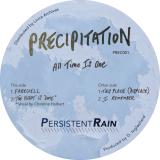
Following his ‘You Are the Music’ EP for Euphoric State, and the reissue of the underground classic ‘Voices’ by Jewellery, David Inglesfield returns with a second EP by PersistentRain – and the first release on his own label, Precipitation.
‘All Time Is One’ is a meditation on the passing – yet continuity – of time, whether across multiple decades, or just in the transition from one day to another.
Opening track ‘Farewell’ brings disparate voices and sounds from the past back to life in an intense, transcendent journey, all driven by a pulsating bassline.
‘The Night Is Done’ features a solid beat and lush array of synths, with the vocal by Bristolian Christine Hulbert the icing on the cake.
On ‘This Place (Displace)’, Inglesfield, a Londoner from birth, but recently moved to South Wales, turns to consider a corner of his beloved native city, where a once-legendary musical theatre was swept away, to become a makeshift car park in the 1960s, then the site of a brutalist block in the 1970s, now torn down yet again. ‘The first place we’re going to stop at … seems to be NOWHERE!’
‘I Remember’ closes the EP, with fragments of Fender Rhodes and strings fluttering like memories over a moody, minimal sub-bass and insistent kick.
On Stock and ready to ship

expected to be published on 26.06.2026

Guests is the home recording project of Jessica Higgins and Matthew Walkerdine. Vaguely named as such to avoid any problems with the poster if they pull out of a gig (which has only happened once, about a year and half before any songs were actually written to be fair) but also to capture a sense of reverse hospitality. That is, arriving at your door with a bottle of good wine (can’t turn up empty handed) or a fist full of savoury or sweet snacks (time of day dependant); oversharing at the afters (and then passing out on your couch); reading to your toddler while you make their lunch or put everything back where it was meant to go (only to get torn apart again). So, something about what happens when private worlds meet each other, making or having been made a space for. But at times, it’s a different kind of intimacy, a temporal or material one, like the feeling of crisp fresh sheets, and abundant and soft, body-part appropriate towels in a hotel in a city you’ve been to before and love to go back to.
Their debut record, “I wish I was special”, was variously described as “a collage of concrète experiments and outerzone pop gestures, music that sounds as if it’s been written from the depths of a dream”; “music for people who love music but also hate it too”; “something like chasing ghosts or befriending a wild animal”; “pulling apart nervous sensations with haphazard ease and requisite humour”; and “a melody of refusal, of being all-in (…) finding the exact right WRONG sound to express the discontent”. Common Domestic Bird continues in this vein, layering synthesiser, keyboards and samples over rudimentary drum rhythms and field recordings, which are in turn sung or spoken with to create nine new songs.
Written and recorded between autumn 2024 and summer 2025 in Reading, Berkshire, the music has matured since its last outing, in a way, leaning less into collage and more toward structured composition and melodic depth, yet retains a healthy dose of indeterminacy and off-kilter rhythms for the forever-amateur. The songs on Common Domestic Bird hint at some “about”-ness through a series of discrete vignettes which sound a bit like architecture or end of year lists, gossip or over-thinking subjectivity, like disappearances and impressions, the support structure of the spine, letters and signs offs, things you could really do without and where they should go, hoping you’ll see something that isn’t there, pretences and performance. At times they feel kind of funny, others kind of sad or a bit angry and annoyed, a bit like you really.
On Stock and ready to ship

PAPER ROUTE iLLUMINATi is the compilation album from Paper Route EMPIRE, the label founded by late Memphis legend, Young Dolph, and home to the equally iconic Key Glock and an impressive roster of additional artists including Snupe Bandz & Big Moochie Grape. Including the hit songs, "Talking To My Scale," "I Do This," & "Mister Glock 2," as well as deep cuts like "Broccoli & Cheese," this album is a must have for Southern rap fans and encapsulates a time when PRE was at the height of their game, shortly before Young Dolph's untimely passing. 2xLP pressed on Red Snake Eyes Galaxy vinyl, and housed in a gatefold jacket. Long Live Young Dolph.
On Stock and ready to ship

In a world currently defined by unrest, uncertainty, and cultural fracture, acclaimed saxophonist, composer, and bandleader Isaiah Collier returns with Joy, a 5-track EP that reframes one of humanity’s most nuanced emotions both as a devotional grounding and political act.
Collier’s deeply personal compositions present joy as an act that isn’t rooted in escapism or abstraction, but rather, as something hard-won rooted in lived experience, shaped by transformation, and sustained through connection. Throughout the album’s five compositions, Collier positions joy as a guiding light during challenging times, an expression of challenging yourself to utilize your gifts, an affirmation of love and discovery, and as an affirmative source of reassurance.
“We are in a paradoxical time, where so much is being revealed to us,” Collier shares. “Everything feels political from every scope… our collective hearts feel the heaviness in the air. Yet I say to you all—don’t despair. For right now, the most political thing we can do is share joy.”
That ethos is made clear in the opening title track and lead single “Joy.” A pulsing rhythmic motif anchors the melody with a sense of both searching and certainty. Collier conceived the piece around 3 years ago reflecting on a time where many people in his life were experiencing loss of family and friends and experiencing profound life transitions. “Everything just felt like it was falling apart with no aim in sight,” he reflects. “Yet, there is a light at the end of it all.”
As he played the chords with a sense of urgency, he could feel the vibration of yellow in the piece. That initial triplet motif serves as the guiding light on the piano and the only word Collier could hear was Joy. In addition to Collier at the helm singing and playing piano and tenor sax on the track, it features an expansive 11-piece ensemble with a full horn and string section allowing Collier’s propensity for composition and arrangement to shine with an eclectic sonic palette.
“Landscape of Dreams” finds Collier serendipitously leaning into utilizing his gifts as a multi-instrumentalist. While he had a sketch of the piece going into the studio, a traffic delay caused musicians to be late arriving at the studio. Never one to waste time in the studio environment, Collier stepped into new creative territory and took up the challenge of executing playing all instruments himself as an act of trust and experimentation. “I’ve never done this before, and so it was a leap of faith for me,” he asserts. “I always dream of doing stuff like this, and being part of the small percentage of people who can do it like Prince, Steve Lacy, Frank Zappa, and Stevie Wonder. The end result finds Collier immersed in a hypnotic soundscape playing layered flutes, drums, Metatron, Wurlitzer, and auxiliary percussion.
Another layer of joy is revealed in “Where I’m Loved” that serves as a love letter and leaning into the process of stepping into the willingness to explore life and love with a partner. On the intimate meditation of vulnerability and connection, Collier's vocal prowess is on full display, exerting effortless falsetto reminiscent of D’Angelo over soulful Wurlitzer and guitar as he crosses over into more R&B-inspired realms. “I believe everyone deserves this feeling or to honor the memories of it. Furthermore, I believe you should also go where you’re celebrated and not tolerated.”
“When the Dust Settles” captures the electricity of live collaboration and Collier further steps out of being confined to any specific genre. He had just gotten a microKORG keyboard from co-producer Sonny Daze and was exploring the vast array of sounds on the instrument. Collier plays synth bass on the microKORG joined by the electrifying improvisation of Cole Runge on guitar and the combustible rhythm of his brother Jeremiah Collier on drums with additional post-production work from Sonny Daze.
The album’s final track “God’s By Your Side” reflects on perseverance and artistic legacy, directly inspired from the passing of D’Angelo, whose life’s work was a huge part of Collier’s childhood growing up in the late 90s and early 00s. With gospel flavor and direct influence both from D’Angelo’s vocal and instrumental arrangements, the track speaks to resilience and persistence in the face of obstacles—an affirmation of source and reassurance. “And what’s better than having God by your side, right?” asserts Collier.
Joy is a through-and-through expression of the arc of joy in its truest form. Joy transcends fleeting happiness and is conscious gratitude shaped by taking chances, leaning into your gifts, fostering community, and lived experiences.
“Joy is partially happiness,” Collier explains. “But to me it means happily being grateful for family, friends, lovers, teachers, and good times. These are the things that anchor us.”
The release of Joy comes off the heels of significant momentum for Collier, whose work continues to garner accolades and resonate across cultural spheres. He was featured on the cover of DownBeat’s April 2025 issue, where he was named “The Next Sax Giant,” and profiled on NPR’s Jazz Night in America for his ambitious 13-movement interdisciplinary suite The Story of 400 Years, that traces 400 years of Black American History. He released two full-length albums in 2024 with The World Is on Fire highlighted in The New York Times’ Fall Arts Preview and The Almighty named among the publication’s Best Jazz Albums of the year.
Beyond performance and recoding, Collier’s influence is recognized in broader cultural and intellectual spaces as he was the recipient of the Jazz Journalists Association’s 2025 Up and Coming Artist of the Year Award, the 2024 Chicagoan of the Year in Jazz, and was named a Steve Jobs Archive Fellow joining an elite cohort of the next generation of artistic visionaries through a yearlong program.
In addition to the release of Joy, Collier is touring his “Collier Plays Coltrane” program throughout 2026 in honor of John Coltrane’s centennial. Rather than presenting Coltrane’s expansive catalog as repertory, Collier approaches this music as something living, reshaping it in real-time with a sense of space and improvisational dialog reflecting both reverence to the past and present times.
expected to be published on 31.07.2026
For this edition, the label meets this duo of producers, that has been created by the musical synergy between Zonker and Daniel Gorziza, who go by the name – “SameSame”. This disc has been titled “Unconditional Society” and has been crafted with a mission to be brought to the worldwide dancefloors and to be foreseen by the adepts of the sound it conveys. The A side is opening with a deep trancey burner “Suspect Zero”, with time passing this side of the record is morphing into the prime-time speaker ripping sound of “Rip the Jacker. The B side will see more mellow feel to it and sometimes even could be said that the vibe turns relatively melancholic by the time the record reaches its natural conclusion. The words that have been shared do not translate the profoundness of the subject that the artists have carried through, but then again, sometimes them letters have to be present even if they are kept to the slightest. The frequencies communicate much superior to the words and by now you can stop reading this and immerse yourself into the sound.
On Stock and ready to ship

Some tracks have a lot of history to them. Some are just one of life's mysteries.
TEDI seems to have been a work in progress with New York producers Greg Carmichael and Mitch Braithwaite.
The body of work being recorded during the late 1970's and early 1980's was a daily procedure with many people passing through. Over time Greg had no recollection of the recording and neither did his good friend Leroy Burgess. Sadly Mitch Braithwaite is no longer with us. But his music lives on with this boogie soul record with those stabbing piano keys , synth and reverbs. Topped with some growling vocals. The singer sounds familiar but I haven't a clue who it is? Tedi someone!!
On Stock and ready to ship
From the depth of transient memories comes ‘Some Leaves Must Fall 聽其自然’, Temple Rat’s latest EP and the inaugural release for Martin Gilleshøj’s ‘Buttheads’ label.
Across 6 tracks Temple Rat distills fragments of spatial memory, merging conceptual ambience with the mystic, spatial, and driven edges of deep trance and hypnotic techno. A pensive and functional synthesis, one played out like an ode to the sustained.
Through 2024 while moving between Berlin and Sichuan, Temple Rat conceptualized and finished ‘Some Leaves Must Fall 聽其自然’. At its core, the work is an exploration of how the personal memory of cities and their particular acoustic environments can be transmuted in musical form. For these places, altered by the passing of time and the shifting of contexts, mirror the fluid and generative nature of sound itself.
Creatively this approach was borne out in a kind of archaeology of sound: by sampling and capturing auditory fragments Mei was able to preserve otherwise fleeting moments of experience. Sonics which not only embodied the emotions of the present but served too as a mechanism of recall, pulling memory back into focus even against the erasures of time.
In its method this project seeks to transform the sonic textures of urban and natural environments into high-energy dance tracks, exploring the tension between the certainty of space and the uncertainty of time. A tension operating not only within the structural logic of the sound itself, but so too as an affective experience, extending into the listener’s body and perceptual field.
For we are not the first to note that in a world of pervasive temptation and fragmented information, sustained listening has become rarified. Through this project, Temple Rat hopes to counter this tendency; to encourage a deeper mode of listening that restores attention, re-establishing our essential connection with the present.
All music is written, recorded, arranged, and produced by Temple Rat aka Yuxin Mei
Mastered by Giuseppe Tillieci at Enisslab
Distributed by One Eye Witness
On Stock and ready to ship

Cold, Bold & Together (CBT) CBT was founded in Bellingham, Washington in 1971 by percussionist Tony Gable and musicians Solomon Harris, Keith Hooks and twin brothers TC & Jamar Jenkins. It soon became evident that Bellingham was not a particularly welcoming environment for R&B music, so they moved to Seattle to try their luck and plumb the rich supply of venues, which they successfully did until disbanding in 1978. They spent their early Seattle years playing a combination of covers and originals in clubs, later becoming the "go to" opening act for various nationally known artists, such as Ohio Players, Kool and the Gang and Earth, Wind & Fire. While they were paying their club circuit and opening act dues, they squeezed in recording sessions whenever they could and released their own material, which was well-received and got strong regional airplay. However, because of the feudal nature of the music business at the time, they just couldn't break out, and like a lot of Northwest bands with great potential, they inevitably broke up and went their separate ways. Upon disbanding, they left behind a collection of original recordings at Seattle's legendary Kaye-Smith studios.
Unfortunately for CBT, the studio passed through several owners and at some unknown point in time, one of them did the unforgivable and destroyed the storied studio inventory of two-inch tapes and quarter-inch masters. Unknown to the band, a copy of their masters was smuggled out by their producer who added them to his legacy collection of cloned quarter-inch masters. After several years and many moves, he became concerned about the tendency for magnetic tape to deteriorate over time.
He sent the tapes to a Seattle lab to be restored and digitized, with the hope that perhaps, some day, they might be made available for the listening pleasure of R&B fans. The hoped-for day has finally arrived. Russell Paine and Super Disco Edits has pressed two of the Kaye-Smith CBT tracks: "Go For It", a jazz-influenced instrumental, featuring Kenny G, and "Unity", sung by the group en masse with Tony Gable singing lead. The musicians on these tracks are: Tony Gable, leader, vocals and percussion Harry Alexander, drums Kenny Gorelick (now world-renowned "Kenny G"), sax, flute and horn arrangements Chris Ishi, trumpet Michael Young, Trombone Jamar Jenkins guitar, vocals TC Jenkins bass, vocals 1 Philip Woo, keyboards Footnotes: CBT gave legendary saxophonist Kenny G his start in the music business. Kenny was still in high school when he was recruited to play sax and write horn arrangements. Kenny co-wrote, arranged and played sax and flute on the instrumental "Go For It." He rips a smoking tenor sax solo in the middle, which showcases his already masterful technique and solidifies his R&B bona fides. He went on to have a spectacular career recording for Clive Davis and Arista Records. Before his untimely passing in 2016, Tony Gable went on to found contemporary Jazz group, "Tony Gable and 206" (206 being Seattle's then only area code). With songwriting, performance and production help from Kenny G.
expected to be published on 14.08.2026
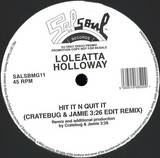
Yet another solid gold modern reimagining of the mighty Loleatta Holloway, this time her infamous 1977 smash 'Hit & Run' goes under the knife and is tweaked to devastating effect by 2 of Chicago's finest modern day editors - Jamie 326 & Cratebug. Anyone with even a passing interest in Disco or House will be more than familiar with these 2 guys names. Having edited and remixed numerous cuts in their own original ways, they take this all-time Salsoul classic and strip it right back to the essence, to the very basics, and in the process create a total dancefloor weapon. This edit originally came out a few years ago (2013) on a compilation that showcased the new wave of contemporary talent emanating from the Windy City and naturally it was one of the cuts that stood out, finding favour with a wide variety of DJ's across the board from Motor City Drum Ensemble, Todd Terry, Jeremy Underground Paris, Theo Parrish and more. Drawing comparisons with Paperclip People's anthemic 'Throw' from 1994 in the way it snatches a killer loop from 'Hit & Run's' bassline, 'Hit It & Quit It' is a monster, a record you'll literally play over and over and over again, a relentless Disco juggernaut that oozes power. It made perfect sense for this legit single-sided reissue 12" to come out on Salsoul Records, the home of Loleatta Holloway's finest material and all of her classics. This limited reissue has been made in conjunction with Jamie 3:26 & Cratebug and Salsoul Records, 100% sanctioned and lovingly re-presented for your dancing pleasure. This one is HOT. Sleep at your peril!
On Stock and ready to ship
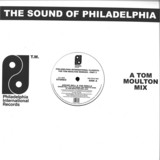
2LP Repress!
The legendary partnership of NYC's Disco godfather Tom Moulton and Philadelphia International Records has long been documented.
A truly explosive collaboration that yielded endless classic tracks for dancers and deep listeners alike, Moulton seemed to be totally in tune with the labels output and the direction it should go in. Luckily we've been enjoying the fruits of this labour for the last 30+ years with a lot of these PIR classics becoming ingrained in the psyche of the modern day music fan as the building blocks of House music.
Another stellar volume of what is an essential purchase for any Disco lover. Featuring a host of legends from the height of the Philly era and beyond - Archie Bell & The Drells, People's Choice, Lou Rawls & Teddy Pendergrass are all graced by Tom Moulton's supreme ear on this special PIR reissue 2 x 12" that see's some all-time classics from the aforementioned artists in their full, unabridged, unedited Disco glory. The selections on this EP are absolutely top-shelf, flawless in fact. One could argue that these are the 'definitive' versions of these anthems. Pure Disco gold essentials. Anyone with even a passing interest in Disco will most certainly need this record in their possession, the 2012 pressing of this EP is super in demand among those in the know and it can change hands for big money in the used record world, time, undoubtedly, for a repress.
These tracks are fully licensed and reissued in conjunction with Tom Moulton and PIR and all relevant rights holders. Remastered from original source materials to the highest spec and pressed onto top quality vinyl, courtesy of Above Board distribution for 2019.
On Stock and ready to ship

2025 Repress
Sterns Edits returns after the sell-out success of its debut edition with another two catalogue reworks from Ben Gomori. This time he turns his attention to Burkina Faso's much-loved taxi-driver- turned-singer, Amadou Balake´.
Balake´ ('porcupine' in Mandinka) is Burkina Faso's proudest musical export, and in 2013 he recorded his final album before passing away: 'In Conclusion'. The record saw him revisit some of his most popular tracks from his remarkable 50-year career, backed by an eight-piece Burkinabe´ band who took the country's traditional sounds and brought them into a contemporary light.
Gomori retains the essence of the original recordings - which were mostly captured in one take - and marries them to vigorous afro-house stylings. 'Bar Konon Mousso (Musicien C'est Pas Quelqu'un)', in which Balake´ tells of a bar lady being unimpressed by his profession, gets a gentle push towards the modern dancefloor, its wonderful sax lines resplendent. 'Massa Kamba' is taken for a drive down the more traditional route, with commanding drums bolstering the original grooves and a marvelous triple harmony brass section at its core. Balake´'s freewheeling style suits the hypnotic feel of the edits to a tee.
Sterns Edits is an official collaboration between African music stalwarts Sterns Music and London's Ben Gomori.
On Stock and ready to ship

Repress!
The legendary partnership of NYC's Disco godfather Tom Moulton and Philadelphia International Records has long been documented. A truly explosive collaboration that yielded endless classic tracks for dancers and deep listeners alike, Moulton seemed to be totally in tune with the labels output and the direction it should go in. Luckily we've been enjoying the fruits of this labour for the last 30+ years with a lot of these PIR classics becoming ingrained in the psyche of the modern day music fan as the building blocks of House music.
The names alone fill one with awe, The O'Jays, Harold Melvin & The Bluenotes, Archie Bell & The Drells and Lou Rawls. All of these artists were, and still are, huge stars. Turning in classic after classic, and with Moulton's supreme ear assisting, this special PIR reissue 12" see's some all-time classics from the aforementioned artists in their full, unabridged, unedited Disco glory. The selections on this EP are absolutely top-shelf, flawless in fact. One could argue that these are the 'definitive' versions of these anthems. Pure Disco gold essentials. Anyone with even a passing interest in Disco will most certainly need this record in their possession, the 2012 pressing of this EP changes hands for £100+ second hand, so a repress was desperately needed.
These tracks are fully licensed and reissued in conjunction with Tom Moulton and PIR and all relevant rights holders. Remastered from original source materials to the highest spec and pressed onto top quality vinyl, courtesy of Above Board distribution for 2019.
On Stock and ready to ship
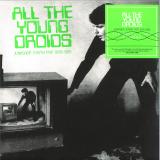
2025 REPRESS ON TRANSPARENT GREEN VINYL
Compiled by Philip King “And then came the rise of synth pop : blokes with dodgy haircuts hunched over keyboard-operated machines stuffed with wires and do-it-yourself tone oscillators making sounds like a brood of geese passing gas in a wind tunnel. Whoopee! This is the way the ‘70s ended : not with a blood-curdling bang bang but with a cheap, synthesized, emasculating whimper.” NICK KENT, NME. All The Young Droids: Junkshop Synth Pop 1978-1985 is a new compilation that charts the underbelly of the epoch-defining sound of the synthesiser in 80s popular music. Compiled by Philip King (previously seen compiling All The Young Droogs, Glitterbest and Boobs - The Junkshop Glam Discotheque), the music here connects the dots between DIY synth enthusiasts grappling with new, cheap synthesisers at the tail-end of punk and wannabe, jobbing songwriters enthral to the new music pioneered by Gary Numan, Depeche Mode and Daniel Miller’s Mute Records. Featuring rare tracks of auto-didactic progressive pop music, proto-techno punk, shoot-for-the-stars-land-in-the-gutter chart flops and heralded, underground synth classics, School Daze paints a picture of beautiful failure. Complete with extensive sleeve notes written by King and never before seen imagery, all 24 tracks were remastered by RPM in-house engineer Simon Murphy, many from vinyl copies due to lost master tapes. The story told on All The Young Droids is one of the dawning opportunity presented by both the emergence to the market of cheaper analog synthesisers and the distribution networks plus indie labels that exploded with the advent of punk music in 1976. While the music that sprouted out all over the globe in the wake of these factors was decried as fake, plastic, a refutation of punk’s guitar-led revolution, it’s telling that much of the music on All The Young Droids.. was created in bedrooms, ramshackle studios and home-made set ups with often borrowed equipment. In the era of record labels jumping to capitalise on the success of The Sex Pistols, The Clash (both on major labels, of course) these artists struggled to stand out from a new gold-rush with next to no budget or PR team. With radio and labels desperate for the new Yazoo, what resulted was a testament to necessity being the mother of invention. At the time, the synthesiser was the music of the future, a shiny new machine that could paint like an orchestra with a single finger and a 4-track. In the hands of Manchester avant-pranksters Gerry & The Holograms it’s a pulsing, sardonic weapon.. the only instrument on the Messthetics classic lampooning of New Wave fashion. In Hamburg, a 16 year old Andreas Dorau used it to write and record (with his female classmates on vocals) a global smash in Fred Vom Jupiter (later licensed to Mute Records). The hard-to-find English version (Fred From Jupiter, natch) is included here. Many artists with alreadystoried careers caught the bug and recorded synthesiser-fuelled peons to space, computers, the future and, of course, love-interests. Harry Kakoulli, late of Squeeze, recorded a solo album in 1979 that included the incredible power-synth-pop smash-that-never-smashed I’m On A Rocket. Similarly, Ian North of Neo and American Power Pop stalwarts Milk ’n’ Cookies bought a Korg MS20 and used a tape machine to record We’re Not Lonely, an absolute lost-classic of minimal synth pop. We’re Not Lonely also features on the Junkshop Synth Pop sampler 7” twinned with John Howard unreleased track You Will See, released April 12th 2025. There are plenty of compilation debuts in evidence. Sole Sister were a mysterious trio who were featured on the Scaling Triangles compilation of female-fronted, queer-adjacent post-punk / underground music that also featured The Petticoats. Selwin Image were from San Francisco and featured members of the recently defunct power pop/punk group The Pushups. Their stupidly catchy The Unknown fizzes with New Wave energy - think XTC to Sparks but remains unreleased until now. Dream Unit’s A Drop In The Ocean is an early synth wave cut, positively teaming with Joy Division instrumentation, previously only released on a long-forgotten and super rare, self-released EP. Incandescent Luminaire’s Famous Names belies an archetypal struggle of a small-town trying to make it in a cruel industry but is a thrilling New Romantic-Synth Wave cross over with a OMD gloominess that’s a joy to hear. Feminist Minimal Wave track I Am A Time Bomb by performance artist Peta Lilly and Michael Chance is a revelation destined for new found cult status. It was released on 7” and lost until now. The flipside to the subterranean, never-made-it synth pop mentioned above are the ambitious, even fruity attempts at success that have a perennial elegance to their confidence. New Jersey-ite Billy London (real name Ed Barth) tried to cash in on the synth boom with Woman, released by a major label, a lurching new wave track built on the Louie Louie rhythm and a wonderfully camp Lou Reedstyle sleazy vocal before exploding in the synthesised chorus. The song bombed but with a chorus like this, you have to wonder why? Ex-Glitter Band member John Springate’s My Life is truly epic, with doomed chord progressions and massive sounding drums turning into at least 3 different songs in the course of the track. Before you wonder what’s going on the song resolves with a glorious return to the main refrain. The dry-ice-dressed dance floor is well catered for too. Design’s Premonition and Vision’s Lucifer’s Friend are stone-cold minimal synth bangers, well loved but given a new lease of life here. The Warlord’s The Ultimate Warlord was released in 1978, a homespun proto Hi NRG banger that was later re-recorded by The Immortals in Canada who had a club hit with it. One-man- band Disco Volante’s No Motion was re-issued by Synth wave label Medical in 2012 but makes its first vinyl compilation appearance here. Close your eyes and you can imagine what Lawrence of Felt would have sounded like with some cheap Korgs a little earlier in his career. Gibraltar-based trio The Microbes imagined a computer programming people to dance - how prescient - and ended up with a propulsive, robo-funk track with splendid rubbery bass playing over a tectonic drum machine. Previously picked up by Belgian label Stroom TV, Dee Jay Bert & Eagle’s heavily Euro-accented I Am Your Master demands the listener to “come to paradise!” In a frankly terrifying manner. All The Young Droids is the first compilation to peel away from the narrative that dour, Minimal Synth and Cold Wave were the only musical children of the first rush of synth pop. Philip King and School Daze Records describe a much more complicated world: along with the austere, Brutalist children of Daniel Miller (who produced Alan Burnham’s Bowie-Low-influenced Science Fiction here) was a plethora of desperate cash-ins, accidental mainstream hits, ambitious pop dramas and major label punts that went nowhere. Crucially, the compilation blurs the line between junk and treasure. What if the two things are interchangeable. What if it’s all science fiction?
On Stock and ready to ship
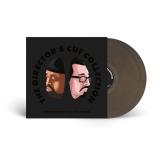
Limited Edition Transparent Black Vinyl Version - 500 Units Only
There are few people across the globe, who will have not been touched by the work of Frankie Knuckles. Forever regarded as ‘The Godfather of House’ for his unrivalled contribution to the house music we know today; what started as an underground movement in Chicago has grown to international heights thanks to Frankie. His records earned him recognition on a global scale, allowing him to work with some of the globes biggest names including the likes of Diana Ross, Whitney Houston and Michael Jackson.
Five years ago, Frankie passed away in Chicago on 31st March 2014 leaving behind one of the greatest house music legacies spanning almost four decades. Now he is commemorated by long time writing and production partner Eric Kupper. Eric, himself a seasoned DJ producer and writer, has worked on over 116 Billboard #1 Dance Records and played a pivotal role in a many of Frankie’s productions. Having both worked together for many years they established themselves at ‘Director’s Cut’ from 2011 and set about producing original releases and remixes based on the classic ‘Def Mix’ sound while sharing equal credits for their creations.
Together they re-produced and re-purpose classic cuts for modern dancefloors, with reworks including tracks from Marshall Jefferson, Ashford & Simpson, Artful & Ridney and The Sunburst Band, alongside Frankie Knuckles originals. These releases have now been brought together by Eric to feature on special album called ‘The Directors Cut Collection’ on SoSure Music. It includes the Director’s Cut reworks of Frankie’s classic cuts such as ‘Your Love’ and ‘Take You There’ with Jamie Principle, alongside Frankie’s first #1 single - ‘The Whistle Song’ on which Eric shares writing credits.
Within a multitude of classic reworks, highlights include a previously unreleased version of Ashford & Simpson’s ‘Bourgie Bourgie’ and a huge Director’s Cut Retro Signature mix of Marshall Jefferson’s The House Music Anthem (Move Your Body) featuring Curtis McClain.
The Director’s Cut Collection is a fitting tribute to commemorate the fifth anniversary of Frankie’s passing whilst giving Eric a platform to tell his side of the creative story. This album is to be released in collaboration with The Frankie Knuckles Foundation who work to continuing Frankie’s legacy well into the future.
On Stock and ready to ship

Repress
The legendary partnership of NYC's Disco godfather Tom Moulton and Philadelphia International Records has long been documented.
A truly explosive collaboration that yielded endless classic tracks for dancers and deep listeners alike, Moulton seemed to be totally in tune with the labels output and the direction it should go in. Luckily we've been enjoying the fruits of this labour for the last 30+ years with a lot of these PIR classics becoming ingrained in the psyche of the modern day music fan as the building blocks of House music.
The names alone hark to the legendary voices of the era, major stars including The O'Jays, The Futures, Jean Carne & The Jones Girls all feature with classic after classic getting the TJM treatment. Moulton's supreme ear on this special PIR reissue 2 x 12" see's some all-time classics from the aforementioned artists in their full, unabridged, unedited Disco glory. The selections on this EP are absolutely top-shelf, flawless in fact. One could argue that these are the 'definitive' versions of these anthems. Pure Disco gold essentials. Anyone with even a passing interest in Disco will most certainly need this record in their possession, the 2012 pressing of this EP is super in demand among those in the know and it can change hands for £100+ second hand, so a repress was desperately needed.
These tracks are fully licensed and reissued in conjunction with Tom Moulton and PIR and all relevant rights holders. Remastered from original source materials to the highest spec and pressed onto top quality vinyl, courtesy of Above Board distribution for 2019.
On Stock and ready to ship

With his new offering"The Stone Tablet", New Jersey native Brainorchestra solidifies his legacy in underground hip-hop, carving out a raw and unfiltered masterpiece that feels as timeless as it is bold. Produced entirely by Brainorchestra himself, the album is a testament to his relentless pursuit of authenticity and artistry, drawing listeners into a world where intricate beats meet introspective bars, and sticking to his proudly independent operation.
Featuring guest appearances from UK’s SonnyJim and Toronto's Raz Fresco, "The Stone Tablet" brings together diverse voices that seamlessly blend with Brainorchestra’s visionary beats. Each track adds to the album’s mystique, with moments of reflection, hustle, and sharp wit, all contributing to Brainorchestra’s mark on the modern hip-hop landscape.
The album cover, crafted by Italian artist Claudio Scialabba, embodies the album’s theme with its raw, textured feel — reflecting Brainorchestra’s relentless, chiseled approach to his craft. "The Stone Tablet" is a statement, a monument that etches Brainorchestra's name alongside the genre’s most revered creatives.
On Stock and ready to ship

2025 Repress
When people think of Tough Gong they usually think of Bob Marley and rightly so, as he was nicknamed and often called Tough Gong and from this his early releases which came out on the Tough Gong label. But Tough Gong was also the name of a recording complex named after Bob Marley hat included a top level recording studio, pressing plant and distribution centre that would allow reggae music to carry on many years after his sad and too early demise.
Bob Marley had take over the former residence of Island Records boss Chris Blackwell the Island House, 56 Hope Road around 1974. Just before the 'Smile Jamaica' concert on 03rd December the same year the house was ambushed by gunmen. Bob's manager Don Taylor was hit 5 times AND Bob was shot in the arm and his wife Rita Marley was hit in the head by a stray bullet. How no one was fatally injured is staggering. Immediately after the concert Bob Marley started his self imposed exile from Jamaica, settling in London, England. This would lead to the aptly named exodus album being recorded there in the summer of 1977. It would not be until the 'One Love' peace concert in Kingston's national arena on the 22nd April 1978 that would see Bob's return to the island. Marley felt is was important to show his commitment to the people of Jamaica and on his return to 56 Hope Road he began construction of his own recording studio with the help of music mogul Tommy Cowen. Unfortunately Bob Marley's short life would end on the 11th May 1981 from cancer which originated form a football injury. His passing would lead to 56 Hope Road being turned into a museum to the legend of reggae music.
A new location would have to be found to carry on Bob's work which was 220 Marcus Garvey Drive, Kingston 11. The buyer would be Rita Marley and the Tough Gong International Organisation.
Engineers working at the new facility included Errol Browne who had worked at Treasure Isle studios and Hopeton Overton Browne known as 'Scientist', named by the great producer Bunny 'Striker' Lee who worked with him previously at King Tubbie's and Channel One's studios described his ground breaking style as being like that of a scientist.
We focus for this release on the work carried out by the great Scientist on the songs of the Black Solidarity Label run by Ossie Thomas (aka Joe The Boss) recorded at Tough Gong studios. One of the foremost recording, pressing and distribution facilities on the Jamaican island set up from the work of Bob Marley to carry forward reggae music. Hope you enjoy this set......
On Stock and ready to ship
“Coming To You Love” is a classic and ever popular jazz funk and soul release from 1980. From its original release, the LP and 12” versions have dominated, this 7” version only recently coming to light as a different take on the track with a bonus Charles Earland organ solo. Since the realization of its existence, the previously styrene only US Columbia 7” has exchanged hands for increasingly higher amounts.
Charles came from Philadelphia, played sax first with Jimmy McGriff before turning to organ in the late 60s and earning a nickname ‘The Mighty Burner’
During his time at Mercury records he scored a hit song with the disco record “Let The Music Play”, building an audience with a jazz funk and soul crowd which exists to this day through numerous other releases on Mercury and then Columbia through to his passing in 1999.
On Stock and ready to ship

Natural Element proudly presents the long-awaited album The Paradigm Shift by one of Amsterdam’s finest and most prolific producers, Kid Sublime. Following on from the 12” single ‘You Got Me Runnin’’ which dropped in the summer, this 8 track, double LP offering is a special piece of work crafted during the pandemic years and Turbulence recording sessions with maestros Beka Gochiashvili and Mishulino.
The album showcases the evolution of Kid Sublime’s sound and the influence of London’s vibrant broken beat scene, with him having connected with some of the artists around the time of the passing of the legendary Phil Asher. It touches on house, bruk and even techno, with his signature soulful touch palpable across the whole record. Features include talented London artist Oliver Night, Sydney-based vocalist Natalie Slade and long time collaborator, flautist Han Litz, amongst others.
The Paradigm Shift takes you on a deep sonic journey straight from the heart, celebrating love, connection, spirituality and human evolution. There’s introspective moments with the jazzy house drifter ‘The Awakening’ and the dubbed out bass of ‘Kingz’, as well as joyful moments such as the uplifting ‘Heaven’s Glory’ and the romantic ‘Stay Over’, which is as soulful as it gets. ‘Bring It Come’ brings some minimal bruk flavours reminiscent of Bugz in the Attic, and the title track takes things a bit darker with a club-ready roller.
Sitting somewhere between the living room and the dancefloor, this album is sure to enliven the spirits of many a discerning listener and bring some much needed radiance and hope into people’s lives.
On Stock and ready to ship

Bringing together the elder statesman of the Zulu guitar Madala Kunene and internationally acclaimed Sibusile Xaba, kwaNTU pulls two generations of South African guitar mastery into a single point of focus. Under-represented on recordings outside of South Africa, Madala Kunene (b. 1951), the ‘King of the Zulu Guitar’, is revered as the greatest living master of the Zulu guitar tradition. Sibusile Xaba, whose collaboration with Mushroom Hour Half Hour reaches back to his first recording in 2017 (Open Letter To Adoniah/Unlearning), has garnered international acclaim for his unique voice and virtuoso guitar stylings, which bring together multiple South African guitar lineages in an original, spiritualised fusion. Collaborating with Mushroom Hour and New Soil for kwaNTU, the two players come together to weave a filigree sonic fabric which reaches down to the heartwood of Zulu guitar music but moves resolutely outward, building on the past to create a deeply rooted statement about present conditions and future travels. kwaNTU – which can be roughly translated ‘the place of the life-spirit’ – is also conclave of teacher and student, as Xaba has been taught by Kunene for the last decade. Meditative, rich and sonically sui generis, kwaNTU finds these two musicians linking up within the inimitable space of sound and spirit that they share through Kunene’s teaching.
The great masters of South African music have not all had equal exposure. For many years the generation of musicians who were exiled during apartheid took centre stage, as the regime made it very difficult for those at home to be heard. More recently, a new cohort of important voices, especially in jazz, has broken through to international consciousness. But for the generation of musicians in between – those who shone like beacons in the most difficult final years of apartheid and immediately afterward – international recognition has been slow in coming.
Madala Kunene, ‘the King of the Zulu Guitar’, is among this number. A revered figure for current generations of South African musicians, Kunene began his recording career in 1990, at the bitter end of apartheid, with a now classic self-titled LP for David Marks’ storied Third Ear imprint. Born in 1951 in Cato Manor, near Durban, he had determined to be a musician from early childhood, and by the time he first entered a recording studio he had already had a long career as a popular performer. His virtuoso absorption and transformation of the venerable Zulu maskanda guitar tradition and his richly spiritualised approach to music immediately marked him out as someone special, and in the years that followed, Kunene cemented his position as one of South Africa’s musical elders. He is without doubt the grand master of the Zulu guitar tradition, but his sound and sensibility ranges far beyond it into varied sonic terrain, and he has collaborated with a wide range of musicians both at home and abroad. Now in his mid-seventies, he remains a shining light for those that are making music in contemporary South Africa.
‘He is really an amazing person,’ says the guitarist Sibusile Xaba, who has been mentored by Kunene for over a decade, and now invites a collaboration with him on kwaNTU. ‘As a mentor, he's really powerful in showing us the way. For us to have this opportunity to make music together and have a project together is really a blessing to me.’
Xaba himself grew up in Newcastle, KwaZulu-Natal, where his mother had been in a band and his father sang in a church choir, and from early childhood Xaba played homemade tin guitars. He only later realised that music was his calling. ‘I just loved music. I was fortunate. My parents loved music. And when it was time for me to leave home and go to study outside Newcastle, I knew that music was what I wanted to do. There was no second option. It was just music.’ Moving to Pretoria to study music formally, Xaba committed himself to his craft, developing a unique style that draws on both US jazz masters such as Wes Montgomery and Jim Hall, and the rich and varied heritage of the South African guitar, from inspirational jazz players such as Allen Kwela and Enoch Mthalane, to the music of the Malombo groups and Dr. Philip Tabane (Xaba has previously collaborated with Dr. Tabane’s late son, Thabang), and the Zulu guitar tradition embodied by Kunene.
‘I was really in love with the jazz guitar, I really admired it, and I was digging a lot in that direction,’ says Xaba, recalling his first encounter with Kunene’s music, over a decade ago. ‘And then one day on my timeline, Kunene popped up, and I was like – “What's this sound?” I was so connected to it. It really touched me deep. I started checking out his records, and then I found out he's from the same region as I am, which is Zululand.’ After Kunene played a show at the Afrikan Freedom Station in Johannesburg, Xaba make contact with him, and visited him at home in Durban. They struck up a friendship, and Xaba became the elder’s student, as Kunene began to pass on his knowledge and his inimitable way of playing.
kwaNTU is a tribute to this relationship and the deep learning that has defined it. The album was recorded in Zululand in the town of Utrecht, at a cultural centre called Kwantu Village, which gives its name to the album. ‘It's such a broad word,’ Xaba says, ‘but the elders teach us that Ntu is basically an energy, almost chi, an energy, a force that all living beings have within them. It's a living energy, so kwaNTU is like, almost the place of this energy.’ The two men sequestered themselves for five days of jamming, improvising and planning, and then the session was recorded in one take over a single night, with Gontse Makhene joining on percussion and backing vocals and Fakazile on vocals. Other voices and overdubs were later added in the studio in Johannesburg.
The result is a rich and meditative recording that finds two generations in a deeply engaged dialogue. Teaching and passing on his knowledge, the elder Kunene has brought Xaba into a space of sound and knowledge that they now share; Xaba’s own practice of deep communion with nature and his dedication to his musical craft make him the perfect interlocutor for Kunene. The result is an album that foregrounds the two musicians engaged at the highest levels of responsive listening, sympathetic unity, and collaborative concentration. Bringing an elder statesman of South African music to an international listening audience for the first time in decades by pairing him with one of South Africa’s most important new voices, kwaNTU is a meeting of generations and a powerful demonstration of musical lineage and continuity.
‘Before music, there is sound,’ Xaba observes, speaking of Kunene’s unique approach to music. ‘And sound is like a common compartment…it's not restricted to particular people or particular geographic places, you know what I mean? It's sound. Everybody can hear it. So when he constructs that sound into music, I think everybody resonates with the energy behind his construction of sound into song. Here at home, we really love him for preserving our history through the guitar, through his stories as well the music, the songs that he writes. We really, really admire him.’
On Stock and ready to ship

The moment the instantly recognizable intertwined guitar passage on the title track to the Eagles' Hotel California begins, the record's genius becomes obvious all over again. Ranked the 118th Greatest Album of All Time by Rolling Stone, certified by RIAA as the third best-selling LP in history, and considered the foundation on which the Golden State's mid-‘70s music scene was built, the 1976 landmark is a music staple immune to shifts in trends, eras, and styles. Fearlessly addressing the chaos and consequences of American life, its songs remain strikingly prescient and gain creedence with each passing day.
Mastered from the original analogue master tapes, pressed on MoFi SuperVinyl, and limited to 17,500 numbered copies, Mobile Fidelity's UltraDisc One-Step 180g 45RPM 2LP vinyl box set ensures you will want to permanently check into and never leave this particular Hotel California. Up to the herculean task of standing head and shoulders above all prior reissues, this collectible edition plays with extreme clarity, organic richness, tube-like warmth, massive dynamics, and microscopic levels of detail. You'll be able to practically smell the colitas and feel the breeze in your hair. Songs come across with an epic sweep and feature immersive, front-to-back soundstages that allow the music unprecedented air, roominess, and separation. As for the noise floor? It's basically as invisible as the spirits that waft in the corridors of the unforgettable title song.
Aesthetically, the premium packaging and presentation of the UD1S Hotel California pressing befit its esteemed status. Housed in a deluxe box, it features gorgeous foil-stamped jackets and faithful-to-the-original graphics that illuminate the splendour of the recording. From every angle, this UD1S reissue exists as a curatorial artefact meant to be preserved, touched, and examined. It is made for discerning listeners that prize sound quality and production, and who desire to fully immerse themselves in the art – and everything involved with the album, from the renowned cover art to the meticulous finishes.
Indeed, the opportunity to zero in on all the particulars of the 26-million-selling Eagles record dubbed "a legitimate rock masterpiece" by vaunted Los Angeles Times scribe Robert Hilburn has never been better. A global phenomenon that marked the band debut of guitarist-singer Joe Walsh, Hotel California continues to resonate and connect with listeners of all generations taken by its narrative depth, stark directness, picturesque melodies, daring majesty, and ardent emotionalism. Adorned with a breathtaking exterior photograph of the Beverly Hills Hotel that serves as the simultaneously haunting and alluring cover art, and rounded out by a rear-cover shot of the Lido Hotel lobby that reinforces a notion that teeters between permanence and transience, Hotel California is brilliantly tied to a specific place that functions as a universally understood metaphor for the American Dream.
Confronting the darker undercurrents and oft-ignored constructs attached to that romantic notion, the record's songs revolve around a host of shared themes: excess, mobility, stability, illusion, fame, destruction, and idealism included. Notably, Hotel California appeared at a crucial junction in American history: During the country's bicentennial and amid escalating controversies related to the Vietnam War, energy crisis, and governmental corruption. That the Eagles manage to channel such cultural, social, and economical matters into a cohesive, stately, big-picture statement is alone a stupendous feat. That the album's reach, boldness, vitality, accessibility, and understated intensity have never waned make it a marvel.
Reflecting on Hotel California 40 years after its original release, and indirectly explaining its enduring appeal and increasing relevance, singer-songwriter Don Henley confirmed the record pertains to the "loss of innocence, the cost of naiveté...the difficulties of balancing loving relationships and work, trying to square the conflicting relationship between business and art; the corruption in politics, the fading away of the Sixties dream of ‘peace, love and understanding.'"
It can be argued that Henley and company squarely hit on and drove home those ideas in the surreal title track, chart-topping "Life in the Fast Lane," and grand "The Last Resort" alone. But that would miss the forest for the trees. Experienced as an unbroken whole, complete with the pristinely shot imagery and physical grooves, Hotel California unfolds like a geography-conscious saga by James Michener and plays like colour-saturated movie shot on 70mm film by Martin Scorsese. It's about our collective and individual decisions – and the shape of our past, present, and future. And, just like that conjured by our imaginations, Hotel California continues to take on a life of its own.
More About Mobile Fidelity UltraDisc One-Step and Why It Is Superior
Mobile Fidelity Sound Lab's UltraDisc One-Step (UD1S) technique bypasses generational losses inherent to the traditional three-step plating process by removing two steps: the production of father and mother plates, which are created to yield numerous stampers from each lacquer that is cut. For UD1S plating, stampers (also called "converts") are made directly from the lacquers. Since each lacquer yields only one stamper, multiple lacquers need to be cut. Mobile Fidelity's UD1S process produces a final LP with the lowest-possible noise floor. The removal of two steps of the plating process also reveals musical details and dynamics that would otherwise be lost due to the standard multi-step process. With UD1S, every aspect of vinyl production is optimized to produce the best-sounding vinyl album available today.
MoFi SuperVinyl
Developed by NEOTECH and RTI, MoFi SuperVinyl is the most exacting-to-specification vinyl compound ever devised. Analogue lovers have never seen (or heard) anything like it. Extraordinarily expensive and extremely painstaking to produce, the special proprietary compound addresses two specific areas of improvement: noise floor reduction and enhanced groove definition. The vinyl composition features a new carbonless dye (hold the disc up to the light and see) and produces the world's quietest surfaces. This high-definition formula also allows for the creation of cleaner grooves that are indistinguishable from the original lacquer. MoFi SuperVinyl provides the closest approximation of what the label's engineers hear in the mastering lab.
This item has not yet been released. You can pre-order the product now.

Harap-Alb is the first full-length album by Articulat, following a trilogy of EPs (two released on vinyl) and previous appearances on Rotterdam’s Afrobotic Musicology label. This new project deepens Articulat’s commitment to narrative-rich electronic music — blending structure, rhythm, and texture to evoke both dancefloor tension and cinematic storytelling.
“This album began as a personal exploration—an attempt to deconstruct a story that has been familiar to me since childhood and reimagine it through sound. I first encountered Harap Alb as a crackling, timeworn radio play on vinyl, and its atmosphere has lingered with me ever since. This is my way of keeping that story alive—not by preserving it in amber but by passing it forward in a different form, hoping it resonates in a new way.”
Perhaps, years from now, someone will discover this record the same way I found the original. And in doing so, they too will add their own craft and love to the tale.
Based on the 1964 radio play adaptation by Vasile Mănuceanu
Original story: Povestea lui Harap Alb, written by Ion Creangă in 1877
On Stock and ready to ship
2025 Repress
In 2022, Daniele “Shield” Contrini of Rebirth Records proposed Paraíso to the great man himself, a compilation honouring Alfredo’s legacy. After Alfredo’s passing in December 2024, the project was final; with artists rallying to honour his vision and memory.
Before becoming a global clubbing hotspot, Ibiza embodied freedom—a place where sunrises blurred into sunsets and music became a way of life. In the 1950s and '60s, the island drew artists, hippies, and outsiders seeking escape and creative liberty.
In 1976, Alfredo Fiorito, fleeing political repression in Argentina, arrived in Ibiza and stayed. A former music journalist, he soon began DJing at Amnesia, a farmhouse-turned-club where time bent and boundaries dissolved. With eclectic, genre-defying sets, Alfredo blended reggae, flamenco, soul, rock, and early house, crafting a hypnotic energy that captivated a generation.
British DJs like Trevor Fung, Paul Oakenfold and Danny Rampling brought this “Balearic Beat” back home. But Balearic wasn’t a style it was a mindset. As DJ Leo Mas said, it was “a state of mind,” where rhythm, spirit, and psychedelia merged.
Other clubs like KU, Es Paradis, Pacha, and Lola’s amplified the movement. Visual artists such as Yves Uro gave it a striking identity, and DJs like César de Melero, DJ Pippi, and Jon Sa Trinxa carried the sound into a new era. José Padilla’s sunset sessions at Café del Mar birthed chill-out music as breath, not just beat.
But the 1990s brought change. Laws requiring roofs on clubs altered the open-air magic. Commercialisation followed; freedom became luxury, and many pioneers left.
Still, the Balearic spirit lives—raw and untamed. It pulses in hidden parties, intimate venues like Pikes and Hostal La Torre, and sacred places like Benirrás and Las Dalias.
Featuring 16 tracks of classic and true Balearic sound; alongside House & proto-House tracks that Mr Fiorito spun, the album also includes an unreleased Alfredo track and stands as a tribute to the man, the music, and the enduring spirit of true Ibiza.
On Stock and ready to ship
