
non in magazzino
Ordina ora e ordineremo l'articolo per te presso il nostro fornitore.
Last In: 15 months ago
Ordina ora e ordineremo l'articolo per te presso il nostro fornitore.

Ariwa Sounds started in a front room in Thornton Heath, South London. Four tracks, some homemade equipment, and Neil Fraser, better known as Mad Professor, at the controls. That was 1980. Over four decades later, the label has more than 300 albums to its name and a legacy that stretches well beyond the reggae scene.
This compilation pulls twelve tracks from across the catalogue. Dub, lovers rock, heavy roots music, digital dancehall — it's all here. What ties it together is the Ariwa studio sound all going through Mad Professor’s desk.
Mad Professor is the backbone of it. Dub Me Crazy got him known and his production credits run from Jah Shaka and Horace Andy to Massive Attack, Sade and The Orb. The tracks here — the Dub Sampler, H2SO4, Disco Dude, Kathmandu Dub — show why.
The Jah Shaka collaboration Only One God is a landmark. Two of the UK's most important dub figures on one track. Dark and heavy roots music.
The Robotics appear twice — Hong Kong Flew! and Miss Mood. They are Ariwa's house band and have backed U-Roy, Lee Perry, Big Youth and more over the years.
Aisha closes things out with Can You Feel It. A track that crosses reggae, soul and boogie funk. Collectors have been after original pressings for years.
Starky Banton, Ragga Doll, Professor Doppler and Earl Lawrence complete the compilation. Exactly the kind of thing that reminds you how wide the Ariwa net was cast.
Sleeve design is by Trevor Jackson. One of the UK's most respected graphic designers. His work has defined the visual language of British music for thirty years. His involvement here signals exactly the kind of release this is. A serious serious catalogue and compilation of music, treated with the respect it deserves.
Ariwa sits alongside Greensleeves as the most important reggae imprint this country has produced. This compilation shows why.
dovrebbe essere pubblicato su 16.10.2026

It was the 90s. Paris had the blues, French rap was beginning its slow rise, and a new musical genre was emerging: Acid Jazz. Imported from England by DJ Gilles Peterson, this groovy style blended 70s funk with a certain idea of jazz tailored for the dancefloor. Its heroes were Galliano, Brand New Heavies, Incognito, and the James Taylor Quartet. Jamiroquai topped the charts, MC Solaar recorded with Urban Species, and suddenly, France was swept up in the swing whirlwind. Starting in 1993, Parisian clubs embraced this union of jazz and groove, and in 1994, a compilation was released: Paris Groove Up. Around ten groups delivered the French version of this British style: Mellowman, Mad In Paris, Vercoquin, Ready Made... and Dis Bonjour À La Dame. The band wasn’t new—their roots went back to the late 80s, when bassist Marc Israël brought together a brass section and some seasoned musicians. But the real beginning of DBALD came in 1992 with the arrival of singer Sital. "Christophe Denis joined on guitar and songwriting. In 1993, we opened for Jamiroquai and Maceo Parker, and that’s when the major labels interested in the acid jazz market started noticing us," recalls Marc. Their track Chris’tal, the centerpiece of the compilation, was released as a single, and Dis Bonjour À La Dame's album began production in late 1994 in London, at Roundhouse Studio. “We must’ve been among the last sessions there—it was demolished shortly after. It was a very 70s studio, with old gear, a Fender Rhodes, everything was vintage! We recorded for a month, all playing together live, then added the brass and finally Sital’s vocals. We were lucky to have two exceptional backing singers, Sarah Brown and Mark Anthoni, who worked with Incognito and Urban Species.” The self-titled album came out in early 1995, and it had all the ingredients of a hidden funky gem from the 90s: Hey Mama with its ironclad groove, the irresistible instrumental Sheherazade Groove opening the record, Soul Body with its R\&B sensuality... The hip-hop touch came courtesy of Lee Rick’s, the MC from Mellowman, who laid down rhymes on Hall Blues. The brass section was on fire, the bass went wild, and Sital added a sensual spark to the whole thing. In short, a solid album produced by Fred Versailles (producer of NTM’s first album) and mixed by Paul Borg (Urban Species, UFO, -M-, Mory Kanté), a testament to a time when big funky bands made Paris groove—with Dis Bonjour À La Dame leading the charge. Nearly thirty years later, it’s time to (re)discover DBALD.
Disponibile in Stock e pronto per la spedizione
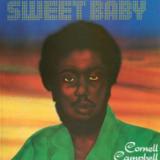
Originally released in 1978. A Classic Reggae album re-released on 180 gram vinyl and produced by Linval Thompson with extensive sleeve notes.
Recorded at Channel One Recording Studio & Harry J's Recording Studio.
Cornell Campbell is one of an elite group of Jamaican reggae singers who has weathered the changes throughout the music's development - in his case, from the ska era to right up to date - whilst retaining their relevance. Witness his recent alliance with UK Afrobeat/reggae band The Soothsayers or Jazmine Sullivan's R & B hit Need U Bad, which sampled his classic 'Queen Of The Minstrel' -a song that still sounds fresh more than thirty years later.
Sweet Baby was pressed on bright red vinyl, which only added to the excitement when you saw the selector position it carefully on the deck.
On the LP cover was a painting of Cornell wearing an emerald green shirt and framed by a lurid sky, which might have left some people wondering if it was a soul album. It wasn't, although there is certainly soul in the grooves, and especially on R&B covers like Gonna Take A Miracle - first recorded by the Royalettes -and Darling You Send Me, which Sam Cooke had introduced to the US Billboard charts some twenty years earlier.
Both are among the highlights but then the whole album is good in truth, and a heartfelt I Need Somebody and My Sweet Baby, plus the two-step favourite Just Enough were regularly played on sound system. Blinded By Love, I Didn't Know and Can't Hide My Love are tinged with melancholy and like the seductive Whenever You Need Me, display all the hallmarks of a classic Cornell Campbell side -swooping vocals, a driving rhythm and seductive lyrics included.
Nearly forty years later, it is gratifying to know there is still no mistaking him when his records are played in a dance. That relaxed vocal style draws you in but it's his falsetto, quivering with understated emotion that hooks you and turns you into a lifelong fan.
dovrebbe essere pubblicato su 25.09.2026

Soul Music legend Candi Staton returns to her down-home Alabama roots on her 32nd album, Back to My Roots. The twelve-track Americana set features an array of Staton-penned originals and some well-chosen covers.
"These songs represent my roots," Staton adds as she reflects on her many trials and triumphs. "Even the new songs on some level represent something I've experienced and that's what real soul music is about." Back to My Roots was produced by Staton with her second eldest son, Marcus Williams, a professional drummer who has toured with the likes of Peabo Bryson, Isaac Hayes, and Tyler Perry. They brought in Mark Nevers of Lambchop fame, who produced three of Staton’s prior Americana albums for Honest Jon’s and Thirty Tigers, to sweeten certain tracks. “Some of the first songs I ever heard were songs like `Peace in the Valley’ and `It’s Gonna Rain,’” says Staton. “The new songs or cover songs are tracks that remind me of that era when I was growing up as a child and evolving as a young woman. That’s why I named the album Back to My Roots because I’m going back to the roots that made me who I am.”
Staton received the Americana Music Association UK’s highest honour, the International Lifetime Achievement Award, at the UK Americana Music Awards ceremony at Hackney Church in London last year for her southern soul work that stretches from her 1969 Muscle Shoals hits to her more recent collaborations with the likes of Americana kings Jason Isbell and John Paul White.
The album opens with a mid-tempo Bonnie Raitt-styled contemporary blues “I Missed the Target Again” that finds Harry Connick Jr.’s longtime guitarist Jonathan DuBose Jr. (aka the Prophesying Guitarist) showing off his skills that set the tone for the song and the album.
Staton’s older sister, Maggie Staton Peebles (who alongside Staton was a member of the Jewel Gospel Trio in the 1950s), joins her for two duets. The first, “It’s Gonna Rain,” features just a drum, steel guitar and vocals. “My mother used to sing that song to us all the time when I was a child,” Staton recalls. “It’s a really soulful kind of song I wanted to revisit.” They then take turns leading Thomas Dorsey 1939 gem “There Will Be Peace in the Valley” that Elvis Presley popularized in the 1950s.
“Hang on in There” is a new, mid-tempo song that has an old school gospel flavour and features vocals from veteran bluesman, Larry McCray.
While in Europe in 2023 for her farewell concert tour that took her to the Glastonbury Festival and Love Supreme, Staton and her British band, PUSH, went into a London studio to record a new version of The Rolling Stones’ 1972 gem, “Shine A Light.” “I love the way that came out,” Staton says. “We put a big choir on it and put our own twist on it.”
From there, Staton revives another Thomas Dorsey classic, “The Lord Will Make a Way Somehow,” with a bluesy vibe. When Al Green started recording gospel in the early 1980s, he re-introduced this song into the culture.
“God’s Gonna Use Me Anyway” is a new mid-tempo blues with subtle Caribbean influences.
The mood takes a turn on “1963.” It’s a poignant, spoken-word reflection on September 15, 1963, when four black girls were killed in the Birmingham Church bombing. “I was in the city that day and I remember the chaos and horror after the bombing,” Staton recalls. “Just thinking of how racism and hatred caused those men to kill those girls was so emotional for me that I could only do it in one take.”
It's a perfect segue into "Reach Down and Touch Heaven," a haunting, plea for divine intervention into the affairs of mankind. "That's straight Baptist," she says. "I used to be a church pianist back in the 1960s. I've never played piano on one of my records before so that's a unique song for me because I’m finally playing on one of my records. The message of that song is about the homeless. It came to me when a homeless person on the street asked me for $5. When God touches your heart to help somebody else that’s heaven to God’s hears. So, when we reach into our purse or wallet to help someone, we’re touching heaven."
Staton offers love as an antidote to hate on the bouncy, Motown-styled, “Love Breakthrough.”
Her publicist brought Aaron Frazer & the Flying Stars of Brooklyn NY’s 2017 cut “My God Has a Telephone” to Staton’s attention. She shifts the track from a retro 1960s groove to more of a 1980s Malaco Records arrangement, a subtle but distinct variation. Staton brought in her longtime friend and STAX Records legend, William Bell (“I Forgot to Be Your Lover” and “Trying to Love Two”), to add raspy seasoning to the track.
The album closes with the wistful, “In God’s Hands We Rest Untroubled,” that was originally written and recorded by the late country star, Lari White, who died in 2017 at the age of 52. “Lari sent me that song to consider at least ten years ago and I always loved it,” Staton says. “The record label didn’t want it on the album or something, so I just held it.”
Staton says, “I grew up hearing a lot of these old songs when they were new songs. I toured with the Jewel Gospel Trio in the 1950s and we got to know people like Mahalia Jackson, Sam Cooke and others who sang these types of songs. So, I’m sort of paying tribute to them and the influence they had on me by refreshing these songs and making new songs in the old style.”’
dovrebbe essere pubblicato su 31.07.2026

Much like the duo’s music, the story of Rural France is both mundane and magical. Tom Brown (also of transatlantic janglepunks Teenage Tom Petties) and Rob Fawkes moved to London in their mid-twenties. Despite living under the same roof, they never picked up a guitar – except for one drunken, failed attempt at writing a Spoon song (“Big Chops” …don’t ask). It was only after both separately relocating to Wiltshire and starting families that they began assembling songs as a way of meeting up. Tom had amassed a pile of sprightly slacker jams that were calling out for Fawkes’ messily melodic guitar lines. Rural France was born.
After a debut album on their hero, ex-Lemonhead Nic Dalton’s Half-a-Cow Records, they retreated to a garage to record their next two albums: RF (2021) and Exacamondo! (2024), both released on much-respected jangle label Meritorio Records. Despite being lo-fi in the truest GbV sense, both records were warmly received by the DIY indie blogosphere, with their short, scrappy, but supremely melodic songs landing on numerous AOTY lists. RF even won Album of the Year at Janglepop Hub.
Raven Sings The Blues probably summed up the sound best: “With drunken visions of Beach Boys harmonies playing in the back of their heads and hooks that consume Teenage Fanclub cheeriness with the same beautiful brevity that drives Tony Molina, the pair have knocked out eleven rumpled classics.” Album four, SLOTHS, arrives via Meritorio Records and Safe Suburban Home Records on 08/05, and is a slightly different beast. For one, it’s been mixed by a professional – Rob Slater (Westside Cowboy, Yard Act, Thank) – giving the guitars and drums room to breathe. It’s easily their most high-fidelity record to date. It’s also their jangliest, most baroque and thoughtful album yet. But alongside added organ, horns and mellotron – and drums from Tom’s Teenage Tom Petties bandmate Jeff Hamm – it still retains the buzzes, hums and little freak-outs that stick to the duo’s original “Pavement playing Teenage Fanclub” mission statement. “Rob and I both wanted to do something a little slower and a little more melancholy,” says Tom. “We resisted our usual urge to hit the distortion pedal and made something that fitted where we are now and celebrates how we still listen to Meatloaf when we get drunk.”
SLOTHS is also the most thematically consistent Rural France record to date. While it wouldn’t be right to call it grown-up, it definitely has homeowners’ insurance. From the Silver Jews-esque Americana of “Slab” and mid-life rallying cry of “Thirty Seven Forever”, to the horn-embossed loser anthem “Lonely Heart Pyramid Scheme,” the songs celebrate (and rail against) the absurdities of getting older, forming a band in your thirties, and the strange phenomenon of time passing. Because no matter how slow you move, everything else goes fast. SLOTHS.
dovrebbe essere pubblicato su 08.05.2026

When five-time Grammy award winner Taj Mahal intersects with The Phantom Blues Band, it’s one of those rare joints that hits you before you even know you’ve been hit. They walk in, plug in, and the whole room shifts. Studio assassins, road lifers, groove keepers and somehow still hungry. They are an internationally renowned Two-Time Grammy Award winning group. Taj Mahal’s fearless, open-hearted spirit still shadows the whole thing with that genre-hopping joy. He leads you down the road with a history lesson and the Phantoms carry it with honor to the Griot.
Mahal sings and plays harp as he fronts an all-star lineup of legendary musicians with the three ringleaders for the Phantoms--Johnny Lee Schell, the soulful gunslinger with tone for days, Tony Braunagel keeps the whole ship steered straight and on time, every time, and Larry Fulcher, the anchor, the heartbeat, the quiet storm on bass. Additionally, Jon Cleary, with that unmistakable New Orleans piano swagger, Mick Weaver, a session master who’s playing slides in with an undeniable velvet magic, and in the horn section, Joe Sublett on sax and Les Lovitt on trumpet bring the orchestration into the full view of this genre. This band doesn’t ‘back” anybody. They lift you up, carry you, and dare you to rise higher. On this record they slide through blues, soul, R&B, and island color with the ease of men who’ve lived every bit of it. This is deep-groove, grown-folks music from a band that still plays like the night is young. ‘Time’ is their new release on Resonatin’ Records / Thirty Tigers and celebrates over thirty years of making this uplifting inspiring and aspiring music together.
dovrebbe essere pubblicato su 01.05.2026

Grounded in a season of life that has been earned rather than borrowed, Benjamin Tod speaks with the ease of someone no longer running from himself. There is joy now - a steadiness that comes from commitment. With the recent arrival of his son and a deep well of new music on the horizon, Tod is firmly rooted in both purpose and possibility. That clarity is evident in Vengeance and Grace, the Lost Dog Street Band frontman's forthcoming and most expansive solo album to date. Conceived as a "dual-version" release, the project presents two parallel worlds: (Alone) is a stripped solo-acoustic version, along with its full band counterpart.
Together, the two versions form the full range of what Tod is capable of: restraint on one side, force on the other. At the core of Tod's writing is a simple conviction: music should serve something larger than the moment. His writing speaks to mind, body, and soul, shaped by faith, discipline, and a hard-earned understanding of consequence. The darkness that once defined him is neither denied nor indulged. It is understood and no longer in control. Today, Tod moves with a sense of calm that wasn't always there. He is grateful, settled, and intentional, continuing to follow the compass that's guided him from the beginning. Rooted in traditional country and folk, his work stands firmly in the modern music landscape, shaped by experience, restraint, and the life he's built around it.
dovrebbe essere pubblicato su 17.04.2026

Originally released in the summer of 1994 at the height of interest in the US underground rock scene, ‘Without A Sound’ was Dinosaur Jr’s sixth album, and their third major label offering. Recorded by the then two-piece band (Mike Johnson on bass and vocals, J Mascis performing everything else himself, including drums), the album saw Dinosaur Jr continue to deliver on their distinct formula, J’s soul-searching songs being performed with his trademark effortlessly cool heavy style. Including classics such as ‘Feel The Pain’ and ‘Grab It’, the album remains a firm fan favourite. Released on highly collectable splatter green vinyl to commemorate the band’s flurry of ‘Without A Sound’ themed live shows in May 2025, this is a chance for the uninitiated and younger fans to discover a classic, and for familiar fans to revisit an album which sounds as vibrant and essential today as it did thirty years ago.
dovrebbe essere pubblicato su 16.05.2025

"This is the time that we, who have benefitted from the Last Poets shouldbe able to say, 'it's the Last Poets. It's them we should be honouring, because we did not honour them for so many years_"
KRS One wasn't just addressing the hip hop fraternity when he uttered
those words by way of introducing the video for Invocation - a poem
written thirty years ago, around the time of the Last Poets' last significant comeback. He was speaking to everyone who's been affected by the word, sound and power issuing from the most revolutionary poetry ever witnessed, and that the Last Poets had introduced to the world outside of Harlem at the dawn of the seventies.
In 2018 the two remaining Last Poets, Abiodun Oyewole and Umar Bin
Hassan, embarked on another memorable return with an album -
Understand What Black Is - that earned favourable comparison with theirseminal works of the past, whilst showcasing their undimmed passion andlyrical brilliance in an entirely new setting - that of reggae music. Trackslike Rain Of Terror ("America is a terrorist") and How Many Bullets demonstrated that they'd lost none of their fire or anger, and their essential raison d'etre remained the same.
"The Last Poets' mission was to pull the people out of the rubble o f their lives," wrote their biographer Kim Green. "They knew, deep down that poetry could save the people - that if black people could see and hear themselves and their struggles through the spoken word, they would be moved to change."
Several years later and the follow-up is now with us. The project started when Tony Allen, the Nigerian master drummer whose unique polyrhythms had driven much of Fela Kuti's best work, dropped by Prince Fatty's Brighton studio and laid down a selection of drum patterns to die for. That was back in 2019, but then the pandemic struck. Once it had passed, the label booked a studio in Brooklyn, where the two Poets voiced four tracks apiece and breathed fresh energy, fire and outrage into some of the most enduring landmarks of their career. Abiodun, who was one of the original Last Poets who'd gathered in East Harlem's Mount Morris Park to celebrate Malcolm X's birthday in May 1968, chose four poems that first appeared on the group's 1970 debut album, called simply The Last Poets. He'd written When The Revolution Comes aged twenty, whilst living in Jamaica, Queens. "We were getting ready for a revolution," he told Green. "There wasn't any question about whether there was going to be one or not. The truth was many of us still saw ourselves as "niggers" and slaves. This was a mindset that had to change if there was ever to be Black Power." He and writer Amiri Baraka were deep in conversation one day when Baraka became distracted by a pretty girl walking by. "You're a gash man," Abiodun told him. The poem inspired by that incident, Gash Man, is revisited on the new album, and exposes the heartless nature of sexual acts shorn of intimacy or affection. "Instead of the vagina being the entrance to heaven," he says, "it too often becomes a gash, an injury, a wound_" Two Little Boys meanwhile, was inspired after seeing two young boys aged around 11 or 12 "stuffing chicken and cornbread down their tasteless mouths, trying to revive shrinking lungs and a wasted mind." They'd walked into Sylvia's soul food restaurant in Harlem, ordered big meals, then bolted them down and run out the door. No one chased after them, knowing that they probably hadn't eaten in days. Fifty years later and children are still going hungry in major cities across America and elsewhere. Abiodun's poem hasn't lost any relevance at all, and neither has New York, New York, The Big Apple. "Although this was written in 1968, New York hasn't changed a bit," he admits, except "today, people just mistake her sickness for fashion." Umar is originally from Akron, Ohio, but had arrived in Harlem in early 1969 after seeing Abiodun and the other Last Poets at a Black Arts Festival in Cleveland. That's where he first witnessed what Amiri Baraka once called "the rhythmic animation of word, poem, image as word- music" - a creative force that redefined the concept of performance poetry and stripped it bare until it became a howl of rage, hurt and anger, saved from destruction by mockery and love for humanity. When Umar's father, who was a musician, was jailed for armed robbery he took to the streets from an early age where he shined shoes and raised whatever money he could to help feed his eight brothers and sisters. By the time he saw the Last Poets he'd joined the Black United Front and was ready to join the struggle. Once in Harlem, Abiodun asked him what he'd learnt in the few weeks since he'd got there. "Niggers are scared of revolution," Umar replied. "Write it down" urged Abiodun. That poem still gives off searing heat more than fifty years later. In Umar's own words, "it became a prayer, a call to arms, a spiritual pond to bathe and cleanse in because niggers are not just vile and disgusting and shiftless. Niggers are human beings lost in someone else's system of values and morals." And there you have it. It's not just race or religion that hold us back, but an economic system that keeps millions in poverty and living in fear - a system born from political choice and that's now become so entrenched, so bloated on its own success that it's put mankind in mortal danger. It was many black people's acceptance of the status quo that inspired Just Because, which like Niggers Are Scared Of Revolution, was included on that seminal first album. Along with their revolutionary rhetoric, it was the Last Poets' use of the "n word" that proved so shocking, but it would be wrong to suggest that they reclaimed it, since it never belonged to black people in the first place. There's never any hiding place when it comes to the Last Poets. They use words like weapons, and that force all who listen to decide who they are and where they stand. Umar's two remaining tracks find him revisiting poems first unleashed on the Poets' second album This Is Madness! Abiodun had left for North Carolina by then where he became more deeply enmeshed in revolutionary activities and spent almost four years in jail for armed robbery after attempting to seize funds related to the Klu Klux Klan. Meanwhile, the 21 year old Umar was squatting in Brooklyn and had developed close ties with the Dar-ul Islam Movement. A longing for purity and time-honoured spiritual values underpins Related to What, whilst This Is Madness is a call for freedom "by any means necessary," and that paints a feverish landscape peopled by prominent black leaders but that quickly descends into chaos. "All my dreams have been turned into psychedelic nightmares," he wails, over a groove now powered by Tony Allen's ferocious drumming. Those sessions lasted just two days, and we can only imagine the atmosphere in that room as the hip hop godfathers exchanged the conga drums of Harlem for the explosive sounds of authentic Afrobeat. Once they'd finished, the recordings and momentum returned to Prince Fatty's studio, since relocated from Brighton to SE London. This was stage three of the project, and who better to fill out the rhythm tracks than two key musicians from Seun Anikulapo Kuti's band Egypt 80? Enter guitarist Akinola Adio Oyebola and bassist Kunle Justice, who upon hearing Allen's trademark grooves exclaimed, "oh, the Father_ we are home!" Such joy and enthusiasm resulted in the perfect fusion of Nigerian Afrobeat and revolutionary poetry, but the vision for the album wasn't yet complete. He wanted to create a new kind of soundscape - one that reunited the Poets with the progressive jazz movement they'd once shared with musicians like Sun Ra and Pharoah Sanders. It was at that point they recruited exciting jazz talents based in the UK like Joe Armon Jones from Mercury Prize winners Ezra Collective, also widely acclaimed producer/remixer and keyboard player Kaidi Tatham, who's been likened to Herbie Hancock, and British jazz legend Courtney Pine, whose genius on the saxophone and influence on the UK's now vibrant jazz scene is beyond question. The instrumental tracks on Africanism are in many ways as revelatory and exciting as the Last Poets' own. It's important to remember that the kaleidoscope of styles and influences we're presented with here aren't the result of sampling but were played "live" by musicians responding to sounds made by other musicians. That's where the magic comes from, aided by Prince Fatty's peerless mixing which allows us to hear everything with such clarity. Music fans today have grown accustomed to listening to all kinds of different genres. Their tastes have never been so broad or all- encompassing, and so the music on this new Last Poets' album is as groundbreaking as their lyrics, and perfectly suited to the era that we're now living in. John Masouri
dovrebbe essere pubblicato su 06.12.2024

We are delighted to bring you the follow up to the successful 'The Bristol Punk Explosion (1977-1979) album released in November 2023 - a twelve-track compilation entitled 'The Bristol Punk Explosion Vol 2 (1977-1981).'The sleeve notes are written by Tim Williams author of the 1977 Loaded Fanzine. Tim talks about the transition from Soul to Punk, the demise of Prog Rock and the fashion culture that sat seamlessly alongside the music. There are three previously unreleased tracks never before available on vinyl. The Cortinas were the first. They played the Roxy Club, released two singles on Mark Perry and Miles Copeland's Step Forward label, graced the front cover of Sniffin' Glue and recorded a Peel Session. Taking their cue, bands like Social Security (the first band on Heartbeat Records), The Pigs (whose 'Youthanasia' single was released by Miles Copeland's New Bristol Records), The Media, 48 Hours and Private Dicks gave Bristol one of the strongest provincial early punk scenes. The area of Barton Hill gave us The X-Certs, who by 1978 could already pull audiences of five hundred into Trinity Hall. Though we did not realise it at the time, they effectively bridged the gap between the late 70s Bristol scene and what our American cousins like to term the UK82 bands. In time bands from the suburbs of Bristol started to appear on the scene, Misdemeanor (who were managed by the late Dennis Sheehan U2's tour manager for thirty plus years), Apartment from Downend (whose photo adorns the front cover) and Noiz Boiz from Weston Super Mare, the seaside town just down the road. This compilation is designed to give all fans of Punk a snapshot of what Bristol Punk was all about during that period. We close side Two of the album with The X-Certs Clash infused /reggae single 'Together' and follow it with one of Bristol finest Roots reggae bands Talisman and their single 'Wicked Dem'. The punky/reggae party had truly started as we move into the 80's Bristol Stylee! Bristol Boys Make More Noise!
dovrebbe essere pubblicato su 24.05.2024

A.R. Kive collates the three most astonishing works from that most miraculous of duos - A.R. Kane - comprising the ‘Up Home’ EP from 1988 that signified the band’s dawning realisation of their own powers and possibilities, their legendary debut LP ‘sixty nine’ (1988) and its kaleidoscopic, prophetic double-LP follow up ‘i’ (1989).
In founder-member Rudy Tambala’s new remastering, the music on these pivotal transmissions from the birth of dream pop, have been reinvigorated and re-infused with a new power, a new depth and intimacy, a new height and immensity. Vivid, timeless and yet always timely whenever they’re recalled, these records still force any listener to realise that despite the habits of retrospective myth-making and the
safe neutering effects of ‘genre’, thirty years have in no way dimmed how resistant and dissident to critical habits of categorisation A.R. Kane always were. Never quite ‘avant-pop’ or ‘shoegaze’ or ‘post-rock’ or any of those sobriquets designed to file and categorise, A.R. Kive is a reminder that those genres had to be coined, had to be invented precisely to contain the astonishing sound of A.R. Kane, because
previous formulations couldn’t come close to their sui generis sound and suggestiveness. This is music that pointed towards futures which a whole generation of artists and sonic explorers would map out. Now beautifully repackaged, remastered and fleshed out with extensive sleeve notes and accompanying materials, ‘A.R. Kive’ reveals that 35 years on it’s still a struggle to defuse the revolutionary and inspirational possibility of A.R. Kane’s music.
A.R. Kane were formed in 1986 by Rudy Tambala and Alex Ayuli, two second-generation immigrants who grew up together in Stratford, East London. From the off the pair were outsiders in the culturally mixed (cockney/Irish/West Indian/Asian) milieu of the East End, with Alex and Rudy’s folks first generation immigrants from Nigeria and Malawi, respectively. The two of them quickly developed and fostered an innate and near-telepathic mutual understanding forged in musical, literary and artistic exploration. Like a lot of second-generation immigrants, they were ferocious autodidacts in all kinds of areas, especially around music and literature. Diving deep into the music of afro-futurist luminaries such as Sun Ra, Miles Davis, Lee Perry and
Hendrix, as well as devouring the explorations of lysergic noise and feedback from contemporaries like Sonic Youth and Butthole Surfers, they also thoroughly immersed themselves in the alternate literary realities of sci-fi and ancient history (the fascination with the arcane that gave the band their name), all to feed their voracious cultural thirsts and intellectual curiosity.
It was seeing the Cocteau Twins performing on Channel 4 show the Tube that spurred A.R. Kane into being - “They had no drummer. They used tapes and technology and Liz Fraser looked completely otherworldly with those big eyes. And the noise coming out of Robin’s guitar! That was the ‘Fuck! We could do that! We could express ourselves like that!’ moment”, recalls Tambala - and through a mix of
confidence, chutzpah, ad hoc almost-mythical live shows and sheer innocent will the duo debuted with the astonishing ‘When You’re Sad’ single for One Little Indian in 1986. Immediately dubbed a ‘black Jesus & Mary Chain’ by a press unsure of WHERE to put a black band clearly immersed in feedback and noise, what was immediately apparent for listeners was just how much more was going on here - a
tapping of dub’s stealth and guile, a resonant umbilicus back to fusion and jazz, the music less a conjuration of past highs than a re-summoning of lost spirits.
The run of singles and EPs that followed picked up increasingly rapt reviews in the press, but it was the ‘Up Home EP’ released in 1988 on their new home, Rough Trade that really suggested something immense was about to break. Simon Reynolds noted the EP was: Their most concentrated slab of iridescent awesomeness and a true pinnacle of an era that abounded with astounding landmarks of guitar-reinvention, A.R. Kane at their most elixir-like.
If anything, the remastered ‘Up Home’ that forms the first part of ‘A.R. Kive’ is even more dazzling, even more startling than it was when it first emerged, and listening now you again wonder not just about how many bands christened ‘shoegaze’ tried to emulate it, but how all of them fell so far short of its lambent, pellucid wonder. This remains intrinsically experimental music but with none of the frowning orthodoxy those words imply. A.R. Kane, thanks to that second generation auto-didacticism were always supremely aware about the interstices of music and magic, but at the same time gloriously free in the way they explored that connection within their own sound, fascinated always with the creation of ‘perfect mistakes’ and the possibilities inherent in informed play.
‘sixty nine’ the group’s debut LP that emerged in 1988 had
critics and listeners struggling to fit language around A.R. Kane’s sound. As a title it was telling - the year of ‘Bitches Brew’, the year of ‘In A Silent Way’, the erotic möbius between two lovers - and as originally coined by the band themselves, ‘dream pop’ (before it became a free-floating signifier of vague import) was entirely apposite for the music A.R. Kane were making. Crafted in a dark small basement studio in which Tambala recalls the duo had “complete freedom - We wanted to go as far out as we could, and in doing so we discovered the point where it stops being music”. There was an irresistibly dreamy, somnambulant, sensual and almost surreal flow to ‘sixty nine’s sound, but also real darkness/dankness, the ruptures of the primordial and the reverberations of the subconscious, within the grooves of remarkable songs like ‘Dizzy’ and ‘Crazy Blue’. Alex’s plangent vocals floated and surged amidst exquisite peals of refracted feedback but crucially there was BASS here, lugubrious and funky and full of dread, sonic pleasure and sonic disturbance crushed together to make music with a center so deep it felt subcutaneous, music constructed from both the accidental and the deliberate, generous enough to dance with both serendipity and chaos. ‘sixty nine’ remains - especially in this remastered iteration - ravishing, revolutionary.
The final part of this ‘A.R. Kive’ contains 1989’s astonishing double-LP ‘i’ which followed up on ‘sixty nine’s promise and saw the duo fully unleash their experimental pop sensibilities over 26 tracks, plunging the A.R. Kane sound into a dazzlingly kaleidoscopic vision of pop experiment and play. Suffused with new digital technologies and combining searingly sweet and danceable pop with perhaps the duo’s strangest and boundary-pushing compositions, the album did exactly what a great double-set should do - indulge the artists sprawling pursuit of their own imaginations but always with a concision and an ear for those moments where pop both transcends and toys with the listeners expectations. Jason Ankeny has noted that “In retrospect, ‘i’ now seems like a crystal ball prophesying virtually every major musical development of the 1990s; from the shimmering techno of ‘A Love from Outer Space’ to the liquid dub of ‘What’s All This Then?’, from the alien drone-pop of ‘Conundrum’ to the sinister shoegazer miasma of ‘Supervixens’ — it’s all here, an underground road map for countless bands to follow.” Perhaps the most overwhelmingly all-encompassing transmission from A.R. Kane, ‘i’ bookended a three year period in which the duo had made some of the most prophetic and revelatory music of the entire decade.
After ‘i’ the duo’s output became more sporadic with Tambala and Ayuli moving in different directions both geographically and musically, with only 1994’s ‘New Clear Child’ a crystalline re-fraction of future and past echoes of jazz, folk and soul, before the duo went their separate ways. Since then, A.R. Kane’s music has endured, not thanks to the usual sepia’d false memories that seem to maintain interest in so much of the musical past, but because those who hear A.R. Kane music and are changed irrevocably, have to share that universe which A.R. Kane opened up, with anyone else who will listen. Far more than other lauded documents of the late 80s it still sounds astonishingly fresh, astonishingly livid and vivid and necessary and NOW.
dovrebbe essere pubblicato su 08.09.2023
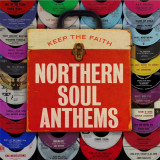
Demon Music is proud to bring together a selection of popular and exciting classic Northern Soul Anthems on a new 2LP thirty-three track collection. These are the original recordings by some familiar names and one or two that may have passed you by.
As the Sixties came to a close and the initial success of labels like Atlantic and Motown began to wane, there remained a dedicated fanbase of Soul devotees who would rather be out on the floor than wearing flowers in their hair. They continued to seek out new and previously overlooked releases, many on small labels that had never enjoyed chart success, making surprise hits of a few in the process.
Northern Soul could easily have passed into music history as a fad, something on the fringes of mainstream popular music; instead its popularity has remained and even grown. It is no longer the preserve of venues in the north of England (who had always attracted coachloads of devotees from across the nation), with Soul clubs opening in Europe, Asia, Australia and even - in perhaps the ultimate example of "coals to Newcastle" – America
Every few years Northern Soul enjoys a resurgence in popularity and welcomes a new generation of younger fans, keepers of the faith. This collection is for those with a passing interest and fans both old and
new - music fashions may change but the quality, the infectious excitement and the urge to get up and dance has endured in these fantastic records.
dovrebbe essere pubblicato su 27.05.2022

Recorded in 1991 by the quintet of vocalist Billie Ray Martin and Birmingham-based electronic musicians Brian Nordhoff, Joe Stevens, Les Fleming and Roberto Cimarosti, Electribal Soul was conceived as the sequel to the band’s 1990 debut album, Electribal Memories.
Electribal Memories had yielded the hits ‘Talking With Myself’ and ‘Tell Me When The Fever Ended’ and pushed Electribe 101 to the forefront of a crossover electronic scene that fused dance music with pop savvy. They were snapped up by Phonogram, managed by Tom Watkins and hailed as “the next band to meet the Queen” by i-D. The band took the coveted support slot for Depeche Mode on their epochal World Violation tour and supported Erasure at Milton Keynes Bowl. Seen as the next big thing, everything pointed toward enduring critical success for Electribe 101, and the band settled into putting their second album together.
“There was a degree of confidence among us when we came to write the second album,” recalls Billie Ray Martin. “To me, the songs we put down sound like some of our finest moments.” More immediately lush and warm than the dancefloor-friendly structures of Electribal Memories, the clue to the sound of Electribal Soul lies in the second word in its title: soul. Songs like the aching sensuality of opening track ‘Insatiable Love’ or the emboldened defiance of ‘Moving Downtown’ showcase Billie Ray Martin’s distinctive vocal range as it moves from haunting quiet to dramatic, euphoric rapture. Lyrics from ‘Moving Downtown’ had found their way into ‘Pimps, Pushers, Prostitutes’ by S’Express, and the song would appear as ‘Running Around Town’ on Martin’s 1996 solo album. The strikingproduction on the version of the song presented on Electribal Soul suggests classic late sixties soul influences, such as those of legendary Motown producer Norman Whitfield, with the long shadow cast by Kraftwerk never being far away.
‘Deadline For My Memories’, the song that provided the title for Martin’s first solo album, was originally intended for the second Electribe 101 album. Its lyrics document a sense of freedom and liberation from the darkness of a bad relationship, accompanied by jazzy piano and organ sounds over a quiet rhythm and discrete electronics. In contrast, ‘A Sigh Won’t Do’ finds Martin in soothing vocal mode, despite its devastating message about the final ending of a strained relationship, her lyrics framed by restrained and subtle beats and sounds.
To spend time with Martin’s voice on Electribal Soul is to find yourself moved deep into the ordinarily impenetrable emotional corners of your own psyche. “I was into big ballads at the time and listening to all kinds of US and UK singers, and I was also young enough to want to prove myself as a belter of ballads,” explains Martin of the classic soul edge the album showcased.
Electribal Soul heads into darker territory with ‘Hands Up And Amen’. Originally written by Martin in Berlin in the period before moving to London and forming Electribe 101, the song was then perfected and enhanced by the band’s production nous. ‘Hands Up And Amen’ savagely documents the mugging of a woman in Queens, NY at gunpoint, only to resolve itself with a middle section that nods reverently toward gospel tradition. The song coalesces around a regimented break and burbling synths, finally ending with layers of urgent synth sounds.
Meanwhile, a cover of Throbbing Gristle’s ‘Persuasion’ takes us into a seedy world of sexual coercion and creepy infatuation, predating Martin’s chilling version of the track with progressive house unit Spooky two years later. Supported by a minimal, nagging rhythm and barely-fluctuating sounds, Electribe 101’s take on ‘Persuasion’ makes for uneasy listening, even though Martin manages to inject a sort of twisted sympathy for the protagonist as the song progresses.
That Electribe 101 were as comfortable offering complicated, nuanced tracks like ‘Persuasion’ alongside pop house bangers like ‘Space Oasis’ – written by Billie Ray Martin with Martin King before Electribe 101 was formed – is testament to the way the band wove their way effortlessly through electronic music reference points. Framed by light, jazzy piano melodies and string sounds, the energy of ‘Space Oasis’ soars so high that it could easily reach the moon, while highlighting how well-suited Martin’s voice has always been to club music. We hear the same reminder of her dance music credentials on ‘True Memories Of My World’, finding her describing a Hollywood actress who reflects on being used by directors to sell her ‘tears’.
Hooking up with the Birmingham-based Nordhoff, Stevens, Fleming and Cimarosti after placing a Melody Maker ad in 1988 (“Soul rebel seeks musicians – genius only”), it was clear that Martin had found a group that recognised the unique power and importance of her voice. Having worked with genres as diverse as reggae, rock and R&B, the four producers proved to be perfect collaborators, presenting carefully-sculpted backdrops that emphasised the towering emotional dexterity of her voice.
“Listening back to these tracks now, I was reminded of what a bunch of great musicians they were,” says Martin. “They had a rule that if a part still sounded good after a day or two then it could stay. If it bothered the vocals, it would go.” Even more so than on Electribal Memories, Electribal Soul places Martin at the captivating centre of these pieces, surrounding her voice with everything from dubby rhythms to chunky R&B beats to nascent trip hop breaks; wiry, acid-hued synths uncoil gently without ever dominating, while horn samples and lush, disco-inflected strings provide a rich, naturalistic accompaniment for Martin’s emotional outpourings.
The band finished mixing the album at London’s Olympic Studios in 1991. They were assisted by Apollo 440’s Howard Gray on production duties for ‘Deadline For My Memories’, ‘Insatiable Love’ and ‘Space Oasis’, with Gray supported by talented engineer Al Stone. Pre-release promo tapes were issued and an enthusiastic energy started to build around the band’s anticipated second album.
It was not meant to be. Against a backdrop of a worsening relationship with Tom Watkins, and a disinterested Phonogram, instead of receiving a positive reaction to the new tracks, Electribe 101 were swiftly dropped by their label. Electribal Soul languished, unreleased, and the band yielded to pressures that had been building and split up. After collaborating with Spooky and The Grid, Billie Ray Martin went on to release her seminal debut solo album in 1996, with it securing the era-defining hit ‘Your Loving Arms’, while the other group members continued to work together as The Groove Corporation.
Thirty years after the songs were recorded, we’re now finally able to hear what the second and final chapter of Electribe 101’s story sounded like. Electribal Soul shows that the band had really only just got started when they dropped their first album in 1990. Heard only by a select and privileged few, what followed elevated the band’s music to a completely new level, making Electribal Soul musical buried treasure of the most precious and rare variety.
Electribal Soul will be released on LP, CD and digital formats on 18th February 2022 through Electribal Records. The physical formats include extensive liner notes from Billie Ray Martin, and the album sleeve features unseen archive photographs by Lewis Mulatero from the original 1990 sessions with the band that were never used in the sleeve designs for Electribal Memories.
Ordina ora e ordineremo l'articolo per te presso il nostro fornitore.

Belched from Hell’s depths into the rustic charms of the Witch County, Suffolk thirty long and disturbing years ago, CRADLE OF FILTH are undisputed giants of the heavy metal realm. Imperious purveyors of a perennially unique strain of dark, dastardly and wilfully extreme metal, with deep roots in the worlds of gothic horror and occult curiosity, the band led by Dani Filth has weathered three decades of tumult and trial, earning a formidable reputation as both a singular creative force and one of the most riotously entertaining live bands the metal world has ever produced.
From primitive early works like 1992 debut »The Principle Of Evil Made Flesh« to more expansive and theatrical classics like ‘Cruelty And The Beast’ and ‘Midian’, CRADLE OF FILTH defied trends and constructed their own idiosyncratic world of foul grandeur, becoming one of the UK’s most notable metal bands in the process. Since then, they have traversed the world countless times, hoovering up plaudits and praise from an ever-expanding international fan base. Resolutely prolific, the band’s catalogue has grown in depth and stature all the while, irrespective of line-up changes or the whims of the faithful.
In more recent times, CRADLE OF FILTH have hit an unmistakable hot streak of creativity and urgency. As a new line-up coalesced around the creation of 2015’s »Hammer Of The Witches«, fresh impetus propelled the band to new heights, as the revitalised crew became more in demand around the world than ever before. 2017’s ‘Cryptoriana - The Seductiveness Of Decay’ repeated the trick with even more explosive flamboyance. Until a global pandemic brought the music industry to a jarring halt, CRADLE OF FILTH were almost permanently on the road and absolutely fucking flying. As a result, it should surprise no one that the band’s brand new album, ‘Existence Is Futile’, is yet another monumental and electrifying journey through the dark.
Buoyed by these recent triumphs, CRADLE OF FILTH recorded »Existence Is Futile« during 2020, piecing the record together in isolation, at Grindstone Studios in Suffolk with studio guru Scott Atkins (Devilment/Benediction/Vader). Although instantly recognisable as the work of these veteran blackhearts, the thirteenth CRADLE OF FILTH album is a wholly different beast from its immediate predecessors. Pitch-black, perverse and at times absurdly brutal and extreme, it hangs together with mesmerising fluidity. It is also absolutely rammed with giant, rousing melodies and moments of jaw-dropping invention. No one could mistake the venomously catchy likes of ‘How Many Tears To Nurture A Rose?’ or monstrous ballad ‘Discourse Between A Man And His Soul’ for anything other than CRADLE OF FILTH, of course, but ‘Existence Is Futile’ confirms that the band’s exploratory instincts remain as sharp as ever.
Underpinned by its huge and disarmingly organic production, »Existence Is Futile« is plainly the darkest and most unsettling album CRADLE OF FILTH have made in a while. Eschewing the band’s trademark twisted storytelling in favour of horrified glimpses into the mortal void and ruminations on the inevitable destruction of life on Earth, its poignancy and relevance to the cluster of nightmares facing humanity in 2021 is impossible to ignore, even if Dani Filth insists, not unreasonably, that he didn’t anticipate a global pandemic when the news songs were being written.
With the best possible timing, CRADLE OF FILTH were already due to make a new album during those long, lonely months of lockdown in 2020. Having grabbed the opportunity with both hands, Dani avows that unavoidable isolation from the rest of the world was the best possible incentive to get the job done, while also adding plenty of eerie atmosphere to the whole experience.
Sonically speaking, ‘Existence Is Futile’ is easily the most powerful and dramatic record CRADLE OF FILTH have ever made: it’s the sound of band’s enviable onstage chemistry spilling over into the studio, propelling each member of the band to new levels of intensity. Combined with the expected labyrinthine arrangements and moments of spellbinding bombast, ‘Existence Is Futile’ may be the most vivid representation of the CRADLE OF FILTH experience yet.
Also, diehard fans will be thrilled to learn that horror icon Doug 'Pinhead' Bradley makes a welcome return to the CRADLE fold, lending his dulcet tones to the epic ‘Suffer Our Dominion’, and to one of the forthcoming new record’s bonus tracks, as Dani explains.
“There are also two bonus tracks in addition to the album, one of which is the culmination to the ‘Her Ghost In The Fog’ trilogy, which began on »Midian«.
For this we had little hesitation in enlisting our friend and actor Doug Bradley to reprise his narrative role. Doug lives in Pittsburgh, which he refers to ‘The Pit’, thus we directed his narrative over Skype from his local studio. He adopts this almost David Attenborough-ish role on ‘Suffer Our Dominion’, which is possibly the most politically astute song we’ve written of late. As a band we usually shy from branching into politics, but it’s something that needed spouting. The fact we’re fucking our ecology up and desperately need to address the situation pronto…”
So, if we’re all going to perish in the fire of our own stupidity, we might as well have a suitably deranged and destructive soundtrack to do it by.
A bewitching, fearless nosedive into the abyss, the band's thirteenth studio album confirms the ferocious efficacy of CRADLE OF FILTH in 2021. Bold, brave, wildly imaginative and heavy as hell, the band’s latest runaway train-ride through the flames is the perfect album for these most imperfect of times. As Dani concludes, “Be like the virus! Mutate and survive!”
dovrebbe essere pubblicato su 22.10.2021
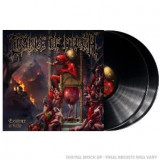
Belched from Hell’s depths into the rustic charms of the Witch County, Suffolk thirty long and disturbing years ago, CRADLE OF FILTH are undisputed giants of the heavy metal realm. Imperious purveyors of a perennially unique strain of dark, dastardly and wilfully extreme metal, with deep roots in the worlds of gothic horror and occult curiosity, the band led by Dani Filth has weathered three decades of tumult and trial, earning a formidable reputation as both a singular creative force and one of the most riotously entertaining live bands the metal world has ever produced.
From primitive early works like 1992 debut »The Principle Of Evil Made Flesh« to more expansive and theatrical classics like ‘Cruelty And The Beast’ and ‘Midian’, CRADLE OF FILTH defied trends and constructed their own idiosyncratic world of foul grandeur, becoming one of the UK’s most notable metal bands in the process. Since then, they have traversed the world countless times, hoovering up plaudits and praise from an ever-expanding international fan base. Resolutely prolific, the band’s catalogue has grown in depth and stature all the while, irrespective of line-up changes or the whims of the faithful.
In more recent times, CRADLE OF FILTH have hit an unmistakable hot streak of creativity and urgency. As a new line-up coalesced around the creation of 2015’s »Hammer Of The Witches«, fresh impetus propelled the band to new heights, as the revitalised crew became more in demand around the world than ever before. 2017’s ‘Cryptoriana - The Seductiveness Of Decay’ repeated the trick with even more explosive flamboyance. Until a global pandemic brought the music industry to a jarring halt, CRADLE OF FILTH were almost permanently on the road and absolutely fucking flying. As a result, it should surprise no one that the band’s brand new album, ‘Existence Is Futile’, is yet another monumental and electrifying journey through the dark.
Buoyed by these recent triumphs, CRADLE OF FILTH recorded »Existence Is Futile« during 2020, piecing the record together in isolation, at Grindstone Studios in Suffolk with studio guru Scott Atkins (Devilment/Benediction/Vader). Although instantly recognisable as the work of these veteran blackhearts, the thirteenth CRADLE OF FILTH album is a wholly different beast from its immediate predecessors. Pitch-black, perverse and at times absurdly brutal and extreme, it hangs together with mesmerising fluidity. It is also absolutely rammed with giant, rousing melodies and moments of jaw-dropping invention. No one could mistake the venomously catchy likes of ‘How Many Tears To Nurture A Rose?’ or monstrous ballad ‘Discourse Between A Man And His Soul’ for anything other than CRADLE OF FILTH, of course, but ‘Existence Is Futile’ confirms that the band’s exploratory instincts remain as sharp as ever.
Underpinned by its huge and disarmingly organic production, »Existence Is Futile« is plainly the darkest and most unsettling album CRADLE OF FILTH have made in a while. Eschewing the band’s trademark twisted storytelling in favour of horrified glimpses into the mortal void and ruminations on the inevitable destruction of life on Earth, its poignancy and relevance to the cluster of nightmares facing humanity in 2021 is impossible to ignore, even if Dani Filth insists, not unreasonably, that he didn’t anticipate a global pandemic when the news songs were being written.
With the best possible timing, CRADLE OF FILTH were already due to make a new album during those long, lonely months of lockdown in 2020. Having grabbed the opportunity with both hands, Dani avows that unavoidable isolation from the rest of the world was the best possible incentive to get the job done, while also adding plenty of eerie atmosphere to the whole experience.
Sonically speaking, ‘Existence Is Futile’ is easily the most powerful and dramatic record CRADLE OF FILTH have ever made: it’s the sound of band’s enviable onstage chemistry spilling over into the studio, propelling each member of the band to new levels of intensity. Combined with the expected labyrinthine arrangements and moments of spellbinding bombast, ‘Existence Is Futile’ may be the most vivid representation of the CRADLE OF FILTH experience yet.
Also, diehard fans will be thrilled to learn that horror icon Doug 'Pinhead' Bradley makes a welcome return to the CRADLE fold, lending his dulcet tones to the epic ‘Suffer Our Dominion’, and to one of the forthcoming new record’s bonus tracks, as Dani explains.
“There are also two bonus tracks in addition to the album, one of which is the culmination to the ‘Her Ghost In The Fog’ trilogy, which began on »Midian«.
For this we had little hesitation in enlisting our friend and actor Doug Bradley to reprise his narrative role. Doug lives in Pittsburgh, which he refers to ‘The Pit’, thus we directed his narrative over Skype from his local studio. He adopts this almost David Attenborough-ish role on ‘Suffer Our Dominion’, which is possibly the most politically astute song we’ve written of late. As a band we usually shy from branching into politics, but it’s something that needed spouting. The fact we’re fucking our ecology up and desperately need to address the situation pronto…”
So, if we’re all going to perish in the fire of our own stupidity, we might as well have a suitably deranged and destructive soundtrack to do it by.
A bewitching, fearless nosedive into the abyss, the band's thirteenth studio album confirms the ferocious efficacy of CRADLE OF FILTH in 2021. Bold, brave, wildly imaginative and heavy as hell, the band’s latest runaway train-ride through the flames is the perfect album for these most imperfect of times. As Dani concludes, “Be like the virus! Mutate and survive!”
dovrebbe essere pubblicato su 22.10.2021

Liz Phair announces ‘Soberish’, her highly-anticipated new album and first collection of original
material in eleven years. Produced by Phair’s longtime collaborator Brad Wood - known for helming
Phair’s seminal albums ‘Exile In Guyville’, ‘Whip-Smart’ and ‘whitechocolatespaceegg’ - ‘Soberish’ is
released via Chrysalis Records.
Almost thirty years since her peerless debut album ‘Exile In Guyville’ was released (voted #56 in
Rolling Stone’s 2020 list of the 500 Greatest albums Of All Time), Phair returns with a new record that
will both intrigue and satisfy her long-standing fans and introduce her to a smart young audience
whose contemporary heroes have been reading from Phair’s playbook since they first picked up a
guitar.
Liz Phair has achieved the kind of status in her industry rarely bestowed on recording artists. Her
albums in the 1990s were central to the indie rock canon of the day. Her image was featured in
countless magazines, early Apple commercials and Gap ads. Her eponymous album for Capitol
Records in 2003 took Phair in a pop direction that ruffled some critics’ feathers but nonetheless went
gold, galvanizing a host of new fans, particularly among young women who fell in love with hits like
‘Why Can’t I’ and ‘Extraordinary’, tracks that were featured in several major films and TV shows,
including 13 Going On 30, Raising Helen and How To Deal. Liz has picked up two Grammy
nominations and a spot in Pitchfork’s Greatest Albums Of The 90s, with over five million record sales
to date (including three US gold albums). She sang ‘God Bless America’ at the opening game of the
Chicago White Sox World Series victory in her hometown in 2005.
‘Soberish’ is a portrait of Phair in the present tense, taking all of the facets of her melodic output over
the years and synthesizing them into a beautiful, perfect whole. She’s at the top of her game in the
recording studio, drawing upon years of experience in television composition to weave through the
songs daring and unexpected sound design. With Brad Wood’s exquisite engineering and masterful
production, the result is a wholly fresh yet satisfyingly familiar sound that challenges on the first listen
and seduces with each subsequent play through. The earworms are strong with this one.
Phair says, “I found my inspiration for ‘Soberish’ by delving into an early era of my music development,
my art school years spent listening to Art Rock and New Wave music non-stop on my Walkman. The
English Beat, The Specials, Madness, R.E.M.s Automatic for the People, Yazoo, The Psychedelic
Furs, Talking Heads, Velvet Underground, Laurie Anderson, and the Cars. The city came alive for me
as a young person, the bands in my headphones lending me the courage to explore.”
None of the arrangements on Soberish are traditional songwriting standards but the hooks are so
catchy, the imagery so compelling, that the listener is drawn effortlessly along with the music. There
are the off-kilter, unexpected guitar chords listeners will recognize as her signature style, a mainstay
from her earliest work; the instantly knowable choruses of her most pop-friendly songs of the early
2000s; the frank lyricism and storytelling that has opened doors for countless women picking up
guitars and attempting to speak about their experiences.
Phair shares insight into the meaning of her title: “‘Soberish’ can be about partying. It can be about
self-delusion. It can be a about chasing that first flush of love or, in fact, any state of mind that allows
you to escape reality for a while and exist on a happier plane. It’s not self-destructive or out of control;
it’s as simple as the cycle of dreaming and waking up. That’s why I chose to symbolize ‘Soberish’ with
a crossroads, with a street sign. It’s best described as a simple pivot of perspective. When you meet
your ‘ish’ self again after a period of sobriety, there’s a deep recognition and emotional relief that
floods you, reminding you that there is more to life, more to reality and to your own soul than you are
consciously aware of. But if you reach for too much of a good thing, or starve yourself with too little,
you’ll lose that critical balance.”
dovrebbe essere pubblicato su 04.06.2021

Wah Wah 45s make a welcome return to the world of re-issues. Having started out over two decades ago releasing dance floor funk from Benny Poole, Cheyenne Fowler and The Googie Rene Combo, and later re-releasing obscure Kompa-funk from Haitian pianist Henri Pierre Noel, they now turn their attention to an overlooked early 90s acoustic soul gem.
About thirty years ago, music teacher and budding producer Alex Boyesen found himself working as part of the Haringey Music Workshop - a community programme and outreach project funded by the local council in Haringey, North London (coincidentally the area in which the Wah Wah head office is now based!).
"Anyone could come and get lessons for free - ranging from piano, sax, guitar, drums, bass, singing and workshops including choral, jazz band and more." Alex Boyesen
It was during that time that Alex came across a young Sam Edwards.
"One day I went into one of the rehearsal rooms and there, by herself, was this girl playing a piano and singing. It was the most incredible voice I had ever heard."
Before long, the pair were playing all over London as a duo with Alex on guitar and Sam on vocals.
"Sam had never had professional training, she was simply an utter natural."
The Haringey Music workshop was connected with other projects in the borough, in particular a community project called the Selby Centre. Here they ran training programs for young people and one of these was a music business course. The idea was that they found an artist, recorded them and then promoted them. One way or the other they ended up picking Alex and Sam to be on their roster.
"My good friend Nixon Rosembert was brought in to oversee the recordings and they hired the Islington Music Workshop to do the recording. We got musicians from the Haringey Music Workshop to play on the sessions and spent a day recording two songs -American CarsandLife. The training workshop had created a label called Progression Music and out the record went."
Three decades later and out of the blue Alex started to get interest again in the record he'd almost forgotten about all those years ago. It had become something of a sought after gem on Discogs, and there seemed to be an interest in that 'acoustic soul' sound once again.
"I got three people asking if they could re-release it and finally here we are with Wah Wah 45s doing the business after all these years."
It was Hospital Records and Wah Wah 45s founder, Chris Goss, who first brought the idea of releasing this record to the table.
"This is a really special record for me, picked up 30 years ago, from a young James Lavelle at Honest Jon's in Ladbroke Grove. Sam Edwards would go on to perform and write songs with North London's Izit, the acid jazz collective fronted by Tony Colman - with whom I have built a music company, these past 25 years. Alex Boyeson worked with Tony at the Haringey Arts Project, who produced a one-off vinyl release of Alex's two compositions back in 1991. Thanks to Alex and Tony, we have been able to clean-up the original audio, uncover photos and lyric sheets to present, with real love and affection, these two lost gems from a bygone era." Chris Goss, Feb 2021.
The project was then expanded by Dom Servini, who got heavy disco legend Ashley Beedle and co-label owner and erstwhile producer Adam Scrimshire in to take on remix duties.
"When approached by Dom Servini to reworkAmerican CarsI had no idea about the history of the original song. After a good listen myself and studio partner Darren Morris set to work and all I can say that it was a lovely experience keeping the vibe of the original but giving it a spaced out feel in true Afrikanz On Marz fashion." Ashley Beedle, Feb 2021.
"Remixing without multi-tracks always brings a bunch of challenges, getting the balance between the bass and drums in the original and what you want to do with your own version. The song really dictates certain things to you.
But it was such a pleasure to explore that with this beautiful song and vocal performance. So many ways to approach it. I just wanted to draw out more of the melancholy in the original and make it an absorbing experience." Adam Scrimshire, Feb 2021.
Perhaps the last word should be given to Alex himself, who's very much enjoying the new lease of life that his music with Sam is getting.
"As I write this we are trying to locate her, she's somewhere singing something, that's all she ever did. Thanks for being part of my life Sam and I am so glad that this small bit of that time is being remembered." Alex Boyesen, Feb 2021.
Ordina ora e ordineremo l'articolo per te presso il nostro fornitore.

In the late ‘80s, a wave of British musicians raised on ‘70s UK pop, Caribbean sound system culture, reggae, lovers rock and Motown/Philly soul music fell in love with synthesisers, drum machines and 8-track recorders. The street soul generation had arrived.
Originally released as a white label 12” in 1989, ‘You’ve Gone’ is the sole release from Bassline, the studio project of Southeast London-raised musician Tony Henry, not to be confused with Tony Henry from Manchester jazz-funk/R&B band 52nd Street. Featuring the singer Lorraine Chambers, it’s one of the true jewels of the UK Street Soul scene. As Lorraine’s heartsick soul vocal glides over sunrise synths, dusty drums, elegant electric piano figures and a reggae indebted bassline, ‘You’ve Gone’ captures the optimism and strength of the era perfectly.
‘You’ve Gone’ was championed by Choice FM UK (now Capital XTRA), Kiss FM, and DJ Trevor Nelson. Tony went from selling white labels out the trunk to booking in Live PAs for Lorraine with London sound systems like Rampage and up north in the street soul loving cities of Manchester and Birmingham. “When Lorraine did PAs up there, she went out on stage like she was Beyoncé.”
The son of a Jamaican father and an English mother, Tony grew up around the London sound system scene. He taught himself bass guitar, keyboards, and production, before playing in the reggae band Chakwanza (Swahili for “the first”). In Chakwanza, Tony rubbed shoulders with Aswad, Barry Boom, Steel Pulse, Maxi Priest, Gregory Issacs, Dennis Brown, Ghettotone and Saxon Sound, before focusing on a career in banking over music. “Music was my first love, but it couldn’t have afforded me the sort of level of - let’s be blunt and pragmatic about it - financial success that would have allowed me to support my family.”
Outside of office hours, Tony continued to work on music at home, sometimes serving as a session bassist with local bands. In the late 80s, a work colleague mentioned her sister Lorraine Chambers was a singer. Tony and Lorraine recorded “You’ve Gone” over two sessions. “Lorraine went into the booth, put her headphones on and got into the song. My daughter turned to me and said, ‘Daddy, she can really sing!’”
Despite the success of ‘You’ve Gone’, they never recorded together again. “The world changed, and for me, it changed as well. My younger kids were born, and work started getting more intense. I got a bit more successful and was living a mad, kind of crazy life.”
Thirty-two years on, ‘You’ve Gone’ finally receives an official reissue comprising the lauded original mix, an alternate version and Tony’s Back to Bass-ics remix. Fittingly, in recent months, Tony and Lorraine have re-connected in the studio writing new material.
Ordina ora e ordineremo l'articolo per te presso il nostro fornitore.
