Suche:the south africa connection

Styles
Alle
  • 1
Charles Webster And The South Africa Connection - From The Hill LP 2x12"

Stay True Sounds supremo Allan Nicoll, aka Kid Fonque, and legendary UK producer Charles Webster have brought together the cream of the South African deep house scene for a unique album. The record was recorded at Flame Studios, a facility built inside a prison at Constitution Hill in South Africa, which is very significant to South Africans, because that's where the Constitution was written. “It's a remarkable institution,” says Charles. “Mandela was in there; you can really feel the history. You're working in a prison cell from a brutal regime. It's an important place. So, I didn't want the album to be too light, because you can't escape from politics anywhere, but especially somewhere like here - and you shouldn't.”

Auf Lager

Bei uns am Lager und sofort versandfertig

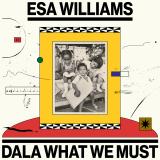
Esa Williams - Dala What We Must (2x12")
  • A1: Kwanini
  • A2: Ita Ayelala
  • A3: Yanga
  • A4: Nakupenda
  • B1: Summerskin
  • B2: Cruisin Kruga
  • B3: Vanguard Drive
  • B4: Dala What We Must

Marking twenty years since South African producer and DJ Esa Williams left Cape Town, Dala What We Must is a deeply personal and expansive debut LP, an exploration of movement, memory, and sound shaped by two decades of creative evolution. Co-created with collaborator and multi-instrumentalist Robin G. Breeze, the album deftly combines field recordings, layered instrumentation, and emotionally resonant compositions into a nuanced, globally influenced body of work. It also stands as Esa’s most collaborative release to date, featuring contributions from musicians across London, Oaxaca, Nairobi, and Cape Town, each adding their own creative energy to a project built on openness, trust, and shared experience. The album draws inspiration from Esa’s recent ventures into documentary scoring and soundtracking, with projects like Cursed (Audible) and The Invisible Hand teaching him to listen differently, to honour space, to serve the story. That sensibility permeates the album, resulting in music that breathes, lingers, and listens as much as it speaks.

The title, Dala What We Must, is a South African call to action: a reminder to do what’s necessary, even in uncertainty. Finalised in the months leading up to Esa’s transition into fatherhood, the record carries a sense of grounding, care, and quiet transformation. Dala What We Must is a sonic reflection of journey and community, a deeply collaborative project rooted in connection and guided by intention.

vorbestellen10.04.2026

erscheint voraussichtlich am 10.04.2026


Last In: vor 2026 Jahren
Esa Williams - Dala What We Must LP 2x12"
  • A1: Ita Ayelala
  • A2: Yanga
  • B1: Kwanini
  • B2: Nakupenda
  • C1: Summerskin
  • C2: Vanguard Drive
  • D1: Cruisin Kruga
  • D2: Dala What We Must

Marking twenty years since South African producer and DJ Esa Williams left Cape Town, Dala What We Must is a deeply personal and expansive debut LP, an exploration of movement, memory, and sound shaped by two decades of creative evolution.

Co-created with collaborator and multi-instrumentalist Robin G. Breeze, the album deftly combines field recordings, layered instrumentation, and emotionally resonant compositions into a nuanced, globally influenced body of work. It also stands as Esa’s most collaborative release to date, featuring contributions from musicians across London, Oaxaca, Nairobi, and Cape Town, each adding their own creative energy to a project built on openness, trust, and shared experience.

The album draws inspiration from Esa’s recent ventures into documentary scoring and soundtracking, with projects like Cursed (Audible) and The Invisible Hand teaching him to listen differently, to honour space, to serve the story. That sensibility permeates the album, resulting in music that breathes, lingers, and listens as much as it speaks.

The title, Dala What We Must, is a South African call to action: a reminder to do what’s necessary, even in uncertainty. Finalised in the months leading up to Esa’s transition into fatherhood, the record carries a sense of grounding, care, and quiet transformation.

Dala What We Must is a sonic reflection of journey and community, a deeply collaborative project rooted in connection and guided by intention.

vorbestellen10.04.2026

erscheint voraussichtlich am 10.04.2026


Last In: vor 2026 Jahren
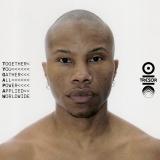
TYGAPAW - Together You Gather All Power Applied Worldwide LP 2x12"

May 2026 marks the arrival of TYGAPAW (aka Dion McKenzie)’s first full-length album on Tresor Records, entitled Together You Gather All Power Applied Worldwide. An acronym of its creator’s name, TYGAPAW’s third studio album is a deeply personal collection of music building worlds where Black queer and trans siblings can thrive, while unifying dancefloors worldwide. A proposition that collective wisdom liberates us from the matrix of domination we live within. The album unfolds as the latest chapter in TYGAPAW’s ongoing techno opera opus, continuing to center the voices of Black women, which surface as layered incantations rather than lyrics - powerful, haunting, sensual, activating.
With the process of creating the album starting in 2023, as TYGAPAW (Dion McKenzie) was in the first year of their transition, the music reflects the intensity of that period, where they were experiencing deplatforming as a response to the shift in their physical appearance: Tracks like ‘M32 Riddim’ and ‘Helicopter hovers over my Crown Heights Apartment’ feature high-paced rhythms intersecting with intense siren-like synths to form demanding compositions echoing a heightened sense of alert. Yet throughout the album, relief comes in the form of TYGAPAW’s vocal features, co-conspirators, and chosen family, whose voices are treated with reverb and echo, a sonic fingerprint that leads back to the pioneers in the legendary studios of TYGAPAW’s native land, Jamaica, an important reminder that the past will always inform the future. It is an album for dancers first and foremost, where joy, defiance, and integration with the natural body coexist, and every drop feels less like a climax than a transformation. Expect a bass that permeates your soul and melodic synthesized sequenced phrases echoing the dancehall eras of TYGAPAW’s youth, reshaped into hypnotic melodies that glow over industrial kicks designed to command attention, reasserting Jamaica's pioneering yet often overlooked contribution to electronic music.
In the opening track, ‘Can I Live’, Precious Okoyomon’s words feel like the beginning of a ritual; setting the intentions for the rest of the proceedings. As McKenzie puts it, their “work is about regeneration, resetting, getting integrated into nature, and about rebirth. That’s the tone I wanted to set at the outset of the album.” Ms Carrie Stacks continues this thread of support in ‘Don’t Panic’ with heavily processed vocals on top of a beat that takes inspiration from another important ingredient in the antidote to the oppression of isolation: Ballroom culture. “ I feel like I found my queerness in Ballroom, that’s why this track is very important to me.”
Echoes of NYC Black queer nightlife scene also permeate in the energetic drums of ‘Exorcise the Language of Domination’, in which Julianna Huxtable’s spoken performance complements the various movements and tones of the music. “My producer brain thought this was the one that Juliana’s vocals would be best suited for. I hinted: ‘what do you think of this one?’ She just went into her notes and picked some passages to go with the first section of the track. From there, it was a year-long process of development. It required time and space for this thing to evolve, but I think it’s one of the most powerful tracks on the album.” London’s SUUTOO contributes the album’s only musical collaboration on ‘B2B’, a track that emerged from sessions in McKenzie’s New York studio where the real objective was to connect and have fun; a time out from the demands of life outside.
The album closes out with a double hit of emotion in the form of ‘Effects of Resistance and Black Trans Masculine Experience’. The former features South African scholar Khanyisile Mbongwa drawing connections that exist between Africa and the Black diaspora, whilst looking to the future and calling for a shared sense of community.
The latter piece, an instrumental version of the piece which featured on the IMMIGRANT E.P. of 2025 is a gentle and deeply affecting end to the record, a place of peace and acceptance. This end-of-cycle tone is mirrored in the sleeve photography, which also ties back to IMMIGRANT by finally revealing what was hidden: a portrait of the artist fully self-actualized; a step towards true inner liberation. TYGAPAW is sonically defiant across this album; bass frequencies feel tactile — less heard than inhabited — infectious lead synth melodies remain with you long after the track ends. An overall sound that leaves asserting an urgent need for connection. From Detroit to New York to Berlin to Jamaica, despite geographic distance, this album reminds us that we remain in solidarity, recognising that meaningful world-building requires collective input and action, both personal and communal, if we are to move toward liberation.

vorbestellen08.05.2026

erscheint voraussichtlich am 08.05.2026


Last In: vor 2026 Jahren
Various - Memories. Untold

VA – Memories. Untold is a delicate and emotionally rich compilation from TAMIZDAT, capturing the subtle beauty of deep and tech house with a gentle, melancholic twist. Thoughtfully curated for sunset sessions and introspective moments, this four-track vinyl release drifts between ambient textures, melodic phrasing, and dubby undertones—crafted for open-air environments and graceful transitions.

A1. Joshua Pendergrass – The Leopard (Frederick Ansgar Remix) opens the record with an ambient-infused deep house piece—warm, slow-moving, and deeply involving. It invites the listener into a calm, curious, and emotionally attentive state.
A2. Dubsud – Memories (BarBQ Remix) follows with a more upbeat, melodic character. Playful yet refined, it offers a bright continuation of the journey, carrying momentum without losing its emotional depth.
On the flip, B1. Heward, Kirill Matveev – Your Gentle Breath emerges like a breeze—floaty, nuanced, and ideal for that golden-hour moment. It’s an elegant piece full of space, subtlety, and feeling.
B2. Nj Helder – Gazi closes the release with dubby warmth and light breakbeat elements, a soothing yet rhythmically engaging finale—like the last light fading over a distant horizon.

Featuring label mastermind Kirill Matveev, MixCult regulars Heward, Joshua Pendergrass, BarBQ, and Dubsud, the record is further elevated by South African talent Nj Helder, whose presence brings a soulful character to its closing chapter.
Memories. Untold is evocative, chilled, and designed for those who seek emotional connection through sound—a graceful companion for deep listening and open skies.
TAMIZDAT is a division of MixCult Records

vorbestellen

Der Artikel ist noch nicht erschienen. Du kannst den Artikel jetzt vorbestellen, dieser ist nach Wareneingang für dich versandbereit.


Last In: vor 2026 Jahren
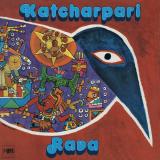
Enrico Rava - Katcharpari (feat. Bruce Johnson, John Abercrombie & Chip White) LP
  • 01: Bunny&Apos;S Pie (Feat. Bruce Johnson, John Abercrombie &Amp; Chip White)
  • 02: Trial N. 5 (Feat. Bruce Johnson, John Abercrombie &Amp; Chip White)
  • 03: Dimenticare Stanca (Feat. Bruce Johnson, John Abercrombie &Amp; Chip White)
  • 04: Katcharpari (Feat. Bruce Johnson, John Abercrombie &Amp; Chip White)
  • 05: Fluid Connection (Feat. Bruce Johnson, John Abercrombie &Amp; Chip White)
  • 06: Cheerin&Apos; Cherry (Feat. Bruce Johnson, John Abercrombie &Amp; Chip White)
  • 07: Peace (Feat. Bruce Johnson, John Abercrombie &Amp; Chip White)

The breakthrough album. Enrico Rava's second solo record, recorded in Milan in January 1973 and released on the German BASF label, is nothing less than a cornerstone of Italian jazz-rock - the record that caught Manfred Eicher's attention and opened the doors to ECM. Rava himself has called it his breakthrough, and history proved him right.

The lineup is killer: John Abercrombie on guitar, Bruce Johnson on bass, Chip White on drums. Four musicians operating at the absolute peak of early seventies fusion energy - electric, cosmopolitan, burning with that particular fire that only existed in that brief window when jazz met rock and nobody knew the rules yet. Abercrombie, already on his way to becoming one of the most distinctive voices in electric jazz guitar, delivers some of his most ferocious early work here. White's drumming is relentless, pushing the music forward with an intensity that never lets up.

If Miles' Bitches Brew-era speaks to you, if Ian Carr's Nucleus gets you moving, if you know Sun Ra's Lanquidity and Don Cherry's Relativity Suite by heart - this is essential listening. Rava's vision was already fully formed: South American rhythms, Mediterranean warmth, free jazz ferocity, rock power - all flowing together without borders or categories. By the early seventies, Rava had absorbed everything - the New Thing, the European free scene, the electric revolution coming out of Miles' studio - and forged something entirely his own.

The seven tracks cover serious ground. "Bunny's Pie" introduces the music with an almost cosmic atmosphere of suspense, hovering in that liminal space before it trails off into the up-tempo vibrant frenzy of "Trial N. 5" - Abercrombie and Rava trading swirling solos at full intensity, the rhythm section locked in tight. "Dimenticare Stanca" moves from Rava's expressive balladic intro into pure funk, guitar and trumpet steering over the rhythmic drive with absolute confidence. The title track carries the lyrical feel and cadence of an Incan-Peruvian folksong - that cosmopolitan spirit made audible. "Fluid Connection" rides a funky bass riff into fusion heaven, with standout trumpet and guitar solos that build and release with perfect tension. "Cheerin' Cherry" pays homage to the great Don Cherry - Rava's spiritual mentor and fellow traveler in world music - exploring a North African soundscape that points toward the global jazz to come. Johnson's "Peace" closes the album with a minute and a half of serene, blissful calm - a moment of stillness after the storm.

This audiophile reissue - cut from the original masters, pressed by Pallas in Germany on 180gm vinyl, housed in a thick laminated hand-glued gatefold - does full justice to an album that remains a collector's holy grail.

Don't sleep on this one. Limited Edition.

vorbestellen20.03.2026

erscheint voraussichtlich am 20.03.2026


Last In: vor 2026 Jahren
Various - Dolores: Salsa & Guaracha From 70's French West Indies

In Guadeloupe, many people think that jazz and ka music are like a ring and a finger. To some extent, the same could be said about so called Latin music and the music played in the French West Indies.

Both aesthetics were born in the Caribbean and bear so many connections that they can easily be considered cousins. In constant dialogue, there are lots of examples of their fruitful alliance and have been for a while. The English country dance that used to be practiced in European lounges came to be called kadrille in Martinique and contradanza in Cuba. They both featured additional percussion instruments inherited from the transatlantic deportation. Drawing from shared feelings about the same traumatized identity – later to be creolized – it would be hard not to assume that they were meant to inspire each other. The golden age of the orchestras that graced the Pigalle nights during the interwar period further proves the point. As soon as the 1930s, Havana-born Don Barreto naturally mixed danzón and biguine music in a combo based at Melody's Bar. In the following decade, Félix Valvert, a conductor who was born and raised in Basse-Terre in Guadelupe, also worked wonders in Montparnasse with La Coupole, which was an orchestra made up of eclectic musicians. Afro- Caribbean performers of various origins were often hired on rhythm and brass sections in jazz bands, which used to enliven the typical French balls of the capital. In the 1930s and onwards, Rico’s Creole Band was one of them.


Martinican violinist-clarinettist Ernest Léardée, who would become the king of biguine music as well as the main figure of French Uncle Ben's TV commercials (a dark stigma of post-colonial stereotypes), had musicians from the whole Caribbean sphere play at his Bal Blomet – and they all enchanted "ces Zazous-là" (according the words of Léardée's biguine-calypso piece). In les Antilles (French for French West Indies), music history started to speed up in the 1950s, when trade expanded and radio stations grew bigger. The Guadelupean and Martiniquais youth tuned in their old galena radio sets to South American and Caribbean music. As for the women traders, les pacotilleuses, they bought and sold goods across different islands (the "passing of items through various hands" was thought to be most pleasurable) and brought back countless sounds in their luggage. Such was the case of Madame Balthazar, who once returned from Puerto Rico with the first 45rpm and 33rpm to ever enter Martinique.

Out of this adventure was created the famous Martinican label La Maison des Merengues, a music business she opened and undertook with her husband and which proved to be a major landmark. At the end of the 1950s, in Puerto Rico, Marius Cultier competed in the Piano International Contest playing a version of Monk's Round 'Midnight. He won the first prize and this distinction foreshadowed everything that was to come. Cultier, the heretic Monk of jazz, was quickly praised for writing superb melodies, always tinged with a twist that conferred a unique sound to his music. It didn't take long for the gifted self-taught musician to get to play with Los Cubanos, making a name for himself thanks to his impressive maestria on merengues.

The rest is history. Besides, in the late 1950s, Frantz Charles-Denis, born into the upper middle class in Saint-Pierre and better known by his first name Francisco, went back home after working at La Cabane Cubaine – a club located rue Fontaine where he had caught the Latin fever. Francisco's music was therefore heavily marked by his Cuban cousins' influence, which gave the combos he led a specific style and also led to renewal. Things were swinging hard in La Savane, located in the main square in Fort-de-France. He set up the Shango club close by and tested out the biguine lélé there, a new music formula spiced up with Latin rhythms. Soon afterwards, fate had him fly to Puerto Rico and Venezuela.

As for percussionist Henri Guédon (percussions were only a part of his many talents), he was born in Fort-de-France in May 22nd 1944, the day marking the celebration of the abolition of slavery. As an old man, he could remember that in " his father's Teppaz, a lot of hectic 6/8 music was constantly playing...". In the opening lines of his Lettre à Dizzy, a small illustrated collection of writings published by Del Arco, he highlighted the huge impact that cubop had on him as a teenage boy, around 1960. He eventually turned out to be the lider maximo in La Contesta, a big band steeped in Latin jazz. He was also the one who originated the word zouk to describe music which brought the sound of the New York barrio to Paris. It was the culmination of a journey that started in Sainte-Marie: "a mythical place for bélé, the equivalent of Cuban guaguancó". In the early 1960s, the tertiary economy developed to the detriment of agriculture. Yet rural life was where roots music emerged in Martinique and in Guadeloupe.

Record companies played a major part in the process of Latin versions sweeping across the islands – before reaching everywhere else. Producer Célini, boss of the great Aux Ondes label, and Marcel Mavounzy, both the head of Émeraude records - a firm which was founded in 1953 - as well as the brother of famous saxophonist Robert Mavounzy, were big names to bear in mind. Although there were many of them - all of whom are featured on this record - Henri Debs was definitely the major figure in the recording adventure. He proved to be so influential that he even got compared to Berry Gordy. In the mid 1950s, when he acquired his first Teppaz, he worked on his first compositions: a bolero and a chachacha. Then, he became the one man who made people discover Caribbean music, from calypso to merengue. He was among the first ones to rush out to San Juan, Puerto Rico, to buy records and distribute them through a store run by one of his brothers in Fort-de-France. He had members of the Fania All Star come and perform there, which he was madly proud about. He was also the first one to pay attention to Haitian music, such as compas direct and various other rhythms which would soon flood the market. As a result, many of the combos hitting his legendary studio would end up boosted by widespread "Afro-Latin" rhythms. However, he never denied his identity: gwo ka drums were given a major role, although they were instruments which had long been banned from the "official" music spheres. The present selection bears witness to such a creative swarming. Here are fourteen tracks of untimely yet unprecedented cross-fertilization: all types of music rooted in the Creole archipelago have found their way, whatsoever, to the tracklisting. Whether originating from the city or being more rural, they all go back to what Edouard Glissant, in an interview about the place of West Indian music in the Afro-American scope, called "the trace of singing, the one which got erased by slavery." "It is so in jazz, but also in reggae, calypso, biguine, salsa... This trace also manifests through the drums, whether Guadelupean, Dominican, Jamaican or Cuban... None of them being quite the same. They all point to the idea of a trace, seeking it out and connecting to each other through it. This is the hallmark of the African diaspora: its ability to create something new, in relation to itself, out of a trace. It may be the memory of a rhythm, the crafting of a drum, a means of expression which doesn't resort to an old language but to the modalities of it." The opening track features one of the emblematic orchestras of this aesthetic identity, criscrossing many music types from the archipelago. The 1974 Ray Barretto guajira – Ray Barretto was a major New York drummer influenced by Charlie Parker and Chano Pozzo – is magnificently performed by Malavoi, a legendary Fayolais group (i.e from Fort-de-France). Additionally, the compilation ends on a piece by Los Martiniqueños de Francisco. It symbolically closes the circle as it is a genuine potomitan of Martinique culture which also functions as a tireless campaigner for Afro-Caribbean music. Practicing the danmyé rounds (a kind of capoeiria) to the rhythm of the bèlè drum, it delivers a terrific Caterete, a kind of champeta of Afro- Colombian obedience which was originally composed by Colombian Fabián Ramón Veloz Fernández for the group Wgenda Kenya. The icing on the cake is Brazilian Marku Ribas, who found refuge in Martinique in the early 1970s, bringing his singing to the last trance-inducing track. These two "versions" convey the whole tone of a selection composed of rarities and classics of the tropicalized genre, swarming with tonic accents and convoluted rhythms. It is the sort of cocktail that the West Indians never failed to spice up with their own ingredients. For instance, the Los Caraïbes cover of Dónde, a famous Cuban theme composed by producer Ernesto Duarte Brito, has a typical violin and features renowned Martinique singer Joby Valente and his piquant voice.


The track used to be – or so we think – their only existing 45rpm. The meaningful Amor en chachachá by L'Ensemble Tropicana, a band which included Haitian musicians among whom was composer and leader Michel Desgrotte, also recalls how Latin music was pervasive in the tropics in the mid-1960s. They were the ones keeping people dancing at Le Cocoteraie in Guadelupe and La Bananeraie in Martinique. Around the same time, another "foreign" band, Congolese Freddy Mars N'Kounkou's Ryco Jazz, achieved some success on both islands by covering Latin jazz classics – such as their adaptation of Wachi Wara, a "soul sauce" by Dizzy Gillespie and Chano Pozo whose interweaving of strings and percussions can have anyone hit the dancefloor. How can you resist Dap Pinian indeed, a powerful guaguancó by Eugene Balthazar, performed by the Tropicana Orchestra and published by the Martinique-founded La Maison des Merengues? It also acts as a symbol of the maelstrom at work. Going by the name Paco et L'orchestre Cachunga, Roger Jaffory used to play guaguancó too: his Fania-inspired Oye mi consejo is one example of his style. Baila!!!!! Dancing was also one of the Kings' focus points. Oriza is a Puerto Rican bomba and a "classic" originally composed by Nuevayorquino trumpeter Ernie Agosto, which reserves major space for brasses, giving it a special sheen.

Emerging from the New York barrios crucible was also La Perfecta, a Martinique group originating from Trinidad, whose name directly references the totemic Eddie Palmieri figure as well as his own band, also called La Perfecta. Here they borrow Toumbadora from Colombian producer and composer Efraín Lancheros and interpret it by emphasizing percussions, which set fire to the track even more than the wind instruments. The same goes for Martinique's Super Jaguars, who use Tatalibaba – a composition by Cuban guitarist Florencio "Picolo" Santana which was made famous by Celia Cruz & La Sonora Matencera – as a pretext for sending their cadences into a frenzy. In a more typically salsa vein, the Super Combo, a famous Guadelupean orchestra from Pointe-Noire that was formed around the Desplan family and had Roger Plonquitte and Elie Bianay on board, adapt Serana, a theme by Roberto Angleró Pepín, a Puerto Rican composer, singer and musician also known for his song Soy Boricua. Here again, their vision comes close to surpassing the original. In the 1970s, L'Ensemble Abricot provided a handful of tracks of different syles, hence reaching the pinnacle of the art of achieving variety and giving pleasure. They played boleros, biguines, compas direct, guaguancó and even a good old boogaloo - the type they wanted to keep close to their hearts for ever, "pour toujours", as they sang along together in one of their songs. Léon Bertide's Martinican ensemble excelled at the boogaloo which had been composed by Puerto Rican saxophonist Hector Santos for the legendary El Gran Combo.


Three years later, in 1972, Henri Guédon, with the help of Paul Rosine on the vibraphone, tackled the Bilongo made famous by Eddie Palmieri. Such a classic!!!!! And so were the Aiglons, the band from Guadelupe: choosing to execute Pensando en tí, a composition by Dominican Aniceto Batista, on a cooler tempo than the original, they noticeably used a wonderfully (un)tuned keyboard in place of the accordion. On the high-value collectible single – the first one released by Les Aiglons under the Duli Disc label – there is a sticker classifying the track under the generic name "Afro". Now that is what we call a symbol. Jacques Denis

nicht am Lager

Bestelle jetzt und wir bestellen den Artikel für dich beim Lieferanten.


Last In: vor 7 Tagen
Monzanto Sound - The Channel

Monzanto Sound are a rising South East London-based music collective fusing together different styles from the African Diaspora with a hypnotic, psychedelic edge and a passion for the alchemical practice of sonic storytelling. Traversing through jazz-inflected funk, psychedelic trip-hop and cosmic neo-soul; they connect the dots using pulsating grooves, hypnotic polyrhythms and soaring vocals. The band consists of Mimi Koku on vocals, Mali Baden-Powell on keys, Wazoo Baden Powell on drums, Anthony Boatright on bass and Rachel Asafo-Agyei on guitar and supporting vocals.

Set for release in August, debut album 'The Channel' explores themes of love and conflict, justice and injustice, fantasy and mythology. Its title is a reference to many things: a journey, a portal or window to another place, a connection, a transformation. It also makes links, conceptually and sonically, between the organic and the technological, the material and immaterial.

vorbestellen15.08.2025

erscheint voraussichtlich am 15.08.2025


Last In: vor 2026 Jahren
Banda Maje - Mo.../(Roda de) Samba Maje

Following the cinematic jazz-funk of Ufo Bar (2021), Banda Maje are back, ready to take you on another sonic journey across Salifornia—and beyond.

Their new 7" single, available starting May 30 via Four Flies, offers an exciting glimpse into the expanded horizons of Banda Maje, serving as a prelude to their sophomore album, Costa Sud.

These past four years, Peppe Maiellano—the band's composer and mastermind—has further refined his unique Mediterranean sound. A deep connection to Italian and Neapolitan roots remains, as evidenced in the heartfelt cover of Peppino di Capri's 1981 track, "Mo…" on Side A. Maiellano keeps things simple, staying faithful to the original, yet manages to freshen the track for today's listeners, making the lyrics resonate with his compelling vocal rendition.

But Maiellano has also embraced new influences, particularly Brazilian music, as showcased in the infectious "(Roda De) Samba Maje" on Side B. This roda-de-samba version of the upcoming album track "Samba Maje," a collaboration with the Amor Pela Roda group featuring Antonio Montuori on percussion and Pasquale Del Solio on cavaquinho, gives us a taste of Maiellano's vision for Costa Sud—a 'music of the South' that transcends geographical and time boundaries, bridging Italy, Brazil, Africa, and contemporary vibes.


Out on 30th May 2025 on 7" and digital.

nicht am Lager

Bestelle jetzt und wir bestellen den Artikel für dich beim Lieferanten.


Last In: vor 6 Monaten
VERRACO - BASIC MANEUVRES EP

One year on from the release of the critically acclaimed 'Breathe... Godspeed' for Bristol's Timedance, Verraco - aka JP López - returns to announce Basic Maneuvers, his debut for XL Recordings.

Sonically, the project reflects this physical and emotional shift from the more introspective beauty of Medellín to the vibrant energy of Colombia's capital, Bogotá. Basic Maneuvers reflects movement — between scenes, sounds, and cities — pushing forward Verraco's cross-culture sound; one that collides South American dembow rhythms with maximalist synths, UK soundsystem bass culture, meticulous IDM sound design, with the intensity and precision of techno.

Across the EP, he expands his range with the main single, a powerful 4x4 club-ready edgy banger, a dubbed-out stepper "Total" and "sobe sobe", a grime-infused collaboration with legendary Kenyan-Ugandan rapper affiliated to Nyege Nyege, MC Yallah, that celebrates the deep-rooted connection between the underground dancefloors of Africa and South America. Basic Maneuvers is a bold statement of intent from one of electronic music's most vital and exciting producers.

nicht am Lager

Bestelle jetzt und wir bestellen den Artikel für dich beim Lieferanten.


Last In: vor 3 Monaten
ESINAM & SIBUSILE XABA - HEALING VOICES

LP + insert. A cosmically poetic duo playing Afro-Roots-Electro with a clear nod to spiritual jazz. Esinam Dogbatse (flute, synths, vocals, fx, percussion) | Sibusile Xaba (guitar, vocals, percussion).


ESINAM & Sibusile Xaba is a meeting of nomadic, wandering and kindred spirits in music. Both artists draw upon their ancestry: Belgian-Ghanaian(ESINAM) and Kwazulu Natal-South Africa (Sibusile Xaba) through a unique connection, a deep artistic and spiritual level, they use rhythms and grooves to translate stories to the audience. Their vocal chanting enhances trance to rhythmic patterns that grace us by melodies of the future and past.

On April 25th 2025, ESINAM & Sibsile Xaba will release their first joint album entitled 'Healing Voices'.

This album is a reflection of the kaleidoscopic multitude of musical inspirations running through the veins of two very talented solo artists. Both multi-instrumentalists, they provide many different layers to their music. Each track is a reflection of their cross-pollination. Musically inspired by Ghanaian Highlife and traditional songs from Zulu and Ewe culture, but with a distinct contemporary interpretation where their acoustic sound is enhanced by electronic gadgets.

As multi-instrumentalists, the two artists translate messages from their ancestors through rhythms and grooves. Their vocal chanting enhances trance to rhythmic patterns that grace us by melodies of the future and past.

Thanks to their Belgian-Ghanaian and South-African roots, they are unique in their being, strong in their union and connected on deep artistic and spiritual levels. The collaboration between ESINAM and Sibusile Xaba is bringing healing to body and soul.

In 2018 Esinam discovered Sibusile Xaba during his European (solo)tour. She was enchanted by his musical energy and craftsmanship and invited him as a vocal guest feature on the track 'Flowing River', from her debut album 'Shapes in Twilights of infinity'. When she was asked at the first edition of WOMAD Festival in South Africa if she wanted to collaborate with a 'local artist', she didn't have to think twice.

So in October 2022, Esinam and Sibusile seized this opportunity to dive into the rehearsal and recording studio, and discover and combine each other's musical universes to shape up new music together.

In May 2023 this collaboration continued with rehearsals, recordings and a first European tour with performances in Belgium, The Netherlands, France, Germany and Slovenia.

In March 2024 they released the first single 'Africa Wola' out of the fothcoming album. In November 2024, they released a remix of their first single by South-African DJ and producer DaCapo and played at Visa for Music in Morocco.

vorbestellen25.04.2025

erscheint voraussichtlich am 25.04.2025


Last In: vor 2026 Jahren
Shabaka And The Ancestors - Wisdom Of Elders - 2x12"

Tradition shapes your work. For saxophonist and bandleader Shabaka Hutchings, that's something he's long understood. After years spent in the orbit of London's jazz circuit, he examines and reimagines his influences with a dexterity that's unique. Drawing out the vision underlying his new album, he says, I see energy as being a form of wisdom to be passed down through the ages.'

Unpicking the album's title, he continues, "When we study the music, the lives, the words of our master musicians we obtain a glimpse of that artist's essential energy source. This is the core vitality of the individual which leads them to utilise the musical specifics of their chosen genre in a way that mirrors their inner source of power. This is an intuited wisdom that's handed to us from the legacies of our elders.

The album is a document of sessions combining Hutchings with a group of South African jazz musicians he's long admired. His connection to the group was Mandla Mlangeni (bandleader of the Amandla Freedom Ensemble), whom he'd flown there to play with over the past few years. Recorded across just one day, the group drew on their South African lineage - heroes like Zim Ngquwana and Bheki Mseleku - to bring their own slant to the American jazz lineage which is reconfigured in Hutchings' compositions themselves.

Going beyond the jazz greats Hutchings cites, influences are drawn from plenty of other sources: Caribbean calypso, central African song structures and Southern African Nguni music all play a part. Bringing together those ideas with the contributions of his bandmates is, he explains, crucial to what he sees in the role of an album artist. Even though I wrote all the music, for me, the leader of the project isn't the person who writes all the music but the one who has a vision for how certain musical elements will be combined."

A regular sight on stages around London and beyond, playing - and often leading - groups like The Comet Is Coming, Sons of Kemet and Melt Yourself Down, he's part of a generation whose idea of jazz is pointedly unrefined. That's to say, Wisdom of the Elders comes from an artist interested in the indefinable gaps more than fitting into boxes.

nicht am Lager

Bestelle jetzt und wir bestellen den Artikel für dich beim Lieferanten.


Last In: vor 22 Tagen
Sussan Deyhim & Richard Horowitz - The Invisible Road: Original Recordings, 1985–1990 LP

The Invisible Road: Original Recordings, 1985–1990 compiles an unheard, previously unreleased body of recordings by Sussan Deyhim and Richard Horowitz, dissidents from diametric backgrounds who met during the heady days of Downtown New York in the 1980s. This collection reveals the creative and life partners’ radical shared vision of avant-garde pop in all of its boundary pushing freedom, combining Deyhim’s singular approach to vocalization, Horowitz’s invention of new musical languages, and touchstones of traditional music from around the world, creating a new music that ultimately retains a voice entirely its own. Despite their difference in backgrounds and respective journeys, at the time of their meeting in the early 1980s in New York City, Sussan Deyhim and Richard Horowitz were both products of the search for freedom and understanding (and resultant awakenings) that swept the globe and helped culturally define the late 1960s and 70s. Deyhim, born and raised in Tehran, spent her teens dancing with Iran’s Pars National Ballet company, performing weekly on Iranian national television, and travelling her home country studying with master folk musicians and dancers, before relocating to Belgium and joining Maurice Béjart’s prestigious Béjart Ballet of the 20th Century. Horowitz, born and raised in Buffalo, New York, had spent much of the decade before abroad, first departing for Paris under the shadows of the Vietnam War, where he studied piano, Eastern philosophy, and became entrenched the city’s free jazz scene, playing with the likes of Steve Lacy, Anthony Braxton, and Alan Silva, before embarking south to Morocco where his friendship with Paul Bowles helped cultivate a deep passion for the country’s musical traditions and a shift in his musical practice.


The pair met by chance sometime in 1981 at Noise New York, a small studio on West 34th Street founded by the musician and recording engineer, Frank Eaton, as a utopian creative laboratory that beckoned artists and bands like Arthur Russell, Christian Marclay, Liquid Liquid and Butthole Surfers into its orbit. Both artists had recently relocated to the city, Horowitz having recently released his debut album, Oblique Sequences (Solo Nai Improvisations), on the legendary Paris based imprint Shandar, and fallen in with members of New York avant-garde like La Monte Young, Jon Hassell, David Byrne, and Brian Eno, and Deyhim having begun to more actively incorporate singing into her practice, notably recording a vocal score for choreography she was doing at La MaMa Experimental Theatre.


Initially bonding over a cassette tape of field recordings made by Paul Bowles that had been given to mutual friend and writer Brian Cullman (seeking answers for Ornette Coleman’s question “what is the sound of sound”), their earliest collaboration was documented on Horowitz’s 1981 album, Eros In Arabia, with Deyhim contributing vocals to the track “Queen Of Saba.” Over the coming years, their deep connection would routinely gravitate them into the studio, culminating in the body of recordings that would appear on their 1986 album for Crammed Discs, Desert Equations: Azax Attra. Unknown to nearly all but the artists, laying in wait over the decades on numerous multi-track and stereo reels, DAT tapes, and reference cassettes, were a vast array of recordings made by Deyhim and Horowitz bookending Desert Equations. The 13 pieces represented on The Invisible Road: Original Recordings, 1985–1990 were recorded largely between Noise New York and Daylight Studio in Brussels, during a period that Deyhim describes the partnership between herself and Horowitz’s as seeking a music “free of any specific cultural reference, with a personal musical signature,” blossoming into a body of sonority that embraced the energy of contemporary boundary pushing pop and the avant garde, filtered through their mutual love and study of various musical traditions from across the globe and deep engagement with the ideas and tactics of experimental music.


Undeniably rooted in Horowitz’s study of the North Africa ney and the music of the Berber and Gnawa cultures during his time in Morocco, Deyhim’s deep engagement with the folk traditions of Iran, and the couple’s immersion in the interconnected Downtown underground music scenes, each piece on The Invisible Road offers its own vision creative and cultural hybridity. Deyhim sings in both English and Farsi, as well as a composite tongue that she developed by drawing upon numerous indigenous vocal techniques from around the world, intuitively responding to Horowitz’s simultaneous sound syntax forming and combining a wide range synthetic and acoustic instrumentation, and experimental tape techniques, within a visionary series of free-standing expressions.

nicht am Lager

Bestelle jetzt und wir bestellen den Artikel für dich beim Lieferanten.


Last In: vor 12 Monaten
Ngozi Family - Heavy Connection

Ngozi Family

Heavy Connection

12inchNA5268LP
NOW AGAIN
25.10.2024

A hard rock mash up - Bandleader Paul Ngozi's split album with his drummer and co-vocalist Chrissy Zebby Tembo. The set includes an oversized 8 page booklet detailing Ngozi’s arc, rare photographs, discography and annotations.

"Zambia’s Zamrock movement that exploded in the 1970s...provided young musicians access to European and American music, and created a unique sound. At its root, Zamrock melded fuzz-toned psychedelia, chugging garage rock and roiling funk with a broad mix of African cadences and beats...enlivening a scene that included bands like Musi-O-Tunya, Amanaz and the Ngozi Family” - New York Times

Zamrock was a bona-fide rock scene: on the African continent, only Nigeria can claim one so comprehensive, and Nigeria’s was largely catalyzed and funded by subsidiaries of the European major labels. Zamrock was as independent as the newly-named country, formerly known as Northern Rhodesia. Zamrock is starting in its completeness, especially for a scene that emerged, unfurled and disappeared so quickly. From Musi-O-Tunyaís fusion of Fela’s Afro-beat, Hendrix’s rock, South African jazz and traditional Zambian melodies and rhythms to Salty Dog’s acid folk/rock, Zambia’s rock scene contained all of rock’s subgenres. Zamrock was much more than an imitation of American and European rock music: it quickly became a uniquely Zambian movement, befitting of its name. WITCH, Paul Ngozi and Amanaz sound nothing like other rock music from the African continent - or elsewhere. Zamrock came from a nation's youth carrying forth the momentum of a political and social revolution with a musical revolution that maintained the fiery power of early rock - in the mid-to late-70s. From that era, Zamrockís energy is matched only by the punk and hip hop scenes of England and America.

vorbestellen25.10.2024

erscheint voraussichtlich am 25.10.2024


Last In: vor 2026 Jahren
PJ Morton - Cape Town To Cairo LP

Pj Morton

Cape Town To Cairo LP

12inchERE1032
EMPIRE
27.09.2024

From Cape Town to Cairo, and now to fans, stages and screens around the world, PJ Morton shares his newest album, fully made in the motherland. Cape Town to Cairo is a collection of songs that he created in 30 days throughout 4 countries in Africa — South Africa, Nigeria, Ghana and Egypt. Described as the best trip of his life, this transformative journey began as just the seed of an idea last fall, but instantly grew into his most sonically-sprawling and immediately-inspired record to date. With no music, lyrics or preconceptions, he stepped foot onto the continent with two thoughts: a wild dream to write and record his next LP in less than a month, and a mission to immerse himself in as many different cultures, stories and communities as he could.

Surrounded by featured collaborators like Fireboy DML, Mádé Kuti, Asa, Ndabo Zulu, and Soweto Spiritual Singers, as well as additional producers including P.Priime and The Cavemen., his own live band and local musicians, PJ Morton used music as his common language. Always his greatest way of communicating, he expressed his feelings and experiences of Africa through songs he and others were forming together on the spot, side-by-side in different studios, cities and towns for the very first time. None of the tracks were written before he arrived or after he left, and the arrangements showcase both the countries’ native genres as well as the innate, stylistic instincts that have made Morton a 5x GRAMMY-winner and 20x GRAMMY-nominee, whether it be his soul, R&B and gospel roots, or the pop prowess he has further honed as a member of Maroon 5.

“When you’ve been in music as long as I have, you’re constantly looking for inspiration,” says PJ Morton. “And you’re looking for the things that made you want to do it in the first place. I’ve made albums every type of way you can think, so I wanted to try something I hadn’t done before. As a Black American who had never been to South or West Africa, I knew there was something there waiting for me. So I put a little pressure on myself to make a full record in a month, but I also said, ‘If I’m gonna go to Africa, I want to see Africa.’ We made music, but we also formed connections. We made new friends, and this is just the start.”

ESSENCE adds, "This trip is not just a physical move, it's a spiritual return…The soul of Africa pulses through every note he plays and every word he sings,” and VIBE adds that “the multi-faceted artist is fully embracing a new phase in his life.” Cape Town to Cairo marks PJ Morton’s first album since 2022’s Watch The Sun, which featured collaborations with Stevie Wonder, Nas, JoJo, Wale, Jill Scott, Alex Isley and more. Since then, Morton has become the first Black composer to write an original song for a Disney attraction, having just finished making the music for Tiana's Bayou Adventure, opening on June 28th, 2024 at Disney World and Fall 2024 at Disneyland. He also won his latest GRAMMY earlier this year, worked with Samara Joy on “Why I’m Here” for Regina King’s Netflix film Shirley, and landed a cover of his song “Don’t Let Go” as the soundtrack to Apple’s iPhone 15 commercial.

PJ Morton recently returned from headlining his debut shows in Asia, New Zealand and Australia, and announced an extensive Cape Town to Cairo Tour for North America summer and fall 2024. Following iconic performances at New Orleans Jazz Fest, The Kennedy Center, Roots Picnic and Newport Jazz Fest, Morton will embark on a run of more than 25 dates across the country, including New York City’s Beacon Theatre, Chicago’s Chicago Theatre, Nashville’s Ryman Auditorium, Los Angeles’ The Wiltern, and dozens of others.

On the heels of his headline tour and Maroon 5’s Las Vegas residency, PJ Morton will publish a life-spanning new book titled Saturday Night, Sunday Morning. The memoir sees him recounting and reflecting upon a trailblazing path that continues to defy expectations and straddle the tensions of music and faith, race and culture, expression and identity. As the son of two pastors and gospel artists, Morton grew up grounded by the sound of the Church, but soon found himself drawn to R&B, pop and soul, writing songs that the industry, his family and community struggled to understand. In the face of mounting pressure, rejection and constant miscategorization, he committed himself to a steadfast path of independence: making music on his own terms, launching his own record label, joining one of the biggest bands in the world while staying true to his New Orleans roots. The risks he took paid off, and through his transformation from preacher's kid to the busiest man in showbiz – performing everywhere from his local congregation to the Super Bowl, collaborating with everyone from his father to Stevie Wonder, Erykah Badu, Jon Batiste and Lil Wayne – he hopes to encourage readers and listeners to overcome obstacles as they seek their dreams.

vorbestellen27.09.2024

erscheint voraussichtlich am 27.09.2024


Last In: vor 2026 Jahren
Daniel Hope - Irish Roots LP 2x12"

Daniel Hope's latest album "Irish Roots" embodies his deep connection to Ireland, which he inherited from his paternal great-grandfather who left Waterford for South Africa in the 1890s. Although he has never lived in Ireland, Hope's fascination with Irish culture led to the making of the documentary "Celtic Dreams: Daniel Hope's Hidden Irish Story".

Supported by musicologist Olivier Fourés and experiences with the award-winning Irish band Lúnasa, Hope explores the interplay between folk and classical music. "Irish Roots" reflects this journey, presenting compositions by Ina Boyle and Turlough O'Carolan alongside classics such as "Danny Boy" and Vivaldi's L'estro armonico concertos.

Daniel Hope is joined on his new album by a stellar line-up of guest artists including Lúnasa, harpist Siobhán Armstrong, flautists Sir James and Lady Jeanne Galway, singer Rea Garvey, multi-instrumentalist and folk musician Ross Daly, fellow violinist Simos Papanas and the Thessaloniki State Symphony Orchestra conducted by Daniel Geiss

vorbestellen05.07.2024

erscheint voraussichtlich am 05.07.2024


Last In: vor 2026 Jahren
Various - Mawimbi Vol.2 LP

Various

Mawimbi Vol.2 LP

12inchMWB023
Mawimbi
04.12.2023

Purple Color Vinyl

We are really proud to introduce a new release on Mawimbi Records: "Mawimbi, Vol. 2”. Its title is a nod to “Mawimbi, Vol. 1”, which was the inaugural release of our record label back in 2015. A new compilation, at last, after a decade of music activism and a handful of EPs and albums which have helped unearth some of today’s talents from the new global music scene (Onipa, Loya, Afriquoi, Raz & Afla). It stays true to the driving principles of our artistic direction: support upcoming artists, e ncourage the breaking down of musical frontiers, help make happen new encounters between electronic music and so-called “afro” music. While these encounters can now be witnessed anywhere in pop music’s current zeitgeist, from Beyoncé to South African’s vibrant amapiano scene, we think there’s still plenty to explore.

“Mawimbi, Vol. 2” truly feels like the culmination of a long path for our record label. Because it includes artists who have been actively contributing to the Mawimbi adventure over the years, and also because it’s another convincing testimony of the fruitfulness of this musical intuition we have so heartily been defending for the last decade. Indeed, the 8 tracks of “Mawimbi, Vol. 2” resist all the usual labels. They sound like they stem more from human encounters and artistic dialogues launched in the moment than attempts to be associated with any music scene in particular. Each of the 8 pieces of this compilation presents in a unique way the search for this cross-pollinating sound.

The compilation opens with a really engaging rework of James Stewart’s classic track “Cotonou” by Lyon-based tropical music enthusiasts Voilaaa, who took Peter Solo’s voodoo soul lines on a trip across the Black Atlantic beginning with a horn-heavy cuban cha-cha-cha before falling into a savory triple time dance. As tireless sonic adventurers, Amsterdam-based duo Umoja have brought back a handful of hits from their numerous trips to Kenya meeting with local benga musicians. “Avana Va” is one of their compelling tunes, featuring Kenyan musician and producer Sidney Simila. This urge to collaborate with musicians from across the African continent is also to be found in Village Cuts’ ever expanding discography. On “Sentima”, they showcase their trademark London funky sound, introducing us to the talents of Congolese guitarist and singer Kissangwa.

Afriquoi’s 2020 hit “Ndeko Solo” is presented in a brand new shape, sprinkled with some French Touch flavours. “Djansa”, by Toulouse-based producers Mr. Boom, rides a distinct South African-inspired groove, while inviting us to a nighttime dance by the Balearic sea. On “Silent Runner”, French producer and musician Ozferti moulds his own musical galaxy where East African scales meet cutting edge global club beats. With “Nabi Kumi”, Anglo-Ghanaian duo Raz & Afla delivers their deepest piece, once again inducing a state of trance with a triple-time beat and an hypnotic kora loop. Closing the compilation, “It's Holy” is a unique collaboration between Tom Excell (Onipa, Nubiyan Twist, David Walters) and Dizraeli, one of the most interesting voices in British rap, which by making connections between broken beat, jazz and african music, illustrates the precious mixture of musical aesthetics that make up the current UK musical landscape.

nicht am Lager

Bestelle jetzt und wir bestellen den Artikel für dich beim Lieferanten.


Last In: vor 4 Monaten
Mokoomba - Tusona: Tracings in the Sand LP

Five years after the release of ‘Luyando’, Zimbabwe’s most celebrated music export returns with their long-awaited follow-up album ‘Tusona: Tracings in the Sand’. The six musicians from Victoria Falls are refining their unique sound: infectious Afro grooves deeply connected to Zimbabwe’s cultural DNA. ‘Tusana’ is their most danceable album to date, a DIY production recorded in Zimbabwe. It features horns by Ghanaian highlife outfit Santrofi.

Every Sunday, there is a gathering in the sweltering heat on grounds of an old local beer hall in the Chinotimba township in Mosi-o-Tunya (Victoria Falls). Entertainment is provided by various traditional groups including the Luvale Makisi masquerade. It is a day full of singing, drumming, dancing and storytelling. Mokoomba’s lead vocalist Mathias Muzaza can often be found here singing with a voice both soaring and vulnerable. In the course of the afternoon the other band members - guitarist Trustworth Samende, bass player Abundance Mutori, keyboard player Phathisani Moyo, percussionist Miti Mugande and drummer Ndaba Coster Moyo - often join in with singing. The drum driven song “Bakalubale” featured on their new album invites you to this gathering.

Mokoomba recorded ‘Tusona: Tracings in the Sand’, the follow-up album to ‘Luyando’ (2017, Outhere), in Zimbabwe during the pandemic. Instead of working with outside producers like Manou Gallo or Steve Dyer as they have in the past, this album was entirely recorded in a DIY fashion by Mokoomba. The collective from Zimbabwe put in all the experiences made over the previous years and have forged their music into a unique Zimbabwean sound. On popular demand from their fans in Zimbabwe they have even re-recorded three songs from their last more acoustic album ‘Luyando’ turning them into dancehall bangers (featured on the CD and digital versions of the album). In short, this album is more Mokoomba than any of the ones before.

On the album Mokoomba are singing about love, loss, courage in a changing society. The first single “Nzara Hapana” means “no money” in Shona. The song talks about a man who wants to ensure the future of his wife and family and is trying to protect them against the greed of his relatives. The danceable up-tempo song “Nyansola” praises the goddess of harvest and asks her for rain. “Makisi” is sung in Luvale. It celebrates the beauty of the initiation ceremony for which the whole community comes together. “Manina” is a song about losing a loved one. It was written during the pandemic and features the young singer Ulethu from Harare. Mokoomba sing in many different local languages. Their songs are in Tonga, Luvale, Shona, Nyanja and even Lingala used in “Makolo” when they team up with Congolese singer Desolo B. (The album also features horns by Nobert Wonkyi Arthur (trumpet), Bernard Gyamfi (trombone) and Emmanuel Arthur (sax) from Ghanaian highlife outfit Santrofi.)

The title of the album is a nod towards their immense respect for tradition. ‘Tusona’ refers to an ancient system of signs and symbols, drawn in the sand and used for instruction during initiation ceremonies by the Luvale in Southern Africa. Another important part of the Mukanda initiation ceremony is the incredible Makisi masquerade. Since 2008 the Makisi dances are on the UNESCO list of intangible heritage. The Makisi are masked characters, representing the spirit of deceased ancestors. During the yearly initiation ceremony the Makisi return to the living world to teach the young children to become responsible adults among the Lubale people of Southern Africa. In the last decade the interest - especially among the young people – has faded and the Makisi dances have nearly died out.

“Our inspiration comes from these gatherings”, Trustworth Samende explains, “from listening to and playing pure traditional music with everyone in the township. We then add influences from music that we listened to in our homes growing up and the sounds we experience travelling around the world.” It is the connection with the cultures around them that gives Mokoomba’s music its spiritual power. When you hear Mathias Muzaza singing and you watch closely, you will see the music carrying him away to a different sphere, a place where he is singing with the ancestors. Only a split second later though Trust Samende’s sparkling guitar riffs kick in, blending Congolese influences from neighbouring Kasai with Zamrock and Mbira inspired Chimurenga music, making you want to hit the dancefloor. It is this unique blend of local musical styles with contemporary dance music that is at the heart of Mokoomba’s music. The strong reference to tradition is also reflected in the cover illustration by young Zimbabwean visual artist Lomedy Mhako.

It has been nearly 10 years since this young energetic band from Zimbabwe has exploded onto the international music scene. Since then they have shared their music with fans all over the world: Mokoomba have performed in over 40 countries, rocking audiences in places like Roskilde festival (Denmark), WOMAD festival (UK), Sziget festival (Hungary), SXSW (USA), Apollo Theatre (New York) to name but a few.

Like anywhere in the world Africa’s musical output has become more and more producer based. Mokoomba are the living proof that Africa’s great guitar band heritage is well alive and ready to set any dancefloor on fire. Most important though is that deep below the surface of Mokoomba’s sound - flowing like the Zambezi River - you can still hear the heartbeat and the rhythm of a community connected by its music. Like ‘Tusona’, it is a source of rejuvenation, resilience and strength in these changing times. May the tracings in the sand not fade.

vorbestellen15.07.2023

erscheint voraussichtlich am 15.07.2023


Last In: vor 2026 Jahren
Bokani Dyer - Radio Sechaba

Already a multi award-winning and established artist, with a growing global reputation, South African artist Bokani Dyer presents his newest record ‘Radio Secheba’ - due for release on digital, CD & LP vinyl formats on 12th May 2023 via Brownswood Recordings.

This 15-track album continues Dyer’s creative journey of making rich and immersive music which places him amongst the new wave of South African jazz artists, including the likes of Siya Makuzeni and Nduduzo Makhathini.

‘Radio Sechaba’ provides an intimate view into South Africa’s multifaceted people - and an opportunity for global connection through music. The meaning behind ‘Sechaba’ in the album title is nation. The record hones into the related topics of nation-building and unity and this is no ordinary topic for Dyer, who was born into a Botswanan community in exile from apartheid. The title of this thought-provoking album echoes that of “Radio Freedom” - the voice in exile of the African National Congress.

Dyer’s career highlights include acclaim as a solo artist (including being named the Standard Bank Young Artist Award winner for Jazz in 2011) and with his trio (the Bokani Dyer trio’s Neo Native won the South African Music Award for Best Jazz Album in 2019). Bokani features on the opening track of the critically acclaimed Johannesburg scene jazz compilation, ‘Indaba Is’ - released in early 2021. Bokani played at the 2022 North Sea Jazz Festival in Rotterdam, Netherlands, was a part of the South African Songbook (2019) at the Lincoln Centre USA, London Jazz Festival (2015), headlined the Cape Town International Jazz Festival (2015) and held an artistic residency at the Bird’s Eye jazz club in Basel, Switzerland (2014).

vorbestellen12.05.2023

erscheint voraussichtlich am 12.05.2023


Last In: vor 2026 Jahren
VUSI/NORMAN ZULU/JIVE MAHLASELA CONNECTION - Face to Face

Strut revives a lost recording from the archives in January with a 2002 collaboration between acclaimed South African folk singer Vusi Mahlasela, singer songwriter Norman Zulu and Swedish jazz / soul collective Jive Connection. Sotho folk singer Vusi Mahlasela, dubbed "The Voice" Of South Africa, performed at Mandela"s inauguration in 1994 and has enjoyed his own long relationship with Sweden, regularly embarking on cultural exchanges and forging a strong bond with the Jive Connection band, featuring guitarist / bassist Stefan Bergman and Little Dragon drummer Erik Bodin within its line-up. Although touring regularly, the collaboration has rarely been documented beyond a lone studio album in 1994. This "lost" recording, discovered in the archives of producer Torsten Larsson, also features songwriter / vocalist Norman Zulu and showcases their natural musical chemistry together. Vusi"s songs have traditionally addressed the struggle for freedom and the need for reconciliation and, here, his lyrics are as powerful as ever, ranging from parables ("Prodigal Son") to an unflinching lament on child abuse ("Faceless People"). Jive Connection vary the soundtrack, bringing in hints of reggae, jazz and post-punk alongside traditional township arrangements.

vorbestellen24.01.2023

erscheint voraussichtlich am 24.01.2023


Last In: vor 2026 Jahren
Lionel Pillay - Plum & Cherry

Following the April 2022 reissue of the album Shrimp Boats, We Are Busy
Bodies presents companion titles Plum and Cherry and Deeper in Black
to round out a Lionel Pillay and Basil Mannenberg Coetzee trilogy as part
of the label's As-Shams South African jazz archive series
The connection between these three albums is tight as the 1987 release Shrimp
Boats compiled unreleased recordings from both the 1979 session for Plum and
Cherry and the 1980 session for Deeper in Black. These two rare records have
been carefully remastered from their original tapes and are back in print for the
very first time in over 40 years.Shrimp Boats and Plum and Cherry capture the
extraordinary musical chemistry that existed between pianist Lionel Pillay and
tenor saxophonist Basil Coetzee in the late 1970s. The respective album
showpieces Shrimp Boats and Cherry each occupy an entire side of vinyl with
both exquisite musical journeys clocking in at an epic 25 minutes a piece. While
Shrimp Boats was an instrumental reimagining of the popular 1951 song by
American singer Jo Stafford, Cherry drew inspiration from Abdullah Ibrahim at the
behest of producer Rashid Vally, who wanted to emulate the success of the
famous track that had helped launch his independent As-Shams/The Sun record
label in 1974.
Ibrahim's hit Mannenberg had also featured Basil Coetzee and it was this zeitgeist
South African jazz recording that had given rise to his stage name. Capturing the
grace and vitality of working- class township life on the city fringe, Cherry
channels the type of laid-back Cape groove that Abdullah Ibrahim, recording as
Dollar Brand, introduced to South African jazz in the 1970s. On the flip side, Plum
appears to take its own simple chord change in the same direction before
breaking into a chugging 20-minute romp that verges on proto-electronica and on
which Pillay hangs all manner of savage keyboard riffing and experimentation.
The two distinct flavours of Plum and Cherry make for a well-rounded platter with
an iconic cover featuring the work of abstract expressionist painter and AsShams/The Sun collaborator Hargreaves Ntukwana.

vorbestellen20.01.2023

erscheint voraussichtlich am 20.01.2023


Last In: vor 2026 Jahren
DjeuhDjoah & Lieutenant Nicholson - 2+ LP 2x12"

2+ is the 3rd album of DjeuhDjoah & Lieutenant Nicholson. A new sound stopover in their funky trip since their beginning with T’es qui ? album in 2015. This new building stone prolongs their critically acclaimed album Aimez ces airs released in 2019.

What’s new? 15 tracks , eclectic, soft, deep, and funky, where electro, soul even afro beat touches , or bossa nova live together harmoniously. DjeuhDjoah & Lieutenant Nicholson make praise of slowness (« Pas si vite »), address environmental issues (« Coeur béton »), social statements on (« Police », « Raie publiques », « clic »), childhood on (« Bola Mba ») , the post colonial relation between Africa and the other continents. Love is also really well presented ( « Thé à la menthe «, « Ping Pong ») and why not sailing to Essaouira in Morocco ?

During the summer of 2020 , when the french national radio asked them to perform a live cover , our french funky duo chose the famous « Né quelque part » by Maxime Leforestier released in 1987. Their Suave interpretation, haunting beat and spatial & languid atmosphere give a fantastic tribute to this beautiful melody and strong lyrics. They found a very intimate link with chorus in Zulu, harking back to the strong connection they made with South Africa during their last tour.
It became clear that they needed to put this track on their new album , as their now club remix classic « Bwe Dlo « performed with their friend David Walters.

After their tour in South Africa, they met « Cool Affair », the musician and electro house producer in Johannesburg who made a beautiful remix of « Aimé Césaire » which close perfectly this new opus. Recorded at « Le triangle des Bermudes » the home studio of Lieutenant Nicholson, produced and mixed by him with a electro analog sound dear to them. Horns, live drums, percussions and vocal choir were recorded at Bastille village at the label basement , even during the pandemic… On 2+, we can also hear the swirls of Antoine Berjeaut at the trumpet and bugle, magic keys from Florian Pellissier , two new flagships of the French jazz scene.

Once again, DjeuhDjoah & Lieutenant Nicholson push the boundaries of the traditional « French song « to make the world dance. They want to keep their international audience , from Australia, Japan, Usa, South Africa to name a few the dance floors of the world will ignite with this new album . The French touch will still shine !

nicht am Lager

Bestelle jetzt und wir bestellen den Artikel für dich beim Lieferanten.


Last In: vor 3 Jahren
Andreas Vollenweider - SlowFlow / Dancer

After Quiet Places (2020) Andreas Vollenweider has grouped his music
on his new album according to atmosphere and character: Slow Flow is a collection of pieces with a relaxed, flowing feel, while "Dancer" is full of movement and rhythm All 11 songs on "Slow Flow" and "Dancer" were created between 2010 and 2021 in collaboration with British producer Andy Wright (Eurythmics, Simply Red, Jeff Beck, Simple Minds, among many others). The two were supported in their
creative process by Vollenweider's talented circle of friends, who laid the foundation for the songs: Walter Keiser (drums), Andi Pupato (percussion), Daniel Kueffer (bass clarinet), Oliver Keller (guitars) and the young Swiss rapper and beat boxer Steff La Cheffe, a.k.a. Stefanie Peter. The music of "Dancer" also reflects Vollenweider's connection with Africa. The South African vocal harmony band Africapella and singer Ayanda Nhlangothi embody this connection. The London Session Orchestra, consisting of musicians from the Royal Symphonic
Orchestra under the direction of James McWilliam, filled out the sound.
Renowned British producer and arranger Peter Vettese is responsible for most of the orchestration. The recordings took place at Andreas' Lakeside Studios in Switzerland, as well as at SABC Studios in Johannesburg, South Africa, and finally at the legendary Abbey Road Studios in London. Andy Wright's long-time sound engineer Gavin Goldberg has set new sonic standards for Vollenweider's music
with his work, and is able to delight even the most discerning audiophiles with a punchy yet transparent, dynamic soundscape.

vorbestellen31.10.2022

erscheint voraussichtlich am 31.10.2022


Last In: vor 2026 Jahren
Under the Surface - Miin Triuwa LP

Improvisation, composition, language and culture meet, merge and
influence each other
Under The Surface knows no boundaries. On their extraordinary third album, the
group reflects on their own background and finds their own "folk".After the
group's first two completely free-improvisation albums, Under The Surface (2017)
and Trinity(2019), both nominated for an Edison, the nextstep for Under The
Surface is a fully composed album: Miin Triuwa.
Under The Surface was formed in 2015 and since then the band has enjoyed a
great deal of international success. Drummer Joost Lijbaart recognised the
group's potential early on and organized more than 200 concerts in 25 countries
on 4 continents: from Africa to South America, Asia, the Middle East and Europe.
Inspired by their many travels and the cultures they encountered, the group
developed a unique improvisation language thatcombines jazz, folk, ethnic and
electronic music.
With Miin Triuwa, Under The Surface embarks on a new musical journey with
compositions by guitarist Bram Stadhouders. He wrote a suite of eightpieces in
which the characters and qualities of the band members are transcendent. The
constantly changing improvisations that are so characteristic of the band are now
captured in a powerful musical statement that showcases what the band stands
for. Instead of traveling to other worlds, in this project the group looks inward and
explores how their own roots influence their music.
Under The Surface has a common drive to find the universal essence of different
cultures. Thus, for this album the connection was made with theband's own
"forgotten" language, Old Dutch. With the help of historical linguist PeterAlexander Kerkhof and the Dutch Language Institute, Sanne Rambags carried out
research and wrote beautiful lyrics for the album in Old Dutch. This is the
language that was spoken in the Netherlands from circa 600 to 1150 CE and
sounds similar to Gaelic and Icelandic. Below is a short excerpt from Track 3,
"Fear and Trembling," from the album Miin Triuwa.

vorbestellen30.10.2022

erscheint voraussichtlich am 30.10.2022


Last In: vor 2026 Jahren
AVR - SANKOFA LP

Uruguayan music that sheds light on a new path, guarded by candombe & hip hop. An hypnotic, contemporary and ancestral record. To listen from beggining to end, in a trance. Include contributions of Hugo Fattoruso y Ruben Rada. Txt: Martín Buscaglia . DESCRIPTION Sankofa is the debut album by Avr (Alvaro Silva), a work that takes form through the research and fusion of Candombe and other Afro rhythms from Río de la Plata region with Hip Hop and Black American Music. Avr, the great-grandson of Juan Julio Arrascaeta (one of the first afrodescendant poets to be published in Latin America) writes throughout the album, using several "africanisms" and lost words that date back from colonial and slavery times, giving the lyrics a connection with his great-grandfather's work, introducing himself as a skilfull MC who travels through past, present and future while using several Candombe rhythms in his flow. Highlighting several personalities from the Afrouruguayan culture and from across the American continent, it also presents itself as a valuable work for those interested in researching cultural figures of Black America, especially, Uruguayan. Under the production of Felipe Fuentes, an album knitted with tons of messages, some direct, some to be discovered, came to life. Sankofa means "to look back, to go forward" which is exactly from the beggining what this musical journey is, from a very heavy and dense, ancestral, drum presence, to complex harmonic compositions and arrangments, a work that counts with important contributions of some of the main afrouruguayan artists. A musical "Guiso" (South American stew) Sankofa is the vision of the world of a young black male, his way of feeling and interpreting the past, present and future; and how to transform it in order to generate something new.

vorbestellen23.09.2022

erscheint voraussichtlich am 23.09.2022


Last In: vor 2026 Jahren
MBULELO - KALIBRE EP

Mbulelo

KALIBRE EP

12inchHK35
Hakuna Kulala
19.08.2022

Twenty-six year old South African producer Mbulelo Mehlomakhulu grew up with a passion for house music. He began releasing music early at only 18, working with Blaque Core's Profound Nation and issuing a slew of records under the Xerophytic Soul moniker. Achieving local and global success with tracks like 'Ancient Cultures', he began to pioneer a more experimental sound - a cross between Durban's dark, propulsive gqom sound and vintage Detroit techno. This forward-thinking composite didn't go unnoticed, and Mehlomakhulu was tapped by Derrick May to release "The Robotics People" EP on Transmat in 2018. Now Mehlomakhulu returns with four stargazing hybrid compositions that again dance in the shared sonic space between Detroit and Durban. Gqom's slow, sensual pulse carries 'Play the Beat' with chants and echoing cowbell smacks swallowed into a wormhole of squashed analog bass and reverberating Underground Resistance stabs. Title track 'Kalibre' is less florid, but commands the dancefloor with clattering South African drums, ballroom slams and the ticking urgency of Chicago's DJ Sneak. 'Uranus' and 'God's Groove' lift the dancefloor to a higher plain, spiritually connecting with Carl Craig's historic early run and layering synthetic neon pads and cinematic shimmering effects. Mbulelo's sound is smart and poignant, and completely his own. By linking contemporary South African dance music to Detroit's pioneering 1980s techno vision, he makes a connection that's never felt more current.

nicht am Lager

Bestelle jetzt und wir bestellen den Artikel für dich beim Lieferanten.


Last In: vor 3 Jahren
Noon Garden - Beulah Spa

Noon Garden

Beulah Spa

12inchTLLNG004LP
The Liquid Label
28.02.2022

Noon Garden is an exotic psych-pop odyssey from one of the founding members of Flamingods. Drawing on worldly sounds from the likes of Francis Bebey and Dur Dur Band to Shintaro Sakamoto, tearing up the sonic rule book and conjuring up a distant land where you find yourself cutting loose to grooves that meander their way through a wide spectrum of African disco, funk, exotica and psychedelia. Noon Garden has received support from the likes of Clash and The Line Of Best Fit and recent single Decca Divine was playlisted on Amazing Radio. The track also picked up love at DSP playlists including Spotify’s ‘Fresh Finds: Indie’ and Apple’s ‘New in Alternative’. British born with Nigerian & Jamaican heritage, Prest spent his childhood living in Bahrain surrounded by people, like himself, who were all living on an island away from their homeland. Seeing the world from a young age and the experience of 10 years of globe-trotting touring with Flamingods are imprinted on his new project and have been a huge influence on shaping Noon Garden’s tropical adventurism. As a talented multi-instrumentalist Charles has written, self-produced and played all the parts on the single himself. Noon Garden says of the album: "This debut was an experiment to get to know myself better. Taken from the name of an area not too far from my family home in Norwood south London, the literal words ‘Beulah Spa’ conjured up imagery of being a place to contemplate in warmth and complete tranquility. Writing music is a therapeutic process for me and it’s taken about eight years on and off to finish this album by myself, to try understand what it was exactly that I wanted to say lyrically and explore sonically. The album’s lyrics have shape-shifted so much with time but they take a curious look at the human experience; in my case growing up and soaking up a lot of cultures from an early age in the Middle East, the UK and briefly in Singapore. It’s a reflection on what’s past and what’s yet to come, my connection with others over the years and how that inevitably shapes your outlook on what’s around you. All of this told through the lens of psychedelia which has always given me a sense of possibility. Beulah Spa is the first marker of where I’ve gotten to so far in my life, channeling it all into a musical odyssey that lays the foundation for a lot more to come.”

vorbestellen28.02.2022

erscheint voraussichtlich am 28.02.2022


Last In: vor 2026 Jahren
IPEK YOLU - Tropical Anatolia

Ipek Yolu is the Turkish name for the Silk Road which connected the East and the West. This band does not deal in silk but they connect flavors, smells and sounds from different corners of the globe, connecting the world.

The band merges bass-heavy electro-tinged cumbia grooves, saz riffs and surf guitar into a multicultural melting pot of South American rhythms, Anatolian folk music and 60s psychedelic rock. A unique universe of sound that bridges the tropical jungles and the dusty deserts in a kaleidoscopic blend of music. Ipek Yolu has used 2020 to write their debut album Tropical Anatolia and are ready to hit the venues and festivals.

The members of Ipek Yolu first got together for an improvised jam session during the Aarhus Roots & Hybrid Festival in 2018. The show was set up as a special one-time-only show merging members from the bands Hudna & Junglelyd. The show ended up lasting for almost three hours. It didn’t take them long to discover they were onto something special. If you know any of these bands mentioned you know you’re in for a body-shaking party, characterized by musical curiosity and improvisation.

The three members of Ipek Yolu have all been part of the Danish music scene for several years. The band leader, Orhan Özgür Turan, is a well-known and respected saz player all over Denmark, and has made a name for himself through his efforts in the Anatolian Folk band Hudna. In 2018 he won an award as Global Roots Artist of the year at The Danish World Music Awards. Olaf Brinch and Lasse Aagaard have worked together for many years making high energy cumbia with their band Junglelyd and Afrobeat with their band African Connection. Olaf is also an integral part of the Danish band AddisAbabaBand. In addition, Olaf and Lasse have toured and recorded with great musicians such as CC Yoyo, former drummer of Fela Kuti, in both Ghana and Denmark. All of the past experiences collided to create Ipek Yolu.

vorbestellen03.09.2021

erscheint voraussichtlich am 03.09.2021


Last In: vor 2026 Jahren
MAWIMBI - BUBBLING

Mawimbi

BUBBLING

12inchMWB017
Mawimbi
03.09.2021

Eight years deep into their existence, Paris-based Mawimbi are proud to present their debut album Bubbling.
Through their own label and events, the collective have championed up and coming artists who look to fuse african music
with the modern dancefloor. They’ve released records from Lya, Onipa, Afriquoi and James Stewart and brought
established artists and fellow travellers to such as Auntie Flo, Africaine 808, Awesome Tapes From Africa and Esa to
Paris. Now it’s time for the collective to unveil their identity as producers and musicians in their own right.
“Bubbling” refers to the many ideas, encounters and projects that the collective have come into contact with over
the past years. Through their events and their work as label curators and remixers (for artists such as Oumou Sangaré,
Blick Bassy, Cerrone, Onipa), Mawimbi have become known as ambassadors for “afro-electro” - whatever that might
mean - and their debut album buzzes with the contagious energy of the music they love. If you ask Mawimbi, Afro-electro
is about global and local inspiration, from both sides of the Black Atlantic. It’s about paying tribute to the forefathers and
the brothers and sisters in arms across the world. Afrobeat, highlife, South African bubblegum pop, Malian music,
maloya… Bubbling seeks to connect geographically separate but spiritually similar club sounds.
Hence “El Caribe” (feat. Ghetto Kumbé) is half cumbia, half Carribean dancehall, while “Ngana” (feat. Fatim
Kouyaté) has some elements of dub music and “Kakraa” (feat. K.O.G) nods to disco‐infused Ghanaian productions from
the 70s. Despite the influences, this is a record designed for home-listening, a nod to our present circumstances, but also
a deliberate step away from dancefloor. A moment of patience and reflection as much as joy and celebration.`
Above all, Bubbling is a personal record, about unexpected cross-pollinations and the collective’s individual
explorations of these musical territories. Mawimbi's own history is one of coincidences and chance encounters, and so is
“Bubbling”. All the collaborations were born out of the connections made over the last 8 years. A WhatsApp chat with
Zambian artist Mufrika, a spontaneous studio jam with Ghetto Kumbé in a Parisian Basement: these are captured
moments of real, vital connections made.
Like Mawimbi itself, Bubbling is a collage of relationships and shared experiences, shaped by nascent friendships
and musical encounters. It’s a truly DIY document in that sense, the sound of the last eight years of the Mawimbi
adventure: free spirited, passionate, warm and generous.

nicht am Lager

Bestelle jetzt und wir bestellen den Artikel für dich beim Lieferanten.


Last In: vor 4 Jahren
THE BEES - MAMEZALA / NEVER GIVE UP

The Bees are a textbook case of the chew and spit cycle that was the late 80’s South African music industry. Although their unknown story is likely unique, it is just as likely that it is no different to that of many other young artists who dreamed of getting their music heard at the time.

By 1988, the independent record label was no longer as uncommon as it had been at the beginning of the decade. As the 80s went on, more seasoned A&R reps and Producers that had gained experience and connections from their work under major labels would be trying to cash in on a market they helped create. Without the need of big rooms or expensive recording equipment, the digital advancements allowed many Producers to open or work in smaller studios and promote unknown artists under their own imprints. They would then have their catalogs marketed and distributed by the same major labels they had been working for just years prior. This would open up the possibility of a new era of stars as potential talent no longer had to be pitched to major labels in hopes of them taking a chance on a new signee over their already established artists. With the market growing and a struggle to keep up with the demand for new sounds this agreement would allow the major labels to put new emerging artists or groups on their catalog with little investment and high reward if it happened to be a hit.

ON Records was just one of the independent players at the time. Ronnie Robot had just signed the unlikely trio The Bees in hopes of adding a hit group to his label roster that consisted of solo acts. Despite the debut’s fresh house inspired sound, it failed to catch on was outsold by the bubblegum disco the label was known for. Over the years unsold back stock and promos would build up with the distributor. Luckily this allowed sealed copies from the label’s catalog to survive into the 90s when the distributor’s stock was unloaded and picked up by legendary Johannesburg jazz shop Kohinoor. Here sealed copies of the Bees first attempt sat under appreciated for over 20 years before becoming a hot title after they started circulating online and became club staples. This is how the first album of an unknown group with no success was able to become a collectors item and earn a reissue over 25 years later.

With their first record behind them The Bees were ready move forward and get back into the studio. A suggestion from producers had the trio change camps and go work with the newly formed Creative Sound Recordings, the label that promised “Music for the Future” and ended up being an essential studio in the early years of Kwaito. They would work with producer Chris Ghelakis and guitarist George Vardas, while a young Marvin Moses sat behind the desk. Musically the sophomore album was as good as a follow up as you could get. Building on the first album, Mashonisa delivers catchy melodies backed by heavy drum programming that would score points with any Pantsula. The Black Box inspired “ Never Give Up” was one of two tracks chosen to be pressed as the promo for the album, hoping to trick listeners with their catchy version of the hit( A year later the label would release their first volume of Black Box covers sang by neo soul diva BB, it would be a great seller). The label printed up an unknown amount of these in a last attempt to push the release in Shabeens and on Radio. The cheaper route of flooding the market with promo copies would only pay off 25 years later when unplayed copies started being rediscovered and had survived the years in a quantity that original run of the full album could not. Once again it was clear that with no mainstream appeal, the quality of the music on its own was not enough to garner any success at the time. The album flopped worse than their first and failed to make it past it’s initial run, making it one of the harder titles to get from the CSR catalog.

Mashonisa would be the last attempt from the Bees. They would disappear from the scene as quickly as they appeared. Of the three members it is only known that lead Singer Solomon Phiri continued in music fronting a wave dance group before he mysteriously vanished in 1993, never to be heard from again. Through a combination of luck and circumstance the group, which is unknown in South Africa to even the most plugged in musicians, producers and radio hosts of the time, managed to finally get some of the recognition they deserved 30 years later. Unfortunately this small blip of fame would happen with none of the band members present to give their side of the story, or even aware of how their two albums became popular enough to be printed on different continents in a new millennia. The Bees suffered the same fate as countless other artists of the time, who thanks to emerging independent labels and willing producers were given an opportunity to have a short career, only to be replaced by the meat grinder of the music industry when they failed to produce a hit.

nicht am Lager

Bestelle jetzt und wir bestellen den Artikel für dich beim Lieferanten.


Last In: vor 4 Jahren
Onipa - We No Be Machine

Onipa

We No Be Machine

2x12inchSTRUT217LP
STRUT
30.03.2020

Afro futurist sensations Onipa unleash their debut album, combining Afro grooves, electronics and fierce energy for an effervescent celebration of cultural and musical encounters.ONIPA means ‘human’ in Akan, the ancient language of the Ashanti people of Ghana. It’s a message of connection through collaboration: from Ghana to London, our ancestors to our children, Onipa brings energy, groove, electronics, Afro-futurism, dance and fire! Born out of deep collaboration between long-time friends K.O.G (Kweku of Ghana of KOG and the Zongo Brigade) and Tom Excell (MD, guitarist and writer of acclaimed jazz/ soul afrobeat pioneers Nubiyan Twist), the group features KOG on vocals, balafon and percussion, Tom Excell on guitar, percussion and electronics, Dwayne Kilvington (Wonky Logic) on synths and MPC and Finn Booth (Nubiyan Twist) on drums.

The group have worked closely with Ghanaian star Wiyaala who features on three tracks, singing in the Sisaala language from the North of Ghana. The album also features collaborations with South African rapper Spoek Mathambo, Lesotho star Morena Leraba, Ghanaian percussion master Afla Sackey and Tanzanian sisters Pendo & Leah Zawose, each adding their own flavour to the project. “Through the musical prisms of London and Ghana our influences join together to create, a fundamental thread of traditional African rhythms, instrumentation and storytelling, interwoven with electronics, urban soundscapes and synth bass. We use technology, but it should never use us, our music is live and about deep human connection.” (Onipa)

nicht am Lager

Bestelle jetzt und wir bestellen den Artikel für dich beim Lieferanten.


Last In: vor 5 Jahren
Various - Trip to the Moon - 11 Obscure R&B, Garage Rock and Deepfunk Songs About the Moon

When the Tramp Records crew read the internet-sweeping spam/story of Nigerian Astronaut and Air Force pilot Abacha Tunde, they knew that they had to spring into action to help this unfortunate fella out. Dr. Bakare Tunde, the cousin of Abacha Tunde explained the situation as follows: "My cousin was the first African in space when he made a secret flight to the Skylab Space Station in 1979, shortly before it crashed to Earth. 19 years later he was on his second spaceflight, this time to a secret Moon Base located on the far side of the Moon. In 1999 his crew members returned to earth, but his place was taken up by return cargo. There have been occasional supply flights to keep him going since that time. Although he is in good humor, he wants to come home, now, after 20 years in space."

After this hilarious story the idea of a compilation album was born - and "Trip To The Moon" is the result. The goal to raise three million dollars to cover the cost of Abacha Tunde's return flight may never be achieved. Nevertheless, a 41 year experience in the music business is the basis for a fantabulous track listing of 11 amazing and highly underrated Rare Grooves about the Moon!

The Swinging Astronauts open the set, followed by La La Wilson's equally great rhythm & blues rocker "The Moon Man Is Back". With The Moon-Dawgs, this album makes a slight turn into the 1960s garage rock era while Hase Cäsar (backed by none other than the famous Ingfried Hoffmann and his orchestra!) contributes one of two songs of german origin. Now it's time for some funk: Rev. Jamel & Bob Johnson's "Walking On The Moon (Men Are Starving)" criticizes the US government for spending millions of dollars for their space program instead of supporting their own people. "Mars in 75" is deepfunk at its best although some may lament the lack of production. Sidney Ownen's breakbeat-laden "Sputnik" is sought after in collector's circles and needs no justification as to why it is included on this album. Ernest & D.L. Rocco's "Moon Child" is our personal favourite, closely followed by the hypnotic groove of "Mondgesicht" by legendary german saxophonist Ambros Seelos. Scott Cunningham's name should ring a bell as he was featured on several Tramp compilations over the past few years. Finally, the album closes with a psychedelic folk track titled "Voyage To The Moon".

Tramp Records is absolutely convinced that this album will surely be the best way to shorten the wait for Abacha until a rescue space mission finally brings our African soul brother back home.

Key selling points:

- deluxe gatefold LP with detailed liner notes and unseen photographs
- the vinyl LP comes with a full album download code
- most of the songs appear on a 12" album for the very first-time

nicht am Lager

Bestelle jetzt und wir bestellen den Artikel für dich beim Lieferanten.


Last In: vor 6 Jahren
Bixiga 70 - Quebra Cabeca 2x12"

Sao Paulo's acclaimed 10-piece instrumental collective return for their 4th album. Urban Afro-Brazilian grooves, empowered horn-driven melodicism and massive dance floor inspiration. One of South America's

most exhilarating musical propositions. Available on CD or Double 180gr Heavyweight Vinyl that includes a digital download. Quebra Cabe a is a very memorable set of hummable earworms, from the title

cut that opens up the album and continuing, sinewy and cool and relentless, all the way to the final note of 'Portal.' Throughout though, the heartbeat of everything remains utterly African, refracted through the prism of the band's

home in the Bixiga neighbourhood of Sao Paulo. And Bixiga 70 has always been a reflection of the streets where they live. The result still captures the incendiary excitement of Bixiga 70 live, but the

freedom of the studio brings more shade and subtlety than before. The rhythms are more sinuous than ever, snaking through the funk in way that looks more to Ghana or Nigeria than Memphis or Muscle Shoals, while the horns strut in

powerful harmonies. It's music that forges connections and retraces history while sounding absolutely contemporary. But for Bixiga 70, African will always be the root, and Brazil its beautiful, vibrant flower.

nicht am Lager

Bestelle jetzt und wir bestellen den Artikel für dich beim Lieferanten.


Last In: vor 7 Jahren
  • 1
Artikel pro Seite:
N/ABPM
Vinyl