Cerca:the mobile homes

Generi
Tutto
  • 1
The Mobile Homes - Tristesse LP

Zwei Jahre nach dem letzten Album 'Trigger', das von Fans und Kritikern unisono gelobt wurde, melden sich The Mobile Homes mit ihrem neuen Album "Tristesse" zurück. Auf 'Tristesse' verfeinern die schwedischen Elektro-Pop-Urgesteine ihren bewährten Sound zur Perfektion. Inklusive Gastauftritt von Bon Harris (Nitzer Ebb) bei dem Song 'Throne'. Ein schönes und dunkles Album voller Traurigkeit und Schönheit. Eine absolute Empfehlung für alle Depeche Mode-, New Order-, The Cure- und Synth-POP-Fans!

non in magazzino

Ordina ora e ordineremo l'articolo per te presso il nostro fornitore.


Last In: 11 months ago
The Mobile Homes - Trigger-Happy LP

Zwei Tracks aus dem aktuellen Album von The Mobile Homes werden von zwei der Größten der Szene geremixt: 'Once Upon A Time I Was Handsome', geremixt von Pete Gleadall & 'The Sorrow Stays For Good', geremixt von Albin Myers.
Pete Gleadall hat mit Künstlern wie den Pet Shop Boys, George Michael, David Bowie, Robbie Williams, Madonna, U2, Kylie und Take That gearbeitet.
Albin Myers ist bekannt für seine Remixe und Arbeiten mit Künstlern wie AVICII, Foo Fighters, David Guetta & ODZ, um nur einige zu nennen, aber
aber auch für seine eigene Musik, die weltweit über Millionen von Streams hat.

non in magazzino

Ordina ora e ordineremo l'articolo per te presso il nostro fornitore.


Last In: 3 years ago
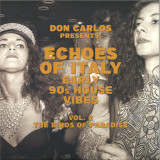
Various - ECHOES OF ITALY – THE BIRDS OF PARADISE – EARLY 90S HOUSE VIBES VOL.2 (2x12")

Googling “paradise house”, the first results to pop up are an endless list of European b&b’s with whitewashed lime façades, all of them promising “…an unmatched travel experience a few steps from the sea”. Next, a little further down, are the institutional websites of a few select semi-luxury retirement homes (no photos shown, but lots of stock images of smiling nurses with reassuring looks). To find the “paradise house” we’re after, we have to scroll even further down. Much further down.

It feels like yesterday, and at the same time it seems like a million years ago. The Eighties had just ended, and it was still unclear what to expect from the Nineties. Mobile phones that were not the size of a briefcase and did not cost as much as a car? A frightening economic crisis? The guitar-rock revival?! Certainly, the best place to observe that moment of transition was the dancefloor. Truly epochal transformations were happening there. From America, within a short distance one from the other, two revolutionary new musical styles had arrived: the first one sounded a bit like an “on a budget” version of the best Seventies disco-music – Philly sound made with a set of piano-bar keyboards! – the other was even more sparse, futuristic and extraterrestrial. It was a music with a quite distinct “physical” component, which at the same time, to be fully grasped, seemed to call for the knotty theories of certain French post-modern philosophers: Gilles Deleuze, Félix Guattari, Paul Virilio... Both those genres – we would learn shortly after – were born in the black communities of Chicago and Detroit, although listening to those vinyl 12” (often wrapped in generic white covers, and with little indication in the label) you could not easily guess whether behind them there was a black boy from somewhere in the Usa, or a girl from Berlin, or a pale kid from a Cornish coastal town.

Quickly, similar sounds began to show up from all corners of Europe. A thousand variations of the same intuition: leaner, less lean, happier, slightly less intoxicated, more broken, slower, faster, much faster... Boom! From the dancefloors – the London ones at least, whose chronicles we eagerly read every month in the pages of The Face and i-D – came tales of a new generation of clubbers who had completely stopped “dressing up” to go dancing; of hot tempered hooligans bursting into tears and hugging everyone under the strobe lights as the notes of Strings of Life rose up through the fumes of dry ice (certain “smiling” pills were also involved, sure). At this point, however, we must move on to Switzerland.

In Switzerland, in the quiet and diligent town of Lugano, between the 1980s and 1990s there was a club called “Morandi”. Its hot night was on Wednesdays, when the audience also came from Milan, Como, Varese and Zurich. Legend goes that, one night, none less than Prince and Sheila E were spotted hiding among the sofas, on a day-off of the Italian dates of the Nude Tour… The Wednesday resident and superstar was an Italian dj with an exotic name: Don Carlos. The soundtrack he devised was a mixture of Chicago, Detroit, the most progressive R&B and certain forgotten classics of old disco music: practically, what the Paradise Garage in New York might have sounded like had it not closed in 1987. In between, Don Carlos also managed to squeeze in some tracks he had worked on in his studio on Lago Maggiore. One in particular: a track that was rather slow compared to the BPM in fashion at the time, but which was a perfect bridge between house and R&B. The title was Alone: Don Carlos would explain years later that it had to be intended both in the English meaning of “by itself” and like the Italian word meaning “halo”. That wasn’t the only double entendre about the song, anyway. Its own very deep nature was, indeed, double. On the one hand, Alone was built around an angelic keyboard pattern and a romantic piano riff that took you straight to heaven; on the other, it showcased enough electronic squelches (plus a sax part that sounded like it had been dissolved by acid rain) to pigeonhole the tune into the “junk modernity” section, aka the hallmark of all the most innovative sounds of the time: music that sounded like it was hand-crafted from the scraps of glittering overground pop.

No one knows who was the first to call it “paradise house”, nor when it happened. Alternative definitions on the same topic one happened to hear included “ambient house”, “dream house”, “Mediterranean progressive”… but of course none were as good (and alluring) as “paradise house”. What is certain is that such inclination for sounds that were in equal measure angelic and neurotic, romantic and unaffective, quickly became the trademark of the second generation of Italian house. Music that seemed shyly equidistant from all the rhythmic and electronic revolutions that had happened up to that moment (“Music perfectly adept at going nowhere slowly” as noted by English journalist Craig McLean in a legendary field report for Blah Blah Blah magazine). Music that to a inattentive ear might have sounded as anonymous as a snapshot of a random group of passers-by at 10AM in the centre of any major city, but perfectly described the (slow) awakening in the real world after the universal love binge of the so-called Second Summer of Love.

For a brief but unforgettable season, in Italy “paradise house” was the official soundtrack of interminable weekends spent inside the car, darting from one club to another, cutting the peninsula from North to centre, from East to West coast in pursuit of the latest after-hours disco, trading kilometres per hour with beats per minute: practically, a new New Year’s Eve every Friday and Saturday night. This too was no small transformation, as well as a shock for an adult Italy that was encountering for the first time – thanks to its sons and daughters – the wild side of industrial modernity. The clubbers of the so-called “fuoriorario” scene were the balls gone mad in the pinball machine most feared by newspapers, magazines and TV pundits. What they did each and every weekend, apart from going crazy to the sound of the current white labels, was linking distant geographical points and non-places (thank you Marc Augé!) – old dance halls, farmhouses and business centres – transformed for one night into house music heaven. As Marco D’Eramo wrote in his 1995 essay on Chicago, Il maiale e il grattacielo: “Four-wheeled capitalism distorts our age-old image of the city, it allows the suburbs to be connected to each other, whereas before they were connected only by the centre (…) It makes possible a metropolitan area without a metropolis, without a city centre, without downtown. The periphery is no longer a periphery of any centre, but is self-centred”.

“Paradise house” perfectly understood all of this and turned it into a sort of cyber-blues that didn’t even need words, and unexpectedly brought back a drop of melancholic (post?)-humanity within a world that by then – as we would wholly realise in the decades to come – was fully inhuman and heartless. A world where we were all alone, and surrounded by a sinister yellowish halo, like a neon at the end of its life cycle. But, for one night at least, happy."

In Stock

Disponibile in Stock e pronto per la spedizione

JAPAN - IN TOKYO VOL. 2

JAPAN

IN TOKYO VOL. 2

2x12inchPARA625LP
Parachute
27.06.2025
  • A1: Still Life In Mobile Homes
  • A2: Methods Of Dance
  • B3: Quiet Life
  • B4: European Son
  • B5: The Art Of Parties
  • C6: Bamboo Music
  • C7: Taking Islands In Africa
  • D8: Life In Tokyo
  • D9: Canton
  • D10: Good Night
pre-ordina ora27.06.2025

dovrebbe essere pubblicato su 27.06.2025


Last In: 2026 years ago
Various - ECHOES OF ITALY - ARTISTS IN WONDERLAND – EARLY 90S HOUSE VIBES VOL.1 LP 2x12"

Volume 1 of this expertly curated project of 90s Italian House - put together by Don Carlos.

If Paradise was half as nice… by Fabio De Luca.

Googling “paradise house”, the first results to pop up are an endless list of European b&b’s with whitewashed lime façades, all of them promising “…an unmatched travel experience a few steps from the sea”. Next, a little further down, are the institutional websites of a few select semi-luxury retirement homes (no photos shown, but lots of stock images of smiling nurses with reassuring looks). To find the “paradise house” we’re after, we have to scroll even further down. Much further down.

It feels like yesterday, and at the same time it seems like a million years ago. The Eighties had just ended, and it was still unclear what to expect from the Nineties. Mobile phones that were not the size of a briefcase and did not cost as much as a car? A frightening economic crisis? The guitar-rock revival?! Certainly, the best place to observe that moment of transition was the dancefloor. Truly epochal transformations were happening there. From America, within a short distance one from the other, two revolutionary new musical styles had arrived: the first one sounded a bit like an “on a budget” version of the best Seventies disco-music – Philly sound made with a set of piano-bar keyboards! – the other was even more sparse, futuristic and extraterrestrial. It was a music with a quite distinct “physical” component, which at the same time, to be fully grasped, seemed to call for the knotty theories of certain French post-modern philosophers: Gilles Deleuze, Félix Guattari, Paul Virilio... Both those genres – we would learn shortly after – were born in the black communities of Chicago and Detroit, although listening to those vinyl 12” (often wrapped in generic white covers, and with little indication in the label) you could not easily guess whether behind them there was a black boy from somewhere in the Usa, or a girl from Berlin, or a pale kid from a Cornish coastal town.

Quickly, similar sounds began to show up from all corners of Europe. A thousand variations of the same intuition: leaner, less lean, happier, slightly less intoxicated, more broken, slower, faster, much faster... Boom! From the dancefloors – the London ones at least, whose chronicles we eagerly read every month in the pages of The Face and i-D – came tales of a new generation of clubbers who had completely stopped “dressing up” to go dancing; of hot tempered hooligans bursting into tears and hugging everyone under the strobe lights as the notes of Strings of Life rose up through the fumes of dry ice (certain “smiling” pills were also involved, sure). At this point, however, we must move on to Switzerland.

In Switzerland, in the quiet and diligent town of Lugano, between the 1980s and 1990s there was a club called “Morandi”. Its hot night was on Wednesdays, when the audience also came from Milan, Como, Varese and Zurich. Legend goes that, one night, none less than Prince and Sheila E were spotted hiding among the sofas, on a day-off of the Italian dates of the Nude Tour… The Wednesday resident and superstar was an Italian dj with an exotic name: Don Carlos. The soundtrack he devised was a mixture of Chicago, Detroit, the most progressive R&B and certain forgotten classics of old disco music: practically, what the Paradise Garage in New York might have sounded like had it not closed in 1987. In between, Don Carlos also managed to squeeze in some tracks he had worked on in his studio on Lago Maggiore. One in particular: a track that was rather slow compared to the BPM in fashion at the time, but which was a perfect bridge between house and R&B. The title was Alone: Don Carlos would explain years later that it had to be intended both in the English meaning of “by itself” and like the Italian word meaning “halo”. That wasn’t the only double entendre about the song, anyway. Its own very deep nature was, indeed, double. On the one hand, Alone was built around an angelic keyboard pattern and a romantic piano riff that took you straight to heaven; on the other, it showcased enough electronic squelches (plus a sax part that sounded like it had been dissolved by acid rain) to pigeonhole the tune into the “junk modernity” section, aka the hallmark of all the most innovative sounds of the time: music that sounded like it was hand-crafted from the scraps of glittering overground pop.

No one knows who was the first to call it “paradise house”, nor when it happened. Alternative definitions on the same topic one happened to hear included “ambient house”, “dream house”, “Mediterranean progressive”… but of course none were as good (and alluring) as “paradise house”. What is certain is that such inclination for sounds that were in equal measure angelic and neurotic, romantic and unaffective, quickly became the trademark of the second generation of Italian house. Music that seemed shyly equidistant from all the rhythmic and electronic revolutions that had happened up to that moment (“Music perfectly adept at going nowhere slowly” as noted by English journalist Craig McLean in a legendary field report for Blah Blah Blah magazine). Music that to a inattentive ear might have sounded as anonymous as a snapshot of a random group of passers-by at 10AM in the centre of any major city, but perfectly described the (slow) awakening in the real world after the universal love binge of the so-called Second Summer of Love.

For a brief but unforgettable season, in Italy “paradise house” was the official soundtrack of interminable weekends spent inside the car, darting from one club to another, cutting the peninsula from North to centre, from East to West coast in pursuit of the latest after-hours disco, trading kilometres per hour with beats per minute: practically, a new New Year’s Eve every Friday and Saturday night. This too was no small transformation, as well as a shock for an adult Italy that was encountering for the first time – thanks to its sons and daughters – the wild side of industrial modernity. The clubbers of the so-called “fuoriorario” scene were the balls gone mad in the pinball machine most feared by newspapers, magazines and TV pundits. What they did each and every weekend, apart from going crazy to the sound of the current white labels, was linking distant geographical points and non-places (thank you Marc Augé!) – old dance halls, farmhouses and business centres – transformed for one night into house music heaven. As Marco D’Eramo wrote in his 1995 essay on Chicago, Il maiale e il grattacielo: “Four-wheeled capitalism distorts our age-old image of the city, it allows the suburbs to be connected to each other, whereas before they were connected only by the centre (…) It makes possible a metropolitan area without a metropolis, without a city centre, without downtown. The periphery is no longer a periphery of any centre, but is self-centred”.

“Paradise house” perfectly understood all of this and turned it into a sort of cyber-blues that didn’t even need words, and unexpectedly brought back a drop of melancholic (post?)-humanity within a world that by then – as we would wholly realise in the decades to come – was fully inhuman and heartless. A world where we were all alone, and surrounded by a sinister yellowish halo, like a neon at the end of its life cycle. But, for one night at least, happy.

non in magazzino

Ordina ora e ordineremo l'articolo per te presso il nostro fornitore.


Last In: 5 months ago
The Ano Nobo Quartet - The Strings of São Domingos LP (2x12")

In the small inland town of São Domingos on Cape Verde's Santiago Island, The Ano Nobo Quartet delivers a fresh take on Koladera, a guitar-driven, subtly rhythmic sound of a lighter spirit. Their sound tells a global story with Cape Verde at its center, a creole melting pot in the middle of the Atlantic attracting the best from four continents: hypnotic, haunting Koladera guitars inflected with twangs of Salsa Cubano, Spanish Flamenco, Brazilian Samba Canção, Jamaican Reggae, Argentine Tango, Mozambican Marrabenta, and finished with a dash of Black American Blues. It's all here. Absent percussion, the quartet's sound still drips with rhythm. Rich, raw acoustic music you can dance to.

This album was recorded in three locations on Santiago Island: at homes, by the sea, and on the volcanic hills of Cape Verde. Each location used a mobile recording studio equipped with different mics placed near and far to capture both the Spanish and Chinese-made guitars and the natural environment that shapes the saudade, a melancholic longing, of Koladera. Each space has its own atmosphere heard in the interludes.

A double LP pressed at 45 RPM for an even silkier listening experience and packaged in a luxurious matte-laminated gatefold with a high quality 12-page booklet along with a hardcover bookcase CD with a 24-page booklet.

non in magazzino

Ordina ora e ordineremo l'articolo per te presso il nostro fornitore.


Last In: 4 years ago
Iron & Wine - Archive Series Volume no. 5: Tallahassee Recordings

‘Archive Series Volume no. 5: Tallahassee Recordings’ is the lost-in-time debut
album from Iron & Wine. A collection of songs recorded three years prior to his
official Sub Pop debut, ‘The Creek Drank the Cradle’ (2002). A period before the
concept of Iron & Wine existed and principal songwriter Sam Beam was studying
at Florida State University with the intent of pursuing a career in film.
‘Archive Series Volume no. 5’ documents the very first steps on a journey that
would lead to a career as one of America’s most original and distinctive singersongwriters. ‘The Creek Drank the Cradle’ arrived like a thief in the night with its
lo-fi, hushed vocals and intimate nature, while almost inversely Tallahassee
comes with a strange sense of confidence. Perhaps an almost youthful discretion
that likely comes from being too young to know better and too naïve to give a
shit.
The recordings themselves are more polished than ‘The Creek Drank the Cradle’
and give a peak into what a studio version of that record might have offered up.
‘Archive Series Volume no. 5’ was recorded over the course of 1998-1999 when
Beam and future bandmate EJ Holowicki moved into a house together. Beam
had not been performing publicly however, he was known for playing an original
song or two in the early morning glow of a long night. Holowicki - also in the film
program and who would go onto a career as a sound designer at Skywalker
Sound - had a mobile recording device and after some prodding convinced his
friend to record these late-night meditations.
Together they would record close to twenty-four songs, ideas and sketches, with
EJ on bass and Sam on vocals, guitar, harmonica and drums. The recordings -
all captured in the house where they lived - have a ‘live in the room’ feel akin to
say Neil Young’s ‘Harvest’ or Nick Drake’s ‘Five Leaves Left’, rather than the
homespun lo-fi 4-track home recording experiment taking place at the time.
These recordings, minus one track, have never been made available and were
instead left preserved on a hard drive for the last twenty years. The one track
that floated out there, called ‘In Your Own Time’ was shared without a title to
childhood friend Ben Bridwell (Band of Horses) at some point. The song became
known as the ‘Fuck Like A Dog’ song and Ben shared it with more than a few
folks during the golden era of mix CDs. Two of those folks were Jonathan
Poneman from Sub Pop and journalist Mike McGonigal, who included it on his
best songs of 2001 mix CD, passed out to friends and acquaintances. And for
many that is where the Iron & Wine story begins, until now.
‘Archive Series Volume no. 5’ is the foreword to your favourite book that you’ve
somehow skipped over time and time again. It’s an alternative history mixed with
some revisionist history told over the course of eleven songs. It’s also the debut
record by Iron & Wine some twenty years after the fact.

pre-ordina ora07.05.2021

dovrebbe essere pubblicato su 07.05.2021


Last In: 2026 years ago
Kompozyt, Lee "Scratch" Perry - Hidden Force

On A side, electronic music wizards Kompozyt team up with a Dub Legend Lee 'Scratch' Perry to bring you a heavy-hitting and instant bounce-inducing Dub Techno track 'Hidden Force'. Lee Scratch Perry's amazing and charismatic Dub poetry blends superbly with the neat fusion of spacey and subterranean sounds of Kompozyt productions. The single is not to be missed this summer.

On B side, Kompozyt brings you a 7' version of 'Homesick' - Dub and Trip-hop inspired Experimental Electronica with Olgierd Dokalski on the trumpet. Olgierd's incredible performances of real haunting beauty further reinforce the analog, live and improvisational aspect of Kompozyt's music.

Both tracks come from Kompozyt's debut album: 'Synchronicity' - out everywhere now on CD and DL.


Selected Reviews of Kompozyt's Debut Album and the Single

5/5 Decoded Magazine: 'Incredible album 10/10'

4/5 Lars Berhenrot (Deepershades): 'LOVE THIS .. never-ending deepness ..'

5/5 Pierre Ravan: 'Amazing work from the heart'

5/5 Queensradio.org: 'I'll definitely be playing these guys on air'

4/5 Garth Trinidad (KSRW Radio) 'Exquisite score without a film'

5/5 Hoxton FM (London): 'Incredible release!'

4/5 Stereo MCs: 'Nice vibes refreshing'

4/5 Robert Babicz: 'I love dub. in all forms'
5/5 Adam Hannibal (Balanced) : 'Neat fusion of spacey and subterranean sounds. Reminiscent of the Beyond Recs Ambient Dub compilations with some freshness... Well done'
5/5 Al Bradley (3amrecordings): 'This needs full love because it's excellent :) I can really picture myself just letting this play from the first sound to the last & becoming utterly immersed as it flows through! Gorgeous.'
5/5 Bartlomiej Blesznowski- 'One of the best electronic music albums this year'
4/5 Neil Brown (RMFM; Pro Mobile Magazine): 'Some nice tunes to get your head in gear to.'

5/5 Jorn Kirk (DJ Jay Kay) (Faith Sundays): 'very nice album !!! a joy to listen to'

non in magazzino

Ordina ora e ordineremo l'articolo per te presso il nostro fornitore.


Last In: 5 years ago
  • 1
Articoli per pagina:
N/ABPM
Vinyl