Buscar:the four m company

Estilos
Todo
The Four M Company - The Four M Company

The Four M Company, previously unreleased Modern Soul, & Boogie Funk recorded in 1979 at Paul Serrano's P.S. Studio in Chicago. This 6 song LP carries lush vocal harmonies with syncopated synthesizers, driving funk bass and brass elegantly crafted together into masterful arrangements. Band members in these recordings are David & Wendel Sudduth (The Eight Minutes, Perception Records), Terri Johnson, Paul Ramey & Duane Faulkner. Produced & Arranged by Vince Willis. After The Eight Minutes, David formed The Four M Company in High School. His brother Wendel joined and they played every prom every year from 1974-1978 on the north and Northwest side of Chicago. Approximately 35 members have played with The Four M Company at one point in time. Cut direct to lacquer for vinyl replication at 45 rpm from the original Master Tape. Limited Hand-Stamped Wax (500 copies).

No en stock

Haga su pedido ahora y le encargaremos el artículo en nuestro proveedor.

Ültimo hace: 6 Años
Sascha Dive - My Definition of House Music vol. 2

Raw deep house pressure from Sascha Dive, four cuts blending soul, groove, and late-night mood, with Roland Clark blessing the mic. Limited green vinyl for those who still move to the real sound.

DJ Feedbacks :


Laurent Garnier : Cool tracks
Josh Wink (Ovum) : Liking 'Im Inspired' the best here.
C-Rock : Those Nights for me, nice NYC dub House touch!
Radio Slave (Rekids) : I've always been such a big fan of Sasha's productions and "There Is No Tomorrow" hits the spot.
Fleur Shore (Undergrowth / Cuttin' Headz) : im inspired, beautiful track
Reboot (Cecille / Cadenza) : schöne tracks ️
Satoshi Tomiie (Abstract Architecture) : Solid release!
Alinka (Twirl, Classic, Crosstown Rebels, Batty Bass) : Nice one
PBR Streetgang : Invocation and Im Inspired are great
D'Julz (Bass Culture) : those night is the one for me here
Damian Lazarus (Crosstown Rebels) : Thanks for sending. Xx
Ben Sims : Now downloading... will check asap!
Archie Hamilton (Microhertz / FUSE) : Nice thanks
Eddie Fowlkes (Detroit Wax, Rekids, Classic Music Company) : thanks
Tim Sweeney (Beats In Space) : Lovely
Doc Martin (Sublevel) : Sascha on a good one,with the voice of house music Roland Clark no less!!!
Terry Farley : THOSE NIGHTS WORKS FOR ME
Chloe Caillet (Smile Records) : love this!
Oliver $ (Classic Music Company / Play It Down) : Sooo gooood!
Ame (Innervisions) : thanks
Danny Tenaglia : Downloading for Danny Tenaglia, thanks!
Robert Owens (Trax / Musical Directions) : Cool tracks
Kai Alce (Real Soon) : Nice deep tracks from Sascha
Mark Farina : dig them.
Lea Lisa (Phonica Records / Folklor Club) : Really good definition of House
Alexkid (Rawax / FUSE / NG Trax) : Phonogramme (and Sascha Dive) on fire at the moment...
Harri (Sub Club) : lovely stuff, will play and support

Reservar30.09.2026

debe ser publicado en 30.09.2026

Ültimo hace: 4 Meses
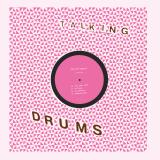
TALKING DRUMS - VOL.9

TALKING DRUMS

VOL.9

12inchTD009
TALKING DRUMS
30.09.2026

Phwoar! TD go four for the floor on Volume 9, letting loose with a set of sure-shot hits from all corners of their sonic spectrum.
A tag team match up, this action spectacular trades peak-time pump, Balearic cool, Italo thrust and dance-punk theatrics on its way to snatch the championship.

Obviously TD ooze subtlety and taste, so as we sat sipping Schnapps from our Stanley cups, we couldn't help but take a little inspo from our kitchen decor. 'Live Love Pump' - what a mantra. In musical form, this philosophy takes the shape of a capital D-isco delight, equal Pats Cowley & Adams, EQ-freaked and filtered into something dafter than a pair of chrome clad millionaires. Big room mirrorball magic if ever we've heard it.
The A2 sees the drunk AOR funk of 'Sure Line' take a leisurely stroll down the coast, a Gauloises in the gob and tattered Baldwin in the back pocket, flipping and flopping along the prom to buoyant bass, melting brass and more than a little melancholy.

Booting off the B-side, 'Un America' is a massive mid-tempo chugger replete with laser fire, synth scree and nipple high guitar. Powering along on a serious bass sequence armed with hooks-a-plenty, mostly incomprehensible lyrics and a groove which won't quit, this has all the ingredients required for an Italo all-timer.
The finale finds us in the company of some punk pioneers at their absolute silliest, bringing the kind of whacky vocal vibe, surf-centric style and off kilter groove the B-52s made a career of. Add in animal chatter and scratchy guitars and you've got the sort of secret weapon the Idjuts unleash waaaay post peak.

Limited Press - Numbered Insert - Drum Fun Guaranteed

Reservar30.09.2026

debe ser publicado en 30.09.2026

ARIEL KALMA, JEREMIAH CHIU, MARTA SOFIA HONER - THE CLOSEST THING TO SILENCE

In August 2022, Australia-based, French born fourth-world music legend Ariel Kalma was invited to participate in BBC Radio 3"s Late Junction series of special collaborations. The program pairs artists that have not previously collaborated to create new music together. Kalma was quick to suggest working together with two musicians whom he has never met - the International Anthem recording artists Jeremiah Chiu & Marta Sofia Honer, whose critically-acclaimed duo debut Recordings from the Âland Islands had been released just a few months earlier. Kalma sent an invitation to Chiu and Honer, which was received with great enthusiasm. Chiu had been a fan of Kalma"s work for a long time, even citing him as a major influence on his approach to electronic music composition. After meeting their goal of 20 minutes worth of music for the program (which was four pieces total), the three musicians were satisfied in what they would present, and sent along their work to the producers of Late Junction; but simultaneously they felt like there was much more to be said, more work to be done. There were several pieces that they had nearly completed that weren"t sent for inclusion in the radio program, and there were many ideas for refining those that had. The three musicians collectively agreed that they would continue work together and try to push the music further. The Closest Thing to Silence is the result of their efforts to take the collaboration further.

Disponible

En el almacen y preparando para el envío

Ültimo hace: 3 Días
JEREMIAH CHIU - EDGE CONDITIONS
  • 1: Way in
  • 2: A.M. Fuses
  • 3: In Visibility
  • 4: Edge Conditions
  • 5: Interfaces (feat. Ben Lumsdaine)
  • 6: Plastic Mind / Elastic Machines (feat. Booker Stardrum)
  • 7: Sentimental Object (feat. Marta Sofia Honer)
  • 8: Doubles
  • 9: Non-narrative
  • 10: A Floral Pattern
  • 11: Night Fog
También disponible

MARBLE CREAM COLORED VInyl


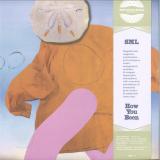
Edge Conditions is a fresh look at the beat-forward electronic music of Jeremiah Chiu. In Electric Time, his 2023 first-thought-best-thought album recorded at theVintage Synth Museum in LA, offered a glimpse a solo process and sound, fast becoming a fan favorite. In many ways this new work is a total reset. Following two ambient-leaning duo albums with Marta Sofia Honer and a pair of improvisatory trance-jazz LPs with LA quintet SML, Edge Conditions settles Chiu into a world of layered, alternately dance-able or chillout-able, rhythm excursions a la classic Four Tet or Aphex Twin.

Reservar09.10.2026

debe ser publicado en 09.10.2026

JEREMIAH CHIU - EDGE CONDITIONS

Edge Conditions is a fresh look at the beat-forward electronic music of Jeremiah Chiu. In Electric Time, his 2023 first-thought-best-thought album recorded at theVintage Synth Museum in LA, offered a glimpse a solo process and sound, fast becoming a fan favorite. In many ways this new work is a total reset. Following two ambient-leaning duo albums with Marta Sofia Honer and a pair of improvisatory trance-jazz LPs with LA quintet SML, Edge Conditions settles Chiu into a world of layered, alternately dance-able or chillout-able, rhythm excursions a la classic Four Tet or Aphex Twin.

Reservar09.10.2026

debe ser publicado en 09.10.2026

Kings of Leon - O My Beloved (2x12")
  • A1: Intro
  • A2: My Whole World
  • A3: Cold Blue Dawn
  • A4: The Hand
  • B1: Rose
  • B2: Make It Count
  • B3: KOYSAR
  • C1: Feel The Love
  • C2: Blue Jeans and Diamonds
  • C3: Warm Company
  • D1: Forever Endeavor
  • D2: Pretty Thing
  • D3: Get You Down

Kings of Leon return with 10th album, ‘O My Beloved’.

For this release, the four-time Grammy-winning family band draws from their own history and builds on their storied legacy to deliver their most personal effort to date.

Frontman Caleb Followill describes this—their first self-produced studio album—as “emotional" and a “love letter to family” that explores themes of "gratitude and appreciation."


Available on 2LP and CD, featuring packaging adorned with vintage family photos.

Reservar06.11.2026

debe ser publicado en 06.11.2026

Kings of Leon - O My Beloved (2x12")

Kings of Leon return with 10th album, ‘O My Beloved’.

For this release, the four-time Grammy-winning family band draws from their own history and builds on their storied legacy to deliver their most personal effort to date.

Frontman Caleb Followill describes this—their first self-produced studio album—as “emotional" and a “love letter to family” that explores themes of "gratitude and appreciation."


Available on 2LP and CD, featuring packaging adorned with vintage family photos.

Reservar06.11.2026

debe ser publicado en 06.11.2026

Tom Henry - What’s Left LP

Tom Henry

What’s Left LP

12inchROR077LP
Royal Oakie
20.11.2026
  • 1: Someone I Need
  • 2: What You Do
  • 3: It’s Not Meant to Be
  • 4: My Turn to Find a Love
  • 5: Silverlake Song
  • 6: Wish I Knew You Better
  • 7: Half Witt Thymes
  • 8: Bum-Bum-Bum, La-La-La
  • 9: Lonely Little Phone
  • 10: So Sad
  • 11: Wipe the Tears
  • 12: Palimpsest

What's Left is the new album by Tom Henry, releasing November 20th, 2026 on Royal Oakie Records. Where his debut album Songs to Sing and Dance To leaned into big dreams, What's Left is a record about what remains once the dust settles, delivered with the wit and charm of a young rocker in his prime. The familiar influences are still there — Paul McCartney and Big Star loom large (though there's a little more Third/Sister Lovers this time around), but now the songs are lush and polished, with new sounds creeping in around Henry’s trademark power pop hooks. On a handful of tracks you can even hear strains of Syd Barrett influenced acid-folk alongside psychedelic rock that recalls The Brian Jonestown Massacre or The Beatles at their most lysergic.

Produced in collaboration with David Glasebrook (Patti Smith, Peter Case, Sugar Candy Mountain), and engineered by Glasebrook and Stephen Shirk, the album was tracked across two cities at Shirk Studios in Chicago, IL and The Garden Shed in Oakland, CA, where Glasebrook also handled mixing and mastering. The record's cross-continental origins reflect the movements of Tom’s own life over the past half decade, which found him departing his native Chicago for Los Angeles before returning home four years later, and lend the album its distinctive sound of Midwestern grit mixed with California sunshine across all twelve tracks.

Opener "Someone I Need" sets the tone: an old-fashioned, up-beat rocker built for a roadside diner jukebox somewhere out along the backroads of your mind — it's crunchy tape tones and horn arrangement lending warmth to the song as the narrator asks for a dance and beckons the listener along for the ride. By "It's Not Meant to Be," the record turns inward, wrestling with the exhaustion of trying to find love in the modern age — especially for someone who wears their heart on their sleeve and often comes to find their suitor's wardrobe doesn't have room. "Silverlake Song," reminiscent of early Donovan, kicks off with otherworldly sitar — a wry postcard from the west, tracing how the shimmering promise of L.A.'s Silver Lake enchants, bargains with, and ultimately tries to ruin the starry-eyed dreamer — and very nearly succeeds.

In addition to Tom–who sang and played guitar, bass, and keys–the album features musical contributions from co-producer David Glasebrook, Brian Daley, Joe Daley, Finn Swingley, Lewis Patzner, and labelmates Graham Patzner, Charles Lloyd, and Simon Beins. Liner notes come courtesy of Ian F. Svenonius, who — in the guise of one Johnny Sincere of Integrated Star Management Ltd. — recounts his company's failed attempt to sell Tom Henry a gimmick: a space suit, a coal miner's neckerchief, a lounge pianist's dead-eyed shades. Tom turned them all down. As Svenonius tells it, when reminded that every story's been told and every gimmick's been used, that all that's left is to admire the photographs of what's gone before, Tom simply shrugged: rock 'n' roll is an eternal spring, and if this is what's left, that's just fine with him — it's what he likes to do.

Reservar20.11.2026

debe ser publicado en 20.11.2026

Five Special - The More I Get To Know You (Unissued Long Version) +2 Tracks (7")
  • A1: The More I Get to Know You (Unissued Long Version)
  • B1: You Got to be The One That I Love (Previously Unissued)
  • B2: Oh, (Oh Look What We’ve Done) (7")

Five Special were a five-man harmony vocal group all from Detroit, formed during 1975. Founding members Mike Pattillo of ‘The Explosions’ and Steve Harris of the group ‘Trouble’ both unhappy with their then situations decided to unite to form their own group. They were soon to be joined by Zeke Stanley of “Deep Velvet”. As a threesome, the sound they created was fantastic but they all agreed a five-man group with five potential lead singers was the way forward.

It was around this time that Mike Pattillo’s lifelong neighbour Ron Banks (of The Dramatics’) introduced the guys to Charles “Chuck” Underwood. Chuck had been involved in the music business from the early 60’s as a show promotor, one of many acts he promoted was The Dramatics. Chuck had known the group from their earliest days and later became their road manager. After a failed attempt to buy the Dramatics contracts from Groovesville Music, Chuck pressed ahead with his plans to form T.E.A.I Record Corporation (T.E.A.I being an abbreviation for “Tellin’ Everybody About It”) with Ron Banks joining the label in an executive role only. This young and aspiring record company sprung into production during 1974 with initial releases on a local artist’s Renee Williams “Special To Me/Are You My Brother”, followed by ‘The Gaslight’ “Just Because Of You/It’s Just Like Magic” in 1975.

Now under the auspice of Chuck, Mike, Steve and Zeke were introduced to Greg Finley formerly of the ‘Innovations’. Now four, the quest for a fifth member continued. After months of disappointing auditions, Ron Banks decide it was time for his younger brother Bryan to embark on a professional career after initially resisting due to him being a 16-year-old school boy. After many daily rehearsals in each other’s respective basements until Bryan’s graduation the full and dynamic sound of these five young men was finally honed. Still nameless, it was Steve Harris that came up with the group’s name ‘Five Special’ stating that these five young men were “very special and unique entertainers, with each member being a complete show in himself” with Bryan on lead they sometimes sounded like “The Dramatics” with Mike they sometimes sounded like “The Temptations” high comparisons indeed.

Five Special’s first recording for T.E.A.I was the 1976 joyously uplifting dancer “The More I Get To Know You” a Jimmy Roach and Marcella Henderson composition featuring Bryan on lead, released as a part I and part II deemed to be a more disc-jockey friendly practice at the time. The record was popular with radio stations throughout the Detroit metropolis and Chuck went on to precure a deal with Polygram which resulted in a release on their nationally distributed Mercury label. A second Five Special release followed in 1977, the Jimmy Roach penned mellifluous “(Let’s Stop Making) Small Talk” backed with the Ron Banks/Paul Clark penned psychedelic soul styled “Oh, Oh (Look What We’ve Done)” with Greg Finley and Zeke Stanley exchanging tenor and baritone parts throughout.

Through our ongoing working relationship with T.E.A.I we have gained access to some previously unissued material on Five Special. From the tapes we have taken “The More I Get To Know You” in its 5:50 minutes entirety backed with the previously unissued mid-tempo delight “You Got To Be The One That I Love” with interchanging leads from Bryan and Steve. The second b-side track is the psychedelic soul “Oh, Oh (Look What We’ve Done)” with interchanging leads between Greg and Zeke. Three songs, three different styles all of the highest quality, with more to come from Five Special, so watch this space!

Disponible

En el almacen y preparando para el envío

Ültimo hace: 67 Días
Ezéchiel Pailhès - SOL (LP)

For his sixth solo album, Ezéchiel Pailhès returns with a new collection of songs infused by a sunny wandering spirit.
Within each of the twelve songs on SOL is a thread of melancholic happiness that has permeated much of Pailhès’ music and songwriting. He addresses love, the passing of time, hope, lost illusions, fleeting moments of grace, the temptation of forgetting, a need to escape, and desire. All this is
insulated by understated orchestrations that blend acoustic and electronic instrumentation with deft confidence.
The Portuguese and Brazilian concept of saudade—a form of melancholic longing and nostalgia— pervades, thanks in part to Pailhès decision to record the album in Rio de Janiero and to reinterpret some of the finest works of Música Popular Brasileira (MPB). In particular, he revisits a handful of
lesser known classics from the mid-century samba and bossa nova era—originally written or performed by talents including Vinícius de Moraes, João Gilberto, Tom Zé, Dorival Caymmi, João Donato, Os Tincoãs, and Ataulfo Alves.
The shift from Brazilian Portuguese to French and the decision to adapt rather than perform a straightforward cover versions, allows Pailhès to invent a form of prosody and euphony (the musicality and harmonious combination of words) that feels vibrant and unlike anything else in today’s French
chanson landscape.
“Some lyrics are simple translations from Portuguese, in what I’d call an expanded version. For others, I started from a single word or a single phrase and embroidered an entirely new text that carried me elsewhere,” explains Pailhès. “I allowed myself great interpretive freedom, while preserving the humanist dimension of the original songs. I’ve always been deeply moved by the way Brazilians transfigure reality through heightened emotion. I love this visceral and spontaneous country, which always seems to live through emotion. And above all, I love its music both popular and unifying,
bringing together all social classes. In that sense, it’s very political music, but even more so utopian, made by the people and for the people.”
On this new album, however, the French artist was keen to avoid cliché. Each song is therefore built around a carefully balanced interplay between Pailhès’ piano and synthesizers, alongside restrained arrangements of percussion, brass, bass, and cavaquinho (a small four-string plucked guitar). These parts were recorded in Rio de Janeiro with two musicians who regularly perform alongside the legendary Caetano Veloso—Kainã Do Jêje and Alberto Continentino—joined by Thomas Harres, Antônio Neves, Eduardo Neves, and Gabriel Loddo.
Since the 1960s, France and Brazil have shared a long-standing cultural and musical relationship. Some Brazilian artists, most famously Gilberto Gil, took refuge in France during the dictatorship years (1964–1985). But above all, French chanson quickly fell in love with the richness and ingenuity of
bossa nova and samba, translating and reinventing them in the language of Molière. Throughout the 1960s and 1970s, albums and hits by Henri Salvador, Georges Moustaki, Pierre Barouh, Pierre Vassiliu, and Claude Nougaro all drew from the MPB repertoire.
Fifty years later, with SOL, Ezéchiel Pailhès reinvents this rich Franco-Brazilian musical legacy, bringing to it a personality and modernity that stand confidently alongside those of his forbears.

Disponible

En el almacen y preparando para el envío

Ültimo hace: 3 Meses
FEX - Don't Look Back (LP)

FEX

Don't Look Back (LP)

12inchEDGE-040
The Outer Edge
29.05.2026

We are pleased to announce the first FEX live album, Don't Look Back. The release features selected recordings from two concerts in Paderborn and Uelzen, both captured in 1985. All tracks on the album are previously unissued, including entirely unheard songs such as It's a Hard Life, Just Get Back, Legend, and Waiting Song, alongside a previously unreleased version of Subways of Your Mind, widely known as "The Most Mysterious Song on the Internet."
One of the most striking aspects of the album is the remarkable sound quality of the live recordings, as well as the strength of the performances themselves - particularly given that FEX were still considered a newcomer band at the time. The four-piece lineup consisted of singer, guitarist, and primary songwriter Ture Rückwardt, Michael Hädrich on keyboards and occasional second guitar, Norbert Ziermann on bass, and Hans-Reimer Sievers on drums. In 1985, the band was preparing for broader exposure through a nationwide tour organized by the small promotion company HBM-Musikbüro.
The album opens with the psychedelic Skyscraper, a track Rückwardt reportedly regarded as a personal favorite to perform. Hädrich contributes dynamic synthesizer layers, while Ziermann underpins the track with a distinctive slap bass groove. This is followed by the energetic rock number It's a Hard Life, which once again demonstrates that the band possessed multiple songs capable of matching the impact of their best known track Subways of Your Mind.
After this energetic opening, the album shifts into a more restrained mood with the synth-pop ballad I Got My Eyes On You. It is followed by Strange Feeling, presented here in a particularly compelling live version that arguably surpasses the previously released studio demo featured on the Skyscraper LP, with Rückwardt delivering one of his most expressive vocal performances. On Goldrush, another fan favorite, it is Hädrich's DX7 synthesizer work that stands out.
Don't Look Back continues to flow seamlessly, moving between styles such as new wave, synth pop, and a blues-influenced form of classic rock. On It's Good To Know, a song addressing the theme of stardom, the band returns to a heavier rock sound. In contrast, the synth-driven Just Get Back reflects on the conflict in Northern Ireland, then ongoing at the time. Lines such as "It's the money, it's the money why they come along" are directed at mercenary soldiers, while "even Sunday's a killing time" directly references Sunday Bloody Sunday by U2.
Previously known songs such as Dirty Slapstick and Heart in Danger lead into We Don't Want It No More, perhaps the band's most striking pop ballad. It is easy to imagine that the track had the potential to achieve radio success in the 1980s. The following piece, the epic Legend, explores themes of loneliness and love simultaneously. With poetic and abstract lines such as "some isolate in the falling rain" and "that's why I count all the reasons they call out for living, sadness is falling inside," it builds an almost eerie atmosphere.
One of the final highlights of the album is Subways of Your Mind, recorded in Uelzen. In this version, Rückwardt's vocal performance is even more on point than on the previously issued recording from Paderborn. Another notable moment is the driving, 1970s-inspired rock 'n' roll track Waiting Song. Both the composition and its live performance carry an energy that could easily stand alongside the repertoire of bands such as AC/DC. It was usually the track that FEX ended their concerts with, calling out each band member at the end of the song.
This leads to a broader reflection: it is striking that FEX did not achieve a wider breakthrough at the time. The performances captured here suggest a band capable of delivering consistently, song by song, note by note. It is not difficult to imagine FEX performing in large venues and engaging sizeable audiences. In reality, however, most performances in 1985 took place in front of relatively small crowds. The recordings featured on this album originate from the Roxy club in Paderborn and a small, unknown venue in Uelzen, likely in front of fewer than fifty attendees.
An essential figure behind these recordings is the engineer known only under his nickname Hase (German for "rabbit"), who was responsible for capturing not only these concerts but many other surviving FEX recordings. Bringing his own mixing desk to performances, he developed a deep familiarity with the band's material and was able to shape the live sound with precision, including the timely use of vocal effects. The original recordings existed only on cassette and required careful and extensive restoration work. Zoey Cairs was finally responsible for bringing them to their present quality.
This album marks the beginning of the Live Waves series, following the rediscovery of additional recordings that have gained international attention since November 2024, when they surfaced through what has been described as the largest "lost wave" music search to date. The title of this first live LP Don't Look Back carries a certain paradox. While the album invites listeners to revisit recordings from forty years ago, FEX themselves were always oriented toward the future. In that spirit, further releases of brand new material are already planned.
The cover artwork is once again based on an image by Magnussen from the Kiel archive, depicting the Prinz-Heinrich-Brücke. The bridge, once located in the northern part of the city, no longer exists. As a symbol, however, it remains fitting: a bridge stands for movement and connection - qualities that FEX sought to embody on tour, bringing their music to different places and audiences.

Disponible

En el almacen y preparando para el envío

Ültimo hace: 4 Meses
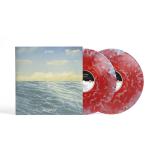
Digitalism - Optimism LP
  • A1: Space Invaders
  • A2: Double Jam
  • A3: AOA (The Age Of Anyone)
  • A4: Planet Rhythm
  • A5: Inspiration Room Interlude
  • A6: Golden
  • B1: Starburst
  • B2: Sirens
  • B3: House Alarm
  • B4: Achtung! Optimism
  • B5: City Of Love
  • B6: Four Seasons

What do we need now more than ever? Exactly, OPTIMISM. This is the place we long for, the solution we need, and also the name of DIGITALISM's new album, which will be released on May 29. German electronic pioneers DIGITALISM spread the urgent energy of OPTIMISM with their upcoming album and live performances all over Europe. A DIY spirit, in-the-moment energy and a low boredom threshold - all have been crucial to Digitalism's practice since they built their first track in a studio inside a WWII bunker in Hamburg, 20 years ago. OPTIMISM is the logical consequence of the band's steady development.

Disponible

En el almacen y preparando para el envío

Ültimo hace: 3 Meses
Naajet - The Night Starts Now EP

A rising artist of the French electronic scene, Naajet asserts her identity with The Night Starts Now, a four-track EP that celebrates the freedom and intensity of the night. Co-founder of the Bande de Filles collective and known for her explosive universe blending House, Hardgroove and Breaks, as well as for the unique energy inherited from her dance background, Naajet delivers here a sonic manifesto conceived as an ode to club culture and to the present moment.

“I imagined this EP as an anthem to the world of the night. The night offers us unparalleled freedom, an outlet that allows us to be ourselves, to create, to love. The Night Starts Now captures this celebration of the present moment and this declaration of independence.” Naajet Opening the EP, “Ready To Shine” unfolds radiant House nourished by Pop and 90’s sounds. With a clear and ascending rhythm, the track combines euphoria and introspection. “I composed this track as a joyful and introspective journey that prepares us to embrace the night. For me, it is a call to accept our wounds, to transform them into light and strength, so that we may shine brighter when we enter the club,” explains Naajet. Between ethereal vocal lines and shimmering pads, the track acts as a ritual of entering the night, inviting us to turn wounds into strength and to shine on the dancefloor. The second track of the EP, “Sugar”, embodies the effervescence of the club. Carried by a hypnotic voice and an effervescent rhythm, the track celebrates the communion of bodies and the liberating energy of dance. “It is an ode to dance and to bodies coming together. This track speaks of those moments when, on the dancefloor, boundaries fall: we sweat together, we free ourselves together, and energy flows from one body to another,” says Naajet. A true concentrate of intensity, “Sugar” captures the moment when sweat, rhythm and abandon merge into a collective movement towards freedom.

With “I Can Be Anything”, Naajet changes register and flirts with deeper, even techno textures. Built on a throbbing pulse and sharp synths, this track is meant as a manifesto of identity. “I really wanted to propose a track that claims our right to free and plural expression and sexuality. I Can Be Anything is about our multiple identities, our ability to reinvent ourselves and to refuse any form of formatting,” she says. Between club intensity and political resonance, “I Can Be Anything” questions our multiple facets and embodies the assertion of an elusive and free self. Closing the EP on an euphoric note, “May It Never End” stands out with its broken rhythms and powerful synths. The track conveys the transcendent energy of the end of the night, when dawn arrives but we refuse to leave the collective trance. “I wanted to put into music this feeling of infinite energy, when time is suspended and the party seems to never have to stop. It is this euphoric vertigo that connects us all in the same breath, this utopia of a night that would never end,” says Naajet. A true apotheosis, this track embodies the utopia of an eternal night.

DJ, producer and co-founder of the Bande de Filles collective, Naajet has established herself with a singular universe where House, Hardgroove and Breaks blend, nourished by her background as a dancer and an instinctive sense of groove. For the past three years, she has performed on French and European stages – from Berlin to Amsterdam, via Geneva and Oslo – and has made her mark in clubs such as Rex Club, Le Sucre and Badaboum, as well as festivals like Nuits Sonores and Kolorz. On the production side, she has released several acclaimed EPs on renowned labels such as Shall Not Fade and Monki & Friends. In 2025, she takes a new step with the launch of her label SWEAT Records and a residency at Le Sacré in Paris, affirming her role as an ambassador of a free and intense club culture. She also collaborates with the waacking company MADOKI, for which she composes and mixes projects at the crossroads of dance and music. With The Night Starts Now, Naajet confirms her status as an essential artist of the new electronic generation1

Disponible

En el almacen y preparando para el envío

Ültimo hace: 7 Meses
ROTCIV - MEMORY EP

ROTCIV

MEMORY EP

12inchMELOD020
Melodize
02.02.2026

ROTCIV is back with his new EP ‘Memory’, which marks the 20th release on Beartrax’s label Melodize. Throughout the record, the Berlin-based and native Brazilian producer explores his signature dark, mysterious, and atmospheric vibes shaped by the underground and queer club nights and dance-floors that fuel his sound, refined by over almost 30 years behind the decks.

Maintaining Melodize’s specialized sound deep-rooted in moody electronic principles, the EP opens with ‘Memory’, a piercing, dark, synth dynamic alongside rich tonal textures in both harmony and melodies alike. Unapologetic, yet calming and reminiscent of a slow drive through the winter nights; cold, yet bold, sharp, and comforting.

First to remix ‘Memory’ with a nostalgic, synth-heavy 80’s remix is Frankfurt-based DJ, producer, and visual artist Chinaski. Integrating his signature bold synth hooks into the track, Chinaski knows how to roll in with longing sentimentality. The remix features a bouncier approach with re-envisioned acoustic percussion and catchy synth arps, along with an eery dark disco feel.

On the B side, Rotciv kicks in with ‘Trintage’, which gives a sinister sensation with its hypnotising bass synth lines alongside contrasting, choir-like pads. Seeping with articulate poly-rhythmic synth arps, Trintage guides the listener to be indulged into a dream-like state on the border between both digital and analogue soundscapes, blurring the lines between fantasy and reality.

Next up is New York-based and founder of Samo Records, Facets, who takes on the next remix for ‘Trintage’ with a more electro-grunge techno approach consisting of heavier four to the floor kicks in company of Rotciv’s hypnotic textures. Having shifted the synth melody rhythmically, a sense of space and tension is created within the soundworld of this track. The play between gritty bass-end synths along with softer, textured high-ends helps emphasize the groove injected into this remix.

One last remix of ‘Memory’ by Melodize’s own label founder, Beartrax, rounds out the EP. Available exclusively via digital bonus, Beartrax features his deeply hypnotic aesthetic by driving in ethereal synths alongside cosmic arps and slow-rolling rhythmic and pulsating groove lines.

Disponible

En el almacen y preparando para el envío

Ültimo hace: 3 Días
Girls of the Internet - Above

Established artist management company Palm Artists will be launching a new label this May. Named Palm Recs, the maiden release comes from fast-rising British-collective Girls Of The Internet in the form of the below single, Above.

The group described how Moloko’s The Time Is Now inspired them, stating: “We had the words running through our minds for a few weeks, just thinking about where they took us. It sparked us into writing Above. All the best love songs have a shot of poison. Musically, we were back at Patrick Adams meets Basic Channel.”

It’s a blissful five-minute offering, made up of rounded percussion and a warming underlying groove. Gentle kick-hat combos make up the overarching rhythm, whilst soothing vocals accentuate the track’s reflective nature. Dreamy chords soon meander into rolling key chimes to form an emotive, feel-good cut.

Girls Of The Internet have swiftly risen up the electronic music ranks since their debut release four years ago. Known for an eclectic disco-inspired sound both behind the decks and in the studio, their productions have found a welcome home on Defected, Classic Music Company and Heist Recordings in recent years, receiving support from Nemone, The Blessed Madonna and Axel Boman in the process.

Palm Artists is an East London based artist management company with over a decade of experience in developing some of the most exciting and successful musicians in the UK. Managing the likes of Gorgon City, Sonny Fodera, Adelphi Music Factory and a myriad of other industry heavyweights, the company has received several accolades over the years including; the BBC Sound Of 2019 while releasing multiple chart-topping singles, critically acclaimed album campaigns and delivering global tours for their roster. 2021 will see Palm Recs release a series of singles and remixes from some of their favourite up and coming acts, with producers such as Preditah, Fideles and many others soon to be debuting on the imprint.

Disponible

En el almacen y preparando para el envío

Ültimo hace: 53 Días
Nexus 21 - Mind Machines LP 2x12"

You’re NEXUS 21, central to the dizzy zeitgeist of the 1991 adrenaline rammed UK House Music juggernaut, and you have just recorded a masterpiece of an album MIND MACHINES.

DON’T DO IT LIKE THAT - somehow even though your record label love the album it does not get released.
DO IT LIKE THIS - it finally gets issued now.

When Mark Archer and Chris Peat flew back from a seminal recording session at Kevin Saunderson’s KMS Studio in Detroit there was a palpable feel of excitement. Instead of merely paying homage to their Techno forerunners, they were now creating their own just as innovative waveforms.

In the can was a gem - DON’T DO IT LIKE THIS, DO IT LIKE THAT. Motor City songstress Donna Black had unconsciously seemed to add Ma to the start of her name and her recorded in the dark vocals helped conjure up an almost Madonna and a drum machine meets Techno hybrid. This it was agreed could be a huge breakthrough single which - preceded by strategically released set up tracks - would build up Nexus 21’s surely inevitable rise to glory. And the release of the MIND MACHINES album. But it never happened. Instead one day Mark and Chris burst into Network’s Birmingham office excitedly brandishing no less than 8 new recordings infused with a propulsive Rave energy flash compared to their more cerebral Nexus 21 work. The label agreed that the new tracks should be released under a new artist name and an initial suggestion. Alien 8 replaced by Altern 8. What was planned as temporary dalliance became a long term relationship. You all know the score - Altern 8 became surf riders supreme on the rave tsunami, not just music makers but myth creators. The plan has been to run Nexus 21 and Altern 8 parallel, a kind of schizophrenic experiment by two men, a drum machine and a mad for it record company. History shows that Altern 8 became too DOMIN 8 and the lovingly recorded Nexus 21 album was left on the proverbial shelf (actually a box in Birmingham)

So now MIND MACHINES finally meets the World. First thing that screams out that it hasn’t half aged well. Obviously it is a wet dream for the anoraks of electronica, that goes without saying. But above and beyond the history lesson of how 2 young UK techno mad kids got the dots from Detroit and deconstructed them to create something very British the music they created, sometimes naive but frequently knowledgeable, sounds .. well just great.

The four Detroit recordings - NEXODUS, TOGETHER, DON’T DO IT LIKE THAT, DO IT LIKE THIS and EVERYTHING (NO STATUES) - variously feature contributions from Motor City luminaries Marc Kinchen and Anthony Shakir.

Only two of the twelve recordings were properly released in 1990/1991 with two more making it on a withdrawn white label 12 inch at the time. Three of the tracks, including a live recording at London’s Brain Club that has been retrieved from a DAT that was thought to have disappeared, are previously unreleased. And as well as two previously unreleased much altered versions of Nexus 21 gems there is the legendary much tougher mix of the duo’s signature techno treasure Self Hypnosis.

NEXUS 21

LOST AND NOW FOUND

Disponible

En el almacen y preparando para el envío

Ültimo hace: 33 Días
Lisa Hill - I Am On The Real Side

Celestial Echo is back with their fourth release and the first properly licenced reissue of Lisa Hill's dance floor anthem, 'I Am On The Real Side.' Originally released in 1982, this disco classic has remained a favorite among many discerning DJs and has kept dance floors moving for years.

Recorded in New York in 1982 with producers Dennis Williams and Joe Webb, this track became Lisa Hill's only release.

Now officially licensed and presented on 12-inch vinyl, the reissue features a reimagined company sleeve, updated labels, and pressed and remastered on heavyweight vinyl for an authentic analog experience.

Pressed and distributed by Prime Direct Distribution, buy or cry!

Disponible

En el almacen y preparando para el envío

Ültimo hace: 5 Meses
Byard Lancaster - The Complete Palm Recordings 1973-1974 (5x12") (BOXSET)

Souffle Continu records presents Byard Lancaster – The Complete Palm Recordings 1973-1974, the definitive package of Philadelphia-born jazz wizard Byard Lancaster including his 4 legendary albums released on Jef Gilson’s Palm Records in the 1970s, Us, Mother Africa, Exactement and Funny Funky Rib Crib, along with the first ever standalone edition of Love Always, a fifteen minute modal jazz beauty plus a 20 page booklet with rare photos and in-depth article about Byard Lancaster’s Parisian years by Pierre Crépon.

At the beginning of the 1960s, at the Berklee College of Music, Byard Lancaster met some feisty friends: Sonny Sharrock, Dave Burrell and Ted Daniel. It is easy to see why he rapidly became involved in free jazz. Once he was settled in New York, he appeared on Sunny Murray Quintet, recorded under the leadership of the drum crazy colleague of Albert Ayler.

In 1968, the saxophonist and flutist recorded his first album under his own name: It’s Not Up To Us. The following year he came to Paris in the wake of... Sunny Murray. He would come back to France in 1971 (again with Murray) and in 1973 (without Murray for a change). This is when he met Jef Gilson, the pianist and producer who encouraged him to record under his own name again. On Palm Records (Gilson’s label), he would release four albums: Us, Mother Africa, Exactement and Funny Funky Rib Crib.

“Us”, the first of the four records was recorded on November 24th, 1973 with Sylvin Marc on electric bass (a Fender... Lancaster?) and the evergreen Steve McCall on drums.

On the album, the trio works from the John Coltrane model; free jazz shook up by the timely contributions of the bassist, followed by a mesmerizing atmospheric music. Then, Lancaster delivers a sinuous solo path, which is a reminder of his unique tone. On the album’s companion single, the trio launches into great black music of a different genre which would lead the clairvoyant François Tusques to claim that Byard Lancaster is an “authentic representative of soul/free jazz”, to sum up this is Great Black Music! A few months after recording “Us”, Lancaster recorded “Mother Africa” along with Clint Jackson III, a trumpeter, partner of Khan Jamal or Noah Howard on other recordings.

On march 8th, 1974, Lancaster and Jackson headed up a group composed of Jean-François Catoire (electric and double bass), Keno Speller (percussion) and Jonathan Dickinson (drums). Together, they create an immediate impression. From the first seconds of “We The Blessed”, they develop a free jazz which rapidly abandons any virulence under the effect of blues and soul based interventions. When Gilson’s composition “Mother Africa” begins, listeners are transported into the studio, listening to the musicians setting up: chatting and joking... Then comes the melody: a dozen or so notes of a repeated theme which is accelerated and deformed according to their whims... The jazz played by the association Byard Lancaster / Clint Jackson III is rare: creative AND recreational. “We the blessed”, is apt listening to this again today!

The recording of “Exactement” required two sessions in the studio: February 1st and May 18th 1974 – in between the two dates, Lancaster recorded, alongside Clint Jackson, the excellent Mother Africa.

Two names appear on the cover of “Exactement”: Lancaster (Byard) and Speller (Keno). Byard Lancaster wanted to be precise, moving regularly from one instrument to another: first on piano, which was the first instrument he learned. On “Sweet Evil Miss Kisianga”, his inspiration is first and foremost Coltrane (even if leaning more towards Alice than John), this announces the storm to follow.

It is Lancaster’s horn-playing which really stands out: on alto (the sound of which is transformed by an octavoice on one track, "Dr. Oliver W. Lancaster") or soprano saxophones, as well as on flute or bass clarinet, the musician walks a tightrope making the most of all the risks he takes. Using the full register of his instruments, he has fun with the possibilities.

Then, Lancaster invokes or evokes Ornette Coleman, Eric Dolphy and even Prokofiev, before going into a danse alongside Keno Speller on percussion. Above all, he has a unique sound. Byard Lancaster, on whatever instrument he plays and by continually seeking, always ends up hitting the right note... ends up by playing exactement the note he had to play.

“Funny Funky Rib Crib” is an unforgettable recording (made up of several sessions dating from the middle of 1974) of creative jazz overwhelmed by funk and soul. If Lancaster had already made successful albums in the same genre – notably New Horizons, under the name Sounds Of Liberation which he co-led with Khan Jamal –, this one is an homage to James Brown and Sammy Davis enjoying the company of a host of guests including François Tusques (electric piano), Clint Jackson III (trumpet), François Nyombo (guitar), Joseph Traindl (trombone)...

Funny Funky Rib Crib’s cover is a three-quarter profile portrait of the saxophonist (who can also be heard on flute, piano and even vocals), however, on the record, it is the whole group, inspired and frenetic, that tests the melodies of “Just Test”, “Dogtown” or “Rib Crib” – the two versions of which display leader Lancaster’s art of nuance. On both sides of the album, the group also moves into a calmer groove, infused by blues and soul, “Work And Pray” and “Loving Kindness” are meditative tracks where listeners can lay back and relax before asking for more: Funny Funky Rib Crib!

The magnificent “Love Always” was originally released on the fourth (and last) volume of the Jef Gilson Anthology series released in 1975.
Recorded on 8th March 1974, it is a beautiful 15-minute-long modal jazz piece. Four notes from the bass (the relentless Jean-François Catoire, who makes up the rhythm section alongside drummer Jonathan Dickinson and percussionist Keno Speller), and the group is up and running!
On piano, Gilson shows the subtle tact of a sideman, leaving the lions’ share of the place to the horns. This allows us to hear the trumpet of Clint Jackson III and the alto (which sometimes sounds almost flute-like) of Byard Lancaster each staking their claim in a long hallucinatory march which moves from moments of direct exaltation to profoundly sensitive collective playing. And if further proof was required of the confidence that Byard Lancaster and Jef Gilson inspire, “Love Always” provides it on this one sided release exclusive to the box set.

Disponible

En el almacen y preparando para el envío

Ültimo hace: 23 Meses
Felipe Gordon - Phasing The Shit

Felipe Gordon

Phasing The Shit

12inchPHONOGRAMME45
PHONOGRAMME
27.06.2024

Colombian Sensation Felipe Gordon Drops "Phasing the Shit" Ep on Phonogramme Records Colombian Dj and Producer Felipe Gordon Is Gearing Up to Shake Up the Electronic Music Scene Once Again With His Latest Ep, "Phasing the Shit," Slated for Release on Phonogramme Records This May. Featuring Four Electrifying Tracks, "Phasing the Shit" Is a Testament to Gordon's Unparalleled Talent and Musical Ingenuity. From the Infectious Grooves of "Who’s Gonna Be"to the Soul-Stirring Vibes of "Wait on You (Say Goodbye)", Each Track Promises to Take Listeners on a Sonic Journey Like No Other. "Keep Doing What You Love" Is a Rallying Cry for Self-Expression and Authenticity, While "Phasing the Shit" Serves as the Ep's Crowning Jewel, Enveloping Listeners in a Kaleidoscope of Sounds and Emotions. With His Latest Release, Felipe Gordon Solidifies His Status as One of Colombia's Most Exciting Musical Exports, Captivating Audiences With His Infectious Beats and Genre-Defying Style....

Early Feedbacks :

Laurent Garnier : lovely bluesy tracks ... Great EP for sure
Lea Lisa (Phonica Records / Folklor Club) : Phasing the shit, Dope !
Nightmares On Wax (Warp Records) : Whos gonna be is great ! Wait on you is dope ! Keep doing is tuff! Phasing the shit is dirty ! Love the e.p
DJ Bone (FURTHER) : Keep Doing What You love works for me.
Ame (Innervisions) : thanks
Kassian (Phonica White / Heist Recordings) : keep doing is so cool
Harri (Sub Club) : liking these, will play and support
Oliver $ (Classic Music Company / Play It Down) : lovley tracks!
Cesare vs Disorder (Serialism Records) : nice! will play, thank you
Satoshi Tomiie (Abstract Architecture) : Phasing The Shit is THE SHIT :)
Domenic Cappello (Subclub) : love phasing the shit ,class track
Marcel Dettmann : thx
Ugly Drums (Quintessentials) : Wait on you is a jam
Jon Hester (Rekids, EDEC, Les Enfants Terribles, L.A.G.) : Title track sounding good!
Domenic Cappello (Subclub) : love phasing the shit ,class track

Disponible

En el almacen y preparando para el envío

Ültimo hace: 60 Días
Ed Sheeran - Autumn Variations LP

Ed Sheeran’s brand-new album Autumn Variations will be available for pre-order on the 24th August at 5pm before a worldwide release on the 29th September. It will be available to stream on all platforms as well as purchase physically as a CD or various limited Vinyl editions.

Ed Sheeran is an era-defining artist who has sold over 52 million albums and 150 million singles across the world. Through his fusion of thought-provoking songwriting, universal pop and multi-genre influence, his rich tapestry is not only perfectly suited to his audience but it’s something that transcends generations.

Since surfacing on the UK circuit in 2010 with his ‘No.5 Collaborations Project’ – an eight-track EP featuring his favourite grime artists of the time – the Suffolk-raised recording artist has resonated with fans across the world through his peerless songcraft and versatility. And now, with six consecutive UK No.1 albums to his name – ‘+’ (2011), ‘x’ (2014), ‘÷’ (2017), ‘No.6 Collaborations Project’ (2019), ‘=’ (2021) and ‘-‘ (2023) – Sheeran continues to reaffirm his status as one of the most in-demand pop stars on the planet.

Prior to the release of ‘=’ (October 2021) – an album that’s now surpassed five million global sales - Sheeran secured two UK No.1 singles in the UK with ‘Bad Habits’ and ‘Shivers’, which sat atop the UK’s Official Singles Chart for a combined total of 15 weeks. Moreover, the LP saw him take home 2 x EMA’s for ‘Best Artist’ and ‘Best Song’; an American Music Award for ‘Favourite Male Pop Artist’; British GQ’s ‘Solo Artist of the Year’; 4 x Los40 Awards; a BRIT Award for ‘Songwriter of the Year’ alongside a nomination for ‘Song of the Year’ at the 2022 GRAMMY’s.

Sheeran’s most recent album, Subtract, secured Ed his sixth No.1 album. Produced by Aaron Dessner, the album was anchored in his love of singer/songwriter compositions and written against a backdrop of personal grief and hope. Ed’s most critically-acclaimed album to date, it housed the heart wrenching UK No.1 single ‘Eyes Closed’ – a song about his late friend, Jamal Edwards.

But it’s not just his recorded music that’s seen the former Glastonbury headliner become one of the sought-after artists of the 21st century. Possessing a mystical ability to turn 90,000 capacity venues into the pub back-rooms that he first started playing in, Ed made history in 2015 after becoming the first-ever artist to play Wembley Stadium solo - without a band, just with his guitar and loop pedal - over three, consecutive sold out nights. Move forward to the summer of 2019 and Ed would re-enter history books after the completion of his mammoth two-year Divide tour, officially becoming the most-attended tour of all time after it culminated with special homecoming shows in Ipswich, Suffolk. Beginning last summer, Ed is currently travelling the world on his ‘+ - = ÷ x Tour’ (pronounced ‘The Mathematics Tour’), which saw him return to Wembley Stadium for a five-night run last June.

Ed Sheeran, who was awarded an MBE for his services to music and charity in 2017, is the proud recipient of 1 x IFPI Award (best-selling global artist of 2017); 4 x Grammys; 4 x Ivor Novello’s; 7 x BRIT Awards (including two consecutive wins for ‘Global Success’ in 2018 and 2019); 7 x Billboard Awards + more. Moreover, to this day, his blockbusting third studio album ‘÷’ remains the fastest-selling album, ever, by a male artist in the UK, while the LP’s lead single, ‘Shape of You’, maintains its status as the most-streamed song in Spotify’s history.

At the end of 2019, Sheeran was presented with the Official Chart Company’s first-ever ‘No.1 Artist of the Decade’ award following a host of accomplishments in his native UK including the most No.1’s across the UK’s Official Singles and Albums chart from the years 2010-2019. Most recently, Ed scored two more feats with the OCC after becoming the first British Solo Artist to claim 52 weeks – an entire year – at No.1 on the Official UK Singles Chart, with only Elvis Presley and The Beatles achieving more overall weeks at the top, as well as becoming the first-ever artist with four albums spending an entire year or more in the UK Top 10.

Disponible

En el almacen y preparando para el envío

Ültimo hace: 2 Años
BINGO CLUB - BETTER LUCKY THAN BEAUTIFUL LP

Bingo Club demands no rules for entry. Everyone knows your name. The hours are endless and the dress code remains
unspoken.
Martin Rousselot opened the doors to the Bingo Club at the dawn of the 2020's. Joined by Neysa Barnett, Vassili
Yatchinovsky, Marie-Paule Bargès and Emile Larroche, Bingo Club puts down its signature sound-stamp and juggles with
styles of different kinds; if five songs throb to the clank-clank of New York trains, five more drift lazily like Marseille's sailspotted waves.
Group signifiers and visual tropes are reduced to a molten wash of melodies and images that, whether heard or seen, unite
kindred spirits.
Whether as a duo or as a soloist, in English or in French, a warm mix of soothing voices is blanketed by soft rock
instrumentation. The videos are filmed with an analogue camera across the four corners of the globe.
A first EP, "Separated," released in 2020, sees a collaboration with Al Carson (Weyes Blood, Ariel Pink, Jessica Pratt...). In
2021 the single "Someday," featuring Annie Lime & Jonas San, comes out. In 2022, Bingo Club presents its debut album «
Better Lucky Than Beautiful », produced and mixed in Paris at Studio CBE by David Mestre (Sebastien Tellier, Chassol, ...).
The album is a collection of ten songs, written in different times and places, like a musical travel diary or sound-postcards.

Disponible

En el almacen y preparando para el envío

Ültimo hace: 3 Años
Lårry - How Was That For You

Lårry

How Was That For You

12inchBRUK4
BRUK
13.03.2023

The next transmission from planet BRUK comes courtesy of Lårry, an enigmatic artist ploughing an individualist furrow through various fields of electronic expression, one hand tweaking the tiller and the other casually dismissing the rules of rave. You might have caught their sharply-pointed sound on Super Hexagon or Awkwardly Social, or perhaps stumbled across their fabled 2021 live performance from Fitzroy in Berlin, or even unconsciously swayed to something spun in a set any time over the past five years. Lårry's discography is modest but mighty, and How Was That For You builds into that idea with four
precise tools for forward-leaning soundsystem communion. From the fractalised barbs of electronica stepper 'In Water' to patiently dread-eyed wobbler 'Angela's Knife', 'Uniform Uninform's icy incisions to the snaking spiral staircase of 'Yargachin', this is brain fodder first and foremost, with bassweight impact threaded through as an added bonus. Keeping fine company amongst the other oddities inhabiting the Bruk mandate, Lårry continues to keep us on our toes, literally and figuratively.

Disponible

En el almacen y preparando para el envío

Ültimo hace: 3 Años
Lil Mark - Make You Feel Project

Finger Prince recordings debut with the ‘Make U Feel Project’

A four tracker with the same assignment handed to four artists including some of the original Music For Freaks and Classic Music Company recording artists.

The first release is a close-knit affair with Lil’Mark handing out the project to who he regards as three close family members. No brief was given with the material so that all versions were unique. No spoilers either.

First up on side A, Mark provides a true groove with the swing he’s renowned for. Chords, catchy muting, stabs of vocal and a heavy rolling bassline sets the scene. Straight up house.

Track 2 is from Pale People who takes a great dub approach looping the bass and keys beneath the Vox adding tight percussion reminiscent of his Phonic Crunch collab’s with Mark. After a long hiatus it's great to have him back.

Side B Track 1 comes from Rob Mello doing his ’No Ears’ spectacular. It’s the Classic No Ears sound making great use of original elements and sounding fantastic as always.

Belgium’s export to Ibiza Bart Ricardo gets the final say on track 2. Taking it deeper Bart brings stretched chords into focus over a HEAVY kick and big bottom end. This track has a relentless groove with some well executed breaks.

Recogiendo

Ordena ahora - una vez que hayan recibido suficientes pedidos, el artículo se reimprimirá.

Ültimo hace: 3 Años
TELECTU - OFF OFF LP 2x12"

TELECTU

OFF OFF LP 2x12"

2x12inchZAM012
Holuzam
18.09.2026

Remastered limited edition double vinyl with double-sided screenprinted poster-cover (sleeve folds out to be one huge poster). A real collectors item!

When Off Off came out around June 1984, one couldn’t speak of an independent music scene in Portugal. Warm Records’ vague existence didn’t have any impact and Dansa do Som’s inaugural release appeared only in December. 10 years after the revolution, after two IMF interventions, a lot of political instability (not to say turmoil, in the first couple of years) and the natural excesses of a sudden burst of freedom, the Portuguese consumer had more choices but a generally poor standard of living. There was no entrepreneurial culture and serious second thoughts about investing private money in risky ventures.

After many complaints about the whole music scene (institutions, critics and record label executives, popular and classical music alike), something that would continue well beyond the end of the decade, Telectu decided to finance, record, produce, release and sell an album with complete independence from outside structures. Their karmic reward was profit. According to Vítor Rua, Off Off was the only album fully payed by the duo and the only one that really payed off. Not an easy accomplishment for a double LP housed in a large (also double-sided) screenprint with complicated cuts and folds. The artwork was conceived by António Palolo, a friend and multidisciplinary artist. It was based on a collage of heavily saturated and xeroxed polaroids framed in shocking pink and green. Palolo was considered the third member of Telectu, regularly producing slides, video and other visual support for their shows. The inspiration for the type of cover came from GRM’s Gramme series.

Off Off is divided in four distinct sides, each one corresponding to a “theme” or “function” related to Telectu’s manifold artistic interests and interactions. The titles are also gateways to influences and a small portion of Portuguese cultural life:

- Side 1 / “Diagonale” is dedicated to Egídio Álvaro, art critic and gallery director (he opened Diagonale in Paris). Performance art was arguably his main artistic concern over the years, so the music on this side is suggested for use by one or more performers in live or playback situations. The three tracks segue into each other, linked by a synth arpeggio much in the same way as Telectu’s previous “Belzebu” álbum (1983);

- Side 2 / “Anarké” is dedicated to the composer Filipe Pires, one of Jorge Lima Barreto’s recurring invocations when asked about worthwhile contemporary music in Portugal. It is subtitled “concert music”, proposing «a new form of listening». Three tracks also, and these are separated by “clap interludes”, which basically consisted in the following: JLB and VR each had a pair of headphones on, and they clapped their hands according to the rhythm of the music each one was listening. Both musicians were interacting with a different Steve Reich piece: Vítor with “Music for Mallet Instruments”, Jorge with “Six Pianos”. The result is disjointed clapping, an awkwardly deliberate celebration of their own music. Telectu applauded themselves.

- Side 3 / “Cornucópia” is subtitled “music for theatre” and dedicated to Luís Miguel Cintra and Luís Lima Barreto (JLB’s brother), both connected to the Cornucópia theatre company. The side consists of several short pieces previously used as interludes in the Cornucópia staging of “Mariana Espera Casamento” (1983). Field recordings, mood pieces, ambience and a numeric poem (“Soneto Soma 14x”, by E.M. de Melo e Castro) read by João Perry, a quite well-known stage actor. His voice is treated with a flanger effect;

- Side 4 / “Palolo” is “video music”. It’s a one-take mix recorded from cassette sources (Telectu studio experiences) and done live while watching António Palolo’s Om film (1978) projected on the living room wall. It’s a deep, immersive, quasi-mystical 20-minute piece perfectly suiting the meditative, abstract, fluid images created by Palolo by mixing paint and water inside a bathtub. One imagines the Cosmos, hardly suspecting the technique. The film is 90 minutes long, so the music on the LP is of course edited.

The six titles on sides 1 and 2 evoke demons, all of them with conflicting symbolism, since it varies from culture to culture, religion to religion. No explanation is given and Vítor Rua has no idea where this imagery comes from. During virtually the whole stretch of the 1980s, Jorge was the one in charge of titles and concepts, and Vítor didn’t bother too much even reading the liner notes :) In any case, when you synchronize the listening experience with the imagery, a powerful impression emerges, a feeling of being in the presence of these entities while placing yourself inside the sonic narrative.

Off Off is undoubtedly a seminal album in the history of electronic music, as much Heldon as Fripp & Eno, jazz and American minimalism, cosmic out-thereness, mantric miniatures. Telectu at the height of their powers, still very early on, delivering an album-manifesto advocating intermedia art and the fierce independence of Portuguese musicians «from the scum of capitalist music industry monopolies. It’s a path to follow, albeit one that requires enduring hardships and retaliation from music industry gangsters.» Despite a few journalists deemed «capable of being free», the media are «enslaved by the dominant and fascist imbecility of the speculators of light music.» Off Off is addressed to those journalists «and to an audience angry at the cultural misery imposed upon us ..., certain that this music will open new horizons of musical pleasure in the conception of Portuguese avant-garde music, and in the open consciousness of us all. OFF OFF repeats Freedom.»

Those two words are a direct lift from Alberto Arbasino’s 1968 book Off Off, the basis of which is a critical analysis of Theodor Adorno’s and Dwight MacDonald’s ideas concerning the stratification of culture in different levels (high, mid and low) and the pervasiveness of mass culture in the form of a culture industry. In very simplistic terms, and that is precisely the point that inspired Jorge, Arbasino argued that it was possible and desirable to effect a revolution from below, cultivating alternative circuits completely cut-off from what he termed the in-in reality. Telectu’s record was a deliberate demonstration that it could be done, displaying Freedom in the face of all the gatekeepers and other human obstacles.

Reservar18.09.2026

debe ser publicado en 18.09.2026

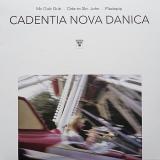
Cadentia Nova Danica - Mc Gub Gub / Ode To Skt. John / Pladepip

John Tchicai (1936 – 2012) was one of the most important free improvising saxophonists of the 20th Century: an artist of rare vision and aptitude whose lines soared and stood out even in the most hallowed company, and whose body of work as a leader / composer is among the most singular and distinct within the entire canon of that music. But Tchicai’s importance doesn’t end there. Born in Copenhagen, Denmark, to a Danish mother and a Congolese father, his life and career represent a crucial bridge between the European and American traditions of free jazz. Initially trained on violin as a child, Tchicai shifted his focus to the clarinet and alto saxophone during his mid-teens, and began touring Europe as a professional musician by his early 20s, which landed him at a socialist youth festival in Helsinki, Finland, where he met the trumpeter Bill Dixon and saxophonist Archie Shepp. Impressed by what they heard, Dixon and Shepp encouraged the young saxophonist to move to New York, and in so doing changed the history of jazz forever.

Tchicai’s arrival in New York marks the rare occurrence of a European player joining the intimate circle that was first wave of American free jazz. Following his landing in the city in November of 1962, in addition to regularly sitting in with Don Cherry’s group, Tchicai began playing with Bill Dixon's band alongside Archie Shepp and Roswell Rudd, forming the nucleus of the foundation of the New York Contemporary Five - one of the most important groups of the era - which counted Tchicai, Shepp, Cherry, Don Moore, and J. C. Moses as its members. From the ashes of this group, Tchicai would go on to found the legendary ensemble, New York Art Quartet, with Roswell Rudd, Milford Graves, and Lewis Worrell, as well as working within Albert Ayler's band, recording “New York Eye and Ear Control”, Shepp’s band, recording “Four for Trane”, the ensemble that recorded John Coltrane's “Ascension”, and the Jazz Composer's “Orchestra”.

By the time he decided to return to Denmark in 1966, had Tchicai chosen to record little else, his legacy within the history of music would have been ensured. Incredibly ambitious, his arrival home marked the beginning of an incredible period of activity which saw him radically expanding his creative explorations, which by the end of the decade would include becoming a founding member of Amsterdam's Instant Composers Pool and helping to record John Lennon and Yoko Ono's “Unfinished Music No.2: Life with the Lions”. This, however, was proceeded the formation of a new orchestra, Cadentia Nova Danica, led by Tchicai, dedicated to radical cross-disciplinary exploration. Remaining together between 1966 and 1971, the group and its shifting membership regularly fell into collaboration with artists and composers, notably Musica Elettronica Viva, who existed beyond the realms of jazz, as well as participating within multi-media events that incorporated the visual realms.

Cadentia Nova Danica’s only two LPs - “Cadentia Nova Danica” (Polydor, 1968), and “Afrodisiaca” (MPS, 1969) - are effectively Tchicai recorded efforts as a leader, and are legendary. There’s little mystery, once heard, why the later landed on Thurston Moore’s iconic “Top Ten from the Free Jazz Underground”, published by Grand Royal in 1996. Sadly, despite playing extensively during their five year run, with exception of a CD documenting a performance at Jazzhus Montmartre, in 1966, until now there has been no other publicly available recordings that allow us to capture a glimpse of this astounding band at work. Alga Marghen / Formalibera’s vinyl pressing of a never before released body of recordings, made in Copenhagen between 1969 and 1970, changes that in the most exciting of ways.

Comprising three pieces - “Mc Gub Gub, (I–VIII)”; “Ode to Skt. John”; and “Pladepip” - the material on this stunning LP comes from two specific events. The first, which encompasses the first side, “Mc Gub Gub, (I–VIII)” was recorded by Cadentia Nova Danica - in this instance, Tchicai, Sune Weimar, Theo Rahbek, Christian Kyhl, Niels Holt, Jørgen Thorup, Michael Schou, Morgens Bollerup, Allan Gregersen, Ole Matthiessen, Pierre Dørge, Willy Jaegert, Anthony Barnett, and Jon Finsen - on May 29th, 1969, at the ABC-Theatre in Copenhagen. Penned by Tchicai, the piece is a sprawling, evolutionary composition at the outer reaches of free jazz, rooted in large blocks of colliding tonality and rhythm - a sound only accessible to larger ensembles - that push territories explored by Charles Mingus to previously unimagined heights, threaded by moments of hard blown fire. Writhing like a stormy sea - skronking and devilish - “Mc Gub Gub, (I–VIII)” is a work of profound complexity that singlehandedly illuminates not only Tchicai’s singular vision as a composer, but also the power and uniqueness of Cadentia Nova Danica during the band’s most vital period.

The two pieces - “Ode to Skt. John” and “Pladepip” - taking up the flip side, were recorded on February 21st, 1970, at the Danish Broadcasting Corporation’s Radio House, and are the outcome of Cadentia Nova Danica’s extended residency there between 1969 and 1970. In many ways, these two recordings offer some of the best insights into the broad collaborative approaches that defined the band, in this case encountering them working with Danish experimental composer, Svend Erik Werner, who was among the earliest in his country to embrace stylistic pluralism and the use historical forms within a modern context. “Ode to Skt. John” - based on aspects of Gregorian music - was penned by Werner, incorporating heady improvisation by the members of Cadentia Nova Danica, this time made up by Tchicai, Sune Weimar, Hugh Steinmetz, Theo Rahbek, Christian Kyhl, Michael Schou, Morgens Bollerup, Ole Kühl, Torben Enghoff, Mauritz Tchikai, Kjeld Ipsen, Willy Jaegert, Ole Matthiessen, Ole Thilo, Pierre Dørge, Steffen Andersen, Jon Finse, and Clause Bøje. The piece is a fascinating binary of the composed and improvised, utilising the band’s large scale to introduce a remarkable sound within its slow progressions and furious, driving free moments, in this incredible meeting of worlds.

The album’s final piece, “Pladepip”, is arguably its most historically significant: an entirely singular piece, unlike anything in Tchicai’s recorded canon as his foray into musique concréte. Drawing upon two recordings of full-band improvisations by Cadentia Nova Danica, for its creation Tchicai also gouged the surfaces of 78rpm records in his collection to skip and create repeated phrases and patterns, creating a stunning sound collage of hard angles and abrupt phrase, that creates a striking counterpoint to the band’s flowing improvisations that bookend those passages. The result is an engrossing listen and easily one of the most unique and culturally important gestures in the entire history of musique concréte.

Truly incredible, Alga Marghen / Formalibera’s vinyl pressing of this never before released body of recordings, made by John Tchicai’s Cadentia Nova Danica, in Copenhagen between 1969 and 1970, offers an unprecedented window into one of the most important groups working in Europe during that period, significantly expanding their rare and slim discography to date. Accompanied by extensive exploratory liner notes by veteran jazz writer, Ed Hazell, this is easily one of the most historically important archival releases of the year and is impossible to recommend enough. Absolutely essential on every count.

Reservar28.08.2026

debe ser publicado en 28.08.2026

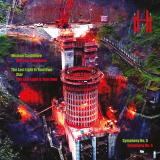
Michael Cashmore - The Last Light is Your Own Star (Symphony No. 5)
  • A1: Movements I and II
  • B1: Movements III and IV

The latest album from Michael Cashmore (formerly of Current 93, plus known for his work as Nature and Organisation and collaborations with artists such as Marc Almond, Nick Cave, Bill Fay, Rose McDowell and Antony and the Johnsons, amongst others) veers from the paths his previous releases have been on into an area altogether more grandiose or stately. While all of his recordings under his own name have alluded to orchestral or soundtrack work to varying degrees, he has long committed himself to a series of six actual symphonies. The fourth will appear on Finland’s Svart Records and the fifth takes the form of this limited edition vinyl release on Lumberton Trading Company. Comprising four movements, two on each side, under the title The Last Light is Your Own Star, these are as bold and beautiful as they are demonstrative of a composer now reaching new heights as he matures into his vision.

Reservar26.06.2026

debe ser publicado en 26.06.2026

Carola - The Observatory EP

Quinoa’s 8th reference goes off the beaten track, literally. Carola (f.k.a. Mägitee), comes at us with four stripped-back cuts that invite us into unexplored emotional realms. Consistent, throbbing, and rich in texture, it contains just enough of everything and not too much of anything.

The story starts on the A side with “Siouxsie”’s melee of drums and swells that instantly transport us to the smokey comfort of a dance floor, lost in the ecstasy of intertwining bodies.

It follows with “0863”, with a name that winks at his roots hailing from the Appenine mountain chain in central Italy. Its warm, intimate touch sets a suspended tone to the release.

On the flip side the energy shifts, with escapism-anthem “Getaway” whose strings and dreary vocals invoke a nostalgia of futures-to-be in places that may never exist.

Finally, the EP closes off with the title track “The Observatory”. Named after the Griffith Park Observatory, a place where he regularly used to wander at night in the company of deer, coyotes, and the Los Angeles lights. Its deep bassline and intense echoes aim to captivate the most avid stargazers.

We hope this music will touch you as much as it touched us.

No en stock

Haga su pedido ahora y le encargaremos el artículo en nuestro proveedor.

Ültimo hace: 6 Días
Byard Lancaster - Funny Funky Rib Crib

At the beginning of the 1960s, at the Berklee College of Music, Byard Lancaster met some feisty friends: Sonny Sharrock, Dave Burrell and Ted Daniel. It is easy to see why he rapidly became involved in free jazz. Once he was settled in New York, he appeared on Sunny Murray Quintet, recorded under the leadership of the drum crazy colleague of Albert Ayler.

In 1968, the saxophonist and flutist recorded his first album under his own name: It’s Not Up To Us. The following year he came to Paris in the wake of... Sunny Murray. He would come back to France in 1971 (again with Murray) and in 1973 (without Murray for a change). This is when he met Jef Gilson, the pianist and producer who encouraged him to record under his own name again.

On Palm Records (Gilson’s label), he would release four albums: Us, Mother Africa, Exactement and Funny Funky Rib Crib.

“Funny Funky Rib Crib” is an unforgettable recording (made up of several sessions dating from the middle of 1974) of creative jazz overwhelmed by funk and soul.

If Lancaster had already made successful albums in the same genre – notably New Horizons, under the name Sounds Of Liberation which he co-led with Khan Jamal –, this one is an homage to James Brown and Sammy Davis enjoying the company of a host of guests including François Tusques (electric piano), Clint Jackson III (trumpet), François Nyombo (guitar), Joseph Traindl (trombone)...

Funny Funky Rib Crib’s cover is a three-quarter profile portrait of the saxophonist (who can also be heard on flute, piano and even vocals), however, on the record, it is the whole group, inspired and frenetic, that tests the melodies of “Just Test”, “Dogtown” or “Rib Crib” – the two versions of which display leader Lancaster’s art of nuance. On both sides of the album, the group also moves into a calmer groove, infused by blues and soul, “Work And Pray” and “Loving Kindness” are meditative tracks where listeners can lay back and relax before asking for more: Funny Funky Rib Crib

No en stock

Haga su pedido ahora y le encargaremos el artículo en nuestro proveedor.

Ültimo hace: 3 Meses
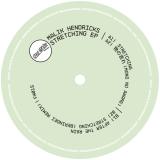
Malik Hendricks - Stretching EP

Making his first appearance on Flat White Records, NYC’s Malik Hendricks arrives with Stretching, a four-track EP that leans comfortably into the grey space between Deep House and Techno. Across three original cuts, Hendricks delivers warm, hypnotic, and quietly confident sounds that are unmistakably his own.

Rounding out the release is a remix from London-based, Spain-born producer Beringei. Known for his broken-beat excursions, Beringei with a 4x4 workout that still carries his unmistakable percussive touch, proving that even when stepping outside his usual lane, his identity remains firmly intact.

With previous releases on respected imprints like Eglo, Darker Than Wax, and Phuture Shock Muzik, Hendricks arrives in trusted company, thus making it an easy call to hand him the reins for our 15th release.

Born in the ’80s and raised in the ’90s, Malik Hendricks is a product of transatlantic club culture, drawing inspiration from Detroit’s futurism, New York’s grit, and the UK’s rhythmic experimentation. A DJ for over a decade, he approaches music with an almost academic curiosity, seeing the dancefloor as a shared space for cultural exchange.

Recently, his work has caught the attention of heavyweights like Eli Escobar, Byron the Aquarius, James Bangura, and Roy Vision, all stepping in to remix his material. With Stretching, Hendricks continues to prove that subtlety, craft, and groove still go a very long way.

Early DJ Support from: Shy One, LDLDN, Louise Chen, Dam Swindle, LTJ Bukem, Christophe Salin, Franck Roger, Jazzanova, Mr Redley, Last Nubian, Glenn Davis, Seven Davis Jr, Stonie Blue, Stu Clark (WOLF), Adriatique, Marco Weibel, Mr Ties, Tereza, Cottam, Joyce Muniz + MORE

No en stock

Haga su pedido ahora y le encargaremos el artículo en nuestro proveedor.

Ültimo hace: 3 Meses
FRANCO MICALIZZI - Non C’è Due Senza Quattro (OST) LP
  • A1: What's Goin On In Brazil
  • A2: The Mysterious Man
  • A3: Flying Carousel
  • A4: Double Trouble Theme (Bossanova)
  • A5: A Guy With It's Pretty Girls
  • A6: Double Trouble Theme (Jazz)
  • B1: Hear It Tonight
  • B2: Double Trouble Theme (Samba)
  • B3: Mississipi Dream
  • B4: Quica Theme
  • B5: The Mysterious Man
  • B6: Flute Rhythm
  • B7: Double Trouble Theme

This expanded edition presents the soundtrack with previously unreleased material not included on the original vinyl release, offering a more complete overview of Micalizzi’s work. The package is further enhanced by an 8-page full-color booklet featuring original artwork, extensive liner notes on the film, direction, and score by journalist Fabio Babini, as well as a personal contribution from Franco Micalizzi himself.

Composed by Maestro Franco Micalizzi for the cult 1984 film Non C’è Due Senza Quattro, starring the iconic duo Bud Spencer & Terence Hill in a rare fourfold role, this soundtrack captures the playful spirit and global flair of the film.

Micalizzi delivers a vibrant and rhythm-driven score, infused with warm Latin influences, breezy melodies, and an unmistakable sense of lightness. The result is a richly entertaining listening experience that perfectly mirrors the film’s humor, energy, and escapist charm.

A joyful and sun-soaked addition to any collection, this release stands as both a nostalgic tribute and a testament to Micalizzi’s enduring legacy in Italian cinema soundtracks—best enjoyed, perhaps, with a well-mixed cocktail in hand.

©℗ 1984 – Beat Records Company. Reissued by Holy Basil Records under license by Beat Records.

Reservar29.05.2026

debe ser publicado en 29.05.2026

Jim Keller - Vinylly! LP
  • Tower of Love
  • Learning to Crawl
  • Even Angels Have To Fall
  • Easy Rider
  • Mistakes
  • Find My Shadow
  • Giving It Up To Love
  • Sweet Memories
  • I Will
  • Sunshine In My Pocket
  • A Girl Like You
  • Soul Candy
  • Modern Girl
  • Loving Her Again

No one can say Jim Keller hasn't been busy - Since his last European shows in 2023, he's recorded and released two albums, 2024's Daylight and 2025's End of the World - He's toured the United States - And while he intends to get back to Europe this year, he's first giving his fans a treat: Vinylly!, a collection of his greatest hits that will only be available in Europe, for Record Store Day 2026 The record includes a dozen songs spanning the six albums of his late- career renaissance, four decades after he and his band, Tommy Tutone, topped the charts with "867-5309/Jenny." Born and raised in New Jersey, Keller found fame after moving to San Francisco, where he launched Tommy Tutone in the late 1970s.

Despite their meteoric rise, the band was short- lived, and Keller soon found himself in the proverbial wilderness, struggling to make ends meet until he talked his way into a job with famed composer Philip Glass. For the next 25 years, Keller would go on to run Glass's publishing company, eventually managing his career outright in addition to working with luminaries like Tom Waits, Ravi Shankar, and Rufus Wainwright.

Reservar22.05.2026

debe ser publicado en 22.05.2026

Mystic-Force - The Eternal Quest LP

Mystic Force was a progressive power metal band from Baltimore, Maryland. After releasing several demo tapes, they signed a contract with the German label Rising Sun Productions. This resulted in two albums, “The Eternal Quest” (1993) and “A Step Beyond” (1995). Their third album, “Man Vs. Machine,” followed in 2001 on Siegen Records. After Mystic Force broke up, drummer Chris Lembach and guitarist Rich Davis formed the group Shift and recorded two albums with them. Rich then started his own solo project (for which he played all the instruments and sang), before looking for suitable fellow musicians again and releasing the CD “Inside The Upside Down” in 2024. Mystic Force was originally formed in 1984 by guitarists Rich Davis and Marc Rouchard together with bassist Keith Menser. After numerous line-up changes in the early days, they finally found suitable bandmates in Chris Lembach (drums) and Bobby Hicks (vocals). In 1987, Mystic Force released their first 4-song demo, followed by “Blind Vision” a year later. After selling large quantities of self-produced cassettes (the first 4-track demo is said to have sold over 5,000 copies), it was time for their first vinyl release. In 1990, the album “Take Command” was released on the English label C.M.F.T. Records, which included the first demo and four brand new tracks: “Take Command,” “Awakened By The Dawn,” “Immortal Souls,” and “Silent But Deadly.” Later that year, the 12“ single ”Shipwrecked With The Wicked“/”Eternal Quest" was released in a limited and numbered edition by the band's own company, Pro-duction. The widespread distribution of Mystic Force's material (also via underground distributors such as Oliver Jung's “Demolition”) led to an increasing number of labels taking an interest in the band. Ultimately, the choice fell on Rising Sun Productions, who released the debut album “The Eternal Quest” in 1993, featuring tracks such as “Shipwrecked With The Wicked,” “Another World,” and “Answers Of The Mystery”—a forgotten gem of progressive power metal somewhere between Fates Warning and Hades.

Reservar24.04.2026

debe ser publicado en 24.04.2026

Motrik - MOON: The Cosmic Electrics of MOTRIK LP

Portland-based krautrock band Motrik formed in 2013, its four members united by a pledge to modernize their beloved genre. Sharing a passion for pioneers like Can, Kraftwerk, and Trad Gras Och Stenar, the group has demonstrated its ability to deliver over a series of EPs and albums, most recently 2020's acclaimed Artificial Head. As they continue to experiment by incorporating additional influences ranging from funk and jazz to psych and prog Motrik's third full-length, a double LP titled MOON: The Cosmic Electrics of MOTRIK, is a further continuation in the story of an historic genre befitting of the album's cosmic artwork.

Motrik boldly takes full advantage of the space that four sides of vinyl allow on this latest offering. The middle of the album features two long suites that feel typical of the groups dynamic live performances, which frequently feature fog cannons, lasers, and other prop homages to Kraftwerk and company. The 13-minute "Stabilize" emerges from a haze of synth pulses and guitar tones, settling into a steady NEU!-like chug that swells and recedes like an ecstatic wave. On "Space Elevator", the motorik drive from which the band take their name evolves into an insinuating and sensual disco-like throb before the perfect proggy comedown in the final minute.

Reservar03.04.2026

debe ser publicado en 03.04.2026

SML - HOW YOU BEEN

SML is the quintet of bassist Anna Butterss, synthesist Jeremiah Chiu, saxophonist Josh Johnson, percussionist Booker Stardrum, and guitarist Gregory Uhlmann. Their second album, How You Been, finds the supergroup of prolific composer/producers pushing ever further into the hyperrealist, collectivist approach to music creation nascently explored on their debut Small Medium Large, which was lauded as "awe-inspiring" by Glide, "exuberant" by the Los Angeles Times, and "an exciting milestone" by Pitchfork. As SML has evolved and spread out in space-time, their fluencies, both as an improvising unit in performance and as a production team in the studio, have sharpened. At inception the band inspired disparate but distinctive artist comparisons like Essential Logic, Oval, Herbie Hancock"s Sextant, and electric Miles Davis, as well as assorted genre touchpoints like Afrobeat, kosmiche, proto-techno and new-jazz. With How You Been their work manages to both collapse and explode such derivatives, displaying a new, high resolution version of SML, fully-flowered into a new strain of sound, bound to incite its own copycats in due time.

No en stock

Haga su pedido ahora y le encargaremos el artículo en nuestro proveedor.

Ültimo hace: 6 Meses
Rick James - Street Songs LP 2x12"
  • A1: Give It to Me Baby
  • A2: Ghetto Life
  • B1: Make Love to Me
  • B2: Mr. Policeman
  • C1: Super Freak
  • C2: Fire and Desire
  • D1: Call Me Up
  • D2: Below the Funk (Pass the J)

Rick James Blends Brazen Attitude, Fearless Sexuality, and Shrewd Charisma on Street Songs:

Punk-Funk Album Aims for the Hips and Head, Includes the Timeless Hit “Super Freak”
Sourced from the Original Master Tapes and Strictly Limited to 4,000 Numbered Copies:

Mobile Fidelity’s 180g 45RPM 2LP Set Presents 1981 Smash in Audiophile Sound for the First Time
1/4” / 30 IPS analogue master to DSD 256 to analogue console to lathe


“Punk funk” was a relatively unknown concept before 1981. But once Street Songs took the charts by storm that year, the world soon knew about what became Rick James’ signature style. And how. True to its name, Street Songs blends outspoken sexuality, brazen attitude, and edgy commentary amid contagious R&B-fueled arrangements that simultaneously aim for the hips, head, and various nether regions. And it’s never sounded better.

Sourced from the original master tapes, strictly limited to 4,000 numbered copies, pressed at Fidelity Record Pressing, and housed in a Stoughton gatefold jacket, Mobile Fidelity’s 180g 45RPM 2LP set presents James’ platinum-certified effort in audiophile quality for the first time. Playing with crisp dynamics, lively textures, airy headroom, and revealing clarity, this collectible edition of the record that stayed at the No. 1 spot on the R&B Album Charts for 20 weeks invites you to get closer to music that beckons you to turn your space into a private dance floor.

Then again, you’ll likely be so taken by how the taut bass lines, snappy rhythms, and four-on-the-floor beats — all rendered in stunning detail and with full-bodied architecture — come across with such accuracy and presence, you might stay pinned to your seat. On this pressing, the soundstaging, imaging, and lit-fuse energy of Street Songs reach new heights. Everything from the rubbery feel of the guitar lines to the depth of James’ temperature-raising vocals to the scale of the horn charts emerges as if James and his ace session crew set up in your room.

The Buffalo native and his ensemble waste no time getting their message across. On the album-opening “Give It to Me Baby,” James and company lay down a mix of sleek funk and pulsing disco that practically activates the bright lights of a discotheque and stimulates the libido of anyone within earshot. Having reached No. 1 on the Billboard Hot Soul charts, the song is pure sex — and just one of the carnal delights on a record that embraces the subject as fearlessly as James does his identity.

Of course, the most famous of James’ erotic excursions — the timeless “Super Freak” — hit No. 1 on Hot Dance Club Play charts, No. 16 on the Hot 100, and, later, No. 153 on Rolling Stone’s list of the Top 500 Songs of All Time. Bolstered by a quavering keyboard theme and electro riffs, the much-sampled track worms itself inside your muscles with smile-inducing subject matter, gliding vocals, nimble movements, a hot tenor-saxophone solo, and backing vocals by the Temptations.

The iconic Motown group isn’t the only celebrated guest artist on the Grammy-nominated Street Songs. James’ then-labelmate, Stevie Wonder, lends harmonica to the frank sociopolitical narrative on “Mr. Policeman,” a protest tune that also manages to stroll ’n’ strut via simmering organ, staggering brass accents, and James’ gritty vocal performance. In addition to contributing backing vocals on several cuts, Teena Marie turns in one of the album’s signature moments on “Fire and Desire,” a romantic old-school duet with James that impresses with smoothness, sensitivity, and smokiness.

High-profile colleagues aside, James remains the undisputed star, a figure whose leather-and-latex attire, braided hair, and natural swagger made him misunderstood by some in the mainstream and embraced by everyone in the know as a true original. As a testament to his magnetism and skills, his charisma and rawness seemingly seep through every note, whether on the balladic sweep of the risqué “Make Love to Me” or strident, poke-and-prod persuasion of the moonwalking “Call Me Up.”

On the closing “Below the Funk (Pass the J),” an uptempo autobiographical tale that addresses the visionary musician’s second-favorite love, the singer acknowledges his upbringing and inseparable connection with his roots — an homage to where he began and a toast to where he’s gone.

Rick James, keepin’ it real on Street Songs, still as real as it gets.

No en stock

Haga su pedido ahora y le encargaremos el artículo en nuestro proveedor.

Ültimo hace: 7 Meses
Edward Ka-Spel - The Sympathy Portal LP
  • A1: Rust Compassionate
  • A2: Ceremonial Coffee
  • A3: Neon Percolators
  • B1: Demon Traces / Armchair Revolution / Angel Trail (Slight Return)

Recorded during lockdown and previously only available as a CDr self-released in an edition of 99 in 2022, 'The Sympathy Portal' collects four tracks (one of which is divided into three parts) that make full use of Edward Ka-Spel’s command of melodies, cosmic churn, subtle field recordings, percolated vocals, hypno-rhythms, tempered noise, broken clocks, atmospheric keyboards, uncoiling springs and carefully hewn dynamics. Coupled to often despairing or melancholic lyrics, the album ultimately forms a fantastic addition to a body of work from this hardworking artist usually found at home fronting The Legendary Pink Dots and apparently barely able to rest when not engaged in commitments to them. Here is what he says himself about 'The Sympathy Portal': “'The Sympathy Portal' was created as 2020 drifted into 2021 with the world in the grip of a pandemic. He studied charts on TV, horrified by statistics, temporarily free from a lockdown but well aware that we'd be back in our cubicles soon enough. It was hard to be positive in such an environment and this album reflects much of the fear and tension of the time. But the last song, 'Angel Trail ( Slight Return)', was intended to offer some genuine hope, having been revived for the release after first appearing in a different form on The Legendary Pink Dots' '9 Lives to Wonder' back in 1994.” The album pays testament to a troubled and troubling time that now, a mere few years on, strangely appears like the grand entrance to a series of heavily dark periods we are still desperate to crawl from. It could be argued that the angel trail Edward so eloquently refers to is something that needs to be found more than ever and that, thankfully, his music helps to illuminate this despites its mostly distressed overtones.
Away from the confines of a now hard-to-find and long sold out CDr, Lumberton Trading Company brings this album back as a vinyl release that’s limited to 300 and is scheduled to appear in February 2026.

Reservar27.02.2026

debe ser publicado en 27.02.2026

DAVID WALTERS - TI LOVE LP 2x12"

In his own time, in his own tone and in his own company.

‘Win and lose without losing oneself’’ This line from French rapper Oxmo Puccino greatly accompanied David Walters while composing his fourth studio album. Over the eleven tracks on ‘Ti Love’, David took his time to find the right tone and in turn, tell his truth.

‘Ti Love’, is a French-Creole abbreviation for “petite love”, meaning ‘little love’, evoking that sweet fondness found in those small gestures and little acts of kindness.

Think of things like young kids' brotherly love or a stranger lending you a helping hand, while expecting nothing in return. It’s these motions that allow this album to feel full of real life, carried by beating drums that also pull at our heart strings.

Basing himself in a small village in Martinique, where David had not long since scattered the ashes of his late mother, the multi-instrumentalist decided to remain there and let the writing of Ti Love pour out from deep inside him. Taking influence from around the island, the energy from his makeshift studio set up in Fort de France, allowing a resilient yet grieving man to recount, let go and come to terms with his recent loss.

So embracing these new circumstances, on the rugged coastal Caribbean island of Martinique, David took up an artist’s residency in the island’s capital Fort de France, located near the town’s port is the ‘Manoir des Artistes’, a bustling recording studio space. A place where the walls shake as the latest sounds being created are blasted by locals and visitors alike. Most studio doors are wide open; as music here is a huge part of everyday life, feedback from encouraging neighbouring musicians is on hand and welcomed. A contrast to the isolation often assumed with working in more traditional music studios.

It was here in this stimulating environment that David recorded Ti Love’s initial demos.

With his first collaborator onboard, Neeweed, a 25-year-old producer and gospel expert who David met at the Martinique Jazz Festival.

Of the album’s initial versions of the record David recollects: ‘It took me three years to write it, then I rewrote it, reworked it. In the end I'm really glad I stepped back and listened to myself.’ I found a great ally in GUTS, who ended up being the artistic director of the record”

David surrounded himself with the right people who helped him express himself in the best possible way. He called on other friends and musical comrades; album opener and title track, ‘Ti Love’ features the incomparable Fatoumata Diawara (World Circuit Records / Africa Express) and further along additional production came in from; Izem, Art Of Tones, and GUTS himself, who all added just the right amount of ‘little love’ to this

project. Further helping hands came from Californian producer and DJ Captain Planet, who David was introduced to a few years ago. Closer to home, here in Europe, the German producer Bluestaeb appears on two tracks: the very catchy disco funk ‘Mr Maraboo’ and ‘Kite Koule’, the latter being the first single lifted from the album, where David invited Nigerian guitarist Keziah Jones.

Elsewhere on the album, fellow Heavenly Sweetness recording artist Blundetto contributed two tracks; the reggae ‘Voodoo Love’, which is David's tribute to Studio One, and the very sweet and resilient ‘Bon Voyage’, which closes the album... "It's gold, it doesn't need anything changing.” remarked David - ‘Bon Voyage’ is a goodbye to his mother, whose voice called him from the bottom of the sea one night while he was surfing during the full Moon.

Released almost 20 years after his debut album ‘AWA’ released on French imprint Ya Basta, home to Gotan Project and many others, David boasts a long list of radio supporters including; Gilles Peterson, Cerys Matthews and Don Letts at the BBC, while further field Cosmo Radio in Germany, and KCRW in Los Angeles.

On this new record, David has shown sincerity and vulnerability, while still honouring the infectious groove that he is known for the world over. Despite the upsets, a little love can indeed go a long way.

CREDITS:
Produced by Bluestaeb / Blundetto / Captain Planet / Izem / Art of Tones
A&R : Guts
Mixed by Mr Gib @ Onetwopassit
Except "Bon Voyage” and "Voodoo Love" mixed by Jerome “Blackjoy” Carron
Mastered by Benjamin Joubert @ Biduloscope
Art by Elliott Walters

No en stock

Haga su pedido ahora y le encargaremos el artículo en nuestro proveedor.

Ültimo hace: 7 Meses
Esa Pethman - In Belgium 1967

Esa Pethman

In Belgium 1967

7"-VinylWJ075001
WE JAZZ
06.02.2026

We Jazz Records kicks off their new series of archival 7" releases with Esa Pethman "In Belgium 1967" released 23 September 2022. The two-tracker is licensed from the Belgian VRT radio archives and both of the pieces are previously unreleased. Finnish jazz legend Pethman, heard here on alto flute and tenor sax, joins forces with European jazz greats such as Heinz Bigler, Uffe Karskov and Jean Fanis. This is a small but valuable piece of unheard European jazz history from the early heyday of modern jazz. The physical release is a quality "inside-out"-styled EP with 3mm spine and small center hole on the 45rpm vinyl.

An excerpt from the liner notes by Mikko Mattlar:

"Esa Pethman (b. 1938) was one of the key figures of modern Finnish jazz in the 1960s. His album The Modern Sound Of Finland was the first Finnish modern jazz album and his composition "The Flame" a true modern Fenno-jazz evergreen.

Pethman was born in Kuusankoski, 135 kilometres from Helsinki in the Kymenlaakso area. The jazz scene was active even though it was an area of rural landscapes and paper mills. Pethman discovered jazz when he heard a Charlie Parker record being played at a local music shop in the late 1940s. Following Parker, bebop became his favourite style of jazz.

Young Pethman played flute and saxophone in local bands who accompanied schlager singers. They played tangos and waltzes for dancers, but usually started a typical dance event with an hour of jazz. In 1959 Pethman moved to Helsinki to study music at the Sibelius Academy. Back then it was a strictly classical music academy, but Pethman later described the studies as crucial for his development and career. He quickly made his way to studio sessions and into the best orchestras in Helsinki.

As a student of composition, Pethman also began writing his own music. "The Flame" was a melody he just got on his mind one night, and he decided to write it down. The catchy composition was released as a 7" single in 1964, a year before Pethman's debut album. Both records stand as benchmarks for modern Finnish jazz. The album consisted entirely of Pethman's compositions, not versions of jazz standards like a lot of the Finnish jazz released until then.

In the mid 1960s, Finnish jazz was also taking its first international steps. Pethman's quintet took part in the first Montreux Jazz Festival in Switzerland in June 1967. At the Montreux jazz band competition, the quintet came in fourth of the twelve contestants. Despite not winning the competition, the band got an honourable mention, and Pethman was now recognized outside Finland.

In December 1967 Pethman travelled to Brussels. His visit was organised by the national Finnish broadcasting company Yleisradio and their jazz program producer Matti Konttinen. Konttinen was supposed to go to Brussels with Pethman, but the musician ended up traveling alone.

In the Decca recording studios Pethman played two songs. He recorded a version of his most famous composition "The Flame", where he played the alto flute and was accompanied by Belgian musicians. On Swiss saxophonist Heinz Bigler's composition "Like Steel", Pethman played the tenor saxophone. The band was now more international, consisting of Bigler, the Italian Francesco Santucci, the Dane Uffe Karskov, a Belgian rhythm section and Pethman. After 55 years, Pethman still remembers Bigler's remarkable skills as a saxophonist.

The two-day visit included the recording session, a dinner and a concert. Pethman and the other non-Belgian musicians came to Brussels mainly to play at a jazz concert organised by the European Broadcasting Union EBU. They played at the studio first, and the concert was held the following day. Pethman and all the other soloists played as members of an international big band. The studio and live session were produced by the Belgian Radio and Television jazz section leader Elias Gistelinck."

No en stock

Haga su pedido ahora y le encargaremos el artículo en nuestro proveedor.

Ültimo hace: 3 Años
Various - Wizzz! French Psychorama Volume 5 (67-75)

The journey through French-speaking pop archives continues with this fifth volume, packed with fuzz, gimmicks, and dissent. Far from the charts, the selected tracks display a great creative freedom, often backed by corrosive humor. Welcome to the surprising, kaleidoscopic, and colorful world of the late sixties and early seventies, Wizzz!
Born in Montauban, Robert Pico stumbled into music by chance when he met René Vaneste, then artistic director at Pathé-Marconi. René brought him to Paris to record his first 45 RPM EP in 1964. A year later, Pierre Perret introduced him to Vogue, where he recorded his second album with Claude Nougaro’s orchestra. Sylvie Vartan then introduced him to RCA, where he recorded four singles, including the astonishing "Chien Fidèle," a track backed by a hair-rising fuzz guitar. Alongside his solo career, he also composed for other artists like Alain Delon (the song was recorded but remains unreleased), Magali Noël, Bourvil, and Georges Guétary. In the Paris of the sixties, he mingled with Mireille Darc, Elsa Martinelli, Marie Laforêt, France Gall, Françoise Hardy, Petula Clark, Régine, Dani, Serge Gainsbourg, Joe Dassin, Franck Fernandel, Charles Level, and Roland Vincent. Despite his efforts and winning a Grand Prix Sacem for his final record, Robert Pico didn’t achieve the expected success in show business and decided to leave Paris and return to the Southwest, where he devoted himself to writing. He is the author of 23 books (including Delon et Compagnie, Jean-Marc Savary Editions 2025, a memoir about his youth and his many encounters). Today, he is relieved to never have become a celebrity and devotes himself to his work with passion.
In 1969, the Franco-Italian movie Erotissimo was released, directed by Gérard Pirès (who later directed Taxi in 1998, written and produced by Luc Besson). This pop comedy features Annie Girardot, Jean Yanne, Francis Blanche, Serge Gainsbourg, Nicole Croisille, Jacques Martin, and Patrick Topaloff. The soundtrack was written by Michel Polnareff and William Sheller, with lyrics by Jean-Lou Dabadie. "La Femme Faux-cils," performed by Annie Girardot. It recounts the feelings of a rich CEO's wife who seeks to develop her sex appeal under the influence of advertisement and magazines. Groovy, sparkling and light, this track, with ITS lush arrangements humorously critiques consumer society and feminine beauty standards.
“Je suis l’Etat” (1967) is the flagship track of the first EP by singer-songwriter Spauv Georges, aka Georges Larriaga, better known as Jim Larriaga (1941-2022). Born into a family of bakers, the young man was initially planning to become a hairdresser when he discovered English-speaking music through Elvis Presley and the Beatles. After this revelation, he decided he would become a songwriter and gave himself five years to succeed. He recorded his first two EP’s independently for RCA under the pseudonym Spauv Georges; meaning “that poor George”, a nickname given to him by the mother of her friend Jean-Pierre Prévotat (future drummer of the Players, Triangle, or Johnny Hallyday). Portraying a depressed and eccentric young man, Spauv Georges created corrosive and amusing songs that didn’t reach a wide audience, despite a TV appearance with Jean-Christophe Averty.
Supported by his loyal friend and fellow songwriter Jean-Max Rivière, Georges Larriaga met the future singer Carlos in the early '70s, then Sylvie Vartan’s assistant. He wrote songs for Carlos, including the popular "La vie est belle," "Y’a des indiens partout," and "La cantine", which went onto become a huge hit in 1972. He also composed for Claude François (“Anne-Marie”, 1971), Charlotte Julian (“Fleur de province”, 1972), helped launch child singer Roméo (who sold 4 million records), and later wrote the hit "Pas besoin d’éducation sexuelle" (1975) for the young Julie Bataille. In 1971, Jim recorded an album for Disc'Az: “L’univers étrange et fou de Jim Larriaga”, which featured pop gems like “La maison de mon père”.
The story of the song "Zoé" began when Pierre Dorsay, artistic director at Vogue Records, asked Swiss singer and musician Pierre Alain to write a song for a new female singer. The inspiration came when he realized that Zoé (the artist's name) was also the name of France's first atomic battery, created in 1948, which consisted of uranium oxide immersed in heavy water! The lyrics reflect a bubbling energy that must be handled with caution, while the instrumentation echoes this atomic theme, notably with the use of a theremin.
Zoé’s career lasted only as long as a single 45 RPM, but it seems Christine Fontane was the vocalist behind this pseudonym, who is known for several EPs, a good "popcorn" album in 1964, and a handful of children’s singles in the '70s. Regardless, the photograph on the cover is of a different girl entirely.
Later, Pierre Alain continued his career, writing songs for himself, Marie Laforêt, Danièle Licari, Alice Dona, Arlette Zola (3rd place in Eurovision 1982), and achieving multiple gold and platinum records in Canada. Also an inventor with several patents, president of the Romande Academy, and head of the French Alliance in Geneva, he now composes atonal music, books, and poetry. Moreover, he is also the host of "Les Mardis de Pierre Alain" at "Le P'tit Music'Hohl" in Geneva.
Filled with oriental choruses and fuzz guitar, "Fou" is from Jacques Da Sylva's only EP released by Vogue in 1967. Despite the quality of this recording, all traces of this singer disappear after this first effort.
Valentin is a baroque pop singer born in Belgium. He is the songwriter and composer of most of the tracks on his three singles released in the late 60s in Canada. A legend says that he reincarnated himself as Jacky Valentin during the 1970s for a rock'n'roll revival career in Belgium, but his older brother sadly debunked this story. Valentin's first two singles were arranged by Claude Rogen, a Parisian session pianist who had come to Canada to promote the song “Mister A Gogo”, a cover of David Bowie’s “Laughing Gnome”, adapted by singer Delphine, his wife at the time. Far from his usual network, Claude Rogen arranged music for Polydor, including the arrangements for “Je suis un vagabond” in 1969, a jerk tune with string arrangements and a furious optimism.
Jacques Malia wrote, composed, and recorded his only 45 EP for Festival in 1966. “Histoire de gitan” is an incredible beat track with bohemian scat that tells the story of a gypsy musician who came to Paris to make it in the Music-Hall, to no avail. The hero of the song and its author probably shared a similar fate, as Jacques Malia faded into anonymity after this remarkable attempt.
Bernard Jamet recorded two EPs for Barclay in the late sixties and co-wrote several songs with Christine Pilzer, Pascal Danel, and prolific songwriters Michel Delancray and Mya Simile. The track “Raison Légale” (1968), his masterpiece, immerses the listener in a courtroom right when a murderer is being judged, with jerk rhythm and free arrangements. A unique, paranoid, judicial, and psychedelic oddity.
Jean-Pierre Lebrot-Millers started his career in show business in 1967 as a singer and songwriter for the Philips label. After three singles, he wrote several songs of a new kind with his friend Pierre Halioche, in the midst of the sexual liberation movement and the democratization of drugs. With provocative lyrics, “Les filles du hasard” and “Barbara au Chapeau Rose” were released on a Philips singles in 1968. The character of Barbara was inspired by a queen of Parisian nightlife during the psychedelic years: model Charlotte Martin, who dated Eric Clapton from 1965 to 1968, then Jimmy Page from 1970 to 1983. Jean-Claude Petit’s arrangements, with a table-filled intro, soul brass, and Hendrixian guitar, emphasize the flamboyance of a hedonistic and sexy character, whose dog is named Junkie because “Junkie est un nom exquis”! The track was recorded live in three takes with a full orchestra.
Upon its release, the record was censored by Europe 1 and RTL due to its references to drug use. Jean-Pierre Lebrot was then banned from the airwaves and later dismissed by his record label. He changed his artist name to Jean-Pierre Millers, while his companion Pierre Halioche became D. Dolby for a new dreamy composition, “Chilla”, which Jean-Pierre produced himself with arrangements by Jean Musy. Once again, the song was immediately censored everywhere. After this setback, he decided to stop singing and started taking on odd jobs to support his Swedish wife and their son until the day he met Jean-Pierre Martin, then production manager at Decca, who had worked with Manu Dibango. Martin offered Jean-Pierre Lebrot-Millers, then employed at Rank Xerox, the position of artistic director at Decca. He accepted and became, a year later, promotion director (radio, press, TV). He worked on Julio Iglesias’s first album for Decca, which became a massive hit and allowed him to meet Claude Carrère. The latter asked him to write new songs and find their performers, much like a “talent scout.” It’s through him that Jean-Pierre discovered Julie Pietri and Corinne Hermès. He composed “Ma Pompadour” for Ringo, Sheila’s husband, and took the microphone again for the syncope hit “Rendez-Vous” in 1982.
That same year, Jean-Pierre Lebrot-Millers tried to release a track for which he had heavily gone into debt: “Si la vie est un cadeau”. Having recorded it in London, he presented it to numerous professionals, all of whom refused to get involved. The same thing happened with Antenne 2 and the Sacem when he proposed the song as France’s entry for Eurovision. He then met Haïm Saban, who was producing cartoon soundtracks and had just launched the Goldorak theme song. Saban, having listened to the song, declared it had the potential to become a hit. He sent Jean-Pierre and Corinne Hermès to meet the CEO of the Luxembourg radio and television network. The latter received them, asked to hear a verse and chorus a cappella in his office, and immediately hired them to represent Luxembourg at Eurovision 1983. They reworked the arrangements and recorded a new version with Haïm Saban as co-producer. The song ended up winning Eurovision 1983, a great comeback for our hero. He continued producing and hung out with the band Nacash in Belgium when a couple came to introduce their daughter for an impromptu audition in a hotel room. The girl sang “Les démons de minuit” while dancing to a radio cassette. Impressed, he had her take singing lessons for a year and composed a song for her (for which he had the melody and title, but no lyrics). This required him to go on the hunt for a lyricist, who ended up being Guy Carlier. They recorded the song, which was initially a ballad, at Bernard Estardy’s CBE studio, and gave the singer a new name: Melody. They showed the song around their industry network without success. Later, Estardy called Jean-Pierre to suggest changing the rhythm and making it pop-rock. Orlando, Dalida’s brother, liked the result and decided to co-produce the track. “Y’a pas que les grands qui rêvent » became a classic hit. The song has since been covered by Juliette Armanet (as a ballad, like the original) and Valentina.

Born into an aristocratic Breton family, Hervé Mettais-Cartier worked as a DJ at Queen Kiss, a nightclub in Poitiers, where he formed the band Les Concentrés with Michel (an actor) and Christian (a radio technician). Together, they created a repertoire of whimsical songs (“Ma bique est morte”, “J’suis un salaud”, “Fils de dégénéré”...) that they performed on stage dressed in white (in homage to “concentrated milk”). They performed at Bliboquet and Olympia in 1968 for the 10th edition of the “Relais de la chanson Française” organized by L’Humanité-Dimanche and Nous les Garçons et les Filles, sponsored by Pepsi Cola. Winners in the author-composer category, alongside Danish singer Dorte, their visibility allowed them to record a 45, and appear on television in Jean-Christophe Averty’s show. The A-side of the disc features Bruno le ravageur, a casatchok dedicated to Bruno Caquatrix, the director of Olympia, nicknamed in the song “Coq Atroce” or “croque-actrices”. The B-side is dedicated to “Fils de dégénéré”, a quirky tribute to Hervé's aristocratic roots, mixing absurdity with sophisticated vocal harmonies.
After Les Concentrés, Hervé Mettais-Cartier formed the duo La Paire et sa Bêtise with his friend Olivier Robert. They performed in Parisian cabarets and toured with Pierre Vassiliu. In the late 1970s, Hervé began a solo career. He recorded two albums for the Motors label in 1978 and 1979, which did not achieve their anticipated success due to lack of promotion. In 1980, he met Bernadette, with whom he started a family and created a “Chansons à voir” (songs to see) show that he performed until his death at the end of 2024.

Publicité comes from the final EP by the Missiles (Ducretet Thomson, 1966), a disc that also includes “La (nouvelle) guerre de cent ans”, featured on Volume 4 of our Wizzz! series. Please refer to the booklet for the story of the band.

“He’s 1.82 meters tall, 28 years old, weighs 135 kg, is black and Belgian”: this is the description of singer Hegesippe on the back of his sole single (Decca, 1967). He appears on the album cover wearing a Greek toga, like a hippie gag – we are at the end of the year 1967. In “Le crédo d’Hegesippe”, this former bodyguard of Antoine and the Charlots plays the delightful card of the thick brute converted to Flower-Power and non-violence, with arrangements by Jean-Daniel Mercier, aka Paul Mille.
“Ethéro-disco” was released on a promotional record for clients of the Maréchal company (Liège, Belgium) for the New Year 1979. Over a funky rhythm, celebrity impersonations (Brigitte Bardot, Jacques Dutronc, Fernandel…) deliver an enigmatic text about pharmaceutical products like ether, bismuth, and aspartate. The track was composed by Dan Sarravah (responsible for Joanna's “Hold-up inusité” featured on Wizzz! Volume 3) and Tony Talado, who was also a singer (one 45 in 1967), songwriter (with over a dozen credits between 1964 and 1985 in various styles from surf music to disco), author (Devenez Végétarien, Dricot Editions, 1985), ad designer, and psychologist.

Décollez-les is on the A-side of Mamlouk's only single, a pseudonym for Marsel Hurten, who is known for his work on several EPs in the late sixties, as well as composing music for Hervé Vilard’s “Capri, c’est fini”, Claude Channes' “La Haine”, Annie Philippe’s “On m’a toujours dit”, and Nancy Holloway’s “Panne de Cœur”.
This strange song, with Afrobeat horns and absurd dialogues between a chef and his kitchen staff, is the result of a collaboration between Marsel Hurten and one of his neighbors, a photographer from Pavillon-sous-Bois (93), where the musician settled after returning from the Algerian War. A music video was shot to promote the record.
Marsel Hurten was born in Tourcoing (59) into a musical family. At a young age, he joined the brass band founded by his grandfather, playing the piston before studying trumpet at the conservatory, as well as teaching himself how to play the guitar. As an orchestra musician, he toured in France, Belgium, Germany, and England. He released a series of solo 45’s between 1965 and 1968 for the DMF and Az labels before stopping recording to focus on working for other artists (Gilles Olivier, Noëlle Cordier…).
“L’amour nu” (Vogue, 1971) is the work of the short-lived Belgian band Mozaïque. The track, written by singer Jacques Albin, closely resembles another of his compositions, “Carré Blanc”, which he recorded in 1969 for Disc’AZ.
Represented by the Lumi Son micro-label based in Marignane (Côte d'Azur), Jean-Marc Garrigues released two 45 RPMs in the late sixties, defending the French jerk sound. The song “Je dis Non” is a short, joyful ode to youth, pop music, and rebellion.
Songwriter and performer Jacques Penuel released three singles. The first one, “Astronef 328” (Fontana, 1969), features a dizzying series of chords punctuated by sound effects, a sci-fi story, and arrangements by Jean-Claude Vannier.

We would like to sincerely thank Pierre Alain, Moon Blaha, Marsel Hurten, Bastien Larriaga, Jean-Pierre Lebrot-Millers, Bernadette Mettais-Cartier, Robert Pico, Olivier Robert, Claude Rogen, Micky Segura.

No en stock

Haga su pedido ahora y le encargaremos el artículo en nuestro proveedor.

Ültimo hace: 7 Meses
Artículos por página

Language

N/ABPM
Vinyl