
pre-ordina ora21.04.2023
dovrebbe essere pubblicato su 21.04.2023
dovrebbe essere pubblicato su 21.04.2023

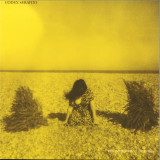
One of the most innovative and ambitious albums ever made, Genioh Yamashirogumi’s Ecophony Rinne is a sonic masterpiece featuring over 200 musicians that expanded the limits of what music and sound could do.
Before Akira there was Ecophony Rinne. Originally released in 1986, Ecophony Rinne is a four-part symphony of “ecological music” by Geinoh Yamashirogumi that married ancient tradition with technological innovation, and changed the way we listen to music in the process.
Half-speed mastered at Abbey Road by Miles Showell, Time Capsule’s high-tech analogue reissue is the first to reproduce composer Ōhashi’s ground-breaking “Hypersonic Effect” theory on vinyl, cutting frequencies beyond the realm of human hearing into wax to capture the full spectrum emotional impact of this extraordinary work.
Founded by genius polymath Tsutomu Ōhashi aka Shoji Yamashiro, Geinoh Yamashirogumi is a shapeshifting collective of over a hundred members from across disciplines. Rejecting professional musicianship, Ōhashi cultivated an ethos where neuroscientists, psychologists, doctors, journalists, engineers and students could critique society through artistic expression and pursue their research in ethnomusicological performances that spanned global traditions, Eastern spirituality and Western classical form.
Ecophony Rinne represents the pinnacle of this vision - an expansive orchestral suite made with over 200 musicians that channeled Ōhashi’s thinking about mankind’s relationship with nature, and fundamental questions of life, death and rebirth.
Here pipe organ synths made from sampled Tibetan horns sit alongside field recordings from Central African forests, Buddhist mantras circle dummy head microphones, Javanese Jegog percussion ensembles pulse like verdant ecosystems, and the acoustics of temples, caves and landscapes are conveyed in the mix. Weaving together culture, nature and technology, it is a record that vibrates with the polyphony of life on Earth.
But Ecophony Rinne was not only musically innovative. Noticing the difference between vinyl and CD versions of the album where digital reproduction limited the sound, Ōhashi developed a theory of “Hypersonic Effect”, determining that ultra-high frequencies above 20khz can impact human perception even if they are inaudible. At once a physical and a psychological experience, to listen to Ecophony Rinne is to feel music differently.
The rest is history. After its release, Ōhashi was approached by director Katsuhiro Ōtomo to produce the soundtrack for Akira, the work for which Geinoh Yamashirogumi is best known. Emerging from the shadows at last, Ecophony Rinne was its transcendental blueprint, reissued in its most complete hypersonic form on vinyl for the first time.
Rather than describe nature, Ecophony Rinne embodied it. Rather than reflect culture, Ecophony Rinne defined it. Rather than explore technology, Ecophony Rinne changed it. As a work of art, it is more relevant than ever. You won’t have heard anything like it.
Disponibile in Stock e pronto per la spedizione

„The 90’s are back!“ – 30 Jahre später ist das beliebte Jahrzehnt musikalisch wieder voll im Trend! Auf der „FETENHITS - The Real 90’s“ sind die Originale der größten Party-Hymnen der Dekade vereint.
Ob die groovigen Sounds von „No Diggity“, der absolute Ohrwurm „Wannabe“ oder die Kult-Nummer „Mambo No. 5“ - Der bunte Mix der besten Party-Songs und Klassiker der 90‘s ist voller „Good Vibrations“!
Mit dabei sind u.a. U2, Britney Spears, Salt-N-Pepa, 20 Fingers & Gillette, Freddie Mercury, La Bouche, DJ Bobo, TLC, Backstreet Boys und viele mehr.
„We Bring It All Back“ mit den größten Party-Hits der 90er! Erhältlich als 4LP, 4CD und eAlbum ab dem 29. September 2023!
Disponibile in Stock e pronto per la spedizione
For fans of psych rock, space rock, psych-prog, noise rock etc
Their journey started a long time ago, some say on Saturn, some say in the subconscious of the human psyche, coming out in different manners through the ages, channelled by mystics, witch doctors, shamans, free thinkers, free spirits. But we do know that what has become Codex Serafini travelled here from their home world on Enceladus in 2019 and crash landed into the music scene of Sussex.
Invoking many styles of psychedelic rock from the recent human musical history to open the minds of their human audience to the other world, and higher plane.
After releasing two EP’s, ‘Serpents of Enceladus’ in 2020 and ‘Invisible Landscape’ in 2021 Codex Serafini embarked on their most immersive journey so far creating what would become ‘The Imprecation Of Anima’ an exploration of the self, the duality of the human existence. The album is heavy, much heavier than their previous output and the albums longest song, ‘Animus in Decay’ is longer than either of the bands previous EP’s.
It snakes and weaves an epic motif through the wilderness of the sometimes barren lands of the unconsciousness, focusing the mind with it’s almost heavy metal mantra and using this to open up the third eye to the realisation of our mortal existence. The whole album is a pilgrimage into one's inner self and its relationship with its own shadow in its truest form, two parts coming together as a whole.
Disponibile in Stock e pronto per la spedizione

Wilfred Trevor Woodley aka Woods (1934 - 2010) is certainly one of the best kept secrets in Caribbean jazz. A pianist composer from Point Fortin, Trinidad & Tobago, Woods was a fascinating man who lived an incredible life traveling to more than 70 countries. Even though he composed hundreds of songs he had never released an official album.
Woods was a man who lived a fearless life. Even when faced with life's adversities he dealt with them with such courage and calmness that all who knew him could only remember him with admiration and respect. In july 1990 he was involved in an accident where a truck crushed one os his legs. facing the doctors, he replied with aplomb: "As long as I can play the
pinao, everything is fine".
This EP is the first project of a series to pay a tribute to his legend and to keep his music alive.
Disponibile in Stock e pronto per la spedizione

A royal refugee turned Soul survivor. On his debut album Free Me, Burundian-born JP Bimeni astonishes with a voice that recalls Otis Redding in his prime whilst resonating with the soul of Africa. A refugee who's been living in London since the early 2000s, Bimeni sings songs of love and loss, hope and fear, with a conviction that comes from the extraordinary experiences life has thrown at him.
A descendant of the Burundian royal family, Bimeni fled Burundi aged 15 during the 1993 civil war. Following three attempts on his life - at school he watched as his schoolmates were murdered, he was then chased by motorcycle militia-men and finally poisoned by doctors in hospital - he was given refugee status and fled to the UK where he's remained ever since. Music has provided the solace that Bimeni has needed to move forward with his life: 'If I didn't have music I don´t know how I would have survived everything', he says. With it's classic 60s-sounding Motown and Stax-inspired grooves the album was written by musical director Eduardo Martiìnez and songwriter Marc Ibarz and Bimeni imbues these tales of love and loss with his tragic experiences making 'Free Me' a deep soul soundtrack to his pained life: 'When I sing I feel like I'm cleansing myself: music is a way for me to forget'.
Disponibile in Stock e pronto per la spedizione

"Non Masse" is the new LP from Brussels-based artist and producer Apulati Bien.
After several notable releases on the Parisian label Promesses ("OO:NÉ", "RER TRACKS" & "Azone", jointly released on the Belgian label KRAAK) in solo or via the duo XOLOT he forms with artist Vica Pacheco, navigating in a neo-futuristic aesthetic with glitch and experimental influences mixed with juke, footwork and more broadly bass music heritage, Apulati Bien explores this time new territories, devoid of preconceived forms and leaving more space to each element.
Recorded at the time of the finalization of his last album "Azone" released in February 2022, with the will to proceed with a different method, even opposed to the one he knows, "Non Masse" (whose title is equivocal of the approach) is a more aerial object, with unquantified structures and sliding material, reflecting a feeling of "wanting to get out of (his) own mass", according to his words. A feeling certainly shared by many during the troubled period of the last two years, and which echoes a general desire for detachment, for withdrawal combined with a search for discovery in these overloaded times.
"Non Masse" is not however an object apart from Apulati Bien's discography, where we find the main elements of his music : futuristic references, glitch and digital contortions, which should not be approached as a light object but as a complex one, where the subtle details don't aim at diverting the attention, but on the contrary at nourishing a more global speech. The title "Alone Global" of one of the tracks is probably the most accurate definition of this project.
Disponibile in Stock e pronto per la spedizione

White Vinyl
Greyscale's most personal release and perhaps the most important for label owner grad_u aka Aleksandr Martinkevič. Earlier this year, Alex was diagnosed with cancer. Certainly a horrible thing to hear and there has definitely been some low moments in certain stages of the journey. At just 36 years old, many of us are shocked that such a young person can develop cancer. After some research he found out that younger and younger people are randomly getting cancer studies show. An alarming trend to learn about. However, there has also been a lot of other learning and different new levels of appreciation for the simple things in life as a new higher level of inspiration in making music has manifested. And this new release encapsulates that. Alex has also felt a duty to make things better for others. Focusing on what can be improved as he wants to highlight research, treatment and the overall communication of this disease to more people in the electronic music scene. Part of the proceeds from this new album will be donated to the National Cancer Institute in his homeland of Lithuania.
Alex wants everyone to know that catching these signs early and getting regular checkups are your best chance at beating cancer. Thankfully Alex did this also and his treatments have gone well. Alex plans still stay steadfast with his label and his life. Simplifying things with the love from his family and friends, focusing on his hobbies
along with making sure he makes his health his #1 personal priority.
The name for this full length release is titled 'T2NO'. grad_u's most introspective work yet features 8 emotional tracks overall. The honesty expressed in this album is blunt and to the point. These tracks take you on an audio journey thru grad_u as he expresses his feelings thru the entire process in each stage.
Beginning with two wonderful ambient tracks named 'Genetic Mutation' & 'Carcinogen'. In the opener, Chords rain over you as a beautiful ambient melody peeks out underneath it followed by a more stark and hazy field of interference. From the gentle opener to the more tension filled follower, the personal journey of grad_u is
developing before your ears. The b-side of 'Neoplasm' is a bit more somber but also has a ray of light in it.
Introspective as it can get, this is a true journey through an uncertain future. 'MRI scan' needs no explanation....
The second half of the album begins the understanding of what grad_u was going thru. 'Malignant Transformation' gives off that feeling of the human body working thru the science. Fight or flight becomes the theme for this track. 'Adenocarcinoma' almost gives off the sound of cells rebuilding themselves. Sci-fi meets real life in this epic battle. 'Resection' continues this scientific sounding reflection on the body healing with sounds of movement and time. As if the body is working itself out. Lastly and triumphantly comes the closing
track 'Waking up to a New Life'....
The emotional journey of this album isn't for the faint of heart. It leaves nothing to the imagination. It works thru all the emotions that can come with such and life changing event like having cancer. We want to thank grad_u for sharing his story with us. This story can happen to anyone...
"I would like to take this opportunity to express my great gratitude to doctors A. Dulskas, G. Jurevičienė, V. Sidorov and all staff in Abdominal Surgery and Oncology Department at NCI. Thank you for your expert care and for saving my life.
Also, big big thank you my family and closest friends for all their love and support during this difficult period of time and always being there for me."
Special thanks to Lithuanian Council for Culture, associations AGATA and LATGA for support of this special project.
Part of proceeds from the album will be donated to National Cancer Institute, Lithuania
Disponibile in Stock e pronto per la spedizione
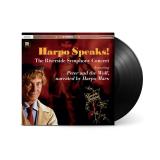
On March 20, 1964, legendary American comedian and harpist Harpo Marx joined the Riverside Symphony on stage at a benefit for the Southern California organization. By then, the comic had been in semi-retirement, and after a series of heart attacks in 1961, he was told to stop working altogether. But to a lifelong performer, nothing compared to the feeling of being on stage. Benefit shows, he slyly argued, were not technically work, since he wasn’t getting paid. For the next few years, Marx’s wife and doctors grudgingly went along with the pitch. Harpo Speaks! The Riverside Symphony Concert, out June 5 from Ramseur Records, captures a considerably remarkable, one-of-a-kind performance: The silent Marx Brother, the one whose trademark persona led many audiences to believe he was actually mute, spoke. As Harpo Marx’s first, and last—recorded just six months before his death—live album, Harpo Speaks! places listeners in the room, immersed in the swell of the Riverside Orchestra as Marx performs alongside the symphony and leads them in a narration of Peter and the Wolf. In another unusual move for Marx, he allowed the recording of the show for posterity, though the tapes seemingly disappeared after his death. Harpo Speaks! is the result of heroic archival work. Recently discovered by longtime Marx Brother archivist John Tefteller, he and Marx biographer and expert Robert Bader set out to restore the long lost recording. “The fact that we have a recording is a miracle,” says Bader. “It was not the most professionally recorded thing.
It was very haphazard. The work that was done to rehabilitate it is stunning. It’s as if you’ve found something covered with layers of mold and dirt, got it all cleaned off, and now are able to see something brand new underneath it.” Across the recording’s near-43 minute runtime, Marx, alongside the Riverside Symphony, takes the cheering audience through the delightfully lighthearted “Toy Symphony” and carries them into the softly romantic “Moon Medley,” (a medley of “Fly Me to the Moon” and “How High the Moon,” arranged by his son Bill, alongside his own composition, “Moon Tune”) and a rare instrumental performance of his composition “Guardian Angels.” And then the concert’s true highlight: the near 22-minute long riveting narration of Peter and the Wolf. For the first time, Harpo reveals his voice: deep, yet soft-spoken, refined, yet still retaining the slightest hint of his New York City origin. And, in speaking, he entertained, getting laughs not just for his physical gags, but for the storytelling itself: the dramatic inflections in moments of suspense, the arch mischievousness, and tongue-in-cheek references to Goldwater, Rockefeller, and Nixon.
dovrebbe essere pubblicato su 05.06.2026
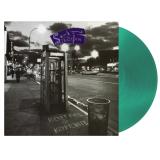
Definition of spin doctor: a spokesperson employed to give a favorable interpretation of events to the media, especially on behalf of a political party. Spin Doctors weren't part of a political party but spread the word about romance.
The band was formed in New York City, best known for their early 1990s hits "Two Princes" and "Little Miss Can't Be Wrong". Those 2 songs were hits all over the world, and are still big hits in the streaming era. Pocket Full of Kryptonite is the first studio album (and second release) by the Spin Doctors, and originally released in August 1991.
The album was a top 10 hit in many countries, including the UK, Denmark, Germany, Norway and Sweden. It was the band's bestselling album and was certified 5x Platinum in the US. Not to be confused with the 3 Doors Down song 'Kryptonite' from 2000, the Superman theme was all over the Spin Doctors' album, with the title, a song called "Jimmy Olsen's Blues" and the album cover showing a phone booth (referring to Clark Kent frequently ducking into a nearby phone booth to change into his Superman attire).
This pressing of Pocket Full of Kryptonite is a limited 35th anniversary edition of 4,000 individually numbered copies on green vinyl. The jacket has a deluxe leather-texture laminate finish.
dovrebbe essere pubblicato su 05.06.2026
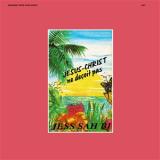
Jess Sah Bi is well-known as half of the legendary duo Jess Sah Bi & Peter One who brought homegrown Country-Americana to the West African masses with their smash debut Our Garden Needs Its Flowers in the mid-1980s. Touring stadiums and reaching listeners worldwide, their music has racked up millions of spins on YouTube and remains imprinted in the hearts of Ivorians of a certain age. ATFA reissued their album in 2018, garnering critical acclaim from publications including Pitchfork and Rolling Stone and reaching a new generation of listeners outside Ivory Coast (Cote d'Ivoire). Sometime in the early 90s, Die Sahbi - or Jesse, as he known to friends-became gravely ill with an unknown ailment and almost died. He visited various doctors and all kinds of religious healers and nothing helped. One day he went down to an Evangelical Christian revival in his neighborhood. They prayed over him and he was delivered. He says, "Their prayers helped chase out whatever demons and unhealthy spirits were inside me. After that my illness went away. When I went to the United States a few months later on an exchange program I wanted to make music to thank God because I was saved." He recorded an album of music praising God in order to honor a promise he made to himself at the depths of his desperation in the hospital. The album Jesus-Christ Ne Deçoit Pas Jesus Christ Does Not Let Us Down came out in 1991 and sold around 3000 cassettes in Ivory Coast. The master tape was lost along the way so the recording has never been on digital platforms until now. Jesse didn't have much time to record while visiting South Carolina, hence the relatively short album, 6 songs including two reprises for filler. A local pastor connected him with a studio and some American musicians (Robert Fortner and Gary Davis) to help. They added acoustic guitar, percussion and keyboard accompaniment to Jesse's soaring French and Gouro vocals, harmonica and finger-picked acoustic. The resulting recording is deeply soothing and contemplative music that perfectly compliments the songs already embraced by millions. But he had to find the rest of the studio expenses-$600 total-which he secured drawing cartoons for UNICEF. Jesse is Ivory Coast's first political cartoonist, a vocation for which he was widely celebrated at the time. It also made him a few enemies which lead to him leaving the country permanently a few years later. Jesus-Christ Ne Deçoit Pas is Jess Sah Bi's first and only gospel album. Fortunately, fans responded with enthusiasm: widespread radio airplay and concerts followed, along with a growing solo profile in the country. The first big gospel artists in Ivory Coast were the duo Mathieu et Constance, who emerged in 1989. There was a bigger gospel music movement in English-speaking counties like Ghana and Nigeria (Christians make up roughly 40% of the population in Ivory Coast, slightly less than Muslims). Jesse didn't have any intention of working in Christian music but he realized, "You don't make music to make money-you want to send a message." In the years since Jesus-Christ's release, gospel music in Ivory Coast has grown to become a key part of music culture in the country. Spiritual music appears in community actives across the public and private spectrum from religious gatherings and parties to television broadcasts and music festivals. And, as it has evolved and indigenized locally, gospel music has picked up elements of traditional Ivorian music, reggae and soul. The album ultimately precipitated the demise of the duo, who were soon separated geographically as Peter One relocated to Nashville. He went on to become a nurse and release a successful solo album on Verve following the ATFA collaboration. Nowadays Jesse lives in the Bay Area and continues to record and perform music wherever and whenever he has the chance. He is publishing a new book of humorous cartoons in 2025 and his most recent album Never Give Up came out in 2020
Ordina ora e ordineremo l'articolo per te presso il nostro fornitore.

Faitiche welcomes a new artist: Christina Kubisch belongs to the first generation of sound artists. Her practice ranges from performances, concerts, to works with video and visual art, but she is best known for her sound installations and electro-acoustic compositions.
TUNING brings together three pieces by Christina Kubisch from different periods of her oeuvre. What they have in common is the way they transform sound phenomena originally considered “non-music” into compositions.
Jan Jelinek: Gaming in Silence (2024) is the most recent work on this compilation. It’s a collage of electromagnetic waves, voice, and abstract sound textures. How did this combination come about?
Christina Kubisch: Gaming was commissioned as a fixed-media composition for the Sound Dome at ZKM Karlsruhe. Since Resonances: The Electromagnetic Bodies Project (2005), I’ve been making recordings in the old and new server rooms at the ZKM and in their permanent collection of historical computer games. Computer games like Asteroids (Atari, 1979) and Poly-Play (VEB Polytechnik, 1986) have specially generated analogue electromagnetic waves that interest me in particular on account of their density, rhythms and textures. I originally studied painting and to me the work of composition often feels like painting an abstract picture. I alter my source material as little as possible, layering and overlapping until a distinctive sound space emerges. In recent pieces, I sometimes combine magnetic waves with field recordings or live instruments. In Gaming it’s my recording of a Chinese song about silence.
JJ: Two persons walking through a street in Madrid (2004) is a recording from your Electrical Walks series. Here we should give a brief explanation of one of your best known works: participants in an Electrical Walk move through public spaces wearing prepared headphones that allow them to receive electromagnetic waves from their surroundings – for example from security gates, ATMs or neon signs. They discover a situation that normally is inaudible to the human ear and they can actively shape it by choreographing their movements. I really admire this piece, not least because there’s no clear dividing line between participants and artist. What exactly do we hear in Two persons walking through a street in Madrid (2004)?
CK: With this early work, I wanted to understand what is heard by people participating in an Electrical Walk in the same place but moving in different ways. The Spanish composer Miguel Alvarez-Fernàndez and I set off from opposite ends of a major shopping street in Madrid, met briefly in the middle, and then continued to the end. We both recorded our walks and I then layered them over one another. You might call it a work of electromagnetic conceptualism.
JJ: Diapason (2009 version) is an installation that plays a composition based on sounds from fifteen tuning forks. This setting is audible in the recording: there’s no dramatic arc, no beginning or end – instead, it recalls a piece of aleatoric music focussing on the decay phase. How did you come to make this work and could you tell us something about your compositional method?
CK: Diapason is part of a series of three pieces that deal with “non-instruments” or instruments that no longer exist: electrical mine bells used to send signals to the workers underground; a historical glass harmonica originally used for medicinal purposes; and tuning forks that were used by doctors to test people’s hearing. All of these methods are no longer in use. The sound of the tuning forks, audible only if held close to the ear, was recorded at the electronic studio at Berlin’s Technical University in such a way that even their decay remained audible. The frequencies range between 64 and 2048 Hertz and they can be adjusted at micro-intervals using small movable weights. The sequence and the duration of the pauses are dictated by chance and were not defined in advance. The 2009 version was created for an installation in the historic Holy Cross Church (Korskirken) in Bergen. Visitors could enter and leave the space at any time, deciding for themselves where and for how long they wished to listen to the sounds played back over an array of small loudspeakers placed on the floor of the apse.
Credits:
Gaming in Silence: commission of the ZKM/Hertzlab, Karlsruhe 2023
elektronic sound processing: Tom Thiel
sound engineering and mixing: Eckehard Güther
Diapason: produced at Elektronisches Studio of TU Berlin
rearrangement: Eckehard Güther
Christina Kubisch, published by Edition Christina Kubisch / Random Musick Publishing
image front: Transitionen 2021 by C. Kubisch, sonagrams of electronic waves (courtesy: Galerie Mazzoli Berlin)
image back: Diapason Tuning Fork, property of Folkmar Hein, Photo: Archiv Christina Kubisch
design by Tim Tetzner
mastered by Giuseppe Ielasi
Thanks to Miguel Álvarez-Fernández, Folkmar Hein, Dominik Kautz and Mario Mazzoli
dovrebbe essere pubblicato su 17.04.2026
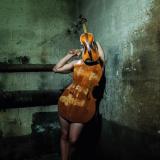
With two albums released—and a third arriving—in less than two years, Agitator are as ferocious in their release pace as they are on stage. All the more surprising, then, that the forthcoming album "Året av sex" is the darkest and slowest work they have made to date. Influenced as much by chanting witch doctors as by Christian Kjellvander and Leonard Cohen, and drawing from electronic and avant-garde music, the band reshapes its sound into something more brooding and expansive.
Partly recorded in a barn on the island of Öland, the album’s soundscape sees the drum kit augmented—and at times replaced—by scrap metal found in a nearby bay. Through this process, Agitator expand the idea of both what a creative process can be and what a rock band might look like in 2026. The result is bold, unsettling, and compelling: an album that digs deeper than many are willing to in Sweden today.
The lyrics on "Året av sex" are darker, more dangerous, and more precise than ever before. Given greater space within the broader sonic landscape, they become central to understanding this new incarnation of Agitator.
Agitator’s new album is released on March 27 via Adrian Recordings, preceded by three singles. The band’s first two albums have previously been praised by outlets including Dagens Nyheter, P3, Gaffa, Café, and PSL, leading to sold-out tours. A full Swedish tour is scheduled in connection with the album release.
dovrebbe essere pubblicato su 03.04.2026

Here we have two luminaries of contemporary music, vocalist Audrey Chen and iconoclast guitar player Tashi Dorji, who both have proven themselves as key representatives of idiosyncratic music for the past 20 plus years.
Audrey, born into a family of material scientists, doctors and engineers, channeled those family genes through un-processed hyperextended voice, consequently transmutating her family's DNA into her very own sonic language of equal precision, discipline and creative power as her kins' professions.
Tashi, on the other hand, carries the mountains in his spirit: born in Bhutan, Southeast Asia, now residing in Ashville, North Carolina, close to the Appalachians. That earthly power is unmistakably present in his energetic guitar playing, which also incorporates folkloric elements of both his native country, and his homeland since 2000.
Those two strong musical personalities met on stage in the late summer of 2023 at Morphine Raum, Berlin. The fact that it took place in one of the birthplaces of techno music, seems to have pushed their performance towards an industrial, repetitive aesthetic of, at times, almost dancelike quality. However, as the track titles suggest, that classic forward pulsating rhythm, associated with electronic dance music, is bent at their heart's content, as are its appertaining clean melodies gnashed to smithereens.
dovrebbe essere pubblicato su 06.03.2026

lim. Colored Vinyl Edition (Oxblood)
Part 2 of our series of official reworks of The Warmer Music catalogue
For this new 12 Inch we are still in the warm Michael Franks land. A full MF compilation will be coming later.
After our first 12 Inch with DoctorSoul Reworks, we now return with more smooth, high class Edits/Reworks by 3 outstanding modern producers of soulful/jazzy dance vibes.
Michale Franks is one of the most prolific musicians of the Californian Westcoast/Jazz/AOR/Yacht scene, the one and only Michael Franks, who approved personally the new version. Over the languorous course of 33 years and 16 albums, Michael Franks has mesmerized an international legion of fans with his one-of-a-kind artistry. Seamlessly weaving lyrics of stunning sensuality, wit, reflection and literary eloquence over music that tastefully utilizes top shelf shadings of jazz, soul, pop, chamber and music from around the globe. His music was covered by countless international stars, like The Carpenters, Shirley Bassey, Rin
Ordina ora e ordineremo l'articolo per te presso il nostro fornitore.

“I cross the void beyond the mind. The empty space that circles time... Eternal wisdom is my guide. I am the Doctor!” Demon Records celebrates Jon Pertwee’s flamboyant portrayal of the famous Time Lord, 55 years after he made his screen debut on 3 January 1970. Available on Blue and 4 x Blue and Green Vinyl, with a beautifully illustrated cover, this set presents Jon Pertwee narrating two classic Doctor Who Target Books, an array of bonus Jon Pertwee audio appearances, and his own 1972 pop single, Who Is The Doctor? Doctor Who and the Curse of Peladon is Brian Hayles’ abridged TV novelisation set on a medieval-style world, and Doctor Who and the Planet of the Daleks is Terrance Dicks’s abridged adaptation of the Terry Nation adventure set on the jungle-like Spiridon. Bonus features are also included on each disc spanning the 1970s to the 1990s, including BBC radio interviews, a Goodwood Races sketch with Elisabeth Sladen, comedy featuring Mel Giedroyc, and tributes paid by family members and Doctor Who producers. This also includes a frameable photographic print of the Third Doctor. Accompanied by the BBC Radiophonic Workshop’s familiar Doctor Who theme, the Jon Pertwee Collection celebrates one of the most stylish, iconic and beloved Doctors of all
dovrebbe essere pubblicato su 15.07.2025

First ever release of pioneering radiophonic / experimental / electronic / soundtrack composer you may never have heard of but really should have by now. 26 tracks in all.
As we began the mammoth task of whittling down material for this album Elizabeth recalled the time she met Delia Derbyshire. It was during a party for existing and former Radiophonic Workshop composers at BBC Maida Vale in the early 1980s. Delia introduced herself with typical energy and exuberance proclaiming "It's up to you now - I'm passing the baton. Show these men how we get things done". That must have been quite an honour and responsibility for a young, female composer establishing herself within the male-dominated environs at Delaware Road.
Looking back over a musical career spanning almost five decades, it's clear Elizabeth rose to the challenge and made her mark. She was consistently in demand with television and radio producers, composing for an array of ground-breaking, critically acclaimed and popular BBC projects. Whilst Delia's legacy has achieved mythical status with her position as an innovator and feminist icon secured, the majority of Elizabeth's recorded work remains unavailable so her contribution to the output of the Workshop and evolution of British electronic music is somewhat under-appreciated.
Perhaps this record will help start to remedy the situation. Included are early tape experiments, home demos and non-BBC commissions from the early 1970's to the late 2000s. Having listened to 260+ digital audio tapes from Elizabeth's personal archive we have barely scratched the surface but hope to provide an indication of the breadth of her compositional and sound design skills.
Classically trained in cello and piano, Elizabeth graduated from the University of East Anglia with a degree in Music in 1973. She was mentored by Tristram Cary who helped her to become UEA's first recipient of a Masters in Electronic Music and later awarded an Honorary Doctorate by Staffordshire University. Joining the BBC as a studio manager in 1975, Elizabeth transferred to the Radiophonic Workshop in 1978. One of her first tasks was to create special sound effects for Blake's 7 using tape loops, the EMS 100 and trusted VCS3.
Her celebrated score for The Living Planet in 1982 featured early use of the PPG synthesizer and earned an Emmy nomination. Over the following years studio technology evolved rapidly, but Elizabeth transitioned from analogue recording techniques to newer digital platforms with relative ease, using samplers, midi sequencing and computer controlled workstations.
With an incredible 1,400 commissions to her name, she created special sound for The Day Of The Triffids, Lord Of The Rings, countless radio dramas including Iris Murdoch's The Sea, The Sea, Harold Pinter's Moonlight, all of Howard Barker's plays, productions of King Lear, Wordsworth's Prelude and The Pallisers. The success of The Living Planet led to further work for the BBC Natural History Unit followed by numerous commissions for The Natural World. At one point in the late 1980's at least five of her signature tunes were being broadcast every week including Points Of View, Horizon, Doctors To Be and Everyman.
After the closure of the Workshop in 1996 Elizabeth became freelance, arranging Faure's Pavane for the BBC World Cup '98 coverage (reaching no. 9 in the UK singles chart). She wrote additional music for Monty Python's Holy Grail DVD, scored Michael Palin's Full Circle and Sahara TV series, The Lost Gardens Of Heligan and The Human Body with Robert Winston.
Retiring from the music industry in the late 2000's, Elizabeth recently returned to her East Anglian roots and now lives near the coast. She walks daily, listening to all kinds of music, new and old, on her beloved air-pods.
Ordina ora e ordineremo l'articolo per te presso il nostro fornitore.

Jess Sah Bi is well-known as half of the legendary duo Jess Sah Bi & Peter One who brought homegrown Country-Americana to the West African masses with their smash debut Our Garden Needs Its Flowers in the mid-1980s. Touring stadiums and reaching listeners worldwide, their music has racked up millions of spins on YouTube and remains imprinted in the hearts of Ivorians of a certain age. ATFA reissued their album in 2018, garnering critical acclaim from publications including Pitchfork and Rolling Stone and reaching a new generation of listeners outside Ivory Coast (Cote d'Ivoire). Sometime in the early 90s, Die Sahbi - or Jesse, as he known to friends-became gravely ill with an unknown ailment and almost died. He visited various doctors and all kinds of religious healers and nothing helped. One day he went down to an Evangelical Christian revival in his neighborhood. They prayed over him and he was delivered. He says, "Their prayers helped chase out whatever demons and unhealthy spirits were inside me. After that my illness went away. When I went to the United States a few months later on an exchange program I wanted to make music to thank God because I was saved." He recorded an album of music praising God in order to honor a promise he made to himself at the depths of his desperation in the hospital. The album Jesus-Christ Ne Deçoit Pas Jesus Christ Does Not Let Us Down came out in 1991 and sold around 3000 cassettes in Ivory Coast. The master tape was lost along the way so the recording has never been on digital platforms until now. Jesse didn't have much time to record while visiting South Carolina, hence the relatively short album, 6 songs including two reprises for filler. A local pastor connected him with a studio and some American musicians (Robert Fortner and Gary Davis) to help. They added acoustic guitar, percussion and keyboard accompaniment to Jesse's soaring French and Gouro vocals, harmonica and finger-picked acoustic. The resulting recording is deeply soothing and contemplative music that perfectly compliments the songs already embraced by millions. But he had to find the rest of the studio expenses-$600 total-which he secured drawing cartoons for UNICEF. Jesse is Ivory Coast's first political cartoonist, a vocation for which he was widely celebrated at the time. It also made him a few enemies which lead to him leaving the country permanently a few years later. Jesus-Christ Ne Deçoit Pas is Jess Sah Bi's first and only gospel album. Fortunately, fans responded with enthusiasm: widespread radio airplay and concerts followed, along with a growing solo profile in the country. The first big gospel artists in Ivory Coast were the duo Mathieu et Constance, who emerged in 1989. There was a bigger gospel music movement in English-speaking counties like Ghana and Nigeria (Christians make up roughly 40% of the population in Ivory Coast, slightly less than Muslims). Jesse didn't have any intention of working in Christian music but he realized, "You don't make music to make money-you want to send a message." In the years since Jesus-Christ's release, gospel music in Ivory Coast has grown to become a key part of music culture in the country. Spiritual music appears in community actives across the public and private spectrum from religious gatherings and parties to television broadcasts and music festivals. And, as it has evolved and indigenized locally, gospel music has picked up elements of traditional Ivorian music, reggae and soul. The album ultimately precipitated the demise of the duo, who were soon separated geographically as Peter One relocated to Nashville. He went on to become a nurse and release a successful solo album on Verve following the ATFA collaboration. Nowadays Jesse lives in the Bay Area and continues to record and perform music wherever and whenever he has the chance. He is publishing a new book of humorous cartoons in 2025 and his most recent album Never Give Up came out in 2020
Ordina ora e ordineremo l'articolo per te presso il nostro fornitore.

Following the launch of his new music label, Early Morning, in September 2024, Guy J sets the stage for its sophomore release-an immersive two-track concept by acclaimed producer Roy Rosenfeld.
Roy, an artist whose productions often transcend genre boundaries, offers near-17-minute material with an imaginative work that captures attention and a creative depth.
The opening track, "Forgotten," evolves with a measured intensity, layering elements that cultivate a ritualistic atmosphere. The arrangement unfolds through indigenous-percussive influences, steadily progressing towards a resonant climax. By the third act, rich, deep chords punctuate the experience with a sense of calm, only to transition into a melodic break followed by the tribal-inspired crescendo.
Equally compelling, the closing "Hello" begins with an 80s arcade-inspired, lo-fi aesthetic juxtaposed against high-fidelity beats. Driven by ethnic percussion, it conjures the raw energy of ancient rituals, evoking primal imagery of witch doctors dancing around fires to honor the cycles of life.
Here, Rosenfeld merges traditional, futuristic, and vintage synth elements in a call to fellow producers, challenging them to innovate while empowering dancers to embrace nights of hedonistic freedom.
Ordina ora e ordineremo l'articolo per te presso il nostro fornitore.

Zel Zele is thrilled to announce the first-time vinyl issue of Turkish improv band ZeN's iconic album "Bakırköy Akıl Hastanesi'nde". Performed live in Istanbul's Bakırköy Psychiatric Hospital for an audience of patients, doctors and visitors, this exceptional recording offers an entrancing blend of krautrock, psychedelic and free anatolian sounds.
dovrebbe essere pubblicato su 20.12.2024

. For Fans Of: The Weather Station, Weyes Blood, Adrianne Lenker, Phoebe Bridgers, Joan Shelley, Lana Del Rey, Cass McCombs, Angel Olsen & Neil Young. Camelot, the legendary seat of King Arthur’s court in Early Middle Ages Britain, was probably not a real place. A corruption of the name of a real Romano-Briton city, the word “Camelot” accumulated symbolic, mythic resonances over centuries, until achieving its present usage as a near-synonym of “utopia.” In the mid-20th century alone, Camelot inspired an explosion of representations and appropriations, among them the violent, affectless Arthurian court of Robert Bresson’s 1974 film Lancelot du Lac and the absurdist iteration of Monty Python’s 1975 Holy Grail, both of which feature armoured knights erupting into fountains of blood; the mystical Welsh world of novelist John Cowper Powys’s profoundly weird 1951 novel Porius, with its Roman cults, wizards and witches, and wanton giants; and the nationalist nostalgia of President John F. Kennedy’s White House. Unsurprisingly there are fewer Camelots in more recent memory. Camelot, Canadian songwriter Jennifer Castle’s extraordinary, moving 2024 chronicle of the artist in early middle age, charts a realer, more rooted, and more metaphorical place than the fabled Camelot of the Early Middle Ages (or its myriad depictions), but it too is a space more psychic than physical. In Castle’s Camelot, the fantastic interpenetrates the mundane, and the Grail, if there is one, distills everyday experience into art and art into faith, subliming terrestrial concerns into sublime celestial prayers to Mother Nature, and to the unfolding process of perfecting imperfection in one’s own nature. Co-produced by Jennifer and longtime collaborator Jeff McMurrich, her seventh record is at once her most monumental and unguarded to date, demonstrating a mastery of rendering her verse and melodies alike with crisply poignant economy. For all their pointedly plainspoken lyrical detail and exhilarating full-band musical flourishes, these songs sound inevitable, eternal as morning devotions. “Back in Camelot,” she sings on the lilting, vulnerable title track, “I really learned a lot / circles in the crops and / sky-high geometry.” The album opens with a candid admission of sleeping “in the unfinished basement,” an embarrassing joke that comes true. But the dreamer is redeemed by dreaming, setting sail in her airborne bed above “sirens and desert deities.” If she questions her own agency whether she is “wishing stones were standing” or just “pissing in the wind” it does not diminish the ineffable existential jolt of such signs and wonders. This abiding tension between belief and doubt, magic and pragmatism, self and other, sacred and profane, and even, arguably, paganism and monotheism, suffuses these ten songs, which limn an interior landscape shot through with sunstriped shadows of “multi-felt dimensions” both mystical and quotidian. The epic scale and transport of “Camelot,” with its swooning strings, gives way dramatically to “Some Friends,” an acoustic-guitar-and-vocals meditation in miniature on Janus-faced friends and the lunar and solar temperatures of their promises—“bright and beaming verses” versus hot curses which recalls her minimalist last album, 2020’s achingly intimate Monarch Season. (In a symmetrical sequencing gesture, the penultimate track, the incantatory “Earthsong,” bookends the central six with a similarly spare solo performance and coiled chord progression, this time an ambiguous appeal to … a wounded lover? a wounded saint? our wounded planet?). Those whom “Trust” accuses of treacherous oaths spit through “gilded and golden tooth” cynics, critics, hypocrites, gurus, scientists, doctors, lovers, government, the so-called entertainment industry sow uncertainty that can infect the artist, as in “Louis”: “What’s that dance / and can it be done? What’s that song / and can it be sung?” Answering affirmatively are “Lucky #8,” an irrepressible ode to dancing as a bulwark against the “tidal pools of pain” and the “theory of collapse,” and “Full Moon in Leo,” which finds the narrator dancing around the house with a broom, wearing nothing but her underwear and “big hair.” But the central question remains: who can we trust, and at what cost faith, in art or angels or otherwise? Castle’s confidence in her collaborators is the cornerstone of Camelot. Carl Didur (piano and keys), Evan Cartwright (drums and percussion), and steadfast sideman Mike Smith (bass) comprise a rhythm section of exquisite delicacy and depth. This fundamental trio anchors the airiness of regular backing vocalists Victoria Cheong and Isla Craig and frames the guitars of Castle, McMurrich, and Paul Mortimer (and on “Lucky #8,” special guest Cass McCombs). Reprising his decennial role on Castle’s beloved 2014 Pink City, Owen Pallett arranged the strings for Estonia’s FAMES Skopje Studio Orchestra. On the ravishing country-soul ballad “Blowing Kisses” Pallett’s crowning achievement here, which can be heard in its entirety in the penultimate episode of the third season of FX’s The Bear Jennifer contemplates time and presence, love and prayer and how songwriting and poetry both manifest and limit all four dimensions: “No words to fumble with / I’m not a beggar to language any longer.” Such rare moments of speechlessness “I’m so fucking honoured,” she bluntly proclaims suggest a state “only a god could come up with.” (If Camelot affirms Castle as one of the great song-poets of her generation, she is not immune to the despairing linguistic beggary that plagues all writers.) Camelot evinces a thoroughgoing faith not only in the natural world including human bodies, which can, miraculously, dance and swim and bleed and embrace and birth but also in our interpretations of and interventions in it: the “charts and diagrams” of “Lucky #8,” a daydreamt billboard on Fairfax Ave. in LA in “Full Moon in Leo,” the bloody invocations of the organ-stained “Mary Miracle,” and all manner of water worship, rivers in particular. (Notably, Jennifer has worked as a farmer and a doula.) The album ends with “Fractal Canyon”s repeated, exalted insistence that she’s “not alone here.” But where is here? The word “utopia” itself constitutes a pun, indicating in its ambiguous first syllable both the Greek “eutopia,” or “good-place” the facet most remembered today and “outopia,” or “no-place,” a negative, impossible geography of the mind. Utopia, like its metonym Camelot, is imaginary
dovrebbe essere pubblicato su 01.11.2024
Camelot, the legendary seat of King Arthur's court in Early Middle Ages Britain, was probably not a real place. A corruption of the name of a real Romano-Briton city, the word "Camelot" accumulated symbolic, mythic resonances over centuries, until achieving its present usage as a near-synonym of "utopia." In the mid-20th century alone, Camelot inspired an explosion of representations and appropriations, among them the violent, affectless Arthurian court of Robert Bresson's 1974 film Lancelot du Lac and the absurdist iteration of Monty Python's 1975 Holy Grail, both of which feature armored knights erupting into fountains of blood; the mystical Welsh world of novelist John Cowper Powys's profoundly weird 1951 novel Porius, with its Roman cults, wizards and witches, and wanton giants; and the nationalist nostalgia of President John F. Kennedy's White House. Unsurprisingly there are fewer Camelots in more recent memory. Camelot, Canadian songwriter Jennifer Castle's extraordinary, moving 2024 chronicle of the artist in early middle age, charts a realer, more rooted, and more metaphorical place than the fabled Camelot of the Early Middle Ages (or its myriad depictions), but it too is a space more psychic than physical. In Castle's Camelot, the fantastic interpenetrates the mundane, and the Grail, if there is one, distills everyday experience into art and art into faith, subliming terrestrial concerns into sublime celestial prayers to Mother Nature, and to the unfolding process of perfecting imperfection in one's own nature. Co-produced by Jennifer and longtime collaborator Jeff McMurrich, her seventh record is at once her most monumental and unguarded to date, demonstrating a mastery of rendering her verse and melodies alike with crisply poignant economy. For all their pointedly plainspoken lyrical detail and exhilarating full-band musical flourishes, these songs sound inevitable, eternal as morning devotions. "Back in Camelot," she sings on the lilting, vulnerable title track, "I really learned a lot / circles in the crops and / sky-high geometry." The album opens with a candid admission of sleeping "in the unfinished basement," an embarrassing joke that comes true. But the dreamer is redeemed by dreaming, setting sail in her airborne bed above "sirens and desert deities." If she questions her own agency_whether she is "wishing stones were standing" or just "pissing in the wind"_it does not diminish the ineffable existential jolt of such signs and wonders. This abiding tension between belief and doubt, magic and pragmatism, self and other, sacred and profane, and even, arguably, paganism and monotheism, suffuses these ten songs, which limn an interior landscape shot through with sunstriped shadows of "multi-felt dimensions" both mystical and quotidian. The epic scale and transport of "Camelot," with its swooning strings, gives way dramatically to "Some Friends," an acoustic-guitar-and-vocals meditation in miniature on Janus-faced friends and the lunar and solar temperatures of their promises_"bright and beaming verses" versus hot curses_which recalls her minimalist last album, 2020's achingly intimate Monarch Season. (In a symmetrical sequencing gesture, the penultimate track, the incantatory "Earthsong," bookends the central six with a similarly spare solo performance and coiled chord progression, this time an ambiguous appeal to _ a wounded lover? a wounded saint? our wounded planet?) Those whom "Trust" accuses of treacherous oaths spit through "gilded and golden tooth"_cynics, critics, hypocrites, gurus, scientists, doctors, lovers, government, the so-called entertainment industry_sow uncertainty that can infect the artist, as in "Louis": "What's that dance / and can it be done? What's that song / and can it be sung?" Answering affirmatively are "Lucky #8," an irrepressible ode to dancing as a bulwark against the "tidal pools of pain" and the "theory of collapse," and "Full Moon in Leo," which finds the narrator dancing around the house with a broom, wearing nothing but her underwear and "big hair." But the central question remains: who can we trust, and at what cost faith, in art or angels or otherwise? Castle's confidence in her collaborators is the cornerstone of Camelot. Carl Didur (piano and keys), Evan Cartwright (drums and percussion), and steadfast sideman Mike Smith (bass) comprise a rhythm section of exquisite delicacy and depth. This fundamental trio anchors the airiness of regular backing vocalists Victoria Cheong and Isla Craig and frames the guitars of Castle, McMurrich, and Paul Mortimer (and on "Lucky #8," special guest Cass McCombs). Reprising his decennial role on Castle's beloved 2014 Pink City, Owen Pallett arranged the strings for Estonia's FAMES Skopje Studio Orchestra. On the ravishing country-soul ballad "Blowing Kisses"_Pallett's crowning achievement here, which can be heard in its entirety in the penultimate episode of the third season of FX's The Bear_Jennifer contemplates time and presence, love and prayer_and how songwriting and poetry both manifest and limit all four dimensions: "No words to fumble with / I'm not a beggar to language any longer." Such rare moments of speechlessness_"I'm so fucking honoured," she bluntly proclaims_suggest a state "only a god could come up with." (If Camelot affirms Castle as one of the great song-poets of her generation, she is not immune to the despairing linguistic beggary that plagues all writers.) Camelot evinces a thoroughgoing faith not only in the natural world_including human bodies, which can, miraculously, dance and swim and bleed and embrace and birth_but also in our interpretations of and interventions in it: the "charts and diagrams" of "Lucky #8," a daydreamt billboard on Fairfax Ave. in LA in "Full Moon in Leo," the bloody invocations of the organ-stained "Mary Miracle," and all manner of water worship, rivers in particular. (Notably, Jennifer has worked as a farmer and a doula.) The album ends with "Fractal Canyon"'s repeated, exalted insistence that she's "not alone here." But where is here? The word "utopia" itself constitutes a pun, indicating in its ambiguous first syllable both the Greek "eutopia," or "good-place"_the facet most remembered today_and "outopia," or "no-place," a negative, impossible geography of the mind. Utopia, like its metonym Camelot, is imaginary. Or as fellow Canadian songwriter Neil Young once sang, "Everyone knows this is nowhere." "Can you see how I'd be tempted," Castle asks out of nowhere, held in the mystery, "to pretend I'm not alone and let the memory bend?"
dovrebbe essere pubblicato su 01.11.2024

In August 2019, he collapsed on stage due to a hemorrhagic stroke, and doctors told him he might never perform again. After undergoing a series of operations to repair his Arteriovenous Malformation (AVM) and months of physiotherapy, White has proved them wrong, embarking on a nation-wide tour in support of his 2021 release 'The Optimystic'. New songs "Power of a Woman" and "Hurts the Healing" are the latest tastes of new music from White, who has received accolades including Rolling Stone's 10 Country Artists You Need to Know, The Grammy's Artist of Tomorrow and the British CMA Awards' International Song of the Year. He has shared the bill with Country music superstars like Luke Bryan, Eric Church and Zac Brown Band. In the summer of 2023, White went to a Rienzi, Mississippi studio with producer Jonathan Singleton to record his third full-length record, Low Country High Road
dovrebbe essere pubblicato su 18.10.2024

Ordina ora e ordineremo l'articolo per te presso il nostro fornitore.

Waterloo To Anywhere is the debut album from the short-lived, briefly adored Dirty Pretty Things - Originally released on Vertigo Records in May 2006, the album reached No 3 in the UK charts and spawned three Top 40 singles - This re-issue is pressed on high-quality 180g black vinyl. What do you do after being in the Libertines, one of the most notorious British bands of the early 21st Century? For Carl Bart, you form Dirty Pretty Things, something of an indie supergroup of their moment. Joining Bart was Libertines drummer Gary Powell, guitarist Anthony Rossomando, who'd stood in for Doherty, and former Cooper Temple Clause bassist, Didz Hammond. Leading Waterloo To Anywhere was the infectious UK Top 5 hit Bang Bang You're Dead, which set the tone for the fabulous collection of rock, punk and ska. Recorded in Los Angeles with producer Dave Sardy and then later in Glasgow with Tony Doogan, the album showed the strength of the group's writing. Away from the standard high-octane indie of Gin & Milk and You F*cking Love It, The Gentry Cove was particularly captivating, marrying Bart's fascinating wordplay with robust Clash reggae/sea shanty interludes. Two years later, it was all over; Bart and Powell rejoined the Libertines (and Rossomando later going on to win an Oscar for co-writing Shallow from the film A Star Is Born).
dovrebbe essere pubblicato su 07.06.2024

Carol Douglas is an American singer known for her contributions to the disco music scene in the 1970s.
During this time, she was signed with Bob Reno's Midland Records where she recorded a string of successful hits, including “Doctor’s Orders”.
This new compilation record showcases the best of Reno's four-to-the-floor 70s productions and remixes, remastered and pressed on fluorescent pink vinyl.
dovrebbe essere pubblicato su 31.05.2024

Alternative Hip Hop Artist Rebel ACA Channels his Pain in "Migraine" ft. Spragga Benz, Rodney P
LONDON - The word "migraine" can make you twinge, especially if you experience the pounding head, vertigo, and tinnitus associated with migraines. Imagine if you put all those feelings into music - that is what Rebel ACA did with his latest single, "Migraine."
Rebel ACA's new single flows through his twenty-year journey of advising on international tax by day and rapping and producing by night. Perhaps, the ACA stands for his accounting qualification.
Dropping in April, there will be two versions, an original version and a DJ Phantasy Remix of "Migraine" on streaming platforms. Depending on the version, "Migraine" is a musical representation of a severe headache. The drum and bass mix features a funky, constant drone throughout the track, while the original version is a funk-latent hip-hop song.
"I suffer very badly from migraines every week," said Rebel ACA. "To me, it was logical to write a song about migraines. The lyrics talk about what it feels like by using synthesizers to bring out the feeling of a migraine."
Joining Rebel ACA on the single is Spragga Benz and Rodney P. The duo shares their thoughts on using marijuana to cure a migraine. While Rebel ACA acknowledges he is not a medical doctor, studies have shown that smoking weed can reduce migraine pain.
"We talk about smoking weed to fight the migraine," he said. "The lyrics revolve around what it feels like to have one in your head. Doctors have told me that migraines are caused by triggers like alcohol and getting f*cked up. Then you get a migraine and now you get more f*cked up on pills or weed to feel better." This revolving cycle spirals throughout the single.
Born and raised in the UK, Rebel ACA experienced London's musical melting pot from birth. Hailing from northwest London, he was exposed to the rich Caribbean influence and massive underground music scene.
From squat parties to illegal raves, London's music was all mashed up, and Rebel ACA soaked up every genre and cultural influence. As a result, he is a successful singer/songwriter/producer who fuses hip hop, reggae, and indie sounds to create his unique style.
"Where I come from, the UK hip hop is like the 90s hip hop in America," he stated. "There is a hip hop scene that talks about poetry. I'm trying to keep it real with my lyrics and talk about things that are important other than guns, money, and bitches."
Rebel ACA's music is versatile but uniquely his own by utilizing numerous live instruments and coming in hard with a big boom-bap sound. The Rebel ACA sound is born by adding a funk influence on his tracks aligned with funky bass. On "Migraine," he uses some vintage 70s French influence vibes to give the single a flavor of its own. There is nothing out there like "Migraine."
Rebel ACA records under Buttercuts Records, a company he owns and operates. The London-based production company has been "bashing out buttery beats" since 2000. Buttercuts Records is the go-to place for releasing hip hop, reggae, breaks, funk, soul, and folk records with a tongue-in-cheek attitude and marketing that surpasses witty wordplay.
As "Migraine" gains international attention, it is easy to understand how Rebel ACA combines old and new hip hop with effortless flows and brilliant lyrics. Maybe the world is ready for an international tax advisor who drops bars and vibes out to some wicked rhymes.
Make sure to stay connected to Rebel ACA on all platforms for new music, videos, and social posts.
a A1. DJ PHANTASY VOCAL MIXfeat. Rebel ACA
b A2. DJ PHANTASY DUB MIXfeat. Rebel ACA
[c] A3. DJ PHANTASY INSTRUMENTAL MIX [feat. Rebel ACA]
[d] B1. OLD KOOL F U NKY MIX [feat. Rebel ACA]
[e] B2. OLD KOOL F U NKY INSTRUMENTAL [feat. Rebel ACA]
[feat. Rebel ACA]
Ordina ora e ordineremo l'articolo per te presso il nostro fornitore.

The one arm keyboard luminary is well known in the entertainment circle of Western Jamaica. Born on the 2nd of March 1954, the accomplished singer and musician hails from Hayes, Clarendon. In 1969 he went to live in Kingston until 1973. Ancel's first effort in a recording studio was inside the popular Randy's in downtown Kingston. He did a single called 'Riding On' on the Musical Barber label out of Mandeville.
In 1977 he joined a group called Solid Foundation and stayed with them for two years. After that he moved to Montego Bay to sing with Stamma and the Sounds of Mobay, with who he appeared on Reggae Sunsplash festival in 1980.
Johnny made the move for the United States in 1982, and formed his first own band 'Uprisers' in Pittsburgh city.
One of the things he likes to talk about is how he once reunited the famed Clarendonians with Peter Austin and Ernest Wilson. Both pioneer icons were at irreconcilable odds with each other for quite some time. When he came back to Jamaica in 1985, he invited Ernest Wilson to do back-up vocals for him. For the same studio session, he also invited Peter Austin for the same back-up duties, and that was how the reunion came about. Inside famous Aquarius studio, there was Burning Spear's personal Band called Burning. The songs recorded there were 'Moving Out' and 'True Love' with top musicians : Tony Green on the saxophone, Bobby Ellis on the trumpet, Dwight Pinkney on the guitar, Calvin on percussion, Nelson Miller on the drums and Maurice Gordon on bass. This was not the first time Ancel was working with Peter Austin. When the split came in the ranks of the Clarendonians, Ancel was asked to fill the breach. He thus teamed up with Peter Austin and their first single together was entitled 'Out Of Sight'. They later entered the annual Jamaica Festival Song competition in 1975. Their entry was entitled 'Paradise On Earth' which Ancel said was quite popular. However, it was not popular enough to prevent the late Roman Stewart from copping the award with 'Hooray Festival'.
After the release of 'Moving Out', Johnny moved to Miami and continued his career as a solo artist, singing with different local bands. He did a number of singles, notably were 'Faith, Patience and Love' and 'Stand Back' for a producer called Jolly in Miami. In 1988 Powell formed his second band Benja, a band which gained increasing popularity in the time in South Florida. They have performed on several festivals, played in most major clubs and were a big success in Andros Island in the Bahamas for an audience who not necessarily consider Reggae their prime choice of music.
The saddest part of his life was when he lost his left hand to what doctors termed as a cancerous situation in 1977. This did not, however, stop him from learning how to play keyboards. Initially he was taught by the late Bobby Vaugh in Montego Bay and also got further teaching from jamaican saxophinist Reuben Alexander.
Now approaching 70 years old, Ancel is still very active in his music. In previous years he performed at the Marcus Garvey Celebration and is currently working with the “Synergy Band” at Royalton Hotel in Negril under the stage name “Ancel P.” Let the one arm keyboard luminary life and music live eternally !
Produced by Ancel "Johnny" Powell & Patricia Wallace
Engineer: Melvin Williams
Recorded at Aquarius Studio (Kingston, JA) in 1985
Bass: Maurice Gordon
Drums: Nelson Miller
Guitar: Dwight Pinkney
Saxophone: Tony Green
Trumpet: Bobby Ellis
Percussion: Calvin
Keyboards: Winston Wright
Backing vocals: Ernest Wilson & Peter Austin from the Clarendonians
Ordina ora e ordineremo l'articolo per te presso il nostro fornitore.

For Fans Of Temples, Allah-Las, Unknown Mortal Orchestra, Khruangbin, David Axelrod. Each song on Ghost Funk Orchestra's 3rd album, A New Kind of Love, due to be released on Colemine Records … 2022, resonates like the soundtrack to a scene from an imaginary movie. The music could score a romantic drama, an action thriller, or a modern twist on a classic film noir. The spare, cascading vocals accentuate the lush instrumental orchestrations composed, performed, arranged and produced by multi-instrumentalist Seth Applebaum, whose latest brainchild was conceived and conceptualized during The Great Pause of 2020, a time of tension, bewilderment and isolation. Evoking the grooviness of an era which preceded his arrival on earth, Applebaum draws upon sonic devices of mid-century exotica and the succinct but dense arranging style of the leaders of the pop orchestras which dominated the hit parades of the 60s and early 70s. He blends impressions of this bygone era with an expression of his actual experiences as a young filmmaker coming of age in the 21st century, citing influences such as Sharon Jones & The Dap Kings and Antibalas. A New Kind of Love encompasses a reverence for the past without attempting to recreate it. In the tradition of the "production forward" discographies of such record makers as David Axelrod and the Mizell Brothers, it's easy to visualize Applebaum as a "mad doctor" figure, hunkered down in a studio channeling this musical representation of his inner world into the 12 compositions which make up A New Kind of Love. His writing stretches his psyche to explore a terrain in which to capture emotional notes of love going well, love gone sour, manifesting love songs based in ghostly affairs. While the studio is obviously a wondrous happy place of experimentation and creativity for Applebaum, he's a band guy too (having actually fronted punk outfit The Mad Doctors). Applebaum has the wherewithal to bring his dreamy material to the 10 piece all star Ghost Funk Orchestra, leading them to breathe life into this sophisticated body of work which heralds the celebration of a new era for the group. Ghost Funk Orchestra will be touring in concert this summer and fall to celebrate the release of A New Kind of Love, an album which is sure to stand the test of time. Also Available From Ghost Funk Orch: Night Walker/Death Waltz LP/CD, Opaque Red LP, An Ode To Escapism LP/CD, A Song For Paul LP / CD 1. Introduction 2. Your Man's No Good 3. Scatter 4. Prism 5. Quiet Places 6. A New Kind Of Love (pt. 1) 7. Why? 8. Blockhead 9. A Song For Pearl 10. Bluebell 11. Rooted 12. A New Kind Of Love (pt. 2)
dovrebbe essere pubblicato su 28.10.2022

RIYL: Velvet Underground, Lou Reed, Nick Cave, Patti Smith, Leonard Cohen, Iggy Pop, Radiohead & Tom Waits. "If you have never heard the Doctors of Madness, you should. Musically they are the Velvet Underground, New York Dolls with shades of glam, hippie, prog and punk all rolled into one, yet are still totally original. Vastly underrated, they should have been huge. Pure genius" Vic Reeves…. The DOM are “the missing link between David Bowie & The Sex Pistols” (The Guardian May 2017). Exploding onto the music scene in 1975 with their theatrical, William Burroughs-inspired Sci-fi nightmare, they were misunderstood by many, but those who knew understood the importance of the band’s dangerous, uncompromising approach to lyrics, to music and to performance. Among the many fans of the band were acts as diverse as The Damned, Vic Reeves, Joe Elliott of Def Leppard, Spiritualized, Julian Cope, The Adverts, The Skids and Simple Minds. The Sex Pistols supported them, so did The Jam & Joy Division. They were the first to combine the avant-garde approach of The Velvet Underground with a distinctly European aesthetic. The blue hair, exotic stage-names, the lyrical themes of urban decay, political propaganda, mind control and madness were all taken up by the punk bands who followed in their wake. The DOM were trailblazers, pioneers, adventurers…pushing the boundaries of rock music and theatre to see how far it would go before it bust. What happened after them was due, in no small part, to what they achieved in 3 short years. They may not have been Jesus Christ, but they were, arguably, John the Baptist!!! Now, 40 years after they imploded, they are back…with an album seething with lyrical anger and passion. It is the most potent and incisive musical dissection of modern life and contemporary politics released the decade. With tracks titles like “So Many ways To Hurt You”, “Sour Hour”, “Make It Stop!” and the ground-breaking sonic assault of the title track “Dark Times”, Richard “Kid” Strange proves once again that he has his finger firmly on the pulse of our times, just as he had when he founded the band in 1974. Produced by John Leckie (Radiohead, Stone Roses, Pink Floyd), the new album, Dark Times, features contributions from Joe Elliott (Def Leppard), Sarah Jane Morris (Communards), Terry Edwards (PJ Harvey, Nick Cave etc), Steve ‘Boltz’ Bolton (The Who, Scott Walker) and the young protest singer Lily Bud, alongside the current thrilling and thunderous DOM rhythm section of Susumu Ukei (bass guitar) & Mackii Ukei (drums) of the Japanese extreme glam-metal band Sister Paul, and Dylan O Bates (violin and keyboards). Julian Cope, another rock star who, like Strange, found the confines of music too tight for his ambition, his energy and his imagination, was blown away when he first heard the songs, declaring, “These Dark Times are enormously informing: the RULES OF THE FUTURE are indeed being forged right now”. Top producer Martyn Ware (Human League/Heaven 17) said the album “…reminds me of Iggy Pop’s Kill City album – love it.” and Biba Kopf (The Wire) declared, “Still listening to new DOM album with immense interest and pleasure”. The first single, Make It Stop!, is an impassioned howl against the global drift to right wing extremism and persecution of minorities, and is already a live showstopper for the band. It features the thrilling cross-generational combination of Def Leppard’s Joe Elliott and Lily Bud on backing vocals. In the period since the last DOM gig in 1978, Richard has written a memoir, collaborated on a cantata with internationally celebrated composer Gavin Bryars, worked as an actor on films with Tim Burton, Martin Scorsese, Harmony Korine & Jack Nicholson, toured the world in a Russian version of Hamlet with James Nesbitt as his grave-digging co-star, played Glastonbury, sung baritone in the British premiere of Frank Zappa’s200 Motels at the Royal Festival Hall, directed a multi-media evening celebrating the life and work of William Burroughs, won Best Art Film Prize at the Portobello Film Festival last year, had his own live talk show, worked with Tom Waits and Marianne Faithfull on the William Burroughs/Robert Wilson stage play The Black Rider, curated events for the Tate Gallery, and sung Walt Disney songs with Jarvis Cocker.
dovrebbe essere pubblicato su 13.05.2022

Ex RSD LP on transparent red vinyl, gatefold sleeve with lyric inner sleeve and DL card. Final copies now reduced to £7.99. The tracks on this album have never been officially released before now. The eight songs on this album were recorded in 1978 on a 2-track stereo Revox A77 tape recorder. The recordings are unashamedly analogue, using one microphone and guitars plugged directly into the tape recorder. Bouncing down tracks irreversibly as they went on, forced to make creative decisions that could not be undone. Some hard choices had to be made with the mix, but with no record company meant no record company agenda. TV Smith & Richard Strange could write and record whatever they wanted – and did! It has been an enormous pleasure to rediscover these recordings, the result of a friendship of two artists emerging from broken bands and each about to embark on a lifelong adventure in words and music. TV SMITH - I wasn’t having a lot of fun in 1978 when Richard asked me to collaborate on a song he was writing called “Summer Fun.” I was in the final stages of songwriting for the second Adverts album “Cast Of Thousands,” a project that already seemed doomed to failure given an unenthusiastic record company, a band in the throes of falling apart, and a dwindling audience - but my creative juices were in full flow and I was ready for something different. I already knew Richard, of course, from the Doctors Of Madness, who I’d followed in the years before punk when I was still living in Devon and they were one of the few bands to come and play in the area. I considered them a warped poetic glam band with gothic leanings, and was slightly surprised when the song I’d been invited to work on turned out to be a kind of California surf pastiche. But I was game to get involved, and after we’d finished it and ventured forward with regular writing and recording sessions over the following weeks it soon became clear that “Summer Fun” was just a gateway drug, and the songs that were emerging from our combined forces were going to quickly become much deeper and much darker // RICHARD STRANGE - Watching the remnants of a musical dream being swept away by the juggernaut of corporate punk rock in 1976, I felt a combination of jealousy and resentment towards many of the key players who had been responsible for our demise. The Sex Pistols had supported my band Doctors of Madness early in their career and nicked not only our future but £12.00 from a pair of trousers in our dressing room in Middlesbrough Town Hall! The Jam, who supported us over four shows at London’s fabled Marquee Club, were how I imagined The Who would be if they’d joined the Young Conservatives. Warsaw, our go-to support band in Manchester, had just changed their name to Joy Division, and Johnny and the Self-Abusers, our Scottish flag wavers, had become Simple Minds. All were being feted by the all-powerful music press, while we were being buried. But there was one punk band for whom I never had anything but the greatest affection…The Adverts.
dovrebbe essere pubblicato su 13.05.2022

Questo articolo non è stato ancora rilasciato. È possibile pre-ordinare il prodotto ora.

ASESINO (Spanish for "assassin" or "murderer") is an American deathgrind supergroup and a side project of Fear Factory guitarist Dino Cazares. The band has featured members of Brujeria, Fear Factory, Sepultura, Sadistic Intent, Possessed, Ministry, and Static-X. ASESINO sometimes play Slayer covers live, most notably "Angel of Death" and "Raining Blood". As with Brujeria, the lyrics are sung entirely in Spanish and with the same subject matter of death, violence and perversion. Guitarist Asesino describes the band as "the new Brujeria." Asesino also has the tendency of making satirical comments during the show, and when playing Brujeria songs, change the original lyrics to something more fitting. ASESINO made a guest appearance as a group of Mexican doctors in episode 57 of ‘Metalocalypse' on 'Adult Swim'. ASESINO : ‘Cristo Satanico’ is the band most incisive, uncompromisingly horrific piece of work, now available with plenty of Exclusive studio and live bonus tracks. The band has been working on a new album for a 2022 release date.
dovrebbe essere pubblicato su 29.10.2021

Blind, Chicago soul singer Willie Williams was first discovered performing in clubs in and around the Windy City. He was signed to ABC records by their A&R Director for the Midwest Johnny Pate a former Jazz bassist, independent producer, arranger and songwriter in his own right. Pate was a friend and colleague of fellow musician, songwriter and founding member of one of ABC’s prolific vocal groups The Trends, Tom Dorsey. Pate and Dorsey would contribute heavily as writers and producer throughout Willie’s recording career, beginning with his first ABC 45 release in 1966 “Have You Ever Been Played For A Fool/With All My Soul”. The release’s b-side became a popular radio play at the time with Willie becoming known as Willie “Soul” Williams for a while. Two further ABC releases were to follow “It Doesn’t Pay/Just Because” (1967) and “I’m Through With You/Strung Out” (1968).
Willie’s next 45 release although recorded in Chicago under Johnny Pate’s supervision found it’s way to another major label, RCA, although credited as a GWP Production (Gerrard W. Purcell). The 45 in question being the excellent Tom Dorsey penned songs “Just To Be Loved By You/Name It” released during 1969.
Two Willie Williams 45 releases did appear on the Gamma label but I’m unsure if one or both of these are by the same Willie Williams in question.
Throughout his recording career Willie continued to work the clubs with his own band which was led by his bass guitarist and confidant Bradley (Brad) Bobo a man who featured as a session musician on many recording sessions including the creation of The Notation’s album of the same name for Curtis Mayfield’s Curtom subsidiary label Gemigo.
On the 22nd of December 1970 a recording session was held in RCA’s Studio B, on North Wacker Drive, Chicago with sound engineer Russ Vestuto. The session was financed by Tom Dorsey who amongst other song writing gratuities had been paid handsomely for the 3 songs “Love Machine”, “My Baby’s Love” and “How Are You Fixed For Love” which he had wrote and contributed to the blue-eyed hit group, The O’Kaysion’s “Girl Watcher” ABC album. The result of this session yielded four Willie Williams tracks. Brad Bobo played bass guitar on the session, the composer of the four songs Tom Dorsey supplied the arrangements and Tom’s wife Carolyn (also a former group members of The Trends) joined both he and Brad on backing vocals.
The four songs were then offered to Eddie Thomas who chose two of them to release on a 45 single. The two songs being “Must Mean Love” which was later renamed “The Baa Baa Song “and “Psyched Out” which Eddie then released on his own Lakeside label, thus leaving the two other songs to remain unissued in the can.
Willie has now sadly passed away but in his later life once the opportunity’s for performing artists began to dwindle he chose a different path in his life, gaining a Doctors degree, he went on to become a College Lecturer. Tom Dorsey too turned his back on the music industry apart from his publishing company to concentrate on his family life as well as founding a very successful business involving one of his other great life passions, photography. Luckily for us he never lost the master tape of Willie’s sessions and after several years of tentative enquiries he graciously relented to my request to put them out. So now before you we have the two excellent previously unissued Willie Williams songs that Eddie Thomas passed on, the delightfully soulful “Give It All I Got” backed with the funky, social conscience themed “Do You Understand”, lost early 1970’s Chicago Soul at its finest.
dovrebbe essere pubblicato su 24.09.2021

Music in Exile is excited to announce a new 12” maxi-single release from the “King of Music”, GORDON KOANG. Titled Coronavirus / Disco, this double-A-side release share’s Gordon’s messages of peace, love and positivity, and is his first original offering since his acclaimed Unity album was released in late 2020.
The first single, Coronavirus, was penned by Koang in July 2020 as a response to his personal experiences of the global pandemic. As his hometown of Melbourne went into lockdown, Gordon resided in the outer suburbs of Melbourne with his cousin, Paul, and his four-stringed, guitar-like instrument, the thom. Throughout this single, Gordon offers his condolences to those affected by the pandemic, alongside messages of his faith in frontline workers and the hope that circumstances will improve soon. “People suffer a lot. I ask that God gives the doctors the big wisdom to defeat the coronavirus. When people hear my song, I hope that this music counsels them. The song has a lot of meaning, it is telling them to be hopeful.”
With the cancellation of a national tour and numerous festival appearances, Covid-19 had not only impacted Gordon’s career here in Australia but also his opportunity to visit family he hadn’t seen in five years. After receiving Australian permanent residency, Gordon and Paul were now able to visit family in Uganda, however this was made incredibly difficult due to border closures and the potential health risks. Taking a last minute opportunity, Gordon and Paul travelled to Africa and whilst excited to visit their families, they also experienced the impact of the pandemic on their home communities. “In Africa, it is not like us here, there is no medicine and in Africa there is also no Centrelink if you are in lockdown. It is difficult getting services. Even getting food is difficult.”
After two weeks in hotel quarantine, Gordon and Paul returned to Melbourne, eager to record music once more. With lockdown lifting, Gordon headed to the studio with a new band featuring Zak Olsen (ORB, Traffik Island) Jack Kong (Baked Beans, Traffik Island), David “Daff” Gravolin (ORB), and Jesse Williams (Leah Senior, Girlatones). This new release is the result of these studio sessions, jamming and recording at Button Pusher in Preston, Melbourne.
For the DJ’s out there, both tracks will feature on a limited edition, 12” maxi single vinyl complete with pull-out poster from Gordon, encouraging listeners to stay positive during this difficult time.
“My condolences to you, my audience in lockdown. We are all suffering from coronavirus. Let us stand firm and be strong. Let us look after each other, until the time comes when God brings us together. I give my condolences to people who have died of coronavirus, in aged care and disability. We are heartbroken for everyone. Let us take it easy, and pray in our houses, all around the world. If you believe in God, pray to the God you believe in, and they will help you. God will give us the chance to go back to normal and open all events. Even if it is a bad time now, there will be a change and it will be a good time for us. Thank you to everyone.” - Gordon Koang
dovrebbe essere pubblicato su 30.07.2021

Dr. Feelgood’s best-of - ‘Singles (The U.A. Years)’ - is to be remanufactured and reissued on vinyl for the first time since its original release in 1989.
Released on 11 June, ‘Singles - The U.A. Years’ is a celebration of 26 tracks of Dr. Feelgood at their absolute peak. Having formed in 1971 in Essex, founding members Lee Brilleaux (singer), John B. Sparks (Sparko) on bass guitar, John Martin (The Big Figure) on drums and guitarist Wilko Johnson, whose iconic and renowned choppy style of playing saw the band build huge notoriety in London’s live music scene resulting in a record deal with US Artists in 1974.
dovrebbe essere pubblicato su 11.06.2021

• When David Bowie and Iggy Pop relocated from LA to continental Europe, taking trains to Berlin, Paris and Warsaw, they would have come across new music that was very different to the burgeoning disco scene they left behind. “Cafe Exil” – named after one of Bowie’s favourite Berlin haunts – imagines the soundtrack that would have informed “Low”, “Heroes” and “Lodger”. It’s an awesome mix of electronica, Krautrock and experimental treats.
• There are key tracks from members of Can and Tangerine Dream, fascinating obscurities by German act Streetmark and Italian library maestro Piero Umiliani, the Herzog-soundtracking Popul Vuh, and highly collectible avant-strangeness by Annette Peacock. Czech-born Jan Hammer’s beautiful, light, atmospheric groove is among myriad surprises.
• “Cafe Exil” has been put together by Saint Etienne’s Bob Stanley and Jason Wood, author of multiple books on cinema and programmer at Home in Manchester. It fits in with other recent Ace compilations such as “English Weather” and “76 In The Shade” – it creates a mood, a time and a place. You’re right there, sat next to Bowie, drinking his Pernod and black, in a darkly lit Berlin bar.
• This 2LP set features a bonus track from Edgar Froese.
Ordina ora e ordineremo l'articolo per te presso il nostro fornitore.

Ordina ora e ordineremo l'articolo per te presso il nostro fornitore.

FILM Recordings will release the debut LP from Denial of Service.
The album follows up EP's Sensou (2015), and more recently Contour & Shape (2017) - but marks the producer's most expansive release on the label thus far by some margin. Clocking in at 15 tracks, the lengthy opus draws from the same palette found on previous work - drum machine driven, heavily mutated Electro and IDM sit alongside low slung Techno cuts and arpeggiated EBM references. As ever, the production is stunning - crisp and plosive, as much a record for the club as it is a tempered headphone experience; whilst the mood channels that same dank, claustrophobic energy found on previous missives.
As a body of work, the LP displays the distinctive touch of a production veteran. The transformative shifts in structure on opener A Fine, New Mother Now belie a kind of boldness found less often across the contemporary electronic music landscape; and the drum programming on IDM-leaning explorations Autoimmune & Supercell bear the hallmarks of a perfectionist with time on his hands and in full control of his art. Space and the placement of sonic components plays a huge role in the artist's work and the 3 Stigmata of Palmer Eldritch displays this canny knack for generating both textural, wide angle soundscapes whilst maintaining that wrought-iron edge to drums and percussive elements - even more fervent, noisy compositions like Dr Manahattan manage to keep hold of this remarkable balance. It's impressive stuff, a fine and well worked meeting point between artistic vision and engineering prowess.
An elongated discussion, no doubt - but worth hearing every word. Each twist and bend, however sharp, remains carefully placed and beautifully recorded. Dryer works Slither & Junkie Foxtrot towards the LP finish offer a less introspective, more hard hitting angle to the work, and by the time the listener arrives at dual closer the Daisy Chain - Adults - they're ready for its heady catharsis.
The debut album from Denial of Service is a trip, and the line between club space and home listening environment is decidedly blurred - an emotive exploration of true psychedelic Electronica, delivered direct from the source.
Ordina ora e ordineremo l'articolo per te presso il nostro fornitore.

Syrian wedding singer turned global dance icon Omar Souleyman releases his 4th studio album Shlon via Mad Decent / Because Music.
On Shlon (Arabic for “how,” or literally “which color”), Omar Souleyman presents 6 new techno-meets-dabke songs of romance and love — singing poetry of a woman’s lips as sweet as Hillah’s dates on “Layle”; an intriguing woman he watches from afar whose kiss would be worth 10 million other kisses on “Shlon”; a lover ready to offer his beloved anything she wishes under the sun on “Shi Tridin” (“What Do You Wish For?”); a man in admiration of a woman with green eyes and blonde hair on “Abou Zlilif” (“Her Face is Like The Moon”); a song about love that will last forever on “Mawwal”, a traditional — all superimposed on complex techno arrangements by Hasan Alo, and based on the hi-speed Kurdish and Arabic dabke and baladi styles with the exception of “Mawwal” being presented in its traditionally slower pace. Shlon features double keyboard work from Hasan Alo, a fellow native of the Hasaka region in Northeastern Syria who has recently been active in the vibrant nightlife scene of Dubai. Azad Salih, a young Syrian man currently living in Mardin, Turkey, accompanies on saz, with the lyrics and love poetry written on the spot during the album’s recording session by longtime Omar collaborator Moussa Al Mardood - also currently based in Turkey.
Omar Souleyman, who has collaborated with Björk and Four Tet, began his career as a prolific wedding singer, releasing nearly 500 live albums before civil war broke out in his native Syria in 2011. He then moved to Turkey and in 2013 released his Four Tet-produced debut studio album Wenu Wenu via Ribbon/Domino, which NPR called, "...a jam so visceral, thrilling and intense as to make the mysterious matter of earthly borders seem hardly worth the time to contemplate." His 2015 sophomore album Bahdeni Nami (various producers including Four Tet, Gilles Peterson and Modeselektor) garnered widespread critical praise including The Guardian, who proclaimed "It's so fast that the only appropriate way to engage with it is to wriggle your limbs. Melodies are both abrasive and ebullient, chattering endlessly like raucous birdsong," and 2017’s To Syria, With Love via Mad Decent placing Omar firmly in the canon of global electronic music.
Souleyman has bolstered his growing status as a world and electronic music icon establishing an extensive international following after touring widely and performing at major festivals including Glastonbury, Bonnaroo, Pitchfork Paris and Roskilde. Since its founding in 2013, Souleyman has been an advocate for the charity "Our Heart Aches for Syria," which operates in collaboration with Doctors Without Borders. In that same year, he performed at the Nobel Peace Prize Concert in Norway.
Ordina ora e ordineremo l'articolo per te presso il nostro fornitore.
