vorbestellen22.05.2026
erscheint voraussichtlich am 22.05.2026
erscheint voraussichtlich am 22.05.2026

Across the cosmic boundaries via spiritual exploration and in the void between shimmer and shadow you will find the astral soundscapes of Birds Of Pandaemonium...
Emerging from Brooklyn's late-night music ecosystem, 'Hazy James' Armstrong and Tim Wagner met nearly 20 years ago through the city's DJ and club scene. Each with different but complementary musical backgrounds which included a mix of folk, guitar, DJing, synths, drum machines, country rock, disco, jazz, and rhythm-heavy club music (being just a few!), the duo began various musical endeavours together & "exploring the darkness while pursuing light" which eventually lead to the birth of Birds Of Pandaemonium.
It was only a matter of time that the stars aligned (via an introduction from Shane Watson of Causeway) to bring the Birds onto the musical radar at Sprechen which led to the release of 3 renowned E.Ps and ultimately, their debut album, Eudaemonia. Obscure covers including Idris Muhammed's Loft classic 'Could Heaven Ever Be Like This', the rave defining Born Slippy by Underworld and the post punk/new wave 'On Islands' by New Musik sit alongside original songs shaped by fresh reflections on life, grief, and love with elements of dream pop, shoe-gaze & gothic pop to give wistful and pulse-driven listening experience that is hazy, romantic, and deliberately genre-blurring.
A truly unique listening experience that delivers broad strokes of sunsetting psychedelia and bleary-eyed optimistic, astral dream-pop across all 8 tracks.
Is it balearic? Not really, it's pretty much a genre all on its own (answers on a postcard).
Der Artikel ist bereits auf dem Weg zu uns und voraussichtlich versandbereit ab 30.09.2026

2026 Repress
'Quiet Pieces' initiates Abul Mogard’s personal imprint Soft Echoes with a definitive self-portrait of calm, contemplative, and discreet inner landscapes made audible. It is the first solo album on vinyl in four years. RIYL Alessandro Cortini, William Basinski, The Caretaker.
While sifting through archived material left idle from earlier projects, a chance encounter with a late uncle’s trove of beloved 78rpm classical and opera records prompted the reworking and completion of what would eventually become the album. Spinning dusty records at 33 and 45rpm, Abul Mogard recombined their enduring spectres with unfinished sketches from his archive. The resulting soundscape blurs distinctions between his memories and those of another, exquisitely short-circuiting the senses with its waking, dream-like lucidity.
This was a process I hadn’t explored in my earlier works. I began sampling brief moments from these records, altering them with studio effects and playing them at slower speeds. In many cases, I wasn’t entirely sure how the original music sounded. These fragments, once further processed, became a source of inspiration for my new compositions. Over time, I realised that the old pieces from the archive and the new material derived from the samples naturally complemented each other.”
The resulting pieces hover over a threshold, a liminal space that harmonises the old and older material. Voluminous waves of quiet and loud undulate between consonance and dissonance, conjuring imagery of a decaying grandeur that humanity’s decadence has surrendered to the elements. Abul Mogard’s seemingly abandoned yet vast landscapes are nevertheless intimate with timbral frissons of red-lined distortion. Elusive, yet as tangible as sea spray or smog, they affect the olfactory senses with a rarified, synesthetic quality that modestly engages one’s emotional register – a hypnotic, distinguishing feature long hailed as one of the hallmarks of his work. A fidelity to memory and dream recall is sensitively probed in the journey from the stately symphonic stasis of 'Following a dream' to the almost industrial, untethered brutality evoked by a looming silhouette that’s never fully visible in 'Constantly slipping away', culminating in the foreboding coda of 'Like a bird'. Those pieces appear to shield the album’s sentimental core, where the tempestuous play of light and shadow of 'In a studded procession' escalates to breathtaking, panoramic climax, while 'Through whispers' evokes an out-of-body-like experience encountered with visceral poignancy.
Looking back, Mogard notes an unexpected influence: “I realise being inspired by Phill Niblock, whose work I had barely known at the time but explored after his passing in 2024. His album 'Boston Tenor Index' changed the way I approached dissonance. It encouraged me to push my sound further, to the edge of a space where I began to feel uncomfortable.”
The album artwork, created by longtime collaborator Marja de Sanctis, features a photograph taken at the Temple of Jupiter Anxur, an archaeological site overlooking the Mediterranean Sea. Captured with an iPhone, the image traces the residual presence of construction techniques and architectural forms of the Romans, where material history is transcribed through contemporary tools. The convergence of ancient and modern technology aims to reverberate the site’s lasting spiritual presence – an echo persisting in what is now perceived as a quiet, emptied space. The spiral gestures towards infinity and light. Past and present dissolve into one another, reflecting 'Quiet Pieces' meditation on sound, memory, and time.
RIYL Alessandro Cortini, William Basinski, The Caretaker
erscheint voraussichtlich am 02.10.2026
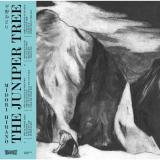
While composing the music for The Juniper Tree, Hirano drew on her own memories of touring Iceland, which included a stop at a waterfall featured in the film and rendered in sound on “Mother’s Path.” Folktales, like the origins of The Juniper Tree, are often attempts to contend with humans’ place in the natural world, with all its mysteries and intricacies, and both the film and Hirano’s soundtrack draw their sense of breathless wonder in part from the sensation of being engulfed by one’s environment. Margit, played by Björk, possesses a sublime sensitivity to her environment that allows her to receive messages from her mother, who was murdered for their shared inheritance of witchcraft. Hirano captures the relationship between the transcendental awe that is felt as supernatural and the private feelings of being immersed in that experience, creating a musical dialogue between the self and what lies beyond.
In the final sentences of her liner notes describing the film’s philosophical and feminist throughlines, Anna Bogutskaya says, “what we call Margit’s witchcraft is maybe just her willingness to listen.” This is the magic of music, and Hirano composes with an alchemist’s pen. Just as Keene seems to break down barriers between binary poles, Hirano uses both electronic and acoustic means to communicate the film’s emotive cues, uniting approaches she has explored under her own name and the alias MimiCof. There is an understanding that stillness can be understood as peaceful or foreboding, that dissonance and consonance are contextual, that efforts to protect one’s own kin can lead to tragic ends. At the film’s end we see Margit enthralled with birdsong, understanding it as something deeper, a connection to those she has lost. Through sound, we understand what lies beyond sight, beyond convention, and with this new soundtrack we hear the story anew.
erscheint voraussichtlich am 02.10.2026

AMBASSADE ventures into the world of Manrira - a dark, alluring feminine presence that confronts systems driven by value, profit, and power. Emerging from dystopian structures, Manrira exists in the liminal space where organic and digital forces collide, merge, and mutate. This new audiovisual work is devoted to the enchanting acoustics of the human voice and its relationship to bodies, architectures, and shifting environments. At the heart of Manrira is the human voice - alive, breathing, and full of presence. It flows like a living instrument, shaping space and emotion. Manrira explores the voice as resonance, as body, and as spatial event. Manrira moves from dynamic song compositions into extended structures, blending live bass, neo-classical elements, ethereal vocals, drum machines, breaks, and techno-driven textures. The result is an immersive experience that invites the audience to listen closely and reconsider their connection to sound, space, and their surroundings.
erscheint voraussichtlich am 02.10.2026

*** Special edition on yellow flame colored vinyl. Comes with a poster and stickers *** AMBASSADE ventures into the world of Manrira - a dark, alluring feminine presence that confronts systems driven by value, profit, and power. Emerging from dystopian structures, Manrira exists in the liminal space where organic and digital forces collide, merge, and mutate. This new audiovisual work is devoted to the enchanting acoustics of the human voice and its relationship to bodies, architectures, and shifting environments. At the heart of Manrira is the human voice - alive, breathing, and full of presence. It flows like a living instrument, shaping space and emotion. Manrira explores the voice as resonance, as body, and as spatial event. Manrira moves from dynamic song compositions into extended structures, blending live bass, neo-classical elements, ethereal vocals, drum machines, breaks, and techno-driven textures. The result is an immersive experience that invites the audience to listen closely and reconsider their connection to sound, space, and their surroundings.
erscheint voraussichtlich am 02.10.2026
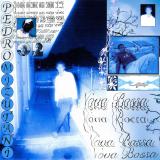
NOVA BOSSA: aquele abraço aos ratos vivos stands as a musical capsule centered around the life of a young adult. Moving between MPB, indie pop and alternative rock, its eclecticism perfectly reflects a thirst for discovery and new experiences, while highlighting a sincere search for identity.
NOVA BOSSA acts as a mirror to the contradictions of contemporary youth
between the desire for independence and the fear of abandonment
between rejecting norms and searching for meaning
between solitude and a deep craving for connection
between social disillusionment and creative resilience
The lyrics blend urban poetry, raw introspection and social critique, all carried by a musicality that oscillates between melancholy and energy. Pedro embodies a generation torn between the urge to burn through life and the fear of burning out, desperately trying to find his place in a world he often sees as absurd.
crédits
erscheint voraussichtlich am 02.10.2026

Explore the deep roots of Afro Funk with the 7" vinyl "Jungle Bird Tree" by Funky Destination, carefully released by the eclectic label Sound Exhibitions Records. This sonic gem is a testament to Funky Destination's skill in blending Afrocentric rhythms with the vibrant spirit of funk, creating a musical experience that captures the soul and gets the feet moving.
Jungle Bird Tree by Funky Destination is a musical journey that bridges the past and the present, an immersion into the rich tradition of Afro Funk through the fresh and innovative perspective of a contemporary artist. An unmissable addition to the collection of those who appreciate the fusion of global rhythms and the compelling power of funk.
erscheint voraussichtlich am 06.10.2026

Special poster on 250gram paper. Postcard with photo taken by Sandrien. Hand-numbered sticker. Shrinwrap
After more than a decade without releasing new music, Amsterdam DJ and producer Sandrien returns with her debut album Compass, released on her own new label, inspi. Created during a stay in Spain, where she finally found the space to create freely again, the album marks a new chapter: no genres, no expectations, just music made purely on feeling. Compass is an album about finding your own path, personally and musically, a cycle of searching and finding, letting go and beginning again. Lead single 'Life' laid the foundation for it all. The visual world of the album is just as personal: photographs Sandrien took around her house formed the basis for its artwork and imagery. With 27 years of experience behind her, Compass proves that mastery doesn't lead to routine, but to exploration. This double LP includes a beautiful double-sided poster featuring two original artworks of ‘Compass’ by Dutch artist Pieter Jan Boterkoek. Releases October 9, 2026 Written and produced by Sandrien Mixed by Julien Chaptal Mastered by Giuseppe Tillieci at Enisslab Artwork by Studio Pieter Jan Boterhoek This album is made with love in Spain, Volkshotel Amsterdam and Groenekan.
erscheint voraussichtlich am 09.10.2026

Andreas Tilliander returns to Kontra-Musik in a grand style with his second TM404 album. Titled 'Acidub', this highly anticipated release is much more of an evolution than a repetition of the first superbly self-restricted album, where Tilliander even decided to use only one of the two Roland TB-303 waveforms. Acidub is a more playful and open listening experience, no doubt inspired by his extensive live touring with the TM404 concept. In fact, you can almost hear Tilliander's flock of acid machines breaking free from the restrained modus operandi. Every sound is like a migratory bird with a heart yearning for high altitude and favourable winds. The opening track Alinge paints a lucid picture of these acid birds leaving a cold industrial landscape behind, the flickering black shadows from their wings against the white smoke rising from a forest of chimneys below. The very last seconds of Alinge even echo of the place the silver birds are longing for, but that will remain a secret between Kontra-Musik and the avid listener. Sufficient to say, we can follow these birds of passage as they're heading south towards a warmer climate, fleeing the cold discipline of the North. Mutron Mantra, for instance, brings us to a rainforest full of serpentine lianas, giant leaves dripping with moist and green pools of water bubbling with organic life. Don't Defend Mascot guides us through a steaming savannah at dusk with hundreds of yellow eyes following our every step while Pade vividly describes the perils of the flight and the pace and courage needed to press on. In all, Acidub is a surprisingly exuberant follow-up to the more introspective TM404 album. But while the musical journey of this second album is quite different, the experience of sheer aural eminence remains the same. Andreas Tilliander has done it again, and Kontra-Musik couldn't be prouder.
erscheint voraussichtlich am 12.10.2026
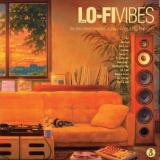
Diese Doppel-Vinyl-Compilation lädt ein in die warme, entspannte Welt des Lo-Fi-Sounds - eine Musik, die entschleunigt, Atmosphäre schafft und Nähe erzeugt. Versammelt sind prägende Künstler des Genres, die Lo-Fi, Downtempo, Jazz-Einflüsse und elektronische Gelassenheit miteinander verbinden. Mit Beiträgen von FKJ, Darius, Kid Loco, St Germain, The Mighty Bop, DJ Cam, DJ Spinna und weiteren wichtigen Namen entsteht ein vielschichtiges Panorama zwischen organischen Grooves, sanften Beats und subtilen Melodien. Die Auswahl richtet sich gleichermaßen an langjährige Liebhaber wie an neue Hörer, die Lo-Fi als eigenständige, zeitlose Form elektronischer Musik entdecken möchten. Ein stimmiger, sorgfältig kuratierter Sampler für entspannte Hörsituationen, stilbewusste Sets und alle, die elektronische Musik lieber fühlen als konsumieren. ENGThis double-vinyl compilation invites listeners into the warm, comforting world of lo-fi music - a sound defined by relaxed rhythms, organic textures and understated emotion. Featuring leading artists of the genre, the collection blends downtempo beats, jazz influences and laid-back electronic production. With tracks by FKJ, Darius, Kid Loco, St Germain, The Mighty Bop, DJ Cam, DJ Spinna and others, the album offers a broad yet coherent overview of lo-fi aesthetics. It appeals both to seasoned listeners and newcomers seeking a timeless, atmosphere-driven listening experience. A carefully curated selection designed for calm moments, focused listening and stylish musical environments
Bei uns am Lager und sofort versandfertig
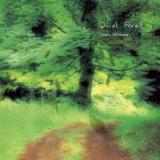
*First-ever release on vinyl
*Produced in full cooperation with Hiroshi Yoshimura's estate
*Remastered from original sources by John Baldwin
*English translations of original 1996 release liner notes
*Reproductions of Yoshimura's handwritten recording notes
*Vinyl includes 5" x 7" postcard print
"My encounter with the Hoh Rain Forest, located inside Olympic National Park across the water from Seattle, felt like seeing a whole new world for the first time in my life. Long green fronds draped along the branches, like a scene in which fairies could be heard whispering to one another. But when you try to listen, no sound can be heard. Amidst the mysterious silence, in which no birds or insects make a sound, every living thing seemed to have stopped in its place, only to start dancing when some kind of spell is cast over them.
-Hiroshi Yoshimura
Originally issued on compact disc in 1996, Quiet Forest was Hiroshi Yoshimura’s last album-length work to be released before his passing in 2003. Largely inspired by his trip to the vast forests of the North American Pacific Northwest, the album is an aural reflection of the fantastical, surreal beauty he experienced as he walked through the otherworldly wilderness for the first time. The basic tracks were recorded in the fall of 1993. After numerous revisions to the song titles and a scrapped idea to overlay the tracks with nature field recordings, Hiroshi ultimately produced a latter-day masterwork that feels like the spiritual follow-up to Green, one of his defining works from a decade earlier."
erscheint voraussichtlich am 04.12.2026
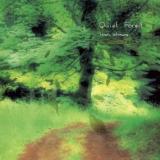
CASSETTE VERSION
*Produced in full cooperation with Hiroshi Yoshimura's estate
*Remastered from original sources by John Baldwin
*English translations of original 1996 release liner notes
*Reproductions of Yoshimura's handwritten recording notes
"My encounter with the Hoh Rain Forest, located inside Olympic National Park across the water from Seattle, felt like seeing a whole new world for the first time in my life. Long green fronds draped along the branches, like a scene in which fairies could be heard whispering to one another. But when you try to listen, no sound can be heard. Amidst the mysterious silence, in which no birds or insects make a sound, every living thing seemed to have stopped in its place, only to start dancing when some kind of spell is cast over them.
-Hiroshi Yoshimura
Originally issued on compact disc in 1996, Quiet Forest was Hiroshi Yoshimura’s last album-length work to be released before his passing in 2003. Largely inspired by his trip to the vast forests of the North American Pacific Northwest, the album is an aural reflection of the fantastical, surreal beauty he experienced as he walked through the otherworldly wilderness for the first time. The basic tracks were recorded in the fall of 1993. After numerous revisions to the song titles and a scrapped idea to overlay the tracks with nature field recordings, Hiroshi ultimately produced a latter-day masterwork that feels like the spiritual follow-up to Green, one of his defining works from a decade earlier."
erscheint voraussichtlich am 04.12.2026
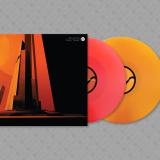
Enter the debut LP of the now Spatial regular Chronicle - Expect a joyous, varied blend of old school brand new atmospherics from one of the scene’s most talented producers. A1 - 20th Century Man Straight into the beats for the deliciously cheery opening, 20th Century Man encapsulates so much of what Chronicle does best - old school breakbeat sensibilities delivered with an inimitable atmospheric charm, strongly reminiscent of that peak Good Looking era we all adored. Incredible synthwork and analogue drums layered with danceable 2-step breaks and melodies take your mind exactly where you want to be. A2 - Terraformers Seminal synths and birdsong effects prepare us for an impossibly crisp breakbeat and 808 bassline to drive this track along, coloured by a myriad of subtle blips and bleeps, delicately flecked across a detailed and optimistic soundscape. Very DJ-friendly from the first to the final bar, the purity of Chronicle’s approach to atmospheric drum & bass is once again at its best here on Spatial. B1 - Boundless Space Playful twittering birds, gentle hi-hats and panning synths introduce Boundless Space, a blissful, serene treat for the senses which soon kicks into flourishing life with the timeless Circles break. Vocal samples punctuate the soothing breakdown with exquisitely programmed effects dotted here, there and everywhere, completing a stunning composition that both reflects on the past and looks forward in equal measure. B2 - Ephemeral Style A light, delicately calming pad-laden intro with echoing melodies opens Ephemeral style, soon punctuated by a sublime 808 bassline preceding the drop. Chronicle showcases his dancefloor breakbeat prowess with an energetic 2-step break pattern, expertly programmed and riddled with detail and density, creating a wonderful collage of sound and a perfect addition to any era-spanning atmospheric set. C1 - Modular Expansion Eerily reminiscent tones harking back to the golden, ultra-classic Good Looking era introduce us to Modular Expansion, a track which quickly adds layer upon layer of original identity to the vibe with crisp breaks, a wonderful metallic backdrop snare and subtle vocal samples. The joyously retrospective breakdown complements the energy of the track beautifully, capping off another gem for the record box. C2 - Limbic System Chronicle introduces Limbic System with swathes of swirling pads and synths, straddled with a subtle yet enigmatic melody carrying us through the drop, where we are treated to a lusciously constructed old school break pattern with a modern twist. Enter the breakdown and the keen ear will spot sampled quotes from Total Recall, which fit the vibe perfectly. “You went to Recall?” - yes, we sure did. And we enjoyed the trip! D1 - Non-Euclidian Continuing the blissful retrospective atmospheric tone of the album, Chronicle serves up Non-Euclidian which opens with a wonderfully synthy intro flecked with old school break samples and an earworm melody, before the onslaught of layered breaks provides variety as well as a thoroughly danceable pattern to unleash on the discerning dancefloor. Trademark dotted effects punctuate the track throughout. D2 - Deep Thought Capping off the LP we have Deep Thought, setting a calming and quietly brooding vibe before impossibly crisp beats kick in and elevate proceedings nicely. Chronicle effortlessly leads the listener through the drop with an analogue punch, earthy basslines and fluttering effects with the kind of flair we’ve come to love from such a vastly experienced and talented producer - perfectly complementing the vibe here at Spatial. Words by Chris Hayes (Spatial / Red Mist)
Bei uns am Lager und sofort versandfertig

2026 Repress
Voices From the Lake (consisting of Donato Dozzy and Neel) mark the 10th anniversary of their influential self-titled album with a fully remastered reissue on Spazio Disponibile. It arrives in full on vinyl for the first time, as well as on digital formats, first quarter of 2023 as the pair continues to play select live shows around the world. The release will see the light of day as a 4-set vinyl LP release, including download. Italians Dozzy and Neel have been friends united by a shared vision of music since their teenage years. They are immaculate sculptors of sound who fuse evocative ambient and leftfield techno into multi-layered soundscapes. For many years they worked as established solo artists but came together in 2011 to craft what is now regarded as one of techno's most pure and absorbing listening experiences. It's often said that the best music comes about as a happy accident, and that is certainly true of Voices From the Lake. The career-defining album first arose in the thoughts of Dozzy and Neel when the latter was preparing a mix for the former's wedding and named it Voices From The Lake. It was a pertinent title that stuck in the mind: both grew up by waters around the coast of Italy, and in their early days the pair even held private parties on the shores of a lake. Fittingly, Japan's celebrated Labyrinth festival at that time was also held by a river and a lake in the middle of a forest on a serene mountainside. It was that exact setting the pair envisaged when making music to play live on stage. During preparations, they "accidentally" wrote an entire album. It has only ever been performed live a few times - once at Japan's Labyrinth festival in 2011, at London's Barbican, Barcelona's Mira Festival, Paris' Marathon Festival and once during 2022's Amsterdam Dance Event. Those shows saw the pair using banks of analogue and digital equipment to improvise in the moment and essentially remix the album live on stage. That spontaneity is captured in the original Voices From the Lake recordings and on later LPs such as Live at Maxxi in 2015, and the most recent EP Quarto Freddo from 2020. But the debut album remains a standout achievement. A decade on, it's quiet intensity, musical storytelling and slowly unfolding tension remain in a class of one. Each sound is meticulously designed and placed, and the spaces left behind are just as important in conveying such a captivating mood and emotion. Rather than traditional kick drums, hi-hats or snares, this is music crafted from layers of real-world sound - dripping water, chirping birds, rustling leaves or a distant breeze - and it's that which defines the album's organic allure. From deeply contemplative to cautiously optimistic, pastoral organic scenes to more underwater worlds, Voices From the Lake is a cohesive collection of tracks that add up to one inseparable whole.
Bei uns am Lager und sofort versandfertig
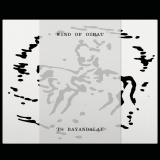
Wind of Oirat is the full length debut by Mongolian independent musician and sound artist Ts Bayandalai. Following his acclaimed 2020 EP Kimel, he now presents a further matured, composed and refined version of his signature sound, which combines traditional Mongolian music and instruments with influences from experimental music and post-rock. Deeply rooted in the cultural traditions of his homeland, Ts Bayandalai, who grew up in a nomadic family in the Mongolian steppe, explores nature and its myths, his ancestral roots, and the relationship between humans, animals and nature.
Artist Bio:
Ts Bayandalai is a Mongolian independent musician and sound artist. His childhood on the steppes shaped a deep sensitivity to natural and ethnic sound. To create his individual, deeply rooted yet modern soundscape, he combines traditional Mongolian musical elements with post-rock, experimental and electronic music, as well as from outernational music influences.
Born into a nomadic family on the steppes, Ts Bayandalai grew up wandering the vast grasslands with shepherds, absorbing the resonances of the horse fiddle and guitar — experiences that remain a primordial source of inspiration in his work.
Founder of the avantgarde band Horse Radio (2012) and the experimental project December3AM (2015), his compositions navigate cultural memory and contemporary aesthetics, reconstructing pastoral landscapes, temporal layers, and emotional spaces through sound.
His EP Kimel, released in 2020, manifested a delicate sculpting of sound, space, and cultural motifs, presenting a listening experience that is at once primal and modern.
Ts Bayandalai’s performances span China, Mongolia, and major independent music venues and festivals across Asia. His artistic vitality and creative autonomy have earned him critical acclaim and a devoted following in the international folk music and experimental music communities.
Bei uns am Lager und sofort versandfertig

Prolific beat pharmacist par excellence Brendon Moeller continues his hot streak with a return to Samurai to serve up the exquisite craftsmanship of Shadow Language. Across 15 fresh productions the seasoned house and techno producer demonstrates yet more variations on his rejuvenated sound since pivoting towards 160 tempo zones. Heavyweight dub techno pulses collide with D&B pressure and dubstep snarl, delivered with devastating restraint and mediative warmth.
Moeller's dub-informed, high-grade production hit a hot streak as he started to experiment with faster tempos and more broken rhythms, reaching into thrilling new sound fields where fast-slow rhythmic intrigue meets with spatial subtlety and constantly evolving synth voices. The past year has seen him release a swathe of albums, from Further on Samurai to outings on Constellation Tatsu, ESP Institute and Quiet Details that all burst with inspiration, each distinct from the last and offering an original perspective on this rich seam of crossover electronics.
Shadow Language shows Moeller burrowing even deeper into this new era of his work, continuing the hypnotic approach set out on Further while edging more forthright ingredients into the mix. From the outset 'Division By Zero' hits with immediacy even as it dips into a dubwise breakdown, with snatches of vocal and even the iconic loom bird making the slightest of appearances. 'Feral Hymn' finds a curious kind of uplift in the synth chord that twists in and out of the mental techno murmurations of the rhythm section. 'Impermanence' has some snarling bass that belongs in the gnarliest tech-step, while the nagging hats ticking through 'Junkyard Syntax' hint at a shockout without resorting to brute force. The majestic dub techno chords of 'Driftform' create a through-line across Moeller's extensive catalogue, but here they dominate the mix above a spongy bed of sub bass throb and framed by the tiniest slithers of percussion.
Throughout the album, it's the implications Moeller suggests with the tools at his disposal that create a powerful energy. Restraint governs the delivery, guiding the listener in deeper until they find a maximal experience from each elegantly understated roller. The weight and presence is abundant across every track, fuelled by the invigorating power of each tone and frequency while avoiding the clutter of overloaded arrangements.
Finding the notes in between and half-hidden rhythms, Moeller himself perfectly summed up his latest opus as he continues to develop his own compelling Shadow Language.
Bei uns am Lager und sofort versandfertig

Sea Oleena is the project of Montreal-based musician Charlotte Oleena. Drifting between ambient dream pop and atmospheric folk, her music is rich with textural warmth. With her softly whispered vocals and atmospheric tones, Oleena's music has been compared to acts like Grouper and Julianna Barwick, though in her more structured moments there are echoes of alternative pop icons the Cocteau Twins and Julee Cruise. Alded by her brother Luke Loseth, she released a stf-titled mini-album in 2010, followed by a second LP titled Sleeplessness a year later. Her third release, Shallow, arrived in 2014. Six years later, Sea Oleena returned with Weaving a Basket, a seven-track album that combines austere piano and guitar arrangements with ebbing swells of instrumentation and misty harmonies layered in a spectral chorus. Throughout the record, Oleena embraces the ambient backdrops of her surroundings - birds chirping, wind rustling, urban traffic - creating a close, intimate, and lived in listening experience. Released one year ago, in late fall 2020, these sounds capture the dual interiority and solemnity of that moment. The result is a wistful and impressionistic collection of songs, in turns haunting and hymnal.
Bei uns am Lager und sofort versandfertig

To mark a decade as one of Ibiza's most iconic musical sanctuaries, Hostal La Torre announces 'La Torre Ibiza Volumen Cinco', a new compilation curated by long-standing residents Pete Gooding and Mark Barrott. Released June 27 on CD and double vinyl, the 15-track collection captures the spirit of the venue that has come to define the golden-hour soundtrack ofthe island's west coast.
Since opening in 2015, La Torre has established itself as a bastion of Balearic culture-set high on the cliffs overlooking the sea, where music flows with the sun rather than the clock. The fifth volume in the celebrated La Torre series is a journey through Brazilian soul, ambient electronica, classic deep house, orchestral minimalism, and dusk-lit Detroit techno-an emotional arc designed to mirror the progression of an evening at the venue.
From timeless icons like Nina Simone, Mazzy Star, Talk Talk (with their Spirit of Eden closer "Wealth"), and Boards of Canada, to boundary-pushers like Auntie Flo, Eden Burns, and µ-Ziq (aka Mike Paradinas), Volumen Cinco weaves together deep-rooted classics and leftfield discoveries. Mark Barrott contributes a brand-new exclusive, 'When Devils Become Gods', while the compilation closes on a rare gem from Yellow Magic Orchestra's Yukihiro Takahashi. Also includedis Software's 'Present Voice', a quietly powerful tribute to the late José Padilla, the spiritual architect of Ibiza's sunset sound.
Volumen Cinco is more than just a listening experience-it's a tribute to La Torre's ethos: open-hearted, genre-fluid, rooted in place and time. Each track is carefully sequenced to evoke a feeling, a shift in light, or a shared memory beneath the fading sun.
Over the years, La Torre has welcomed some of the most influential names in Balearic and electronic music, from José Padilla, Alfredo, and Jon Sa Trinxa to DJ Harvey, David Holmes, Lovefingers, Heidi Lawden, Wolf Müller, Don Carlos, and Phil Mison. With each summer season and each release, the venue continues to build a musical legacy that has earned critical acclaim from Resident Advisor, Phonica Records, Juno, and Piccadilly Records, regularly featuring in their year-end lists.
As Test Pressing once wrote, "La Torre is not a party, it's a place of pilgrimage. It feels almost sacred." That spirit resonates deeply in this anniversary compilation-a celebration of music, community, and connection that spans a decade.
La Torre Ibiza Volumen Cinco is dedicated to the artists, friends, collaborators, and guests who've shaped its story so far-and to everyone who continues to gather, listen, and lose track of time as the sun slips beneath the horizon.
Bei uns am Lager und sofort versandfertig

Balmat 17 marks both a return and a new frontier. It is the second album on the label from Patricia Wolf, whose 2022 album See-Through is one of the most beloved in Balmat’s catalog; it also marks the first time that Wolf has turned her hand to a film soundtrack. The results are every bit as magical as fans of the Portland, Oregon, composer’s music might expect.
Hrafnamynd—Icelandic for “raven film”—is a new feature-length documentary by experimental filmmaker Edward Pack Davee. Shot on a mix of film and digital formats, and incorporating his father’s Ektachrome slides from the 1970s, the autobiographical film works on multiple levels at once: a reminiscence of his childhood in Iceland, an exploration of landscape and folklore, and a documentary study of the island nation’s ravens—including a talking raven named Krummi.
Wolf is the perfect artist to score such an unusual film. Mixing ambient music and field recording—including extensive experience documenting bird song—Wolf brings an unusually empathic perspective to her music. In the context of Hrafnamynd, her airy melodies, pensive atmospheres, and vivid textures intuitively complement the film’s grainy film stock and blown-out colors. Friends for years, the two artists further bonded when Wolf asked Pack to film music videos for her songs “Woodland Encounter” (from See-Through) and “The Culmination Of” (from I'll Look For You In Others). Pack used Wolf’s previously recorded music as placeholders as he began assembling a rough cut of the film, which made her a natural choice to help him complete his idiosyncratic vision with an all-new, bespoke score.
But Wolf’s soundtrack also indisputably stands alone as a full-length album. Largely created using the UDO Super 6 synthesizer, it features a carefully distilled palette of warm, string-like pads and darkly glistening mallets, rounded out with the very occasional introduction of nylon string guitar. Musically and stylistically, the album’s 11 tracks represent both a continuation of the ruminative sound of See-Through and also an extension into new expressive modes. Few musicians, ambient or otherwise, are as skilled at balancing melody with atmosphere, or at finding ways to eke fresh at finding ways to eke fresh, surprising sounds out of an intentionally reduced toolkit. Meditative, immersive, and emotionally generous Wolf’s Hrafnamynd soundtrack evokes a range of ambient classics from decades past while confidently marking out its own verdant patch of ground.
Artist’s Statement:
Edward and I have been friends for years, but we really started to get to know one another better after I hired him to make music videos for my songs “Woodland Encounter” and “The Culmination Of.” For those projects we got to spend a lot of time hiking in various locations around the Pacific Northwest with his camera, very nice lenses, and tripod. Keeping quiet, hidden, and vigilant we searched for wildlife, good light on the trees, meadows, lakes, rivers, and skies. Edward was already an appreciator of my music and I was already in awe of his filmmaking talents so it felt like a great fit. Although we work in different areas of art our styles compliment one another. We both tend toward slow and careful pacing, with a focus on emotion and introspective reflections on life and the landscapes around us. For this reason, Iknew that I could trust Edward to create videos for my music. We saw so many beautiful and unexpected things on our filming days, but I was moved to tears once I saw how magnificent and poetic it all was. His video work from the cinematography, to the editing, and color correction helped bring my inner vision to life.
A few months after that, Edward surprised me with an invitation to work on the soundtrack for his new film, Hrafnamynd. I enthusiastically said yes. I had always wanted to work on a film, and I knew that his filmmaking style would be inspiring to write music for. I had recently acquired an UDO Super 6 synthesizer but hadn't used it much. I decided that this would be the synth that I'd use for the film. It has the ability to sound very modern, but can also sound so warm and fuzzy, like a synth from the 1970s. It turned out to be the perfect instrument for this project as the film itself straddles time from the ’70s to today.
When Edward sent me the rough cut of the film, he used placeholder music to help give me an idea of the emotion and energy that he was hoping to achieve for each scene. For many of the scenes, Edward used music from my albums as temporary tracks. This told me that he trusted my work and style and therefore I should just trust my intuition with how to proceed. I wanted to make sure that everything that I made was a direct reflection of what was happening on screen, a mirror of its emotion and energy so people could really lock into the film psychologically. This process took my composing to unexpected places—like being led by a strange cat or a raven that seemed to have something to show me. I found that the approach made the music so much more dynamic than my usual style. I really enjoyed being influenced by the action and dialog on the screen. Thankfully, Edward was very happy with the work. I made sure to handle this project with the utmost care because this is about his life and his family, and an exploration of the experiences that made him an artist and filmmaker. While watching the film many times over, I found myself thinking about my own family and my early memories with them and how the place where I grew up has influenced who I have become. I found that his film invites the viewer to reflect on their own lives in a similar way. I hope that this music and film can guide others to contemplate on the history of their beingness and the people and places that shaped them.
Another aspect to this project is the splendor and wonder of Iceland itself. I had the opportunity to visit Iceland for the first time in 2023. I got to play a show there for the Extreme Chill Festival and met many friendly and brilliant Icelanders. I also got to collect field recordings that I used in the film. It's a fascinating place and culture that easily captures the hearts and imaginations of anyone who visits. Whether you spend your time in the city immersed in its impressive arts scene, or venture out into the wilderness to behold its wondrous landscape, it will leave a lasting impression. The soundtrack is also a love letter to Iceland itself.
Bei uns am Lager und sofort versandfertig
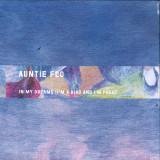
Brian d’Souza, better known as Auntie Flo, delivers his brand-new fourth studio album, ‘In My Dreams (I’m A Bird and I’m Free)’, set for release on 21st November. The album, a rich blend of electronic music, live instrumentation, and global influences features collaborations with the likes of Nicola Cruz, Joshua Idehen, Shingai Shoniwa, Yohan Kebede (Kokoroko) and even his Goan Auntie Florie, where the Auntie Flo moniker is derived from. Each track on the album transports you to a different location: Goa, Istanbul, Nairobi, Mexico City, Waiheke Island, Rio De Janeiro, Havana, Seoul are all destinations to nest in across its ten tracks. It will be available in both digital and vinyl formats on his own label, A State of Flo Records.
Auntie Flo’s latest body of work is the culmination of a five-year journey that has seen d’Souza expand both personally and musically. Known for his unique ability to fuse electronic sounds with rhythms and influences from across the globe, d’Souza takes his craft to new heights in this album, offering listeners an intimate look into the experiences, places, and stories that have shaped his artistic evolution. The groundbreaking DJ and producer presents an expansive, deeply personal exploration of global sounds, collaboration, and migration.
Following the success of the Afro-disco single Green City—a dynamic tribute to the legendary Fela Kuti and Luke Una’s ‘track of the year’—In My Dreams (I’m A Bird and I’m Free) ventures further into uncharted musical territory. The album, however, is more than just a continuation of Auntie Flo’s signature sound. It is a reflection of d’Souza’s life and career, capturing his exploration of identity, migration, and cultural fusion. With tracks that draw inspiration from field recordings collected around the world, the album resonates with a profound sense of place and memory.
In My Dreams (I’m A Bird and I’m Free) is not only a reflection of d’Souza’s creative journey but also a commentary on migration—both human and musical. The album draws on the freedom of birds to migrate across borders as a metaphor for artistic and personal freedom, juxtaposed with the challenges that political barriers impose on human migration. As d’Souza explains, “Birds have the freedom to migrate wherever they choose, while humans face constant barriers”.
A State of Flo supports Earth Percent. 10% of the revenue generated from this release will be paid to environmental charities.
Bei uns am Lager und sofort versandfertig

An adventurous percussion playground Trio inclassable qui explore les rythmes et les sons, Spëcht a ouvert un terrain de jeu singulier autour des percussions en donnant une nouvelle dimension à des instruments acoustiques.
Darbuka, gongs, kalimbas, riqq, doholla, bendirs,... sont à la base de leur univers percussif et mélodique qui oscille entre sons organiques et textures atmosphériques, paysages sonores aux accents de transe et grooves entraînants.
Après la sortie du premier EP "Dawn" sous le nom de groupe "Hands in Motion” », letrio sort « Triptyques » et propose une expérience évolutive en trois temps progressifs.
“The trio includes three of the top percussionists in Belgium Simon Leleux, Robbe Kieckens, Célestin Massot their music is a rich world of stimulating transglobal rhythms and transfixing sounds” World Music Central It's an exciting time for music lovers and fans of innovative sounds, as the band formerly known as 'Hands in Motion' makes a refreshing re-entry into the music world under a new name: Spëcht. With their latest album, 'Triptyques', Spëcht promises an immersive listening experience that retains the deep-rooted essence of the band while exploring new musical horizons.
After a period of artistic development and introspection, Spëcht has decided that the name change is a natural step in their musical journey. The name 'Spëcht' not only reflects their renewed focus and energy but also their commitment to creating music that is both powerful and sophisticated, just like the bird of the same name.
Triptyques' is an album composed of three parts, each highlighting a unique aspect of the band. This conceptual masterpiece takes the listener on a journey through various musical landscapes, from melodic harmonies and huge percussion elements with complex rhythms to bold experimental sounds. Each 'triptych' stands alone as an individual work of art, yet together they form a cohesive and captivating story.
With 'Triptyques', Spëcht demonstrates a maturity and depth in their musical expression that will surprise and charm both loyal fans and new listeners.
Bei uns am Lager und sofort versandfertig

The third Mollono.Bass Album is dedicated to what we need most. We as inhabitants of the same planet, we as members of a free society, and we as a culture. We have to stick together more than ever, rather than drifting further and further apart. At the same time, Together brings together everything Mollono.Bass stands for since more than 20 years: Ritualist Afro-influences and acid loops, the sensual physicality of House, the laid-back boost of Dub Techno, analogue depth and digital highs, hope transcribed into groove and utopia set into rhythmic motion. It’s the dynamic novelty and pioneering spirit of the arrangements that reflect the unmistakable signature style of this producer. True to the traditional idea of an album, complete with previously unreleased tracks and special versions, Together is a highly immersive listening experience from start to end and works beautifully on the dancefloor and far beyond it.
Bei uns am Lager und sofort versandfertig

Angelo is an LP, named after a car, featuring nine songs Brijean have crafted and carried with them through a period of profound change, loss, and relocation. It finds percussionist/singer Brijean Murphy and multi-instrumentalist/producer Doug Stuart processing the impossible the only way they know how: through rhythm and movement. The months surrounding the acclaimed release of Feelings, their full-length Ghostly International debut in 2021 which celebrated tender self-reflection and new possibilities, rang bittersweet with the absence of touring and the sudden passing of Murphy’s father and both of Stuart’s parents. In a haze of heartache, the duo left the
Bay Area to be near family, resetting in four cities in under two years. Their to-go rig became their traveling studio and these tracks, along with Angelo, became their few constants. Whereas Feelings formed over collaborative jams with friends, Angelo’s sessions presented Murphy and Stuart a chance to record at their most intimate, “to get us out of our grief and into our bodies,” says Murphy. They explored new moods and styles, reaching for effervescent dance tempos and technicolor backdrops, vibrant hues in contrast to their more somber human experiences. Angelo beams with positivity and creative renewal — a resourceful, collective answer to “what happens now?”
Angelo the car is a 1981 Toyota Celica they got off Craigslist during their first stint in Los Angeles, where Murphy and Stuart have since settled. “Such a bro-y, ‘80s dude car, it’s been super fun to drive around in a new town,” Murphy says. “He’s older than us, he’s a classic, he’s got a story.” It is a spiritual vehicle with a cinematic appeal, first dropping them off in an alleyway for the scene-setting intro, “Which Way To The Club.” The question is quickly resolved by “Take A Trip” as a cruising bassline mingles with crowd sounds, hand-claps, cuíca hiccups, whip-cracks, even a horse neigh. Brijean have found some club on this cross-dimensional trip — the kind of
imagined space or chamber within one’s self capable of “shifting a fraction of who you are,” says Murphy. They wrote the track with the simple intention to be “as free as we could be,” adds Stuart, likening the flip on the B section to a realm unlocked: ”What if the world changed completely? You open the door to a new room.”
Next is “Shy Guy,” a motivational anthem for the wallflowers among us. Murphy sets up the daydream: “We are in junior high, we’re on the dance floor, what’s going down, who is dancing, who is not, how are we gonna make them dance?” The narrator, the MC, hypes up the room as conga-driven rhythms bounce between languid synth and guitar lines. “Show me how to move...I feel something...I know you feel it too,” Murphy sings sweetly, calling back to the opening lines of Feelings, and this time the audience chants it back. It is easy to picture Brijean performing this one — something they only got to do a handful of times until more recently, opening shows for Khruangbin and Washed Out, an experience they found informative. Murphy explains, “It was inspiring to be out there and let loose more. To see how people can expand their expression on stage gave me more liberty with how I viewed my musicianship. My role for so long was to be a backup percussionist, so why would I ever leave the drums, you know? But then after playing all these runs, you see these artists and realize you can, you have permission.”
“Angelo” and “Ooo La La” deliver the danciest stretch in Brijean’s catalog to date. The title track adopts a deep house pulse replete with strings, hi-hats, and kicks. The latter opts for a funkier groove that foregoes verses in favor of warbled hums and extended breakdowns. What follows is perhaps the duo’s dreamiest run, a comedown initiated with the honey-hued interlude “Colors” drifting into “Where Do We Go?”, a tropicália reverie where Murphy contemplates the passage of time and space.
It all culminates in “Caldwell’s Way,” a fond farewell to their Bay Area community — “a part of my life that I knew couldn’t come back,” says Murphy. Above shimmering organ sounds, lush strings, and the birdcall of their former neighborhood, she wistfully articulates the uncertainty of moving on by remembering the characters dear to them. There’s the wisdom of their neighbor, Santos, who refused payment when helping them move out: “I’d rather have 100 friends than 100 dollars.” And the song’s namesake, Benjamin Caldwell Brown, a friend and club night cohort for many years. “I’m only miles away, maybe I’m just feeling lonely,” the line resigns to warm nostalgia, and “Nostalgia” runs the closing credits to this healing and transportive collection.
Bei uns am Lager und sofort versandfertig
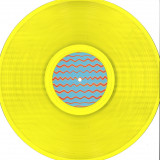
Three years after he released the incredible New Experience EP (picking up plaudits from Bill Brewster, Tim Sweeney, Laurent Garnier, Horse Meat Disco, Leo Mas & 6Music’s Tom Ravenscroft, among many more), Tokyo’s Kota Motomura returns to Hobbes Music for his debut LP, Pay It Forward. This is the first vinyl release on Hobbes Music since the much-loved ‘Aranath’ EP by Leonidas & Hobbes last Spring. While the label maintains the level of quality control for which it has become recognised, the artist continues to subvert electronic and dance music norms in his iconoclastic way on this extraordinary record.
He’s a mysterious character with an ear for idiosyncratic music that runs the gamut from ambient, exotica and jazz to disco, house and techno via post punk, new wave and funk. It’s highly original and all adds up to a confection perhaps best described as ‘Balearic’.
Album opener Paradise is a certified jazz-funk JAM. Destined for dance floors worldwide, this one’s been dropping well with DJs, Motomura demonstrating his piano chops alongside Mutsumi Takeuchi’s sax. Tropical pushes the boat in a more rhythmic direction, some pretty wild drum programming laced with more sounds of the, um, tropics, before mad vocal yelps suggest something yet more tribal. To Be Free initially resembles early 90s progressive house (pulsing bassline, synth-driven melodies), before the arrival of some new wave guitar licks a la classic Talking Heads/David Byrne and ooh ooh vocal chants take it to another dimension altogether.
B-side opener Emotion features Takeuchi again (on flute this time) and more vocal chants before things take a dramatic turn, threatening to open up into a full fanfare before calming and then bursting into wild life again with the exhortation that “C’mon, everybody dancing!” Rhythm flirts with an energy and pace more akin to a techno record: drums, drums, more drums plus a fair few yelps and chants - the kind of DJ tool that will send a simmering dance floor wild in the right hands. Flower closes things in a more melancholy style, familiar to fans of ‘Aboy’ from the New Experience EP, with plaintive acoustic guitar (performed by Akichi), birdsong and big piano chords.
Support from Bill Brewster, Leo Mas, Al Kent, Red Rack’em, Nick The Record, Phil Mison, Phat Phil Cooper, KZA, Sean Johnston (ALFOS), S/A/M, Dribbler, Joe Muggs, Monolith Cocktail and more…
‘Gonna review in MÜ mag... very fine stuff!’ JOE MUGGS
‘Will be reviewed on the blog’ MONOLITH COCKTAIL
BILL BREWSTER played Flower on the DJ History podcast #641 (25.3.22)
'I really like this album, Flower and Paradise are my favourite' LEO MAS
‘I like Paradise’ AL KENT
‘Woo this is tasty. DEFO playing on my next radio show. The label’s A&R is defo getting better and better. HM has been putting out some dope stuff and this one seems really good quality’ RED RACK’EM
‘Paradise and Flower sounding good’ NICK THE RECORD
‘Tunes sound great!’ PHIL MISON
‘Going to include Paradise and Flower on my Sunday Ibiza global radio show PHAT PHIL COOPER (Nu Northern Soul)
‘Very nice album with influences from many different genres. I especially like To Be Free with nice synths and guitar cutting, and Flower, which is a chill vibe’ KZA (Mule Musiq, Endless Flight)
'100% correct about the ALFOS potential of To Be Free!' SEAN JOHNSTON (A Love From Outer Space)
'Stunning, will fit perfectly with the vibe of my radio show’ S/A/M (Music For Dreams, DK; Playa Del Sol, Ibiza)
'Stellar work, i'll make a bet that Flowers is a Balaeric classic this summer' DRIBBLER (Breakfast Club, Ibiza)
‘It's cool in a nice smelling psycho sense, it was a very DEEP sound that I couldn't produce. Congrats!’ ALTZ (Altzmusica)
‘Paradise is my jam, it's deep, sunny and never boring. I'm interested to see how this will work on the dance floor. Overall a great album with solid composition and impressive use of live instruments!’ SOBRIETY (fka Chloé Juliette)
'Very tidy selection' ASTROJAZZ (Kelburn Garden Party, Wee Dub, Samedia Shebeen, Disco Makossa)
‘This is a lovely release. Follows on from New Experience in the best way possible. It's got lots of vibes going on but holds together as a cohesive piece of work. Love it’ JAMIE THOMSON (La Cheetah, Glasgow)
‘To Be Free is a track i could imagine Andy Weatherall playing in one of his sets at A Love From Outer Space’ KIRSTIE PATON aka She-Bang Rave Unit (Threads Radio, Radio Magnetic)
Bei uns am Lager und sofort versandfertig

Cause we love Vinyl..... Here is the first Vinyl from the Label JACKFRUIT RECORDINGS, a new label founded in 2017. Label Owner is the Berlin based Artist, DOMPE, known for good arranged House Sounds. He releases a lot, a real creative mind. Four handmade tracks can be found on the Vinyl. THE JOKER: Do you need a Joker Deep and warm Techhouse-Bassline So who is you favourite Buffoon now Risky grinning attitudes sounds you have to hear loud. After that bomb it's time for an new experience: It's time to Boogie. 1,2,3,4 what are you waiting for Move your Body to the Groove. CRY: snappy sounds, a necessary amount of percussions and a beat that makes you teeter along. FREE BIRD: Here are some very new House Beats for you! It is really time for some spring feelings, so the sounds go fresher! And it feels like hearing the bird singing, sitting in the sun meanwhile. Real Groove comes through your Speakers - turn is loud! Percussions make you hooo. So shake your body once again and dance until the spring is coming. JACK BROWN: Hey Sweetheart you are such a hot fruity! Another brilliant cooperation between AGENT! and DOMPE and as it is common: never change a winning team! These both guys living in Berlin are not only Friends; they got a perfect match with their sounds and ideas. Soundaholics with playful whims in their heads. There is a rumour that JACK BROWN gives his Name to JACK FRUIT. Not really just kidding. JACK BROWN makes you dance, drags u to the middle of the floor. Charming Bassline, Vocal and a direct urge for snipping your fingers.
Bei uns am Lager und sofort versandfertig
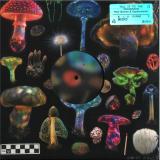
Swedish producer and DJ Axel Boman announces a new label, Blurry, with the release of a new album - Tell It To The Mountain – a collaboration between Axel Boman himself and acclaimed German producer Superpitcher. ”I’ve dreamed of having a platform where I can experiment with art and music for a while now and this album feels like the perfect project to launch it with” says the Studio Barnhus co-founder.
Swiss wiz kid and long time friend Laurenz Brunner is enlisted for the art direction and will make sure that Blurry won’t be following trends or holding back on bold ideas. The story behind Tell It To The Mountain, the first album to be released on Blurry, begins with a transformative hike to Sweden's Helags Glacier. Three days of pushing both mental and physical abilities to the max left Axel and Superpitcher in a state of mind that was equal exhaustion and inspiration. In that state they began making music that felt like it was writing itself; boundaryless and beautiful, pushed by instinct rather than thought, inspired by this overwhelming experience. ”I’ve admired Superpitcher for decades now. He is a master of suspense, melody, repetition and groove. He has been highly influential in my own work and I’ve been wanting to collaborate with him for years” says Axel.
Tell It To The Mountain is out on all digital platforms and on 2x12” vinyl on September 25 after the single True Crime arrives on August 11, on Blurry.
Bestelle jetzt und wir bestellen den Artikel für dich beim Lieferanten.

The acclaimed compilation series returns with volume 4! Fourteen tracks showcasing the most exciting emerging voices in Belgian jazz, ready to claim a permanent spot on your turntable.
The latest instalment in the celebrated compilation series once again shines a spotlight on the most adventurous and forward-thinking artists emerging from Belgium's jazz scene. Curated by Belgian tastemaker, DJ and broadcaster Lefto Early Bird, the collection continues a tradition of uncovering hidden gems and introducing them to a wider audience of dedicated diggers.
Over the years, the Jazz Cats series has become a trusted barometer of Belgium's ever-evolving jazz landscape. Long before many artists gained international recognition, they first appeared on these compilations, making the series both a discovery platform and a snapshot of one of Europe's most exciting musical ecosystems.
Jazz Cats Volume 4 captures a scene bursting with creativity, diversity and ambition. Across fourteen carefully selected tracks, the compilation explores the many directions contemporary Belgian jazz is taking today. Jazz, hip-hop, electronic music, afrobeat, spiritual jazz and experimental sounds coexist effortlessly throughout the collection.
The opening stretch of the compilation, led by Brussels-based Irreversible Entanglements band member Aquiles Navarro, Ola Tunji and HelenaCasella, offers an early glimpse into a scene that rarely stands still. Their music moves freely between traditions and contemporary influences, reflecting less concern with preserving genres than expanding them. Artists such as Lupo Spaccaro and Kunde, joined here by the raw soul voice of Fred Gata, draw inspiration from hip-hop and contemporary beat culture, yet neither approaches these influences in a conventional way. Instead, they reveal how naturally these sounds have become part of the vocabulary of a new generation of jazz musicians.
Experimentation emerges as another defining thread. KVR and BREAD FOR PIGEONS embrace unpredictability through unexpected textures, shifting atmospheres and confident compositional choices, creating music that constantly challenges expectations. Elsewhere, artists like Gaiko and VLIEGWERK favor immersive soundscapes that reward repeated listening. Whether there's a connection between musical adventurousness and a preference for capital letters remains a question for future research.
At the heart of the compilation lies a strong sense of movement and groove. Ragini Trio and Foutloos approach that rhythm from different angles, yet both build their music around powerful, pulsating foundations. Their tracks need close attention, revealing layers of detail and low-end richness that practically demand to be experienced on a proper sound system.
By the time it reaches its closing chapter, Lucid Lucia, SLAGADER and Kuna Maze bring the focus back to forward motion. Jazz and funk-infused grooves provide a fitting finale, reminding us that however far these artists push the jazz genre, they never lose sight of its ability to connect, uplift and move people.
The result is a body of work that feels remarkably cohesive despite its diversity: a portrait of a scene that continues to evolve through curiosity, collaborationand constant reinvention.
erscheint voraussichtlich am 04.09.2026

This next manifestation of Corvus Corone is a project featuring one As’teka tribal original and 3 collaborators with their own take. All RMX’s are different but stay within the parameters of the original and the label. Get two 12“ and mix for an endless experience.
A trip into the dark heart of the jungle where evil could be lurking anywhere. Are those birds or bats? Was that a gigantic insect crawling? Was that shadow moving? Did you hear that voice? Arghh, is it day or nite? What day is it? I am getting stuck in quicksand - I...am...being...sucked...in...
erscheint voraussichtlich am 30.08.2026

New edition; new cover, black vinyl
Winner of the 2026 César Award for Best Original Music, the Arco soundtrack is composed by Arnaud Toulon.
Blending sweeping orchestral passages with delicate electronic textures, Toulon’s music accompanies Arco’s temporal wanderings in an expansive sonic journey. An immersive, sensitive, and luminous soundtrack that echoes the great works of Joe Hisaishi while asserting a distinctly contemporary identity. Balancing poetry and dramatic tension, the score stands as a fully-fledged experience in its own right, emerging as a striking cinematic work.
Directed by Ugo Bienvenu, Arco won the César Award and the European Film Award for Best Animated Feature in 2026. It also won the Cristal for Best Feature Film at Annecy in 2025, and was presented at the 2025 Cannes Film Festival and selected for the 2026 Oscars.
Film:
Best Animated Film and Best Original Score at the 2026 César Awards / 2026 European Film Awards / 2025 Cristal Award for Best Feature Film at Annecy
Screened at the 2025 Cannes Film Festival
Nominated for the 2026 Academy Awards
Distributed in over 40 countries
VOD already available in France
Music:
Nearly 1.5 million streams
1,000 vinyl records sold
Over 177,000 views on the live session of “Clouds Away” by Arnaud Toulon x November Ultra
CD released in Japan in April 2026
International releases (movie)
2025
October: France + Belgium
December: Netherlands
2026
January: Portugal, Czech Republic, Spain, China
February: Latin America, Taiwan, Turkey, India
March: Greece, South Korea, Italy, Australia, Estonia, UK, Hungary, Romania
April: Latvia, Germany, Hong Kong, Bosnia & Herzegovina, Austria, Poland, Japan, Switzerland
August: Sweden
October: Lithuania
erscheint voraussichtlich am 07.07.2026
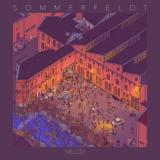
MELODI is the debut full-length album from Norwegian artist Sommerfeldt; a collection that takes listeners through the artist's mind, inspirations, experiences, and travels.
With a 20 year track record and releases on labels such as Full Pupp, Paper Recordings, and his other home Badabing Diskos, this album showcases a playful approach to genre, where a tight drum machine groove forms the foundation of a colourful record that touches on ambient, '80s, new wave, deep house, balearic, and downpitched progressive trance from the early millennium (which Sommerfeldt himself highlights as his formative years).
The album has been four years in the making. Several of the tracks were recorded around the world on hardware samplers and synths; bird sounds and ocean waves were captured, processed, and later finalised in his studio in Oslo.
Joining him is a stellar team of contributors; Embla Maria, Sigmund Floyd, Toshybot, Guro Kverndokk, Kristian Solhaug and Magnus JJ, adding outstanding vocal performances, gritty guitars, and oval percussion, the original cover artwork signed by Sommerfeldt's own favourite artist, Quentin Desveaux.
All of this is woven together into a cohesive whole that will make you want to listen again and again.
The six track musical masterpiece is set for physical release May 29th 2026 on a bold orange 12"
Bestelle jetzt und wir bestellen den Artikel für dich beim Lieferanten.
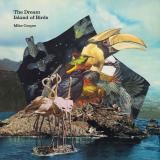
Mike Cooper returns to Discrepant with The Dream Island of Birds, a release that blurs the lines between memory, field recording, and reimagined sound.
In the early 1990s, Cooper met illustrator and writer Charles van Sandwyk while walking on a small island in Fiji. Van Sandwyk was living there quietly, working from a modest bamboo house near the beach. Years later, Cooper learned that following a serious car accident, van Sandwyk experienced vivid dreams during his recovery — one of which became a small illustrated book titled The Dream Island of Birds. A signed postcard from that book still hangs in Cooper’s studio.
In 2012, Cooper spent a month as artist-in-residence on Pulau Ubin, a small island between Singapore and Malaysia, recording birds and insects across the island. Home to more than 300 resident and migratory bird species, Pulau Ubin provided the source material for this album, later combined with electronics and digital processing. The track titles reference some of the island’s more evocatively named birds, though the sounds themselves are not literal representations. One piece is not derived from live birds at all, but imagined entirely through electronic means.
Neither documentary nor abstraction, The Dream Island of Birds sits between field recording, memory, and invention — an island heard through time and circuitry.
erscheint voraussichtlich am 10.06.2026

Very limited numbers, orders will need to be confirmed.
For his new album, Irreparable Parables, Andrew Wasylyk felt a strong desire to write a set of songs featuring an element hitherto rare in his work: the human voice. Equally strong was the conviction that he did not want to sing them himself.
The Scottish multi-instrumentalist and composer set about assembling a group of guest singers, sending out the songs to wherever they were in the world. The vocals were recorded remotely and then, like migrating birds, winged their way back to Scotland. The result is an album of great beauty which, perhaps preeminently in Wasylyk’s work, expresses the vulnerability and resilience of the human spirit.
Six singers appear on the record, represented by six songbirds illustrated on the sleeve by Clay Pipe Music’s Frances Castle. The cuckoo is a nod to Belle and Sebastian’s 2004 single ‘I’m A Cuckoo’, that band’s Stuart Murdoch being the first voice you hear on the new album. When the vocal for ‘Private Symphony #2’ arrived, says Wasylyk, “it was everything that I was looking for and more. But this is Stuart Murdoch. Of course he’s going to make something incredibly beautiful and thoughtful.”
The song lyrics were, for the most part, written by the singers. The music is Wasylyk’s creation. He navigates a sound world that lies somewhere beyond the borders of classical and jazz, ambient and abstract. It is difficult to describe, but easy to understand, which is to say to feel. That is the way Wasylyk’s work is experienced: as a feeling. It takes you back to childhood, perhaps, to feelings of comfort and safety, or to memories of walks at sunrise and sunset, or to the way a shadow falls on a particular field in a particular place at a particular time in your life. This is consoling music. That is why, though pretty, it is not merely pretty. These are songs to shore up the soul.
Wasylyk writes in a room, in his native Dundee, full of “half broken” instruments. He picks these up, plays a little, seeking an idea, a feeling, a door that lies ajar. The musical palette of Irreparable Parables includes brass and woodwind, a six-piece string section, guitar, bass, drums, vibraphone, Mellotron, Fender Rhodes, tape loops, synthesisers and percussion. The strings were arranged by the cellist Pete Harvey, a long-term collaborator.
Among the other guest vocalists are Gruff Rhys of the Super Furry Animals, Saya Ueno from Japan’s Tenniscoats and Peter Brewis from Field Music. Wasylyk himself takes the lead vocal on the title track, though a throat infection and touch of pitch-shifting have altered his singing in a way that even he, having fallen out of love with his own voice, finds acceptable.
The heart of the record can, arguably, be found in two tracks, ‘Love Is A Life That Lasts Forever’ and ‘Spectators In The Absence of God’, sung respectively by Molly Linen and Kathryn Joseph. The former, bright with trumpets, was inspired by the writing of Derek Jarman. “I was feeling deeply upset about the world and wanted to try and write some- thing that was obviously hopeful,” Wasylyk says.
‘Spectators …’ offers an emotional counterpoint. It is an “apocalyptic hymn” that seems to grapple with watching human suffering from afar, too distant to be at physical risk, but experiencing the psychological wounding, and feelings of helplessness, even complicity, that come with constant awareness of other people’s pain. “Kathryn’s a pal, I love her dearly, and she’s a brilliant artist who really feels what she writes,” Wasylyk says. “The cracked tenderness of her voice is spellbinding.”
The album closes with an instrumental piece, ‘Soul Enters The Ocean Sun Climbs Out Of The Sea’, all piano and strings, that offers a sense of resolution and ascension. A good moment, too, for Wasylyk to reflect upon the artistic companionship that he enjoyed while making this record – the songbirds that answered his call: “These humans are incredible at what they do. I’m deeply grateful and feel so lucky. It blows my mind.”
erscheint voraussichtlich am 30.05.2026
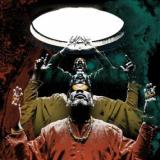
Time To Get On Board A New Black Universal Express.
With each new recording Anthony Joseph presents an imaginative, personal vision of contemporary black culture, and The Ark is yet another compelling album by the award-winning Trinidadian poet and musician. This second part of a sequence of two albums launched with last year’s Rowing Up River To Get Our Names Back, finds Joseph giving full vent to his desire to explore many thought-provoking themes. However, there is a specific thread running through the glorious offering of sounds.
”I was especially interested in the idea of using Afrofuturism as a means of using the future in order to correct the wrongs of the past,” explains Joseph. “And so a lot of lyrics reimage or imagine an alternate black history. At the same time there are elements of autobiography.” The aforesaid cultural phenomenon, a view of the black experience through the prism of science fiction and ancient Egypt and Africa, as mapped out by visionaries from music and literature such as Sun Ra, Parliament-Funkadelic and Octavia E. Butler, has previously inspired Joseph. His 2006 novel The African Origins Of UFOs was a multi-hued work, and the new music shows how Joseph
has, much like all significant artists, gone on to broaden his conceptual palette, creating beguiling new stories and images set to startling rhythms and tones. Tracks such as ‘James’, with its taut, crisp bass and dubbed-up brass, and ‘Transposition Of Space (Glissant)’, a potent evocation of the influential Martiniquan theorist set in a haze of jazz guitar and ambient synthesizers, are marvels of text-sound painting.
As for ‘Baron Samedi’, shaped by a languid, almost wounded guitar line and slow rise of horns that frame Joseph’s journey to the ‘mountain of fire, almost touching the sky’ it is an epic blend of commanding vocal delivery and dramatic sonic tapestry.
Joseph led the Spasm band in the early 2000s and recorded well-received albums such as Bird Head Son and Time, in which songs were largely based on spirituals or chants enhanced by improvisation. But his musical curiosity has naturally led to collaborations, and the new work is produced by Dave Okumu, the prodigiously talented guitarist-vocalist-composer known as the leader of Mercury Music Prize-nominated The Invisible, and who was also a member of the seminal band Jade Fox.
Having first performed together at a show curated by influential saxophonist-flautist Shabaka Hutchings at the storied Total Refreshment Centre In London during lockdown, Joseph and Okumu struck up a rapport that further developed when the former guested on he latter’s album. With the connection made Joseph knew Okumu was the ideal producer for this latest project, which has a freewheeling, almost black psychedelic thing. After sifting through demos and loops the guitarist made on pro-tools the poet started to live with the music. Many months later words began to take shape. Joseph then went into the studio with Okumu’s band and set about creating a magnum opus. Boasting a stellar cast such as vocalist Eska Mtungwazi, trumpeter Byron Wallen and keyboardist Nick Ramm, The Ark is a highly intricate musical mosaic framed by simmering funk grooves, wily jazz improvisation and haunting dub effects. Through the use of many genres the music has simply become its own genre.
The Ark can be perceived as a vessel or means of transport to new worlds, along the lines of Sun Ra’s Ark or Funkadelic’s Mothership, and the material it contains is a unique blend of who Anthony Joseph is and how he sees the world and society in these stimulating, challenging times. “It balances the personal with the universal in a much more vulnerable, accessible way than on previous albums,” Joseph explains.
“It has become less about a personal experience and more about a collective, communal experience in which the artist is conduit, messenger, urban griot.”
erscheint voraussichtlich am 22.05.2026
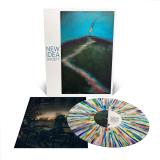
NEW IDEA SOCIETY signs to Relapse and offers their new album, Fire on the Hill. The band has taken on differing shapes and forms over the years, but at its heart is the duo of Mike Law (Wild Arrows) and Stephen Brodsky (Cave In, Mutoid Man), a pair enraptured and united by the alchemical power of songwriting. With a connection that can be traced back to their high school years, between them exists an intuitive understanding that informs exactly what NEW IDEA SOCIETY is at any given point. Although the pair have come a long way since their earliest explorations in audio in the late 90s, the roots of their alliance were forged in those makeshift basement studios. For Fire On The Hill, Law and Brodsky took a more collaborative approach to songwriting than on previous releases. With Brodsky describing their process as “microscopic” and Law marveling at the particulars of the minutiae they pored over, the attention to detail and their meticulous approach to making adjustments in service of the work shines through in the cohesiveness of this collection of songs. With demos passed back and forth over months - Brodsky sending them in the early morning, and Law taking the evening shift - the songs evolved naturally; refining a chord progression, adapting a lyrical perspective, or in the case of the track Lantern, rewriting the words entirely. Thematically the album is about love, in its many forms. With each track detailing some element of navigating emotional relationships - the beauty, the pain, the loss and the hope - the duo have captured the immediacy and urgency of such feelings, tempered by a sliver of yearning that stops short of tipping into nostalgia. Now with years of experience to their names, alongside a developed vocabulary and extended sonic palette to draw from, they have created something specifically and idiosyncratically NEW IDEA SOCIETY. Fire On The Hill is them in full flight, at the height of their powers. Short: NEW IDEA SOCIETY signs to Relapse and offers their new album, Fire on the Hill. The band has taken on differing shapes and forms over the years, but at its heart is the duo of Mike Law (Wild Arrows) and Stephen Brodsky (Cave In, Mutoid Man), a pair enraptured and united by the alchemical power of songwriting. FFO: CAVE IN, MUTOID MAN, EMMA RUTH RUNDLE, HARVESTMAN, BIG BRAVE, CRIPPLED BLACK PHOENIX, JESU
erscheint voraussichtlich am 15.05.2026
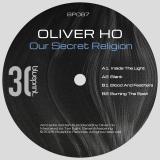
Continuing Blueprint's 30th anniversary celebrations, James Ruskin welcomes the return of Oliver Ho, whose relationship with the label is deep-rooted.
Oliver Ho has spent the last 30 years devoting his life to creating some of the most intense and compelling electronic music out there. Debuting his signature raw sound in 1996 on Blueprint Records, he cemented himself in the underground of the '90s UK techno scene. With a plethora of aliases, he has navigated his way through many different genres. From the frenetic tribal sounds of his own Meta imprint, the off the wall house music made as Birdland and Raudive, the grinding industrial of Broken English Club and the heavily textured ambient of his Slow White Fall and Zov Zov projects. While pushing and pulling at the fringes of electronic music, at the very centre has always been the beating heart of hypnotic techno, an art form that is both brutal and bewitching; techno as ritual magic. Oliver's live shows and DJ sets showcase this expression of music as shamanic experience, metallic and relentless, pure and direct.
An integral figure in shaping Blueprint's early sound, Oliver Ho returned in 2016 for their 20th anniversary with the "Burning Heretics EP", which was followed by a remastered reissue of 1999's "Awakening The Sentient". So it's fitting that he's now back for this latest milestone with a new EP, "Our Secret Religion" dropping in May.
Bestelle jetzt und wir bestellen den Artikel für dich beim Lieferanten.
Oceanine, Jolanda Moletta’s third album and her first for Beacon Sound, is a powerful and ethereal statement of artistic community. Expanding on her previous work, each track represents a collaboration with a different female vocalist, with the foundational elements being generated entirely by her own voice. By turns haunting, enchanting, and inspiring, you won’t want to come up for air once you’ve been pulled under. Representing a
musical practice that is distinctly feminist, this is an album with a longer view in mind, to an age when the altars were to goddesses and women were centered as powerful beings representing the earth’s cycles of regeneration and renewal. Oceanine then, in all its beauty, can be viewed as an album of survival. It is deeply transportive, accessing something that lies within all of us. As the late, great Lithuanian folklorist and archaeologist Marija Gimbutas noted, “We must refocus our collective memory. The necessity for this has never been greater as we discover that the path of 'progress' is extinguishing the very conditions for life on earth.”
Jolanda Moletta is a multimedia artist and one-woman electronic choir. She creates wordless compositions through extended vocal techniques, integrating wearable-controlled live processing, alongside symbolic visuals. Moletta considers her performances to be a collective ritual and creates her Sonic & Visual Spells following the cycles of nature and the moon. Jolanda's 2022 critically acclaimed album Nine Spells was released on the Ambientologist label, followed by Night Caves on Whitelabrecs in 2025. Moletta’s artistic practice is a radical and spiritual journey through sound art, ritual, and the symbolic archaeology of the feminine.
Oceanine is inspired by sirens, water nymphs, and the timeless call of the sea. At its core lies Jolanda’s deep, lifelong connection to the Mediterranean Sea and to the ancient and modern myths and folklore that have emerged from its waters. Growing up by the Mar Ligure, Jolanda was surrounded by stories carried by salt, wind, and waves: legends of sirens, echoes of ancient voices, and the sea as both origin and oracle. This intimate relationship with the Mediterranean is not merely a backdrop, but a living source that shapes Oceanine’s emotional, symbolic, and sonic world.
Each track features a different female vocalist, creating a rich tapestry of voices, styles, and perspectives. This artistic choice not only broadens the album’s sonic palette, but also deepens its narrative core: celebrating the power, beauty, and mystique of feminine energy through myth, history, and sound.
The entire album is built exclusively from the human voice, processed and layered, yet always remaining voice, and nothing else. For each piece, Jolanda invited every vocalist involved to contribute a raw stem: a short, unedited melodic fragment of just a few seconds, inspired by the album’s themes. These intimate vocal seeds became the foundation of each track: the guest artists’ voices appear as brief, melodic stems, while the entire surrounding “orchestral” fabric is created solely from Jolanda’s own layered and processed voice. In this way, Jolanda’s voice becomes the Ocean itself, embracing, absorbing, and carrying the sirens’ calls within a vast, immersive soundscape. Every song is a unique expression of the feminine experience, revealing its depth, complexity, and emotional range, echoing the call of the sea and the many faces of the siren archetype.
The figure of the siren has transformed across centuries. In myths of Ancient Greece and Rome, sirens were hybrid beings, part woman, part bird, whose irresistible songs lured sailors to their doom. During the Middle Ages, the image shifted toward the half-woman, half-fish figure, often associated with temptation and danger. Historically, the voice of women has often been feared. Sirens were considered harbingers of misfortune not simply because they seduced or destroyed, but because they were powerful liminal beings.
In Ancient Greek, sirens functioned as psychopomps: figures who existed between worlds and guided souls, especially between life and death. Their songs were believed to carry forbidden knowledge, including prophetic insight and the ability to reveal truths about fate and the future. The danger of the sirens lay in what they revealed: knowledge that humans were not meant, or ready, to hear.
Oceanine confronts this legacy head-on. The voices heard throughout the album are not merely beautiful: they are dark and luminous, wild and enchanting, magical, soothing, dreamy, and at times fractured or distorted. They whisper, lament, beckon, and enchant. Like sirens, they skim the surface of the water and sink into its depths, hovering on the edge between tenderness and danger, vulnerability and power. They rise toward the sky, dissolve into mist, and return as echoes charged with raw, elemental emotion: voices that seduce, warn, mourn, and remember. They refuse to be reduced to decoration.
Alongside the album’s release in May, Oceanine will also unfold as a visual and performative work through a short art film. The film includes a live session recorded inside a sea cave facing the Mar Ligure, the very coastline where Jolanda spent her childhood, dreaming of sirens and listening to the sea as if it were speaking directly to her. This site-specific performance reconnects the music to its place of origin, allowing the voice to resonate within stone, water, and air, and transforming the cave into both a sanctuary and a threshold between myth and reality.
What if the sirens’ songs were considered dangerous because they carried another truth, an ancient truth long forgotten?
Oceanine embraces the idea that we are still deeply woven into myth. Though we may see ourselves as rational and modern beings, our world is saturated with ancient symbols and archetypes, often distorted, simplified, or stripped of their original meaning. And if those symbols are allowed to shift, if the mirror once held by the siren becomes an invitation to look beyond appearances and into what has been obscured, then we may finally uncover a deeper truth and reclaim the voice that was always ours.
Oceanine is not just an album. It is a reclamation, a spell, and a call from the depths.
erscheint voraussichtlich am 01.05.2026
After their last album six years ago, "Primal Forms," the new album by Phantom Horse, finally arrives. The German duo of Ulf Schütte and Niklas Dommaschk have long established a reputation for expertly crafted, hypnotically slow-burning electronic music, and we do not hesitate to say that "Primal Forms" stands among the epitomes of their discography.
The sequencing of "Primal Forms" cannot be underestimated. It is an album in the classic sense. It demands to be listened to in its entirety, which also points to a closer affinity with Krautrock. Likewise, a touch of dub is perceptible, wafting around the songs, which, as usual, bear clandestine titles. It is not unreasonable to see in these compact compositions a clear statement against multitasking.
Phantom Horse are not trumpeters of dystopia. They present themselves resolutely, almost stoically, turned away from the world. This turning away is clearly a statement that can be contemplated in the Mariana Trench as well as in comet belts. In any case, it is best experienced in a space without any human beings. This does not mean that grumpy hermits are tinkering with synths behind closed shutters, armed with wooden walking sticks. This is still open minded music with a connection to current developments. The approach itself is what is audible, and with it, Phantom Horse proves once again that their main connection to time is timelessness.
In an age of all-encompassing distraction on every sensory, thematic, and semantic level, Phantom Horse explores the possibilities of reduction, searching for simplified melodic arcs without resorting to the vocabulary of classical minimalism. The overall impression is more electronic; the slowly shifting, polyrhythmic compositions repeatedly lead to a peculiar danceability. However, these are perhaps the dances of mechanical birds, undeterred by anything.
Written and produced in Hamburg, Nijmegen and Ojén by Niklas Dommaschk & Ulf Schütte
Mastering by Rafael Anton Irisarri at Black Knoll
Artwork by Daniel Castrejón
erscheint voraussichtlich am 01.05.2026
Artist and multi-instrumentalist Flaer looks to the landscape to explore pastoral melancholy on debut release, Preludes. It is released in a second edition black vinyl, with an alternate cover artwork.
Ensconced in his family home in rural Leicestershire in the early months of 2020, painter and musician Realf Heygate (b. 1994) picked up his childhood cello for the first time in several years and began to play. Setting himself parameters to only record onto 4-track tape with acoustic instruments – cello, piano and acoustic guitar – he assembled a suite of instrumental compositions that form the basis of Preludes, his debut album as Flaer and the inaugural release on Odda Recordings.
Channelling the tension and unease between the pastoral idyll of the English countryside and the darkness which lurks beneath the surface, the mini-album draws inspiration from the analogue aesthetic of 1970s folk horror films, weaving field recordings of birdsong, church bells and the natural environment into chimerical melodies that reflect on Heygate’s childhood experiences of rural England.
“It was really important not to isolate the sound from its environment,” he explains, describing the compositional and recording process as “site-specific”. Developed over a series of intuitive musical enquiries, the mini-album’s uncanny quality emerges from combining raw demo takes with overdubs of almost orchestral grandeur.
Heygate points to the final track as indicative of the work as a whole: “‘Follow’ really is the mantra for the release and embodies the practical approach I was taking to music making: not to force the music but see where it takes you.”
As a painter, Heygate’s practice takes artefacts through sequences of reproduction that embrace the fluctuating materiality of the copy. Since obtaining a degree in Fine Art from Central Saint Martins in 2017, he has exhibited solo at Peter von Kant and Springseason galleries in London, and has participated in group shows at Saatchi Gallery, Cob Gallery and Senesi Contemporanea.
Describing his artistic practice as one of self-erasure, music instead provides Heygate with a more personal and autobiographical outlet. Where the two worlds combine is on Preludes’ striking artwork, which features paintings of 13th century stone carvings from the font of the church in the town where he grew up.
Speaking to a time where people were connected to the land in a more profound way, each symbol is assigned to a track on the album, which Heygate likens to giving them a title.
“To add that one juxtaposition might open a whole new interpretation or language that might be hard to find otherwise,” he explains.“Over time it might reveal itself to you, which is why I'm excited about it being released. To throw them out there and see what comes of it.”
erscheint voraussichtlich am 24.04.2026

Inspired by the concept of the city as a living, complex entity - a feeling Youniss describes as the difference between "living in a city and just being in that city" - Good Effort! is an open-ended narrative drawn from the artist's own experiences, including growing up on the outskirts of Antwerp.
Like a vibrant city itself, the album is a culmination of organic interactions, layered with diverse perspectives from a collective of artists. Good Effort! features a dynamic cast of collaborators, including international heavyweights like Pink Siifu, Petite Noir, and Quelle Chris, alongside celebrated names from the Belgian underground such as Dienne and Porcelain id.
While retaining his critical edge - especially on themes like gentrification, an acute problem in his home city - Youniss explores the full range of his voice across the album's tracks, resulting in a warmer, more texturally diverse sound.
Tracks like “Notice,” “Glass Ceilings,” and “The Sun Is Falling” expand his textural use of distortion, while others, such as “At the Still Point of the World” and “Why Don’t You?”, float at a more tranquil register. The record's energy peaks on “TakeThat” where Pink Siifu and Youniss trade frenetic bars atop jazzy drum freakouts.
Despite the cynicism forged by witnessing his environment change - like the flattening of the beloved venue Onder Stroom for a parking space - Youniss offers a crucial message of perseverance. The album's title, Good Effort!, is a defiant embrace of trying again.
erscheint voraussichtlich am 20.03.2026
