
Reservar23.09.2026
debe ser publicado en 23.09.2026
debe ser publicado en 23.09.2026
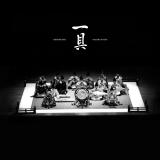
Gagaku is the oldest of the Japanese performing arts, with a history more than a thousand years old. The term refers to Japanese classical music and dance, traditionally performed by families of musicians linked to the ancient Imperial court, and later passed down in Buddhist temple ceremonies and Shinto shrines. Shiba Sukeyasu, founder and director of the Reigakusha ensemble, descends from the Koma clan, whose origins date back to the end of the 10th century. The recordings partly reflect repertoires borrowed from Chinese music between the 5th and 9th centuries. The incredible variety of timbres of the instruments greatly amplifies our exotic imagination: the eternal breath of the flutes (ryuteki and hichiriki) creates a sort of suspension of time, together with the hypnotic and hallucinatory atmosphere of the mouth organs (shō). The meditative tone of the string instruments (bika and koto) that punctuate the voids and silences is impressive, as is the enigmatic percussion section, with the tolling of the gong (shōko) and the calibrated beats of the drums (taiko and kakko).
El artículo no se ha publicado. Tú puedes reservar ahora el artículo y después de ser pagado se te será enviado.

Continuing our quest to get all of the classic early AMT albums released on vinyl, we turn to 2006’s ‘Starless And Bible Black Sabbath’, and with the help of Makoto Kawabata’s studio wizardry, we’ve made it possible.
This latest instalment in the ‘Acid Mothers Temple Vinyl Archives - First Time On Vinyl’ series (as with the three previous SOLD OUT releases in the series) have all been meticulously put together with the help of Makoto Kawabata with the original CD artwork recreated for these vinyl editions from archive photos stored in the vaults at the Acid Mothers Temple in Osaka, Japan and the original audio remastered by James Plotkin.
Here’s what "Brainwashed" had to say upon it’s original CD only release back in 2006 …
“The title track is the meat of the beast, beginning with a minute of booms and gongs reminiscent of a thunderstorm before launching into some slow, heavy Sabbath-esque riffs. Squealing guitar and synth effects accompany the vocals of bassist Tabata Mitsuru, whose voice captures some of the sound and feeling of Ozzy's more than it does the melody. The pace is slower than most AMT fare, but things speed up considerably around the eight and a half minute mark. The group convincingly imitates the Sabbath guitar sound here and the rhythm section is particularly tight, giving listeners something on which to hang their ears or even providing them with a chance to gasp for air during Makoto's guitar explorations. Around the sixteen minute mark, everything comes to a wailing halt before the band returns to the dirge-like tempo that started the song. This pattern continues for the duration of the piece, until a couple of minutes before the ending, when the group makes a smooth transition to acoustic guitar and processed vocals to cool down.
Clocking in at nearly thirty-five minutes, the length alone may tax some listeners. However, the second track, "Woman From A Hell, "provides relief, which with a running time of six minutes is uncommon in the Acid Mothers canon for its brevity. This one condenses many of the ideas of the title track, and accomplishes much of the same evocation of Sabbath, but with the vocals in a more prominent role. The disc comes full circle, ending with thunderstorm sounds much like theones which started the album. Though the title track could have been shortened and perhaps an additional track included, this album remain some of the group's more accessible releases in some time and should please fans old and new alike.
According to the group's website, Makoto is reviving the Melting Paraiso U.F.O. line-up after a year of recording and touring with the Cosmic Inferno. This is a shame of sorts, since the Cosmic Inferno infused a much-needed vitality to the group that it had lacked since the departure of vocalist Cotton Casino. Yet the reformed Melting Paraiso U.F.O. has the potential to be even better since, if anything, Makoto seems to be the Mother of Reinvention.”
Acid Mothers Temple & The Cosmic Inferno are: Tabata Mitsuru - Bass, Vocal, Maratab - Hiroshi Higashi - Synthesizer, Dancin' King - Shimura Koji - Drums, Latino Cool - Okano Futoshi - Drums, God Speed - Makoto Kawabata - Guitars, Speed Guru
Haga su pedido ahora y le encargaremos el artículo en nuestro proveedor.

Volume 3 of a set of collaborations between the prolific Argentine polymaths Reynols and the inescapable Acid Mothers Temple. Recorded in Buenos Aries on AMT’s 2017 South American Tour, the music has identifiable sonic elements from both groups but ends up sounding like neither, with a surprising weightlessness that keeps things jammy and psychedelic until the final track’s blustering rock. Taking up most of side 1, “Kicking Air Bricks” has a loose Gong/’70s Euro-classic vibe, with Satoshima Nani getting to swing on the drums in a way that isn’t always part of AMT’s steamroller, while the rest of the gang layers in abstract piano, percussion, glissando guitar, etc. “Multiverse Turtle Reflex” closes the side with a thick drone coda. Side two starts with Miguel Tomasin’s gentle vocal and organ accompaniment on “Smelling Oneiric Asado” before the group gradually gathers momentum with Wolf’s thick bass anchoring layers of clean and loose guitar interplay. “Lemurian Tsunami Inside A Hat” is a thriteen-minute heavy rock epic, with the Reynols’ guitars going head to head with Makota Kawabata’s easily recognized interjections, ramping up into a riffy crescendo.
debe ser publicado en 31.05.2024

nehan is a Japanese free improvisation & avant-garde rock quintet formed in August 2022. Their performances are initiated by a 9hz brain wave emitted from a testee who has been brought into a deep meditative state via either hypnosis or acupuncture - a very relaxed but very alert state. nehan doesn"t begin until the testee has gotten into the state of "nothingness." It is only then that the improvisation can begin. The role of improvisation has been key to all the musical projects of Masaki Batoh. In 2010, as Batoh was winding down the activity of his long-standing "heavy chamber folk" group, Ghost, he became involved in the design of a machine to generate sonic data based on brain waves. An acupuncturist as well as a musician by trade, his interest was spurred by the rhythms of the body and the brain, and a desire to access the "pulses" of brain waves to initiate improvisations. Following the release of Brain Pulse Music, Batoh toured Japan, the US and Europe, making demonstrations of his process using a local volunteer and guest performers, when available. Today, nehan arrive at their performance space prepared with a Brain Pulse testee, bringing a wide array of instruments including gongs, timpani, tabla and other drums and percussion, Crumhorn, bagpipes, mellotron, oscillators and additional sound effects. Their performance is a transformative electro-acoustic display that passes through the prism of music styles, from east to west, from traditional folk and classical to rock, jazz, and avant electronic. While nehan"s performance presentation invokes a sense of ritual, they understand their process as being far removed from any type of spiritual endeavor - it has nothing to do with eastern thinking or any kind of religious ceremony - this is an action of improvisation, occurring in reality between the five musicians on stage, in response to the brain waves of an individual. For the personnel of nehan, Masaki Batoh asked players with whom he had good previous experiences in improvisation: Futoshi Okano (Ghost, Acid Mothers Temple, The Silence), Haruo Kondo (Espvall & Batoh) and Junzo Tateiwa (Ghost), along with female Brain Pulse testee Gozen on oscillators. The performance here, recorded live in August of 2022 at GOK SOUND in Tokyo, demonstrates their communal dedication to the improvisation. The players act as listeners and musicians simultaneously, inspired to make extended pieces of music out of the "nothingness" of brain waves. The possibilities of nehans"s chosen approach are almost infinite; an evening with nehan is only the beginning of their journey.
debe ser publicado en 26.01.2024

Seven suites of deep and sprawling sonic meditations built around ‘call and response’ improv sessions between Randy Raine-Reusch and Michael Red.
Slow and tempered recordings of Asian flutes, African harps, temple gongs and a myriad of obscure instruments from Randy Raine-Reusch's deep collection mutate and ebb into swirling gossamers of tone. Sonic incantations stretched and magnified further by Red's Sends. An otherworldly play between light and shadow worlds; at times idyllic and light-filled, at times dark and eerie– all engrossing. Dream-reality reconciliations weave between the spectral world of Michael Red's sound processes and the direct physicality of Raine-Reusch's playing. The tension across the pieces builds between the live playing and processing techniques, dutifully revealing a growing familiarity with collective transcendence through sound (bigger than the sum of its parts). Real-time interactive dream music.
Initially realized over the course of a few days in Randy’s instrument museum in Vancouver BC December, 2014 'ERAS' is made up of processed, and sometimes multi tracked, improvisations between Randy and Michael. Through these sessions Randy would choose instruments he sensed possibilities within, and Michael then revealed and sculpted these possibilities. Both resonating, sensing sonic structures, environmental nuances, and further worlds in each other’s art, all within the moment. Being present for each other, they acted on instinct, trusting a first thought, trusting each other; committing, responding to that commitment, then mutating and letting go. Always moving forward, synthesizing and letting the living moment lead the way.
The recordings were left to distill and mature for many years before the composers felt it was ready. With minimal judicious edits and a very light dusting of FXs, both careful to preserve the direct and intuitive process that permeates the recording, ERAS now emerges.
El artículo no se ha publicado. Tú puedes reservar ahora el artículo y después de ser pagado se te será enviado.

debe ser publicado en 08.09.2023

Since 1999 the Kaophonic Tribu plays psychedelic tribal sound... Powerfull tripperz from France bring sound in a Acid mother Temple melted with Highlight Tribe style...
Definitely Gong at some point too...
But finally almost looking like themselves.
Quiet honored to have few copies !
debe ser publicado en 16.09.2022
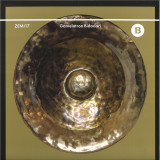
The Gamelatron is many things; one could call it a sculpture, a multimodal installation, an instrument, a robot, a feat of engineering, a vision—and it is all of these things. More importantly, though, it is a concept sustained by Aaron Taylor Kuffner, aka Zemi17, whose Gamelatrons are “sound producing kinetic sculptures” designed to create an immersive, visceral experience for the listener. Not a small feat, and yet the ambitions of Zemi17 are absolutely realized in this long-standing project, culminating now in his third release for The Bunker NY: Gamelatron Bidadari.
The Gamelatron Bidadari is not just a name—it is one of seventy-plus musical sculptures that Zemi17 has conceptualized, designed, and fabricated. Therefore, it would be inaccurate to think of this release as simply a series of arrangements composed in a finite period of time. Rather, it’s a window into a project and a process that is much larger than any single album can encapsulate. Gamelatron Bidardi is the culmination of more than a decade of work, and is central to Zemi17’s evolution, not only as a musician but as an artist.
Having studied gamelan for many years in Indonesian villages and at the Institut Seni Indonesia in Yogyakarta, Kuffner is a musician, an artist, technologist, and craftsman. The gongs in his sculptures are co-created with master Indonesian artisans. Each Gamelatron composition is site-responsive, meaning its sounds are composed for the acoustics and intentions of the space it inhabits, whether it’s an art gallery, a wooded landscape, or the inner temple of Burning Man. The Gamelatron does not stand alone: it is in constant co-creation with its physical environment, and in dialogue with gamelan’s long-standing history.
Originally exhibited at the Smithsonian Renwick as part of a show entitled, No Spectators: The Art of Burning Man, the Gamelatron Bidadari produces sounds that are delicate yet strong, and deeply hypnotic. Textured chiming creates intricate polyrhythmic patterns that are both complex and simple, or in a word, elegant. On Gamelan Bidadari, Zemi17 refrains from adhering to the strict musical structures; his approach to composition is free flowing.
He says, “I want to evoke what the music tells me it has to offer. It is like following water to its conclusion (or non-conclusion).” The arrangements on this album, written by Zemi17 and performed by the robotic arms of the Gamelatron, leaves the listener feeling enchanted, nourished and enriched.
A sense of the mystical comes through in the tonal quality of the instrument, and is conceptually felt in the sculpture’s name: the Bidadari, which loosely translates to “forest nymph.” The music conjures up natural wonder, and the four sculptures that make up the Gamelatron Bidadari, in fact, resemble trees. They are four independent yet connected entities, each with a large gong situated at their structural base—the sonic “roots” of the sculpture—while smaller gongs branch off of a golden, trunk-like spine. The Gamelatron Bidadari is as physically stunning as it is mesmerizing to the ear. A kind of divinity is invoked through its sound, or a sacred cohesion between past and present, tradition and new form. Meant to be viscerally experienced, the sounds of the Gamelatron call for sublime togetherness. Gamelatron Bidadari is not just an album but the crystallization of Kuffner’s work; it is a condensed yet spacious glimpse into the sonic power of Zemi17’s Gamelatrons, which have already been heard and experienced live by over a million people.
Haga su pedido ahora y le encargaremos el artículo en nuestro proveedor.

Nantais by adoption, the Australian Will Guthrie is a discreet star of the international scene of free, experimental and improvised music; over the past fteen years, he has developed an open and personal approach to drums and percussion, skillfully blurring the lines between his brilliant jazz upbringing, his passion for traditional musics, and his inexhaustible interest in experimental and noise creation, with a pronounced taste for a physical and raw approach to sound. With thousands of performances and some fty albums to his credit, the Australian regularly dispenses his vibratory art solo or alongside the best of improvisation; From Oren Ambarchi to Roscoe Mitchell via Jérôme Noetinger, Anthony Pateras, David Maranha, Ava Mendoza, Jean-Luc Guionnet, Keith Rowe or even Mark Fell. In recent months Guthrie has performed with Tunisian singer Ghassen Chiba, toured as part of “All Around”, a performance with Danish dancer choreographer Mette Ingvarsten and founded the Ensemble Nist-Nah, a gamelan orchestra, in the company of eight other percussionists, out of which Black Truf e published an album, with a second on the way. He also found the time to put in shape a second volume of “People Pleaser”, a discographic act between an autographical assessment, the parenthesis and the musical UFO. A singular exercise in Guthrie's discography, “People Pleaser”, a series initiated in 2017, sees the Australian partially put down his drumsticks and wear a producer cap for a result offering a resolutely singular perspective of / on his work with a very personal dimension. On the rst volume, with a cover signed Stephen O'Malley sets the tone by diverting the chamaré Warhol infulenced visual of the album “Unit Structures” by Cecil Taylor. The portrait of the free jazz pianist has been replaced by passport photos of Guthrie. The result is a diversion into a fairly “Pop” aesthetic whose musical content works in a fairly similar way. Four years later, the cover art's undertones are slightly darker and Guthrie hasn't aged a bit on his new passport photo. The twelve tracks of this second “People Pleaser” combine and arrange eld recordings, heady loops, twists, musical quotes stuck on bedside records, recorded moments captured during travels, ghosty voices from low- lands, a police interview tape and imagined exotic sounds ... Guthrie could walk us for hours on his hard drive like looking at a photo album but he chose to build pieces based on this very personal sound material, much like a mixtape, with special care given to how sounds articulate, overlap and collide. He thus invites his heroes and his friends to join him in skilfully chiseled and nely edited imaginary jams. The rst to take pleasure in this “People Pleaser” is undoubtedly its author as some of his nds are enjoyably playful; we are there embarked in an addictive sound patchwork at high speed where a Balinese Squarepusher is propelled via a defective cathode ray tube in a temple where the happy marriage of the saxophone and the gong is celebrated before this too short respite is interrupted by a sustained hip hop rhythm. The multiplicity and variety of sources give the whole a very pop format and the way in which Guthrie combines sounds, textures, rhythms and vocal elements quickly takes on a narrative dimension and poses this exercise between hip hop and a very personal plunderphonic, evoking as much J Dilla or RZA as the irreverent inventiveness of People Like Us or Wobbly. Will Guthrie has never been in as good company as on a solo album, he also lists on the cover the list of friends, heroes, members of his family and countries who inspired him and to whom he pays homage / collage on this new disc; An aesthetic exercise apart in his discography, both in nitely personal and self-centered and resolutely turned towards what animates him, the aptly named “People Pleaser” reveals the music DNA of the Australian and can be listened to on repeat.
debe ser publicado en 08.10.2021

Unbegrenzt is the third in an ongoing series of archival records of the unheard music of Swedish composer Catherine Christer Hennix, co-released by Blank Forms Editions and Empty Editions. It follows Selected Early Keyboard Works and Selections from 100 Models of Hegikan Roku (named the #1 archival release of 2019 by The Wire), in addition to a two-volume collection of Hennix’s writing titled Poësy Matters and Other Matters.
Recorded in February of 1974 and featuring Catherine Christer Hennix (recitation, percussion, and electronics) and Hans Isgren (bowed gong), Hennix’s realization of Karlheinz Stockhausen’s “Unbegrenzt” (German for “unlimited”) from Aus den Sieben Tagen is an elaboration both rigorous and radically different from the canonical 1969 recording issued by Shandar. The collection of 15 text pieces written in Paris during May of 1968, Aus den Sieben Tagen, denies its performers notated direction and instead provides poetic cues that hinge upon Stockhausen’s conception of “intuitive music,” a Eurocentric perspective on improvisation antithetical to the vernacular forms Hennix had engaged with as a young drummer performing in Stockholm jazz clubs with musicians like Bill Barron, Cam Brown, Hans Isgren, Lalle Svenson, Allan Vajda, Bo Wärmell, and many others. While both Hennix and Isgren saw the formal prospect of Aus den Sieben Tagen as a productive development of and beyond La Monte Young’s event scores, she here steadfastly counters his rationalization of intuition with the Principle of Sufficient Reason. (Cf. Brouwer’s Lattice.) Eschewing the busy, conservatory-addled lapses into idiomatic citation of Stockhausen’s 1969 recording, Hennix’s alternative realization of the “Unbegrenzt” score’s instructions to “play a sound with the certainty that you have an infinite amount of time and space” is based on her concept of Infinitary Compositions, the trademark of her ensemble The Deontic Miracle which, at one time, considered adding Stockhausen, La Monte Young and Terry Jennings scores to its repertoire. Taking a mature, minimal iteration of Stockhausen’s compositional method of “moment-forming” to heart, her version’s dark, controlled feedback and amplified bowed gong subtly shift through an immanent sequence of formative moments, step by step. Its bubbling computer noise, percussion, and repeated ominous transient sounds of temple blocks over the bowed gong terminate with the integrated recitation of exotic text fragments from Hevajra Tantra which faithfully take Stockhausen’s score into deeper vistas of the unconscious and a more devastating opening to the unlimited time and space of a dreaming mind.
Audio restoration and mastering by Stephan Mathieu, with an essay by Bill Dietz.
Catherine Christer Hennix (b. 1948) started her creative life playing drums with her older brother Peter, growing up in Sweden where she heard jazz luminaries, such as John Coltrane, Eric Dolphy, Dexter Gordon, Archie Shepp, and Cecil Taylor perform from 1960 to 1967. Directly after high school, Hennix went to work at Stockholm’s pioneering Elektronmusikstudion (EMS), where she developed early tape music, incorporating computer generated speech done at the Royal Technological University (KTH), where she was an undergraduate student. After traveling to New York In 1968, she met artists Dick Higgins and Alison Knowles who invited her to stay at the Something Else Press Town House where she had the opportunity to meet, among others, composers John Cage, James Tenney, and Phil Corner. During the following years she developed fruitful collaborative relationships with many composers in the burgeoning American avant-garde, including, most significantly, Henry Flynt and La Monte Young. Young introduced Hennix to Hindustani raga master Pandit Pran Nath and she would later study intensively under him as his first European disciple. While Hennix continued to make music performing alongside Arthur Russell, Marc Johnson, Henry Flynt, and Arthur Rhames, she also served as a professor of Mathematics and Computer Science at SUNY New Paltz and as a visiting Professor of Logic (at Marvin Minsky’s invitation) at MIT’s Artificial Intelligence Laboratory. In recent years Hennix has led the just-intonation ensemble the Chora(s)san Time-Court Mirage, which has featured musicians Amelia Cuni, Amirtha Kidambi, Chiyoku Szlavnics, Hilary Jeffrey, Amir El-Saffar, Benjamin Duboc and Rozemarie Heggen. She currently resides in Istanbul, Turkey pursuing studies in classical Arabic and Turkish makam.
Haga su pedido ahora y le encargaremos el artículo en nuestro proveedor.
