Search:the deer children

Styles
All
  • 1
NIVE NIELSEN & THE DEER CHILDREN - MY MOTHER'S NAME
  • 1: My Mother's Name
  • 2: Time To Time
  • 3: Paint
  • 4: Low
  • 5: Wild
  • 6: Nuna Pii
  • 7: Blame
  • 8: Systematic
  • 9: Lies
  • 10: Up All Night

Mit My Mother's Name veroffentlichen Nive Nielsen & The Deer Children am 9. Oktober 2026 ihr erstes Album seit zehn Jahren. Die in Nuuk geborene gronlandisch-inuitische Musikerin zahlt zu den pragenden Stimmen einer zeitgenossischen Folk- und Songwriter-Generation, die kulturelle Identitat, personliche Geschichten und moderne Klangasthetik miteinander verbindet. Das neue Album bewegt sich zwischen akustisch gepragtem Songwriting, feinen elektronischen Elementen und einer vielschichtigen Instrumentierung, die auch traditionelle gronlandische Einflusse einbezieht. Thematisch stehen Fragen von Herkunft, Selbstverstandnis und Zugehorigkeit im Mittelpunkt. Nive Nielsen verbindet dabei ihre Erfahrungen zwischen Gronland, Europa sowie internationalen Kunst- und Filmprojekten zu einem ebenso zuganglichen wie facettenreichen Werk.

pre-order now09.10.2026

expected to be published on 09.10.2026

TIMOTHY ARCHAMBAULT - ONIMIKIG LP

Onimikìg Algonquin: (n. an.)- thunder Timothy Archambault's unaccompanied flute pieces for this album have been inspired by Indigenous brontomancy (divination by thunder). Each piece highlights a different extended flute technique metaphorically related to types of thunder sounds: claps, peals, rolls, rumbles, inversions, and CG (cloud-to-ground). An important document of new music meets contemporary musicological research via Stephen O'Malley of SUNN O)))'s Ideologic Organ. The Indigenous flute used in this recording is made of cedar respective to the traditional woods used by the Kichesipirini and other tribes who live along the Ottawa & Saint Lawrence Rivers. To the Algonquin the flute (Pibigwan) is the wind maker or essence of the wind. Unlike other tribal nations whom the majority used the flute as a courting instrument, the Algonquin generally utilized the flute for more contemplative singular usage to mimic the sounds of nature or as a signaling device during times of conflict. When love songs were required, they were usually more plaintive in character expressing sadness, loneliness, or concerning the departure of a lover. The album intro begins with the shaking of a necklace of otter penis bone, fish spine, bear claw, elk teeth and deer hide, gifted from Algonquin Elder Ajawajawesi. It is meant to focus the listener's attention before the flute pieces begin. The warble or multi-phonic oscillation prevalent in all the pieces traditionally represented the "throat rattling" vocalization of the tonic note, sometimes known as the horizon of which the melody floats from. Due to the repetition of multi-phonic oscillation the performer will breathe erratically creating an altered state correlating with similar traditional ceremonial practices.

pre-order now06.09.2024

expected to be published on 06.09.2024

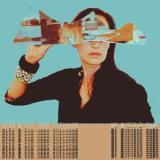
Various - Bills & Aches & Blues (40 Years Of 4AD)

In 2020, 4AD turned 40. Never one to be on time for a party, the label is
commemorating that landmark this year with the release of ‘Bills & Aches & Blues’.
The compilation features 18 of its current artists covering a song of their
choosing from 4AD’s past: a creative experiment rooted in the spirit of
collaboration and a snapshot of 4AD, 41 years after its inception.
‘Bills & Aches & Blues’ will be released on double CD and double LP. The
first 12 months’ profits from ‘Bills & Aches & Blues’ will be donated to The
Harmony Project, a Los Angeles-based after-school programme for children
from communities and schools that lack equitable access to studying the arts
or music.
‘Bills & Aches & Blues’’ 18 recordings contain fascinating connections
between artist and track. The earliest song chosen (by U.S. Girls) is The
Birthday Party’s ‘Junkyard’, from 1981; the most recent are the two Grimes
covers (‘Genesis’ and ‘Oblivion’, respectively by Spencer. and Dry Cleaning)
from 2012. Suitably, for the one band that bridges 4AD past and present, The
Breeders are all over ‘Bills And Aches And Blues. They’re covered three
times - ‘Cannonball’ by Tune-Yards, ‘Mountain Battles’ by Bradford Cox of
Deerhunter and ‘Off You’ by Big Thief, whilst The Breeders cover ‘The Dirt
Eaters’ by their ‘90s contemporaries His Name Is Alive.
Landmark songs such as ‘Cannonball’, ‘Song To The Siren’ and Pixies’
‘Where is My Mind?’ will feel comfortable to casual fans, however by
contrast, much joy can be found in the album’s surprise choices, such as Air
Miami’s ‘Seabird’ and the Lush B-side ‘Sunbathing’, covered respectively by
new signings Maria Somerville and Jenny Hval.
‘Bills & Aches & Blues’ is named, arguably (as Elizabeth Fraser never
published the lyrics), after the opening line of Cocteau Twins ‘CherryColoured Funk’. Perhaps too unique and uncoverable in their own right, their
legendary take on Tim Buckley’s ‘Song To The Siren’, under the name This
Mortal Coil (along with Buckley’s pre-Starsailor acoustic version) informs
SOHN’s cover.
Some tracks unearth hitherto hidden shared DNA, such as Future Islands’
and Colourbox’s ‘The Moon Is Blue’; other tracks are more akin to
reinvention. Aldous Harding distils the melodic essence of Deerhunter’s
‘Revival’ and recasts it in her own uncanny image. U.S. Girls’ future-disco
‘Junkyard’ and Bing & Ruth’s neo-classical instrumental ‘Gigantic’ are even
more radical interpretations. Leading off the album, Tkay Maidza brings both
her Art Rap and R&B game, but also an unexpected ‘80s synth pop template,
to Pixies’ ‘Where Is My Mind?’, a perfect title for these chaotic times.
pre-order now23.07.2021

expected to be published on 23.07.2021

  • 1
Items per Page:

Language

N/ABPM
Vinyl
