
нет на складе
Закажите сейчас, и мы закажем товар для вас у нашего поставщика.
Последний логин: 4 г. назад
Закажите сейчас, и мы закажем товар для вас у нашего поставщика.

Ltd. Ed. 180 units w/ Special Poster Cover
Syncope is concept EP, a mutant musical and visual project
initiated in 2018, promoting the inherent link between music and graphic design. It takes roots in Isaac Newton's Opticks treatise, which for the first time addresses a relationship between audible and visible. Syncope aims to explore the diversity and affinity of distinct phenomena such as frequencies, colors, synesthesia, polyrhythm ...Each exploration takes the form of a visual and musical narrative. This duality emerges on all visual and musical media, mixing plastic and technological elements, organic and synthetic, exploring the intimate relationship between man and machine. Dual nature also existing within the object, both a cover and a poster. A particular interest is giving to printing, using offset, with bronze and purple Pantone colors.This EP is the first object resulting from this project. Oil thief is an ambient track with synthetic and bestial sounds. Jungle is a rite of passage integrating African percussion and polyrhythms. Mengele Zoo close this EP with a progressive and psychedelic guitar slick.
Закажите сейчас, и мы закажем товар для вас у нашего поставщика.

Lithuanian based label Sodai started its journey in 2016, making it a label still in it's infancy but making a big impression. Owned by artist Gardens Of God, who started the label to create his own 'no limits' platform for his experimental sounds and projects. While at the same time a platform to give other artists the chance to also have freedom with art and music.
With releases from Raxon, Few Nolder and Alex Krell under their belt, they can announce the exciting debut from UK producer Third Son this April. 'I've been an admirer of Gardens Of Gods' music for a long time, when he asked me if I could do something for his imprint, I was more than thrilled!' adds Joseph.
'Syncope's' synths spread far and wide, making this a journey of a track, modulating and panning in and out, pushing and pulling along a percussive drive. His broad musical range can be felt in this mix, with its slightly hypnotic tones.
'Irony' has a punctuated low end, which creates a deep and dark groove. The synthetic elements in this track gain in attitude, on top of ambient pads, leading nicely into 'Bach' to close out the release. It's driving and determined bass makes the backbone of the track, with a modulating hook line, along building and expanding frequency ranges.
The whole package makes for a very strong first release from Third Son, and Sodai are excited to be welcoming him to the family.
Закажите сейчас, и мы закажем товар для вас у нашего поставщика.

In search of the sublime, contemporary electronic musician Steve Hauschildt has designed grids and panoramas of sound across multiple releases through the rise and dissolution of his former band, Emeralds, an American touchstone of 2000s home-recorded psychedelic noise music. Consistent with his solo work is Hauschildt's ability to coil his craft in precise, varied, and distinctly physical forms. Gently spinning arpeggios converse with post-industrial decay. Sonic bers sway like pendulums from static melancholy to motorik bliss. Dissolvi, the artist's rst full-length with Ghostly International, engages sublimation from an ontological perspective: by dissociating the self. Hauschildt steps out from the singular path, for the rst time in a traditional studio, to compose and arrange contributions from friends. As a result, his most collaborative work to date extends a vast, vibrating framework in which to consider the state of being.
The album's title — a reference to cupio dissolvi, the Latin phrase meaning "I wish to be dissolved" — needn't be taken one-dimensionally or as purely solipsistic. It does, however, serve an apt reference. Physiological phenomena are of interest to Hauschildt. These back-of-mind ruminations nd their way out. Songs are cerebral in orientation, but beyond explanation, the music is truly visceral.
Involuntary eye movement inspires the serene, sanguine-nearing-suspicious "Saccade." Hauschildt feathers soft percussion beneath the echoed refrains of Los Angeles musician Julianna Barwick, together shaping a svelte suggestion of the anxieties brought about by modern-day surveillance; if everyone is being watched constantly, there is no individual, no self, only a broadly monitored and clumsily cataloged populous. The work of Chicago poet Carl Sandburg comes to mind: 'I am the people—the mob—the crowd—the mass.' The individual dissolves into the taxonomic crowd.
Minimalist techno impulses provide a stylistic through-line for Dissolvi. Understated synth phrases and drum grooves take hold in selective moments, like synchronistic structures onto which nebulous mists, like the rapturous voice of Gabrielle Herbst aka GABI on "Syncope," cling to and cloud, producing a dazzling rift in consciousness. The 7-minute centerpiece "Alienself" reiterates this creative logic, burbling like an amorphous body of water on a low-gravity planet, on the verge of dissolving, but never fully dematerializing.
The album was constructed in Chicago (where Hauschildt now resides) and partially in New York. "Much of it was recorded in a windowless studio which removed elemental or seasonal references to time in the music," says Hauschildt. "The focus this time was on mixing the album and incorporating a broader set of instrumentation. I describe my compositional approach as being quasi-generative." Embracing new methods and philosophical curiosities, and in turn, expanding the range of his repertoire, Hauschildt proposes a fascinating and profoundly rich experience in listening, being, and deliquescing.
Закажите сейчас, и мы закажем товар для вас у нашего поставщика.

Закажите сейчас, и мы закажем товар для вас у нашего поставщика.
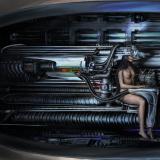
DIVA AS TECHNOLOGY
Arca announces the details of her highly anticipated new studio album, XXXXX, arriving via XL Recordings. Five years after the twice GRAMMY-nominated KiCk i and subsequent KICK pentalogy, the Venezuelan-born musician, producer, vocalist, and visual artist returns with her first full-length album since concluding one of the most ambitious chapters in contemporary music.
If the KICK era expanded Arca's universe outward, XXXXX turns inward and fractures it apart. Across 16 tracks, the album excavates vastly different emotional landscapes to deliver a body of work that is darker, more aggressive, more experimental, and unwilling to settle into fixed form. Initially conceived as a mixtape before revealing itself as an album, XXXXX embraces contradiction as a core methodology. In the spirit of her previous mixtapes @@@@@ (2020)—released as a 62-minute single—and &&&&& (2013), XXXXX thrives on raw exploration and instinct. It arrives as a deliberate interruption of expectation.
“It seems playful, also mischievous, to interrupt that autopilot,” says Arca.
The album's striking artwork depicts Arca as a biomechanical entity, accompanied by two owls—symbols of protection and the underworld in Greek mythology. Like the music itself, the imagery inhabits a space between worlds where transformation is both terrifying and liberatory. Suspended between posthuman augmentation and raw emotion, XXXXX exposes the mainframe. It is a record born from uncertainty, contradiction, instinct, and surrender—a becoming-machine that continues Arca's lifelong project of redefining what it means to be human both in, and against, the machine.
For Arca, rebirth has never been a metaphor, but a practice. She continues to exist in multiple states simultaneously, collapsing boundaries between human and machine, high and low culture, and experimental noise and pop music. Following her first-ever painting exhibition at London’s ICA earlier this year, XXXXX arrives as the latest transmission from a continuously evolving creative process. Over the last year, Arca has remained prolific: unveiling the double-sided single "Puta" / "Sola"; remixing tracks for Addison Rae, Robyn, and Hikaru Utada; collaborating with Tokischa on “Chama”; and contributing production to Madonna’s CONFESSIONS II. She walked the runways and made appearances at major international fashion weeks, while also composing the original motion picture soundtrack for Stillz’s film, Barrio Triste.
Now, after years of transformation beneath the surface, her next musical evolution reveals itself.
он должен быть опубликован на 13.11.2026

The journey through French-speaking pop archives continues with this fifth volume, packed with fuzz, gimmicks, and dissent. Far from the charts, the selected tracks display a great creative freedom, often backed by corrosive humor. Welcome to the surprising, kaleidoscopic, and colorful world of the late sixties and early seventies, Wizzz!
Born in Montauban, Robert Pico stumbled into music by chance when he met René Vaneste, then artistic director at Pathé-Marconi. René brought him to Paris to record his first 45 RPM EP in 1964. A year later, Pierre Perret introduced him to Vogue, where he recorded his second album with Claude Nougaro’s orchestra. Sylvie Vartan then introduced him to RCA, where he recorded four singles, including the astonishing "Chien Fidèle," a track backed by a hair-rising fuzz guitar. Alongside his solo career, he also composed for other artists like Alain Delon (the song was recorded but remains unreleased), Magali Noël, Bourvil, and Georges Guétary. In the Paris of the sixties, he mingled with Mireille Darc, Elsa Martinelli, Marie Laforêt, France Gall, Françoise Hardy, Petula Clark, Régine, Dani, Serge Gainsbourg, Joe Dassin, Franck Fernandel, Charles Level, and Roland Vincent. Despite his efforts and winning a Grand Prix Sacem for his final record, Robert Pico didn’t achieve the expected success in show business and decided to leave Paris and return to the Southwest, where he devoted himself to writing. He is the author of 23 books (including Delon et Compagnie, Jean-Marc Savary Editions 2025, a memoir about his youth and his many encounters). Today, he is relieved to never have become a celebrity and devotes himself to his work with passion.
In 1969, the Franco-Italian movie Erotissimo was released, directed by Gérard Pirès (who later directed Taxi in 1998, written and produced by Luc Besson). This pop comedy features Annie Girardot, Jean Yanne, Francis Blanche, Serge Gainsbourg, Nicole Croisille, Jacques Martin, and Patrick Topaloff. The soundtrack was written by Michel Polnareff and William Sheller, with lyrics by Jean-Lou Dabadie. "La Femme Faux-cils," performed by Annie Girardot. It recounts the feelings of a rich CEO's wife who seeks to develop her sex appeal under the influence of advertisement and magazines. Groovy, sparkling and light, this track, with ITS lush arrangements humorously critiques consumer society and feminine beauty standards.
“Je suis l’Etat” (1967) is the flagship track of the first EP by singer-songwriter Spauv Georges, aka Georges Larriaga, better known as Jim Larriaga (1941-2022). Born into a family of bakers, the young man was initially planning to become a hairdresser when he discovered English-speaking music through Elvis Presley and the Beatles. After this revelation, he decided he would become a songwriter and gave himself five years to succeed. He recorded his first two EP’s independently for RCA under the pseudonym Spauv Georges; meaning “that poor George”, a nickname given to him by the mother of her friend Jean-Pierre Prévotat (future drummer of the Players, Triangle, or Johnny Hallyday). Portraying a depressed and eccentric young man, Spauv Georges created corrosive and amusing songs that didn’t reach a wide audience, despite a TV appearance with Jean-Christophe Averty.
Supported by his loyal friend and fellow songwriter Jean-Max Rivière, Georges Larriaga met the future singer Carlos in the early '70s, then Sylvie Vartan’s assistant. He wrote songs for Carlos, including the popular "La vie est belle," "Y’a des indiens partout," and "La cantine", which went onto become a huge hit in 1972. He also composed for Claude François (“Anne-Marie”, 1971), Charlotte Julian (“Fleur de province”, 1972), helped launch child singer Roméo (who sold 4 million records), and later wrote the hit "Pas besoin d’éducation sexuelle" (1975) for the young Julie Bataille. In 1971, Jim recorded an album for Disc'Az: “L’univers étrange et fou de Jim Larriaga”, which featured pop gems like “La maison de mon père”.
The story of the song "Zoé" began when Pierre Dorsay, artistic director at Vogue Records, asked Swiss singer and musician Pierre Alain to write a song for a new female singer. The inspiration came when he realized that Zoé (the artist's name) was also the name of France's first atomic battery, created in 1948, which consisted of uranium oxide immersed in heavy water! The lyrics reflect a bubbling energy that must be handled with caution, while the instrumentation echoes this atomic theme, notably with the use of a theremin.
Zoé’s career lasted only as long as a single 45 RPM, but it seems Christine Fontane was the vocalist behind this pseudonym, who is known for several EPs, a good "popcorn" album in 1964, and a handful of children’s singles in the '70s. Regardless, the photograph on the cover is of a different girl entirely.
Later, Pierre Alain continued his career, writing songs for himself, Marie Laforêt, Danièle Licari, Alice Dona, Arlette Zola (3rd place in Eurovision 1982), and achieving multiple gold and platinum records in Canada. Also an inventor with several patents, president of the Romande Academy, and head of the French Alliance in Geneva, he now composes atonal music, books, and poetry. Moreover, he is also the host of "Les Mardis de Pierre Alain" at "Le P'tit Music'Hohl" in Geneva.
Filled with oriental choruses and fuzz guitar, "Fou" is from Jacques Da Sylva's only EP released by Vogue in 1967. Despite the quality of this recording, all traces of this singer disappear after this first effort.
Valentin is a baroque pop singer born in Belgium. He is the songwriter and composer of most of the tracks on his three singles released in the late 60s in Canada. A legend says that he reincarnated himself as Jacky Valentin during the 1970s for a rock'n'roll revival career in Belgium, but his older brother sadly debunked this story. Valentin's first two singles were arranged by Claude Rogen, a Parisian session pianist who had come to Canada to promote the song “Mister A Gogo”, a cover of David Bowie’s “Laughing Gnome”, adapted by singer Delphine, his wife at the time. Far from his usual network, Claude Rogen arranged music for Polydor, including the arrangements for “Je suis un vagabond” in 1969, a jerk tune with string arrangements and a furious optimism.
Jacques Malia wrote, composed, and recorded his only 45 EP for Festival in 1966. “Histoire de gitan” is an incredible beat track with bohemian scat that tells the story of a gypsy musician who came to Paris to make it in the Music-Hall, to no avail. The hero of the song and its author probably shared a similar fate, as Jacques Malia faded into anonymity after this remarkable attempt.
Bernard Jamet recorded two EPs for Barclay in the late sixties and co-wrote several songs with Christine Pilzer, Pascal Danel, and prolific songwriters Michel Delancray and Mya Simile. The track “Raison Légale” (1968), his masterpiece, immerses the listener in a courtroom right when a murderer is being judged, with jerk rhythm and free arrangements. A unique, paranoid, judicial, and psychedelic oddity.
Jean-Pierre Lebrot-Millers started his career in show business in 1967 as a singer and songwriter for the Philips label. After three singles, he wrote several songs of a new kind with his friend Pierre Halioche, in the midst of the sexual liberation movement and the democratization of drugs. With provocative lyrics, “Les filles du hasard” and “Barbara au Chapeau Rose” were released on a Philips singles in 1968. The character of Barbara was inspired by a queen of Parisian nightlife during the psychedelic years: model Charlotte Martin, who dated Eric Clapton from 1965 to 1968, then Jimmy Page from 1970 to 1983. Jean-Claude Petit’s arrangements, with a table-filled intro, soul brass, and Hendrixian guitar, emphasize the flamboyance of a hedonistic and sexy character, whose dog is named Junkie because “Junkie est un nom exquis”! The track was recorded live in three takes with a full orchestra.
Upon its release, the record was censored by Europe 1 and RTL due to its references to drug use. Jean-Pierre Lebrot was then banned from the airwaves and later dismissed by his record label. He changed his artist name to Jean-Pierre Millers, while his companion Pierre Halioche became D. Dolby for a new dreamy composition, “Chilla”, which Jean-Pierre produced himself with arrangements by Jean Musy. Once again, the song was immediately censored everywhere. After this setback, he decided to stop singing and started taking on odd jobs to support his Swedish wife and their son until the day he met Jean-Pierre Martin, then production manager at Decca, who had worked with Manu Dibango. Martin offered Jean-Pierre Lebrot-Millers, then employed at Rank Xerox, the position of artistic director at Decca. He accepted and became, a year later, promotion director (radio, press, TV). He worked on Julio Iglesias’s first album for Decca, which became a massive hit and allowed him to meet Claude Carrère. The latter asked him to write new songs and find their performers, much like a “talent scout.” It’s through him that Jean-Pierre discovered Julie Pietri and Corinne Hermès. He composed “Ma Pompadour” for Ringo, Sheila’s husband, and took the microphone again for the syncope hit “Rendez-Vous” in 1982.
That same year, Jean-Pierre Lebrot-Millers tried to release a track for which he had heavily gone into debt: “Si la vie est un cadeau”. Having recorded it in London, he presented it to numerous professionals, all of whom refused to get involved. The same thing happened with Antenne 2 and the Sacem when he proposed the song as France’s entry for Eurovision. He then met Haïm Saban, who was producing cartoon soundtracks and had just launched the Goldorak theme song. Saban, having listened to the song, declared it had the potential to become a hit. He sent Jean-Pierre and Corinne Hermès to meet the CEO of the Luxembourg radio and television network. The latter received them, asked to hear a verse and chorus a cappella in his office, and immediately hired them to represent Luxembourg at Eurovision 1983. They reworked the arrangements and recorded a new version with Haïm Saban as co-producer. The song ended up winning Eurovision 1983, a great comeback for our hero. He continued producing and hung out with the band Nacash in Belgium when a couple came to introduce their daughter for an impromptu audition in a hotel room. The girl sang “Les démons de minuit” while dancing to a radio cassette. Impressed, he had her take singing lessons for a year and composed a song for her (for which he had the melody and title, but no lyrics). This required him to go on the hunt for a lyricist, who ended up being Guy Carlier. They recorded the song, which was initially a ballad, at Bernard Estardy’s CBE studio, and gave the singer a new name: Melody. They showed the song around their industry network without success. Later, Estardy called Jean-Pierre to suggest changing the rhythm and making it pop-rock. Orlando, Dalida’s brother, liked the result and decided to co-produce the track. “Y’a pas que les grands qui rêvent » became a classic hit. The song has since been covered by Juliette Armanet (as a ballad, like the original) and Valentina.
Born into an aristocratic Breton family, Hervé Mettais-Cartier worked as a DJ at Queen Kiss, a nightclub in Poitiers, where he formed the band Les Concentrés with Michel (an actor) and Christian (a radio technician). Together, they created a repertoire of whimsical songs (“Ma bique est morte”, “J’suis un salaud”, “Fils de dégénéré”...) that they performed on stage dressed in white (in homage to “concentrated milk”). They performed at Bliboquet and Olympia in 1968 for the 10th edition of the “Relais de la chanson Française” organized by L’Humanité-Dimanche and Nous les Garçons et les Filles, sponsored by Pepsi Cola. Winners in the author-composer category, alongside Danish singer Dorte, their visibility allowed them to record a 45, and appear on television in Jean-Christophe Averty’s show. The A-side of the disc features Bruno le ravageur, a casatchok dedicated to Bruno Caquatrix, the director of Olympia, nicknamed in the song “Coq Atroce” or “croque-actrices”. The B-side is dedicated to “Fils de dégénéré”, a quirky tribute to Hervé's aristocratic roots, mixing absurdity with sophisticated vocal harmonies.
After Les Concentrés, Hervé Mettais-Cartier formed the duo La Paire et sa Bêtise with his friend Olivier Robert. They performed in Parisian cabarets and toured with Pierre Vassiliu. In the late 1970s, Hervé began a solo career. He recorded two albums for the Motors label in 1978 and 1979, which did not achieve their anticipated success due to lack of promotion. In 1980, he met Bernadette, with whom he started a family and created a “Chansons à voir” (songs to see) show that he performed until his death at the end of 2024.
Publicité comes from the final EP by the Missiles (Ducretet Thomson, 1966), a disc that also includes “La (nouvelle) guerre de cent ans”, featured on Volume 4 of our Wizzz! series. Please refer to the booklet for the story of the band.
“He’s 1.82 meters tall, 28 years old, weighs 135 kg, is black and Belgian”: this is the description of singer Hegesippe on the back of his sole single (Decca, 1967). He appears on the album cover wearing a Greek toga, like a hippie gag – we are at the end of the year 1967. In “Le crédo d’Hegesippe”, this former bodyguard of Antoine and the Charlots plays the delightful card of the thick brute converted to Flower-Power and non-violence, with arrangements by Jean-Daniel Mercier, aka Paul Mille.
“Ethéro-disco” was released on a promotional record for clients of the Maréchal company (Liège, Belgium) for the New Year 1979. Over a funky rhythm, celebrity impersonations (Brigitte Bardot, Jacques Dutronc, Fernandel…) deliver an enigmatic text about pharmaceutical products like ether, bismuth, and aspartate. The track was composed by Dan Sarravah (responsible for Joanna's “Hold-up inusité” featured on Wizzz! Volume 3) and Tony Talado, who was also a singer (one 45 in 1967), songwriter (with over a dozen credits between 1964 and 1985 in various styles from surf music to disco), author (Devenez Végétarien, Dricot Editions, 1985), ad designer, and psychologist.
Décollez-les is on the A-side of Mamlouk's only single, a pseudonym for Marsel Hurten, who is known for his work on several EPs in the late sixties, as well as composing music for Hervé Vilard’s “Capri, c’est fini”, Claude Channes' “La Haine”, Annie Philippe’s “On m’a toujours dit”, and Nancy Holloway’s “Panne de Cœur”.
This strange song, with Afrobeat horns and absurd dialogues between a chef and his kitchen staff, is the result of a collaboration between Marsel Hurten and one of his neighbors, a photographer from Pavillon-sous-Bois (93), where the musician settled after returning from the Algerian War. A music video was shot to promote the record.
Marsel Hurten was born in Tourcoing (59) into a musical family. At a young age, he joined the brass band founded by his grandfather, playing the piston before studying trumpet at the conservatory, as well as teaching himself how to play the guitar. As an orchestra musician, he toured in France, Belgium, Germany, and England. He released a series of solo 45’s between 1965 and 1968 for the DMF and Az labels before stopping recording to focus on working for other artists (Gilles Olivier, Noëlle Cordier…).
“L’amour nu” (Vogue, 1971) is the work of the short-lived Belgian band Mozaïque. The track, written by singer Jacques Albin, closely resembles another of his compositions, “Carré Blanc”, which he recorded in 1969 for Disc’AZ.
Represented by the Lumi Son micro-label based in Marignane (Côte d'Azur), Jean-Marc Garrigues released two 45 RPMs in the late sixties, defending the French jerk sound. The song “Je dis Non” is a short, joyful ode to youth, pop music, and rebellion.
Songwriter and performer Jacques Penuel released three singles. The first one, “Astronef 328” (Fontana, 1969), features a dizzying series of chords punctuated by sound effects, a sci-fi story, and arrangements by Jean-Claude Vannier.
We would like to sincerely thank Pierre Alain, Moon Blaha, Marsel Hurten, Bastien Larriaga, Jean-Pierre Lebrot-Millers, Bernadette Mettais-Cartier, Robert Pico, Olivier Robert, Claude Rogen, Micky Segura.
Закажите сейчас, и мы закажем товар для вас у нашего поставщика.

'Sexy Tears' is a bold departure from Tristanne's (fka Tristan) critically acclaimed pop-jazz debut Wellif and lets you veer into uncharted territory, from the first tone, the bittersweet and haunting violin tones fade in on opener 'Steady Mouth'. In a split second, Tristanne lets you vanish in a dazzling matrix deep down a rabbit hole, a place where Piero Umiliani's 70s sleazy giallo era sensually resonates with Oneothrix Point Never goldwave frequencies. With a whisper of panting tension, her soothing voice and sonic subliminal temptation she unravels her own lush love secret domain, unlocking deeply hidden lost emotions and mutated feelings.
While mellifluous harp chords in 'If Only' set a scene for a tantalizing new world utopia the percussive clutter of 'Whordus' syncopes and mutate this future dream with a chiastic slide into a videodrome for a jilted generation.
With the help from her musician friends Elisabeth Klinck (violin), Indr? Jurgelevi?i?t? (kanklès), Kaat Vanstralen (flute) and Gert Malfliet (drums), Tristanne's 'Sexy Tears' will hit you straight in the heart, like a modern-day Cupido with a well aimed dazzling sonic arrow. Ready to stay there forever.
Under her stage name Tristanne (formerly known as Tristan), Isolde Van den Bulcke makes music she defines as sitting in a 'grey zone'. By valorizing self-reliance and learning as much as possible from the get-go, the musician and producer hasn't let hardship nor pursuing a niche genre hold her back. She studied jazz vocals for 8 years, released 2 ep's before her debut album 'Wellif' in 2022.
Recommended if you like Piero Umiliani on a Sunday morning, Broadcast on the beach, Oneohtrix Point Never in a romantic mood, Autechre on Ice, Ennio Morricone on LSD, and Pierro Piccioni popping perks.
он должен быть опубликован на 25.04.2025

S.A.M. is back on their own Delaphine label after a four year hibernation period. The leading cut ‘Project050’ comes in two version, a Studio Version and a Live Mix. The foundation is a grooving 12bit 909 pattern that’s as crisp as it’s phat. Combed in between the syncopes of the groove are layers of acidic and resonant tones padded with swelling chords lifting you in and out of the metaphysical. Second track ‘Ha’ reveals references within a wide range of dance music history from early Derrick Carter-esque beats and 90’s dub techno to organ Melodies and UKG sub bass-lines. The transient beats work like tent poles for the thriving and continuously evolving melodic culture growing underneath. S.A.M. is showing a drive and a ferocity with this EP that speaks to an interesting 10th year of Delaphine.
Закажите сейчас, и мы закажем товар для вас у нашего поставщика.

"Ich muss sagen, dass ich dies für den großen vergessenen Zyklus der Klaviermusik des 19. Jahrhunderts halte. Vielleicht sind das große Worte, aber ich empfinde das so", sagt der Pianist Leif Ove Andsnes über seine neueste Veröffentlichung bei Sony Classical. Auf diesem Album präsentiert er die umfangreichste Klaviersammlung des großen romantischen Komponisten Antonín Dvorák - die zu Unrecht vernachlässigten Poetischen Tonbilder. Dem norwegischen Pianisten zufolge zeigen diese unentdeckten Perlen eine ganz andere Seite des für seine Sinfonien und Streichquartette bekannten Komponisten. Ich liebe diese Musik und niemand scheint sie zu spielen", sagt Andsnes, der sich 2017 mit der Veröffentlichung "Sibelius" auch für die selten gespielten Klavierwerke von Jean Sibelius einsetzte. Die 13 Postkarten für Klavier, aus denen sich Dvoráks poetische Tonbilder zusammensetzen, wurden im Frühjahr 1889 geschrieben und signalisieren eine Stilverschiebung von einem Komponisten, der sich von formalen Konstruktionen weg zu einer freieren, inspirierten Ästhetik bewegt. Zu diesen bezaubernden Stücken gehören Beschwörungen von Magie und Geheimnissen ("Das alte Schloss"), ländliche Tänze ("Furiant" und "Bauernballade"), nostalgische Stimmungsstücke ("Dämmerungsweg") und tragische Reminiszenzen ("Am Grab eines Helden"). Die Werke reichen von tiefgründig bis verspielt, von heiter bis wütend - "ich spüre in ihnen eine sehr starke, wunderbare Erzählung", sagt Leif Ove Andsnes, der fest daran glaubt, dass Dvorák die Stücke dieses "außergewöhnlichen" Sets als einen Zyklus konzipiert hat, der zusammen gespielt werden soll.Sur son nouvel album, Leif Ove Andsnes présente la plus importante collection pour piano du grand compositeur romantique Antonín Dvorák - les Poetic Tone Pictures, injustement négligés. Selon le pianiste norvégien, ces joyaux méconnus montrent une toute autre facette du compositeur connu pour ses symphonies et ses quatuors à cordes. « J'adore cette musique et personne ne semble la jouer », déclare Andsnes. Les 13 cartes postales pour piano qui composent l'oeuvre Poetic Tone Pictures de Dvorák ont été composées au printemps 1889, et signalent le changement de style d'un compositeur s'éloignant des constructions formelles vers une esthétique plus libre et inspirée. Parmi ces charmantes pièces, on trouve des évocations de magie et de mystère (In the Old Castle), des danses rustiques (Furiant et Peasants' Ballad), des pièces d'ambiance nostalgiques (Twillight Way) et des réminiscences tragiques (At the Hero's Grave). Les oeuvres vont de la profondeur à l'espièglerie, de la légèreté à la fureur - « Je sens en elles un récit très fort et merveilleux », dit Leif Ove Andsnes, qui croit fermement que Dvorák a conçu les pièces de cet ensemble « exceptionnel » comme un seul cycle à jouer d'un coup. L'un des pianistes les plus éminents du monde, Andsnes a eu l'idée de jouer de la musique tchèque lorsqu'un nouveau professeur est arrivé de Prague à son conservatoire de Bergen, en Norvège. Alors âgé de 12 ans, son énorme fascination pour les Tableaux de tons poétiques l'a conduit à présenter une partie du répertoire lors d'un concours pour jeunes pianistes. Des années plus tard, alors que la pandémie de Covid-19 frappait le monde, Andsnes a profité de ce temps d'arrêt pour se plonger plus profondément dans les tableaux de tons poétiques et communier avec leurs histoires. Il a trouvé des oeuvres d'un charme infaillible et de nombreux exemples de Dvorák déployant une largeur de couleur orchestrale à partir du piano - en plus de son utilisation excitante de rythmes croisés et de syncopes, à la manière des danses folkloriques tchèques.
он должен быть опубликован на 28.10.2022

Children Of Tomorrow will celebrate soon its 10 years anniversary. The label was created by Emmanuel Ternois back in the day and being joined by Arnaud Le Texier in 2011. Since then they focused on Techno producing amazing artists, to name few: Terrence Dixon, Zadig, Tensal, Antigone, Oscar Mulero, Jonas Kopp, Samuli Kemppi etc... Children Of Tomorrow is now presenting the first album from Arnaud Le Texier. After almost 30 years Dj-ing around the world and almost 20 years producing. Signing many releases over the years and always busy delivering dance floor releases, it's been a long wait to finally get an album from ArnaudOn his first album we can feel that he wanted to tell a story and to express something deeper with his production experience. There is a different variety of Techno that stretches from ambient / broken beat / hypnotic / raw Techno along with subtles grooves, wondrous atmospheres & sonic textures. On A side the album opens with Dusk, an ambient atmospheric mid-tempo track with sonic sounds that is a perfect intro.Pattern 2 starts with drones and blip sounds and a broken beat groove follows with a pad that sounds like a voice coming from the space. The track ends with some modular click sounds that make the whole track clever. Followed by the album title Granular Therapy, a deep techno track with modular bass line and melancholic pad. A perfect track to play in after or to warm up a party.The B Side is more dedicated to the dance floor with Black Nympheas that is a proper dark modern techno with a grinding bass line and magic drones. A simple beat makes the track evolve in a nice way. Blade Pass frequency is 4/4 effective Techno with a 909 kick, a syncope acid bass line and a pad that sends you to another dimension. It is a powerful track but with a sense of deepness and sensibility that Arnaud can achieve sometimes. This side closes with Binary Sun Dawn which is an ambient track with melody that has a jazz feeling mixed with dark atmospheres, sonic drones and water drops. The C side opens with Mono Driver, a minimal track with a little synth that stays until the end repetitively until it makes you travel and lose your mind. Deep and dance floor at the same time.
Then Snapper is a more percussive track with some shinning bells and a grinding modular bass line.
The last track Virgo Consortium is a cosmic broken beat with dark atmospheric drone, simple bass and phasing efx. The D Side starts with Midi overdub which is a beauty. A mix between ambient and broken beat. The pad has the deepness that transports you somewhere else with an angel choir on top. The beat is spacial and groovy at the same time with smart high hats. This reminds Arnaud's past ambient production but with a modern approach. Surely a special track of the album.
Hideous Engine is more dance floor with metallic bass line and 4'4 beat going towards a sonic pad that closes the track.The last track Dawn is ambient with drones and blip sounds and an acid bass line modulate. A perfect end of the album.This album is an accomplished journey that makes you dance and travel from dusk till dawn. Arnaud Le Texier shows a coherent vision and illustrates his vast diversity in the techno world. Hopefully we won't have to wait 20 years to get another one.
Закажите сейчас, и мы закажем товар для вас у нашего поставщика.

The fifth record on New York Trax IMPORTS was produced by Le Talium who is a legend to any connoisseur of the obscure fringes of hard French electronics. “Inalterable” EP, as profound as it is abrasive, is a journey from otherworldly glitchy soundscapes all the way to a relentless hardcore maelstrom.
Закажите сейчас, и мы закажем товар для вас у нашего поставщика.
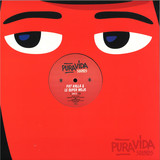
Tucked away in their cover, but never for long, Guts' musical eyebrow wands have once again panicked, this time aggressively marking Africa.
Letting his instrument guide him towards the one he felt was the next signature of his label Pura Vida Sounds, the beatmaker-producer found himself face to face with an old acquaintance: Pat Kalla aka the voice of the Voilaaa Sound System, aka the one with which he crossed the funk on his album Philantropiques and the title "Daddy Sweet".
Convinced to follow him in studio, Pat, accompanied by his Super Mojo celebrates this collaboration by decapsulating La "Canette". Long groove in the mouth, acidic notes of synths and attacks of precise guitars, despite the bitterness of his words, a drink that suits every hour of the day and that strengthens the legs most numb. Heckled by her journey to the bottom of Pat’s musical bag, shaken by the syncopes of the beat, she spreads her funk foam from the very beginning into the A-side furrow.
Bartering the beige trench coat of Commissioner Joss against a colorful toghu, Kalla and his Mojo revisit on the B side the "Requiem Pour Un Con" de Gainsbourg. The martial groove, dark and hypnotic leaves its place to a polyrhythmic afrodisco production, surrounded by a low velocity.
More than a recovery, they are making a real diversion.
A hijacking driven by Pat Kalla and his Super Mojo, with Serge Gainsbourg and Jean Gabin sitting in the back seat like two "Pachas".
Закажите сейчас, и мы закажем товар для вас у нашего поставщика.

Sa Bat' Machines & Tam Ly continuent sur la lancée et proposent un nouveau EP 3 titres electro deep bass.
La Combinaison de Sa Bat' Machines, producteur parisien, musicien, et compositeur de bass music et de Tam Ly, chanteuse auteure, compositrice et caméleon passionné de jazz, de musique classique et de mélopées orientales, avec le guitariste Pierre Maddio fonctionne suavement.
Les influences sont multiples, entre sons concrets, harmonies jazz et riffs de guitares un tantinet rock. La voix est mélancholique et syncopée, expressive ou fantomatique.
Elle invoque des instantanés intimistes, "Strange Fruit" est une interpretation du titre d'Abel Meeropol popularisé par Billie Holliday puis Nina Simone.
Road trip electro, ce vinyle n'est pas dsans nous rappeler la bande original du film "Mulholland Drive".
A écouter tard, ou au réveil.
text: Supa Cosh
Закажите сейчас, и мы закажем товар для вас у нашего поставщика.

After 2 years of crafting his sound and traveling in the external as wel as in the internal world. Julian Alexander his chapter continuous on SlapFunk Records with a 6 track solo EP. Julian shows off his experimental side on 'Realms of Jozani.' Experimenting with psycho-acoustic recordings from the rain forest and heavy modulation. Followed by 4 heavy weight club tracks, with a serious approach on minimalism. Closing off with 'Move on' which will take you back on a journey at when Julian started producing electronic music.
Закажите сейчас, и мы закажем товар для вас у нашего поставщика.

Children Of Tomorrow will celebrate soon its 10 years anniversary. The label was created by Emmanuel Ternois back in the day and being joined by Arnaud Le Texier in 2011. Since then they focused on Techno producing amazing artists, to name few: Terrence Dixon, Zadig, Tensal, Antigone, Oscar Mulero, Jonas Kopp, Samuli Kemppi etc... Children Of Tomorrow is now presenting the first album from Arnaud Le Texier. After almost 30 years Dj-ing around the world and almost 20 years producing. Signing many releases over the years and always busy delivering dance floor releases, it's been a long wait to finally get an album from ArnaudOn his first album we can feel that he wanted to tell a story and to express something deeper with his production experience. There is a different variety of Techno that stretches from ambient / broken beat / hypnotic / raw Techno along with subtles grooves, wondrous atmospheres & sonic textures. On A side the album opens with Dusk, an ambient atmospheric mid-tempo track with sonic sounds that is a perfect intro.Pattern 2 starts with drones and blip sounds and a broken beat groove follows with a pad that sounds like a voice coming from the space. The track ends with some modular click sounds that make the whole track clever. Followed by the album title Granular Therapy, a deep techno track with modular bass line and melancholic pad. A perfect track to play in after or to warm up a party.The B Side is more dedicated to the dance floor with Black Nympheas that is a proper dark modern techno with a grinding bass line and magic drones. A simple beat makes the track evolve in a nice way. Blade Pass frequency is 4/4 effective Techno with a 909 kick, a syncope acid bass line and a pad that sends you to another dimension. It is a powerful track but with a sense of deepness and sensibility that Arnaud can achieve sometimes. This side closes with Binary Sun Dawn which is an ambient track with melody that has a jazz feeling mixed with dark atmospheres, sonic drones and water drops. The C side opens with Mono Driver, a minimal track with a little synth that stays until the end repetitively until it makes you travel and lose your mind. Deep and dance floor at the same time.
Then Snapper is a more percussive track with some shinning bells and a grinding modular bass line.
The last track Virgo Consortium is a cosmic broken beat with dark atmospheric drone, simple bass and phasing efx. The D Side starts with Midi overdub which is a beauty. A mix between ambient and broken beat. The pad has the deepness that transports you somewhere else with an angel choir on top. The beat is spacial and groovy at the same time with smart high hats. This reminds Arnaud's past ambient production but with a modern approach. Surely a special track of the album.
Hideous Engine is more dance floor with metallic bass line and 4'4 beat going towards a sonic pad that closes the track.The last track Dawn is ambient with drones and blip sounds and an acid bass line modulate. A perfect end of the album.This album is an accomplished journey that makes you dance and travel from dusk till dawn. Arnaud Le Texier shows a coherent vision and illustrates his vast diversity in the techno world. Hopefully we won't have to wait 20 years to get another one.
Закажите сейчас, и мы закажем товар для вас у нашего поставщика.
