
Auf Lager
Bei uns am Lager und sofort versandfertig
Last In: vor 32 Tagen
Bei uns am Lager und sofort versandfertig

As Eerie Enterprise, upsammy and Piezo have funnelled their singular styles into a classic-feeling but ultra-modern album of elegant, angular electronica. With a strong melodic sensibility and a highly developed palette of playful sound design in their toolkit, the unexpected pairing grew spontaneous jams into a considered collaboration, and Places Remember Events is the end result.
Individually, Thessa Torsing and Luca Mucci have carved out strong identities within contemporary electronic music. As upsammy, Torsing has applied a delicate precision to ambient and uptempo approaches alike, building up a striking catalogue of releases including her 2020 LP for Dekmantel, Zoom. Meanwhile, Mucci has taken a wayward path through contemporary bass music and techno that matches edgy sound design with playful unpredictability. As Eerie Enterprise, both artists tap into their respective creative instincts while arriving at a unique sound with a nurturing quality they were both missing from modern dance music.
Having appreciated each other's work for some years, in July 2024 Torsing and Mucci seized an opportunity to carve out two days in the studio. There was no expectation of an end product, but the sketches conceived during those open-ended, hardware-oriented sessions felt worthy of a deeper exploration developed and finalised over the following year-and-a-half.
Places Remember Events has an unapologetically nostalgic streak, calling to mind the warm glow of melodically-charged, golden-era electronica. The twitchy rhythmic make-up of tracks like 'Decay + Collapse' and 'Folding Origin' speak to the duo's shared affinity for ravey energy, but even within faster frameworks they lean into half-time space to maintain a light-footed agility that allows the relatively busy arrangements to feel grounded and patient rather than frantic.
There's an appreciation for mystery in the emotional make-up of many of the tracks, not least in the slithering textural exploration and spatial tension of 'Capsule', but elsewhere fragile melancholia guides the melody direction of 'Superradiance' and 'Things Fall Upwards'. The final impression is crisp and modern while delivering an accessible experience that seeks to soothe rather than shock when so much contemporary club music tips towards uneasy intensity.
Finding malleable approaches to their chosen sonics and applying them to intentional song structures, Eerie Enterprise collectively land on a sound that promises a lasting reward for the repeat voyager — satisfying headphone gear in the grand tradition of introspective electronic music, but also with a physical immediacy that will manifest in the live set upsammy and Piezo have put together to perform later in the year.
erscheint voraussichtlich am 30.10.2026

The Reloop Premium Vinyl and Stylus Cleaning Set offers a complete 4-in-1 solution for keeping your vinyl, CDs and styli in pristine condition. This carefully selected set combines essential tools from Reloop’s premium accessory range to provide thorough and gentle cleaning for optimal sound reproduction.
For record and disc surface care, the set includes a 200 ml vinyl and CD cleaning spray along with an anti-static microfibre cloth. The specially formulated fluid removes dust, dirt and static charge without damaging delicate surfaces, while the cloth ensures a streak-free finish. The environmentally friendly pump bottle allows for easy and precise application.
Bei uns am Lager und sofort versandfertig

Fedo serves up an assortment of styles wrapped in mystery and vivid texture. The dive opens with dark minimal laced with glitches and misdirection, followed by a more tech-leaning structure. From there, the overall sound design pushes into deeper realms of the trip, accessible only to experienced divers. It all closes with a deep ballad — floating pitch and colourful pads carrying you back to the surface.
Bei uns am Lager und sofort versandfertig

The moment the instantly recognizable intertwined guitar passage on the title track to the Eagles' Hotel California begins, the record's genius becomes obvious all over again. Ranked the 118th Greatest Album of All Time by Rolling Stone, certified by RIAA as the third best-selling LP in history, and considered the foundation on which the Golden State's mid-‘70s music scene was built, the 1976 landmark is a music staple immune to shifts in trends, eras, and styles. Fearlessly addressing the chaos and consequences of American life, its songs remain strikingly prescient and gain creedence with each passing day.
Mastered from the original analogue master tapes, pressed on MoFi SuperVinyl, and limited to 17,500 numbered copies, Mobile Fidelity's UltraDisc One-Step 180g 45RPM 2LP vinyl box set ensures you will want to permanently check into and never leave this particular Hotel California. Up to the herculean task of standing head and shoulders above all prior reissues, this collectible edition plays with extreme clarity, organic richness, tube-like warmth, massive dynamics, and microscopic levels of detail. You'll be able to practically smell the colitas and feel the breeze in your hair. Songs come across with an epic sweep and feature immersive, front-to-back soundstages that allow the music unprecedented air, roominess, and separation. As for the noise floor? It's basically as invisible as the spirits that waft in the corridors of the unforgettable title song.
Aesthetically, the premium packaging and presentation of the UD1S Hotel California pressing befit its esteemed status. Housed in a deluxe box, it features gorgeous foil-stamped jackets and faithful-to-the-original graphics that illuminate the splendour of the recording. From every angle, this UD1S reissue exists as a curatorial artefact meant to be preserved, touched, and examined. It is made for discerning listeners that prize sound quality and production, and who desire to fully immerse themselves in the art – and everything involved with the album, from the renowned cover art to the meticulous finishes.
Indeed, the opportunity to zero in on all the particulars of the 26-million-selling Eagles record dubbed "a legitimate rock masterpiece" by vaunted Los Angeles Times scribe Robert Hilburn has never been better. A global phenomenon that marked the band debut of guitarist-singer Joe Walsh, Hotel California continues to resonate and connect with listeners of all generations taken by its narrative depth, stark directness, picturesque melodies, daring majesty, and ardent emotionalism. Adorned with a breathtaking exterior photograph of the Beverly Hills Hotel that serves as the simultaneously haunting and alluring cover art, and rounded out by a rear-cover shot of the Lido Hotel lobby that reinforces a notion that teeters between permanence and transience, Hotel California is brilliantly tied to a specific place that functions as a universally understood metaphor for the American Dream.
Confronting the darker undercurrents and oft-ignored constructs attached to that romantic notion, the record's songs revolve around a host of shared themes: excess, mobility, stability, illusion, fame, destruction, and idealism included. Notably, Hotel California appeared at a crucial junction in American history: During the country's bicentennial and amid escalating controversies related to the Vietnam War, energy crisis, and governmental corruption. That the Eagles manage to channel such cultural, social, and economical matters into a cohesive, stately, big-picture statement is alone a stupendous feat. That the album's reach, boldness, vitality, accessibility, and understated intensity have never waned make it a marvel.
Reflecting on Hotel California 40 years after its original release, and indirectly explaining its enduring appeal and increasing relevance, singer-songwriter Don Henley confirmed the record pertains to the "loss of innocence, the cost of naiveté...the difficulties of balancing loving relationships and work, trying to square the conflicting relationship between business and art; the corruption in politics, the fading away of the Sixties dream of ‘peace, love and understanding.'"
It can be argued that Henley and company squarely hit on and drove home those ideas in the surreal title track, chart-topping "Life in the Fast Lane," and grand "The Last Resort" alone. But that would miss the forest for the trees. Experienced as an unbroken whole, complete with the pristinely shot imagery and physical grooves, Hotel California unfolds like a geography-conscious saga by James Michener and plays like colour-saturated movie shot on 70mm film by Martin Scorsese. It's about our collective and individual decisions – and the shape of our past, present, and future. And, just like that conjured by our imaginations, Hotel California continues to take on a life of its own.
More About Mobile Fidelity UltraDisc One-Step and Why It Is Superior
Mobile Fidelity Sound Lab's UltraDisc One-Step (UD1S) technique bypasses generational losses inherent to the traditional three-step plating process by removing two steps: the production of father and mother plates, which are created to yield numerous stampers from each lacquer that is cut. For UD1S plating, stampers (also called "converts") are made directly from the lacquers. Since each lacquer yields only one stamper, multiple lacquers need to be cut. Mobile Fidelity's UD1S process produces a final LP with the lowest-possible noise floor. The removal of two steps of the plating process also reveals musical details and dynamics that would otherwise be lost due to the standard multi-step process. With UD1S, every aspect of vinyl production is optimized to produce the best-sounding vinyl album available today.
MoFi SuperVinyl
Developed by NEOTECH and RTI, MoFi SuperVinyl is the most exacting-to-specification vinyl compound ever devised. Analogue lovers have never seen (or heard) anything like it. Extraordinarily expensive and extremely painstaking to produce, the special proprietary compound addresses two specific areas of improvement: noise floor reduction and enhanced groove definition. The vinyl composition features a new carbonless dye (hold the disc up to the light and see) and produces the world's quietest surfaces. This high-definition formula also allows for the creation of cleaner grooves that are indistinguishable from the original lacquer. MoFi SuperVinyl provides the closest approximation of what the label's engineers hear in the mastering lab.
Der Artikel ist noch nicht erschienen. Du kannst den Artikel jetzt vorbestellen, dieser ist nach Wareneingang für dich versandbereit.

Tod Dockstader's Aerial series, an electronic/drone masterpiece, is cherished among fans of the artist's work and this second volume is available in an audiophile quality double LP edition.
Tod Dockstader's Aerial series is sourced from his life long passion for shortwave radio. Dockstader collected over 90 hours of recordings, made at night, and comprised of cross signals and fragments plucked from the atmosphere.
Opening with airwave drones, Dockstader gradually allows elements to slowly come and go, summoning an ominous atmosphere of ethereal cloud clouds. Malignant placidity continues, giving the feeling of eavesdropping upon late-night audio activity not unlike discovering number stations while sweeping the dials. These sounds pull you in as their density and rhythms come and go.
Backward voices, deep echoing choruses of conversations flowing under the surface, ocean sounds, pulsing electro-rhythms, all seem to be created via the collaging of many hours of source recordings. A masterwork of collage and juxtaposition by an overlooked pioneer of American electronic music.
Artwork by John Brien (Imprec) is inspired by the propagation of shortwave radio signals throughout the earth's atmosphere.
"This return of Dockstader is something to cherish, not just because his output has been so limited and scarce but because what we do have is so intriguing, persuasive and cliche-free; the music of an inspired explorer who trails in nobody's slipstream." The Wire
"One of the great figures of musique concrete composition." Dusted
The Aerial project
I've written before of my interest in shortwave radio, in the notes to the Quatermass CD. Also, in the notes to the Omniphony CD (which has my first "Aerial" mix, "Past Prelude," in it), I mentioned "The Aerial Etudes," which was my working title for what became the three CDs you have. And, at the end of an interview with Chris Cutler (which can be found in the "Unofficial TD Website"), the piece I mentioned I was starting to work on at the time became Aerial.) When I was very young, people got most of their entertainment from radio. They called it "playing the radio," as if it were a musical instrument. That's what I've tried to do in this piece. About this time, a few people encouraged me to look into using a computer for this work.
I'd never used one, but I saw it would allow me to keep my mixes digital - no more transfer losses. So, at the end of 2001, I got a computer and an editing program for it, and spent what seemed a long time learning it. I began selecting mixes and loading them into the computer in late March, 2002. Out of the 580, I selected 90 "best" mixes - eventually reduced to 59, the ones on the CDs. Finally, in assembling the CDs, I followed David Myers' suggestion to allow each piece to flow into the next - making a continuous journey to the end. Tod Dockstader, 14 september 2003
About Tod Dockstader: Dockstader moved to New York in 1958 and became a self-taught sound engineer and sound effects specialist and apprenticed as a recording engineer at Gotham Recording Studios. It was around this time that he started to use his off-work hours to experiment with mixing and manipulating sounds on magnetic tape (musique concrète). By 1960 he had amassed enough material to assemble his first record Eight Electronic Pieces which was released on the Folkways label in 1961 (this would later be used in the soundtrack of Fellini’s Satyricon). The last of the eight pieces was later re-worked into his first stereo piece. In 1961 he applied to use the facilities at the Columbia-Princeton Electronic Music Center and was denied access by Vladimir Ussachevsky. Ussachevsky’s official reason was the “overstrained” scheduling of the studios, although many suspect that Dockstader’s lack of academic training was a factor in the decision. He continued to create music throughout the first half of the 60s, working principally with tape manipulation effects. His last piece at Gotham was Four Telemetry Tapes in 1965, after which he left to work as an audio-visual designer on the Air Canada Pavillion at Montreal’s Expo ‘67. It was around this time in 1966 that some of Dockstader’s pieces were released on three Owl L.P.s, and his work became known to a larger audience. He achieved modest recognition and radio play alongside the likes of Karlheinz Stockhausen, Edgard Varèse, and John Cage.
Bei uns am Lager und sofort versandfertig

LAs the first release on Phonica White back in 2009, 'Galaxy' by Japan's Iori is an expertly crafted piece of dancefloor-focused Techno, led by a rolling bassline and crisp hi-hats, with hypnotic melody patterns skittering off the surface. As we described it upon release, it's a trippy but accessible heads-down affair that has the depth and the bite to do damage at peak-time and in the after-hours alike. A decade later, those words still ring true and as it's now one of the most sought after records on Phonica White it's the perfect time to revive it - with a twist.
This time we have freshened up the record by swapping original B-side 'Urge' with a previously unreleased remix of 'Galaxy' from Lord Of The Isles, the producer behind two of Phonica's best received 12's on the main label, 'Year Of The City' & 'Greane / Gigha'. Countering the original's functional sonics, his remix takes the track in a deeper, widescreen direction, swirling the original's components around immersive pads and piano.
To keep collectors of the first pressing happy as well as to differentiate the two versions, the label artwork is the same Pedro Carvalho de Almeida design yet inverted and slightly tweaked to reflect the new tracklist and catalogue number.
Bei uns am Lager und sofort versandfertig
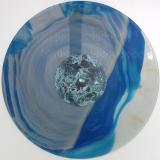
Electrumos is said to be a lost continent hidden somewhere on Earth. Some believe it lies beneath the surface, others claim it drifts invisibly through the atmosphere or exists between different layers of time. Despite countless attempts, nobody has ever managed to locate it.
On this EP, pdqb becomes the first known traveller to access Electrumos, intercepting and decoding the mysterious electromagnetic transmissions emanating from within.
He transforms these signals into irresistible electro-cognitive frequency patterns.
Featuring remodels by dynArec and DMX Krew, along with artwork by John Armleder.
Bestelle jetzt und wir bestellen den Artikel für dich beim Lieferanten.
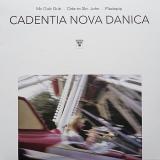
John Tchicai (1936 – 2012) was one of the most important free improvising saxophonists of the 20th Century: an artist of rare vision and aptitude whose lines soared and stood out even in the most hallowed company, and whose body of work as a leader / composer is among the most singular and distinct within the entire canon of that music. But Tchicai’s importance doesn’t end there. Born in Copenhagen, Denmark, to a Danish mother and a Congolese father, his life and career represent a crucial bridge between the European and American traditions of free jazz. Initially trained on violin as a child, Tchicai shifted his focus to the clarinet and alto saxophone during his mid-teens, and began touring Europe as a professional musician by his early 20s, which landed him at a socialist youth festival in Helsinki, Finland, where he met the trumpeter Bill Dixon and saxophonist Archie Shepp. Impressed by what they heard, Dixon and Shepp encouraged the young saxophonist to move to New York, and in so doing changed the history of jazz forever.
Tchicai’s arrival in New York marks the rare occurrence of a European player joining the intimate circle that was first wave of American free jazz. Following his landing in the city in November of 1962, in addition to regularly sitting in with Don Cherry’s group, Tchicai began playing with Bill Dixon's band alongside Archie Shepp and Roswell Rudd, forming the nucleus of the foundation of the New York Contemporary Five - one of the most important groups of the era - which counted Tchicai, Shepp, Cherry, Don Moore, and J. C. Moses as its members. From the ashes of this group, Tchicai would go on to found the legendary ensemble, New York Art Quartet, with Roswell Rudd, Milford Graves, and Lewis Worrell, as well as working within Albert Ayler's band, recording “New York Eye and Ear Control”, Shepp’s band, recording “Four for Trane”, the ensemble that recorded John Coltrane's “Ascension”, and the Jazz Composer's “Orchestra”.
By the time he decided to return to Denmark in 1966, had Tchicai chosen to record little else, his legacy within the history of music would have been ensured. Incredibly ambitious, his arrival home marked the beginning of an incredible period of activity which saw him radically expanding his creative explorations, which by the end of the decade would include becoming a founding member of Amsterdam's Instant Composers Pool and helping to record John Lennon and Yoko Ono's “Unfinished Music No.2: Life with the Lions”. This, however, was proceeded the formation of a new orchestra, Cadentia Nova Danica, led by Tchicai, dedicated to radical cross-disciplinary exploration. Remaining together between 1966 and 1971, the group and its shifting membership regularly fell into collaboration with artists and composers, notably Musica Elettronica Viva, who existed beyond the realms of jazz, as well as participating within multi-media events that incorporated the visual realms.
Cadentia Nova Danica’s only two LPs - “Cadentia Nova Danica” (Polydor, 1968), and “Afrodisiaca” (MPS, 1969) - are effectively Tchicai recorded efforts as a leader, and are legendary. There’s little mystery, once heard, why the later landed on Thurston Moore’s iconic “Top Ten from the Free Jazz Underground”, published by Grand Royal in 1996. Sadly, despite playing extensively during their five year run, with exception of a CD documenting a performance at Jazzhus Montmartre, in 1966, until now there has been no other publicly available recordings that allow us to capture a glimpse of this astounding band at work. Alga Marghen / Formalibera’s vinyl pressing of a never before released body of recordings, made in Copenhagen between 1969 and 1970, changes that in the most exciting of ways.
Comprising three pieces - “Mc Gub Gub, (I–VIII)”; “Ode to Skt. John”; and “Pladepip” - the material on this stunning LP comes from two specific events. The first, which encompasses the first side, “Mc Gub Gub, (I–VIII)” was recorded by Cadentia Nova Danica - in this instance, Tchicai, Sune Weimar, Theo Rahbek, Christian Kyhl, Niels Holt, Jørgen Thorup, Michael Schou, Morgens Bollerup, Allan Gregersen, Ole Matthiessen, Pierre Dørge, Willy Jaegert, Anthony Barnett, and Jon Finsen - on May 29th, 1969, at the ABC-Theatre in Copenhagen. Penned by Tchicai, the piece is a sprawling, evolutionary composition at the outer reaches of free jazz, rooted in large blocks of colliding tonality and rhythm - a sound only accessible to larger ensembles - that push territories explored by Charles Mingus to previously unimagined heights, threaded by moments of hard blown fire. Writhing like a stormy sea - skronking and devilish - “Mc Gub Gub, (I–VIII)” is a work of profound complexity that singlehandedly illuminates not only Tchicai’s singular vision as a composer, but also the power and uniqueness of Cadentia Nova Danica during the band’s most vital period.
The two pieces - “Ode to Skt. John” and “Pladepip” - taking up the flip side, were recorded on February 21st, 1970, at the Danish Broadcasting Corporation’s Radio House, and are the outcome of Cadentia Nova Danica’s extended residency there between 1969 and 1970. In many ways, these two recordings offer some of the best insights into the broad collaborative approaches that defined the band, in this case encountering them working with Danish experimental composer, Svend Erik Werner, who was among the earliest in his country to embrace stylistic pluralism and the use historical forms within a modern context. “Ode to Skt. John” - based on aspects of Gregorian music - was penned by Werner, incorporating heady improvisation by the members of Cadentia Nova Danica, this time made up by Tchicai, Sune Weimar, Hugh Steinmetz, Theo Rahbek, Christian Kyhl, Michael Schou, Morgens Bollerup, Ole Kühl, Torben Enghoff, Mauritz Tchikai, Kjeld Ipsen, Willy Jaegert, Ole Matthiessen, Ole Thilo, Pierre Dørge, Steffen Andersen, Jon Finse, and Clause Bøje. The piece is a fascinating binary of the composed and improvised, utilising the band’s large scale to introduce a remarkable sound within its slow progressions and furious, driving free moments, in this incredible meeting of worlds.
The album’s final piece, “Pladepip”, is arguably its most historically significant: an entirely singular piece, unlike anything in Tchicai’s recorded canon as his foray into musique concréte. Drawing upon two recordings of full-band improvisations by Cadentia Nova Danica, for its creation Tchicai also gouged the surfaces of 78rpm records in his collection to skip and create repeated phrases and patterns, creating a stunning sound collage of hard angles and abrupt phrase, that creates a striking counterpoint to the band’s flowing improvisations that bookend those passages. The result is an engrossing listen and easily one of the most unique and culturally important gestures in the entire history of musique concréte.
Truly incredible, Alga Marghen / Formalibera’s vinyl pressing of this never before released body of recordings, made by John Tchicai’s Cadentia Nova Danica, in Copenhagen between 1969 and 1970, offers an unprecedented window into one of the most important groups working in Europe during that period, significantly expanding their rare and slim discography to date. Accompanied by extensive exploratory liner notes by veteran jazz writer, Ed Hazell, this is easily one of the most historically important archival releases of the year and is impossible to recommend enough. Absolutely essential on every count.
erscheint voraussichtlich am 28.08.2026

For nearly four decades, since its founding during the mid 1980s, the Belgian imprint, Sub Rosa, has continuously plumbed the depths of numerous, radical creative histories, assembling a catalog of releases that has almost no equivalent, while remaining nearly impossible to nail down. That said, for most of its run, Sub Rosa has been primarily recognized for its rigorous explorations of the lesser explored shadows of experimental sound practice (sound-art, sound-poetry, early electronic and electroacoustic music, free-improvisation, etc.), delivering a remarkable body of artifacts that have collectively helped to rewrite history in their wake. While it's always been impossible to anticipate where the label might take us next, threading their catalog are plenty of releases that throw further wrenches in the cogs, expanding our understanding of what they pursue, as in the case of a handful of titles, appearing as early as the 1980s, dedicated to ethnographic field-recordings from various parts of the world. Among the most striking and celebrated of these was 2017's Ethiopian Urban And Tribal Music: Mindanoo Mistiru / Gold From Wax, comprising an astounding body of recordings made by Ragnar Johnson and Ralph Harrisson in Ethiopia during 1971, reissuing material originally released by Lyrichord the following year. Now, Sub Rosa returns to the incredible work embarked upon by the pair and captured on that same trip with Ethiopian Musics 1971, comprising the recordings originally released by Ocora shortly after their completion, expanded in this edition to include an entire disc of never before released music. Widely regarded as some of the most important field-recordings ever made of indigenous Ethiopian folk music (as captivating and intoxicating as they are revelatory: providing insights into the roots of the country's singular traditions of popular music and jazz that have come to be celebrated the world over), this incredible collection is issued by Sub Rosa in a beautifully produced 2LP edition, complemented by a four page insert providing detailed descriptions of each song, as well as notes by the ethnomusicologists and recordists, as well as a 2CD edition, with a twelve page booklet. Insanely good and absolutely essential for any fan of field-recording, ethnomusicology, the music of Ethiopia, or the label's mission at large. Once again, Sub Rosa has defied our expectations and delivered a remarkably important intervention in the history of recorded sound.
Located in the Horn of Africa region of East Africa, few cultures are distinctly singular, while being so diverse (containing 80 distinct ethnic groups who speak 70 languages and 200 dialects) as that of Ethiopia. The home to some of the oldest surviving sects of Judaism, Christianity, and Islam (each contributing important aspects of its collective cultural body), particularly the country's culinary and musical traditions have become celebrated the world over, and (generally speaking) feel entirely independent of those of its neighbors. Given this, it's unsurprising that, during the summer of 1971, the young ethnographer, Ragnar Johnson, accompanied by Ralph Harrisson, traveled to Ethiopia to begin his brief career as a field recording ethnomusicologist, capturing material on reels of magnetic tape that would be subsequently released across three LPs for Lyrichord and Ocora, respectively, coming to form a cornerstone of documentation and study of the country's many indigenous musical traditions, as well as providing wide, global access to them for the first time. While Johnson's recording career was relatively brief, ending toward the end of the decade when he began to focus more on teaching in UK universities, with a focus on the anthropology of art and social anthropology, his impact on the field was lasting. Between 1971 and 1979, in addition to those he made in Ethiopia, he made hugely significant recordings in Yemen (also issued by Lyrichord before being reissued by Sub Rosa) and Papua New Guinea, which were originally released by David Toop's Quartz Publications to wide celebration, before being revisited by Ideologic Organ in 2023.
While it's worth noting that commercial releases of ethnomusicological recordings by labels like Folkways, Lyrichord, and Ocora were still in their relatively early days when he entered the field, Johnson's recordings quickly stood apart for their vivid qualities and clarity of space, allowing them to stand the test of time. As he later stated: "I used a Uher Report L stereo tape recorder, BASF quarter inch tapes at a recording speed of seven and a half inches per second with two directional microphones mounted to record an isosceles triangle of stereo sound," he reveals. "The location of the microphones and musicians was critical. The musicians were fully informed of all aspects of the recording process."
Johnson's recordings are extremely vivid, there is a clear sense of space and the cries of the flutes exist across the entire stereo field. It's a reflection of Johnson's skill as a field recordist that his recordings continue to be reissued over forty years later. "I used a Uher Report L stereo tape recorder, BASF quarter inch tapes at a recording speed of seven and a half inches per second with two directional microphones mounted to record an isosceles triangle of stereo sound," he reveals. "The location of the microphones and musicians was critical. The musicians were fully informed of all aspects of the recording process… I used to enjoy being in the moment and hearing something wonderful despite the stress of the vigilance required to ensure that the recordings were accomplished according to plan. The responsibility is to record and document the music as effectively as possible so that it has been preserved for posterity. It is better to actually record music than to sit in a seminar room debating the ethics of recording music." It is this very ethos and sense of clarity that can be encountered across the length of Ethiopian Musics 1971.
For the sake of clarity, the two LPs of material that comprise Ethiopian Musics 1971 should be regarded as a single body of recordings alongside those made in Ethiopia by Ragnar Johnson and Ralph Harrisson during the summer of 1971 (previously issued by Lyrichord and reissued by Sub Rosa), and as two that have, until now, remained historically distinct. The first LP gathers that material released by Ocora during the early 1970s on Musiques Ethiopiennes, while the second comprises (as far as we can tell) twelve never before issued recordings, expanding the journey and making this the definitive edition of the release with its incredible total of 23 recordings of songs, allowing it ever greater scope to achieve the recordists' modus operandi of capturing the broadest and most diverse cross section of Ethiopia's many musical cultures, ranging from different forms of urban music captured in Addis Ababa, documenting largely orally transmitted idioms within which lyrical content is given greater emphasis than the instrumental components (played on masenko fiddles, craar and bagana lyres, washint flutes and kabaro drums), to folk idioms hailing from the Danakil desert and the border regions with Sudan and Kenya. There are songs sung and played in bars, divination chants, laments, dances, Christian songs, and Amharic sung poetry, to only begin to scratch the surface.
Ethiopian Musics 1971 is one of those rare albums where each musical moment is pure, intoxicating gold, while also being greater through the sum of its parts. There are the many songs, forming a rich tapestry of remarkable range across the respective two LPs/CDs (moments that wondrously flirt with sonic abstraction; hypnotic rhythms; pulsing chant; melodies that, in structural arrangement and tonal combination, help us reframe how such a thing might be understood, and a great deal more), each imbued with a remarkable directness and emotive sensibility, and there is the stunning quality of these recordings themselves, transporting each sound to our ears as though we intimately share its creator's space, while being imbued with the pure heart and remarkable spirit with which they were made. As we said before, it's little wonder, once heard, why these recordings and this music feels as fresh and relevant (enduring more than 50 years) today as when they were made. Once again, Sub Rosa has raised the bar with this essential addition to the incredible work that Ragnar Johnson and Ralph Harrisson did back in Ethiopia during 1971, radically expanding our access to the sounds that they captured with these stunning, beautifully produced 2LP and 2CD editions. Absolutely engrossing from the first sounding to the last, this one can't be missed.
erscheint voraussichtlich am 26.06.2026
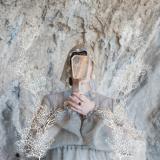
Oceanine, Jolanda Moletta’s third album and her first for Beacon Sound, is a powerful and ethereal statement of artistic community. Expanding on her previous work, each track represents a collaboration with a different female vocalist, with the foundational elements being generated entirely by her own voice. By turns haunting, enchanting, and inspiring, you won’t want to come up for air once you’ve been pulled under. Representing a
musical practice that is distinctly feminist, this is an album with a longer view in mind, to an age when the altars were to goddesses and women were centered as powerful beings representing the earth’s cycles of regeneration and renewal. Oceanine then, in all its beauty, can be viewed as an album of survival. It is deeply transportive, accessing something that lies within all of us. As the late, great Lithuanian folklorist and archaeologist Marija Gimbutas noted, “We must refocus our collective memory. The necessity for this has never been greater as we discover that the path of 'progress' is extinguishing the very conditions for life on earth.”
Jolanda Moletta is a multimedia artist and one-woman electronic choir. She creates wordless compositions through extended vocal techniques, integrating wearable-controlled live processing, alongside symbolic visuals. Moletta considers her performances to be a collective ritual and creates her Sonic & Visual Spells following the cycles of nature and the moon. Jolanda's 2022 critically acclaimed album Nine Spells was released on the Ambientologist label, followed by Night Caves on Whitelabrecs in 2025. Moletta’s artistic practice is a radical and spiritual journey through sound art, ritual, and the symbolic archaeology of the feminine.
Oceanine is inspired by sirens, water nymphs, and the timeless call of the sea. At its core lies Jolanda’s deep, lifelong connection to the Mediterranean Sea and to the ancient and modern myths and folklore that have emerged from its waters. Growing up by the Mar Ligure, Jolanda was surrounded by stories carried by salt, wind, and waves: legends of sirens, echoes of ancient voices, and the sea as both origin and oracle. This intimate relationship with the Mediterranean is not merely a backdrop, but a living source that shapes Oceanine’s emotional, symbolic, and sonic world.
Each track features a different female vocalist, creating a rich tapestry of voices, styles, and perspectives. This artistic choice not only broadens the album’s sonic palette, but also deepens its narrative core: celebrating the power, beauty, and mystique of feminine energy through myth, history, and sound.
The entire album is built exclusively from the human voice, processed and layered, yet always remaining voice, and nothing else. For each piece, Jolanda invited every vocalist involved to contribute a raw stem: a short, unedited melodic fragment of just a few seconds, inspired by the album’s themes. These intimate vocal seeds became the foundation of each track: the guest artists’ voices appear as brief, melodic stems, while the entire surrounding “orchestral” fabric is created solely from Jolanda’s own layered and processed voice. In this way, Jolanda’s voice becomes the Ocean itself, embracing, absorbing, and carrying the sirens’ calls within a vast, immersive soundscape. Every song is a unique expression of the feminine experience, revealing its depth, complexity, and emotional range, echoing the call of the sea and the many faces of the siren archetype.
The figure of the siren has transformed across centuries. In myths of Ancient Greece and Rome, sirens were hybrid beings, part woman, part bird, whose irresistible songs lured sailors to their doom. During the Middle Ages, the image shifted toward the half-woman, half-fish figure, often associated with temptation and danger. Historically, the voice of women has often been feared. Sirens were considered harbingers of misfortune not simply because they seduced or destroyed, but because they were powerful liminal beings.
In Ancient Greek, sirens functioned as psychopomps: figures who existed between worlds and guided souls, especially between life and death. Their songs were believed to carry forbidden knowledge, including prophetic insight and the ability to reveal truths about fate and the future. The danger of the sirens lay in what they revealed: knowledge that humans were not meant, or ready, to hear.
Oceanine confronts this legacy head-on. The voices heard throughout the album are not merely beautiful: they are dark and luminous, wild and enchanting, magical, soothing, dreamy, and at times fractured or distorted. They whisper, lament, beckon, and enchant. Like sirens, they skim the surface of the water and sink into its depths, hovering on the edge between tenderness and danger, vulnerability and power. They rise toward the sky, dissolve into mist, and return as echoes charged with raw, elemental emotion: voices that seduce, warn, mourn, and remember. They refuse to be reduced to decoration.
Alongside the album’s release in May, Oceanine will also unfold as a visual and performative work through a short art film. The film includes a live session recorded inside a sea cave facing the Mar Ligure, the very coastline where Jolanda spent her childhood, dreaming of sirens and listening to the sea as if it were speaking directly to her. This site-specific performance reconnects the music to its place of origin, allowing the voice to resonate within stone, water, and air, and transforming the cave into both a sanctuary and a threshold between myth and reality.
What if the sirens’ songs were considered dangerous because they carried another truth, an ancient truth long forgotten?
Oceanine embraces the idea that we are still deeply woven into myth. Though we may see ourselves as rational and modern beings, our world is saturated with ancient symbols and archetypes, often distorted, simplified, or stripped of their original meaning. And if those symbols are allowed to shift, if the mirror once held by the siren becomes an invitation to look beyond appearances and into what has been obscured, then we may finally uncover a deeper truth and reclaim the voice that was always ours.
Oceanine is not just an album. It is a reclamation, a spell, and a call from the depths.
erscheint voraussichtlich am 01.05.2026

Born from a profound devotion to the piano and a reverence for the organic flow of life, byt’ surprises listeners by presenting "paths of sand", a remarkable creation by Amsterdam-based composer xico, offering sound and soul to those willing to listen beyond the surface.
Through the magic of experimentation, xico captured the fleeting beauty of the muse of improvisation, as described by Nachmakovich, transforming the ephemeral into something lasting. Performances recorded on the same old piano during the 2023 Kaalstaart Festival in the Netherlands have since evolved into a fully realized work. A journey of nearly three years of dedicated silence that began with Telva’s intuitive recognition of xico’s voice, starting with an invitation to her radio show and blossoming into a captivating fascination with what unfolded. This process led to the art of shaping the selected live recordings into a collector’s item, now materialized as a limited edition of 200 pressed vinyl copies, forever remaining as an artistic memento.
Perfectly attuned to the energy of the autumn equinox, paths of sand unfolds as an intimate reflection of music’s ability to hold what cannot be held, to speak what cannot besaid, and to embody what can never be described.
xico is a sound artist and improviser from Ibiza whose work explores the merging point between disruptive and post-natural soundscapes, crafting immersive sonic environments through compositions that unfold like ecosystems.
Encouraged by an understanding of chance as nature’s and awareness' most accessible voice, he focuses on creating generative live-sets with varying degrees of unpredictability. For him, subordinating human intention to nature’s order is a conscious choice, and making art through this lens becomes a statement and a spiritual practice. With his distinctive touch, his compositions resonate with the world in unexpected and profound ways, offering experiences you may never have heard before.
Bestelle jetzt und wir bestellen den Artikel für dich beim Lieferanten.

Joanna Duda Trio’s new album, 'Delighted' weaves a hypnotic tapestry of sound that immediately captivates the listener. From the very first note, the track invites you into a world where inventive rhythms and melodies dance with a mesmerizing intensity. The crispness of the percussion and the looming intensity of the double bass create a vivid sonic landscape that feels both fresh and accessible, while undeniably complex.
Duda’s composition is one of her strengths, having been sought out to compose the music for the first Polish film for Netflix Originals (Erotica 2022), and she again demonstrates her uncanny ability to blend subtle complexity with melodic piano hooks that ooze playfulness. Beneath the surface a darker, more menacing undertone that keeps the listener on edge.
"This delightful composition was worth the wait" (Twisted Soul Music) "Effortlessly interchanging some mind boggling time signatures, I love their precision" (Soweto Kinch, BBC Radio 3) "To say that Joanna Duda is a jazz pianist is an understatement. The artist transcends musical boundaries, often using jazz as a starting point for broader sonic explorations" (Polskie Radio)
The Trio has an extensive European tour planned to support her album release.
erscheint voraussichtlich am 17.10.2025

Standard redefined The professional RMX-95 4+1 channel club mixer blurs the lines between analogue workflow and digital technology. The RMX-95 is a cutting-edge, extraordinarily versatile creative tool thanks to its dual-USB 2.0 interface, redesigned effects section, optional MIDI mapping of all controls and smooth integration of the djay Pro DJ software. The club mixer has a familiar and user-friendly interface, making it suitable for both professional and hobby DJs.
Surgical sound manipulation in every detail Will you go for ''Classic'' or ''Kill''? The RMX-95's 3-band EQ can be adjusted to allow maximum sound control for unique results. Echo, Reverb, Flanger, Phaser, Vinyl Brake, Loop Roll, Noise, Pitch Shift, Delay, Ping Pong Delay, Tape Delay, Bit Crusher and Transformer are just some of the many studio-quality effects included in the brand-new Beat FX unit. The dedicated FX frequency control (LPF/HPF) lets you apply the effects to a specific frequency range for a more unique sound. And that's not all: Each channel also features a bipolar filter unit (LPF and HPF) with real-time resonance adjustment. This allows for even more complex sound productions. Two digital displays show parameter changes in real time for precise control that goes beyond hearing. Connections galore The RMX-95 also excels in terms of connectivity: Four CD, two line, and two phono inputs are available on the four input channels. The separate microphone channel has two microphone connections (1 x jack, 1 x jack/XLR combination jack) and an additional AUX input. The master output offers RCA or balanced XLR cable connections. The booth output has two jack connections for stereo operation. However, it can also be used in mono mode.
A recording device can be connected to the Rec output via RCA jacks to record DJ sets regardless of the master output level. Last but not least, the DJ mixer has two jacks for headphones. Crisp cuts and smooth blending The adjustable curve of all faders provides DJs with the creative flexibility they want while mixing. Turntablists and scratch wizzards can also upgrade the crossfader with the contactless RMX innoFADER. Maximum flexibility: dual-USB audio interface Superior 24-bit sound quality is provided by the ten inputs and outputs of the high-quality dual-USB 2.0 interface. The two USB ports allow smooth transitions between DJs and maximum flexibility when using different setups in a single club night. In addition, the active USB hub enables the connection of additional USB devices. Fully digital architecture The RMX-95's digital architecture transforms the DJ mixer into an individually mappable MIDI controller. As part of this, the setup menu provides a wealth of customisable options, such as EQ frequency range, Neural Mix EQ mode, audio interface routing, and zone routing for the booth output. DVS-enabled for djay Pro & Neural Mix The RMX-95 works with Algoriddim djay Pro via plug and play. The DJ app's ground-breaking Neural Mix function lets you isolate beats, melodies, and vocals in the mix in real time. The RMX-95 supports djay Pro's advanced DVS integration with Mac, PC, iPhone and iPad.
The DJ software is also compatible with streaming services like Apple Music, Tidal, SoundCloud, Beatport and Beatsource. Indestructible design The club mixer's sleek black metal surface is not only eye-catching but also highly durable. The solid metal housing and hard-wearing metal shafts in all of the built-in potentiometers and switches provide a long service life, even with heavy club use. An internet connection and a separate Apple Music, Tidal, Beatport, Beatsource or SoundCloud subscription is required to use this service.
Professional 4+1-channel DJ club mixer - DUAL 10 In/Out USB 2.0 audio interface with superb, 24-bit sound quality
New Beat FX unit with multiple effects in studio quality: Echo, Reverb, Flanger, Phaser, Vinyl Brake, Loop Roll, Noise, Pitch Shift, Delay, Ping Pong Delay, Tape Delay, Bit Crusher,Transformer - FX frequency control (LPF/HPF) for manipulating effects in selected frequency band -
Sound filters: Bi-polar filter unit with LPF and HPF - Realtime resonance control for channel filters - Active USB hub to connect USB accessories
3-band EQ with adjustable behaviour (classic/kill) -
Two digital displays showing real-time information of parameter changes -
Digital mixer architecture with extensive adjustment options - Extensive setup menu, including:
- EQ frequency range (low, high)
- Neural Mix EQ mode
- Audio interface routing
- Booth output zone routing (matrix)
- Cue solo option
- RMX innoFADER compatible
- Adjustable linefader and crossfader curves
- MIDI-compatible control elements
- 2x High-retention USB 2.0 port, especially durable
- 2x Headphone outputs via 6.3/3.5 mm stereo jack with split cue
- 2x Mic inputs with dedicated MIC ON button
- Booth output in stereo or mono
- High-quality and hard-wearing, pure black metallic finish
- Sturdy construction in a metal housing with bolted metal shafts
- Kensington lock to secure the device
- Incl. instruction manual, power cord and USB cable
- Frequency Range: 20 Hz - 20 kHz +2/-3dB - Inputs: 7x line RCA, 2x phono RCA, 1x mic combo-XLR/jack, 1x mic 6.3mm jack (TR), 2x USB port - Outputs: master XLR (balanced), master RCA (unbalanced), booth (TRS) (balanced), rec RCA (unbalanced), 1x headphones 6.3mm jack, 1x headphones 3.5mm jack - EQ range classic at 70 Hz, 1 kHz, 13 kHz: -26 dB/+9 dB - EQ range isolator at 70 Hz, 1 kHz, 13 kHz: -90 dB (total kill)/+9 dB - EQ range mic at 100 Hz, 10 kHz: -12 dB/+ 12dB - EQ headphones at 100 Hz, 10 kHz: -29dB - Power Source: AC100-240V, 50/60Hz - Power Consumption: 29 W - Dimensions: 322(W) x 387(D) x 107.5(H) mm - Weight: 6.8 kg
dimensions (LxWxH) in mm
445x442x153
dimensions outerbox in mm
460x452x327
erscheint voraussichtlich am 05.07.2025
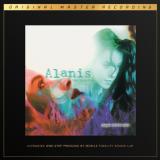
When Alanis Morissette took direct aim at an ex who wronged her on the eviscerating “You Oughta Know” in 1995, everything about the Top 10 song communicated it wasn’t the usual narrative about love gone south. Or the typical wounded singer wallowing in self pity. Morissette, and both the lead single from and her entire American major-label debut — the profoundly personal Jagged Little Pill — represented a sea change. They kickstarted a movement, one whose impact continues to echo throughout the mainstream nearly three decades later.
Ranked the 69th Greatest Album of All Time by Rolling Stone, included on the Rock and Roll Hall of Fame’s list of 200 Definitive Albums, and featured in several books about essential albums, Jagged Little Pill remains more than a blockbuster that has sold more than 17 million copies in the U.S. and 33 million units worldwide. It’s a statement, an attitude, a soundtrack for anyone seeking inspiration, an outlet, or permission to be themselves.
Sourced from the original master tapes, pressed at Fidelity Record Pressing on MoFi SuperVinyl, and strictly limited to 4,000 numbered copies, Mobile Fidelity’s UltraDisc One-Step 180g 45RPM 2LP box set of Jagged Little Pill presents the landmark effort in audiophile-grade sound for the first time. A key part of the record’s appeal and accessibility — Glen Ballard’s smooth production, touches that help Morissette’s exposed-nerve fare seem more accessible and melodic — comes through on this special 30th anniversary edition with an openness, presence, and dynamic explosiveness that make the vocalist’s songs that much more real and visceral.
The singer’s distinctive mezzo-soprano deliveries — the octave-rippling highs, dark-hued lows, dramatic crescendos, belted choruses, wispy reflections, occasional yodels — resonate with full-range ardor and depth. As crucial as anything on the record, Morissette’s confessional words take center stage like never before. Ditto the instrumentation and atmospherics that form the magnetic backgrounds of the songs. Key in on the contributions from Red Hot Chili Peppers Dave Navarro and Flea on “You Oughta Know” to Tom Petty & the Heartbreakers' co-founder Benmont Tench’s organ playing on six tracks.
The deluxe packaging of Mobile Fidelity’s Jagged Little Pill UD1S set underscores the work’s distinguished status. Housed in a slipcase, the LPs come in special foil-stamped jackets with faithful-to-the-original graphics that illuminate the splendor of the recording. Benefitting from an ultra-low noise floor, superior groove definition, and dead-quiet surfaces, this UD1S reissue is for listeners who prize sound quality and desire to engage themselves in everything involved with the album, including the now-iconic cover art that juxtaposes two portraits of the then-21-year-old singer-songwriter and features typewriter font.
That script — which suggests a raw, blood-on-the-floor document created without modern aids like spell check or language correction — hints at the heightened level of unvarnished intimacy, honesty, and catharsis Morissette offers throughout Jagged Little Pill. Named after a phrase uttered on the astute “You Learn,” the album explores the frank emotions, inherent contradictions, and wishful desires people feel everyday but are often too afraid to express. Morissette displays no such fear or shyness.
Akin to a woman reading from a diary, Morissette leaves nothing to the imagination as she skewers hypocrisy during the poignant “Forgiven,” seeks recompense on the vengeful “You Oughta Know,” and spills her guts on the soul-purging “All I Really Want.” For all the anger and bile ascribed to the singer and record, Jagged Little Pill is incredibly healthy and upbeat. Morissette uses the catchy pop-rock frameworks and moody ambience to suss out situations, to learn, to give hope. There’s the clever yearning of “Hand in My Pocket”; wry contrarianism of “Ironic”; kind-heartedness of “Hand over Feet”; the live-and-let-live spirit of “You Learn” – all positive and amiable.
Throughout Jagged Little Pill, the ever-approachable Morissette connects with listeners who recognize themselves in her — and has an intelligent conversation with anyone who wants to participate. It seemed almost everyone did. In addition to the mammoth sales that make the effort the 17th-best-selling album in American history, Jagged Little Pill collected four Grammy Awards, two American Music Awards, three Billboard Music Awards, and eight Juno Awards. In 2018, the record became the basis for a musical that netted 15 Tony nominations on Broadway.
Ironic? Anything but. Jagged Little Pill transcends generations, gender, and trends. As Morissette sings on the opening “All I Really Want,”, the album represents “deliverance” — “a place to find common ground.”
erscheint voraussichtlich am 03.07.2025

The Ibex Band, with Giovanni Rico and Selam Woldemariam at the creative helm, provided the musical backbone for legends like Aster Aweke, Girma Beyene, Tilahun Gessesse, Mulatu Astatke, and Mahmoud Ahmed, including the iconic album Ere Mela Mela, shaping modern Ethiopian music as we know it today. This 1976 album (Ge’ez Year 1968) played a pivotal role in that legacy and has now resurfaced to set the record straight.
There’s a tendency to talk about the seventies as a golden age of Ethiopian music. There are good reasons for that, and just as good reasons against it. However, the notion of a golden past privileges the role of Western explorers and suggests that the pinnacle of Ethiopia’s musical culture is something only a foreigner can appreciate and unearth. It downplays the complexities of Ethiopia’s culture and history, creating an artificial divide between then and now. And it underestimates the constantly evolving sound that has followed.
The legendary musical outfit The Ibex Band, later metamorphosed into The Roha Band, has played a central role in defining the sound of many of the greatest stars on the music scene of Ethiopia from the mid-seventies onwards–but their golden output has never really waned. The story of the origins of the band that provided the musical backbone for greats such as Aster Aweke, Girma Beyene, Tilahun Gessesse, backing the solo career of group member Mahmoud Ahmed as well as backing Mulatu Astatke and many others has yet to be properly told.
Two misconceptions plague the image of Ethiopian music, one is that the music is pure because it is, by some notion, unexploited, the other is that it is all traditional. To begin with, a combination of political changes between the late sixties and the mid-nineties created an environment where only the most dedicated and skilled musicians struggled on and pursued a musical career against fierce odds. The whole Ibex Band, with Giovanni Rico and Selam “Selamino” Seyoum Woldermarian at the creative helm, are arguably the origo of the vibrant scene in the mid-seventies, and the said pair are foremost responsible for not only navigating the band through troubled times, but also modernizing the 6/8 chickchicka rhythm to a contemporary form. Giovanni laid the rhythmic foundation with heavy looped basslines that reinvented traditional melodies as dance music, and with Selamino’s innovative guitar work they influenced scores of musicians from Abegaz Kibrework Shiota to Henock Temesgen. Even Giovanni’s Fender bass and Selamino’s Gibson guitar inspired younger musicians in their choice of instruments. Not only in choice of instruments but also in sound–even as the digital revolution hit Ethiopian music, a lot of popular music still took its cue from the masters from Ibex and Roha.
Ibex emerged out of the ashes of the sixties group the Soul Echos band, adding Giovanni and Selamino to their ranks and taking their cues from a slew of influences, such as Motown and The Beatles, fused with traditional music. A tighter-knit unit than most bands at the time – Ibex has remained six to seven members throughout their whole career, compared to many bands that were as large as fifteen or sixteen men strong when Ibex set out. Their playing has been viciously focused, economical yet heavy. Just a year before the recording sessions of the album in your hands, Giovanni and Selamino made a contribution to the popular musical lexicon of Ethiopia that was simply defining the popular sound: their arrangement and recording of bandmate Mahmoud Ahmed’s solo effort and real commercial breakthrough tune and eponymous album, Ere Mela Mela, from 1975.
Selamino has never limited himself to being an adroit lead guitarist, but has always been a scholar of history, and as such he has probably contributed as much to modern Ethiopian music with his guitar playing and compositions as with a deepened understanding of modern or contemporary – Zemenawi – Ethiopian music. Selamino’s contributions serve as a metaphor for those of the whole band, at one and the same time creating and defining a new, danceable and updated sound anchored in Giovanni’s bass, whilst also elevating the broader scene through their support for others on the scene and on top of that, increasing the understanding of the music.
There is an understandable desire to romanticize the musical heyday Ibex and Roha were at the forefront of, because so much of the output is sorrowfully hard to come by. Ibex creativity was nothing short of ridiculously fierce compared to many of their Western contemporaries. Based on their sheer recorded output alone they could have usurped the title “hardest working in show business” from James Brown, recording more than 250 albums or 2500 songs in the seventies and eighties. Some only surface as cassettes today, others were never given full LP release, and some are simply impossible to find today. In the light of that, it’s nothing short of a miracle that the recording Stereo Instrumental Music from 1976 (Ge’ez Year 1968) has resurfaced. Unearthed in perfect condition on a chrome cassette, this is musical history comes alive–to set the future straight. Stereo Instrumental Music was recorded in collaboration with Karl-Gustav Lundgren, a Swedish national working for the Radio Voice of the Gospel. It took two sessions at the Ras Hotel ballroom in Addis Ababa. The Ibex Band was the first band in Ethiopia to employ a four-track recorder for their recording (the first available in the country, lent by Karl-Gustav). Later the same week, Giovanni and Selamino realized that, lengthwise, the recorded material fell short of what they wished for, so they recorded four more tracks in one more session on a single-track recorder. The Ras Hotel and Ghion Hotel, where the Ibex Band held musical residencies were to Ethiopia in general and Addis Ababa in particular what Motown was to the USA and Detroit a few years earlier – a hotbed of musical creativity and showmanship.
The most astonishing thing about Ethiopian music of the last half century is how tradition and modernity are intertwined. Because of this feature, it’s kind of hard to tell when there ever was or when we are in a “golden age”. So much of music from the past has been criminally neglected, but because of the hardships in the past, it would be an oversimplification to say that said past was a golden age. Probably, the golden age is what we are approaching, because for the first time both the past and future are accessible, and the monumental contributions from before can lay a firm foundation for a thriving music scene today. The Ibex Band stands firmly in the past, present and the future. That, if anything, is golden.
The detailed history of Stereo Instrumental Music is in many ways unique. To begin with, it couldn’t have been recorded earlier (there were no four-track recorders available) and it really couldn’t have been recorded afterwards either, at least not in the years directly following, because of the toll the musical scene took from the unfavorable political climate that followed when the nascent Derg regime and rival groups tried to assert themselves, the musical equipment lent from The Voice of Gospel Radio simply disappeared from Ethiopia when the radio station folded in 1977. Karl-Gustav Lundgren,
the Swedish foreign national who assisted during the recording, worked with the Ethiopian Evangelical Church Mekane Yesus at the time, recalls how they only had about fifteen minutes to get the microphones in place for the recording as to not alert neither the management at Ras Hotel nor the authorities and most importantly, to complete the recording before the curfew came into effect at midnight. In leaping to the opportunity to use previously unavailable equipment to push their sound forward and improvising to meet the logistical challenges, the Ibex Band displayed the very avant-gardism and adaptability that explains their longevity as a band through the years. The recording of Stereo Instrumental Music is from a given time in history, but it sounds as beyond time.
Much of the energy that burst out of the scene that Stereo Instrumental Music came out of dissipated or got sidetracked during the societal changes Ethiopia went through in the 1970s and 80s. Whilst leaders might have professed to be revolutionary, the work ethic of the Ibex Band can truly be described as that. They never called it quits, but adapted, toured extensively abroad in Africa, Europe, and the Middle East, and found ways to work even in the face of the curfew that curtailed a lot of musical life. They even played major arenas in the nineteen eighties, despite said curfew and restrictions. The whole extent of their legacy has never been told, but their music speaks louder than words, so therefore… tune in to the Ibex Band’s Stereo Instrumental Music.
Bestelle jetzt und wir bestellen den Artikel für dich beim Lieferanten.

We, at UDG have further fined-tuned already a great design concept of our flight case into one specially for the most discerning DJ/producer. Constructed from aluminum thus providing an extremely stable structure with lighter weight compared to traditional flight cases. The inner sides are protected with pick & pluck foam that consists of two separate layers, each allowing user to create individualized adapted compartments. The pick & pluck foam allow you to pluck out any desired shape you require for various-sized DJ-controllers and providing the additional option of creating another slot underneath the controller for laptop or cable storage. This pick & pluck foam creating an easy, do-it-yourself customized system of case interiors.
The UDG Ultimate Pick Foam Flight Cases are designed to keep your gear protected from accidental damage when you transport it to and from gigs. They’re compact and lightweight yet tough enough to keep your gear safe.
EAN 8718969212694
Color Black
Weight 4,55 kg / 10.01 lbs
Outer Dimensions (W x H x D) 49 x 42.3 x 21 cm | 19.3 x 16.6 x 8.3 inch
Inner Dimensions (W x H x D) 48 x 41.3 x 20 cm | 18.9 x 16.2 x 7.9 inch
Material Aluminum
Protection Corrosion resistant aluminium profiles with strong rounded corners
Fully-lined with high density foam protective padding & foam on lid
Two side strong butterfly lock & solid metal hinges
Rubber feet at the bottom for support in standing
Extra's Lighter weight than traditional flight cases
Black Diamond finishing surface
Ergonomic & sturdy carry handle
Pick & pluck foam with two separate layers
Replacement pick & pluck foam is available to purchase
Rear cable access hole with cover
Fits Technics SL-1200MK7, SL-1200MK6, SL-1200 MK5, SL-1200 MK4, SL-1200 MK3, SL-1200 MK2, SL-1200GR, SL-1200GAE,
Denon VL12 Prime,
Pioneer PLX-1000, PLX-500
Reloop RP-8000 MK2, RP-8000 Straight, RP-8000, Reloop RP-1000M, RP-1000 MK2, RP-2000 MK2, RP-2000 USB MK2, RP-4000 MK2, RP-7000, RP-7000 MK2, RP-7000 MK2 GLD, RP-7000 MK2 Silver,
Audio Technica LP120-USB, LP120XUSB, LP1240-USBXP, LP1240-USB, LP140XP, LP3, LP5, LP7, LPW40WN,
Stanton STR8-150 M2, ST-150 M2, T.52, T.55 USB, T.62 M2, T.92 M2 USB,
Mixars STA, LTA,
Vestax PDX-3000, PDX-3000Mix, PDX-3000MKII,
or similar size turntable
Bestelle jetzt und wir bestellen den Artikel für dich beim Lieferanten.

1/4" / 15 IPS / Dolby A Analogue Copy to DSD 256 to analogue console to lathe
Carlos Santana and Company Return to a Dynamic Blend of R&B, Latin, Funk, and Rock: Amigos Aims for the Hips, Spreads Joy, and Includes “Europa (Earth’s Cry Heaven’s Smile)” Amigos has been beloved for decades by both long-time and recent Santana admirers, with multiple generations of fans drawn in by the record’s contagious blend of R&B, Latin, rock, and funk elements. As well as its immense accessibility. Coming off a series of albums that heavily leaned into jazz fusion, the band returns to the more dynamic and concise approaches of its earlier works without losing the sense of adventurousness, craftsmanship, and virtuosity that turned it into a juggernaut embraced by both the mainstream and experimentally minded communities.
Mastered at Mobile Fidelity’s in-house studio in California, pressed at Fidelity Record Pressing, and strictly limited to 3,000 numbered copies, Mobile Fidelity’s 180g 33RPM LP of Amigos presents the 1976 album in audiophile sound for the first time on a domestic release. Part of the reissue label’s Santana series, this collectible version features quiet surfaces and black backgrounds that help reveal the intricate details, distinguished tones, and cohesive interplay that cause Santana’s music to take flight.
The enhanced aural perspectives extend not only to Carlos Santana’s intoxicating fills and solos, but to the rich tapestry of the rhythmic, melodic, and vocal elements that help Amigos feel as fresh today as it did several decades ago. This LP shines a beaming light on the surrounding musicians that simultaneously feed off and inspire their bandleader. The solidity and depth of the bass lines; the wash of the organ; the scope and carry of the vocals; the grip and weight of the low-end frequencies; and, possibly the most enticing traits, the textures of the acoustic guitars, numerous percussive devices, and then-modern synthesizers: all come across with tremendous presence and energy.
Entirely appropriate for a set that kicks from the start, with the opening “Dance Sister Dance (Baila Mi Hermana)” true to the song title’s combination directive-invitation meaning. Tropical, soulful, upbeat, and liberating, it beckons hips to shake and delicious libations to pour. Clinking cowbells, spirited background vocals, hand-tapped congas, and Carlos Santana’s six-string magma pour forth with abundance. The song sets the mood and expectations for a record that contains not an ounce of filler, and which inspires and spreads joy at practically every turn.
On the gold-certified Amigos, the ensemble never seems to run short of zest or happiness. Key in on the Latin bite and searing guitar architecture of “Take Me With You,” an instrumental that shifts tempo at its midpoint and sparkles with a samba-like outro that aims to put everyone in earshot on the dance floor. Surrender to the slow-burn of “Tell Me You Are Tired,” sent up with Greg Walker’s sympathetic vocals and spun around with whirling funk accents. Marvel at the Spanish guitar introduction, Mexican folk foundation, group vocals, and extroverted grooves of the forward-propulsive “Gitano,” with lead singing by conga/bongo expert Armando Peraza.
Having reached the Top 10 in the United States and spawned the hit “Let It Shine,” Amigos marked the final stint for bassist David Brown, the last of the group’s famed Woodstock lineup to depart. His contributions feel especially spirited throughout the album, compass readings that the group uses to chart their course. Just listen to how his passages pop on “Let Me” and frame the can’t-get-it-out-of-your-head “what you need is what you want” refrain. And while Carlos Santana remains the centerpiece of the brilliant and meditative “Europa (Earth’s Cry Heaven’s Smile),” Brown serves as a trustworthy anchor and friendly advocate.
erscheint voraussichtlich am 31.01.2025

Joni Mitchell Gets Jazzy, Counterbalances Love and Trust with Freedom and Confusion on Court and Spark
Mobile Fidelity's UltraDisc One-Step 180g 45RPM 2LP
Plays with Definitive Detail and Clarity: Pressed on MoFi SuperVinyl Strictly Limited to 5,000 Numbered Copies
Box Set Features New Liner Notes
1/4" / 15 IPS / Dolby A analogue master to DSD 256 to analogue console to lathe
Court and Spark, the most commercially successful album of Joni Mitchell's trailblazing career, arrived after a year in which she took some time to breathe and kept a low profile. The pause led to more breakthroughs for the singer-songwriter. Marking Mitchell's increasing drift toward jazz (and affinity for Miles Davis and John Coltrane), Court and Spark garnered four Grammy nominations, earned the Best Album of the Year vote in the prestigious Pazz & Jop poll, and ranks #110 on Rolling Stone’s list of the 500 Greatest Albums of All Time.
Sourced from the original analog master tapes, pressed at Fidelity Record Pressing on MoFi SuperVinyl, strictly limited to 5,000 numbered copies, and featuring new liner notes, Mobile Fidelity's UltraDisc One-Step 180g 45RPM 2LP box set presents the 1974 classic with definitive detail, tonality, and directness. Marking the first time the revered LP has received audiophile-quality treatment, it's one of six iconic 1970s Mitchell records Mobile Fidelity is reissuing on vinyl and SACD sets.
Benefitting from a virtually nonexistent noise floor, dead-quiet surfaces, and superior groove definition, this collectible edition reproduces without compromise the textures, details, and breathtaking craftsmanship that help make Court and Spark into what many fans believe is the Canadian native’s finest hour. Notes bloom and decay as they do amid an acoustic live environment. Soundstages extend far and deep, with black backgrounds and balanced tones adding to the uncanny realism.
The reference-grade presence and openness put in transparent view Mitchell’s incisive words and unique phrasing, as well as the contributions of her prized support musicians — including Tom Scott and the L.A. Express as well as guest turns by the likes of David Crosby, Graham Nash, Jose Feliciano, and Robbie Robertson. Mitchell, experimenting with the melodic parameters of guitar and piano, is rightly found at the center of it all. The jazz-rock rhythms of drummer John Guerin, slippery guitar lines of Larry Carlton, vibrant horns and reeds laid down by Scott — crucial to the songs’ shape-shifting arrangements — can now also be heard with fresh ears.
Visually and physically, the packaging of the Court and Spark UD1S set complements its distinguished status. Housed in a deluxe slipcase, both LPs come in foil-stamped jackets with faithful graphics that illuminate the splendor of the recording. This reissue is for listeners who desire to engage themselves in everything involved with the album, including Mitchell’s “The Mountain Loves the Sea” painting — a picture of waves embracing and receding away from a mountain, a metaphor for the record’s lyrical themes — on the cover art.
Pitching deceptively light compositions against underlying tensions, Court and Spark witnesses the singer-songwriter finding her footing with a group of top-shelf musicians who seemingly understand her visions as well as expanding her lyrical palette and venturing further into territory no artist had dared explore. Mitchell’s accessibly complex structures, beat-propelled rhythms, and spirited interplay with Scott & Co. both give the music a different identity than her prior efforts and point in the directions she soon headed.
Lyrically, Court and Spark matches the wit, integrity, originality, and intellect of anything in Mitchell’s oeuvre — no small feat. Offsetting positives with negatives, and considering circumstances from multiple angles, Mitchell explores issues connected to love and freedom, certainty and confusion, and trust and fear with unfettered boldness and introspective empathy. She teeters between surrender and retreat, and spends a majority of the record sussing out the complications and sacrifices involved with such actions.
Mitchell addresses the transactional nature of desire (the intimate title track, the upbeat “Raised on Robbery,” complete with rock ‘n’ roll pep from Robertson and zesty sax from Scott); anticipation and disappointment of romance (“Car on a Hill,” “”Down to You); fame and celebrity (“A Free Man in Paris,” “People’s Parties”); and sanity (the dark and stormy “Trouble Child,” a satirical cover of Annie Ross’ “Twisted”). Throughout, she sings with an emotionally penetrating beauty and devastating honesty that teaches about ourselves.
Or, as Mitchell relays on “People’s Parties”: “Laughing and crying/You know it’s the same release.”
erscheint voraussichtlich am 15.11.2024

Eccentric soundscapes, cryptic atmospheres, unexpected rhythms – with the second episode of the Intelliance series, the concept label Augmented Research once again holds up a mirror to the progressive present and provides various perspectives on the innovative electronic club sound of a new generation.
A1
Raär's music manages to draw the masses beneath the surface of common perception. The blend of deep, organic atmospheres, liquid sound design and supersonic drums awakens a deeply rooted but rarely accessible state of mind. "Riparian Zone" is a tool for transcendental experiences.
A2
There are only a handful of artists like Nebuchadnezzar who have made a name for themselves and demonstrate that rules in electronic music are meant to be broken. "Fidget" is a good example of the obsolescence of obsessive genre categorization. Unpredictable rhythms and glitchy, whipping drums feel like a race against time (extended to almost nine minutes).
B1
With "Sea And Bunkers", Sukkube proves her virtuoso and versatile handling of modular sound synthesis. The rapid, loopy beat, accompanied by a serious and simultaneously playful melody and hissing atmospheres, generates a mysterious, fresh mood. Influences from different eras form an interesting symbiosis of futuristic, uplifting techno and nuances of classic styles.
B2
If an artist were given the task of dealing with vintage drums in the most innovative way possible, while at the same time retaining a sense of nostalgia, "Pragma" would be the clear result. Edict has broken the rules of classic techno styles, pushing polyrhythm and distortion to their limits.
Bestelle jetzt und wir bestellen den Artikel für dich beim Lieferanten.

We, at UDG have further fined-tuned already a great design concept of our flight case into one specially for the most discerning DJ/producer. Constructed from aluminum thus providing an extremely stable structure with lighter weight compared to traditional flight cases. The inner sides are protected with pick & pluck foam that consists of two separate layers, each allowing user to create individualized adapted compartments. The pick & pluck foam allow you to pluck out any desired shape you require for various-sized DJ-controllers and providing the additional option of creating another slot underneath the controller for laptop or cable storage. This pick & pluck foam creating an easy, do-it-yourself customized system of case interiors.
The UDG Ultimate Pick Foam Flight Cases are designed to keep your gear protected from accidental damage when you transport it to and from gigs. They’re compact and lightweight yet tough enough to keep your gear safe.
EAN 8718969212229
Color Silver
Weight 4,55 kg / 10.01 lbs
Outer Dimensions (W x H x D) 49 x 42.3 x 21 cm | 19.3 x 16.6 x 8.3 inch
Inner Dimensions (W x H x D) 48 x 41.3 x 20 cm | 18.9 x 16.2 x 7.9 inch
Material Aluminum
Protection Corrosion resistant aluminium profiles with strong rounded corners
Fully-lined with high density foam protective padding & foam on lid
Two side strong butterfly lock & solid metal hinges
Rubber feet at the bottom for support in standing
Extra's Lighter weight than traditional flight cases
Black Diamond finishing surface
Ergonomic & sturdy carry handle
Pick & pluck foam with two separate layers
Replacement pick & pluck foam is available to purchase
Rear cable access hole with cover
Fits Technics SL-1200MK7, SL-1200MK6, SL-1200 MK5, SL-1200 MK4, SL-1200 MK3, SL-1200 MK2, SL-1200GR, SL-1200GAE,
Denon VL12 Prime,
Pioneer PLX-1000, PLX-500,
Reloop RP-8000 MK2, RP-8000 Straight, RP-8000, Reloop RP-1000M, RP-1000 MK2, RP-2000 MK2, RP-2000 USB MK2, RP-4000 MK2, RP-7000, RP-7000 MK2, RP-7000 MK2 GLD, RP-7000 MK2 Silver,
Audio Technica LP120-USB, LP120XUSB, LP1240-USBXP, LP1240-USB, LP140XP, LP3, LP5, LP7, LPW40WN,
Stanton STR8-150 M2, ST-150 M2, T.52, T.55 USB, T.62 M2, T.92 M2 USB,
Mixars STA, LTA,
Vestax PDX-3000, PDX-3000Mix, PDX-3000MKII,
or similar size turntable
Bestelle jetzt und wir bestellen den Artikel für dich beim Lieferanten.

The collaborative bi-coastal project between Andi (NYC) and Machino (LA) is dark, spiraling music that conflates the tension of running EBM basslines with the monstrosity of electro-saturated, industrialized beats. In 2021, Andi and Machino began sending music back and forth to each other virtually—thousands of miles apart—as they built upon their passion for creating off-the-cuff, dangerously degenerate dance tracks.
Parafernales, their first release out this summer on Mannequin, is a conceptual EP that deals with power struggles: love and lust, strength and destruction, dominating and domination. Andi's vocals are spoken, whispered, and yelled simultaneously, as if to mirror the mania of having control and losing it at the same time. The EP title, Parafernales, is a nod to Machino's first language of Spanish and stems from the idea of miscellany: it is parafernalia for drugs, or, simply, accessories for unsavory activities. With inspirations from turn-of-the-90s erotic thrillers to the Chilean post-punk band, Los Prisoneros, the duo collide in a manner that is unadulterated and, at times, completely unhinged.
Machino is an electronic performer and music producer from Mexico based in Los Angeles who started out making moody ambient, techno and has now pivoted towards industrial music. He has released several EPs on different labels such as Tresor and X-IMG. Andi is a DJ, producer and music journalist based in NYC. She runs the nine year strong label/party SYNTHICIDE in NYC.
Bestelle jetzt und wir bestellen den Artikel für dich beim Lieferanten.

Tape
Fresh out of high school, Hannah Jadagu released her debut EP, What Is Going On?, a collection of intimate bedroom pop tracks recorded entirely on an iPhone 7, which was, at the time, Jadagu's most accessible mode of production. An off-the-cuff approach to music making and instinctive ability to write unforgettable hooks belied the intensity of Jadagu's subject matter. What Is Going On? confronted some of the nation's most urgent struggles through Jadagu's compassionate perspective. What Is Going On? built on the small online fanbase Jadagu had developed by releasing music on SoundCloud for years as she realized her growing passion for songwriting. Now, Jadagu is releasing Aperture, her first LP and most ambitious work to date. Written in the years between graduating from high school in Mesquite, TX and her sophomore year of college in New York, Aperture finds Jadagu in a state of transition. "Where I grew up, everyone is Christian; even if you don't go to church, you're still practicing in some form," Jadagu says, laughing. "Moving out of my small hometown has made me reflect on how embedded Christianity is in the culture down there, and though I've been questioning my relationship to the church since high school, it's definitely a theme on this album, but so is family." As a kid, Jadagu followed her older sister - a major source of inspiration - to a local children's chorus, where she received choral training. "I hated it," Jadagu admits. "But it taught me how to harmonize, how to discover my tone, how to recognize and write melody." The aching single "Admit It" is dedicated to Jadagu's sister, whose love and impeccable taste have been a constant since Jadagu was a kid. The siblings were raised on mom's Young Money mixtapes and the Black Eyed Peas (to whom Hannah credits her love of vocoder) but it was in the sanctity of her sister's car that Jadagu discovered the indie artists who inspire her work. With Aperture, Jadagu faced the challenge of finding a co-producer capable of complementing her work without dominating it. Enter Max Robert Baby, a French songwriter and producer who captured Jadagu's attention with his take on Aperture's lead single "Say It Now." The duo worked remotely, sending stems to one another via email, before meeting in-person for the first time at Greasy Studios on the outskirts of Paris. "When I recorded my EP, it was all MIDI, but in the studio Max and I worked with a ton of analog instruments," Jadagu says. "Every track on this album, except for 'Admit It,' was written first on guitar. But the blanket of synths throughout helps me move between sensibilities. There's rock Hannah, there's hip-hop Hannah, and so on. I didn't want any of the songs to sound too alike." An aperture is defined as an opening, a hole, a gap. On a camera, it's the mechanism that light passes through, allowing a photographer to immortalize a moment in time. For Jadagu, the word perfectly encapsulates the mood of her debut album. In the years it took her to complete, she faced moments of darkness, sure, but the process of making it was ultimately a cathartic experience, one she now shares with you. Let the light in.
erscheint voraussichtlich am 19.05.2023

Fresh out of high school, Hannah Jadagu released her debut EP, What Is Going On?, a collection of intimate bedroom pop tracks recorded entirely on an iPhone 7, which was, at the time, Jadagu's most accessible mode of production. An off-the-cuff approach to music making and instinctive ability to write unforgettable hooks belied the intensity of Jadagu's subject matter. What Is Going On? confronted some of the nation's most urgent struggles through Jadagu's compassionate perspective. What Is Going On? built on the small online fanbase Jadagu had developed by releasing music on SoundCloud for years as she realized her growing passion for songwriting. Now, Jadagu is releasing Aperture, her first LP and most ambitious work to date. Written in the years between graduating from high school in Mesquite, TX and her sophomore year of college in New York, Aperture finds Jadagu in a state of transition. "Where I grew up, everyone is Christian; even if you don't go to church, you're still practicing in some form," Jadagu says, laughing. "Moving out of my small hometown has made me reflect on how embedded Christianity is in the culture down there, and though I've been questioning my relationship to the church since high school, it's definitely a theme on this album, but so is family." As a kid, Jadagu followed her older sister - a major source of inspiration - to a local children's chorus, where she received choral training. "I hated it," Jadagu admits. "But it taught me how to harmonize, how to discover my tone, how to recognize and write melody." The aching single "Admit It" is dedicated to Jadagu's sister, whose love and impeccable taste have been a constant since Jadagu was a kid. The siblings were raised on mom's Young Money mixtapes and the Black Eyed Peas (to whom Hannah credits her love of vocoder) but it was in the sanctity of her sister's car that Jadagu discovered the indie artists who inspire her work. With Aperture, Jadagu faced the challenge of finding a co-producer capable of complementing her work without dominating it. Enter Max Robert Baby, a French songwriter and producer who captured Jadagu's attention with his take on Aperture's lead single "Say It Now." The duo worked remotely, sending stems to one another via email, before meeting in-person for the first time at Greasy Studios on the outskirts of Paris. "When I recorded my EP, it was all MIDI, but in the studio Max and I worked with a ton of analog instruments," Jadagu says. "Every track on this album, except for 'Admit It,' was written first on guitar. But the blanket of synths throughout helps me move between sensibilities. There's rock Hannah, there's hip-hop Hannah, and so on. I didn't want any of the songs to sound too alike." An aperture is defined as an opening, a hole, a gap. On a camera, it's the mechanism that light passes through, allowing a photographer to immortalize a moment in time. For Jadagu, the word perfectly encapsulates the mood of her debut album. In the years it took her to complete, she faced moments of darkness, sure, but the process of making it was ultimately a cathartic experience, one she now shares with you. Let the light in.
erscheint voraussichtlich am 19.05.2023

Magenta/Black-Smoke Vinyl, limitiert auf 250 Exemplare. Die Metalcore/Screamo-Band Stick to Your Guns wurde 2003 von Sänger Jesse Barnett in Orange County, Kalifornien, gegründet. Die Band, die mit Größen wie Comeback Kid und Protest the Hero verglichen wird, wurde von Sumerian Records-Chef Ash Avildsen entdeckt, der die ohnehin schon angesagte Band auf ein Live-Showcase setzte. Kurz darauf unterschrieb die Band einen Vertrag mit dem Label. Das erste Album der Band, For What It's Worth, wurde 2007 veröffentlicht. Die Band wechselte im Anschluss zum Indie-Metal-Label Century Media, das im Frühjahr 2008 das Nachfolgealbum "Comes from the Heart" veröffentlichte. Comes from the Heart ist die zweite Veröffentlichung der amerikanischen Hardcore-Punk-Band Stick to Your Guns. Das Album erreichte Platz 33 der Billboard's Heatseekers Charts. Diese Vinyl Version enthält 4 Bonustracks, die bisher nur auf einer limitierten CD-Version erhältlich waren.
erscheint voraussichtlich am 12.05.2023

Freedom is both an integral and multi-layered topic for improvised music, describing its mechanics, aesthetics, and values and often an underlying political dimension as well. In the case of free jazz specifically, the word carries additional weight given the music's deep connection to the black liberation movement of the 1960's and 70's.
The passionate and unclassifiable work of Calgary-based improviser Jairus Sharif embraces each of these definitions of freedom and others, albeit strictly on its own personal and idiosyncratic terms. Since early 2020, the 34 year-old autodidact has been generating a steady stream of homespun solo recordings that forge unprecedented connections between hip-hop abstraction, cosmic skronk, outsider jazz, and staunch post-punk DIY ethos.
Leading up to the pandemic, Sharif's immersion in spiritual and exploratory jazz had culminated in him deciding to purchase an alto saxophone. Unbeknownst to him this instrument would be a catalyst for him to discover his own ardently individualistic artistic voice.
Prior to that point, he had always been somewhat of a solitary musical traveler. In 2002, he acquired his first instrument—a pair of Technics 1200s — but struggled to find local collaborators that had equal investment in hip hop culture. Ultimately, Sharif picked up the guitar, turning to the resilient local punk community, that had also nurtured both of his mothers some time earlier.
As Black Lives Matter gained momentum in the wake of George Floyd's murder, Sharif was suddenly flooded with an acute awareness of his own identity. It compelled him to zealously plunge headlong into open-ended spontaneous solo creation. Water & Tools, his strange and stirring debut for Toronto's Telephone Explosion Records (home to full-lengths from the likes of Brodie West's Eucalyptus, Mas Aya, and Joseph Shabason), offers a glimpse into this ongoing hermetic journey.
As Sharif dedicated himself to uncovering his own deeper musical truths, he assembled a home studio in his basement, cobbling together a drum kit from bits his bandmate had left at his house pre-pandemic, chaining effects together and outfitting the entire space with microphones. Somewhere between the chaos of child's treehouse and the tidy import of a shrine, this space (pictured on the album's back cover) consecrated his own imagination. He laid it out to maximize access to any and every tool in his arsenal, providing him a freedom to explore that he had never permitted himself to consummate before.
Within this cozy private universe, his recent purchase—the saxophone—assumed new meaning. It furnished a tangible connection to the black radicalism that mobilized free jazz, but also something far more personal. From a technical standpoint, the instrument was completely unfamiliar to him, yet rather than this being a hindrance to Sharif, his inexperience opened fruitful path forward, unencumbered by preconceptions. Resolving to shirk formal training, convention, and build his own understanding of it from scratch, allowed him to access his most raw, fundamental creative impulses. The Saxophone's inseverable bond with breath compounded this effect, echoing revelatory discoveries he had been making about breathing through yoga, research, and psychotherapy. Of course, the parallels with BLM's harrowing rallying cry—“I can't breathe”—were not lost on him either.
Water & Tools is a dense, contradictory statement with a blustery surface that shelters a soulful heart. It's generous music, exuding profound vulnerability—grappling with the loss of one his mothers, Lisa—all the while brimming with electric wide-eyed wonder. Almost every one of the nine pieces seems to carry some semblance of a groove, while remaining completely untethered from pulse. For Sharif, this collection is an expression of newfound lucidity, however for the listener his sonic concoctions act as powerful psychotropics. At points, there's a timelessness that's conveyed through the music's processional, ritualistic tenor, and yet there's an endless amount of wild, futuristic detail waiting to unspool at any given moment. Similarly, while this recording emerges from Sharif's private pilgrimage and personal emancipation, he also leaves room for collaboration. Woven throughout Sharif's one-man-ensemble textures, one finds Maxmilian Turnbull (of Badge Epoque, U.S. Girls, and Cosmic Range infamy) providing sundry keyboards and treatments, as well as his mixing skills.
Whether conjuring effusive psychedelia or plumbing introspective depths, the music that Jairus Sharif produces is singular, visceral, and wondrously unpredictable. Water & Tools sketches a raw, firsthand account of his nascent explorations within his own unbridled imagination.
erscheint voraussichtlich am 31.10.2022

Late 20th Century outsider music from the outskirts of Buenos Aires featuring Alan Courtis, Pablo Reche, Quum and many more artists from the Argentinian underground.
Setting out as an archaeological excavation, literally exhuming material which has been under the surface for more than two decades, this special compilation features work by established and under the radar artists that helped set the now fertile Argentinian underground.
All tracks were directly digitized from the original cassettes masters (half of them never previously released either). The emphasis being to maintain the original sound quality as it was produced at the time (hence the cassette format). The compilation also showcases a broad spectrum style of music that was done at a specific time with very primitive gear - not by choice but because of the obvious economic restrictions of accessing sophisticated equipment forced these musicians on the DIY road. Domestic tape recorders making cassette loops, broken record players, toy keyboards and the noisy ‘fingers on circuitry’ long before Nicolas Collins championed it on Hand-made electronic music.
Whilst some artists actually had access to professional synths and drum machines (Unoxuno, Quum, Jaime Genovart), they still lacked of standard recording equipment. A crucial document then showing how their unique approach to music making influenced the forthcoming experimental scene of South America making these artists influential cult figures of the underground.
Compiled by Juan José Calarco y Pablo Reche
Digitized & Mastered by Juan José Calarco
Bestelle jetzt und wir bestellen den Artikel für dich beim Lieferanten.

Darkmatter Inc. is an overlay network that can only be accessed with specific mindstep, configurations, or authorization, often using non-standard communications protocols and ports. 'Stamina' is the 4th release that comes to surface after long development in the hidden spots of the internet.
Bestelle jetzt und wir bestellen den Artikel für dich beim Lieferanten.

Recent Arts is a duo conformed by visual artist Valentina Berthelon and musician Tobias Freund. Together they build live performances using video projections and experimental sound -charged with symbols, stories and poetry- thus generating sound environments that invite to enjoy the music while deeply connecting with our perceptions of the world and our sense of realities within it. Access audiovisual material at: recentarts Written and produced by Tobias Freund at Non Standard Studios, Berlin 2018 Vocals by Barbie Williams, Video by Valentina Berthelon
Bestelle jetzt und wir bestellen den Artikel für dich beim Lieferanten.
Patterns Of Consciousness is the powerful second full length from analog synth composer Caterina Barbieri. Highly recommended to fans of Alessandro Cortini and Eleh, Barbieri can be seen/heard/felt live at major electronic music events across Europe and beyond.Gorgeous high resolution analog textures and algorithmic melodies unfold under Barbieri's careful control, exploring the basic nature of sound and consciousness. These pieces are minimal in arrangement but maximal in presence asserting Barbieri as a unique voice in contemporary electronic music composition."Patterns Of Consciousness finds Caterina Barbieri at her best, elegantly moving between melodically pleasant yet twisted sequences and comforting, reassuring sonic spaces. Every piece, while given a singular identity, is part of the bigger picture: a work of art that will push you, pull you, and then eventually leave you with your back against the wall once you get to the last track. " Alessandro Cortini (Nine Inch Nails)"A pattern creates a certain state of consciousness. Once it is created, the pattern stands as an object exactly like the sound waves which generate it. We are at the same time inside and outside of the object. While being it, we observe it. Over time we become familiar with the inner structure of the pattern. We decode its gravitational centres, where our psychomotor attentionis attracted, where everything seems to be drawn. When a change in the pattern occurs it causes a perturbation of the previously established field of forces. This causes consciousness to fracture, potentially unfolding layers of perceptions we weren't aware of or simply suggesting that we access only a fraction of our psychic potential.The layered nature of consciousness and the relativity of perception are some of the biggest secrets we can experience through sound." Caterina Barbieri
erscheint voraussichtlich am 30.08.2018

Darkmatter Inc. is an overlay network that can only be accessed with a specific mindset, configuration, or authorization, often using non-standard communications protocols and ports.
Hoary is one of the top secret places deliberately hidden by the big G coming to the surface as readable information.
Bestelle jetzt und wir bestellen den Artikel für dich beim Lieferanten.

'Great Many Arrows' is the 6th studio album from Damien Dubrovnik, the Danish duo of Loke Rahbek and Christian Stadsgaard. It is also the 200th release on their Posh Isolation label, marking 8 years for both the label and project. The label's inception came with Damien Dubrovnik's debut album, and since then the two have been inseparable. Without Damien Dubrovnik there would most likely have been no Posh Isolation, and vice versa.
'Great Many Arrows' is undoubtedly a high point in the varied discographies of both Rahbek and Stadsgaard. It is the most realized Damien Dubrovnik recording to date, and a standout in Posh Isolation's troves.
As a record, 'Great Many Arrows' manages to translate the intensity of the duo's often unrestrained live shows in to carefully crafted studio productions. Unlike the pair's earlier and largely electronic recordings, the compositions on 'Great Many Arrows' set organs, cellos, violas, wind and other acoustic instruments against the backdrop of an electronic landscape.
The new toolset is as apparent on the surface as it is in the enclosed detail, taking the project further from its noise roots than it has ever been. This is not to say that Rahbek and Stadsgaard have traded ferocity for formal constraint. It is rather the opposite. While 'Great Many Arrows' is certainly the pair's most 'musical' work to date, its veneer of accessibility might also make it their most terrifying.
The strength of the recording lies here in the interaction between the melodic, acoustic instrumentation and the bulldozing electronics. Moments of beauty and light are transfigured into utter chaos and rage, the mesmerising change an expression of the equal and opposite form's natural sway as it beckons and slips between its own passing.
'Great Many Arrows' takes its name from a historic archery competition in Kyoto, Japan, in which archers would shoot as many arrows as possible for a 24 hour period. On April 26, 1686, Wasa Daihachiro from Kishu successfully shot 8,133 out of 13,053 arrows, averaging 544 arrows an hour, or 9 arrows a minute, becoming the record holder.
Bestelle jetzt und wir bestellen den Artikel für dich beim Lieferanten.

Darkmatter Inc. is an overlay network that can only be accessed with specific mindstep,configurations, or authorization, often using non-standard communications protocols and ports.
Hype Beast is the second release that comes to surface after long developement in the hidden spots of the internet.
Bestelle jetzt und wir bestellen den Artikel für dich beim Lieferanten.
