
pre-ordina ora03.11.2023
dovrebbe essere pubblicato su 03.11.2023
dovrebbe essere pubblicato su 03.11.2023

,Paradessence", das dritte Album von Visible Cloaks, ist ein Werk der Entstehung und Illusion. Die vierzehn Songs des Albums verschieben, heben und schimmern vor einem schwach leuchtenden Hintergrund der Nacht, einem höhlenartigen Raum, der durch spärliche hyperreale Darstellungen der natürlichen Welt geformt wird. Die Arrangements sind gleichzeitig grandios und zerbrechlich, sowohl eine Umkehrung als auch eine Kulmination dessen, was zuvor kam, und so abenteuerlich wie alles, was sie bisher produziert haben. Seit ihrer Umwandlung von Cloaks zu Visible Cloaks im Jahr 2014 haben Spencer Doran und Ryan Carlile eine komplexe Matrix gegensätzlicher Konzepte entworfen: organisch und künstlich, zufällig und bewusst, authentisch und repliziert. Der Albumtitel, der aus dem satirischen Portmanteau des Autors Alex Shakar aus ,paradox" und ,essence" stammt, spiegelt diese Spannungen direkt wider: Die Paradessence von Konsumgütern ist der ,schismatische Kern", der ihre Attraktivität ausmacht (in Shakars Beispiel ist Kaffee begehrt, weil er gleichzeitig entspannend und anregend wirkt). Der Balanceakt von Paradessence verleiht diesen Spannungen eine größere Dringlichkeit, da das Leben im 21. Jahrhundert durch eben diese Spannungen neu geordnet wird. Stille ist ein wichtiger Charakter in Paradessence, der nicht nur in der Gestaltung des Klangs zu spüren ist, sondern auch in dem Druck, den er auf alles und alles, was entsteht, ausübt. Die Gruppe ließ sich vom Konzept des ,positiven Raums" des Architekturtheoretikers Christopher Alexander beeinflussen, einer Idee, dass der Form der Leere um ein Objekt herum die gleiche Aufmerksamkeit geschenkt werden kann wie der Konstruktion des Objekts selbst. Wir hören, wie Klänge ihre eigene Stille in sich tragen, zwischen Existenz und Nicht-Existenz oszillieren und wie Mikroorganismen Lebenszyklen durchlaufen. Die Instrumente, die Paradessence untermauern, haben etwas Kollektives an sich. Sie bewegen sich wie eine Herde, so wie wenn der Wind über ein Feld voller Blätter weht und die Luft in der Abwesenheit von Bewegung sichtbar wird; mehrere Arten leben in derselben Melodie zusammen, treten hervor, ziehen sich zurück und verwandeln sich im Laufe von mehreren Minuten. ,Anstatt Stücke zu schaffen, die horizontal als Umgebungen funktionieren", sagt Doran, ,wollten wir sie als lebendes Material konzipieren, das sich im Raum verändert und ständig im Fluss ist." Die Songformen entfernen sich von der Atmosphäre und tendieren zur reinen Abstraktion. Utopismus schwebt am Rande; eine Beziehung zu imaginären Zukünften, die weder naiv, zynisch noch nostalgisch ist. Die Welt, die Visible Cloaks im Laufe der Zeit aufgebaut haben, wird oft von Mitwirkenden physisch umgesetzt, von denen eine vertraute Besetzung für Paradessence zurückkehrt. Motion Graphics (Joe Williams) ist auf ,synthetic woodwinds" zu hören und hat das Album mitgemischt, wobei er ihm mit seinem charakteristischen Glanz Kontur verliehen hat. Die miteinander verbundenen Stücke ,Shapes" und ,Thinking" wurden zusammen mit den Innovatoren der Umweltmusik Yoshio Ojima und Satsuki Shibano entwickelt, die auch mit dem Duo an der generationsübergreifenden FRKWYS-Kollaboration serenitatem gearbeitet haben. Das letztere Stück enthält einen von Ojima verfassten gesprochenen Text, der von Shibano auf Japanisch und von der Komponistin und langjährigen Freundin Félicia Atkinson auf Französisch gelesen wird. Das Componium Ensemble, Dorans Projekt für ,unbestimmte Kammermusik" mit selbstspielenden Software-Instrumenten, bildet die Grundlage für ,System" in einem Moment von Pessoa-scher Heteronymie. Auf dem Album ist auch Ioana Selaru zu hören, eine rumänische Komponistin und Violinistin, die ,Intarsia" mit ihrer Stimme und ihrem Streicherspiel bereichert. Doran beschreibt ihre Zusammenarbeit als ,eine Übung in illusorischer Präsenz", die sie gemeinsam aus ,der Idee entwickelt haben, ihr reales Instrumentenspiel virtuellen Instrumenten gegenüberzustellen, um die Grenzen zwischen synthetischen Streichinstrumenten und denen, die in der Realität existieren, zu verwischen". Selarus energiegeladene Darbietung in ,Intarsia" ist ein deutlicher Beweis für den dramatischen Kern von Paradessence: ein dringliches skulpturales Unterfangen, ein Instrument und eine menschliche Stimme, moduliert von einem Meer synthetischen Wachstums. Doran beschreibt, wie für ihn ,dieses Verschieben zwischen dem Realen und dem Virtuellen etwas ganz anderes einfängt, etwas Seltsames und Unbeschreibliches, das ein fester Bestandteil des Lebens in der digitalen Moderne ist, sowohl online als auch im realen Leben". Es ist elektronische Musik, die nicht nur durch ihre wechselnden Formen eine abstrakte Darstellung unserer aktuellen Traumrealität heraufbeschwört, sondern auch imaginäre Räume schafft, die emotional nuanciert sind und zu Momenten der Anmut führen.
dovrebbe essere pubblicato su 22.05.2026
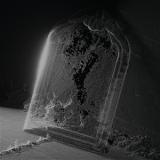
,Paradessence", das dritte Album von Visible Cloaks, ist ein Werk der Entstehung und Illusion. Die vierzehn Songs des Albums verschieben, heben und schimmern vor einem schwach leuchtenden Hintergrund der Nacht, einem höhlenartigen Raum, der durch spärliche hyperreale Darstellungen der natürlichen Welt geformt wird. Die Arrangements sind gleichzeitig grandios und zerbrechlich, sowohl eine Umkehrung als auch eine Kulmination dessen, was zuvor kam, und so abenteuerlich wie alles, was sie bisher produziert haben. Seit ihrer Umwandlung von Cloaks zu Visible Cloaks im Jahr 2014 haben Spencer Doran und Ryan Carlile eine komplexe Matrix gegensätzlicher Konzepte entworfen: organisch und künstlich, zufällig und bewusst, authentisch und repliziert. Der Albumtitel, der aus dem satirischen Portmanteau des Autors Alex Shakar aus ,paradox" und ,essence" stammt, spiegelt diese Spannungen direkt wider: Die Paradessence von Konsumgütern ist der ,schismatische Kern", der ihre Attraktivität ausmacht (in Shakars Beispiel ist Kaffee begehrt, weil er gleichzeitig entspannend und anregend wirkt). Der Balanceakt von Paradessence verleiht diesen Spannungen eine größere Dringlichkeit, da das Leben im 21. Jahrhundert durch eben diese Spannungen neu geordnet wird. Stille ist ein wichtiger Charakter in Paradessence, der nicht nur in der Gestaltung des Klangs zu spüren ist, sondern auch in dem Druck, den er auf alles und alles, was entsteht, ausübt. Die Gruppe ließ sich vom Konzept des ,positiven Raums" des Architekturtheoretikers Christopher Alexander beeinflussen, einer Idee, dass der Form der Leere um ein Objekt herum die gleiche Aufmerksamkeit geschenkt werden kann wie der Konstruktion des Objekts selbst. Wir hören, wie Klänge ihre eigene Stille in sich tragen, zwischen Existenz und Nicht-Existenz oszillieren und wie Mikroorganismen Lebenszyklen durchlaufen. Die Instrumente, die Paradessence untermauern, haben etwas Kollektives an sich. Sie bewegen sich wie eine Herde, so wie wenn der Wind über ein Feld voller Blätter weht und die Luft in der Abwesenheit von Bewegung sichtbar wird; mehrere Arten leben in derselben Melodie zusammen, treten hervor, ziehen sich zurück und verwandeln sich im Laufe von mehreren Minuten. ,Anstatt Stücke zu schaffen, die horizontal als Umgebungen funktionieren", sagt Doran, ,wollten wir sie als lebendes Material konzipieren, das sich im Raum verändert und ständig im Fluss ist." Die Songformen entfernen sich von der Atmosphäre und tendieren zur reinen Abstraktion. Utopismus schwebt am Rande; eine Beziehung zu imaginären Zukünften, die weder naiv, zynisch noch nostalgisch ist. Die Welt, die Visible Cloaks im Laufe der Zeit aufgebaut haben, wird oft von Mitwirkenden physisch umgesetzt, von denen eine vertraute Besetzung für Paradessence zurückkehrt. Motion Graphics (Joe Williams) ist auf ,synthetic woodwinds" zu hören und hat das Album mitgemischt, wobei er ihm mit seinem charakteristischen Glanz Kontur verliehen hat. Die miteinander verbundenen Stücke ,Shapes" und ,Thinking" wurden zusammen mit den Innovatoren der Umweltmusik Yoshio Ojima und Satsuki Shibano entwickelt, die auch mit dem Duo an der generationsübergreifenden FRKWYS-Kollaboration serenitatem gearbeitet haben. Das letztere Stück enthält einen von Ojima verfassten gesprochenen Text, der von Shibano auf Japanisch und von der Komponistin und langjährigen Freundin Félicia Atkinson auf Französisch gelesen wird. Das Componium Ensemble, Dorans Projekt für ,unbestimmte Kammermusik" mit selbstspielenden Software-Instrumenten, bildet die Grundlage für ,System" in einem Moment von Pessoa-scher Heteronymie. Auf dem Album ist auch Ioana Selaru zu hören, eine rumänische Komponistin und Violinistin, die ,Intarsia" mit ihrer Stimme und ihrem Streicherspiel bereichert. Doran beschreibt ihre Zusammenarbeit als ,eine Übung in illusorischer Präsenz", die sie gemeinsam aus ,der Idee entwickelt haben, ihr reales Instrumentenspiel virtuellen Instrumenten gegenüberzustellen, um die Grenzen zwischen synthetischen Streichinstrumenten und denen, die in der Realität existieren, zu verwischen". Selarus energiegeladene Darbietung in ,Intarsia" ist ein deutlicher Beweis für den dramatischen Kern von Paradessence: ein dringliches skulpturales Unterfangen, ein Instrument und eine menschliche Stimme, moduliert von einem Meer synthetischen Wachstums. Doran beschreibt, wie für ihn ,dieses Verschieben zwischen dem Realen und dem Virtuellen etwas ganz anderes einfängt, etwas Seltsames und Unbeschreibliches, das ein fester Bestandteil des Lebens in der digitalen Moderne ist, sowohl online als auch im realen Leben". Es ist elektronische Musik, die nicht nur durch ihre wechselnden Formen eine abstrakte Darstellung unserer aktuellen Traumrealität heraufbeschwört, sondern auch imaginäre Räume schafft, die emotional nuanciert sind und zu Momenten der Anmut führen.
dovrebbe essere pubblicato su 22.05.2026

EN/JP liner notes by Doran and a hyper-realistic cover by Japanese visual artist/graphic designer Kai Yoshizawa using 3DCG software.
"8 Automated Works", the first full release by Componium Ensemble, an "indeterminate chamber music" ensemble helmed by Spencer Doran of Visible Cloaks. The project is inspired by the long history of automated musical instruments, beginning with the ancient Greek Archimedes and further developed by the Banū Mūsā brothers in 9th century Baghdad, who "first perfected the concept of a programmable, automated musician: a mechanically controlled flute which used hydraulic water pressure and a system of arrangeable punchcards using a visionary proto-MIDI structure", as Doran explains in the liner notes. This mechanical music-making was extended a millennium later with the use of aleatoric principles by the European Dietrich Nikolaus Winkel, inventor of the self-composing Componium mechanical music system. Doran continues this lineage further, using the possibilities of digital technology and its ability to automate a huge range of virtual instruments and introduce aleatoric elements, moving beyond human impulses and limitations, allowing "new shapes to emerge". Dedicated also to Noah Creshevsky, pioneer of what can be considered cyber-human music, Componium Ensemble features a wide and intriguing range of instruments including prepared piano, bowed harpsichord, celesta, bass clarinet, flute, cello, Balinese tingklik, and more, often in multiple groupings. Despite this variety of instrumentation and the seemingly formidable theoretical underpinnings, the music is very accessible and attractive, spacious and fresh, with a light touch and a sophisticated melodic sense which will appeal to pop fans as well as classical/contemporary music listeners. The album is mixed by longtime collaborator Joe Williams (Motion Graphics, Lifted) and available in 10-inch vinyl, ,
dovrebbe essere pubblicato su 24.10.2025

serenitatem, the fifteenth installment of FRKWYS, RVNG Intl.'s collaboration series pairing intergenerational artists in creative conversation, joins Visible Cloaks with Yoshio Ojima and Satsuki Shibano, two trailblazers of the Japanese avantgarde music and visual arts scenes of the 1980s and 90s.
Yoshio Ojima began his career as a composer of environmental and ambient music, with a particular interest, and optimism, in the possibilities of generative software. His compositional pursuit of human synthesis with computerized forms was realized in its fullest potential alongside Satsuki Shibano, a pianist renowned for her interpretations of Erik Satie and Claude Debussy. Together, they were among a handful of influential Japanese artists whose innovations still resonate, if not more vibrantly than ever, well beyond the tightly-knit scene's original core. In the early 90s, Ojima was among the programmers of the influential satellite radio experiment St. Giga, a constantly-evolving sonic landscape that combined field recordings and sound collage with occasional readings of Japanese poetry. Satsuki was a regular reader for the station. This musical terrarium bloomed out of sight in a small Tokyo studio, a greenhouse of sound with no set start or finish time that audiences could tune into, absorb, and immerse.
The perpetual flow state of St. Giga — recordings of which Ojima shared with Visible Cloaks — would be highly influential to serenitatem's constitution. As Visible Cloaks, the Portland, Oregon duo of Spencer Doran and Ryan Carlile have developed their own set of creative strategies that form an aesthetic fuse point between human intention, aleatoric composition, and improvisation.
These are notions most recently reflected in 2017's Reassemblage and Lex, a respective album and EP in which the duo combined generative software and virtual representations of global instruments into lacy, interlocking patterns. Long time admirers of Ojima's work on albums like 1988's Une Collection Des Chainons, Doran and Carlile discovered after an online introduction that they shared with Yoshio and Satsuki an abiding interest in pre-classical composers, the Lovely Music, Ltd. label, and the British avant-garde, as well as a mutual respect for one another's techniques and processes.
The four musicians met in Tokyo, Japan at Sounduno Studios in December 2017, at the tail end of Visible Cloaks' first Japanese tour, to commence work on serenitatem. Leading up to the studio sessions, Doran and Carlile sent Ojima processed sound sketches recorded while on a European tour, which Yoshio would add to and return. Visible Cloaks would then fold Yoshio's edits back into the original compositions, which Doran and Carlile brought to the exploratory recording session. During that week together in Tokyo, the quartet made use of a number of creative strategies — 'echoing sound together,' as Yoshio puts it. Among the strategies, MIDI randomization gave the quartet melodic lines and what Doran calls 'randomized clouds,' or 'tightly grouped notes that become smeared tonal clusters functioning more like chords in themselves.' Carlile would also feed Ojima and Satsuki's text into Wotja, a generative music software which produced a MIDI language around which the quartet expanded their compositions.
'The aim,' Doran says of serenitatem, 'was to make a work that was not specifically ambient (or environmental), but something more multi-hued, weaving these deconstructive concepts into an album that has a deeper architecture underpinning it.' Accordingly, serenitatem is a marvelously sharp record, its sutures between human and machine virtually impossible to find but suggested everywhere you turn. The collaboration among Ojima, Satsuki, and Visible Cloaks is both musically and conceptually inseparable from the technology that made it possible. Throughout the album, Shibano's playing resonates like Satie's, her rhythms cascading like drops from leaves an hour after the rain. Overtones are stretched and warped like modeling clay, then spun around and shown off from multiple angles.
A single soaring note might seem to be suddenly plunged underwater, its richness of sound made shallow and its sharp edges blunted. Pittering chimes and rapidly warping vocal samples hang in the luxuriously glossy space, water trickles from ear-toear, familiar melodies rise from nothing and dissolve before they can be traced. With the depth of its emotional charge, serenitatem burns away the easy cynicism of the day, presenting itself as the kind of delocalized work of art the internet promised us decades ago — a synthesis of artistic visions, technological sophistication, futurist ambition, and, occasionally, ancient polyphony. Listening to it can feel a bit like tuning in to a 21st Century version of St. Giga: It's a place where the future still grows.
Visible Cloaks, Yoshio Ojima, and Satsuki Shibano's serenitatem, FRKWYS Vol. 15, will be available across LP, CD, and digital formats on April 5, 2019. The quartet will perform select live shows throughout 2019.
Ordina ora e ordineremo l'articolo per te presso il nostro fornitore.
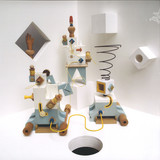
2018 repress of the debut full length LP from Spencer Doran and Ryan Carlile's Visible Cloaks project. Initially recorded in 2013 and issued on cassette by Sun Ark in 2014 (as Cloaks), this first offering uses conceptual processes to weave many of the same threads as their later work; synthetic FM tones, tuned mallet percussion, and electronically modulated voice, all arranged in a gossamer web, spun with neon electronics. On this release the duo set off on the sonic journey they are still on today, refracting their influences through East West feedback loops, augmenting traditions with technology. Remastered 45rpm DMM version with additional surprises!
Ordina ora e ordineremo l'articolo per te presso il nostro fornitore.
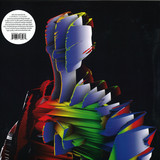
Visible Cloaks' Lex proposes a utopian dream language and its accompanying sound, a limitless, delicate space developed by fluid musical techniques and subconscious voices. The six pieces comprising Lex simulate a more peaceful future, their mysteries telling a new tale in an unknown but imaginable melodic language. Visible Cloaks are the Portland-based musicians Spencer Doran and Ryan Carlile. Utilizing software-based composition rooted in randomization, MIDI-translation and chance operations, the duo has established an improbable humanist mode of music from esoteric processes. Following their self-titled debut album, Visible Cloaks offered Reassemblage, an album simultaneously honoring the post-Yellow Magic Orchestra school of avant musical adventure and diverging from it. Veering from the paths cleared by Japanese and Italian electronic pop and ambient artists of the mid-80s / early-90s, Reassemblage established Visible Cloaks' own camp in a forest of deep sound canopied by trees grown from synthetic seeds.The sound represented on Lex is webbed with sculptural arrangements and interpolated by the sounds of alien speech. These strange and serene utterances were created by Doran feeding a chain of multiple dialects and accents through a language translation software to create an auditory poetry of an evolved place and time.
Lex features both the final version of this process and earlier, simplified experiments with it ( Keys'). The idea - building on 'fourth world' or 'global village' type concepts - was to create a projected language that was a fusion of many,' Doran explains. The result was a very disorienting form of non-language that amplifies the lapses in meaning that occur with the inaccuracy of auto-translation software.'
Permutate Lex, a companion short film to Lex made by Visible Cloaks in collaboration with artist Brenna Murphy (who also created the artwork for Reassemblage and several virtualist videos for the album), is an integral counterpart, both visualizing an aesthetic alive with human form and guiding the sonic experience of the first five pieces: Wheel,' Frame,' Transient,' Keys,' and title track Lex.' World,' the longest piece presented on Lex, is redrawn from a generative composition originally produced for an installation Doran made with Murphy.
The original work incorporates LFOs and randomized MIDI-information, and was intended to variate indefinitely. In this 'fixed' version, World' provides a more conclusive view into the impossible musical environments Visible Cloaks make real. Longer than any track on
Reassemblage, World' expresses the deepening, patient intimations suggested by Lex.
Doran says the Lex attempts to communicate the essence of a world distant enough that it can't be captured or comprehended from the present, appearing only surreal and inscrutable.' The statement reveals a broader musical philosophy fueling this new moment, an awakened voice woven through complex melodic shapes and phrases establishes communication between listeners and the unknown, here presented by Visible Cloaks as sounds coloring the very edge of the envisionable.
Ordina ora e ordineremo l'articolo per te presso il nostro fornitore.

Visible Cloaks' Reassemblage is a collection of delicately rendered passages of silence and sound that invokes - and invites - consciousness. The foundation of the duo's second album is gently poured upon the ground their musical predecessors explored, using the materials of chance operations, MIDI translation,' and other generative principles that favor inclusive musical environments over the narrowly constrained.
In 2010, Spencer Doran, one part of Visible Cloaks alongside Ryan Carlile, prepared the first volume of Fairlights, Mallets, and Bamboo, a mixtape indicated by Doran as an investigation into fourth-world undercurrents in Japanese ambient and pop music, years 1980 - 1986.' These mixes contextualized the outré orbit of Yellow Magic Orchestra-related solo projects and their abstract, radiant forays as forever futuristic modes of music.
Reassemblage evokes similar musical futures celebrated on the Fairlights mixes, but does so observantly rather than reverently. The title Reassemblage, for example, is taken from a film essay by Trinh T. Minh-ha, which explores the impossibility of ascribing meaning to ethnographic images. The author aims to speak nearby' rather than speak about.' In other words, to embrace lapses of understanding, and realize that the impulse to map direct meaning across a cultural gap often results in further disconnect.
In an effort to speak nearby' rather than speak about,' Visible Cloaks filters and forms source material to become young again. Often the duo strip tonal elements of their specificity or randomize melodies so they become stirring and lucid. Essential patterns emerge, conscious experience heightens. In these moments, the musical language of Reassemblage finds unlimited resonance and presents a path to uninhabited realities.
The origin of this language could be described as translingual or polyglottal, working within the eastern / western feedback loop of influence, Fourth World ambiguity, and the universality of human emotion. Incorporating an international array of virtual instruments to advance the idea of panglobalism through digital simulation, tones and colors cohere into a living, breathing pool of sensorial experience in Visible Cloaks' environs.
Beyond embracing the fluidity of worldly musical influences, Visible Cloaks works fluently between mediums. The contribution of stalwart digital and installation artist Brenna Murphy's dream dimensions to Reassemblage's cover artwork and surrounding videos extends the album's exploration of global headspace into a visual, visceral reality.
Ordina ora e ordineremo l'articolo per te presso il nostro fornitore.
