
10
also available
pre-order now13.10.2023
expected to be published on 13.10.2023
expected to be published on 13.10.2023

expected to be published on 30.08.2021
Nu Vision is the latest project of Duke Cooper, band leader and label boss of Nation, Kode and DirtyBlends. There are three humans who make up Nu Vision, and they all have their own stories and discographies, records released on labels you might know, gigs played in Chicago or Berlin or someone’s loft, lives lived, friends made, sleep lost - fighting for theirart, standing by truths, defending voices, honoring progenitors, whilst pushing a new paradigm. Time is both fleeting and heavy for us all, but it is not without receipts.
Nu Vision is a band in the classic do-you-believe-in-alchemy sense - equal parts rhythm, damage, and deep feeling. Drenched in nostalgia and futurism, The Seed is a singularity of sound + vision; as if heavily rotated by VJ Dave Kendall on MTV’s 120 Minutes but materialized via today’s technology.
The Seed 10 inch provides additional music inspired significant icons Section 25, Liaisons Dangeruses and Adrian Sherwood having paved the way with their prior successes..- this package of The Seed is no freshman effort; but rather, a masterclass in continuing sonic education, delivering a unified experience from beginning to end. A NU VISION.
The Seed 10 inch provides additional music inspired significant icon band: Section 25 from the period of 1981-1984 with a more electronic-dance direction, process which culminated in the album ' From the Hip ' and remix single "Looking From A Hilltop", both released in 1984 as "Insecure Man is about being true to manhood with Robert Lane leading the charge with his vocabulary message of the current state of society.
Insecure Dub focuses on the period of 1981-1984 with an alternative electronic-dance direction process as an inspired blueprint from Nu Vision inspired from Adrian Sherwood having paved the way with his individual success.
Inspired from electrifying songs produced by Chrislo Haas (DAF) and Beate Bartel (Mania D. / Matador) reinforced by Krishna Goineau’s French and Spanish Speech-Attack-Lyrics Liaisons Dangereuses created a unique style anything other than a Berlin or Düsseldorf ‘thing’ – that was propelled to an international underground phenomenon of fame.
Nu VIsion was inspired to create a blueprint from the period of their productions of 1981-1982 with an electronic-dance direction paying homage with passionate craftsmanship utilizing what equipment was possible in the studio at the time of this recording featuring new members; Zoe Murphy & Fletch The Stranger on vocals and James Chazz on Saxaphone with a Ring Modulator.
On Stock and ready to ship

Spring 2026 saw The Proclaimers recording their new album, You May Offend. It is brothers Craig and Charlie Reid’s first album since 2022’s hugely acclaimed Denture’s Out (“Proves you don't need to be a young pretender to land hit after palpable hit,” – MOJO magazine). Their 13th studio album’s 12 tracks – punchy and punky, rousing and carousing, tender and tough – were recorded at Monmouth’s legendary Rockfield Studios with producer Dave Eringa, their crack live band – Steven Christie, Garry John Kane, Zac Ware and Clive Jenner – and frequent guest guitarist, Manic Street Preachers’ James Dean Bradfield. The result is an album, as ever, concise as well as incisive, and about looking forward. Pushing on and digging into the issues and feelings that matter to them here, now and tomorrow, not yesterday, as with the title track, and first single, a lament for the state of free speech, with Charlie approving of the fact that the title can be taken two ways: “As in: ‘Look, careful what you do, you may offend someone.’ Or: ‘OK children, you may now offend.’ Is it an instruction or an invitation? Or a warning?” A powerful accompanying video for the You May Offend single is being created by Emmy & BAFTA award winners, director Douglas Mackinnon in partnership with Peter Anderson Animation. “My favourite band of all time. They write the most spectacular songs, big hearted, uncynical passionate songs.'” - David Tennant “There is a whole other world of music behind that song that I’ve just been discovering, and they’re a wonderful, wonderful band. Now we live in the age of coolness that doesn’t mean anything, it's just quality and soul. The Proclaimers make more sense than ever.” – Chris Martin after Coldplay performed Sunshine on Leith at BBC’s The Piano Room
expected to be published on 02.10.2026
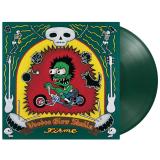
Voodoo Glow Skulls are an American ska punk band formed in 1988 in Riverside, California, by brothers Frank, Eddie, and Jorge Casillas and their longtime friend Jerry O'Neill. Voodoo Glow Skulls first played at backyard parties and later started playing shows with the Angry Samoans, The Mighty Mighty Bosstones, Firehose, Murphy's Law, and The Dickies.
Voodoo Glow Skulls' 1995 album Firme has been one of the high points in popularity for the seven-member band. Unlike some more laid-back performers in the genre, Voodoo Glow Skulls are a bit more heavy-handed on the punk part of the mix, resulting in consistently fast-paced and chugging song structures that occasionally erupt into triumphant horn breakdowns and chanted group vocals. The album also includes "Fat Randy," one of the group's more convincing ska-punk hybrids.
Firme is avavilable as limited numbered edition of 400 copies on green vinyl and includes an insert
expected to be published on 09.10.2026
Come Back Down, the new album by Nashville experimental-pop duo Total Wife, was born from the edge of sleep. When composer and producer Luna Kupper would begin to fall asleep during late-night mixing sessions, the songs would follow her into the halfway place between dream and lucidity. Like Dale Cooper in Twin Peaks, she'd wake with a new perspective on the puzzle she was piecing together. "I'm a psychological mixer - I'm trying to think of how someone's experiencing the sound, versus getting stuck in trying to make all these different tones and using all this gear to make something sound a certain way," Kupper says. And like a spiral from waking life into dream, the songs on Come Back Down are endlessly self-referential, building whole universes from a single point. Kupper sold all of her synths to make rent before she started working on the album, and so every inorganic sound is instead built from samples of the band's own work. A guitar on one song may be reprocessed and used as a synth on the next, while everywhere on the album vocal samples are taken from a single unreleased cover of Elliott Smith's 'Between the Bars.' In tribute to this process, the album was almost named The Julia Set after the mathematical equation which feeds into itself again and again, creating beautiful fractal images. The intention was to create something complex but accessible; experimental, yet precise and without abstraction. In her lyrics, too, lyricist and vocalist Ash Richter is as straightforward as she's ever been. She drew on her experience of pandemic isolation to write about connection and disconnection, using her lyrics as a tool for the communication that was missing in everyday life. On the soaring, shoegazey track 'peaches,' a storm that forced the cancellation of a recording session became a metaphor for emotional distance. 'still asleep' chronicles Richter's euphoria after Total Wife's first tour, and watches it begin to curdle into paranoia. "Thank the full moon, my heart is overflowing," she sings, before: "Is there such a thing as too happy?" The experience of isolation was prompting Richter to think back to her childhood, a time marked for her by solitude and natural play - climbing trees, making mud pies, getting lost in the woods. On tracks like 'in my head' and 'second spring,' she uses the imagery of nature to recall that time and forge a connection with her lonely inner child. "I feel connected with transcendentalist writing and magical realism - trying to convey things in a concrete way, but with that element of psychology and mystery," she says. Richter and Kupper, friends from high school, formed Total Wife in 2016, relocating from Boston to Nashville in 2020. Both are visual artists as well as musicians, which they incorporate into their work with Total Wife via layered and purposeful visuals. A DIY streak underpins everything that they do - from handling their own artwork and music videos to recording their own music, releasing tapes through their label Ivy Eat Home, and hosting house shows in the basement they've christened Ryman 2. In Nashville they've settled into a weirdo scene living under the record industry's floorboards, a hive of collaborative and creative energy that has made them excited to call the city home. They also assembled a live band for the first time shortly after moving to Nashville, consisting of Ryan Bigelow, Sean Booz and Billy Campbell - injecting their creative process with a jolt of spontaneity and aliveness that has fed back into Come Back Down.
expected to be published on 09.10.2026
Come Back Down, the new album by Nashville experimental-pop duo Total Wife, was born from the edge of sleep. When composer and producer Luna Kupper would begin to fall asleep during late-night mixing sessions, the songs would follow her into the halfway place between dream and lucidity. Like Dale Cooper in Twin Peaks, she'd wake with a new perspective on the puzzle she was piecing together. "I'm a psychological mixer - I'm trying to think of how someone's experiencing the sound, versus getting stuck in trying to make all these different tones and using all this gear to make something sound a certain way," Kupper says. And like a spiral from waking life into dream, the songs on Come Back Down are endlessly self-referential, building whole universes from a single point. Kupper sold all of her synths to make rent before she started working on the album, and so every inorganic sound is instead built from samples of the band's own work. A guitar on one song may be reprocessed and used as a synth on the next, while everywhere on the album vocal samples are taken from a single unreleased cover of Elliott Smith's 'Between the Bars.' In tribute to this process, the album was almost named The Julia Set after the mathematical equation which feeds into itself again and again, creating beautiful fractal images. The intention was to create something complex but accessible; experimental, yet precise and without abstraction. In her lyrics, too, lyricist and vocalist Ash Richter is as straightforward as she's ever been. She drew on her experience of pandemic isolation to write about connection and disconnection, using her lyrics as a tool for the communication that was missing in everyday life. On the soaring, shoegazey track 'peaches,' a storm that forced the cancellation of a recording session became a metaphor for emotional distance. 'still asleep' chronicles Richter's euphoria after Total Wife's first tour, and watches it begin to curdle into paranoia. "Thank the full moon, my heart is overflowing," she sings, before: "Is there such a thing as too happy?" The experience of isolation was prompting Richter to think back to her childhood, a time marked for her by solitude and natural play - climbing trees, making mud pies, getting lost in the woods. On tracks like 'in my head' and 'second spring,' she uses the imagery of nature to recall that time and forge a connection with her lonely inner child. "I feel connected with transcendentalist writing and magical realism - trying to convey things in a concrete way, but with that element of psychology and mystery," she says. Richter and Kupper, friends from high school, formed Total Wife in 2016, relocating from Boston to Nashville in 2020. Both are visual artists as well as musicians, which they incorporate into their work with Total Wife via layered and purposeful visuals. A DIY streak underpins everything that they do - from handling their own artwork and music videos to recording their own music, releasing tapes through their label Ivy Eat Home, and hosting house shows in the basement they've christened Ryman 2. In Nashville they've settled into a weirdo scene living under the record industry's floorboards, a hive of collaborative and creative energy that has made them excited to call the city home. They also assembled a live band for the first time shortly after moving to Nashville, consisting of Ryan Bigelow, Sean Booz and Billy Campbell - injecting their creative process with a jolt of spontaneity and aliveness that has fed back into Come Back Down.
expected to be published on 09.10.2026
With the amps still warm from 2024's coruscating comeback Life Knife Death, veteran Swedish punk-metal masters Wolfbrigade strike back like a wounded cobra with their loudest, fullest, thickest-sounding record yet. And that's no happy accident. On their twelfth LP (the first three released under the Wolfpack monicker, 1996–99), the quintet concertedly resolved to shake up their habitual processes and interrogate their customary methodology. "As the songs started to fall into place, we decided to do something we hadn't done in many years," explains the band. "For the last decade we've recorded, produced and mixed our albums ourselves. This time we wanted to work with someone from outside the band whose work we respect and who we felt would understand what Wolfbrigade is about."
expected to be published on 09.10.2026
With the amps still warm from 2024's coruscating comeback Life Knife Death, veteran Swedish punk-metal masters Wolfbrigade strike back like a wounded cobra with their loudest, fullest, thickest-sounding record yet. And that's no happy accident. On their twelfth LP (the first three released under the Wolfpack monicker, 1996–99), the quintet concertedly resolved to shake up their habitual processes and interrogate their customary methodology. "As the songs started to fall into place, we decided to do something we hadn't done in many years," explains the band. "For the last decade we've recorded, produced and mixed our albums ourselves. This time we wanted to work with someone from outside the band whose work we respect and who we felt would understand what Wolfbrigade is about."
expected to be published on 09.10.2026

Danielle Ponder is done waiting for a future version of herself to arrive. Now, the Rochester-born, Atlanta-rooted singer-songwriter is unapologetically living in the moment. This realization powers Everything Has Changed, Ponder's anticipated sophomore album (and debut on Dead Oceans in partnership with Phoebe Bridgers). The LP is Ponder’s most self-assured statement to date: it was crafted through a period of immense transformation as the beloved vocalist propelled from being a lawyer to a full-fledged musical powerhouse. That artistic freedom threads the album, as heard on lead single, “Power”, which serves as both a declaration and an affirmation for the Black diaspora. Other highlights include the revelatory “Sun and Moon”, the towering blues ballad “God of You”, and the devastatingly vulnerable “Open Windows”. Everything Has Changed dismantles the stories Ponder once told herself and finds peace in what remains—all themes that have shaped much of her journey. Music was always a constant presence throughout her life, but practicality initially took over in adulthood. While performing with her family’s band and later developing her own projects, Ponder pursued a legal career focused on criminal justice reform.
It wasn’t until her late 30s that she allowed herself to seriously imagine music as more than a side pursuit. In 2021, at age 39, she finally took the leap, leaving law behind to pursue her artistry full-time. The gamble paid off: she signed her first record deal in 2022, becoming a trailblazer on her own unusual path to worldwide renown. Her debut album Some of Us Are Brave introduced Ponder as one of soul music’s most compelling new voices, thanks to singles like “Someone Like You”, “Roll The Credits,” and the empowering title track. The LP earned critical acclaim along with dozens of major sync placements, including the latest Apple campaign for the iPhone 16 Pro. She’s since had four major TV appearances, including Jimmy Kimmel Live! Ponder has also sold out shows across North America and Europe, including festival appearances at Bonnaroo, Lollapalooza, Afropunk, and the Montreux Jazz Festival.
But if that album documented her arrival, Everything Has Changed documents her evolution.
expected to be published on 09.10.2026

Danielle Ponder is done waiting for a future version of herself to arrive. Now, the Rochester-born, Atlanta-rooted singer-songwriter is unapologetically living in the moment. This realization powers Everything Has Changed, Ponder's anticipated sophomore album (and debut on Dead Oceans in partnership with Phoebe Bridgers). The LP is Ponder’s most self-assured statement to date: it was crafted through a period of immense transformation as the beloved vocalist propelled from being a lawyer to a full-fledged musical powerhouse. That artistic freedom threads the album, as heard on lead single, “Power”, which serves as both a declaration and an affirmation for the Black diaspora. Other highlights include the revelatory “Sun and Moon”, the towering blues ballad “God of You”, and the devastatingly vulnerable “Open Windows”. Everything Has Changed dismantles the stories Ponder once told herself and finds peace in what remains—all themes that have shaped much of her journey. Music was always a constant presence throughout her life, but practicality initially took over in adulthood. While performing with her family’s band and later developing her own projects, Ponder pursued a legal career focused on criminal justice reform.
It wasn’t until her late 30s that she allowed herself to seriously imagine music as more than a side pursuit. In 2021, at age 39, she finally took the leap, leaving law behind to pursue her artistry full-time. The gamble paid off: she signed her first record deal in 2022, becoming a trailblazer on her own unusual path to worldwide renown. Her debut album Some of Us Are Brave introduced Ponder as one of soul music’s most compelling new voices, thanks to singles like “Someone Like You”, “Roll The Credits,” and the empowering title track. The LP earned critical acclaim along with dozens of major sync placements, including the latest Apple campaign for the iPhone 16 Pro. She’s since had four major TV appearances, including Jimmy Kimmel Live! Ponder has also sold out shows across North America and Europe, including festival appearances at Bonnaroo, Lollapalooza, Afropunk, and the Montreux Jazz Festival.
But if that album documented her arrival, Everything Has Changed documents her evolution.
expected to be published on 09.10.2026
The title of Ghost Bridge, the East-Coast-spanning chamber ensemble Hour's fifth record, is less metaphorical than one might expect. Bandleader Michael Cormier- O'Leary repurposed it from an unrealized movie concept about a bridge that inexplicably starts disappearing. On the nearly-ten-minute title track of this richly imaginative suite of songs_written for a 13-piece ensemble that includes woodwinds, strings, and vibraphone as well as a rock rhythm section_Hour conjures up this central image with spectral string harmonics and free-time percussion gestures. While writing the keyboard pieces that became the takeoff point for the album, Cormier-O'Leary also found himself reflecting on the loss of loved ones or even his own mortality. The six kaleidoscopic instrumental pieces on Ghost Bridge, though, feel more cosmically inquisitive than straightforwardly elegiac, sketching a progression from existential doubt toward understanding and acceptance. Ghost Bridge forms a contrast with Hour's art-rock-informed, more improvisatory early releases, representing a step further into intricate chamber orchestration. Known for his work with Friendship, Wendy Eisenberg, and 2nd Grade, Phillybased multi-instrumentalist and Dear Life Records founder Cormier-O'Leary has made Hour a home for increasingly cinematic instrumental compositions since the mid-2010s. With dazzling production by Lucas Knapp, Ghost Bridge delivers plenty of the live ensemble's trademarks, especially cyclically developing guitar and keyboard melodies. However, even more than on Hour's last studio album, unconventional harmonies and sophisticated counterpoint take center stage here. These emotionally multifaceted compositions feel as rooted in contemporary classical and film soundtrack music as in indie rock. One of the most striking elements of Ghost Bridge is the more significant developmental role the orchestral instruments assume in each piece. Instead of underscoring Cormier-O'Leary's central hooks, there is a new mesmerizing level of detail to the group's conversational interactions and kinetic energy. "Centralia" is a stately and idiosyncratic fugue built from repeated and overlapping phrases, while Ghost Bridge's compositions are full of unexpected pivots in harmony that allow recurring melodic motifs to sound continually reshaded. On "Pearls," the chords modulate drastically around Cormier-O'Leary's inviting central melody in a way that emulates cuts in a film telling several parallel stories. There is an unsettled quality to the chords on Ghost Bridge, with Cormier- O'Leary's progressions avoiding firm grounding in either clearly sunny or melancholy tonalities. This mood is made more concrete by the record's sole vocal track, the jazz-inflected "Sky is Blue," featuring an uncannily gorgeous performance by Heeyoon Won. The song seems to be a communication from a person who has departed, offering consolation or perspective to someone left behind. Though its sonic palette is often tranquil, Ghost Bridge explores heartbreak, grief, anger, and helplessness in a distinct and pretense-free way. The project represents a bold step forward for Cormier-O'Leary as a composer and arranger, and on Ghost Bridge Hour reaches its most fully realized form to date, connecting soaring themes with an inventiveness that perfectly suits the searching nature of the subject matter.
expected to be published on 09.10.2026
"Loving You To Death is very much about being with someone who is hurting you by hurting themself, knowing you should leave but that you can’t live without them. It’s mostly about one night, or one period of time? I don’t really know anymore, but maybe you can relate.
Before writing this I was obsessed with stretching out my little moody riffs into long drawn out ambient pieces, throwing them through the morphagene and seeing what happens. But there is just way too much sound design around me, everything is so slick and impressive and boring and unmemorable. So I tried to keep everything bare, to accept the recordings as they are and to do it without a band.
Long live mid-fi, dramatic relationships, obsessiveness, sing-song melodies and unprofessionalism, and huge thanks to Ariana, Matt, Adam, Yas, Nik, Victor, Ouri, Ziggy, my mom, Alan, and everyone else I drove crazy while making this.
- Richard"
expected to be published on 11.10.2026

2026 Repress
What an unbelievable record. From the wild cover to the iconic breakbeats, Roots from Ian Carr’s Nucleus is one of the dopest albums we know. This is seriously thick, funky-prog jazz-rock heaven. Originally released on Vertigo in 1973, other than a couple of versions at the time for other territories, Roots was never re-pressed since so it’s gone on to become another one of those impossible to find records.
Maybe it was a little too out there for the time, but it’s aged very, very well indeed and this Be With re-issue, re-mastered from the original analogue tapes, shows off just why this deserves to be back in press.
Genius trumpeter and visionary composer Ian Carr was one of the most respected British musicians of his era. He was a true pioneer and saw the potential in fusing the worlds of jazz with rock, just as Miles Davis and The Tony Williams Lifetime did in the US. In late 1969, following the demise of the Rendell-Carr quintet, and tiring of British jazz, Carr assembled the legendary Nucleus. Regarding music as a continuous process, Nucleus refused to “recognise rigid boundaries” and worked on delivering what they saw as a “total musical experience”. We can get behind that.
Under bandleader Carr, Nucleus existed as a fluid line-up of inventive, skilled musicians. This constant evolution and revolution was all part of the continuous musical exploration and discovery that took jazz to new levels.
Working together with producer Fritz Fryer and engineer Roger Wake, the seven compositions by Carr, Brian Smith and Dave MacRae that make up Roots flirt with perfection, and Nucleus at that time made up of the cream of 1970s UK jazz with Brian Smith on tenor saxophones and flutes, Dave MacRae on piano and electric piano, Jocelyn Pitchen on guitar, Roger Sutton on bass, both Clive Thacker and Aureo De Souza on drums and percussion, Joy Yates delivering the vocals and of course Carr on trumpet.
The spellbinding title track immediately renders the album indispensable. Riding the illest of loping breakbeats, “Roots” is low-slung, doped-out heist-funk. An absolute monster. If it sounds familiar then that’s likely down to it being sampled by Madlib for Lootpack and Quasimoto’s “Loop Digga”, as well as by a whole host of beat manipulators. “Roots” conjures prime instrumental hip-hop / beat music, only 20 years ahead of its time. Truly, these are the roots. Through sinuous bass, twinkling keys and a hypnotic guitar riff, a smoky brass motif weaves its way into a gloriously deep haze around Carr’s solos. “Roots” is over 9 minutes long, but there’s not a single wasted second, not surprising given that this is a condensed version of an originally 40 minute long commissioned composition.
The soothing vocal fusion delight of “Images” follows. Meticulously constructed, with gorgeous flute work from Brian Smith, with Joy Yates’ silky vocals and Dave MacRae’s Rhodes never sounding better. The cool, driving “Caliban” closes out the first side. Originally the third movement in a four part commission to celebrate Shakespeare’s birthday it stands up on its own, all robust rhythms and blended brass. Keyboard colour and Carr’s trumpet are splashed across the funk drums and basslines (and there’s even some bamboo flute). This really is fusion: the elements of jazz and rock coming together in beautifully synthesis.
Side two opens in riotous fashion with the short, thrilling samba of “Wapatiti”. Next up, “Capricorn” forms a smoothed-out, jazzy constellation. Mellow and dreamy, its twinkling percussion and languid horns slowly build the vibe before head-nod drums and a killer bassline enter the fray. With a distinct heaviness that Black Sabbath would’ve envied, “Odokamona” is a venomous slice of riff-soaked jazz metal (yes, you read that right), elevated by Carr’s wah-wah horns.
The album closes with MacRae’s exceptionally cosmic “Southern Roots and Celebration”. Very much in conversation with Weather Report, it opens as a languorous, spiritual jazz of chiming keys and serene guitar that turns slowly, gorgeously into a mid-paced, brass-laced banger. It’s another sure-fire party starter and the sound of the band having a righteous blast, building an ecstatic chaos that ends with Yates screaming.
And of course we need to talk about Keith Davis’ cover for Roots. Perhaps the coolest record cover of all time? Certainly one of the most bonkers. Just your run-of-the-mill high-gloss, acid-tinged airbrush dystopian/utopian living-room party scene. Consider this your chemical flashback trigger warning.
Front-and-centre the hip-to-death green robot holds court with their giant ball of yellow barbwire wool, hooked up to… something(?) being teased out from under the stairs (probably best not to ask). A thoroughly zoned-out, long-legged Pop Art party-goer lounges half-plugged in to the painting behind her as a pair of legs flail into shot from the the top of the stairs opposite. We won’t even begin to guess what the chap’s up to in the middle, but the view out of the windows is rather nice, and someone’s already got the hoover out ready to tidy up. All of the Nucleus sleeves are something special, but this particular one? Crikey.
This Be With edition of Roots has been re-mastered from the original Vertigo master tapes, Simon Francis’ mastering working together with Pete Norman’s cut to weave their usual magic with these wonderful recordings. The crazy cover has been restored at Be With HQ as the finishing touch to this long overdue re-issue.
expected to be published on 16.10.2026

Cut Rate is the debut LP from Detroit-based techno punk band Decliner. Written and recorded over the span of several years, the music reveals a sludgier, darker, and more industrial sound, representing a marked departure from their raw and thrashy roots.
Cut Rate is an album that lives at the edge of potential… a fever-dream where danger, uncertainty, and reckless hope collide. With dark humor, underdog grit, and flashes of raw beauty, it moves like someone risking everything — bravely, boldly, sometimes foolishly.
Intimate yet volatile, Cut Rate balances vulnerability and strength, chaos and tenderness. It unfolds like a roll of the dice, a shot in the dark, a chance that you can’t walk away from.
Produced by Steven Stavropoulos, the record delivers hellish, intricately designed soundscapes that establish the bedrock of each track. Tim Barrett’s guitar adds a dense layer of emotion throughout, elevating the music and further establishing the record’s stylistic ambiguity. Rob Luzynski’s vocals are at once tortured, brazen, and ridiculous, an anti-hero winking at the abyss, telling stories that no one should live by but that we all may learn from.
expected to be published on 16.10.2026
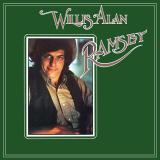
Singer-songwriter Willis Alan Ramsey was 20 years old when he became the third signing to Leon Russell and Denny Cordell's Shelter Records – after Russell himself and the legendary J.J. Cale. The result was Ramsey's 1972 eponymous debut, a masterpiece of laid-back Texas country-rock, blues-inflected folk and outlaw ballads.
As a child, Ramsey was an obsessive radio listener – from Elvis and the Beatles to Delta blues, country and even classical music. By middle school, he had formed his first garage band and started writing songs. After a brief stint at the University of Texas, he took to the burgeoning coffeehouse circuit where he toured alongside folks like Townes Van Zandt, Jerry Jeff Walker and Keith Sykes. It was during these shows that Ramsey developed much of the material for his LP, a diverse yet coherent mix that revealed his varied influences.
Recorded in Memphis, Nashville and at Russell's home studio in the Hollywood Hills, the album features some of the era's greatest session musicians: Eddie Hinton on guitar, Red Rhodes on pedal steel and the rhythm section of Leland Sklar and Jim Keltner. A true songwriter's songwriter album, its tunes have been covered by Waylon Jennings ("Satin Sheets"), Jimmy Buffett ("The Ballad of Spider John") and, most famously, Captain & Tennille ("Muskrat Love"), but no cover can beat the originals from the wise-beyond-his-years Ramsey.
Though Willis Alan Ramsey has continued to perform regularly and write new songs, a second album is yet to be released. For years, whenever someone asked about it, Ramsey was known to answer "What's wrong with the first one?" The answer is, of course, absolutely nothing. In fact, it's perfect.
This first-time vinyl reissue reproduces the original lyric sheet. Includes new interview with Ramsey and liner notes by author Richie Unterberger.
expected to be published on 16.10.2026
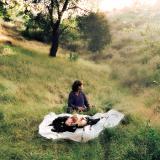
No Home is the new album by Lane Hartley, releasing October 23rd 2026 on Royal Oakie Records. Produced in collaboration with David Hartley of The War On Drugs & Adam McDaniel (Animal Collective, Angel Olsen, Geologist), the album was recorded at Drop of Sun Studios in Asheville and features contributions from North Carolina’s tight knit music community–including Mary Lattimore, Seth Kaufman of Floating Action & Dream Sitch, David Hartley, Jack Victor Johnson, and more.
After recording his debut album Naming Horses, Lane left Los Angeles and returned home to the Carolinas, eventually landing in Asheville. It wasn’t too long until the songs started flowing and Lane found himself reaching out to Adam McDaniel at Drop of Sun Studios–a vaunted space that’s been at the heart of indie-rock the past few years, bringing to life recent albums from MJ Lenderman, Wednesday, Fust, and more. McDaniel introduced Lane to David Hartley, and what originally started with discussions to record one song quickly turned into a plan to track a whole album live with a six piece band. Once in the studio, co-producer McDaniel encouraged the group to lean on intuition–“All of the players on this record really brought it to life in such a cosmic way. They instilled so much childlike wonder and fun into the making of the album. It inspired me to keep going” says Lane.
Lyrically the album is a collection of vignettes about people who’ve become alienated from their deepest desires of connection, belonging, intimacy, and autonomy–inspired both by Lane’s own life and the lives of people he’s loved. The unique character of the album emerged when Lane made the decision to pair the dark lyrical content with bright & lush arrangements, inspired by Gene Clark’s No Other, Neil Young’s After the Gold Rush, and Amen Dunes’ Love. In Lane’s words, “The content of the songs got way darker, and my reaction was to make the songs catchier, and to lean harder into the music that influenced me. I wanted each song to feel like a room in a haunted house, with a beautiful garden growing outside”.
Album opener “I Am Not Ashamed” was inspired by the anti-memoir of actress Barbara Peyton, a 1950’s Hollywood starlet who met an untimely end; “It’s about knowing that whatever you’ve done to survive, you still deserve love” says Lane. “Mother” pairs lyrics about ancestral trauma with the sunshine-pop influence of Colin Blunstone, featuring backing vocals from Lane’s sister Barrett Hartley. “It's about coming to terms with the fact that the people meant to protect us are dealing with their own trauma…”
Meanwhile, “All Of This Is Yours” and “Tone Poem” form the spiritual center of the album, an attempt to transmute anger & pain to bittersweet acceptance in the wake of a breakup. “I feel like on the surface this is essentially a breakup album, a lot of these songs are about mourning the end of a relationship and reflecting on what went down. I was falling in love and getting my heart broken, then waking up and driving across the country and doing it all over again.” “Love Is Not A Song” was inspired by Margo Guryan’s Love Songs, pairing bright piano with playful lyrics about an old man who’s been beaten down by life but still believes his greatest love is yet to come. Last but not least, title track “No Home” sums up the album’s key theme of alienation, “It all goes back to this feeling of wanting to belong to someone or somewhere, wanting to belong in your own body.”
expected to be published on 23.10.2026
This is more a relic than a record. A token of respect to the music that made me who I am. Everything I do starts here — the urge to pull songs I love into the club shape I play today, for one reason only: to make someone else feel what I feel when I hear them. Two techno improvisations, ANG and OSC, built on two songs that mattered enormously to me and to electronic music — bands that started their own revolutions, in their own time, mostly off to the side of the mainstream.
These came out too good to keep to myself. Vinyl only. 300 copies. No repress, ever. First come, first served. Bandcamp and selected stores. No digital, no promos — this one stays sealed.
expected to be published on 23.10.2026
Put your hands together and please welcome Linda Lo to Shall Not Fade's Time is Now imprint. The LA producer/DJ's new 12" EP "Masa" drops 23rd Oct 2026 and f**k is it sick.
Linda Lo fuses* mambo, samba, and salsa with UK garage, dubstep, and club rhythms to make guaranteed rewind material that is gonna light up the dance…
* imma talk about this fuses sh*t in a minute.. First we need to get a bit philosophical. Cos rewinds and fusions aside, this EP is alive. It's part of something bigger and cyclical, without a start or an end. It is music. It was part of someone else's music before and it will be part of other people's music in the future. Right now though, it's Linda Lo's music.
Too esoteric? Let me elaborate and, let's talk about fusion. There is the fusion that is – steal a bit of genre X and culture Y, chuck it on the grid and strut about professing fusion – and then there's actual fusion: Music that is something "new" and real and genuine. Music that you end up describing excitedly as a "fusion of" things (even if it inevitably ends up doing it a disservice). Music that is simultaneously one thing and not that thing, and also something else and not that something else too. Music that is just "music" to the creator but is also part of the progression and evolution of music for others. Mala wasn't making "dubstep". Skream & Benga ended up not making Garage. Like many before and after they were making their music and Linda Lo is making her music so let's hear from her about it. Big up Linda. This is real.
Notes from Linda:
-----------------
“Like Croydon by way of Havana”
“Masa, or corn-based dough used to make tortillas and tamales, is a traditional staple food for many in Mexico and throughout LatAm. In the Maya worldview, people's flesh is made out of masa. In order to make masa, corn must be dried, nixtamalized, ground, and mixed (often by hand) to create the right textured dough. I find much of my music work is a collision and a mixing of many elements, all worked into one product. In this way, I've worked these songs, transforming raw rhythms and sub bass into hand-mixed tunes. ‘Masa - EP' presents four delicious heaters. The title track explodes with a fiery double-time dubstep groove. Mambo horn stabs bite through a bass inferno. ‘Cenote' looks down upon a subterranean pool of sound—still on the surface but impossibly deep. ‘Minifalda', pure flirt and gyration, calls in cuica and other voices from a samba bateria. Finally, claves stitch across ‘Mestiza', a fusion of blooming lush orchestration and jagged 2step rhythm.
Around 1960, my grandparents were regular dancers at the Palladium in Los Angeles: young, Mexican, and falling in love to dance music, specifically big band mambo. My mom, consequently, is a fantastic dancer, and her mambo collection along with my dad's exotica records formed the base of my own vinyl collection. When I first discovered garage and dubstep, there was something indescribably familiar to me, something mambo-like about the syncopated offbeat hits and drama. Later, as I began stitching together mambo claves and 2step drums, I assumed I was trying out something totally new. The farther I go, the more I see that I was wrong.
Dubstep, garage and jungle share a parental lineage back to dub reggae, originating from Jamaica. Mambo hails from Cuba, and sister genres of salsa to NYC & PR, and bachata and meringue to the Dominican Republic. Yet, these musical genres of the Caribbean have not developed in isolation. Reggae, mambo, dancehall, salsa, even son jarocho from Veracrúz, Mexico (where my family is from), all developed together, influencing each other fundamentally. Ultimately, all musics of the Caribbean have come from West African polyrhythmic musical heritages. Garage, mambo, dubstep, and salsa are points in time along one musical continuum.
I feel very honored to be a selector working in Los Angeles (and elsewhere!). I hope I can share some music for the next generation of young people to fall in love to. "
-----------------
I'm moved by what Linda writes here. #1 Doing what you love, and finding you are part of something bigger. Creating for yourself freely and hoping to inspire others with healthy amounts of care, humility, freedom, self awareness and enjoyment. (It is inspiring and I'm honoured we are now a part of sharing Linda's music). #2 There's something wonderful about finding connection and a sense of place. A place physical, spiritual and in time. Music can help us all find connection and be part of a place. Wheel it up wherever you are.
expected to be published on 23.10.2026
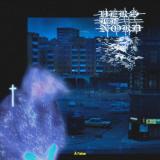
Balaise was the original title of Vers le Nord’s debut album. In French slang, balaise means something in between badass and flamboyant. The word keeps popping up throughout the record, like a teenager’s graffiti scrawled on a bus shelter after a few drinks. Balaise robots. Balaise ghosts lurking in the shadows. Balaise is the barfly who fantasies about becoming a street vigilante. In many ways, Matthieu Pellerin's new solo project is entirely contained within that word: a gigantic piece one man against the world cobbled together, a monument shaped by hand using layers of synthesizers sounding like cathedral organs cast in concrete.
Stitching this type of freak together took time. Five years, or what sounds like forever in an age obsessed with career trajectories and content strategies. But for Matthieu Pellerin, it was never about career plans or taking the easy road. Or he would have dug up the rotting corpse of Oi Boys, his now-defunct band, whose brief existence and explosive popularity once united sullen skinheads, gothic street punks, and old school punks alike. Or he would have fully embraced the Metz scene, now that the Great International Triple Alliance of the East (Noir Boy George, The Dreams, The Feeling Of Love...) and rising solo acts like Tune Zitoune, Josy Bazar, Fantôme Josepha, and Tony Gerrano have somehow transformed this sprawling open-air heroin camp into an unlikely capital of cool. But Vers le Nord doesn't point East, and it is as a lone rider that Matthieu Pellerin can fully reveal his songwriting scope.
With Le Seul Élément, his first solo project, the Lorraine native had already shown a rare gift for crafting worlds. Picture vast sonic masses stretching like industrial zones, noise-filled fog pierced by pale neon lights and landscapes caught somewhere between the gnarliest dive bar and a doomsday bunker. And slipping through the soul-crushing slowness and fractured blackened atmospheres, one could perceive a throwback to his years plotting in black metal-tinged Loth and Bishop.
Vers le Nord populates those landscapes that once were rough sketches. Damaged characters reign supreme, with a plethora of exquisite mutts brought to life, rather than outcasts committed to the cause. Where Nuits Blanches —his new supergroup featuring members of Rixe, Lion's Law, Headbussa and La Femme— pulls no punches with raw confessions, Pellerin switches gear for tales of robot apocalypses, vagrants and fam-seeking school shooters, delivered with William Sheller-esque rhymes and striking images. Yet even within fiction, he manages to create something deeply intimate, almost defining, showing very little effort: he is a natural. All in all, à l’aise (at ease). Songs resonate deeply with the listener, perhaps because of Pellerin’s odd way or always addressing someone without ever really naming them, a floating, obsessive and inescapable “you” calling us out.
Despite all of the darkness, Vers le Nord stirs deep emotions. There is something of Type O Negative or Anna von Hausswolff in its constant collision of the ludicrous and the epic gothic, its bleak romanticism that never tells a sordid tale. While the vocals remain rooted in a distinctly French punk lineage—think No Class, La Souris Déglinguée and OG Bérurier Noir—the reactor core is hidden somewhere else. Oneohtrix Point Never feels like a closer relative with his ultra-emotional music made of cold synths and disembodied anthems, swallowing and regurgitating forty years of icy, contemplative new wave across ten songs. It comes as no surprise that Lila Ehjä and Aimable, two rising specialists in lowering the temperature below seasonal norms, appear on “Enterrez-moi bordel” (“Bury Me, for fuck's sake”), a grandiose, spectral and magnificently arrogant finale. And in the end, Vers le Nord starts where the original idea was hiding all along: somewhere amid the ruins, definitely balaise and yet somehow, completely à l'aise.
expected to be published on 20.11.2026

For our third celebratory release for 30 years of Ten Lovers Music we have another Various Artist selection called Frisson EP Part B. Kicking off the A side we have Mike Perras from Canada with Handle With Care, a superb opener, deep house with a saxophone solo that certainly gave us Frisson the first time we heard it. Following on is Takahiro Fuchigami from Japan with Wired City, another dark broken beat masterpiece made for the dancefloor. Onto to the AA side we have someone who is an integral piece of the Ten Lovers Music family Jose Rico from Spain who joins forces with Ruben Valero for Harmonies & Melodies, they draft in Anthonious on the Rhodes and it’s a deep house masterpiece. Finally Lobos Marinos from Japan, band leader Kazutaka Miya brings in Miki Hirose on the Trumpet and Shin Kowaka on Drums.
On Stock and ready to ship

First Word Records proudly present ‘One 4 Detroit’; the third single from Above The Clouds (aka kidkanevil & Magic Manfred), complete with a remix by 14KT.
This 7" vinyl release follows on from last Summer's MF DOOM cover 'Arrow Root', which received strong support from the likes of Japan's DJ Koco and Philadelphia's DJ Jazzy Jeff, and their recent cover of ‘Change’ which was originally by Shadez of Brooklyn, most notably appearing on DJ Premier's 1997 mix album 'New York Reality Check 101.
One of the original First Word roster, UK Producer/DJ and all-round laptop music geek kidkanevil has developed a distinctive and progressive sound over the years, gleefully exploring the beats and bleeps of the electronic music universe to international recognition. Leeds born, sound system bred and raised on a (un)healthy diet of video games and anime, his solo work inhabits the curious space between bass frequencies and otaku culture. But as a devoted teenage backpack rap nerd, somewhere in the back of kid's mind was a lingering desire to reconnect with his first love, hip hop.
Not long after moving to Berlin he joined a studio space in graffiti plastered Kreuzberg, where he met multi instrumentalist wizard Magic Manfred; a disciple of all things boogie, disco, funk and soul. Born and raised in Berlin, and currently a touring musician for many an act, Manfred's musical map joins the dots from piano lessons at four, to starting a band with his teenage friends, leading him to his true calling - the bass - via the club vibrations of his hometown, which introduced him to the world of DJing and production, and a stint studying in the explosive London jazz scene to finalise his Jedi training.
Bonding over their mutual love of '90s hip hop, a friendship and musical kinship developed, coupled with a desire to honour past eras but push things forward, Above The Clouds was born; named after their joint favourite Primo beat, with a touch of irony regarding their basement based studio of a windowless variety.
kidkanevil explains that “after we made a bunch of piano joints it felt like time for a switch up, I had these raw drums looped and Manfred started playing this simple synth line on the Prophet - it kind of happened in an instant. This one was really a case of capture a moment and let it be. It had this cold, industrial bounce to it that really felt ‘Detroit’ somehow, so it became something of a tribute to that sound. Obviously there’s a rich musical history there that’s beyond anything we could encapsulate, but I hope the respect comes across. From Berlin to the D with love!
We felt pretty strongly that if we’re gonna nod to Detroit, we needed a remix from someone who reps there directly. I’ve been a fan of 14KT since the early 2000s beat scene, and as he’d previously released music on First Word, it made perfect sense to approach him. We asked and did he oblige!! I’m very comfortable saying we got schooled! He really blessed us with an amazing remix that brought a life and soul to what was originally a pretty stark beat, we’re super honoured to have this as our first ever remix.
‘U3P1’ (named after a synth preset so we didn’t forget!) is on the flip - this also came about pretty fast. I was thinking Ummah-era Tribe with the drums, and Manfred once again put down this super nice riff and it grew from there. It kinda felt like it needed some trumpet and it's always nice to highlight some of the amazing musicianship lurking beyond the club systems here in Berlin, so we called up Berlin based trumpeter and composer Paolo de Jesus, who blessed us with a beautiful performance and arrangement. And that was that; we hope you enjoy!”
‘One 4 Detroit / U3P1’ is released on limited 7" vinyl & digital platforms, June 12th 2026.
b 02: One For Detroit (14KT Remix) feat. 14KT
b 02: One For Detroit (14KT Remix) feat. 14KT
[b] 02: One For Detroit (14KT Remix) [feat. 14KT]
[b] 02: One For Detroit (14KT Remix) [feat. 14KT]
[b] A2 | One For Detroit (14KT Remix) [feat 14KT]
On Stock and ready to ship

Following Parnell March’s Back Bar Grooves EP in February and November’s release of the Dust Tears (lead song from Sarah/Shaun’s debut) remixes, Edinburgh’s Hobbes Music label returns with a second EP of dream pop from husband-and-wife duo Sarah/Shaun (pronounced simply Sarah Shaun), alias Sarah and Shaun McLachlan (pronounced McLochlun), who wooed hearts and wowed critics with debut EP ‘It’s True What They Say?’ last year.
‘It’s True What They Say?’ attracted fans across the board: Artist Of The Week in The Scotsman, rapturous reviews from The Skinny and Tokyo's Ban Ban Ton Ton blog, BBC 6Music airplay courtesy of Nemone (Mary Anne Hobbs' Morning Show), more radio play from Radio Scotland's Roddy Hart & Vic Galloway, plus Simone Butler (Primal Scream) and Jim Sclavunos (Bad Seeds) via their respective Soho Radio shows, not forgetting ringing endorsements from the likes of David Holmes, Youth, Kevin Bales (Spiritualized), Brent Rademaker (Beachwood Sparks) and Julian Corrie (Franz Ferdinand).
They played gigs supporting Glasgow's huge Glasvegas, at festivals (Kendall Calling, Dunbar Music, Hidden Door), plus a slew of venues across the Scottish capital, ending the year with a trio of shows supporting Glaswegian 80s pop legends The Bluebells at Aberdeen’s Tunnels, Dunfermline’s PJ Molloys and Edinburgh’s Liquid Rooms, while The List magazine tipped them among their Ones To Watch For 2025, with journalist Fiona Shepherd suggesting they were “blending the starry-eyed pop of Sonny & Cher with the electronic experimentation of Chris & Cosey.”
Very much the companion piece to the debut EP but arriving a full twelve months later, Someone’s Ghost is emblematic of the duo’s desire not to rush things or release anything half-baked.
“I’ve always wanted to create the perfect pop record and I do really feel that we’ve achieved that with this one,” says Shaun. And he’s clearly not the only person who thinks so.
REVIEWS, FEEDBACK ETC:
"I LOVE that! Dreamy dreamy pop." ROY MOLLOY (Marvellous Crane/Alex Cameron) on BLAST RADIO, Sydney
“the Scottish music scene’s cream of the cool... buzzy drum beats, high, distant chimes, and heavenly electronics…. very ethereal.” THE SKINNY
"Listening to Sarah/Shaun is like eavesdropping on a noir dreampop, long-distance phone call between them both, across two separate sonic locations. On this stunning 4-song EP, Sarah’s voice, effortlessly mesmerising, draws you into these big beautiful and haunting passages of perfect dream-pop. All beautifully produced in a multi-layered-scape of low-fi analogue textures, epic cinematic crescendos, intense electro-pulse grooves and warped psycho-pop guitar riffs. Within the songs lurk a sense of unresolved emotions, longing and pathos. There are shades of classic Lee Hazelwood & Nancy Sinatra but also Post-Punk Electronica and Beach House. But what a unique sound they’ve created of their own. I love it" DAVID MCCLUSKEY (The Bluebells)
"Absolutely beautiful" SEAN JOHNSTON (A Love From Outer Space)
"Lovely stuff here! Total quality." MARTYN 'MASH' HENDERSON
"Ooooh. Everything the last record promised is here. Well done" GEORGE T aka George Demure (Accident Machine)
"Vince clark Era Depeche Mode in places" KEVIN BALES (Spiritualized)
"Sounds cool. Well done" PETE KEMBER (Sonic Boom, Spacemen 3)
"Glorious, it (Debbie Harry) grabs hold of you and doesn't let go." IAIN DAWSON aka RAVECHILD (Everyone Wants To Play The Hits Podcast)
SOMEONE’S GHOST
Born out of an incredibly anxious, stressful time, the songwriting process for these recordings has been something of a personal tonic for Shaun…
“There was a period when I was having nightmares,” he reveals. “Apparently I was saying there was someone in the room, I was talking to that person and Sarah was seeing all this while I was still asleep.
So, I was thinking that this was my ghost. I started writing songs because I was going through something and I was dealing with something and writing songs was a comfort. My ghost was a comfort, whether it was real or not. The idea of it was a comfort.”
“I firmly believe that everyone has someone who watches over them but all of the songs are essentially about being there for someone,” he says. “Everybody needs someone but also everyone needs to stay real and keep what you have, keep it close, never let it go. If you don’t have it, continue to tell people you’re there for them. It’s about loving and hoping people will be good to you in return.”
While Shaun took the songwriting lead on Filter Of Love and EP closer The Sound Which Stresses The Sound Of My Ears, Debbie Harry was originally instrumentally conceived by producer Jaguar Eyes, alias Ali Chisholm, later lyrically completed by Shaun, and the EP’s lead track, Anhedonia, and one of its stand-outs (much like Starbed on the debut) was conceived by Sarah, as a result of experiencing a bit of a spiritual epiphany of her own.
“When I first heard the word Anhedonia, I didn't know what it meant but when I found out I thought about it quite a bit. How sad it would be to have no enjoyment in anything,” she explains. “This song is really about my own personal beliefs. When I have been down, that's one of the things that helps me the most. It talks about trying to make amends but realising, for some things, you can't. But I think with any kind of faith comes hope… which is always a good thing.”
A record about hope, truth, honesty, a belief in something bigger than oneself… and all set to a soundtrack that wouldn’t feel out of place in a David Lynch or Eighties feature film. What more could anyone ask for, really?
There’s equally a desire to offer something universal and positive to anyone who tunes in. The labels for the 12” edition reveal the dual mantras “Who just wants to survive?” and “It’s about time to live a little”, with both messages also engraved in each record’s run-out grooves. T-shirts accompanying debut EP It’s True What They Say? bore the slogan “Kill Them With Kindness” - leading caps intentional. Shaun carries the acronym KTWK everywhere he plays, as a reminder: it’s stitched into his guitar strap. And this particular wee pebble has already caused a few ripples: people have been approaching him at gigs to acknowledge their appreciation and respect for it.
"We feel we have made an honest, open, colourful, body of work,” say the duo. “We hope to go out and play the songs with the guys (our band) and then potentially make more records. We are taking things as they come. Everything has been organic so far, after all. We are looking forward to whatever this brings."
On Stock and ready to ship
Dedication is Stevie Bensusen and Lashley Todd, two friends born and raised in Seattle, WA, who started singing together in high school. Their dynamic blend was undeniable and it made all the sense in the world to form a band together. And if and when the planets were somehow aligned and they were gifted with adequate financing, go into the studio and record their voices. Convinced that their unmistakable vocal blend would be better served by recording their own material (songs both written and arranged by Stevie) that would showcase their voices, both solo and together. After attending Boston's Berklee College of Music to study theory and composition, Stevie returned to Seattle with a batch of new tunes and arrangements in his portfolio. He and Lash focused on rehearsing the material and looked for a chance to take their sound into the studio. As luck would have it, someone liked their prospects enough to bankroll their studio sessions. They hired and rehearsed the top-notch players that would make up their masterful rhythm section, then booked time at now legendary Kaye-Smith Studios in Seattle to cut and mix their tracks. What came from those sessions are four powerful and sophisticated R&B performances, being made available only on the Final Bell label by Super Disco Edits. Their adventures in the unpredictable world of recorded music are now beginning to unfold. Which brings us to this moment in time when audiences in the UK can finally discover, and appreciate . . . Dedication.
On Stock and ready to ship

Dedication is Stevie Bensusen and Lashley Todd, two friends born and raised in Seattle, WA, who started singing together in high school. Their dynamic blend was undeniable and it made all the sense in the world to form a band together. And if and when the planets were somehow aligned and they were gifted with adequate financing, go into the studio and record their voices. Convinced that their unmistakable vocal blend would be better served by recording their own material (songs both written and arranged by Stevie) that would showcase their voices, both solo and together. After attending Boston's Berklee College of Music to study theory and composition, Stevie returned to Seattle with a batch of new tunes and arrangements in his portfolio. He and Lash focused on rehearsing the material and looked for a chance to take their sound into the studio. As luck would have it, someone liked their prospects enough to bankroll their studio sessions. They hired and rehearsed the top-notch players that would make up their masterful rhythm section, then booked time at now legendary Kaye-Smith Studios in Seattle to cut and mix their tracks. What came from those sessions are four powerful and sophisticated R&B performances, being made available only on the Final Bell label by Super Disco Edits. Their adventures in the unpredictable world of recorded music are now beginning to unfold. Which brings us to this moment in time when audiences in the UK can finally discover, and appreciate . . . Dedication.
On Stock and ready to ship

Challenger was the debut and unique album from the iconic and unique italo disco band Baby's Gang. Altough oficially it had only two singles (Happy Song and Challenger), some other labels found extra tracks to be released as single (America) when Memory Records decided to focus on new releases. Produced by Anfrando Maiola (KOTO), Stefano Cundari and Alessadro Zanni, 'My LIttle Japanese Boy' is one of those tracks so it was worth buying the album. The album did not neither included the original version for Happy Song, but a 'Remix'. Probably someone back in the days should have made this EP including both track...now we have done it. This 12" included the original versions plus two Razor's Edit to make it more DJ Friendly.
On Stock and ready to ship

Real Lies’ new album ‘WE WILL ANNIHILATE OUR ENEMIES’ will arrive on April 16th 2025 via Tonal. The album is about taking the hand of someone you love intensely and running headlong into the chaos and noise and grinding forces that dominate modern life. It follows gilded 2024 collaborations with Mall Grab, Kettama and Drain Gang’s YEAR0001 label. Lyricist Kevin Lee Kharas and producer Patrick King created the record in their studio, hidden away under a railway bridge somewhere in London’s Zone 3. Three pictures stared down at them from the walls throughout, including an image of a young Sasha Shulgin in the relief print style of Che Guevara t-shirts sold at Camden Market, and a photo of an orbiter fairground ride in flight, taken sometime in the early 2000s. Kharas’ lyrical inspiration comes when he steps away from the tsunami of data flooding his consciousness and paces London’s rain-soaked streets late at night. “I wanted the songs on WWAOE to confront modern reality head-on, unflinching,” he explains. “I didn’t want to whine about a lost past. I didn’t want nostalgia. I wanted to learn to love the modern world, with all its horrors and futility.” After a teenhood spent playing in hardcore bands, the duo found ecstasy at a squat party for the first time, and moved to London. Since then, they’ve made music about finding romance and fun when the moon is up, becoming a cult act in the process.
On Stock and ready to ship

Making this album was an absolute joy. We used Rothko’s artwork as a major influence. His use of colour fields, blending, mood and scale really helped us build an album of tracks that could stand on their own and also work together as a coherent whole across all the tones we had been working with. It was also a chance to fall back in love with our 909, 808 and 707.
While working on music for several other projects, the “Rothko” project got renamed Loud Ambient because it did not really sit right with the My Brutal Life series. We often talked about what people make of The Black Dog and whether they think we only make ambient music. We do not. Over the last year or so, one of us would be working on something and someone else would say, “That is a Loud Ambient track.” The name stuck. We liked the funny side of it.
With Loud Ambient, everything just fell into place creatively. Surprisingly for us, the tracklisting never changed, just small tweaks here and there. That rarely happens. It marks a first for us as a band. All the stars aligned and the confidence in this album is the strongest we have ever had.
Loud Ambient was made to dance to, something we have not done in a while. We welcome the return to the dancefloor with both hands. Will you join us?
On Stock and ready to ship

Bringing together the elder statesman of the Zulu guitar Madala Kunene and internationally acclaimed Sibusile Xaba, kwaNTU pulls two generations of South African guitar mastery into a single point of focus. Under-represented on recordings outside of South Africa, Madala Kunene (b. 1951), the ‘King of the Zulu Guitar’, is revered as the greatest living master of the Zulu guitar tradition. Sibusile Xaba, whose collaboration with Mushroom Hour Half Hour reaches back to his first recording in 2017 (Open Letter To Adoniah/Unlearning), has garnered international acclaim for his unique voice and virtuoso guitar stylings, which bring together multiple South African guitar lineages in an original, spiritualised fusion. Collaborating with Mushroom Hour and New Soil for kwaNTU, the two players come together to weave a filigree sonic fabric which reaches down to the heartwood of Zulu guitar music but moves resolutely outward, building on the past to create a deeply rooted statement about present conditions and future travels. kwaNTU – which can be roughly translated ‘the place of the life-spirit’ – is also conclave of teacher and student, as Xaba has been taught by Kunene for the last decade. Meditative, rich and sonically sui generis, kwaNTU finds these two musicians linking up within the inimitable space of sound and spirit that they share through Kunene’s teaching.
The great masters of South African music have not all had equal exposure. For many years the generation of musicians who were exiled during apartheid took centre stage, as the regime made it very difficult for those at home to be heard. More recently, a new cohort of important voices, especially in jazz, has broken through to international consciousness. But for the generation of musicians in between – those who shone like beacons in the most difficult final years of apartheid and immediately afterward – international recognition has been slow in coming.
Madala Kunene, ‘the King of the Zulu Guitar’, is among this number. A revered figure for current generations of South African musicians, Kunene began his recording career in 1990, at the bitter end of apartheid, with a now classic self-titled LP for David Marks’ storied Third Ear imprint. Born in 1951 in Cato Manor, near Durban, he had determined to be a musician from early childhood, and by the time he first entered a recording studio he had already had a long career as a popular performer. His virtuoso absorption and transformation of the venerable Zulu maskanda guitar tradition and his richly spiritualised approach to music immediately marked him out as someone special, and in the years that followed, Kunene cemented his position as one of South Africa’s musical elders. He is without doubt the grand master of the Zulu guitar tradition, but his sound and sensibility ranges far beyond it into varied sonic terrain, and he has collaborated with a wide range of musicians both at home and abroad. Now in his mid-seventies, he remains a shining light for those that are making music in contemporary South Africa.
‘He is really an amazing person,’ says the guitarist Sibusile Xaba, who has been mentored by Kunene for over a decade, and now invites a collaboration with him on kwaNTU. ‘As a mentor, he's really powerful in showing us the way. For us to have this opportunity to make music together and have a project together is really a blessing to me.’
Xaba himself grew up in Newcastle, KwaZulu-Natal, where his mother had been in a band and his father sang in a church choir, and from early childhood Xaba played homemade tin guitars. He only later realised that music was his calling. ‘I just loved music. I was fortunate. My parents loved music. And when it was time for me to leave home and go to study outside Newcastle, I knew that music was what I wanted to do. There was no second option. It was just music.’ Moving to Pretoria to study music formally, Xaba committed himself to his craft, developing a unique style that draws on both US jazz masters such as Wes Montgomery and Jim Hall, and the rich and varied heritage of the South African guitar, from inspirational jazz players such as Allen Kwela and Enoch Mthalane, to the music of the Malombo groups and Dr. Philip Tabane (Xaba has previously collaborated with Dr. Tabane’s late son, Thabang), and the Zulu guitar tradition embodied by Kunene.
‘I was really in love with the jazz guitar, I really admired it, and I was digging a lot in that direction,’ says Xaba, recalling his first encounter with Kunene’s music, over a decade ago. ‘And then one day on my timeline, Kunene popped up, and I was like – “What's this sound?” I was so connected to it. It really touched me deep. I started checking out his records, and then I found out he's from the same region as I am, which is Zululand.’ After Kunene played a show at the Afrikan Freedom Station in Johannesburg, Xaba make contact with him, and visited him at home in Durban. They struck up a friendship, and Xaba became the elder’s student, as Kunene began to pass on his knowledge and his inimitable way of playing.
kwaNTU is a tribute to this relationship and the deep learning that has defined it. The album was recorded in Zululand in the town of Utrecht, at a cultural centre called Kwantu Village, which gives its name to the album. ‘It's such a broad word,’ Xaba says, ‘but the elders teach us that Ntu is basically an energy, almost chi, an energy, a force that all living beings have within them. It's a living energy, so kwaNTU is like, almost the place of this energy.’ The two men sequestered themselves for five days of jamming, improvising and planning, and then the session was recorded in one take over a single night, with Gontse Makhene joining on percussion and backing vocals and Fakazile on vocals. Other voices and overdubs were later added in the studio in Johannesburg.
The result is a rich and meditative recording that finds two generations in a deeply engaged dialogue. Teaching and passing on his knowledge, the elder Kunene has brought Xaba into a space of sound and knowledge that they now share; Xaba’s own practice of deep communion with nature and his dedication to his musical craft make him the perfect interlocutor for Kunene. The result is an album that foregrounds the two musicians engaged at the highest levels of responsive listening, sympathetic unity, and collaborative concentration. Bringing an elder statesman of South African music to an international listening audience for the first time in decades by pairing him with one of South Africa’s most important new voices, kwaNTU is a meeting of generations and a powerful demonstration of musical lineage and continuity.
‘Before music, there is sound,’ Xaba observes, speaking of Kunene’s unique approach to music. ‘And sound is like a common compartment…it's not restricted to particular people or particular geographic places, you know what I mean? It's sound. Everybody can hear it. So when he constructs that sound into music, I think everybody resonates with the energy behind his construction of sound into song. Here at home, we really love him for preserving our history through the guitar, through his stories as well the music, the songs that he writes. We really, really admire him.’
On Stock and ready to ship

On Stock and ready to ship

Originally released in 1990, Same Place The Fly Got Smashed was Guided By Voices’ fourth album in as many years. Roughly a concept album about an alcoholic named Joker Bob who goes on a bender, someone dies, and Bob gets the chair (“the electrifying conclusion”). From the moment the needle drops, the listener is served notice that this isn’t going to be an easy listen, as an argument taped off of a TV cuts to a basement recording of a lone, blaring electric guitar with someone yelling over the top. But for those brave enough to pass the opening hazards, there are wonders within. This particular album has come to be held in higher and higher regard by fans, and they are correct to consider it a top-tier release. The story and sequence have a flow, and consideration for approachability is optional. Many of the crudest tracks reveal themselves as necessary stitches in the album’s tapestry. Yet it also contains all time greats like “Drinker’s Peace,” “Mammoth Cave,” the epic “Local Mix-Up/ Murder Charge,” and of course “Pendulum” with its immortal opening line: “Come on over tonight, we’ll put on some Cat Butt and do it up right!”—a rare break in the clouds on one of the band’s darkest albums. This reissue, like the previous ones in this series, is a mostly faithful reproduction of the original pressing of 500 on the band’s own Rocket #9 label. And like the others, the virgin RTI vinyl is housed in a thick tip-on jacket, and includes Robert Pollard’s original handwritten lyric insert.
On Stock and ready to ship

A kaleidoscopic sonic riot, Nandakke? is the hotly anticipated debut album from Japanese-Belgian duo Aili. Featuring 10 tracks of surreal electro-pop, joyful electronica, house music and more, Nandakke? is a euphoric album that sees Aili Maruyama and Orson Wouters more than fulfil the promise of their acclaimed debut EP.
Recorded over the course of six months in Orson's studio, packed full of vintage synths, Nandakke? captures the spontaneous spirit and creativity of those sessions. Exchanging riffs and rhythms, bouncing sounds and samples off each other, Aili and Orson would let the music take them where it wanted. The result,an album full of wild ideas and bold, playful experimentation.
More than anything an exhilarating feeling of discovery courses through Nandakke?, leaving you never sure where it will go next. One minute a pulsing electro-pop number featuring Aili's dad discussing his takoyaki (battered octopus) recipe, the next an explosive high energy workout song like Up & Down.
Certainly Aili was surprised to find herself singing in her own unique version of Japanese again.
"I thought that I was done with that after our debut EP, but apparently not as I speak even more Japanese on the album!" said Maruyama. "Every time we were in the studio these words would just tumble out. It's a complicated language but I just love to play with it.
"In many ways I'm an outsider, I left Tokyo aged 7, so there's a lot I notice as someone who is not a native speaker and it doesn't always make sense, there's a lot of mistakes in it.But in a way that sums up the whole philosophy of the album and how Orson and I work together."
That notion of duality, a sense of belonging but feeling apart, of being between two worlds and inventing your own captures the spirit of Nandakke?, itself a Japanese word that roughly translates to "Well, what was it?".
"It's something you say when you're looking for a word, like you know it but have forgotten how to say it. That's literally how I communicate with my dad the whole time," Maruyama explains. "The main feeling I have when I go to Japan is that I know the language, I can speak it, but part of me still feels like it doesn't have all the vocabulary. There's a gap there that nandakke has always filled for me. All the lyrics come from that place, that seven-year old trying to speak Japanese."
Whether Aili's singing about the language she invented with her father over the years to bridge the gap between them (Nandakke?), the idiosyncratic Japanese relationship to fashion (Fashion) or riffing on children's playground songs (Yubikiri) the result is a remarkable album that defies easy categorisation.
Bursting onto the Belgian scene in 2021 with their acclaimed debut EP, Dansu, its lead track spent 8 consecutive weeks at the #1 spot of Radio 1's VOX list and saw the band nominated for Studio Brussel's De Nieuwe Lichting ('New Generation') award. Since then Aili have appeared playing live on the Belgian TV show Roomies, been tipped by the likes of Rolling Stone, become regulars on tastemaker stations like KEXP and KCRW in the US and Nova in France, toured across Europe and, just recently, played their first sell out shows in Japan.
On Stock and ready to ship

Reverse board tip on with silver pantone print. The first ever reissue of Dorothy Carter's 1978 folk/psych/drone masterpiece. A truly unique album in Dorothy's catalog of otherwise traditional psaltery folk music, Waillee Waillee's essence sits in the confluence of Dorothy's mastery of the dulcimer; its shimmering notes fully enmeshed with the tremulous, cavernous drones of Bob Rutman's bowed steel cello. The core of this album, Dorothy's only with a full band, lies in the contradiction of traditional psych-folk idioms and the minimal avant-garde, referencing Henry Flynt and Laraaji as much as Karen Dalton. This LP version includes 12 page booklet with unpublished manuscripts, drawings, photographs, and songbooks of the songs from the album, as well as extended liner notes from friends and family of Dorothy Carter, including notable musicians such as Laraaji, Bob Rutman, and Alexander Hacke (of Einstürzende Neubauten). Drops soon - a joint release between Palto Flats & Putojefe Records.
Dorothy Carter was many things - a virtuoso player, storyteller, historian of Celtic and Appalachian folk music, avid lifelong busker, avant-garde musician, and itinerant troubadour, laying a framework for music that existed both within and outside of standard folk idioms - never better represented than on her 1978 masterwork, Waillee Waillee. Underscored by Bob Rutman’s cavernous bowing of the steel cello, the richness of Waillee Waillee’s sound produces an album unlike any other in her discography. In particular, its two side-ending pieces, “Summer Rhapsody” and “Tree of Life,’’ glide with the shimmering filigree of hammered dulcimer and Dorothy Carter’s ephemeral voice floating over Rutman’s droning buzz of the steel cello. The elements of these two tracks suggest something akin to a transcendental Appalachian raga or whirling cosmic folk music, an effortless combination that serves to add additional substance to the remaining tracks on the album.
The title track is one of her most enduring compositions, often performed in stripped down versions throughout her career, and one of her sole recordings featuring a full band, with the contrapuntal interplay of tremulous flute, vibrating steel cello, bass and drums. Lyrically and tonally, her voice would never sound as stirring and refi ned as on this, her most outwardly accessible song.
She counted musical colleagues as diverse as Constance Demby, Einstürzende Neubauten and Laraaji, as well as her lifelong artistic partner and friend Bob Rutman, whose imprint is felt throughout the grooves of this record. The master tapes for this recording were fortuitously discovered in Rutman’s Berlin studio, many, many years later. As recounted in Laraaji’s contribution to the liner notes, Dorothy was “someone who really influenced my early zither exploration and vocabulary and inspired my shift toward hammered zither performance and recording,” after encountering him busking on the sidewalk one day in the 1970s. Later, when living in Berlin in the early 1990s, Dorothy would begin work on manuscripts detailing the history of the dulcimer family and providing extensive sheet music, selected material of which is reproduced in the twelve page booklet included with this release. Dorothy would find later success touring and performing in the late 90s with the ensemble Mediæval Bæbes, which she led with British musician Katherine Blake, playing a prominent role on their first four albums.
On Stock and ready to ship

Powerful downtempo ballad with heavy emotions from Louisiana based guitarist Chris McCaa.
Originally released as a 7” promo oriented record in 1983, the band had hopes of it leading to bigger projects but most of the pressing probably ended up in someone's basement with very few copies available online. 40 years later, “If I Had To Say Goodbye” is back again to bless your ears at the ending sets of special dancefloors.
Featuring a sound that is highly reminiscent Chris Rea's aesthetic, both in terms of vocal and guitar use, yet still breaking new ground in the power ballad department. Now in 12” 45rpm format with an extended edit by Castro on the B-side, remastered at Berlin's finest manmade mastering.
On Stock and ready to ship

"Do you feel what I feel too?" Brijean Murphy floats the question at the start of Feelings, the full-length Ghostly International debut from Brijean, her collaborative project with Doug Stuart. Guided by a lush mix of charismatic keyboard chords, grooving bass lines, and radiant bongo-driven rhythms, the "Day Dreaming" lyric doubles as an invitation and a statement of intention. Brijean want you to move, physically, mentally, dimensionally; this is dance music for the mind, body, and soul. With Feelings, they've manifested a gentle collective space for respite, for self-reflection, for self-care, for uninhibited imagination and new possibilities. The album cultivates a specific vibe, a softness Murphy has come to call "romancing the psyche." Growing up in a family immersed in jazz, Latin and soul music, Murphy would become an accomplished DJ, session and live player in Oakland's diverse music scene and one of indie's most in-demand percussionists (Poolside, Toro Y Moi, U.S. Girls). In 2018, she began recording songs with multi-instrumentalist and producer Doug Stuart, who shares a background in jazz and pop in bands such as Bells Atlas, Meernaa, and Luke Temple. Following their first sessions, which resulted in the mini-album Walkie Talkie (released in 2019 on Native Cat Recordings), the duo continued freeform hangs in Oakland, inviting friends Chaz Bear, Tony Peppers, and Hamir Atwal. "We improvised on different feels for hours," says Murphy. "Nothing quite developed at first but we had seeds. We re-opened the sessions a couple months later, after returning from tours, and spent a month developing the songs in a little 400 square foot cottage." Aforementioned album opener "Day Dreaming" is a dynamic celebration of newness: the excitement in finding deeper understandings of yourself as you get to know someone, something, or somewhere new. "Wifi Beach" drops a pin in pure psych-pop exotica. With Atwal on drums, Stuart on bass, Peppers on keys, and Bear engineering, the group improvised the track's intro sequence based on the vision of a lavish 1970s pool party. Establishing the scene is a mid-frequency drum kit disco shuffle augmented by tight congas and timbale effect, as Murphy sings in spurts: "I want to be / Deep in love / I want to be / Say you love me too / I want to be / Honey." The stanzas cut between "reflective moments of wants and being overwhelmed by feelings of the present," she explains. "A lot of the `love songs' I write are to my psyche, self-reflections on how to encourage tender perspectives and make more time for the sweet stuff." Though there is a loose, dance-oriented motif throughout, the material gives way to somnolent turns. On "Ocean," Brijean's anodyne lyrics, reminiscent of Astrud Gilberto's airy croon, float atop a brushed drum pattern, sparkling rhodes lines, and pittering and softly funky woodblock bops. The opening line sets up the rest, "In this gentle space we lay" _ among the album's propensity for movement, tracks like "Ocean" stand out by leaning back for momentary sways of blissful introspection. Murphy calls the charming "Hey Boy" a "psychedelic guide _ the exploration of finding what feels good _ through sorrow, anxiety, apathy." This mentality applies to Feelings on the whole: in these nebulous and verdant worlds of hazy melodies, feathery hooks, and percussive details, the songs simply want us to feel alive. They radiate in wonderful abandon and with a sense of devotion to the self. RIYL: Stereolab, Astrud Gilberto, Air, Little Dragon, Broadcast, Khruangbin, Poolside.
On Stock and ready to ship

Cold Beat is a San Francisco-based quartet fronted by Hannah Lew (synths, vocals) with Kyle King (synths, guitar), Luciano Talpini Aita (synths) and Sean Monaghan (guitar). Formed in 2013 the band has released three albums and two EPs. 'A Simple Reflection' is a 7-song collection of Eurythmics covers, yet feels just as personal as any of their original material. While digging through a collection of 12s for her record shop Contact Records, Lew stumbled across the earliest Eurythmics B-sides and was floored. This lead to the discovery of their debut album 'In The Garden'. Annie Lennox's abstract and poetic lyrics really struck a chord with Hannah. What had started out as a single cover quickly snowballed into a full blown obsession. The synth and drum programming resonated with her songwriting process, so reimagining them was very creatively fulfilling. The covers on this EP are simultaneously dynamic and atmospheric post-punk that plays to Lew's ethereal vocals and King's crystalline guitar. All songs have been mixed by Mikey Young (Total Control) and mastered by George Horn at Fantasy Studios. The record is housed in a jacket designed by Eloise Leigh, which features pink and purple clouds that evoke a dreamy softness and DIY playfulness and photos Lew in her best Lennox-inspired drag. Each copy includes a postcard with photos and notes. 'Sometimes a song seems to sing just for you, as if someone knows your most inner thoughts and feelings and has found a way to describe them effortlessly' - Hannah Lew
On Stock and ready to ship

The Yummy Fur’s first album of new material in over 25 years is seductive and ambiguous; a fast-paced flip through scenes from art, myth, life and fantasy; a witty whole made from glittering scraps. The band’s original incarnation – fronted by singer, songwriter and guitarist John McKeown from 1992 to 1999 – morphed from making quick-hit cartoon-art songs to Eno and Cale-influenced creepers, populated by characters from McKeown’s life in Glasgow and the films, books and poetry that he lived a parallel life through. Everybody Talks About The Weather delights in using every past iteration of the band as potent collage material: a melee of sounds and ideas existing at once, revealing themselves then dipping back into hiding.
Recorded by the original core trio of McKeown, Brian MacDougall (guitar) and Paul Thomson (drums), Everybody Talks About The Weather comes 17 years after the band reformed for sporadic live shows, and seven years after the release of their sorta-greatest hits compilation Piggy Wings (Rock Action). Ten tracks long with nothing to spare, it is as condensed and vital as their best songs, with a new clarity of sound that allows their ambiguities to come into the light.
The album begins with “Cogs”, a taunting inquisition from within. As McKeown stages a fight between his id and ego, the tension heats up between conversational guitar lines and minimalist repetition; threatening sing-song melody and real, palpable menace. The band members are forced in tandem only to break apart, sustaining a genuine sense of just-hidden danger throughout the whole record – except, arguably, “Headphones”, a looser moment which sees McKeown make an existential something out of nothing while waiting for someone in the car (“I should have brought a book.../My ears are bleeding from the compression on your album”)
The songs are riots of reference: “Unity Over Europe” is a slyly complex two act play about the Mitford sisters – Diana, Unity, and Nancy, in a wink to the YF canon – smashing tragic biographical detail together with allusions to Thomas Pynchon and Francis Bacon. Pynchon is also lifted to serve “Blue Sunshine”, a collision of school shooters, serial killers and fictional fuck-ups (“Fast forward to Compton/Fast forward to Pynchon/Fast forward to Columbine'”) whose buzzy guitar lines are taunting and confrontational like a smarmy teenager. The innocuous title of “My Lasagne” belies a song that exists in several time periods at once: a visit to see Guernica, 50 people with their backs to the portrait of Dora Maar; the time that Picasso painted from; the Reina Sofia and the dirty streets of the Malasaña; myth-making musicians and the myths they’re riffing off overlapping and leering at each other.
All this could be laboured in lesser hands, but cultural verbosity is second nature to The Yummy Fur, who transform all this source material into songs that are weird, sexy, funny and absurd. Meaning is not happily understood or flattened. Susan Sontag's essay Against Interpretation accompanied McKeown as he wrote this album, and she’s paraphrased in “Semolina Ballerina”, the album’s justification of artistic ambiguity. Thomson’s motorik beat leads a gathering of back-and-forth instrumental phrases – including a wiry contribution on saxophone – embodying the futility of trying to parse something definitive from repeated action. “Listen to the very first thing that’s in your head,” Sontag-via-McKeown commands directly, then slinks sideways: “Interpretation is a conversation in an unmade bed”
The album features two more focused portraits, or at least The Yummy Fur’s version of such a thing. “Wanda” merges the life of filmmaker Barbara Loden and the title character of her semi-autobiographical 1970 feature film, with Loden’s then-husband Elia Kazan joining the fray of no-good men in her film. It’s a mix of adaptation and avant-criticism, with McKeown’s wordplay and mannered pronunciation mirroring the way that non-fiction and fiction twist around each other in the song. The title track is a series of vignettes and impressions from the lives of the band’s ‘90s inner circle, positing painter Mac McNaughton as a kind of Falstaffian ringleader. As with Piggy Wings and the recent single “New T-Shirt”, McNaughton painted the cover of Everybody Talks About The Weather – like the album’s music, the image of a coy girl in a white dress is an uncanny amalgamation of styles, suggestions and references just out of reach, as though seen in an art museum in a dream.
The album ends with two reads of the same frustration. “King of Nothing” is the closest The Yummy Fur will ever get to sludge-rock: the band melts together into a dusty, dreary haze as McKeown drowns in a drudgery of personal struggle (“Two jumpers on in Babylon/And only cats to talk to”) and the rhythmic toppling of heroes (Rowlands, Duvall, Munro). The majority of visible dirt is cleaned off for “Say Hello”, an uncharacteristic depiction of throwing the windows open after a dark night of the soul. Here, the situation is still cold and hard (“When the sun burns gold, but the heat never reaches your fingertips”) but it feels surmountable. Everybody Talks About The Weather is an unpredictable album from an unpredictable group, but ending on a moment of almost uncomplicated light is maybe its biggest surprise. - Claire Biddles (2026)
expected to be published on 25.09.2026

The Yummy Fur’s first album of new material in over 25 years is seductive and ambiguous; a fast-paced flip through scenes from art, myth, life and fantasy; a witty whole made from glittering scraps. The band’s original incarnation – fronted by singer, songwriter and guitarist John McKeown from 1992 to 1999 – morphed from making quick-hit cartoon-art songs to Eno and Cale-influenced creepers, populated by characters from McKeown’s life in Glasgow and the films, books and poetry that he lived a parallel life through. Everybody Talks About The Weather delights in using every past iteration of the band as potent collage material: a melee of sounds and ideas existing at once, revealing themselves then dipping back into hiding.
Recorded by the original core trio of McKeown, Brian MacDougall (guitar) and Paul Thomson (drums), Everybody Talks About The Weather comes 17 years after the band reformed for sporadic live shows, and seven years after the release of their sorta-greatest hits compilation Piggy Wings (Rock Action). Ten tracks long with nothing to spare, it is as condensed and vital as their best songs, with a new clarity of sound that allows their ambiguities to come into the light.
The album begins with “Cogs”, a taunting inquisition from within. As McKeown stages a fight between his id and ego, the tension heats up between conversational guitar lines and minimalist repetition; threatening sing-song melody and real, palpable menace. The band members are forced in tandem only to break apart, sustaining a genuine sense of just-hidden danger throughout the whole record – except, arguably, “Headphones”, a looser moment which sees McKeown make an existential something out of nothing while waiting for someone in the car (“I should have brought a book.../My ears are bleeding from the compression on your album”)
The songs are riots of reference: “Unity Over Europe” is a slyly complex two act play about the Mitford sisters – Diana, Unity, and Nancy, in a wink to the YF canon – smashing tragic biographical detail together with allusions to Thomas Pynchon and Francis Bacon. Pynchon is also lifted to serve “Blue Sunshine”, a collision of school shooters, serial killers and fictional fuck-ups (“Fast forward to Compton/Fast forward to Pynchon/Fast forward to Columbine'”) whose buzzy guitar lines are taunting and confrontational like a smarmy teenager. The innocuous title of “My Lasagne” belies a song that exists in several time periods at once: a visit to see Guernica, 50 people with their backs to the portrait of Dora Maar; the time that Picasso painted from; the Reina Sofia and the dirty streets of the Malasaña; myth-making musicians and the myths they’re riffing off overlapping and leering at each other.
All this could be laboured in lesser hands, but cultural verbosity is second nature to The Yummy Fur, who transform all this source material into songs that are weird, sexy, funny and absurd. Meaning is not happily understood or flattened. Susan Sontag's essay Against Interpretation accompanied McKeown as he wrote this album, and she’s paraphrased in “Semolina Ballerina”, the album’s justification of artistic ambiguity. Thomson’s motorik beat leads a gathering of back-and-forth instrumental phrases – including a wiry contribution on saxophone – embodying the futility of trying to parse something definitive from repeated action. “Listen to the very first thing that’s in your head,” Sontag-via-McKeown commands directly, then slinks sideways: “Interpretation is a conversation in an unmade bed”
The album features two more focused portraits, or at least The Yummy Fur’s version of such a thing. “Wanda” merges the life of filmmaker Barbara Loden and the title character of her semi-autobiographical 1970 feature film, with Loden’s then-husband Elia Kazan joining the fray of no-good men in her film. It’s a mix of adaptation and avant-criticism, with McKeown’s wordplay and mannered pronunciation mirroring the way that non-fiction and fiction twist around each other in the song. The title track is a series of vignettes and impressions from the lives of the band’s ‘90s inner circle, positing painter Mac McNaughton as a kind of Falstaffian ringleader. As with Piggy Wings and the recent single “New T-Shirt”, McNaughton painted the cover of Everybody Talks About The Weather – like the album’s music, the image of a coy girl in a white dress is an uncanny amalgamation of styles, suggestions and references just out of reach, as though seen in an art museum in a dream.
The album ends with two reads of the same frustration. “King of Nothing” is the closest The Yummy Fur will ever get to sludge-rock: the band melts together into a dusty, dreary haze as McKeown drowns in a drudgery of personal struggle (“Two jumpers on in Babylon/And only cats to talk to”) and the rhythmic toppling of heroes (Rowlands, Duvall, Munro). The majority of visible dirt is cleaned off for “Say Hello”, an uncharacteristic depiction of throwing the windows open after a dark night of the soul. Here, the situation is still cold and hard (“When the sun burns gold, but the heat never reaches your fingertips”) but it feels surmountable. Everybody Talks About The Weather is an unpredictable album from an unpredictable group, but ending on a moment of almost uncomplicated light is maybe its biggest surprise. - Claire Biddles (2026)
expected to be published on 25.09.2026
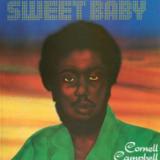
Originally released in 1978. A Classic Reggae album re-released on 180 gram vinyl and produced by Linval Thompson with extensive sleeve notes.
Recorded at Channel One Recording Studio & Harry J's Recording Studio.
Cornell Campbell is one of an elite group of Jamaican reggae singers who has weathered the changes throughout the music's development - in his case, from the ska era to right up to date - whilst retaining their relevance. Witness his recent alliance with UK Afrobeat/reggae band The Soothsayers or Jazmine Sullivan's R & B hit Need U Bad, which sampled his classic 'Queen Of The Minstrel' -a song that still sounds fresh more than thirty years later.
Sweet Baby was pressed on bright red vinyl, which only added to the excitement when you saw the selector position it carefully on the deck.
On the LP cover was a painting of Cornell wearing an emerald green shirt and framed by a lurid sky, which might have left some people wondering if it was a soul album. It wasn't, although there is certainly soul in the grooves, and especially on R&B covers like Gonna Take A Miracle - first recorded by the Royalettes -and Darling You Send Me, which Sam Cooke had introduced to the US Billboard charts some twenty years earlier.
Both are among the highlights but then the whole album is good in truth, and a heartfelt I Need Somebody and My Sweet Baby, plus the two-step favourite Just Enough were regularly played on sound system. Blinded By Love, I Didn't Know and Can't Hide My Love are tinged with melancholy and like the seductive Whenever You Need Me, display all the hallmarks of a classic Cornell Campbell side -swooping vocals, a driving rhythm and seductive lyrics included.
Nearly forty years later, it is gratifying to know there is still no mistaking him when his records are played in a dance. That relaxed vocal style draws you in but it's his falsetto, quivering with understated emotion that hooks you and turns you into a lifelong fan.
expected to be published on 25.09.2026
Whirr and Luster have been orbiting each other for years, bound by a shared language of glide guitar, buried vocals, and volume as emotion. A through line that’s only deepened by Nick Bassett’s hand in producing and mixing the majority of Luster’s previously recorded output. The Whirr & Luster Split pairs one of American shoegaze's most storied bands with one of its most vital new voices across four new songs. Out on 12" EP, CD EP, and digital via Freewhirl Records. Splits are sacred territory for Whirr. More than a decade after the band helped define the modern heavy-shoegaze landscape, the Bay Area five-piece returns with its first new material in years. “Spiral Again” opens the record in classic Whirr fashion: an avalanche of guitar wrapped around a lyric about losing yourself in someone else’s gravity — spiraling, intertwining, coming down together. “Wish I Could Give You The World” follows, one of the most openly romantic songs the band has ever recorded, all wildfire imagery and dizzy devotion, desire rendered at full volume. Produced by Whirr and Zac Montez, both tracks find the band in signature form: enormous yet tender. On the flip side, Los Angeles' Luster continue their run as the standouts of the new shoegaze generation. Formed with the intent of pushing the genre forward rather than reenacting it, Luster fold electronic pulse and '90s texture into walls of glider guitar, and the two contributions here find the band in peak form. "Against the World" is a love song as a locked door — it's you and me, us against the world — claustrophobic and comforting in the same breath. "Forever" closes the record in a haze of doomed-romance repetition, a mantra of do you feel it now dissolving into the knowledge that nothing lasts. Also produced with Zac Montez, the songs make the case plainly: Luster aren't students of the form. They're peers. Taken together, the four songs read like a conversation. About distance, obsession, and the ache of never being able to give someone enough — carried across two coasts and two generations of a genre that refuses to fade. Loud, longing, and gone too soon: the Whirr & Luster Split, out September 18th. Whirr and Luster celebrate the release and cement the collaboration with two shows — the only U.S. Whirr performances of 2026, with no shows planned beyond them. Each night features a unique set built from rarities and live debuts, alongside exclusive vinyl variants and merchandise available only in that room, on that night: 9/18 — Los Angeles, CA @ The Wiltern 9/20 — New York, NY @ Brooklyn Paramount Two nights, two coasts, and no telling if there’s a next time — for the songs, the pairing, or the band itself.
expected to be published on 18.09.2026
