Cerca:scale

Generi
Tutto
Edictum - A Cosmic Scale

The album’s title deftly gestures to the sheer vastness of astronomical dimensions, while simultaneously capturing the musical breadth within, where the eight planets are imagined as the eight notes of an octave. The work draws inspiration not only from earlier compositions —most notably Gustav Holst’s The Planets—but also from the rich astronomical and cultural contexts surrounding these celestial bodies. Here, the focus transcends direct citation of melodic motifs, instead embracing an intriguing conceptual approach on a meta level, unfolding in a series of vividly contrasting soundscapes. These contrasts shape a sweeping sonic journey, one that fully embraces the album format with both arms, inviting the listener to venture into realms both strange and wondrous, feeling the immensity of the interstellar space that lies between them. Contrast, after all, is the brushstroke that enriches our world.

Embarking on an auditory voyage, "Astral Guide" establishes the sonic framework that propels us into the boundless expanses of the cosmos. Its ethereal tones evoke the vastness of space, crafting a mood ripe for exploration within the realms of sci-fi. The subsequent tracks unfold like constellations, weaving a rich tapestry of sound that seamlessly marries cinematic soundscapes with pulsating, club-oriented rhythms. This album invites listeners to traverse its immersive landscapes, whether nestled in the comfort of home or dancing under the starlit sky, each note a guide through the transcendent experience of a nocturnal journey.

"Solar Flares" draws its inspiration from the awe-inspiring expanse of solar phenomena, capturing the majestic power of the sun as it reaches into the cosmos. This track resonates with the idea that energy, while vital, can also be a force of destruction when unleashed with overwhelming intensity. The composition beautifully mirrors the sun’s duality, where brilliance and devastation coexist, inviting listeners to reflect on the delicate balance between creation and annihilation. Through its rich textures and dynamic shifts, "Solar Flares" serves as both a homage to the celestial and a poignant reminder of nature's formidable power.

"Mercury – The Winged Messenger" embodies a meticulously crafted soundscape where artistry meets astronomy. The tempo of 173.6 BPM, derived from precise astronomical data, propels the composition into a vibrant realm that resonates with cosmic energy. Synthwave sound design intertwines seamlessly with the fluid rhythms of Drum’n’Bass, imbuing the piece with an uplifting dynamism that evokes the ethereal grace of Mercury itself. In this sonic exploration, listeners are invited to ascend on wings of sound, navigating the celestial tapestry of the universe with each invigorating beat.

"Venus, The Bringer of Peace" strikes a decidedly cozy note, presenting a poignant contrast to the more tempestuous themes often found in cosmic narratives. This composition evokes a nostalgic vision of an optimistic era, one in which humanity transcended borders and embraced the infinite possibilities of space exploration, where no destination felt too distant. The dense, languid atmosphere envelops the listener, creating a tangible sense of serenity that unfolds gradually, allowing for a meditative journey through sound. Each note serves as an invitation to linger in this tranquil embrace, reflecting on the harmonious potential of our collective aspirations and the beauty of connection in a vast universe.

The central theme of „Gaia, The Bringer of Life“ —originally not part of the planetary cycle— is the profound enabler of life on Earth. The arrangement delicately mirrors the slow, tentative unfolding of this potential, marked by an initially sparse orchestration that gradually builds in momentum. This progression crescendos, embodying the explosive dynamism of the Cambrian burst of life, ultimately culminating in a euphoric fanfare—a triumphant, celebratory flourish echoing life’s victorious emergence.

"Blue Moon" unfolds as a contemplative reverie on the tranquil clarity of a night sky, now seldom glimpsed in its natural purity, unclouded by the relentless haze of urban light. The listener is drawn into the vast embrace of the star-strewn firmament, a journey that sways between euphoric awe at nature’s sublime beauty and a profound melancholy for its fragile and imperiled state. Musically, this duality finds expression in the delicate interplay of modal mixtures, while an ever-shifting triplet groove, poised at the intersection of Outrun and melodic house, lends a pulse that is both nostalgic and forward-looking—echoing the beauty and transience of a world on the brink.

Rather than replicating the original composition of „Mars, The Bringer of War“, this interpretation seeks to evoke its profound, foreboding atmosphere. Cyberpunk emerges here as an ideal genre, channeling the dark, relentless march synonymous with Mars, the ancient god of war. The piece reverberates with intensity, as distorted vocalizations rise, embodying the anguish and visceral torment that shadow war’s violent crescendo. This auditory descent into conflict captures the relentless pulse of warfare, where sound itself becomes an embodiment of suffering and fury.

Majestically, "Jupiter, the Bringer of Jollity" emerges on the celestial stage, sweeping away the somber tones with its radiant vigor. Drawing inspiration from the triumphant strains of the original, and borrowing a melodic motif in the refrain, the piece expresses joy and buoyancy through a shift to a major key and the lilting sway of a danceable 12/8 meter. Spirited and exuberant, it leaps boldly from major to minor and back again, playfully shifting time signatures to capture a mood of unbridled festivity and jollity.

Here, a more conciliatory concept is chosen than in the original inspiration. „Saturn“ aligns with the number six, being the sixth planet from the Sun and bearing the iconic hexagonal pattern at its northern pole. What, then, could be more fitting than to render this piece in a 6/8 time signature? The arrangement unfolds with a multifaceted richness, mirroring the countless stones and ice fragments that form the foundations of Saturn’s majestic rings.

„Uranus“ adopts the theme of a light-footed, dancing instrumentation, giving the impression of perpetual motion, never quite settling. This musical choice harmonizes with the planet’s own orbit, as it spins with breathtaking velocity, teetering and swaying, seemingly unable to attain rest or stability.

The chill and vastness of the cosmos find expression in „Neptune, The Mystic“. At its core, an electronic soundscape envelops a classical arrangement, its unreachability intensified by an ethereal, otherworldly choir. Hovering at the outermost boundaries of the solar system, where warmth is but a distant memory, the composition lingers in a slow, contemplative tempo, evoking a realm where space for speculation stretches wide and silence reigns supreme.

Though Pluto may have lost its planetary status, and its companion Charon never achieved one, this shift in classification subtly aligns with the cosmic scale invoked here—one that mirrors the musical tradition of an eight-note sequence. Fittingly, the album closes with „Kuiper Belt“, a composition emblematic of the turbulence and vitality of countless smaller

celestial bodies that, though diminutive, find their rightful place within the vast architecture of the solar system.

They say nature is the greatest composer, shaping the universe with a symphony of chaos and order, beauty and danger. It is this duality that fuels the artistic vision of Edictum—a producer who, armed with a doctorate in chemistry, delves as deeply into the mysteries of molecules as he does into the depths of sound. In the tension between the vastness of the cosmos and the microscopic processes that dictate life’s rhythm, Edictum creates sonic landscapes that dissolve the boundaries between science and art.

His music is a story of contrasts—a sonic tale where the raw forces of nature clash with the intricate structures of human culture. Opposites intertwine to form a harmonious whole: the primal rhythms of the earth meet the celestial melodies of the cosmos, the rigid laws of physics blend with the boundless freedom of art. Edictum explores these polarities with meticulous devotion, each composition an expedition into uncharted soundscapes—a quest to give voice to the unfathomable.

With over 20 years immersed in the realms of electronic music, Edictum has honed a keen sense for rhythm and movement. His driving beats compel both body and mind into a hypnotic flow. Yet beyond the pulse of dance lies a complex framework of conceptual thought. Today, his creative focus revolves around holistic album projects—self-contained worlds with overarching narratives that embrace contrast and complexity. Each track stands alone as a fragment of the whole, but together, they weave a cohesive tapestry, much like the chapters of a novel that guide the listener on an emotional and sonic journey.

Edictum’s distinctive musical signature has earned him international recognition. With over 150 releases, many on prestigious platforms like the iconic *NewRetroWave* label, and collaborations with artists such as Jan Johnston, Azumi Inoue, Powernerd, and Turbo Knight, he has solidified his place in the global electronic music scene. His latest work, *A Cosmic Scale*, marks his seventh vinyl album and is released under his own label, *Echoes of Expanse*. The label’s name is no coincidence—it captures the essence of his art: echoes of infinity, the vibrations of the universe distilled into a singular sonic experience that carries the listener ever further into the boundless expanse of sound and space.

In Stock

Disponibile in Stock e pronto per la spedizione

Olivier Romero - 50 Kills EP

Introducing the brand new label from renowned party Full Scale ! We are thrilled to announce our debut release, 50 Kills EP from the immensely talented French producer Olivier Romero. Garnering recent acclaim and support from industry giants like Dyed Soundorom and Shonky, Olivier Romero is making waves with his innovative sound.

Our first release features the electrifying track "The Fantastic," which has already become a favorite in many of Raresh's sets, eliciting amazing crowd responses and setting dance floors ablaze. This track showcases Olivier's unique ability to blend compelling rhythms with infectious energy, making it an instant classic.

We are excited to include a special collaboration on this EP. We invited the esteemed Tripmastaz to remix Olivier's track "50 Kills." Known for his distinctive style and production prowess, Tripmastaz brings a fresh and exciting dimension to the release, ensuring that this EP is a must-have for any music lover.

collecting

Order now. Collecting orders for repress.


Last In: 21 months ago
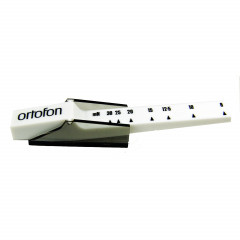
analogis - tonearm scale »balance it«

"analogis tonearm scale »balance it«
Electronic tonearm and universal scale with calibration weight,
4 x cell, case and measuring bowl,
measuring range 0.01 g to 100 g"

"analogis Tonarmwaage »balance it«
Elektronische Tonarm- und Universalwaage mit Kalibriergewicht,
4 x Knopfzelle, Etui und Messschale,
Messbereich 0,01 g bis 100 g"

In Stock

Disponibile in Stock e pronto per la spedizione

Gianmarco Del Re - Ukrainian Field Notes: Sound, Music & Voices From Ukraine After the Full-Scale Invasion (BOOK)

ISBN: 978-1-80578-008-3
Since the full-scale invasion, music-making in Ukraine has adapted in remarkable ways: composing on mobile phones, streaming performances from bomb shelters, and organising festivals within curfew limits. Clubs became centres of volunteering and fundraising before regaining their cultural role once reopened. Meanwhile, the diaspora reshaped the musical landscape, severing old ties while creating new global networks of collaboration.

Ukrainian Field Notes: Sound, Music & Voices From Ukraine After the Full-Scale Invasion offers a 360-degree perspective on how sound has shaped musicians’ wartime lives and influenced evolving notions of identity – personal, collective, and postcolonial.

Quotes

“The Ukrainian electronic scene is young, naive, and perhaps beautiful. To appreciate this beauty, you need to distance yourself from it, much like observing a painting in a gallery while standing back. To comprehend this beauty, understanding alternative standards and applying them to the portrait is a must. To truly embrace this beauty, falling in love with it is required – an act that defies easy explanation. Gianmarco, however, did just that, and it becomes evident to anyone exploring his Ukrainian Field Notes. Behold.” ‭ Vlad Fisun

“I feel extremely grateful to Gianmarco Del Re, a true chronicler of Ukrainian music in wartime, who opens our culture in its multiple aspects to musical society in such a bright and relevant way that the support for Ukrainian artists is only growing, day by day.” ummsbiaus

non in magazzino

Ordina ora e ordineremo l'articolo per te presso il nostro fornitore.


Last In: 3 days ago
IND, Time Scale Deletion Lab, BaRtoz - Yaya23 11

Big mental growing sound, from the deep acid to the acidcore... Twirling and totaly trippy. With a long mental middle-of-the-night grower and 2 techno pumpin acid starters. Sweet and dancefloor !

pre-ordina ora30.01.2026

dovrebbe essere pubblicato su 30.01.2026


Last In: 2026 years ago
Atomic moog - Blue Scale

Atomic moog

Blue Scale

12inchDSR/C23
Delsin Records
28.02.2025

A second outing by French modular enthusiasts Atomic moog on the Delsin Cameron series. On Blue Scale they present four more works of their quirky noodle experiments. It represents their irresistible grooves in optima forma, while keeping it wonky and alive. 'Blue Scale' and 'Landing Point' got that steady and never ending after-hours flow while 'Data 100f' and 'Impulse' are mesmerizing deep dives exploring a more broken side of the pair.

non in magazzino

Ordina ora e ordineremo l'articolo per te presso il nostro fornitore.


Last In: 12 months ago
BRUEDER SELKE & MIDORI HIRANO - SPLIT SCALE
  • Scale A
  • Scale B
  • Scale C
  • Scale D
  • Scale E
  • Scale F
  • Scale G
  • Scale Aa
disponibile anche

CRYSTAL CLEAR VINYL


Midori Hirano and Brueder Selke"s debut album Split Scale unites two artists who share both inimitable skill and depth of expression. Pillars of Berlin"s new music community and globally lauded composers, they each share a background in classical tradition while practicing on the cutting edge of modern music. Split Scale is an elegant emotive ambient album built primarily from pianos and cello and electronics. After tracks on Longform Editions and the creation and curation of the Q3Ambientfest, this power pairing should be an immediate hit with fans of quality ambient or minimal modern music. As Brueder Selke, the polymath duo brothers Daniel and Sebastian Selke"s interdisciplinary partnerships are vast and include classical institutions like the Hamburg Elbphilharmonie and Filmorchester Babelsberg. The brothers have additionally been working as musical directors of the Schaffrath Chamber Orchestra and curating their own festival Q3Ambientfest which has featured the likes of fellow artists such as Laura Cannell, Mabe Fratti/Resina, Jules Reidy, Grand River, Yair Elazar Glotman, and now-collaborator Midori Hirano. Midori Hirano"s mastery of sound sculpting has put her in high demand as a composer for film and television, including recent soundtracks for All or Nothing, Tokito, and a documentary on the Premier League, alongside astounding collaborations with artists including Hprizm of Anti Pop Consortium and Ilpo Väisänen of Pan Sonic. In addition to her own composing, Hirano has remixed the likes of Robot Koch and Rival Consoles. Split Scale, the group"s first album together, follows a series of live collaborations. The artists chose a simple concept, following a western scale from beginning to end, and from this created a suite of sublime, synesthetic soundscapes and cinematic movements. The vivid tapestry of sound and color is luminous and emotive.

pre-ordina ora24.01.2025

dovrebbe essere pubblicato su 24.01.2025


Last In: 2026 years ago
BRUEDER SELKE & MIDORI HIRANO - SPLIT SCALE

Midori Hirano and Brueder Selke"s debut album Split Scale unites two artists who share both inimitable skill and depth of expression. Pillars of Berlin"s new music community and globally lauded composers, they each share a background in classical tradition while practicing on the cutting edge of modern music. Split Scale is an elegant emotive ambient album built primarily from pianos and cello and electronics. After tracks on Longform Editions and the creation and curation of the Q3Ambientfest, this power pairing should be an immediate hit with fans of quality ambient or minimal modern music. As Brueder Selke, the polymath duo brothers Daniel and Sebastian Selke"s interdisciplinary partnerships are vast and include classical institutions like the Hamburg Elbphilharmonie and Filmorchester Babelsberg. The brothers have additionally been working as musical directors of the Schaffrath Chamber Orchestra and curating their own festival Q3Ambientfest which has featured the likes of fellow artists such as Laura Cannell, Mabe Fratti/Resina, Jules Reidy, Grand River, Yair Elazar Glotman, and now-collaborator Midori Hirano. Midori Hirano"s mastery of sound sculpting has put her in high demand as a composer for film and television, including recent soundtracks for All or Nothing, Tokito, and a documentary on the Premier League, alongside astounding collaborations with artists including Hprizm of Anti Pop Consortium and Ilpo Väisänen of Pan Sonic. In addition to her own composing, Hirano has remixed the likes of Robot Koch and Rival Consoles. Split Scale, the group"s first album together, follows a series of live collaborations. The artists chose a simple concept, following a western scale from beginning to end, and from this created a suite of sublime, synesthetic soundscapes and cinematic movements. The vivid tapestry of sound and color is luminous and emotive.

pre-ordina ora24.01.2025

dovrebbe essere pubblicato su 24.01.2025


Last In: 2026 years ago
Stefan Goldmann - SCALE AND SCOPE 7"

Scale and Scope is a set of four colour flexidisc records, each containing an instantiation of an individual microtonal designer scale, developed by Stefan Goldmann. The four discs are housed in a printed cardboard portfolio.
The flexidisc medium plays like a vinyl record, but is inherently noisier and tends to exhibit more signal disruptions than conventional vinyl. Expect occasional clicks, crackle and other variations, which differ substantially from copy to copy. These make each set unique.
The digital file versions are re-recorded directly from the flexidiscs, with very few corrections and a few spectral interventions by the original artist. The full resolution digital files used for cutting the flexidiscs will be available exclusively and individually to collectors who wish to acquire one of the scales as
instantiated in the recordings.

non in magazzino

Ordina ora e ordineremo l'articolo per te presso il nostro fornitore.


Last In: 17 months ago
Showbiz & AG - Full Scale

Showbiz&Ag

Full Scale

12inchDITC165LP
D.I.T.C
29.03.2024

Diggin In The Crates (D.I.T.C.) was born out of a group of artists who began making noise in the late ‘80s and into the next decade and beyond—namely Lord Finesse, Diamond D, and Fat Joe. After well-received albums, an official, wider collective was founded that also included O.C., Big L, Buckwild, and producer-rapper combo, Show & A.G. (originally known as Showbiz & A.G.).


The crew proceeded to drop a run of sublime records, including Show & A.G.’s Soul Clap EP (1992), their full-length debut Runaway Slave (1992), followed by Goodfellas in 1995. Show & A.G.’s next project, Full Scale, arrived in 1998 and featured appearances from O.C., KRS-One, Big Pun, the Ghetto Dwellas and verses from members of D.I.T.C. including Diamond D, Big L and Lord Finesse.


In 2002 a CD version titled Full Scale LP (using the same artwork) was released with 10 additional tracks which had originally been released on various 12" singles and projects in the late 1990s. The project had never been released on vinyl in its entirety – until now.
Production on Full Scale was handled by Showbiz and A.G. except for "Time To Get This Money" which was produced by long-time collaborator Ahmed, and "Hold Mines" and "Hidden Crates" which were produced by DJ Greyboy.


The assortment of guest features doesn’t detract from A.G., a masterful emcee with a no-nonsense style that is simple but impactful. Full Scale follows the tried and true blueprint from Show & AG’s earlier classics cementing its place in hip hop history.

pre-ordina ora29.03.2024

dovrebbe essere pubblicato su 29.03.2024


Last In: 2026 years ago
David Cunningham - Grey Scale

David Cunningham was born in Ireland in 1954. His work ranges from pop music to gallery installations including several collaborations with visual artists. His first significant commercial success came with The Flying Lizards' single "Money," an international hit in 1979.

Originally released in 1976, Cunningham's first solo album Grey Scale has become a landmark statement of DIY minimalist composition – continuing in the vein of the wild explosion of arthouse experimentation from the early '70s. Cunningham, then a student at the Maidstone College of Art in Kent, drafted fellow student non-musicians and (using whatever instruments available) crafted an endlessly shifting sonic palette with an improvisor's keen sensitivity to space, texture and tone.

As Cunningham states in the liner notes, his approach was to "pursue something (which may appear trivial or meaningless) so rigorously or relentlessly to the point that it reveals something new."

Cunningham was influenced by live performances he was attending at the time by English composers Cornelius Cardew, Gavin Bryars and Michael Nyman as well as free improvisors Evan Parker, Derek Bailey, David Toop and Paul Burwell.

The inaugural release on Cunningham's own Piano label, Grey Scale was indeed "something new" in 1976. The artist quickly integrated his experimental sensibilities to produce art-rock pioneers This Heat, whose debut appeared on Piano in 1979. His popular success performing as The Flying Lizards (with two electro-punk albums on Virgin during the New Wave era) was presaged by this seminal work of fascinating sound collage and tonal freedom. First-time reissue.

pre-ordina ora03.03.2023

dovrebbe essere pubblicato su 03.03.2023


Last In: 2026 years ago
CARRELLEE - SCALE OF DREAMS

At the start of the pandemic, Carrellee turned to the microKORG and Yamaha DX7 synths after finding traditional folk music to fall a bit flat in expressing the personal intensity of the year including the dissolution of her marriage. Following her weekly demo videos amassing nearly one million streams on Facebook in 2021, Carrellee teamed up with producer Brett Bullion (Low, Poliça, Now Now), Con Davison (Bad Bad Hats) and Huntley Miller (Lizzo, Slyvan Esso) in Minneapolis to distill 40 demos down to 10 cohesive album tracks. The resulting album conjures crushed artifacts of desire, with each instrument processed through crumpled and scorched analog tape. Carrellee draws inspiration from 80's new wave icons Cockteau Twins and Kate Bush, as well as a wide variety of Italo disco and synthwave artists. The single and music video "Morning Sun" by Doug Pray (Hype, The Defiant Ones) will be released in advance of the album on Negative Gain (Mr Kitty, Twin Tribes) with tour dates to follow.

pre-ordina ora09.12.2022

dovrebbe essere pubblicato su 09.12.2022


Last In: 2026 years ago
Scale - Take Off EP

Scale

Take Off EP

12inchMULTI002
Multitone Recordings
02.12.2022

The second release on Multitone Recordings is a 4 track project called Take Off EP from German artist, Scale. Taking you from crime scapes to dream scapes, this journey through a mix of jungle and drumfunk will have you wondering whether you're asleep or awake. Mysterious and brooding, Scale's Take Off EP will transport you and keep you drifting effortlessly between subtly nuanced, shadowy moods.

non in magazzino

Ordina ora e ordineremo l'articolo per te presso il nostro fornitore.


Last In: 3 years ago
Stand High Patrol - A Matter of Scale 2x12"

In 2012, ten years after its inception, Stand High Patrol released their first album: Midnight Walkers, which featured a multifaceted take on contemporary dub – a versatile sound with heavy bass, named dubadub. Following the success of their first LP, plus several EPs and singles released on Stand High Records, Pupajim, Rootystep and Mac Gyver now return with their second self-produced album, with sleeve art by Kazy.

Recorded in a home studio between June 2013 and July 2014, A matter of scale has brought the emergence of new influences. The three dubadub musketeerz intensify the genre crossovers and strengthen the foundations of their creative process. Theirs is an open approach, free from conventions.

Supported by the rich range of Pupajim’s vocals, the sounds travel incessantly between eras. The dubadub experience takes on new dimensions; jazzy rhythms and melodies stand alongside digital reggae, hip-hop beats, bass music and progressive dubs.

A matter of scale shows how Stand High Patrol design and compose their own music. The album reflects the undeniable penchant of the crew for experimentation and their obvious desire to break down barriers.

non in magazzino

Ordina ora e ordineremo l'articolo per te presso il nostro fornitore.


Last In: 4 years ago
KINLAW - THE TIPPING SCALE

Kinlaw

THE TIPPING SCALE

12inchBR32
Bayonet
22.01.2021

The Tipping Scale is a gorgeously sung cycle of songs that mix deeply personal lyrics with universal themes; Kinlaw is a smart, conceptual writer, one not afraid to explore deep emotions like loss, regret, and confusion, alongside strength, identity, and change. She explains that The Tipping Scale is an ideal metaphor for the record, the idea of an ever-present slipping in and out of change, and an acceptance of this kind of change. On it, she unravels intimate memories and tries to learn from them. As you listen to her songs and decode her words, you realize she's not just building songs, she's also creating a home_where painful thoughts of the past can exist within the present_as well as an entirely new, unflinching universe. This universe she created is not metaphorical_it's, in fact, very real. Kinlaw, who often works with gesture and movement as a writing tool, found The Tipping Scale unifying her multidisciplinary practice. She found it by building a real world. As she wrote, with the goal of finding human entry points for storytelling that felt authentic and honest to her practice, she often saw the music relating to motion. "I would start with a gesture and let it build into something until a memory attached itself to it," She explains. "The memory would become a story and the story would reveal itself as something important that needed to be expressed in this album." This works, too, for the lyrical process, where harder and less smooth gestures would represent consonants, and smooth, flowing movements would become vowels. She found the same thing happening with melodic lines and key changes. This is a record that jolts between the corporeal and the psychological, drawn from a flailing body, anchored by inconvenient truths. RIYL: Choir Boy, Jenny Hval, Kate Bush, Boy Harsher, Caroline Polachek, Black marble, Julia Holter, Grouper

pre-ordina ora22.01.2021

dovrebbe essere pubblicato su 22.01.2021


Last In: 2026 years ago
Audiopath Feat. Jerry The Cat - Hynek's Scale Ep (incl. K-alexi & Mechanique Rmxs)

Announcing the first release by Shift Imprint, "Hynek's Scale"!
What magic results if we merge the spirits of Detroit, Chicago, Amsterdam and Lisbon, all in the same record
Hynek's Scale is a smoking' Audiopath collaboration with ex Parliament/Funkadelic member Jerrald James AKA Jerry The Cat, who, besides being an amazing percussionist and great vocalist, is also a serious old school DJ and producer with collabs with names like Derrick May, Theo Parrish and Moodymann.
Together they carefully crafted the main theme "Hynek's Scale" with raging synths, thunderous kick drums, heavy baselines and last but not least, Jerry's sweet voice. This one is a house track you will remember for quite a while! Besides the original mix, there are two remixes, one from a guy that needs no introduction, Mr. K-Alexi Shelby from Chicago (Transmat/Trax/Djax-Up-Beats). K turned the whole main idea upside down and produced a real funky big beat slammer! We love it and we know that you will love it too, trust us! The second is a remix coming from Mechanique (Kaos Records/Affin), a talented Portuguese producer based in Amsterdam. He takes his mix to a very far, deep and beautiful place, a totally different atmosphere from the title track. Finishing the record, Audiopath delivers a banger that he's been anxious to release, "Good Foot", a heavy, heavy, heavy electrofunk track; watch out for this one, it can bite! In short, we sincerely advise you to immerse yourself in the beats and atmospheres explored by these guys, we're sure that theres a track here for each and everyone of you. The record is an immediate encounter with nothing but exquisite music!
Big support by Laurent Garnier!

non in magazzino

Ordina ora e ordineremo l'articolo per te presso il nostro fornitore.


Last In: 6 years ago
Stand High Patrol - A Matter Of Scale

File under : Dub. The story begins in 2000 in Britany (France). Two guys decide to create a sound system with the aim of sharing their common passion for roots reggae and early digital. Rootystep (selecta) and MacGyver (operator) begin to collect records and purchase music equipment. They are quickly joined by Pupajim who becomes the MC, the singer and the dub builder. The Stand High Patrol first toured the land of Brittany, gradually moving towards stepper dub production emanating from the English stage. Fifteen years later, the sound is more present than ever. Stand High has created a true identity and has established itself as one of the essential sound systems of the French dub scene. The french dubadub crew presents a second album and extends the musical experimentation from jazzy riddims to the ruffest dub sounds. Showcasing raw hiphop beats, digital reggae and bassmusic material voiced by Pupajim, « A matter of scale » shatters musical barriers.

pre-ordina ora23.03.2015

dovrebbe essere pubblicato su 23.03.2015


Last In: 2026 years ago
The Vision - Waveform Transmission LP 2x12"

2023 Repress

The reissue of classic and seminal releases from the Tresor catalogue comes round to Waveform Transmission Vol. 2 by The Vision aka Robert Hood which celebrates its 30th anniversary this year.
Released in the same year he left UR and his hometown of Detroit, Waveform Transmission Vol. 2 represents a pivotal moment in Hood’s career as his move to New York with fellow UR co-founder Je Mills led to Hood experimenting with a new work ethos through which he settled on his trademark sound.
Fast, aurally assaulting, yet funky - the release is techno as eective as it can possibly be; in this version, remastered by Thomas P. Heckmann, we see the first results of his transmutation as Hood manipulates the raw sounds he would soon distil into seminal works like Internal Empire and Minimal Nation.
Ever philosophical and spiritual, in the sleeve notes for the release Hood dedicated the release “to the form of simplicity, the reasoning of vision, the understanding of where we came from and how we got here and to the perspective we use to construct over destiny” - words which from our early 2020s vantage point almost foresee the influence this intuitive work would have on artists working from Birmingham to Berlin and beyond over the next three decades.

non in magazzino

Ordina ora e ordineremo l'articolo per te presso il nostro fornitore.


Last In: 5 months ago
Fennesz - Black Sea (Reissue) 2x10"

2022 reissue of »Black Sea«, originally released in 2008. Fennesz uses guitar and computer to create shimmering, swirling electronic sound of enormous range and complex musicality. "Imagine the electric guitar severed from cliche and all of its physical limitations, shaping a bold new musical language." - (City Newspaper, USA). His lush and luminant compositions are anything but sterile computer experiments. They resemble sensitive, telescopic recordings of rainforest insect life or natural atmospheric occurrences, an inherent naturalism permeating each piece.

non in magazzino

Ordina ora e ordineremo l'articolo per te presso il nostro fornitore.


Last In: 3 years ago
Error Etica - Section Roots Serie II

SECTION ROOTS SERIE #02
Psychoskunk are back with the second chapter of Section Roots series by Error Etica. This chapter included a original track of the label's owner Victor Martinez (Error Etica) and 3 special remixes by the Japan techno artist Hironori Takahashi (Informa-Granulart-Stroboscopic Artefacts) and Pelacha owner of Redsonja Records and founder of Stelar Booking and the famous parties in Madrid Techno Cracks ,
As a special mention the masterful reinterpretation of English techno legend Nick Dunton /65D Mavericks (Surface Records / Inceptive / Poverty is Violence/Blueprint) of the original track: Schematic Diagram thats included only in digital live version that Victor interpreted in mythical club in Barcelona "Moog".

non in magazzino

Ordina ora e ordineremo l'articolo per te presso il nostro fornitore.


Last In: 6 years ago
ERROR ETICA - Section Roots Series (R2pi mix)

Psychoskunk are back a new vinyl series of Error Etica This first Section Roots serie included are 3 original tracks of the label's owner Victor Martinez (Error Etica) and special rmx by R2pi.
R2pi is a eight-hands project born from the organic fusion of three Italian techno projects Retina.it (Nicola Buono and Lino Monaco), Prg/M (Pier Giuseppe Mariconda) and Ruhig (Luigi Cicchella).
This new project is a triangulation of three Parthenopean energetic elements that through several different paths have decided to build a perfect "quadrature of the circle", a holistic ensemble where their souls are still distinguishable though.

non in magazzino

Ordina ora e ordineremo l'articolo per te presso il nostro fornitore.


Last In: 7 years ago
Various - Spirits Of The Black Lodge Vol. 2

This is the 2nd various artists compilation from the esoteric Black Lodge collective out of Los Angeles, showcasing a variety of sounds one is likely to hear at their monthly gatherings. This comp contains a mixture of acidic jacking warehouse bangers from veteran producers TX Connect and Jasen Loveland alongside a more acid chicago house inspired jakbeat track from Black Lodge co-founder Kosmik and an EBM/electro dance cut from the Belligerents.

non in magazzino

Ordina ora e ordineremo l'articolo per te presso il nostro fornitore.


Last In: 7 years ago
Dubiosity - Denying The Antecedent Ep

White Vinyl

For the 9th installment in the PRRUKWHT series, Holland based ''Dubiosity'' makes his re-appearance on the Planet Rhythm imprint with the 4 tracks spanning ''Denying The Antecedent EP''. For the A1 ''Richter Scale'' the Dutch producer goes into very atmospheric territories with a pad based track that keeps on building whilst maintaining an overall mellow vibe. Title track ''Denying The Antecedent'' is a more dubbed out operation which cleverly uses non 4X4 drum patterns and crawling synth blops. This track is also based upon an utterly atmospheric pad sound. ''Juxtaposed'' is a more firm track that's somewhat tense but also with a smooth ambiance. ''Sunk Cost Fallecy'' serves as the more aggressive and paranoid closing down.

non in magazzino

Ordina ora e ordineremo l'articolo per te presso il nostro fornitore.


Last In: 6 years ago
Andrea Noce & David Kristian - Be In Sync

This project is a long distance collaboration between two amazing artists : Andrea Noce and David Kristian during the year 2013. Each track have been made after set up basic guidelines (style, tempo, structure, and workflow). « It was exciting to think two people on different continents, using different setups, and software, could find a way to exchange loops and build a track in the space of 36 hours. » In the line of label such as Innovative Communication or Edition EG , this record is completely intemporal, made for the past, the present, the future, with marvelous atmospheric and space sounds, escape from your body and synchronise. We are really proud to lunch it on Macadam mambo today.David Kristian has been making electronic for over 20 years, composing everything from experimental music to IDM, electro and synthpop. With over a dozen albums and countless 12"s and compilation appearances, David's discography continues to grow. David's soundscapes and soundtrack can also be heard on everything from science-fiction and horror movies to promotional spots for an X-rated cable channel.Andrea Noce is a very talented singer, producer, polynstrumentist and visual artist based in Berlin, she has many different projects in solo (Eva Geist), in group (Vera Mona, Le Rose) or collaborations.

non in magazzino

Ordina ora e ordineremo l'articolo per te presso il nostro fornitore.


Last In: 6 years ago
Iivana Mišukka & Arja Kastinen - Iivana Mišukka (Tape)
  • 01: Maanitus &Amp; Tšiižik
  • 02: Markka
  • 03: Melkutus
  • 04: Letška
  • 05: Kuuen Parin Hoirola
  • 06: Brišatka
  • 07: Tšiižik
  • 08: Kirkonkellot
  • 09: Kirkonkellot Korkea
  • 10: Hoirola, 3 Parin
  • 11: Lippa
  • 12: Kyngäkiža
  • 13: Ristakondra
  • 14: Vanha Polkka
  • 15: Viistoista
  • 16: Vanha Valssi
  • 17: Kiberä
  • 18: Maanitus Kuokan Kanteleella
  • 19: Tuuti Lasta Nukkumahe
disponibile anche

Vinyl


Death Is Not The End present a further volume of Arja Kastinen's eerie amalgamations of 110 year old wax cylinders with her own meticulously transcribed takes, this time focussing in on Armas Otto Väisänen's field recordings of kantele player Iivana Mišukka (b. 1861 d.1919).

"Ivana Mišukka (1861–1919) was one of the Karelian kantele players recorded by the folk music researcher Armas Otto Väisänen on wax cylinders in 1916 and 1917. In the early 20th century, the remote areas of Border Karelia were undergoing the final phase of a transformation in musical culture, with the ancient runo song tradition giving way to newer forms of music. This transition is reflected in Mišukka's repertoire and choice of instrument. The ancient small kantele, hollowed out of a single piece of wood, was already rare at the turn of the century. Mišukka's kantele was a new type of instrument with 26 strings, constructed of several parts, but he played it using the traditional plucking technique. Like other Border Karelian kantele players, his repertoire consisted of music rooted in runosong culture, as well as newer dances and songs from the east and west. Most of the recorded material falls into the latter category.

Ivan Bogdanov Mišukka was born out of wedlock in Suursara village, Suistamo, on 1 May 1861. He began playing the kantele at the age of five or six, quickly mastering the instrument. In adulthood, he was considered one of the area's best master players. Mišukka was landless for most of his life and lived in different parts of the Suistamo parish. His first wife, Tekla Markintytär, died in 1897 at the age of 40, and his second wife, Jevdokia Filipintytär Jeminen, died in 1907 at the age of 50. Seven children were born from the first marriage, two of whom died young. The third wife, Maria Ignatintytär Gurnan (Kuurnanen), was a well-known master of lamentations. Together with Maria, Iivana Mišukka worked as a tenant farmer in the village of Suursara. Mišukka suffered from rheumatism, which prevented him from participating in physical work like Maria. This was apparently partly the reason why Iivana Mišukka went to earn extra money by playing the kantele on gig trips. He often had other traditional artists from Suistamo as his travelling companions, such as the runosingers Konstantin Kuokka and Iivana Onoila. Iivana Mišukka died in Leppäsyrjä village, Suistamo, on 18 May 1919 at the age of 58, and his kantele was donated to Teppana Jänis.

Mišukka only used 14 of the 26 strings on his kantele, playing the same tunes either a fourth higher or lower. He tuned his kantele to the major scale using fifths, except for a low seventh scale degree on the upper strings, but not below the fundamental. Since he did not use the seventh note of the scale on the upper strings at all, he could use the major scale both lower and a fourth higher with this tuning. According to Mišukka, the sound of higher, or 'finer', strings is 'more beautiful', while that of lower ones is 'greater'. Among runosingers, the size of the thirds varied, ranging from major to minor to neutral. A similar phenomenon can be observed in kantele tunings, where the third, sixth and seventh scale degrees vary in a comparable way.

During a meeting, Väisänen suggested that Mišukka play the smaller kantele belonging to Konstantin Kuokka. The idea was to bring it closer to the horn to improve the recording quality. However, the kantele was completely out of tune, and now Mišukka tuned it to the Lydian scale (track 18).

Using the old plucking technique, Mišukka placed his right middle finger on the fundamental tone, his right index finger on the second scale degree, his left middle finger on the third scale degree and his left index finger on the fourth scale degree, and his right thumb on the fifth. The thumb also played the notes above the fifth note of the scale. As Mišukka remarked to Väisänen: 'Peigaloll' tuloo enemb ruadoa' (the thumb has to do more work). However, he did not use the seventh note of the scale on the upper strings at all. Below the fundamental note, he played the seventh and sixth notes of the scale with his right middle finger of and the fifth note of the scale with his right ring finger. This fifth scale degree below the fundamental is almost always used as a drone. Sometimes, when the melody required it, Mišukka, like other players, also varied the fingering. He would also occasionally strike the same string with the side of his fingernail after plucking it.

The wax cylinder recordings of Karelian kantele players are kept in the archives of the Finnish Literature Society in Helsinki, Finland. Copies were made of them onto reel-to-reel tapes in both the 1960s and 1980s. The 1960s copies are mono and the 1980s copies are stereo. However, not all kantele recordings from these decades have survived.

The sound of the kantele is difficult to hear in wax cylinder recordings due to its low volume, and it occasionally becomes completely obscured by noise. During the copying process, the cylinder sometimes rotates unevenly, resulting in breaks or jumps in the music. Additionally, the rotation speed of the cylinder in the copies does not correspond to the performance speed of the original music, which alters the pitch. However, since Väisänen's precise notes are available in the archive, it is possible to deduce the melodies, their speed, and the tuning level of the kantele in the recordings. Of the copies of the original recordings from the 1960s and 1980s, I have selected the one that best met the requirements of this publication and adjusted the speed of the recording to align with Väisänen's notes. To enhance the listening experience, I have replayed the songs, which now partly overlap the old recordings on this release."

— Arja Kastinen

pre-ordina ora27.03.2026

dovrebbe essere pubblicato su 27.03.2026


Last In: 2026 years ago
Iivana Mišukka & Arja Kastinen - Iivana Mišukka LP

Death Is Not The End present a further volume of Arja Kastinen's eerie amalgamations of 110 year old wax cylinders with her own meticulously transcribed takes, this time focussing in on Armas Otto Väisänen's field recordings of kantele player Iivana Mišukka (b. 1861 d.1919).

"Ivana Mišukka (1861–1919) was one of the Karelian kantele players recorded by the folk music researcher Armas Otto Väisänen on wax cylinders in 1916 and 1917. In the early 20th century, the remote areas of Border Karelia were undergoing the final phase of a transformation in musical culture, with the ancient runo song tradition giving way to newer forms of music. This transition is reflected in Mišukka's repertoire and choice of instrument. The ancient small kantele, hollowed out of a single piece of wood, was already rare at the turn of the century. Mišukka's kantele was a new type of instrument with 26 strings, constructed of several parts, but he played it using the traditional plucking technique. Like other Border Karelian kantele players, his repertoire consisted of music rooted in runosong culture, as well as newer dances and songs from the east and west. Most of the recorded material falls into the latter category.

Ivan Bogdanov Mišukka was born out of wedlock in Suursara village, Suistamo, on 1 May 1861. He began playing the kantele at the age of five or six, quickly mastering the instrument. In adulthood, he was considered one of the area's best master players. Mišukka was landless for most of his life and lived in different parts of the Suistamo parish. His first wife, Tekla Markintytär, died in 1897 at the age of 40, and his second wife, Jevdokia Filipintytär Jeminen, died in 1907 at the age of 50. Seven children were born from the first marriage, two of whom died young. The third wife, Maria Ignatintytär Gurnan (Kuurnanen), was a well-known master of lamentations. Together with Maria, Iivana Mišukka worked as a tenant farmer in the village of Suursara. Mišukka suffered from rheumatism, which prevented him from participating in physical work like Maria. This was apparently partly the reason why Iivana Mišukka went to earn extra money by playing the kantele on gig trips. He often had other traditional artists from Suistamo as his travelling companions, such as the runosingers Konstantin Kuokka and Iivana Onoila. Iivana Mišukka died in Leppäsyrjä village, Suistamo, on 18 May 1919 at the age of 58, and his kantele was donated to Teppana Jänis.

Mišukka only used 14 of the 26 strings on his kantele, playing the same tunes either a fourth higher or lower. He tuned his kantele to the major scale using fifths, except for a low seventh scale degree on the upper strings, but not below the fundamental. Since he did not use the seventh note of the scale on the upper strings at all, he could use the major scale both lower and a fourth higher with this tuning. According to Mišukka, the sound of higher, or 'finer', strings is 'more beautiful', while that of lower ones is 'greater'. Among runosingers, the size of the thirds varied, ranging from major to minor to neutral. A similar phenomenon can be observed in kantele tunings, where the third, sixth and seventh scale degrees vary in a comparable way.

During a meeting, Väisänen suggested that Mišukka play the smaller kantele belonging to Konstantin Kuokka. The idea was to bring it closer to the horn to improve the recording quality. However, the kantele was completely out of tune, and now Mišukka tuned it to the Lydian scale (track 18).

Using the old plucking technique, Mišukka placed his right middle finger on the fundamental tone, his right index finger on the second scale degree, his left middle finger on the third scale degree and his left index finger on the fourth scale degree, and his right thumb on the fifth. The thumb also played the notes above the fifth note of the scale. As Mišukka remarked to Väisänen: 'Peigaloll' tuloo enemb ruadoa' (the thumb has to do more work). However, he did not use the seventh note of the scale on the upper strings at all. Below the fundamental note, he played the seventh and sixth notes of the scale with his right middle finger of and the fifth note of the scale with his right ring finger. This fifth scale degree below the fundamental is almost always used as a drone. Sometimes, when the melody required it, Mišukka, like other players, also varied the fingering. He would also occasionally strike the same string with the side of his fingernail after plucking it.

The wax cylinder recordings of Karelian kantele players are kept in the archives of the Finnish Literature Society in Helsinki, Finland. Copies were made of them onto reel-to-reel tapes in both the 1960s and 1980s. The 1960s copies are mono and the 1980s copies are stereo. However, not all kantele recordings from these decades have survived.

The sound of the kantele is difficult to hear in wax cylinder recordings due to its low volume, and it occasionally becomes completely obscured by noise. During the copying process, the cylinder sometimes rotates unevenly, resulting in breaks or jumps in the music. Additionally, the rotation speed of the cylinder in the copies does not correspond to the performance speed of the original music, which alters the pitch. However, since Väisänen's precise notes are available in the archive, it is possible to deduce the melodies, their speed, and the tuning level of the kantele in the recordings. Of the copies of the original recordings from the 1960s and 1980s, I have selected the one that best met the requirements of this publication and adjusted the speed of the recording to align with Väisänen's notes. To enhance the listening experience, I have replayed the songs, which now partly overlap the old recordings on this release."

— Arja Kastinen

pre-ordina ora27.03.2026

dovrebbe essere pubblicato su 27.03.2026


Last In: 2026 years ago
Martina Bertoni - Electroacoustic Works for Halldorophone LP 2x12"

For her new and most radical album »Electroacoustic Works for Halldorophone«, Martina Bertoni used the electronic instrument at EMS Stockholm to create four pieces that are massive in scale and incredibly intimate, sonically restrained and emotionally overwhelming—almost ambient and always demanding your full attention.

Martina Bertoni returns to Karlrecords with »Electroacoustic Works for Halldorophone,« her most radical album yet. The foundation for the four electroacoustic pieces was laid during a residency at Stockholm’s legendary Elektronmusikstudion (EMS) that the Berlin-based cellist and composer used to explore the curious instrument, originally designed by Halldór Úlfarsson in 2008, as an algorithmic system in order to examine tunings and the mathematical relationships between Aiming to analyse and understand their interaction beyond the composer’s control, Bertoni sought to engage more deeply with the concepts of time, tuning, and, most importantly, control. Accordingly, her four »Electroacoustic Works for Halldorophone« seem both massive in scale and incredibly intimate, sonically restrained and emotionally overwhelming— almost ambient and always demanding your full attention.

While the halldorophone—famously used by Hildur Guðnadóttir for her »Joker« score—roughly resembles a cello and can be played like one, it is an electronic instrument. The vibration of its strings is being picked up, amplified, and then routed through a speaker. This creates a feedback loop that becomes increasingly complex depending on how much gain is added to individual strings. Úlfarsson gave Bertoni a carte blanche for how to handle the instrument, but she stresses that she relied on »minimal interventions—some string strumming and plucking« that set the interactions of different sounds and frequencies into motion. »I decided to not approach it like a cellist would,« she explains. »Instead I used it as a kind of generative organ by turning it into a feedback machine, with tuned feedback triggering more feedback depending on the tuning, which was based on tetraphonic scales that I could apply on the four main strings as well as the sympathetic group of strings.«

Bertoni recorded the material in the EMS studio, later composing and arranging the four complex pieces in her home in Berlin, after which they were mixed and mastered by Ciaran O’Shea. While this can be considered a compositional abstraction process, traces of her concrete work as a performer are firmly ingrained in the music. »The halldorophone doesn’t have a line output, just a double set of speakers, which is why I recorded all sounds with two microphones in the EMS studio,« she explains. »That’s why there’s plenty of breathing sounds here and there—label owner Thomas Herbst and I jokingly refer to the album as my ›chamber music record‹.« And indeed, there is a striking sense of intimacy to these four pieces throughout which individual sounds, harmonic frequencies, and even subtle rhythmic figures seem to move both on their own accord but also according to a underlying vision that steers their interplay.

Indeed, »Electroacoustic Works for Halldorophone« is an album built on and marked by contrasts. The soothing polylogue of single sounds in the higher register on opener »Omen in G« is counterpointed by massive bass drones, while the second piece, »Nominal in D,« plays a cunning game of repetition and difference by combining thick textures with all kinds of rhythmic elements. »Fades in C«—the longest of the four pieces, clocking in at 17 minutes—unlocks the emotional potentials of the sonic qualities of the halldorophone, sounding at once serene and anthemic, and »Organon in D« closes the album by underscoring how Bertoni’s unconventional approach allows her to seamlessly transform simple, quiet tones into complex, towering walls of sound.

pre-ordina ora27.03.2026

dovrebbe essere pubblicato su 27.03.2026


Last In: 2026 years ago
Scimitar - Scimitarium I

Scimitar

Scimitarium I

12inchCRYPTMETAL030
Crypt Of The Wizard
27.03.2026
  • 1: Scimitarium I
  • 2: Aconitum
  • 3: Red Ruins
  • 4: Hungry Hallucinations
  • 5: Fever Dance
  • 6:
  • 7: Ophidia

Crypt of the Wizard is proud to present Scimitar – Scimitarium I on vinyl and digital formats. Formed in 2024 by veterans of Copenhagen’s underground music scene—including members of Slaegt, Endless Glory, and Shaam Larein—Scimitar arrives as a fully formed force of nature. In their raucous wake lies Scimitarium I, a frenzied, whirling dervish of black occult rock. For those familiar with the members' previous efforts, this should come as no surprise. This piece of musical alchemy is a perfect knife-edge dance, seamlessly blending elements of black metal, post-punk, and occult rock. Dark and serpentine, onyx black, scaled and sacred, Scimitarium I unfurls itself like an endless snake wrapped tight around the world. With a dark heart and a head full of fever dreams, this is an album of breathless intensity. Shaam A.’s constant presence provides an abundance of rich, overflowing lyrics, delivered in her distinctive and haunting voice—written as if hurriedly scrawled in feverish reverie—and reinforced by winding, twisted narratives played out on violent yet harmonic duelling guitars, alongside a rhythm section of unyielding intensity. Scimitar has quickly become an indelible part of the city's fertile and ever-evolving metal scene—a place where stalwarts continue to push boundaries and break moulds with seemingly effortless zeal. This is an album of forged perfection, honed and sharpened like a curved blade—shimmering with lethal precision—driven straight into the heart of all matters

pre-ordina ora27.03.2026

dovrebbe essere pubblicato su 27.03.2026


Last In: 2026 years ago
Amosphère - Cosmogonical Ears
 
1

»Cosmogonical Ears« is Amosphère's first album for Hallow Ground. Following her contribution to the Swiss label’s »Epiphanies« compilation and her 2021 full-length debut »More Die of Heartbreak« on 33-33, it features three expansive pieces. The Paris-based composer and multidisciplinary artist delves deeper into themes of time, space, cosmology, human perception, and psycho-physical effects, crafting profound sonic meditations. Drawing on a minimalist approach while blending electronic and acoustic elements, Amosphère’s long-form compositions are living, breathing entities whose sonic richness and evocative power unfold gradually over time, putting »Cosmogonical Ears« in direct kinship with previous Hallow Ground releases by artists such as Kali Malone and FUJI|||||||||||TA.

The album opens with its longest piece, »Land of eternal delight,« composed for the Buddha10 exhibition at the Museo d'Arte Orientale in Turin. Written during three years of isolation—a period in which Amosphère explored meditation practices and diverse belief systems—it merges mythology with personal transcendental experiences, reflecting on a challenging time for humanity. »By blending Buddhist philosophy and sculpture with my own meditation practices, I sought to explore a way for people to transcend the boundaries of space and time—not as a believer, but as an observer,« she explains. Featuring handmade ceramic instruments and recorded by Thomas Lefevre, the piece combines Amosphère’s electronic organ with Marc Lochner’s flute contributions, creating a sound that is simultaneously minimalist and expansive.

The concept of teleportation and how it challenges traditional notions of time and space serves as the foundation for the second piece. »Recent advances in quantum physics suggest that teleportation might be possible through quantum entanglement,« Amosphère notes. »What if science fiction is becoming reality—or has already existed in ancient times?« Drawing inspiration from theories proposed by physicists such as Roger Penrose, Amosphère again worked together with flutist Lochner, this time using her VCS 3 synthesizer. »Teleportation« weaves single notes into intricate, non-linear patterns that defy conventional logic, creating a complex auditory tapestry. The last piece »Black hole in, white hole out« was recorded on Corsica and features Miao Zhao’s bass clarinet drones alongside Amosphère’s church organ. It imagines the possible sound of crossing a black hole while also suggesting the study of its theoretical exit and its potential applications for large-scale time and space travel.

The questions posed by »Cosmogonical Ears« do not yield straightforward answers. Instead, Amosphère’s restrained yet intricately layered compositions require full immersion and concentration from the listener. As expressed by the album’s title—which envisions the birth of a new universe through listening—»Cosmogonical Ears« offers an experimental approach to auditory perception as a tool for seeking truth, freedom, and harmony between the outer world and the inner self.

pre-ordina ora27.03.2026

dovrebbe essere pubblicato su 27.03.2026


Last In: 2026 years ago
Marnie Weber - Returning Home: The Music of Marnie Weber LP
  • A1: Tiger, Tiger
  • A2: Nude In Solitude
  • A3: Songs Hurt Me
  • A4: The Ship Song

  • B1: Moans
  • B2: The Passionate One
  • B3: Shanghai My Heart
  • B4: In The Meadow

You probably have at least one friend who is completely obsessed with Marnie Weber. Her dark, punk-infused humour and fearless embrace of eccentric feminine power archetypes combine with gut-punch viscerality and a strange beauty that is anything but pretty.” Village Voice “This neo-gothic fairytale wavers between happiness and sadness, amusement and tragedy, attraction and repulsion.” The White Review “Weber reaches a new scale for her work…The sentimentality and romance at its root fearlessly sets it apart.” BOMB “Wild multimedia works that often dwell on the ghostly and the monstrous. Think: Fairy tales gone seriously awry.” LA Times Acclaimed LA multidisciplinary artist and musician Marnie Weber collects highlights from a long and storied career on Returning Home: The Music of Marnie Weber, a collection of neo-goth art-pop that steers between kankyō ongaku pop songs, noise-rock, and haunted fairytale darkness. The career of Marnie Weber (b. 1959) began with gigs paid in beer at an LA trucker bar in 1977. Her band, Party Boys, formed when Weber was then 19 and had just left home. By the early 80’s, the band began regularly performing at LA’s fabled Al’s Bar, sharing the stage with generational talents that passed over its beer-drenched floors. L7, Beck, Arto Lindsay, Ry Cooder, The Fall, Fear, Hole, Hüsker Dü, Social Distortion, Nirvana, The Residents, Sonic Youth, Urge Overkill, Jesus Lizard, the Misfits, among plenty more, played to audiences that included Bret Easton Ellis, Steve Buscemi, Tommy Lee, Bill Murray, Al Pacino, Sean Penn, and Chloe Sevigny.

pre-ordina ora27.03.2026

dovrebbe essere pubblicato su 27.03.2026


Last In: 2026 years ago
1 Umbrella - 1 Umbrella MC

1 Umbrella

1 Umbrella MC

CassetteERE1235
EMPIRE
27.03.2026
  • A1: 1 Umbrella
  • A2: One Of Those
  • A3: Code
  • A4: Baller Blockin
  • A5: The Blueprint
  • A6: Off Top (Feat. Larry June)
  • A7: No Gimmicks (Feat. Daboii)
  • B1: Pretty
  • B2: Type Of Time
  • B3: N.e.w.s. (Feat. Lingo & Dooder)

1 Umbrella represents a watershed moment for modern Bay Area hip-hop, effectively serving as the region’s "Avengers" assembly designed to consolidate the Northern California sound. For years, the local scene has been bisected by the distinct "mob music" bounce of Oakland and the melodic, trauma-drenched "pain music" of San Francisco; this collective is the first major commercial force to deliberately fuse these competing energies into a single, dominant infrastructure. The roster is a calculated cross-Bay alliance that balances opposing sonic weights: Lil Bean and Lil Yee anchor the group with the emotive, auto-tune-heavy melodies that define the current SF landscape, while Zaybang cuts through that introspection with his signature high-octane aggression.

Balancing the scales are ALLBLACK and 22nd Jim, who inject the classic East Bay attitude—ALLBLACK delivering the motivational, sports-heavy "player" lineage of the region, contrasted against Jim’s nonchalant, rhythmic flow. Backed by the powerhouse infrastructure of EMPIRE and united under tracks like "Baller Blockin" and the unification anthem "The Blueprint," the group is attempting to solve the fragmentation that has historically plagued the Bay’s independent market. By synchronizing their movement with the arrival of Super Bowl LX, 1 Umbrella is positioning itself not merely as a rap group, but as the official cultural ambassadors for the region, betting that a unified front can finally command the national spotlight that often eludes the West Coast’s independent giants.

pre-ordina ora27.03.2026

dovrebbe essere pubblicato su 27.03.2026


Last In: 2026 years ago
SCHLIPPENBACH TRIO - ELF BAGATELLEN LP 2x12"
  • 1: Aries
  • 2: B E Elzebub S Tales R E Vise D
  • 3: The Forge: Rebellowed
  • 4: Analog Ue: Sc A L E D
  • 5: Resurrection Of Yarak
  • 1: K.k. Maximus
  • 2: Yarak: R Eforged
  • 3: Elster W E Rda N O Cturno
  • 4: Sun Lick Revisited
  • 5: Bovist
  • 6: Fux

Here comes the first appearance on vinyl of Elf Bagatellen, a 1990 FMP classic from the legendary Schlippenbach Trio where the group achieved fever-dream beauty through self-imposed temporal limitations. The trio deliberately shaped the music, opting for more concise pieces rather than concert-length performances that had become standard practice. Those durational limitations clearly inspired them, bringing a jewel-like, compositional flow to many of the works, although even when the trio seems to be playing a tune in a piece like "Analogue: Scaled" the performance moves so rapidly into the next event any such notion is banished. And yet some of Schlippenbach's older themes resurface in abstracted ways, whether it's Pakistani Pomade's "Sun-Luck Night-Rain" appearing as quicksilver line in "Sun-Luck: Revisited" or Globe Unity's "The Forge" sneaking into "The Forge: Rebellowed." The concision of shorter pieces, including several solo works, arrive as a kind of fever dream in the usual context of free jazz. Schlippenbach Trio soon snapped back into its working methodology on its follow up album, Physics, in 1993, which further elevates the singularity of Elf Bagatellen. The album captured a different side of the trio and helped inform the modern classical tilt in European improvised music. Cien Fuegos is delighted to reissue this undeniable classic, making it available on vinyl for the first time ever, freshly remastered by Martin Siewert. Evan Parker - soprano & tenor saxophone - Alexander von Schlippenbach - piano - Paul Lovens - selected drums and cymbals This album was released as a cd on FMP 1990, remastering for vinyl by Martin Siewert 2025

pre-ordina ora27.03.2026

dovrebbe essere pubblicato su 27.03.2026


Last In: 2026 years ago
PRAED - Al Wahem LP

PRAED

Al Wahem LP

12inchRPTD073LP
Ruptured
27.03.2026
  • Al Wahem
  • Al Hathayan
  • Al Maraya
  • Assarab

Al Wahem (“The Illusion”) is the new full-length release by PRAED, the Swiss–Lebanese duo of Raed Yassin and Paed Conca. Recorded between Beirut and Berlin, the album returns to the group’s central aesthetic: a rhythm-driven weave of Egyptian shaabi, electronics, improvisation and the gritty pulse of street-level sound. Nearly twenty years into the project, PRAED have distilled their approach into four pieces that subtly shift the listener’s bearings, reordering grooves and fragments until familiar elements take on new identities.
The twenty-minute title track sets the tone. A tightly interlocking two-drum foundation from Pascal Semerdjian and Ayman Zebdawi shapes a structure that expands steadily: synth figures branch outward, clarinet and bass lines act as internal guideposts, and brief vocal calls from Yassin and guest singer Mayssa Jallad sit inside the texture rather than leading it. PRAED’s shaabi keyboard language is present, but the duo stretch it outward, building tension and movement through patient accumulation.

“Al Hathayan,” at 4:46, tightens the focus. Conca’s clarinet moves between melodic arcs and clipped rhythmic gestures, threading through electronic loops that surface and disappear. Zebdawi’s percussion adds a raw, tactile quality, placing acoustic patterns and electronics in direct conversation. The piece acts as a bridge between the album’s two long-form compositions.
Side B begins with “Al Maraya,” a thirteen-minute piece that relies on electronic, bass and clarinet interplay. The atmosphere nods to the breadth of PRAED Orchestra!, but remains anchored in the duo’s rhythmic foundations. Rather than building mass, the layering creates a sense of depth, as if new spaces were opening inside the groove.
The album closes with “Assarab,” featuring keyboardist Amr Said. Semerdjian and Zebdawi again form a dual percussive axis, while synths hover between melody and pulse, and themes recur in widening circles rather than building vertically. The porous boundary between electronic and acoustic sources — processed clarinet mistaken for a sequencer, rhythmic figures springing from live drums — is where the album’s theme of “illusion” shows itself most clearly.

Al Wahem follows a long arc: early releases on Annihaya, a key appearance on Ruptured Sessions Vol. 5 – Live at Radio Lebanon (2013), later albums on Akuphone, and the large-scale PRAED Orchestra! documented on Morphine Records. This new Ruptured/Annihaya co-release brings the duo back to a concentrated format, reorganizing their familiar materials with renewed clarity and intent.

pre-ordina ora27.03.2026

dovrebbe essere pubblicato su 27.03.2026


Last In: 2026 years ago
Baltazar - Get Down

Baltazar

Get Down

12inchCKP007
Clock Poets
27.03.2026

Clock Poets returns with Get Down, the seventh release on the label and a floor-focused statement from Spanish producer Baltazar, based in Palma de Mallorca and founder of the Sapernika platform. Known for selecting and developing distinct, groove-centred voices from the underground, Clock Poets hands the reins to an artist who understands hypnosis, repetition and tension as tools rather than effects.

The A-side, “Get Down”, is a pumping minimal cut shaped by slightly tribal percussion loops and a locked-in groove that builds momentum through subtle shifts rather than overt peaks. Hypnotic male vocal samples circle like a mantra, weaving ritual into rhythm as the track steadily tightens its grip on the floor. On “Try On Trust Me”, the formula expands: a female vocal, washed in reverb and echo, floats between melodic textures and soft pads, creating a more spacious, emotive framework while maintaining the same disciplined drive and forward motion. Closing the record, “On My Way” dives deeper — a stripped-back 4/4 minimal construction infused with Arabic and double harmonic scale influences. Spatial, meditative and profoundly hypnotic, it stretches time and space, offering a moment of emotional suspension within the dancefloor continuum.

With Get Down, Baltazar doesn’t chase trends — he commits to groove, sophisticated repetition and unique atmospheres. In doing so, he both reinforces Clock Poets’ sonic identity and injects it with a fresh, trance-like intensity, proving once again the label’s consistency without predictability.

spedizoni da27.03.2026

L'articolo è già in viaggio verso di noi e dovrebbe essere spedito da 27.03.2026.


Last In: 2026 years ago
Articoli per pagina:
N/ABPM
Vinyl