Cerca:samuel organ

Generi
Tutto
  • 1
Samuel Organ & Laucan - LORCAN LP

Aignish On The Machair
Neither Here Nor There
Blood Time
Future Musings
Keeping My Head Down
The Chalk
Cyren
You Put Me To Shame
Kibbo Kift
The Wind Picked Up
Having Been There

pre-ordina ora01.04.2024

dovrebbe essere pubblicato su 01.04.2024


Last In: 2026 years ago
Dialog - Live

Dialog

Live

12inchSOUND01
Dialog Records
28.04.2025

Experimental dub techno duo Dialog present their first officially released live recording. Captured at the intimate French festival Pe:rsona, from the team behind the Positive Education events, the recording captures Samuel van Dijk (VC-118A) and Rasmus Hedlund exploring mechanical rhythmic impulses and organic tones and textures—malleable metallic and elemental forms passing through chasms of processing and shrouded in womb-like melancholic hum.

Across two sides of immersive, head-nodding sonics, Dialog take the principles of dub techno into forward-thinking territory with a distinctly tactile approach to sound design—a mind-melting listen for casual chillers and committed voyagers alike.

In Stock

Disponibile in Stock e pronto per la spedizione

ADMNTi - Vibrations EP

Admnti

Vibrations EP

12inchFUSE056
Fuse London
20.02.2024

Early DJ Support: Marco Carola, Jamie Jones, Chris Stussy, Seth Troxler, Brawther, Raresh, Joseph Capriati, Laurent Garnier, Samuel Deep, Saoirse, Janeret, Richy Ahmed


UK talent ADMNTi makes his FUSE debut and opens the label’s 2024 schedule with ‘Vibrations’, featuring a remix from Vigenere boss Malin Genie. Whether serving up his take on minimal-leaning house across a wealth of the capital’s key venues, or front-left on the dancefloor himself, London’s ADMNTi has been shaping a sound and curating his ear for years to become one of the city’s most well respected emerging tastemakers. A regular at FUSE over the years, with his sound palette harnessing his roots within the city, his releases on Dansu Discs, Beeyou Records and Caposile Music have seen him rack up love from the likes of Petre Inspirescu, Raresh and Voigtmann alongside mentor Enzo Siragusa. And it’s Siragusa who now welcomes him to his iconic FUSE imprint for the very first time as he makes his longawaited label debut to open the 2024 schedule with four originals across his ‘Vibrations’ EP - with Mandar favourite Malin Genie also joining the package on remix duties. Skippy and armed with a menacing bassline at its core, ‘Vibrations’ brings the heat from the off as slinking percussion warps around hazy pads for a lively opener, while ‘Infinite Function’ brings a paired-back and tumbling groove full of squelchy interludes, bright electronics, resonant organ melodies and subtle chords. On the flip, B1 ‘Original Sin’ is a spacey and cosmic trip into acid-tinged soundscapes, before Malin Genie’s remix of the title cut brings a funk-fuelled and deep dive into the early morning hours as he crafts a slinking groove that captures the imagination instantly.

In Stock

Disponibile in Stock e pronto per la spedizione

Ear to Ear - Live Recordings LP 2x12"

AI-36 comes from Ear to Ear - the debut collaboration between label regular Samuel van Dijk (Multicast Dynamics) and Ukrainian artist Yevgen Chebotarenko. Taken from a series of live recording sessions, the album explores in four parts a markedly darker realm of soundscape music. A cornucopia of abstract morphing scenes and heady synesthesia, the album brims with rich sonic detail and evocative gestures. Deftly blending organic sound textures with an experimental austerity, ‘Live Recordings’ displays potent and accomplished storytelling.

The album opens to a grey overcast vista, a natural landscape that slowly melts into a descending chasmic dysphoria. The mood transitions to a drone-based piece on the B-side, characterised by a more psychologically suspenseful framework and exotic blend of sound design. The atmosphere lightens, yet equally pensive as side C takes on a more elemental form, invoking water and its array of microbial and metabolic ecosystems. Brief cathartic moments in the final section pave the way for deeper wayfaring on the D-side. Stray signals and unknowable artefacts skitter across a vast subaqueous domain, a fathomless womb of potentialities that ebbs into eternity.

In Stock

Disponibile in Stock e pronto per la spedizione

OHM HOURANI - SHAKE

OHM HOURANI

SHAKE

12inchU_STRETCH11
Ultrastretch
27.10.2020

Bringing a combination of two conceptual artists Ultrastretch 11 moves away from dance music to present this comtemporary off kilter.


On the A side, Montreal based producer Ohm Hourani, known for minimalistic jazz influenced works on his own imprint ANOMA and beyond, with compositions showcasing infusions of organic sounds combined with modular synthestisers, drum machines and vocalists such as his collaboration with award winning Jazz singer and Vocalist Diminique Fils Aime.


On this release he presents a 14 minute stripped down, intrinsically and subtly arranged combination of elements Initiale by a minimalistic kick drum joined by a synth driven, quirky / hypnotic mind drilling element paired with the finest straight hihats delicately placed on the background as the Constant. The subtle movement of the track is introduced by percussive drumming, vocals and piano keys forming the most beautiful atmospheric melody. The last element of surprise brings shuffling hihats bringing amazing swing to the overall elegantly slick piece.

The B side brings the highly sought-after drummer Samuel Rohrer. Ranging from ECM sideman to member of KAVE, a quartet alongside techno pioneer Max Loderbauer, Stian Westerhus and Tobias Freund as well as collaborative works with Ricardo Villalobos and Laurie Anderson, he is known for his unique sound aesthetics on advanced musical cross-pollination, developments of improvisation in acoustic jazz and wider horizons of live electronics.
Rohrer also brings a hypnotic reinterpretation but in a very different manner / mood than the A side. Initiated by strings combined with Rohrer’s tight drumming patterns at the forefront and bass line underneath as the constant, combination by which forms a tense yet peaceful core pattern to this track. To compliment this, synths create movement by adding cosmic and quirky sounds forming an atmospheric soundscape with the whispering vocal “shake it” on top. Overall, the paradoxical relationship between tight (rhythm) and lose (soundscape) is presented in perfect harmony with each other.

In Stock

Disponibile in Stock e pronto per la spedizione

Various - Do The Rock Steady 1966-1968

'The greatest man that came from Jamaica and changed the whole beat from Ska to Rock Steady was Lyn Taitt.He was from Trinidad but Bryon Lee did bring him come to Jamaica as an organist but he started playing guitar and the rest is history! We should call him Rock Steady...Its Lyn Taitt as he was the man! He played lead guitar and Ska at the same time'...Bunny Lee

Rock Steady only lasted for a brief period from 1966 to 1968,but its significance to the subsequent development of Jamaican music is incalculable and it would go on to shape each successive musical movement over the next four decades.
Deejays,Digital and Dance hall all stepped to the tune and pace of rhythms whose origins were grounded in the Rock Steady beat and it is impossible to ever overstate its importance...or its beauty

non in magazzino

Ordina ora e ordineremo l'articolo per te presso il nostro fornitore.


Last In: 19 months ago
Friendship - Caveman Wakes Up
  • 1: Salvage Title
  • 2: Tree Of Heaven
  • 3: Betty Ford
  • 4: Free Association
  • 5: Hollow Skulls
  • 6: Artex
  • 7: Love Vape
  • 8: Wildwood In January
  • 9: Resident Evil
  • 10: All Over The World
  • 11: Fantasia

An album for sleeping and waking, walking and driving, hunting and fishing, for loitering outside a roadhouse on the haunted tundra. Okay in elevators, not great for dinner. On Caveman Wakes Up, Friendship’s new album and second for Merge Records, the band’s historically capacious definition of country music grows wider still. Shambolic guitars are offset by flute pads, bleary poetry is set against a Motown rhythm section, a song about Jerry Garcia and First Lady Betty Ford fades out with a drum solo, like if Talk Talk came from a dingy Philadelphia basement and was fronted by James Tate. Songwriter Dan Wriggins’ ragged baritone cuts through eleven murky, swirling country-rock songs with profound lyrical substance and sincerity. Like an alarm clock incorporated into the edge of a dream, Caveman Wakes Up belongs equally to the conscious and subconscious mind, fraught with background, steeped in reference and experimentation, delivered casually and as a dire warning, dedicated, above all, to music’s creative soul. Over the years, dedication has paid off. Friendship has become a kind of reverse supergroup,
wherein the band itself and each individual member are located centrally in an increasingly prominent scene of young folk and country musicians and songwriters. Drummer Michael Cormier O’Leary leads the instrumental collective Hour and, along with bassist Jon Samuels, runs Dear Life Records, home to friends and peers who count Friendship as a major influence including MJ Lenderman, Florry, and Fust. (Samuels also plays lead guitar in MJ Lenderman and the Wind). Guitarist Peter Gill’s band 2nd Grade records prolifically. Wriggins began writing the songs of Caveman Wakes Up on a downtuned classical guitar of Lenderman’s and finished on a barely tuned piano in an apartment he shared with Sadurn’s G DeGroot.
In the summer of 2023, Wriggins had just left the Iowa Writers’ Workshop, where his love for poetry and mistrust for the academic poetry world grew in tandem. A relationship fell apart, and Wriggins crashed for several weeks at Lenderman and Wednesday’s Karly Hartzman’s home in North Carolina, where he recorded the first demos of “Resident Evil,” “All Over the World,” and “Love Vape.” Wriggins returned to Philadelphia, and the band got to work on new ideas, finally tracking the album in five days with engineer Jeff Ziegler (Mary Lattimore, War on Drugs). Wriggins recorded vocals with Love the Stranger engineer Bradford Kreiger, and organ, violin (Jason Calhoun), and flute (Adelyn Strei) were recorded by Lucas Knapp in a West Philadelphia church.

pre-ordina ora16.05.2025

dovrebbe essere pubblicato su 16.05.2025


Last In: 2026 years ago
Soul Sugar - Just a Little Talk LP

Authenticity is important in music culture, at least to those whose relationship with it is a lifelong love affair. As listeners, we instinctively respond to artists whose musical output is an authentic representation of their inspirations, experiences and working methods.

By any measure, Guillaume Metenier’s collaborative Soul Sugar project oozes authenticity. It began in the late 2000s as an outlet for the virtuoso organist and producer’s updated takes on ‘60s and ‘70s soul-jazz and Hammond funk, but over the years it has evolved into something entirely different: a vehicle for classic dub and reggae inspired musical fusions made in collaboration with friends and like-minded musicians. As a result, Soul Sugar albums mix impressive musicianship with great grooves and untold nods to the sounds and artists that have helped shape Metenier’s musical outlook.

This authentic approach and soul-enriching sound is naturally in evidence on Soul Sugar’s firth studio set, Just a Little Talk, which is set to be released by Metenier’s own Gee Recordings label in March 2024. This time round, Metenier’s close circle of musical collaborators includes Blundetto, Samuel Isoard, Yvo Abadi, Jolly Joseph, Jahno, Shniece, Slikk Tim and Leo Carmichael. While many are old friends who have appeared on previous albums and singles, there are some first-time collaborators too.

This familiar-but-also-fresh approach is mirrored by the blend of tracks on offer on Just a Little Talk. New songs and instrumentals sit side by side with a small selection of on-point cover versions – something Metenier has been doing since the inclusion of Jimmy Smith and Dr Lonnie Smith covers on 2009 debut album Nothing But The Truth. Memorable covers since have included ‘Why Can’t We Live Together’, ‘I Want You’ and ‘Never Too Much’, all featuring the honeyed voice of Leo Carmichael.
This time round, the headline-grabbing covers are undeniably special. You’ll find takes on Curtis Mayfield’s ‘Makings Of You’, re-framed as a languid roots reggae song featuring voiced by the returning Carmichael, and Donald Byrd’s ‘Blackbyrd’, which Metenier has brilliantly re-imagined as a fabulous fusion of Studio One dub and Blaxploitation funk.

Yet it’s the album’s original compositions that arguably stand out. For proof, check lovers rock-influenced reggae-soul treat ‘The End of Your World’ (featuring heart-aching roots style lyrics and Junior Murvin-esque lead vocals by Jolly Joseph), the similarly conscious ‘Just a Little Talk’ and recent single ‘Top of My List’– an effortlessly emotive gem marked out by Metenier’s weighty dub bassline and Shniece’s incredible lead vocal.

The original instrumentals, in which Metenier often trades licks and solos with guitarists Slick Tim and Samuel Isoard, are similarly impressive – and, to return to our theme, as authentic as they come. Fittingly, one of these – ‘Tubby’s Ghost’ – was originally written and recorded in 1998 with bassist Patrick Bylebyl, who was then Metenier’s partner in a project called Seven Dub. It is, then, a new cover of one of Metenier’s own tunes – and a pleasingly heavyweight one at that. It delivers a genuinely pleasing conclusion to Soul Sugar’s most true and authentic album to date.

non in magazzino

Ordina ora e ordineremo l'articolo per te presso il nostro fornitore.


Last In: 61 days ago
The Chronicles Of Father Robin - The Songs & Tales Of Airoea - Book 3 LP

The Chronicles Of Father Robin ist eine norwegische Prog-Rock-Supergruppe, deren Mitglieder von den norwegischen Symphonie-Prog-Masters Wobbler, den immer undefinierbaren Tusmørke, den erfahrenen Post-Rockern The Samuel Jackson Five und dem schwer fassbaren Prog-Juwel Jordsjø stammen. 'The Songs & Tales Of Airoea', an dem seit 30 Jahren gearbeitet wird, ist ein zusammenhängendes Dreifach-Konzeptalbum mit insgesamt 18 Songs, die über einen Zeitraum von drei Jahrzehnten in einer alternativen archaischen Welt angesiedelt sind. Die erste beiden Alben, 'Book I' & 'Book II', erscheinen nun als CD und LP. Durch lange Jam-Sessions und fein abgestimmte Arrangements entwickelte die Band ein fortlaufendes System, in dem jeder Song mit den anderen verknüpft ist. Ganzheitliche Impulsivität und Ideen, altruistische Freundschaft, Musik, Fantasien und ein schlüssiges Konzept.
Beginnend mit dem sakralen und atmosphärischen Over Westwinds führt 'Book II' weiter auf eine dynamische musikalische Reise durch üppige und abwechslungsreiche Klanglandschaften, die Visionen der goldenen Ära des Progressive Rock hervorrufen. Mit dem geschmackvollen Einsatz verschiedener Instrumente wie Flöte, Mellotron und Glockenspiel und alles verpackt in einer dynamischen und organischen Produktion, sind beide Alben Juwelen, die es für jeden Fan von Progressive Rock zu entdecken gilt.
'Book III' erscheint hoffentlich zeitnah.

pre-ordina ora15.03.2024

dovrebbe essere pubblicato su 15.03.2024


Last In: 2026 years ago
The Chronicles Of Father Robin - The Songs & Tales Of Airoea - Book 1 LP
disponibile anche

Book 2


The Chronicles Of Father Robin ist eine norwegische Prog-Rock-Supergruppe, deren Mitglieder von den norwegischen Symphonie-Prog-Masters Wobbler, den immer undefinierbaren Tusmørke, den erfahrenen Post-Rockern The Samuel Jackson Five und dem schwer fassbaren Prog-Juwel Jordsjø stammen. 'The Songs & Tales Of Airoea', an dem seit 30 Jahren gearbeitet wird, ist ein zusammenhängendes Dreifach-Konzeptalbum mit insgesamt 18 Songs, die über einen Zeitraum von drei Jahrzehnten in einer alternativen archaischen Welt angesiedelt sind. Die erste beiden Alben, 'Book I' & 'Book II', erscheinen nun als CD und LP. Durch lange Jam-Sessions und fein abgestimmte Arrangements entwickelte die Band ein fortlaufendes System, in dem jeder Song mit den anderen verknüpft ist. Ganzheitliche Impulsivität und Ideen, altruistische Freundschaft, Musik, Fantasien und ein schlüssiges Konzept.
Beginnend mit dem sakralen und atmosphärischen Over Westwinds führt 'Book II' weiter auf eine dynamische musikalische Reise durch üppige und abwechslungsreiche Klanglandschaften, die Visionen der goldenen Ära des Progressive Rock hervorrufen. Mit dem geschmackvollen Einsatz verschiedener Instrumente wie Flöte, Mellotron und Glockenspiel und alles verpackt in einer dynamischen und organischen Produktion, sind beide Alben Juwelen, die es für jeden Fan von Progressive Rock zu entdecken gilt.
'Book III' erscheint hoffentlich zeitnah.

pre-ordina ora23.02.2024

dovrebbe essere pubblicato su 23.02.2024


Last In: 2026 years ago
The Chronicles Of Father Robin - The Songs & Tales Of Airoea - Book 2 LP

The Chronicles Of Father Robin ist eine norwegische Prog-Rock-Supergruppe, deren Mitglieder von den norwegischen Symphonie-Prog-Masters Wobbler, den immer undefinierbaren Tusmørke, den erfahrenen Post-Rockern The Samuel Jackson Five und dem schwer fassbaren Prog-Juwel Jordsjø stammen. 'The Songs & Tales Of Airoea', an dem seit 30 Jahren gearbeitet wird, ist ein zusammenhängendes Dreifach-Konzeptalbum mit insgesamt 18 Songs, die über einen Zeitraum von drei Jahrzehnten in einer alternativen archaischen Welt angesiedelt sind. Die erste beiden Alben, 'Book I' & 'Book II', erscheinen nun als CD und LP. Durch lange Jam-Sessions und fein abgestimmte Arrangements entwickelte die Band ein fortlaufendes System, in dem jeder Song mit den anderen verknüpft ist. Ganzheitliche Impulsivität und Ideen, altruistische Freundschaft, Musik, Fantasien und ein schlüssiges Konzept.
Beginnend mit dem sakralen und atmosphärischen Over Westwinds führt 'Book II' weiter auf eine dynamische musikalische Reise durch üppige und abwechslungsreiche Klanglandschaften, die Visionen der goldenen Ära des Progressive Rock hervorrufen. Mit dem geschmackvollen Einsatz verschiedener Instrumente wie Flöte, Mellotron und Glockenspiel und alles verpackt in einer dynamischen und organischen Produktion, sind beide Alben Juwelen, die es für jeden Fan von Progressive Rock zu entdecken gilt.
'Book III' erscheint hoffentlich zeitnah.

pre-ordina ora12.01.2024

dovrebbe essere pubblicato su 12.01.2024


Last In: 2026 years ago
Kronos Quartet - Kronos Quartet Performs Philip Glass LP 2x12"
  • A1: String Quartet No. 5 I
  • A2: String Quartet No. 5 Ii
  • A3: String Quartet No. 5 Iii
  • A4: String Quartet No. 5 Iv
  • A5: String Quartet No. 5 V
  • B1: String Quartet No. 4 (Buczak) I
  • B2: String Quartet No. 4 (Buczak) Ii
  • B3: String Quartet No. 4 (Buczak) Iii
  • C1: String Quartet No. 2 (Company) I
  • C2: String Quartet No. 2 (Company) Ii
  • C3: String Quartet No. 2 (Company) Iii
  • C4: String Quartet No. 2 (Company) Iv
  • D1: String Quartet No. 3 (Mishima) 1957 – Award Montage
  • D2: String Quartet No. 3 (Mishima) November 25 – Ichigaya
  • D3: String Quartet No. 3 (Mishima) 1934 – Grandmother And Kimitake
  • D4: String Quartet No. 3 (Mishima) 1962 – Body Building
  • D5: String Quartet No. 3 (Mishima) Blood Oath
  • D6: String Quartet No. 3 (Mishima) Mishima/Closing

When Kronos plays a piece, they become fellow composers, true collaborators. Without them, we wouldn’t have the kind of string quartet playing that we find around us today. There are two kinds of string quartet playing: the ‘Before Kronos’ and the ‘After Kronos’.” – Philip Glass

‘Kronos Quartet has broken the boundaries of what string quartets can do.’ – New York Times

Nonesuch releases Kronos Quartet’s acclaimed album Kronos Quartet Performs Philip Glass on vinyl for the first time to coincide with Kronos Quartet: Five Decades, a year-long celebration marking the quartet’s 50th anniversary. Originally released in 1995, the album features David Harrington (violin), John Sherba, (violin), Hank Dutt (viola) and Joan Jeanrenaud (cello) performing Quartet No. 2 (Company) (1983), No. 3 (Mishima) (1985), No. 4 (Buczak) (1990), and No. 5 (1991), the first piece Glass wrote especially for Kronos. Recorded at Skywalker Sound in California, the album was produced by Judith Sherman, Kurt Munkacsi and Philip Glass. The cover art features Francesco Clemente’s painting The Four Corners (1985). At the time of the album’s release, the New York Times said, ‘It contains some of Glass's best music since Koyaanisqatsi. His ear for sumptuous string sonorities is undeniable,’ while the Washington Post called it ‘An ideal combination of composer and performers.’ It was a top 10 hit on Billboard’s Top Classical Albums, and spent 12 weeks on Billboard’s Classical chart.


In his original liner note, critic Mark Swed wrote, ‘Glass’ string quartets may contain his most intimate music. They are works through which a very public composer, perhaps the most important opera reformer of our age and a longstanding collaborator in large-scale music theater, holds up a mirror to himself and his way of composing. “In an odd way,” Glass explains, “string quartets have always functioned like that for composers. I don’t really know why, but it’s almost impossible to get away from it. It’s the way composers of the past have thought and that’s no less true for me. It’s almost as if we say we’re going to write a string quartet, we take a deep breath, and we wade in to try to write the most serious, significant piece that we can.” Glass says that as he sat down to write String Quartet No. 5, he had discovered that perhaps not taking a serious tone might be the most serious way to deal with it. “I was thinking that I had really gone beyond the need to write a serious string quartet and that I could write a quartet that is about musicality, which in a certain way is the most serious subject.”’


Glass’ first numbered quartet was written in 1966; however, he did not return to the string quartet medium until 1983, when he provided incidental music for a dramatization of Samuel Beckett’s prose poem, Company. During those 17 years, Glass had formed an ensemble and developed his style in a series of increasingly elaborate pieces for it. String Quartet No. 3 is also adapted to dramatic music, this time from his score to the 1985 Paul Schrader film, Mishima. It was with the music of Mishima that Kronos became associated with Glass, recording the string quartet sections of the soundtrack and subsequently working extensively with the composer on all five of his numbered quartets. Kronos also gave the first concert performances of Company and Mishima. String Quartet No. 4 was composed in remembrance of the artist Brian Buczak, who died of AIDS in 1988.


As Kronos’ anniversary season continues with further concerts around the world, Nonesuch will reissue Black Angels on vinyl on February 16. First released in 1990, the award-winning album includes George Crumb’s title piece, which inspired David Harrington to found the quartet. Called ‘an unusually elevated and searing Vietnam War protest’ by the New York Times, it sets a dark, powerful tone for this collection, which addresses the political/physical/spiritual consequences of war. Also featured are works by Charles Ives, István Márta, Thomas Tallis, and Dmitri Shostakovich. ‘Stylishly packaged, intelligently programmed, superbly recorded and brilliantly performed,’ proclaimed Gramophone. ‘In short, very much the sort of disc we’ve come to expect from the talented and imaginative Kronos Quartet.’ The Evening Standard included it among its ‘100 Definitive Classical Albums of the 20th Century’.


Born in Baltimore, Maryland, in 1937, Philip Glass is a graduate of the University of Chicago and the Juilliard School. By 1974, he had created a large collection of music for The Philip Glass Ensemble. The period culminated in the landmark opera, Einstein on the Beach. Since Einstein, Glass’s repertoire has grown to include music for opera, dance, theatre, orchestra, and film. His scores have received Academy Award nominations (including Kundun and The Hours, as well as Notes on a Scandal) and a Golden Globe (The Truman Show). Recent works include his memoir, Words Without Music, his first Piano Sonata, opera Circus Days and Nights, and Symphony No. 14. Glass received the Praemium Imperiale in 2012, the US National Medal of the Arts from President Barack Obama in 2016, and 41st Kennedy Center Honors in 2018.


Nonesuch’s relationship with Glass began in 1985, with the release of the score for Paul Schrader’s Mishima featuring Kronos Quartet. Over the years other Glass works on Nonesuch have included Einstein on the Beach (1993), Kronos Quartet Performs Philip Glass (1995), Music in Twelve Parts (1996), Glass Box (2008), as well as the soundtracks for Powaqqatsi (1988), Kundun (1997), Koyaanisqatsi (1998), and The Hours (2002), amongst others.


For 50 years, San Francisco’s Kronos Quartet – David Harrington (violin), John Sherba (violin), Hank Dutt (viola), and Paul Wiancko (cello) – has challenged and reimagined what a string quartet can be. Founded at a time when the form was largely centred on long-established, Western European traditions, Kronos has been at the forefront of revolutionizing the string quartet into a living art form that responds to the people and issues of our time. In the process, Kronos has become one of the most celebrated and influential groups of our era, performing thousands of concerts worldwide, releasing more than 70 recordings of extraordinary breadth and creativity, and collaborating with many of the world’s most accomplished composers and performers. Through its nonprofit organization, Kronos Performing Arts Association, Kronos has commissioned more than 1,000 works and arrangements for string quartet – including the Kronos Fifty for the Future library of free, educational repertoire. Kronos has received more than 40 awards, including three Grammy Awards and the Polar Music, Avery Fisher, and Edison Klassiek Oeuvre Prizes.


Kronos is prolific and wide-ranging on recordings. The ensemble’s expansive discography on Nonesuch includes three Grammy-winning albums: Terry Riley’s Sun Rings (2019), Landfall with Laurie Anderson (2018), and Alban Berg’s Lyric Suite featuring soprano Dawn Upshaw (2003); the 40th-anniversary boxed set Kronos Explorer Series; Nuevo (2002), a Grammy- and Latin Grammy–nominated celebration of Mexican culture; Pieces of Africa (1992), a showcase of African-born composers that simultaneously topped Billboard’s Classical and World Music charts; and Folk Songs (2017), Nonesuch’s 50th album with Kronos, which featured Sam Amidon, Olivia Chaney, Rhiannon Giddens, and Natalie Merchant singing traditional folk songs.

non in magazzino

Ordina ora e ordineremo l'articolo per te presso il nostro fornitore.


Last In: 2 years ago
SusTrapperazzi - Rationale EP

London producer SusTrapperazzi has been busy making a name for himself with productions for the likes of frequent-collaborator Novelist (inclding the pairs latest track 'Mercy'), K-Trap, BXKS & Tiny Boost, viral production videos, live sets alongside D Double E, not to mention his EP for German label Illan Tape. Here, SusTrapperazzi lands on London label Astral Black with 6-essential instrumentals in the form of his 'Rationale' EP.

The sample at the top of EP opener 'Gospel Trappin' asserts the listener to "Listen to this!" before the prolific producer flips an anthemic gospel sample into a mesmorising trap instrumental. Elsehwhere on 'What's Wrong' - the producer stitches a a triumphant new jack swing sample together into a Houston-inspired pop ballad. Meanwhile on tracks like 'Through To You' & 'Gold Rain' Sus sits well and truly in his bag, fusing together all the elements of his sound into expertly crafter 808 laced trap instrumentals.

SusTrapperazzi's 'Rationale' EP kicks off the labels 10 year anniversary which is set to see a string of releases ncluding a EP's from Jossy Mitsu (Rinse FM), Bruised Skies (Hoover Sounds) & NigelThreeTimes (Fractal Fantasy) as well as sample warper Eahwee's follow up to his 'Solitude' LP & a collaborative LP from prolific producer Samuel Organ & folk crooner LAUCAN.

non in magazzino

Ordina ora e ordineremo l'articolo per te presso il nostro fornitore.


Last In: 3 years ago
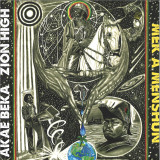
Akae Beka & Zion High - Mek a Menshun (feat. Protoje) LP

Akae Beka's inimitable style of rich, deep, multi-layered songwriting, uncompromising devotion to RasTafari and soulful healing melodies developed over decades performing with St. Croix based band Midnite and countless recordings. At the point of his untimely passing in 2019, he had released over 70LP's. He is without a doubt one of the most prolific reggae artists ever known.

The stellar production trinity that is Zion I Kings have been involved collectively and individually in creating some of the most highly regarded contributions to the vast Akae Beka catalogue. The timeless songs of 'Mek A Menshun' amply reward the listener who can penetrate into the mystical musical realms of Rastafari. Longtime fans of Midnite and Akae Beka will note that Vaughn Benjamin's singing on 'Mek a Menshun' reached new heights of melodic delivery and emotional intensity. Coupled with his always poetic and insightful lyrics, these 10 original songs rank among his best recordings to date. The title track 'Mek A Menshun' includes vocals by Protoje Grammy (R)-nominated artist.

Mek A Menshun features the stellar musicianship of the ZIK distinguished in typical fashion by the rock-solid drumming of Lloyd "Junior" Richards. On this album, his playing is complemented by Aston Barrett Jr. ("By Day", "Only Now") and Kirk Bennett ( "Kagm Mystory", "Mek A Menshun"). The signature stylings of the other core ZIK musicians are augmented by horns (Andrew "Drew Keys" Stoch -trombone, Donald "Jahbless" Toney -saxophone), flute- Sheldon "Attiba" Bernard, kette- Andrew "Bassie" Campbell, and the guitar of Chet Samuel. ZIK guitarist Andrew "Moon" Bain contributes a string arrangement on "Only Now". Throughout the album, Laurent "Tippy I" Alfred's spot-on organ shuffle bubbles the rhythm forward. Many of the 'Mek A Menshun' tracks were among the last recordings done by the veteran engineer Gary Woung.

Originally released digitally and on CD, this LP is now being released for the first time on as a 12" vinyl LP courtesy of Before Zero Records.

non in magazzino

Ordina ora e ordineremo l'articolo per te presso il nostro fornitore.


Last In: 3 years ago
Samuel Rohrer - HUNGRY GHOSTS LP

With his Arjunamusic label and a growing catalog of category-defying releases, Samuel Rohrer
continues to quietly, yet confidently, make a name for himself as a genuinely unique figure within
the European electronic music realm. Over the past decade he has assembled a repertoire of
music that fills a sadly neglected gap in the modern musical landscape. That is to say, he has
made a number of “electronically”-aided works that never seem to make “electronic-ism” the main
selling point or raison d'être. Rohrer understands that we inhabit a networked media landscape
that no longer sees a novelty value in every synthetic or technological sound, and by realizing
this, he makes a music that fully engages with the present without completely disregarding the
exciting speculative sensibility that has allowed electronic music to solidify into a tradition. His
latest solo album, Hungry Ghosts, again shows the high quality of sonic design that can be
achieved by conceptualizing musical passages as living, breathing entities rather than as
signposts to some still distant reality.
Maybe more so than any of Rohrer’s solo records to date, Hungry Ghosts is the one that
most unambiguously displays the artist as a kind of inspired sound “cultivator” or landscaper
rather than just a straightforward “producer”. The emphasis here seems to be biological growth
processes rendered in musical form, and in fact some track titles namechecking the biodiversity
of the external world (“Slow Fox”, “Ctenophora”) and neurochemistry (“Serotonin”) lend some
additional credence to this interpretation.
As with previous outings, Rohrer starts with his skills as a genre-resistant percussionist
and builds from there, with dense clusters of drum hits and icy cymbal exclamations leading the
way into a wide-open atmosphere full of fragmented phrases, marked with strange reversals or
compressions of time. The percussive portions and other ambiences merge together in such a
way that the latter seems like a kind of shifting, holographic camouflage for the former; an effect
which makes for a greater than usual number of shifts in mood. Rohrer’s already established
ambiguity and mystery are the moods that permeate throughout, to be sure, but there are also
surprising moments of humorous whimsy (the flourishes of cartoon mischief and teasing silences
on the tracks “Human Regression” and “Bodylanguage”), reverence (the optimistic organ swells
and steady sequencer guiding “Ceremonism”), and meditative focus (the slow-motion spectral
waltz of “Treehouse”). Also notable here are very brief etudes, such as “Window Pain,” whose
dark, lush ebb and flow actually seem tailored to repeated or looped listening.
It’s particularly remarkable that almost all of this material is recorded solo and in a “live /
no overdubs” mode, given how much it feels like well-rehearsed ensemble playing, and given the
impeccable timing involved in continually exchanging the sounds at the very forefront of the mix.
And here we come full circle to the idea of “electronic music” mentioned at the beginning here:
instead of making us feel that we are in the presence of some fully-realized form brought back
from “the future,” Rohrer invites us instead to witness fascinating processes of transition and
mutation, and to value them for what they are now as much as for where they are headed.

non in magazzino

Ordina ora e ordineremo l'articolo per te presso il nostro fornitore.


Last In: 3 years ago
Kapingbdi - Born In The Night LP

Kapingbdi came together in Liberia, West Africa, during the late 1970’s and had their own unique style. This six to seven-piece band played original compositions in a vibrant mix of African Rhythms, Soul, Spiritual Jazz, Funk and Rock. Led by Kojo Samuels on sax, flute and vocals “Born in The Night” presents the essential tracks from their rare studio LPs produced between 1978-1981. The work has been carefully edited and remastered in 2019 for vinyl LP and a 6-Page Digipack CD, which includes two additional recordings. Kapingbdi toured through Europe and the U.S. and were the only Afro funk band to ever come out of Liberia.

Kapingbdi hail from Liberia, West Africa and have their own imitable style. They effortlessly combine traditional African music in a modern mix of Jazz, Funk, Soul and Rock. The band is a fusion of the old and the new.

The word "Kapingbdi" is taken from the Sierra Leone language Mende and means "born in the night". Kojo Samuels was given the name by his Latin teacher whilst attending high school in Freetown, They often meet and debate at night in the city and soon after Kojo is called Kapingbdi. The name serves as a description of his origin. Born In Lagos, Nigeria in 1943. The son of slave children. His mother from Nigeria and father from Sierra Leone who moved the family to Liberia, during the 1950’s.

Kojo has played music for as long as he can remember. He starts with the harmonica and later becomes a drummer and percussionist in his first band at school. During his art studies 1965-1972, he tours Germany and works as an art teacher in the USA. His band Kapingbdi is reorganized five times and consists of up to seven musicians. In a VW-Bulli he drives the group from concert to concert and if the drummer fails, he jumps in himself. Between 1978 and 1981 three Kapingbdi LPs are produced for the independent label Trikont, recorded in Hamburg and Munich. During this creative period, the band plays at festivals in Africa and Europe. In 1984, the band tours the United States and shortly after, they came to an end.

At their best, Kapingbdi would rouse the audience with original compositions like "Human Rights", justice for all, especially for South Africans, and "You Go Go You Go Come". The officials and employees in the government departments have no time for the common man, for any questions such as job search, scholarship or similar, he receives the answer "go, come back tomorrow" and the same thing the following day. Or "Now Is The Time For Cry For Love." Now it is time to scream for love and finally, time for humanity and justice. Despite immense difficulties, the musicians consciously live and work in Africa and are at home in Liberia.

On April 12, 1980, ordinary soldiers and non-commissioned officers organize a coup against the government. This is an attempt to put an end to a policy of exploitation of the Liberian people. Whilst efforts to eradicate poverty, lawlessness and illiteracy are obvious throughout the country, Liberia is still Americanized to a high degree. This is evident, as the radio programs of that time almost exclusively played American disco music. Under these conditions, the people seek a reconnection to their folk music, and Kapingbdi were aware of this. Kojo tried many times to come together with traditional Liberian musicians. This passion takes him north of the country. Meeting and playing with the old hornblowers and playing music on traditional instruments, such as the elephant tusk.

Kapingbdi make high quality tape copies of their own vinyl LPs and patiently try to displace all unauthorized tapes from the domestic "market". Nevertheless, it is hard to make a living through music in Liberia. Kapingbdi, is now celebrated. The radio plays are in abundance, but royalties are not forthcoming. Their musical link is the feeling of Afrobeat and Highlife, which is found in each of the many Kapingbdi pieces. They embody Jazz, which is understood to be the most refined example of black music outside of Africa. In Liberia, Jazz is virtually impossible to hear. Bright shining names such as John Coltrane, Charlie Parker or Miles Davis were widely unknown. Thus, the Black Jazz, including its Back-To-Africa movement of the 60’s and 70‘s, passes by without leaving a trace in Africa itself.

Kojo's claim at the time, was to make African music with the depth, sensitivity and the freedom of the technical level of Jazz. This makes Kapingbdi the torchbeares. The underpaid prophets in small Liberia. It is the passion with which the founder of the band continues to work on their music for years. Tirelessly, stimulating and encouraging his fellow musicians. This is ultimately responsible for the success of Kapingbdi in Liberia itself. The local audience seems to listen to the band in fascinated astonishment. One wonders about the ability to develop as demonstrated by Kapingbdi on the basis of their music. It is African and unusually jazzy, danceable and better than the American disco music heard on the radio.

Rather than chase the money and the job opportunities in Europe, Kapingbdi are firmly rooted in Africa. The musicians live in Monrovia, the capital of Liberia, at the Kabingbdi workshop, located in the Congotown area on the eastern edge of the sprawling city. Kojo works here as a sculptor, painter, batik artist and musician. The sales revenue that his activities generate, gives him the opportunity to support the development of African Jazz music. The highest percentage of funds are from Germany and Kojo’s work ethic is “to work on your own thing“. The stance taken aims to support the welfare of Liberians and Africans. The other musicians of the group live in a second house that is nearby.

For the sake of consistency, Kapingbdi is a full-time band. However, the revenue, from all of the sources, could not keep them afloat. Equally, as important to the group are Kojos's knowledge of traditional African music and his sculpting skills. His knowledge is shared with others at the afternoon workshops. It is here that they discuss new lyrics, engage in political debate and the self-imposed task of improving conditions in Africa. At times the debate became heated, especially during rehearsals. This was regarded as good and integrative, sowing the seeds of innitiative to keep the band together.

From 1980 to 1985 Kojo also opened and ran the club "Panjebota", located on the grounds of the U.S. Consulate in Monrovia. Almost every evening Kapingbdi perform the song "Wrong Curfew Walk", whose lyrics lament the killing of citizens during the curfew imposed by the Liberian government. When the head of state Samuel Doe hears the song, he behaves agressively and forces Kojo to close the "Panjebota". Kojo had already moved on. Soonafter he meets Fela Kuti at the Africa-Festival and plays concerts in Germany with Cecil Taylor's workshop band.

Kapingbdi is for thinking, dreaming, dancing. What they sing about is what they have experienced. Kojo Samuels is 76 years old today and still follows his vocation as a critical musician, artist and activist.

Ekkehart Fleischhammer / Sonorama 2019 (with the help of original press sheets and the memories of Kojo Samuels)

non in magazzino

Ordina ora e ordineremo l'articolo per te presso il nostro fornitore.


Last In: 4 years ago
Dark Star Safari - Walk Through Lightl

Dark Star Safari is a musical entity comprised of Jan Bang, Erik Honoré, Eivind Aarset, Samuel Rohrer and John Derek Bishop. Their second fulllength offering Walk Through Lightly is the first to feature all five musicians together in the studio from the outset, making for a more organic refinement upon their already established methodology: gradually sculpting distinct songs out of collective improvisations, or using the raw material from initial recordings as the basis for more carefully articulated compositions. The final mix is one that invites few stylistic comparisons to other musical peers, and in fact few comparisons to existing genres. Though this second offering from the project is frosted over with a Scandinavian sense of spatiality and
melancholy, it’s best listened to without considering any origin points, geographic or otherwise: from the opening moments of “Walk Through Lightly,” listeners will feel as if teleported directly into the middle of an enigmatic film-in-progress.
The album opener immediately and successfully sets the table for what is to follow. The electronic and acoustic instrumentation is pensive, but not passive, with restrained scrapes and stridulations in the background combining with backwards-looped passages and perlescent or granulated sound effects to better emphasize the carefully arranged latticework of guitar, percussion, strings, and bass. In some places, such as on “Father’s Day” and “Measured Response,” the silences or breaths between passages are pronounced enough to be an instrument in their own right (and an elegant confirmation of the fact that silence is also a conveyor of information). This nuanced production, which wisely opts for intimacy instead of relying on overdone "instant atmosphere generators" like lengthy reverb, provides just enough tension to contrast with the sense of elevation provided by Bang’s vocal contributions: smoky, evanescent, and impressionistic recitations offering not snapshots of specific events, but rather complete emotional environments for the listener to hover through and explore.
Within these environments, the lyrical imagery focuses upon coming to grips with sudden transformations on both micro and macro levels (the opening “this was a perfect place / till we lost our way” from “Patria” or the foreboding “Poems that explore / Their silence / Crush their violence / Now their time ends” from “Measured Response.”) It focuses as well upon coming to thresholds or crossings, be they physical crossroads or internal states of mind, or both (see especially the striking turns of phrase from “Murmuration.”) With such things in mind, it’s only natural that there would be consideration of dreaming as well, and indeed four different titles on the LP make different reference to a dream or dream state, seemingly valuing dreams as part of the continuum of consciousness rather than something totally cut off from waking experience.
Given the sense of foreboding, anticipation, and even unease that these kinds of subjects often bring with them, the spare and un-hurried music is all the more intriguing, especially when the eponymous finale arrives and the percolating sound bed seems to hint at a coming resolution, but then leaves the listener with more questions than answers. By competently fusing a mature, economical approach to sincerely romantic lyrical themes, Walk Through Lightly is a rare accomplishment.

non in magazzino

Ordina ora e ordineremo l'articolo per te presso il nostro fornitore.


Last In: 4 years ago
Samuel Rohrer / Max Loderbauer / Stian Westerhus / Tobias Freund - Kave

new quartet by Samuel Rohrer, Max Loderbauer, Stian Westerhus & Tobias Freund In the present era of media saturation, the artist's dilemma has shifted away from the question whether to fuse disparate stylistic elements, towards the decision of which energies to draw upon: a situation most rewarding for those who listen to musicians navigating this limitless terrain. One such journey, the captivating full-length release from Samuel Rohrer's new Kave quartet coming out this May, is bringing together players who are equally well-versed in the quick-thinking mechanics of free group improvisation and the compositional strategies of contemplative / ‘ambient’ electronic music. With Rohrer acting as creative director and most of the quartet sharing synthesizer duties, there’s a strong sense of unified purpose to this set, and a narrative flow that never causes the listener to focus on one constituent part at the expense of the whole. At the same time, the players know all well that cohesion counts for little without those constituent parts being compelling in their own right. Rohrer and Loderbauer, for example, have previously crafted a unique techno-organic approach with the Ambiq trio, and the lessons learned from that partnership are put to inspired use within this new configuration. Stian Westerhus’ contributions on guitar and vocals, along with Tobias Freund’s electronic reinforcements - Freund also has worked since many years with Max Loderbauer as NSI - all conspire to make something that Rohrer aptly compares as “forest”-like. It’s a descriptor that will have vastly different meanings for each listener. For Rohrer, it refers to music that is confident in the “deep-rootedness” of its foundations and defined by a density and mystery easily confused with darkness, while nevertheless proving its bright vitRight away, on the introductory odyssey 'Cambium' the quartet sets out to make good on this metaphor, creating a hypnotic foundation for what is about to unfold during the next 42 minutes, with brooding, slow, 'searchlight in a fog,' synth washes and percussive stridulation. The twin 'Hibernation' tracks show all the unique elements beginning to coalesce: the emotional tenor is one of vulnerability that melts into the determination of 'staring into the void', a temperamental state challenging to represent authentically in music. The atmosphere of psychic challenge effort lessly gives way to the faintly nostalgic glimmers of 'Giant Peach' - a literary reference to the macabre whimsy of Roald Dahl.
The ultimate dissolution of barriers between organicism and synthesis is accomplished on the majestic 'Divided We Fall', a title referring to Westerhus’ smoky vocalization that winds into a double helix formed from electronic surges.
Again, the ease with which it all comes together is mesmerizing, and while there’s an aura of risk accompanying this walk through the woods, there’s a much more enduring impression of carefully orchestrated growth and change.

non in magazzino

Ordina ora e ordineremo l'articolo per te presso il nostro fornitore.


Last In: 5 years ago
Jan Bang, Erik Honoré, Eivind Aarset, Samuel Rohrer - Dark Star Safari

Dark Star Safari, a newly formed group featuring Samuel Rohrer, Jan Bang, Erik Honoré and Eivind Aarset, present its eponymous recording debut, an evocative song-driven album. These songs conjure shadows of memory, clouds of dreaming and silhouettes of foreboding through the album’s layered, many-textured fabrics and Jan Bang's silken delivery of Erik Honoré's acute lyrics. Dark Star Safari is the work of four kindred spirits, their open modus operandi, and a remarkably interconnected creative nerve system. Key to their collaboration is an organic freedom that enables the music “to fill itself in", to be self-actualizing via the musicians as medium. The music of the 10 songs resulted from a two-stage process: an initial phase of free flowing open improvi- sation, and a subsequent exploratory phase where hidden potenti- als were discovered and nurtured. The groundwork of the album’s music originates from a session initiated by Samuel Rohrer, who invited Jan Bang and Eivind Aarset to the renowned Candy Bomber studio in Berlin. The ses- sion was run under the imaginative craftsmanship of sound engi- neer Ingo Krauss, who worked in the famous Conny Plank stu- dio, and its recording and mixing employed sophisticated use of vintage analogue equipment alongside cutting edge digital pro- cesses. This meeting opened the door for something larger to emerge. The group did not settle for just the outcome of the initi- al open improvisation. They were driven to dig deeper, to atten- tively examine and manipulate the material, in order to discover what it had to offer. This caused a creational chain reaction, forcefully spreading across the group. During this second phase, Jan Bang, while meditating upon the possibilities and reach of the improvised material, felt a strong urge to give additional shape and colour to it by singing. Thus, he organically stepped into the role of vocalist, a role he had not pursued since the early days of his musical career. He sent the results to Erik Honoré, who immediately was inspired by its po- tential, quickly penning lyrics and providing the project with its name. Honoré composed two additional songs, Mordechai and Fault Line, and thus rounded the project out towards a fully reali- zed opus. The group continued this back and forth process, with Samuel Rohrer and Eivind Aarset bringing in fine-tuning and e nrichment to the song structures and textures.

non in magazzino

Ordina ora e ordineremo l'articolo per te presso il nostro fornitore.


Last In: 6 years ago
Zend Avesta - Organique

The sensitive mountain » (la montagne sensible) is the nickname Alain Bashung came up with for Arnaud Rebotini. At the height of his fame, after the success of Fantaisie Militaire in 1998, Bashung readily agreed to create an album with Rebotini. The two men didn’t know each other; their record label had introduced them. Bashung brought in “Mortel Battement” and “Nocturne,” two poems by Jean Tardieu, which he recited in a voice simultaneously warm and flat, and Arnaud produced an impressionist soundscape that ended with an apocalypse of metal. Bashung was so proud of their collaboration that he offered to give several interviews to promote the record. Today, listening back to this moving Léo Ferré influenced "talking singing" exercise, it’s hard not to hear the template for L'Imprudence, the album that Bashung went on to record with Rebotini two years later. In a similar way, the album Organique sparked a productive partnership between Rebotini and filmmaker Robin Campillo, which resulted in their being awarded a César for Best Original Music in 2018. The director, who trusted Rebotini to create the soundtracks for his films Eastern Boys and 120 Beats per Minute, never kept his love for the 2000 record a secret.

Yet it’s an understatement to say that when it was released, Organique was not in the spirit of times. That year was all about the French touch. The funky samples of Modjo’s “Lady” and Superfunk’s “Lucky Star” ruled the sweaty dancefloors. Although Rebotini was familiar with the electronic scene, he had something else in mind when he set about creating Organique. Under his own name or under the pseudonyms Aleph, Avalanche, Black Strobe, Maison Laffitte, and of course Zend Avesta, he had already released several quite bizarre and experimental techno, house, or jungle maxi singles on pioneering labels like P.O.F., Source, and Artefact, run by his friend Jérôme Mestre’s, whom he had met back when both were working as record salesmen at Rough Trade’s ephemeral Parisian store. It was at Artefact, still financed at the time by Barclay and Universal, that he naturally proposed this record project, which was a bit "different." It was his first real album.

Arnaud Rebotini has never hidden his love-hate relationship with the electronic scene. He’s a fan of rave music, Rex, and later Pulp, but he listens mostly to metal and contemporary music, mainly American minimalists such as Terry Riley, Philip Glass, Steve Reich. He wanted to mix this genre with a more French aesthetic inspired by Debussy, whose unconventionality fascinates him. From the first suspended guitar note of Organique, you can pick up another influence, possibly poppier. In the style of Mark Hollis, the erratic leader of Talk Talk, whose only solo album’s silences and dissonances left their mark two years earlier, we hear the fingers touching the keys of the clarinet on “Ondine.” The instruments have presence, character. Nothing is smooth. Everything is organic.

Although it’s sometimes labeled as electronica because of Rebotini’s career, there’s nothing digital about Organique. No "pro tools" editing or samples, only programmed drums and some synth layering. And his guest vocalists. Playing the role of electro producer, he invited Bashung, of course, to join him on the album, but also Roya Arab, who Rebotini first spotted while she was playing in Archive, and her sister Leila, Gus Gus alum Hafdis Huld, Kat Onoma’s Philippe Poirier on the “Samuel Hall” inspired track “Qu’est ce qui m’a pris,” and former KaS Product member Mona Soyoc.

The frustration of a tour where he had "little to do on stage," the desire to sing himself, and the creation of the Black Strobe project, a haunting mix of blues and rock, stopped Zend Avesta from putting out another album. Eighteen years later, the Organique we rediscover today has lost nothing of its strangeness, nor beauty. When it came out, Bashung said, "What is interesting for a musician is to feel that you have a piece of wasteland in front of you, something to clear.” That remains true today.

non in magazzino

Ordina ora e ordineremo l'articolo per te presso il nostro fornitore.


Last In: 6 years ago
Samuel Rohrer - Range Of Regularity Remixes

Coming hot on the heels of Samuel Rohrer'sRange of Regularity album are two EPs of striking reinterpreta- tions. These new remixes provide an intriguing parallax view of the original tracks, using the percussive eclecticism of the parent LP as a starting point from which to journey into soni- cally vibrant, feature-rich territories. The production specia- lists on the first EP include Ricardo Villalobos and Vilod, the collaborative duo with Max Loderbauer. Villalobos, has alrea- dy formed a strong working relationship with Rohrer's AM- BIQ trio, lends his talents to both of these new EPs. The se- cond one will be completed by a remix of Burnt Friedman. Each individual remix has its own character, they are all united in their ability to provide a quick cure for fatigue with the common loop': they are strung together from fleeting phra- ses that evolve as if they are taking on a life independent of their creators.Villalobos' compelling take on Lenina' pulsates from start to finish with a kind of voluntary anxiety, a commitment to painting every corner of the sonic surface with clearly defined pointillist touches. While this kind of approach would cause less confident producers to collapse at their editing worksta- tion, Villalobos takes to the task with gusto - leaving see- mingly no corner un-animated by sound, he pieces together something surprisingly funky and hyper-real from a catalog of distinct percussive hits, time-reversed ephemera, and playful kitchen sink' ambience. Vilod's Uncertain Grace' remix, though marginally more laidback than the flipside, is no less engaging. A buzzing beehive of activity powered by an organ- like refrain, this is one of those pieces that will induce a fee- ling of perpetual movement into even the most still of physi- cal surroundings. This is especially true when, after four and a half minutes of flotation, a straight-ahead techno rhythm ta- kes over and all the disparate hovering elements fall into place.

non in magazzino

Ordina ora e ordineremo l'articolo per te presso il nostro fornitore.


Last In: 5 years ago
Gari Romalis / Barce / Melodymann - The Web 10"

With a self-proclaimed goal to showcase newcomers as well as established artists, Melodymathics hands out their 'second punch' with a killer track by Detroit veteran Gari Romalis. Gari is at the forefront of the Detroit techno scene, working close with Terrence
Parker, Mike Banks, Cliff Thomas and labels such as Tresor, Transmat, Soma and many more. His productions clearly show that his 30 years experience Dj'ing made him realize what works on the dancefloor. 'The Web' on Melodymathics Ltd.002 is a sublime example of soulful keys combined with funky rhythm, resulting in the ultimate Dj tool.

Our new talent 'Barce' was discovered in Spain and sets the tone with his 'SP' track for a possible lifetime relationship with Melodymathics. Barce's music speaks parts of his life and relfects a musical image of his soul. 'SP' brings deepness to another level in this release, with a manipulated organ chord - hypnotizing you throughout the whole chord -
and a story being told on top with various snares, dope basslines and sample work.

The traditional endless grooves, provided byThe Melodymann, are a nice addition for any Dj who wants that little extra..

Dj Feedback

SEAN DEASON (Matrix records)

Very nice! Smooth deep and funky as hell! Great work!

ROBERT OWENS

Great EP, would be nice to play.

SAMUEL JAMES (Elektrosouls Recordings)

One of the deepest releases of the year. Melodymathics is definitely a label to keep an eye on !

JULES WELLS ( KMS, Submerge records)

Great, I love it !!

RENNIE FOSTER (Transmat / Rebirth )

Sick

BEN SOLAR

Great Stuff

FABRICE LIG

Great EP, so deep !

TITONTON DUVANTE

All tracks are solid! Really like the way the Gari Romalis track builds. The Barce track is

cool in the second half. Expect some deck time for this one..

DONNA BLACK

This is DOPE!

SEBASTIAN SAN

Good stuff, Deep as i like it !

DIMITRI ANDREAS

Nice smooth and deep, Like it !

LA WILLIAMS (Peacefrog, DJAX)

PUREEEEEEE DETROITTTTTT ! Richard Pryor sample classic

PAT LEZIZMO

Vraiment Bien !

SATORE (Hizou Deeply Rooted House)

Really nice Ep!

AUBREY

really good .. like it.. deep moody stuff !!

PETE HOWL

Deep & smooth, great package! love it

ANAXANDER

'wow, strong EP, proper dancefloor killers'

BERNY GARDIN

Interesting, can feel lot of infuences, style!

ANDREW DUKE

Veteran artist Gari Romalis brings the heat as expected; both Barce's original and the

remix from The Melodymann hit the spot. With these 3 tracks all in my bag, Melodymathics

Ltd keeps bringing the goods.

DEEP MOVEMENTS LABEL

Instant support, will play for sure !

OLIVER KAPP (Indulge, Raygun Records)

Very nice old school vibe..... love it

non in magazzino

Ordina ora e ordineremo l'articolo per te presso il nostro fornitore.


Last In: 3 years ago
  • 1
Articoli per pagina:
N/ABPM
Vinyl