
In Stock
Disponibile in Stock e pronto per la spedizione
Last In: 33 days ago
Disponibile in Stock e pronto per la spedizione

Vintage Pleasure Boutique once again dives deep into the vast catalogue of super-productions by Roberto Zanetti, better known as Robyx and Savage. This time, the journey takes us back to 1984, unearthing a true gem created at the suggestion of Marco Bresciani, Italian DJ and producer, and the same creative force involved with Radiorama. Zanetti delivered flawlessly. He transformed the elegant, high-grade British synth-pop original by OMD into a first-class Italo disco weapon, infused with that unmistakable sweet, melodic touch and fat kick that blended perfectly in clubs alongside genre-defining tracks of the era. “Souvenir” by Saxophone quickly became a classic, a staple of the sound and a cornerstone in countless old-school DJ record bags.
Today, original copies are scarce, highly sought after, and often prohibitively expensive on the secondary market. This reissue is both a tribute to long-time fans of the record and a nod to devotees of Robyx’s unmistakable sound. The vinyl also features a special remix of “Souvenir”, sonically aligned with Savage classics such as “Radio,” “Fugitive,” “Only You,” and “Don’t Cry Tonight.”
A true feast for lovers of this timeless Italo disco aesthetic, equal parts nostalgia, elegance and dancefloor power.
Disponibile in Stock e pronto per la spedizione

Tilaye Gebre is one of Ethiopia’s most soulful saxophone giants, with a musical legacy that’s hard to surpass. A founding member of the Equators, later renamed the Dahlak Band, he was a key figure in Ethiopia’s vibrant hotel music scene and a sought-after musician and arranger for artists like Aster Aweke, Mahmoud Ahmed, Tilahun Gessesse, and Muluken Melesse.
Tilaye — still going strong — was at the epicenter of the Ethiopian music scene during one of the most turbulent periods in the country’s history. Tilaye’s musical trajectory, regardless of the forms it has taken over the decades, is simply ceaseless. The road to a musical career spanning six decades started out winding, and the first steps came almost as a fluke.
With the Dahlak Band, Tilaye had managed to secure a musical residency at the legendary Ghion Hotel, where they honed their skills and developed their musical expression to unparalleled levels. From the late sixties onwards, Dahlak Band lit up Addis Ababa with a mixture of James Brown and Wilson Pickett tunes, rhythm and blues, soul, funk, and the sound of the disco era — mixed with modern Ethiopian styles — serving up majestic concoctions with full-range instrumentation, featuring trumpet, keyboard, saxophone, bass, drums, and guitar. Through their hotel sessions, Tilaye developed further as an arranger, arranging fellow band member Muluken Melesse’s first solo album, Muluken Melesse with the Dahlak Band (Kaifa Records – LPKF 39), recorded during the turbulent years of 1975–1976, following the fall of Haile Selassie. Everything was in flux in this transitional period, but a constant was how Tilaye stood in the spotlight. On that record, there’s a loose vibe to the soundscape that lets Tilaye’s skills shine, while all the other musical contributions coalesce into a slowly cooking atmosphere where the groove at times fluctuates into psychedelic territory, making the music stand out from most contemporaries.
Most of their recorded output came from one-take live cassette recordings at the Ghion, or from music shops at that time — one microphone at the front, hit record: no EQ, no reverb, just some delay. Some of the Dahlak Band’s releases featured Tilaye as frontman, such as Tilaye’s Saxophone with the Dahlak Band from the late 1970s — typical of a rare groove on the Ethiopian scene — with excursions into reggae territory, including the band’s characteristic sound featuring Tilaye Gebre (tenor and alto saxophone), Dawit Yifru (organ), David Kassa (electric guitar), Shimelis Beyene (trumpet), Moges Habte (tenor saxophone), Abera Feyissa (bass guitar), Tesfaye Tessema (drums), and Muluken Melesse (cowbell). The Dahlak Band’s output was so prodigious that they simply couldn’t be pigeonholed.
No saxophonist in Ethiopia influenced the sound of popular music more than Tilaye in the 1970s, yet his recordings have been hard to come by for ages, which has meant that newcomers to the scene have gems to uncover in retrospect. Arguably, Tilaye shifted gears when he relocated to the U.S. to such an extent that his musicianship became even more renowned, accompanying the greatest of his contemporaries internationally. Tilaye is one of Ethiopia’s all-time greats, with a musical legacy — both as musician and arranger — that’s hard to surpass. It’s a wonder to be able to enjoy a recording like this half a century later.
Ordina ora e ordineremo l'articolo per te presso il nostro fornitore.

dovrebbe essere pubblicato su 27.06.2025

dovrebbe essere pubblicato su 04.06.2025

ohn Fahey’s Takoma label is best known for pushing the envelope when it comes to acoustic guitar playing, but in 1967 it released a record that has become one of the true cult classics of the ‘60s free jazz movement. Charles Martin Simon was an aspiring writer whose artist wife died in 1965. When he tried to pick up the torch and become an artist using her art supplies, he was, in his words, “reduced to nothing,” and thus created an alter ego or “psyche fragmentation,” Charlie Nothing. Under that moniker he became most famous for creating “dingulators,” working guitar sculptures made from parts of American cars; in 1967, though, he recorded The Psychedelic Saxophone of Charlie Nothing/In Eternity with Brother Frederic, an album consisting of two separate saxophone improvisations accompanied only with gong, tabla, and ukelele. Its cover adorned by Nothing’s own hand-drawn art, this record has since become not only something of a “secret handshake” among free jazz fans, but also a classic of outsider art, fitting right next to your Moondog records if not in sound than in spirit. For its first ever reissue in any format, we’ve gone back to the original tapes to present an all-analog release of The Psychedelic Saxophone of Charlie Nothing/In Eternity with Brother Frederic on black vinyl with the original art intact, offering an unfiltered experience of this man’s cracked genius. A memorable look ‘n’ listen to say the least.
dovrebbe essere pubblicato su 09.08.2024

OTOROKU is proud to reissue Evan Parker's first solo LP "Saxophone Solos". Recorded by Martin Davidson in 1975 at the Unity Theatre in London, at that time the preferred concert venue of the Musicians' Co-operative, Parker's densely woven and often cyclical style has yet to form; instead throaty murmurs appear under rough hewn whistles and calls - the wildly energetic beginnings of an extraordinary career. Reissued with liner notes from Seymour Wright in an edition of 500. "The four pieces across the two sides of Saxophone Solos - Aerobatics 1 to 4 - are testing, pressured, bronchial spectaculars of innovation and invention and determination. Evan tells four stories of exploration and imagination without much obvious precedent. Abstract Beckettian cliff-hanging detection/logic/magic/mystery. The conic vessel of the soprano saxophone here recorded contains the ur-protagonists: seeds, characters, settings, forces, conflicts, motions, for new ideas, to delve, to tap and to draw from it story after story as he has on solo record after record for 45 years. 'Aerobatics 1-3' were recorded on 17 June 1975, by Martin Davidson at Parker's first solo performance. This took place at London's Unity Theatre in Camden. 'Aerobatics 4' was recorded on 9 September the same year, by Jost Gebers in the then FMP studio in Charlottenburg, Berlin. Music of balance and gravity, fulcra, effort, poise and enquiry. Sounds thrown and shaken into and out of air, metal and wood. It is - as the titles suggest - spectacular." - Seymour Wright, 2020.
dovrebbe essere pubblicato su 31.07.2024
dovrebbe essere pubblicato su 15.03.2024
dovrebbe essere pubblicato su 25.01.2024

Questo articolo non è stato ancora rilasciato. È possibile pre-ordinare il prodotto ora.

Questo articolo non è stato ancora rilasciato. È possibile pre-ordinare il prodotto ora.

dovrebbe essere pubblicato su 12.12.2023

Jazz Saxo Session is one of the first connected discs of Jazz Collection.
Grouped by instrumental theme, this jazz compilation features the greatest names in jazz: Charlie Parker, John Coltrane, Stan Getz...
The podcasts on the history of jazz offered in the Viny application (on IOS or Android) are fascinating.
And if jazz is in you, you'll love to continue the experience with the Jazz Collection by Vinyl & Media suite.
dovrebbe essere pubblicato su 20.01.2023

Saltern’s latest offering marks the first-ever release of “lost minimalist” Terry Jennings’ visionary 1960 composition, Piece for Cello and Saxophone, as arranged in just intonation by legendary composer La Monte Young for renowned cellist Charles Curtis. Born in Los Angeles in 1940, Jennings was a close associate of Young, Terry Riley, and Dennis Johnson, and an early adopter of minimalist tendencies, creating slow, sustained music, influenced by jazz, modalism, and late romantic classical music. Jennings died tragically in his early forties, most of his work lost to a chaotic life; however, his forward-looking music quietly exerted a lasting influence on composers including Young and Harold Budd. Composed over sixty years ago, Piece for Cello and Saxophone, foreshadows a number of movements in postwar avant-garde music.
Despite the title, there is no saxophone on this album. At over eighty minutes, La Monte Young’s justly tuned realization of Piece for Cello and Saxophone for cello alone unifies and extrapolates Terry Jennings’ dense harmonies, creating an extended field of complex sonorities in motion, all brought to life by the immaculate playing of Charles Curtis. The recording captures Curtis in a performance from 2016 reflecting more than twenty-five years of dedication to the piece.
Highlights:
• Saltern latest offering marks the first-ever release of “lost minimalist” Terry Jennings’ visionary 1960 composition, Piece for Cello and Saxophone, as arranged in just intonation by legendary composer La Monte Young for renowned cellist Charles Curtis.
dovrebbe essere pubblicato su 01.07.2022

Ordina ora e ordineremo l'articolo per te presso il nostro fornitore.

dovrebbe essere pubblicato su 24.06.2022

onny Rollins had already been a regular member of the celebrated Max Roach Clifford Brown Quintet for half a year when he entered the studio on June 22,
1956 to record Saxophone Colossus, one of his most acclaimed albums as a
leader. Age 26, Rollins was already a well-known jazz figure.
He had recorded some albums as a leader but, above all, he had been part of
some of the most outstanding combos of the period: the Miles Davis Quintet
and the Max Roach-Clifford Brown Quintet. The present album introduced his
famous composition “Saint Thomas”
dovrebbe essere pubblicato su 23.07.2021
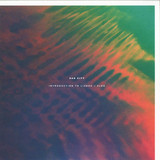
Following up from the stunning 'You Will Soon Find That Life Is Wonderful' 12' on Phonica's Special Edi- tions imprint, Sad City returns to the label with his new EP 'Introduction To Lisboa/ Sloe'.
Glasgow-based producer Gary Caruth has evolved a highly original sound; deep, lush and widescreen electronics, from melancholic to ecstatic. Sonically, he continues where his last record left off and feels like the perfect companion to that well-received debut for Phonica. The record as a whole is composed of field recordings, with the basis for the first half of the EP, 'Introduction to Lisboa,' utilising sound recorded in and around Lisbon. He explains, 'I wanted the music and field recordings to meld at times, to obscure what was conventionally the musical element and what were field recordings, blurring the line between found sound and composition in the creation of a whole other.'
Opening track 'Introduction To Lisboa' builds and builds from near silence to a cacophony of field record- ings and looped horns. It melds into 'Baixa Saxaphone', where carefully paced percussion patiently enters over a wash of synth. From then on a delicate balance of restrained percussion and spine-tingling atmos- pherics interplay before descending into a blissful outro.
As with the previous EP, the 12' is packaged in technicolour artwork by acclaimed London designer Jack Featherstone.
Disponibile in Stock e pronto per la spedizione
We are in-between again: FELT founder Fergus Jones surfaces on his own label for the first time with this dreamy, dubby pair of introspective tracks featuring the hazy, elegiac vocals of Thomas Bush, back on FELT after 2023's split cassette with Princess Diana of Wales. The results of a three-day studio bender in Copenhagen, Bush's entrancing vocals gesture towards the unchangeable past and unknowable future, creating a vital, pumping circulatory system of sound, further supported by the saxophone of Italian-Danish artist Francesca Buratelli and the (vinyl debut) of New York's Yumi with a notable interjection on "Untitled (Mix 1)”.
Written, produced and mixed by Fergus Jones & Thomas Bush
Saxophone on Untitled (Mix 1) by Francesca Burattelli
Additional vocals on Untitled (Mix 1) by Yumiko Mannarelli
Mastered by Amir Shoat
L'articolo è già in viaggio verso di noi e dovrebbe essere spedito da 30.09.2026.

The scent of fresh greenery rising into the air. A youthful Hidefumi Toki weaves a vivid and beautiful story through a one-horn quartet.
Making his professional debut while still in high school, Hidefumi Toki went on to perform with groups led by New Herd, Isao Suzuki, Terumasa Hino, Ryo Kawasaki, and Fumio Itabashi. From the late 1970s onward, he also collaborated with Ryuichi Sakamoto and Tatsuro Yamashita, contributing broadly to Japan’s music scene across jazz, fusion, and pop.
This album, recorded in 1976, is his third release, following Toki and Lover Man, a dual-leader project with Yoshio Otomo. It features a lineup of dazzling performances and compositions, including “Sky View”, where his soaring saxophone shines over delicate arrangements, and “Let’s Get Together”, evoking the uplifting fragrance of fresh greenery.
With outstanding support from Mikio Masuda—who also contributes compositions—alongside Yoshio Ikeda and Steve Jackson, the ensemble achieves a remarkable balance.
Defined by a gentle perspective and refined, youthful playing, this is a masterpiece filled with the charm of Hidefumi Toki in his early years.
dovrebbe essere pubblicato su 02.10.2026

Stone Age Is Now: Poems from Lithic is the new album by musician and poet Caleb Nichols - both a companion piece to his book Lithic: A Hyperballad (Harbor Editions 2026) and a follow-up to his album Stone Age Is Back (Royal Oakie 2025). Across twelve tracks Nichols interpolates poems from Lithic: A Hyperballad with tracks from Stone Age Is Back, bringing new depth to his indie-rock and alt-folk compositions. A meditation on grief, but not in the ways you’d expect, the album explores what it means to be living and dying right now, in this moment of extraordinary change.
Inspired by the raw immediacy of Neil Young, early REM, and Califone, Nichols adhered to a first-take best-take rule and tracked the album in just five days. Produced by Nichols, the album was engineered by Jay Pellicci (Deerhoof, Om, Sleater-Kinney) at Brother’s (Chinese) Recording in Oakland, CA, with Nichols later recording the spoken word overdubs after hours at an empty bar in San Luis Obispo, CA. Pellicci later mixed the tracks and David Glasebrook (Patti Smith, Peter Case, Sugar Candy Mountain) mastered the album at The Garden Shed in Oakland, CA.
Featuring even more experimentation than Stone Age Is Back, the album is peppered with field recordings captured by Nichols from many locations, including Kew Gardens, London; Llan Tysilio, Yns Mon; Treborth, Gwynedd; a secret beach in Bangor; Kelvingrove Park, Glasgow; and Broad Street in San Luis Obispo, CA. In addition to contributions from band members John Metz and Aaron Kroeger, the album features saxophone by Lorenzo Coretese , and Rhys Trimble provides the Welsh translation and performance you hear on “Orme Dream At The Car Park”. Additionally, Nichols took some liberties adapting the poems from the book to the recordings. “You’ll notice that there are differences between the printed poems and the poems recorded here. That is because a poem is never finished and can exist in multiple instances at the same time, like in quantum mechanics. The cat in Schrodinger’s box is both alive and dead; at the bottom of the cliff, our eyes are both: closed and open” says Nichols.
dovrebbe essere pubblicato su 02.10.2026
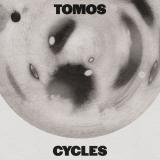
With Cycles, Tomos explores the different phases of a relationship through a boundless blend of jazz, disco, dub, broken beat, and deep house. Each track captures a specific moment in this cycle—from the spark of first feelings to heartbreak, seduction, and the beginnings of a new start.
Throughout the EP, trumpets, saxophones, and flutes intertwine with dub echoes, broken beat rhythms, and driving disco basslines. Tomos’s precise production ties these different elements together to create a record that moves seamlessly between the energy of the dance floor and the warmth of early evenings.
Following the success of his previous EP, Soul Feels Good, on Noire & Blanche, Cycles continues the exploration of the boundless musical universe that has become Tomos’s signature—a blend of warm instrumentation, groove-driven production, and a collage-like approach deeply rooted in his early French house influences.
dovrebbe essere pubblicato su 02.10.2026
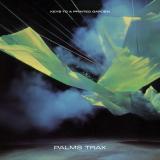
Palms Trax returns to production with his first release since 2019. The first single off his upcoming 2 track EP 'Soft Trance, Hard Gossip' is a journey through bold basslines, ear tingling acid lines and hopeful synth lines. It feels measured in its temperament for a listen on the bus home whilst punchy enough to earn its place across festival and club sets this summer. The title track Keys To A Printed Garden captures him at his best, moving deeper into a lush, melodic setting that stretches beyond the dancefloor while never fully leaving it behind. The track is built around warm deep house grooves, hazy nu groove textures and subtle IDM notes. The record unravels with a dreamlike smoothness. Swirling synth work, jazz-inspired saxophone lines and soft lo-fi textures give the record an immersive, almost weightless quality, while moments of glitch and ambient drift push it into more experimental territory. Even at its most reflective, steady percussion and rolling grooves maintain a subtle club-rooted pulse, balancing emotional depth, introspection and atmosphere with movement, rhythm and understated precision.
dovrebbe essere pubblicato su 02.10.2026
Underpinned by spoken folktales stretching from Indonesia to Poland, a new collaborative EP from Warszawa/Berlin-based Jerzy Mączyński and London-based Flora Yin-Wong arrives via Accidental Meetings. Demons rising from the wind, unknown beings lurking in the forest — the record conjures a landscape built from heady layers of saxophone and the tormented strings of zither, harp and kemence.
Recorded across two intense studio sessions, the EP also features idiosyncratic contributions from London-based guest vocalists and musicians Aga Ujma and Laila Sakini.
Flora Yin-Wong is a London-born experimental sound artist and writer of Chinese and Malaysian heritage, known for weaving field recordings and traditional instruments. Her album Holy Palm (Modern Love) and book Liturgy (PAN) cemented her as a singular voice in experimental music today.
Jerzy Mączyński is a Polish saxophonist, producer and composer whose jazz training feeds into genre-melting work spanning kosmische, prog, industrial techno and minimalism. One of his collaborations being a record of free jazz and rhythmic cubism with Chicago's Hieroglyphic Being.
Disponibile in Stock e pronto per la spedizione
In Gianfranco Rosi’s portrait of Naples, Sotto le Nuvole, the ground shakes periodically. Between Mount Vesuvius and the Tyrrhenian Sea, the fumaroles of the Phlegraean Fields hiss volcanic gas and steam. Below the sleeping volcano, modern day Naples emerges in black and white and fills with voices, with lives. From the traces of history and the concerns of the present, Rosi documents a city immersed in its continuous past, with Daniel Blumberg’s minimal soundscape hovering in a sonic space between liquid and air.
Tasked with creating a soundscape that would suspend space within Rosi’s film, Blumberg called upon the extended technique of saxophonists Seymour Wright and John Butcher to create a gossamer fabric of traces and sounds abstracted from their instruments. Having transitioned from theoretical physics to the saxophone, John Butcher has always deeply considered space in the context of his playing. His concerns are with flow, density and how the saxophone is situated in the living world. Zeroing in on the core sonic properties of the mechanical and acoustic components of the saxophone, Seymour Wright has integrated its every breath, reed vibration, keypad clatter and hissed microtone of his alto into his own, unique improvisational language. In his work with these two seminal players, Blumberg makes his most concentrated soundtrack to date - reinforcing the film's sense of overlapping time and space, and pushing at the limits of experimentation.
Initially recorded in Daniel’s flat in London, Butcher and Wright centre themselves around long, consistent tones, so soft that it seems breath is being gently pulled from the saxophone's bell by an invisible hand. Blumberg himself adds haunting bass harmonica, and recordings of Wright’s launeddas - a traditional and ancient triple pipe polyphonic reed instrument from Sardinia, Italy. Blumberg then travelled to the volcanic region of Baia, next to Pompeii. Once a flourishing classical Roman city loved by Nero, Baia slowly sank under hydrothermal pressure, leaving the city in a kind of geological purgatory. Using specialised geophones and hydrophones, Blumberg took those initial recordings and amplified them underwater, sending them calling out across the ruins of Baia’s mosaics, Nymphaeum statues and villas.
“It was important to me that the music was whispered in the same landscape that Gianfranco has worked for the past three years, so that you can hear the volcanic air gulping, the lapping of the waves, the steam and bubbles popping against John and Seymour’s saxophone breaths – an echo from a suspended time.”
What emerges is deeply melancholic, tender, subtle and right at the edges of audio technology. Submerged in an aquarian mausoleum, the mysterious vibrations of the saxophone and its bell become an echo of an echo, wading from the future into the past. ‘Sotto le Nuvole’ is less a soundtrack than a process of aeration - a sonic puncture in the material of the film which allows its central message to breathe, and a remarkable experiment at the limits of the saxophone’s possibility.
dovrebbe essere pubblicato su 05.10.2026

180g Heavy double vinyl LP with liner notes by Tyran Grillo. Limited Japanese Obi for the first pressing. Original artwork by Russell Mills and photography by Jean-Baptiste Mondino.
The third Time Capsule is a body of dub reinterpretations by celebrated producer Bill Laswell of Ethiopian singer Gigi. Curated by Tokyo record collector, music researcher and seasoned reissue supervisor Ken Hidaka, it is the first time Illuminated Audio is pressed to vinyl after its CD release in 2003.
Ejigayehu Shibabaw was born in 1974 in Chagni, northwestern Ethiopia and by pursuing a career as a singer, went against her father’s strict, traditional gender roles. As Gigi, she embraced the same musical freedom she had strived for in her personal life, incorporating the Ethiopian church, funk, hip-hop, West and South African music into her work. She first settled in Nairobi, then Addis Ababa, where she quickly established herself as one of the city’s leading singers. A move to San Francisco in 1998 led to a long and fruitful creative partnership with bassist and producer Bill Laswell.
Around the same time, Chris Blackwell had stepped away from Island Records to start the art house film company and label Palm Pictures. He took an interest in Gigi and together with Laswell, pulled together an all-star cast of musicians for her self-titled US debut album, including Herbie Hancock, Pharoah Sanders and Wayne Shorter. It won international critical acclaim, not just for its musicianship but for making Gigi a “defining voice for the Ethiopian expatriate community”, as journalist Tyran Grillo praises in his Time Capsule liner notes. From the nation-defining 1896 victory over Italian invaders to the quiet revolutionaries who wear simple shemma garments, Grillo believes the themes in Gigi make it “a shower of sunlight on her homeland for those ignorant of its struggles.”
After its success, Blackwell encouraged them to go back into the studio to rethink the album and Illuminated Audio was born. “Anyone can make a voice sound worldly”, Grillo remarks, “but rare are those who can make one sound inner-worldly.” Gigi was clear with Laswell to give her vocals a minor role “because it’s already been done.” Instead her Amharic verse is fleeting, exhaling through the textures like ghostly fragments; soaring yet muted. Yet the album is still titled under her name, an assertion by Laswell of her central role in the album’s creation. Not only was it a fully endorsed project by Gigi, but she would be present throughout its development, giving feedback on half-finished ideas as Laswell played them back in the studio. “It works perfectly”, she reflected after the album’s release. “We wanted to capture the whole spirit of each track, and Bill’s remixes create a different music language that really puts you in a pleasant place”.
This new vocabulary takes its lead from a technical approach that Laswell had been perfecting during a furtive creative period at the turn of the millennium. Much like his ambient interpretations of Miles Davis (Panthalassa, 1998), Bob Marley (Dreams of Freedom, 1997), and Carlos Santana (Divine Light, 2001), Laswell approached Illuminated Audio by returning to the original multitrack masters. Gigi wasn’t just reworked, but recomposed into an expansive lattice of instruments, submerged in a watery ambience of dub and trance undercurrents.
Sonically, this new language that Gigi refers to, is manifested by the original album’s more understated parts being pushed to the fore. Explaining his contrasting methods, Laswell saw Gigi as being “put together in a way that fits”. Contrastingly, in Illuminated Audio, “a lot of things that I featured in the remix weren’t as audible in the original.” Instrumentation laying near-dormant, deep in the mix, are brought to the fore: the acid rock guitar and Wayne Shorter’s saxophone on ‘Tew Ante Sew’, Graham Haynes’ flugelhorn on ‘Nafekeñ’, Laswell’s bass on ‘Kahn’, the melodica in Mengedegna or the floating synths and talking drums in ‘Gud Fella’.
Brought to his attention by mentor DJ Nori, Hidaka describes Illuminated Audio as a “masterful sonic exploration into ethereal ambience and dub” and made sure this reissue also contained a full remaster to give its “deep musicality” much better dynamics and density in the overall sound. Hidaka admits that Laswell's music “is sometimes so out-there, it is often misunderstood” and, indeed, to dub album non-believers this might seem like a prolific producer imposing himself on another artist’s work; eternally developing rearrangements that never quite get to its destination. But that’s missing its true power and triumph. This is more than the reissue of a remix, but “a wholly unique musical entity”, as Hidaka describes. Illuminated Audio refers to the illuminated manuscripts that comprise the major part of Ethiopian art and its new compositions stand in proud solitude as a rare body of reworks that both informs and enhances their originals.
dovrebbe essere pubblicato su 05.10.2026

This is the 12" already immortalized by Gilles Peterson! Dub Souljah, with its classic Roots Reggae/Dub-styled horns and brilliant lead and backing vocals, comes in two versions when Ekowmania meets DJ Sotofett. The first version, in 1970s tradition, is a rocking dancefloor Disco Dub with extended and highlighted percussion parts. Then there's the Ultra Dub – a severely deep and reduced dub where horns and vocals surface only intermittently through constant echoed kicks, minimal hi-hats, and a two-tone bassline. The title track is from Ekowmania's Dr. Afrodub album, produced by Jimi Tenor, but this 12" also includes two non-album cuts: the psychedelic Afro twist of Afrolistic Rock & Roll, and the cosmic Latin-styled Kuusikasi Funk, featuring beautiful saxophone and flute by Jimi Tenor. THIS 12" IS CUT WITH LOUD VOLUME FOR EXCELLENT CLUB USE!
Disponibile in Stock e pronto per la spedizione

‘I Feel 4 U’ was written by Rui Maia in collaboration with Kyle Quest and marks a new chapter in the journey of Mirror People, the alter ego of the musician, producer, and DJ. The track further deepens the collaborative spirit and connection to dance music that have defined the project since its inception.
Recorded last year, the song blends elements of disco, funk, and electronic music in a composition shaped by rhythmic fluidity and Kyle Quest’s melodic vocal approach. João Cabrita contributes saxophone and backing vocals, reinforcing the track’s organic and collective character.
The 7″ only vinyl-exclusive B-side, “Gordon Glu,” is a journey through the warm and melodious trademark sound of Mirror People, drawing on classy synth-pop, Balearic influences, and organic, jazz-funk-inspired grooves.
dovrebbe essere pubblicato su 09.10.2026

Following the success of the rework releases of Trip To Your Mind by Delfonic, LTJ Xperience, and DJ Friction, the time has finally come to reissue the original mixes of this essential and still highly sought-after Disco Funk classic.
Both the original Hithouse Mix and the re-mix by Chris Hill & Robbie Vincent were released in 1979. However, newly uncovered evidence has revealed that the track was actually recorded much earlier. After extensive research, including the rediscovery of Reginald Hudson's original flight ticket dated September 7, 1976, from Los Angeles to London, proof has emerged that the recording sessions took place in late 1976.
Due to unfortunate circumstances, the track remained shelved for several years and did not see release until 1979. By that time, the original backing band, Body Heat-a group of U.S. Army musicians stationed in Germany-had already disbanded. As a result, the record was released under the project name Hudson People.
Reg Hudson has since shared additional photographs and previously unknown information, which will be revealed in the coming months. To further celebrate the record's legacy, an official music video is currently in production and is scheduled for release this summer, marking the track's 50th anniversary.
As the original master tapes have unfortunately been lost, the audio has been transferred and restored using highest end equipment from the best available sources. In particular, the original Hithouse Mix now sounds better than ever before.
The 12-inch release will be presented in a faithful reproduction of its rare original "Disco 45" sleeve, believed to have been included only with the earliest pressings.
The Story Behind the Record
For decades, Trip To Your Mind was celebrated as a Brit Funk classic, although its true origins remained largely unknown. While the track was recorded at London's Advision Studios, Hudson People were neither a British group nor a London-based project-a fact first brought to light through the official 2022 reissue on Backatcha Records.
In interviews with label owner DJ Scientist, songwriter and producer Reg Hudson revealed that the musicians behind the recording were actually members of Body Heat, a GI band based in Germany. Like Hudson himself, most of the musicians originally came from the Chicago area.
"The band included Tony Palmer on guitar, Herva Middleton on drums and lead vocals, Charles Walker on saxophone, Harvey Perry on trumpet and trombone, and Rickey on bass-a five-man lineup," Hudson recalls.
Recorded in late 1976, the track remained unreleased for several years. By the time it finally appeared in 1979, Body Heat was already on the verge of breaking up, prompting the decision to release it under the Hudson People name.
Since the late 1990s, Trip To Your Mind has been heavily bootlegged, widely compiled, and continuously championed by DJs and collectors worldwide, cementing its reputation as one of the most enduring and in-demand Disco Funk records of its era.
50 year anniversary edition! Recorded in 1976, first released in 1979.
Disponibile in Stock e pronto per la spedizione

2026 Repress
What an unbelievable record. From the wild cover to the iconic breakbeats, Roots from Ian Carr’s Nucleus is one of the dopest albums we know. This is seriously thick, funky-prog jazz-rock heaven. Originally released on Vertigo in 1973, other than a couple of versions at the time for other territories, Roots was never re-pressed since so it’s gone on to become another one of those impossible to find records.
Maybe it was a little too out there for the time, but it’s aged very, very well indeed and this Be With re-issue, re-mastered from the original analogue tapes, shows off just why this deserves to be back in press.
Genius trumpeter and visionary composer Ian Carr was one of the most respected British musicians of his era. He was a true pioneer and saw the potential in fusing the worlds of jazz with rock, just as Miles Davis and The Tony Williams Lifetime did in the US. In late 1969, following the demise of the Rendell-Carr quintet, and tiring of British jazz, Carr assembled the legendary Nucleus. Regarding music as a continuous process, Nucleus refused to “recognise rigid boundaries” and worked on delivering what they saw as a “total musical experience”. We can get behind that.
Under bandleader Carr, Nucleus existed as a fluid line-up of inventive, skilled musicians. This constant evolution and revolution was all part of the continuous musical exploration and discovery that took jazz to new levels.
Working together with producer Fritz Fryer and engineer Roger Wake, the seven compositions by Carr, Brian Smith and Dave MacRae that make up Roots flirt with perfection, and Nucleus at that time made up of the cream of 1970s UK jazz with Brian Smith on tenor saxophones and flutes, Dave MacRae on piano and electric piano, Jocelyn Pitchen on guitar, Roger Sutton on bass, both Clive Thacker and Aureo De Souza on drums and percussion, Joy Yates delivering the vocals and of course Carr on trumpet.
The spellbinding title track immediately renders the album indispensable. Riding the illest of loping breakbeats, “Roots” is low-slung, doped-out heist-funk. An absolute monster. If it sounds familiar then that’s likely down to it being sampled by Madlib for Lootpack and Quasimoto’s “Loop Digga”, as well as by a whole host of beat manipulators. “Roots” conjures prime instrumental hip-hop / beat music, only 20 years ahead of its time. Truly, these are the roots. Through sinuous bass, twinkling keys and a hypnotic guitar riff, a smoky brass motif weaves its way into a gloriously deep haze around Carr’s solos. “Roots” is over 9 minutes long, but there’s not a single wasted second, not surprising given that this is a condensed version of an originally 40 minute long commissioned composition.
The soothing vocal fusion delight of “Images” follows. Meticulously constructed, with gorgeous flute work from Brian Smith, with Joy Yates’ silky vocals and Dave MacRae’s Rhodes never sounding better. The cool, driving “Caliban” closes out the first side. Originally the third movement in a four part commission to celebrate Shakespeare’s birthday it stands up on its own, all robust rhythms and blended brass. Keyboard colour and Carr’s trumpet are splashed across the funk drums and basslines (and there’s even some bamboo flute). This really is fusion: the elements of jazz and rock coming together in beautifully synthesis.
Side two opens in riotous fashion with the short, thrilling samba of “Wapatiti”. Next up, “Capricorn” forms a smoothed-out, jazzy constellation. Mellow and dreamy, its twinkling percussion and languid horns slowly build the vibe before head-nod drums and a killer bassline enter the fray. With a distinct heaviness that Black Sabbath would’ve envied, “Odokamona” is a venomous slice of riff-soaked jazz metal (yes, you read that right), elevated by Carr’s wah-wah horns.
The album closes with MacRae’s exceptionally cosmic “Southern Roots and Celebration”. Very much in conversation with Weather Report, it opens as a languorous, spiritual jazz of chiming keys and serene guitar that turns slowly, gorgeously into a mid-paced, brass-laced banger. It’s another sure-fire party starter and the sound of the band having a righteous blast, building an ecstatic chaos that ends with Yates screaming.
And of course we need to talk about Keith Davis’ cover for Roots. Perhaps the coolest record cover of all time? Certainly one of the most bonkers. Just your run-of-the-mill high-gloss, acid-tinged airbrush dystopian/utopian living-room party scene. Consider this your chemical flashback trigger warning.
Front-and-centre the hip-to-death green robot holds court with their giant ball of yellow barbwire wool, hooked up to… something(?) being teased out from under the stairs (probably best not to ask). A thoroughly zoned-out, long-legged Pop Art party-goer lounges half-plugged in to the painting behind her as a pair of legs flail into shot from the the top of the stairs opposite. We won’t even begin to guess what the chap’s up to in the middle, but the view out of the windows is rather nice, and someone’s already got the hoover out ready to tidy up. All of the Nucleus sleeves are something special, but this particular one? Crikey.
This Be With edition of Roots has been re-mastered from the original Vertigo master tapes, Simon Francis’ mastering working together with Pete Norman’s cut to weave their usual magic with these wonderful recordings. The crazy cover has been restored at Be With HQ as the finishing touch to this long overdue re-issue.
dovrebbe essere pubblicato su 16.10.2026
Theory Therapy presents “Smoker’s Choice,” the second release and first full-length from Alien D, the project of New York producer Daniel Creahan. Following last year’s “For the Early Hours of a World in Bloom” EP, the record takes on a decidedly more spacious, inward bent, with softened rhythms and arrangements given more room to breathe, folding electronics and acoustic composition into a shifting, ethereal wash.
Featuring a range of collaborations across the record, including guest vocals from his wife Ellen, Creahan’s electronics serve as a base for a series of dubwise interpolations of his collaborators’ work, from washed-out zither and bowed banjo to scorching saxophone leads.
There’s a particular pleasure in the obfuscation here, each instrument buffed into a mass of sound. A sub-bass tone might linger beneath the surface before receding into the haze; a groove can feel steady one moment and subtly shift the next. Repetition becomes less about locking into a pattern than watching it slowly change, like the same view seen through moving water.
“Smoker’s Choice” finds its depth in these small shifts, with dub rhythms, soft-edged electronics and acoustic inflections reaching something dreamlike but tactile, where atmosphere and groove are never quite separate. The record feels like a snapshot of several forces moving in slow motion – a landscape of drifting forms and blurred boundaries, where nothing feels entirely fixed.
dovrebbe essere pubblicato su 16.10.2026
Limited White Label reaches a milestone with LTDBLBL025 – our first ever LP. For the occasion, we’re handing the catalogue over to Boris Graus aka Borka & The Gang for a 12-track journey through House, Jazz-House and Deep House Electronica. The double LP brings together years of Boris’ work and collaborations, connecting electronic production with the feel of live musicianship. Across the record, House grooves meet jazz, disco, funk and deeper electronic textures, moving between warm, rhythmic cuts and more atmospheric moments. Boris plays the keyboards, glockenspiel and percussion himself, while the record features contributions from a wide range of musicians from both his local circle and further afield – including Malou de Sel on vocals, Jürgen Leutnant on saxophone, Bruno dela Rosa on bass, Dario Cei on flute and Bruno Freitas on guitar.
Pressed on double 12” white vinyl, LTDBLBL025 is not only the first LP in the Ltd, W/Lbl catalogue, but also a milestone for Borka & The Gang – bringing together a body of work that reflects Boris’ long-running connection between electronic music and live musicianship. LTDBLBL025 – 2×12” White Vinyl / 12 Tracks
dovrebbe essere pubblicato su 16.10.2026

For vinyl enthusiasts and music lovers alike, this 7" release is an inspired pairing that bridges generations and genres. The A-side is Rock & Smooth’s masterful blend of soulful production and heartfelt lyricism. The iconic saxophone sample and poignant verses have solidified it as a timeless classic. On the flip we have The Beginning of the End's 1971 “When She Made Me Promise”, a vibrant funk track that exudes a breezy, carefree vibe. Its infectious groove and lively melody have made it a favourite for sampling by various hip-hop artists over the years
Disponibile in Stock e pronto per la spedizione
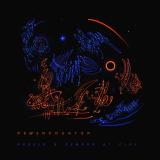
The Brussels-based collective re#encounter will release its debut album, Angels and Demons at Play, on September 18, 2026, via W.E.R.F. records. With gnawa grooves, cumbia, griot storytelling, Afro-Caribbean rhythms, and ecstatic jazz improvisations, the nine-piece ensemble crafts a distinctive, spiritual, and above all, danceable jazz idiom.
At the heart of the album lies trance. Hicham Bilali's gnawa, Kaito Winse's relentless energy, Paula León's cumbia roots, and the spellbinding jazz improvisations of Lúcia Pires and Joos Vandueren intertwine with Falk Schrauwen's Afro-Caribbean rhythms. Together with Robbe Latré, Ismaïl Akharraz, Ayoub Boufous, and Anaïs Moffarts, they create a musical encounter where differences are not erased but harnessed as a creative force.
On Angels and Demons at Play, Hicham Bilali's gnawa grooves enter into dialogue with the voices of Kaito Winse and Paula León. They weave stories from the griot and cumbia traditions-tales of ancestors, cosmic journeys, and djinns. Flute, saxophone, and trumpet craft soundscapes and melodies rooted in existing traditions, while drums, percussion, and bass drive the whole forward with tight, hypnotic rhythms.
With this, re#encounter aligns itself with the spiritual jazz idiom of artists like Sun Ra, Pharoah Sanders, Kahil El'Zabar's Ethnic Heritage Ensemble, and Shabaka Hutchings, but always from a distinctly Brussels-based perspective. The result is a homegrown form of Afrofuturism: music that draws on deep cultural roots while simultaneously looking ahead.
dovrebbe essere pubblicato su 23.10.2026
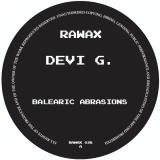
You know the pattern: someone calls their album "Balearic," and you immediately expect chill-out terraces, pan-flute samples, and the umpteenth return of the Café del Mar sunset. Devi G. refuses this reflex almost maliciously. The title is a trick—an invitation to disappointment for those hoping for postcard exoticism. What is actually being negotiated here is erosion, but that of the body itself: the abrasion one inflicts upon oneself in the excess of the night, when partying turns into wear and tear, and a rush becomes a graze that only becomes visible in the morning. No backdrop, then, but a wound one has voluntarily acquired.
Instead of the usual Ibiza xylophones, Devi G. digs into the rift between idyll and wear. The result reads like a séance—less José Padilla, more as if Kevin Martin had re-recorded a Manuel Göttsching record on a dying four-track deck. The target area lies somewhere between the waterlogged ambient sketches of Huerco S. and the faded dub-afterglow of Actress, but Devi G. remains consistently on his own, grainier frequency.
Balearic Abrasions (title track) opens without haste, demanding almost without impatience: no motif, no rhythmic handhold, just a slowly tilting balance between warm texture and rough surface. The grain never feels forced—it is not a lo-fi costume, but an integral part of the statics themselves. Where other ambient producers strive for perfection, Devi G. consciously seeks the breaking point. Rhythm remains a tool, never an ambition. Those expecting quick resolution will be disappointed; those willing to listen will receive a depth effect that is rarely this vivid.
Exit Through Thee Gift Shop tips into harder territory: dub-techno reduction meets industrial edge, carried by a stoic kick drum that knows no mercy. Metallic textures slice through the sub-bass, while repetitive chords hypnotize like a defective loop. Central to this is a rare Terence McKenna recording, which functions less as spoken-word ornamentation and more as a disruptive spirit between memory and media archaeology. The title—Banksy reference included—turns this into a biting punchline: radical electronic abstraction positioned against the hyper-commercialized art world.
Morning Depth pushes the claustrophobia further, somewhere between post-industrial and deep-sea dub. The track refuses any peak-time logic, preferring to disintegrate into itself, subcutaneously, methodically. At the end, a casual, almost banal vocal sample (“i defiantly prefer chocolate”) breaks into the cool machinery—a small, profane fissure that makes the coldness of the rest of the piece all the more apparent.
Desiré Algorithmic is the album's most calculated moment: a stoic, repetitive bassline as a foundation, topped with fragile melody fragments that flash like glitches in faulty code. The title reads like a promise from nightlife—a figure that suggests much and delivers nothing, because behind the façade there is simply nothing, only simulation. The track carries exactly this principle: promise without substance, desire without body, just rendering. Only in the final third does a melancholic saxophone break into the sterile structure—organic, imperfect, and for that very reason more credible than everything before it. It is the moment in which the real briefly flashes through the surface of the dummy before it closes again.
All-inclusive Residue concludes the album as sedimentation rather than dramaturgy: dub-techno remnants, industrial patina, salty ambient surfaces that settle rather than compose. The refusal of consumption as a sonic principle—brittle, stubborn, with a gravity that lingers long after.
Verdict: Balearic Abrasions is not easy listening with a sea view, but an exercise in patience and friction. The restraint with which Devi G. avoids climaxes will frustrate some—for everyone else, that is exactly where the record's strength lies. No sunset. Rather, what remains on the rocks afterward.
dovrebbe essere pubblicato su 26.10.2026
DJ Support: Shy One, Macca, Jaye Ward, Secretsundaze
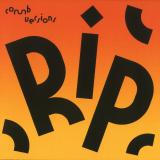
For the 10th ITTY release, Comb has recorded two new interpretations of a 303 Post-Punk classic, reimagined in a Street Soul-inspired style.
The Juicy Mix pairs soulful female vocals with a popping DX bassline, crisp 808 drums and the iconic saxophone solo. The After Hours Dub is a deeper cut, with stripped-back instrumentation and breaks, M1 bass, and a repeated male vocal refrain built for serious head nodding.
Disponibile in Stock e pronto per la spedizione
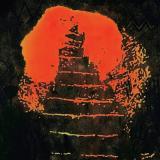
This is the sound of dream Texas, the cinematic Texas conjured in film and 20th century literary and art myth… big dark blueing horizons swallowing the infinite distance, a lonely poetry of sound, but also a stock taker of the iconoclastic, psychedelic, art rebel side of Texas… the cracked rock music side of Texas, the avant-garde in concrete cracks, the recklessly used, mind expanding drugs Texas, the dripping eastern swamps, the Houston house parties with the sounds of records blasting down the block and becoming musique concrète in the hot summer night.
Chrome Chasm’s debut album Interpreter is ambient, minimal in feel, maximal in texture, beautifully disorienting, vastly spacious— until it isn’t. It's a naturalistic shapeshifter, taking majestic form in the aforementioned elements and then dissolving back to raw genetic material to form anew. Spiritual jazz overtones, pedal steel moans and buzzing, noisy ambient visions are upended by grey-folded psychedelic unveilings. Interpreter’s three expansive tracks present a most detailed performance by its three deft musicians and the outcome often feels like a gorgeous collage in real-time.
Chrome Chasm was formed in 2024 by three of Houston’s brightest underground stars: Mlee Marie (Hearts Of Animals) on alto saxophone, flute and voice (whose long-form experimental sax performances helped inspire the formation of the band), Will Adams (Lower Dens/ Ka-Nives) on pedal steel, synth, percussion and voice, and Tom Carter on guitar. Carter has been casting a long shadow over Texas psychedelia and American underground music for over 3 decades, most notably with the Houston based Charalambides, a powerful creative force of the pre-new weird America era of experimental and avant psychedelic music, and most notably since with his solo guitar magnum opus Long Time Underground (which was deemed among the best experimental albums of 2015 by Pitchfork).
Interpreter’s opening track “The Star,” recorded almost completely live in one room and one take, is a 16-minute manifesto on ‘Dream Noir.’ An astute scholar of cross-genre connectivity and the through-lines of kosmische and spiritual-leaning sonic realms can hear echoes of Cluster, the skronk and beauty of Rahsaan Roland Kirk, and the architectural ambient flow of Harold Budd and Philip Glass in the tidal lapping of distorted guitar, mantra-like saxophone and pedal steel flow. From its deconstructed, pastoral opening moments to its proto-electronic center that crests into a bombastic polytonal climax, Chrome Chasm never neglect narrative arc for experimentation and avant technique. In fact, as a group, they effortlessly control, open, fill and contract space in abeyance to emotional vibration. “The Star,” and indeed the album as a whole, feels more like a communion or extended poem, in direct communication with the listener, than it does a ‘captured experience.’
Across the three longform tracks of Interpreter, Chrome Chasm conducts a masterclass in fusing real time performance energy with an abstract, cut-up master’s reimagining of the literal. They demand the listener meet their music with dream logic and then, like the best dream peddlers, they present a labyrinth to fall into and experience, a place where explanation and conclusion become obsolete, and engagement and immersion become sublime.
dovrebbe essere pubblicato su 30.10.2026

Amazzonia is the new album by Alex Puddu and the second volume following the erotic series
I Desideri Di Sadie (Piaceri Tropicali), where the inspiration took us to an imaginary journey in Southeast Asia. With this new album “Amazonia,” Alex Puddu takes us on a trip to Central America, the Caribbean islands, and South America, exploring a new groove of Latin-funk, reggae, and seductive sleazy disco . Here, Sadie’s adventures unfold, from the jungle to the cities and onto the enchanting tropical beaches. Another journey through temptations, on the islands, discovering the beauty of Alex Puddu’s “Erotic World.”
"Amazzonia" was written, arranged, produced, and recorded by Alex Puddu, who plays all the instruments on the album himself. He was assisted by two of the best bassists on the Italian nu-disco and Balearic scene: Domenico Andria—who has played with Pellegrino/Zodyaco and worked closely with Alex Puddu on several releases—and Daniele Labbate, who has performed as a session bassist for artists including Nu Genea and Mystic Jungle.
Other featuring musicians on the album are:
Imelda : Lead and backing vocals
Adrian Wilding: Vocal on Gimme Dub
Hendrik Jørgensen: Trumpet
Jesper Løvdal: Saxophone
dovrebbe essere pubblicato su 05.11.2026
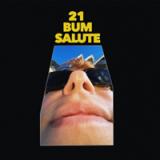
21 Bum Salute is the fifth album from Sydney experimental psych-noise-pop duo Party Dozen. The work of Kirsty Tickle (saxophone, vocals) and Jonathan Boulet (drums, loops, production), 21 Bum Salute finds the critically-acclaimed, semi-improvised duo feeling liberated - from their peers, their worries, and what the nell they're supposed to sound like now.
Emerging in 2017 from the warehouses of the Sydney experimental noise-rock scene, Party Dozen arrive at the release of their fifth album, 21 Bum Salute, in peak form. Over the course of four, increasingly perverse albums of psych-tinged rock peppered with pop noise and bursts of doom in equal measure, they've transformed from gleeful noise-makers producing DIY albums from a tiny room in Marrickville, NSW, to globe-hopping, critically-adored favourites - producing DIY albums from a tiny room in Marrickville.
As well as tours with Amyl and the Sniffers, King Gizzard and the Lizard Wizard, Tropical F*ckstorm, Algiers and more, Party Dozen had Nick Cave appear on 2022 single Macca The Mutt', collabed with New York rapper billy woods, performed an incendiary live set on KEXP, signed international deals, firstly with Temporary Residence LTD (Mogwai, Explosions in the Sky,
Along the way Party Dozen self-released their first two albums, The Living Man (2017) and Pray For Party Dozen (2020), struck a chord internationally with album The Real Work (2022), which sent them on tours of Europe, North America, Japan, China and New Zealand, while fourth LP, Crime in Australia (2024), an ode to Aussie noir that leaned beyond rock into moodier moments, repeated it.
Party Dozen recorded, mixed and mastered 21 Bum Salute completely themselves, over a three month span. Inspired by spooky "old recordings" as well as the primal impulses of acts like ESG and Bikini Kill, 21 Bum Salute - named after a peculiar, larrikin ritual in Australia's arid Northern Territory - condenses consecutive years of jam sessions, loops and improvisations into just over half an hour's worth of fizzing, strutting, striking sonics from the fringes.
dovrebbe essere pubblicato su 06.11.2026
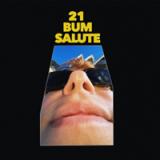
21 Bum Salute is the fifth album from Sydney experimental psych-noise-pop duo Party Dozen. The work of Kirsty Tickle (saxophone, vocals) and Jonathan Boulet (drums, loops, production), 21 Bum Salute finds the critically-acclaimed, semi-improvised duo feeling liberated - from their peers, their worries, and what the nell they're supposed to sound like now.
Emerging in 2017 from the warehouses of the Sydney experimental noise-rock scene, Party Dozen arrive at the release of their fifth album, 21 Bum Salute, in peak form. Over the course of four, increasingly perverse albums of psych-tinged rock peppered with pop noise and bursts of doom in equal measure, they've transformed from gleeful noise-makers producing DIY albums from a tiny room in Marrickville, NSW, to globe-hopping, critically-adored favourites - producing DIY albums from a tiny room in Marrickville.
As well as tours with Amyl and the Sniffers, King Gizzard and the Lizard Wizard, Tropical F*ckstorm, Algiers and more, Party Dozen had Nick Cave appear on 2022 single Macca The Mutt', collabed with New York rapper billy woods, performed an incendiary live set on KEXP, signed international deals, firstly with Temporary Residence LTD (Mogwai, Explosions in the Sky,
Along the way Party Dozen self-released their first two albums, The Living Man (2017) and Pray For Party Dozen (2020), struck a chord internationally with album The Real Work (2022), which sent them on tours of Europe, North America, Japan, China and New Zealand, while fourth LP, Crime in Australia (2024), an ode to Aussie noir that leaned beyond rock into moodier moments, repeated it.
Party Dozen recorded, mixed and mastered 21 Bum Salute completely themselves, over a three month span. Inspired by spooky "old recordings" as well as the primal impulses of acts like ESG and Bikini Kill, 21 Bum Salute - named after a peculiar, larrikin ritual in Australia's arid Northern Territory - condenses consecutive years of jam sessions, loops and improvisations into just over half an hour's worth of fizzing, strutting, striking sonics from the fringes.
dovrebbe essere pubblicato su 06.11.2026
