
12
Reservar08.10.2021
debe ser publicado en 08.10.2021
debe ser publicado en 08.10.2021
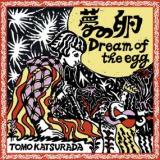
Solid Red Vinyl Edition - 10@ Mini album. Originally release in 2025 in a painfully limited 2x7" + Book edition.
"Dream of the Egg" is the debut solo album by Tomo Katsurada, known for his work with the Japanese psychedelic band Kikagaku Moyo. This project is a unique fusion of music and visual art, inspired by the Japanese 1920s children's book “Yume No Tamago (Dream of the Egg)”. It reveals a deeply personal journey, reflecting Tomo's dreams and the numerous rebirths experienced in 2024—a year marked by profound new beginnings in every facet of his life.
This mini album was driven by a passion for raw and immediate expression. Every song was crafted and recorded with only the materials available to him at the time, embracing an organic and handmade atmosphere. By eschewing rhythm clicks and standard instrumental tunings, a spontaneous sound emerged, capturing the essence of both uncertainty and immediacy. Adding to this distinctive sonic landscape, guest musician Jonny Nash (UK) contributed ethereal guitar sounds on the first and final tracks, enriching the record's dream-like quality.
The journey begins with the opening track, "Moshimo," which means "If..." in Japanese. Here, Jonny's guitar weaves seamlessly with the vocal melody, creating a harmonious dialogue. The first half of the album concludes with "Zen Bungalow" a cover of Gabriel Yared's “Bungalow Zen” from the soundtrack of the film “Betty Blue 37°2 Le Matin”. This particular track is his partner’s favourite song to listen to every morning and left a profound impression on him. One day, he heard a song in his dream that combined both of these tracks and loved how they blended together. This experience inspired him to create a new arrangement, "Zen Bungalow," which has become a central piece of the “Dream of the Egg” album.
The third track serves as an interlude, printed on a flexi disk attached to the middle of a picture book. This interlude transitions the listener into"Inner Garden," a bittersweet folk song that explores themes of love. The EP's narrative spans 20 minutes, culminating in the final title track “Dream of the Egg”. This piece features a delicate session between Tomo & Jonny, combining cello and guitar to create a spectrum of tones that evoke the imagery of a rainbow. The focus on smooth dynamics and meticulous play reflects an intent to convey a sense of physical trembling. This track sounds like the beginning of a new dream; as if the egg of one’s dream is about to hatch, bringing a sense of anticipation and wonder to the listener. Throughout the album, a variety of instruments come into play, drifting between notes and embracing the beauty of imperfection. By incorporating free-form sounds in a highly technological age, the record aims to reconnect listeners with the tangible, human-made quality of sound.
Special Thanks
Jonny Nash – Guitar
debe ser publicado en 15.05.2026
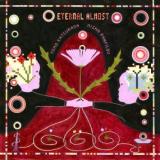
Ltd edition - Random Coloured Vinyl..
“Eternal Almost” is a collaborative album by Japanese musician Tomo Katsurada and Estonian composer Misha Panfilov. Born from the simple joy of songwriting and creative exchange, Tomo and Misha had long admired each other’s music from afar.
When the opportunity to collaborate finally arrived, it felt completely natural, and by the time the album was finished, it almost seemed as though the two had known each other always.
United by a shared sense of humour and musical curiosity, Tomo and Misha poured a raw, honest energy into these songs — one shaped by their intuitive rapport. In an increasingly artificial world, “Eternal Almost” subtly celebrates the qualities that make music feel most alive.
Amid the weight of our current times, the pair hope this album brings listeners a sense of lightness, joy, and of course—a gently surreal journey from beginning to end.
debe ser publicado en 03.04.2026
Haga su pedido ahora y le encargaremos el artículo en nuestro proveedor.

SECOND REISSUE ON THIS HEAT’s OWN NEW IMPRINT FOLLOWING ‘THIS HEAT’ (TH01LP) WHICH WAS UNCUT ‘REISSUE OF THE MONTH’ RECENTLY WITH 9/10 REVIEW + 4-PAGE FEATURE WITH Q+A.
*24 bit/96 kHz re-master from original analog tapes.
*Heavyweight 180gm vinyl and heavyweight sleeve with pantone printing to match original 1979 release.
Simon Reynolds on Health and Efficiency:
“For some fans, Health and Efficiency is This Heat’s peak achievement – their most concentrated blast of visceral intensity and wayward experimentalism….Lead track “Health & Efficiency” combines fierce angular rock that fully lives up to Cunningham’s belief that This Heat could become a postpunk King Crimson, with a multi-part babble of vocals, clattering percussive timbres, and found sounds.’’
Flipside “Graphic/Varispeed” is more subdued and hypnotic: a wavering tonescape whose duration depends on whether you play it at 45 rpm or 33 rpm. This reissue reproduces the original release’s striking cover image of a human figure painted in blue by Pete Cobb, along with the cryptic flipside of text in many different languages.
Although widely considered to be Post-Punk’s finest, This Heat actually began performing and recording their music in 1976, the early days of London’s punk era. Within their two albums and an EP they perfected a strange and volatile new strain of avant-garde rock that time has proved to be massively influential, a blueprint for much that would follow: post-rock, math rock, homemade musique concrète, experimental electronica. Numerous critics have recognised the band's influence on the music of Sonic Youth, Glenn Branca, Steven Wilson, Public Image Ltd., Radiohead, Swans, Shellac, Young Knives, Black Dice, Lightning Bolt and numerous other experimental and post-rock bands.
Disbanding in 1982 they have left an undeniable legacy that has only continued to grow in stature and relevance.Having recently passed the 50 year anniversary of their first gig, and the recording of material that appears on their debut album, the group’s surviving members Charles Bullen and Charles Hayward, true to their DIY roots, have set up an imprint to release their recordings for their growing fan base that is increasingly recognising their influential place in music history.
‘They went beyond punk before punk had properly started…the entire album is a controlled explosion of ideas. Nearly fifty years on, This Heat’s debut is something the world has still not completely caught up with.’ - Simon Reynolds
‘Over the years, there have been bands to play as aggressively, or even as strangely, but very few have been able to rise from their collective influences and histories to create music so singularly distinctive and inspiring.’ – Pitchfork 9/10
‘This Heat sounded like the future then ... and still do now.’ - Dan Snaith (Caribou)
‘This Heat had a certain kind of force the post-punk bands were unable to adequately control without falling foul of rawk excess, and which the punk bands—albeit blitzing and rowdy—were too basic in form to build.’ – John Calvert , The Quietus
debe ser publicado en 02.10.2026
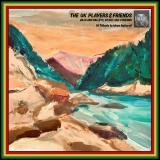
The UK Players & Friends Hills and Valleys, Rivers and Streams (A Tribute to Idren Natural) 9 brand new tracks by The UK Players. Voiced by Singers and Poets who knew Idren Natural personally. Recorded and Mixed by Supa Yout’ at Earth Works Studio, Amsterdam. Sleeve artwork and written testimonials from close friends and associates. Idren Natural aka Ras Natural aka InI Oneness, DJ, Singer, Chanter, Musician, was a pivotal player and pillar of UK/European Roots, Reggae, Dub, Sound System Culture. A humble Rastaman who did so much for so many, inasmuch as inspiring, encouraging, and connecting. He selflessly helped those less fortunate than himself. A strong advocate of the culture and philosophy of Rastafari. He was a commanding presence who lit up the stage, giving JAH all the glory. His passing was a great loss to the community. The UK Players Dub Band formed in 1996. They teamed up with Ras Natural/InI Oneness to record their debut 7” single ‘Further’ for Jah Works with Producer Jah Rej. This single gained exposure via Jah Shaka, Abashanti, and King Shiloh Sound Systems, even the famous Radio 1 DJ ‘John Peel’ played it. More recordings with Jah Rej at Seventh Sense Studio led to the debut album ‘Take Heed’. During the halcyon days of InI Oneness & The UK Players (1997-2004) they toured the UK and Europe, clocking up over 250 gigs in that time. Amongst brethren within the Rastafari community, the band became affectionately known as Ras Naturals band. Friends of Natural like Ras Iyah, Tony Roots, Sister Aisha, Wayne McArthur, and Barry Isaacs (among others) performed with them during this time. Members of InI Oneness & The UK Players never split up, throughout the years they branched out into other projects, reconvening for specials and one offs. Following Idren Naturals passing in 2022, the band stepped up to play his memorial show, where the idea formulated of making a tribute album to him. Ben King offered the use of Earth Works studio to help realise the vision. Work began with longtime live sound engineer Supa Yout’ in March 2024. Jah Rej assisted production on a number of these recordings, and sadly passed during the making of it, the last album he worked on. Various vocalists who were close to Natural, submitted vocals across the following year. The album was mixed and dubbed in March ‘25 at Earth Works by Soupa Yout' & Kingsway. Artwork and written memories/testimonials were then assembled. Everyone involved in the creation of this album knew Idren Natural personally. This album shines a spotlight on his spirit. Carrying songs of tribute, and messages for the times. ALPHA DUB: Every time the band played a gig, Natural would insist on starting with a dub. In that tradition, this album is no different. ‘Mandlion’ passing through the studio, headtopped a Melodica cut on it. Dubbed to the max by Supa Yout! NATURAL VIBE: The ‘Forward Fever’ crew from Belgium were one of the first collectives that Natural affiliated with in Europe. Here, Ras Cloud cleverly weaves all of Naturals song titles into the lyrics, creating a song in itself. WORD & FLESH: Fellowdread was born and raised in Kingston, Jamaica. Now living in Bristol, England, residing with Natural in his last days. His Poetry is rich in inflection, knowledge and wisdom, teachings that spark up the divine. ALL ABOUT LOVE: A pause for contemplation, this one stills the listener. Rootsman Rak’s words warn against complacency, and encourages action. A completely (natural) acoustic track featuring the skilled percussionist Jonah Dan. REMEMBER HIM: Inna Dubplate style, Barry Isaacs toasts to Idren in personal remembrance, reminding us all of the man he was. The track also features snippets of a phone call from Naturals oldest friend ‘Fergie Greenspears’ recounting memories. RISE UP RASTA CHILDREN: The legendary Tony Roots, graces the album with his unique delivery. Natural, The Players, and Tony go back a long way. A song of strength to affirm the soul, and rally against Babylon. Livicated to the one (Natural) SONG FOR THE RIVER MAN: During those halcyon days, many stages were shared with Albaroot, whom the band met whilst on tour in Scotland. Clark Innes (lead singer/songwriter) reminisces about the force of nature that was Natural, times shared, and that knowing, to never meet again. ONE STEP AHEAD: An interpretation of the ‘Look Inside’ riddim by Reuben Addis. Built for Sound System, it is the only track on the album that rolls into a dub. Lyrical Benjie literally entered the studio, rode the riddim without hearing it first, cutting his vocal in one take! A message for the times that sends shivers up your spine. THE PRAYER: Iman Onedub AKA Iman Gebre Iyesus, member of the Ethiopian Orthodox Tewahedo Church, met Idren Natural at Fairfield House in Bath. Here he seals the album with a recital of the Lord's Prayer in English, with Amharic. His rich textural tones elevated with a one away riddim to carry the listener home.
debe ser publicado en 09.10.2026
* long version / previously unreleased on vinyl
** exclusive / previously unreleased
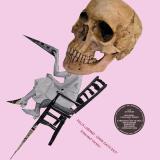
Felix Laband's highly acclaimed electronica masterpiece album "Dark Days Exit" (2005) is now available as an Extended Version 2LP vinyl. Originally planned for last year's 20th anniversary, this special edition features a new design by Felix Laband and includes a double-sided DIN A2 art print. Dark Days Exit features four exclusive tracks, alongside five vinyl-only tracks available for the first time in their original long versions. Listening to the key track, Sleeping Household, on Dark Days Exit is unsettling: like being an impostor rambling around an uncanny house, a Lynchian leitmotif in the form of a young girl divulging secrets that you probably shouldn't hear. Dark Days Exit is an album that paints an interior landscape, an invitation to transgress private thresholds. Made with old-school production tools that require hands-on application, Dark Days Exit is a sound-production tour de force. The music is as wide as the savannah and microscopic at the same time, a lesson in what can be achieved when 'music' is placed on an equal footing with sound as a phenomenon, by an artist who decides to apply themselves without reserve. The masterful manipulation of reverb and delays and hyper-detail was a generation ahead of its time, and Dark Days Exit is preferred by audiophiles for testing their systems. Dark Days Exit is intimate, demanding, and a masterclass in tension, and Laband's ability to use all sound without hierarchy to paint a detailed personal vision — one that is less overtly political and streetwise than on subsequent albums — is unsurpassed. Most discerning listeners are into music because, in the hands of a master, it can manipulate our mood and transport us. Felix Laband opens with a sonic portrait of spring happiness and gradually dismantles the atmosphere in front of our ears, as epitomised by the haunting track Black Shoes. No sooner are we afraid than the artist drops us off where we started. In many ways, the intimacy derives from the tight group of friends and believers whom Laband corralled as contributors: Mark van Niekerk (xylophone, "Miss Teardrop"), Jane Rademeyer (clarinet, "Black Shoes," "Radio Right Now"), Brendon Bussy (mandolin, "Black Shoes"), and Derek Gripper (sampled violin, used throughout) and Alex van Heerden on Minka. The difficulty in categorising Dark Days Exit is probably due to Laband listening mostly to ambient and classical music at the time, and consequently registering the album at the lush, cinematic end of the electronic spectrum. There is poise and restraint in the spare use of beats, and when they do appear, they hit hard. Forged in the optimistic post-apartheid years, Dark Days Exit is music about life and death, spanning hope, despair, terror, tension, with humour and empathy. Twenty one years on, the album's gravity endures, due to its almost perverse authenticity, its timeless themes of hope and despair, and its apex level of technical mastery. The additional, immaculately produced tracks add new rooms to the uncanny house we are invited into.
debe ser publicado en 16.10.2026
Hanne Lippard and Renato Grieco's Today's Special is a suite of language works synthesising melody and diction that integrates the literary and the audible in a repertoire of songs that bask in the melody of voice and the punctuations of structured composition. Working with methods of reduction rather than opulence in both tonal composition and rhetoric, each piece pegs the poetic to the musical with compositional schematics and methods. It is important to state that there is little to none improvisation here, instead, the duo set up matrices, rules and structural links that facilitated meaningful locus of exchange between their two practices. Lippard's texts are a collection of new and previously completed works. In these, as is typical for her work, she enjoys the easy pleasure of wordplay, iterative language, and decontextualised anecdote, as in opener Portrait of a Betrayal, a piece about the loss of a phone and the way it haunted the owner who dropped it, based on a lived experience. Grieco's instrumentation works with Lippard's language art as a form of acoustic typography. "I studied graphic design and I think about how you can express typography through voice," she says. "Renato's use of the viola da gamba becomes like an underline, or a font's brushstrokes, in ways that feel typographical." In this, the classically-trained composer Grieco often finds and echoes the pitch movements of Lippard's voice, intonation mirrored and revealed, linguistic meaning doubled and shadowed by plucked, strummed or bowed strings. His main instrument is the viola da gamba, the instrument considered closest to the human voice for its tonal range and ability to mimic inflections and timbre, and here he brings it even closer to the voice, building systems by which it moves with and around Lippard. He also plays piano and Wurlitzer, and joins her in speaking on Receiver and in conversation for final track The Black Rose. "Hanne's voice is an artist's voice, embodied as the artwork itself," he says. "But where my approach is from the perspective of a composer, hers is around rhetoric and language. We worked towards each other in this sense, Hanne finding a space to welcome my voice, and me designing an acoustic space to enhance her vocal persona." In some tracks the structural connections are obvious - the matched tumbling delivery and stepped pitches of voice and piano in Aficionado sounding like two tipsy friends descending a staircase. In others, like the triptych of tracks Three Rungs Ladder, structured with rules derived from nursery rhymes, or cumulative song (akin to the 12 Days of Christmas). For the Colour 1 and Colour 2 pieces, the duo worked from palettes of colours connected to clusters of harmonies, which underlined the power of the word and its articulation. The absurd Labradorable personifies a people pleaser, A Story About Being Blue is an imagined playful monologue from the Deep Blue supercomputer - requesting in sing-song stop motion to be called Debbie, and Larry - as Grieco echoes in factual reportage. Hurtbeat unpacks and recomposes a tweeted non-apology by a Russian art collector about owning a piece of racist art, Grieco shadowing Lippard's generating a third `drop-shadow' performer from the resonances between the duo, typographic re-articulation of the source material. The Receiver includes lines from Robert Ashley's Improvement (Don Leaves Linda), Ashley existing as a spiritual parent of sorts to the practices contained on Today's Special, and here interpolated as if he is being quoted and written through within the audible world of the piece in a palimpsest of borrowed sentences. Closing track The Black Rose contains its own self-aware comedy, a lightly distorted conversation sourced from a Reddit thread about whether black roses exist, recorded as if it were an internet radio or a low budget podcast, the casual exchange stilted in the delivery of platitudes as scripted speech. Today's Special was developed in person over the course of a series of small residencies - at Deutsche Akademie Rom Villa Massimo, Rome; Fondazione Morra, Napoli; Callie's, Berlin. In these limited periods that rarely stretched beyond a week, Lippard and Grieco developed strategies for the works, keeping tightly locked to musical concepts. This, for Grieco, is about maintaining a solid, meaningful connection within the compositions, and committing to everything having a purpose for existing within the work. Each element pulls its weight; has something to say, literally and metaphorically speaking. In the same way that Lippard's work leaves nowhere for her to hide, he wants the music to exist with its own naked purpose: "It's is about exposing nudity via reduced materials," says Grieco. "This is a form of courage we want to embrace. Once we take off everything, it needs to be extremely precise to maintain a connection with the audience. We have a lot of tools to hide behind now, to protect ourselves and our identities as artists, performers, and in life more generally. It's something I don't want to do. I want extreme reduction: no hiding."
debe ser publicado en 30.10.2026
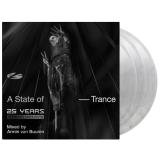
For twenty-five years, A State Of—Trance has united trance lovers around the world, evolving from a radio show into a global movement and one of the most influential brands in electronic music.
To celebrate this remarkable milestone, Armin van Buuren presents A State Of—Trance 25 Years - Selected Highlights, a special mix featuring a personally curated selection of ASOT tracks that highlight some of the biggest moments, memories, and milestones from the past quarter century.
Bringing together timeless classics, scene-defining anthems, and exclusive new interpretations, the mix also includes brand-new remixes of beloved ASOT favorites by some of today’s most exciting trance artists, including Andrew Rayel, ReOrder, Matt Fax, and Dan Harrison.
Honoring the past while embracing the future, A State Of—Trance 25 Years - Selected Highlights is a celebration of the music, artists, and global community that have shaped the journey—twenty-five years together, all united by one sound: A State Of—Trance.
debe ser publicado en 30.10.2026
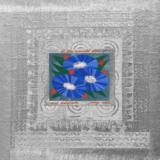
Melody As Truth and Future Days Radio present ‘At the Emerald Pool’, an album by Tomo Katsurada and Jonny Nash.
Netherlands-based artists Tomo Katsurada (Ex-Kikagaku Moyo / Future Days Radio) and Jonny Nash (Melody As Truth) combine forces for an exploration into the sonic potential of the guitar duo, rooted in their experiences performing together over the last 12 months.
Friends and admirers of each other’s work for a decade, their musical collaboration began in 2024 with Katsurada asking Nash to contribute guitar to his debut EP ‘Dream Of The Egg’. Sensing the need to explore this further, they spent the following year performing together in different configurations, with Nash joining Katsurada’s trio and Katsurada in turn playing with Nash as a duo, across a wide spectrum of spaces, from churches and temples to concert halls, theatres and outdoor festivals. With new ideas developing organically out of these performances, recording new material became the next logical step. A short period of three days was set aside with a clear goal: to capture the essence of their fluid, intertwining melodies and guitar playing in a way that felt as direct and unfiltered as possible. Working from a handful of pre-existing sketches, they left ample room for experimentation to unfold within the process.
The results are presented on ‘At The Emerald Pool’, a collection of ten pieces that offer the listener a full immersion into the pair’s sound. With guitar as the primary instrument for both artists, it is no surprise that the core of the album lies here, specifically in the fluid interplay between the two players. Layers of gentle, delay-soaked fingerpicking often make it almost impossible to distinguish where one player ends and the other begins. As soloists, both Katsurada and Nash have a gift for crafting melodic lines that feel open and ascending, expressive and hopeful without becoming saccharine. Longer, more abstract pieces are counterbalanced by a series of shorter songs, with five vocal tracks appearing across the album. The decision to share vocal duties lends the record a unique quality and a strong sense of variation, bringing a wide expressive range out of a deliberately focused musical framework.
‘At The Emerald Pool’ represents the first chapter in an ongoing musical dialogue, an attempt to capture a moment of connection, openness and discovery, laying the foundation for what continues to unfold.
En el almacen y preparando para el envío

This is not a Ben Vida, Booker Stardrum, and Will Epstein record; it’s a Play Time record. That’s a subtle but important distinction, for a couple reasons. One, the sound of Magic Object—a polymetric blend of improv and pulse minimalism for saxophone, drums, and Moog—doesn’t really sound anything like any of their many other ensembles or respective solo projects. And two, it was only while making Magic Object, their debut album, that Play Time realized they were a band at all.
Let’s back up. The roots of the trio date to 2020-21, when Will and then Booker moved to the Hudson Valley, where Ben was already living. The three got into the habit of playing together at Ben’s house, and they soon realized that their hang sessions felt fundamentally different from making music in some falling-down studio in Bushwick. Where those experiences were rushed and cramped, a new sense of time and space now suggested itself. Where once they rat-raced the music, now they relaxed into it.
Early gigs yielded similar revelations. A booking at Tubby’s, the beloved Kingston venue, evolved into a kind of residency. Tubby’s is a small space, fitting around 100 people, with a bar in the front room and a stage in the back. Play Time decided that they didn’t want to play on the stage; they wanted to play in front, among the people in the bar. Rather than hogging the spotlight and overpowering the other voices in the room, they blended with the energy of their surroundings and emerged as a sort of minimalist-jazz-krautrock bar band.
Gradually, they discovered a newfound “elasticity”—Ben’s word—that reshaped the music from inside. “It’s this communal thing,” he says. “It’s vibes. And it’s embedded in the community up here, which feels really vital and nourishing.” They were jamming, but it wasn’t just a free-for-all; they found themselves listening to each other in new ways. “Ben and Booker joke that they’re always playing in different time signatures,” Will says. “We’re all going forward with our own ideas, but we’re open to each others’ as well, and they’re all sort of dancing together.”
“We all have our painterly solo projects,” Will says—where, Booker adds, “we do a lot of studio arranging and thinking and composition that takes shape over a period of time.” Play Time, on the other hand, is all about being in the moment. That spontaneity was key to the process of recording the album. They booked two days in their friend Joey’s studio, a converted wooden barn. “It’s just a live room,” Booker says. “There’s no separation or anything. So we’re all in the space together and it’s got this beautiful, woody sound, and that’s very much the sound of the record.” For two days, they just jammed, for seven or eight hours each day. When it was over, they went through, edited down the portions they liked, and added very judicious overdubs designed to enhance the original recordings without fundamentally altering them, staying true to the spirit of the sessions.
The result is something like a snapshot and a mission statement all rolled into one. “You’re hearing us discover the voice of the band in real time,” Ben says. “We finished those sessions and we were like, ‘Oh, that’s what our band sounds like now.’”
Now, with Magic Object, the rest of us get to find out too.
—
Balmat is a label with a cloudy outline. Jointly shepherded by Albert Salinas and Philip Sherburne, two friends living in Cardedeu, Catalonia, and on the Balearic island of Menorca, Balmat grew out of Lapsus Radio, a weekly show born almost ten years ago. Balmat’s mission is simple: to foster new ideas, expand upon personal obsessions, and put enveloping sounds out into the world.
“Balmat” means “empty” or “void” in Catalan. But quite apart from any negative connotations, we prefer to think of it in terms of possibility: a space waiting to be filled.
En el almacen y preparando para el envío

Five Special were a five-man harmony vocal group all from Detroit, formed during 1975. Founding members Mike Pattillo of ‘The Explosions’ and Steve Harris of the group ‘Trouble’ both unhappy with their then situations decided to unite to form their own group. They were soon to be joined by Zeke Stanley of “Deep Velvet”. As a threesome, the sound they created was fantastic but they all agreed a five-man group with five potential lead singers was the way forward.
It was around this time that Mike Pattillo’s lifelong neighbour Ron Banks (of The Dramatics’) introduced the guys to Charles “Chuck” Underwood. Chuck had been involved in the music business from the early 60’s as a show promotor, one of many acts he promoted was The Dramatics. Chuck had known the group from their earliest days and later became their road manager. After a failed attempt to buy the Dramatics contracts from Groovesville Music, Chuck pressed ahead with his plans to form T.E.A.I Record Corporation (T.E.A.I being an abbreviation for “Tellin’ Everybody About It”) with Ron Banks joining the label in an executive role only. This young and aspiring record company sprung into production during 1974 with initial releases on a local artist’s Renee Williams “Special To Me/Are You My Brother”, followed by ‘The Gaslight’ “Just Because Of You/It’s Just Like Magic” in 1975.
Now under the auspice of Chuck, Mike, Steve and Zeke were introduced to Greg Finley formerly of the ‘Innovations’. Now four, the quest for a fifth member continued. After months of disappointing auditions, Ron Banks decide it was time for his younger brother Bryan to embark on a professional career after initially resisting due to him being a 16-year-old school boy. After many daily rehearsals in each other’s respective basements until Bryan’s graduation the full and dynamic sound of these five young men was finally honed. Still nameless, it was Steve Harris that came up with the group’s name ‘Five Special’ stating that these five young men were “very special and unique entertainers, with each member being a complete show in himself” with Bryan on lead they sometimes sounded like “The Dramatics” with Mike they sometimes sounded like “The Temptations” high comparisons indeed.
Five Special’s first recording for T.E.A.I was the 1976 joyously uplifting dancer “The More I Get To Know You” a Jimmy Roach and Marcella Henderson composition featuring Bryan on lead, released as a part I and part II deemed to be a more disc-jockey friendly practice at the time. The record was popular with radio stations throughout the Detroit metropolis and Chuck went on to precure a deal with Polygram which resulted in a release on their nationally distributed Mercury label. A second Five Special release followed in 1977, the Jimmy Roach penned mellifluous “(Let’s Stop Making) Small Talk” backed with the Ron Banks/Paul Clark penned psychedelic soul styled “Oh, Oh (Look What We’ve Done)” with Greg Finley and Zeke Stanley exchanging tenor and baritone parts throughout.
Through our ongoing working relationship with T.E.A.I we have gained access to some previously unissued material on Five Special. From the tapes we have taken “The More I Get To Know You” in its 5:50 minutes entirety backed with the previously unissued mid-tempo delight “You Got To Be The One That I Love” with interchanging leads from Bryan and Steve. The second b-side track is the psychedelic soul “Oh, Oh (Look What We’ve Done)” with interchanging leads between Greg and Zeke. Three songs, three different styles all of the highest quality, with more to come from Five Special, so watch this space!
En el almacen y preparando para el envío

When The Information Centre first dropped on the pirate radio airwaves in the ealry 90's, there was nothing like it. It was at the birth of Jungle, and the track was a slow but immense classic, spreading accross the UK from its London Roots to become one of the most influential tracks in jungle's long and storied history.
Here we have four of the classic remixes from back in the day, lovingly remastered and made available for the first time since those early days...
El artículo no se ha publicado. Tú puedes reservar ahora el artículo y después de ser pagado se te será enviado.
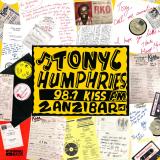
(*Previously unreleased)
Telling a tale of house music’s early days or roots without mentioning Tony Humphries as a club DJ, remixer and radio disc jockey would make it an incomplete, forged and most of all a bit of a yawn.
Born in Brooklyn in 1957, Humphries’ musical journey is synonymous with New York City’s dance music history and the evolution from uptempo soul music to house: from being a dancer at David Mancuso’s infamous Loft parties to becoming a mobile DJ and getting the call from Shep Pettibone to become his right hand at
the then new Kiss FM radio station, followed by countless remix offers and a legendary residency at Newark’s Club Zanzibar. Next to that one, is was especially his work as a radio disc jockey for said station during most of the 1980s until 1994 that gave him majestic clout. Breaking new records week in, week out,
putting New Jersey acts like Adeva and Jomanda or countless up-and-coming producers from there on the musical map, while simultaneously playing the hottest imports from Europe, trax from Chicago, dance classics and all things straight from New York’s music factory that never seemed to stop.
Going to his vast and almost complete archive of radio shows from way back when he graced those airwaves, we at Running Back Records have pickedNew Release Information original recordings that symbolize his importance as an industry giant and ambassador of this style of music.
„But one thing I would like to point out is that, as a DJ, the music I play is not my music. I want to make it perfectly clear that it is music that is released, and it’s everyone’s music. I do not take any other credit than being the middle person exposing this music.“
(Tony Humphries in: What Kind of House Party Is This?, Jonathan Fleming, 1996)
En el almacen y preparando para el envío
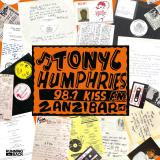
(*Previously unreleased)
Telling a tale of house music’s early days or roots without mentioning Tony Humphries as a club DJ, remixer and radio disc jockey would make it an incomplete, forged and most of all a bit of a yawn.
Born in Brooklyn in 1957, Humphries’ musical journey is synonymous with New York City’s dance music history and the evolution from uptempo soul music to house: from being a dancer at David Mancuso’s infamous Loft parties to becoming a mobile DJ and getting the call from Shep Pettibone to become his right hand at
the then new Kiss FM radio station, followed by countless remix offers and a legendary residency at Newark’s Club Zanzibar. Next to that one, is was especially his work as a radio disc jockey for said station during most of the 1980s until 1994 that gave him majestic clout. Breaking new records week in, week out,
putting New Jersey acts like Adeva and Jomanda or countless up-and-coming producers from there on the musical map, while simultaneously playing the hottest imports from Europe, trax from Chicago, dance classics and all things straight from New York’s music factory that never seemed to stop.
Going to his vast and almost complete archive of radio shows from way back when he graced those airwaves, we at Running Back Records have pickedNew Release Information original recordings that symbolize his importance as an industry giant and ambassador of this style of music.
„But one thing I would like to point out is that, as a DJ, the music I play is not my music. I want to make it perfectly clear that it is music that is released, and it’s everyone’s music. I do not take any other credit than being the middle person exposing this music.“
(Tony Humphries in: What Kind of House Party Is This?, Jonathan Fleming, 1996)
En el almacen y preparando para el envío
A Lisbon classic by now, Paraiso (a label, a radio show, a party and now also a documentary) is back for its 19th release with a pairing who's no stranger to the label or the portuguese techno underground: lucky for us, head honcho Shcuro got back in the studio with techno legend in the making Vil to make Repercussions part 2 - and they invited iconic Spanish producer Annie Hall (Delsin, CPU) as a remixer. The record opens with a tour de force, the relentless yet perfectly in control, mutanting and experimental yet elegant and timeless 'Motorik'. In it, you can hear echoes of Detroit groove sense, but also a generous splash of dub sonics seamlessly merging into pure peak time, closed eyes, layers of ear-candy hypnotizing you type of stuff. Things strip back a little in 'Emergence Dub' - still immersive fast techno ammunition, but there is a playful, experimental and sometimes ravey spirit to it, with a wonky mutating key, vocal pads and cheeky percussion working together to create a stunning modern dance piece. Side B is inaugurated by 'Origins', a deep bow to dub traditions with delay-drenched stabs and a bouncy bassline for days. An energetic yet dreamy piece with spoken word samples that will have your heart melt, it perfectly mirrors the duo's influences in a beautiful closing original. Annie Hall steps in for the remix, taking A2 'Emergence Dub' into Breaks geographies, with a talking bassline fit for an electro banger, and the ever-present pads sending us off in zen mode after a delightful ride.
En el almacen y preparando para el envío

4/5 Mojo review: ‘Sparse, hypnotic big-room techno that builds from the bass drum up
Double LP is released on 140gm black vinyl in a transparent gloss foil sleeve, artwork and design by Ian Anderson for Designers Republic. Circuitry Electronic launches with a release that stands as a statement of intent - an artist with few true peers within English electronic music, with an album that jumps out of the speakers and slaps you around the chops. G-Man is Gez Varley - one half of Sheffield pioneers LFO, and thirty years into his solo career, with his first vinyl album release since Avanti on Force Inc way back in 2002. Speaking to DJ magazine in 2014 Gez recalled his early days working with Mark Bell as LFO: “We were influenced by groups like 808 State. Unique 3, Nightmares On Wax and also stuff like Kraftwerk, Detroit techno and early electro. So when we first hooked up and made tunes together we just wanted to rock the dancefloor at our local club The Warehouse”.
Their eponymous track ‘LFO’ – a classic of the bleep and bass techno movement – was one of the first releases on the Warp label, gate- crashing the UK’s Top 20 whilst annoying Simon Mayo along the way. Having worked with the likes of Richie Hawtin, Karl Bartos, Laurent Garnier, Art of Noise, Radiohead, YMO and Alan Wilder, in addition to the LFO output, you'd expect Gez to know his way around a techno dancefloor rhythm and drum pattern, and this is an inventive funk-filled journey that never veers too far into experimental territory yet avoids the cliches and generic tropes that too often lose the listener when techno manifests in album form.
En el almacen y preparando para el envío
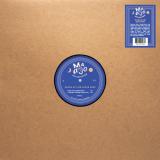
This 12" introduces Maajo Soundsystem, the electronic, dancefloor-focused sub-project of Maajo, presenting stripped-down, club-ready versions of their 2022 album 'Water of Life' that go beyond standard remixes through newly recorded balafons, percussion, and vocals from Senegalese artist Ismaila Sané and Mauritian vocalist/drummer Gilbert K. Sané began his career in the 1970s as a percussionist and African ballet dancer before relocating to Finland in 1999, later becoming the first emigrant to receive the country's Citizen of the Year award. While Maajo tours as a six-piece live band, Maajo Soundsystem offers a flexible electronic configuration that retains live vocals and percussion. The group has released multiple LPs and EPs on Queen Nanny and Permanent Vacation, scored the silent film Lost World, received remixes from Luke Vibert and Call Super, and toured internationally, with strong radio and press support from BBC Radio 6, Worldwide FM, KEXP, Resident Advisor, WFMU, and more.
En el almacen y preparando para el envío
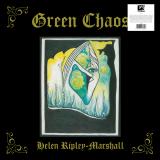
Fresh Hold Releases presents Helen Ripley-Marshall's mysterious Australian ambient electronic album "Green Chaos", reissued for the first time on vinyl LP. Originally released in 1988 on Sydney based private press label Freefall, "Green Chaos" marks the sole release from Ripley-Marshall.
In the late 80's Ripley-Marshall lived a Bohemian lifestyle in inner city Sydney; "surrounded by musicians, actors and artists, there was an amazing creative experimental vibe going on". While playing in new wave/art rock band "D Face" she began Green Chaos as a personal project to counteract the creative friction sometimes experienced within a group dynamic, heavily inspired by Arnold Frolows' "Ambience" radio show on Australia's Triple J and particularly the music of Tangerine Dream, Harold Budd and Brian Eno.
Initially a solitary endeavour, once she decided to record in a studio Green Chaos morphed into a somewhat collaborative, improvisational project with other musicians invited into the studio to improvise and add their own interpretations and ideas, additional layers and dimensions, resulting in a work that combines a clear influence from the electronic repetition of the Berlin school with a meandering, futuristic lyricism. Although influenced by the long form sonic journeys of artists like Tangerine Dream, Ripley-Marshall's background in art rock and new wave brings a more concise approach, each song a self-contained universe that says only what is necessary in the arrangement.
After completing a sound engineering course Ripley-Marshall recorded the album at Sydney's Exeter House Studio over several months alongside studio engineer Andrew Knight, met through a fellow member of D Face. Knight ran Freefall, a private press recording label releasing folk and bluegrass music, which had Green Chaos as its sole ambient release. Ripley-Marshall self distributed the album to local inner city record stores and dropped a copy to Triple J, where it became a regular staple of Arnold Frolows' show.
These days Ripley-Marshall has moved away from music and is predominantly focused on visual art. "Green Chaos" stands as the only released product of her musical years, both a personal window into the vibrant experimental art scene of late 1980s Sydney and a deep, timeless anomaly of Australian electronic music.
En el almacen y preparando para el envío

DJ Support: Ashley Beedle, Phil Mison (Ibiza legend), Nick The Record, Kenneth Bager (Music For Dreams), Ross Allen (NTS, Worldwide FM), Simon Dunmore, Cedric Woo (Beauty & the Beat), Ban Ban Ton Ton, The Mighty Zaf (Love Vinyl), Femi Fem (Young Disciples), Jay Negron (NYC legend), Bruce Forest (Better Days, NYC), Bruce Tantum (NYC), Colleen “Cosmo” Murphy, Mr Shiver, Hugh Mane, Eccentrics Disco, Eclectics Disco, Fannoire Ge, Percebes Records (Lisbon), For Mankind (Pikes, Ibiza), S/A/M (Cafe Del Mar, Ibiza).
Winner of the 2020 Bob James “Black Lives Matter” remix competition on François Kevorkian’s World Of Echoes Facebook page, Love For Black Lives is available on vinyl for the first time, alongside 2 brand new mixes, on this 4-track EP. It is the debut release on Hobbes Music’s new sub-label Noetic Rhythm, dedicated to releasing music that brings people together on the dancefloor.
Leonidas debuted in 2012 with Sequential EP on Kay Suzuki's Round In Motion label, gaining praise from industry legends. He has collaborated with Hobbes on several releases, including the Balearic hit Web of Intrigue, which topped Bill Brewster’s 2017 DJ poll. His music has appeared on compilations like DJ Harvey’s The Sound of Mercury Rising Vol II, as well as BBC Radio 1 & 6 music.
En el almacen y preparando para el envío

BOX + 12” + 7” (shrink-wrapped)
12”s in the box:
"Cakiente" by Jay Santos — a massive top-3 summer hit from 2012 in Spain, France, Italy, the Benelux, etc.; never before released on 12” vinyl.
"Troubles In My Mind" by Antwerp-based DJ/producer Merdan Taplak — a European club hit from 2014, available for the first time on 12” vinyl.
Remady "No Superstar" — gold in France and Denmark, platinum in Switzerland, a club hit across Europe and number 2 in Ultratop Wallonia. First time on 12” vinyl.
DJ Antoine "This Time" — not DJ Antoine’s biggest commercial hit but a huge club hit across Europe with chart positions in Switzerland, Germany, Belgium, etc. First time on 12” vinyl.
The 7” in the box features four tracks close to the heart of La Musique Du Beau Monde founder Hansbert Vanhove:
DJ Peter Project’s “2 New York” was a track he A&R’d and promoted in the early days of his career as a junior A&R/label manager at BYTE Records.
Dirrrty Dirk – “Organ Seduction” was produced by Hansbert Vanhove and became his biggest solo record under the alias Dirrrty Dirk.
Out Of Grace’s “Anglia” was the first record he signed as A&R for the commercial imprints of Bonzai Records.
“Hey Hey Hey (Pop Another Bottle)” by Laurent Wery feat. Swift K.I.D. & Dev is the biggest hit in La Musique Du Beau Monde’s catalog, originating from Belgium. The track went five times platinum in Australia, gold in the Benelux, reached No. 1 in Poland and Spain, No. 11 in Germany, and hit the top 40 in a dozen countries
En el almacen y preparando para el envío

RareTwo Inc. aka DJ Sneak and Tripmastaz are back together for 33 chambers EP, the next Respect The Craft release.
Words by Sneak:
"On a hot Ibizan summer the Rare Two fellas spent a period of 33 days on the island making tracks in a house garage with a couple of pieces of affordable gear and a whole lot of talent. We managed to create 33 tracks often burning them on CD to take to djs like Ricardo Villalobos at Amnesia and seeing the instant reaction of the crowd. We are a mega team of same mentality dudes who create from the heart breaking all rules and getting music done for a purpose. The Tripmastaz and Sneak Team is one to expect many great dance floor killers. As we call them Guttah Styles!
Words by Tripmastaz:
Recently I found these projects and since they were done on just a laptop and cheap small speakers, I gave them proper analog mixing and mastering.
All tracks remain exactly the same form and arrangement as they were originally done, including track Aww Lawd, that was featured on R. Villalobos BBC Radio 1 Pete Tongs mix back in 2018.
Mike Grinser at Mandmade Mastering did the lacquer cut and made it sound very crisp and loud a lot like it would've been cut in the 90s.
En el almacen y preparando para el envío

En el almacen y preparando para el envío
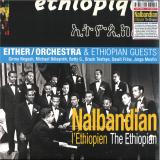
The Éthiopiques series returns! Essential archive recordings from an extremely fruitful period in Ethiopian music.
Before “Swinging Addis” took over the world, there was Moussié Nerses Nalbandian — the Armenian-born composer who shaped modern Ethiopian music. Mentor, arranger, and pioneer, he laid the foundations of Ethio-jazz.
This Éthiopiques volume revives his forgotten legacy, recorded live by Either/ Orchestra First issue ever with new exclusive photos and in depth liner 8-page insert.
“Ethiopian jazzmen are the best musicians that we have seen so far in Africa.
They really are promising handlers of jazz instruments.”
Wilbur De Paris
(1959, after a concert in Addis Ababa)
አዲስ፡ዘመን። *Addis zèmèn* **A new era.**
The time is the mid-1950s and early 1960s, just before "Swinging Addis" bloomed – or rather boomed – onto the scene. Brass instruments are still dominant, but the advent of the electric guitar, and the very first electronic organs, are just around the corner. Rock’n'Roll, R’n’B, Soul and the Twist have not yet barged their way in. Addis Ababa is steeped in the big band atmosphere of the post-war era, with Glenn Miller's *In the* *Mood* as its world-wide theme song, neck and neck with the Latin craze that was in vogue at the same period. Life has become enjoyable once again, with the return of peace after the terrible Italian Fascist invasion of Ethiopia (1935-1941). The redeployment of modern music is part and parcel of the postwar reconstruction. *Addis zèmèn* – a new era – is the watchword of the postwar period, just as it was all across war-torn Europe.
The generation who were the young parents of baby boomers** were the first to enjoy this musical renaissance, before the baby boomers themselves took over and forever super-charged the soundtrack of the final days of imperial reign. Music is Ethiopia's most popular art form, and very often serves as the best barometer for the upsurge of energy that is critical for reconstruction. Whether it be jazz in Saint-Germain-des-Prés or the *zazous* who revolutionised both jazz and French *chanson* after the *Libération*, be it Madrid's post-Franco Movida, or Dada, the Surrealists and *les années folles* that followed World War I, the periods just after mourning and hardship always give rise to brighter and more tuneful tomorrows. Addis Ababa, as the country's capital, and the epicentre of change, was no exception to this vital rule.
**Two generations of Nalbandian musicians**
Nersès Nalbandian belonged to a family of Armenian exiles, who had moved to Ethiopia in the mid-1920s. The uncle Kevork arrived along with the fabled "*Arba Lidjotch*", the** "*40 Kids*", young Armenian orphans and musicians that the Ras Tafari had recruited when he visited Jerusalem in 1924, intending to turn their brass band into the official imperial band. If Kevork Nalbandian was the one who first opened the way of modernism, pushing innovation so far as to invent musical theatre, it was his nephew Nersès who would go on to become, from the 1940s and until his death in 1977, a pivotal figure of modern Ethiopian music and of the heights it. Going all the way back to the 1950s. Nothing less. And it is Nersès who is largely to thank for the brassy colours that so greatly contributed to the international renown of Ethiopian groove. While the younger generations today venture timidly into the genealogy of their country's modern music, often losing their way amidst a distinctly xenophobic historiographical complacency, many survivors of the imperial period are still around to bear witness and pay tribute to the essential role that "Moussié Nersès" played in the rise of Abyssinia's musical modernity.
Given the year of his birth (15 March 1915), no one knows for sure if Nersès Nalbandian was born in Aintab, today Gaziantep (Turkiye/former Ottoman Empire) or on the other side of the border in Alep, Syria... What is certain is that his family, like the entire Armenian community, was amongst the victims of the genocide perpetrated by the Turks. Alep, the place of safety – today in ruins.
Before Nersès then, there was uncle Kevork (1887-1963). For a quarter of a century, he was a whirlwind of activity in music teaching and theatrical innovation. *Guèbrè Mariam le Gondaré* (የጎንደሬ ገብረ ማርያም አጥቶ ማግኘት, 1926 EC=1934) is his most famous creation. This play included "ten Ethiopian songs" — a totally innovative approach. According to his autobiographical notes, preserved by the Nalbandian family, Kevork indicates that he composed some 50 such pieces over the course of his career. This shows just how much he understood, very early on, the critical importance of song as Ethiopia's crowning artistic form. Indeed, for Ethiopian listeners, the most important thing is the lyrics, with all their multifarious mischief, far more than a strong melody, sophisticated arrangements or even an exceptional voice. (This is also why Ethiopians by and large, and beginning with the artists and producers themselves, believed for a long time — and wrongly — that their music could not possibly be exported, and could never win over audiences abroad, who did not speak the country's languages).
Last but not least, one of Kevork's major contributions remains composing Ethiopia's first national anthem – with lyrics by Yoftahé Negussié.
Nersès Nalbandian moved to Ethiopia at the end of the 1930s, at the behest of his ground-breaking uncle. Proficient in many instruments (pretty much everything but the drums), conductor, choir director, composer, arranger, adapter, creator, piano tuner, purveyor of rented pianos,... he was above all an energetic and influential teacher. From 1946 onwards, thanks to Kevork's connexion, Nersès was appointed musical director of the Addis Ababa Municipality Band. In just a few years, Nersès transformed it into the first truly modern ensemble, thanks to the quality of his teaching, his choice of repertoire, and the sophistication of his arrangements. It was this group that would go on to become the orchestra of the Haile Selassie Theatre shortly after its inauguration in 1955, which was a major celebration of the Emperor's jubilee, marking the 25th anniversary of his on-again-off-again reign.
At some point or other in his long career, Nersès Nalbandian had a hand in the creation of just about every institutional band (Municipality Band, Police Orchestra, Imperial Bodyguard Band, Army Band, Yared Music School…), but it was with the Haile Selassie Theatre – today the National Theatre – that his abilities were most on display, up until his death in 1977. To this must be added the development of choral singing in Ethiopia, hitherto unknown, and a sort of secret garden dedicated to the memory of Armenian sacred music, and brought together in two thick, unpublished volumes. Shortly before his death (November 13, 1977), he was appointed to lead the impressive Ethiopian delegation at Festac in Lagos, Nigeria (January-February 1977).
His status as a stateless foreigner regularly excluded him from the most senior positions, in spite of the respect he commanded (and commands to this day) from the musicians of his era. Naturally gifted and largely self-taught, Nerses was tirelessly curious about new musical developments, drawing inspiration from the very first imported records, and especially from listening intensely to the musical programmes broadcast over short-wave radio – BBC *First*. A prolific composer and arranger, he was constantly mindful of formalising and integrating Ethiopian parameters (specific “musical modes”, pentatonic scale, and the dominance of ternary rhythms) into his “modernisation” of the musical culture, rather than trying to over-westernise it. It even seems very probable that *Moussié* Nerses made a decisive contribution to the development of tighter music-teaching methods, in order to revitalise musical education during this period of prodigious cultural ferment. Flying in the face of all the historiographical and musicological evidence, it is taken as sacrosanct dogma that the four musical modes or chords officially recognised today, the *qǝñǝt* or *qiñit* (ቅኝት), are every bit as millennial as Ethiopia itself. It would appear however that some streamlining of these chords actually took place in around 1960. It was only from this time onward that music teaching was structured around these four fundamental musical modes and chords: *Ambassel*, *Bati*, *Tezeta* and *Antchi Hoyé*. A historical and musical “details” that is, apparently, difficult to swallow, especially if that should honour a *foreigner*. Modern Ethiopian music has Nersès to thank for many of its standards and, to this day, it is not unusual for the National Radio to broadcast thunderous oldies that bear unmistakable traces of his outrageously groovy touch.
En el almacen y preparando para el envío
“The high priest of country cool” - Rolling Stone
“I like him very much. He’s very special. He’s singing with a voice I never heard before” - Townes Van Zandt
“A conscious, soulful brother” - Horace Andy
“He’s a brother to me - one of the best singer/songwriters I’ve ever met” - Adrian Sherwood
“Unearthed mine of gems from inner Wales - a songbook of ideas - that's Jeb!” - Gilles Peterson
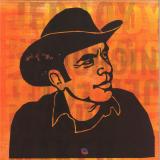
Jeb Loy Nichols is a bonafide Country (Got) Soul legend. The Music Maker presents 21 incredibly deep, grooving and soulful songs from the cream of Jeb's catalogue; from its earliest days to his latest unreleased gems via countless rare and unbelievably good lost-classics. This 2LP set is presented in a gatefold sleeve complete with freshly commissioned artwork courtesy of Jeb himself.
In collecting these uncut, under-heard gems, we hope to do justice to Jeb's jaw-dropping artistic brilliance. A man who, in working with Adrian Sherwood, Dennis Bovell, Dan Penn, Larry Jon Wilson and countless other legendary characters, has crafted some of the most deeply affecting folk, country, soul, funk, blues, dub, reggae, gospel, rap and electronic music, ever heard.
The first music Jeb really felt a connection with was southern soul: "I used to listen to the radio at night and fell in love with Bobby Womack and Al Green, The Staple Singers and Joe Simon – that whole Nashville/Memphis/Muscle Shoals thing.” But Jeb was so much more than a soul boy, Indeed, he "went to bluegrass festivals with my dad and come home and listened to jazz records with my mother.” And, when he was fifteen, he heard his first punk record: "God Save The Queen" by The Sex Pistols. “That and The Ramones completely changed me.” In 1979 he got a scholarship to go to art school in New York: “A great time. Punk was over but hip-hop was starting and I got into that in an obsessive way.”
His first recording, in 1980, was an unreleased rap song called "I’m A Country Boy". If that isn't an insight enough into Jeb's kaleidoscopic path through music, in 1981 he visited friends in London and found himself living in a squat with Adrian Sherwood, Ari Up (from the Slits), and Neneh Cherry. “Adrian put me to work immediately, moving boxes of records all across London. It was Adrian that was and is my biggest influence – in his complete disregard for genre purity.” So, presumably you're getting the picture? A veritable musical magpie with a voracious appetite and unimpeachable taste.
"Mine has always been a meandering career. I've done what I've done, and made the music I've made, due to chance meetings. I'm not particularly ambitious; it's more important to me that I work with friends and like-minded people. I've been a big fan of Be With for years. Everything they release is essential. When they asked about rereleasing "Countrymusicdisco45" I was both pleased and flattered. We began talking about how we'd do it; two years and twenty-one tracks later, here we are. I've always thought of the music I make as Country Music. Music conceived in the country, written in the country, recorded in the country. I left London and moved back to the country so I could live among the trees, the grasses, the animals, those things that don't go to war and get greedy. This compilation is the story of that life. Hand made, lo-fi, ramshackle, stripped down, real deal music. Heartworn and funky. Music made in the kitchen, not in the studio. As the great Skip Mcdonald said, Perfect ain't perfect. It's great to see all these tracks gathered together. It feels like a family reunion. Some older members of the tribe, some newer arrivals."
Opener "countrymusicdisco45" is a song Jeb wrote about how his crew lives, tucked up blissfully in the hills: "House parties full of country folk dancing to disco, reggae, soul, country, hip-hop. All night. I recorded it at home under the influence of Stevie Wonder." It's one of the funkiest records you'll ever hear. "Sometimes Shooting Stars" was recorded in Nashville and mixed by the legendary Dennis Bovell. It's deep, dubby, majestic. A thing of fragile, melodic beauty. The party ramps back up again with the undeniable groove of "Short Cut Home" before the profoundly moving "Disappointment" arrives. One of many songs he's recorded with good buddy Benedic Lamdin (aka Nostalgia 77): "We were going for a Leon Thomas meets Richard Brautigan meets Alice Coltrane kind of thing". We think they nailed it. "Days Are Mighty", like a lot of the tracks on this collection, "started life as a demo, an attempt to get something down while it was fresh. No frills, nothing fancy, just feel." And what feels!
The irrepressibly funky "Don't Dance With Me Tonight" is a deeply moving, slow-mo organ-drenched head-nod-funky country-ballad. Next up, the breezy "You Got It Wrong" was recorded in Wales with some of Jeb's good friends and neighbours, The Westwood All Stars, featuring Clovis Phillips and Will Barnes. Skanking fiddle-flecked gem "Ring The Bells" was the first thing Jeb recorded when he moved to Wales. A combination of all his loves; country, reggae, soul. It's followed by "Let's Make It Up", a truly sumptuous string-drenched emotional groover. "When Did You Stop Loving Me" is another Nashville track, written and recorded during a time Jeb was spending a lot of time with the Muscle Shoals crew, Donnie Fritts, Spooner Oldham, George Soule and Dan Penn: "It shows, I'm sure, their influence." Oh, you bet it does!
The swaggering country-funk of "Just Beginning" should grace many groove-focused DJs' sets whilst "Wintering Of The Year", again made with Clovis, is pastoral, campfire soul. The glacial, gorgeous "Let It Rain" is from an unreleased record Jeb made with the great British jazz bass player Andy Hamill and "We Tell Each Other Who We Are" is freaky country-soul made by a man with a love for strutting, wonky hip-hop stylings. Rounding out the side, "Trip To You" is pure, uncut amphetamine-propelled drum-machine soul.
The spare, beautiful "Dirt" is from an EP Jeb made with Julian Moore in his house in South London: "All first takes, straight to tape." Swoon! "Heaven Right Here" was a very minor league hit in America: "It was produced by the brilliant and much missed Wayne Nunes. It was started in the countryside of Missouri, finished in the countryside of Wales, and recorded in the countryside of Sussex." Double swoon! "If Later Ever Comes" is electronica meets J.J. Cale business whilst "Remember The Season" is truly wonderful and breezy guitar soul. "A Little Love" was made with Wayne Nunes as well, after a night of listening to Studio One and Northern Soul. Bouncy dub closer "Weary Traveller" was written by Bill Monroe, the hero of Jeb's youth: "Monroe's music was heavily influenced by black southern churches; I've tried to keep some of that feral feel." This was the final recording by Jeb's 1990s Country-Dub band, Fellow Travellers.
The name of this compilation comes from a time when Jeb lived in Peckham, south London and he used to DJ and sometimes perform at a local bar: "The owner of the bar, a Jamaican named Count Percy, once asked me what I called my music. I told him I wasn't sure, I guess just pop music. He thought about it for a minute and then said, 'no, more like mom and pop music'. Rather than call me a country singer or a folk singer he always referred to me as The Music Maker."
With the long overdue deluxe overview of his beloved music, we hope to finally shine a light on the unheralded genius of Jeb Loy Nichols. RIYL Larry Jon Wilson, Townes Van Zandt, Bobby Charles, country got soul artists, dub, deep soul, disco, dancing, heartbreak. This deluxe collection, spellbinding from beginning to end, should hopefully go some way to ensuring Jeb reaches an ever bigger, ever more appreciative crowd of followers. Mastering for this special double vinyl edition was overseen by Be With regular Simon Francis and it was cut by the esteemed Cicely Balston at Abbey Road Studios to be pressed in the Netherlands by Record Industry. The artwork has been lovingly put together by The Music Maker, himself, Jeb Loy Nichols. "Be With is the perfect home for this mongrel music. I am forever in their debt." The pleasure is all ours, Jeb.
En el almacen y preparando para el envío
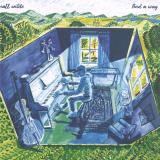
'Find a Way' is the new album from Manchester-based pianist, composer, and producer Matt Wilde, released via his own imprint Hello World Records. The album serves as a reminder that creativity should be accessible and the importance of opening yourself to the unexpected as you 'Find a Way' through all endeavours. Digging into improvisation and jazz harmony on the LP, he crafts a sound that bridges jazz, hip hop, and electronic music, adding: "The creative act is not a matter of waiting for the perfect conditions, but of moving gently, insistently, through the imperfect".
Focus and title track "Find a Way" encapsulates this journey of process. Humans are known for adaptation and response when they face challenges, seeking solutions towards a better world. "Find a Way" leans into our instinctive reaction to improvise and reshape, taking the listener on an unexpected journey. The opening loop could as easily feel at home as part of an electronic soundscape, developing into a clock-like effect from the drums. This keeps time, allowing a duet between keys and trumpet to unfold, symbolising the individual, imperfect and non-linear paths we all carve out day to day.
The album was funded by Arts Council England and created in close collaboration with trumpeter and composer Aaron Wood, with the pair recording in Aaron's rural DIY studio in Huddersfield. Through improvising upright piano, Rhodes and trumpet over intricately programmed beats, the duo captured the spontaneity that makes jazz feel alive, but with the forward-facing touch of Ableton live production. "I actually had live drums recorded for this project and then deleted all of them and instead programmed intricate drums on Ableton live myself to create the kinds of drum sounds I could hear in my head," Matt adds, explaining the onerous process that truly made 'Find a Way' a labour of love.
Matt Wilde discovered jazz through an unconventional journey, and 'Find a Way' is an introspective map of this musical development. Starting out as a self-taught beatmaker, growing up Matt made tracks for friends in the grime scene before falling in love with jazz through the sample-heavy works of Madlib, J Dilla, and Pete Rock. Hints of this influence can be found on "Windup", driven by a deeper bass and a glitchy intensity not commonly associated with jazz. There are also nods to the weekly DJ residencies Matt had in his late teens, establishing a love for club music at iconic Manchester venues like Sankeys. "It's Ok, Feel it" incorporates pitched-up kicks and crisp, papery snares that pay tribute to UK dance culture and the foundation of connection in this world.
Guided by values of accessibility and creativity, Matt has become a key voice in the UK's boundary-pushing jazz and beats scene. His debut album 'Hello World' alongside EPs and single releases, have been championed by the likes of BBC Radio 1, Jamie Cullum and Soweto Kinch (BBC Radio 2), 'Round Midnight (BBC Radio 3), and across BBC 6Music, Jazz FM and Worldwide FM. He has performed headline shows at Band on the Wall (Manchester) and The Lower Third (London) and showcased his music at Brick Lane Jazz Festival and London's iconic Jazz Café.
A proud Mancunian with Polish roots, Matt's values-driven approach reflects his passion for community and empowering others through the arts. Matt founded the UK's first youth-led charity and is a trustee of Manchester music charity Brighter Sound. Driven by these values of equality and inclusion, Hello World Records strives to champion grassroots music with a backbone of fairness built into the business model. The imprint is named after Matt's debut album, released via Band on the Wall Recordings; simultaneously championing the music scene and global musical footprint of Manchester and highlighting the importance of artists reminding people: Hello World, I've made it. I'm still here.
- Martha Cleary, Glow Artists
En el almacen y preparando para el envío
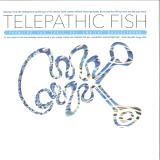
2025 Repress
“In stark contrast to the stress-makingly staccato assault of your average 'ardcore rave, Telepathic Fish was a wombeldelic sound-and-light bath"
Simon Reynolds (Energy Flash: A Journey Through Rave Music And Dance Culture)
The first-ever illustrated compendium recounting the seminal underground South London ambient party that surfaced at the axis through which the likes of Ninja Tune, Warp and Rising High flowed. Telepathic Fish shared fertile waters with Megatripolis and The Big Chill, moving the early 90s London back room chill-out space into the kaleidoscopic spotlight.
Documenting the sights and sounds of South London’s seminal Telepathic Fish ambient parties. Hosted by Chantal Passamonte (aka Mira Calix - RIP), David Vallade, Mario Aguera and Kevin Foakes (aka DJ Food) - collectively named Openmind. With the help of Mixmaster Morris (The Irresistible Force) and Matt Black (Coldcut), they put on some of the earliest chill out events in London.
Rooted deep in the heart of the electronic underground they started DJing and decorating house parties or squats with mind-blowing installations and wholly idiosyncratic design, hosting the likes of Aphex Twin, Andrea Parker and Tony Morley (The Leaf Label). Within a year they were playing VIP after shows for the likes of Orbital and illegal New Year’s gatherings at the disused Roundhouse whilst guesting on Coldcut’s Solid Steel radio show on London’s KISS FM.
Whilst collaborations with legendary club nights such as Megatripolis saw them share bills with Autechre, Higher Intelligence Agency, Scanner and Global Communication, they also created their own ambient fanzine - Mindfood – to document the scene evolving around them. A 20-page history of their parties is included in the release, richly illustrated with personal photos, artwork and memorabilia from their adventures between 1992-95. The gatefold sleeve also features their Telepathic Fish logo, mirroring an original T-shirt design they sold in Ambient Soho, a record shop three of the four worked in at different times.
The selections featured here are all personal favourites that were played at the Telepathic Fish parties during the 90s. Picked and arranged by Mario, David and Kevin who combed their collections for key pieces they associate with the time and Chantal’s music tastes. Over a hundred tracks were selected, totalling nearly 11 hours of playing time, before being whittled down to the essentials by the trio, forming a snapshot of their world back in the day.
KEY POINTS:
* Features long deleted and hard to find tracks by Caustic Window (Richard D. James aka Aphex Twin), Tranquility Bass, Spacetime Continuum and Global Communication (Mark Pritchard and Tom Middleton).
• Pressed on DJ friendly double black vinyl
• Includes A 20-page history of their parties is included in the release, richly illustrated with unseen personal photos, artwork and memorabilia from the Telepathic Fish crew’s adventures between 1992-95, as well as detailed liner notes courtesy of founding members Mario Ageura and Kevin Foakes.
• Cover includes horizontal obi sticker with quote from Simon Reynolds' book Energy Flash: A Journey Through Rave Music And Dance Culture, describing the Telepathic Fish parties' place in the dance music landscape.
• Lacquer cut by Beau Thomas at Ten Eight Seven Mastering
En el almacen y preparando para el envío
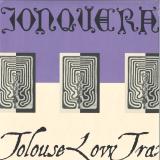
Avenue 66 opens Series 33 with a Düsseldorf–Lyon connection.
Jonquera first encountered Tolouse Low Trax a decade ago in a small Lyon club. That night, his hypnotic slow-motion set was cut short, yet it left a lasting imprint. The Düsseldorf artist’s mechanical psychedelia, and the influence of the Salon collective have been a constant touchstone for
Jonquera, even inspiring playful “Düsselcore” edits in his Tera Octe days.
After several LPs, Jonquera returns to the EP format with Cause & Utility / Tales of Decay. Built from improvised drum, bass, and vocal recordings, the tracks are reworked through heavy looping and acoustic treatment, a method inspired by his recent live shows. Cause & Utility revolves around the
abstract idea of two dogs as concepts, enriched by the earthy drone of a hurdy-gurdy. Tales of Decay paints a surreal image of a house losing its rooms like a body shedding parts.
The MPC sorcerer Tolouse Low Trax, aka Detlef Weinrich, brings his Düsseldorf circuitry and autobahn funk with two tracks of pure rhythm apparition. Amp is a quintessential Tolouse Low Trax cut, built on concealed rhythmic structures, swampy bass lines, and fragments of radio and voice
samples. The piece extends his exploration of how art can mirror the flow of inner-city traffic; drifting without a clear climax. Solid Rock echoes this idea, first conceived as a variation on Amp where particles repeat themselves. The result is distinct yet conceptually linked, evoking the
density of a crowded neighboring city: beginning in apparent disarray before locking into an abstract, hypnotic funk.
Series 33 begins with the convergence of Jonquera’s looping experiments and Tolouse Low Trax’s mechanical psychedelia, a dialogue between Lyon and Düsseldorf.
En el almacen y preparando para el envío
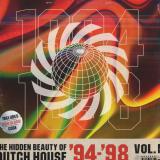
After a much acclaimed series opener, the creators of The Hidden Beauty Of Dutch House ’94-’98 are back! They’re bringing us this second batch of eight carefully selected masterpieces from The Netherlands’ blossoming scene of the day.
Just like volume I, its sequel is filled with thought-to-be-lost tracks from Dutch producers whose names you rarely come across. It took another deep and long dive into the "Atlantis" of Dutch House to gather this collection. Most of the original master tapes literally had to be dusted off before playing…
Suitable for any true House afficionado, you’ll find a panoramic range of styles and flavours on this second selection, as there was on the first. A truly representative flashback has to show the versatility and broadness of both the music and culture of the nineties. The days of open minds and dancing-like-nobody’s-watching. When we went to the club to discover new sounds and dimensions. The time when this attractively fresh music was the hero of every successful night.
Lovingly compiled for your listening pleasure. So, sit back, open up, and surrender to the beauty of Dutch House!
En el almacen y preparando para el envío

Demon Music group in conjunction with the Hughes family are proud to present the first official compilation of music
from the movies of legendary filmmaker John Hughes, covering the classic eighties period 1983 – 1989.
For anyone growing up in the 1980s, the films of John Hughes are some of the most iconic of the decade and have
created a lasting cultural impact still felt and referenced across TV, film and music. As well as the characters and
stories created in these iconic movies, what made John Hughes’ movies different from the rest was the symbiotic
relationship between scene and music. Whether Cameron Frye staring at the painting in Ferris Bueller’s Day Off set to
The Dream Academy’s “Please, Please, Please Let Me Get What I Want (Instrumental)”, Duckie and Andie from Pretty
In Pink at prom set to Orchestral Manoeuvres In The Dark’s “If You Leave”, or even Neal and Del’s classic “Those aren’t
pillows” scene from Planes, Trains and Automobiles set to Emmylou Harris’ “Back In Baby’s Arms”.
“Music was a huge part of filmmaking for him, it was a thing he seemed to like the most.” Matthew Broderick
Curated by John Hughes’ music supervisor Tarquin Gotch, this 6LP vinyl boxset includes 73 tracks from the movies
National Lampoon’s Vacation, Sixteen Candles, The Breakfast Club, Weird Science, Pretty In Pink, Ferris Bueller’s Day
Off, Some Kind Of Wonderful, Planes, Trains And Automobiles, She’s Having A Baby, The Great Outdoors and Uncle
Buck.
“Back when we were working on these movie soundtracks, the best way to send music around the world was the
cassette, by Fedex. We sent John cassettes of newly released music, of demos, of just finished mixes (and in return he
would send VHS videos of the scenes that needed music).” Tarquin Gotch
The films of John Hughes spawned many classic tracks, some licensed for the films, some commission specifically, and
many going on to become huge international hits from acts such as Simple Minds, Kate Bush, Furniture, Yello, and
The Psychedelic Furs.
“It serves as a reminder not just to the musicians he championed in the 1980s, but to how intensely his search for
music expanded beyond this era. Until his final days, he was still collecting outrageous amounts of music from around
the world, galaxies removed from the New Romantic and new wave sounds that, to many, still define him.” James
Hughes
Also includes an extensive 24-page booklet including memories from Matthew Broderick, James Hughes, Tarquin
Gotch, Ron Payne, plus track-by-track sleeve notes.
“John said he only made movies so he could choose what music to put in them, so as his success at the Box Office
grew, and thus his power with the studios, the number of tracks in his films, by up and coming UK bands, steadily
grew.” Tarquin Gotch
Billy Idol - "Catch My Fall" (From The 1987 Movie 'Some Kind Of Wonderful')
The Association - "Cherish" (From The 1986 Movie 'Pretty In Pink')
Penguin Cafe Orchestra - "Music For A Found Harmonium" (From The 1988 Movie 'She's Having A Baby')
Zapp - "Radio People" (From The 1986 Movie 'Ferris Bueller's Day Off')
Blue Room - "Cry Like This" (From The 1987 Movie 'Some Kind Of Wonderful')
Ray Charles - "Mess Around" (From The 1987 Movie 'Planes, Trains & Automobiles')
Joe Turner - "Lipstick, Powder & Paint" (From The 1989 Movie 'Uncle Buck')
Darlene Love - " (Today I Met) The Boy I'm Gonna Marry" (From The 1984 Movie 'Sixteen Candles')
Marvin Gaye - "How Sweet It Is (To Be Loved By You)" (From The 1988 Movie 'She's Having A Baby')
Perry Como/Mitchell Ayres & His Orchestra/The Ray Charles Singers - "Juke Box Baby" (From The 1989 Movie 'Uncle Buck')
The Chordettes - "Mr Sandman" (From The 1989 Movie 'Uncle Buck')
Ray Anthony & His Orchestra - "The Peter Gunn Theme" (From The 1984 Movie 'Sixteen Candles')
Lindsey Buckingham - "Holiday Road" (From The 1983 Movie 'National Lampoon's Vacation')
Emmylou Harris - "Back In Baby's Arms" (From The 1987 Movie 'Planes, Trains & Automobiles')
Hugh Harris - "Rhythm Of Life" (From The 1989 Movie 'Uncle Buck')
Spandau Ballet - "True" (From The 1984 Movie 'Sixteen Candles')
Propaganda - "Abuse" (From The 1987 Movie 'Some Kind Of Wonderful')
The Dream Academy - "The Edge Of Forever" (From The 1986 Movie 'Ferris Bueller's Day Off')
Yello - "Lost Again" (From The 1987 Movie 'Planes, Trains & Automobiles')
Bryan Ferry - "Crazy Love" (From The 1988 Movie 'She's Having A Baby')
The Rave-Ups - "Positively Lost Me" (From The 1986 Movie 'Pretty In Pink')
Los Lobos - "Don't Worry Baby" (From The 1985 Movie 'Weird Science')
Steve Earle - "Continental Trailways Blues" (From The 1987 Movie 'Planes, Trains & Automobiles')
The Revillos - "Rev Up" (From The 1984 Movie 'Sixteen Candles')
Boston - "More Than A Feeling" (From The 1988 Movie 'She's Having A Baby')
Balaam & The Angel - "I'll Show You Something Special" (From The 1987 Movie 'Planes, Trains & Automobiles')
The Rave-Ups - "Rave Up/Shut Up" (From The 1986 Movie 'Pretty In Pink')
Pop Will Eat Itself - "Beaver Patrol" (From The 1988 Movie 'The Great Outdoors')
The Vapors - "Turning Japanese" (From The 1984 Movie 'Sixteen Candles')
Silicon Teens - "Red River Rock" (From The 1987 Movie 'Planes, Trains & Automobiles')
out
En el almacen y preparando para el envío

Imagine having a song go viral for 17 years - without even knowing it. That's exactly what happened to the German 1980s band FEX. And this isn't just any song - it's The Most Mysterious Song on the Internet, a track that puzzled music detectives for decades before finally being identified in November 2024. Now, it has been officially released - twice.
The Story in Brief:
Sometime around 1984, a song was broadcasted on NDR Radio. The name of the song was Subways Of Your Mind - only found out 40 years later in November 2024. Back then, a listener recorded the NDR show on cassette, a common practice at the time. Decades later, the tape resurfaced, but while most songs from the recording were identified, one remained an enigma. On March 18, 2007, the track was uploaded to the internet in an attempt to uncover its origins. Due to its now-iconic opening lyric, it was tentatively titled Like The Wind. Over time, the mystery deepened, and the song was given a nickname: The Most Mysterious Song - or simply TMMS.
Starting in 2019, a dedicated Reddit group, TheMysteriousSong, now boasting over 63,000 members, took up the search. They meticulously documented every lead, hoping to solve the riddle of the song's origins. Then, in 2024, the breakthrough: Reddit user marjin1412 reached out to musician Michael Hädrich after discovering a reference to his band FEX in an old newspaper article. Hädrich, FEX's keyboardist, provided a recording from an old demo cassette which included an alternative version of the song. On November 4, 2024, the mystery was officially solved: FEX was the band, Subways Of Your Mind was the title.
What Happened Next:
Since then, FEX has released two singles - both featuring Subways Of Your Mind - through the Berlin-based independent label The Outer Edge. First, the demo cassette version was pressed onto vinyl, as the original NDR radio recording remained lost (see EDGE-028). The Remastered Demo Mix single instantly topped Bandcamp's global charts, holding the #1 spot for several days. By then, it was clear: this was more than just an internet curiosity. A real fanbase had formed. Enthusiastic comments on the sales page ranged from "best post-punk song to ever exist" to "FEX themselves (are) perhaps the most underrated musicians of all time."
But the story didn't end there. A higher-quality version of the NDR radio recording was rediscovered in late december, remastered, and now sent for a second vinyl pressing: the TMMS Version. This new vinyl 7" is backed with Talking Hands another great and unissued song that was found on the demo cassette.
Fame Comes with a Price
Suddenly, time isn't standing still for FEX. The band had to come to terms with the fact that they had become Lostwave super stars. A FEX fan club quickly formed on Reddit, fan-hosted FEX parties are popping up, and the internet is demanding more - an album, merchandise, live performances. But how does a band prepare for a comeback after a 40-year hiatus?
For now, FEX is carefully considering their next steps. Their demo cassette contains six songs - and a few other recordings have resurfaced which probably could be restored and compiled. But foremost, a brand new re-recording of Subways Of Your Mind is in progress.
One thing is certain: The Most Mysterious Song will continue its unstoppable journey around the world. Don't miss this (second) chance to own a piece of music history!
En el almacen y preparando para el envío

*all original recordings from mid 90s Estonian released cassettes. Fascinating interpretations of the UK breakbeat and Jungle sounds recorded when the world felt like a much bigger place.
Since hearing the first breakbeats via the Finnish radio nightly shows introducing the burgeoning UK scene, Virko Veskoja, later head figure of Lu:k, was completely swept away by this new technological language that sounded like machines trying to initiate contact with people. The fluttering rhythm patterns, strings and vocal lines haunting the pathways of the infinite network. Like hip hop taken over by Skynet.
Reimagining it all in mid-90’s Estonia, a fresh and dirt-poor republic newly welcomed to the family of sovereign states on the outskirts of Eastern Europe, was challenging, to say the least. Finally, with the help of entry level music programs, custom-made soundcards and self-built computers by the other Lu:k-head Tõnis Valk, Lu:k took the first tentative steps in the history of Estonian jungle.
Eight Lu:k cuts have been compiled into a handy selection, a true sign of the times when uncertainty came with certain hope and optimism – new territories to chart, new frontiers to conquer. A time of innocence captured so sublimely in Lu:k’s music.
The compilation starts with menacing orchestration that sounds like the birth of a civilization, like in „2001: A Space Odyssey“, or the arrival of Godzilla, only to give way to sweeeet strings and the inimitable Minnie Riperton in “Lovin U”, combining all the essential elements of Lu:k in a track that has remained uncorroded by time since its inception in 1994.
The following “Demo 3” is its antithesis – fast and nervous, a harbinger of the darker days of neurofunk and techstep ahead. More in line with the social realities of the time, when something (or someone) could materialise out of thin air and attack you just as violently as those beats here.
“La:v” was Lu:k’s signature track throughout their brief career that went on only for a few years, 1994-1997. Lifted to heaven’s by Petula Clarks’s wonderful vocals, it perfectly captures the pure essence of creation. “I made it in my bedroom. Something like that just came out. Sorry”, says Virko apologetically.
From the themes of love we are led towards darker scenarios again with “Drunk-Drive”, a more vengeful cut reminiscent of early Ram Records’ nocturnal dangers, skylines shaped by basslines. Previously only available on the uber-rare “Raadiomaja valvelauas” CD compilation from 2005.
“In the Limelight” is lifted from their second album “Dreams in Drums” from 1996 (only released on cassette), and if it’s meant to address their new-found underground celebrity status in Estonia, there is surprisingly little elation here – the track rather consists of introspective strings and beats that sound almost melancholic.
Out of the remaining three tracks, “Proov2mix” and “Kadunud leitud” are the result of a treasure hunt amongst the old, obsolete harddrives – little nuggets that were condemned to obscurity until now. Between them, another vocal-led cut “010”, a non-album track only featured on two comps until now, is a strong reminder of Lu:k’s prodigious ability to handle vocal lines and morph them together with their own weaving synthetic melodies, strong pads and commanding beats.
Lu:k’s music has been largely unavailable for the better part of this century, with original tapes and CD’s changing hands for a small fortune. This vinyl release couldn’t come at a better time, bringing a seminal chapter of Estonian dance music’s mythical history to light again, both for the old-school acolytes and new converts.
All music by Virko Veskoja
En el almacen y preparando para el envío

Liner Notes by Martyn Pepperell
A collection of ten hypnotic guitar renditions that dive deeply into the traditional compositional musicality that underpins Harakami’s hallucinatory beatscapes before reconsidering them under a fresh, innovative and engaging new light. River: The Timbre of Guitar #2 Rei Harakami signals a new level of awareness and understanding of both Rei Harakami’s significance and Ayane Shino’s undeniable talent.
VITAL SALES POINTS:
In 1996 Tokyo-based label Sublime Records received a cassette demo from Rei Harakami, a 26-year-old Japanese experimental filmmaker, and musician. Within one year Harakami’s debut LP ‘Unrest’ was released. As the 21st century dawned, Harakami was becoming a critically acclaimed figure, and there was a feeling in Japan that Harakami would be an inevitable successor to such luminaries as Haruomi Hosono and Ryuichi Sakamoto. Sadly Harakami passed away at age 40 in 2011, leaving behind a musical legacy that seemed to deserve more recognition. A fitting tribute now comes from the incredibly gifted classical guitarist Ayane Shino. Continuing her album series ‘The Timbre of Guitar’ (the inaugural release of which was ‘Sakura’ - a cover album of Susumu Yokota's seminal album, released through the Swiss label, Mental Groove Records in 2021), she now presents ‘River ???? : The Timbre of Guitar #2 Rei Harakami’. Ayane has reworked some of Harakami’s standout tracks into an album of tranquil yet complex compositions helping to build a new level of awareness and understanding of Rei Harakami’s significance. A collection of ten hypnotic guitar renditions that dive deeply into the traditional compositional musicality that underpins Harakami’s hallucinatory beatscapes before reconsidering them under a fresh, innovative and engaging new light.
In the years that followed Harakami’s untimely passing, Sublime Records continued to sign and support new artists emerging from Japan’s rich and fertile electronic music scene. This eventually led to a meeting with gifted classical guitarist Ayane Shino in 2020. Although a new name within electronica, Shino’s classical resume is impeccable. She has performed with a range of prestigious orchestras in concert halls and at music festivals across Japan, Europe, and South America while playing classical guitar for numerous animations, movies and television commercials and holding various educational roles. These days, she also hosts the Tokyo Harmonics radio show, which is syndicated through Hyogo prefecture’s Ashiya Radio and TJS Radio in Los Angeles.
During her time completing a masters at Tokyo’s University of the Arts, Shino became fascinated by Brian Eno, Aphex Twin, Oneohtrix Point Never, Steve Reich, and, closer to home, Harakami and Susumu Yokota. ”I found myself in an environment where I was surrounded by fellow students who produced computer music, live electronics, and installations,” she explains. Following her meeting with Sublime, Hideoki Amano, the producer and owner of Musicmine, the parent company of the label, asked Shino if she would be open to transcribing and recording an album of covers of the late, great composer, producer and DJ Susumu Yokota’s music in incorporate into then-upcoming events commemorating the 5th anniversary of his death and reissues of his past works. “Yokota made music with the Roland TB-303 bass synthesizer and samplers, not in a way like a conventional instrumentalist, so I was aware it might be more of a challenge for her,” Amano explains. Fittingly, Shino was up for his suggestion, leading to ‘Sakura: The Timbre Of Guitars #1 Susumu Yokota’. Song by song, Sakura highlighted Shino’s free-flowing playing and prowess at translating electronic music into classical guitar shapes.
After considering Harakami’s background as an instrumentalist, Amano felt revisiting his catalogue should be the next step for Shino. Well-versed in how often classical versions of electronic music tend to fall flat, he asked her to examine Harakami’s songs closely, select the musical phrases suitable for guitar and create arrangements that would sound interesting to music listeners with a deep engagement with ambient, techno and electronica. In Harakami’s discography, Shino discovered “a sense of simplicity, warmth, moisture and a floating sensation.” “I was gripped by his songs, which had an array of sounds that gave me a sense of mystery but also coexisted with a sense of familiarity,” she explained. Moving beyond his official releases, Shino began digging through YouTube to find live recordings, radio appearances and obscure outtakes. Within her mind’s eye, imagining playing his songs on guitar was effortless. On her approach to the album, Ayane explains: “For this album, I succeeded in spinning some exquisite, silk thread like delicate tones, interwoven with human warmth, gentleness and simplicity. And I was also able to rework Rei Harakami's distinctive sound with a floating feel to it and transform it into a very classical guitar sound. I hope many people will be able to receive this group of sounds that I created in this album that I played with all my heart.” A record of limitless innate beauty, ‘River ???? : The Timbre of Guitar #2 Rei Harakami’ is a delicate and thoughtful body of work. A true masterclass in deconstruction and subsequent rebuilding, and an eternal lesson in how the art that we leave behind can outlive us all.
En el almacen y preparando para el envío

After a long radio silence we are excited to finally share with you, La Luna 006.
This eight track VA is an epic sampler showcasing the sounds of La Luna.
With tracks from AD4, Anderson, Aspetuck, Dream Terrains, Exit 47, Gloved Hands, and DAS, aka JD Typo.
This will be a special record to get you through the coming winter featuring moody ambient, downtempo, IDM and modern classical sounds.
This pressing features beautifully crafted artwork from Sonia Malpeso, which will include inner and outer pantone sleeves!
This release will be limited to 100 copies on black vinyl
Snag one while you can, and sit back and enjoy the journey.
En el almacen y preparando para el envío

Drumz Of The South: The Dubstep Years (2004-2007) is the first photography book to present the early days of dubstep in detail. It features over 200 photographs by Georgina Cook from events and radio stations such as FWD>> at Plastic People, DMZ and Rinse FM, plus pioneering producers, DJs and MCs like Burial, Skream and Benga, Mala & Coki, Loefah and Sgt Pokes, Plastician, Kode9, Hatcha & Crazy D, Skepta and Wiley.
En el almacen y preparando para el envío

Roberto Musci, born in Milan in 1956, studied guitar, music and electronic instruments. From 1974 to 1985 he traveled the world studying African, Indian, Arabic and Oriental music, recording ethnic music “in the field,” studying and collecting ethnic musical instruments from all over the world. His self-produced debut album, “The Loa of Music,” is a seminal work of staggering originality and extraordinary beauty in which field recordings, musique concrète, electronics, synthesis and instrumentation are interwoven, drawing on the countless musics from around the world that he has recorded. The subsequent “Water messages on desert sand,” composed with Giovanni Venosta, was nominated for a Grammy in the UK in 1987. In the 1980s and 1990s he broadcast ethnic and electronic-experimental music from Rai and Radio Popolare radio stations. He has also composed and played music for videos, commercials, dance, poetry, theater, composed soundtracks and accompanied silent films live. From 1980 to the present, he has played with many Italian and European musicians: Giovanni Venosta, Claudio Gabbiani, Walter Prati, Giorgio Magnanensi, Massimo Cavallaro, Massimo Mariani, Moni Ovadia, Roberto Zorzi, Chris Cutler, Jon Rose David Moss, Steve Piccolo, Elliott Sharp, Keith Tippett and the Third Ear Band.
The theme of travel, ethnicities and mysticism are a pivotal point in this new album of his as well, demonstrating once again how music needs absolutely no sharp lines of demarcation. The music is one.
It goes from the search for deep meanings in a time spent in a Hindu monastery (Ashram) listening to mantras and studying Buddhist philosophy (The Principle Of Things) to space explorations and human settlements on the Moon or Mars wondering how man will live and what he will bring to the new worlds imagining that Sufism, an Islamic mystical religion, will accompany him in the discovery of new worlds (Derviches On Mars). In Goodbye Monsters, harmony and peace are sought. Memories Of A Piano Player is a tribute to Keith Tippett, a great pianist (King Crimson , Centipede, Mujician) with whom he played in several concerts and with whom I spent evenings talking about music, food and Italian wine. Quantum State focuses on how quantum mechanics is creating a revolution in the way of thinking and dividing reality into infinite Parallel Worlds. Panthalassa is the vast ocean that surrounded Pangea and blends South American marimba music and traditional Chinese music. Burn The Shadows is a tribute to the fascinating Indonesian shadow theater, from the stories told and the atmosphere created during the long plays told in the sacred Indian texts of Ramayana or Mahabharata. Shadows are also more or less pleasant memories to which one is attached, and to burn them is still to move on with one's life.
Torajan Funeral Chant: The Toraja are a people living in Sulawesi (Indonesia) who have a special worship of the dead. Funerals are festivals that last several days, the corpses are protected by Tau-Tau (small dolls that watch over cemeteries), and over the years, they exhume the corpses of their relatives and keep them in their homes with them for a time to remember them.
The experimentation goes all the way to modern Artificial Intelligence that 'interrogated' to create something new by inserting conflicting inputs joins them together but nonsensically creating interesting insights; hence A.I. In Confusion. Pangea, named after the continent that contained all the land that emerged between 540 and 200 million years ago, in the Paleozoic and Mesozoic periods, imagined as inhabited by man without divisions created by borders, wars, religions or ethnic groups, is also a tribute to Steve Reich, one of the fathers and a great musician of minimal music. Prophecies, a reading of sacred texts and religious songs from evangelical sects in the United States filtered into granular synthesis with percussion music from South India, closes.
En el almacen y preparando para el envío

Late-night jams in their new studio sees Jazzbois return to their beat-tape roots on Still Blunted
Having established themselves as one of the leading live bands in Europe grooving in improvised jazz motifs and hip-hop beats, Budapest trio Jazzbois return with their fourth LP Still Blunted that sees them touch base with their beat-tape roots.
Now situated in the heart of Buda at their new studio above a club, the Hungarian trio of Bencze Molnár (Rhodes/synth), Viktor Sági (bass) and Tamás Czirják (drums) take a more considered approach to Still Blunted and offer a snapshot into the jams, sessions, and shows they have played over the past year. The new album comes after performing at the legendary Montreux Jazz Festival this summer and will be followed by a European tour in October.
Inspired by contemporaries Domi and JD Beck, Kiefer, Nala Sinephro, and the sounds of Radio Juicy, Jazzbois have been more critical of their track selection for the sequel to their Goes Blunt albums. They’ve ripped up their playbook of producing records in a matter of days and took their time to approach the record through reworking their favourite tracks recorded over the past year.
“We’re trying to keep the same formula but there was a lot of thought gone into the process of making an improvised jam sound like a song. It has to be good in the moment, and we chose the ones we felt were expressive and resonated the most with us musically. We focus on our feelings in the moment and have trust in our own taste and music visions.”
The trio’s new studio has offered them the space and time to get the best out of their creativity. “This new spot is a Jazzbois headquarters. It’s above this club, sometimes there's a DJ playing outside on the street – everyday there's something on and lots of people coming and going. We hang out for the whole day and just record anything or edit.”
Jazzbois are a part of the rich, underground jam scene in Budapest, and those improvised-led sessions have fed into Still Blunted. One of their late-night jams turned after-parties produced sketches for tracks they selected for the album.
“It was the end of a wild night celebrating getting the album done. We’re having a jam and we looked around while we were recording and there was twenty people smoking and drinking around us – half of them we didn't even know who they are. It turned into an open after-party where people were coming to ours from the club. It was very spontaneous and unexpectedly, we made five or six new songs we ended up using for the album.”
The ethos of those unplanned, open jams is something they carry through into their live shows, as they never rehearse so their music can develop freely. Their trusted fourth ‘live’ member DomBeats joins them on Still Blunted adding saxophone to some of the psychedelic-tinged beats, such as on singles Shangri La and Chrome. After recently digging back into 70s and 80s jazz, discovering more hip-hop sampled tracks, and absorbing the breaks and high-energy of footwork and juke, these influences come through strong across Still Blunted.
The footwork sound is replicated in the shuffling, busy drums of Shangri La, with the echoing guitar twang reminiscent of a sample you may hear on an MF Doom beat. “Shangri La was a catalyst for the new album. It reflects on our trip to America and SXSW. We played at this venue Shangri La. The Texan air and sun are in that track.”
Chrome takes on a much more furious style of playing that allows for the drums to cascade and flow along with the pulsating, chromatic bass line, with the synths and saxophone spiralling into an engrossing frenzy. The liquidy keys and synths glides over the bass on Flute Thang, creating a 70s jazz-funk vibe that stands out from the rest of the album.
With hundreds of thousands of monthly listeners across Spotify and Apple Music, they have become a playlist staple that has earned them millions of streams since their debut release Jazzbois Goes Blunt in 2019. As more live dates are booked for the Hungarian trio, Jazzbois continue to transform the traditional jazz trio sound into deep, groove-led beats on Still Blunted.
En el almacen y preparando para el envío

The Błoto quartet had made a comeback six months ago with their first singles in over two years dropping “Szlam” and “Ścieki”. These tracks were pressed on a 7-inch vinyl by Astigmatic Records, but this only whetted the appetites of the band’s mud-loving fans, as the singles sold out instantly. And so, the band's musical onslaught continues. Ahead of their upcoming LP “Grzybnia” set to release in autumn 2024, Błoto is putting out another bacteria-laden 7-inch to conclude this brief series of singles. This time, the release features a remix by none other than the modern funk maestro DāM-FunK, hailing from sunny Pasadena, California.
Wading through the sludge of sewage, one can encounter colonies of bacteria. They are well-known for their dark side – causing serious diseases. Nevertheless, they are with us all the time. They exist in humans and all other living organisms – fungi, plants, and animals. They can be found in soil and water. They are even present in radioactive areas, proving that they are truly hard to eliminate. Such is the music of Błoto. Like a post-apocalyptic bacterium, it’s capable of surviving in the harshest conditions.
Sinister, biting, and primitive – just like colonies of microorganisms. This is Błoto's latest single. Drawing heavily from classic acid house, it can truly infect the mind, inviting you to join a rave in Błoto on the eastern flank of Europe. Quartet’s “Bakteria” is a direct continuation of their first 7-inch release. However, this time, during their collective improvisation at Studio Pasterka, the band has entirely forsaken acoustic instruments in favor of a full array of synthesizers accompanied by drums.
Certainly, the dichotomous nature of these organisms presents a paradox. While capable of causing harm, without bacteria, life as we know it would cease to exist, and human civilization would not have reached its current state. Bacteria fulfill numerous essential roles. They serve as decomposers, crucial in maintaining biogeochemical cycles, and contribute to processes such as fermentation and decay. As symbiotic organisms living within other organisms, they are vital for functions like digestion. Their versatility extends to diverse applications, from biological wastewater treatment to the production of various food products.
Such are the properties of the beneficial probiotic titled “Bakteria Re-Freak” by DāM-FunK (renowned for his classic albums released on Stones Throw, like “Toeachizown” and “7 Days of Funk” with Snoop Dogg). It offers a 180-degree transformation of the dark atmosphere of the original version. The track evolves towards G-Funk, brimming with sunny synths and a drum machine. It portrays a vision of a biopharmaceutical bacterium lazily roaming the streets of warm yet perilous Los Angeles.
The 7-inch will be released on July 19, 2024, by Astigmatic Records. The vinyl single is limited to 700 copies.
En el almacen y preparando para el envío

Sameheads & Mutant Radio are going a teenie weenie bit further and unifying their ongoing collab in plastic. The kind you play, not the stuff you throw away.
Released in Spring, at a party we’re throwing together in Tbilisi, this little beaut is a double sided 7”.
The MUTANTHEADS split 7” features some solid sound rep from both projects….
For Sameheads, Andrea & Alexander release their first material together, acting as a kind of trailer to an upcoming album released later this year on R-I-O. The track “Olias” finally gets its press after once being performed live at the fabled Sameheads festival “City of a Thousand Suns”… those were the days eh…..
On the Mutant Radio side, fresh talent TINA delivers her debut release, and for that matter, the first ever track Mutant have put onto a piece of vinyl….. The track “Vacation” is the squelchy black sheep counter balance to the silky synth vibe of the other side. Just how they like it.
The release will be up for pre-order from next week, and the digital stuff too…. Just the 300 copies available…… So,,, fix up look sharp……
En el almacen y preparando para el envío

"Following on from May's "ECHOES Part 1 & 2" this is the second single of three to be released as an introduction to the next album project of Ulrich Troyer - TRANSIT TRIBE - to be released later this year.
This time it's one for the reggae fans and dubheads with contributions from Diggory Kenrick who has been busy over the last few years adding the distinctive sound of his flute to many new reggae productions. He is also an associate of the U.K. reggae label Pressure Sounds that specialises in reviving classic sounds from the roots and dancehall eras of the genre. Also joining the production is Takafumi Noda aka Mystica Tribe, a Japanese producer and musician who has specialised in a new form of dub techno and is known for adding the signature sound of his melodica to productions of dub friends from around the world.
The subject of travel, especially along modern, fast routes has long been subject to fascinate musicians, from the days of Kraftwerk's "Autobahn" and now the whole genre of dub techno seems to be one built for listening on long journeys. The Autostrada Del Brennero / Brennerautobahn is one of the most important motorways in Italy, as it connects the Po Valley with Austria through the Brenner Pass and features many modern bridges and overpasses that are ready built illustrations for the covers of dub techno albums! On this release this major European truck route is celebrated musically by Ulrich Troyer with inputs from Diggory and Taka to create two modern dub classics."
Steve Barker (DJ, Radio Presenter - On the Wire, BBC 1984 – 2023,
now Slack City Radio & reggae/dub columnist and contributor to The Wire)
Credits:
Diggory Kenrick: flute
Taka Noda: melodica
Didi Kern: drums
Ulrich Troyer: analog synthesizers, analog drum-machines, sampler, dub effects
A written by Diggory Kenrick & Ulrich Troyer
B written by Taka Noda & Ulrich Troyer
Recorded by Ulrich Troyer at 4Bit Studio & 4Bit Bungalow, Vienna - except flute recorded by Diggory Kenrick at Holloway Studio, London / melodica recorded by Taka Noda at Mystica Sound Studio, Tokio
Mixed & arranged by Ulrich Troyer at 4Bit Bungalow, Vienna
Produced by Osman Murat Ertel & Ulrich Troyer
Mastering & Lacquer Cut by Kassian Troyer at Dubplates & Mastering, Berlin
Cover Drawing by Ulrich Troyer
Special thanks to Steve Barker, Osman Murat Ertel, Diggory Kenrick, Eva Kelety and Takafumi Noda
Kindly supported by the City of Vienna (MA7 - Kultur), Federal Ministry Republic of Austria (Arts, Culture, Civil Service & Sport), SKE-FONDS (AT) & Amt für Kultur, Bozen (IT)
En el almacen y preparando para el envío
