pre-order now19.10.2026
expected to be published on 19.10.2026
Last In: 59 days ago
expected to be published on 19.10.2026
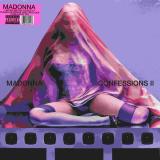
Madonna announced today her eagerly anticipated new album Confessions ll is set for release on July 3rd via Warner Records.
The new album is the continuation of the iconic counterpart Confessions on a Dance Floor. Ahead of the lead single, Madonna unveils the first taste of music with a trancelike visual teaser. Watch HERE. Fans can pre-order the album + the ultimate curation of expansive vinyl and CDs
Madonna sums up her new record best by quoting the first few lines of her song, One Step Away, “People think that dance music is superficial, but they’ve got it all wrong. The dance floor is not just a place, it’s a threshold: A ritualistic space where movement replaces language.”
Madonna adds “When Stuart Price and I first started working on this record, this was our manifesto”:
We must dance, celebrate, and pray with our bodies. These are things that we've been doing for thousands of years — they really are spiritual practices. After all, the dance floor is a ritualistic space. It’s a place where you connect
—with your wounds, with your fragility. To rave is an art. It's about pushing your limits and
connecting to a community of like-minded people.
Sound, light, and vibration Reshape our perceptions Pulling us into a trance-like state. The repetition of the bass, we don’t just hear it but we feel it.
Altering our consciousness and dissolving ego and time.
On Stock and ready to ship
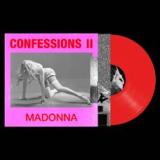
Madonna announced today her eagerly anticipated new album Confessions ll is set for release on July 3rd via Warner Records.
The new album is the continuation of the iconic counterpart Confessions on a Dance Floor. Ahead of the lead single, Madonna unveils the first taste of music with a trancelike visual teaser. Watch HERE. Fans can pre-order the album + the ultimate curation of expansive vinyl and CDs
Madonna sums up her new record best by quoting the first few lines of her song, One Step Away, “People think that dance music is superficial, but they’ve got it all wrong. The dance floor is not just a place, it’s a threshold: A ritualistic space where movement replaces language.”
Madonna adds “When Stuart Price and I first started working on this record, this was our manifesto”:
We must dance, celebrate, and pray with our bodies. These are things that we've been doing for thousands of years — they really are spiritual practices. After all, the dance floor is a ritualistic space. It’s a place where you connect
—with your wounds, with your fragility. To rave is an art. It's about pushing your limits and
connecting to a community of like-minded people.
Sound, light, and vibration Reshape our perceptions Pulling us into a trance-like state. The repetition of the bass, we don’t just hear it but we feel it.
Altering our consciousness and dissolving ego and time.
On Stock and ready to ship
STRANGER STILL was Julian Cator (guitar), Paul Cator (piano, organ, synthesizer), Tim Warnes (bass), Frank Warnes (vocals, drums) and Ian Johnson (vocals, drums) from King’s Lynn, Norfolk, UK. The two sets of Cator and Warnes siblings had been playing together in bands since 1974, with Ian joining in 1979, and with their musical style evolving from glam influenced rock to punk/new wave (punk came late to Norfolk) and finally post-punk, influenced by Ultravox!, Magazine, Joy Division, Bauhaus and Killing Joke. Their first gig together was in September 1979 with John Peel being in the audience. The Solitude/Survivor single was recorded in July 1981, released in November and sold well locally. John Peel played Solitude, between singles by Winston and Screen 3. When Julian left in autumn 1981 the others continued, later changing their name to Nothing Sacred. Ex-members have since played in a number of other bands, most notably Paul and Tim in Shine!, and Julian and Paul in Ivy.
Solitude opens in a perfect analogue way with a ‚primitive’ rhythm machine pattern and a dark synth sound fading in. We shall be glad for the band’s move towards electronics while knowing „given the negative reaction we got from some of the local bands when we got the synth a Moog Satellite“, quoting Julian. When the real drums, guitar, bass and vocals also come in, you’re in for one of the most perfect post-punk songs, yet playful but ultimately bleak. “And then I can feel nothing more. Alone again, with no sensation.“ Survivor is more uptempo and bass-driven, reminiscent of early Death In June (who came later though). Lyrics like “4 minute warning warning – the sound of today. Our new dream world – Enola Gay.“ set the mood there.
The band composed a dozen of songs, demos to get gigs, which were unfortunately never recorded properly in a studio. So these are demos or rehearsal tracks, never released to the public and presented here for the first time ever as an additional 15 tracks download-only (due to the poor sound quality). You’ll find fantastic tracks like Brave New Berlin or Cardiac Arrest, which is reminiscent of Death In June’s In The Nighttime, and then, there is a demo of Solitude too!
Here’s to a piece of post-punk history!
On Stock and ready to ship

Ever since the late 1950s bossa-nova revolution, Brazil’s influence on French music has been undeniable. Pierre Barouh, Georges Moustaki and a vast array of lesser known artists, all made the Musica Popular Brasileira (MPB) an axis of promotion at the service of a cool and metaphysical, modern and mixed Brazilian lifestyle. Some were seduced by the poetic languors of the bossa, some were looking for fun, and others just loved the American hybridization of jazz-bossa, jazz-samba.
What is bossa nova? One of its creators, Joao Gilberto said: "Its style, cadence, everything is samba. At the very start, we didn't call it bossa nova, we sang a little samba made up of a single note - Samba de uma nota so .... The discussion around the origins of bossa nova is therefore useless”. It is nevertheless useful to remember that these magnificent Brazilian songs, which the guitarist describes as samba, were shifted and balanced around improbable chords. "I like things that lean, the in-betweens that limp with grace," said Pierre Barrouh, quoting Jean Cocteau.
With emotion, arrangements for violin and supple guitar licks, bossa nova rapidly changed. A transformation that can be heard in the Tchic, tchic, French Bossa Nova 1963-1974 compilation, the result of a cultural reappropriation, which traveled through the United States and supplemented itself in France.
A musical revolution that has remained significant, bossa nova was born in Rio. From 1956 to 1961, Brazil lived through its golden years. In five years, the country had invented its modernist style. Elected president in 1956, Juscelino Kubitschek de Oliveira, an elegant man with a broad forehead, brandished a promising slogan: "Fifty years of progress in five years". He quickly got to work. Not worried about increasing debt, he launched the project for a new federal capital, Brasilia, designed by the communist architect Oscar Niemeyer. Volkswagen opened state-of-the-art factories and created the “fusquinha”, the Beetle. In Rio, the Vespa made its first appearance. The Arpoador Surf Club crew run into the “girl” from Ipanema, Helô Pinheiro - the tanned garota ("chick"), between a flower and mermaid, who at 17 walked by the Veloso bar, where the fiery author and composer, Tom Jobim and Vinicius de Moraes, were getting drunk on whiskey. From then on, bossa symbolized cool.
In 1958, Joao Gilberto recorded Chega de Saudade, which the directors of Philips denied, calling it "music for fagots". The marketing director, who believed in it, secretly pressed 3000 78-inch vinyls and distributed them at schools around Rio, creating a tidal wave.
American jazzmen then took over. In particular, trumpeter Dizzy Gillespie and guitarist Charlie Byrd. In November 1962, the Brazilian Ministry of Foreign Affairs funded a "Bossa-Nova" concert at Carnegie Hall in New York, inviting the genre’s pioneers. Unprepared, the show soon turned to disaster. But the troupe was invited to the White House by Jackie Kennedy. The first lady loved "the new beat" and in particular Maria Ninguem, a song by Carlos Lyra, later covered by Brigitte Bardot.
In Brazil, the 1964 military coup quickly ended this euphoria. The destructive atmosphere that ensued pushed many Brazilian musicians to leave, if not to exile. Thus, Tom Jobim, Sergio Mendes and Joao Gilberto arrived to the United States. In New York, Joao Gilberto met saxophonist Stan Getz. At the time, he was married to the Bahianese Astrud Weinert Gilberto, who had a German father. She had never sung before, but she knew how to speak English. Getz therefore asked her to replace her husband on The Girl From Ipanema. The Getz/Gilberto record with Tom Jobim on piano, was released in March 1964. Phil Ramone, the "pope of pop" was in charge of sound.
Bossa nova arrived in Paris through the classic “guitar-voice” channel (Pierre Barouh, Baden Powell, Moustaki…) But France loved jazz and Paris had already welcomed its American contributors. All these good people were to pass through Saint-Germain-des-Prés. The cabaret l'Escale became the Mecca of Latin American sound where one could find Pierre Barrouh and his friends, such as the Camara Trio, samba-jazz aces, whose only record was published by the Saravah label. With a band strangely called Les Masques (a band that included Nicole Croisille and Pierre Vassiliu, among others), the Camara Trio recorded an interesting Brazilian Sound, including the track Il faut tenir which is present on this tasty compilation of rarities.
Other enlightened musicians can also be found on the compilation, such as Jean-Pierre Sabar (songwriter for Hardy, Auffray, Leforestier ...) and the French pop rock organist Balthazar. In 1975, Sabar recorded Aurinkoinen Musiikkimatka on a Finnish label, which featured the crazy Vai, Vai, included on this record. We are now following the footsteps of Brazilian electronic musicians such as Sergio Mendes, Eumir Deodato or Marcos Valle who created funk and disco sounds on their keyboards and synthesizers. A style that influenced Véronique Sanson when she wrote Jusqu’à la Tombée de la nuit in 1969 for Isabelle de Funès, the niece of Louis and a great friend of Michel Berger - Sanson did end up singing this track on her 1992 Sans Regret record.
The pinnacle of exoticism and travel, Sylvia Fels’ Corto Maltese includes bongos, sea mist and ocean sounds. The title was taken from Jacky Chalard’s concept album written in 1974, Je suis vivant, mais j’ai peur (I am alive, but I am scared), based on Gilbert Deflez’s science fiction novel.
However, bossa nova extended the scope of popularity. "In the 1970s, I was a fan of Sergio Mendes, Getz / Gilberto. I fell in love with this music that I knew because I had been an orchestral singer, " explained Isabelle Aubret, who in 1971 delivered a composite record of covers by the very funky Jorge Ben, Orfeu Negro, Tom Jobim, Vinicius de Morais and Jean Ferrat. "I recorded this album for Meys Records in Paris, far from Brazil, with wonderful musicians, François Raubert, Roland Vincent, Alain Goraguer...". The latter wrote the arrangements for Casa Forte, a very percussive title borrowed from Edu Lobo, one of the initiators of the bossa who spent time in California. "Jazz and bossa came together and produced very rhythmic music. I love singing, it allows me to dream, to have fun, to feel a high on stage, and these songs brought me joy, made me swing, my singing felt like a dance.”
The world tours of French singers and their desire for the tropics, often brought them to Rio with its hills, forests, caipirinhas and tanned bodies. There are surprises though, like this Iemenja (Iemenja is the goddess of the sea in the Afro-Brazilian candomblé religion). Not unlike the composer and musician Jean-Pierre Lang, based in Sao Paulo, Claire Chevalier taught Brazil to Brazil. In 1970, the singer and painter published a 45-inch vinyl, Mon mari et mes amants (My husband and my lovers), under the improbable pseudonym of Clarinha (little Claire). She was then living in Rio, with her husband, Joël Leibovitz, who founded a band called Azimuth, and who owned a record label specialized in "sambas enredos" songs for samba school parades.
For its B side, she asked Pierre Perret to come up with lyrics for a song composed by Carlos Imperial: "Oh goddess of the sea, o goddess Iemenja, I bring a white rose to adorn your long hair ..." . "Perret came to see us, and we had fun, remembers Joël Leibovitz. We wrote Lemenja for fun, we recorded it at the Havaí studio, behind the Central do Brasil the central station. Erlon Chaves, the arranger who worked with Elis Regina, joined us" adding his share of Afro-Brazilian percussions and funky brass to the mix.
There is a common misunderstanding in Franco-Brazilian history: that bossa, admittedly hedonistic, is perceived as funny, even though the poets who wrote the texts are often philosophizing on the human condition. Its French interpreters pull it towards a carnival inspired universe, far removed from its fundamental essence. Thus, Jean Constantin covered the famous Samba da minha terra, an ode to the art of samba written by the classic Bahian composer Dorival Caymmi, renaming it with the enticing title of Pas tant de tchi tchi pompon: "On your pier there is no tchi tchi / when you arch your back, you know everything is alright ”(lyrics by Gérard Calvi). This expedited bossa aims for the absurd, but retains a certain elegance.
Indeed, Jean Constantin was not an idiot, the rather large man had a huge mustache and liked fantasy, (Les pantoufles à papa, Le pacha, inspired by cha-cha-cha-cha, salsa and jazz) but he was also the lyricist of Mon manège à moi interpreted by Edith Piaf, the composer of Mon Truc en plume by Zizi Jeanmaire and the soundtrack of François Truffaut’s 400 Blows. Le Poulpe, published in 1970, from which this bossa is extract, was arranged by Jean-Claude Vannier, an accomplice of Serge Gainsbourg’s Melody Nelson. In short: "There is enough of samba / By looking at the parasol / Because my poor cabeza / Is going to die in the sun".
Even the American actress Marpessa Down, who was at the heart of the bossa nova revolution with her role as Euridyce in Marcel Camus’ film Orfeu Negro, winner of the 1959 Cannes Palme d'or, fed the clichée with Je voudrais parler au petit cuica - "Tell me how you manage to always make people want to dance / It's true, I must admit that I cannot resist your magic" - in consequence, once can hear the cuica, a little drum inherited from the Bantu.
But bossa nova had many angles. Societal, of course, pushing actresses who were symbols of women's liberation like Brigitte Bardot, Jeanne Moreau, or Sophia Loren to engage in the exercise of accelerated bossa. In February of 1963, Sophia Loren made a record in French in Rome, Je ne t'aime plus, featuring the song De jour en jour, a bossa written by two Italians, Armando Trovajoli and Tino Fornai, which was released a little later by Barclay. Bossa accompanied the 1960s, a decade of moral liberation. Ann Sorel, who interpreted La Poupée des favellas, caused a sensation with L’amour à plusieurs, a provocative song written by Frédéric Bottom and Jean-Claude Vannier. As for the actress Andrea Parisy, she displayed her bourgeois cheekiness in Marcel Carné's Les Tricheurs before interpreting Les mains qui font du bien. And Magalie Noël, the friend of Boris Vian, who sung Johnny fais-moi mal, was hired to sing Une énorme Samba, composed by Alain Goraguer (arranger to Gainsbourg, Bobby Lapointe and Jean Ferrat) with lyrics by Frédéric Botton.
But in the end, of what wood is bossa nova made of? The answer is given by Christianne Legrand, daughter of Raymond the conductor, and sister to Michel the composer: "With me, with jà" - jà means "immediately" in Portuguese. In 1972, the singer, an expert in vocal jazz and a member of the Double Six, published Le Brésil de Christianne Legrand. Two songs included on the Tchic Tchic compilation that demonstrate how bossa, jazz, funk, rock, etc. work like a swiss army knife: the music is used to denounce broken systems, or miracles, HLM et ciné roman, Cent mille poissons dans ton filet, two songs from the O Cafona soundtrack, a successful telenovela broadcast, at the time in black and white, on TV Globo. The first was adapted in French by the fighter and friend of the Legrand tribe, Agnès Varda. The second is content with a play on words, jostling them into a summer fun.
Véronique Mortaigne
Order now and we will order the item for you at our supplier.

Concert at Prades-le-Lez marks the origins of the Intercommunal Free Dance Music Orchestra. In 1974, François Tusques and his companions (Michel Marre, Jo Maka, Adolf Winkler and Guem), in the spirit of Don Cherry or Chris McGregor, playfully dismantle all borders and all styles of creative music.
On this first volume, the Intercommunal takes its audience from New Orleans to Brittany and on to North Africa. The journey was bold, without a doubt—and its memory remains unforgettable.
“The music that we make is primarily meant to be listened to live,” warned a leaflet from the Intercommunal Free Dance Music Orchestra. This is precisely why the (restored!) reissue of the two volumes of Concert at Prades-le-Lez, recorded on January 25 and 26, 1974 by François Tusques and his comrades, is such an important event.
In 1971, after recording a series of albums that would leave a lasting mark on French jazz (Free Jazz, of course, with Michel Portal, François Jeanneau, Bernard Vitet, Beb Guérin and Charles Saudrais, but also Le Nouveau Jazz with Barney Wilen, or the solo Piano Dazibao), François Tusques founded the Intercommunal—a grouping whose very name called for the fraternization of the various communities making up the country: Our music will help, we hope, to resolve the contradictions that exist between workers be longing to different communities, by breaking down various forms of national chauvinism, and more particularly the chauvinism of certain French people toward the cultures of Third World countries… Long live the friendship between the peoples of the whole world!
Among the great records made by the Intercommunal Free Dance Music Orchestra, the two volumes of Concert at Prades-le-Lez come first, before L’Inter Communal, Vol. 4, Le Musichien, and Après la marée noire (four titles already reissued by Souffle Continu). François Tusques and his companions (Michel Marre and Jo Maka on saxophones, Adolf Winkler on trombone, and Guem on percussion) performed on January 25 and 26, 1974 at the Moulin de Prades-le-Lez, a few kilometers from Montpellier. It was thus in the southern region of Occitanie that the first echoes of this musical vision of a borderless brotherhood were recorded.
“We’re not among the Colonels,” the Intercommunal reassures us right away, performing a stride piano tune carried by African winds that the audience cannot resist for long. The energy is already striking and it never lets up throughout these two recordings, from start to finish: jazz, blues, traditional music, minimalism, even funk… The musicians of the Intercommunal have heard a lot of great music and now delight in reinventing it by mixing it all together.
“We want the song form to take its place as a weapon in the struggle against capitalist exploitation and all those who oppress us morally and materially,” declared an Intercommunal leaflet, quoting Jean-Baptiste Clément, author of the lyrics to “Le Temps des cerises.” The struggle was therefore serious—but it did not prevent François Tusques and his group from waging it in a festive spirit: each piece on Concert at Prades-le- Lez sends out a call for love and fraternity. Fifty years later, the message remains as relevant as ever—and once again, it is François Tusques who makes it heard.
expected to be published on 17.04.2026
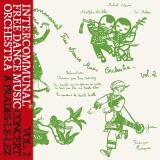
Concert at Prades-le-Lez marks the origins of the Intercommunal Free Dance Music Orchestra. In 1974, François Tusques and his companions (Michel Marre, Jo Maka, Adolf Winkler and Guem), in the spirit of Don Cherry or Chris McGregor, playfully dismantle all borders and all styles of creative music.
On this second volume, the Intercommunal builds unprecedented soundscapes around a song of revolt, a dance tune, or a burst of dissonance. The journey is unforgettable, no question about it. On repeat listening, it even becomes… lunar!
“The music that we make is primarily meant to be listened to live,” warned a leaflet from the Intercommunal Free Dance Music Orchestra. This is precisely why the (restored!) reissue of the two volumes of Concert at Prades-le-Lez, recorded on January 25 and 26, 1974 by François Tusques and his comrades, is such an important event.
In 1971, after recording a series of albums that would leave a lasting mark on French jazz (Free Jazz, of course, with Michel Portal, François Jeanneau, Bernard Vitet, Beb Guérin and Charles Saudrais, but also Le Nouveau Jazz with Barney Wilen, or the solo Piano Dazibao), François Tusques founded the Intercommunal—a grouping whose very name called for the fraternization of the various communities making up the country: Our music will help, we hope, to resolve the contradictions that exist between workers be longing to different communities, by breaking down various forms of national chauvinism, and more particularly the chauvinism of certain French people toward the cultures of Third World countries… Long live the friendship between the peoples of the whole world!
Among the great records made by the Intercommunal Free Dance Music Orchestra, the two volumes of Concert at Prades-le-Lez come first, before L’Inter Communal, Vol. 4, Le Musichien, and Après la marée noire (four titles already reissued by Souffle Continu). François Tusques and his companions (Michel Marre and Jo Maka on saxophones, Adolf Winkler on trombone, and Guem on percussion) performed on January 25 and 26, 1974 at the Moulin de Prades-le-Lez, a few kilometers from Montpellier. It was thus in the southern region of Occitanie that the first echoes of this musical vision of a borderless brotherhood were recorded.
“We’re not among the Colonels,” the Intercommunal reassures us right away, performing a stride piano tune carried by African winds that the audience cannot resist for long. The energy is already striking and it never lets up throughout these two recordings, from start to finish: jazz, blues, traditional music, minimalism, even funk… The musicians of the Intercommunal have heard a lot of great music and now delight in reinventing it by mixing it all together.
“We want the song form to take its place as a weapon in the struggle against capitalist exploitation and all those who oppress us morally and materially,” declared an Intercommunal leaflet, quoting Jean-Baptiste Clément, author of the lyrics to “Le Temps des cerises.” The struggle was therefore serious—but it did not prevent François Tusques and his group from waging it in a festive spirit: each piece on Concert at Prades-le- Lez sends out a call for love and fraternity. Fifty years later, the message remains as relevant as ever—and once again, it is François Tusques who makes it heard.
expected to be published on 17.04.2026

At this point in human history, we've all heard about this calculation: if planet Earth were to enter a black hole, it should shrink to the size of a ping-pong ball but retain the same mass.
Singularity AI usually rides the waves of acid music. Here, he's delivering a pop anthem born in the night. If a single by Lexi once claimed that dreams are the shadow of something real (quoting the film ‘The Last Wave’), we could just as easily say that this one is the shadow of a dream. On the other side, AEK is giving voice to the melancholy of exhaustion in a calm and powerful introduction to their universe, a whole world contained in a small black circle with a hole in its centre and a light gravity.
Music and words: Singularity AI & Aek
Mixing: Mim, Mastering: Frederic Alstadt
Artwork: Emilie Wave, Benoit Lorent
Coproduced by a1000p
Order now and we will order the item for you at our supplier.

WHO IS ULTAN O’BRIEN? Ultan O’Brien is a fiddle player and composer from the wilds of County Clare in the West of Ireland. Ultan is a performer as well as a regular at sessions all of Ireland and can be found by chance in any pub in Dublin, Cork or some remote village on the edge of nowhere, flying jigs and reels around the room. Ultan was reared in the rich tradition of Irish music which is so commonly found and heard in Co Clare, but he also delves deep into sound art and experimental music. He has often been heard in the back of a car after a few pints quoting lines from Alvin Lucier or speaking at length about improvisation and its place in modern Irish music. Ultan O’Brien is a fresh and vital player who has much to offer with his unique approach and technique to a tradition so old and ever ready for a subtle change every 100 years or so. Ultan has played and recorded with people and bands such as Skipper’s Alley, Eoghan Ó Ceannabháin, John Francis Flynn, Slow Moving Clouds, Cuar, Laura Jurd, Martin Green, Natalia Beylis, Paul Roe and Nic Gareiss. ‘in its Ultan’s fiddle playing sincerity of tone it reminds me somewhat of those great caoineadh which were played with such elusive grandeur by Denis Murphy and Pádraig O’Keefe’ Adrian Scahill ‘lets the heart brighten and the feet tap’ Richard Hollingum -KlofMag
ABOUT THIS WONDERFUL ALBUM: ‘This album, Dancing the Line, is my first solo album of music played on an alternatively-tune alto fiddle. I found that the resonance and growl of this lower tuned instrument sat me perfectly into the sound-world I wanted to be in, giving vibrancy to my own compositions and nestling into the traditional music I grew up with.’
expected to be published on 14.03.2025

This tape contains a recording of a live of NPLGNN recorded at Human Razzmatazz (Barcelona) on March 2023.Everything you hear it comes from two Korg Electribe EMX1 +Pioneer DJM900 NXS + Traktor.
To describe the sound it makes sense to bring back what was thepress release of “Sigma/Tau” the first record of NPLGNN releasedin 2014 on Where To Now? (RIP): “NPLGNN creates a less pampered style of body music, stripping away the usual signifiers such as melodies and basslines to create something more utilitarian, brutal and pure.
This is the pre-babel language of dance music - it's cadences are rhythmic and its meaning is comprehensible to all on an innate, primal level.”Ten years later this tape makes those words still remarkable to describe the sound of the Neapolitan head. Among a bunch of unreleased sounds you can go through all the NPLGNN recent records for LavaLava, Youth, Hundebiss and its own lathe cuts series dubbed here and there with vocal cuts intersections.
Coming off like the rude son of early ‘00s breakcore heroes, quotingthe Manchester Boomy heads, NPLGNN delivers a 45 mins mutant soundsystem recording. It's acid dancehall punk, amorphed ragga riddimz, or whatever you want to call it. 100% dancefloor melting .Ask Aphex Twin for a couple of IDs
expected to be published on 07.10.2024

DREAMLESS VEIL make their debut with the new album, Every Limb of the Flood. The band, featuring members of INTER ARMA, ARTIFICIAL BRAIN, and PSYCROPTIC manifest terrifying Blackened Extreme Metal and offer one of the year's most haunting releases. Every Limb of the Flood is a concept album. Through tracks such as "A Generation of Eyes", "Saturnism", and "Cyanide Mine" Vocalist Mike Paparo and co. task the listener to consider what it would be like for an individual to fully disappear. DREAMLESS VEIL delves into this murk through 8 tracks - dramatic swells, melodic crescendos, and abrasive blast-beat poundings make way to more introspective moments ultimately resulting in pure horror. Paparo explores the concept of corporeal disintegration with pained shrieks and disembodied bellows, resulting in one of the most unchained performances of his storied career. Lyrics for the record show, but don't tell. DREAMLESS VEIL's concept alludes to misery leading to grotesquery - The opener "Dim Golden Rave" throws the listener into an ambiguous time and place: "Grief, spiritless, collapses against the filth-ridden street". The second track, "A Generation of Eyes" follows this narrative by invoking Neil Young, quoting him to the extent of "rust never sleeps." What ensues is a grief so powerful it decomposes from within. The end result manifests in the album closer "Dreamless" - the body is now fully discarded, hinting at a possible enlightenment through a horrible, gruesome process. Sonically, Every Limb of the Flood is a caustic, corrosive journey. Critically acclaimed drummer David Haley flexes some of his most creative drum work to date, dragging the listener through wild tempo changes, breakneck speeds that come to sudden halts, while guitarist Dan Gargiulo (ARTIFICIAL BRAIN) interweaves disorienting guitar madness. Recorded by Brett Bamberger (REVOCATION) Every Limb of the Flood was mixed by Gargiulo and mastered by Colin Marston (Gorguts, Krallice, and more.)
expected to be published on 20.09.2024

Miles Davis created just one studio album with his original sextet: Milestones. And he made every moment count. Pairing with Cannonball Adderley, John Coltrane, Red Garland, Paul Chambers, and Philly Joe Jones, Davis not only laid the groundwork for the modalism that immediately followed but tailored a genuine modern-jazz masterwork laden with performances among the most explosive of his distinguished career. Sandwiched between the more famous 'Round About Midnight and the epochal Kind of Blue, Milestones remains a seminal work of art.
Sourced from the original master tapes and pressed on dead-quiet SuperVinyl, Mobile Fidelity's numbered-edition 180g LP grants each musician their own space amid broad soundstages. Afforded the benefits of a nearly non-existent noise floor and supreme groove definition, this vinyl reissue doubles as a time machine back to the February-March 1958 recording sessions.
Colors, shapes, and dimensions appear in the manner that resembles what you'd glean from behind a studio control room's window. Davis' burnished trumpet is rendered in three-dimensional perspective and seemingly coaxes the band to play with unburdened zest. Coltrane's trademark saxophone teems with lifelike tonality and images with specificity; his solos work in tandem with and against the driving rhythms. Garland's swaggering piano lines? Visualize the keys as he hits full stride, the chords and fills slithering around skeletal frameworks.
Inducted into the Grammy Hall of Fame and selected as a "Core Collection" record by the Penguin Guide to Jazz, Milestones is as famous for its title track – widely considered ground zero for modalism and bolstered by Jones' hallmark "Philly Lick" rim shot – as the players that produced it. The launching pad for many of Davis' improvisational flights, the album teases the explorations Coltrane would soon chase. Davis' own solo work broaches territories that far exceed what he had done in his bop-rooted past. Every song is a highlight.
Take the bravado "Dr. Jackle," featuring a hot-foot pace and bebop strains, or "Sid's Ahead," which continues the album's blues theme while juggling edgy harmonics and inside-out structures. On "Billy Boy," distinguished with an arco bass solo from Chambers, Garland gets a turn in the spotlight and channels the openness practised by one of his heroes, Ahmad Jamal. Even more instructive is the band's reading of Dizzy Gillespie's "Two Bass Hit." Three years removed from the version Davis and company recorded for the trumpeter's Columbia debut, this interpretation demonstrates the extent to which the group had jelled in a relatively short amount of time.
Then there's "Straight, No Chaser," the definitive rendition of Thelonious Monk's signature piece. Coltrane's marbled playing pulls at the tune's borders, Adderley takes liberty with solos, and Davis dances around his mates, at one point quoting "When the Saints Go Marching In" while demonstrating his knowledge of tradition and casting an eye towards the future.
About that future. Garland already had one foot out the door during the Milestones sessions to the extent Davis spells him on "Sid's Ahead." Jones would stick around for a bit longer but soon plot his exit. History proves Davis navigated the changes with visionary aplomb. Yet the chemistry, excitement, and beauty the sextet achieves on Milestones cannot be overstated. This reissue helps put the album in proper perspective – and presents the music the fidelity it deserves.
expected to be published on 15.03.2024

Debut album of heavy Colombian salsa by the obscure and short-lived El Clan Antillano. Founded in 1975 by singer Jacky Carazo and radio personality / composer Mike Char and backed by a studio orchestra comprised mostly of Fruko Y Sus Tesos band members. The record has been remastered from the original tapes, with an additional three bonus cuts taken from two rare 45 singles, including the sought after track ‘Alma’. First time reissue. 180g Vinyl.
El Clan Antillano was an obscure, short-lived salsa group started in 1975 by singer Jacky “El Caballo” Carazo, originally from Cartagena, and radio host / song composer Mike Char, from Barranquilla. The band was active only until 1977, with a mere two albums to its name. Carazo and Char, “los amigos costeños” (friends from the Caribbean coastal area) created El Clan Antillano as a fresh start after the previous group Carazo had been the lead singer for, El
Afrocombo, had become inactive.
Char primary passion was music, especially songwriting. One of his skills in this area was adapting foreign songs, often in a different language, rhythm, arrangement or genre, and refashioning the tune in an uptempo Caribbean dance mode as a salsa or cumbia. This formula, as well as his own original compositions, soon brought him success not only with costeño friends like Carazo and Vicentini, but also with Medellín’s Fruko, allowing him to make a name for himself with record labels in that city. It was at this juncture, in 1975, that El Clan Antillano was born. This is their first album and was recorded with local studio musicians. It’s been said that most on the first album were from Fruko Y Sus Tesos (the voice of Joe Arroyo can be heard on coro) as well as others involved with various groups like La Protesta (de Colombia) and Juan Piña’s La Revelación.
The album kicks off with ‘Donde ‘sta? Donde ‘sta?’, a medley of costeño lyrical phrases quoting various popular porros. Gradually changing the vibe, this is followed by Enrique Aguilar’s ‘El baile del
ratón’, a humorous cumbia that changes into a salsa halfway through. As if El Clan Antillano were not entirely confident about featuring purely salsa from the start, the same cumbia/salsa hybrid formula is used in the third piece, a faithfully rendered version of Eddie Palmieri’s ‘Mi cumbia’.
‘Estás equivocada’ rocks hard like the best Venezuelan salsa of the time. ‘Esta mañana’ is a cover version of an obscure bolero from Curaçao’s Erwin Castaneer with Super Combo Castaneer. ‘En la oscuridad’ is an interesting mashup of Puerto Rican bomba and New York style pachanga. ‘El despertar’ is a sunny sounding pop song reinvented as a Nelson y sus Estrellas style salsa/cumbia hybrid with a fantastic ‘montuno’ section.
Up next is a hard salsa jam in the ‘pregón’ (street vendor’s cry) genre, written by Fruko Y Sus Tesos percussionist Álvaro Velásquez (composer of ‘El preso’). The original album track list closes out with a fantastic rendition of Puerto Rican singer/composer Bobby Capó’s classic ‘El negro bembón’ that the world first leaned to love through Cortijo y Su Combo. Three bonus tracks have been added to the album as it was originally very short. Interestingly, there were four songs from two 45 singles cut by the band that were never included on either long play. While the ephemeral El Clan Antillano may not be as well known as the groups it’s related to, namely El Afrocombo and Fruko Y Sus Tesos, it certainly deserves credit as a worthy participant in the historical evolution of salsa colombiana.
Order now and we will order the item for you at our supplier.

As the title suggests, the recording Tenorlee finds Lee Konitz, the great American saxophonist,
playing exclusively on tenor. It was a spontaneous decision, and a tribute to his dear friend,
Lighthouse All-Star saxophonist Richie Kamuca, who had passed away just days before Konitz
entered the studio for these sessions. Konitz classically trained on the clarinet, but switched to jazz
saxophone after being enamored by Lester Young. By 1945 the 18 year old Konitz was performing
professionally. He made a staggering 150 albums as a band leader over the course of his long and
storied career. He played and recorded with everyone from Dave Brubeck, Charles Mingus, Ornette
Colman, Elvin Jones, and Gerry Mulligan, to Elvis Costello, Brad Mehldau and Charlie Haden.
Between 1948 and 1950, he was a member of Miles Davis’ group, and participated in the recordings
that would eventually be collected and released as Birth of The Cool. With a trio featuring Lighthouse
All-Star alum Jimmy Rowles on piano and Michael Moore on bass, Kontiz called out old and familiar
songs. The intention was to “let the tunes happen” as only finely tuned jazz musicians of certain
experience can. Of note is “Lady Be Good” which finds Konitz and Rowles quoting Lester Young’s
solo from the 1936 recording with Count Basie. From 1978, originally on the Choice label, this album
has been remastered and is presented here as the artist intended, with its original title, track order and
album artwork, for the first time since its original release. Remastered by Alex McCollough at True
East Mastering. Vinyl cut by Jeff Powell at Take Out Vinyl.
expected to be published on 17.11.2023

Miles Davis created just one studio album with his original sextet: Milestones. And he made every moment count. Pairing with Cannonball Adderley, John Coltrane, Red Garland, Paul Chambers, and Philly Joe Jones, Davis not only laid the groundwork for the modalism that immediately followed but tailored a genuine modern-jazz masterwork laden with performances among the most explosive of his distinguished career. Sandwiched between the more famous 'Round About Midnight and the epochal Kind of Blue, Milestones remains a seminal work of art.
Sourced from the original master tapes and pressed on dead-quiet SuperVinyl, Mobile Fidelity's numbered-edition 180g LP grants each musician their own space amid broad soundstages. Afforded the benefits of a nearly non-existent noise floor and supreme groove definition, this vinyl reissue doubles as a time machine back to the February-March 1958 recording sessions.
Colors, shapes, and dimensions appear in the manner that resembles what you'd glean from behind a studio control room's window. Davis' burnished trumpet is rendered in three-dimensional perspective and seemingly coaxes the band to play with unburdened zest. Coltrane's trademark saxophone teems with lifelike tonality and images with specificity; his solos work in tandem with and against the driving rhythms. Garland's swaggering piano lines? Visualize the keys as he hits full stride, the chords and fills slithering around skeletal frameworks.
Inducted into the Grammy Hall of Fame and selected as a "Core Collection" record by the Penguin Guide to Jazz, Milestones is as famous for its title track – widely considered ground zero for modalism and bolstered by Jones' hallmark "Philly Lick" rim shot – as the players that produced it. The launching pad for many of Davis' improvisational flights, the album teases the explorations Coltrane would soon chase. Davis' own solo work broaches territories that far exceed what he had done in his bop-rooted past. Every song is a highlight.
Take the bravado "Dr. Jackle," featuring a hot-foot pace and bebop strains, or "Sid's Ahead," which continues the album's blues theme while juggling edgy harmonics and inside-out structures. On "Billy Boy," distinguished with an arco bass solo from Chambers, Garland gets a turn in the spotlight and channels the openness practised by one of his heroes, Ahmad Jamal. Even more instructive is the band's reading of Dizzy Gillespie's "Two Bass Hit." Three years removed from the version Davis and company recorded for the trumpeter's Columbia debut, this interpretation demonstrates the extent to which the group had jelled in a relatively short amount of time.
Then there's "Straight, No Chaser," the definitive rendition of Thelonious Monk's signature piece. Coltrane's marbled playing pulls at the tune's borders, Adderley takes liberty with solos, and Davis dances around his mates, at one point quoting "When the Saints Go Marching In" while demonstrating his knowledge of tradition and casting an eye towards the future.
About that future. Garland already had one foot out the door during the Milestones sessions to the extent Davis spells him on "Sid's Ahead." Jones would stick around for a bit longer but soon plot his exit. History proves Davis navigated the changes with visionary aplomb. Yet the chemistry, excitement, and beauty the sextet achieves on Milestones cannot be overstated. This reissue helps put the album in proper perspective – and presents the music the fidelity it deserves.
expected to be published on 14.08.2023

Dear Friends, it's 2023 and the future of Leftfield Bass, Trap, and Hybrid Grime is here... RATIONAL SOUL's debut EP, "SELF TITLED", is going to define a new era on the dance floor, reimagining 140 beats that typically are stereotyped into narrow catagories. "SELF TITLED" will become the worldwide definition of a style never heard before, sought after and inevitably copycatted by those inspired.
With no surprise, 2023 is set off to a paramount start for the German SATURATE! label, with an EP that “is the future of Leftfield Bass, Trap, and Hybrid Grime” and “it’s going to define a new era on the dance floor, reimagining 140 beats that typically are stereotyped into narrow categories.” The mastermind behind such a project, called SELF TITLED, is RATIONAL SOUL a Virginia-based, veteran electronic music producer. The EP is coming out in full on January 13, digitally and on vinyl, and it features six originals and four remixes. What sounds like a disorienting emptiness at the beginning, makes perfect sense when read as part of the overall narrative of the composition. “One moment you’re living happy-go-lucky, almost like it’s the script of a Disney movie, the next moment you’re questioning why you exist- how is it you’ve become a slave to the 9 to 5? Phone by your side as digital anti-anxiety medication, entertaining yourself with something nostalgic to remind yourself of better times…war against yourself, to reset your identity.” The fight against this subconscious condition was RATIONAL SOUL’s starting point while writing SELF TITLED. The artist’s attempt to light a lighter to ignite a spark in our consciousness and thus reveal the void in which we are immersed. “Wake up” he seems to want to tell us. Don’t be a pawn, be a player of your life. Let’s riot against this status quo and, quoting RATIONAL SOUL himself, “Let’s be gangsta and fuck shit up because we are mad at why our world is falling apart: twerk on a cop car with a fine cigar in your mouth type beat.” He then concludes by spilling one, big truth, “what better genre of music could describe these feelings than bass music?” How could we not agree?
Order now and we will order the item for you at our supplier.

For Mal-one’s sixth single he has chosen to use what he calls his Punk Art Poetry to shine a light on one of Malcolm Mclaren and Vivienne Westwood’s most controversial / stylistic garment, the ‘Anarchy Shirt’.
Vivienne had made the prototype of the ‘Anarchy Shirt’ on some stock of ‘Wemblex’ shirts that Malcolm had acquired and had shown it to Malcolm who said it needed to say more. So, he added the text and the quotes from ‘Situationist’ related saying’s ‘Try Subversion’ to quoting revolutionist Durutti ‘We are not afraid of the ruins’. The text over the shirt front, made using their kids ‘letraset stencil’ would say ‘Dangerously Close To Love’ or ‘Only Anarchists Are Pretty’…. sounds like a good chorus for a song. Only fifty of these shirts were originally made but like all design classics have been copied many times.
‘Some say Only Anarchists are Pretty… or Dangerously Close to Love’
Hope you enjoy the story told on this 500-copy single backed with a dubbed-up version on the B-Side.
Order now and we will order the item for you at our supplier.

„Sybilline“, „unique“ and „peerless“. These are some of the adjectives that were used to describe Everyone Is A Door – Panoram’s first full-length on Edinburgh’s Firecracker Recordings. Since then, the elusive producer, founded his own label Wandering Eye, produced automated piano music in Los Angeles (Thom Yorke Sonos playlist approved), composed synth lines underwater for Amen Dunes Freedom and toured two years with the band as well being involved in their collaboration with Sleaford Mods Feel Nothing and their upcoming album on SubPop. But Panoram can also hold its own very well. His debut on Running Back’s Incantations series lets you hear and experience that after the first few bars already. Acrobatic Thoughts is surreal, abstract, puzzling and urgent, yet filled with beautiful, slow-moving melodies and emotional passages. Eccentric humor meets serious soundscapes, acrobatic thoughts evolve around abstract key notes, while an out-of-time and out-place atmosphere surrounds a microcosmos that seems to be otherworldly and very natural at the same time. Panoram manages to build a house that can be as much of a home for ambient record collectors as for futuristic pop fans and all the ones in-between those poles. Or to describe it one sentence while quoting two titles of this enigmatic record: Seabrains controlled by beautiful engines.
Order now and we will order the item for you at our supplier.

After Tigerhead’s highly anticipated appearance on HET006 with “Sleeping Paralysis”, she now comes up with her very own release named “Silk Road EP”. The A-Side of the vinyl: “Rave 4 Dave” is just made for the peaktime dancefloor – pure banging power. “Lethal Combination” is breaking things down hard, while citing and quoting the drum’n’bass-genre. On the B-Side Matrixxman deliveres two remixes of Tigerhead’s tracks. His “Darkside Remix” of “Lethal Combination” can be heard as a Techno-Electro-fusion – this one is definitely putting the cowbell back on the map! Finally Matrixxman’s remix of “Rave 4 Dave” is a trippy dancefloor track, that is rounding up the EP nicely.
Order now and we will order the item for you at our supplier.

Zaumne's new album titled Élévation is a multifaceted yet subtle work, an abstract collage that is equally entrancing and immersive. Quoting passages from Baudelaire’s “Flowers of Evil”, the Polish musician promises to elevate the soul and consciousness “Beyond the sun / Beyond the ether”. Yet simultaneously, the artist wants us to stay where we are and focus on the immediate surroundings in search of our personal attachment to the world.
Initially recorded for the WET (Weird Erotic Tension) online community the four pieces are an exploration of erotic aspects of the environment and uncanny intimacy with other beings and objects that dwell in our nearest proximity. Just like on previous releases for labels like Czaszka Rec. or Perfect Aesthetics, on Élévation Zaumne maintains his interest in emotional aspects of sound and internet culture – he builds his compositions from fragments of ASMR-whispered poetry, samples of natural phenomena and field recordings from his family home and its environ.
What starts as an escapist exercise driven by uneasiness and ennui becomes an individual healing process, in which the subject rediscovers the strangely intimate relationship with the world and opens up to almost magical methods of communicating with other beings. ASMR samples and sounds of the artist touching, playing with and exciting different objects are an experiment in establishing contact with the non-human realm and a method of attuning the body and the mind to the reality in which everything is interconnected.
Zaumne tests Einstein’s “spooky action at a distance” through radical, sensual intimacy with what’s near, finding a glimpse of the absolute in his own room, again quoting Baudelaire: “To a child who is fond of maps and engravings / The universe is the size of his immense hunger”.
Zaumne is the moniker of Polish musician Mateusz Olszewski. In the past few years, he has released music on labels like Magia, Perfect Aesthetics, BAS or Czaszka Rec. Élévation, released by Mondoj and initially commissioned by WET, is his first vinyl release. Blending elements of genres like ambient, dub, minimalism and tape music with ASMR samples, field recordings and spoken word, he creates work with deep emotional focus and impact.
expected to be published on 16.04.2021

t’s Indian Summer again and it’s like an unwritten rule to please you with another Atelier release at this beautiful time of the year.
So here we are with a collection of superb re-interpretations of a few tracks taken from the duos debut album “Varsam Court”. Delivering the goods we have no one less than Dutch high flyer’s Tunnelvisions, Lisboa’s LuxFrágil resident Switchdance, Heidelberg’s Lopazz & Casio Casino, Lossless co-head Mathias Schober and Alexander Inggs – one half of Atelier.
No doubt that we’re proud about this line-up and couldn’t be happier with the music we’re going to share with you now – enjoy!
Atelier quoting on the remixes:
“After writing the album Varsam Court, it was truly exciting to hear the songs in a different context. Originally, the album was not written for the clubs, but the remixes on the EP transcend that line, bringing the original ideas to a wider audience and into a new space. These reinterpretations by the artists are a great testament to how
everyone really does hear and feel music differently.”
Order now and we will order the item for you at our supplier.

Bélver Yin's soul mining odysseys have been unjustly overlooked for three decades. An anomaly in the Spanish alt-pop scene, their forlorn instrumentals and ethereal romanticism would have struck a chord in the British league of Felt, The Chameleons, Cocteau Twins and Dif Juz, leaving their 1991 debut Luz Bel deserving of reappraisal.
While coining their band name from a Jesús Ferrero novel and quoting Laozi philosophy on album sleeves, Bélver Yin create illuminating textures that unlock a wordless language of memory and adolescent emotion. Formed in Salamanca by self-taught musicians Pedro Ortega Sánchez and José María Martín, the guitar-bass duo spent two years crafting their divine interplay with interim drummers before submitting a demo to Noisex Music, their only attempt at label courting. The phone rang mere days later with owner and producer Bernar Marks (The Dust Sessions) offering to cut an album and the band ventured to Valencia with cloud-touching optimism soon after.
Championed by local press, the release fell short of expectation, fueling the mythology of a vanished band known only to the initiated. Varying lineups would, however, continue to work in the shadows under Pedro's direction, recording two spatially arranged follow-ups at their own pace in 1996 and 2005.
A glorious debut that undeniably set a high watermark, Luz Bel is finally available again, faithfully remastered by Mikey Young and featuring bilingual liner notes from John Gómez, the authoritative ear behind Outro Tempo.
Order now and we will order the item for you at our supplier.

DJ Support and positive Feedback by the likes of
Laurent Garnier, Dixon, Ame, Adriatique, Ian Pooley, Timo Maas, Trikk, Frankey & Sandrino, Sacha, The Drifter, Severino (Horse Meet Disco), Alex Dallas (Zukunft Zürich),
Yør Kultura, Lehar, Denis Horvat, BOG, Echonomist, Fred Everything, Luca Bachetti, Karotte, Roberto Rodriguez…
We're happy to announce the fourth chapter of our sought-after Outbound series which also marks Lossless' second release in 2020. After two extended chapters of Outbound, fully showcasing our labels artist roster, Outbound.4 is a crisp double A-Side affair - featuring two killer Techno workouts courtesy of our French stalwart Anthony George Patrice followed up by two Deep/Dub House delights delivered by Son Dos.
Without a doubt, Berlin based frenchman Anthony George Patrice steadily adjusted and developed his sound to a higher level over the last years. His contribution on Side A - "DBZU (Eine Brücke Zum Übermenschen)" and "Crowned Eagle" exposing new artistic shades and Anthony's ability to take you on a sonic journey and soak you into his rich and driving deeper Techno soundscapes.
Side AA belongs to Son Dos - a creative power plant by two Sweden born men: Barcelona based Marco Gegenheimer and Tapia J. Arriagada living in Malta. The duo already caused a stir with their debut "Children Of Almost" on Outcast Oddity. Marco also released some great music on Studio Barnhus as one half of MLiR!
On our Outbound.4 the guys showcase two amazing cuts originated from fruitful studio jams.
The beautiful "Cala" is hypnotizing us in deep, meditative balearic territories while her powerful brother "Maffio" might have had a little testosterone injection along the way and moves us straight onto the dancefloor. Both tunes are capable to unveil their power outdoors just as much as they will in a sweaty basement!
Son Dos quoting on Anthony George Patrice's tracks:
"These songs sound like a Movie score to us, a soundtrack taking you further and further into an unexplored forest: ...you are on a mission ... chugging drums, haunting strings and rolling percussion guide you... your heartbeat intensifies, with each step that you take...
all of a sudden, the floor underneath you turns into flowing geometrical patterns and you start falling...
a voice tells you "Happiness Is A Miisunderstanding", and the fear you had leaves your mind...you connect yourself with a higher power and realise why you started this mission in the first place"
Anthony George Patrice quoting on Son Dos tracks:
"Lovely balearic yet powerful atmosphere on "Cala"… Head flies and shoes get used. All that you wish for!" ...
"Hands in the air for "Maffio"! Here comes the peaktime booming system. Simple, efficient yet super interesting and deeply rooted dance floor killer. This is ace!
Order now and we will order the item for you at our supplier.

Record Kicks proudly presents "SuperStudio" the new single by legendary Italian cinematic funk combo Calibro 35 sampled by Dr.Dre and Jay-Z, taken from their forthcoming new studio album DECADE
"SuperStudio" - available on a super limited edition 45 vinyl and digital download together with bonus track "Gomma" - is Calibro 35's first single and anticipates their new album DECADE that hits the streets next 9 February. Quoting the band "SuperStudio is the main theme for a movie that doesn't exist, starring Clint Eastwood and Pam Grier saving earth from the invasion of deadly robots from another planet" and it's pure Dynamite. On the flip you'll find "Gomma", the bonus track out of the album which is an irresistible funk groovy shaker.
Recorded at the legendary Officine Meccaniche studios in Milan by CALIBRO's usual suspect and Grammy Award winner Tommaso Colliva, "DECADE" marks 10 years of Calibro 35's releases and it's the very first album recorded by Calibro with an orchestral-inspired enlarged line-up. Active since 2008 CALIBRO 35 enjoys a worldwide reputation as one of the coolest independent band around. During their ten years career, they have been sampled by Dr. Dre on his Compton album and Jay-Z, they shared stages worldwide with the likes of Roy Ayers, Muse, Sun Ra Arkestra, Sharon Jones, Thundercat, Headhunters and as unique musicians they've collaborated with, amongst others PJ Harvey, Mike Patton, John Parish and Stewart Copeland and Nic Cester (The Jet). Described by Rolling Stone magazine's as "the most fascinating, retro-maniac and genuine thing, that happened to Italy in the last years", Calibro 35 now count on a number of aficionados worldwide which includes VIP's fans such as Dj Food (Ninja Tune), Mr Scruff and Huey Morgan (Fun Lovin' Criminals) among others.
Order now and we will order the item for you at our supplier.

Astray is the Sublabel of Away, Berlin.
Berlin's party series and the eponymous vinyl label celebrate the launch of its sublabel ASTRAY with the 'Road Force EP' by Discrete Circuit. While AWAY with previous contributions from Joe Claussell, Mr. Ties, and Move D leans more to the housier side of things, ASTRAY will take a different path by taking some darker, techno-centered steps. Following the idea only to release productions by both label founders, Discrete Circuit and H4L, as well as unique collaborations which either of them will form with outside artists, ASTRAY's second EP will premiere the joint studio work of Discrete Circuit and DJ/producer Blind Observatory. EP INFO After releasing on labels such as DVS1's Mistress Recordings, Mark Broom's label Beard Manand Darko Esser's Wolfskuil Records, Discrete Circuit's new EP provides four progressivetracks mirroring his interest in a steadily growing techno narrative as well as mind manipulating onomatopoeia. On the A-side he's evolving his floor-aimed capabilities in two different ways: Starting with subtly quoting the infamous Motor City, the title track's on-edge techno design quickly accumulates into some kind of hounding; not knowing if you're the hunted or the hunter. 'Stress Resultant' increases the pace, whereby the restless vibe is contrasted by melodic synth patterns embodying a sort of playful corrective. The flip side introduces Discrete Circuit's experimental facet: 'Controlled Error' exhibits the dialogue between harmony and chaos in which shrieking, yet claustrophobic shades play hide-and-seek ultimately unfolding a gloomy funk, while the EP's last 'Circuitry' is completely carried by shape-shifting, pulsing soundscapes.
Order now and we will order the item for you at our supplier.
