Search:public memory

Styles
All
Public Memory - Demolition

Public Memory

Demolition

12inchFLTLP55
Felte
06.12.2024
  • The Line
  • Red Rainbow
  • Mercy
  • Falsetto
  • Aegis
  • Redeemer
  • Doorstep
  • Trick of The Light

RIYL: Portishead, Thom Yorke, BEAK>, SUUNS, TR/ST, Radiohead. Solo project of Robert Toher who was the creator of ERAAS. Covered by Quietus,Pitchfork, NME, Stereogum, Earmilk, The 405, Clash, BBC Radio, Clash and more.... Public Memory is a mixture of damaged and dubbed-out percussion, unfurling synths and sparse sampling - all strung together by producer Robert Toher's spectral tenor. The project's sophomore LP, Demolition follows 2017's Veil of Counsel EP and 2016's Wuthering Drum LP with cinematic fortitude. While Public Memory's prominent krautrock and trip-hop rhythms are represented here, Demolition explores a greater range of tempos and an expanse of alien emotions with layers of electronic drums, live drums, Korg synths and samples from nature. Themes of rebirth and reflection imbue the album's atmosphere, rich in tape delay, spring reverb, and textures that conjure a sci fi and supernatural narrative. Opener "The Line" sets the album in motion with a driving energy and introspective unease, as if estranged from the world it was created in. A meditation on impending collapse, "Red Rainbow" begins with an arpeggiated melody that hints at a sense of dread. Like the darkness of night descends, the track unfolds with haunting atmospherics and howling synths, finishing with an unexpected climax that ominously builds until at last it falls apart, quickly, softly, without incident. The slowtempoed "Aegis" reflects on the banal reality of love lost, with shuffling rhythms, lingering inflections and a growling synth at its core. Toher's adept use of space and tension articulates the world of Demolition as eerie, emotive, and above all, narcotic. Each track is an existential procession. "Turning out the lights on your illusion," Toher sings to close the album, accepting that change is an inescapable condition of being.

pre-order now06.12.2024

expected to be published on 06.12.2024

Public Memory - Elegiac Beat LP

Public Memory

Elegiac Beat LP

12inchFLT098LPC1
Felte
03.09.2023

Boy Harsher, Portishead, Thom Yorke, Radiohead, Beak>, ERAAS, SUUNS. Over the past seven years, Public Memory's distinctive use of analog synthesizers, electronic beats mixed with organic percussion, lo-fi sound design, and gritty ambience has created a singularly eerie and shadowy world. The first seconds of Public Memory's new record, Elegiac Beat, thrust us immediately into that world. We are in media res, with a feeling of sudden movement from a sensible point A to B. Given some time however, we realize that there is something askew–a bit of brightness here, some shadows pushed aside, some jazz and funk amongst the dub and Krautrock. This is an unfamiliar, ambiguous mood that pushes Public Memory towards new ground. We still drift past the clouded lights and hollowed out buildings of previous albums, but with an occasional bounce in our step now, a bit of golden haze around the edges. First single "Savage Grin" cements this clearly. The track has a jazzy, trip-hop flavor, albeit filtered through Public Memory's narcotic, hazy lens. We could be in a hotel lounge in the alps somewhere on holiday, or out of time in a majestic, sparkling ballroom. But we still have the feeling of being haunted, or perhaps even hunted in some way. This feeling intensifies and comes to a head towards the ever-darkening end of the track, leading directly into "Afterimage", in which someone almost imperceptibly sings "I hear them coming" in a twisted, auto-tuned flail. Second single "7 Floor" begins with flanged drums and damaged synthesizer stabs, evoking a kind of apparition floating towards us in the mist. As the track moves on there is, similarly to "Savage Grin", a contrast in feeling between a cold exterior roaming and an interior, warmer, human place. This time however, we move from the colder to the warmer as the synths from the track's beginning make way for a Rhodes-style organ and backing string synth, infusing an unexpected sense of peace. But like "Savage Grin", the track moves to its end through an in-between place beyond the haze. Faded and distant synthesizers meld with voices–human, or perhaps otherwise–that beckon us, or perhaps warn us. We can't be sure which. Third single "Far End Of The Courtyard" brings us closest to classic Public Memory territory with hip-hop beats, chopped and screwed samples, lo-fi ambience, and ghostly electric pianos complementing the vocals. There is darkness, perhaps more here than in the previous two singles, but with a crucial moment of uplifting lightness so subtle it may be missed upon first listen. As an inverse to both "Savage Grin" and "7 Floor" we end with brightness, the jazzier side of the record pushed to the forefront as the track fades away on that golden haze. In the end though, the haze may be just that: a vapor, a mist, a slight dusting of some other world on top of the degraded one Public Memory so effectively portrays. Elegiac Beat is between two places, and as it straddles the line between the two, we are uncertain if the light it brings shines directly from the sun, or if it is dimly reflected through that majestic ballroom world. For fans of 1990s Bristol trip hop, coldwave, and Thom Yorke's The Eraser

pre-order now03.09.2023

expected to be published on 03.09.2023

PUBLIC MEMORY - RIPPED APPARITION

Public Memory

RIPPED APPARITION

12inchFLTLPC271
Felte
22.08.2023

Since 2016, Public Memory has been crafting lo-fi electronica from the darker corners of the psychic landscape. Gritty atmospherics, damaged synthesizers, and unearthly vocals blend with a mixture of electronic and organic percussion, creating a sense of forceful unease. This, when combined with the shadowy production and emotive singing of Robert Toher, creates a singular contrast between power and vulnerability.

pre-order now22.08.2023

expected to be published on 22.08.2023

PUBLIC MEMORY - DEMOLITION

Public Memory

DEMOLITION

12inchFLTLPC155
Felte
18.11.2022

GREY & BLACK SWIRL VINYL
Public Memory is a blend of damaged and dubbed out percussion, unfurling synths and sparse sampling all strung together by producer Robert Toher's spectral tenor. The project's sophomore LP, Demolition follows 2017's Veil of Counsel EP and 2016's Wuthering Drum LP with cinematic fortitude. While Public Memory's prominent krautrock and triphop rhythms are represented here, Demolition explores a greater range of tempos and an expanse of alien emotions with layers of electronic drums, live drums, Korg synths and samples from nature. Themes of rebirth and reflection imbue the album's atmosphere, rich in tape delay, spring reverb, and textures that conjure a sci fi and supernatural narrative. Toher's adept use of space and tension articulates the world of Demolition as eerie, emotive, and above all, narcotic. Each track is an existential procession. "Turning out the lights on your illusion," Toher sings to close the album, accepting that change is an inescapable condition of being.

pre-order now18.11.2022

expected to be published on 18.11.2022

Various - Palace Of Memory Where Nostalgia Is Fear 2x12"

Always hot on the steel-hard plates and murky subterranean atmospheres, Public System turns in a haunted double package from the crypt. Spanning hi-octane indus bullets, half-baked mutant salvos and shadow-clad juicers from a host of reputed names and rabid underdogs, this new comp collates ruff’n’tuff joints from gritty techno don Container, genre-unbound explorer E-Saggila, Berlin’s electro arsonist Privacy, acid-spitting hydra DJ Loser x Penelopes Fiance, basement guerillero Yabboq Penuel alias Le Syndicat Electronique, neo-punk beat thrasher Crave, Yves Tumor collaborator and sine-wave crusher Anthem, expert circuit dissector Beau Wanzer, Liquid G as remixed by Mick Wills, Night Gaunt’s Lower Tar, occult machine funk preacher Maenad Veyl, DJ Chupacabras under new guise 110, soundwaves cross-pollinator DJ Richard, vibrant mood-scapist Gavil�n Rayna Russom, as well as label boss Myn going ubiquitous with studio fellows Kluentah as Myntha, and R Gamble as Fade Accompli. A much desirable feast of raw, unhinged, all-round spine-tingling jams for the club and not.

out of Stock

Order now and we will order the item for you at our supplier.

Last In: 2 years ago
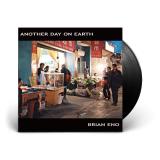
Brian Eno - Another Day on Earth
  • 1: This
  • 2: And Then So Clear
  • 3: A Long Way Down
  • 4: Going Unconscious
  • 5: Caught Between
  • 6: Passing Over
  • 7: How Many Worlds
  • 8: Bottomliners
  • 9: Just Another Day
  • 10: Under
  • 11: Bonebomb

Another Day on Earth (2005) was Brian Eno’s first song-based album since Nerve Net in1992, and remains one of his most acclaimed solo records. It featured a young Jon Hopkins alongside long-standing collaborators Nell Catchpole, J. Peter Schwalm and Leo Abrahams, with lyrics co-written by Michel Faber and Danny Hillis. The album was launched with a public conversation between Eno and the writer Michael Bracewell at the Marble Palace in St Petersburg and its cover photograph was taken by Eno himself in Beijing, during his first Chinese audio installation in the city’s Ritan Park. Following Warner Bros’ purchase of Hannibal Records in 2006, the licence for Another Day on Earth lapsed in 2008 and the album has been unavailable outside Japan ever since.

“Grand, sweeping choruses ... that insinuate themselves deep into the memory, but also moments of whispering intimacy - a wistful, haunting record that runs warm with understated emotion. ★★★★★” - Matthew Collin, The Observer (2005)

pre-order now16.10.2026

expected to be published on 16.10.2026

Baba Stiltz - Totally LP
  • A1: Totally
  • A2: Relief
  • A3: Leader of Men
  • A4: Must Be Nice
  • A5: Dang Me (An-Sich-Selbst-Saugen)
  • A6: Belief
  • B1: How About That
  • B2: Cool and Fun
  • B3: Later
  • B4: 15
 
2

A glorious night of no particular significance, Totally, the new album by Baba Stiltz. Recorded in Helsinki in studio with a drummer and overdubs committed in 5 days. Ballroom- sink songs of loss, grief, long drives on the I-5, centralized acquisitions, and corrective conditioning towards the prolonged effects of computerized lifestyles.

Every song looks you straight in the eyes, crooked and veering towards a light fixture off the side of the mirror. Ambivalence and assertions track us, down some gauzy networked afternoon. Relatively, perfectly, three dimensional. Proportions as they appear to us from outer intuition. Sometimes meaning is evoked through pure nothingness. Concealed and nothing known. We have no need for any paradise informed by anything beyond what is directly in front of us.

Stone repetition thwarts the possibility of control and surrenders itself to understanding. Who are we, and what are we trying to understand? To understand being universally greater than being understood. There are soap operas everywhere for those with eyes to see. You don’t have to look as hard as we currently look. The dramatic is everywhere, we breathe it unintentionally, then we come to hate it. Haptic, embodied facts of a tedious life lodged in the jowls of history. Everything under the
sky being the best bedlam has to offer. Your family, your relationships, your memory. As you eat a burger you are reminded of every sharp protrusion and corner under the florescent lights, the same lights you see when you’re born, and although unconfirmed, when you die.

Some of these songs were written years ago, some recently. The bookshelf and television set come into full view. Women/men come and go. Stars and poseurs collapse under their alienated contradictions, the search for truth yields to continued gradients of probability (collapse). Spatial order maintains itself through perceptional feeling. Silence, singing along to Roger Miller, people entering and leaving, figures hovering over you in your dreams and waking hours. Cool and fun, Totally

Text by Barrett Avner

pre-order now16.10.2026

expected to be published on 16.10.2026

FINE - JAZZ DREAMS

FINE

JAZZ DREAMS

12inchESC210PURPLE
Escho
13.11.2026

Gatefold cover, single LP

Following her acclaimed 2024 debut Rocky Top Ballads, Fine expands her world on Jazz Dreams, arriving in a fluid, surreal, and expansive place. Over the past sixteen months, the album has gradually taken shape in public. Early versions of songs appeared in live performances, while demos and alternate iterations surfaced through Fine's NTS residency, alongside the release of the singles "I Could," "Run," "Moment," and "Portal."

Self-produced, recorded and mixed by Fine, the album’s thirteen songs unfold as a collage of scenes, stories, and musical ideas stitched together with a logic reminiscent of a dream. At the center of it all is melody. Fine's intricate vocal melodies act as the connective tissue between the album's shifting scenes and moods, guiding the listener through its emotional terrain.

Throughout Jazz Dreams, Fine continues to make the mysterious feel intimate and human. The songs do not search for answers or destinations. They embrace intuition, allowing memory, longing, possibility, and imagination to stir together into something new. Like a jazz improvisation, the album follows instinct wherever it leads, transforming emotional fragments into a real dream.

pre-order now13.11.2026

expected to be published on 13.11.2026

FINE - JAZZ DREAMS

FINE

JAZZ DREAMS

12inchESC210
Escho
13.11.2026

Gatefold cover, single LP

Following her acclaimed 2024 debut Rocky Top Ballads, Fine expands her world on Jazz Dreams, arriving in a fluid, surreal, and expansive place. Over the past sixteen months, the album has gradually taken shape in public. Early versions of songs appeared in live performances, while demos and alternate iterations surfaced through Fine's NTS residency, alongside the release of the singles "I Could," "Run," "Moment," and "Portal."

Self-produced, recorded and mixed by Fine, the album’s thirteen songs unfold as a collage of scenes, stories, and musical ideas stitched together with a logic reminiscent of a dream. At the center of it all is melody. Fine's intricate vocal melodies act as the connective tissue between the album's shifting scenes and moods, guiding the listener through its emotional terrain.

Throughout Jazz Dreams, Fine continues to make the mysterious feel intimate and human. The songs do not search for answers or destinations. They embrace intuition, allowing memory, longing, possibility, and imagination to stir together into something new. Like a jazz improvisation, the album follows instinct wherever it leads, transforming emotional fragments into a real dream.

pre-order now13.11.2026

expected to be published on 13.11.2026

Baba Stiltz - Relief 7"

Baba Stiltz continues to showcase his songwriting capabilities with Relief.
Backed by Ilari Larjosto on drums, Relief sees Stiltz delving deeper into the slacker-country territory explored on his last album, Paid Testimony, though here the sound is more refifined and hi-fifi. The track hints at the indie apathy of decades past while maintaining a distinctly contemporary sensibility.
A dubby yet fractured-sounding bassline and sparse three- chord verse structure intertwine with Theo Stocks’ beautiful lap steel arrangement, while Larjosto’s steady, Moe Tucker- esque drumming keeps the song moving forward.
Lyrically, Stiltz navigates pop songwriting tropes with restraint and precision. The repeated refrain of “congratulations” feels both strung-out and melodic, while fragmented, Garielle Lutz- like imagery — “tick tock, wrist watch, clif bar, trunk car, its cargo” — quietly sets the scene. Somehow, the juxtaposition resolves elegantly.
When asked about the theme of the song, Stiltz simply responded: “There is relief in acceptance.”
With Relief, Stiltz offers another compelling glimpse into his evolving songwriting practice, and perhaps an indication of what is still to come. The release follows a prolifific start
to the year for Stiltz, including Blurb 2 with Okay Kaya, co- production, writing and mixing work on Ana Roxanne’s Poem 1, and co-production and mixing on the SY3 EP for Music From Memory.

In Stock

On Stock and ready to ship

Last In: 60 days ago
LUC-HUBERT SEJOR - MIZIK FILAMONIK: SPIRITUAL SOUND

180 G. BLACK VINYL WITH LINER NOTES IN CREOLE, FRENCH, ENGLISH

Originally released in 1979, "Spiritual Sound" lives up to its name, a soaring, triumphant album, six tracks of spirit magic from Guadeloupe.

Telluric, intense, terribly alive, the gwoka drums of Guadeloupe carry the identity of a painful and fervent island. Marked forever by the crime of slavery, Guadeloupe's créolité cherishes the ka drums and their natural environment: the low-pitched boula drum with male goatskin, the high-pitched soloist makè drum with female goatskin, the chacha, ti bwa, triangle, calabash and other percussion instruments that surround them, and the voices - the fiery, proud, timbred, urgent voices of the gwoka.


This album is also a legend for its voices: in his then dazzling youth, singer Lukuber Séjor was one of the first gwoka artists to largely feminize the chorus of répondè, who converse with his text delivered in a straight and powerful voice.

And everything here sets new standards. In 1979, Mizik Filamonik - Spiritual Sound proclaimed a spiritual patriotism of ferocious intensity. The album by Lukuber Séjor - whose spelling alone is a battle - sets out to give Guadeloupe the intangible weapons of self-respect and self-knowledge, through a singular practice of traditional music.

The genesis of gwoka music is less straightforward than one might imagine... The drums performed the servile task of accompanying the work of slaves in the fields and during the “corvées” imposed by the administration, before being freely practiced by the common people after the abolition of 1848. At the heart of the conviviality of the Guadeloupeans furthest from the cities - geographically and socially - the gwoka drums come out for carnival, funeral wakes and neighborhood celebrations, but also during strikes, fits of anger and armed vigils of the riots and revolts that have punctuated the island's history. For generations, governors of the colony and then the prefects of the overseas department of Guadeloupe have been viewing the gwoka as a potential for turbulence and a threat to public order.

But as the Beatlesmania, “chanson engagée” and rock revolutions unfolded in Europe, young people turned to the drums of mizik a vié nèg (“bad negro music”, in Creole), which Guadeloupeans had learned to despise by following the “assimilation” process advocated by the school system and most of the political class. At the end of the sixties, in a Guadeloupe mourning the deadly repression of the May 1967 social movement, they played traditional music, refusing to wrap it up in tourist prettiness and madras folk costumes. Instinctively, they played a rough and contemporary gwoka, led by the incendiary Guy Konkèt. This was the era of decisive 45 rpm records such as Robert Loyson's Kann a la richès, which brought to light the fieriest words of union rallies.

At his home in Sainte-Anne, Lukuber Séjor played with flautist Olivier Vamur and his brother Claude Vamur, who cobbled together a drum kit from tin crockery and became, a few years later, the most influential drummer in Kassav'.

These were the years of the Bumidom program, when young Guadeloupeans were encouraged to emigrate to mainland France. At the age of twenty, Lukuber Séjor embarked on the liner Irpinia, disembarking at Le Havre and taking the train to the Gare Saint-Lazare - the route taken by thousands of young West Indians who went on to study or looked for work, all the while trying to maintain a link with their homeland. In this case, it's at the Antony university residence, where Lukuber played the drum and participated in a thousand gwoka updates and aggiornamentos, while exile reinforced the need for a spiritual link with the native land.

In 1978, Guy Konkèt played at the Salle Wagram, a historic event for West Indian music. After serving as répondè - i.e. backing vocalist - on one of his home-recorded albums, Lukuber joined his live band. Little by little, he became one of the key artists on a circuit parallel to French show business. At a student party in Caen, he met a young woman from Martinique who, at the time, was more motivated by her ambitions as a visual artist than by her vocation as a musician. Her name was Jocelyne Béroard and, a few years before she plunged into the Kassav' adventure and became the greatest West Indian singer of her generation, she designed the cover of Lukuber Séjor's LP.

This ambition was obvious and imposed its will. A more or less regular band was formed, with Roger Raspail, Rudy Mompière and Éric Danquin on ka drums, Claude Vamur on ti bwa, Olivier Vamur and Françoise Lancréot on flutes and Annick Noël on keyboards. Lukuber Séjor is set on wanting to extend the gwoka palette to other instruments, as the jazz-rock revolution opens a thousand new doors. Annick Noël will play a wide range of timbres and textures on electric piano and synthesizer. Another novelty: the répondè are two men and two women, Roger Raspail, Olivier Vamur, Françoise Lancréot and Maryann Mathéus ...

Mizik Filamonik - Spiritual Sound is a self-production in which the singer and leader sank all his savings, allowing him no more than a single day in the studio. The first side is more of a musical manifesto, with the first two tracks, Éritage and Penn é plézi, being instrumentals. The third, Son, forcefully celebrates the need for Guadeloupeans to connect with the gwoka. In fact, Jocelyne Béroard's cover shows a tambouyé in the shadow of a cloudy sky, against which a radiant sun is rising and whose light will soon flood the entire landscape. The silhouette and face of this man strongly evoke the immense Vélo, master of the ka, rejected at the time on the fringes of society.

The second side of the LP is surprising. Formally, three tracks are explicitly linked like the three parts of a triptych. Primyé voyaj evokes the appalling tribulation of Africans deported as slaves to Guadeloupe; dézyèm voyaj speaks of the Bumidom program and the economic, political and social forces driving young Guadeloupeans towards the mirage of prosperity in France; twazyèm voyaj closes the cycle with the emigrants' return from Europe after years away from their island...

This gwoka, obsessed with the need to save Guadeloupe spiritually, appeals far beyond the politicized audience. Mizik Filamonik - Spiritual Sound instantly became a classic, although Lukuber Séjor never really made a career for himself as a musician.

After all, the album was released in 1980, with no promotional resources in France or Guadeloupe - and therefore no concerts. The thirty-two-year-old author, composer and performer made his own third trip back to Guadeloupe. He set up a small woodworking business, which he lost in Hurricane Hugo in 1989. His other activity, teaching in a medical-educational institute, became the core of his professional life. He continued to be an active campaigner - a campaigner for the Creole language, a campaigner for the reawakening of identity, a campaigner for special education, a campaigner for a thousand causes that he ignited with his generous and perceptive enthusiasm, such as the defense of breadfruit fries...

The echoes of his 1979 album have not died down. Of course, the use of Penn é plézi as the theme tune for Radio Guadeloupe's funeral notices from 1980 to 1992 kept him in the collective memory, but he continues to sing and compose sporadically, as with his all-female

vocal group Vwapoulouéka... Still convinced that music is a means of liberating the spirit, he continues the journey of a young man eager to deploy the power of Creole music and language.

Bertrand Dicale

In Stock

On Stock and ready to ship

Last In: 16 months ago
Various - Rumba Rules - Original Motion Picture Soundtrack

The official soundtrack of the 2021 'Rumba Rules, New genealogies' documentary movie by Congolese artist Sammy Baloji and Quebec filmmaker David Nadeau-Bernatchez. A deep dive into Kinshasa’s vibrant Rumba scene, including remastered classics by Brigade Sarbati, Werrason, Papa Wemba, Franco & le Tout Puissant O.K. Jazz

Rumba Rules, New genealogies is about contemporary rumba in Kinshasa, but this music has deep historical roots nevertheless. Born in the interstices of the colonial world and thriving during the three decades of the Mobutu era in Zaïre, Congolese rumba has been iconic and popular all over Africa for decades. The roots of Rumba are even deeper, and the many paths it evokes trigger the imagination. The story goes that this music came with the migration of the ‘Kumba’ drum and dance in previous centuries, African slaves having carried it all around the Americas and giving birth to Cuban ’Rumba’, Colombian ‘Kumbia’ and many others. With its varied rhythms, guitars and horns, through LPs and radio stations, Rumba came back to (re)conquer Africa throughout the 20th century, paving the way for new practices. One could say this music is a sort of palimpsest, a memory in itself of Atlantic migrations and histories.

Rumba is nowadays discussed all around the world, igniting many debates among the Congolese diaspora. Being the constant talk of the town sometimes overloads public debate, and many people get tired of this broken record. Thus, over the last decade, enterprising producers have worked hard to promote Kinshasa’s musical diversity and tried to emulate new sounds to reach worldwide attention. But Kin’ locals and urban dwellers will not be fooled : new shoots cannot hide the forest. Despite some difficulties to innovate, despite the pastoralist sermons and the diaspora fighters pushing for concert cancelations, rumba is still at the core of the Congo today. Talented artists such as Fally Ipupa, Ferré Gola, Brigade Sarbati and others are leading the fifth generation, and the religious world has also proven to be a nurturing environment for the cultural and economic dynamism of this music.

Focusing on the music of Brigade Sarbati and his Orchestra, this record offers a deep dive into Kinshasa’s rumba scene. Halfway between professional studios and Zoom H4 field recordings, the rumba herein is about today’s youth: dense, full of energy and breakdowns, insights and name-dropping. The cavacha rhythm, the solo and bass guitar’s playing style, the singing style and numerous dedications all resonate with the history of Rumba. In an era where digital sound is taking over, it is interesting to highlight the instrumental and live performance compositions of this music. Digital technology is indeed used during the recording and mixing phases, but Congolese rumba still relies strongly on instrumental playing. There is all that but also, many other things to hear on this record… It’s time to let it be. A big thanks to Étienne Tron for making it possible: it is on his initiative and through his patience that this album is in your hands today. (David Nadeau-Bernatchez, december 2021)

In Stock

On Stock and ready to ship

Last In: 3 years ago
Oscar Later - The Moon belongs to you EP

Oscar Later is the solo project of one half of Once Twice, formerly known as Parallels. The EP takes its premise from the 1967 Outer Space Treaty, which ruled that no nation could claim ownership of the Moon or any other celestial body. Across six tracks, that idea of ownership, distance and free imagination runs through the record, which combines breakbeat and shimmering synths with processed vocals and clips from vintage ads and obscure films.

"I wanted the record to feel like public-domain myths, commercial promises and space-age optimism all colliding," Oscar says, "blurring the line between memory and fantasy."

Opener 'Air Time for Andre' channels chopped-up breaks reminiscent of Skee Mask, combined with processed found audio. 'Wenlocked', named after the East London street where it was written, develops from a downtempo sketch into a heavier club track as the bassline builds, inspired by releases on Voam and Floating Points' live sets. 'It Never Made Sense' steps away from the dancefloor, built around a granulated Orion Sun vocal that, as Oscar puts it, "ties the track into quite a surreal space," leaning towards Burial, Overmono and Radiohead.

The title track, 'The Moon Belongs to You', runs a vocoded 90s ad through a detuned one-note synth. It's the track Oscar says "best encapsulates the intention of the EP as a whole: surreal, wacky and clubby." 'Yaya' keeps the energy up as a straight techno cut, its gated bassline locking in around a chopped vocal and pitched samples. Closer 'That's Quite A Lot Of Zeroes!' expands from a stripped-back Buchla line into something huge, driven by chopped samples and inspired by sci-fi scores like Dune and Annihilation.

The cover is designed by art director Will Millner with designer Josh Lowe, a homage to space food and 80s industrial design geared to survive life on the moon. It's available as a limited vacuum-packed 12" record.

The EP launches alongside a music video for 'It Never Made Sense', directed by Louis Mackay, telling the story of a group of kids who steal the moon for themselves.

out of Stock

Order now and we will order the item for you at our supplier.

Last In: 13 days ago
Manonmars - Entertainment System

Manonmars’ 3rd album sees him at his most amorphous and psychedelic, at points sharper and laser focused, and at others more blurred and impressionistic than his previous records. Many of the core players remain the same, all of the production is once again handled by O$VMV$M (the duo of Neek and Amos Childs of Jabu) while Paulina Korobkiewicz (also of Young Echo) makes a return handling both the album’s cover artwork and contributing a series of diaristic field recordings and voice notes.

‘The project references movies, cartoons, fictional characters and video games, among other things. The album title is open to interpretation but all of these elements are forms of visual entertainment which have their own unique ability to transcend things like language barriers and cultural divides. The visual element is key because those details bridge the gap on a communicative level.’ - Manonmars

The album blends abstract, blurred braggadocio with more immediate personal details such as on ‘Volcanic Shield’ a posse cut of sorts featuring Bristol improv luminary Dali de Saint Paul and Franco Franco (½ of cyborg rap duo Kinlaw & Franco Franco) - where Mars recalls;

‘Memories of brighter days, happy meal hit the spot
Mum was spinning vinyl playing Super Ape or Pressure Drop
I would spend the weekend with the Turkish mandem on the block
single parent household, mum was studying or on the job
money came and went always was an on and off
made it back from school time to see what’s on the box’


The beat fades away to leave one of Korobkiewicz’s recordings of Mars’ mum talking about her life in London in the 80s, spending her money on reggae records as an ambient chord fades in like an echo of a jungle intro – stretching out as a link between generations of UK music.

The production by and large is brighter and more kinetic than earlier Manonmars records – with O$VMV$M drawing on everything from modern underground rap and drill through to jazz and acid ambient passages.

London is also a central character here, bustling and constantly shifting, either when bleeding in through field recordings, or as an ever-present backdrop in the lyrics;

‘I’m a fusion of Tippa Irie and Topper Harley
Hit the target like the black Atari
I dropped a tab now shit’s A Scanner Darkly
Got the munchies, Imma yam a sarnie
Pour the Wray and Ting like man at Carni
Exit Peckham Rye and turn left, walk past Hannah Barry
Get your (w)raps up like its January’

‘I've always considered London my home, despite spending some time in the South West of England too. My mum had been living in London for 25 years (...) That was a pretty big deal in some ways because it removed us from multicultural society during the period which overlapped with my teenage years. (...) I never got used to how quiet it was in the countryside (...) Bristol was the closest city to where we lived and it was through travelling there and making connections that I became involved in making music and playing gigs.’ - Manonmars

Mars’ practice as a painter (under his given name Jack Martyn Richardson) and photographer also loom heavy over the album, he cites Paul Verhoeven, Abdul Mati Klariwein and H.R Giger as influences – as well as Miles Davis, Drakeo the Ruler and DJ Rashad.

As with much of Richardson’s work the raps at times feel blurred to a point of almost inscrutability, creating a distance between the audience and himself. A process that ties into his visual work and the way he experiences the world as mainly abstract colour without his glasses. He explores this further in an ongoing visual collaboration with Korobkiewicz, ‘Fun and Games’ which serves as a visual archive of one of London's largest and oldest travelling fairgrounds.

‘I was diagnosed with very severe short-sightedness at the age of seven. I remember my early formative years as visually blurred. Some of my photography reflects this experience of partial vision and uncertainty, referencing memory and perception rather than fixed representation.’

Manonmars’ first public outing as a rapper was at a Young Echo radio event, broadcast shambolically from a practice room just off Jamaica street, Bristol in 2011, as much as things have moved on both stylistically and in terms of focus - strong links back to the city remain a key foundation throughout the collaborations and guest appearances.

‘I have no problem with being an outsider looking in. One of the things I enjoy about London is the anonymity (...) it's easy to be a stranger here when so much is happening. I feel like thats more valuable than people may realise.’

pre-order now31.08.2026

expected to be published on 31.08.2026

Kartell - Innerfaces

Kartell

Innerfaces

12inchRM100
Roche Musique
03.07.2026
  • A1: AIN'T NEW
  • A2: ALWAYS BEFORE MARS
  • A3: JUMP IN
  • A4: MOONBOY
  • B1: REBOOT
  • B2: IN SIGHT
  • B3: AUGUSTINE'S RAVE
  • B4: YOU GOT THIS

In Loving Memory of Thomas Thierry, aka Kartell

InnerFaces is the project Kartell was working on for summer 2025, just before he left us.


A return to his electronic and club roots, shaped by the more recent direction of Daybreak and Everything Is Here.


After completing the most defining work of his career with his first album, he felt the need to return to a more intuitive kind of music: guided by momentum, groove, and immediate emotion. This new chapter deeply excited him. He still had so much to explore, so much to share.


InnerFaces is also an introspective project. A look back toward childhood, spontaneity, and lightness. This sense of nostalgia has always run through his music, like an invitation to reconnect with who we truly are, deep down.

We chose to preserve the original demos to ensure that Kartell’s artistic vision remained untouched. With the exception of Katu’s contribution to their collaborative track Augustine’s Rave, it was important to keep the raw energy that shaped these compositions.


With his family’s blessing, we decided to make this project public so that Kartell’s music can continue to live on. InnerFaces remains true to his vision: free, vibrant, driven by groove and luminous melodies.
InnerFaces is a celebration of life, of Kartell, of you who supported him throughout his career.

pre-order now03.07.2026

expected to be published on 03.07.2026

Akhavelli - Moorthodox Psyence LP
  • 01: Real To Reel
  • 02: Kairo Static
  • 03: Haqq Pulse
  • 04: Kuroi Kagami
  • 05: Damo Speaks
  • 06: Kobra Khan
  • 07: Shams Al-Layl
  • 08: Kansho Kage
  • 09: Public Memory

London based producer Akhavelli’s debut (instrumental) album "Moorthodox Psyence", operates like a recovered transmission from a fractured timeline. The project is built around a fictional rupture in 1996 where memory, signal and culture begin drifting out of phase, framing the music as something intercepted rather than composed. Drawing on the dense collage tradition of sample-based production, the record blends experimental Trip-Hop, turntablism and psychedelic rhythm with the hypnotic repetition of Krautrock and the tactile grit of analogue Hip-Hop. Its palette pulls from Japanese Soul and Funk, ex-Soviet Psychedelia, Turkish and North African sources, Arabic textures and classic 90s vocal cuts and scratches. Beneath the surface sits a subtle Sufi influence, positioning the producer less as author than as receiver: sampling as remembrance, sound as a way of piercing the veil between timelines. The result is what Akhavelli calls Breakbeat Psyence: a hypnotic, transportive body of work that feels less like a conventional album and more like a lost artefact recovered from inside a loop in time.

The name Akhavelli is a layered reference. It plays on Machiavelli, both the historical figure and Tupac’s Makaveli, filtered through his background and perspective. Even though "Moorthodox Psyence" is Akhavelli's first release, he has been working under the name Yvng Face, as a producer and as a professional mixing and mastering engineer for over two decades now. He runs a high-end hybrid analog studio and has mixed and mastered major records across multiple genres. That technical background feeds directly into the precision, sonics, and consistency of this album, even though Akhavelli is a distinct artistic identity.

pre-order now19.06.2026

expected to be published on 19.06.2026

Michael Meier & Christoph Franz - The Rhythm of Design LP

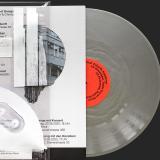
Clear Coloured Vinyl incl. Booklet in silk screened pvc sleeve

Sound fragments unfold across Zurich, making loss, memory, and cultural change physically and acoustically perceptible. In The Rhythm of Design, Zurich-based fine arts duo Michael Meier & Christoph Franz explore urban displacement and its impact on the local music scene.

Focusing on six venues that have disappeared or are under threat, the artists collected materials on site—wood, metal, and other architectural elements—and, with the support of professional instrument builders, transformed them into six musical instruments. Six artists and groups connected to these spaces—namely Kalabrese, Tobibi Ferrari-Bienz, Rafal Skoczek, Lucien Badoux & Jeremy Sauter, Nicola Kazimir, and Dualism—each composed a piece for them, forming the basis for site-specific performances in September 2025. Rather than performing as an ensemble, the works—ranging from experimental funk and punk to kraut, noise, and drone—unfolded simultaneously in spatial fragments at the original locations. Only through movement and listening across the city did the composition emerge as a whole. ​​The work was realized in collaboration with the City of Zurich, Art in Public Space (KiöR).

Eight months after the original performances took place, the pieces are released via Switzerland-based publishing platform Präsens Editionen. The record—available as a limited-edition coloured vinyl with a special artwork, as a digital album, and for streaming—carries the fragmented sounds of Zurich into a new form of collective memory, extending the work beyond its original locations as a lasting document of urban transformation.


* Edition of 300 clear color vinyl
* Special artwork feat. silk-screen printed plastic sleeve and an extensive booklet, designed by award-winning graphic design studio A Language, Melina Wilson and Martin Stoecklin
* Published by Präsens Editionen

pre-order now10.06.2026

expected to be published on 10.06.2026

Various - XKatedral Anthology Series I 2x12"

XKatedral Anthology I is the first in a series of archival releases dedicated to presenting music by XKatedral affiliated composers working within the realm of slowly evolving harmonic and timbral music. This double-vinyl set contains an array of pieces dating from 2010 - 2020. Four of the works included here were originally released on cassette tape early on in the label's history, while the two remaining pieces are presented by the label for the first time.

"The works Ir Himinn, Grooenn by Kristoffer Svensson, Disquiet (Heart) by Marta Forsberg and Lamé by Isak Edberg were first released on the compilation XKatedral Volume II in 2016. Svenssons piece from 2014 combines justly tuned gamelan percussion and prepared piano intricately interwoven in a way that obscures the boundaries between the two instrument groups. Forsberg and Edbergs pieces both use a monolithic form to explore the timbral and harmonic spaces provided by the Düben Baroque organ situated in Tyska Kyrkan in the oldest part of Stockholm. While similar in terms of instrumentation the two works differ formally - Edbergs Lamé composed in 2010 uses the registers of the organ to articulate a seamless spectral transformation while Forsbergs Disquiet (Heart) from 2014 deals in blocks of sound with a varying degree of opacity, saturation and intensity.

Glory for two electric guitars by Caterina Barbieri and Kali Malone was composed and recorded in Tempo Reale in Florence, Italy, and was originally released on the cassette compilation XKatedral Volume III in 2016. This music takes the form of an ever-evolving hypnotic pattern shared by the two instruments articulated through an additive and subtractive canon. Dissolving Ceremony, composed in 2012 by Edberg/Erlandsson/Lisinski, was first presented publicly on the self-released record Stratum. The music contained in that release was formed from a collection of gamelan percussion instruments augmented by two sets of live-electronic instruments tuned to the harmonic framework formed by the partials of the metal percussion. Originally positioned in the center of the record running order between two long monolithic process-based pieces, Dissolving Ceremony now stands on its own as a memory of a time and methodology from the not so distant past.

The newest piece in this set is Shipwrecks by Daniel M Karlsson. While this work is a recent one Karlsson should be considered one of the forerunners of the musical expression contained within this record set. Active within new music for two decades his strongly articulated musical ideas and constantly evolving craftsmanship has resulted in an enormous body of work, and has served as an inspiration for many of his fellow composers. This piece is a celebration of transposition and its immense capacity for timbral transformation using a vast array of instruments performed, recorded and electronically treated by the composer to form a liquid uncanny topography where a deeply personal harmonic language constantly shifts, slides and shivers."

out of Stock

Order now and we will order the item for you at our supplier.

Last In: 4 months ago
K8A - Woradj Alle

K8A

Woradj Alle

12inchDS-045
Domino Sound
30.04.2026

"K8A a.k.a. Kaethe Hostetter is a New York–based violinist. composer, and bandleader, whose work grew out of eleven years living and collaborating in Ethiopia. As a founding member of Debo Band and QWANQWA, Hostetter has been performing Ethiopian music for over two decades, and her solo debut, Woradj Alle, builds on this legacy by reimagining Ethiopian songs through live-looped violin and electronics.
"The album unfolds as a hypnotic, ritual-like performance that expands the instrument into an immersive sonic landscape, that refracts Ethiopian classics through dub, psych rock, and avant improvisation. It is not fusion, but transmission - music that blurs memory, place, and time.
"This collection of musical vignettes is based on my time in Ethiopia, the place I called home for 11 years", Kaethe explains. "The phrase 'Woradj Alle' is one of the first colloquial expressions I learned upon arriving in Addis Ababa, used on public transportation, simply meaning 'let me off right around here'. In choosing this name, I invite you to join me on the rickety minibus journey through my time in Ethiopia, and step off 'the bus' into scenarios, atmospheres, and soundscapes that describe moments I experienced, people I met, and other lasting impressions, striking and mundane."

pre-order now30.04.2026

expected to be published on 30.04.2026

MICHIEL SEKAN - SOUNDWRITERS

MICHIEL SEKAN

SOUNDWRITERS

Books978909040730
JIWA JIWA
15.03.2026

Soundwriters maps a hidden chapter of postwar music history. Sixty two rare and overlooked releases by Indonesian diaspora artists recorded in the Netherlands and Suriname, from soul and funk to reggae and pop. Built from deep archive work and crate digging, this book traces how migration shaped sound, scenes, and record culture between 1969 and 1989.

An homage to the unsung heroes of the underground and deserved recognition for the diaspora pioneers.

Michiel Sekan (Amsterdam, 2025)

Soundwriters: The Incomplete Guide to Indonesian Diaspora Music (1969–1989) is a book and catalogue devoted to artists whose work shaped the cultural life of postcolonial Netherlands, yet rarely entered official archives.
Written by Michiel Sekan with additional research by Harry “Munir” Septiandry, the book combines historical analysis with personal reflection. Essays move between migration histories, colonial legacies, family memory, and music culture. At its core sits a catalogue of sixty two releases that document the range of sounds created by Indo-European, Moluccan, Papuan, Javanese Surinamese, Peranakan, and broader Indonesian diaspora communities.
Soul, funk, pop, reggae, rock, and protest songs appear side by side. Together they form an aural record of resistance, adaptation, and creativity across continents.
Printed in Jakarta and published by Jiwa Jiwa in three languages, Dutch, English, and Indonesian, Soundwriters positions music as both archive and testimony. It asks how sound preserves stories when written records fall short, and how listening can reconnect personal memory with shared history.

The project extends beyond the page through exhibitions, listening rooms, documentaries, and public programs in the Netherlands and Indonesia.

SHORT ABOUT THE AUTHOR
Michiel Sekan is an Amsterdam based DJ, curator, and multidisciplinary artist. Through his platform Jiwa Jiwa he researches and presents music from the Indonesian archipelago and diaspora across radio, exhibitions, publishing, and club culture. His work links record collecting with archival study and personal history. Soundwriters is his first book.

pre-order now15.03.2026

expected to be published on 15.03.2026

Various - Nahma: A Gulf Polyphony

Various

Nahma: A Gulf Polyphony

2x12inchFLEE003B
FLEE
30.01.2026

New FLEE publication focused on Arabian Gulf's pearl divers, their culture through their soundscape, traditional songs & rhythms. Including archival recordings and reinterpretations by moderns electronic artists such as Joakim, Tomaga, Ben Bertrand, Conny Frischauf, Hieroglyphic Being .....

Available as 2LP, black vinyls & 2LP+258p book (English & Arabic text) bundle.

The pearls of the Gulf have stoked the imagination and desire of people around the world for centuries, their magnificence matched only by the courage of the divers who found them. This project aims to honor the memory of these valiant free-divers, their culture and their music by the means of a 2XLP compilation with undisclosed original recordings of pearl divers and inspired modern-day compositions by artists like Tomaga, YPY, Ben Betrand, Tarek Yamani or Hieroglyphic Being. Along with that record, a 258 pages long book in Arabic and English is available featuring contributions from regional experts and artists to contextualize the tremendously rich theme that is pearling and its music.

out of Stock

Order now and we will order the item for you at our supplier.

Last In: 7 months ago
Docteur Nico & African Fiesta Sukisa - African Fiesta Sukisa 1966-1974
  • Mobali Nakobala (Nico – Ngoma J 5127, © Sukisa) Rumba Lingala
  • Nalingi Yo Na Motema (Nico, Chantal – Ngoma J 5130 © Sukisa) Kiri-Kiri
  • Mokili Makambo (Nico – Sukisa 93) Kiri-Kiri
  • Ata Osali (Chantal – Ngoma DNJ 5214, © Sukisa) Rumba Lingala
  • 1: er Boeing (Kwamy – Air Congo) Merengue
  • Hommage A Lumumba Patrice (Sukisa 44) Mabanga
  • Bougie Ya Motema (Nico – Sukisa 47) Rumba Lingala
  • Okosambuisa Ngai (Mizele – Sukisa 66) Rumba Lingala
  • Sule (Nico – Sukisa 50) Rumba Lingala
  • Okosuka Wapi ? (Josky – Sukisa 110) Danse Kono
  • Kamungaziko (Lessa Lassan – Sukisa 114) Danse Kono
  • Mokili Matata (Nico – Tcheza 10.001; © Sukisa) Rumba-Kono Lingala
  • Baoulé (Lassan – Sukisa 99) Kiri-Kiri
  • Beauté (Nico – Sukisa 101) Rumba Lingala
  • Mansanga (Nico – Sukisa 131) Rumba Lingala
  • Souzi (Sangana – Sukisa 117) Rumba Lingala
  • Naboyi Koswana (Sangana – Sukisa 120) Rumba Cha Cha
  • July (Julie – Sukisa 120) Madre Rumba
  • Runeme Mama (Nico – Sukisa 47) Cha Cha Cha
  • A Morow (Arr. Nico – Sukisa 66) Cha Cha Cha
  • Apôtre Del Si Boney (Apôtre – Sukisa 73) Charanga
  • A La Savana (Arr. Nico – Sukisa 62) Pachanga
  • Alto Songo (Arr. Nico – Ngoma J5126, © Sukisa) Rumba Espagnol
  • Para Bailar (Nico – Sukisa 50) Pachanga
  • Meta Fua Mudia (Kaba – Sukisa 118) Rumba Lingala
  • Exhibition Show (Nico – Sukisa 135) Instrumental
  • Exhibition Dechaud (Dechaud – Sukisa 71) Instrumental
  • Bolala - Ayando (Nico – Sukisa 132) Extrait Show Kasanda
  • Excitation - Makwandungu - Ngombele (Nico – Sukisa 132) Extrait Show Kasanda
  • Kamulangu

'In collaboration with the children of Nico Kasanda, better known as Docteur Nico, Planet Ilunga proudly presents an anthology dedicated to African Fiesta Sukisa, available as a 3LP set and a digital release with bonus songs. This release is the result of many years of preparations and was realized in close partnership with Liliane Kasanda, Nico’s eldest daughter. Marking forty years since his passing, we felt that the year 2025 was the right time to honor Docteur Nico’s legacy with this original collection.
'Almost all of the African Fiesta Sukisa songs were released on Nico’s Sukisa label which translates in Lingala for “the final accomplishment”. The music on Sukisa, crafted by Nico and legendary vocalists such as Chantal, Sangana, Apôtre, Mizele, Lessa Lassan and Josky, embodies the essence of that powerful phrase with genius, class and depth. The label ran between 1966 and 1975 and released approximately 280 songs. Ngoma also issued the group between 1967 and 1971 and, in addition, reissued material from the Sukisa label. Many of these songs have become part of the collective memory of Congolese society and are still heard, discussed, and analyzed daily across digital platforms worldwide, as well as on numerous Congolese radio and TV stations.
'The album we put together features some of Nico’s signature songs alongside never before reissued tracks from the Sukisa catalog. It furthermore contains a large booklet with song commentary, testimonial interviews from well-known musicians, journalists, fans and Nico’s entourage, besides never before published photography about his personal and musical life.
'Alastair Johnston, author of the book ‘A Discography of Docteur Nico’ and longstanding Planet Ilunga collaborator, designed a stylish booklet and cover using all our collected material. Audifax Bemba, longtime admirer, compiler and connoisseur of Nico’s music, and the author of most of the song commentary in our accompanying booklet, offers his portrait of Docteur Nico:
“After displaying technical virtuosity with African Jazz, expert and accomplished guitar with African Fiesta, which musicologist Sylvain Bemba described as a dream guitar, Nico Kasanda was consecrated ‘dieu de la guitare’ by the public in the late sixties. With his band African Fiesta Sukisa, Docteur Nico displays his wide palette of unusual sounds. While exploring the Hawaiian guitar with its clear, airy, plangent, psychedelic effluvia, he continues to replicate the piano comping technique, and adds two missing strings to his bow: a simulation of the sanza (likembé or thumb piano), whose sounds he reproduces right down to the noisemakers of the tiny tin rings, on the one hand, and the sounds of the Luba balafon on the other. The right note, in the right place, at the right time, is the triptych on which Nico Kasanda’s playing is based, a note dressed in the perfect sound. A guitar of pure emotion. With African Fiesta Sukisa, his playing takes a ‘Chopin-esque’ turn, sending out more notes in a sublime adagio. The true artist is the one who simplifies everything. Docteur Nico is a genius of our time, whose style makes him the supreme exponent of the most important guitar school in Congolese music. He is recognized by his peers as the greatest African solo guitarist of all time. Sculpting sound in a tireless quest for beauty, Nico Kasanda has sublimated the guitar throughout his career.”


[xd] Kamulangu [Outro] (Dr. Kasanda – Sukisa 135) Folklore Baluba

pre-order now05.12.2025

expected to be published on 05.12.2025

DÍDAC - DÍDAC

Dídac

DÍDAC

12inchFA022
Fasaan Records
04.11.2025

In between the folds of ceremony and commonality lies a perennial spring of musical expression.

A statement along the time continuum, or a testament to the resilient resourcefulness embedded in that truth, forms the philosophical approach of this album – the first outing of Dídac.
Studying an extensive archive of instruments, artifacts, and field recordings at the Musée d’ethnographie de Genève—a space steeped in folkloric gesture – Dídac encountered a cosmos of liturgical music and folk song. Anchored in reverance for tradition and transformation alike, this album navigates the old-world Mediterranean lore through a post-modern ambient lens, threading drone, gentle rhythm, electroacoustic textures and the crude tactility of archival material into one woven tapestry.

Under the guidance of Dr. Madeleine Leclair, Dídac was invited to work within one of the world’s most extensive ethno- musicological archives—L’AIMP. In the saturated basements and tape-lined backrooms of the museum, he submerged himself in the sounds of ritual and rural life: wax cylinders from the Eastern Mediterranean, tapes of liturgical hymn, the worn edges of communal song.
In a makeshift studio on the fourth floor of the museum, he sifted through the hours of material he collected, gradually discovering that the archive was no static source – It did not dictate; rather, it served as a companion—offering not answers, but questions. Not a beaten track, but a cluster of sonic clues and riddles. Samples do appear occasionally, tenderly interwoven into the dialogue of the songs. In Dídac’s self-titled debut, the past is not worn as ornament or kitsch; it is listened to and responded to. The museum, its archives, and the visit to Geneva became a foundational culisse of sorts, igniting a myriad of rough cuts and improvisational outtakes.
Dídac, or Diego Ocejo Muñoz, was born in Madrid in 1994 to a family of both Catalan and Castilian origin.

Brought up in a religious household, the influence of the Catholic Church innately shaped the social fabric, schooling and daily life. This lingering dominance led the adolescent Diego into a path of rejection of everything sacramental, promptly resorting to subversion in the shape of grafitti, skateboarding and underground music. Only later in life, after a rigorous venture as an acid and electro producer, the Church re-emerged before him in new light, invoking a deep fascination for its mysticism, iconography and choral tradition.

Spain in general and Catalonia in particular, has long served as a crossroads of the eastern–western Mediterranean continuum, with many of its cultures sharing aspects of way of life and ceremony. At the MEG, Diego found himself puzzled with this realization, resulting in a sonic amalgamation that reaches farther away from the rugged mountains of Catalonia than you might perceive at first encounter.

The deeply embedded memory of rite and public ceremony, religious hymn and landscape—sieved through the undercurrent of personal re-emergence, forms the emotional topography of this album. The record does not trace this landscape; it inhabits it. Its repetitive mysticism and ambient, wide-eyed gaze could possibly evoke (perhaps redundant) comparisons to artists such as Dimitris Petsetakis, or Popol Vuh’s late 70’s cinema scores.
The delicate lines between the sacred and the secular – between memory and re-invention – serve as a cipher to understanding this album in its entirety. Titles like Malpàs Mines or Pantocrator’s Portal Outro nudge toward a folkloric and devotional bedrock—places where labor and spirituality coexist, where names preserve both dust and veneration.

Nevertheless, this is far from mere nostalgia. It is a reclamation — singing alongside the spirits of the past, nurturing what still hums beneath the soil. It is an intimate reflection on tradition, rebellion, adolescence, ceremony and fantasy – a pastoral contemplation on what once was and what is to be.

out of Stock

Order now and we will order the item for you at our supplier.

Last In: 10 months ago
Various - Pasé Bél Tan : Francophonies & Creolities in Louisiana LP 2x12"
 
34
also available

Vinyl


The songs of Louisiana's Francophone and Creole heritage have flowed through the bayous for centuries, shaped by African, Native American, French, and Caribbean influences. Combining a vinyl record and a bilingual book, Pasé Bél Tan: Francophonies and Creolities in Louisiana celebrates this cultural legacy. It pairs historical recordings with contemporary reflections, inviting artists and scholars to explore this ever-evolving soundscape. Bridging a vibrant present with a painful past, it creates a space for dialogue around identity, memory, and the ongoing transformation of Louisiana’s musical traditions.


The double vinyl compilation and its OBI strip features a staggering 34 songs, ranging from French ballads and Creole renditions to zydeco hooks and reinterpretations by a wide array of contemporary artists such as Madteo, Tanz Mein Herz, Radio Hito, Cyril Cyril, and Deafkids, among others. With archival recordings and contemporary creations side by side, it serves as a bridge across the vast bayou of Louisiana music.


The book is a 272-page bilingual (French/English) publication that seeks to encapsulate the far-reaching implications of Louisiana’s musical heritage within both Louisianan and American society. It explores how this culture has shaped—and been shaped by—its surroundings. With contributions from many key figures of the scene—musicians, researchers, club owners, and other vital witnesses—it aims to present the intricate and singular relationship that exists between Louisiana and its music.


The book only is not available through distribution but only as a bundle with the 2LP version.

pre-order now19.09.2025

expected to be published on 19.09.2025

Various - Pasé Bél Tan : Francophonies & Creolities in Louisiana LP 2x12"
  • Elby "Bee" Deshotels - Dessus le Natchitoches
  • Alma Barthélémy - Jamais je t'oublierai (la claire fontaine)
  • Alma Barthélémy - Ma bonne Créole
  • Alma Barthélémy - Tu peux pas mettre ce macaque dessus mon dos
  • Caesar Vincent - Vive le vin
  • Caesar Vincent - Travailler c'est trop dur
  • Caesar Vincent - La chanson de ma jolie maîtresse
  • Caesar Vincent - Oh les trains quand ils jubutaient
  • Raywood Morvant - La cravate
  • Chalvin Godar - Ma négresse m'a quitté
  • Chalvin Godar - Allons au bal, Colinda
  • Raywood Morvant - J'ai passé devant ta porte
  • Burton LeMaire - La Marseillaise
  • Clifton Chenier - Laissez les bons temps rouler
  • Clifton Chenier - Les haricots sont pas salés (Zydeco sont pas salé)
  • Clifton Chenier - Jolie Blonde
  • Isome J. Fontenot - J'ai traversé la mer et les montagnes
  • Isome J. Fontenot - La Banane à Nonc Adam (Club 73 Special/Acadian Two-Step)
  • Isome J. Fontenot - Rythmes de triangles
  • Gabriel Broussard - Train à vapeur
  • Gabriel Broussard - Train à vapeur avec un chien qui essaie d'attraper un prisonnier qui s'est échappé du train
  • Chalvin Godar - Oh oui, dans la triste vise
  • Gabriel & Emeline Broussard - J'ai engagé ma promesse au baptême
  • Cyril Cyril - Evangelione Bebop
  • Radio Hito - Bonne créole
  • Yama Warashi - Librement
  • Herandu - Jungle Blonde
  • _thesmoothcat - Systems Everywhere
  • Juu - Ride Out
  • NAPPYNAPPA - Fear of Freedom
  • Deafkids - A Travessia
  • Madteo - From the Boot to Tap (Foot Version)
  • Chimère FM - Train à vapeur avec un chien (hobo des limbes retouche)
  • Tanz Mein Herz - Le Natchitoches 06:11
also available

Vinyl + Book


The songs of Louisiana's Francophone and Creole heritage have flowed through the bayous for centuries, shaped by African, Native American, French, and Caribbean influences. Combining a vinyl record and a bilingual book, Pasé Bél Tan: Francophonies and Creolities in Louisiana celebrates this cultural legacy. It pairs historical recordings with contemporary reflections, inviting artists and scholars to explore this ever-evolving soundscape. Bridging a vibrant present with a painful past, it creates a space for dialogue around identity, memory, and the ongoing transformation of Louisiana’s musical traditions.


The double vinyl compilation and its OBI strip features a staggering 34 songs, ranging from French ballads and Creole renditions to zydeco hooks and reinterpretations by a wide array of contemporary artists such as Madteo, Tanz Mein Herz, Radio Hito, Cyril Cyril, and Deafkids, among others. With archival recordings and contemporary creations side by side, it serves as a bridge across the vast bayou of Louisiana music.


The book is a 272-page bilingual (French/English) publication that seeks to encapsulate the far-reaching implications of Louisiana’s musical heritage within both Louisianan and American society. It explores how this culture has shaped—and been shaped by—its surroundings. With contributions from many key figures of the scene—musicians, researchers, club owners, and other vital witnesses—it aims to present the intricate and singular relationship that exists between Louisiana and its music.


The book only is not available through distribution but only as a bundle with the 2LP version.

pre-order now19.09.2025

expected to be published on 19.09.2025

SAM WILKES - DRIVING - SUNSET EDITION

Sunset edition - 300 copies

Driving is Sam Wilkes’ Indie Rock record. Iit is the first release on Wilkes Records, an imprint borne of the artist’s emergent need to self-release. The songs presented here exist comfortably within the ever-expanding Wilkesian cosmos, characterized as they are by virtuosity, torqued experimentalism, and collaboration with a range of talented musicians. But Driving’s influences, its sincerity, and its allegiance to a certain pop sensibility reflects a departure for an artist who has primarily staked his claim within the experimental jazz idiom.

Take the first track, “Folk Home,” which inaugurates the album’s fecundity—a bright, green, humid, summer feel. A swirling, freakout coda of reversed vocals gives way, in no short order, to a caterwaul of flute work that conjures Van Morrison’s (in)famous Astral Weeks sessions. Standing beside Morrison, the usual suspects are all present, if somewhat abstractedly. Dylan, The Dead, Joni, the Fab Four. Wilkes has developed a reputation as an experimental jazz luminary, but his deep affinity for the pop/rock/folk idiom of the latter twentieth century rings clear throughout Driving. More so than any Wilkes release to date, Driving is a collection guided by and dedicated to the man’s attention to songcraft.

Written and recorded during a period of rain-damage induced renter’s itinerance (and the attendant desire to produce a kind of therapeutic, self-soothing, home-feeling music), Driving loosely charts the trajectory/experience of “a protagonist,” both Wilkes and not, “who has figured out how to live an enlightened and fulfilled life, but is unable to do so because he thinks about it too much.” This friction is surely relatable — a symptom of our compulsively self-aware present. But Wilkes avoids the obvious pitfalls of public hand-wringing. Rather, Driving’s nine tracks evince a genuine, and mature searching-ness, both sonically and lyrically. The ending refrain of “Own” serves like something close to a thesis— “Letting go // isn’t a concept // it’s an action.” In an attempt to beat back ego, hyper-cogitation, language itself, Wilkes arrives at an axiom that feels so true and familiar, you’d swear you’d heard it one hundred times before.

Driving’s final third is, fittingly, its most emotive and cathartic. Tracks seven and eight, “Again, Again” and “And Again,” form a diptych, joined most obviously by the jangling, recursive grooves of guitarist Daryl Johns. Wilkes is said to have encouraged Johns to go “full Lindsey Buckingham” (clearly a welcome and resonant prompt), but one also catches stray Knopfler vibes, some intermittent Fripp, and (perhaps more-so in tone than technique) the spirit of DIY prophet and jangling man himself, Martin Newell (the Cleaners from Venus). Wilkes has stated that he finds joy in creating musical environments suitable to the contribution and flourishing of his favorite musicians. Throughout Driving, and in these two tracks especially, he has more than succeeded.

The record closes with the titular track: a story-song that, according to Wilkes, poured out of him (melody, composition, and lyrics) in a single sitting. The tale is told plainly, bravely, starkly; a mistake was made, regrets have been had, and all is wrapped up in the recollection of a deeply felt adolescent heartsickness—a time when the narrator was first afire with music and automotive freedom. The song captures the moment when meaning inexplicably falls into place, when a long-nagging memory suddenly assumes narrative form, and the subsequent sense of lightness and unburdening. It is fitting that Driving, a record conceived as a form of self-therapy, should culminate with a sense of humble revelation. That Wilkes is plainly eager to share the vulnerable fruits of this labor constitutes Driving’s joyful offering.

Words by Emmett Shoemaker

pre-order now28.03.2025

expected to be published on 28.03.2025

Aric - I Love Your Love

Lost tracks don’t stay lost forever. Running Back is proud to present the reissue of Aric’s I Love Your Love – a long-forgotten gem from the good-time party days of the early dance era. Originally created in the spirit of celebration and groove, these tracks disappeared into obscurity until a few dedicated DJs and dancers across the globe began bringing them back to life.

When Elado stumbled upon the songs and saw the magic they still held for modern dancefloors, he tracked down Aric – now better known as Dr. Aric, a paediatric public health professional – to bring the music back to the world. What followed was a journey through memory, music, and rediscovery.

The result is here: the original cuts, plus fresh remixes from Elado, Pete Blaker, and Gerd Janson. Nostalgia meets new energy, and the dancefloor wins again.

out of Stock

Order now and we will order the item for you at our supplier.

Last In: 5 months ago
NORBERTO DE NOAH - NORBERTO DE NOAH AND THE BOHOBE SPIRITS MUSIC

The Equatoguinean Norberto de Nöah established in Madrid in the early 80s, where he became a firebrand of African culture in the vibrant Movida. In 1988 he self-released his first solo album, a blend of homeland sounds —modern and traditional— with new synth and drum machine touches. The vanished album finally gets its well-deserved reissue.

Edition of 500 albums on vinyl (Bandcamp download code included) - Original artwork with new 14 pages insert and poster

In the mid-1980s, the European media, music industry and public became increasingly interested in African music. This was a period of international success for King Sunny Adé, Salif Keita, Youssou N’Dour, Ray Lema, Touré Kunda, etc. Spain, with its own particular conditions, wasn’t oblivious to the phenomenon and the Equatoguinean Norberto de Nöah may be its best exponent.

Norberto moved in the early eighties from his hometown in the island Fernando Po (now known as Bioko) to its former colonial capital, Madrid. While studying dramatic arts, he created and led the band Nohkis, made up of African and Spanish musicians. In 1985 they released the maxi-single “Mujer española” / “África, ¿dónde está tu gloria?”, and the song “El loco”, was released on a compilation LP called Esto es increíble, both on the label Lollipop. According to the journalist Patricia Godes, they were first artists to record an African music record in Spain. It received positive reviews and a great impact on the most independent side of Madrid’s La Movida movement. Very soon afterwards, Nohkis’ band split up.

Afterwards, Norberto would concentrate on his solo career, and Norberto de Nöah and The Böhöbé Spirits Müsic was released in 1988, definitely a solo album. Norberto created his own label, Kilimandjaro Productions, and composed, arranged and produced all the songs of the LP. Moreover, he sang and played all the instruments: a vast selection of organic instruments, a Yamaha RX-5 drum machine and a Roland D-50 synthesizer.

In the album he exposed his deepest roots, updating the lexicon of traditional Bubi music, the musician’s ethnic group, a compendium of ceremonial melodies that ancient troubadours composed for the court. Doing so he showed new possibilities to one of the oldest ethnic groups in the world. Besides all this, he was also inspired by American music such as funk, R&B, Latin American music and also by a wide range of African and Caribbean rhythms.

Mixing the traditional and the avant-garde in a spontaneous and natural way, the music contained in the record’s grooves flows freely and takes you to places full of magic and mystery, while still transmitting new and exciting sensations. Even more, according to the Equatoguinean musician and writer Baron Ya Búk-Lu based in Madrid, the album’s sound was “the perfect combination of all characteristics that defined the Equatoguinean Afropop music made in Madrid during the 1980s”, a story that still needs to be told in all its depth and intensity!

Following the release of two LPs and several singles, the activity of Norberto de Nöah and Kilimandjaro Productions (and the subsequent Bananas Podridas) ceased. Nevertheless, Norberto’s links to music continued, as a promoter and DJ in Madrid’s nightlife.

Norberto de Nöah contributed greatly to changing Spain’s musical landscape, breaking barriers and mental frameworks. He was the first to make contemporary and popular Guinean music known to the Spanish public.

The repercussions in the African market of a Spanish (and Bube) speaking African musical project, where English and French dominate, was very difficult. In addition, the passage of time and changes in phonographic formats have diluted the memory of Norberto's legacy. Now it’s time to reverse the situation and break all the outdated frontiers!

Norberto de Nöah and The Böhöbé Spirits Müsic, as every important music piece, was at the same time part of a universal phenomenon of recognition of African music and a very personal project, based on the artist’s nostalgic and heartfelt need to show and homage his ethnic group, the Bubis. In this process he also refreshed his hometown music legacy, giving it a new air and opening the door to lots of other great Equatoguinean artists coming afterwards, as well as being an inspiration for many musicians in Spain.

pre-order now13.12.2024

expected to be published on 13.12.2024

PALE JAY - Low End Love Songs LP

Admittedly, I'm not a great salesperson when it comes to running our little label. I do my best not to give into hyperbole or build something up too intensely if someone has not heard a new artist yet. I prefer to simply present the music and let the listener decide how they feel about it. However, we live in an age when the "story" put together by publicists, labels, and managers are often the driving force of an artist's ascension into the zeitgeist. And for me, that's always felt rather artificial, even when the narrative is genuine. But every once in a while, a project comes along that takes on a life of its own. And I can say without a doubt that the growth of Pale Jay's reach since we first started working with him has little to do with conjured narratives or clever marketing, but more to do with how the music makes the listener feel. It's that simple. In fact, Jay is so enigmatic and without a narrative that the mere absence of a story has become the story. Who is he? Where is he from? What's next? Some questions are better left unanswered in my opinion, my friend. Including the question, "Why does this music make me feel so much?" You're better off just sitting back, disconnecting, and letting Low End Love Songs by Pale Jay wrap you up. Enjoy and spread the good word. - Terry Cole

"Low End Love Songs", more so than previous releases, is a diary in form of song. I knew I just had to wait for the songs to be ready to be picked, like ripe fruit from a tree. Each tune encapsulates a distinct moment in my life, with music serving as my means of processing complex and sometimes conflicting emotions. In this album, I depart from loop-based song structures towards more intricate and lush compositions. Latin influences permeate the music, adding new layers of rhythms and textures to my soul-music roots. - Pale Jay

out of Stock

Order now and we will order the item for you at our supplier.

Last In: 2 years ago
PALE JAY - Low End Love Songs LP

Admittedly, I'm not a great salesperson when it comes to running our little label. I do my best not to give into hyperbole or build something up too intensely if someone has not heard a new artist yet. I prefer to simply present the music and let the listener decide how they feel about it. However, we live in an age when the "story" put together by publicists, labels, and managers are often the driving force of an artist's ascension into the zeitgeist. And for me, that's always felt rather artificial, even when the narrative is genuine. But every once in a while, a project comes along that takes on a life of its own. And I can say without a doubt that the growth of Pale Jay's reach since we first started working with him has little to do with conjured narratives or clever marketing, but more to do with how the music makes the listener feel. It's that simple. In fact, Jay is so enigmatic and without a narrative that the mere absence of a story has become the story. Who is he? Where is he from? What's next? Some questions are better left unanswered in my opinion, my friend. Including the question, "Why does this music make me feel so much?" You're better off just sitting back, disconnecting, and letting Low End Love Songs by Pale Jay wrap you up. Enjoy and spread the good word. - Terry Cole

"Low End Love Songs", more so than previous releases, is a diary in form of song. I knew I just had to wait for the songs to be ready to be picked, like ripe fruit from a tree. Each tune encapsulates a distinct moment in my life, with music serving as my means of processing complex and sometimes conflicting emotions. In this album, I depart from loop-based song structures towards more intricate and lush compositions. Latin influences permeate the music, adding new layers of rhythms and textures to my soul-music roots. - Pale Jay

pre-order now06.09.2024

expected to be published on 06.09.2024

Idrissa Soumaoro - Diré

Idrissa Soumaoro

Diré

12inchMRB-ML01-019
Mieruba Record Label
03.06.2024

‘Diré’, Idrissa Soumaoro new album, comes as a surprise to Malian and international audiences. Composer, singer, guitarist and master of the kamalen n’goni Idrissa Soumaoro presents here a beautiful collection of songs on his third album, Diré, named in honor of the town where he met his wife and where his first daughter, who is no longer with us, was born.
In 1971, after his studies at the INA in Bamako, Idrissa was transferred to Diré to teach music at the lPEG (Pedagogical Institute of General Education). He was 22 years old when he arrived in Diré. Idrissa has always been nostalgic for this beautiful place in the 333 Saints of Timbuktu region. As Idrissa sings in ‘Diré taga’ (Going to Diré), the track that opens the album, the city evokes deep emotions for the artist, as if it were a long-lost friend or lover. Celebrating the memory of the city of Diré leads the artist to retrace stories and lived situations that marked and animated him in years gone by: ‘I really miss the people, the colleagues, the friends and that period. Despite the time that has flown by, I would ardently wish to see Diré again’. Today, at the difficult time Mali is experiencing, remembering the city of Diré in the 1970s also means for the artist not giving up hope for peace: ‘The memory of Diré, a beautiful town in northern Mali, strengthens my hope for peace, union and real independence for the happiness of my people’; as he sings in ‘Sababou’, ‘Without hope, there is no life. Together we will succeed’.
The ten highly original compositions of the album are strongly based upon traditional music of Mali, but Idrissa’s life experiences, travels, education, collaborations and personal musical career have led him to compose and perform music with other influences. As Idrissa quotes: ‘My inspiration generally comes from the donso n'goni, a Bambara instrument played by and for hunters throughout Mali. This is a pentatonic instrument, similar to the blues exported to the USA by black African slaves. I've also spent so much time playing a variety of music that my music also reflects rumba, salsa (as well as Bamanan blues and a few derivatives: jazz, country, soul, rhythm and blues) etc. I have looked for and hope to have found my own form of expression from these influences’.
Throughout the album, his strong, clear voice sings in French, Bambara and English. It rides seamlessly upon a complex rhythmic sea of distinctly West African stringed instrumentation and percussion with accents of flute and balafon. There are keyboards in a few songs, but these, happily, do not dominate the music as we hear so often in today’s music. This album presents the music of a mature artist who has ‘been there, done that’ and returned to celebrate his country, his roots and his dreams in a flawlessly produced collection of songs of love, reassurance, fatherly advice and hope.
The album already has a long history: it was initiated in 2012 by Marc-Antoine ‘Marko’ Moreau, former producer and manager of Amadou and Mariam. Moreau had plans to produce the album and invited Idrissa Soumaoro to start recording in Manjul's studio in Bamako. When Moreau suddenly passed away, work on the album was still missing. The pandemic still added time for the production to continue. With the help of Climax Orchestra, arrangements and orchestrations were finalized in France. At the artist's behest, 'Diré' will finally be presented to the public by Mieruba, the independent label based in Ségou, the home of the blues in Mali. 'Let's stand together so that Mali can flourish': from conception to production and distribution, this is the message that 'Diré' carries.

out of Stock

Order now and we will order the item for you at our supplier.

Last In: 2 years ago
Slate - Deathless LP

Slate

Deathless LP

12inchBYREC59EP
Brace Yourself Records
30.04.2024

Following the force of their introductory singles 'Tabernacl' and 'St Agatha', the band return with an invitation to explore their landscape of violent poetry and gothic propulsion to the fullest extent yet. Prepare to be lulled under their spell once more with the slow-burn of forerunning single, 'Remoter Heaven'.

Produced by long-time collaborator Buzzard Buzzard Buzzard's Tom Rees. It begins in a dream state of hypnotic repetition that mounts in intensity, with vocalist Jack Shephard presiding over it all with his distinctive, poetic drawl. His protagonist is revisiting a memory of the pain inflicted by a thorn as a child; "I was awake with feeling", he confesses, before the song takes on the momentum that feels like a triumph over the numbness attendant to adulthood.

Of the track, Shephard shares: "I liked the idea of writing a very simple narrative to a big, epic song - something as modest as the story of a child playing in some flowers and then bursting into tears when a thorn pricks their leg. The words are an ode to that sensitivity we embrace when we are young. Then, when we become adults, we insist on subjugating all of that wonderful, absurd rage."

'Remoter Heaven' follows on from 'Tabernacl' and 'St Agatha' which earned Slate rave write-ups and support from publications including NME, CLASH, So Young, DIY, Buzz Magazine, The Most Radicalist and more, as well as early radio plays from the likes of Huw Stephens and Steve Lamacq on BBC 6Music, Matt Wilkinson on Apple Music 1, John Kennedy on Radio X and Jack Saunders on BBC Radio 1.

pre-order now30.04.2024

expected to be published on 30.04.2024

Pete Molinari - Wondrous Afternoon
  • A1: Wondrous Afternoon
  • A2: Only When I Love
  • A3: You’re Poetry To Me
  • A4: My Careless Heart
  • A5: Rolling The Dice
  • A6: The Rampaging Sons Of The Widow
  • B1: Cezanne Cezanne
  • B2: Always Letting Go’
  • B3: Love Is Just A Word
  • B4: NarcissusB Intermezzo #7

PETE MOLINARI is a singer-songwriter from the Medway Delta. He was born into a large Maltese/ Italian/ Egyptian family in Chatham, Kent, where he was discovered by Billy Childish.
He’s got five critically-acclaimed albums’ worth of timeless folk, blues, rock and alt- country songs to his credit, plus a bunch more EPs.
He’s often described as a songwriter’s songwriter. Bruce Springsteen once publicly proffered: “Pete Molinari – if you don’t know anything about him, he’s great!”
Rome has a secret heartbeat, an underground and urgent pulsation whose memory is preserved within the walls of old recording studios, in the tales of veterans, and most of all in the grooves of the soundtracks of Cinecittà. Music that has always flirted with poetry.
Pete Molinari is a poet, and that's why his words perfectly blend with this pulsation.
That's why producer Luca Sapio chose to record "Wondrous Afternoon" among his Blind Faith Recordings and Maestro Piero Umiliani's Sound Workshop. The result is an album with a strong cinematic impact. The lesson of Motown applied to the sound of Rome.
Backed by Luca’s crack band better known as the Italian Royal Family, Pete Molinari sings with great expressiveness and soul, embedding his words like precious stones, exposing them in all their fragility and strength to the listener.

pre-order now15.01.2024

expected to be published on 15.01.2024

Asha Sheshadri - Whiplash LP

Asha Sheshadri

Whiplash LP

12inchR105LP
Recital
10.11.2023

Recital presents the first full-length vinyl LP by sound artist Asha Sheshadri. Whiplash combines elements of sound poetry, diary-like narrations, and delicate incidental music. Sheshadri has crafted a unique and marvelous album.

Asha Sheshadri is a visual artist and musician, who “meditates on meaning, context, and impermanence” (Joshua Kim). Moves freely between video, writing, sound, and photography. Her forms flow together to create unpredictable observations of the overlooked, while documenting personal and political networks within our collective, imperfect memory.

“This record is an alternate approach to the autobiographical ‘confessional’ – I wanted to stitch together some pivotal sketches in self-understanding and forgiveness. While their designs may seem affectively disparate, they are in fact quite interrelated. My intention (as with past recordings) is to task the listener with tracing the contours of the narrative (or lack thereof). Each track contains sound from video work, excerpts from writers I admire, ethnographic methods, recovered and recycled voice/text memos, photographs from personal and public archives, and research-driven fictions. These sources expand and collapse into each other, only to reveal the eponymous "whiplash". To me, the feeling of "whiplash" is the collision of: a refracted ambivalence towards what was once real, the endless cycle of reckoning with wherever "home" has taken place, the fraught process of anchoring one’s self in the wake of slow-release trauma, and how (if even possible) to translate all of this into artwork.” –Asha Sheshadri, 2023

“Place is security, space is freedom: we are attached to the one and long for the other. There is no place like home.” –Yi Fu Tuan, Space and Place: The Perspective of Experience.

All tracks arranged & recorded by Asha Sheshadri; in bedrooms, living rooms, libraries, bars, airplanes, backyards and parks across North America.
Mastered by Sean McCann.

out of Stock

Order now and we will order the item for you at our supplier.

Last In: 2 years ago
Jamie Lenman ft. The Heavy Mellow Band - Live In London LP 2x12" + DVD

Jamie Lenman made his name as the singer, guitarist and songwriter in alt rock outfit Reuben, who toured and released relentlessly during the 2000s as part of the so-called “British post-hardcore renaissance” along with bands like Hundred Reasons, Biffy Clyro and Frank Turner’s Million Dead.
After the band’s dissolution in 2008, Lenman took a long break from music only to return in 2013 with the colossal double album ‘Muscle Memory’, combining elements of jazz, folk and thrash. Over the next ten years he continued to tour with various backing bands and released a string of records via indie label Big Scary Monsters, including the acclaimed ‘Devolver’ in 2017 and career highlight ‘The Atheist’ in 2022.
He continues to balance his musical efforts with his work as a journalist and illustrator for publications such as The Guardian, Rocksound and Doctor Who Magazine. He lives in Surrey, UK.

pre-order now10.11.2023

expected to be published on 10.11.2023

Hiroyuki Onogawa - August In The Water: Music for Film 1995-2005

Sublime ethereal minimalism from Hiroyuki Onogawa on this retrospective compilation album for
Mana, the first dedicated release and remaster of his soundtrack compositions.

The album August in the Water: Music for Film 1995-2005 plots a decade of Onogawa’s compositions for films by the renowned filmmaker Gakuryū Ishii (formally known as Sogo Ishii). Ishii’s leftfield and trailblazing cinema has proven highly influential - Crazy Thunder Road (1980) is frequently cited as the starting pistol for the Japanese cyberpunk genre - and unfathomably difficult to source outside of Japan. This, coupled with the mysterious and artistic nature of the films, has seen him build a cult-like following. Most of his oeuvre remains undistributed outside Japan, though Third Window Films has recently taken great strides toward making some titles available internationally.

This retrospective publication, sequenced into an album by Onogawa himself, spans a fertile period of collaboration with Ishii, through soundtracks for three remarkable films: August in the Water (1995), Labyrinth of Dreams (1997), and Mirrored Mind (2005). Each feels texturally and sensually linked with the spiritual, ambient, dreamlike quality that lingers in Onogawa’s music.

The sound Onogawa conjures for these films is elegant and patient, often minimal or essential in form, but saturated in a poetic emotion and atmosphere that feels strange and otherworldly, touched by the metaphysical in subtle ways. Boundaries are crossed between New Age and science fiction, locating a blissfulness, melancholy and paranoia within the same spectrum, and moving toward an enchanting sense of mood and colour.

It’s notable that the compositions on this album straddle the millennium, and the mix of divine and uncertain themes in the music carry that currency. New listeners might hear links to Mark Snow’s compositional work for the X-Files and Millennium, or other celebrated future-facing and future-fearing Japanese anime or cyberpunk.

Onogawa’s music adds great depth and tenor to the sensory experience of the films themselves, but it stands just as strongly as a listening experience on its own terms, a virtuosic example of ambient that changes in hue when turned in the light. Remarkably, and in similar circumstances to Ishii, Onogawa’s work has never been widely available outside of (always highly enthusiastic) underground fan posts, usually sourced from extremely limited and private CDs limited to Japan. This retrospective seeks to remedy that, and hopes to achieve recognition for Onogawa as one of the great composers of the last three decades.

Onogawa continues to work in film, both in the creation of soundtracks, and now as a producer and director. He composed the music for Koji Fukada’s Harmonium (2016), which won the Jury Prize in the Un Certain Regard section at the Cannes Film Festival, as well as for Fukada’s A Girl Missing (2019). As a director, he received the Grand Prize for Best Short Film in the Noves Visions category at the Sitges Festival in 2022 for Flashback Before Death (Guu), co-directed with Rii Ishihara.'

out of Stock

Order now and we will order the item for you at our supplier.

Last In: 16 months ago
Kurt Vile - Wakin On A Pretty Daze LP 2x12"

In 2023, Kurt Vile is making numbers count. Just last month, Matador Records presented the iconic Philadelphia songwriter with a (vegan) cheesesteak trophy to commemorate the 100-millionth stream of "Pretty Pimpin" on Spotify. Today, though, we"d like to draw your attention to another significant KV digit: The 10th anniversary of his fifth full-length and first 2xLP, "Wakin on a Pretty Daze" (2013). To celebrate this milestone, we"ve brought the record back as a blue + yellow vinyl split available via KV and Matador webstores. This limited pressing will also include a reproduction of the "make your own cover" ESPO sticker sheet that accompanied the original 2013 special-edition. A yellow vinyl version of the record will be made available everywhere. Where previous albums alternated between gorgeous fingerpicking and heavy guitar workouts, "Wakin" blended the two into dreamy and expansive songs that frequently stretched well out beyond the five-minute mark. Back then we said: "It"s a record that would have sounded great 30 years ago, sounds great today, and will still sound great 30 years from now." Ten years down the line, we"re still confident that "Wakin" will deliver the goods - yesterday, today, and in 2043. The reissue serves as the latest entry in Matador Records" Revisionist History series, our ongoing campaign to jog the record-buying (and streaming!) public"s memory about our many catalog items now poised to celebrate a significant anniversary. Matador will mark these anniversaries with new reissues and re-pressings. So far, the Revisionist History class of 2023 has highlighted Bettie Serveert"s Palomine and Lucy Dacus"s Historian.

pre-order now25.08.2023

expected to be published on 25.08.2023

Kurt Vile - WAKIN ON A PRETTY DAZE 2x12"

In 2023, Kurt Vile is making numbers count. Just last month, Matador Records presented the iconic Philadelphia songwriter with a (vegan) cheesesteak trophy to commemorate the 100-millionth stream of "Pretty Pimpin" on Spotify. Today, though, we"d like to draw your attention to another significant KV digit: The 10th anniversary of his fifth full-length and first 2xLP, "Wakin on a Pretty Daze" (2013). To celebrate this milestone, we"ve brought the record back as a blue + yellow vinyl split available via KV and Matador webstores. This limited pressing will also include a reproduction of the "make your own cover" ESPO sticker sheet that accompanied the original 2013 special-edition. A yellow vinyl version of the record will be made available everywhere. Where previous albums alternated between gorgeous fingerpicking and heavy guitar workouts, "Wakin" blended the two into dreamy and expansive songs that frequently stretched well out beyond the five-minute mark. Back then we said: "It"s a record that would have sounded great 30 years ago, sounds great today, and will still sound great 30 years from now." Ten years down the line, we"re still confident that "Wakin" will deliver the goods - yesterday, today, and in 2043. The reissue serves as the latest entry in Matador Records" Revisionist History series, our ongoing campaign to jog the record-buying (and streaming!) public"s memory about our many catalog items now poised to celebrate a significant anniversary. Matador will mark these anniversaries with new reissues and re-pressings. So far, the Revisionist History class of 2023 has highlighted Bettie Serveert"s Palomine and Lucy Dacus"s Historian.

pre-order now25.08.2023

expected to be published on 25.08.2023

Baba Stiltz - Paid Testimony LP

When he‘s not writing or recording, Baba Stiltz immerses in fearless fiction by the likes of Denis Johnson and Dodie Bellamy; prose where pedestrian details become transcendent in aggregate and the inner lives of marginal characters are examined as though they were kings.
A similar thesis runs through „Paid Testimony“, the essential second tape of minimalist guitar music from the FilipinoAmerican-Swedish artist.

In recent years, Stiltz has made like Lee Hazelwood‘s Cowboy In Sweden in reverse, making annual pilgrimages from Stockholm to California and reconnecting with his roots via a guitar and a Fostex 4- track. He‘s drawn to the less glamorous corners of the golden state, an observant habitué of unkempt streets and dive bars stretching from LA to Vacaville. It‘s a long stretch from the jetset techno clubs
where Baba originally plied his musical trade, but it‘s where he finds characters and ideas worth writing about.
The characters on „Paid Testimony“ are on the edge and on the run. Surrounded by flawed men with big schemes since childhood, he extrapolates characters who plot bank heists and order milk and vodka in AM hours, the type of confrontation- prone characters who „say some shit, make everyone uncomfortable and then just split.“ To focus on the rawness of this document would discount the humor and sympathy with which he treats his characters, not to mention the subtly- psychedelic songwriting recalling David Berman, early Smog, the original indie rock minimalist poets.

On the final song, Stiltz looks back on the city that raised him „Stockholm,“ referencing „young professionals carelessly living“ before adding „I can‘t say I‘m not jealous even though I live my life just like they do.“ There‘s an honesty in the small details revealed on „Paid Testimony“, and a defined sense of place, be it Stockholm, Sacramento or some dim barroom across from the Bank Of America.

Baba doesn‘t quite fit in anywhere. This outsider quality has often been used as a marketing tool, yet here, it lends a writerly aspect to the proceedings, an unreality to the everyday.

out of Stock

Order now and we will order the item for you at our supplier.

Last In: 3 years ago
Bjarte Eike & Barokksolistene - The Playhouse Sessions LP 2x12"

From Alehouse to Playhouse Bjarte Eike and his barnstorming Barokksolistene capture the vital spark of Restoration London’s entertainment scene with a captivating new recording for Rubicon Classics! The Playhouse Sessions will be released on 23 September 2022 to coincide with Barokksolistene’s concert double-bill at London’s Southbank Centre.

‘A smattering of Purcell, dances from Playford’s Dancing Master, shanties, reels and ballads succumb to a nine-piece ensemble drawing on Baroque, jazz and folk styles for a no holds barred hooley of riotous improvisatory give and take,’ (BBC Music Magazine review of The Alehouse Sessions, August 2019)

London’s musicians, pushed in the 1650s, to the margins of society by order of Oliver Cromwell, found room for new forms of entertainment in city-centre taverns and alehouses. They remained there long after the restoration of the monarchy, performing sets of dances, theatre songs and bawdy ballads to audiences glad to be free from Puritan constraints on pleasure.

Norwegian violinist Bjarte Eike and his Barokksolistene have restored the spirit and substance of those long-forgotten performances with their Alehouse Sessions, hailed by The Times as ‘irresistible’ and ‘fabulously unrestrained’ by The Guardian. Five years ago the Norwegian violinist and his band scored a best-selling album with The Alehouse Sessions on Rubicon Classics. They return to the label with another compelling collection of music and words of the kind on offer more than three centuries ago at Henry Purcell’s favourite Westminster watering holes. The Playhouse Sessions, set for release on Rubicon Classics on 23 September 2022, reflects the uplifting energy and engaging emotional contrasts of Barokksolistene’s Alehouse performances.

“The album contains a sort of inner narrative that runs through the recording,” says Bjarte Eike. “It has become like a play in its own right, with each track being a small tale within a larger story.” The recording’s tracklist includes Eike’s beguiling arrangements of music from Purcell’s semi-opera The Fairy Queen and his own original compositions on words from the play on which it is based, Shakespeare’s A Midsummer Night’s Dream; popular songs and ballads such as ‘The Irish Washerwoman’, ‘I often for my Jenny strove’ and ‘The Three Ravens’; tunes from Purcell’s welcome odes and stage shows, Come ye sons of art and Dido and Aeneas among them; the ‘Willow Song’ from Shakespeare’s Othello; Eike’s own voice in Puck’s monologue from Act 5 of A Midsummer Night’s Dream; and John Dowland’s sublime air ‘Can she excuse my wrongs’.

London’s theatres were closed at the start of the English Civil War in 1642 and remained shut until the Restoration. Alehouses offered redundant musicians, actors and dancers a place to scrape a precarious living and soon became their creative refuge. “Although a few surviving theatres reopened in 1660 with the return of Charles II, there was little money around to rebuild those that had been demolished,” observes Bjarte Eike. “And a generation of musicians had already found an audience in places like the Black Horse in Aldersgate Street. So popular were their alehouse sessions that Cromwell tried to abolish them! But they outlived him and became part of Restoration musical life.” The form of a Barokksolistene Alehouse, he adds, is like a creative room. “Within its framework I can frequently refurbish the show with new contents. The Playhouse project is likewise an extension of the ever-evolving Alehouse Sessions. Together they tell the story of music and theatre in London during Cromwell’s time and after the Restoration. Of course there’s an historical context to what we do. But there’s also the practical context – which is even more important to me – of connecting with a contemporary twenty-first century audience. An Alehouse / Playhouse performance is not something for the museum; it's about music made in the present moment, just as it was in the London alehouses of Purcell’s day -- with their playhouses annexed to the rear of the beer-drinking saloons. The encounter of musicians onstage and the audience in the hall is the real magic of it. We have to fuse the audience into the action of our performance!”

The Playhouse Sessions will be launched on Friday 23 September with a late-night concert at the Purcell Room and a post-concert Alehouse Session in the foyer of the Queen Elizabeth Hall. Soprano Mary Bevan is set to join Eike and his Alehouse Boys for the first half of their Southbank Centre double-bill, offering unique interpretations of songs from Purcell shows and other hits from the late seventeenth-century London stage. “The Southbank Centre is a direct descendant of concerts given in the 1650s in the alehouses of London,” notes Eike. “These alehouses after all staged some of the world’s first public concerts. Later, after the Restoration, it became common for promoters to advertise alehouse concerts in the press and offer subscription tickets. Purcell and his fellow musicians were thus just as at home performing there as they were in the chambers of the royal court or in London’s new theatres.”

Bjarte Eike launched his Alehouse Sessions in company with like-minded musicians 15 years ago. The ensemble comprises a core of regular performers, all of whom have committed to memory a huge setlist of up to four hours of music. Typically they meet a day or so before a concert tour to share a meal and make music together; then next day, re-grouping thirty minutes before the show, they discover Eike’s select-menu for the evening. “That ensures that every show is fresh,” he notes. “I make sure we never repeat the same programme twice. It’s therefore essential to work with people who share my outlook and dare to adventure. We’re into a high-risk sport, with lots of traps and places where the unexpected appears - for good or for ill. And so the audience knows we’re vulnerable. But our skill is seen in how we re-act on the hoof to the unpredictable. That’s authenticity and honesty - and above all it’s a performance that’s genuine.”

Armed with a classical training and a background in folk music and improvisation, Bjarte Eike was drawn naturally to Early Music in all its stylistic variety. “I never really felt at home with only one genre,” he recalls. “Early Music allowed me to study profound, complicated compositions, but performing it has also opened up the chance of rebellion and uproar! Early music offers wide, multi-faceted areas of musical exploration for me. You find, for instance, links to different types of music wherever you look in seventeenth-century English repertoire. And I am fascinated by all these connections. They offer a foundation for the Alehouse Sessions and for all Barokksolistene performance more generally. Every member of the group plays, sings, dances and improvises without limitation. We’re all interested in the many different fields of being a stage performer and pushing hard at the ‘normal’ boundaries of what it means to be a classical musician.”

pre-order now30.06.2023

expected to be published on 30.06.2023

Items per Page:

Language

N/ABPM
Vinyl