Cerca:paul cornish

Generi
Tutto
  • 1
Paul Cornish - You’re Exaggerating!

Neuestes Signing bei Blue Note Records ist der in Houston geborene und in Los Angeles lebende Pianist
und Komponist Paul Cornish. Derzeit ist er auch Mitglied von Joshua Redmans Band, tourte im vergangenen Jahr mit dem Saxophonisten um die Welt und brilliert auf seinem aktuellen Album „Words Fall Short“.
“You’re Exaggerating!” heißt Cornishs Debütalbum, auf dem er neun kompositorisch hochspannende Originale präsentiert. Im Trio mit Bassist Joshua Crumbly und Drummer Jonathan Pinson erweist er sich
zudem als Pianist von ungewöhnlicher Klasse. Das Album vermag gleichzeitig durch die melodisch ausgefeilten Kompositionen als auch die mal verhaltene, mal rasante Spielweise der drei Musiker zu überzeugen.
Paul Cornish machte seinen Master-Abschluss am angesehenen Herbie Hancock Institute an der UCLA
und ist neben Joshua Redman mit so namhaften Künstlern wie Louis Cole, Mark Guiliana, HAIM, Snoh
Aalegra, Terrace Martin, Kanye West und anderen zu hören gewesen.

non in magazzino

Ordina ora e ordineremo l'articolo per te presso il nostro fornitore.


Last In: 6 months ago
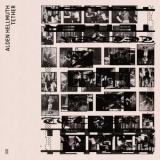
ALDEN HELLMUTH - TETHER

ALDEN HELLMUTH

TETHER

12inchLTR62
Leiter
26.06.2026
  • 1: Microfictions
  • 2: Fake(Rs)
  • 3: Definitely Not Friends
  • 4: Guesswork
  • 5: Supply Chain
  • 6: Satellite (K)
  • 7: Witness
  • 8: Face The Wall

Mit Tether veröffentlicht die preisgekrönte Saxophonistin, Improvisatorin und Komponistin Alden Hellmuth ihr neues Album - der kraftvolle Nachfolger zu Good Intentions, das als Debut Album of the Year International beim Deutschen Jazzpreis ausgezeichnet wurde. Hellmuth, Absolventin des renommierten Herbie Hancock Institute, verbindet hier kompositorische Präzision mit einem markanten, modernen Bandsound. Das Herzstück von Tether ist ein seltenes Zwei-Bass-Quartett, getragen von zwei der radikalsten Musiker der LA-Szene: Logan Kane, ein genreübergreifender Bassist zwischen Jazz, Avantgarde und Punk-Funk, und Miller Wrenn, einer der furchtlosesten Improvisatoren der Westküste. An den Drums sorgt Justin Brown für energetische Dynamik - ein herausragender Musiker, der u. a. mit Ambrose Akinmusire, Christian McBride und Vijay Iyer gearbeitet hat. Besondere Gäste wie Paul Cornish, Finalist großer internationaler Klavierwettbewerbe und auf Blue Note veröffentlicht, sowie Yakiv Tsvietinskyi, eine prägende Stimme des modernen ukrainischen Jazz, erweitern den Klang zusätzlich. Tether ist ein energiegeladenes, modernes Jazzalbum, das Avantgarde-Mut, kompositorische Tiefe und unmittelbare Spielfreude vereint. Hellmuths Quartett erschafft eine kraftvolle, eigenständige Klangwelt zwischen Modern Jazz, zeitgenössischer Improvisation und experimentellen Low-End-Texturen.

pre-ordina ora26.06.2026

dovrebbe essere pubblicato su 26.06.2026

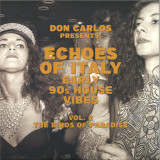
Various - ECHOES OF ITALY – THE BIRDS OF PARADISE – EARLY 90S HOUSE VIBES VOL.2 (2x12")

Googling “paradise house”, the first results to pop up are an endless list of European b&b’s with whitewashed lime façades, all of them promising “…an unmatched travel experience a few steps from the sea”. Next, a little further down, are the institutional websites of a few select semi-luxury retirement homes (no photos shown, but lots of stock images of smiling nurses with reassuring looks). To find the “paradise house” we’re after, we have to scroll even further down. Much further down.

It feels like yesterday, and at the same time it seems like a million years ago. The Eighties had just ended, and it was still unclear what to expect from the Nineties. Mobile phones that were not the size of a briefcase and did not cost as much as a car? A frightening economic crisis? The guitar-rock revival?! Certainly, the best place to observe that moment of transition was the dancefloor. Truly epochal transformations were happening there. From America, within a short distance one from the other, two revolutionary new musical styles had arrived: the first one sounded a bit like an “on a budget” version of the best Seventies disco-music – Philly sound made with a set of piano-bar keyboards! – the other was even more sparse, futuristic and extraterrestrial. It was a music with a quite distinct “physical” component, which at the same time, to be fully grasped, seemed to call for the knotty theories of certain French post-modern philosophers: Gilles Deleuze, Félix Guattari, Paul Virilio... Both those genres – we would learn shortly after – were born in the black communities of Chicago and Detroit, although listening to those vinyl 12” (often wrapped in generic white covers, and with little indication in the label) you could not easily guess whether behind them there was a black boy from somewhere in the Usa, or a girl from Berlin, or a pale kid from a Cornish coastal town.

Quickly, similar sounds began to show up from all corners of Europe. A thousand variations of the same intuition: leaner, less lean, happier, slightly less intoxicated, more broken, slower, faster, much faster... Boom! From the dancefloors – the London ones at least, whose chronicles we eagerly read every month in the pages of The Face and i-D – came tales of a new generation of clubbers who had completely stopped “dressing up” to go dancing; of hot tempered hooligans bursting into tears and hugging everyone under the strobe lights as the notes of Strings of Life rose up through the fumes of dry ice (certain “smiling” pills were also involved, sure). At this point, however, we must move on to Switzerland.

In Switzerland, in the quiet and diligent town of Lugano, between the 1980s and 1990s there was a club called “Morandi”. Its hot night was on Wednesdays, when the audience also came from Milan, Como, Varese and Zurich. Legend goes that, one night, none less than Prince and Sheila E were spotted hiding among the sofas, on a day-off of the Italian dates of the Nude Tour… The Wednesday resident and superstar was an Italian dj with an exotic name: Don Carlos. The soundtrack he devised was a mixture of Chicago, Detroit, the most progressive R&B and certain forgotten classics of old disco music: practically, what the Paradise Garage in New York might have sounded like had it not closed in 1987. In between, Don Carlos also managed to squeeze in some tracks he had worked on in his studio on Lago Maggiore. One in particular: a track that was rather slow compared to the BPM in fashion at the time, but which was a perfect bridge between house and R&B. The title was Alone: Don Carlos would explain years later that it had to be intended both in the English meaning of “by itself” and like the Italian word meaning “halo”. That wasn’t the only double entendre about the song, anyway. Its own very deep nature was, indeed, double. On the one hand, Alone was built around an angelic keyboard pattern and a romantic piano riff that took you straight to heaven; on the other, it showcased enough electronic squelches (plus a sax part that sounded like it had been dissolved by acid rain) to pigeonhole the tune into the “junk modernity” section, aka the hallmark of all the most innovative sounds of the time: music that sounded like it was hand-crafted from the scraps of glittering overground pop.

No one knows who was the first to call it “paradise house”, nor when it happened. Alternative definitions on the same topic one happened to hear included “ambient house”, “dream house”, “Mediterranean progressive”… but of course none were as good (and alluring) as “paradise house”. What is certain is that such inclination for sounds that were in equal measure angelic and neurotic, romantic and unaffective, quickly became the trademark of the second generation of Italian house. Music that seemed shyly equidistant from all the rhythmic and electronic revolutions that had happened up to that moment (“Music perfectly adept at going nowhere slowly” as noted by English journalist Craig McLean in a legendary field report for Blah Blah Blah magazine). Music that to a inattentive ear might have sounded as anonymous as a snapshot of a random group of passers-by at 10AM in the centre of any major city, but perfectly described the (slow) awakening in the real world after the universal love binge of the so-called Second Summer of Love.

For a brief but unforgettable season, in Italy “paradise house” was the official soundtrack of interminable weekends spent inside the car, darting from one club to another, cutting the peninsula from North to centre, from East to West coast in pursuit of the latest after-hours disco, trading kilometres per hour with beats per minute: practically, a new New Year’s Eve every Friday and Saturday night. This too was no small transformation, as well as a shock for an adult Italy that was encountering for the first time – thanks to its sons and daughters – the wild side of industrial modernity. The clubbers of the so-called “fuoriorario” scene were the balls gone mad in the pinball machine most feared by newspapers, magazines and TV pundits. What they did each and every weekend, apart from going crazy to the sound of the current white labels, was linking distant geographical points and non-places (thank you Marc Augé!) – old dance halls, farmhouses and business centres – transformed for one night into house music heaven. As Marco D’Eramo wrote in his 1995 essay on Chicago, Il maiale e il grattacielo: “Four-wheeled capitalism distorts our age-old image of the city, it allows the suburbs to be connected to each other, whereas before they were connected only by the centre (…) It makes possible a metropolitan area without a metropolis, without a city centre, without downtown. The periphery is no longer a periphery of any centre, but is self-centred”.

“Paradise house” perfectly understood all of this and turned it into a sort of cyber-blues that didn’t even need words, and unexpectedly brought back a drop of melancholic (post?)-humanity within a world that by then – as we would wholly realise in the decades to come – was fully inhuman and heartless. A world where we were all alone, and surrounded by a sinister yellowish halo, like a neon at the end of its life cycle. But, for one night at least, happy."

In Stock

Disponibile in Stock e pronto per la spedizione

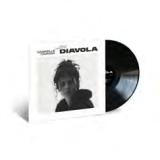
Gabrielle Cavassa - Diavola

Gabrielle Cavassa

Diavola

12inch7806554
Blue Note
06.05.2026

Die Traumstimme von Joshua Redmans Album „where are we“ mit ihrem Blue-Note-Solo-Debüt!
Als Saxofonist Joshua Redman 2023 sein Album „where are we“ veröffentlichte, ließ nicht nur er damit
aufhorchen, sondern auch die Sängerin auf allen Tracks: Gabrielle Cavassa. Das weltweite Echo war imposant, in Deutschland hieß es “Top-Sängerin“ (Stereoplay) und “bringen die Luft im Studio zum Flirren“
(Süddeutsche Zeitung). Bei der darauffolgenden Welttournee des Redman Quartet begeisterte die Sängerin
erneut das Publikum auch in Deutschland.
Mit ”Diavola“ gibt Gabrielle Cavassa jetzt ihren Einstand bei Blue Note. Dort kann sie erstmals auf
großer Bühne ihr Können als Sängerin und Songwriterin zeigen, sowie als Interpretin von Jazz-Standards
(z.B. “Prisoner of Love“) und klassischem Pop (“Could It Be Magic“) bis hin zu brasilianischen Songs (“To
Say Goodbye“ von Edu Lobo). Cavassas Stimme ist sinnlich und intensiv, obwohl sie mit den Melodien
und Tempi spielt, bleiben Seele und Aussage der Songs intakt.
“Diavola“ wurde koproduziert von Joshua Redman und Don Was und überzeugt auch durch brillante
Arrangements und exquisite Musiker: Jeff Parker an der Gitarre, Paul Cornish am Klavier, Larry Grenadier
am Bass, Brian Blade am Schlagzeug und Joshua Redman bei zwei Titeln am Tenorsaxofon.

non in magazzino

Ordina ora e ordineremo l'articolo per te presso il nostro fornitore.


Last In: 3 days ago
Joshua Redman - Words Fall Short
  • Icarus
  • A Message To Unsend
  • Over The Jelly-Green Sea
  • So It Goes
  • Words Fall Short
  • She Knows
  • Borrowed Eyes
  • Era’s End

2023 gab Saxofonist Joshua Redman sein erfolgreiches Blue Note-Debüt mit dem für ihn überraschenden Album ”where are we”, seinem ersten Projekt mit durchgehender Beteiligung einer Vokalistin: Gabrielle Cavassa.

Auf seinem neuen Album kehrt Redman nun zum instrumentalen Jazz zurück - Gabrielle Cavassa singt nur einen einzigen Titel -, stattdessen interpretiert Redman stimmungsvolle Originale aus eigener Feder, die er in den letzten Jahren ohne ein bestimmtes Projekt im Kopf erarbeitet hat, mit ebenso jungen wie sensationell guten neuen Musikern (Pianist Paul Cornish, Bassist Philip Norris und Schlagzeuger Nazir Ebo). Als Gäste setzen Saxofonistin Melissa Aldana und Trompeterin Skylar Tang Akzente.

pre-ordina ora20.06.2025

dovrebbe essere pubblicato su 20.06.2025

Various - ECHOES OF ITALY - ARTISTS IN WONDERLAND – EARLY 90S HOUSE VIBES VOL.1 LP 2x12"

Volume 1 of this expertly curated project of 90s Italian House - put together by Don Carlos.

If Paradise was half as nice… by Fabio De Luca.

Googling “paradise house”, the first results to pop up are an endless list of European b&b’s with whitewashed lime façades, all of them promising “…an unmatched travel experience a few steps from the sea”. Next, a little further down, are the institutional websites of a few select semi-luxury retirement homes (no photos shown, but lots of stock images of smiling nurses with reassuring looks). To find the “paradise house” we’re after, we have to scroll even further down. Much further down.

It feels like yesterday, and at the same time it seems like a million years ago. The Eighties had just ended, and it was still unclear what to expect from the Nineties. Mobile phones that were not the size of a briefcase and did not cost as much as a car? A frightening economic crisis? The guitar-rock revival?! Certainly, the best place to observe that moment of transition was the dancefloor. Truly epochal transformations were happening there. From America, within a short distance one from the other, two revolutionary new musical styles had arrived: the first one sounded a bit like an “on a budget” version of the best Seventies disco-music – Philly sound made with a set of piano-bar keyboards! – the other was even more sparse, futuristic and extraterrestrial. It was a music with a quite distinct “physical” component, which at the same time, to be fully grasped, seemed to call for the knotty theories of certain French post-modern philosophers: Gilles Deleuze, Félix Guattari, Paul Virilio... Both those genres – we would learn shortly after – were born in the black communities of Chicago and Detroit, although listening to those vinyl 12” (often wrapped in generic white covers, and with little indication in the label) you could not easily guess whether behind them there was a black boy from somewhere in the Usa, or a girl from Berlin, or a pale kid from a Cornish coastal town.

Quickly, similar sounds began to show up from all corners of Europe. A thousand variations of the same intuition: leaner, less lean, happier, slightly less intoxicated, more broken, slower, faster, much faster... Boom! From the dancefloors – the London ones at least, whose chronicles we eagerly read every month in the pages of The Face and i-D – came tales of a new generation of clubbers who had completely stopped “dressing up” to go dancing; of hot tempered hooligans bursting into tears and hugging everyone under the strobe lights as the notes of Strings of Life rose up through the fumes of dry ice (certain “smiling” pills were also involved, sure). At this point, however, we must move on to Switzerland.

In Switzerland, in the quiet and diligent town of Lugano, between the 1980s and 1990s there was a club called “Morandi”. Its hot night was on Wednesdays, when the audience also came from Milan, Como, Varese and Zurich. Legend goes that, one night, none less than Prince and Sheila E were spotted hiding among the sofas, on a day-off of the Italian dates of the Nude Tour… The Wednesday resident and superstar was an Italian dj with an exotic name: Don Carlos. The soundtrack he devised was a mixture of Chicago, Detroit, the most progressive R&B and certain forgotten classics of old disco music: practically, what the Paradise Garage in New York might have sounded like had it not closed in 1987. In between, Don Carlos also managed to squeeze in some tracks he had worked on in his studio on Lago Maggiore. One in particular: a track that was rather slow compared to the BPM in fashion at the time, but which was a perfect bridge between house and R&B. The title was Alone: Don Carlos would explain years later that it had to be intended both in the English meaning of “by itself” and like the Italian word meaning “halo”. That wasn’t the only double entendre about the song, anyway. Its own very deep nature was, indeed, double. On the one hand, Alone was built around an angelic keyboard pattern and a romantic piano riff that took you straight to heaven; on the other, it showcased enough electronic squelches (plus a sax part that sounded like it had been dissolved by acid rain) to pigeonhole the tune into the “junk modernity” section, aka the hallmark of all the most innovative sounds of the time: music that sounded like it was hand-crafted from the scraps of glittering overground pop.

No one knows who was the first to call it “paradise house”, nor when it happened. Alternative definitions on the same topic one happened to hear included “ambient house”, “dream house”, “Mediterranean progressive”… but of course none were as good (and alluring) as “paradise house”. What is certain is that such inclination for sounds that were in equal measure angelic and neurotic, romantic and unaffective, quickly became the trademark of the second generation of Italian house. Music that seemed shyly equidistant from all the rhythmic and electronic revolutions that had happened up to that moment (“Music perfectly adept at going nowhere slowly” as noted by English journalist Craig McLean in a legendary field report for Blah Blah Blah magazine). Music that to a inattentive ear might have sounded as anonymous as a snapshot of a random group of passers-by at 10AM in the centre of any major city, but perfectly described the (slow) awakening in the real world after the universal love binge of the so-called Second Summer of Love.

For a brief but unforgettable season, in Italy “paradise house” was the official soundtrack of interminable weekends spent inside the car, darting from one club to another, cutting the peninsula from North to centre, from East to West coast in pursuit of the latest after-hours disco, trading kilometres per hour with beats per minute: practically, a new New Year’s Eve every Friday and Saturday night. This too was no small transformation, as well as a shock for an adult Italy that was encountering for the first time – thanks to its sons and daughters – the wild side of industrial modernity. The clubbers of the so-called “fuoriorario” scene were the balls gone mad in the pinball machine most feared by newspapers, magazines and TV pundits. What they did each and every weekend, apart from going crazy to the sound of the current white labels, was linking distant geographical points and non-places (thank you Marc Augé!) – old dance halls, farmhouses and business centres – transformed for one night into house music heaven. As Marco D’Eramo wrote in his 1995 essay on Chicago, Il maiale e il grattacielo: “Four-wheeled capitalism distorts our age-old image of the city, it allows the suburbs to be connected to each other, whereas before they were connected only by the centre (…) It makes possible a metropolitan area without a metropolis, without a city centre, without downtown. The periphery is no longer a periphery of any centre, but is self-centred”.

“Paradise house” perfectly understood all of this and turned it into a sort of cyber-blues that didn’t even need words, and unexpectedly brought back a drop of melancholic (post?)-humanity within a world that by then – as we would wholly realise in the decades to come – was fully inhuman and heartless. A world where we were all alone, and surrounded by a sinister yellowish halo, like a neon at the end of its life cycle. But, for one night at least, happy.

non in magazzino

Ordina ora e ordineremo l'articolo per te presso il nostro fornitore.


Last In: 4 days ago
  • 1
Articoli per pagina:
N/ABPM
Vinyl