
pré-commande12.09.2025
il devrait être publié sur 12.09.2025
il devrait être publié sur 12.09.2025
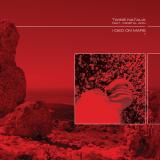
“I thought I knew you, but you are alien to me.”
Twelve years have passed since TWINS NATALIA’s debut album, “Destiny Room”, but Dave, Marc and Steve have never really stopped working on new ideas and projects, including the release of a mini-album from Marc’s solo project SHIBUYA STATION. This featured their first collaboration with Greek artist KRIISTAL ANN (also known from PARADOX OBSCUR), who provided the vocals for the track “Madness”. This led to Anna being invited by TWINS NATALIA to perform lead vocals on their cover version of KNOW’s “Knights of Pleasure”. The results were so pleasing that, from then on, Anna was persistently ’pestered’ to work on a TWINS NATALIA EP, which slowly morphed into a complete album entitled “I Died On Mars”. The album is a journey through electronic soundscapes and pure, dark ’80s minimal synth-pop, full of melancholia, haunting melodies, elaborate synth sound design and sequencing, ranging from neat to gnarly, and, of course, KRIISTAL ANN’s charismatic voice icing the cake.
“I Died On Mars” presents us with further surprises: TWINS NATALIA version of “The Dagger In Me” by ’80s Greek post-punk legends THE HANDS OF CAIN, as well as “A Different Hum” by PARADOX OBSCUR, a song that surely needs no further introduction. Anna has not shied away from specially re-recording the vocals for this version, while both versions have been given some distinctly Twins Natalia-specific additions and treatments. Furthermore, Anna has contributed her own composition “Find Me I A Fantasy”, so you’re in for a treat or two, for sure.
Mastering by Nikolas Haldoupis at SoundCave Studios Athens.
Graphic design by Steve Lippert with some original photography by Kriistal Ann.
il devrait être publié sur 09.10.2026
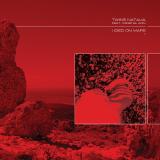
“I thought I knew you, but you are alien to me.”
Twelve years have passed since TWINS NATALIA’s debut album, “Destiny Room”, but Dave, Marc and Steve have never really stopped working on new ideas and projects, including the release of a mini-album from Marc’s solo project SHIBUYA STATION. This featured their first collaboration with Greek artist KRIISTAL ANN (also known from PARADOX OBSCUR), who provided the vocals for the track “Madness”. This led to Anna being invited by TWINS NATALIA to perform lead vocals on their cover version of KNOW’s “Knights of Pleasure”. The results were so pleasing that, from then on, Anna was persistently ’pestered’ to work on a TWINS NATALIA EP, which slowly morphed into a complete album entitled “I Died On Mars”. The album is a journey through electronic soundscapes and pure, dark ’80s minimal synth-pop, full of melancholia, haunting melodies, elaborate synth sound design and sequencing, ranging from neat to gnarly, and, of course, KRIISTAL ANN’s charismatic voice icing the cake.
“I Died On Mars” presents us with further surprises: TWINS NATALIA version of “The Dagger In Me” by ’80s Greek post-punk legends THE HANDS OF CAIN, as well as “A Different Hum” by PARADOX OBSCUR, a song that surely needs no further introduction. Anna has not shied away from specially re-recording the vocals for this version, while both versions have been given some distinctly Twins Natalia-specific additions and treatments. Furthermore, Anna has contributed her own composition “Find Me I A Fantasy”, so you’re in for a treat or two, for sure.
Mastering by Nikolas Haldoupis at SoundCave Studios Athens.
Graphic design by Steve Lippert with some original photography by Kriistal Ann.
il devrait être publié sur 09.10.2026

With »Roto«, Derek Piotr revisits the aqueous terrain first explored in his 2016 album »Drono«, where the paradox of water’s stillness and perpetual motion was refracted into looping voices and glitching textures. Conceived as a »spiritual successor« and recorded in 2019, the album has lain dormant for six years before surfacing on Discreet Archive. That stretch of silence seems to have deepened its charge – the sound feels unearthed rather than made, like a whirlpool biding its time in obscurity until now.
Unlike »Drono«’s mosaic of shorter pieces, »Roto« unfurls as two expansive half-hour tracks, allowing Piotr to probe repetition with greater intensity. Vowels accumulate until they shimmer with alien sentience, drones grow dense and psychoacoustic, and the smallest digital artifacts flicker like neural sparks. The result is a work that denies familiarity; recurrence here only breeds strangeness, unspooling into a procession of hidden pulses and altered voices that resist prediction, drawing the listener deeper into a submerged, otherworldly space.
Derek Piotr is a folklorist, researcher and performer whose work focuses primarily on the human voice. His work covers practices including fieldwork, vocal performance, preservation and autoethnography; and is primarily concerned with tenderness, fragility, beauty and brutality. He has collaborated with artists including Scott Solter, Nathan Salsburg and Thomas Brinkmann across various disciplines.
He is lead archivist and creative director of the Fieldwork Archive.
il devrait être publié sur 19.09.2025
The discovery of Doris Dennison's score represents a genuine musicological breakthrough—what once would have been "a tree falling in the woods" thirty years ago now holds the potential to render "a thunderous clap in our minds." While researching Anna Halprin's lesser-known collaborators, scholar Tom Welsh uncovered the archives of AA Leath, one of Halprin's principal dancers. Buried within these materials was Dennison's handwritten score for Earth Interval, dated May 1956. Born in Saskatchewan, Canada, in 1908, and raised near Seattle, Dennison (1908-2009) encountered John Cage while teaching Dalcroze eurythmics at the Cornish College of the Arts. She joined Cage's earliest percussion quartet—alongside Margaret Jansen, the composer and his wife Xenia—in the group widely regarded as having performed the first complete concert of percussion music in the United States. This historic December 1938 concert was followed by tours and the landmark May 1941 performance at the California Club, comprising Cage and Lou Harrison's Double Music, the premiere of Cage's Third Construction, and Harrison's 13th Simfony.
As Bradford Bailey observes in his extensive liner notes, Earth Interval demonstrates "an extraordinary balance of elements that imbues the piece with a sense of clarity, directness, and constraint that is both distinct and ahead of its time." The work's most remarkable innovation lies in its approach to extended techniques, particularly Dennison's notation for the central movement: "In 2nd movement, 1st player lowers + raises a gong into a tub of water while beating." This technique, absorbed from Cage's experimental vocabulary, generates what Bailey describes as "fields of acoustic abstraction that bend and warp time through sustained resonances, beat, and space." The temporal sophistication of these manipulations anticipated Karlheinz Stockhausen's Mikrophonie I (1964) and Annea Lockwood's water-based sound investigations by over a decade. After joining Mills College as dance accompanist, Dennison maintained crucial connections to the Bay Area's experimental scene, collaborating with figures like Merce Cunningham and programming Cage's music throughout the 1950s.
Comprising three movements—Land Form, Air Tide, and Earth Play—Earth Interval is scored for recorder, drums, gongs, maracas, muted gongs, and bowl gongs. In total, the piece is just under eight minutes: "a fleeting glimmer of moment in time, a life spent at the cutting edge, and a singular creative vision that packs a powerful punch." When viewed in historical context, placed in contrast to roughly contemporaneous avant-garde percussion works by Cage, Harrison, Louis Thomas Hardin (Moondog), and Harry Partch, or important precursors like Edgard Varèse's Ionisation (1931) and Henry Cowell's Ostinato Pianissimo (1934), it's clear that Dennison was following her own path. Earth Interval is not derivative. It is a precursor to what was yet to come, alluding to developments of avant-garde and experimental music that wouldn't begin to appear on the cultural landscape until the 1970s and '80s, with the emergence of Post-Minimalism and more idiosyncratic artists and ensembles like Midori Takada, Ros Bandt, Peter Giger, Frank Perry, Christopher Tree, Michael Ranta, Gamelan Son of Lion, and Niagara.
This recording by Chicago's Third Coast Percussion, captured in March 2022, represents the first complete documentation of this pioneering work. The ensemble's interpretation reveals the piece's remarkable contemporaneity while maintaining its historical specificity. Where Cage, Harrison, and Partch employed "self-consciously off-kilter polyrhythms," Dennison's rhythmic sensibility anticipates minimalist developments by nearly a decade, yet integrates "forceful rests, as well as sharp shifts in sonic character, tempo, and meter, that break the momentum and breathe a sense of life into the piece's structure." This positions her work closer to Post-Minimalism decades before its emergence. The architectural approach demonstrates Dennison's understanding that "the composer almost entirely disappears" in favor of phenomenological listening experience, creating what might be called an egoless music that places its realities and meaning entirely in the ear of the beholder. The present recording, realized by Chicago's distinguished Third Coast Percussion ensemble, represents a significant achievement in experimental music scholarship and performance practice. As specialists in the Cage tradition and contemporary percussion repertoire, Third Coast Percussion approached Earth Interval with the historical sensitivity and technical precision required to illuminate Dennison's subtle compositional innovations. The March 2022 recording sessions, engineered by Colin Campbell, capture both the work's intimate chamber music qualities and its bold exploration of extended techniques. The ensemble's interpretation reveals the piece's remarkable contemporaneity—its ability to speak directly to current musical concerns while maintaining its historical specificity.
This recording serves multiple scholarly functions: it provides the first complete documentation of Dennison's compositional voice, offers insight into the broader network of experimental music practitioners surrounding Cage and Harrison, and demonstrates the sophisticated level of compositional thinking that was occurring within the Bay Area's dance-music collaborations of the 1950s. The work's emphasis on phenomenological listening—what might be called an "egoless" approach to musical experience—places it within a lineage of American experimental music that prioritizes perceptual process over compositional personality. The work's original obscurity—limited to AA Leath's performances at venues like the 1957 Pacific Coast Arts Festival at Reed College—paradoxically allowed it to remain "entirely on its own terms," free from the constraints of historical categorization. Drawing on Jacques Derrida's Archive Fever, the argument emerges that "the archive can acknowledge, celebrate, and resurrect" overlooked voices, transforming our understanding of experimental music history. The present Blume edition, featuring Third Coast Percussion's authoritative interpretation, includes a lavishly illustrated 16-page booklet designed by Bruno Stucchi / dinamomilano, containing complete scholarly apparatus, historical photographs, and detailed production notes. This recording enables "cross-temporal intersectionality," allowing Dennison to "belong to a newly formed and more dynamic understanding of the present and past," demonstrating how forgotten voices can reshape entire historical narratives when given proper scholarly attention and performance advocacy.
il devrait être publié sur 01.08.2025

"No sign of Rotten Leaves" is Selma French's second album and draws inspiration from life's paradoxes.
Selma French is a songwriter and musician renowned and revered within the Norwegian folk scene. She grew up with traditional music and has played and created music all her life. Her musical inspirations include Linda Perhacs, Nick Drake, Judee Sill, Frøkedal, Sundfør and Sandy Denny.
Her debut album Changes Like the Weather in the Mountain was released in 2022 to critical acclaim and was ranked among the top Norwegian albums of 2022 by notable Norwegian newspapers such as Dagsavisen and Aftenposten. In the fall of 2024, she did a lot of touring in the UK together with Euros Childs (Gorky’s Zygotic Mynci / Teenage Fanclub).
Selma has also toured extensively throughout Scandinavia and is a member of the bands such as Masåva, Frøkedal & Familien - (with whom she toured in the UK as special guests of Teenage Fanclub), Sondre Lerche and Norwegian Grammy award winners Morgonrode. Her music is widely recognized in her native country and has recently featured as the theme song in the hit Viaplay T.V series Furia.
Her music reflects an admiration for Norwegian and English folk music and is infused with an airy, enigmatic energy. Her rich landscape of guitars, wurlitzer, fiddles and high pitched choir voices manages to convey a roar of frustration, obscure portraits of the present and a gathering force of hope.
il devrait être publié sur 25.04.2025

Yes, *that* Al Hirt record. Featuring the godlike "Harlem Hendoo", looped unforgettably by De La Soul for the legendary Buhloone Mind State cut, "Ego Trippin' (Part Two)"!
Al Hirt's infamous Soul In The Horn is inextricably tangled up in crate-digger lore. Originally released in 1967, the album has been in heavy, heavy demand for over 30 years, entirely down to the majestic soul-jazz fire of "Harlem Hendoo". And it's a song so good, so vital, so timeless, that it will always tower above everything else in its proximity. This one track alone is worth the price of admission - even if the cost of entry were $100 or even $1000.
However, it would be an error to dismiss this record as merely a one tracker, loaded as it is with dope samples for adventurous beat makers. Certainly the funkiest Al Hirt record, it definitely lives up to the "soul" in the title. Thanks to composer Paul Griffin and arranger Teacho Wiltshire, Hirt got uncharacteristically free and groovy throughout. It comes on more like an obscure KPM library funk record than the easy listening Al was notorious for.
A Louisiana trumpeter and band leader who made Allen Toussaint’s “Java” famous, Al Hirt was also known for TV themes, Dixieland, Swing and being a minority owner of the New Orleans Saints. Unlike every other Al Hirt record - and despite most "diggers" claiming otherwise - this here gem is genuinely hard to come across "in the wild". Normally, you can't give Al Hirt records away, except this particular one, which raises pulses in the crate digging community to life-threatening levels. For every owner claiming to have found their copy for a dollar, there's scores more claiming to have *never* unearthed one in the field. So, paradoxically, you can consider this the most tricky-to-pull "thrift store record", ever. This is why we're finally making it available for everyone, not just those with endless hours to spend scouring the global goodwills!
Soul In The Horn represented an expressive detour into authentic soul-jazz for Al Hirt. Throughout, we're struck by a fierce, fiery energy that's otherwise absent from his typically easy listening work. Without question, the slinky, magical "Harlem Hendoo" is the standout, here. It's also the reason why the record is so scarce and commands awe among crate diggers, sounding like something from an obscure and deeply revered spiritual jazz record. As is often the case, the true genius of the song is tricky to do justice to; it's like a minor miracle of songwriting and performance that simply swooned down from the heavens on the back of horns, bells and harpsichord. It's one of the sweetest musical compositions ever recorded inside a studio - it's only failing is that it's just too short. Sampled brilliantly by De La Soul, it has also been used by The Roots for "Stay Cool" and Nightmares On Wax for "Damn".
The rest of the record makes for a mighty fine listen. From the opening cover of Booker T. & The MG's "Honey Pot", to the propulsive, ultra-funky "Mess Around", it's nothing but a good time. Given its title, the elegant stepper "Calypsoul" sounds exactly as you'd hope whilst the melancholic, wistful "Long Gone" hurts so good. Truly, this is just dying to be looped up, Al's muted playing capturing a soulful longing only horns can often achieve. The bluesy, slo-mo swing of "Sweetlips" oscillates between cool disaffection and swelling pride whilst the graceful, low-key funky "Girl" closes out the A-Side in the fine style. Ushering in the B-Side, the brief but brilliant strut of "Love Ya' Baby" shines brightly before the skipping funky-jazz of true highlight "Sunday-Goin' To Meetin' Time" demands both your attention and your dancing shoes. The mellifluous piano-funk of bass and horn-drenched "Snap Back" serves as the sumptuous prelude to "Harlem Hendoo"'s main character energy before the irrepressible, upbeat R&B of "Ludwig" closes out this quite remarkable album. An album deserving of a place in every serious record collection.
The audio for Soul In The Horn has been carefully remastered by Be With regular Simon Francis, ensuring it sounds better than ever. Cicely Balston's expert skills have made sure nothing is lost in the cut whilst the records have been pressed to the highest possible standard at Record Industry in Holland. The original sleeve has been restored here at Be With HQ as the finishing touch to this long overdue re-issue. This is after-hours music. Let it speak for itself. Listen. Listen to the soul in Al Hirt's horn.
Commandez maintenant et nous commanderons l'article pour vous chez notre fournisseur.
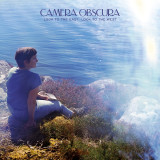
"Look to the East, Look to the West", das neue Album von Camera Obscura, ist eine Offenbarung. Die von Tracyanne Campbell geleitete Band hat sich wieder mit dem Produzenten Jari Haapalainen zusammengetan und ein Album geschaffen, das daran erinnert, warum die langjährigen Fans sie seit Jahrzehnten heiß und innig lieben, und das gleichzeitig ihr bisher anspruchsvollstes Werk ist. Es ist auch das am härtesten umkämpfte Album in der Karriere von Camera Obscura. Nach dem Tod von Gründungsmitglied, Keyboarder und Freund Carey Lander im Jahr 2015 (an den der vorletzte Track "Sugar Almond" gerichtet ist), ging die Band in eine längere Pause. Sie blieben in Kontakt, aber ihr Status war ungewiss. Nachdem sie eingeladen worden waren, im Rahmen von Belle & Sebastians Kreuzfahrtfestival Boaty Weekender 2019 aufzutreten, kündigten sie ihre Rückkehr an. Donna Maciocia (Keyboards und Gesang) stieß bei diesen Shows zu den Gründungsmitgliedern Kenny McKeeve (Gitarre und Gesang), Gavin Dunbar (Bass) und Lee Thomson (Schlagzeug und Perkussion) und ist seitdem Songwriting-Partnerin von Campbell. Aufgenommen im selben Raum, in dem Queen "Bohemian Rhapsody" schrieb, fühlt sich "Look to the East, Look to the West" groß an, eine Breitwand-Neuinterpretation des Camera Obscura-Sounds, bei der die Band paradoxerweise zu den Grundlagen zurückkehrte - es gibt keine Streicher- oder Bläserarrangements, der Schwerpunkt liegt auf Klavier, Synthesizern, Hammond-Orgel und Drumcomputern, und, was vielleicht am auffälligsten ist, die Gruppe hat den Hallschleier fallen lassen, der ihre früheren Alben charakterisierte. Der Hauch von Country und Soul, der Camera Obscuras barocke Interpretation von Popmusik so bittersüß macht, war noch nie so offensichtlich - die Gitarren schimmern in die Ferne, die Tasten spuken, und Campbells Stimme sucht nach dem Herzen, reflektiert über Liebe, Verlust und den Lauf der Zeit. "Look to the East, Look to the West" ist Camera Obscura in seiner besten und eindrucksvollsten Form, ein Album, das den emotionalen Kern des Hörers völlig neu ordnet und ihn gleichzeitig traurig und beschwingt zurücklässt. Der Katalog von Camera Obscura ist voll von Liedern, die Menschen als lebensverändernd bezeichnen, Lieder, die sie ihr ganzes Leben lang begleiten werden. "Look to the East, Look to the West" hat 11 davon zu bieten.
il devrait être publié sur 03.05.2024

Galaxy Vinyl-
blue + white vinyl pressed galaxy effect in a gatefold jacket with lyrics.
"Look to the East, Look to the West", das neue Album von Camera Obscura, ist eine Offenbarung. Die von Tracyanne Campbell geleitete Band hat sich wieder mit dem Produzenten Jari Haapalainen zusammengetan und ein Album geschaffen, das daran erinnert, warum die langjährigen Fans sie seit Jahrzehnten heiß und innig lieben, und das gleichzeitig ihr bisher anspruchsvollstes Werk ist. Es ist auch das am härtesten umkämpfte Album in der Karriere von Camera Obscura. Nach dem Tod von Gründungsmitglied, Keyboarder und Freund Carey Lander im Jahr 2015 (an den der vorletzte Track "Sugar Almond" gerichtet ist), ging die Band in eine längere Pause. Sie blieben in Kontakt, aber ihr Status war ungewiss. Nachdem sie eingeladen worden waren, im Rahmen von Belle & Sebastians Kreuzfahrtfestival Boaty Weekender 2019 aufzutreten, kündigten sie ihre Rückkehr an. Donna Maciocia (Keyboards und Gesang) stieß bei diesen Shows zu den Gründungsmitgliedern Kenny McKeeve (Gitarre und Gesang), Gavin Dunbar (Bass) und Lee Thomson (Schlagzeug und Perkussion) und ist seitdem Songwriting-Partnerin von Campbell. Aufgenommen im selben Raum, in dem Queen "Bohemian Rhapsody" schrieb, fühlt sich "Look to the East, Look to the West" groß an, eine Breitwand-Neuinterpretation des Camera Obscura-Sounds, bei der die Band paradoxerweise zu den Grundlagen zurückkehrte - es gibt keine Streicher- oder Bläserarrangements, der Schwerpunkt liegt auf Klavier, Synthesizern, Hammond-Orgel und Drumcomputern, und, was vielleicht am auffälligsten ist, die Gruppe hat den Hallschleier fallen lassen, der ihre früheren Alben charakterisierte. Der Hauch von Country und Soul, der Camera Obscuras barocke Interpretation von Popmusik so bittersüß macht, war noch nie so offensichtlich - die Gitarren schimmern in die Ferne, die Tasten spuken, und Campbells Stimme sucht nach dem Herzen, reflektiert über Liebe, Verlust und den Lauf der Zeit. "Look to the East, Look to the West" ist Camera Obscura in seiner besten und eindrucksvollsten Form, ein Album, das den emotionalen Kern des Hörers völlig neu ordnet und ihn gleichzeitig traurig und beschwingt zurücklässt. Der Katalog von Camera Obscura ist voll von Liedern, die Menschen als lebensverändernd bezeichnen, Lieder, die sie ihr ganzes Leben lang begleiten werden. "Look to the East, Look to the West" hat 11 davon zu bieten.
il devrait être publié sur 03.05.2024

Zwischen bezaubernder Zärtlichkeit und Brutalität, zwischen den Feuern der Unterwelt und den kältesten Dämpfen des Nordens, das ist das Wesen, das WINTERHORDE genannt wird. Gegründet im Jahr 2002 in Nordisrael, hat sich die Progressive Extreme Metal Gruppe weiterentwickelt und versucht, mit jedem Akkord, den sie spielen und aufnehmen, etwas Größeres zu werden. Nur der Himmel ist die Grenze. Ob durch die uralten Künste des geschwärzten Metal bis hin zu den Juwelen der Progression, WINTERHORDE sind auf dem Weg, das nächste Ding der artikulierten Extremität zu sein.
WINTERHORDE hatten das große Vergnügen und das Privileg, mit einigen der größten Bands des Metal wie JUDAS PRIEST, BEHEMOTH, ACCEPT, W. A. S. P, DIMMU BORGIR, KEEP OF KALESSIN, AMORPHIS, SATYRICON und vielen mehr auf den Bühnen verschiedener europäischer Festivals wie "Metal Days", "Rockstadt Extreme Fest", "OST Mountain Fest", "Metalhead Meeting", "Maximum Rock" und "Metal yard" aufzutreten.
WINTERHORDE bahnten ihren Weg in den progressiven Manierismus des Extreme Metal und veröffentlichten ihr Debüt "Nebula" (2006, Burning Star Records), dem eine komplette Europatour mit den finnischen Black Metalern CATAMENIA folgte. Das zweite Album "Underwatermoon" (2010, Twilight Vertrieb) wurde von V. Santura (DARK FORTRESS, OBSCURA, PARADOX, TRYPTIKON) aufgenommen und produziert. Anfang 2016 vollendete WINTERHORDE eines ihrer abenteuerlichen und höchst geheimnisvollen Epos, "Maestro" (Vicisolum Productions) wurde erneut von V. Santura produziert und von Jens Bogren gemastert. Kritiker und Fans begrüßten das dritte Studioalbum "Maestro", das im Mai 2016 veröffentlicht wurde.
Sechs Jahre später, und WINTERHORDE sind wieder bereit für die nächste Herausforderung. Voller Energie und einer neuen, überwältigenden Besetzung haben WINTERHORDE die Arbeit an ihrem neuen, vierten Studioalbum "Neptunian" geschafft.
Im Juni 2022 wurde die Single "The Greatest Plague of Earth" veröffentlicht.
Metal Temple zine:
"This is an expression of extreme passion, through a whirlwind, and a strong character. Winterhorde is back different, but preserving their miraculous nature"
Winterhorde's bassist and founder, Alexander Latman, comments on "The Spirit Of Freedom"
"This song deals with the unbreakable spirit of simple people, who are ready to die for keeping their land free. We wanted to show this spirit, not only in the warrior himself but also in his family members who are filled with pride of their fallen loved one. The simple people are those who sacrifice their lives for unnecessary wars waged by rich people's games. They die, but never give up their freedom and identity. The conflict of life versus freedom at any cost".
Sales Info:
- PR-Kampagne über die deutsche Agentur ALL NOIR für Print / Presse / Radio in der EU + O'Donnell Medien für PR in den USA
- frühere Musikvideos haben jeweils 5-stellige Ansichten auf YT erreicht
- neues Album gemischt und gemastert von Jaime Gomez Arellano (Ghost, Paradise Lost, Insomnium, Moonspell)
- Feat. Künstler auf Album: Kobi Farhi von Orphaned Land und Davidavi Dolev von Subterranean Masquerade
il devrait être publié sur 19.04.2024

Shrouded in mystery, abstracted by endearment and drenched in tone,
bigLOVE are set to make their presence known to the wider world on May
27 with their debut album, titled Crusaders of Joy, via Church Road
Records.Across the anonymous project’s four song inaugural release,
bigLOVE marries atmospheric sludge and themes of eternally
unconditional devotion in the name of all that is to be cherished in this
waking world of ours
bigLOVE establishes their vision of the genre on highlight tracks Harnessing the
Nectar from the Queen Bee and At One With - with both songs wielding Thouesque lead guitar lines and all the sonic weight of Alice In Chains’ doomier cuts.
Vocally, bigLOVE counterbalances the saccharine nature of their melodies with
corrosive and hymnal omnipotence.In an effort to eliminate unnecessary selfscrutiny and create instinctively, bigLOVE recorded Crusaders of Joy as it was
being written - with the release's final takes being recorded moments after each
part was finalised in the writing. Recorded between 2019 and 2020 before being
mastered by UK audio savant Lewis Johns at The Ranch, Crusaders of Joy
possesses a preternatural warmth in it’s production that beguiles as well as
engulfs. The debut full length is adroitly tied together thematically by Maria
Nemm’s (Holy Fawn, Slow Crush, Anthetic) album cover photography, adding
another dimension to bigLOVE’s enigma of obscurity and ubiquity.In the context
of the modern age paradox of instantaneous connection and spiritual disconnect,
Crusaders of Joy triumphs in it’s harnessing of love as philosophy, as it
spiritualizes sludge and doom metal’s sonic weight to transcendental heights.
Across the vast ocean of time, love remains at the core of all it is to be human.
il devrait être publié sur 15.07.2022

Pompeii, Cate Le Bon’s sixth full-length studio album and the follow up to 2019’s Mercury-nominated Reward, bears a storied title summoning apocalypse, but the metaphor eclipses any “dissection of immediacy,” says Le Bon. Not to downplay her nod to disorientation induced by double catastrophe — global pandemic plus climate emergency’s colliding eco-traumas resonate all too eerily. “What would be your last gesture?” she asks. But just as Vesuvius remains active, Pompeii reaches past the current crises to tap into what Le Bon calls “an economy of time warp” where life roils, bubbles, wrinkles, melts, hardens, and reconfigures unpredictably, like lava—or sound, rather. Like she says in the opener, “Dirt on the Bed,” Sound doesn’t go away / In habitual silence / It reinvents the surface / Of everything you touch. Pompeii is sonically minimal in parts, and its lyrics jog between self-reflection and direct address. Vulnerability, although “obscured,” challenges Le Bon’s tendencies towards irony. Written primarily on bass and composed entirely alone in an “uninterrupted vacuum,” Le Bon plays every instrument (except drums and saxophones) and recorded the album largely by herself with long-term collaborator and co-producer Samur Khouja in Cardiff, Wales. Enforced time and space pushed boundaries, leading to an even more extreme version of Le Bon's studio process – as exits were sealed, she granted herself “permission to annihilate identity.” “Assumptions were destroyed, and nothing was rejected” as her punk assessments of existence emerged. Enter Le Bon’s signature aesthetic paradox: songs built for Now miraculously germinate from her interests in antiquity, philosophy, architecture, and divinity’s modalities. Unhinged opulence rests in sonic deconstruction that finds coherence in pop structures, and her narrativity favors slippage away from meaning.
il devrait être publié sur 04.02.2022

The full-length debut from Bendigo Fletcher, Fits of Laughter is a collection of moments both enchanted and mundane, sorrowful and ecstatic: basking in the beauty of a glorious lightning storm, waking with a strand of your beloved’s hair happily caught in your mouth, drinking malt liquor while bingeing “The X-Files” on a lonesome Saturday night. As lead songwriter for the Louisville, KY-based band, frontman Ryan Anderson crafts the patchwork poetry of his lyrics by serenely observing the world around him, often while working his grocery-store day job or walking aimlessly in nature (a practice partly borrowed from the late poet Mary Oliver). When matched with Bendigo Fletcher’s gorgeously jangly collision of country and folk-rock and dreamy psychedelia, the result is a batch of story-songs graced with so much raw humanity, wildly offbeat humor, and a transcendent sense of wonder.
True to its spirit of purposeful wandering, Fits of Laughter unfolds in a wayward yet lushly detailed sound, embroidered with everything from crystalline harmonies to blistering guitar riffs to heady drum-machine beats. For help in forging the album’s ragged elegance, Bendigo Fletcher worked with producer Ken Coomer (the original drummer for Wilco and Uncle Tupelo), whom Anderson met in a flash of strange serendipity. Soon after he’d connected with Coomer via phone and bonded over a shared affection for Pink Floyd’s Obscured by Clouds, the band headed to Nashville to record in Coomer’s garage studio, laying down the album’s eight songs in nine frenetic days.
In keeping with the regional perspective that defines much of folk and country music, Fits of Laughter ponders certain paradoxes inherent in the band’s homeland. “In Kentucky there’s a long-running frustration of tradition and stubbornness versus progress,” says Anderson. “On one side you’re looking at things like the coal industry or Mitch McConnell, but then there’s also a feeling of togetherness and a fuck-the-man attitude and a loving desire for everyone to be left alone.” Referring to Fits of Laughter as a coming-of-age album, Anderson also examines a more internal conflict throughout the songs, including his choice to abandon his medical-school aspirations in favor of pursuing a career in music. “The title’s really about the spectrum of emotions I’ve felt on the way to finding what makes me feel like I’m living truthfully, rather than holding onto what I think other people’s expectations are of me,” he says. “It’s a phrase that bridges all of those emotions—everything from joy to hysteria.”
il devrait être publié sur 13.08.2021

- Spectral Decay' is a collection of musical reflections about the paradoxical contemporary state of humankind, whereas its own technological, social, cultural and economical development seems to entrench the possible points of a structura downfall. The narrative of - Spectral Decay' starts with heavy, mesmerizing industrial vibes. Due to the notable sound design techniques of Japanese artist Tetsumasa, his hefty piece - Nex' evolves into a harsh but still amazingly cinematical music sculpture.
Subsequent mid-tempo composition - Onzour Shayatini' by Meer dynamically follows the dark, experimental path of drone and noisy structures. Violent accents smoothly lead to the deconstruction of drum & bass patterns and turn into strident 90s metal riffs. The track progressively penetrates obscure subterranean abysses and becomes a perfect introduction to the next theme by Yuji Kondo - - Hades'. In Greek mythology Hades was the ancient god of the underground kingdoms, darkness, death and metals. Therefore, Kondo's music piece turns into an infernal portrayal of the underworld where tenebrous layers of bass frequencies, raw textures and Drexciyan sounds build up an enormous and lasting tension.
Side B begins with the track - Anthropocene' produced by Arboretum co-founder - Mogano. The whole composition refers to the present geological epoch we live in, characterized by environmental pollutions, depletion of fossil fuels and accelerated urbaniza- tion of the world. It is a deeply conceptual soundscape of a powerful system, that incorporates both - the destructive forces of technology and the infinite energy of the whole universe, that interweave in a devilish dance of post-techno, breakbeat and dub tones.
Thereafter, ~Raw in his piece - Poly Bios' pictures the interference of human structures in the nature. Creating a mosaic from indus- trial and tribal, organic sounds, he tells a mystical story of fear, hope, escape and primeval instincts.
The narration concludes with an atmospheric composition of NWRMNTC - solo project of Ana Quiroga from experimental ambient duet LCC. - Beyond' is a boundless, spectral reflection on collective human consciousness, where haunting vocals evoke a recon- dite, ineffable pain, leaving the listeners in a profoundly meditative state.
Laura Polan´ska
Commandez maintenant et nous commanderons l'article pour vous chez notre fournisseur.
