
vorbestellen01.05.2024
erscheint voraussichtlich am 01.05.2024
erscheint voraussichtlich am 01.05.2024

Other Half’s debut album, Big Twenty, is 14 songs of caustic post-hardcore exploring the unpleasant places people go to—and the nastiness they are capable of—in search of identity, community and belonging. The recurring characters that inhabit Big Twenty navigate changing social scenes and trends as they near the end of their twenties, teasing themselves with the past and spiralling in an unhealthy cycle of going out and coming down. The album’s narrative is semi-fictitious, reimagining first-hand experiences watching friends lose themselves to nostalgia, drugs and depression, whilst simultaneously celebrating the warmth of belonging, wherever it is found. Meeting in 2012 through a love of the UK DIY scene and their time split between previous outfits—including Maths, Ducking Punches and Manbearpig—Cal Hudson (guitar, vocals), Alfie Adams (drums) and Sophie Porter (bass, vocals) began writing songs together in Adams’ basement bedroom. From the indie rock cynicism of Archers of Loaf and Arab Strap, to the dischord and energy of bands like Hot Snakes and Unwound, the band have spent the past few years weaving their individual influences together and now deal in a confident, unique brand of scathing storytelling and abrasive punk.
erscheint voraussichtlich am 03.11.2023
Bestelle jetzt und wir bestellen den Artikel für dich beim Lieferanten.

Introducing a new label, Koko Music, founded in West London by a long time friend of ours. Their first release:
'Allegedly Coltrane's favourite singer, Andy Bey recorded as vocalist for Max Roach ('Members, Don't Git Weary'), Horace Silver ('Won't You Open Up Your Senses'), Gary Bartz ('Celestial Blues') and Stanley Clarke in the late sixties / early seventies. He released one solo album and then disappeared from view for 20 years, resurfacing in the nineties.
This 1998 album showcases his four-octave range, the intimacy of love songs and raw power of the blues on a mixture of standards ('Pretty Girl', 'Some Other Time'), Latin ('O Cantador', 'Drume Negrita'), modern (Nick Drake's 'River Man'), and a couple of original tunes. Available for the first time on vinyl, cut at 45rpm, it features Andy on vocals and on piano, with appearances from Gary Bartz and Geri Allen.'
Bestelle jetzt und wir bestellen den Artikel für dich beim Lieferanten.
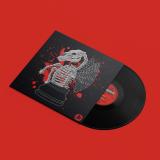
To celebrate another year around the sun, we’re proud to present our second vinyl release: Formulation — a 4-track EP that perfectly captures the label’s output over the past year while continuing our commitment to physical formats and attention to detail.
Like its predecessor "Foundation" is a various artists release featuring some of the key names from our latest catalog. The formula goes like this:
A Side: Iron T.C. and Hor-G take control of the slower side of the record with aggressive drums, distortion and the raw energy that defines their sound. Epic atmospheres and humanoid vocals introduce a heavy breakbeat assault from two of the strongest names in the Iberian underground. A perfect blend of dirty electro and industrial breakbeat built to turn the dancefloor upside down.
B Side: Heathen, The Egg & No Rules push the BPMs higher in the other side. Dark landscapes and metallic drums twist into a spiral of tension and halftime rhythms. Three experienced explorers of the niche taking techstep sound beyond its usual limits — for those into density, introspection and long blends
Another solid step into the physical format — and a glimpse of what’s still to come...
Once again, huge thanks to everyone involved in the project and to all our supporters who make this possible.
erscheint voraussichtlich am 30.09.2026
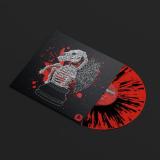
To celebrate another year around the sun, we’re proud to present our second vinyl release: Formulation — a 4-track EP that perfectly captures the label’s output over the past year while continuing our commitment to physical formats and attention to detail.
Like its predecessor "Foundation" is a various artists release featuring some of the key names from our latest catalog. The formula goes like this:
A Side: Iron T.C. and Hor-G take control of the slower side of the record with aggressive drums, distortion and the raw energy that defines their sound. Epic atmospheres and humanoid vocals introduce a heavy breakbeat assault from two of the strongest names in the Iberian underground. A perfect blend of dirty electro and industrial breakbeat built to turn the dancefloor upside down.
B Side: Heathen, The Egg & No Rules push the BPMs higher in the other side. Dark landscapes and metallic drums twist into a spiral of tension and halftime rhythms. Three experienced explorers of the niche taking techstep sound beyond its usual limits — for those into density, introspection and long blends
Another solid step into the physical format — and a glimpse of what’s still to come...
Once again, huge thanks to everyone involved in the project and to all our supporters who make this possible.
erscheint voraussichtlich am 30.09.2026

Quiet Village invites Eric Duncan AKA Dr Dunks for his latest EP ‘Plateau Alone’ featuring Zopelar. Dr Dunks is one half of DJ duo Rub-N-Tug.
New York music veteran Eric Duncan AKA Dr Dunks lands on Quiet Village with his latest release ‘Plateau Alone’ featuring Zopelar, dropping 18th September. Beginning his journey over three decades ago in New York's underground scene as one half of the duo ‘Rub-N-Tug’ alongside Thomas Bullock and one half of DFA’s ‘Still Going’, Duncan has built a reputation for his genre-defying music and sets, mixing disco, house, funk and electro. His production and remix catalogue over the years includes Grace Jones, Todd Terje, LCD Soundsystem, Groove Armada, and more. Producer and DJ ‘Zopelar’ hails from Brazil, taking inspiration from the Brazilian music scene and lacing it with jazz, soul, and house, with releases on Apron Records, Tartelet Records, Soul Clap Records, and Selva Discos
The ‘Plateau Alone’ EP comprises three funk-fuelled tracks. Syncopted electro synths fl ood opening track ‘Plateau Alone’ with an 80s-inspired groove, where bass melodies and textures create an otherworldly feel. Second track ‘Slow One Eleven’ slows the pace; percussion and strings featuring rock accents create a steady groove as Duncan adds his signature sonic sound. Low-down bass blends with dub-chords and alien textures in ‘88 Lights’, creating a warm and cosy closing to the EP.
erscheint voraussichtlich am 01.10.2026

UK Garage has ridden a new wave of hype and exposure over the last few years. Artists like Sammy Virji and Interplanetary Criminal have crossed over to the mainstream, while dancefloors across the world have shaken to a switched-up version of the sound that defined the UK underground either side of the millenium.
Hidden beneath a pink balaclava, the mysterious DJ Jackum has lurked this rejuvenated scene while dropping some of the most defining bangers of the period. Often surfacing in the form of moody edits released on Soundcloud, Jackum productions inevitably demolish dancefloors whenever dropped, as they frequently are in the sets of Virji and the other big guns.
Landing on Hotflush, a storied label of UK underground music, ‘Context’ is his most substantial work to date. Six tracks covering the full spectrum of the Jackum sound, from 4/4 heaters to dubstep-adjacent eyes-down bass pressure.
And in the form of opening track ‘Floo’, Jackum spreads his wings into a place that transcends the narrow confines of genre definition. From the UKG building blocks of bass, drive, cut-up vocals, and melody, the track emerges as something both familiar and wholly unexpected - the mark of a producer at the peak of their powers.
‘Clip Empty’ is another highlight of this standout EP. Showing a flair for the cinematic, a breakdown of militaristic snares gives way to a trademark rolling bassline and earworm vocals.
Away from the 4/4 bangers, ‘Take Your Body Higher’ is a guaranteed half-step rewind, while ‘Step Up’ recalls memories of smokey Plastic People sessions of the mid-2000s.
Der Artikel ist bereits auf dem Weg zu uns und voraussichtlich versandbereit ab 01.10.2026
Bei uns am Lager und sofort versandfertig
erscheint voraussichtlich am 09.10.2026
It’s not just since James Bond and the introduction of World Overshoot Day that we’ve known: The world isn’t enough. We need an Extrawelt! Arne Schaffhausen and Wayan Raabe have been tinkering with this celestial body for over two decades, and it seems to be slowly nearing completion. You certainly can’t accuse Extrawelt of lacking ideas. They are, so to speak, the legitimate descendants of the legendary planet designer Slartibartfast from Douglas Adams’ “The Hitchhiker’s Guide to the Galaxy”. No doubt, the downright insanely creative bossa nova-techno bastard “Honey Hunter” will be mentioned in the same breath as Slartibartfast’s award-winning Norwegian coastlines by future civilizations. The other three tracks aren’t half bad either. Take our word for it.
Nicht erst seit James Bond und der Einführung des world overshoot days wissen wir: Die Welt ist nicht genug. Wir brauchen eine Extrawelt! Die Herren Arne Schaffhausen und Wayan Raabe werkeln seit über zwei Jahrzehnten an diesem Himmelskörper und er scheint so langsam bezugsfertig zu sein. Man kann Extrawelt nun wahrlich keine Ideenarmut vorwerfen. Sie sind quasi die legitimen Nachkommen des legendären Planetendesigners Slartibartfast aus Douglas Adam’s “Per Anhalter durch die Galaxis”. Der geradezu irrwitzig kreative Bossanovatechno-Bastard “Honey Hunter” wird von künftigen Zivilisationen in einem Atemzug mit Slartibartfast’s preisgekönten norwegischen Küstenlinien genannt werden. Auch die anderen drei Tracks sind nicht von schlechten Eltern. Glaubt’s und werdet selig.
Downloads
erscheint voraussichtlich am 09.10.2026
Kito Jempere has spent more than two decades building a universe of his own, with releases on Mule Musiq, DFA and other influential labels, alongside remixes from Ewan Pearson and others. With Other People’s Aesthetics, that universe finally opens outward. After years of protecting his own musical language, Kito lets the outside world in—embracing the sounds, artists and scenes that have shaped him, from house and techno to Aphex Twin, Warp, Ninja Tune and Omar-S. The result is a personal universe merging with the world beyond it. The album opens with “Change For Now,” a collaboration with longtime friend Lipelis (L.I.E.S., Public Possession, Running Back), marking a friendship that has grown over the past decade. “Teaser,” originally released on Mule Musiq, returns in a new album “Dub” version, with fewer vocals and a stronger garage-house feel—a direct statement of love for David Lynch. “OPA” looks back to Kito’s original half-jazz, half-drum’n’bass sound and the Uniquetunes era of the early 2000s, alongside the music he absorbed from CDs by Amon Tobin, Squarepusher, Skalpel and The Cinematic Orchestra. “Listens To Selected Ambient Works Once” is a direct homage to Aphex Twin, given a Warehouse-style treatment for bigger dancefloors. “I’m Not A Doctor, Either,” featuring mishinuki—previously heard on Green Monster in its Moloko homage—builds towards an epic, euphoric string finale. “Kobayashi Porcelain” closes the record by combining memories of Usual Suspects with Moby-like atmosphere and an Omar-S-type beat. The release of Other People’s Aesthetics will be followed by a Japan tour in December 2026 and Kito Jempere’s ongoing residency at Honeycomb Hi-Fi in Dubai. Early support from: Ata, Reznik, Horse Meat Disco, Vladimir Ivkovic, Tim Sweeney, Max Pask, Rich Thair of Red Snapper, Ame, Ellen Allien, Benji B, John Tejada, The Blessed Madonna, Hard Ton
erscheint voraussichtlich am 16.10.2026

2026 Repress
What an unbelievable record. From the wild cover to the iconic breakbeats, Roots from Ian Carr’s Nucleus is one of the dopest albums we know. This is seriously thick, funky-prog jazz-rock heaven. Originally released on Vertigo in 1973, other than a couple of versions at the time for other territories, Roots was never re-pressed since so it’s gone on to become another one of those impossible to find records.
Maybe it was a little too out there for the time, but it’s aged very, very well indeed and this Be With re-issue, re-mastered from the original analogue tapes, shows off just why this deserves to be back in press.
Genius trumpeter and visionary composer Ian Carr was one of the most respected British musicians of his era. He was a true pioneer and saw the potential in fusing the worlds of jazz with rock, just as Miles Davis and The Tony Williams Lifetime did in the US. In late 1969, following the demise of the Rendell-Carr quintet, and tiring of British jazz, Carr assembled the legendary Nucleus. Regarding music as a continuous process, Nucleus refused to “recognise rigid boundaries” and worked on delivering what they saw as a “total musical experience”. We can get behind that.
Under bandleader Carr, Nucleus existed as a fluid line-up of inventive, skilled musicians. This constant evolution and revolution was all part of the continuous musical exploration and discovery that took jazz to new levels.
Working together with producer Fritz Fryer and engineer Roger Wake, the seven compositions by Carr, Brian Smith and Dave MacRae that make up Roots flirt with perfection, and Nucleus at that time made up of the cream of 1970s UK jazz with Brian Smith on tenor saxophones and flutes, Dave MacRae on piano and electric piano, Jocelyn Pitchen on guitar, Roger Sutton on bass, both Clive Thacker and Aureo De Souza on drums and percussion, Joy Yates delivering the vocals and of course Carr on trumpet.
The spellbinding title track immediately renders the album indispensable. Riding the illest of loping breakbeats, “Roots” is low-slung, doped-out heist-funk. An absolute monster. If it sounds familiar then that’s likely down to it being sampled by Madlib for Lootpack and Quasimoto’s “Loop Digga”, as well as by a whole host of beat manipulators. “Roots” conjures prime instrumental hip-hop / beat music, only 20 years ahead of its time. Truly, these are the roots. Through sinuous bass, twinkling keys and a hypnotic guitar riff, a smoky brass motif weaves its way into a gloriously deep haze around Carr’s solos. “Roots” is over 9 minutes long, but there’s not a single wasted second, not surprising given that this is a condensed version of an originally 40 minute long commissioned composition.
The soothing vocal fusion delight of “Images” follows. Meticulously constructed, with gorgeous flute work from Brian Smith, with Joy Yates’ silky vocals and Dave MacRae’s Rhodes never sounding better. The cool, driving “Caliban” closes out the first side. Originally the third movement in a four part commission to celebrate Shakespeare’s birthday it stands up on its own, all robust rhythms and blended brass. Keyboard colour and Carr’s trumpet are splashed across the funk drums and basslines (and there’s even some bamboo flute). This really is fusion: the elements of jazz and rock coming together in beautifully synthesis.
Side two opens in riotous fashion with the short, thrilling samba of “Wapatiti”. Next up, “Capricorn” forms a smoothed-out, jazzy constellation. Mellow and dreamy, its twinkling percussion and languid horns slowly build the vibe before head-nod drums and a killer bassline enter the fray. With a distinct heaviness that Black Sabbath would’ve envied, “Odokamona” is a venomous slice of riff-soaked jazz metal (yes, you read that right), elevated by Carr’s wah-wah horns.
The album closes with MacRae’s exceptionally cosmic “Southern Roots and Celebration”. Very much in conversation with Weather Report, it opens as a languorous, spiritual jazz of chiming keys and serene guitar that turns slowly, gorgeously into a mid-paced, brass-laced banger. It’s another sure-fire party starter and the sound of the band having a righteous blast, building an ecstatic chaos that ends with Yates screaming.
And of course we need to talk about Keith Davis’ cover for Roots. Perhaps the coolest record cover of all time? Certainly one of the most bonkers. Just your run-of-the-mill high-gloss, acid-tinged airbrush dystopian/utopian living-room party scene. Consider this your chemical flashback trigger warning.
Front-and-centre the hip-to-death green robot holds court with their giant ball of yellow barbwire wool, hooked up to… something(?) being teased out from under the stairs (probably best not to ask). A thoroughly zoned-out, long-legged Pop Art party-goer lounges half-plugged in to the painting behind her as a pair of legs flail into shot from the the top of the stairs opposite. We won’t even begin to guess what the chap’s up to in the middle, but the view out of the windows is rather nice, and someone’s already got the hoover out ready to tidy up. All of the Nucleus sleeves are something special, but this particular one? Crikey.
This Be With edition of Roots has been re-mastered from the original Vertigo master tapes, Simon Francis’ mastering working together with Pete Norman’s cut to weave their usual magic with these wonderful recordings. The crazy cover has been restored at Be With HQ as the finishing touch to this long overdue re-issue.
erscheint voraussichtlich am 16.10.2026

2026 Repress
Folksongs and Ballads by Tia Blake & Her Folk-Group, is more than just a “lost classic”. As clear and honest as can be, Folksongs and Ballads is a magnetic record, a refuge like only Nick Drake, Nico, and a few others have been able to create. A graceful, delicately minimalist approach to classic Appalachian and British folk songs.The perfect balance between melancholy and daydream. Originally released only in France in 1971, Ici Bientôt is very pleased to present the first-ever reissue on vinyl.
When she recorded her only album, Tia Blake was nineteen years old and had just arrived in Paris a year and a half beforehand. She spent most of her time at Disco’Thé, a record shop in the Latin Quarter, a free space, peaceful and inspiring, a hub for students as well as the local artistic community.
There, Tia would occasionally sing—when she managed to overcome her shyness. Two young guitarists who were passionate fans of folk music and regulars at the shop began to accompany her, forming “Her Folk Group.” One year later, they cut 11 tracks at Pierre Barouh’s Studios Saravah.
Folksongs and Ballads is composed of traditional tunes that have been covered many times, but they’re not the best-known folk standards. A collection of stories ranging from the Middle Ages to the 1960s, bringing together sublimely doleful ballads, lamentations for a lost lover, and an unexpected, brilliant version of the road anthem “Plastic Jesus.”
Tia Blake's haunting, unaffected voice captivates and comforts us, wrapping us in its cool embrace. Meanwhile, the tasteful, stripped-down, mellow acoustic arrangements provided by the guitarists, reminiscent of Bert Jansch and John Renbourn, occasionally supported by a kena flute, have created the space Tia Blake needed to reinvent these traditional songs.
Folksongs and Ballads is a timeless record, deep and unique, a longtime companion for repeated listening, in the vein of works by Sibylle Baier, Bridget St. John and Vashti Bunyan.
erscheint voraussichtlich am 16.10.2026

Compiled onto one vinyl album for the first time, Landlocked (Numbers, 2026) presents Hallucinator’s 1999 debut album originally released under Mark Ernestus and Moritz von Oswald’s label Chain Reaction. Writing much surrounding the culture of what would be later considered ‘Dub Techno’ and its’ primary distribution center, Hard Wax, leads one down roads of shifting primary sources and decades old overheard smoke break recollections. Maybe brevity primes the listener to the paralinguistic to approach the sound on its terms; focusing on how things are uttered and not what.
This theory will remain unconfirmed. Hallucinator original press release left us with three or so gestures to consider over the years since:
“A new act on CHAIN REACTION”s distinct productional thesis. HALLUCINATOR are 3 people from he UK/London and this their first release ever- that’s all what the artists want to let us know…. This record is dedidacted to the memory of Stephen Lawrence!”
The first gesture is one of personnel. Since ’99, we’ve gotten to learn a bit more about the artists behind the Hallucinator project. All London-based, all writers, composers, and sound-designers— Anna Piva, Edward George, Trevor Mathison. These three seem to flow between parameters as aesthetic tactic and tacit structure to the work itself. For example, other collaborative shapes have come from this lineup including Flow Motion (Piva, George and Mathison) as well as the now defunct Black Audio Film Collective of which George and Mathison are founding members.
The second gesture is in the second line of the previous press release, “distinct productional thesis.” Much of Landlocked’s affect and sequencing seems to suggest an emotional study of entropy at the level of sediment. Rhythms play with space and capacity through polyvalence. The production chose subtractive vertigo, often switching and bringing back in elements that vanished from the track 6 minutes ago. Dubbing out so much of a track, one begins to associate sound akin to memories held in the experience of running your hand across a concrete block as a child. Felt (re)memberance in lieu of narrative tale. Using textures that flicker between colour and percussion, Hallucinator’s 12-tracker of loudspeaker perception music might be a mediation on the psychic wake of the Cold War. Intermittent strata of ambience and groove convects an active margin rifting event underneath a scorched geology of power in Western Europe. Again, this is all grapevine hearsay.
But it’s silence that voices the third gesture. The album’s sparse application of the written word touches on the ennui paradox of being landlocked on an island. Stuck. Trapped in the psychosis of occidental hypercentricism. A looping silence of Black British tragedy: “to the memory of Stephen Lawrence”. 18 year-old Lawrence was stabbed to death at a bus stop in southeast London by six white men in 1993. The rift of grief and implicit reiteration of modern subordination left by this hate act went legally silent for almost two decades until Lawrence’s killers were ultimately sentenced to virtually life in jail in 2012. Only six years removed at the time of Hallucinator’s initial invocation of rememory, the mind-numbing accretion of what Black Studies Professor Denise Ferreira da Silva might call “unpayable debt”, finds demonic ground across Landlocked, forming an aural sense of what continues to be refused.
The album ventures through spaces of overactive non-happenings: ‘Red Angel’’s factory floor dub flashes between smokestack and jungle visions, or the halfway mark’s stilted breath of ‘Dusk’ lending its mood to the sort of sedated dreams built from daily life under colony rule for instance. That linked rhythm links us back to our linked fates across Black and Brown folk is real, thus the syncopated signals through this work behave on the level of transnational radiotelegraphy, sounding out its windswept tension of a body negotiating a meat-grinder schema of linear production and wage for others to know that unspeakable thing can be broadcast in every drum tongue.
As the silence continues to reverb, we return to the sort of meaning-making that cannot be told but felt. Soothing to some, disturbing to others. Landlocked, a Rorschach test for a crumbled empire.
erscheint voraussichtlich am 19.10.2026
2026 Repress
Snad is back on Smallville.
Shyam Anand is a long-term friend of Smallville and an MPC wizard with a wide-open heart. We are super happy to finally present a 12“ that is fully his own.
After an amazing contribution to Smallville 49 (check out Exerpts!), Snad aka Spandrel aka Shyam Anand presents a full 3-tracker on Smallville, packed with his irrisistible grooves, the usual unexpected twists and an overall magical atmosphere. Growing up near Philadelphia, then moving to Chicago and later exploring the global underground scenes of Berlin and Mexico City, among others, Snad is a busy man. He runs his own imprint Spandrel, co-runs We R The Aliens and has an impressive back-catalogue of contributions for several favourites like Running Back, Courtesy of Balance, Kimochi, Long Vehicle, 20:20 Vision, Phonica and many more.
On this 12" the A side belongs solely to Bubblescope - 14 and a half minutes of mesmerizing Ensoniq DP/4 Vocoder driven modular spheres, an endlessly deep bubbling piece of art that builds an intense feeling that could last for hours.
The B side sees Snad staying deep – Lukewarm Lava explores the broken beat world before taking you on a ride. The beloved B2-spot goes to Tanni - an integral part of Julius' warmup-sets since forever and thus a special one to finally put on wax.
Bubblescope comes with a Full Cover Artwork by Stefan Marx.
erscheint voraussichtlich am 23.10.2026
Underoath reinvents the balance between chaos and harmony with each successive release. Their compositions, conjured from creative tension, become iconoclastic anthems. Even when the band almost combusts, the crackling energy coalesces into something deeply resonant for millions.
Each time they have a chance to do something safe, Underoath challenges themselves instead, with integrity and attitude. Their pair of gold albums and three Grammy nominations stand in stark defiance of the idea of commercial compromise. The Underoath catalog weaponizes noise, aggression, and ambiance as skillfully as melody.
They're Only Chasing Safety is the fourth studio album by American melodic hardcore band Underoath. It was released on June 15, 2004, through Solid State Records. Following the release of their third studio album, The Changing of Times (2002), half of the band's members were replaced. After finalizing the line-up with vocalist Spencer Chamberlain, the band recorded They're Only Chasing Safety with producer James Paul Wisner (Dashboard Confessional, Further Seems Forever, Paramore). In the heavy and punk music scene, the album is considered a watershed moment. The blend of heavy metal and hardcore influences with a strong pop/punk sensibility spawned a new branch of heavy music. The sound eventually became synonymous with the screamo scene of the mid-2000s. The record went gold in 2011.
erscheint voraussichtlich am 23.10.2026

Title track ‘Haunted City’ is five-and-a-half minutes of bumping techno cut through with plaintive pads. Metronomic drum patterns propel the EP from the get-go, fist-pumping forwards like marching music for our inevitable mech overlords.
‘Knopfmond’ is a brooding chugger. With its muted synth stabs and prominent kick, you can practically smell the smoke machine in the break.
‘Pinch Hitter’ ups the tempo further. Despite its propulsive intent, it shifts into something deeper and more introspective than typical peak-time territory; a tool for selectors willing and able to surf intensity and create intimate moments.
Closing track ‘Trix’ is an energetic cut from the off, utilizing a pendulous bassline that coaxes feet to the floor when unleashed at the right time.
Not much is known about the background of this cache of firepower, other than it originates in Canada. Use all weapons wisely to avoid any future arms embargoes.
erscheint voraussichtlich am 26.10.2026
As Eerie Enterprise, upsammy and Piezo have funnelled their singular styles into a classic-feeling but ultra-modern album of elegant, angular electronica. With a strong melodic sensibility and a highly developed palette of playful sound design in their toolkit, the unexpected pairing grew spontaneous jams into a considered collaboration, and Places Remember Events is the end result.
Individually, Thessa Torsing and Luca Mucci have carved out strong identities within contemporary electronic music. As upsammy, Torsing has applied a delicate precision to ambient and uptempo approaches alike, building up a striking catalogue of releases including her 2020 LP for Dekmantel, Zoom. Meanwhile, Mucci has taken a wayward path through contemporary bass music and techno that matches edgy sound design with playful unpredictability. As Eerie Enterprise, both artists tap into their respective creative instincts while arriving at a unique sound with a nurturing quality they were both missing from modern dance music.
Having appreciated each other's work for some years, in July 2024 Torsing and Mucci seized an opportunity to carve out two days in the studio. There was no expectation of an end product, but the sketches conceived during those open-ended, hardware-oriented sessions felt worthy of a deeper exploration developed and finalised over the following year-and-a-half.
Places Remember Events has an unapologetically nostalgic streak, calling to mind the warm glow of melodically-charged, golden-era electronica. The twitchy rhythmic make-up of tracks like 'Decay + Collapse' and 'Folding Origin' speak to the duo's shared affinity for ravey energy, but even within faster frameworks they lean into half-time space to maintain a light-footed agility that allows the relatively busy arrangements to feel grounded and patient rather than frantic.
There's an appreciation for mystery in the emotional make-up of many of the tracks, not least in the slithering textural exploration and spatial tension of 'Capsule', but elsewhere fragile melancholia guides the melody direction of 'Superradiance' and 'Things Fall Upwards'. The final impression is crisp and modern while delivering an accessible experience that seeks to soothe rather than shock when so much contemporary club music tips towards uneasy intensity.
Finding malleable approaches to their chosen sonics and applying them to intentional song structures, Eerie Enterprise collectively land on a sound that promises a lasting reward for the repeat voyager — satisfying headphone gear in the grand tradition of introspective electronic music, but also with a physical immediacy that will manifest in the live set upsammy and Piezo have put together to perform later in the year.
erscheint voraussichtlich am 30.10.2026

Shape of the Unknown’ is kind of a double LP that fully embraces the idea of exploration. It is CHLOÉ’s most expansive and immersive work to date. ‘Shape of the Unknown’ is CHLOÉ’s fourth proper studio album. Its predecessor, ‘Endless Revisions’, was released in 2017. Nine years have passed. Nine years during which CHLOÉ has continued digging for music, DJing at internationally renowned clubs and festivals including Rex Club, Robert Johnson, Panorama Bar, Nuits Sonores, Glastonbury and many more, releasing EPs and remixes, while also allowing herself the time to explore entirely new creative paths.
The challenge is to capture the unknown, make it her own, endlessly reshape its textures, and ultimately preserve its mystery.
The first single ‘Drifter’, released back in June, already offered a striking glimpse of the sonic territories the album would venture into, driven by its hypnotically contoured basslines. The album's two other singles offer different windows into her world. 'Shapeshifter' captures CHLOÉ at her most hypnotic, balancing stripped-back techno and melodic house through deep rolling grooves, expansive bass chords and subtle rhythmic shifts that constantly reshape the listener's perception without ever disrupting the flow. Later, 'Repeating The Obvious' takes a more leftfield route, pairing staggered rhythms with retro-inspired harmonics and an understated indie dance pulse that feels simultaneously familiar and unpredictable.
CHLOÉ has ventured into live performance through new formats, notably alongside percussionist Vassilena Serafimova; immersed herself in film scoring with soundtracks for Paris la Blanche, Arthur Rambo, The Mountain, Blanquita, Guru and Unsubmissives; and developed compelling collaborations, from High Season, her project with Ben Shemie of Canadian band Suuns (which resulted in the album The Call), to her own organic, experimental audiovisual performances under the name Slo/Mo AV.
Throughout Shape of the Unknown, CHLOÉ blurs the boundaries between deep house, hypnotic techno, electronica and cinematic sound design with remarkable fluidity. The album unfolds as a continuous narrative rather than a sequence of tracks, moving effortlessly between beatless ambient passages, rolling analogue grooves and emotionally charged club music. Organic percussion, sweeping bass movements, melancholic harmonies and richly textured synthesisers create a body of work that constantly evolves, where no section feels static and every transition reveals another layer of depth. There is an unmistakable warmth running through the record, with grainy analogue textures and spacious production giving even its most driving moments an intimate, almost tactile quality.
The album’s title is no coincidence. It evokes a form that has yet to be named, something language itself struggles to grasp. CHLOÉ approaches it through an organic creative process. Each piece must first be performed in the studio, almost as if it were being played live. The album will be followed by a series of live performances and DJ sets, including a show at the Olympia on March 18, 2027.
She is joined by a handful of steadfast collaborators. Jazz trumpeter David Enhco appears on two tracks, ‘Undertow’ and ‘Inner Bass’. But above all, there are the voices: Ben Shemie lends his unmistakable presence to the radiant ‘More Than Just a Feeling’. Olivia Merilahti, singer, songwriter and one half of The Dø, appears on the otherworldly ‘TWYR’. Working with Olivia’s already hypnotic voice, CHLOÉ has approached it like a sculptor, enhancing its strangeness and dreamlike quality.
And finally, impossible to miss is the instantly recognizable voice of Kittin. A longtime accomplice, she lends her distinctive phrasing to CHLOÉ’s music here for the very first time. The strongest collaborations are often those that take their time, arriving only when the moment is right. Same kind, same bass, same vibe, same pride.
The result is an enigmatic, nocturnal record, drifting between introspective listening and dancefloor functionality, revealing an artist who remains far more interested in atmosphere, movement and emotional storytelling than conventional club structures. It is an album that invites us to dream more deeply and to dance again, both within ourselves and out in the open.
erscheint voraussichtlich am 30.10.2026
“Everybody wants the map, but the correct one is not coming. This is understood, somewhere below language, by everyone who wants a map anyway. Meanwhile the map dealers, those slick druids and wizards, goddamn sell-outs, will try to seduce you with one. Don't buy from them. Their maps only show burned black fields.
What passes instead between the ones still walking is smaller and does not require a subscription. A sign. Nailed to a fencepost, or to an unexpected streetlight surrounded by darkness. Left by someone who was thirsty on this road back when you were only a rumor. It says one thing: water, this way.
So leave signs. Just mark the water you found and move along. It is one of the oldest customs - strangers keeping each other alive and hydrated on a long road.”
erscheint voraussichtlich am 30.10.2026
There are two version of the LP - limited to 100 numbered copies with transparent wax and classic black wax edition. Both 180g with special OBI strip.
Maciej Envee Goliński is an artist who probably needs no introduction. He has been working with U Know Me practically since the label's inception. His last album ("Time & Light") made a huge impact worldwide, but we had to wait eight years for the next vinyl release. In the meantime, Maciej has certainly been busy – he has released numerous club singles under several aliases, and has helped record and mix numerous albums from the world of jazz, soul, and electronica. "Wyszymory" is a carefully crafted concept album, inspired by our roots. "Wyszymory" is an album on which every open-minded listener will find something that has been playing in their soul for a long time...
"Of all things visible and invisible, my life is most filled with music and a fascination with sound. It matters not whether they are natural or artificial, isolated or resonating through space. Sounds that evoke
memories, as well as those entirely new. Some of them have resonated unchanged for thousands of years. Certain resonances and rhythms have remained unaltered for generations so distant that they have left no other trace in human civilization.
This bond with our ancestors truly fascinates me. Ever since I realized it, I have become more attuned to inspiration. Listening to traditional and classical music, I kept finding new anchor points. I was constantly surprised by new invitations to ponder what connects – or divides – the pulse of our region’s traditional music with the rhythms of Africa, the tribes of the vast East, or the frozen North. My great authority, Tomasz Stańko, in interviews conducted by Tomek Michałowski, used beautiful parables of love and creativity to bring me closer to the Cro-Magnon cave artists. The Icelandic literary magician Andri Snær Magnason, in his book On Time and Water, captivated me with the fascinating observation that through emotional contact, words, ideas, or memory, we reach back and forward two or even three generations – spanning a period of about 270 years. Then there is Sam Kowalski, who with his wonderful obereks played on the gitalele, took me on a hypnotic journey, from which one returns with a deep admiration for the art of musical storytelling, passed down from generation to generation. Finally, my own children surprise me with talents, behaviors, and increasingly distinct features of those generations that now dwell only in my hazy memory and on old photographs.
I wanted the protagonists of this album to be the very phenomena that modern humans share with their ancestors, regardless of the level of civilization. Most vital among them is the relationship between humans, nature, and their own emotions. Wyszymory has nothing to do with an academic study, though I did delve into Slavic mythology, archaeology, and history in search of inspiration. Nor is it an album of traditional music, even if such music is present thanks to wonderful instrumentalists. I managed to invite artists who cross boundaries daily, working not only with Polish music but also with Hindu and African traditions, and even jazz, with its long history of blending influences. Naturally, the album became a kind of sonic comic book, where individual scenes and stories – the sounds, pulsations, and ideas on how to use them – came to me over time, often under unique circumstances and in inspiring contexts."
Envee
Bei uns am Lager und sofort versandfertig

The final chapter of The Third Room's curator-led series is shaped by GiGi FM, an artist whose work moves fluidly between club functionality, emotional storytelling and immersive sound design. Through her productions and performances, she has developed a distinct language where rhythm, atmosphere and movement exist in constant dialogue. For the closing chapter, the focus lies on cohesion. Bringing together artists connected through a shared sensitivity for groove, detail and space, the release unfolds through percussive structures and atmospheric elements that move with clarity, depth and intention. The Half Bearded Man by Fergus Sweetland opens the record. A rough yet detailed rhythmic framework, syncopated percussion and a rolling bassline create forward motion, while softer elements and a subtle vocal layer introduce a contrasting sense of lightness, drawing the listener into the track. On Shark Attak, D-Leria places percussion at the centre, but with a more restrained approach. Polyrhythmic bleeps and high-frequency sweeps weave around the groove, maintaining depth and tension without becoming intrusive, giving the track a quiet but persistent drive. The B-side opens with one of its defining moments: Anukari, a collaboration between Efdemin and GiGi FM. Bringing together two distinct approaches, the track unfolds as a layered and atmospheric piece: detailed percussion, connecting textures and subtle melodic fragments create a sense of depth that feels both modern and slightly otherworldly, while remaining inviting and grounded. Closing the record, Even by Fireground reduces the elements further. Warm chords and a restrained rhythmic core create an open, enveloping space, balancing softness with tension and allowing the track to unfold with a quiet sense of momentum. Across all four tracks, the release remains tightly cohesive: built on groove, space and carefully placed detail. As the final entry in the series, it shifts the focus from structure to flow, offering a closing chapter that feels immersive, connected and complete. A1 Written and Produced by Fergus Sweetland | A2 Written and Produced by Giuseppe Scaccia | B1 Written and Produced by Giulia Fournier & Philip Sollmann | B2 Written and Produced by Angela Dragonetto & Danielle Paduano Mastered by Ahmet Sisman (The Third Room Studios) Artwork by Charlotte Ernst Design by Daniel Bornmann (STUEDIO.XYZ) Distribution by Clone Pressing by Matter Of Fact
Bei uns am Lager und sofort versandfertig
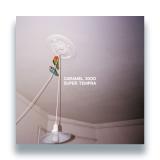
DJ Support: Vladimir Ivkovic, Calm, LefTo, Dawn Again, Dream Chimney, Alexis Le-Tan, Afterlife, Sofa Elsewhere, Kreggo, Froid Dub, Johan Blende, Sean Johnston, Fabio De Luca, Dr. Rob, Leo Mas, Mark Broadbent, Patch, Stefano Tucci, DJ Nova
Three years after dropping Rapido Super studio on Hell Yeah, Caramel 3000 has slowed things down even further for his new eight-track LP, Super Tempra. This playful work gets stranger but even more inviting than ever with his signature OB-6 synth and the Eurorack modular, oodles of springy reverb, delayed balafon and scattered spoken-words. Caramel 3000 splits his time between the muddy waters of the Barene, south of the Venice Lagoon, and the dim light of a studio in Anderlecht. When not cruising in his sun-bleached wooden boat, he cherishes in the little light that reaches him at his shelter in Anderlecht. Renata and Piero, the couple on the artwork, once passed through that studio. This irregular sonic fusion of this EP came out of that visit. It's a fantastical collage that dissolves the boundaries between devotion and daydream with syrupy choir voices and fragments of Nancy Fraser lectures drifting in and out like the plot of a half- remembered hallucination. Quotes from legendary Italian singer Ornella Vanoni, children’s percussion and mystic melodies are looped and modulated into slow-burning psych - outs.
After the ancient sci-fi dub of the opener, 'Corsa Nudi' pairs the occult with the primitive, 'Arena Deriva' melts to watery droplets and glacial waves, and 'Acqua Tofana' is polyrhythmic tribalism from another dimension. 'Lente Virtus' marries melodic innocence to trippy humid density and 'Soft-shell Crab' is a woozy kaleidoscope with the happy accidents left in. 'Cacciatore di Frodo' is a haunting apparition from the deep and 'Vittoria Foresta' suspends you between the earthly and the otherworldly. Super Tempra is half the speed but twice the depth and full of wonder.
erscheint voraussichtlich am 06.11.2026

Colorful, powerful and elegant. A watershed masterpiece that embraces before then and after that by Kiyoshi Sugimoto, the master of the era.
Since turning professional in 1960, Kiyoshi Sugimoto has been active in many sessions and recordings. From the latter half of the 1960s, he joined groups such as Hideo Shiraki, Akira Ishikawa, and Terumasa Hino, gaining attention and solidifying his position with leader works such as “Country Dream” and “Babylonia Wind.” This work was recorded with Akira Ishikawa, Hiromasa Suzuki, Takao Uematsu and others right after studying in America for about a year. Starting with the groovy and luscious “Our Time” and “Marmalade Sky”, the dubious keyboards of “Jones Street”, and the melancholic and beautiful “Quiet Pulse”, it can be said to be a gap between jazz rock and fusion. There are attractive songs. This work represents Sugimoto’s work in the mid-1970s.
erscheint voraussichtlich am 06.11.2026

We don’t know much about Ariane Bonzini. Her age, perhaps. Her first name, certainly – but it’s confusing, as you’d expect. The rest, he keeps to himself, tucked away somewhere between Villeneuve-Saint-Georges and the Landes in the off-season.
What we do know is that at 16 he left everything behind to try his hand at rap. That six years later he left everything behind, again, without really saying why. That he taught himself sound engineering as one might learn a dead language.
And then came Magenta. In 2025, for three months, Bonzini set himself a challenge bordering on the absurd: to produce one track a day, write it, record it, mix it, master it, film himself doing it, and post it on social media. Without planning, without taking a step back, working until 3 am behind the screen. His monthly listeners went from 35 to 100,000.
For ‘Mec Normal’, something changed. Bonzini headed to the Rue Boyer studio – a space steeped in analogue charm, where some of the synths had once belonged to Christophe – and surrounded himself with a team for the first time: Crayon on production, Renaud Letang on mixing.
Chilly Gonzales spotted him, and from their meeting came ‘Gonzini’.
Thirteen tracks suspended between gentle melancholy and a willing detachment. Soaring synths. Recurring, obsessive ‘you’s’. A voice that whispers where others would shout.
Ariane Bonzini is unlike anything we’ve heard before. That is undoubtedly what makes her so unforgettable.
erscheint voraussichtlich am 06.11.2026

Zeta-Kognition is a rarely documented perceptual phenomenon in which thoughts are no longer experienced in the order in which they are formed.
The first reports appeared shortly after the promo release of this EP. Listeners described a strange effect while listening to pdqb's signature electro tracks: while the music was playing, memories, expectations, and present perceptions seemed to exchange places. Some felt they had already completed a thought before it had even occurred to them. Others reported that half an hour vanished in what felt like seconds, while a few minutes seemed to contain an unusual depth and density of experience.
Intriguingly, those who experienced side effects after listening could restore their normal perception by playing the entire EP in reverse. It was said that the reverse playback would unwind the cognitive displacement caused by the original sequence, gradually returning memories, expectations, and present awareness to their natural alignment.
Dr. Sascha Dornhöfer, who first documented the phenomenon, speculates that the remix by Carsten Nicolai (Alva Noto) may contain a unique balance of repetition and symmetry that survives both forward and reverse playback. This would explain why listeners experiencing the effects of Zeta Cognition consistently identify it as the point from which normal perception can be restored.
In any case, dear listener, there is no cause for concern - the antidote is hidden in reverse.
P.S. Then again, who knows. Persistent rumors suggest that Adam Pendleton's exclusive black-and-white artwork conceals a visual counterpart to the phenomenon, though no one has yet determined exactly what it reveals - or to whom.
Bei uns am Lager und sofort versandfertig

Under the right conditions, half-remembered dreams can meld seamlessly into hazy present moments. Time spent alone can be an emotional blank canvas, and an opportunity to deconstruct sense and feeling; a patchwork of snippets both rooted in memory and abstracted from reality. The title of ‘quilted lament’ perfectly captures the way Gretchen Korsmo and claire rousay’s overlapping missions come together to do just this. Worn polaroid melodies and snatched everyday noises seem overheard through windows onto the street. They feel emotionally twinned, claire and Gretchen, it’s not always possible to tell where one ends and the other begins. Their musical thoughts and DNA are sewn together into a mini symphony of warmly embracing movements.
Built remotely between pre-existing friends in the underground music scene, the duo layered ideas onto audio files, and sent them back (and forth). And these luscious instrumentals truly do feel assembled by intuition, casually crafted with little need for guidance. “claire and I are both emo,” explains Korsmo. “We are both former texas-dwellers too and relate over both the woes and beauties of being in the American DIY experimental music scene.” Buoyant piano keys and hushed layer vocals tracks sit alongside a humming field-recorded scrapbook; a neighbour caught in a moment of private inspiration while street noise elevates; a private hymnal in the bathroom while the washing machine ends its cycle. Both artists take field sounds from a wealth of Zoom and Tascam recordings made in the last half-decade in Santa Fe, San Antonio, Los Angeles, Kamakura, Japan and elsewhere – from a baseball game announcer in Santa Fe, to the sound of a friend eating a juicy peach. At times, the bedroom walls seem to grow thin amid atmospheric creaks and disembodied whispers. Despite its very emo core, this is a recording engulfed in an intense sense of bliss, more at peace than we’ve heard either artist before.
Bei uns am Lager und sofort versandfertig

What's Left is the new album by Tom Henry, releasing November 20th, 2026 on Royal Oakie Records. Where his debut album Songs to Sing and Dance To leaned into big dreams, What's Left is a record about what remains once the dust settles, delivered with the wit and charm of a young rocker in his prime. The familiar influences are still there — Paul McCartney and Big Star loom large (though there's a little more Third/Sister Lovers this time around), but now the songs are lush and polished, with new sounds creeping in around Henry’s trademark power pop hooks. On a handful of tracks you can even hear strains of Syd Barrett influenced acid-folk alongside psychedelic rock that recalls The Brian Jonestown Massacre or The Beatles at their most lysergic.
Produced in collaboration with David Glasebrook (Patti Smith, Peter Case, Sugar Candy Mountain), and engineered by Glasebrook and Stephen Shirk, the album was tracked across two cities at Shirk Studios in Chicago, IL and The Garden Shed in Oakland, CA, where Glasebrook also handled mixing and mastering. The record's cross-continental origins reflect the movements of Tom’s own life over the past half decade, which found him departing his native Chicago for Los Angeles before returning home four years later, and lend the album its distinctive sound of Midwestern grit mixed with California sunshine across all twelve tracks.
Opener "Someone I Need" sets the tone: an old-fashioned, up-beat rocker built for a roadside diner jukebox somewhere out along the backroads of your mind — it's crunchy tape tones and horn arrangement lending warmth to the song as the narrator asks for a dance and beckons the listener along for the ride. By "It's Not Meant to Be," the record turns inward, wrestling with the exhaustion of trying to find love in the modern age — especially for someone who wears their heart on their sleeve and often comes to find their suitor's wardrobe doesn't have room. "Silverlake Song," reminiscent of early Donovan, kicks off with otherworldly sitar — a wry postcard from the west, tracing how the shimmering promise of L.A.'s Silver Lake enchants, bargains with, and ultimately tries to ruin the starry-eyed dreamer — and very nearly succeeds.
In addition to Tom–who sang and played guitar, bass, and keys–the album features musical contributions from co-producer David Glasebrook, Brian Daley, Joe Daley, Finn Swingley, Lewis Patzner, and labelmates Graham Patzner, Charles Lloyd, and Simon Beins. Liner notes come courtesy of Ian F. Svenonius, who — in the guise of one Johnny Sincere of Integrated Star Management Ltd. — recounts his company's failed attempt to sell Tom Henry a gimmick: a space suit, a coal miner's neckerchief, a lounge pianist's dead-eyed shades. Tom turned them all down. As Svenonius tells it, when reminded that every story's been told and every gimmick's been used, that all that's left is to admire the photographs of what's gone before, Tom simply shrugged: rock 'n' roll is an eternal spring, and if this is what's left, that's just fine with him — it's what he likes to do.
erscheint voraussichtlich am 20.11.2026
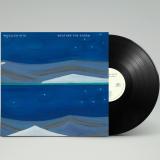
Fourteen years have passed since Woollen Kits released two albums in a single year (Woollen Kits and Four Girls, both 2012), but Melbourne/Naarm’s beloved Kits are back to remind us what we’ve been missing all this time.
Weather the Storm still draws from the same deck of cards, but opens the door to some more classically renowned influences like The Velvet Underground, Television Personalities, Beat Happening ,Marine Girls, Bob Dylan, Van Morrison, et al.
Across ten tracks it’s clear just how well they can write a hook, a verse, a chorus, a song; bringing together themes of everyday life, love and sincerity with aphorisms, stories and the classic sound we know and love.
Woollen Kits’ approach is almost as minimal and primitive as it was back in 2007, when singer/guitarist Tom Hardisty first sent a few channels into the red on an old Tascam tape machine. Simple chords, strong melodies, witty lyrics and a clear message. It’s a hell of a combination when it’s done well, and one they would only refine from there.
Tom (Hardisty) recruited a second Tom (Ridgewell, drums) and a Leon (Applebee, guitar) to help guide his new Cramps/Half Japanese- worship bedroom project into a real-life band, playing their first gig on NYE ’08 before launching into 2009 to record their first canon release, the Teenage Love 7”.
Yes, much time has passed since the band’s last record, Four Girls, came out in late 2012, but in the interim members have released plenty of other music across numerous projects, including Constant Mongrel, Nun, Canine Apathy, The UV Race, TB Ridge as The Director, Calamari Girls & more.
erscheint voraussichtlich am 20.11.2026

Younger Than Me announces his debut full length "The Golden Age Of Love", to be released on 90's Wax this coming March 2024. The record is the perfect example of the breadth of his irrepressible and unique sound. Featuring collaborations with Massimiliano Pagliara, Brame & Hamo and Pablo Bozzi. The artist is an Italian native known for a modern interpretation of '90s club music' - a dynamic blend of Progressive House, Trance, EBM, Breakbeat, and Techno ideas. This first album is a love letter to a deep-rooted passion for the idiosyncrasies of rave culture and the crossover points with contemporary electronic music.
Younger Than Me, an artistic project by Francesco Mingrino that is steeped in the nostalgia of ‘90s rave, yet not at all trapped in that past. A project that has cemented a special place in the electronic music scene with a string of records on labels like Bordello A Parigi, Amsterdam-Utrecht based platform XXX, Rotterdam’s Bar and Jennifer Cardini’s Dischi Autunno. To this point Francesco has pushed his fun yet forceful sound, with many releases on his own 90's Wax, and collaborations with people like Skatebård, Francesco Farfa, Timothy Clerkin and Curses (as Y2C).
"The Golden Age Of Love" as a package is curated in Younger Than Me's characteristic style. Opening with "Long Life Death", a track that sets the stage with a cinematic soundscape in a classic Carpenter vibe. Picking up the tempo "Zarathustra Dance" takes you right into the golden age itself, its low slung beat and carefully sequenced lead line pushes an ever building tension designed to crack any dancefloor. The track with Massimiliano Pagliara, "Eternal Sunshine Of Solitary Mind", is one of the highlights, perfectly building around a catchy lead with tight arpeggio and sequenced acid. Leading us into the 2nd half of the record "Sadness Is The Only Way To Happiness" is a proto-trance beast, inspired by that period in the early 90s when Trance was less bright lights and big stages and more dark rooms and smoke filled spaces, an ever building progressive run of haunting vocals, rave stabs and rolling bass.
Whilst YTM is at home presenting dancefloor focussed material, we see him explore the other side too, with "Memory Is A Clock" like the earlier "Vortix", he ditches the 4x4 for breakbeat territory. Whilst the bass keeps the solid metronome you would expect, "Memory Is A Clock" is a track that takes a few moments, contemplative melody and trademark arpeggios take the lead. When it comes to the other collaborations on the record, the appearance of Brame And Hamo on "Raver's Heart Is A Mess" sees them lean into the Progressive nature both artists love so much. Then Pablo Bozzi lends his own unique outlook to "We Don't Know The Way, We Just Stay" in one of the standout tracks, epitomising Younger Than Me’s ability to create profound experiences.
The album concludes with "Music Will Never Stop, Heartbeat Will Never Fade, Party Will Never End", less of a title and more of a personal philosophy – the perpetual essence of rave culture and its timeless impact on music. A rhythmic belter, juxtaposed with incendiary synth-lines and staple catchy sequence work, finishing the record with one of the true highpoints. In addition the release also features four digital bonus tracks, including "The Other Face Of Loneliness" and a Prog Dance Reshape of one of the records more eclectic cuts "Zarathustra Dance" all offering an extended exploration into the creative landscape YTM inhabits.
"The Golden Age Of Love" is a debut album that ticks all the boxes; it's a celebration of a bygone era through the lens of the contemporary. Younger Than Me stands as a testament to the enduring spirit and evolving nature of the music that began in the ‘90s rave scene, with an LP that pushes Love, Progression and Fun to the forefront.
Bei uns am Lager und sofort versandfertig

Our previous remix-EP of Ness' classic album "Flesh Of The Gods" was, for various reasons, a long and slow process. When Ness himself suggested us to ask Vladw for a contribution we finally had a good reason to reach out to a long time favorite @ the Navigare HQ. Although located, literally, on the other side of the planet, his deep, driving and breezy productions ring true to our, slightly northern, musical vision. So we are not surprised that his excellent remix of "Transilient" is, already, one of the most celebrated tracks in our half decade long history. We asked for more, and finally we are able to present three brand new originals, seeded, watered and harvested with a Navigarean intent. Three highly functional pieces, aimed at focused dancefloors underneath open skies, balancing the beautiful and lush with the edgy and slightly twisted. Although being our first ever collaboration, any Navigare listener would understand that Luigi Tozzi has played a huge role for us on our path. Since his first releases with Hypnus we've listened carefully, on repeat, for a dozen years by now. A guiding light for our scene, always curious, always pioneering, yet always on point. His remix of "Drya" takes the harmonix of the original, adds a monstrous bassline and - trust us on this one - that massive clap will cause a mass frisson on the dancefloor. Trust Navigare Audio...
Bei uns am Lager und sofort versandfertig

Gold Vinyl Represss
*A MODERN JAZZ REINTERPRETATION OF THE MUSIC FROM THE LEGEND OF ZELDA*
WRWTFWW Records is happy to announce the release of Casimir Liberski ReTRio's The Z Suites, a full-length jazz album reinterpreting the music from iconic Nintendo video game series The Legend of Zelda. The epic Z-Jazz journey is available in the following formats: limited edition 180g half speed mastered vinyl double LP housed in a heavyweight sleeve with obi, digipack CD with cavalier, and digital.
Casimir Liberski reimagines the golden era of video game soundtracks with jazz versions of Zelda favorites The Legend of Zelda (1986), A Link to the Past (1991), Link's Awakening (1993), and Oscarina of Time (1998) - plus a few Easter eggs! Dancing between nostalgia and avant-garde, the Brussels-born pianist and composer crafts a sonic world of pixelated folklore where melody and improvisation coexist in harmony.
Music critic Arthur Meurant perfectly explains:
For many video games are a journey of the mind. Since its inception - dating back to the early seventies - this avant-garde artistic medium has nourished the imaginations of a digital age. Casimir, like many others, has been fed a steady diet of pixels from an early age. From simple squares to cultural cornerstones they have become the trail on which playful travelers of the mind retrace the steppes of history. A shared universe, familiar yet endless, of pocket-sized mythology. Its name? Hyrule. Its goal? To amaze. In these few tracks - selected with care - the Casimir Liberski ReTRio invites you, finally, to visit a space which does not exist yet holds us all. A land where all feel welcome. Where all are happy. But also... to rediscover under another timbre the classical compositions of Master Composer K?ji Kond?. A man who, unbeknownst to him, composed our dreams as well as music. That single noble pursuit, where an artist gives soul without losing his own, is yet again a statement of humanity in its purest of forms: art as that which brings us together and makes us whole in a world eroded by modernity. Pick up your key. Gather your maps. Open the door. Adventure calls.
Long live Hyrule jazz!
Bei uns am Lager und sofort versandfertig

Bei uns am Lager und sofort versandfertig

How enduring is the signature song from Harry Chapin’s Verities & Balderdash? So timeless that it became the subject of a 2025 documentary in which artists from multiple generations weigh in on its impact on their lives and craft. “Cat’s in the Cradle” doubtlessly remains the main event on the singer-songwriter’s 1974 album. The legendary opening track also serves as a guidepost for the bold personal and social material that follows — as well as the gorgeous folk-rock arrangements that underpin the New York native’s most commercially successful work.
Sourced from the original master tapes, pressed at Fidelity Record Pressing, housed in a Stoughton jacket complete with a four-page insert, and strictly limited to 3,000 numbered copies, Mobile Fidelity’s 180g 33RPM LP of Verities & Balderdash presents Chapin’s fourth full-length in audiophile quality for the first time on vinyl. Captured during a golden era for sonics and production, the Top 5 effort features remarkable tonal balance, instrumental separation, and organic naturalism. Those valued aspects come into supreme focus on this reissue, which plays with dead-quiet surfaces and a low noise floor.
The newfound clarity, openness, and imaging underscore the lasting appeal of Chapin’s tender deliveries, soulful timbre, and careful phrasing. Every word comes across with incredible realism, while his underrated guitar playing occupies its own distinctive space. Also notable: The extension of the tasteful string accents; airiness of the backing vocals; depth and shape of the spare bass lines; and width and depth of the soundstaging. When on “Six String Orchestra” Chapin calls out names of instruments, they appear like magic, the band performing feet from you. Chapin has never sounded so lifelike on record.
Certified double platinum, Verities & Balderdash resonated with the times and public. “Cat’s in the Cradle” reached No. 1 on the chart on its way to being inducted into the Grammy Hall of Fame. The romantic ballad “I Wanna Learn a Love Song” flirted with the Top 40 and wrapped listeners in the equivalent of a cozy blanket. The record’s other single, the mini-epic “What Made America Famous?,” helped establish Chapin as one of the country’s most incisive and insightful commentators.
Verities & Balderdash teems with situational devices and topical matters. Chapin observes everything from the polarization of the nation to changes in moral standards and cultural priorities. He investigates pressing themes without ever turning preachy or elevating himself above the matters at hand. On “Halfway to Heaven,” whose coda races to the finish and ranks as the most urgent moment on the record, Chapin inhabits the mind of his frustrated protagonist akin to an eagle-eyed novelist.
Conveying emotions that range from melancholic to carefree, Chapin is as much of a singer as a storyteller. He assumes the voice of multiple characters within a single narrative. During the quirky “30,000 Pounds of Bananas,” a tale based on a delivery-truck accident in 1965, Chapin alters his delivery, pronunciation, and diction to become an old man reflecting on the mishap and mess. The tempo, too, adjusts to match the speed of the vehicle Chapin describes.
Adorned with timely laugh tracks to reinforce the bittersweet humor, the stripped-down “Six String Orchestra” takes everything up another notch, with Chapin intentionally missing guitar notes or playing a broken passage to illustrate the failures of the hopeful protagonist who doesn’t have what’s required to make it as an artist.
Chapin, of course, did not have any such problem. The lynchpin of a career cut short by a tragic traffic incident, Verities & Balderdash is Exhibit A of the savvy craft, feeling, and perspective he lent to American music.
Der Artikel ist noch nicht erschienen. Du kannst den Artikel jetzt vorbestellen, dieser ist nach Wareneingang für dich versandbereit.

2026 REPRESS + DOWNLOAD
Years Of Denial is back on Veyl with their second LP 'Suicide Disco Vol. 2'. The follow up to 2019’s 'Suicide Disco', the duo makes a triumphant return, elevating their distinct sound which fuses dark wave, goth, newbeat, post-punk, EBM, and techno. The LP features 12 tracks all written and produced at Ark of Noise studio, located miles away from the polluted noise of social turbulences, immersed in isolation, creative indulgence, and poetic writing.
From the start, 'Art Break' provides the perfect warm-up, gently cleansing the palette and re-introducing us to Barkosina’s lustful vocals with a slow-burning pace that only marks the beginning. 'Wrong' picks things up, injecting a dose of body music for an infectious piece that bleeds into 'La Pendue' which keeps the energy rising. Next up, 'Mr. Guillotine' delivers a razor sharp edge, carving out a fresh post-punk feel which then brings us to the brooding, 'Never Satisfied'.
'Lover’s Crime' marks the halfway point of the record and one of the album’s standout tracks. Undeniably seductive with an ominous feel, the pair keep this mood going with 'City Lights' and then smash things open with 'Dancing With Demons'. After the devious message sent with 'The Letter', we are submerged in the romantic melancholia of 'Death Of A Lover' and 'Regarding the Pain of Others' before closing things out with 'Social Anxiety' which features vocals by longtime collaborator Broken English Club. The result is an immersive journey through the pair’s self described, Suicide Disco sound, and further builds on the Years of Denial form and legacy.
Der Artikel ist noch nicht erschienen. Du kannst den Artikel jetzt vorbestellen, dieser ist nach Wareneingang für dich versandbereit.

LIMITED 300 ONLY CRYSTAL CLEAR VINYL WITH PURPLE BLOB AND BLACK SPLATTER. HOUSED IN FULL COLOUR MATT SLEEVE WITH POLYLINED INNER BAG AND DOWNLOAD CODE. NON-RETURNABLE.
Following his two sold out releases ‘Vertigo’ & ‘Water Music’ on Riot Season last year, the ever prolific Ivan The Tolerable returns with ‘An Orphan Form’
A beautifully strange and immersive suite that feels both otherworldly and rooted in something organic. Drawing on kosmische drift, loose-limbed jazz, and warped psychedelic textures, the record moves like a half-remembered dream.
Field recordings and nature sounds weave in and out, grounding the swirling synths and off-kilter rhythms in real earth and air. It's a record that doesn’t follow a straight line, but instead wanders, curious, alive, and quietly spellbinding.
Recorded in winter 2024 in Middlesbrough, UK and Utrecht, Netherlands
Oli Heffernan: bass/guitars/synths/drones/field recordings/electric piano
Mees Siderius: drums/percussion/vibraphone
Elsa Van Der Linden: saxophones/flutes
Der Artikel ist noch nicht erschienen. Du kannst den Artikel jetzt vorbestellen, dieser ist nach Wareneingang für dich versandbereit.
Professor Roth's debut EP, self-released on his newly formed label Maestro, is music that feels half remembered. Familiar enough to settle into, strange enough to keep shifting beneath your feet, it lives in that sweet spot where groove and abstraction lean into one another. Dusty textures, hazy melodies and understated rhythms never demand attention, yet quietly refuse to let go. Every track feels like another realm of the same dream: warm, weightless and just slightly out of focus.
‘Daydreaming’ is an inviting first step into the haze, opening the door without ever fully revealing what's on the other side. Gentle movement carries drifting melodies that seem to appear and disappear with every listen. An ethereal vocal breakdown creates the feeling of being quietly carried away from its hypnotic groove before pulling you back under its spell. Patient and understated, ‘The Way It Is’ lets the groove do the talking while subtle details gradually come into focus. Dubby percussive chaos is softened by warm, lifelike pads, encouraging your body to move while your mind wanders elsewhere.
As the name suggests, ‘Swells’ arrives in waves. Layers fold over one another, building and dissolving without urgency. There's a beautiful tension between motion and stillness, leaving the track suspended somewhere between the dancefloor and a reverie. ‘Shades’ is a fitting close that blurs the edges even further. Soft, hypnotic and quietly psychedelic, it feels less like an ending and more like waking up slowly. Content to linger in that in-between a little longer, glitchy samples drift through swirling soundscapes, keeping the dancefloor gently spun until the very end.
Der Artikel ist noch nicht erschienen. Du kannst den Artikel jetzt vorbestellen, dieser ist nach Wareneingang für dich versandbereit.

Originally released by Time Capsule in 2021 and long out of print, Stories From Another Time 1982-1988 returns in an upgraded edition following years of demand and rising collector prices on the secondhand market. Widely regarded as a modern cult classic, Mário Rui Silva’s visionary recordings blend acoustic folk, cinematic soul, spiritual jazz and saudade-filled Lusophone rhythm into a deeply timeless and universal work that transcends genre and geography.
This new edition features half-speed mastering cut at Metropolis alongside an expanded 4-page insert with a tribute essay and unseen photographs following Silva’s passing in 2024.
Double LP + 4-page insert
==========================================================
The roots of Angolan popular music explored in the meticulous guitar studies of Mário Rui Silva. For fans of Naná Vasconcelos, John Hassell’s Fourth World ambient, Eduardo Mateo’s psychedelic folk and Cameroonian electronic music visionary Francis Bebey.
Whether on mesmerising acoustic ballads or hypnotic groove-led tracks, the music of Angolan guitarist, researcher and intellectual Mário Rui Silva has a beguiling, melancholy quality, woven into the dynamics of his deft guitar playing.Rhythmically complex yet supremely effortless, the music collected here stems from three albums Mário released in Luanda in the 1980s that reflect his diverse range of influences, from traditional Angolan and West African rhythms to European jazz and classical instrumentation. It is united by a sense of low-key beauty, whether on the chugging opener ‘Kazum-zum-zum’, the jazz-funk keys of ‘Lembrança Dum Velho’, or the twinkling, late-night poly-rhythms of ‘Kizomba Kya Kisanji’.
Born in Luanda, Angola in 1953, Mário dedicated his life to Angolan popular music. His fifty-year career has seen him live between Angola and Europe, rub shoulders with Cameroonian musicians Francis Bebey and Ewanjé, record the seminal album Angola ’72 with fellow Angolan musician Bonga, and draw influence from Brazilian guitarist Baden Powell.
It was the teaching of Angolan legend and Ngola Ritmos co-founder Liceu Vieira Dias that Mário gained a technical, political and spiritual understanding of Angolan musical culture. In the hands of Liceu, the traditional Angolan semba and kazukuta rhythms of the 1940s and ‘50s helped create an emancipatory sense of national pride and collective agency that awakened its listeners to the racism and tyranny of colonial rule, underpinning the country’s push for independence in the process.
What might sound like the intonations of Brazilian influence are what Mário attributes to the “African rhythms taken by the slaves which gave rise to other musical cultures” around the globe. Instead, this music emerged from a collective instinct to assert a cosmopolitan Angolan identity free from the patronising falsehoods of Lusotropicalism.
“There was a need within me to contribute in doing new things,” Mário describes. “In the sense of solidifying the music of Angola that was the result of the meeting of two cultures, and wanting to value the Angolan part whenever possible.”A selection from Mário’s three 1980s albums, Sung’Ali (1982), Tunapenda Afrika (1985) and Koizas dum Outru Tempu (1988) have been compiled here as a 2xLP release by Time Capsule’s Sam Jacob and Kay Suzuki. Together, they provide a snapshot of one man’s journey to the core of his nation’s music, charged with the search for a culture uprooted by colonialism
Bei uns am Lager und sofort versandfertig
2026 Repress
We feel like Frank & Tony and Smallville have been on the same musical wave-length since forever. Our musical paths have crossed back and forth over the years and we have always shared a lot of the same values- steadily putting out quality music, that stands the test of time - growing consistently - never stop following our very own way - always not-following trends forever..
Frank & Tony is the collaborative guise of Scissor & Thread co-founders Francis Harris and Anthony Collins aka Grant. Both have long been staples of the underground with material under their own names and numerous other guises shaping the musical landscape of House Techno and beyond since the turn of the millennium. Both lived together in New York and as Frank & Tony the pair have delivered multiple albums and many EP’s on their own label, Tokyo’s Mule Musiq and Pacific Rhythm- now they are warmly welcomed onto the Smallville Records roster with their latest collection of works.
‘Ways Of Mine’ leads on the A-Side and showcases the pairs signature deep hypnotic house style via soft billowing pads cascading metallic chimes psychedelic spoken word and dreamy dubbed out keys floating atop a robust bouncy rhythm
section.To open the flip-side title-track ‘After All’ lays down a subtly blooming chord sequence shuffled drums and bumpy bass stabs at its core all subtly nuanced while the latter half introduces more dynamic rhythmic elements and intertwined melodic touches. ‘Dimension’ then concludes the release diving deeper with saturated ethereal pads and bubbling resonant arpeggio lines alongside heavily swung crisp drums jazzy keys and delayed vocal chants.
After All comes with a full cover artwork by Stefan Marx.
All tracks written & produced by Francis Harris & Anthony Collins
Mastering and Vinyl cut by Helmut Erler at Lathesville
Bei uns am Lager und sofort versandfertig
