
In Stock
Disponibile in Stock e pronto per la spedizione
Last In: 2 days ago
Disponibile in Stock e pronto per la spedizione

Disponibile in Stock e pronto per la spedizione

Across the cosmic boundaries via spiritual exploration and in the void between shimmer and shadow you will find the astral soundscapes of Birds Of Pandaemonium...
Emerging from Brooklyn's late-night music ecosystem, 'Hazy James' Armstrong and Tim Wagner met nearly 20 years ago through the city's DJ and club scene. Each with different but complementary musical backgrounds which included a mix of folk, guitar, DJing, synths, drum machines, country rock, disco, jazz, and rhythm-heavy club music (being just a few!), the duo began various musical endeavours together & "exploring the darkness while pursuing light" which eventually lead to the birth of Birds Of Pandaemonium.
It was only a matter of time that the stars aligned (via an introduction from Shane Watson of Causeway) to bring the Birds onto the musical radar at Sprechen which led to the release of 3 renowned E.Ps and ultimately, their debut album, Eudaemonia. Obscure covers including Idris Muhammed's Loft classic 'Could Heaven Ever Be Like This', the rave defining Born Slippy by Underworld and the post punk/new wave 'On Islands' by New Musik sit alongside original songs shaped by fresh reflections on life, grief, and love with elements of dream pop, shoe-gaze & gothic pop to give wistful and pulse-driven listening experience that is hazy, romantic, and deliberately genre-blurring.
A truly unique listening experience that delivers broad strokes of sunsetting psychedelia and bleary-eyed optimistic, astral dream-pop across all 8 tracks.
Is it balearic? Not really, it's pretty much a genre all on its own (answers on a postcard).
dovrebbe essere pubblicato su 30.07.2026

Here is the latest record from Konformer, Konformer II, the follow up to Konformer 1!
3 years in the making Konformer II is a further & deeper probe of the world of electronic influenced instrumental, psychedelic Krautrock from the Nuremberg based trio, recorded at Frank Mollena's Lonestar Studios.
Rainer Ruder (bass), Andreas Berg (drums) and & Kristian Krauss (keyboards) continue their exploration with a bass loop anchored odyssey, a trip into the future with a firm nod to the past.
Released on Before I Die 03/07/26 on limited Black Vinyl LP with a full colour art book featuring artworks from independent artists from the city.
The band will commence a short UK Tour of Southern & Northern Grassroots venues from the end of August 2026 culminating in a performance at Manchester Psych Fest on Saturday 5th September.
dovrebbe essere pubblicato su 30.07.2026

When ELEH's debut "Floating Frequencies/Intuitive Synthesis I" was originally released it was praised as a powerful piece of new electronic minimalism. Twenty years later the artist's legacy has grown while ELEH continues to hypnotize new listeners with time stopping music. Critics, fans and neurologists have praised the music of ELEH as aiding attention and focus while seeming to slow time. Eleh's slow change drones are a state of flow hypnotizing listeners into meditative focus.
From the original packaging, "Pure Sound. Pure Volume. Pure Analog. Dedicated To La Monte Young"
ELEH began in 1999 as an exploration of analog synthesis, emphasizing low frequency difference tones and other resonant acoustic phenomena. ELEH highlights the physical presence of sound as it has been inspired by the physical world. There is also something ‘cathedral-like’ and cosmos-inducing in the sound constructed by ELEH.
This audiophile quality presentation of ELEH's debut album was mastered by Tom Eaton at Sounds And Substance and manufactured at Optimal in Germany for the lowest possible noise floor and the highest analog resolution. Packaged using a 5th color metallic shimmer ink on solid black board stock.
"Nuances of sound turn symphonic." New York Times
“ELEH’s sounds move by stealth and are sculpted from the world rather than from ego. Eleh is not a personality; Eleh is an idea about sound. ELEH forces you to contemplate the cosmos and your place in it. “ Gramophone
"ELEH demonstrates how a single amplified gesture delivered just so can reveal the inner workings of an entire cosmos." Tony Herrington/Wire
“Floating Frequencies/Intuitive Synthesis more than lives up to the mythic status that ELEH has ascended to. “ Brainwashed
"ELEH's music electrifies whatever space it engages. With the flip of a switch, it exposes the ways in which all space is, potentially, electric." ~ Frieze
dovrebbe essere pubblicato su 31.07.2026

dovrebbe essere pubblicato su 10.07.2026

Following the first two singles by Freiwillige Selbstkontrolle (later F.S.K) from 1980 and 1981, as well as their debut LP “Stürmer” and the 1982 EP “Magic Moments”, A-Musik is now releasing “Ça c’est le Blues,” another of their early works, all of which were released on Alfred Hilsberg’s legendary ZickZack label and have long since become rarities. “Ça c’est le Blues” was originally released in 1984 and marks nothing less than a milestone in F.S.K.’s already impressive discography. While numerous bands from the West German underground of the early 1980s, following the “Summer of Pop” of 1982 and the associated breakthrough of the “Neue Deutsche Welle,” either moved toward the mainstream or began singing in English, Justin Hoffmann, Thomas Meinecke, Michaela Melián, and Wilfried Petzi took a different path.
The songs became more elaborate, the production – influenced by bands like Gang of Four and Dexys Midnight Runners – more opulent, and the instrumentation now included wind instruments for the first time, which have since become an integral part of F.S.K.’s sound. At the same time, the Munich-based band’s music-historically motivated focus was directed more toward the US than was typical of the bands in the West German scene of that era. To their signature blend of post-punk and experimental music, as already evident on “Stürmer,” they now incorporated funk (on the opener “Faire Le Chicken”) and jazz (on the heartbreaking cover version of “My Funny Valentine”). From then on, this “transatlantic feedback” was an essential component of F.S.K.’s musical practice. The discursive twists and turns, the incorporation of references, and the insistence on German lyrics would influence bands in the coming decades, not just those of the “Hamburg School.” At the same time, the album features legendary hits by Freiwillige Selbstkontrolle – such as “Move Ahead” and “Fragen der Philosophie (Völkerball)”– which are still played at every concert to this day.
With the reissue of “Ça c’est le Blues,” one of the most impressive releases in 20th-century German avant-pop history is finally available again. The reissue includes a comprehensive booklet featuring an in-depth interview about the album with all band members, as well as numerous previously unpublished photos.
dovrebbe essere pubblicato su 17.07.2026

For nearly four decades, since its founding during the mid 1980s, the Belgian imprint, Sub Rosa, has continuously plumbed the depths of numerous, radical creative histories, assembling a catalog of releases that has almost no equivalent, while remaining nearly impossible to nail down. That said, for most of its run, Sub Rosa has been primarily recognized for its rigorous explorations of the lesser explored shadows of experimental sound practice (sound-art, sound-poetry, early electronic and electroacoustic music, free-improvisation, etc.), delivering a remarkable body of artifacts that have collectively helped to rewrite history in their wake. While it's always been impossible to anticipate where the label might take us next, threading their catalog are plenty of releases that throw further wrenches in the cogs, expanding our understanding of what they pursue, as in the case of a handful of titles, appearing as early as the 1980s, dedicated to ethnographic field-recordings from various parts of the world. Among the most striking and celebrated of these was 2017's Ethiopian Urban And Tribal Music: Mindanoo Mistiru / Gold From Wax, comprising an astounding body of recordings made by Ragnar Johnson and Ralph Harrisson in Ethiopia during 1971, reissuing material originally released by Lyrichord the following year. Now, Sub Rosa returns to the incredible work embarked upon by the pair and captured on that same trip with Ethiopian Musics 1971, comprising the recordings originally released by Ocora shortly after their completion, expanded in this edition to include an entire disc of never before released music. Widely regarded as some of the most important field-recordings ever made of indigenous Ethiopian folk music (as captivating and intoxicating as they are revelatory: providing insights into the roots of the country's singular traditions of popular music and jazz that have come to be celebrated the world over), this incredible collection is issued by Sub Rosa in a beautifully produced 2LP edition, complemented by a four page insert providing detailed descriptions of each song, as well as notes by the ethnomusicologists and recordists, as well as a 2CD edition, with a twelve page booklet. Insanely good and absolutely essential for any fan of field-recording, ethnomusicology, the music of Ethiopia, or the label's mission at large. Once again, Sub Rosa has defied our expectations and delivered a remarkably important intervention in the history of recorded sound.
Located in the Horn of Africa region of East Africa, few cultures are distinctly singular, while being so diverse (containing 80 distinct ethnic groups who speak 70 languages and 200 dialects) as that of Ethiopia. The home to some of the oldest surviving sects of Judaism, Christianity, and Islam (each contributing important aspects of its collective cultural body), particularly the country's culinary and musical traditions have become celebrated the world over, and (generally speaking) feel entirely independent of those of its neighbors. Given this, it's unsurprising that, during the summer of 1971, the young ethnographer, Ragnar Johnson, accompanied by Ralph Harrisson, traveled to Ethiopia to begin his brief career as a field recording ethnomusicologist, capturing material on reels of magnetic tape that would be subsequently released across three LPs for Lyrichord and Ocora, respectively, coming to form a cornerstone of documentation and study of the country's many indigenous musical traditions, as well as providing wide, global access to them for the first time. While Johnson's recording career was relatively brief, ending toward the end of the decade when he began to focus more on teaching in UK universities, with a focus on the anthropology of art and social anthropology, his impact on the field was lasting. Between 1971 and 1979, in addition to those he made in Ethiopia, he made hugely significant recordings in Yemen (also issued by Lyrichord before being reissued by Sub Rosa) and Papua New Guinea, which were originally released by David Toop's Quartz Publications to wide celebration, before being revisited by Ideologic Organ in 2023.
While it's worth noting that commercial releases of ethnomusicological recordings by labels like Folkways, Lyrichord, and Ocora were still in their relatively early days when he entered the field, Johnson's recordings quickly stood apart for their vivid qualities and clarity of space, allowing them to stand the test of time. As he later stated: "I used a Uher Report L stereo tape recorder, BASF quarter inch tapes at a recording speed of seven and a half inches per second with two directional microphones mounted to record an isosceles triangle of stereo sound," he reveals. "The location of the microphones and musicians was critical. The musicians were fully informed of all aspects of the recording process."
Johnson's recordings are extremely vivid, there is a clear sense of space and the cries of the flutes exist across the entire stereo field. It's a reflection of Johnson's skill as a field recordist that his recordings continue to be reissued over forty years later. "I used a Uher Report L stereo tape recorder, BASF quarter inch tapes at a recording speed of seven and a half inches per second with two directional microphones mounted to record an isosceles triangle of stereo sound," he reveals. "The location of the microphones and musicians was critical. The musicians were fully informed of all aspects of the recording process… I used to enjoy being in the moment and hearing something wonderful despite the stress of the vigilance required to ensure that the recordings were accomplished according to plan. The responsibility is to record and document the music as effectively as possible so that it has been preserved for posterity. It is better to actually record music than to sit in a seminar room debating the ethics of recording music." It is this very ethos and sense of clarity that can be encountered across the length of Ethiopian Musics 1971.
For the sake of clarity, the two LPs of material that comprise Ethiopian Musics 1971 should be regarded as a single body of recordings alongside those made in Ethiopia by Ragnar Johnson and Ralph Harrisson during the summer of 1971 (previously issued by Lyrichord and reissued by Sub Rosa), and as two that have, until now, remained historically distinct. The first LP gathers that material released by Ocora during the early 1970s on Musiques Ethiopiennes, while the second comprises (as far as we can tell) twelve never before issued recordings, expanding the journey and making this the definitive edition of the release with its incredible total of 23 recordings of songs, allowing it ever greater scope to achieve the recordists' modus operandi of capturing the broadest and most diverse cross section of Ethiopia's many musical cultures, ranging from different forms of urban music captured in Addis Ababa, documenting largely orally transmitted idioms within which lyrical content is given greater emphasis than the instrumental components (played on masenko fiddles, craar and bagana lyres, washint flutes and kabaro drums), to folk idioms hailing from the Danakil desert and the border regions with Sudan and Kenya. There are songs sung and played in bars, divination chants, laments, dances, Christian songs, and Amharic sung poetry, to only begin to scratch the surface.
Ethiopian Musics 1971 is one of those rare albums where each musical moment is pure, intoxicating gold, while also being greater through the sum of its parts. There are the many songs, forming a rich tapestry of remarkable range across the respective two LPs/CDs (moments that wondrously flirt with sonic abstraction; hypnotic rhythms; pulsing chant; melodies that, in structural arrangement and tonal combination, help us reframe how such a thing might be understood, and a great deal more), each imbued with a remarkable directness and emotive sensibility, and there is the stunning quality of these recordings themselves, transporting each sound to our ears as though we intimately share its creator's space, while being imbued with the pure heart and remarkable spirit with which they were made. As we said before, it's little wonder, once heard, why these recordings and this music feels as fresh and relevant (enduring more than 50 years) today as when they were made. Once again, Sub Rosa has raised the bar with this essential addition to the incredible work that Ragnar Johnson and Ralph Harrisson did back in Ethiopia during 1971, radically expanding our access to the sounds that they captured with these stunning, beautifully produced 2LP and 2CD editions. Absolutely engrossing from the first sounding to the last, this one can't be missed.
dovrebbe essere pubblicato su 26.06.2026

Originally self-released in 2023, Stella Kola, the debut album from Beverly Ketch (Jow Jow, Weeping Bong Band) and Robert Thomas (Sunburned Hand of the Man, Dalthom), now returns in a renewed edition—bringing wider attention to a record that already felt like a quietly essential artifact from the moment it first appeared.
Given the pair’s respective roots—and the presence of collaborators drawn from across the Northeast experimental underground—one might expect “a brutal blast of acid swirl.” Instead, what emerges is something far more unexpected. The album is “steeped, not in noise and dissonance, but in the fragrant, captivating folk of Linda Perhacs, Judee Sill, Karen Dalton, and Bridget St John.”
From the opening moments, especially on “Rosa,” the record reveals its core sensibility: “a ballad that digs deep into the psychedelic-folk tradition until it takes root in a freshly sporous permaculture.” What follows is a set of songs that feel both carefully assembled and organically grown—delicate structures held together by a wide circle of contributing musicians, including Wednesday Knudsen (flute), P.G. Six (harp, guitars, keys), Gary War (synth), Jen Gellineau (viola, violin), Willie Lane, L. Gray, and others.
Rather than functioning as studio additions, these collaborators form a genuine collective presence. “The family affair feeds into the album’s charms,” and the feeling is unmistakably communal. Like many of the ‘60s folk records it echoes, Stella Kola carries “the feeling of community and camaraderie” at its core, shaping a warmth that runs through the entire release.
The album’s emotional palette leans toward a quiet, persistent melancholy: “the best records from that era also carried with them an inherent sadness and Stella Kola’s songs wash over the listener with a beautiful woe.” Its sound edges into the terrain of Fairport Convention and Pentangle, with references to “Beggar’s, Kings, Dark Damsels, and Tarot,” yet never settles into revivalism. Instead, Ketch and Thomas extend the tradition outward, refracting it through their own distinctly American, underground language.
As one early description of the album notes, “the masterful restraint of ‘Rosa’ and the rest of Stella Kola’s shimmering debut evokes Anne Briggs, C.O.B., Pentangle and similar ancestors that knew the best way to honor traditions was to widen the heritage even further.”
Even among a prolific and unpredictable network of underground musicians, Stella Kola stands apart. “It’s early in the year, but it’s hard to see an album, especially a debut, capturing the heart as hard as this one.” With its return in reissue form, the album reasserts itself not just as a hidden gem, but as an essential document of contemporary folk experimentation—an intimate, collective work that continues to unfold with time.
dovrebbe essere pubblicato su 30.06.2026

dovrebbe essere pubblicato su 26.06.2026

dovrebbe essere pubblicato su 26.06.2026

dovrebbe essere pubblicato su 22.06.2026

dovrebbe essere pubblicato su 30.07.2026

dovrebbe essere pubblicato su 30.06.2026

There are enough fools and malignant actors trying to conquer the world right now as ever. Do we as humans always need to conquer, subjugate, destroy in a never
ending cycle? Kill animals, nature, each other? Or can we finally conquer our own limitations in perceiving our place on this planet?
Maybe we can borrow from an organism that is aspiring to be the true ruler of Gaia and who might just decide to take back it’s reign from us. Can we conquer ourselves and our limits with a wider vision, decompose the barriers, build rhizomes and enhance consciousness? Or will we be the conquered?
Another gem from the east after VC 029 and the track on MSTR 13. This one further explores a psytrancey current in Mental Tribe with a pumping bass and crystal clear, minimal sound design. Unashamed innocent melodies frolicking thru the forest, oblivious to the judgement of the elders. The uptempo pace between 165 and 170 beats makes for a smooth lift off.
dovrebbe essere pubblicato su 30.07.2026

In Arc, Yorkshire-born artist Kirk Barley explores alternative tunings and off-grid sequencing to shape fluid rhythmic and melodic systems that unfold into rich harmonic forms. Kirk’s fourth album under his own name and debut for Marionette continues his exploration of just intonation through a sparse but finely detailed palette of organic atmospheres, metallic shimmer and off-kilter rhythms. Across the record, glassy pads, gamelan metallophones, clarinet and guitar dissolve into fluid, dreamlike forms, suggesting vast coastal landscapes, charged air and the stillness that follows turbulence.
Drawing on the feel of sample-based hip-hop, the minimalism of Terry Riley and Jon Hassell, as well as dub techno and post-rock, Kirk brings together a range of influences in a sound that feels both intimate and expansive. After first hearing Terry Riley’s Shri Camel as a teenager, he became captivated by just intonation and microtuning, inspirations that have shaped his work ever since, from his earliest Bambooman releases to the present solo works and as on half of Church Andrews & Matt Davies. Arc is his first record to be fully rooted in alternative tunings from start to finish. Longtime friend and collaborator Matt Davies appears on Ion, Sundry, Ecstatic and Fret (Haar), where his finely detailed, ASMR-like muted percussion deepens the dialogue between tactile acoustic sound and Kirk’s luminous electronic palette.
dovrebbe essere pubblicato su 24.07.2026

From Wisdom Teeth’s recent compilation nagoyaka na kaze / 和やかな風 (quiet wind)—which cast a spotlight on the Japanese city of Nagoya—emerges “2++”, a new label launched by abentis, who curated the compilation alongside Facta and K-LONE as a central figure in the scene. Conceived as a series introducing facets of Nagoya’s underground electronic music to the world on vinyl, its inaugural release is abentis’ debut album, Dim Grow.
Across the album, intricately designed electronic mallet sounds—created using Ableton Live’s physical-modeling synthesizer—take center stage. Fresh and percussive like marimba or kalimba, yet simultaneously carrying an otherworldly, unreal quality, these tones form the core of the record’s sonic identity. In moments of near-silence, a crystalline resonance poised between glass and metal shimmers with subtle shifts in temperature, giving the album its distinctive texture.
While resonating with the sonic sensibilities of fellow Wisdom Teeth affiliates such as K-LONE, Tristan Arp, and Salamanda, abentis’ uniquely strange palette can be traced back to one of his strongest influences: Haruomi Hosono. In particular, Hosono’s mid-’70s tropical-infused solo albums — Tropical Dandy (1975), Bon Voyage Co. (1976), and Paraiso (1978) — serve as a key reference point. Symbolically reflected in Hosono’s marimba and vocal performance at a 1976 live show in Yokohama Chinatown, the marimba functioned as a central instrument for constructing imagined exotic landscapes inspired by Martin Denny and Hawaiian music.
For abentis—who worked at a local jazz bar before becoming active as a hip-hop beatmaker—the language of “tension chords,” a harmonic vocabulary rooted in jazz and R&B that hovers ambiguously between brightness and darkness, forms a consistent grammar throughout Dim Grow.
Behind the album’s core theme of “mallets + tension chords” lies a broad musical lineage: the harmonic sensibility of Claude Debussy, who anticipated the tensions of jazz; the proto-minimalist spirit of Erik Satie; the marimba-centered structures of Steve Reich; their continuation in Japan through Mkwaju Ensemble (with Midori Takada and production by Joe Hisaishi); and the subsequent branches into post-rock, electronica, and ambient music.
Growing up in Nagoya—an industrial city where creative independence is deeply valued—and being rooted in punk and hip-hop counterculture scenes naturally fostered abentis’ affinity with these predecessors. His practice between genres, combined with an encounter with the highly cross-pollinated musical perspective cultivated around Wisdom Teeth, provided the framework through which his own musical language crystallized. Dim Grow stands as the natural culmination of that journey.
Disponibile in Stock e pronto per la spedizione

Footjob welcomes a vibrant new release from Sheffield’s own Adelphi Music Factory, delivering a EP that radiates pure dancefloor energy.
Known for their uplifting blend of classic house, disco influences, and soulful club aesthetics, Adelphi Music Factory continue to carve out a distinct space between nostalgia and forward-thinking production. With previous releases championed across underground and crossover scenes alike, their sound bridges raw house sensibilities with infectious musicality.
The Sneaking Out The Back EP features four tracks crafted for both peak-time moments and deeper dancefloor journeys.
dovrebbe essere pubblicato su 17.07.2026

Modularz 25 Produced by South American Techno Queen Adriana Lopez who now resides in Barcelona. The Colombian born Producer & DJ has been putting out music on Modularz for a few years as well as her own imprint Grey Report. This is her first full EP on Modularz and were very happy with the results. Four driving techno cuts that are made for non stop mixing. All the tracks on the ep are great for the club or the warehouse.
Enjoy.
Disponibile in Stock e pronto per la spedizione

Disponibile in Stock e pronto per la spedizione
V-House Sound boss, AJ Christou is next to make his Hot Creations debut with the two-tracker ‘Babaloop’.
Hailing from Manchester, AJ Christou stands as a testament to artistic accomplishment with his unwavering commitment to his evolving craft and sound. The success of his new label, V-House Sound, has made this year particularly significant for him, with unshakable support from industry heavyweights like Marco Carola, Joseph Capriati, and Jamie Jones, backing his reputation as one of the most sought-after DJs in the game. With another impressive year behind him, December now marks his debut on Hot Creations as he delivers two club ready gems in his ‘Babaloop’ EP.
The bumping two-tracker kicks off with ‘Babaloop’, a lively late-night house cut featuring entrancing male chants and a bouncing bassline that captivates the listener with its groove. ‘No Fear’ follows up with a funky bass riff, alluring female vocals and deep stabs, radiating prime-time resonance and bustling club energy.
Disponibile in Stock e pronto per la spedizione

Mit dieser exklusiven Best Of Vinyl wird der legendäre Italo-Disco-Künstler Alan Ross gebührend gefeiert. Erstmals erscheint eine umfassende Sammlung seiner größten Hits auf einem einzigen Album – ein echtes Highlight für Sammler und Liebhaber des Genres.
Freuen Sie sich auf zeitlose Klassiker wie „Valentino Mon Amour“ und „The Last Wall“, die bis heute zu den bekanntesten Tracks der Italo-Disco-Ära zählen. Das Besondere: Alle Titel sind in verschiedenen Versionen enthalten – von Original-Mixen über Extended Versions bis hin zu seltenen Varianten.
Diese Vinyl bietet nicht nur nostalgischen Hörgenuss, sondern auch einen spannenden Einblick in das musikalische Schaffen von Alan Ross. Ein unverzichtbares Album für alle Fans von Italo Disco und 80er-Sound – und für alle, die es noch werden wollen
Disponibile in Stock e pronto per la spedizione

On The Arboretum, Analogue Attic co-founder Alex Albrecht leans further into the dancefloor, channelling the more hypnotic and driving energy that Butter Sessions is known for. Across the five tracks, listeners are treated to Albrecht's signature melody-driven deep house, bolstered by intricate rhythms, a deeper low end, and hypnotic loops designed for larger systems and later hours.
The tracks are playful yet serious, functional yet full of personality. There's the joy of long blends and the tiny details that bubble up in the mix: field recordings from time spent away, nostalgic archival material, and subtle harmonic shifts that keep the tension simmering.
It's a record built for dancers, but also for home listening. By embracing a tougher, more energetic sound, this release expands Albrecht's sonic world while staying true to the textural depth and sense of journey that run through all his work.credits
Disponibile in Stock e pronto per la spedizione

Andre Zimmer returns to his home label Big Trouble Records for the 26th instalment. The Weight EP unfolds across four movements of smooth, driving house, tracing a line between tension and groove. Toronto carries direct influence from both Detroit and UK house at its core. With that, Zimmer delivers an EP that reflects his home city, while balancing the sounds of his new home, Berlin. The record emphasizes balance between cities, feeling, function and weight. “Music that continues to move me forward, staying true to what I love, without excess.”
dovrebbe essere pubblicato su 26.06.2026
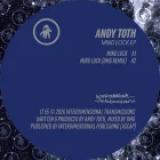
For the second IT record from Detroit's Andy Toth, he explores a sci fi fusion of electro and acid, with a remix by BMG of Ectomorph fame. Andy Toth has a long history in Detroit Techno, from an engineering and mixing background where he mixed records for the likes of Mike Huckaby and many others, to co-authoring "Sandwiches". For this record, Andy had the songs mixed on hardware by BMG in his studio, to give them an even more 3 dimensional sound and an even greater weight. The result for the "Mind Lock EP" is simultaneously hypnotic, acid, sci fi, and electro. The depth of tone, density of sound and maturity of concept come through the 4 deeply compelling tracks that you can just get lost in.
Ordina ora e ordineremo l'articolo per te presso il nostro fornitore.

Disponibile in Stock e pronto per la spedizione

Aphex Twin’s ‘Xylem Tube’ EP arrived in the summer of 1992 on R&S Records, coming hot off the heels of his landmark ‘Digeridoo’ release, and an audacious follow up from the then 21-year-old Richard D. James. Out of print for nearly two decades, this long-awaited vinyl reissue restores one of the pivotal early works in his catalogue.
Where ‘Digeridoo’ pushed the endurance of the rave floor to its limits, the ‘Xylem Tube’ EP stretched the Aphex Twin sound into new dimensions with ‘Polynomial-C’ becoming an enduring classic with its spiralling arpeggios, shattering breakbeats and alien melodics. Tracks like ‘Phlange Phace’ and ‘Tamphex (Hedphuq Mix)’ pushed distortion, humour and rhythm into uncharted territory, while ‘Dodeccaheedron’ acts as a bold signifier of James’ radical ideas of how dance music can sound, with its ominous and brooding synth work over a cacophony of eerie, broken beats.
Three decades later, the EP stands not only as a key chapter in the Aphex canon, but also as a statement of intent from an artist set on reshaping electronic music’s DNA. Now faithfully reissued on vinyl for the first time since a 2006 pressing, this edition returns one of the most in-demand Aphex R&S titles to circulation after nearly twenty years out of print.
Disponibile in Stock e pronto per la spedizione
“It’s just too easy to make a standard dance track,” Aphex Twin said of his mindset back in 1992. “You’ve got to put a bit of thought into it to get something a bit different.”
‘Didgeridoo’ was released on the Belgian R&S Records label in 1992, and originally peaked at #55 in the UK singles chart in May of that year. Over the last 32 years the track has become one of the essential Aphex Twin tracks in a gargantuan catalogue that continues to amaze and inspire.
“I wanted to have some tracks to play to finish the raves I used to play in Cornwall, to really kill everybody off so they couldn’t dance,” Richard D James, AKA Aphex, told Select magazine back in the 90s. “Digeridoo came out of that.”
Released as a 4 track EP that also included early Aphex productions (now classics) including the industrial, acidic clang of ‘Flap Head’ and hyperbolic futurism of ‘Isopropanol’, the release cemented a relationship with the R&S label that went on to release the ‘Xylem Tube’ EP and the pivotal album ‘Selected Ambient Works 85-92’ in the same year. The label’s owner & A&R Renaat Vandepapeliere reflected “When I first heard Aphex Twin’s music I said, ‘This is it!’, and everybody else said, ‘You’re crazy!’ …a lot of the hardcore R&S fans dropped us. To them it wasn’t music.”
‘Didgeridoo’ (Expanded Edition) is the first time the EP has been re-issued with extra material. Whilst digging in his DAT archive (allegedly stored in an airtight military ammo box), Richard James revisited the recordings, encoding them through a Nakamichi CR7e cassette deck, using the customised deck with vari-speed to encode at speeds “felt right at the time”. Alongside these CR7e versions, the original mixes have been remastered by Beau Thomas at Ten Eight Seven Mastering, offering a dilated insight into one of electronic music’s most endearing releases.
‘Digeridoo’ (Expanded Edition) by Aphex Twin is available on R&S Records from 31st May 2024.
Disponibile in Stock e pronto per la spedizione

THE SOUND OF SUMMER
Brand new tracks made from the Havana Sessions, recorded by Brian d'Souza aka Auntie Flo in downtown Havana around 2015.
'Havana City' is a joyous, summer anthem in the making, featuring Andrew Ashong on vocals and a host of Cuban musicians. Think Nuyorican Soul's classic 'I Am the Black Gold Of The Sun' with a Tony Allen-inspired drum beat, luscious string arrangements, triumphant horns and addictive keys - all given the space they deserve and fully justifying the 11.5 minutes run time.
The 2026 version of 'Die Bailando' re-invents the original minimal electro beat to a latin rhumba-influenced groover. Grammy-nominated singer Eric Alejandro aka Cimafunk's vocals are a huge highlight, now fused with new guitars from Ziggy Funk and drums from Ibibio Sound Machine's Jose Joyette.
Completing the package is a remastered version of 'Mother Theresa' - which has close to 2 million plays on Spotify but was never released on vinyl. Drift away to the sounds of the Malecon...
A State of Flo supports Earth Percent. 10% of the revenue generated from this release will be
paid to environmental charities.
dovrebbe essere pubblicato su 20.07.2026
Auntie Flo delivers two extended versions of Costa Rica based singer-songwriter Doe Paoro. If you liked Auntie Flo's 'Green City', check these...
Doe Paoro approached Brian d’Souza aka Auntie Flo to do a remix for her album 'Living Through Collapse' last year. He loved the parts she sent so much he asked her if he could do two remixes, press onto vinyl and release via A State Of Flo.
We're doing a limited run of 300 copies only, orange vinyl - so buy today if you don't want to miss out.
The tracks... Teach Us Of Endings - a classic balearic groove, gloriously uplifting disco-style strings and complete with Green City-style drum rolls and a killer Ziggy Funk bass line ... just waiting for those strings to come in...bliss
Maya - exotic, deep, hypnotic. Centred around a Ziggy Funk groove with analogue washes and Middle Eastern sounding instrumentation.
A State of Flo supports Earth Percent. 10% of the revenue generated from this release will be paid to environmental charities.
Support from Colleen ‘Cosmo’ Murphy, Luke Una, Dar Disku, Paula Tape, Sean Johnston, Gabriels, Batida etc
Disponibile in Stock e pronto per la spedizione
dovrebbe essere pubblicato su 26.06.2026
Following the release of Blue Lava on Houseum Records, B From E returns with Apocalypsex, an EP that dives deeper into darker and more club-oriented territory. Released on Ellipse Records, the sub-label dedicated to rawer and more experimental expressions, this new chapter explores tension, hypnosis and late-night energy, while preserving the melodic sensibility that defines the Danish producer’s sound.
We begin with the A1 “X-perience”, a track firmly rooted in 90s trance aesthetics, blending acid lines, sharp trance-style synths and vocal elements into a direct, club-focused structure with a progressive, hypnotic drive.
The A2 “Dream Mania” shifts towards a more melodic and expansive direction. Less centered on pure club impact, it unfolds as a sun-soaked journey, led by evolving melodies and a smooth, flowing progression.
On the B-side, “Apocalypsex” dives into deeper territory. The title track builds a sustained state of trance through repetition and gradual tension, combining floating atmospheres with an intense, forward-moving groove.
The EP closes with “In Orbit”, a more break-driven and spacious piece where airy pads and open textures take the lead, offering a lighter, atmospheric conclusion.
Disponibile in Stock e pronto per la spedizione

On edit imprint Disco Mind's 10th release, they hand over the reins to iconic Italian DJ, producer and remixer Beppe Loda, once resident DJ at influential rural club Typhoon during the 1980s. It's that period - where he embraced the disco-rock and Afro-cosmic sounds being played by contemporary Daniele Baldelli - that inspired the four scalpel jobs on show. 'Mr Rocket' is a chugging chunk of oddball early 80s cosmic rock headiness, while 'Tu Sei' sees Loda rework what sounds like a synth-laden fusion of space rock and intergalactic jazz-funk. On side B, he does a great job on spiralling, big hair-sporting disco-rock number 'Falling', before showcasing more spacey synths and chugging rock riffs on 'Marzio'.
dovrebbe essere pubblicato su 31.08.2026
Biosphere is the main recording name of Geir Jenssen (born 30 May 1962),(1) a Norwegian musician who has released a notable catalogue of ambient electronic music. He is well known for his works on ambient techno and arctic themed pieces, his use of music loops, and peculiar samples from sci-fi sources. His 1997 album Substrata was voted by the users of the Hyperreal website in 2001 as the best all-time classic ambient album.
Patashnik was originally released by R&S Records/Apollo in 1994. It was number 1 in NME´s Independent Chart in March 1994 and reached number 50 in the UK official album chart.
The track Novelty Waves was used in Michel Gondry's Levi's 501 Jeans "Drugstore" spot, and holds - according to the Guinness World Records 2004, the record for "Most awards won by a TV commercial".
One reason why Jenssen's work stands out from the flood of early '90s ambient/techno releases is his strong sense of the quirkily creepy -- not in an Aphex Twin mode, but in his own particular way. The contrasting samples of a child quaveringly saying, "We had a dream last night," followed by a rougher sample saying, "We had the same dream," gives opening number "Phantasm" an unsettling feeling. Intensified by the, on the one hand, pretty, on the other, disturbing music, buried synth strings and a soft pulse accentuated by clattering noises deep in the mix, it kicks off the striking Patashnik very well. Though not as openly dark as acts like Lull, for instance, Biosphere still has an edge which isn't just melancholic, it's downright ominous at point. There's the slow crawl of "Startoucher," for instance, with its buried vocal snippets and deep bass drone, or the blend of the space signal atmospheres of "Mir" into the low, brooding intro to "The Shield." Not everything is so shadowy, though, Patashnik is primarily a relax and chill listening experience, but not without its gentle high points. "Novelty Waves," which became a crossover single in some quarters, has a good dancefloor sharpness to it even as Jenssen slyly sneaks in odd drones and samples through the mix. The opening snippet talking about an extraterrestrial disc jockey on "SETI Project" is good for a smile, as well as acting as a sharp lead-in to a fast rhythm track. Mostly, though, things continue on a deliciously unnerving pace throughout, gentle enough to go down easy but still just off enough to ensure you can't call this new age folderol for the rave generation.
Ordina ora e ordineremo l'articolo per te presso il nostro fornitore.

Bonafique return to Crosstown Rebels with ‘Terapia’, featuring Yuvèe and a standout remix from Josh Baker.
Out on 5th June 2026, the duo delivers a hypnotic release remixed by one of the most in-demand names in modern house music. Following their debut appearance on the label’s ‘SPIRITS VII’ compilation in 2025, Bonafique return to Damian Lazarus’ Crosstown Rebels imprint with a fully realised statement in the form of their ‘Terapia’ EP. With an instinct-driven studio process and emotionally charged sound, the duo continues to refine a style rooted in hypnotic groove, stripped-back club energy, and warped, psychedelic textures - perfectly exemplified across both solo and collaborative offerings here.
Lead cut ‘Profill’, crafted alongside previous collaborator and close friend Yuvèe, travels through tightly coiled rhythmic tension and driving low-end pressure, balancing intensity with restraint in a way that feels raw yet deliberate. Yuvèe’s background informs the track’s direction, bringing a sense of musical discipline that bridges composition and club functionality, adding an understated yet vital layer to Bonafi que’s vision.
On remix duties, You&Me boss Josh Baker makes a notable Crosstown Rebels debut, stepping in as one of the most in-demand figures in contemporary house music. His reinterpretation reshapes the original into a sharp peak-time weapon, injecting spiralling melodies and controlled pressure while retaining its hypnotic core. Closing the release, title track ‘Terapia’ offers Bonafique’s solo excursion of the EP and strips things back into deeper territory, unfolding through atmospheric layers and evolving rhythmic detail to off er a more introspective counterpart to the energy of ‘Profill’.
dovrebbe essere pubblicato su 18.06.2026

Questo articolo non è stato ancora rilasciato. È possibile pre-ordinare il prodotto ora.

Brown Spirits are a super-heavy psychedelic three-piece band who play raw energetic super-charged psych rock heavily influenced by krautrock, freejazz and deep funk music from the 1970s that gives them a truly unique and highly addictive sound. The group record and mix their own music to ¼-
inch analogue tape at home maintaining a strictly DIY-ethic.
Brown Spirits are Tim Wold, Agostino Soldati and Ash Buscombe. The group are from the suburbs of Melbourne, Australia, home to an ever-growing
music scene that includes Amyl and the Sniffers, King Gizzard and The Lizard Wizard, Surprise Chef, Tropical Fuck Storm and more.
The group have already released two superb critically-acclaimed album on Soul Jazz Records – ‘Cosmic Seeds’ and Solitary Transmissions’.
Soul Jazz Records are releasing three new albums from the Australian group on one day. All three albums are super-limited one-off special coloured
vinyl pressings of just 500 copies each that will all be deleted on the day of release.
These three albums were originally released (between 2017-2020) in long-deleted very short run-editions - either self-released in Australia or on an
indie German psych label. No copies of Brown Spirits #2 or Brown Spirits #3 are currently available anywhere in the world. Both of Brown Spirits two
earlier releases for Soul Jazz Records are also sold out on vinyl and these three super-limited special edition LPs will also sell out.
Disponibile in Stock e pronto per la spedizione

King Tubby and Producer Bunny ‘Striker’ Lee are intertwined in the birth of Dub Music. After discovering a mistake that made a ‘serious joke’ (more of which later...) they went on to release the first pressings of this new musical genre namely ‘Dub Music’. Tubby’s vast knowledge of electronics and Bunny’s vast catalogue of rhythms would lay the foundations of what today is taken as a standard... the Remix / Version cuts to an existing vocal tune.
Osbourne ‘King Tubby’ Ruddock was born in Kingston, Jamaica on 28th January 1941 and grew up in the High Holborn Street area of downtown Kingston. He studied electronics at Kingston’s National Technical College and also on two correspondence courses from the U.S.A... When he had qualified Tubby began repairing radios and other electrical appliances in a shack in the back yard of his mother’s home. His work in the early days included winding transformers and building amplifiers for Kingston’s Sound Systems. Tubby built his first Sound System in 1957 playing jazz and Rhythm & Blues at local weddings and birthday parties. His reputation as a man who knew and understood both electronics and music grew steadily and as the sixties drew to a close. Tubby purchased his own basic two track equipment. He installed this alongside his dub cutting machine, a homemade mixing console and his impressive collection of Jazz albums in the back bedroom of his home at 18 Dromilly Avenue which he christened his music room.
Tubby and Striker were at Treasure Isle Studio’s one day while Ruddy from Spanish Town was working with the engineer Byron Smith....
“Tubby and myself was talking when Ruddy was cutting some dub but Smithy (engineer) made a mistake through we were talking and forgot to put in the voice. It was two track recording in those days. Ruddy said ‘No Man! Make it stay! and so they cut the rhythm. When I went over to Ruddy’s that Saturday night a dance was in progress and when they played the vocal to the tune... then he said we’re going to play ‘Part Two’. They never called it ‘Version’..and then he played the rhythm track. The song was a catchy song and everybody started to sing along and the deejay started to toast so everything went down well. On Monday morning I went up and I said ‘Tubbs the mistake we made was a serious joke. It mash up Spanish Town! The people went wild. So you have to start to do that now ‘cause when the man put on the ‘Part Two’ everyone start singing this song. It played about twenty times. I said you try Tubbs!’...Well the next Saturday night now when Tubby strung up down the farm U Roy said he’s going to play ‘Part Two’ but Tubby did it different now. He started with the voice then dropped it out and let the rhythm run and then he brought in the voice in the middle and from there Tubby started to get really popular.’’
Bunny ‘Striker’ Lee
Dynamic Sounds upgraded to sixteen track recording in 1972 and Tubby purchased, again with the help of a deal brokered by Bunny Lee. The old four track equipment and the MCI console from their Studio B. The four tracks now gave him far wider scope to work with and he began to create a new musical form where the bass and drum parts were brought up while the faders allowed Tubby to ease the vocal and rhythm in and out of the mix. It was only a matter of time before Tubby’s dub plate experiments began to make it on to vinyl and the first ever long-playing King Tubby releases would feature a collection of his mixes to a selection of Strikers rhythms. So please sit back and enjoy this historic set of sounds, mixed by King Tubby and Mr Prince Phillip Smart and another set of scorcher Bunny Lee rhythms.
dovrebbe essere pubblicato su 10.07.2026

The Rockers Sound (aka Steppas) came from the mid 70's and was created during sessions with The Revolutionaires band at Channel 1.
Drummer Sly Dunbar came up with a new 'Militant' style double drumming on the snare drum that seemed to add some credence to the political /Rasta based lyrics that were so prominent around this time.
So for this compilation we have pulled together some of the best cuts from this period when producer Bunny Lee was on the top of his game and the sound in town to get on board with was 'Rockers'...
So sit back and enjoy another period in Reggae's history that still sounds as good as when it was created way back when...
EVERYTHING ROCKERS....
D a4 | DEVIL'S THRONE - Junior Delgado
dovrebbe essere pubblicato su 10.07.2026

Bushwacka’s first release for Radio Slave’s Rekids, the ‘Heaven On Earth’ EP, is out on October 11th 2024 and sees the UK House and Breakbeat innovator deliver two tracks complete with versions.
Title track ‘Heaven On Earth’ is a slice of low-slung House in which a drawling spoken-word vocal about love for music dominates. It’s a track with the sort of cast-iron, funky groove that has permeated Bushwacka’s music since day one. The ‘Instadub’ dubs out the vocals and takes ‘Heaven On Earth’ in a heady direction.
On the flip, Version One and Version Two of ‘Roger That’ see Bushwacka drop finely tuned funk-infused Deep House, with the former treading an earthy heads-down path while the latter ups the melody, chord and vocal sample prominence, creating a restrained euphoria throughout.
Bushwacka, aka Matthew Benjamin or Matthew B/Just Be/Makesome Breaksome and countless other aliases, has been a pivotal part of the electronic music scene for over 30 years. While his wildly successful project with Layo Paskin as Layo & Bushwacka! is his most prominent, this former London School Symphony Orchestra percussionist’s roots go much deeper. A pioneer of the nascent Rave and Acid House scenes who went on to be one of the progenitors of Tech House and UK Breakbeat scenes, Bushwacka’s influence is huge but far from static, with releases on the likes of Classic, Aus and NuGroove in the past few years alone.
Disponibile in Stock e pronto per la spedizione
