
In Stock
Disponibile in Stock e pronto per la spedizione
Last In: 15 months ago
Disponibile in Stock e pronto per la spedizione

20 track Album from Various Artists released by Dub Store Records
Disponibile in Stock e pronto per la spedizione

12 track Album from Derrick Harriott released by Dub Store Records
Ordina ora e ordineremo l'articolo per te presso il nostro fornitore.
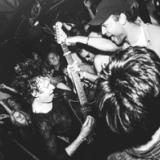
The live EP arrives on vinyl via a collaboration between boutique label Crafting Room Recordings (Maximilian, Soft Top) and indie festival Left of the Dial. The live record follows a massive 2025 where a limited vinyl run of the Spill EP and debut EP 'Hullo, Reality!' both sold out soon after their releases. With champions already found at BBC Radio 6Music (Steve Lamacq, Emily Pilbeam) and earning a spot on the 2026 artists to watch lists for DIY, DORK, and Far Out, ELLiS.D is rapidly cementing his status as one of Europe's most striking, tireless and "sought after live acts" (Far Out Magazine). "As our first sold- out headline show outside of the UK, it felt like a real milestone for myself and the band. We wanted to capture the amazing connection we've felt playing to European audiences, with nowhere better to do it than the basement of a boat in Rotterdam. Each of the tracks on the EP have been staples of our live set for a long time but switching into the mindset of performing and recording for the EP gave us a fair few jitters pre-show. Once we crashed into 'Chasing The Blue' that all melted away. Elmo on sound did a brilliant job capturing the energy of the performance and the audience gave us the response we were hoping for!"
dovrebbe essere pubblicato su 04.09.2026

Launched in 2000, Post Office quickly became a landmark compilation series, featuring artists such as Ricardo Villalobos, Daniel Bell, Robert Hood, Dimbiman, Matthew Dear, Seth Troxler, Craig Richards, Losoul, Ark, Mr Oizo and many more. Each new edition stands as both a milestone in Logistic Records’ story and a forward-looking vision of the global electronic scene.
Ordina ora e ordineremo l'articolo per te presso il nostro fornitore.

Capturing phantom drones behind dusty beats and haunted twangs, Ellis Swan and James Schimpl return for their third album as Dead Bandit. Locked into a musical language unique to their collaboration, the duo once again put us out to pasture across broad sonic plains, drums flapping like loose fence panels in the prairie breeze and bass rumbling like distant thunder. True to their previous two records, Swan and Schimpl keep the strung out guitars at the front of what they do, whether playing a naked, desolate strum or running six strings through disruptive effects processing until they're barely recognisable.
But while there are details of disturbance when listening to Dead Bandit's self-titled record up close, the wider impression is a smoother, more direct affair that toys with post-rock complexity and matches it with the emotional weight of melodic simplicity, gentle grooves and conscious arrangements. 'Weeds' offsets its languid fuzz guitar with shimmering sustained notes before settling into a patient, heavy-hearted composition charged with heartbreak leads pealing out in the middle distance.
By comparison, 'Glass' has a smoky, half-hidden backroom quality. Its brushed whisper of a beat, lingering guitar drones and subtle sub bass come on like a dub wise flip of a sad-eyed country ballad. The mood maintains on 'Half Smoked Cigarette', which captures the grey sky sullenness of post-punk and reframes it in the seductive isolation of rural America. While there's a thickness to the sound on these most direct of tracks on the album, there's also fragility inherent to the sound world Dead Bandit have been shaping out over these past few years.
'Buttercup' swaps sadness for sinister undercurrents, once more drawing on fulsome low end to fill out the sparse threads of instrumentation up top. 'Pink' finds a steady momentum for its own brand of brooding mystery, the sharp end of the beat bringing focus to the many-layered approaches to the guitar which roundly define the Dead Bandit sound. There's an even clearer direction mapped out in the vintage drum machine pulse of 'Koyo', all the better to carry swirling effects treatments and moody melodic figures. Even in these ominous climes there's space for plaintive, endearing hooks which land as the most direct phrases in Dead Bandit's musical lexicon to date.
The fundamental sound across this album holds true, but Dead Bandit are never bound to a singular practice. 'Lucien's Bitters' strikes up a pronounced drum machine beat which comes on like 90s downtempo, and it feels like a natural vessel for the heavy, shoegaze tinted lament of the guitars. At every turn, Swan and Schimpl prove their affinity for all kinds of approaches, and yet the end product is a deeply cohesive, immediate listen that shows just how clear their creative vision really is.
Ordina ora e ordineremo l'articolo per te presso il nostro fornitore.

Brian Auger’s Streetnoise, recorded in 1969 with Julie Driscoll and The Trinity, stands as a landmark of late 1960s eclecticism, where the boundaries of jazz, rock, folk, and soul blur into a cohesive, genre-defying masterpiece.
Auger was moving The Trinity on from their R&B, jazz beginnings and for Streetnoise, together with Driscoll, delivered a record that channelled their mutually progressive vision. Julie's haunting vocal performances were the perfect counterpoint to Auger’s innovative instrumentation, creating a sound that was both avant-garde yet deeply soulful. “We aimed to challenge expectations, ” Auger recalls. “Every track was a canvas to experiment and push the envelope.”
The album’s gatefold sleeve design, created by Ralph Steadman, inspired by William Hogarth's 18th-century satirical etchings, was as groundbreaking as its music. This was not just a cover, it was a bold statement about art and society, perfectly mirroring the music’s blend of historical reverence and forward-thinking innovation.
Musically, Streetnoise is a kaleidoscope of styles including jazz and R&B, fusion, folk, rock and gospel flourishes. "Ellis Island, " and “Finally Found You Out” are both intense instrumentals that embody the intense fusion of jazz and rock the group was known for. "Indian Rope Man" is one of the standout tracks. A cover of Richie Havens' original, that inspired The Charlatans ‘Indian Rope’ and All Blues, a bold reinterpretation of Miles Davis’ iconic Kind of Blue masterpiece, on which Driscoll's vocal performance may be the highlight. "Flesh Failures (Let the Sunshine In)" is a hauntingly beautiful cover of the finale from the musical Hair. Auger's own compositions from the opening instrumental 'Tropic Of Capricorn', to the introspective solo piano and vocal Looking In The Eye Of The World' display Brian's multiple talents.
Celebrated for its fearless creativity across all 16 tracks, the album is testament to Brian Auger and Julie Driscoll’s visionary artistry. It remains a must-listen for anyone exploring the dynamic intersections of jazz, rock, and soul. The album’s reputation has only grown with time, cementing its legacy as a cornerstone of experimental music.
Streetnoise; A wholly unique album from an equally unique group
dovrebbe essere pubblicato su 07.03.2025

This One Is For The Party is the final studio album by The Trammps, originally released in 1984. The Trammps, hailing from Philadelphia, were a prominent fixture in the disco scene of the 1970s. Consisting of Earl Young, Harold Wade, Jimmy Ellis, Robert Upchurch, and Stanley Wade, they were known for their infectious grooves and energetic live performances.
The Trammps earned their place in music history with hits like “Disco Inferno” and “Hold Back the Night”, but also “Shout” and “Move” became disco classics. 40 years after its original release, the tracks of This One Is For The Party continue to fill dance floors at parties and their influence can be heard in modern dance and pop music. The album also features a guest performance by the Dutch female group Mai Tai on “I Don’t Know (One For The Party)”.
dovrebbe essere pubblicato su 24.05.2024

Studio One was founded by Clement "Coxsone" Dodd1 in 1954, and the first recordings were cut in 1963 on Brentford Road in Kingston.12 Amongst its earliest records were "Easy Snappin" by Theophilus Beckford, backed by Clue J & His Blues Blasters, and "This Man is Back" by trombonist Don Drummond. Dodd had previously issued music on a series of other labels, including World Disc, and had run Sir Coxsone the Downbeat, one of the largest and most reputable sound systems in the Kingston ghettos.
In the early 1960s, the house band providing backing for the vocalists were the Skatalites[3] (1964–65), whose members (including Roland Alphonso, Don Drummond, Tommy McCook, Jackie Mittoo, Lester Sterling and Lloyd Brevett) were recruited from the Kingston jazz scene by Dodd. The Skatalites split up in 1965 after Drummond was jailed for murder, and Dodd formed new house band the Soul Brothers (1965–66), later named the Soul Vendors (1967) and Sound Dimension (1967-). From 1965 to 1968 they played 9 a.m. to 5 p.m., 5 days a week, 12 rhythms a day (about 60 rhythms a week) with Jackie Mittoo as music director, Brian Atkinson (1965–1968) on bass, Hux Brown on guitar, Harry Haughton (guitar), Joe Isaacs on drums (1966–1968), Denzel Laing on percussion, and on horns (some initially and some throughout): Roland Alphonso, Dennis 'Ska' Campbell, Bobby Ellis, Lester Sterling, among others on horns during the era of Rock Steady. Headley Bennett, Ernest Ranglin, Vin Gordon and Leroy Sibbles were included among a fluid line-up, to record tracks directed by Jackie Mittoo at Studio One from 1966-1968.
During the night hours at Studio One from 1965-1968, singers like Bob Marley, Burning Spear, The Heptones, The Ethiopians, Ken Boothe, Rita Marley, Marcia Griffiths, Judy Mowatt, Alton Ellis, Delroy Wilson, Bunny Wailer[4] and Johnny Nash, among others, would put on headphones to sing lyrics to original tracks recorded by the Soul Brothers earlier each day. These seminal recordings included "Real Rock" (by Sound Dimension), "Heavy Rock", "Jamaica Underground", "Wakie Wakie", "Lemon Tree", "Hot Shot", "I'm Still In Love With You", "Dancing Mood", and "Creation Rebel".
Jackie Mittoo, Joe Isaacs, and Brian Atkinson left Studio One in 1968, recorded drums and bass for Desmond Dekker's and Toots' biggest hits at other Kingston studios, then moved to Canada. Hux Brown stayed in Jamaica to record on the soundtrack The Harder They Come, The Harder They Fall, and toured in Nigeria with Toots and the Maytals and Fela Kuti. The Soul Brothers (a.k.a. Sound Dimension) formed the basis of reggae music in the late 1960s, being versioned and re-versioned time after time over decades by musicians like Shaggy, Sean Paul, Snoop Lion, The Clash, String Cheese Incident, UB40, Sublime, and countless other Billboard originals and remakes trying to emulate their original Rock Steady sound at Coxsone's Studio One.
The label and studio were closed when Dodd relocated to New York City in the 1980s.
dovrebbe essere pubblicato su 17.02.2023

Repress incoming...
Far Out Recordings proudly presents Milton Nascimento's Maria Maria. Recorded in 1974 and unreleased until almost thirty years later, the album was written as the soundtrack to a ballet which dealt with the legacy of slavery in Brazil. Raw, atmospheric and emotionally charged, Maria Maria reveals one of Brazil's greatest ever songwriters at his creative peak. Featuring an all-star cast of fellow Brazilian legends including Nana Vasconcelos, Joao Donato, Paulinho Jobim, and members of Som Imaginario, Maria Maria holds what Milton considers to be the definitive versions of some of his classic songs, including 'Os Escravos De Jó' and 'Maria Maria'.
Originally released in 2003 as a double CD package, with Milton Nascimento's 1984 follow up ballet soundtrack Ultimo Trem, Maria Maria will be available on vinyl for the very first time from December 2019, with Ultimo Trem set for vinyl release early 2020.
Milton Nascimento possesses one of the most immediately recognizable voices in Brazilian music: high and sweet and as breathtakingly sublime as that of any soul singer. It was this voice that the legendary Brazilian singer Elis Regina fell in love with back in 1964, having heard Milton perform his song 'Canção do Sal (Sultry Song)' at a private party in Sao Paulo. Ellis went on to record the song in 1967 -giving Milton his first hit in Brazil and beginning a career that has spanned over 50 years.
Born in Rio on the 26th October 1942, Milton moved with his adoptive parents at the age of 18 months to Tres Pontas, a rural town in the state of Minas Gerais, 500 miles north of Rio. He began his musical career as a young teenager, singing in a crooner style he learnt from listening to Brazilian singers and US groups such as The Platters on the radio. Hungry for more opportunities to perform, Milton moved to Belo Horizonte, the capital of Minas Gerais, at the age of twenty. By the beginning of the 60s Milton had made a name for himself both as an accomplished singer and guitarist.
Milton became part of a local network of musicians, film makers, dancers, theatre directors and writers that included the journalist and song writer Fernando Brant as well as lyricist Marcio Borges and his younger brother Lo Borges. Together these four wrote and produced what would become Milton's milestone album, 'Clube da Esquina (Club on the Corner)'. The originality of 'Club da Esquina' shaped the local scene, and it reflects the essence of 'the Nascimento Sound'. Milton's religious upbringing as an Afro-Brazilian Catholic saw him exposed to church choral music from an early age. His love of this genre of music is apparent in both his celestial falsetto and vocal choral arrangements. This collection also displays his early fascination with evocative, non-verbal, scat-style singing, spare, harmonic guitar work and local folk music, jazz and rock.
In 1976, Milton and Fernando Brant teamed up with a new contemporary dance company called Grupo Corpo, whose Argentinian choreographer Oscar Araiz, would become a collaborator with the two musicians. Together, they conceived a show based on the composite life story of the daughter of a black slave called Maria. Nascimento wrote music to Brant's lyrics and "Maria Maria" was premiered in the main theatre of the Belo Horizonte Palacio das Artes that year. "Fernando wrote the lyrics for the ballet, but there were originally no lyrics for the theme song, "Maria Maria'". Milton and Fernando worked on the lyrics together, basing them on folk stories about black women of the countryside. Adds Milton "These memories are mostly things that we witnessed – Fernando and I – rather than what we experienced ourselves.
Milton's music is impressionistic, emotional and romantic. Relying on songs without lyrics as well as evocative vocalizing and choruses, Milton experimented heavily with Afro-Brazilian percussion and taped jungle sounds. His composing method for these recordings was highly unconventional: "I wrote the music for 'Maria Maria' in a tiny Rio apartment with friends and their kids running around and having fun! I love to be in noisy places, surrounded by people", he says.
The music on 'Maria Maria' was performed by an impressive group of young musicians who are today household names in Brazilian music, including Naná Vasconcelos (percussion and effects), Toninho Horta (guitars) and Paulo Moura (sax). Several vocalist including Naná Caymmi, Fafá de Belém, Beto Guedes, and Milton himself, had hits in years to come with reworkings of these songs.
Milton says his compositions follow his visions "like a movie", and he believes that reflects his long love affair with cinema. "I only began composing because of enjoying the movies so much," he says. "I wrote my first song "Peace for the Coming Love" after seeing 'Jules et Jim' (the cult 60s French film directed by François Truffaut), with my friend Marcio Borges. We went early in the morning and watched it four or five times in a row, then went to Márcio's home and wrote the song."
The songs also include solo spoken passages set to music, clearly influenced by this style of French art cinema. On the title track, Maria's story is narrated and translated to music through the use of African Percussion, drums and metal signifying the field slave tools of the day. 'Trabalhos (Works)' runs to work rhythms and whipcracks: no words, just pain. 'Lília' documents the beating of the slave woman. After 'A Chamada (The call)' and the triumphant 'Era Rei e Sou Escravo (I was a king now I am a slave' things begin to turn and Milton employs tropical jungle cries to symbolize freedom. 'Santos Catholicos x Candomble (Catholic Saints vs Candomble)' represents the battle between African and European religions through the music of both sides. Milton's heavenly falsetto pours into 'Francisco' and 'Pai Grande (Great Father)' and the outstanding 'Eu Sou Uma Preta Velha Aqui Sentada no Sol (I'm an old black lady, sitting under the sun)' conjures images of an old woman sitting deep in the forest, her memories painted in drums, piano and voices.
Ordina ora e ordineremo l'articolo per te presso il nostro fornitore.

Blossom Dearie was part of the NYC beboppers scene that often gathered at Gil Evans’ apartment, was in the social circle that began developing “Birth of the Cool” and at the same time was a fixture in the Jazz clubs of the 1940’s.
The legendary jazz producer and founder of Verve, Norman Granz, heard Blossom singing in Paris and offered her a contract.
She returned to New York to record her debut album produced by Norman Granz in 1956. The LP spotlights Blossom as a chanteuse and pianist.
Miles Davis once said, “she was the only white woman who had soul”, while Bill Evans noted her playing really “knocked him out”.
PLAYERS:
Blossom Dearie, piano, vocals
Ray Brown, bass
Jo Jones, drums
Herb Ellis, guitar
dovrebbe essere pubblicato su 24.06.2022

Aufgenommen im Herbst 2020 in den Middle Farm Studios in Großbritannien, markiert "Thirstier" eine Wende zu einem größeren, bombastischeren Sound für TORRES. Die ängstliche Stille, die sich über einen Großteil von Scotts früherer Musik legte, wird in Songs, die für die Feier nach der Seuche zugeschnitten sind, auf den Kopf gestellt. Scott hat das Album zusammen mit Rob Ellis und Peter Miles produziert und dabei auf ihre Erfahrungen mit der Eigenproduktion von "Silver Tongue" zurückgegriffen, um ihre Musik auf eine noch breitere Basis zu stellen. Gitarrengetriebene Soundwände, die an die Arbeit von Produzent Butch Vig mit Garbage und Nirvana erinnern, wogt und zerstreut sich wie die Brandung bei starkem Wind und trägt Scotts souveräne Stimme in den Vordergrund. "Thirstier", der Nachfolger von "Silver Tongue" aus dem Jahr 2020, ist Scotts bisher überschwänglichste und gewagteste Platte, die sie im aufregenden freien Fall zeigt. Das Album revoltiert gegen den grauen Luftzug der Zeit, eine sengende und lebensbejahende Eruption eines Albums, das sich fragt, was passieren könnte, wenn wir einen Weg fänden, unsere Fantasien unerschöpflich zu machen. "Thirstier" sprengt die Grenzen der imaginativen Möglichkeiten.
dovrebbe essere pubblicato su 30.07.2021

Aufgenommen im Herbst 2020 in den Middle Farm Studios in Großbritannien, markiert "Thirstier" eine Wende zu einem größeren, bombastischeren Sound für TORRES. Die ängstliche Stille, die sich über einen Großteil von Scotts früherer Musik legte, wird in Songs, die für die Feier nach der Seuche zugeschnitten sind, auf den Kopf gestellt. Scott hat das Album zusammen mit Rob Ellis und Peter Miles produziert und dabei auf ihre Erfahrungen mit der Eigenproduktion von "Silver Tongue" zurückgegriffen, um ihre Musik auf eine noch breitere Basis zu stellen. Gitarrengetriebene Soundwände, die an die Arbeit von Produzent Butch Vig mit Garbage und Nirvana erinnern, wogt und zerstreut sich wie die Brandung bei starkem Wind und trägt Scotts souveräne Stimme in den Vordergrund. "Thirstier", der Nachfolger von "Silver Tongue" aus dem Jahr 2020, ist Scotts bisher überschwänglichste und gewagteste Platte, die sie im aufregenden freien Fall zeigt. Das Album revoltiert gegen den grauen Luftzug der Zeit, eine sengende und lebensbejahende Eruption eines Albums, das sich fragt, was passieren könnte, wenn wir einen Weg fänden, unsere Fantasien unerschöpflich zu machen. "Thirstier" sprengt die Grenzen der imaginativen Möglichkeiten.
Ordina ora e ordineremo l'articolo per te presso il nostro fornitore.

For our 7th release we are delighted to be reissuing a single that has brought us a lot of joy in recent times. We first came to hear Delores Fuller’s beautiful single One More Chance Lord in the same way we have heard a lot of new music over the last year and a half – through a friend’s lockdown recommendation. Ever since, the single has been a staple in our collection and permanently on our turntable.Perfectly transcending the genres of gospel, modern soul and disco. One More Chance Lord kicks it off with a piano riff that’ll be stuck in your head for days, building to a soaring chorus with lyrics that would fit any uplifting category. My Greatest Desire on the flip, is a ballad reflecting Delores’ vocal talents. Stripped back with only the piano for accompaniment. Delores singing about values of life - “not searching for riches, not hungry for fame”. Perhaps inadvertently explaining why this single has never had the prominence it so deserves.
The single was originally released in 1983 on Intro Records, a US based label predominately active throughout the 1980s. After a little diggin’ we reached out to Dwain Jones who duly licensed us the both sides and informed us that the single features a truly amazing arrange of musicians. Stanley Banks; bassist on classics albums such as George Benson’s Breezin’, Jonathan DuBose, guitarist with renowned gospel group The Clark Sisters and not to mention Pee Wee Ellis; James Browns band leader in the late 1960s who’s sax can be found peppered throughout Delores’ album God’s Love.Remastered and now available again on the teal green label of Miles Away. Limited 500 pressing and set for release on 21st May. Get one quick!
Ordina ora e ordineremo l'articolo per te presso il nostro fornitore.
