Поиск:life recorder

Стили
Все
Life Recorder / Laak - Customary Finesse EP

Miami-based house upstarts Sole Aspect Records welcome Life Recorder and Laak to take on their eighth EP. The former has been crafting deeply melodic and synth-laced house and techno soundscapes for some time and opens with 'Blues In Flight' which is all jacked-up beats and wispy, astral melodies and pads. Laak offers a more slinky and garage-infused sound on 'Apophis' and layers it up with twinkling modulations. Then comes a Laak Retroflex remix of the opener that reworks it into a deeper and more heads down sound before the Life Recorder House 2 Jazz mix of 'Apophis' explores cosmic jazz keys and shimmering deep house beats.

нет на складе

Закажите сейчас, и мы закажем товар для вас у нашего поставщика.


Последний логин: 3 мес. назад
Life Recorder - Natural Instincts EP

A new year, a new signing : Life Recorder! The man from the south of France is well know for his releases on Visions, Hizou or his own Life Notes label and represents a very Detroit and Chicago inspired house sound. What does that mean? Just listen to tracks like «Natural instincts» or «Dreams»! There’s deepness, there are melodies, there’s a groove! To complete the full french package, another hot producer adds the remix : Aleqs Notal, well know for his Industrial Light label and releases on Sistrum or Phonogramme. Just follow your natural instincts !

нет на складе

Закажите сейчас, и мы закажем товар для вас у нашего поставщика.


Последний логин: 12 мес. назад
Aphex Twin - Blackbox Life Recorder 21f / in a room7 F760

Neue Standardauflage der im Juli 2024 erschienenen Aphex Twin EP Blackbox Life Recorder 21f / In a Room7 F760. Artwork by Weirdcore.

нет на складе

Закажите сейчас, и мы закажем товар для вас у нашего поставщика.


Последний логин: 9 дн. назад
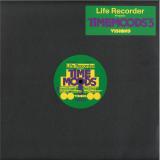
Life Recorder - Time Moods EP 2

Visions Recordings is really excited and happy to present the brand new single from Kriss a.k.a.Life Recorder with a 4 tracks Ep, TIME MOODS 2 , the sequel of TiME MOODS released in 2021.

Based in the city of Marseille , South of France, Life Recorder is no new to the Detroit and Chicago house scene and has released a few great singles on various label such as Aesthetic audio and Hizou , but also on his really great imprint Life Notes Records.

We Loved so much the first EP and we got so many people into it , that we decided to do a follow up of TIME MOODS and the outcome is once again time amazing . The 4 tracks are all really great jams going from deepness to acid and soulful vibes keeping the Chicago house feel and the dance floor grooves with a really crisp and heavy sound, the specific sound of LIFE RECORDER.

We fell in love with those tracks straight away when we received them and we hope you will too. Visions is about keeping the standard high and varied and once again we try to present you quality and deepness. Enjoy the ride.

нет на складе

Закажите сейчас, и мы закажем товар для вас у нашего поставщика.


Последний логин: 16 мес. назад
V. A. (Jayson Wynters/Life Recorder/Taelue) - Mentality EP

Life Notes returns with its 3rd transmission and proudly presents the Mentality EP. After starting the label under his Motion Process moniker, Life Recorder is welcoming on board 2 of his favorite producers with the Birmingham UK based producer, Jayson Wynters who already left a strong impression with releases on Mr G's Phoenix G, or Don't Be Afraid and one of the best current Chicago's deep sound purveyors and Perpetual Rhythms co-founder, Taelue.

Guided by a natural artistic and human being connection, the 3 producers and dj's are sharing the wax here to present their vision of deep, meditative house/techno speaking to the mind and the dancefloor.

нет на складе

Закажите сейчас, и мы закажем товар для вас у нашего поставщика.


Последний логин: 2 г. назад
Various - Verdant 2x12"

Various

Verdant 2x12"

2x12inchVR006
Verdant
13.12.2018

A special and personal release for Verdant Recordings as label boss Andy Green curates some favourite producers onto a double pack of deep, melodic techno with dub overtones. 'Verdant' is fusion of colours and sounds to fall into maintaining the labels now established aesthetic Presented in full printed sleeve with artwork by Ulf and Fleur - first 100 copies contain unique and individual art by them.

нет на складе

Закажите сейчас, и мы закажем товар для вас у нашего поставщика.


Последний логин: 6 г. назад
Octo Octa - Sigils For Survival LP 2x12"

Acclaimed producer, DJ, and dancefloor healer Octo Octa (Maya Bouldry-Morrison) announces her fourth full-length album, Sigils For Survival. Following 2013's Between Two Selves, 2017's Where Are We Going?, and 2019's Resonant Body, the new record marks a decade since Maya publicly came out as transgender in November 2015. ''As an autobiographical artist, I set out to write an album that would be a milestone for this past decade of joy and sorrow,'' Maya explains. ''Sigils For Survival is my attempt to encapsulate the intentions and techniques that I used to move through life into a spell.'' For each of the record's eight tracks, Maya drew a sigil. Each is a personal symbol intended to ''bind magic to the song and seal its intention.'' These drawings appear throughout the physical edition's design. Maya's sister, New York artist Hope Morrison, incorporated each sigil into her original paintings, which comprise the album's vivid artwork. Hope Morrison, whose imagery translates the sigils' energy into vivid form; the layout was designed by Jo?o Ervedosa. Created entirely on hardware instruments and later mixed in Logic, Sigils For Survival captures the tactile immediacy of live performance. Maya preserved the feel of MIDI-clock drift and off-grid recording, letting her machines interact in the rhythmic pocket, rather than confirming them to a click. Alongside her signature deep, ecstatic electronics, the album features hand-played dulcimer, hand-pan, and recorder. Her voice also returns, carrying spells of love, protection, and transformation. Across Sigils For Survival, Octo Octa channels the ecstatic house lineage into an intimate ritual space. The music speaks of immediacy, play, and communion -- of magic as method, love as survival, and sound as spellcraft. Sigils For Survival is both a document of ten years lived fully and an invocation for the next chapter -- a glowing testament to music's power to protect, transform, and set the spirit free.

Сделать предзаказ30.04.2026

он должен быть опубликован на 30.04.2026


Последний логин: 2026 г. назад
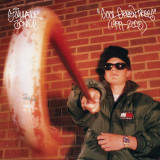
Guilty Razors - Complete Recordings 1977 - 1978
  • A1: Hurts And Noises
  • A2: Wake Up
  • A3: I Don't Wanna Be A Rich
  • A4: Terrorist Bad Heart
  • A5: Provocate
  • A6: Lucifer Sam (Pink Floyd)
  • B1: Happy!?
  • B2: So Lazy
  • B3: I Feel Down
  • B4: Stupido
  • B5: Guilty
  • B6: Caroline Says (Loo Reed)

UILTY RAZORS, BONA FIDE PUNKS.


Writings on the topic that go off in all directions, mind-numbing lectures given by academics, and testimonies, most of them heavily doctored, from those who “lived through that era”: so many people today fantasize about the early days of punk in our country… This blessed moment when no one had yet thought of flaunting a ridiculous green mohawk, taking Sid Vicious as a hero, or – even worse – making the so-called alternative scene both festive and boorish. There was no such thing in 1976 or 1977, when it wasn’t easy to get hold of the first 45s by the Pistols or the Clash. Few people were aware of what was happening on the fringes of the fringes at the time. Malcolm McLaren was virtually unknown, and having short hair made you seem strange. Who knew then that rock music, which had taken a very bad turn since the early 1970s, would once again become an essential element of liberation? That, thanks to short and fast songs, it would once again rediscover that primitive, social side that was so hated by older generations? Who knew that, besides a few loners who read the music press (it was even better if they read it in English) and frequented the right record stores? Many of these formed bands, because it was impossible to do otherwise. We quickly went from listening to the Velvet Underground to trying to play the Stooges’ intros. It’s a somewhat collective story, even though there weren’t many people to start it.
The Guilty Razors were among those who took part in this initial upheaval in Paris. They were far from being the worst. They had something special and even released a single that was well above the national average. They also had enough songs to fill an album, the one you’re holding. In everyone’s opinion, they were definitely not among the punk impostors that followed in their wake. They were, at least, genuine and credible.

Guilty Razors, Parisian punk band (1975-1978). To understand something about their somewhat linear but very energetic sound, we might need to talk about the context in which it was born and, more broadly, recall the boredom (a theme that would become capital in punk songs) coupled with the desire to blow everything off, which were the basis for the formation of bands playing a rejuvenated rock music ; about the passion for a few records by the Kinks or the early Who, by the Stooges, by the Velvet mostly, which set you apart from the crowd.
And of course, we should remember this new wave, which was promoted by a few articles in the specialized press and some cutting-edge record stores, coming from New York or London, whose small but powerful influence could be felt in Paris and in a handful of isolated places in the provinces, lulled to sleep by so many appalling things, from Tangerine Dream to President Giscard d’Estaing...
In 1975-76, French music was, as almost always, in a sorry state ; it was still dominated by Johnny Hallyday and Sylvie Vartan. Local rock music was also rather bleak, apart from Bijou and Little Bob who tried to revive this small scene with poorly sound-engineered gigs played to almost no one.
In the working class suburbs at the time, it was mainly hard rock music played to 11 that helped people forget about their gruelling shifts at the factory. Here and there, on the outskirts of major cities, you still could find a few rockers with sideburns wearing black armbands since the death of Gene Vincent, but it wasn’t a proper mass movement, just a source of real danger to anyone they came across who wasn't like them. In August 1976, a festival unlike any other took place in Mont-de-Marsan – the First European Punk Festival as the poster said – with almost as many people on stage as in the audience. Yet, on that day, a quasi historical event happened, when, under the blazing afternoon sun, a band of unknowns called The Damned made an unprecedented noise in the arena, reminiscent of the chaotic Stooges in their early adolescence. They were the first genuine punk band to perform in our country: from then on, anything was possible, almost anything seemed permissible.

It makes sense that the four+1 members of Guilty Razors, who initially amplified acoustic guitars with crappy tape recorder microphones, would adopt punk music (pronounced paink in French) naturally and instinctively, since it combines liberating noise with speed of execution and – crucially – a very healthy sense of rebellion (the protesters of May 1968 proclaimed, and it was even a slogan, that they weren’t against old people, but against what had made them grow old. In the mid-1970s, it seemed normal and obvious that old people should now ALSO be targeted!!!).
At the time, the desire to fight back, and break down authority and apathy, was either red or black, often taking the form of leafleting, tumultuous general assemblies in the schoolyard, and massive or shabby demonstrations, most of the time overflowing with an exciting vitality that sometimes turned into fights with the riot police. Indeed, soon after the end of the Vietnam War and following Pinochet’s coup in Chile, all over France, Trotskyist and anarcho-libertarian fervour was firmly entrenched among parts of the educated youth population, who were equally rebellious and troublemakers whenever they had the chance. It should also be noted that when the single "Anarchy in the UK" was first heard, even though not many of us had access to it, both the title and its explosive sound immediately resonated with some of those troublemakers crying out for ANARCHY!!! Meanwhile, the left-wing majority still equated punks with reckless young neo-Nazis. Of course, the widely circulated photos in the mainstream press of Siouxsie Sioux with her swastikas didn’t necessarily help to win over the theorists of the Great Revolution. It took Joe Strummer to introduce The Clash as an anti-racist, anti-fascist and anti-ignorance band for the rejection of old-school revolutionaries to fade a little.

The Lycée Jean-Baptiste Say at Porte d’Auteuil, despite being located in the very posh and very exclusive 16th arrondissement of Paris, didn’t escape these "committed" upheavals, which doubled as the perfect outlet for the less timid members of this generation.
“Back then, politics were fun,” says Tristam Nada, who studied there and went on to become Guilty Razors’ frontman. “Jean-Baptiste was the leftist high-school in the neighbourhood. When the far right guys from the GUD came down there, the Communist League guys from elsewhere helped us fight them off.”
Anything that could challenge authority was fair game and of course, strikes for just about any reason would lead to increasingly frequent truancy (with a definitive farewell to education that would soon follow). Tristam Nada spent his 10th and 11th unfinished grades with José Perez, who had come from Spain, where his father, a janitor, had been sentenced to death by Franco. “José steered my tastes towards solid acts such as The Who. Like most teenagers, I had previously absorbed just about everything that came my way, from Yes to Led Zeppelin to Genesis. I was exploring… And then one day, he told me that he and his brother Carlos wanted to start a rock band.” The Perez brothers already played guitar. “Of course, they were Spanish!”, jokes their singer. “Then, somewhat reluctantly, José took up the bass and we were soon joined by Jano – who called himself Jano Homicid – who took up the rhythm guitar.” Several drummers would later join this core of not easily intimidated young guys who didn’t let adversity get the better of them.

The first rehearsals of the newly named Guilty Razors took place in the bedroom of a Perez aunt. There, the three rookies tried to cover a few standards, songs that often were an integral part of their lives. During a first, short gig, in front of a bewildered audience of tough old-school rockers, they launched into a clunky version of the Velvet Underground's “Heroin”. Challenge or recklessness? A bit of both, probably… And then, step by step, their limited repertoire expanded as they decided to write their own songs, sung in a not always very accurate or academic English, but who cared about proper grammar or the right vocabulary, since what truly mattered was to make the words sound as good as possible while playing very, very fast music? And spitting out those words in a language that left no doubt as to what it conveyed mattered as well.
Trying their hand a the kind of rock music disliked by most of the neighbourhood, making noise, being fiercely provocative: they still belonged to a tiny clique who, at this very moment, had chosen to impose this difference. And there were very few places in France or elsewhere, where one could witness the first stirrings of something that wasn’t a trend yet, let alone a movement.

In the provinces, in late 1976 or early 1977, there couldn’t be more than thirty record stores that were a bit more discerning than average, where you could hear this new kind of short-haired rock music called “punk”. The old clientele, who previously had no problem coming in to buy the latest McCartney or Aerosmith LP, now felt a little less comfortable there…
In Paris, these enlightened places were quite rare and often located nex to what would become the Forum des Halles, a big shopping mall. Between three aging sex workers, a couple of second-hand clothes shops, sellers of hippie paraphernalia and small fashion designers, the good word was loudly spread in two pioneering places – propagators of what was still only a new underground movement. Historically, the first one was the Open Market, a kind of poorly, but tastefully stocked cave. Speakers blasted out the sound of sixties garage bands from the Nuggets compilation (a crucial reference for José Perez) or the badly dressed English kids of Eddie and the Hot Rods. This black-painted den was opened a few years earlier by Marc Zermati, a character who wasn’t always in a sunny disposition, but always quite radical in his (good) choices and his opinions. He founded the independent label Skydog and was one of the promoters of the Mont-de-Marsan punk festivals. Not far from there was Harry Cover, another store more in tune with the new New York scene, which was amply covered in the house fanzine, Rock News (even though it was in it that the photos of the Sex Pistols were first published in France).
It was a favorite hang-out of the Perez brothers and Tristam Nada, as the latter explained. “It’s at Harry Cover’s that we first heard the Pistols and Clash’s 45s, and after that, we decided to start writing our first songs. If they could do it, so could we!”
The sonic shocks that were “Anarchy in the UK”, “White Riot” or the Buzzcocks’s EP, “Spiral Scratch” – which Guilty Razors' sound is reminiscent of – were soon to be amplified by an unparalleled visual shock. In April 1977, right after the release of their first LP, The Clash performed at the Palais des Glaces in Paris, during a punk night organised by Marc Zermati. For many who were there, it was the gig of a lifetime…
Of course, Guilty Razors and Tristam were in the audience: “That concert was fabulous… We Parisian punks were almost all dressed in black and white, with white shirts, skinny leather ties, bikers jackets or light jackets, etc. The Clash, on the other hand, wore colourful clothes. Well, the next day, at the Gibus, you’d spot everyone who had been at this concert, but they weren’t wearing anything black, they were all wearing colours.”

It makes sense to mention the Gibus club, as Guilty Razors often played there (sometimes in front of a hostile audience). It was also the only place in Paris that regularly scheduled new Parisian or Anglo-Saxon acts, such as Generation X, Siouxsie and the Banshees, the Slits, and Johnny Thunders who would become a kind of messed-up mascot for the venue. A little later, in 1978, the Rose Bonbon – formerly the Nashville – also attracted nightly owls in search of electric thrills… In 1977, the iconic but not necessarily excellent Asphalt Jungle often played at the Gibus, sometimes sharing the bill with Metal Urbain, the only band whose aura would later transcend the French borders (“I saw them as the French Sex Pistols,” said Geoff Travis, head of their British label Rough Trade). Already established in this small scene, Metal Urbain helped the young and restless Guilty Razors who had just arrived. Guitarist for Metal Urbain Hermann Schwartz remembers it: “They were younger than us, we were a bit like their mentors even if it’s too strong a word… At least they were credible. We thought they were good, and they had good songs which reminded of the Buzzcocks that I liked a lot. But at some point, they started hanging out with the Hells Angels. That’s when we stopped following them.”

The break-up was mutual, since, Guilty Razors, for their part, were shocked when they saw a fringe element of the audience at Metal Urbain concerts who repeatedly shouted “Sieg Heil” and gave Nazi salutes. These provocations, even still minor (the bulk of the skinhead crowd would later make their presence felt during concerts), weren’t really to the liking of the Perez brothers, whose anti-fascist convictions were firmly rooted. Some things are non-negotiable.
A few months earlier (in July 1978), Guilty Razors had nevertheless opened very successfully for Metal Urbain at the Bus Palladium, a more traditonally old-school rock night-club. But, as was sometimes the case back then, the night turned into a mass brawl when suburban rockers came to “beat up punks”.

Back then, Parisian nights weren’t always sweet and serene.

So, after opening as best as they could for The Jam (their sound having been ruined by the PA system), our local heroes were – once again – met outside by a horde of greasers out to get them. “Thankfully,” says Tristam, “we were with our roadies, motorless bikers who acted as a protective barrier. We were chased in the neighbouring streets and the whole thing ended in front of a bar, with the owner coming out with a rifle…”
Although Tristam and the Perez brothers narrowly escaped various, potentially bloody, incidents, they weren’t completely innocent of wrongdoing either. They still find amusing their mugging of two strangers in the street for example (“We were broke and we simply wanted to buy tickets for the Heartbreakers concert that night,” says Tristam). It so happened that their victims were two key figures in the rock business at the time: radio presenter Alain Manneval and music publisher Philippe Constantin. They filed a complaint and sought monetary compensation, but somehow the band’s manager, the skilful but very controversial Alexis, managed to get the complaint withdrawn and Guilty Razors ended up signing with Constantin with a substantial advance.

They also signed with Polydor and the label released in 1978 their only three-track 45, featuring “I Don't Wanna be A Rich”, “Hurts and Noises” and “Provocate” (songs that exuded perpetual rebellion and an unquenchable desire for “class” confrontation). It was a very good record, but due to a lack of promotion (radio stations didn’t play French artists singing in English), it didn’t sell very well. Only 800 copies were allegedly sold and the rest of the stock was pulped… Initially, the three tracks were to be included on a LP that never came to be, since they were dropped by Polydor (“Let’s say we sometimes caused a ruckus in their offices!” laughs Tristam.) In order to perfect the long-awaited LP, the band recorded demos of other tracks. There was a cover of Pink Floyd's “Lucifer Sam” from the Syd Barrett era – proof of an enduring love for the sixties’ greats –, “Wake Up” a hangover tale and “Bad Heart” about the Baader-Meinhof gang, whose actions had a profound impact on the era and on a generation seeking extreme dissent... On the album you’re now discovering, you can also hear five previously unreleased tracks recorded a bit later during an extended and freezing stay in Madrid, in a makeshift studio with the invaluable help of a drummer also acting as sound engineer. He was both an enthusiastic old hippie and a proper whizz at sound engineering. Here too, certain influences from the fifties and sixties (Link Wray, the Troggs) are more than obvious in the band’s music.

Shortly after a final stormy and rather barbaric (on the audience’s side) “Punk night” at the Olympia in June 1978, Tristam left the band ; his bandmates continued without him for a short while.

But like most pioneering punk bands of the era, Guilty Razors eventually split up for good after three years (besides once in Spain, they’d only played in Paris). The reason for ceasing business activities were more or less the same for everyone: there were no venues outside one’s small circuit to play this kind of rock music, which was still frightening, unknown, or of little interest to most people. The chances of recording an LP were virtually null, since major labels were only signing unoriginal but reassuring sub-Téléphone clones, and the smaller ones were only interested in progressive rock or French chanson for youth clubs. And what about self-production? No one in our small safety-pinned world had thought about it yet. There wasn’t enough money to embark on that sort of venture anyway.

So yes, the early days of punk in France were truly No Future!
Сделать предзаказ22.05.2026

он должен быть опубликован на 22.05.2026


Последний логин: 2026 г. назад
Chris Connelly - White Phosphorus (Chris Connelly plays Throbbing Gristle)

There is so much that we at Dirter could say about the legend that is Chris Connelly performing his takes on the music of the equally legendary TG, but this time we’re going to leave it in the words of the man himself. This record goes ahead with the blessing of the surviving members of Throbbing Gristle, Chris Carter & Cosey Fanni Tutti. “Having carved a twisted career with behemoths MINISTRY & REVOLTING COCKS over the past 40 years, starting life with the formidable FINI TRIBE and collaborating with disparate characters such as KILLING JOKE, CABARET VOLTAIRE, JIM O’ ROURKE, and too many others, I have returned to my first love, THROBBING GRISTLE, armed with a cassette recorder, a reel to reel, a razor blade and some tape, I want to invoke the spirit of mid to late 70’s live TG , random, tense, scary & compulsively fascinating…….WHITE PHOSPHORUS is for the TG connoisseur, for the morbidly curious, and the tragically dysfunctional amongst us”. This record is packaged in the spirit of the earliest Throbbing Gristle releases and is very much coming from a ‘70s Xerox angle. It’s pressed on 180gram heavy black vinyl.

В наличии на складе

Есть у нас в наличии и готов к отправке

Gosha Martynov & Natasha Sinyakova - Imena Rek (LP)

Following a fallow 2023, a rejuvenated Growing Bin return to your turntable with this sublime collaborative LP from Gosha Martynov & Natasha Sinyakova. On their first foray into the physical, the duo expand the spectral ambience and medicated breaks of their earlier work with lithe touches of organic jazz and Cafe Del Mar cool, creating a complex assemblage of dreamy downbeat and emotive electronica that's entirely easy on the ears.

Opener "Pozhaluysta" seduces with smart syncopation and beguiling melody, its flute and fretwork finding ample space to slip around Natasha's voice, equal parts Cocteau operatics and jazz-club coquette, in an expression of a want beyond words. The mood shifting "Osvobodi Menia" sees the solemn, snaking sound of a sampled duduk drift into an optimism of airy pads and escapist mantra, suspended in reverb until the end of time. "Ya Tebia Zhdala" began life as a break-led experiment, gradually evolving into a romantic and naive sketch rich with splashes of piano and dynamic chorus pads. Naturalist hymn "O Dereve" weaves a dark and intimate tale from the point of view of a veteran tree as its buzzsaw guitar loops blossom into multilayered vocals full of emotion.

Awash with sonar sweeps, sumptuous pads and rolling subs, the titular "Imena Rek" channels post-rave bliss into the hypnagogic anthem the contemporary IDM-ographic have been searching for. Infectious hooks and spaced out pads ride the breakbeat rhythm for a dreamy experimental pop banger from another planet. The sombre sway of "Rany", filtered through the fog of a broken cassette recorder, trance djembe and unpredictable bass tones rivals the finest Motion Ward or In:dex releases for crepuscular charm, while "Smeshno" sees serrated drones sink into a slinking rhythm, playing counterpoint to the tender chords and yearning vocals.

"Iskra" closes out the chiasmus with a return to the organic experience of the opener, the flute and acoustic guitar augmented with nuanced hand percussion and a music box refrain. Listening to this album is like a midnight walk through an ancient forest - an experience which both scares and tempts you at the same time. From touching damp moss to feeling the thick fog with your body and watching mushrooms glow in the dark, 'Imena Rek' guides you through the terrain.

Flawlessly arranged and executed, this LP alludes to a long lineage of innovative downbeat, feels absolutely essential in the present and pushes the trip hop revivalists towards a fascinating future - Gosha Martynov & Natasha Sinyakova have created a timeless piece of music,
but what else do you expect from the Bin?

В наличии на складе

Есть у нас в наличии и готов к отправке

An-Ting - Lost Communications LP

On An-Ting’s extensive travels around the UK, Mongolia, Sichuan, Hong Kong and Taiwan, she took field recordings of birdsong and mixed them with dark experimental electronic music with droning soundscapes and hard beats, creating an album that sonically encapsulates the very essence of nature itself, drifting from peaceful ambience to haunting melancholy through to dark and foreboding.
“There is a light and darkness in nature that civilisation has made us numb to and that we want to explore” Using a binaural recorder to capture the surrounding sounds of birds, An-Ting has created a completely different expression that opens the seemingly simple, yet complex, languages of the birds, furthering the other-worldly, unique feel of Lost Communications ०妏ԏ宙. From An-Ting: “We live with other creatures on earth and are surrounded by all different sounds. Through Lost Communications, I blend the birdsongs with my artistic expression to introduce people to these complex languages and nonhuman voices. I hope this will make us more aware of different life forms on this planet and inspire greater kindness to the earth.” Composed, performed, and mastered by An-Ting Co-produced by AnTing and Ian Gallagher

В наличии на складе

Есть у нас в наличии и готов к отправке

Gentle Giant - Free Hand LP 2x12"

Free Hand was Gentle Giant's seventh album, originally released in July 1975. This album was the most commercially successful of the band's career, reaching the top 40 albums in Billboard Magazine. It stands as the culmination of the band's maturity, following the successes of 'In A Glass House' & 'The Power & The Glory'.

Having toured Europe & North America non-stop in the years prior to this release with artists like Jethro Tull, Yes, Zappa etc, the band had gone from strength to strength. By the time 'Free Hand' was released Gentle Giant had become a major headliner in their own right. All the members were multi-instrumentalists and the band were never afraid of surprising an audience with a 4 part recorder ensemble followed by a vibraphone solo, all the while rocking the audience and thoroughly enjoying themselves onstage.

Gentle Giant albums featured many songs with both literary subjects as well as social and personal commentary on life as rock musicians. 'Free Hand' has more than most. The title of the album and first track were so named as the band had just changed record labels and management and felt unshackled by prior contractual obligations.
Putting these issues behind them upon its first release, Gentle Giant embarked on an extensive tour of North America and Europe, plus a short tour of the UK, to promote the album. The incredible range of Gentle Giant's music is evident throughout this album. From the intricate vocal fretwork of 'On Reflection' and the delicate medieval
flavour of 'Talybont,' the Celtic-tinged rock of 'Time To Kill' and the jagged rhythms of 'Just The Same,' all those diverse elements which made the band so strikingly original are skillfully blended and perfectly executed.
Award winning producer and musician Steven Wilson has added his delicate touch in remixing 'Free Hand' . His tonal range and painstaking attention to sound quality make 'Free Hand' sound as fresh today as it did on first release. A fitting tribute to the compositional skills and expertise of five dedicated musicians.
This special gatefold 2LP edition is pressed on White Vinyl and limited to 500 pieces worlwide

В наличии на складе

Есть у нас в наличии и готов к отправке

Alton Miller - Spirit Chaser

Alton Miller

Spirit Chaser

12inchQUINTESSE99
Quintessentials
27.02.2026

Before celebrating its 100th release, Quintessentials is very happy to present another ep from Detroit’s finest Alton Miller (in fact it’s his 4th for the label)! „Last one 1st“ is a driving and building Detroit inspired track, that doesn’t lack elegance. The remix courtesy of french hot shot Life Recorder (check out his full EP on Quintessentials as well) focuses on a proper Detroit House vibe, call it a classic. The b-side is deeeeep! The original version of „give it up“ is a smooth and soulful tune providing goose bumps. Switzerland’s finest house producer Shaka adds some club feel to a beautiful early morning track. Classic release!

нет на складе

Закажите сейчас, и мы закажем товар для вас у нашего поставщика.


Последний логин: 29 дн. назад
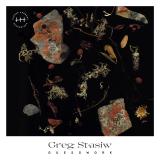
Greg Stasiw - Guesswork

Experimental musician Greg Stasiw presents his debut album of radiant, free-flowing electronics ‘Guesswork’. Music for psychoactive exploration made over a four year period, incorporating ambient, minimalism, intricate sound design & Japanese environmental music. An exceptional listening experience of wonder, tranquility, melancholy & discovery, contemplating the relationship between sound & space.

Greg Stasiw is an experimental musician, visual artist and writer from New England, Northeastern USA. An itinerant polymath, Stasiw has spent time living, working and traveling in New York, Tokyo, Toronto, Paris, Boston, and Bratislava. As well as studying anthropology, animation and illustration, Stasiw has always had a close connection with music.

His earliest musical involvements started with ambient music on Sunday drives, microcassettes, the Windows 98 Sound Recorder and free play with Casio keyboards. Then came a formative procession of piano lessons, orchestras, choirs, taiko, metal, indie rock, tinnitus, and ultimately; the acquisition of music production software.

With his debut album ‘Guesswork’, the aural and visual inspirations that underpin Stasiw's creative life intersect, in a pure, radiant soundworld of space, depth and immaculate clarity. Futuristic, pellucid soundscapes incorporating ambient, minimalism, intricate sound design, and Japanese environmental music are deftly arranged with evanescent chimes, serene tone float, suspended organ notes and curious sci-fi resonances.

Like stepping into some space age meditation garden, if soundtracked by the likes of Hiroshi Yoshimura, Harold Budd, Norman McLaren, and Pauline Anna Strom, the thirteen tracks of ‘Guesswork’ create an exceptional listening experience of wide-eyed wonder, sleek tranquility, gentle melancholy, and singular discovery.

Сделать предзаказ27.02.2026

он должен быть опубликован на 27.02.2026


Последний логин: 2026 г. назад
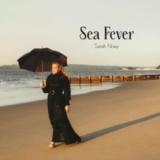
Sarah Nixey - Sea Fever LP

Formerly one third of the much-loved trio Black Box Recorder, alongside The Auteurs’ Luke Haines and Jesus and Mary Chain guitarist John Moore, the British singer-songwriter Sarah Nixey has steadily gained acclaim as a solo artist who makes savvy, sophisticated and poised pop.

Delivering vocals with a detached elegance over opulent tracks, any perceived nonchalance in Nixey’s luxe, cut glass voice belies her empathy, where social commentary serves as protest, both explicit and implied. Like Billy Bragg deepfaked as prime Julie Andrews, this strange but effective juxtaposition radiates soft power. ‘Lies of the Land’ depicts a corrupt post-Brexit and Covid-19 world where inequality and division flourish. ‘England's On Fire’ delves into the nuanced concepts of patriotism and nationalism, and ‘Pleasure Bay’ narrates the story of a love affair with a deprived yet beautiful English seaside town, written after Nixey left London, drawn back to the Dorset coast.
More than just a political record though, Nixey was drawn to the poetic elements of living too, telling stories of life and death, love and loss, conflicts and symmetry, in an intimate and close-up way, as if whispering secrets to her listeners.

“Sea Fever explores the bittersweet beauty of human life amid a volatile world of changing seasons and brutal elements,” says Nixey. “These are songs of deep sorrow, remembrance, birth, and change, set against a backdrop of the sensuous natural world.”
‘Rolling Waves’ explores profound grief following her beloved grandmother's death, while ‘Spring Equinox’ celebrates the joy and awe of life after welcoming her first grandchild. ‘At the Edge of the Forest’ is a poignant story of someone losing their memory, and ‘On This Wide Night’ recounts the early hours return home of a teenage runaway.

Сделать предзаказ06.02.2026

он должен быть опубликован на 06.02.2026


Последний логин: 2026 г. назад
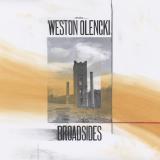
Weston Olencki - Broadsides

'In 2023, sound artist and composer Weston Olencki toured across the American South. Beginning in their hometown in South Carolina, they snaked a circuitous path from the mountains of West Virginia to the banks of the Mississippi River. As the miles accumulated, so did the initial seeds of new work.
'Instruments and artifacts they acquired hitched a ride in the backseat, while songs and sounds filled their portable recorder: water in its various states, the familiar insectoid buzz of those summer nights, trains cutting through the landscape, the traditional music that lived alongside the communities that kept it. Olencki took it all in, and over time, found ways that these experiences coalesced into a bramble-like perspective of time, where past, present, and future intersect in ways both barbed and beautiful.
'Broadsides, Olencki’s newest solo full-length is the multilayered result of this journey. The album follows their landmark release Old Time Music from 2022, which presented radical interpretations of traditional tunes from Appalachia and throughout the South alongside original compositions that drew significantly on archival recordings. On Broadsides, Olencki rejects delineations between the unmoored avant-garde and the rootedness of one’s cultural heritage, revealing their porous and intertwined nature. “My mother was a quilter. Her mother before that,” they write in the album’s liner notes. “Quilting, like music, is a practice of embedding knowledge and remembrance into the very core of the thing you are making. It’s not just about the materials, but how they’re reassembled, recontextualized, stitched, woven to form new patterns - the minutiae of craft holding significance to those looking to find it. Stories woven from stories, never told the same way twice.”
'Like all great road trips, Broadsides unfolds slowly and continuously, with moments of dramatic reverie punctuating the endless melt of highway in the rearview. We’re immediately confronted by the uncanniness of revisiting old haunts, as Southern storms break through the initial churn of the freight locomotives of Alabama. Olencki’s interpretation of the bluegrass standard “Foggy Mountain Breakdown” captures the euphoria of melancholy in motion. The permutational plucks of banjo are bounced around the frame by a computer, its pitches determined within algorithmic sequences and transcriptions of classic three-finger licks. The tonalities of old-time are smeared and stretched until all that’s audible is the insistence that Heaven might be real.
'In the album’s second half, “Omie Wise,” a murder ballad made famous by Doc Watson, follows an interlude recorded on the river in North Carolina in which the titular character’s body was laid. Ghostly echoes of a dozen other renditions float through the substrata as Tongue Depressor’s Henry Birdsey accompanies them on the pedal steel guitar. The album’s central composition, “all my father’s clocks,” is a profound meditation on entropy and impermanence. The sound of their father’s extensive clock collection ticks away as Olencki pulls a bow across the length of an autoharp sourced from a rural strip mall. The instrument was left as detuned as it was found, the resonance of its deep bass drone and clanging high-end the result of years of neglect and the warping effects of Southern humidity.
'Historically, broadsides were an early form of broadcasting, an often- musicalized telling of current news pasted in the public square. The name was later taken up by Sis Cunningham and Gordon Friesen in the 1960s, whose Broadside magazine published songs and social commentary when American folk music resurfaced as an urgent way of communicating the multifaceted politics of its time.
'Olencki borrows the phrase to recall both this old form of songmaking and that later prominent reexamination of traditional music’s role in modern life, but also to draw attention to the fragmented and machine- mediated way heritage is diffused in this very different, but no less pivotal, moment.
'As a sanitized past is used as justification for current violence and domination, we can turn to these artifacts to better understand the history of ourselves, but only if they are consciously pushed to evolve. Broadsides represents one personal, striking vision of what far-flung futurisms could be respun from = these high, lonesome sounds: a reflection of the unbridled joy and deep sorrow inherent to living together through time, and a desire to push further into the untold and unknown.'

Сделать предзаказ30.01.2026

он должен быть опубликован на 30.01.2026


Последний логин: 2026 г. назад
ANDY BOAY - YOU TOOK THAT WALK FOR THE TWO OF US LP

This is the first new Andy Boay album since 2013’s In The Light. I recorded it in January 2024 to a Yamaha MT8X 8-track cassette recorder in my room at the New York Center for Creativity & Dance in the East Village of Manhattan.

I mixed it in June 2024 with Joe Santarpia and Roberto Pagano at the Idiot Room in San Francisco. The three songs on Side A (“HBM,” “If I Ever Come Off,” and “You’re In The Air Now”) were initially arranged over several live performances using a multi-track looper. When I then sat down to track them to my tape machine, I meticulously sang and played out all repeating parts, layering and ping-pong-bouncing each doubled take to another tape-track. In this way I hoped to maintain the hypnotic quality of the looped parts while keeping them organic, singular, and fleeting. Side B is a triptych of more carefully arranged pop songs: a tremolo & mod-delay elegy to youth called “Careless,” bookended by two variations on the same theme — the stark, mellotron prayer of “One & One” and the lonesome after-hours funk of “I Want More”. The line “You took that walk for the two of us” has a dual meaning. In 2011, my friend Spencer Gilley took a long walk through Montreal while listening to demos I’d recorded.

He described the experience to me as magical, ecstatic, inspiring. His encouragement from that moment still echoes every time I sit down to write or record. Less than a year later, I met Florida musician Thomas Fekete. We formed a deep, brief friendship that lasted until his death in 2016. Thom entered my life during a chaotic time and helped me find direction and courage. He took me on a tour that shifted the course of my life. We bonded over surviving cancer as young men, Florida’s noise scene, and the strange lives we led as touring guitarists (he in Surfer Blood, me in Mac DeMarco’s band). Thom could always warmly anticipate all of my joy, humor, and curiosity—and all of my pain, anxiety, and fear. In this way, it felt like he was also taking that walk for the two of us—gently guiding me down a path he had already traveled. Andy Boay (Andy White) began playing and recording music as a teen in Orlando during the early 2000s, exploring noise, psych, and pop in bands and solo projects.

He has played in the duo Tonstartssbandht with his brother Edwin since 2007. He spent six years playing guitar in the touring band for Mac DeMarco. Andy Boay’s music taps the euphoric and the sorrowful, both onstage amongst friends and strangers, and tracking alone at his 8-track in the studio. These days he lives and works in the East Village neighborhood of New York City.

Сделать предзаказ19.12.2025

он должен быть опубликован на 19.12.2025


Последний логин: 2026 г. назад
THE WORM - PANTILDE

The Worm

PANTILDE

12inchEMC-026LP
Em Records
07.11.2025

Comes with 4 page insert, English and Japanese liner notes and lyrics.

A contemporary folk wonder from Cornwall (Falmouth), England.

"We at EM Records love to transport our listeners to new worlds, other worlds; “Pantilde”, this magical new album from Cornish avant-folk performance artist The Worm, is indeed an ethereal new world: otherworldly, but somehow rooted; an imaginary oral and musical story of everyday village life in an alternative Celtic landscape. The music here is strange yet familiar, fantastical and enchanting while remaining simultaneously attached to the earth. Amy Lawrence, aka The Worm, plays cello, harp, recorders and percussion, accompanying and framing her rich voice, which is often overdubbed into lovely homespun vocal ensembles; they tell song-stories of mythical and mystical village life, of nature and the human relationship with the natural world. The Worm can be considered part of a lineage which includes The Incredible String Band, Shovel Dance Collective, Bridget St John, Dorothy Carter, Vashti Bunyan, Jessica Pratt, Cathrine Howe, Mary Lattimore, Tristwch Y Fenywod and of course many others. “Pantilde”, a time-trip to a dreamlike, pastoral world that nevertheless feels distinctly realized, is a remarkable avant-folk fantasia, co-released with Prah Recordings.

Сделать предзаказ07.11.2025

он должен быть опубликован на 07.11.2025


Последний логин: 2026 г. назад
EMILY SPRAGUE A. - Cloud Time
  • Tokyo 1
  • Osaka
  • Nagoya
  • Matsumoto (Beginning)
  • Matsumoto (Ending)
  • Hokkaido
  • Tokyo 2
  • Each Story
также имеющийся в продаже

Black Vinyl


Emily A. Sprague's Cloud Time traces an audio-spiritual journey through time and place, recorded across a long-awaited debut tour of Japan in the fall of 2024. Compiled from environmental improvisations captured in and for the moment, material at once welcoming, responsive, and inimitable, the album distills a voyage guided by psychic wayfaring, unbound presence, and activating performance for a reciprocal exchange with space, listener, and each fully engaged instant. The Japanese tour documented on Cloud Time held an almost mythic significance for Sprague, taking on properties of her own sonic white whale. After many near-departures and dropped plans to play in the country, "the empty spaces of cancelled trips and forgotten music turned into strange little misty spirits that I felt followed by," she says. "When I began preparing for the tour, I couldn't shake a sense that the invitation to Japan was more about opening myself up to this new place instead of bringing something into it tightly under my control. Improvisation has always been such a pillar in my music practice, and I really wanted to meet the country, spaces and people through that process." To amplify these intuitive whispers on-stage, Sprague reimagined her time-tested live rig, designed to be as free from error as possible, as a looser, more flexible set up that would allow her to interface with what was essentially a blank sonic canvas every night. Each performance became a collaboration between environment and instinct, Sprague processing the events, energies, and emotions informing the evening through her new sound ecosystem, and projecting an entirely present and unique version of herself to each open-eared and hearted crowd. "It was very much more than just an act of playing for me, but a total experience of time and place," she says. The seven long-form pieces that plot the course of Cloud Time, excerpted from over eight hours of recordings archived on the artist's on-stage recorder and generously shared on the album with no additional mixing and only minimal editing, invite listeners to become still in these deep-rooted moments of presence as the album moves from city to city, venue to venue. Cloud Time chronicles material recorded at each tour stop, Sprague selecting and sequencing the album around mood-based storytelling more so than linear chronology. "I tried to make the whole album flow in the way that any one of the complete live performances did," she explains, "while also keeping the spirit of the whole thing as a journey." The result is equal parts travelog, love letter, and impressionistic collage channeled from the potent ferment of a now encased in the glowing amber of memory. Intrinsically inspired by kankyo ongaku, an environmental music philosophy, known both in and widely outside of Japan that tunes into the similarly expansive ethos as Pauline Oliveros' deep listening practice and posits the listener as composer, Cloud Time is ambient music that seems to be listening right back, grounded in heartfelt synthesized frequencies that abundantly hold and heal. Pieces like "Nagoya," "Tokyo 1," and the ten minute "Matsumoto" in particular hum with the atomic resonance of gently tended landscapes, offering space for tuning way in and dropping far out from perspectives that stifle and bind. Cloud Time is an invitation to embrace each moment as both fleeting and eternal, floating by with nothing to grasp onto and absolutely everything to gain. The exercise in acceptance and letting go that Sprague practiced throughout the tour deeply impacted her understanding of self as both a guest and venerable performer. "The process of loving wherever I am, being present and focusing on a clear channel of communication for mind and emotion, rooted so deeply in respect for the space, those within it, and myself, ended up being profoundly healing," she says. "My vision and hope is that this album can be released as a gift back to anyone who either was or wasn't there. A cloud time of life passing by."

Сделать предзаказ16.10.2025

он должен быть опубликован на 16.10.2025


Последний логин: 2026 г. назад
LEE, OKKYUNG - JUST LIKE ANY OTHER DAY

LEE, OKKYUNG

JUST LIKE ANY OTHER DAY

12inchSPLP158
Shelter Press
15.10.2025

Unlike anything we have heard from her before, Okkyung Lee returns to Shelter Press with "Just Like Any Other Day: Background Music For Your Mundane Activities", a deeply intimate body of recordings at the juncture of ambient music, minimalism, and the baroque, that stands as radical intervention with what experimental music can be, and the place that organisations of sound occupy in our lives. For more than two decades, Okkyung Lee has stood at the forefront of the most radical trajectories of experimental music: a virtuosic cellist and improviser, renowned for her creative rigour and emotive depth. Particularly noteworthy for her range, dexterity, and adaptability, over the last five years Lee's output has revealed unexpected shifts and developments that move far afield from the realms of free improvisation for which she is most well known. 2020's "Yeo - Neun", a heart-wrenching, ambient chamber work - drawing inspiration from the Korean popular music of her youth - was issued by Shelter Press to great critical response, followed closely by "Teum (The Silvery Slit)" - one of a series engrossing electroacoustic works created at Groupe de Recherches Musicales in Paris - on Portraits GRM, and then "Na-Reul" in 2021, regarded by Lee as a closing statement of more than two decades living in New York, which set the precedent of her allowing her emotions to fully occupy the forefront of the music for the first time. Marking her return to Shelter press, "Just Like Any Other Day": Background Music For Your Mundane Activities", encounters Lee upturning the apple cart once again, weaving a profoundly intimate artistic statement on completely unexpected terms. Like its three aforementioned predecessors, "Just Like Any Other Day" belongs to broadening shift in Lee's approach to composing that roughly aligns with her return to her native South Korea, having lived in the United States since her late teens. Infused with a deep reengagement with her own culture and relationship to memory, it is equally a response to those critical challenges and questions provoked by significant life change. Worked on in isolation, and continuously returned to, over the course of four years, the album's nine pieces began with a simple recognition that experimental music is not always what we imagine it to be. It is a practice and a pursuit - a music for which, at its inception, the outcome is unknown - rather than an idiom defined by certain syntaxes, approaches, and qualities of structure and sound. From this departure point, Lee began to inquire after the utility of music itself: what is it for, what does it do, and what place does it (or can it) occupy in our lives? This solitary and durational journey, each composition gradually moving through different phases and evolutions over years, led Lee toward uncharted ground: a music that is not only playful, introspective, and seductive, but also intended to provoke a relationship to experimental music beyond its normative expectations. Rather active or deep listening, it pursues passive listening. Rather than a grand statement, it is discreet. Rather than virtuosity, it embraces the elegant and direct. Even more strikingly, for the first time, the music of "Just Like Any Other Day" encounters Lee leaving the cello entirely behind. Created at home on keyboard, computer, and an inexpensive cassette recorder, "Just Like Any Other Day" presents a remarkable form of ambient music - organisations of sound that become their own environment, to be occupied - intended, as the album's subheading infers, as Background Music For Your Mundane Activities. An expansion of the creative pathways opened by the Korean pop imbued compositions of Yeo - Neun, aspects of electronic process explored by "Teum (The Silvery Slit)", and the emotive foregrounding of "Na-Reul", each of the pieces presented across the two sides of "Just Like Any Other Day" implies something far greater than the limits of its own temporarily: a mood, provocations of memory and place, mirrors for the solitude within which it was made, and palpable emotion lingering just out of grasp. For Lee, each of the album's compositions could be continued or looped for an indeterminate duration: straddling a ground between the minimal and the baroque, enveloping the listener in endless cycles of appreciating, repetitive and rhythmical notes, flirting with the melodic and implying a disembodied imagism that borders on the profound. Remarkably beautiful and direct, Okkyung Lee's "Just Like Any Other Day: Background Music For Your Mundane Activities" - issued by Shelter Press on vinyl - represents a radical reconfiguration of experiential music, stripped to its bare essence in defiance of the widely presumed aesthetic signifiers. Unlike anything we've heard from her before, this immersive body of intimate recordings not only reveals new dimensions of Lee's striking range as an artist, but also of how we might regard and occupy music itself: an ambience to lived and felt like a second skin.

нет на складе

Закажите сейчас, и мы закажем товар для вас у нашего поставщика.


Последний логин: 5 мес. назад
Ruth - Polaroïd Roman Photo (40th Anniversary Edition) + 7"

INTEMPORARY AND INDETRONABLE FRENCH COLD WAVE CLASSIC in a SPECIAL EDITION to celebrate the 40th anniversary of this mythical album.


This edition includes a 45T with 2 previously unreleased tracks, available nowhere else.


Thierry Müller, who initiated the RUTH project, is not at his first try when the album POLAROÏD/ROMAN/PHOTO including the eponymous track is released in 1985. His older brother Patrick along with one of their cousins make his musical education and he quickly becomes familiar with contemporary and experimental music. He starts quite early to tinker sounds on old tape recorders by himself but it is in 1977 that Thierry launches with some friends his first group, ARCANE, while studying at the School of Applied Arts. Their sound is weird, a mixture of saturated scratches and feedback tapes: there is no discographic or scenic testimony of this experience.


Alongside ARCANE, Thierry is already working solo on his ILITCH project / concept, an experimental and innovative work, whose first album Periodmindtrouble is released in 1978 on the Oxigène label. Despite insubstantial sales, this album brings Thierry recognition and success in the very elitist circles of experimental and underground music.


ILITCH’s musical bias was too narrow for Thierry’s ceaseless experimental curiosity, parallel to these activities, he therefore develops a Punk project called RUTH ELLYERI with the author, actress and photographer Murielle Huster. The title is an anagram of Thierry Müller (the complete name is Ruth M. Ellyeri). The character is meant to impersonate one of his schizophrenic facets and allows him to extend his field of expressions to musical styles differing from those in ILITCH.

From this work, the very cult punk piece Mescalito emerges, song that can be found on the mythical but unfortunately very rare compilation 125g de 33 1/3 tours (1979) of the Oxigène label (first “french punk” sampler). At the end of 1978, he meets Philippe Doray at the Oxigene office. Doray is another big name of French experimental music. Thierry moves to his home near Rouen, a remote farmhouse with a music studio made of odds and ends.


They work on their respective creations but meet from time to time on experimentations in common, including CRASH (a tribute to JG Ballard) As early as 1982, a first version of the track Polaroïd/Roman/Photo is out under the name of the project RUTH. “I wanted to write a piece to make the girls dance and make fun of the boys. I plugged a small handmade clock on my Farfisa organ as a sequencer. I had a small Roland synth-guitar, I put the organ in it and that’s how it started.” Philippe is quite amused by the idea of working on a more Pop project and offers to write the text. Thierry works on other tracks for the future LP and asks some friends to write other texts : Edouard Nono, visual artist, writes the lyrics of Mots, Frédérique Lapierre those of Misty Mouse and Tu m’ennuies . It is her voice you hear on these 2 tracks and on the first version of Polaroïd/Roman/Photo. Later, Thierry settles down in the Anagramme recording studio to carry out acoustic sound recordings. But when the sessions are over, the 2 musicians are not too happy with the results of Polaroïd/Roman/Photo: according to them, they lack “flamboyance”. They decide then to record a new female voice with a professional singer and the sound engeneer Patrick Chevalot offers to mix the track in the Synthesis studio “so that it blows out”.


With his tape ready and the help of Jacques Pasquier (S.C.O.P.A. / Invisible records where Ilitch’s second album, 10 Suicides, is released) he starts to contact record companies. “I visited almost all the major record companies and was thrown out every time. Only at RCA’s I found someone interested in my music. It was Francis Fottorino who had signed Kas Product but when it reached the the big boss, no way! Philippe Constantin from Virgin records raised some hope but in vain.


The album was finally released in 1985 with Paris Album, a small independant label.” The album barely sells 50 copies in 1985, despite the eponymous title as a potential success. « In 2004, 2 DJs Marc Colin and Ivan Smagghe discover the track Polaroïd/Roman/Photo and decide to exhume it from oblvion. They release it on a compilation called So Young but so cold (Tigersushi) and then with Born Bad records on the BIPPP compilation in 2008. Thanks to them, the track and the album start a new life.


Alongside his activity as graphic designer, Thierry Müller carries on producing music under his name, those of ILITCH and RUTH for his own creations and various collaborations.

нет на складе

Закажите сейчас, и мы закажем товар для вас у нашего поставщика.


Последний логин: 54 дн. назад
EMILY A. SPRAGUE - CLOUD TIME
  • Tokyo 1
  • Osaka
  • Nagoya
  • Matsumoto (Beginning)
  • Matsumoto (Ending)
  • Hokkaido
  • Tokyo 2
  • Each Story
также имеющийся в продаже

Cloudy White Vinyl


Emily A. Sprague's Cloud Time traces an audio-spiritual journey through time and place, recorded across a long-awaited debut tour of Japan in the fall of 2024. Compiled from environmental improvisations captured in and for the moment, material at once welcoming, responsive, and inimitable, the album distills a voyage guided by psychic wayfaring, unbound presence, and activating performance for a reciprocal exchange with space, listener, and each fully engaged instant. The Japanese tour documented on Cloud Time held an almost mythic significance for Sprague, taking on properties of her own sonic white whale. After many near-departures and dropped plans to play in the country, "the empty spaces of cancelled trips and forgotten music turned into strange little misty spirits that I felt followed by," she says. "When I began preparing for the tour, I couldn't shake a sense that the invitation to Japan was more about opening myself up to this new place instead of bringing something into it tightly under my control. Improvisation has always been such a pillar in my music practice, and I really wanted to meet the country, spaces and people through that process." To amplify these intuitive whispers on-stage, Sprague reimagined her time-tested live rig, designed to be as free from error as possible, as a looser, more flexible set up that would allow her to interface with what was essentially a blank sonic canvas every night. Each performance became a collaboration between environment and instinct, Sprague processing the events, energies, and emotions informing the evening through her new sound ecosystem, and projecting an entirely present and unique version of herself to each open-eared and hearted crowd. "It was very much more than just an act of playing for me, but a total experience of time and place," she says. The seven long-form pieces that plot the course of Cloud Time, excerpted from over eight hours of recordings archived on the artist's on-stage recorder and generously shared on the album with no additional mixing and only minimal editing, invite listeners to become still in these deep-rooted moments of presence as the album moves from city to city, venue to venue. Cloud Time chronicles material recorded at each tour stop, Sprague selecting and sequencing the album around mood-based storytelling more so than linear chronology. "I tried to make the whole album flow in the way that any one of the complete live performances did," she explains, "while also keeping the spirit of the whole thing as a journey." The result is equal parts travelog, love letter, and impressionistic collage channeled from the potent ferment of a now encased in the glowing amber of memory. Intrinsically inspired by kankyo ongaku, an environmental music philosophy, known both in and widely outside of Japan that tunes into the similarly expansive ethos as Pauline Oliveros' deep listening practice and posits the listener as composer, Cloud Time is ambient music that seems to be listening right back, grounded in heartfelt synthesized frequencies that abundantly hold and heal. Pieces like "Nagoya," "Tokyo 1," and the ten minute "Matsumoto" in particular hum with the atomic resonance of gently tended landscapes, offering space for tuning way in and dropping far out from perspectives that stifle and bind. Cloud Time is an invitation to embrace each moment as both fleeting and eternal, floating by with nothing to grasp onto and absolutely everything to gain. The exercise in acceptance and letting go that Sprague practiced throughout the tour deeply impacted her understanding of self as both a guest and venerable performer. "The process of loving wherever I am, being present and focusing on a clear channel of communication for mind and emotion, rooted so deeply in respect for the space, those within it, and myself, ended up being profoundly healing," she says. "My vision and hope is that this album can be released as a gift back to anyone who either was or wasn't there. A cloud time of life passing by." Emily A. Sprague's Cloud Time will be released Friday, October 10th in vinyl, Japanese import CD (via Plancha), and digital editions.

Сделать предзаказ10.10.2025

он должен быть опубликован на 10.10.2025


Последний логин: 2026 г. назад
Doris Dennison - Earth Interval

The discovery of Doris Dennison's score represents a genuine musicological breakthrough—what once would have been "a tree falling in the woods" thirty years ago now holds the potential to render "a thunderous clap in our minds." While researching Anna Halprin's lesser-known collaborators, scholar Tom Welsh uncovered the archives of AA Leath, one of Halprin's principal dancers. Buried within these materials was Dennison's handwritten score for Earth Interval, dated May 1956. Born in Saskatchewan, Canada, in 1908, and raised near Seattle, Dennison (1908-2009) encountered John Cage while teaching Dalcroze eurythmics at the Cornish College of the Arts. She joined Cage's earliest percussion quartet—alongside Margaret Jansen, the composer and his wife Xenia—in the group widely regarded as having performed the first complete concert of percussion music in the United States. This historic December 1938 concert was followed by tours and the landmark May 1941 performance at the California Club, comprising Cage and Lou Harrison's Double Music, the premiere of Cage's Third Construction, and Harrison's 13th Simfony.

As Bradford Bailey observes in his extensive liner notes, Earth Interval demonstrates "an extraordinary balance of elements that imbues the piece with a sense of clarity, directness, and constraint that is both distinct and ahead of its time." The work's most remarkable innovation lies in its approach to extended techniques, particularly Dennison's notation for the central movement: "In 2nd movement, 1st player lowers + raises a gong into a tub of water while beating." This technique, absorbed from Cage's experimental vocabulary, generates what Bailey describes as "fields of acoustic abstraction that bend and warp time through sustained resonances, beat, and space." The temporal sophistication of these manipulations anticipated Karlheinz Stockhausen's Mikrophonie I (1964) and Annea Lockwood's water-based sound investigations by over a decade. After joining Mills College as dance accompanist, Dennison maintained crucial connections to the Bay Area's experimental scene, collaborating with figures like Merce Cunningham and programming Cage's music throughout the 1950s.

Comprising three movements—Land Form, Air Tide, and Earth Play—Earth Interval is scored for recorder, drums, gongs, maracas, muted gongs, and bowl gongs. In total, the piece is just under eight minutes: "a fleeting glimmer of moment in time, a life spent at the cutting edge, and a singular creative vision that packs a powerful punch." When viewed in historical context, placed in contrast to roughly contemporaneous avant-garde percussion works by Cage, Harrison, Louis Thomas Hardin (Moondog), and Harry Partch, or important precursors like Edgard Varèse's Ionisation (1931) and Henry Cowell's Ostinato Pianissimo (1934), it's clear that Dennison was following her own path. Earth Interval is not derivative. It is a precursor to what was yet to come, alluding to developments of avant-garde and experimental music that wouldn't begin to appear on the cultural landscape until the 1970s and '80s, with the emergence of Post-Minimalism and more idiosyncratic artists and ensembles like Midori Takada, Ros Bandt, Peter Giger, Frank Perry, Christopher Tree, Michael Ranta, Gamelan Son of Lion, and Niagara.

This recording by Chicago's Third Coast Percussion, captured in March 2022, represents the first complete documentation of this pioneering work. The ensemble's interpretation reveals the piece's remarkable contemporaneity while maintaining its historical specificity. Where Cage, Harrison, and Partch employed "self-consciously off-kilter polyrhythms," Dennison's rhythmic sensibility anticipates minimalist developments by nearly a decade, yet integrates "forceful rests, as well as sharp shifts in sonic character, tempo, and meter, that break the momentum and breathe a sense of life into the piece's structure." This positions her work closer to Post-Minimalism decades before its emergence. The architectural approach demonstrates Dennison's understanding that "the composer almost entirely disappears" in favor of phenomenological listening experience, creating what might be called an egoless music that places its realities and meaning entirely in the ear of the beholder. The present recording, realized by Chicago's distinguished Third Coast Percussion ensemble, represents a significant achievement in experimental music scholarship and performance practice. As specialists in the Cage tradition and contemporary percussion repertoire, Third Coast Percussion approached Earth Interval with the historical sensitivity and technical precision required to illuminate Dennison's subtle compositional innovations. The March 2022 recording sessions, engineered by Colin Campbell, capture both the work's intimate chamber music qualities and its bold exploration of extended techniques. The ensemble's interpretation reveals the piece's remarkable contemporaneity—its ability to speak directly to current musical concerns while maintaining its historical specificity.

This recording serves multiple scholarly functions: it provides the first complete documentation of Dennison's compositional voice, offers insight into the broader network of experimental music practitioners surrounding Cage and Harrison, and demonstrates the sophisticated level of compositional thinking that was occurring within the Bay Area's dance-music collaborations of the 1950s. The work's emphasis on phenomenological listening—what might be called an "egoless" approach to musical experience—places it within a lineage of American experimental music that prioritizes perceptual process over compositional personality. The work's original obscurity—limited to AA Leath's performances at venues like the 1957 Pacific Coast Arts Festival at Reed College—paradoxically allowed it to remain "entirely on its own terms," free from the constraints of historical categorization. Drawing on Jacques Derrida's Archive Fever, the argument emerges that "the archive can acknowledge, celebrate, and resurrect" overlooked voices, transforming our understanding of experimental music history. The present Blume edition, featuring Third Coast Percussion's authoritative interpretation, includes a lavishly illustrated 16-page booklet designed by Bruno Stucchi / dinamomilano, containing complete scholarly apparatus, historical photographs, and detailed production notes. This recording enables "cross-temporal intersectionality," allowing Dennison to "belong to a newly formed and more dynamic understanding of the present and past," demonstrating how forgotten voices can reshape entire historical narratives when given proper scholarly attention and performance advocacy.

Сделать предзаказ01.08.2025

он должен быть опубликован на 01.08.2025


Последний логин: 2026 г. назад
EMILY HINES - THESE DAYS

EMILY HINES

THESE DAYS

12inchKSLPC175
Keeled Scales
01.08.2025
  • My Own Way
  • Cold Case
  • All Of Our Friends
  • Cowgirl Suit
  • Callin Ya
  • Ufo
  • Cedar On The River
  • I'll Never Know

A self-described chronically-sincere farm girl, Emily Hines grew up on a farm in rural Ohio before moving to Nashville where she played in other songwriters' projects before recording her own songs on a 4-track cassette recorder. Hines worked with producer Henry Park. Together they drew inspiration from acts like Duster, Laura Marling, and Karen Dalton to record simply and add layers one at a time. The resulting collection makes for something truly special; rich and decadent but also earthy and cracked. Emily prioritized creating a recording that feels human and present, and the outcome is palpable throughout These Days. At times we're right there in the room with Emily, up close and deeply personal, at other points it's as if you're straining to hear from the outside listening in; ear to the wall, notes carried and caught in the breeze. "We were drawn to the 4-track because it constrains the urge for perfectionism and encourages authenticity to the moment," Emily explains. "What you get is what you get, the 4-track doesn't afford you to get surgical about the details - and that can be really freeing." "Listening to Emily Hines' lo-fi folk ballads feels like discovering a cult hero's lost demos-these gentle, heart-mending recordings crackle with intimacy and seem to unfold as you're listening.' Paste Magazine 'Hines sings plaintive and romantic acoustic ballads, small moments of a life that build to something far greater within the woozy timber of her voice." - Gold Flake Paint

Сделать предзаказ01.08.2025

он должен быть опубликован на 01.08.2025


Последний логин: 2026 г. назад
Stimulator Jones - Cool Green Trees (1999-2005) (LP)

"Chasing the funky symphonies that filled my head and my dreams..."

December 25th, 2023 - an Instagram post. Stimulator Jones shared half a dozen FIRE tracks from his beat tape archive. We were immediately drawn to the rough hewn boom bap.

"I'd release that", Rob commented.

Hours of material was shared and the result is this: Cool Green Trees (1999-2005). A collection of beats and loops Stimulator Jones created between the ages of 14-20 at home in his basement, bedroom and computer room in Roanoke, Virginia.

You will not believe the profound soulful genius contained within these naive schoolboy melodies.

December 25th, 1998 - 25 years ago to the day and his much-coveted Yamaha SU10 sampler was finally bestowed upon young Stimmy AKA Sam Lunsford: "I immediately hooked up a CD Walkman to the input jack and looped the beginning two bars of Grover Washington Jr.'s "Mercy Mercy Me". I don't know what exactly was so thrilling about hearing two measures of music repeating over and over but it was so infectious and hypnotizing and enthralling to me. I'll never forget that ecstatic rush of making my first loop - an uncontrollable, gleeful smile plastered all over my face." When you hear the pocket breakbeat symphonies featured here on Cool Green Trees, you'll feel the same sense of frisson.

In the wake of his Stones Throw breakthrough - Exotic Worlds & Master Treasures - Stimulator Jones was pegged by many as a 90s throwback artist. However, he literally IS a 90s artist. He's been recording music most of his life and he's now 40. He created the bulk of Cool Green Trees as a teenager. Everything before 2004 was recorded when Sam was still in school. He was in 8th grade when he made the 1999 tracks - he didn't even have his learner's permit. This album is a snapshot of a young man in a simpler time. Things were still mysterious back then and he was flying blind, relying on his ears and having to figure things out for himself: "I had no road map for becoming a beatmaker. I have been collecting music since I was a kid, I am a lifelong digger and seeker of cool and interesting sounds. I was there in the golden age of Hip Hop, and while I may have been a suburban white kid in Roanoke, Virginia, I was tuned in and I bought so many classic albums when they came out. I was attracted to Hip Hop because of the musical and poetic quality. I was hypnotized by the rhythms, partially because I was a drummer. I didn't brag about collecting my breakbeat records or making beats - it was something I did in isolation. It wasn't something I generally wanted to bring attention to and it didn't really score me any cool points. I certainly wasn't flexing on social media about it."

Hell, he can do that now!

Opener "Pharoah Jones" was inspired by Yesterday's New Quintet and Madlib's ability to capture that classic 70s sound whilst playing all the instruments. Sam created this one stoned afternoon by laying down a 2 bar loop and a shaker loop on his Yamaha SU700 sampler. He hung a microphone from the ceiling and played his Yamaha Stage Custom drum kit over the top before adding ender Rhodes and playing his dad's Selmer tenor sax through an Electro Harmonix Memory Man echo pedal. Yes! Up next, "Ghost Gospel" utilises a dope loop from a gospel record and adds some soul-funk drums overtop, whilst working that filter knob. Says Sam: "The loop reminded me of something Ghostface would rap over. The sample was in 3/4 waltz time but I flipped it for a 4/4 groove, a technique I picked up from RZA. "Ill Feeling" uses sped-up pieces from a dusty old funk record and putting them over a classic NOLA drum loop; gain chopping up a slow, bluesy 3/4 time signature and bending it to a 4/4 groove. Classy shit. "Capital Punishment" features drums tapped in live, inspired by MF Doom's Special Herbs series. "Do Not Adjust" consists loops found on a compilation of 70s French music at Happy's Flea Market, a classic Roanoke digging spot.

The sublime, evocative title track, "Cool Green Trees" was created when Sam was still living at home. He dumped samples off his SU10 into the family desktop and arranged them in a demo version of Pro Tools: "This track was sort of my ode to the DJ Shadow style of sample based production. Super spacey, slow, and moody. The heavily filtered drums were inspired by Alec Empire's 'Low on Ice' album. I later added some scratches and sounds from a Spider Man storybook record." "Chill Scratch" snags the final bit of a bossanova record and pairs it with a drum loop before adding experimental scratching run through an Electro Harmonix Memory Man echo pedal. "Poisonous Fumes" was made using a sampler, mixer and a turntable; a kind of mixtape beat collage with added scratches and sounds from various records. Using dialogue from superhero records was a nod to Madlib. "Welcome Aboard The Starship" is dark, downtempo trip-hop with a spooky bent. Sam paired a slow, hard drum loop with a guitar sample grabbed off a psychedelic rock record. To finish, he added various backwards sounds and weird atmospheric effects and a little scratching. Swoon.

Side B opens with "Keep On Runnin", made on a borrowed Roland SP202 sampler. Having always loved the sound of the Lo-Fi filter on those machines, reminiscent of the Emu SP1200, Sam always imagined Del or another of the Hieroglyphics crew rapping over this beat. You can certainly hear why. "Sounds Impossible" sees Sam experimenting with layering multiple kick samples at different volumes to create patterns similar to those heard by Showbiz and Lord Finesse during their God-level 1995 period. "Painted Faces" was made by chopping up a REDACTED record which he had gotten from Happy's Flea Market and paired it with a REDACTED drum loop. By the time Sam recorded "The Knew Style", he had acquired a shitty old 1960s portable turntable off eBay. It didn't function properly when he bought it but his brother opened it up, cleaned it out and got it working: "I remember he told me that there was a bunch of sand inside of it when he opened it up, as if its previous owner had taken it to the beach. I would take that turntable on my Happy's Flea Market digs so I could preview records...that's how I found this loop."

"Chicken Wing Blues Sauce" loops up a classic blues joint and pairs it with some REDACTED drums. A bit of filtering and arranging et voilà! "Kool Breeze", from 1999, is one of Sam's oldest surviving beats, as is "Sexx Bullets". The Roots sampled the same record, leaving Sam frustrated yet vindicated. "Soul Child" was an early SU10 creation, looping a dusty old Soul Children 45 and pairing it with 70s rock drum loops to great effect. "Take Off Runnin" was another loop found digging with a portable turntable. Paired with some boom bap drums it makes for a hypnotic head-nod groove. "Centurian" was intended to be a little beat interlude a la Pete Rock. The sample is from a sun-dappled soft-psych record and it's paired with a Robin Trower drum loop that just happens to fit perfectly. Sometimes you slap things together kind of haphazardly and magic happens. "Bozack" was the first beat Sam made using Pro Tools, his first foray into using chopped sounds instead of loops, an exciting new world. "Church" is beat interlude using a Phil Upchurch loop with the "Long Red" drums - a favourite break of Dilla et al. Sam was really on a tear in late 2004, probably because he was unemployed and phoneless and able to just make beats all day. He made "Splash One" on a borrowed Yamaha SU700 and again was experimenting with tapping the drums in live with his fingers, instead of using a loop or sequenced pattern. Channeling 9th Wonder, Sam used a water splash sound effect from a Batman record as a percussive element, hence the title (also a 13th Floor Elevators reference). The main loop is a backwards portion of one of his favourite Roy Ayers songs.

"Hank" is another fun little beat interlude thing, created on a borrowed Roland SP202 sampler with the fantastic Lo-Fi effect that resembled the Emu SP1200 at a fraction of the price. "73 goatee", from 99, is another of his oldest surviving beats, created in his bedroom with his Yamaha SU10 and his brother's Vestax MR-300 4-track recorder: "This one will always feel special. I can remember having a feeling all the way back then on the night that I created it that this was a solid beat with a catchy loop. There was something in the Fender Rhodes melody that resonated with me emotionally, and I had never heard a producer sample that portion before. I felt like I had found my own unique sound, my own unique loop. It came from an Ahmad Jamal '73. I actually even recorded myself rapping and scratching over this beat way back then, I still have that version in all its imperfect sloppy glory."

Sam explains just how much these tracks mean to him: "They all have immense historical and sentimental value and I'm proud of them. These beats come from an innocent, simple time when I was just figuring out how to craft these sounds. They're something very personal to me. They are the initial part of a journey that I really was taking *alone*. There was no YouTube. I couldn't Google shit. I didn't even know any other beatmakers, producers or DJs in my town that could teach me anything. It was always just me, alone, in a room with some equipment - chasing the funky symphonies that filled my head and my dreams. What I was doing wasn't cool. Most of my peers thought I was a weirdo and couldn't care less. Creating these sounds was an anti-social endeavour. In a sense, I felt like it was me against the world, and all I had to instruct and assist me were the recordings produced by my heroes - RZA, DJ Premier, Erick Sermon, Beatminerz, Showbiz, Diamond D, Beatnuts, Prince Paul, The Bomb Squad, Pete Rock, Q-Tip, E-Swift, Mista Lawnge, DJ Shadow, Cut Chemist, Peanut Butter Wolf, El-P and so many more...I dedicate this collection to them, and to my older brother Joe who has always been a musical and technical guiding light for me.

This was a time before every kid was a self-described producer and beatmaker, before everyone had a DAW, before Kanye and "chipmunk soul", before Red Bull beat battles, before there was any social media beyond chat rooms and AOL Instant Messenger, before Soundcloud, before SP-404 mania, before lo-fi beats to study to, before Splice, before targeted ads for MIDI chord packs, etc. In 99 when I told people that I had a sampler and made beats I was mostly met with bewildered confusion and indifference. Kids and adults alike would wonder why I got this weird machine for Christmas instead of something worthwhile like a Playstation or a mountain bike or even a guitar for that matter because at least that could be used to make "real music". Back then, sampling was still not widely respected as an art form - it was seen as lazy, talentless and unoriginal at best and outright criminal theft at worst. I had gotten respect for playing drums and guitar and things of that nature but this was a step in the wrong direction in the eyes of many."

The cover photo is a picture of Sam standing on his back porch in the latter part of 1998, just before he got his first sampler. He was 13 years old, in 8th grade. His dad took the picture with his 35mm film camera: "I actually wanted to be pointing my dad's .22 pistol at the camera lens but he wouldn't let me. He gave me an old walking cane to use instead. The Tommy Hilfiger puffer jacket came from the lost and found at William Fleming High School where my mom worked as a secretary. I was thrilled when she brought it home because we never spent money on expensive name brand clothing like that - we were for the most part strictly a sale rack, bargain bin, thrift store, yard sale, flea market kind of family when it came to clothes. My watch is some cheap off-brand fake gold department store watch." Mastering for this vinyl edition was overseen by Be With regular Simon Francis and it was cut by the esteemed Cicely Balston at Abbey Road Studios to be pressed in the Netherlands by Record Industry.

нет на складе

Закажите сейчас, и мы закажем товар для вас у нашего поставщика.


Последний логин: 9 мес. назад
Immy Owusu & Sensible J - Spiritual War
  • 1: Spiritual War (Feat. Mazbou Q)
  • 2: Doom Elevator
  • 3: Figure It Out
  • 4: Curly Hair
  • 5: Brown Supremacy
  • 6: Spiritual War (Stripped)

Inspired by the Zamrock movement of the 1970s, Immy Owusu & Sensible J’s swirling psych/afro/funk EP ‘Spiritual War’ is a rowdy, boisterous selection of songs about injustice, insanity, and the inanity of modern life in the burning house that is late capitalism. Owusu, a Ghanaian Australian singer and multi-instrumentalist, bonded with South African Australian drummer, beatmaker, and producer Sensible J (Sampa The Great, Cool Out Sun, Remi) over a shared love of the raw sounds of 70s African music, in particular Zamrock artists like Witch and Amanaz, and cooked up the EP in J’s iconic House Of Beige studio. Immy played guitar, percussion, and miscellaneous instruments, including the recorder, as well as vocals, while J provided drums, bass, and keys, and a roster of guests added vocals.

Сделать предзаказ16.05.2025

он должен быть опубликован на 16.05.2025


Последний логин: 2026 г. назад
THE VICIOUS CYCLES - GET WRECKED
  • I'm Alive
  • Hold On Tight
  • Daddy Was A Gambler
  • M.i.a
  • Pull Start My Heart
  • Blowin' Smoke
  • Lift As You Climb
  • Naked On A Beach
  • Black Boots, Black Leather Jacket
  • On Fire In The Hot Tub
  • Trouble Again
  • Get Wrecked
  • Pretty Hands
  • Smoke Em If You Got Em

Full throttle from Vancouver, BC to wherever the open road takes them The Vicious Cycles are BACK with their new LP Get Wrecked on Pirates Press Records! Before you even get the shrink wrap off the gatefold jacket, you can guess what kind of party you're in for. "Our pal Shakey Deal is the cover model," says Cycles head honcho Billy Bones. "A tuff looking scrub on a minibike says a lot about who we are." And who is that exactly? "We play garage/punk rock and roll songs about motorcycles. We like to have a good time." The promise of debauchery carries over into song titles like "Naked On a Beach," and "On Fire in the Hot Tub." As rip-roaring, danceable party music goes, it's second to none, and rest assured there's plenty of bike enthusiast inside baseball, but the lyrics often go deeper than a superficial glance might indicate. For example, the lead single, "Hold On Tight," is about, as Billy puts it, "the physical feeling of riding with your favorite person on the back of your motorcycle - easily one of the best feelings a human can have." So, a classic biker anthem? "But also," he's quick to add, "a metaphor for life and relationships. We're gonna make it." Waxing philosophical with motorcycles as allegory over chrome-plated punk rock 'n roll? That's The Vicious Cycles' songwriting in a nutshell. Another album highlight, "Daddy Was a Gambler" references Billy's father - an ex-preacher who regularly hauled his kids to Circus Circus in his '57 Chevy - and his mother, a nurse and, as Billy puts it, "as close to an actual saint as anyone in the world. The song is an appreciation for the two of them, and how their differences made me who I am." "Naked On A Beach" sounds like a party, but Billy explains it's "a critique of capitalism and the tiny lives we're expected - and sometimes content - to live." Even the title track, "Get Wrecked," is more than just a statement of defiance; it's a message to Billy's son about dealing with the conformist naysayers of the world. Longtime fans & newcomers alike will be stoked for the straightaways, but stick around for the twists and turns, just like any good ride. The band brings in pals on strings & saxophone for a 60s Wall of Sound-inspired production on "Black Boots, Black Leather Jacket," and try their hands at their first murder ballad on "Pretty Hands." There's an instrumental tune ("Blowing Smoke") and hell, there's even a deep cut cover of "Trouble Again" - originally performed by Stewart Copeland of The Police - which only the biggest nerds of a certain age will recall as the theme song to the 80s Star Wars animated series Droids! In the end, no matter the detours, the band - along with Jesse Gander (Territories, Comeback Kid), & Mariessa McLeod at Rain City Recorders - kept their eyes on the prize: sing-along choruses, handclaps, and short songs that get the job done and don't overstay their welcome. "I didn't want us to write a record that you could dance to." quips Billy. "I wanted us to write a record that you couldn't not dance to."

Сделать предзаказ09.05.2025

он должен быть опубликован на 09.05.2025


Последний логин: 2026 г. назад
SATOMIMAGAE - TABA

Satomimagae

TABA

12inchRVNGNL119
RVNG International
25.04.2025
  • Ishi
  • Many
  • Tonbo
  • Horo Horo
  • Mushi Dance
  • Spells
  • Nami
  • Wakaranai
  • Dottsu
  • Kodama
  • Tent
  • Metallic Gold
  • Omajinai
  • Ghost

Taba voices a subtle yet surprising shift for the Japanese musician and producer Satomimagae. Observing and absorbing the fleeting scenes and sounds of life flowing outside of her home studio, Taba unfolds as a series of vignettes that document the personal and the universal. Satomi sings beyond herself in an orbit of souls and systems known and unknown, seen and unseen, in the present and in the strange flux of memory, leaving linear songwriting to rest for circuitous stories expanded and expansive in tone and texture. Following the logic of taba, a Japanese term for a bunch, bundle or grouping together of different things, the album is assembled as a loose collection of short stories. Shapeshifting into something like a poet-narrator, Satomi casts her writer's eye to the often perplexing shapes that form from quotidian events and exchanges defining our increasingly alienated age. Where Satomi's last full-length, 2021's Hanazono, bloomed from the lush soil of a private inner sphere, the bird's eye of Taba searches to place the artist_somewhere, somehow_within a wider, wilder world. Collaborations with other artists and musicians close to Satomi's universe further elevate the album's sweeping sonics. Synthesizer lines from Norio, who also helps define the album's visual identity through photo and video, enliven the tender ballad "Kodama." The bell-like Rhodes piano ringing in and around Satomi's guitar on "Dottsu" is played by Akhira Sano, who created the cover art for her 2021 Colloid EP. Yuya Shito's clarinet was the missing puzzle piece that completed "Spells," and it was also Yuya who mixed Taba with an ear for its organic textures and elegantly frayed edges, giving utterance to a distinctly different energy than Satomi's earlier expressions. The tonal and rhythmic play that lay the foundation of these songs also animates a colorful palette of melodic gestures, noisy resonances and pointed moments captured by Satomi's close-at-hand recorder. While Taba is still carried by the innate intimacy that has defined Satomi's music to date, these songs channel her newly spacious and inquisitive songwriting approach, unlocking unusual layers in the process. Some are subsumed in the speculative poetics of sound design, while others peer through the window of bedroom pop. Gathering imagistic reflections, tracing vast ideations and quietly lingering in humble moments, Taba connects vivid lines between the individual and the collective, the constructed and the cosmic, the articulated and the felt. Satomi's sonic tales gain an eloquent coherence by the simple fact of existing in conversation, humming a harmony of parts that buzzes with the tangled circuitry of a life in motion. Taba is the fifth album from Japanese musician, songwriter and dream traveler Satomimagae, following her 2021 album Hanazono and the 2023 reissue of her debut album Awa, both for RVNG Intl. On Taba, Satomimagae leaves linear songwriting to rest for circuitous stories expanded and expansive in tone and texture, unfolding as a series of vignettes that document both the personal and the universal. Some of the songs on Taba feature intimate moments captured on Satomi's hand recorder, poetic moments of sound design animated by tonal and rhythmic bedroom pop foundations. As with Hanazono, Taba's album artwork features a wooden block print by Satomi's sister, the artist Natsumi Magae.

Сделать предзаказ25.04.2025

он должен быть опубликован на 25.04.2025


Последний логин: 2026 г. назад
Ibex Band - Stereo Instrumental Music LP 2x12"

The Ibex Band, with Giovanni Rico and Selam Woldemariam at the creative helm, provided the musical backbone for legends like Aster Aweke, Girma Beyene, Tilahun Gessesse, Mulatu Astatke, and Mahmoud Ahmed, including the iconic album Ere Mela Mela, shaping modern Ethiopian music as we know it today. This 1976 album (Ge’ez Year 1968) played a pivotal role in that legacy and has now resurfaced to set the record straight.

There’s a tendency to talk about the seventies as a golden age of Ethiopian music. There are good reasons for that, and just as good reasons against it. However, the notion of a golden past privileges the role of Western explorers and suggests that the pinnacle of Ethiopia’s musical culture is something only a foreigner can appreciate and unearth. It downplays the complexities of Ethiopia’s culture and history, creating an artificial divide between then and now. And it underestimates the constantly evolving sound that has followed.

The legendary musical outfit The Ibex Band, later metamorphosed into The Roha Band, has played a central role in defining the sound of many of the greatest stars on the music scene of Ethiopia from the mid-seventies onwards–but their golden output has never really waned. The story of the origins of the band that provided the musical backbone for greats such as Aster Aweke, Girma Beyene, Tilahun Gessesse, backing the solo career of group member Mahmoud Ahmed as well as backing Mulatu Astatke and many others has yet to be properly told.

Two misconceptions plague the image of Ethiopian music, one is that the music is pure because it is, by some notion, unexploited, the other is that it is all traditional. To begin with, a combination of political changes between the late sixties and the mid-nineties created an environment where only the most dedicated and skilled musicians struggled on and pursued a musical career against fierce odds. The whole Ibex Band, with Giovanni Rico and Selam “Selamino” Seyoum Woldermarian at the creative helm, are arguably the origo of the vibrant scene in the mid-seventies, and the said pair are foremost responsible for not only navigating the band through troubled times, but also modernizing the 6/8 chickchicka rhythm to a contemporary form. Giovanni laid the rhythmic foundation with heavy looped basslines that reinvented traditional melodies as dance music, and with Selamino’s innovative guitar work they influenced scores of musicians from Abegaz Kibrework Shiota to Henock Temesgen. Even Giovanni’s Fender bass and Selamino’s Gibson guitar inspired younger musicians in their choice of instruments. Not only in choice of instruments but also in sound–even as the digital revolution hit Ethiopian music, a lot of popular music still took its cue from the masters from Ibex and Roha.

Ibex emerged out of the ashes of the sixties group the Soul Echos band, adding Giovanni and Selamino to their ranks and taking their cues from a slew of influences, such as Motown and The Beatles, fused with traditional music. A tighter-knit unit than most bands at the time – Ibex has remained six to seven members throughout their whole career, compared to many bands that were as large as fifteen or sixteen men strong when Ibex set out. Their playing has been viciously focused, economical yet heavy. Just a year before the recording sessions of the album in your hands, Giovanni and Selamino made a contribution to the popular musical lexicon of Ethiopia that was simply defining the popular sound: their arrangement and recording of bandmate Mahmoud Ahmed’s solo effort and real commercial breakthrough tune and eponymous album, Ere Mela Mela, from 1975.

Selamino has never limited himself to being an adroit lead guitarist, but has always been a scholar of history, and as such he has probably contributed as much to modern Ethiopian music with his guitar playing and compositions as with a deepened understanding of modern or contemporary – Zemenawi – Ethiopian music. Selamino’s contributions serve as a metaphor for those of the whole band, at one and the same time creating and defining a new, danceable and updated sound anchored in Giovanni’s bass, whilst also elevating the broader scene through their support for others on the scene and on top of that, increasing the understanding of the music.

There is an understandable desire to romanticize the musical heyday Ibex and Roha were at the forefront of, because so much of the output is sorrowfully hard to come by. Ibex creativity was nothing short of ridiculously fierce compared to many of their Western contemporaries. Based on their sheer recorded output alone they could have usurped the title “hardest working in show business” from James Brown, recording more than 250 albums or 2500 songs in the seventies and eighties. Some only surface as cassettes today, others were never given full LP release, and some are simply impossible to find today. In the light of that, it’s nothing short of a miracle that the recording Stereo Instrumental Music from 1976 (Ge’ez Year 1968) has resurfaced. Unearthed in perfect condition on a chrome cassette, this is musical history comes alive–to set the future straight. Stereo Instrumental Music was recorded in collaboration with Karl-Gustav Lundgren, a Swedish national working for the Radio Voice of the Gospel. It took two sessions at the Ras Hotel ballroom in Addis Ababa. The Ibex Band was the first band in Ethiopia to employ a four-track recorder for their recording (the first available in the country, lent by Karl-Gustav). Later the same week, Giovanni and Selamino realized that, lengthwise, the recorded material fell short of what they wished for, so they recorded four more tracks in one more session on a single-track recorder. The Ras Hotel and Ghion Hotel, where the Ibex Band held musical residencies were to Ethiopia in general and Addis Ababa in particular what Motown was to the USA and Detroit a few years earlier – a hotbed of musical creativity and showmanship.

The most astonishing thing about Ethiopian music of the last half century is how tradition and modernity are intertwined. Because of this feature, it’s kind of hard to tell when there ever was or when we are in a “golden age”. So much of music from the past has been criminally neglected, but because of the hardships in the past, it would be an oversimplification to say that said past was a golden age. Probably, the golden age is what we are approaching, because for the first time both the past and future are accessible, and the monumental contributions from before can lay a firm foundation for a thriving music scene today. The Ibex Band stands firmly in the past, present and the future. That, if anything, is golden.

The detailed history of Stereo Instrumental Music is in many ways unique. To begin with, it couldn’t have been recorded earlier (there were no four-track recorders available) and it really couldn’t have been recorded afterwards either, at least not in the years directly following, because of the toll the musical scene took from the unfavorable political climate that followed when the nascent Derg regime and rival groups tried to assert themselves, the musical equipment lent from The Voice of Gospel Radio simply disappeared from Ethiopia when the radio station folded in 1977. Karl-Gustav Lundgren,
the Swedish foreign national who assisted during the recording, worked with the Ethiopian Evangelical Church Mekane Yesus at the time, recalls how they only had about fifteen minutes to get the microphones in place for the recording as to not alert neither the management at Ras Hotel nor the authorities and most importantly, to complete the recording before the curfew came into effect at midnight. In leaping to the opportunity to use previously unavailable equipment to push their sound forward and improvising to meet the logistical challenges, the Ibex Band displayed the very avant-gardism and adaptability that explains their longevity as a band through the years. The recording of Stereo Instrumental Music is from a given time in history, but it sounds as beyond time.
Much of the energy that burst out of the scene that Stereo Instrumental Music came out of dissipated or got sidetracked during the societal changes Ethiopia went through in the 1970s and 80s. Whilst leaders might have professed to be revolutionary, the work ethic of the Ibex Band can truly be described as that. They never called it quits, but adapted, toured extensively abroad in Africa, Europe, and the Middle East, and found ways to work even in the face of the curfew that curtailed a lot of musical life. They even played major arenas in the nineteen eighties, despite said curfew and restrictions. The whole extent of their legacy has never been told, but their music speaks louder than words, so therefore… tune in to the Ibex Band’s Stereo Instrumental Music.

нет на складе

Закажите сейчас, и мы закажем товар для вас у нашего поставщика.


Последний логин: 9 мес. назад
MONDE UFO - 7171 (12"+7")

Monde Ufo

7171 (12"+7")

12inchFIRELP732
Fire Records
12.03.2025

Ltd Classic Black Vinyl with bonus 7inch, DL card. Monde UFO, LA-based duo of Ray Monde and Kris Chau, are a monochromatic sunset for the senses. A sonic journey through psychedelia, space rock and jazz. A cosmic space where Spacemen 3 meets Vanishing Twin, by way of Sun Ra. 7171 perfectly embodies the framework of lo and hi-fi sounds which have helped define the band. Included in this expanded package is Four Songs, Monde UFO's radical interpretation of Fugazi's music, housed for the first time on LTD 7" with new artwork. In a downtown Los Angeles warehouse, on 7th Street, Ray Monde began writing songs on an old Yamaha church organ for a project that eventually became Monde UFO. Utilizing the organ as a bass, alongside keyboards and a drum machine, he began making demos on a four-track cassette recorder. Heavily influenced by the musician Sandy Bull, sonically landing in a similar no-man's land of Worldly Jazz and Psych Folk. Monde experimented with the themes mostly of meditation and UFO lore. In time Ray moved in with the artist Kris Chau. With little crossover in musical tastes, they exclusively started listening to jazz, ambient and new age music in the house. Increased interest in sound baths and experimental music led to seeing music in a different light. Envisioning something that would sound like Don Cherry making a record with Yo La Tengo. '7171' is an amalgam of influences, interpretations and otherworldly sounds channeled through genre bending experimentation. This expanded edition of '7171' includes the sought after 'Four Songs' EP, a reimagining Fugazi's early classics, songs that take on a life of their own, lost amongst the haze and sugar sweet psych. Ray Monde explains, "Long Division was one of my favorite tracks off 'Steady Diet of Nothing' the first Fugazi record I ever owned; more than ever, it also feels truly poignant in the times we live in.Version 2 is our interpretation of Version from 'Red Medicine', my favorite Fugazi Record." "A slice of low-key bedroom pop-psychedelia in the vein of Syd Barrett." Aquarium Drunkard "Monde UFO wander through a humid mist of exotic samba shuffles, shamanic whispers, and reverberating laser beam synthesizers." New Commute

нет на складе

Закажите сейчас, и мы закажем товар для вас у нашего поставщика.


Последний логин: 12 мес. назад
CONFUCIUS MC & SEBASTIAN KEB - SONGS FOR LOST TRAVELLERS

It’s written in the Agreement Terms. There’s no getting out alive in Life. And yet, mankind keeps striving for eternal life; through art, through power, through cryogenics, through singularity. In that misguided quest against the inevitable, we all fall into the category of lost travellers. No one is exempt. In that understanding, Confucius MC and producer Bastien Keb offer no misgivings about the destination on the somber “Time Will Come”: Time will come for all of us / try to take your time.

Songs For Lost Travellers is a collaborative album by Con and Bastien Keb that merges unexplored pathways between rap, folk, and jazz into a spiritual triumvirate. Each genre is a balancing force within the record. The result is an album unlike either artist have made previously, possibly unlike any record in existence. Songs For Lost Travellers opens with bedtime stories and fairytales. Both “Tell Me Lies” and “Fairytale” present the creature comforts that trick us into forgetting the truth. Con’s first words spoken are “tell me lies ‘til I swear I can’t remember” over Keb’s lo-fi plucking that feels like it was lifted from a handheld recorder capturing a nursery mobile above a crib. Third track “Time Will Come” resets the album after acknowledging on “Fairytale” there’s “no nourishment in half-truths / no sustenance in eating lies.”

Honest and direct, Con and Keb imbue Songs For Lost Travellers with knowledge and truth from their lived experiences. There is grief hidden in the notes, an inherent sadness that is balanced with an awareness that grief is a protest against the social machinery of remaining numb. The record lingers in a meditative state, unafraid of restlessness and embracing solitude, with the expectation that peace is just as imminent as death.

The production contains a complimentary authenticity. Neither Con nor Keb bothered much with the professional studio in making Songs For Lost Travellers. Instead they opted for the raw state of their home recordings and first takes, matching the intimacy of being alone and reflective in their creative energies. Room static on “Tell Me Lies” makes it feel like you’ve entered their apartments. The immediacy continues on “Gutters,” as Keb plays guitar while watching the tele and Con hums along to the vocal melody in search of the proper pocket for his verse. Someone snaps their finger to mark a cue, but the snap never returns to the mix to keep time.

More drawn to Keb’s recent folk recordings on the Songs For Lilla EP than his funk roots circa Dinking In The Shadows of Zizou or the cinematic soul of The Killing of Eugene Peeps, Con leaned into the spacial freedom he heard in Keb’s lo-fi production cobbled from field recordings and voice notes. Both artists placed their families into the tableau. Con wrote “Little Man” for his son, hoping to add a positive contribution to the canon of parental rap songs. Later, his son appears at the end of “Paramount” to deliver a passage from Kahlil Gibran’s The Prophet. Keb secretly recorded his mum playing saxophone and sampled his cousin playing sax as well. The result is a near-drumless album (save for “Toulouse” and light tapping on “It Would Speak”) in which Keb’s raw production (plus a few sessions with Kofi Flexxx) gave Con a liminal zone, unencumbered by beats per minute, to craft melodies that turn his philosophical rhymes into mantras.

Perhaps there’s a message in the presence of family? It would be one of many. Con and Keb’s reflective, somber approach to Songs For Lost Travellers does not wallow in the mire. Music is action and it’s taking them through a portal to the other side of grief. We are welcome to join (which is also in the fine print of the Agreement Terms), but first there’s a password in the final song, a single request to answer: Tell me what you care about.

Biography by Blake Gillespie
credits

Сделать предзаказ14.02.2025

он должен быть опубликован на 14.02.2025


Последний логин: 2026 г. назад
Maalem Houssam Guinia - Dead of Night

"Raw, deep and spiritual Gnawa music from Morocco to carry you through the night...

Recorded in a single late night session in a house in Casablanca, using a Tascam field recorder and 2 microphones, Dead of Night is the incredible new solo album from Maalem Houssam Guinia, the son of Maalem Mahmoud Guinia, and one of Morocco's most exciting young Gnawa masters.

The album was recorded live on the night of 3rd January 2022 in a relaxed session that lasted into the early hours of the next morning, and it captures Houssam at his most natural, singing and playing the Gnawa songs that have been with him since his birth, completely solo and free without percussion or backing vocals. Houssam described the album as containing the songs he knows best as these were the pieces his father would play and sing late into the night in their home when he was an infant.

What you'll hear on Dead of Night is raw, deep Gnawa music in its purest form played by a young Maalem who has been immersed in the culture his whole life and is a master of his craft. The whole performance has been beautifully and sympathetically captured by bassist and producer Karl-Erik Enkelman."

Voice & Guimbri by Maalem Houssam Guinia.
Recording & Production by Karl-Erik Enkelmann.
Mastering by Julian Tardo.
Photography by Bader Naggay.
Design by Marc Teare.

With thanks to Hamza Guinia, Khalil Mounji, Karl-Erik Enkelmann & Karl Jonas Winqvist.

нет на складе

Закажите сейчас, и мы закажем товар для вас у нашего поставщика.


Последний логин: 13 мес. назад
Charles ‘Poppy Bob’ Walker - Dirt Bike Vacation LP

“Friends, they are my ticket out of this place I am in… feels like nothing more than a dirt bike vacation stop between Phoenix and San Diego.” Dirt Bike Vacation—for Worried Songs Records—explores the sonic world of the late amateur guitar player, Charles ‘Poppy Bob’ Walker, through a captivating set of instrumental songs made in the mid-1980s. Recorded on a single-track, Marantz field recorder, the project is a transportive document of Walker’s days spent as a meatpacking employee in Yuma, Arizona and the dailiness of that existence: driving to work, sitting in his backyard, walking around drunkenly, unwinding on the couch with a friend. These sketches, showing an experimental tendency, are surprisingly ahead of their time; some exhibit ad hoc tape delay (“Granite Bluffs,” “Goodbye YMCA”), while others make use of primitive overdubbing (“Continuation to Moon Doctor”). Not dissimilar to works such as Bruce Langhorne’s The Hired Hand soundtrack, Walker’s guitar playing is melodic, texturally rich and beautifully sober. On a musical tour from Nashville to Los Angeles, musician-archivist, Cameron Knowler, uncovered these songs from a series of dusty cassette tapes housed at a branch of the Yuma County Library. Originally tipped off by cryptic metadata entries found through an online finding aid, Knowler requested a sound sample and was immediately drawn in by their eerie, yet hopeful nature: “I didn’t care what they sounded like at first, but once I heard just a few seconds, I had to find out everything I could about Charles, who he was, and if he was still alive.” As it turns out, the two had miraculously crossed paths over 20 years prior when Cameron was a young boy accompanying his mother, a gem trader, on a biyearly sojourn to Quartzsite, a town 80 miles north of Yuma: “Charles, sitting down and smoking in a recliner, withdrawn, held what I now understand to be a mid-1990s Martin D-28 guitar. Unlike other old-timers, his instrument was sharply tuned and had a nice sound, even to my young and uncalibrated ears. Though his left hand showed signs of highly developed arthritis, his musical ideas were animated by a palpably deep understanding of fretboard anatomy, arrangement and harmony.” Sorting through the index cards associated with these tapes, Knowler was able to gain a detailed sense of most recording’s provenance, whereabouts and time: Walker’s Datsun pickup truck chugging along boiling hot Interstate 80, the Marine Corps Air Station parking lot, the Eastern Wetlands on the banks of the Colorado River, a fishing trip to Martinez Lake. Trying to reduce the amount of his own subjectivities coloring the work, Cameron constructed titles and track sequences by borrowing information gleaned from Charles’ handwritten notes: “I tried to organize everything by time of day, giving the listener the sense of how a Yuma day might sound and feel like, and each song title—even the record itself—is borrowed from his own words.” This proved no small task, as many notecards had to be deciphered and then coupled with their native tapes which needed extensive restoration treatments. The result is a project very much out of the blue, and one that is intensely personal to Knowler, having grown up in the same town under similar circumstances. “It feels like a part of my own journey as a guitarist reckoning with the defining marks of a gothic border town,” he remarks. “At the time I would’ve met Walker, I didn’t have much outside influence, but he has been in there all the while.” In their current form, the tracks combine to create a sonic journey that boldly contributes to the traditions of acoustic guitar soli, archival digs and field recordings all the same; most importantly, it is a creative document which shows a day-in-the-life of a man grappling with the human experience under a ubiquitous Yuma sun.

Сделать предзаказ25.10.2024

он должен быть опубликован на 25.10.2024


Последний логин: 2026 г. назад
Sofie Birch - Planetes

Sofie Birch

Planetes

12inchABST038
Abstrakce Records
16.10.2024

After four tape editions on Seil Records, Sofie Birch's 2019 debut record "Planetes" is finally available on vinyl featuring new artwork and a beautiful analog remastering.

Sofie creates dream-like, elegant ambient music with an emphasis on exploration and wonder. Her distinctive organic and melodic sound is shaped by improvising with analog synthesizers, acoustic instruments, and field recordings. Repetitiveness is clinically avoided with harmonic progressions that resolve all tension brilliantly. Planetes was described as a beautiful sound universe where the atmospheric sound surfaces and textures gently and elegantly take the listener to new places all the time by Danish experimental music media Passive Aggressive.

For this record's 5th anniversary, apart from the regular vinyl edition, there are two special editions. The first one comes in translucent blue vinyl and includes a limited edition K7 inspired by 70’s yoga tapes. It contains a 20-minute guided meditation on one side and two beautiful unreleased tracks on the other. The second special edition comes in yellow vinyl and includes an inner sleeve with stickers so that you can create your own cover/ constellation for the record.

Sofie's own words about the release:

“It's a dream coming true to see my debut release Planetes coming out on vinyl for its 5th anniversary! Planetes means “a wanderer” in Greek, and I love how this word describes the wandering of celestial bodies, and how we humans wander through life both on a physical and spiritual plane. Wandering is being alive. Wandering is moving, and everything is always moving and changing. Shifting and transforming. The music was created with recordings from a pilgrim trip in Italy with my mom on a little cassette recorder and the music evolved from synth improvisations and the discovery of trusting sound as it is and creating music from immediacy rather than concept.”

нет на складе

Закажите сейчас, и мы закажем товар для вас у нашего поставщика.


Последний логин: 16 мес. назад
The Mars Volta - Amputechture LP 2x12"

The Mars Volta

Amputechture LP 2x12"

2x12inch4250795602484
CLOUDS HILL
04.10.2024

Amputechture Beneath the technical flash, the fury, the fearless creative brinkmanship of the first two Mars Volta albums lay a potent seam of the blues, an existential vexation that powered every twist and turn of Omar and Cedric’s imaginations. That mournful vibe would come to the surface of the group’s third full-length Amputechture, a simmering/blistering set that was unquestionably the group’s darkest yet. There was no overarching theme here, no interlinking concept binding the songs together, though Cedric concedes that, lyrically, the album was influenced “by a lot of stuff I was going through, a really bad break-up and a lot of other crazy stuff, and trying to put that feeling into the record.” But Amputechture – its name another of the late Jeremy Michael Ward’s invented words – was no downbeat bummer. Opener Vicarious Atonement might’ve been a deliciously gloomy, slow-burning thing, capturing Cedric in delirious duet with Omar’s swooning guitar lines, accompanied by squalling saxophone by Adrian Terrazas-Gonzales and dream-frequency fuckery by the group’s new sonic manipulator, former At The Drive- In member Paul Hinojos. But second track Tetragrammaton swiftly set pulses racing, an epic-in-miniature and containing more ideas within its 16 minutes than most bands manage over an entire career, its proggy, complex guitar figures tessellating in infinite configurations and converging as if conforming to mathematical formulae from another reality. The raw material Amputechture was hewn from started life on the road. Omar now travelled with his own mobile recording studio – a little Neve ten-channel tape recorder and an array of microphones – and was able to work on new ideas on tourbuses, in hotel rooms and during soundcheck (and, occasionally, after the show was done). After touring for Frances The Mute was complete, Omar relocated to Amsterdam, staying with his photographer friend Danielle Van Ark and her partner, Nils Post. It’s here that he demoed Amputechture, flying in engineer Jon DeBaun, drummer Jon Theodore and his brother, Chino, to work on these raw sketches. He later returned to Los Angeles, where the album was finally recorded. Omar ceded guitar duties to his dear friend and kindred spirit John Frusciante, instead assuming the role of musical director. “I wanted to hear the sound of the band,” he says. “I thought, I’ll be able to sit at the console, feel the air of the speakers moving, the unified sound of everything, and not feel distant from it. It was fun, but it was also challenging.” Part of Omar’s new method was to teach the musicians their parts only moments before the tapes rolled. “To keep things fresh, and to keep everyone on edge,” he says, before chuckling. “No, not on edge – on their toes. Amputechture would prove The Mars Volta’s most diverse set yet, drawing into the group’s tornado of influences moments of fiery jazz spirituality and esoteric folk introspection, finding space for passages of devastating subtlety and also their most fierce and full-on moments to date. The aforementioned Vicarious Atonement found its meditative mood echoed by Asilos Magdalena, an intimate, acoustic piece that invoked traditional Latin folk music, as Cedric sang in Spanish a sorrowful tale of a lost soul’s quest for sanctuary within a Magdalen Asylum, a refuge set up by the Catholic church for “fallen women”. The shadowy, sinister closer El Ciervo Vulnerado, meanwhile, tapped into the darker side of spiritual jazz to further explore the album’s themes of redemption and religious myth and magick. Elsewhere, the interplay between guitar and clarinet on Viscera Eyes created complex, unsettling counter-melodies, while the coiling, ornate Meccamputechture – Cedric’s wild fusion of sacred texts, occultism and dystopian science fiction – proved a great showcase for Ikey Owens’ swarming, infernal organ runs, in concert with Frusciante’s arcane guitar-play. But it was Day Of The Baphomets that would prove Amputechture’s most ambitious and most defining epic. Cedric’s lyrics tore into the hypocrisy of religious cant and myths of sin and punishment. “I wanted to make a song that was like the movie The Believers, where this cabal stole kids and did some occult shit with them,” he explains. “But I wanted it to be like, ‘What if the people you hire to do jobs you don’t wanna do rise up one day and then pull some shit like that?’ Like it was the guerrilla warfare, them taking over – wouldn’t that be some fucked up shit? And the music just lent itself to that – the big intro, the bass solo, and all of the ruckus that occurs.” That ruckus was some of the most thrilling Mars Volta music yet, as Omar directed his musicians to rumble through fiery modes of wild tribal groove, ransack-the-palaces riot- rock and supreme progressive experimentalism. Amputechture, then, is the sound of The Mars Volta in imperial mode: fearless, insatiable, unstoppable.

Сделать предзаказ04.10.2024

он должен быть опубликован на 04.10.2024


Последний логин: 2026 г. назад
COLD GAWD - I'LL DROWN ON THIS EARTH LP

Die südkalifornische Shoegaze-Truppe Cold Gawd kehrt zurück zu Dais mit ihrer zweiten und bisher besten Suite von erdrückender Downer-Seligkeit: "I'll Drown On This Earth". Vom trotzigen Schrei, mit dem das Eröffnungsstück "Gorgeous" beginnt, reißt das Album mit, was Sänger und Haupt-Songwriter Matthew Wainwright als "Go for it"-Modus beschreibt: Nichts zurückhalten, keine Zeit verschwenden. Obwohl der Großteil der Songs im Jahr 2022 geschrieben wurde, waren die Aufnahmesessions nicht vor März 2024 gebucht, so dass genügend Zeit zur Verfeinerung und Destillierung der Hooks, die Schwere und den Dunst der Musik war. Das Ergebnis ist ein perfekter Sturm aus Verzerrung und Dream-Pop, zerrissene Liebeslieder, die sich in schwindelerregende Wände aus Lärm legen. Aufgenommen bei Paradise Recorders in Anaheim, Kalifornien, mit Colin Knight (von der Post-Punk-Band Object of Affection), spielte Wainwright die Streicher ein, während Cameron Fonacier das Schlagzeug bediente. Der Prozess war effizient und effektiv, geschärft durch jahrelange Performance. Songs wie "Portland", "All My Life, My Heart Has Yearned For A Thing I Cannot Name" und "Malibu Beach House" klingen dynamisch und gehen den Musikern in Fleisch und Blut über. Die Texte von Wainwright wurden nur eine Woche vor der Aufnahme geschrieben. Stimmungen der Surrealität, Verliebtheit und Melancholie flackern und verblassen in einem Nebel aus Erinnerung und Hall. Wie auf "God Get Me The Fuck Out Of Here" von 2022 manifestiert sich die zeitgemäße Vision des Shoegazevon Cold Gawd auf faszinierende Weise in Momenten, wie der gedämpften, strudelnden Träumerei von "Tappan", oder dem dunstigen, schleppenden Downtempo von ""Nudism"" (mit königlichem Klavier-Outro). Ihre Muse ist so lebendig wie vielfältig, sie reicht von "Loveless" von My Bloody Valentine über Drake, Post-Hardcore und Beach House. "I'll Drown On This Earth" erweitert auf eindrucksvolle Weise den Kanon von Cold Gawd, dicht an Riffs und Entrückung, Flucht und und Offenbarung, kanalisiert durch gestapelte Verstärker und versteckte Kräfte: "Give praise / to whatever / I got time for / hallelujah."

Сделать предзаказ30.08.2024

он должен быть опубликован на 30.08.2024


Последний логин: 2026 г. назад
COLD GAWD - I'LL DROWN ON THIS EARTH LP

Die südkalifornische Shoegaze-Truppe Cold Gawd kehrt zurück zu Dais mit ihrer zweiten und bisher besten Suite von erdrückender Downer-Seligkeit: "I'll Drown On This Earth". Vom trotzigen Schrei, mit dem das Eröffnungsstück "Gorgeous" beginnt, reißt das Album mit, was Sänger und Haupt-Songwriter Matthew Wainwright als "Go for it"-Modus beschreibt: Nichts zurückhalten, keine Zeit verschwenden. Obwohl der Großteil der Songs im Jahr 2022 geschrieben wurde, waren die Aufnahmesessions nicht vor März 2024 gebucht, so dass genügend Zeit zur Verfeinerung und Destillierung der Hooks, die Schwere und den Dunst der Musik war. Das Ergebnis ist ein perfekter Sturm aus Verzerrung und Dream-Pop, zerrissene Liebeslieder, die sich in schwindelerregende Wände aus Lärm legen. Aufgenommen bei Paradise Recorders in Anaheim, Kalifornien, mit Colin Knight (von der Post-Punk-Band Object of Affection), spielte Wainwright die Streicher ein, während Cameron Fonacier das Schlagzeug bediente. Der Prozess war effizient und effektiv, geschärft durch jahrelange Performance. Songs wie "Portland", "All My Life, My Heart Has Yearned For A Thing I Cannot Name" und "Malibu Beach House" klingen dynamisch und gehen den Musikern in Fleisch und Blut über. Die Texte von Wainwright wurden nur eine Woche vor der Aufnahme geschrieben. Stimmungen der Surrealität, Verliebtheit und Melancholie flackern und verblassen in einem Nebel aus Erinnerung und Hall. Wie auf "God Get Me The Fuck Out Of Here" von 2022 manifestiert sich die zeitgemäße Vision des Shoegazevon Cold Gawd auf faszinierende Weise in Momenten, wie der gedämpften, strudelnden Träumerei von "Tappan", oder dem dunstigen, schleppenden Downtempo von ""Nudism"" (mit königlichem Klavier-Outro). Ihre Muse ist so lebendig wie vielfältig, sie reicht von "Loveless" von My Bloody Valentine über Drake, Post-Hardcore und Beach House. "I'll Drown On This Earth" erweitert auf eindrucksvolle Weise den Kanon von Cold Gawd, dicht an Riffs und Entrückung, Flucht und und Offenbarung, kanalisiert durch gestapelte Verstärker und versteckte Kräfte: "Give praise / to whatever / I got time for / hallelujah."

Сделать предзаказ30.08.2024

он должен быть опубликован на 30.08.2024


Последний логин: 2026 г. назад
Cold Gawd - I’ll Drown From This Earth LP

Southern California shoegaze squad Cold Gawd return to Dais for their second and most supreme suite yet of crushing downer bliss: I’ll Drown On This Earth. From the defiant scream that kicks off opening cut “Gorgeous,” the album rips in what singer and principal songwriter Matthew Wainwright describes as “go for it” mode: holding back nothing, wasting no time. Although the bulk of the songs were written in 2022, recording sessions weren’t booked until March of 2024, which allowed ample time to refine and distill the music’s hooks, heaviness, and haze. The result is a perfect storm of distortion and dream pop, cracked love songs cloaked in swooning walls of noise.

Recorded at Paradise Recorders in Anaheim, California with Colin Knight (of post-punk unit Object of Affection), Wainwright tracked the strings while Cameron Fonacier handled drums. The process was efficient and effective, sharpened by years of performance. Anthemic headbangers like “Portland,” “All My Life, My Heart Has Yearned For A Thing I Cannot Name,” and “Malibu Beach House” sound as dynamic as they do dialled-in, soaked into the bones of the players. The lyrics camelast, written by Wainwright a week before recording. Moods of surreality (“I can hear the blood in my fingers / nothing tunes out / the world’s too loud”), infatuation (“I will follow / everywhere you go / any way to feel / how you glow”), and melancholy (“God kept me around / for no good reason”) flicker and fade within a fog of memory and reverb.

Сделать предзаказ30.08.2024

он должен быть опубликован на 30.08.2024


Последний логин: 2026 г. назад
Cold Gawd - I’ll Drown From This Earth LP
также имеющийся в продаже

Purple


Southern California shoegaze squad Cold Gawd return to Dais for their second and most supreme suite yet of crushing downer bliss: I’ll Drown On This Earth. From the defiant scream that kicks off opening cut “Gorgeous,” the album rips in what singer and principal songwriter Matthew Wainwright describes as “go for it” mode: holding back nothing, wasting no time. Although the bulk of the songs were written in 2022, recording sessions weren’t booked until March of 2024, which allowed ample time to refine and distill the music’s hooks, heaviness, and haze. The result is a perfect storm of distortion and dream pop, cracked love songs cloaked in swooning walls of noise.

Recorded at Paradise Recorders in Anaheim, California with Colin Knight (of post-punk unit Object of Affection), Wainwright tracked the strings while Cameron Fonacier handled drums. The process was efficient and effective, sharpened by years of performance. Anthemic headbangers like “Portland,” “All My Life, My Heart Has Yearned For A Thing I Cannot Name,” and “Malibu Beach House” sound as dynamic as they do dialled-in, soaked into the bones of the players. The lyrics camelast, written by Wainwright a week before recording. Moods of surreality (“I can hear the blood in my fingers / nothing tunes out / the world’s too loud”), infatuation (“I will follow / everywhere you go / any way to feel / how you glow”), and melancholy (“God kept me around / for no good reason”) flicker and fade within a fog of memory and reverb.

Сделать предзаказ30.08.2024

он должен быть опубликован на 30.08.2024


Последний логин: 2026 г. назад
Ella Washington - Ella Washington LP

After several successful singles, Ella’s only Sound Stage 7 release was recorded at Music City Recorders in Nashville, Tennessee. The self-titled LP is all classic, no filler and surely ranks among the deepest soul in her catalogue. Full of strong ballads that showcase her raw and emotive style each song is perfectly arranged to showcase Ella's powerful vocals. Standout tracks include ‘Sit Down and Cry’, ‘All The Time’, and ‘ Stop Giving Your Man Away’. The LP also features Ella’s 1969 hit ‘He Called Me Baby’ which entered the top 40 R&B charts and garnered a Grammy nomination. Newly remastered and pressed on audiophile virgin vinyl. Limited to only 500 copies.

нет на складе

Закажите сейчас, и мы закажем товар для вас у нашего поставщика.


Последний логин: 22 мес. назад
Продуктов на странице:
N/ABPM
Vinyl