Cerca:last men on earth

Generi
Tutto
Last Men On Earth - Pixel EP

Applied Magic is proud to present the first full EP of one of the most promising duos out there: Last Men On Earth.

And not only is it their first EP - it will also be the first Applied Magic release available on vinyl. What a way to celebrate catalog number ten!

Applied Magic is proud to present the first full EP of one of the most promising duos out there: Last Men On Earth.
And not only is it their first EP - it will also be the first Applied Magic release available on vinyl. What a way to celebrate catalog number ten!

Originally hailing from Argentina, with Euge holding it down in Buenos Aires and Seba making waves in Tulum, they have been on a roll this year, releasing some incredibly well-produced and sparkling music along the way.
With tracks on Frau Blau, Amancay and most recently the incredible "Kakra" on Nandu's Out Of Options label, they have been supported by everyone from Dixon to Mano Le Tough, Trikk, and last not least Applied Magic labelhead Aera.

Pixel has actually been the highlight of Aera's sets for a while now, setting a unique vibe with its mix of breakbeats and a wistful melody that won't leave your head for a long time.

Here PT. I & II are the perfect flipside to this gem.
Part I is straight dancefloor fire. Distorted synths, big drums, and high-pitched crazy vocals driving you into a frenzy, with PT. II the introspective counterpart, a beautiful cinematic journey.

This time, the artwork is provided by Malaga based graphic designer Miguel Angel Salido.

non in magazzino

Ordina ora e ordineremo l'articolo per te presso il nostro fornitore.


Last In: 20 months ago
ZENA - TEMESGEN

ZENA

TEMESGEN

12inchBWOOD440EP
Brownswood Recordings
27.03.2026

ZENA, the contemporary ethio-jazz duo from London comprised of producer, keyboardist

and synth player Yohan Kebede and bassist/producer Menelik, have announced the forthcoming release of their debut EP ‘TEMESGEN’; is a six-track aural odyssey that balances uncompromising experimentation with a deep sense of home, comfort, and exploration. In accordance with the duo’s mission, the project is seeking to redefine and reimagine Ethiopian music for a new generation.

Speaking on the inspiration behind the EP’s title, Yohan said: “‘TEMESGEN’ means “Thank God” in Amharic, and for me, I never heard my mother receive good news without saying it aloud. After the first couple gigs we did as ZENA, we saw how people reacted to our music and how it resonated with them. It spurred in us a feeling of overwhelming gratitude, after which the EP kind of named itself”

Born out of a mutual love and respect for the music of their shared Ethiopian heritage, ZENA are charting a new endeavour where Ethiopian musical traditions meet the future. Building upon the roots and foundations laid by legendary Ethiopian musicians Haliu Mergia, Alemayehu Eshete and Mulatu Astatke, ZENA fuses the haunting spirituality and earthiness of the ethio-jazz tradition with a modernity, sensuality and sense of disruption that is distinctly London.

Following three sold-out London headline shows, plus appearances at We Out Here Festival and on NTS Radio, ZENA arrive on Brownswood Recordings with a bold debut that’s equally at home across jazz-minded selectors and leftfield crate-diggers. The duo’s momentum is fuelled by Yohan Kebede’s landmark year with Kokoroko; from the release of Tuff Times Never Last to an NPR Tiny Desk, a North American tour, and their biggest headline show yet at O2 Academy Brixton, alongside Menelik’s quietly formidable reputation in London’s inner circle, shaped by time on the road and in the studio with Muva Of Earth and Bill Laurance.


d B1 IT'S YOU (ANTE NEH) ft. Meron T


d B1 IT'S YOU (ANTE NEH) [ft. Meron T]


[d] B1 IT'S YOU (ANTE NEH) [ft. Meron T]

pre-ordina ora27.03.2026

dovrebbe essere pubblicato su 27.03.2026


Last In: 2026 years ago
Various - The World Is But a Place of Survival: Ethiopian Begena Songs (TAPE)

The begena is a large ten-stringed lyre which is part of the traditional Amharic heritage of Ethiopia. The Amharas, who have long formed the politically and culturally dominant people of Ethiopia, mainly inhabit the central and northern part of the country. In the majority, they follow the monophysite Orthodox Tewahido Church established in the early fourth century AD.

Music plays a very important part in the life of the church. Most of the liturgy is sung and, contrary to secular music, it is accompanied by percussion instruments only. The begena occupies a special place because it is the one melodic instrument exclusively dedicated to the spiritual repertory. Because of its mythical origin, it is highly respected. Tradition holds that the begena was given to king David by God, and brought to Ethiopia by Menelik I, together with the Ark of the Covenant. It has always been the instrument of kings and nobles. Played by pious men and women of letters, it never became widespread. But it never disappeared either, not even under the Derg regime (1974-1991) which had banned the instrument.

Among Amhara string instruments, the begena is the most carefully crafted, especially with regard to the ornately sculpted crossbar. Its ten gut strings are cleaned and twisted several times. The characteristic buzzing timbre equalled by no other Amhara instrument is due to the enzirotch, that is, small bits of leather placed between each string and the bridge. This plays an important part in the sound production by creating a brief contact between the string and the upper rim of the bridge, thus modifying the vibrating properties of the string. In this manner, the spectrum of the sound is considerably enhanced (up to over 10 kHz).

The begena is a very powerful instrument, it keeps the devil thirty steps away, and its presence in the home wards off malicious spirits. Priests and preachers recommend its presence, especially during Lent (Fassika Tsom) when the Orthodox Amharas ponder their sins and repent. Because of its spiritual import, the begena generates intense emotion. According to some musicians, playing the begena brings them into direct contact with God or the Virgin Mary. The religious role of the begena is underscored by the shape of the instrument, each part symbolises an important element of the faith. The crossbar for instance, which reaches across the entire width of the instrument, represents God who is above all things. The belly which "gives birth" to the sound represents the Virgin Mary, and the ten strings recall the Ten Commandments.

Recorded by Stéphanie Weisser in Addis Ababa, Ethiopia, March 2002-December 2005.

Mastered by Renaud Millet-Lacombe.

Issued under license from VDE-Gallo, Switzerland.

In Stock

Disponibile in Stock e pronto per la spedizione

Various - The World Is But a Place of Survival: Ethiopian Begena Songs LP 2x12"

The begena is a large ten-stringed lyre which is part of the traditional Amharic heritage of Ethiopia. The Amharas, who have long formed the politically and culturally dominant people of Ethiopia, mainly inhabit the central and northern part of the country. In the majority, they follow the monophysite Orthodox Tewahido Church established in the early fourth century AD.

Music plays a very important part in the life of the church. Most of the liturgy is sung and, contrary to secular music, it is accompanied by percussion instruments only. The begena occupies a special place because it is the one melodic instrument exclusively dedicated to the spiritual repertory. Because of its mythical origin, it is highly respected. Tradition holds that the begena was given to king David by God, and brought to Ethiopia by Menelik I, together with the Ark of the Covenant. It has always been the instrument of kings and nobles. Played by pious men and women of letters, it never became widespread. But it never disappeared either, not even under the Derg regime (1974-1991) which had banned the instrument.

Among Amhara string instruments, the begena is the most carefully crafted, especially with regard to the ornately sculpted crossbar. Its ten gut strings are cleaned and twisted several times. The characteristic buzzing timbre equalled by no other Amhara instrument is due to the enzirotch, that is, small bits of leather placed between each string and the bridge. This plays an important part in the sound production by creating a brief contact between the string and the upper rim of the bridge, thus modifying the vibrating properties of the string. In this manner, the spectrum of the sound is considerably enhanced (up to over 10 kHz).

The begena is a very powerful instrument, it keeps the devil thirty steps away, and its presence in the home wards off malicious spirits. Priests and preachers recommend its presence, especially during Lent (Fassika Tsom) when the Orthodox Amharas ponder their sins and repent. Because of its spiritual import, the begena generates intense emotion. According to some musicians, playing the begena brings them into direct contact with God or the Virgin Mary. The religious role of the begena is underscored by the shape of the instrument, each part symbolises an important element of the faith. The crossbar for instance, which reaches across the entire width of the instrument, represents God who is above all things. The belly which "gives birth" to the sound represents the Virgin Mary, and the ten strings recall the Ten Commandments.

Recorded by Stéphanie Weisser in Addis Ababa, Ethiopia, March 2002-December 2005.

Mastered by Renaud Millet-Lacombe.

Issued under license from VDE-Gallo, Switzerland.

In Stock

Disponibile in Stock e pronto per la spedizione

The Salmon - S/T

The Salmon

S/T

12inchXRPVY2407
X-RAY PRODUCTION
08.11.2024

THE SALMON is the project of a legendary trio of "soul men" brought together to celebrate a long friendship, musical freedom, and creativity : Kiddus I, the reggae legend with an enchanting voice, the "Last Crooner on Earth," hero of the 1977 film Rockers, and a member of the Inna De Yard project; Bazbaz, a French pianist singer-songwriter with nine albums to his credit; and Tchiky, an outstanding guitarist who has been accompanying De La Soul for about ten years. Their first album is a pure Franco-Jamaican gem imbued with the native land of reggae and reflects the trio's desire to return to the roots of their inspirations.

In Stock

Disponibile in Stock e pronto per la spedizione

Various - LEFTO PRESENTS JAZZ CATS VOLUME 3 LP 2x12"

Standard version on 2LP black vinyl in gatefold sleeve. ‘Lefto presents Jazz Cats' is back with volume 3 and still doing what it does best: putting you in the front row of what the thriving Belgian jazz scene currently has to offer and revealing a melting pot of the musical talent.


'Lefto presents Jazz Cats' is back with volume 3 and still doing what it does best: putting you in the front row of what the thriving Belgian jazz scene currently has to offer and revealing a melting pot of the musical talent coming out one of the smallest countries in Europe. Never change a winning team they say, so we're happy to have Belgian DJ and eclectic connoisseur Lefto on board again.

Although you expect thecompilation to be talking jazz, volume 3 explores a broader array of styles, genres, and sounds than ever before, arriving at a point where the 'young cats' of today don't bother no more. It may focus on the Belgian scene, but let's face it, seeing the influences, this one could be compiled from all over the world. From the empowering and bittersweet voices of Oriana Ikomo and Adja, over the more acoustic-electronic productions of Moodprint, Ciao Kennedy, Kassius and echofarmer. It's even expanding the Jazz Cats universe to dub and bass-heavy tracks with Kin Gajo and Le Ministère, Ethio-jazz from Azmari, while sending you back to earth with bodies' swirling sax and drums. That saxophone still rings in your ears when you end up in the orbit of the march-like drums of Bodem, Orson Claeys' piano testing your ability to follow him, slamming the breaks to go smooth cruisin' with HONEY (Morricone meets Khruangbin, anyone?), to crashing in a raging tempo on that last track of Bruno x Soet x Moene. And there you are, back with us.


2018's 'Lefto presents Jazz Cats' included tracks from some of Belgium's biggest hitters, including Black Flower, STUFF. De Beren Gieren and Glass Museum who have all gone on to receive global acclaim. The album was given the accolade of 'Album of the Week' on Worldwide FM and also received further radio support from Jazz FM in addition to numerous glowing reviews. The 2022 follow-up 'Jazz Cats volume 2' paved the way for a new generation inspired by its peers, entering another era of very talented individuals and collectives. Maybe even more so than 4 years before. It uncovered a beautiful balance of more established but also obscure musicians and artists. Opening up to electronics and dance, enter bands like ECHT!, Stellar Legions and TUKAN. Thrilling innovative soundscape grooves and jazz fusion with Bandler Ching and L?p?GangGang, not to forget about the weaving musical odyssey that is M.CHUZI. In addition, there's the balanced unease of One Frame Movement, the laidback 'acoustic electronica' of Boombox Experiments, the classic funky jazz stylings of Cargo Mas and cinematic The Brums, all of these have set volume 2 on the map as an essential release for any jazzhead with a passion for new sounds.

Tastemaker, selector, curator, DJ and producer, these words often get mentioned when Lefto's name pops up in discussions. And rightly so. If you've ever had the pleasure to listen to one of his incredible Boiler Room sets or one of his many radio shows, you'll know why. Famed for his gloriously eclectic taste on the decks, he switches effortlessly between hip hop, funk, breaks, neck-snapping beats, future bass, South-American influences, bruk riddims, some wild African rhythms and of course, jazz.

Growing up as a child, his father would have the sounds of jazz flowing through the speakers. Which led him to bars around town to hear the latest jazz ensembles. Falling in love with the genre, he would later refine his knack for record digging and fine ear for music working at Belgium's legendary Music Mania record store in his hometown Brussels. Which makes that Lefto is consistently a couple steps ahead. He doesn't wait for the next thing to land in his lap, but actively seeking it out.

Lefto on Jazz Cats volume 3:
"Another release in less than two years! I am very impressed by the amount of creative "jazz" talent we've managed to compile over the last couple of years. Thanks to the internet, young musicians find inspiration from around the globe and incorporate diverse influences into their work. Given the history and heritage of jazz in this country, it has managed to create a healthy jazz scene supported by festivals, venues, press, and labels. Therefore, I am very proud to present to you the thirdinstallment of Jazz Cats. This compilation is dedicated to the young and hardworking musicians who are the present and the future of Belgium's jazz scene."

In Stock

Disponibile in Stock e pronto per la spedizione

CARLTON MELTON - TURN TO EARTH 2x12"

Northern California psychedelic sorcerers Carlton Melton are brain surfers, mind trippers, … “psychlists,” if you prefer. The band will take your head for a ride, occasionally rushing at superluminal speeds through a wormhole or gliding softly on a gentle breeze in a leafy glade. Sometimes your brain needs to rage, and sometimes it needs to repose. For a decade and a half, the band has yo-yo’ed, almost schizophrenically, between these two modes: walloping space jams with furious guitar solos in one hemisphere of the brain and ethereal, feather-light splashdowns in the other. Not to mention a track here and there that builds from the latter into the former. But with two new releases in 2023, the band has evolved. Whether psych rock or ambient trance, their sound remains driving, organic, and flowing. With the addition of Anthony Taibi (White Manna, DDT), however, the group’s metal freak-outs are Hawkwindier and their droning kraut trances are Spacemen 3-er. In January, the quartet released the playfully spacey Resemble Ensemble, recorded in Taibi’s home studio 3D Light. October now sees the band Turn To Earth, a work with scents of Autumn, a season of death and transition. The cover art evokes a vine-covered, electric crucifix. The sound is, well, earthy but also gritty and striving towards change. The album was recorded in Fall 2022 and now harvested in Fall 2023. Phil Becker (Terry Gross, Pins Of Light) contributed drums and percussion to a few tracks on Turn To Earth, recording the album at El Studio in San Francisco.

With Becker at the helm, the synths have become more prominent (“Cosmicity,” “Roboflow,” “Migration”) and the tone heavier on the doom (“Cloudstorming,” “Unlock The Land,” title track): several moments could even serve as background music for epic dark fantasy films like Conan the Barbarian, Fire and Ice, or Heavy Metal. As exquisite as Turn To Earth is, Melton are best appreciated as a live act: their recordings as well as their gigs are largely improvised – not so much composed as birthed. And yet their most recent tour ended abruptly and perilously. The group had to cancel its final three shows once members were admitted to Arnhem hospital in the Netherlands. Five years later, reinforcements have strengthened the band and restocked its arsenal of great tracks. After the rockus interruptus of that 2018 tour and the tantric tease of the intervening Covid lockdown, Melton have some unfinished business. An October 2023 tour is poised to set the freshly minted quartet back onto the stages of Europe and within the cerebral folds of its fans. Turn To Earth, sure … but keep your head in outer space. Carlton Melton is: andy duvall – drums/gtr; clint golden – bass; rich millman – gtr/synth; and anthony taibi – synth/gtr.

In Stock

Disponibile in Stock e pronto per la spedizione

MANASYt - Zero Plague

Manasyt

Zero Plague

12inchSPEC-033
Specimen Records
09.02.2024

Specimen Records will kick off with "Zero Plague" January 2024 after a long hiatus from 2022 through to 2024. Specimen are now proud to present such a prolific artist as MANASYt whose level production has reached so many labels, along with extensive Dj work throughout Europe.

Zero Plague - another neurovision broadcast by replicant agent MANASYt. The opener - is a dystopian death march anthem, guided by a rolling snare, thick kick and throbbing bass. Arpeggios sounding like wasps on acid hover in the background, adding to the atmosphere of imminent danger!
Angellust - a hectic breathless industrial electro monster. Fuzzy distorted bass is driving us through a dark desolate territory. Complete with chaotic claps, minor synth stabs, a siren-like clinical pad and Petar's hopeless vocals (reminiscent of his days fronting metal bands).

Next is the Pestilent Mix for SNS Sensation new wave masterpiece "Mirror Radio". Sebastian is also the voice of UK duo Heartbreak (with synth wizard Ali Renault). Petar says : "It's a very impulsive work that sounds nothing like the original! Blending two different beats, mangled voices and psychotic off-kilter leads. Total madness."

First on the flip is the Novichok Mix for Poladroid. Petar and Vadim go way back to Roulette Rekordz in 2003, so this colab is natural, to say the least. It's the only time where the tempo slows down a bit on this EP. Bubbling worm-like bass, metallic percussion, cold windy pads and a classic electro lead take you on a journey to a soulless barren planet.

At last "In Deep Tongues". A heady schizophrenic exercise. A commanding beat, a grotesque polka bass followed by a paranoid synth lead pull you through a darkened maze with no exit. Underwater gurgles and fearsome corroded effects fill the air, no escape!

After 20 years, MANASYt hasn't slowed down or mellowed his intense immoderate sound one bit! And "Zero Plague" is undoubtedly a true testament to that!

He is an artist who couldn't care less about trends or hype, and whose main driving forces authenticate passion for this genre. Some of his tunes resemble future horror movie soundtrack, others a visit to a mental clinic, but most sound like what hostile aliens would listen to while attacking Earth.

Bulgarian dark mastermind Petar Tassev Manayst has been rocking his brand of Nuroelktro since 2003. He is responsible for a vast array of menacing titles on labels such as Touching' Bass, Kommando 6, Musar, and the infamous Bunker, along with 40 others.
MANASYt is currently based in Xiamen, China.

In Stock

Disponibile in Stock e pronto per la spedizione

Tetine - Music For Breathing LP

We've been writing new material as a trio since the first lockdown in the spring of 2020. 
An organic and electro-acoustic impulse that translates both mine and Eliete's need of self-archiving, 
re-inventing and auto-cannibalising Tetine's past, present and

future in order to explore other aural 
landscapes and modes of composing intuitively, while at the same time, re-experiencing moments of our 
trajectory as a hybrid organism. 


Music For Breathing was born as a respiratory, meditative, and improvisatory piece of DIY 
tropical-mutant-punk "chamber music" written for cello, voice, piano, organ and electronics. 
The work responds to the suspended acts of breathing and vertigos experienced in contemporary polluted
 environments in political, social and philosophical transitions, whilst investigating the 
secret ontologies of inanimate objects and architectures, as well 
as the echoes and ethics of modes of operating things. 


Recorded during the intense period of heatwaves that hit London between July and August 2022, in 
a small studio set up in our flat's kitchen - so that we could capture the acoustic instrumentation 
(in particular, for the recording of cellos) without much

noise interference from the street - 
this vinyl version of the album comprises of 5 distinct yet complementary reflective movements. 


Musically and lyrically, it explores the atmospherics and syntaxes of time and space, voice, rhythm, 
as well as themes such as hearing loss, menopause, pollution and respiration. It builds an expanded suite of unexpected 
electro-acoustic textures through repetition, minimalistic motives, simple melodies, chromatic 
developments, free counterpoint and atonalism. Conceived as an ode to the poetics of slowness, 
the sounds you hear give continuity to the music we composed for the performance-film 
The Ether - Prelude No.1 over the first lockdown in 2020 as it simultaneously explores the warmth, 
melodiousness and power of the cello in conjunction with electronics. 
Music For Breathing evokes this transitory moment: a place and time where language runs out, 
communication and information lose their functions, sound and meaning do not correspond. Facts do not correspond to contexts. Spaced Out in Paradise. The last degree of the structure, the 
loss of memory. The lost voice.


The album also features our 12-year-old daughter Yoko Afi on cello and vocals. It reflects 
a period of free sound experimentation influenced both by romantic composers of the late
 19th / early 20th centuries and contemporary electronic music. The pieces you hear were composed, arranged, and recorded 
with the joy and melancholy of "those who do not know". In other words, "with the arrogance 
of a second childhood" as Derek Jarman once put it. 'Agile and candid as a child'(1).

1) Manifesto da Poesia Pau-Brasil, Oswald de Andrade, Correio da Manhã, 18 de Março de 1924.

In Stock

Disponibile in Stock e pronto per la spedizione

Tod Dockstader - Aerial 2 LP 2x12"

Tod Dockstader's Aerial series, an electronic/drone masterpiece, is cherished among fans of the artist's work and this second volume is available in an audiophile quality double LP edition.

Tod Dockstader's Aerial series is sourced from his life long passion for shortwave radio. Dockstader collected over 90 hours of recordings, made at night, and comprised of cross signals and fragments plucked from the atmosphere.

Opening with airwave drones, Dockstader gradually allows elements to slowly come and go, summoning an ominous atmosphere of ethereal cloud clouds. Malignant placidity continues, giving the feeling of eavesdropping upon late-night audio activity not unlike discovering number stations while sweeping the dials. These sounds pull you in as their density and rhythms come and go.
Backward voices, deep echoing choruses of conversations flowing under the surface, ocean sounds, pulsing electro-rhythms, all seem to be created via the collaging of many hours of source recordings. A masterwork of collage and juxtaposition by an overlooked pioneer of American electronic music.

Artwork by John Brien (Imprec) is inspired by the propagation of shortwave radio signals throughout the earth's atmosphere.

"This return of Dockstader is something to cherish, not just because his output has been so limited and scarce but because what we do have is so intriguing, persuasive and cliche-free; the music of an inspired explorer who trails in nobody's slipstream." The Wire

"One of the great figures of musique concrete composition." Dusted

The Aerial project

I've written before of my interest in shortwave radio, in the notes to the Quatermass CD. Also, in the notes to the Omniphony CD (which has my first "Aerial" mix, "Past Prelude," in it), I mentioned "The Aerial Etudes," which was my working title for what became the three CDs you have. And, at the end of an interview with Chris Cutler (which can be found in the "Unofficial TD Website"), the piece I mentioned I was starting to work on at the time became Aerial.) When I was very young, people got most of their entertainment from radio. They called it "playing the radio," as if it were a musical instrument. That's what I've tried to do in this piece. About this time, a few people encouraged me to look into using a computer for this work.

I'd never used one, but I saw it would allow me to keep my mixes digital - no more transfer losses. So, at the end of 2001, I got a computer and an editing program for it, and spent what seemed a long time learning it. I began selecting mixes and loading them into the computer in late March, 2002. Out of the 580, I selected 90 "best" mixes - eventually reduced to 59, the ones on the CDs. Finally, in assembling the CDs, I followed David Myers' suggestion to allow each piece to flow into the next - making a continuous journey to the end. Tod Dockstader, 14 september 2003

About Tod Dockstader: Dockstader moved to New York in 1958 and became a self-taught sound engineer and sound effects specialist and apprenticed as a recording engineer at Gotham Recording Studios. It was around this time that he started to use his off-work hours to experiment with mixing and manipulating sounds on magnetic tape (musique concrète). By 1960 he had amassed enough material to assemble his first record Eight Electronic Pieces which was released on the Folkways label in 1961 (this would later be used in the soundtrack of Fellini’s Satyricon). The last of the eight pieces was later re-worked into his first stereo piece. In 1961 he applied to use the facilities at the Columbia-Princeton Electronic Music Center and was denied access by Vladimir Ussachevsky. Ussachevsky’s official reason was the “overstrained” scheduling of the studios, although many suspect that Dockstader’s lack of academic training was a factor in the decision. He continued to create music throughout the first half of the 60s, working principally with tape manipulation effects. His last piece at Gotham was Four Telemetry Tapes in 1965, after which he left to work as an audio-visual designer on the Air Canada Pavillion at Montreal’s Expo ‘67. It was around this time in 1966 that some of Dockstader’s pieces were released on three Owl L.P.s, and his work became known to a larger audience. He achieved modest recognition and radio play alongside the likes of Karlheinz Stockhausen, Edgard Varèse, and John Cage.

In Stock

Disponibile in Stock e pronto per la spedizione

D Stone - Time selection EP

D Stone debuts on Heist Recordings with a record that shows us why he's one of the hottest talents in house music right now

Chloe Caillet is in on it. Cinthie is in on it. SG lewis and Demi Riquísimo are in on it too. So are Folamour, Barry Can't Swim and, of course, Dam Swindle. In on what exactly?

In on the fact that D Stone might be the most exciting young producer and DJ you will find in the house scene right now. Oh, and he's also a great guy who says Heist was his dream label to release on. When we found out we were fans of on each other, it was only logical that we signed his 'Time Selection' EP; A 5-track record that shows us how cool and catchy underground house music can be if it's done well.

D Stone, born Daan Steenhuizen has had a meteoric rise in the scene in the past years and has only just finished his study at the Conservatory, where Lars was one of his mentors. His vinyl debut was on Cecille in 2023 with that absolute anthem 'Total unison'. He then released on Cinthie's 803 Crystal Grooves in 2024 and has a busy 2025 with releases on Chloe Caillet's label Smiile, Semi Delicious, a release planned for Barry Can't Swim's fresh label 'Earth's only paradise' and now, Heist. He's been touring relentlessly in between, already playing legendary places like Ibiza's Pikes, Amsterdam's Shelter and with big shows planned at Warehouse project and in Australia, you can just feel all the right things happening for him.

The 'Time Selection' EP kicks off with 'Yes I Am', an upbeat house track with plenty of hints of the old school, playful vocal chops and above all, some lovely piano work. It's stripped back, but full of energy, with driving 909 percussion, retro flutes and a rolling bass line. It's as much a pallet cleanser in a set as it is a teasing mid-set highlight.

'Move Over' features the vocals of ELY and sees D Stone dive deeper into vintage house territory, with a classic bassline and percussion that stays true to the core of the classic drum machines, hinting as much towards the electro-pop sound of New Order and the futurism of early Mr. Fingers releases. The vocal is daring and cute at the same time, and does a great job tapping into the nostalgia of the pop-house cross-over songs of the early 90s.

'Time Selection' is arguably the heaviest cut of the record, much in style of his breakthrough track 'Total Unison'. This track is built around a strong piano theme, supported by driving 909 drums, strings and cleverly placed disco bleeps to keep the track accessible and uplifting. Add to that a big breakdown, and you'll understand why we've been reaching for this track peak set for the past months.

On the flip, we've got 'One Thing', a subtle and introverted track built around a bumpy disco bassline with a hook that's silly on first listen but will end up being the one thing you'll keep humming for the rest of the day. In short, it's a banger in disguise.

The last track of the EP is 'Everything from the Organ', a track where D Stone is not afraid to show his love for throwback ravey elements. There's organ licks, horns and chopped vocals that propel you straight to the front-left of whichever dancefloor D Stone is reigning at that moment.

Don't sleep on the Heist debut of one of Amsterdam's biggest talents, cause this one will go like hot cakes! As always, enjoy the music and play it loud!

Yours, Maarten & Lars

non in magazzino

Ordina ora e ordineremo l'articolo per te presso il nostro fornitore.


Last In: 63 days ago
Various - Panorama 2

Various

Panorama 2

12inchRUMMEL010
RUMMEL
28.08.2025

PANORAMA 2 VA marks the celebration of Rummel's first anniversary, featuring tracks from Abuk, Agustin Giri, Djolee, Gespona, Golden Hour, and Last Men On Earth!
Limited Edition / Red Vinyl.

non in magazzino

Ordina ora e ordineremo l'articolo per te presso il nostro fornitore.


Last In: 58 days ago
Collage - Motel d'amour LP

Collage

Motel d'amour LP

12inchEDGE-032R
The Outer Edge
14.07.2025

Motel d'amour - A Lost Electro-Funk Gem from the NDW Era Resurfaces

When we first collaborated with Collage member Markus Kammann on the EP project "Mit den Puppen tanzen" at the end of last year, we never imagined what would follow: Kammann approached us with a completely unreleased full-length album by his former band. Upon receiving the first three preview tracks, we were floored. One of them was "Nachtcafé" - a track that kicks off with a funky bassline layered over the punchy rhythm of a Roland TR-808. Add shimmering synths and Katrin A. Kunze's sharp, distinctive vocals, and we instantly knew we were hearing something special.

For a label dedicated to rediscovering lost treasures, this was exactly what we'd been searching for. The next two tracks - "Rendezvous" and "Casanova" - were just as compelling. When Kammann sent us the full album, we realized we were holding an electro-funk grail from the late golden days of the German Neue Deutsche Welle (NDW). We were listening to "Motel d'amour".

"Motel d'amour" is a concept album, offering a sharp, vibrant perspective from a confident, intelligent, and radiant young woman eager to experience nightlife, love, and music. Kunze's lyrics paint vivid scenes of flirtation ("Nachtcafé", "Rendezvous"), encounters with men ("Casanova"), the pulse of nightlife ("Die Nacht ist noch jung"), love ("Rotes Licht für rote Liebe"), one-night stands ("Motel d'amour"), and more. Rarely has a German album from that era captured emotional nuance and social dynamics so insightfully. Without veering into the overly personal, Kunze's direct, daring lyrical style was groundbreaking at the time - and remains refreshingly bold today.

While German listeners will fully appreciate the lyrical depth, the music speaks volumes on its own. Kunze's words are masterfully complemented by the production of Markus Kammann and Jürgen Grah. As heard on the in-demand "Mit den Puppen tanzen", their creativity seemed boundless. Each track is tightly composed, catchy, and full of character. While many German bands at the time leaned into rock, Kammann drew from the deep grooves of Earth, Wind & Fire, The Isley Brothers, Brothers Johnson, The Commodores, and the electro-futurism of Afrika Bambaataa's "Planet Rock" and "Looking for the Perfect Beat". The result: tracks with unmistakable electro-funk flair, powered by the classic 808 drum sound.

Though primarily rooted in funk and electro, the album retains flashes of NDW aesthetics - "Wir haben getanzt heut' Nacht" being a prime example. The instrumentation is a dream list for vintage gear lovers: Yamaha keyboards, Roland Juno-60, vocoder, Micromoog, Hohner D6 Clavinet, Fender bass, and a Telecaster guitar all feature prominently.
Recorded in 1985 at the high-profile Delta Studio by Richard Rossbach, the album attracted interest from Polydor. However, the label proposed using the compositions for a solo project with singer Inga Humpe (of Neonbabies), who was already signed to their roster. This would have required replacing Kunze as the vocalist, an idea the group firmly rejected. As a result, "Motel d'amour" was shelved, and Kammann, Grah, and Kunze moved on to form Cold End.
The album cover features a rare archival photo of Katrin A. Kunze - rediscovered by Kammann and now finally seeing the light of day, 40 years later.

We believe Motel d'amour deserves recognition alongside cult German classics like P!OFF?, 1. Futurologischer Congress' "Wer spricht?", Ami Marie's "Verrückt nach Glück", the funkier cuts of Cosa Rosa, or Piet Klocke's groove classic "Heute ist nicht sonst". It's a record that fits into adventurous DJ sets but also rewards a full, start-to-finish listen.

A note on audio quality: Sadly, the original master tapes were lost. The tracks were restored from a vintage TDK cassette. Thanks to modern digital tools, we were able to remaster them to a high standard - but in some songs light distortions remain. We appreciate your understanding and hope you enjoy this lost and undiscovered gem.

non in magazzino

Ordina ora e ordineremo l'articolo per te presso il nostro fornitore.


Last In: 8 months ago
Collage - Motel d'amour LP

Collage

Motel d'amour LP

12inchEDGE-032BL
The Outer Edge
14.07.2025

Motel d'amour - A Lost Electro-Funk Gem from the NDW Era Resurfaces

When we first collaborated with Collage member Markus Kammann on the EP project "Mit den Puppen tanzen" at the end of last year, we never imagined what would follow: Kammann approached us with a completely unreleased full-length album by his former band. Upon receiving the first three preview tracks, we were floored. One of them was "Nachtcafé" - a track that kicks off with a funky bassline layered over the punchy rhythm of a Roland TR-808. Add shimmering synths and Katrin A. Kunze's sharp, distinctive vocals, and we instantly knew we were hearing something special.

For a label dedicated to rediscovering lost treasures, this was exactly what we'd been searching for. The next two tracks - "Rendezvous" and "Casanova" - were just as compelling. When Kammann sent us the full album, we realized we were holding an electro-funk grail from the late golden days of the German Neue Deutsche Welle (NDW). We were listening to "Motel d'amour".

"Motel d'amour" is a concept album, offering a sharp, vibrant perspective from a confident, intelligent, and radiant young woman eager to experience nightlife, love, and music. Kunze's lyrics paint vivid scenes of flirtation ("Nachtcafé", "Rendezvous"), encounters with men ("Casanova"), the pulse of nightlife ("Die Nacht ist noch jung"), love ("Rotes Licht für rote Liebe"), one-night stands ("Motel d'amour"), and more. Rarely has a German album from that era captured emotional nuance and social dynamics so insightfully. Without veering into the overly personal, Kunze's direct, daring lyrical style was groundbreaking at the time - and remains refreshingly bold today.

While German listeners will fully appreciate the lyrical depth, the music speaks volumes on its own. Kunze's words are masterfully complemented by the production of Markus Kammann and Jürgen Grah. As heard on the in-demand "Mit den Puppen tanzen", their creativity seemed boundless. Each track is tightly composed, catchy, and full of character. While many German bands at the time leaned into rock, Kammann drew from the deep grooves of Earth, Wind & Fire, The Isley Brothers, Brothers Johnson, The Commodores, and the electro-futurism of Afrika Bambaataa's "Planet Rock" and "Looking for the Perfect Beat". The result: tracks with unmistakable electro-funk flair, powered by the classic 808 drum sound.

Though primarily rooted in funk and electro, the album retains flashes of NDW aesthetics - "Wir haben getanzt heut' Nacht" being a prime example. The instrumentation is a dream list for vintage gear lovers: Yamaha keyboards, Roland Juno-60, vocoder, Micromoog, Hohner D6 Clavinet, Fender bass, and a Telecaster guitar all feature prominently.
Recorded in 1985 at the high-profile Delta Studio by Richard Rossbach, the album attracted interest from Polydor. However, the label proposed using the compositions for a solo project with singer Inga Humpe (of Neonbabies), who was already signed to their roster. This would have required replacing Kunze as the vocalist, an idea the group firmly rejected. As a result, "Motel d'amour" was shelved, and Kammann, Grah, and Kunze moved on to form Cold End.
The album cover features a rare archival photo of Katrin A. Kunze - rediscovered by Kammann and now finally seeing the light of day, 40 years later.

We believe Motel d'amour deserves recognition alongside cult German classics like P!OFF?, 1. Futurologischer Congress' "Wer spricht?", Ami Marie's "Verrückt nach Glück", the funkier cuts of Cosa Rosa, or Piet Klocke's groove classic "Heute ist nicht sonst". It's a record that fits into adventurous DJ sets but also rewards a full, start-to-finish listen.

A note on audio quality: Sadly, the original master tapes were lost. The tracks were restored from a vintage TDK cassette. Thanks to modern digital tools, we were able to remaster them to a high standard - but in some songs light distortions remain. We appreciate your understanding and hope you enjoy this lost and undiscovered gem.

non in magazzino

Ordina ora e ordineremo l'articolo per te presso il nostro fornitore.


Last In: 8 months ago
JOŚE JAMES - 1978: Revenge of The Dragon

José James just can’t leave the ’70s alone. Or maybe it’s the other way around. The singer, songwriter, bandleader, and producer was born in 1978, after all, but over his past 17 years of fundamentally forward-looking, blessedly mercurial music, he keeps getting pulled back in. His 2013 Blue Note breakthrough No Beginning No End revisited the hooky, funky, jazz-streaked songcraft of the time through a modern crate-digger’s ears. On 2020’s No Beginning No End 2 — James’ debut on his own Rainbow Blonde Records — he went back through the portal with a small army of fellow celebrated eclecticists. Just last year, there was the album 1978, a richly layered love letter to said year that felt deep, luxe, and cool. It’s as if — vested with the restless fluidity of jazz, the tuned-in sensitivity of soul, and the revisionist grit of hip-hop — he is trying to play his way into the exact moment when, culturally speaking, everything was about to change.

“I'm still so fascinated by the tension in that era of all these seemingly clashing things happening at once,” says James. “The loft scene, the jazz scene, Elton and Billy, Bob Marley, the Isleys, Funkadelic, disco being this behemoth in a way I don't think we even understand today… And then there’s where everybody went from there — into hip-hop, into punk rock, exploding jazz. It's like a summation of the ’70s, and it's about to transform. It's the peak of the rollercoaster.”

Literally breaking into history is impossible, of course, but James’ new LP, 1978: Revenge of the Dragon, does feel like breaking through or bursting out. In loving contrast to its predecessor, the fresh set plays hot, like a Friday night out at the Mudd Club in its prime. Though he’s dreamt up albums with collaborator counts approaching the dozens, James gathered a tight crew for this one. Himself and Taali on vocals. BIGYUKI on keys and analog synth. Jharis Yokley on drums. Bass split between David Ginyard (Blood Orange, Terence Blanchard) and Kyle Miles (Michelle Ndgeocello, Nick Hakim). And an all-star brass lineup: Takuya Kuroda on trumpet, young lion Ebban Dorsey on alto sax, and genre-spanning ronin Ben Wendel on tenor sax. They set up in Dreamland Studios near Woodstock, a restored 19th century church, and recorded live to tape, two tracks, drums pushed to the max — “a small homage to the rise of punk,” says James.

In that place out of time, the band laid down a handful of choice covers and some wild originals, like the single “They Sleep, We Grind (for Badu),” a decades-collapsing cut powered by an ugly groove. Steeped in dub, funk, and sampledelia, James chants an artists’ mantra (“They sleep, we grind / Man, f--- your nine to five”), makes lyrical callouts to Marley and Nas, and channels everything from George Clinton to J Dilla, not to mention the earthy mysticism of Erykah Badu. In 2023, James released and toured his Badu covers LP, On & On. “Living in her musical house for a year was transformative,” he says. “This is my summary of everything I learned through her, tying it to this idea that artists move differently. We are in society but we are outside, too, looking out and in at the same time. Our hours are different, our schedules are different.”

To that point, James and co. actually began each day in the woods, filming the album’s visual companion piece, Revenge of the Dragon, an honest-to-God kung-fu short complete with bad overdubs, training montages, camera tricks, and plot twists. The film pays tribute not only to the genre’s greatest year (1978, of course), but also its cinematic exchange with Blaxploitation, plus James’ own recent Shaolin training and admiration for Bruce Lee as a culture-bridging force (the LP’s cover recreates an iconic shot of Lee). On top of that, says James, “We had this immediacy in the studio. Live, one take, no overdubbing. I feel like that's where the martial arts piece comes in, where it's about being relaxed but also aware, and there's immediacy in your movements.”

Across the project, tribute takes that refracted, multifaceted form. From his personal late-’70s playlist, James chose four covers reflecting the era’s disco-fied churn: the MJ-meets-Quincy dancefloor masterpiece “Rock With You”; Herbie Hancock’s prescient vocoder fever dream, “I Thought It Was You”; and a pair of Black-radio hits from two bands whose fans typically wouldn’t have been caught dead in the same stadium: “Miss You” by the Rolling Stones and the Bee Gees’ “Inside and Out.” All of it gets filtered through a contemporary Black (and beyond) lens, coming out loud, free, funky, and buzzing — dynamic, yes, but also of a joyous piece.

1978: Revenge of the Dragon transports you to a crowded room where all this is playing out in real time. That feeling is helped out by opener “Tokyo Daydream,” a bass-driven swan dive into a neverending night of boutique bar-hopping and neon revelry. Later, “Rise of the Tiger” finds James bringing rare braggadocio to a propulsive track with growling synth lines and a hunger for whatever comes next. And then there’s the closer, “Last Call at the Mudd Club,” which with its upbeat energy and string of Stevie-inspired pickup lines, evokes the sort of unabashedly elated track the DJ throws on at 3:56 a.m. before everyone is kicked out. “I wanted to leave the album on that note,” says James. “If this was a night out in New York, this would be the last thing you hear before you get in that taxi and go back to your apartment.” Or, perhaps, back to 2025.

non in magazzino

Ordina ora e ordineremo l'articolo per te presso il nostro fornitore.


Last In: 9 months ago
Jadu Heart - U (Remix EP)

After releasing their single 'U' late last year on cult Berlin dance label Live From Earth and DJing the label's night at Berghain the band are celebrating their foray into club music with a special 12-inch featuring remixes of the single from friends of the band and Live From Earth affiliates.

non in magazzino

Ordina ora e ordineremo l'articolo per te presso il nostro fornitore.


Last In: 10 months ago
Ancestral Voices - Nemeton

Ancestral Voices

Nemeton

12inchSMDELP14
Samurai Music
24.04.2025

Samurai Music returns to the evocative sound world of Ancestral Voices for an album that splits the difference between cinematic sound design and deadly restraint at 170 BPM. Nemeton continues Liam Blackburn's exploration of ancient Celtic mysticism through snaking rhythms and snarling sound design, conjuring a high-definition sonic image of sacred groves and the druids practicing amongst them.

Blackburn's Ancestral Voices project tracks back to 2015, when he debuted on Samurai Horo with the Night Of Visions album. In stark contrast to his celebrated 140 work as Indigo, this project leaned on the inspiration of pagan spirituality to charge his vivid, advanced production style with a rich and mysterious atmosphere. While he's channelled this approach into a variety of tempos and styles, on his 2016 EP Old Earth Voodoo on Samurai Music he applied the concept to a drum & bass framework, which he returns to on Nemeton with rigorous focus.

Far from a straightforward collection of breakbeat tracks, Blackburn uses negative space and pointillist production to carve out an immersive, tense sound world around the 170 grid. He takes a widescreen approach to percussion, running from pin-prick synthesised one-shots to tumbling, organic drums you'd more readily associate with a Hans Zimmer score. Scene-building is the foremost mission across Nemeton, casting otherworldly forces in sweeps of low-end friction and dramatic melodic blooms amidst tangible real-world field recordings of flora and fauna.

Casting the mind back some 2000 years is an exercise in imagination as much as research, and Blackburn ably summons dark fantasy as he delves ever deeper into Welsh mythology with a studious zeal and avid fascination. It's that drive that makes Nemeton burst forth and take shape so powerfully, bristling with kinetic energy and a barely-concealed, strangely seductive menace that leaves a lasting impression long after the last snatch of bass has bared its teeth.

non in magazzino

Ordina ora e ordineremo l'articolo per te presso il nostro fornitore.


Last In: 72 days ago
DEVO - Recombo DNA LP 4x12"

Devo

Recombo DNA LP 4x12"

4x12inchFTRSMO53A
FUTURISMO
21.03.2025
  • A Necessary Response With Gerald Casale
  • Recombo Dna (Demo)
  • The Words Get Stuck In My Throat (Live)
  • Sloppy (I Saw My Baby Gettin’) (Demo)
  • Be Stiff (Alternate Mix)
  • Pink Pussycat (Demo)
  • Goo Goo Itch (Alternate Version)
  • Strange Pursuit (Demo)
  • Sequence (B)
  • The Day My Baby Gave Me A Surprise (Demo)
  • Bushwacked (Prosthetic Version)
  • Girl U Want (Demo Alternate Version)
  • Turn Around (Demo Alternate Version)
  • Snowball (Demo Alternate Version)
  • Luv & Such
  • Conscious Mutation With Mark Mothersbaugh
  • Sequence (C)
  • Gates Of Steel (Demo Alternate Version)
  • Planet Earth (Demo Alternate Version)
  • Whip It (Demo Alternate Version)
  • Cold War (Demo Alternate Version)
  • Time Bomb
  • That’s Pep (Demo Alternate Version)
  • Mental Warfare With Gerald Casale And Mark Mothersbaugh
  • Make Me Dance (Labeled ’Make Me Move’)
  • Gotta Serve Somebody (Live) By Dove
  • I Saw Jesus
  • Psychology Of Desire (Demo)
  • Pity You (Demo)
  • Sequence (E)
  • Beautiful World (Demo)
  • Race Of Doom (Demo)
  • I Desire (Demo)
  • Big Mess (Demo)
  • Pink Pussycat (Demo)
  • The 4Th Dimension (Alternate Rough Mix)
  • Here To Go (Alternate Rough Mix)
  • Sequence (F)
  • Some Things Don’t Change (Rough Mix)
  • Big Adventure (Rough Mix)
  • No Noise (Rough Mix)
  • Love Is Stronger Than Dirt
  • Faster And Faster
  • Modern Life
  • We Are Unique With Gerald Casale And Mark Mothersbaugh
  • Sequence (G)
  • The Only One (Demo) With Vocal By Toni Basil
  • Baby Doll (Demo)
  • Some Things Never Change (Demo)
  • Plain Truth (Demo)
  • Sequence (D)
  • Happy Guy (Demo)
  • Sequence (H)
  • Before Baby Doll There Was Satan With Mark Mothersbaugh
  • Satan (Pre-Baby Doll)
  • Red Alert (Unreleased)
  • Sad Song (Unreleased Instrumental)
  • Mind Games (Demo)
  • Later Is Now (Instrumental)
  • It’s Not Nuclear Bombs You Must Fear With Booji Boy
  • Sequence (I)
  • The Somewhere Suite (Studio Version Demo)
  • Ton ‘O Luv (Instrumental Demo)

Also includes a large double sided poster , colour inner sleeves and liner notes by Gerald V Casale.

Spuds rejoice. After years of requests, Futurismo are thrilled to announce a brand new limited pressing of the DEVO’s incredible Recombo DNA 4xLP with Mini CD Set, plus also available is a brand new 3xCD version.


For decades Devo have been working non-stop at Recombo DNA Laboratories on a new kind of research to keep up with the mutating world around us. That extensive research is now ready for public consumption once again. Futurismo were the first to bring you this on vinyl and now they present unhindered access into Devo’s labs, documenting the scientific analysis and demonstrations as conducted by the band between the years 1977-2008.


This tireless research has manifested itself in Recombo DNA…an unmissable collection of studio demos and unreleased rare tracks that span Devo’s entire recording career, from their original basement days to their famed ’Freedom Of Choice’ era, right the way through to unused demos from their last studio album. You may know the track ‘Baby Doll’ but do you know it’s original incarnation as ‘Satan’? If you submit to the findings of Recombo DNA Labs you will, Futurismo’s version of this compilation includes six bonus tracks taken from the archives that had never been released, or even heard before.


This limited edition 4xLP set is a sonic fusion of demos, alternate versions and outtakes, demonstrating the true breadth and talent of one of America’s most important bands. But this set doesn’t stop at four beautiful slabs of mutated vinyl, also included is ’The Somewhere Suite’ served up on the format it was originally intended to be back in the May of ‘89, advertised although never released, it’s contained here in all it’s full length glory on a 3” Mini CD. Recombo DNA is also coming on a 3xCD digipak version for the very first time from Futurismo, including all the wonderful artwork and bonus material. Devo’s Recombo DNA is an essential addition to the collection of any science fearing spud, and the perfect sister release to last years Art Devo. The original 2017 pressing of Recombo DNA sold out in less than 48 hours, so grab this while you can. Each set includes 4xLP on limited edition coloured vinyl and includes a Mini CD. This fantastic collection of devolved recordings and bonus tracks are contained within the gloss laminated wide spined sleeve, with newly tweaked artwork, a huge A1 poster, full colour inner sleeves and liner notes by Gerald V Casale. A 3xCD digipak version is also available. Submit to these findings and witness audio mutation in action.

pre-ordina ora21.03.2025

dovrebbe essere pubblicato su 21.03.2025


Last In: 2026 years ago
deary - Aurelia LP

Deary

Aurelia LP

12inchSCR295EP
SONIC CATHEDRAL
01.11.2024

Just under a year after their acclaimed self-titled debut, dreampop duo deary release a brand new six-track EP – Aurelia – via Sonic Cathedral on November 1. It includes the singles ‘The Moth’, ‘Selene’ and ‘The Drift’ and features Slowdive drummer Simon Scott playing on three songs. It will be available on three different vinyl variants, a CD with three bonus tracks and digitally. It’s a stunning record, which displays a new-found maturity in terms of production as well as musically and lyrically. The band – singer Rebecca ‘Dottie’ Cockram and guitarist/producer Ben Easton – have had to grow up in public since the release of their debut single at the start of 2023, supporting legends such as Slowdive and Cranes and TikTok sensations like Wisp along the way. An aurelian is a rare old term for a lepidopterist – someone who studies and collects moths – derived from the Latin aurelia, meaning chrysalis. The perfect title for an EP which is based around the theme of metamorphosis and change. “It leans on the natural world, the human body, the earth and sky as well as human emotion,” says Ben of how the EP represents physical and metaphysical growth. “Change can be daunting but equally exciting, which is something we’ve come to learn.” “While writing the EP, I found a letter I had written to myself when I was 22,” adds Dottie. “I was fresh out of university and had moved back in with my parents as Covid was in full force. I was uninspired and lost and reaching out to my future self for some hope. It was a physical representation of what can happen in a few years; how much can change and how you never know what’s coming next. “I found it interesting that – at the age of 26 – here I was looking back to my younger self for hope or just some comfort in the fact that things will and do move on. It was important to me to bring both of these versions of myself into the new songs.” “Personally, I had noticed a change in myself; a new level of social anxiety, a strange disassociation to things that once brought me joy as well as negative repetitions in my daily life,” reveals Ben. “I began the year sober which allowed me to finish the writing process as a letter of care to my own mental health. There are motifs throughout the EP – for example the riffs in ‘The Moth’ and ‘The Drift’ being reminiscent of each other – which are like musical reflections of these repeated cycles.” It’s musically where the change deary have undergone is most obvious. ‘The Moth’ mixes howling guitars atop a strident breakbeat making it more Curve than Cocteaus; ‘Selene’ is a slow-building wall of noise; ‘The Drift’ combines a perfect pop melody with an incredible sense of urgency. These three singles are balanced by the brief but beautiful ‘Where You Are’ which leads into the Portishead-style trip-hop of ‘Dream Of Me’. The title track has been a staple of their live sets for about a year as ‘Can’t Sleep Tonight’, but its mix of The Cure circa Disintegration and Mezzanine Massive Attack has grown and evolved so much that they renamed it ‘Aurelia’ as the embodiment of the change they have been through. “We’ve allowed deary to naturally grow over the past year, we didn’t want to force it to take a certain shape or sound,” explains Dottie of the duo’s slow and steady approach. “A lot of the last EP was written by sending ideas back and forth over WhatsApp, but this time we were able to sit in the same room and I think that really shows. We know each other a lot better now as we have experienced this journey together and that benefits the writing process as we are more open with each other and can be vulnerable.” “Aurelia definitely feels a lot more collaborative, more personal and more fully realised than the first EP,” concludes Ben. “It feels like a real document of what has been a very important time in both of our lives. Ironically, the band has changed and matured even more since the recording, so we’re both excited to document the next stage

pre-ordina ora01.11.2024

dovrebbe essere pubblicato su 01.11.2024


Last In: 2026 years ago
Paris Paloma - Cacophony LP 2x12"

Paris Paloma

Cacophony LP 2x12"

2x12inch315071
Netwerk
12.09.2024

The debut album from Paris Paloma, 'Cacophony' follows (and includes) her breakthrough single 'labour'. Written around themes of feminine rage, societal expectations on women and deeply embedded misogyny, the album continues the deep consideration and dissection of Paris' own experiences and observations as a woman. 'labour', and subsequent singles including 'as good a reason', have seen her lyrics and music resonate deeply with an every growing fanbase. The 700+ fans at her sold out London show were termed a 'politely loving coven', capturing the sense of community and female energy which Paris inspires. Unheard tracks such as 'his land' are emotive and cinematic, while the gloriously climactic 'the last woman on earth' has become a fan favourite already via TikTok.

non in magazzino

Ordina ora e ordineremo l'articolo per te presso il nostro fornitore.


Last In: 18 months ago
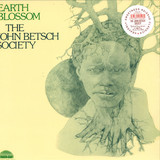
The John Betsch Society - Earth Blossom

2024 Repress

180 Gram, Tip On Sleeve RSD version of this classic. One of the rarer records of the mythical Strata East albums is finally reissued for the first time on Heavenly Sweetness!
The recording of Earth Blossom, the John Betsch Societys one and only album, seems something of an enigma nowadays. For even though Nashville is clearly one of the towns in the US with the highest number of recording studios, who would have thought that the capital of country music would give birth to one of the forgotten masterpieces of 1970s spiritual jazz. The path leading to the album starts in 1963 when John Betsch, originally from Jacksonville in Florida, arrives in Nashville to study at Frisk University. He is a young drummer and joins Bob Holmes trio. Holmes is one of the towns major jazz organists and pianists; he becomes Betschs mentor and, over the space of two years, John will play alternately with him and with the trumpeter Louis Smiths group. However, in 1965, John leaves town to go to the prestigious Berkeley University in Boston and do a two-year course along with his fellow debutants with names like John Abercrombie, Ernie Watts and Alan Broadbent. Two years later, he is invited by a pianist friend, Billy Chilf, to join the legendary singer/songwriter Tim Hardins group. Just after Woodstock, John Betsch and Tim record a psychedelic album Columbia will never release together with the members of the future group Oregon: Colin Walcott, Glen Moore, Paul McCandles and his friend Billy Chilf. But he soon leaves this group to return to Nashville where he hooks up again with his friend Bob Holmes. Two years later, he is accepted on Archie Shepp and Max Roachs famous course at the University of Massachusetts Amherst (UMASS) and for the next four years he participates in this collective of intellectuals and musicians under the aegis of the two masters.
During this period he returns to Nashville to form his Society whose music is obviously influenced by the Afrocentric ideas of the UMASS student and political movement. However, the album, recorded in one day and in one take, also bears the hallmark of their generations psychedelic experiences, and in the themes and playing of the musicians we can hear a less violent form of music than the radical free jazz of New York or Chicago. Nature and environmental themes are the inspiration behind tracks touched by the spirit of Coltrane but also of Flower Power.

After Amherst, John Betsch joins Marion Browns group in 1976, leaves Tennessee for good and makes his home in New York over the next ten years or so. He plays and records with Dollar Brand, Kalaparusha Maurice McIntyre and many others, before heading off to France. He has lived in Paris for the last twenty years and played in Steve Lacy, Mal Waldron and Archie Shepp bands, as well as forming groups of his own. He now lives in Paris and plays with many musicians/bands.

non in magazzino

Ordina ora e ordineremo l'articolo per te presso il nostro fornitore.


Last In: 10 years ago
GAF & The Love Supreme Arkestra - Ganzfeld

After the resounding success of their last album "Garden Island," released in 2021, the octet hailing from Tenerife is back with a new album titled "Ganzfeld."
While "Garden Island" drew inspiration from the philosophy of César Manrique and his groundbreaking ecological work on the island of Lanzarote, for this new album, Gaf & The Love Supreme Arkestra turn their creative gaze to the lowland areas of northern Tenerife aka Isla Baja (the low island). Here, they envision a retro-futuristic soundtrack for a misty coastal drive, filled with humid atmospherics and expansive jams featuring their trademark blend of avant-jazz, psychedelia, and freestyle rock.
Evoking a natural synergy to the proceedings, this new work presents the octet in a more ethereal tip than its predecessor. Saxophones, trumpet, bass, guitar, synths and marimba come together with added winds (Herreño and Vietnamese flutes) to create a wide spectrum of auditory escapism that, were it not for the band’s aforementioned natural instincts could result into a nightmarish vision. Instead they create an holistic esoteric sound where sea and earth come together in ecstatic ways conjuring images of peace and menace whilst never letting their raw, explosive energy go unchecked.
Another standalone work from a band that rejects banality, constant in their pursue of experimentation at the edge of the Atlantic ocean. Drive on!

non in magazzino

Ordina ora e ordineremo l'articolo per te presso il nostro fornitore.


Last In: 21 months ago
Various - LEFTO PRESENTS JAZZ CATS VOLUME 3 LP 2x12"

Limted version on 2LP transparent violet vinyl in gatefold sleeve, 300 copies! ‘Lefto presents Jazz Cats' is back with volume 3 and still doing what it does best: putting you in the front row of what the thriving Belgian jazz scene currently has to offer and revealing a melting pot of the musical talent.


'Lefto presents Jazz Cats' is back with volume 3 and still doing what it does best: putting you in the front row of what the thriving Belgian jazz scene currently has to offer and revealing a melting pot of the musical talent coming out one of the smallest countries in Europe. Never change a winning team they say, so we're happy to have Belgian DJ and eclectic connoisseur Lefto on board again.

Although you expect thecompilation to be talking jazz, volume 3 explores a broader array of styles, genres, and sounds than ever before, arriving at a point where the 'young cats' of today don't bother no more. It may focus on the Belgian scene, but let's face it, seeing the influences, this one could be compiled from all over the world. From the empowering and bittersweet voices of Oriana Ikomo and Adja, over the more acoustic-electronic productions of Moodprint, Ciao Kennedy, Kassius and echofarmer. It's even expanding the Jazz Cats universe to dub and bass-heavy tracks with Kin Gajo and Le Ministère, Ethio-jazz from Azmari, while sending you back to earth with bodies' swirling sax and drums. That saxophone still rings in your ears when you end up in the orbit of the march-like drums of Bodem, Orson Claeys' piano testing your ability to follow him, slamming the breaks to go smooth cruisin' with HONEY (Morricone meets Khruangbin, anyone?), to crashing in a raging tempo on that last track of Bruno x Soet x Moene. And there you are, back with us.


2018's 'Lefto presents Jazz Cats' included tracks from some of Belgium's biggest hitters, including Black Flower, STUFF. De Beren Gieren and Glass Museum who have all gone on to receive global acclaim. The album was given the accolade of 'Album of the Week' on Worldwide FM and also received further radio support from Jazz FM in addition to numerous glowing reviews. The 2022 follow-up 'Jazz Cats volume 2' paved the way for a new generation inspired by its peers, entering another era of very talented individuals and collectives. Maybe even more so than 4 years before. It uncovered a beautiful balance of more established but also obscure musicians and artists. Opening up to electronics and dance, enter bands like ECHT!, Stellar Legions and TUKAN. Thrilling innovative soundscape grooves and jazz fusion with Bandler Ching and L?p?GangGang, not to forget about the weaving musical odyssey that is M.CHUZI. In addition, there's the balanced unease of One Frame Movement, the laidback 'acoustic electronica' of Boombox Experiments, the classic funky jazz stylings of Cargo Mas and cinematic The Brums, all of these have set volume 2 on the map as an essential release for any jazzhead with a passion for new sounds.

Tastemaker, selector, curator, DJ and producer, these words often get mentioned when Lefto's name pops up in discussions. And rightly so. If you've ever had the pleasure to listen to one of his incredible Boiler Room sets or one of his many radio shows, you'll know why. Famed for his gloriously eclectic taste on the decks, he switches effortlessly between hip hop, funk, breaks, neck-snapping beats, future bass, South-American influences, bruk riddims, some wild African rhythms and of course, jazz.

Growing up as a child, his father would have the sounds of jazz flowing through the speakers. Which led him to bars around town to hear the latest jazz ensembles. Falling in love with the genre, he would later refine his knack for record digging and fine ear for music working at Belgium's legendary Music Mania record store in his hometown Brussels. Which makes that Lefto is consistently a couple steps ahead. He doesn't wait for the next thing to land in his lap, but actively seeking it out.

Lefto on Jazz Cats volume 3:
"Another release in less than two years! I am very impressed by the amount of creative "jazz" talent we've managed to compile over the last couple of years. Thanks to the internet, young musicians find inspiration from around the globe and incorporate diverse influences into their work. Given the history and heritage of jazz in this country, it has managed to create a healthy jazz scene supported by festivals, venues, press, and labels. Therefore, I am very proud to present to you the thirdinstallment of Jazz Cats. This compilation is dedicated to the young and hardworking musicians who are the present and the future of Belgium's jazz scene."

pre-ordina ora03.05.2024

dovrebbe essere pubblicato su 03.05.2024


Last In: 2026 years ago
Kepler is Free - Second Light LP

Kepler is free” represent the brand new Athenian Urban Jazz scene in full. You may say that they actually started the whole scene with their debut album "Teegarden" by Veego Records, an instant sold out! Voted by local music portals as one of the best albums of 2020 and probably one of the best debuts ever when it comes to the Greek jazz game. “Kepler Is Free” jazz rock ensemble makes expansive music that straddles the line between '70s soul-jazz, alternative hip-hop, and experimental electronica.

The name of the band is inspired by a retired space telescope launched by NASA to discover Earth-size planets orbiting other stars. Named after astronomer Johannes Kepler. Founded in November of 2018 by Sokratis Tsentoglou (drums) who gathered George Migdanis (electric guitar), Nikiforos Nugent (keys), Spyros Zardas (trumpet) and Vasilis Alexopoulos (bass guitar), they all came together from different musical backgrounds in order to create original and groundbreaking material.

Commuting over their shared love of jazz and hip-hop, they composed their debut album, “Kepler”, with five tracks that highlighted their love for the music of GoGo Penguin, Badbadnotgood and Alfa Mist.

The fact that all the members were young and had not played in other Jazz bands before was something that shook the Greek Jazz community. ''Second Light'' was recorded in difficult conditions and was delayed quite a while until it was finished due to the pandemic.

The band played a handful of sold out shows in Athens over the last few months proving with their performance and the attendance that the band created a crossover from Jazz to pop audience. "Juno" track was a smash hit on legendary "En Lefko'' Radio station over the last two years. Worth to mention that just a month before the release of their second album Kepler is Free collaborated with LEX, one of the most famous rappers in Greece with the "Spike Lee" track.

non in magazzino

Ordina ora e ordineremo l'articolo per te presso il nostro fornitore.


Last In: 2 years ago
DEATHCHANT - THRONES LP

Deathchant

THRONES LP

12inchEZRDR159
Riding Easy
10.11.2023

LP SHIPPING ONLY / CD DELAYED “This is definitely the most honest and mature record Deathchant has ever made.” That’s Deathchant vocalist and guitarist T.J. Lemieux talking about the band’s third and latest album, Thrones. Think of it as not just the follow-up to 2021’s Waste, but the other side of the coin. “While Waste and our self-titled album touched on similar themes, they were sort of from a problem standpoint,” he explains. “Thrones is full of reflection, self-realization, and solutions for moving forward and conquering those problems.” Which isn’t to say that Deathchant have gone soft. Far from it, dude. In fact, Thrones just might be their heaviest record thus far. The band’s seamless swirl of classic rock guitar harmonies, syrupy sludge, blues boogie and psych bombast has reached a thrilling new apex as Lemieux spins high-powered tales of reckoning from beyond the wall of sanity. Thematically, Lemieux and his bandmates—bassist George Camacho, guitarist Doug Stuckey and drummer Joe Herzog—peel back the veneer of self-delusion to expose the fork in the road. “Thrones is meant to represent things that rule you, things you worship, things you rely on or think you need,” Lemieux says. “Sometimes those things make you feel in control, safe, on top of the world like you're in power—which over time often proves untrue.” Witness lead single “Mirror”: Kicking off with gleaming Lizzy-isms, the song rumbles into a thick groove overlaid with lysergic fireworks that conjure the shaggy European movers of decades past. “‘Mirror’ is the key to the whole Thrones theme,” Lemieux explains. “It’s about looking inward to realize what's ruling you, what's consuming you, and how delusional you've been about those things. Your sense of self is so damn important, and fully facing your truths is not an easy thing to do. It’s admitting that you’ve intentionally dulled and quieted your mind to distract, avoid and run from yourself, from memory, from loss and truth. At some point, you have to face that shit.” The languid and dreamy “Mother Mary” is also crucial to Thrones’ trajectory. “If the album was a book, ‘Mirror’ would be the first chapter and ‘Mother Mary’ would be the last chapter, though they’re not the first and last track for sonic reasons,” Lemieux explains. “‘Mirror’ is saying, ‘I’m looking inward because some things need to change,’ while ‘Mother Mary’ is saying, ‘Okay, things are fucked and have gone way too far but now we have this understanding—and acknowledging things is key to overcoming.’” Thrones was recorded live in a cabin in the remote mountain community of Frazier Park, CA, with trusty engineer Steve Schroeder (a.k.a. Schroeds). “We moved in for a week, rehearsed a bit and went for it,” Lemieux says. “Each tune got three or so takes, but we nailed ‘Mother Mary’ and ‘Canyon’ right away.” Overdubs were done at the cabin, Schroeder’s Studio 3, and Lemieux’s place. The album was produced by Lemieux and Schroeder. “Overall, it’s a pretty dark record,” Lemieux says. “It's serious and leans into heavy themes, sometimes using metaphor and imagery to soften those blows, but sometimes it hits direct. It’s positive, though—and cathartic. Forever riding on the line of total insanity and flirting with mental degradation. It’s our most realized and ambitious record to date.”

pre-ordina ora10.11.2023

dovrebbe essere pubblicato su 10.11.2023


Last In: 2026 years ago
Black Spiders - Black Spiders LP

Black Spiders

Black Spiders LP

12inchDRLP21006B
Dark Riders
03.11.2023

Repress of the sold out Record Store Day release, this time on a different colour. Black Spiders – Those trusted and true sons of the north are back. “We knew the new album had to be special. We’ve been away for a while. The first album was a straight shot, the second on the rocks, with this new one we had to kick down the brewery doors!” Pete Spiby. Back in June of 2017, Sheffield rock beasts Black Spiders waved goodbye to an army of loyal fans with some sonically charged shows before retreating into the shadows. And then, in November of last year, with the world in the grips of the Coronavirus pandemic and after a long year of very little fun from out of the silhouettes they returned with ‘Fly In The Soup’, the first new Black Spiders music in 6 years. Exactly the feel-good shot in the arm the world needed, while we await that other vaccine. The seeds of the Black Spider return were actually planted last summer, when singer and guitarist Pete Spiby began taking to guitarist Ozzy Lister to start writing new material and before they knew it, they had amassed the best part of 40 songs in a very short period of time which they whittled down. And then the pandemic hit. “It’s certainly been a strange process, in unfamiliar territory,” explains Pete. “We started to look at how we could do it given the restrictions and not only that, but we had to replace our original drummer too. For us and probably most other bands, we would usually take a riff or song idea to a rehearsal and thrash it out ‘till we either had something or it ended up in the song graveyard! This time around we couldn’t do that, so myself, Ozzy and on occasion Adam Irwin (bass player) started to send ideas back and forth until we had something to work with in GarageBand. We got to a point where we had enough song ideas with basic structure to go into a studio. It was at this point when we had to look for a new drummer.” With former drummer ‘Tiger’ Si Atkinson unavailable to play, with a week or two of grooming, the band took a chance on Planet Rock DJ Wyatt Wendel to occupy the drum stool. “I've never joined or worked with a band in this way EVER,” laughs Wyatt. “2020 certainly made it surreal. “A Pete/Ozzy writing session at the beginning of the year had produced some promising results, but it felt like barriers were popping up everywhere,” explains bassist Adam Irwin. “We started talking about how we could use technology such as GarageBand to help, and slowly but surely the song writing gathered pace. It was time to hook up with our old producer Matt Elliss and try these new songs out in the studio. “Heading into the studio to record songs we’d written but never played together, with a drummer that we’d never met, is one of the stranger experiences I’ve had while being in a band. Thankfully, Wyatt has turned out to be an excellent addition, who despite his faults (loud, southern) has fit right into the band dynamic. Covid has made life really tough for so many of us in our industry. And yet, this new way of song writing has been liberating, this is the most consistent and prolific we’ve ever been, and I am immensely proud of this album.” Against all of the odds, Black Spiders have crafted an album that features 13 tracks of high-energy, feel-good rock n’roll contrasted by demonic doom that despite the disjointed, isolated way it was recorded. It sounds like a band, firing on all cylinders. “We had to dig down deep to pull out some gems and what would we want from Black Spiders,” questions Pete. War, vengeance, mental health, death, conservation & climate change, where are we from? Relationships, friendships, our flaws. Where are we going? Alien life and Mother Earth - some of which made the record.” Kicking off with the aforementioned ‘Fly In The Soup’ single, this 3rd ST long-player wastes no time in grabbing you by the scruff of the neck and dragging you through an album where good times, hooks and riffs are not in short supply, but the doom-drenched likes of ‘Wizard Shall Not Kill Wizard’ and the psychedelic groove of album closer ‘Crooked Black Wings’ give us an album of many moods and dynamics and a reason to be cheerful in 2021. And why does the album have no title? “It wasn’t hard picking a title for the album, as we decided that the focus should be on the band, not the album title, so we decided not to have one. Let the music do the talking....

pre-ordina ora03.11.2023

dovrebbe essere pubblicato su 03.11.2023


Last In: 2026 years ago
Avilynn - Five Million Sunsets EP

As a follow-up to the debut EP; Anaesthesia, Avilynn is back with another dynamic four track EP; Five Million Sunsets, which is accompanied by a remix from Ostgut Ton’s Answer Code Request.

‘Why So Serious’ opens the project and focuses on dynamically evolving and unfurling drums, plucked synths and modulating percussion while expansive reverberations and nuanced echoes further instil dynamism throughout. Answer Code Request steps up next, shifting the focus to an aesthetically industrial feel, twisting elements of the original’s synthesis and high-octane drums into an ominous, subtly unfolding take on things.

Opening the flip-side is title-cut ‘Five Million Sunsets’ which sees Avilynn explore a more textural landscape, dropping the tempo significantly and introducing circling dub chords, earthy sub tones and menacing bass swells throughout. Last up to round out the release is ‘Your Eye Was Bigger Than The Other One’, here Avilynn focuses her musical theme around “a trippy experience where the person has a distorted reality’’, the composition laid out across three and a half minutes melds together choppy broken drums, eerie tones and bubbling synths alongside gritty distorted moments and metallic chimes.

About the label:

Life experiences in macro and micro; daily reveries and introspections; byproducts of clubbing and city life…converted into sonic frequencies.

The focus of the label is on releasing physical products and the use of the cityscape as the primary interface between artist and music listener. Access to Avilynn’s music and multimedia output is made possible through stickers scattered about different cityscapes which feature personal quotes and QR codes. You can find sticker locations via insta’s highlights at instagram.

non in magazzino

Ordina ora e ordineremo l'articolo per te presso il nostro fornitore.


Last In: 4 years ago
CARLTON MELTON - TURN TO EARTH 2x12"

Northern California psychedelic sorcerers Carlton Melton are brain surfers, mind trippers, … “psychlists,” if you prefer. The band will take your head for a ride, occasionally rushing at superluminal speeds through a wormhole or gliding softly on a gentle breeze in a leafy glade. Sometimes your brain needs to rage, and sometimes it needs to repose. For a decade and a half, the band has yo-yo’ed, almost schizophrenically, between these two modes: walloping space jams with furious guitar solos in one hemisphere of the brain and ethereal, feather-light splashdowns in the other. Not to mention a track here and there that builds from the latter into the former. But with two new releases in 2023, the band has evolved. Whether psych rock or ambient trance, their sound remains driving, organic, and flowing. With the addition of Anthony Taibi (White Manna, DDT), however, the group’s metal freak-outs are Hawkwindier and their droning kraut trances are Spacemen 3-er. In January, the quartet released the playfully spacey Resemble Ensemble, recorded in Taibi’s home studio 3D Light. October now sees the band Turn To Earth, a work with scents of Autumn, a season of death and transition. The cover art evokes a vine-covered, electric crucifix. The sound is, well, earthy but also gritty and striving towards change. The album was recorded in Fall 2022 and now harvested in Fall 2023. Phil Becker (Terry Gross, Pins Of Light) contributed drums and percussion to a few tracks on Turn To Earth, recording the album at El Studio in San Francisco.

With Becker at the helm, the synths have become more prominent (“Cosmicity,” “Roboflow,” “Migration”) and the tone heavier on the doom (“Cloudstorming,” “Unlock The Land,” title track): several moments could even serve as background music for epic dark fantasy films like Conan the Barbarian, Fire and Ice, or Heavy Metal. As exquisite as Turn To Earth is, Melton are best appreciated as a live act: their recordings as well as their gigs are largely improvised – not so much composed as birthed. And yet their most recent tour ended abruptly and perilously. The group had to cancel its final three shows once members were admitted to Arnhem hospital in the Netherlands. Five years later, reinforcements have strengthened the band and restocked its arsenal of great tracks. After the rockus interruptus of that 2018 tour and the tantric tease of the intervening Covid lockdown, Melton have some unfinished business. An October 2023 tour is poised to set the freshly minted quartet back onto the stages of Europe and within the cerebral folds of its fans. Turn To Earth, sure … but keep your head in outer space. Carlton Melton is: andy duvall – drums/gtr; clint golden – bass; rich millman – gtr/synth; and anthony taibi – synth/gtr.

pre-ordina ora06.10.2023

dovrebbe essere pubblicato su 06.10.2023


Last In: 2026 years ago
Silent Skies - Dormant LP 2x12"

Silent Skies

Dormant LP 2x12"

2x12inchNPR1252VINYL
Napalm Records
01.09.2023

Wann immer EVERGREY-Frontmann Tom S. Englund und der US-amerikanische Pianist/Komponist Vikram Shankar (Redemption, Lux Terminus) zusammenkommen und ihre Kreativität gemeinsam als SILENT SKIES nach außen kehren, entsteht Magie! Mit Dormant veröffentlicht das schwedisch-amerikanische Cinematic-Pop-Duo nun das nächste, magische Stück Musik. Das dritte Studioalbum von Englund und Shankar erscheint am 1. September 2023 über Napalm Records. Getragen von vertonten Emotionen und skandinavischer Melancholie reiht sich Dormant in die klangliche Welt der vorherigen Alben Nectar (2022) und Satellites (2020) ein und bietet atemberaubende Klaviermelodien, atmosphärische Keyboards, weitläufige Soundlandschaften und eindringlich schöne und intensive Vocals auf zehn Eigenkompositionen, begleitet von mehreren Bonustracks. Für Letztere haben SILENT SKIES bekannte Klassiker gecovert, unter anderem von Iron Maiden und Linkin Park, und diese an ihren ganz eigenen, unverkennbaren Sound angelehnt.
Auf Dormant lädt der atmosphärische Eröffnungstrack „Construct"" die Hörer dazu ein, die beiden Musiker auf einer gefühlvollen Reise zu begleiten. „New Life“ schlägt hingegen dunklere Pfade ein. Englunds einfühlsamer Gesang spricht direkt zur Seele und harmoniert perfekt mit Shankars ausgefeilter Instrumentierung, die von zartem Piano getragen und einer einnehmenden Produktion unterstrichen wird. Das harmonische „Churches"" sowie das Pop-inspirierte „Just Above The Clouds"" – Letzteres mit einem fesselnden Solo des Leprous/Musk Ox-Cellisten Raphael Weinroth-Browne – bauen sich zu einem hypnotischen Tagtraum auf, um in den gefühlvollen Tönen von Dormant zu versinken. Einfühlsam kreieren „Reset"" und „Tides"" schier endlose melancholische Klanglandschaften, während das ergreifende „The Real Me"" mit elektronischen Tönen eine weitere Facette des Albums aufzeigt.
Die durch und durch stimmige Zusammenarbeit beider Künstler bildet das Fundament aller SILENT SKIES Kreationen. Durch viel Feingefühl und Liebe zum Detail, gepaart mit tiefgründigen, ausdrucksstarken Lyrics, entsteht ein einzigartiger Charakter, der mit jedem Ton die Handschrift von Englund und Shankar trägt. Auf das tief bewegende „Light Up The Dark"" und den Titeltrack „Dormant"" folgt mit „The Last On Earth"" die letzte Eigenkomposition des Albums.
Das dritte Werk von SILENT SKIES ist melancholisch und beruhigend, aber auch sprudelnd und glühend – es erweitert das klangliche Universum des Duos in alle Richtungen. Dormant reflektiert das Leben selbst und ist das Ergebnis mutiger klanglicher Experimente in Verbindung mit genau der künstlerischen Ästhetik, die SILENT SKIES auszeichnet. Mit ihrer Musik schreiben Tom S. Englund und Vikram Shankar so intensive Geschichten wie das Leben selbst und erreichen damit Menschen in unterschiedlichsten Lebenslagen mit verschiedensten musikalischen Vorlieben."

pre-ordina ora01.09.2023

dovrebbe essere pubblicato su 01.09.2023


Last In: 2026 years ago
King Kashmere & Alecs DeLarge - The Album To End All Alien Abductions LP 2x12"

The adequately titled ‘The Album To End All Alien Abductions’ sees UK stalwart
King Kashmere and producer/rapper extraordinaire Alecs DeLarge unite for a 24-
track ride through an epic space age boom bap odyssey.
“F**k with your boy Judas Ascariot, who came back swinging - whipping the
super chariot” declares a triumphant King Kashmere on the album opener ‘Angel
Strike’, proving he hasn’t lost a step since his last full length rap project,
#LP4080 dropped back in 2017.
Thematically Kash’s lyrics are routed in sci-fi and Jack Kirby era comic lore,
but on cuts such as ‘Old Earth’ (an ode to his Mother and coming of age on a
North London council estate and ‘House of Cards’ (an exploration of mental
health) the Iguana Man shows a rare glimpse into the man behind the freshly
pressed super suit.
Several cuts also see Alecs stepping from behind the boards to join Kashmere
on mic duties, a pairing best displayed on the dusty bubbler ‘Most Blunted’ in
which the duo trade verses in a puff puff pass of lyrical spliff boxing.

[a] 01 - Worldwide [Intro]


[i] 09 - Inside [Skit]

[k] 11 - £££ For Beats! [Skit]

[m] 13 - Blue [Instrumental]

[o] 15 - Hollywood Feat. Fliptrix [Skit]


[r] 18 - Virus World [Instrumental]


[x] 23 - Deepspace Slime [Outro]
[y] 24 - Old Earth [Remix]

pre-ordina ora30.06.2023

dovrebbe essere pubblicato su 30.06.2023


Last In: 2026 years ago
Sasha - Gameovr

Sasha

Gameovr

12inchWGVINYL43
Watergate
17.03.2023

2023 Repress

Sasha continues to make this year his own as he drops his debut EP on Watergate, 'GameOvr'. The EP features two original tracks, including the long-awaited 'Trigonometry', and first class remixes from Cassy and La Fleur. After his recent critically acclaimed sell-out live shows at the Barbican and his 'Out Of Time' EP on Kompakt, not to mention gearing up for his RESISTANCE residency with John Digweed in Ibiza, Sasha officially confirms his debut release on Watergate Records. 'Trigonometry' has been a highlight in Sasha's sets in recent months and has sparked many a heated debate online, from excited pleas for a Track ID, to urgent demands for a release date. The track is as ethereal as it is compelling, constantly building up to the sublime break down and those iconic chords that have left ravers spellbound worldwide. Swedish born Berlin-based La Fleur puts her stamp on the remix, keeping the riff but adding gravitas with a rhythmic bassline. She's fast become a key player on the house and techno circuit, with a string of releases on the likes of Cocoon, Watergate, and Sasha's own Last Night On Earth imprint. 'GameOvr' shows the producer's tougher side; a strong techno track in keeping with Sasha's constant focus on the future, always exploring new directions, though his signature groove is still on board. Revered Panorama Bar resident Cassy, whose stunning album 'Donna' was one of 2016's outstanding releases, turns her hand to remixing the title track, delivering a harder edged driving cut with a heavier kick drum, echoing chords and hypnotic percussion. This EP marks yet another creative landmark in this, one of the most fruitful and exciting phases in Sasha's distinguished career.

non in magazzino

Ordina ora e ordineremo l'articolo per te presso il nostro fornitore.


Last In: 6 months ago
Menagerie - Many Worlds

Menagerie

Many Worlds

12inchFSRLP132
Freestyle Records
20.01.2023

Australian 9-piece Spiritual Jazz group Menagerie announce their highly anticipated third album 'Many Worlds', released 15th January 2021 on esteemed U.K label Freestyle Records.

Menagerie is the Melbourne-based Jazz ensemble founded by producer, songwriter, guitarist, DJ and recording artist Lance Ferguson, also the driving force behind The Bamboos, Lanu, Rare Groove Spectrum and Machines Always Win.

Recorded at Union Street Studio by award-winning engineer John Castle, 'Many Worlds' features some of Australia's finest musicians, including pianist Mark Fitzgibbon (a regular performer at Gilles Peterson and Patrick Forge's original Dingwalls sessions), drummer Daniel Farrugia and renowned saxophonist Phil Noy (The Bamboos).

Inspired by both the post-Coltrane generation of the 70's, labels like Strata-East, Impulse! and Tribe, along with the current 'New Wave Of Jazz', Menagerie aligns with the world of Kamasi Washington, Shabaka Hutchings and Nubya Garcia, whilst also bringing their own unique twist.

Lead single 'Free Thing' leans heavily into the spiritual side of the band's sound. The hypnotic spoken word-poem is evocative of The Last Poets, an earthy yet futuristic meditation on the universal theme of freedom itself, set to a backdrop of insistent percussion, double bass and brooding piano voicings.

'Hope' carries forward the sound of spiritual jazz into the 21st century, with its epic vocal harmonies and melodic fanfare, it is an uplifting anthem for this period of global worldwide upheaval and uncertainty.

The title track 'Many Worlds' is a perfect example of how Menagerie incorporates their myriad influences, but manage to create a sound that feels uncannily fresh and contemporary. Book-ended by ambient, ethereal sections, the slow-burning groove builds over its 11-minute duration to create a standout crossover track.

Menagerie have received airplay and radio support from Gilles Peterson (BBC6/Worldwide FM), Don Letts (BBC6), Jamie Cullum (BBC Radio 2), Simon Harrison, Paul Miller and Ennio Styles (3RRR).

'Many Worlds' will be released on legendary U.K imprint Freestyle Records - home to jazz contemporaries Courtney Pine, Jessica Lauren, and keyboard legend Brian Auger.

non in magazzino

Ordina ora e ordineremo l'articolo per te presso il nostro fornitore.


Last In: 3 years ago
Levon Vincent - Silent Cities LP (Tape)

repress

Levon Vincent returns with his fourth full-length studio album Silent Cities a striking departure from his previous records. This, his first release experimenting with the cassette format, Silent Cities is a kind of mixtape through more private moods and personal pitches (literally given Levon’s non-standard tunings).

While Levon has always pro
duced dance floor jams with the intention of raising people’s heart rates, Silent Cities began with 72 bpm: his average resting heart rate, and the concept of tuning the music he was making to his own body rather than increasing anything. This brought the tempos down to 72 bpm or even half of that, at 36bpm. Programming the record during the empty cityscape of Berlin lockdowns, this is the first time Levon’s created an album for the home stereo or for headphone listening whilst navigating through a city. A mixtape specialist in his youth; he was always wanted to play with the cassette format. The results are sure to delight any listener, with the ever-present ambient, krautrock, shoegaze, hip-hop and electro influences coming to the foreground on this work.

“I was expanding further along the lines of a surprise favourite from my previous LP, a song called She Likes To Wave To Passing Boats which was not a 4 on-the-floor piece to play in clubs but a more impressionistic piece of music that I wrote to expound some emotions one day” says Levon. “It was a song written using just intonation. I really love how warm the pure 4ths sound, so when working on the new LP Silent Cities I decided to use my own tunings”.

Historically, the use of just intonation has meant that such instruments could sound "in tune" in one key but at the expense of more dissonance in the other keys. None of the songs on Silent Cities use standard Western equal temperament, Levon created his own scale designs coupled with the ancient ratios found in just intonation.

Born in Houston in 1975, Levon’s life changed dramatically when his parents moved their family to New York in 1981, uprooted from what he knew, the shock, the change from Houston to New York at 6 years old, is referred to constantly in Levon’s Musical output over the years. Levon's family moved houses in and around NYC from 1981 -2010, never more than a mile or two from the WTC. He lived on the Lower East Side during his teenage years and early 20s. This time period and this locale are also a big theme recurrent in his music as he tries to convey how the "downtown" lifestyle and culture-melding affected him so much at a tender age. He cut his teeth working in record shops around lower Manhattan, and while working at the Halcyon Record shop in Brooklyn he (alongside DJ Jus-Ed) was instrumental in creating the wave that came to be known as the "NYC House Renaissance" circa 2010. During the Y2K years he studied 20th C post-minimalism at Purchase college of New York under James McElwaine (who tangentially produced Man Parrish’s Self-Titled proto-hip-hop debt LP). Levon was fortunate to study theory with avant-garde composer Dary John Mizelle and orchestration under conductor Joel Thome. He undertook masterclasses with Philip Glass and also served as intern for John Kilgore, engineer for Steve Reich, where he was present for notable mix sessions such as “Violin Phase.”

Post-minimalism clearly remains an influence not to mention the early sampler stars of 80s freestyle and synth pop. Mixing such far-reaching influences is something Levon executes tremendously well. The first track Everlasting Joy moves at a head nodding 96 BPM tempo, reflecting formative influences like Paul Hardcastle’s Rainforest or Art Of Noise’s Moments in Love. “Those types of songs were a big eye opener for me as a youth, because it was where I realised songs in popular culture didn’t have to be kept to just 3 minutes, and they didn’t require vocals either. So, Everlasting Joy is a song with that intention, one that might be radio-friendly, despite the long arrangement and without vocals. You could say it was inspired by 107.5 in NY because that was a station I listened to a lot in the 1980’s.”

The majority of demos on Silent Cities were recorded before Covid-19 hit the world - when Levon had found a studio space outside of home in his adopted city of Berlin. It was a career first - working on music outside the bedroom. This riding the train or bicycling ‘going to work’ in Berlin opened up a new mood in his music, using the time back and forth to be inspired - commuting as an NYC transplant who still feels as a tourist in Berlin, with a pair of headphones, looking out the window on the train, or stopping on bridges and parking his bike to enjoy Berlin's skyline and horizon. Then, the pandemic struck and “work” came to a halt. Levon had recorded so much material during that year in the studio out of house it seemed like an inflection point for him to lighten the burden of the possessions he was carrying.

“People close to me have watched me give away synths and hardware regularly and I have given away my record collection every few years for my whole life. As a struggling artist in my 20s who had worked in record stores that whole time, I learned that moving constantly with 12k records just wasn't the way to live. So, in light of the pandemic, I set up a shop online, and sold all my music equipment. I also created a separate shop for all my sneakers and clothes. Easy come, Easy go. This provided me with a slow drip type of income that carried me quite well through the pandemic and it allowed me to focus on my own art and music. Getting rid of all my possessions felt like a weight being lifted from my shoulders and I was able to stay the course and remain committed to the music. I needed a further 2 years to mix and arrange the LP. If it weren’t for the pandemic, I would not been able to make this type of LP, so in light of everything, I was able to turn a depressing time in to something lasting and musically very positive.”

You can hear how his approach to a cassette release retains the "Medium is the Message." ethos. Silent Cities is a spooling, warm piece about life memories and embodiment.

non in magazzino

Ordina ora e ordineremo l'articolo per te presso il nostro fornitore.


Last In: 18 months ago
STELLAR LEGIONS - STELLAR LEGIONS LP

Stellar Legions is four experienced space cadets from the Antwerp interstellar legion, led by Captain Andrew Claes (STUFF., BRZZVLL, Internal Sun). With a sound rooted in jazz, improv, hip-hop, dub and electronic music, brace yourself for an intergalactic trip through colourful musical worlds and allow yourself to be carried away to indefinable, otherworldly but always hospitable beacons.

Alongside Claes, the delegates on duty are all heroes from the Allied star: Bram Weijters (Raymond Van Het Groenewoud, Crazy Men), Klaas De Somer (Tourist Lemc, Selah Sue) and Fre Madou (ex-DAAU, Namid). With them, come stories and artifacts from the multidimensional cosmos to our beloved mother planet Earth and this autumn, they passionately present their first omnibus 'Stellar Legions', released 21st October via the groove-obssessed Sdban Ultra label.

The album consists of eight tracks recorded in the studio and live, resulting in one big cosmic experience that exhilarates down to every last arrangement. From Claes' twisted sax on the semi-electronic ecstatic dream world that is an 'An Arp in Tunisia' to the jazzy snatches of 'Wessel' where De Somer's hurried drum patterns and Weijters frenzied keyboard solos catch light, Stellar Legions unites the adventure and improvisation of jazz with contemporary sounds.

At the core of the Stellar Legions sound is a rhythm section Sly & Robbie would have approved of: loose and sticky, grinding and unwinding: De Somer's drums fizz with expectation while the relentless bass strokes from Madou provide the beating pulse. It's fresh, it's raw and it keeps us listening, grooving and wanting more. Elsewhere, 'Odyssey' is a cataclysmic mix of feverish sounds and melodies that take you to an extra-terrestrial place, while the live recording of 'Alcyone', basks in a spatial mix of futuristic grooves and ethereal soundscapes before album closer 'Covix', results in a spacious and wonderfully atmospheric affair.

Electronics wizard Andrew Claes has recorded music in a wide range of styles ranging from free jazz outfit Chaos of the Haunted Spire (duo with Teun Verbruggen) to techno icon Marco Bailey and New Wave hero, Marcel Vanthilt. In addition, he has collaborated with Zach Danziger, Zap Mama, Brussels Jazz Orchestra, Hermes Ensemble, Mauro Pawlowski, Josse De Pauw and many others and released music with the electro-jazz collective AAN/EOP and his solo project, Internal Sun.

Claes is also a teacher of 'Live Electronics' at the Conservatory of Antwerp and a doctorate in the arts, where he is currently investigating the possibilities of an electro-acoustic saxophone. He also regularly gives workshops on the Belgian synthesizer microcontroller platform, Axoloti. His latest achievement is AI-driven robot-jazz project 'BotBop' with Dago Sondervan and Kasper Jordaens, which explores the possibilities and limits of 'computer aided music performance'. Their latest project 'Integers & Strings' premiered at the Sònar festival in Barcelona in November 2021.

pre-ordina ora21.10.2022

dovrebbe essere pubblicato su 21.10.2022


Last In: 2026 years ago
Lee Tracy & Isaac Manning - Is it What You Want

As the sun sets on a quaint East Nashville house, a young man bares a piece of his soul. Facing the camera, sporting a silky suit jacket/shirt/slacks/fingerless gloves ensemble that announces "singer" before he's even opened his mouth, Lee Tracy Johnson settles onto his stage, the front yard. He sways to the dirge-like drum machine pulse of a synth-soaked slow jam, extends his arms as if gaining his balance, and croons in affecting, fragile earnest, "I need your love… oh baby…"

Dogs in the yard next door begin barking. A mysterious cardboard robot figure, beamed in from galaxies unknown and affixed to a tree, is less vocal. Lee doesn't acknowledge either's presence. He's busy feeling it, arms and hands gesticulating. His voice rises in falsetto over the now-quiet dogs, over the ambient noise from the street that seeps into the handheld camcorder's microphone, over the recording of his own voice played back from a boombox off-camera. After six minutes the single, continuous shot ends. In this intimate creative universe there are no re-takes. There are many more music videos to shoot, and as Lee later puts it, "The first time you do it is actually the best. Because you can never get that again. You expressing yourself from within."

"I Need Your Love" dates from a lost heyday. From some time in the '80s or early '90s, when Lee Tracy (as he was known in performance) and his music partner/producer/manager Isaac Manning committed hours upon hours of their sonic and visual ideas to tape. Embracing drum machines and synthesizers – electronics that made their personal futurism palpable – they recorded exclusively at home, live in a room into a simple cassette deck. Soul, funk, electro and new wave informed their songs, yet Lee and Isaac eschewed the confinement of conventional categories and genres, preferring to let experimentation guide them.

"Anytime somebody put out a new record they had the same instruments or the same sound," explains Isaac. "So I basically wanted to find something that's really gonna stand out away from all of the rest of 'em." Their ethos meant that every idea they came up with was at least worth trying: echoed out half-rapped exhortations over frantic techno-style beats, gospel synth soul, modal electro-funk, oddball pop reinterpretations, emo AOR balladry, nods to Prince and the Fat Boys, or arrangements that might collapse mid-song into a mess of arcade game-ish blips before rallying to reach the finish line. All of it conjoined by consistent tape hiss, and most vitally, Lee's chameleonic voice, which managed to wildly shape shift and still evoke something sincere – whether toggling between falsetto and tenor exalting Jesus's return, or punctuating a melismatic romantic adlib with a succinct, "We all know how it feels to be alone."

"People think we went to a studio," says Isaac derisively. "We never went to no studio. We didn't have the money to go to no studio! We did this stuff at home. I shot videos in my front yard with whatever we could to get things together." Sometimes Isaac would just put on an instrumental record, be it "Planet Rock" or "Don't Cry For Me Argentina" (from Evita), press "record," and let Lee improvise over it, yielding peculiar love songs, would-be patriotic anthems, or Elvis Presley or Marilyn Monroe tributes. Technical limitations and a lack of professional polish never dissuaded them. They believed they were onto something.

"That struggle," Isaac says, "made that sound sound good to me."

In the parlance of modern music criticism Lee and Isaac's dizzying DIY efforts would inevitably be described as "outsider." But "outsider" carries the burden of untold additional layers of meaning if you're Black and from the South, creating on a budget, and trying to get someone, anyone within the country music capital of the world to take your vision seriously. "What category should we put it in?" Isaac asks rhetorically. "I don't know. All I know is feeling. I ain't gonna name it nothing. It's music. If it grabs your soul and touch your heart that's what it basically is supposed to do."

=

Born in 1963, the baby boy of nine siblings, Lee Tracy spent his earliest years living amidst the shotgun houses on Nashville's south side. "We was poor, man!" he says, recalling the outhouse his family used for a bathroom and the blocks of ice they kept in the kitchen to chill perishables. "But I actually don't think I really realized I was in poverty until I got grown and started thinking about it." Lee's mom worked at the Holiday Inn; his dad did whatever he had to do, from selling fruit from a horse drawn cart to bootlegging. "We didn't have much," Lee continues, "but my mother and my father got us the things we needed, the clothes on our back." By the end of the decade with the city's urban renewal programs razing entire neighborhoods to accommodate construction of the Interstate, the family moved to Edgehill Projects. Lee remembers music and art as a constant source of inspiration for he and his brothers and sisters – especially after seeing the Jackson 5 perform on Ed Sullivan. "As a small child I just knew that was what I wanted to do."

His older brother Don began musically mentoring him, introducing Lee to a variety of instruments and sounds. "He would never play one particular type of music, like R&B," says Lee. "I was surrounded by jazz, hard rock and roll, easy listening, gospel, reggae, country music; I mean I was a sponge absorbing all of that." Lee taught himself to play drums by beating on cardboard boxes, gaining a rep around the way for his timekeeping, and his singing voice. Emulating his favorites, Earth Wind & Fire and Cameo, he formed groups with other kids with era-evocative band names like Concept and TNT Connection, and emerged as the leader of disciplined rehearsals. "I made them practice," says Lee. "We practiced and practiced and practiced. Because I wanted that perfection." By high school the most accomplished of these bands would take top prize in a prominent local talent show. It was a big moment for Lee, and he felt ready to take things to the next level. But his band-mates had other ideas.

"I don't know what happened," he says, still miffed at the memory. "It must have blew they mind after we won and people started showing notice, because it's like everybody quit! I was like, where the hell did everybody go?" Lee had always made a point of interrogating prospective musicians about their intentions before joining his groups: were they really serious or just looking for a way to pick up girls? Now he understood even more the importance of finding a collaborator just as committed to the music as he was.

=

Isaac Manning had spent much of his life immersed in music and the arts – singing in the church choir with his family on Nashville's north side, writing, painting, dancing, and working various gigs within the entertainment industry. After serving in the armed forces, in the early '70s he ran The Teenage Place, a music and performance venue that catered to the local youth. But he was forced out of town when word of one of his recreational routines created a stir beyond the safe haven of his bohemian circles.

"I was growing marijuana," Isaac explains. "It wasn't no business, I was smoking it myself… I would put marijuana in scrambled eggs, cornbread and stuff." His weed use originated as a form of self-medication to combat severe tooth pain. But when he began sharing it with some of the other young people he hung out with, some of who just so happened to be the kids of Nashville politicians, the cops came calling. "When I got busted," he remembers, "they were talking about how they were gonna get rid of me because they didn't want me saying nothing about they children because of the politics and stuff. So I got my family, took two raggedy cars, and left Nashville and went to Vegas."

Out in the desert, Isaac happened to meet Chubby Checker of "The Twist" fame while the singer was gigging at The Flamingo. Impressed by Isaac's zeal, Checker invited him to go on the road with him as his tour manager/roadie/valet. The experience gave Isaac a window into a part of the entertainment world he'd never encountered – a glimpse of what a true pop act's audience looked like. "Chubby Checker, none of his shows were played for Black folks," he remembers. "All his gigs were done at high-class white people areas." Returning home after a few years with Chubby, Isaac was properly motivated to make it in Music City. He began writing songs and scouting around Nashville for local talent anywhere he could find it with an expressed goal: "Find someone who can deliver your songs the way you want 'em delivered and make people feel what you want them to feel."

One day while walking through Edgehill Projects Isaac heard someone playing the drums in a way that made him stop and take notice. "The music was so tight, just the drums made me feel like, oh I'm-a find this person," he recalls. "So I circled through the projects until I found who it was.

"That's how I met him – Lee Tracy. When I found him and he started singing and stuff, I said, ohhh, this is somebody different."

=

Theirs was a true complementary partnership: young Lee possessed the raw talent, the older Isaac the belief. "He's really the only one besides my brother and my family that really seen the potential in me," says Lee. "He made me see that I could do it."

Isaac long being a night owl, his house also made for a fertile collaborative environment – a space where there always seemed to be a new piece of his visual art on display: paintings, illustrations, and dolls and figures (including an enigmatic cardboard robot). Lee and Issac would hang out together and talk, listen to music, conjure ideas, and smoke the herb Isaac had resumed growing in his yard. "It got to where I could trust him, he could trust me," Isaac says of their bond. They also worked together for hours on drawings, spreading larges rolls of paper on the walls and sketching faces with abstract patterns and imagery: alien-like beings, tri-horned horse heads, inverted Janus-like characters where one visage blurred into the other.

Soon it became apparent that they didn't need other collaborators; self-sufficiency was the natural way forward. At Isaac's behest Lee, already fed up with dealing with band musicians, began playing around with a poly-sonic Yamaha keyboard at the local music store. "It had everything on it – trumpet, bass, drums, organ," remembers Lee. "And that's when I started recording my own stuff."

The technology afforded Lee the flexibility and independence he craved, setting him on a path other bedroom musicians and producers around the world were simultaneously following through the '80s into the early '90s. Saving up money from day jobs, he eventually supplemented the Yamaha Isaac had gotten him with Roland and Casio drum machines and a Moog. Lee was living in an apartment in Hillside at that point caring for his dad, who'd been partially paralyzed since early in life. In the evenings up in his second floor room, the music put him in a zone where he could tune out everything and lose himself in his ideas.

"Oh I loved it," he recalls. "I would really experiment with the instruments and use a lot of different sound effects. I was looking for something nobody else had. I wanted something totally different. And once I found the sound I was looking for, I would just smoke me a good joint and just let it go, hit the record button." More potent a creative stimulant than even Isaac's weed was the holistic flow and spontaneity of recording. Between sessions at Isaac's place and Lee's apartment, their volume of output quickly ballooned.

"We was always recording," says Lee. "That's why we have so much music. Even when I went to Isaac's and we start creating, I get home, my mind is racing, I gotta start creating, creating, creating. I remember there were times when I took a 90-minute tape from front to back and just filled it up."

"We never practiced," says Isaac. "See, that was just so odd about the whole thing. I could relate to him, and tell him about the songs I had ideas for and everything and stuff. And then he would bring it back or whatever, and we'd get together and put it down." Once the taskmaster hell bent on rehearsing, Lee had flipped a full 180. Perfection was no longer an aspiration, but the enemy of inspiration.

"I seen where practicing and practicing got me," says Lee. "A lot of musicians you get to playing and they gotta stop, they have to analyze the music. But while you analyzing you losing a lot of the greatness of what you creating. Stop analyzing what you play, just play! And it'll all take shape."

=

"I hope you understood the beginning of the record because this was invented from a dream I had today… (You tell me, I'll tell you, we'll figure it out together)" – Lee Tracy and Isaac Manning, "Hope You Understand"

Lee lets loose a maniacal cackle when he acknowledges that the material that he and Isaac recorded was by anyone's estimation pretty out there. It's the same laugh that commences "Hope You Understand" – a chaotic transmission that encapsulates the duality at the heart of their music: a stated desire to reach people and a compulsion to go as leftfield as they saw fit.

"We just did it," says Lee. "We cut the music on and cut loose. I don't sit around and write. I do it by listening, get a feeling, play the music, and the lyrics and stuff just come out of me."

The approach proved adaptable to interpreting other artists' material. While recording a cover of Whitney Houston's pop ballad "Saving All My Love For You," Lee played Whitney's version in his headphones as he laid down his own vocals – partially following the lyrics, partially using them as a departure point. The end result is barely recognizable compared with the original, Lee and Isaac having switched up the time signature and reinvented the melody along the way towards morphing a slick mainstream radio standard into something that sounds solely their own.

"I really used that song to get me started," says Lee. "Then I said, well I need something else, something is missing. Something just came over me. That's when I came up with 'Is It What You Want.'"

The song would become the centerpiece of Lee and Isaac's repertoire. Pushed along by a percolating metronomic Rhythm King style beat somewhere between a military march and a samba, "Is It What You Want" finds Lee pleading the sincerity of his commitment to a potential love interest embellished by vocal tics and hiccups subtlely reminiscent of his childhood hero MJ. Absent chord changes, only synth riffs gliding in and out like apparitions, the song achieves a lingering lo-fi power that leaves you feeling like it's still playing, somewhere, even after the fade out.

"I don't know, it's like a real spiritual song," Lee reflects. "But it's not just spiritual. To me the more I listen to it it's like about everything that you do in your everyday life, period. Is it what you want? Do you want a car or you don't want a car? Do you want Jesus or do you want the Devil? It's basically asking you the question. Can't nobody answer the question but you yourself."

In 1989 Lee won a lawsuit stemming from injuries sustained from a fight he'd gotten into. He took part of the settlement money and with Isaac pressed up "Saving All My Love For You" b/w "Is It What You Want" as a 45 single. Isaac christened the label One Chance Records. "Because that's all we wanted," he says with a laugh, "one chance."

Isaac sent the record out to radio stations and major labels, hoping for it to make enough noise to get picked up nationally. But the response he and Lee were hoping for never materialized. According to Isaac the closest the single got to getting played on the radio is when a disk jock from a local station made a highly unusual announcement on air: "The dude said on the radio, 107.5 – 'We are not gonna play 'Is It What You Want.' We cracked up! Wow, that's deep.

"It was a whole racist thing that was going on," he reflects. "So we just looked over and kept on going. That was it. That was about the way it goes… If you were Black and you were living in Nashville and stuff, that's the way you got treated." Isaac already knew as much from all the times he'd brought he and Lee's tapes (even their cache of country music tunes) over to Music Row to try to drum up interest to no avail.

"Isaac, he really worked his ass off," says Lee. "He probably been to every record place down on Music Row." Nashville's famed recording and music business corridor wasn't but a few blocks from where Lee grew up. Close enough, he remembers, for him to ride his bike along its back alleys and stumble upon the occasional random treasure, like a discarded box of harmonicas. Getting in through the front door, however, still felt a world away.

"I just don't think at the time our music fell into a category for them," he concedes. "It was before its time."

=

Lee stopped making music some time in the latter part of the '90s, around the time his mom passed away and life became increasingly tough to manage. "When my mother died I had a nervous breakdown," he says, "So I shut down for a long time. I was in such a sadness frame of mind. That's why nobody seen me. I had just disappeared off the map." He fell out of touch with Isaac, and in an indication of just how bad things had gotten for him, lost track of all the recordings they'd made together. Music became a distant memory.

Fortunately, Isaac kept the faith. In a self-published collection of his poetry – paeans to some of his favorite entertainment and public figures entitled Friends and Dick Clark – he'd written that he believed "music has a life of its own." But his prescience and presence of mind were truly manifested in the fact that he kept an archive of he and Lee's work. As perfectly imperfect as "Is It What You Want" now sounds in a post-Personal Space world, Lee and Isaac's lone official release was in fact just a taste. The bulk of the Is It What You Want album is culled from the pair's essentially unheard home recordings – complete songs, half-realized experiments, Isaac's blue monologues and pronouncements et al – compiled, mixed and programmed in the loose and impulsive creative spirit of their regular get-togethers from decades ago. The rest of us, it seems, may have finally caught up to them.

On the prospect of at long last reaching a wider audience, Isaac says simply, "I been trying for a long time, it feels good." Ever the survivor, he adds, "The only way I know how to make it to the top is to keep climbing. If one leg break on the ladder, hey, you gotta fix it and keep on going… That's where I be at. I'll kill death to make it out there."

For Lee it all feels akin to a personal resurrection: "It's like I was in a tomb and the tomb was opened and I'm back… Man, it feels so great. I feel like I'm gonna jump out of my skin." Success at this stage of his life, he realizes, probably means something different than what it did back when he was singing and dancing in Isaac's front yard. "What I really mean by 'making it,'" he explains isn't just the music being heard but, "the story being told."

Occasionally Lee will pull up "Is It What You Want" on YouTube on his phone, put on his headphones, and listen. He remembers the first time he heard his recorded voice. How surreal it was, how he thought to himself, "Is that really me?" What would he say to that younger version of himself now?

"I would probably tell myself, hang in there, don't give up. Keep striving for the goal. And everything will work out."

Despite what's printed on the record label, sometimes you do get more than one chance.

non in magazzino

Ordina ora e ordineremo l'articolo per te presso il nostro fornitore.


Last In: 3 years ago
Lee Tracy & Isaac Manning - Is it What You Want LP

As the sun sets on a quaint East Nashville house, a young man bares a piece of his soul. Facing the camera, sporting a silky suit jacket/shirt/slacks/fingerless gloves ensemble that announces "singer" before he's even opened his mouth, Lee Tracy Johnson settles onto his stage, the front yard. He sways to the dirge-like drum machine pulse of a synth-soaked slow jam, extends his arms as if gaining his balance, and croons in affecting, fragile earnest, "I need your love… oh baby…"

Dogs in the yard next door begin barking. A mysterious cardboard robot figure, beamed in from galaxies unknown and affixed to a tree, is less vocal. Lee doesn't acknowledge either's presence. He's busy feeling it, arms and hands gesticulating. His voice rises in falsetto over the now-quiet dogs, over the ambient noise from the street that seeps into the handheld camcorder's microphone, over the recording of his own voice played back from a boombox off-camera. After six minutes the single, continuous shot ends. In this intimate creative universe there are no re-takes. There are many more music videos to shoot, and as Lee later puts it, "The first time you do it is actually the best. Because you can never get that again. You expressing yourself from within."

"I Need Your Love" dates from a lost heyday. From some time in the '80s or early '90s, when Lee Tracy (as he was known in performance) and his music partner/producer/manager Isaac Manning committed hours upon hours of their sonic and visual ideas to tape. Embracing drum machines and synthesizers – electronics that made their personal futurism palpable – they recorded exclusively at home, live in a room into a simple cassette deck. Soul, funk, electro and new wave informed their songs, yet Lee and Isaac eschewed the confinement of conventional categories and genres, preferring to let experimentation guide them.

"Anytime somebody put out a new record they had the same instruments or the same sound," explains Isaac. "So I basically wanted to find something that's really gonna stand out away from all of the rest of 'em." Their ethos meant that every idea they came up with was at least worth trying: echoed out half-rapped exhortations over frantic techno-style beats, gospel synth soul, modal electro-funk, oddball pop reinterpretations, emo AOR balladry, nods to Prince and the Fat Boys, or arrangements that might collapse mid-song into a mess of arcade game-ish blips before rallying to reach the finish line. All of it conjoined by consistent tape hiss, and most vitally, Lee's chameleonic voice, which managed to wildly shape shift and still evoke something sincere – whether toggling between falsetto and tenor exalting Jesus's return, or punctuating a melismatic romantic adlib with a succinct, "We all know how it feels to be alone."

"People think we went to a studio," says Isaac derisively. "We never went to no studio. We didn't have the money to go to no studio! We did this stuff at home. I shot videos in my front yard with whatever we could to get things together." Sometimes Isaac would just put on an instrumental record, be it "Planet Rock" or "Don't Cry For Me Argentina" (from Evita), press "record," and let Lee improvise over it, yielding peculiar love songs, would-be patriotic anthems, or Elvis Presley or Marilyn Monroe tributes. Technical limitations and a lack of professional polish never dissuaded them. They believed they were onto something.

"That struggle," Isaac says, "made that sound sound good to me."

In the parlance of modern music criticism Lee and Isaac's dizzying DIY efforts would inevitably be described as "outsider." But "outsider" carries the burden of untold additional layers of meaning if you're Black and from the South, creating on a budget, and trying to get someone, anyone within the country music capital of the world to take your vision seriously. "What category should we put it in?" Isaac asks rhetorically. "I don't know. All I know is feeling. I ain't gonna name it nothing. It's music. If it grabs your soul and touch your heart that's what it basically is supposed to do."

=

Born in 1963, the baby boy of nine siblings, Lee Tracy spent his earliest years living amidst the shotgun houses on Nashville's south side. "We was poor, man!" he says, recalling the outhouse his family used for a bathroom and the blocks of ice they kept in the kitchen to chill perishables. "But I actually don't think I really realized I was in poverty until I got grown and started thinking about it." Lee's mom worked at the Holiday Inn; his dad did whatever he had to do, from selling fruit from a horse drawn cart to bootlegging. "We didn't have much," Lee continues, "but my mother and my father got us the things we needed, the clothes on our back." By the end of the decade with the city's urban renewal programs razing entire neighborhoods to accommodate construction of the Interstate, the family moved to Edgehill Projects. Lee remembers music and art as a constant source of inspiration for he and his brothers and sisters – especially after seeing the Jackson 5 perform on Ed Sullivan. "As a small child I just knew that was what I wanted to do."

His older brother Don began musically mentoring him, introducing Lee to a variety of instruments and sounds. "He would never play one particular type of music, like R&B," says Lee. "I was surrounded by jazz, hard rock and roll, easy listening, gospel, reggae, country music; I mean I was a sponge absorbing all of that." Lee taught himself to play drums by beating on cardboard boxes, gaining a rep around the way for his timekeeping, and his singing voice. Emulating his favorites, Earth Wind & Fire and Cameo, he formed groups with other kids with era-evocative band names like Concept and TNT Connection, and emerged as the leader of disciplined rehearsals. "I made them practice," says Lee. "We practiced and practiced and practiced. Because I wanted that perfection." By high school the most accomplished of these bands would take top prize in a prominent local talent show. It was a big moment for Lee, and he felt ready to take things to the next level. But his band-mates had other ideas.

"I don't know what happened," he says, still miffed at the memory. "It must have blew they mind after we won and people started showing notice, because it's like everybody quit! I was like, where the hell did everybody go?" Lee had always made a point of interrogating prospective musicians about their intentions before joining his groups: were they really serious or just looking for a way to pick up girls? Now he understood even more the importance of finding a collaborator just as committed to the music as he was.

=

Isaac Manning had spent much of his life immersed in music and the arts – singing in the church choir with his family on Nashville's north side, writing, painting, dancing, and working various gigs within the entertainment industry. After serving in the armed forces, in the early '70s he ran The Teenage Place, a music and performance venue that catered to the local youth. But he was forced out of town when word of one of his recreational routines created a stir beyond the safe haven of his bohemian circles.

"I was growing marijuana," Isaac explains. "It wasn't no business, I was smoking it myself… I would put marijuana in scrambled eggs, cornbread and stuff." His weed use originated as a form of self-medication to combat severe tooth pain. But when he began sharing it with some of the other young people he hung out with, some of who just so happened to be the kids of Nashville politicians, the cops came calling. "When I got busted," he remembers, "they were talking about how they were gonna get rid of me because they didn't want me saying nothing about they children because of the politics and stuff. So I got my family, took two raggedy cars, and left Nashville and went to Vegas."

Out in the desert, Isaac happened to meet Chubby Checker of "The Twist" fame while the singer was gigging at The Flamingo. Impressed by Isaac's zeal, Checker invited him to go on the road with him as his tour manager/roadie/valet. The experience gave Isaac a window into a part of the entertainment world he'd never encountered – a glimpse of what a true pop act's audience looked like. "Chubby Checker, none of his shows were played for Black folks," he remembers. "All his gigs were done at high-class white people areas." Returning home after a few years with Chubby, Isaac was properly motivated to make it in Music City. He began writing songs and scouting around Nashville for local talent anywhere he could find it with an expressed goal: "Find someone who can deliver your songs the way you want 'em delivered and make people feel what you want them to feel."

One day while walking through Edgehill Projects Isaac heard someone playing the drums in a way that made him stop and take notice. "The music was so tight, just the drums made me feel like, oh I'm-a find this person," he recalls. "So I circled through the projects until I found who it was.

"That's how I met him – Lee Tracy. When I found him and he started singing and stuff, I said, ohhh, this is somebody different."

=

Theirs was a true complementary partnership: young Lee possessed the raw talent, the older Isaac the belief. "He's really the only one besides my brother and my family that really seen the potential in me," says Lee. "He made me see that I could do it."

Isaac long being a night owl, his house also made for a fertile collaborative environment – a space where there always seemed to be a new piece of his visual art on display: paintings, illustrations, and dolls and figures (including an enigmatic cardboard robot). Lee and Issac would hang out together and talk, listen to music, conjure ideas, and smoke the herb Isaac had resumed growing in his yard. "It got to where I could trust him, he could trust me," Isaac says of their bond. They also worked together for hours on drawings, spreading larges rolls of paper on the walls and sketching faces with abstract patterns and imagery: alien-like beings, tri-horned horse heads, inverted Janus-like characters where one visage blurred into the other.

Soon it became apparent that they didn't need other collaborators; self-sufficiency was the natural way forward. At Isaac's behest Lee, already fed up with dealing with band musicians, began playing around with a poly-sonic Yamaha keyboard at the local music store. "It had everything on it – trumpet, bass, drums, organ," remembers Lee. "And that's when I started recording my own stuff."

The technology afforded Lee the flexibility and independence he craved, setting him on a path other bedroom musicians and producers around the world were simultaneously following through the '80s into the early '90s. Saving up money from day jobs, he eventually supplemented the Yamaha Isaac had gotten him with Roland and Casio drum machines and a Moog. Lee was living in an apartment in Hillside at that point caring for his dad, who'd been partially paralyzed since early in life. In the evenings up in his second floor room, the music put him in a zone where he could tune out everything and lose himself in his ideas.

"Oh I loved it," he recalls. "I would really experiment with the instruments and use a lot of different sound effects. I was looking for something nobody else had. I wanted something totally different. And once I found the sound I was looking for, I would just smoke me a good joint and just let it go, hit the record button." More potent a creative stimulant than even Isaac's weed was the holistic flow and spontaneity of recording. Between sessions at Isaac's place and Lee's apartment, their volume of output quickly ballooned.

"We was always recording," says Lee. "That's why we have so much music. Even when I went to Isaac's and we start creating, I get home, my mind is racing, I gotta start creating, creating, creating. I remember there were times when I took a 90-minute tape from front to back and just filled it up."

"We never practiced," says Isaac. "See, that was just so odd about the whole thing. I could relate to him, and tell him about the songs I had ideas for and everything and stuff. And then he would bring it back or whatever, and we'd get together and put it down." Once the taskmaster hell bent on rehearsing, Lee had flipped a full 180. Perfection was no longer an aspiration, but the enemy of inspiration.

"I seen where practicing and practicing got me," says Lee. "A lot of musicians you get to playing and they gotta stop, they have to analyze the music. But while you analyzing you losing a lot of the greatness of what you creating. Stop analyzing what you play, just play! And it'll all take shape."

=

"I hope you understood the beginning of the record because this was invented from a dream I had today… (You tell me, I'll tell you, we'll figure it out together)" – Lee Tracy and Isaac Manning, "Hope You Understand"

Lee lets loose a maniacal cackle when he acknowledges that the material that he and Isaac recorded was by anyone's estimation pretty out there. It's the same laugh that commences "Hope You Understand" – a chaotic transmission that encapsulates the duality at the heart of their music: a stated desire to reach people and a compulsion to go as leftfield as they saw fit.

"We just did it," says Lee. "We cut the music on and cut loose. I don't sit around and write. I do it by listening, get a feeling, play the music, and the lyrics and stuff just come out of me."

The approach proved adaptable to interpreting other artists' material. While recording a cover of Whitney Houston's pop ballad "Saving All My Love For You," Lee played Whitney's version in his headphones as he laid down his own vocals – partially following the lyrics, partially using them as a departure point. The end result is barely recognizable compared with the original, Lee and Isaac having switched up the time signature and reinvented the melody along the way towards morphing a slick mainstream radio standard into something that sounds solely their own.

"I really used that song to get me started," says Lee. "Then I said, well I need something else, something is missing. Something just came over me. That's when I came up with 'Is It What You Want.'"

The song would become the centerpiece of Lee and Isaac's repertoire. Pushed along by a percolating metronomic Rhythm King style beat somewhere between a military march and a samba, "Is It What You Want" finds Lee pleading the sincerity of his commitment to a potential love interest embellished by vocal tics and hiccups subtlely reminiscent of his childhood hero MJ. Absent chord changes, only synth riffs gliding in and out like apparitions, the song achieves a lingering lo-fi power that leaves you feeling like it's still playing, somewhere, even after the fade out.

"I don't know, it's like a real spiritual song," Lee reflects. "But it's not just spiritual. To me the more I listen to it it's like about everything that you do in your everyday life, period. Is it what you want? Do you want a car or you don't want a car? Do you want Jesus or do you want the Devil? It's basically asking you the question. Can't nobody answer the question but you yourself."

In 1989 Lee won a lawsuit stemming from injuries sustained from a fight he'd gotten into. He took part of the settlement money and with Isaac pressed up "Saving All My Love For You" b/w "Is It What You Want" as a 45 single. Isaac christened the label One Chance Records. "Because that's all we wanted," he says with a laugh, "one chance."

Isaac sent the record out to radio stations and major labels, hoping for it to make enough noise to get picked up nationally. But the response he and Lee were hoping for never materialized. According to Isaac the closest the single got to getting played on the radio is when a disk jock from a local station made a highly unusual announcement on air: "The dude said on the radio, 107.5 – 'We are not gonna play 'Is It What You Want.' We cracked up! Wow, that's deep.

"It was a whole racist thing that was going on," he reflects. "So we just looked over and kept on going. That was it. That was about the way it goes… If you were Black and you were living in Nashville and stuff, that's the way you got treated." Isaac already knew as much from all the times he'd brought he and Lee's tapes (even their cache of country music tunes) over to Music Row to try to drum up interest to no avail.

"Isaac, he really worked his ass off," says Lee. "He probably been to every record place down on Music Row." Nashville's famed recording and music business corridor wasn't but a few blocks from where Lee grew up. Close enough, he remembers, for him to ride his bike along its back alleys and stumble upon the occasional random treasure, like a discarded box of harmonicas. Getting in through the front door, however, still felt a world away.

"I just don't think at the time our music fell into a category for them," he concedes. "It was before its time."

=

Lee stopped making music some time in the latter part of the '90s, around the time his mom passed away and life became increasingly tough to manage. "When my mother died I had a nervous breakdown," he says, "So I shut down for a long time. I was in such a sadness frame of mind. That's why nobody seen me. I had just disappeared off the map." He fell out of touch with Isaac, and in an indication of just how bad things had gotten for him, lost track of all the recordings they'd made together. Music became a distant memory.

Fortunately, Isaac kept the faith. In a self-published collection of his poetry – paeans to some of his favorite entertainment and public figures entitled Friends and Dick Clark – he'd written that he believed "music has a life of its own." But his prescience and presence of mind were truly manifested in the fact that he kept an archive of he and Lee's work. As perfectly imperfect as "Is It What You Want" now sounds in a post-Personal Space world, Lee and Isaac's lone official release was in fact just a taste. The bulk of the Is It What You Want album is culled from the pair's essentially unheard home recordings – complete songs, half-realized experiments, Isaac's blue monologues and pronouncements et al – compiled, mixed and programmed in the loose and impulsive creative spirit of their regular get-togethers from decades ago. The rest of us, it seems, may have finally caught up to them.

On the prospect of at long last reaching a wider audience, Isaac says simply, "I been trying for a long time, it feels good." Ever the survivor, he adds, "The only way I know how to make it to the top is to keep climbing. If one leg break on the ladder, hey, you gotta fix it and keep on going… That's where I be at. I'll kill death to make it out there."

For Lee it all feels akin to a personal resurrection: "It's like I was in a tomb and the tomb was opened and I'm back… Man, it feels so great. I feel like I'm gonna jump out of my skin." Success at this stage of his life, he realizes, probably means something different than what it did back when he was singing and dancing in Isaac's front yard. "What I really mean by 'making it,'" he explains isn't just the music being heard but, "the story being told."

Occasionally Lee will pull up "Is It What You Want" on YouTube on his phone, put on his headphones, and listen. He remembers the first time he heard his recorded voice. How surreal it was, how he thought to himself, "Is that really me?" What would he say to that younger version of himself now?

"I would probably tell myself, hang in there, don't give up. Keep striving for the goal. And everything will work out."

Despite what's printed on the record label, sometimes you do get more than one chance.

non in magazzino

Ordina ora e ordineremo l'articolo per te presso il nostro fornitore.


Last In: 3 years ago
Joanna Macy & Anita Barrows - Be Earth Now (Selections From Rainer Maria Rilke's 'The Book Of Hours’)

This is a limited edition pressing of 500, 140-gram, black vinyl records in deluxe tip-on “old style” jackets. Exquisitely printed on textured, water color paper. Digital download included. Be Earth Now comprises forty minutes of potent poetic recitation by Joanna Macy and Anita Barrows from their seminal translation of Rainer Maria Rilke’s The Book of Hours. Channeled in a spiritual fervor in 1899, The Books of Hours remains a profound and highly prescient body of work. Rilke’s poems illuminate paths of embodied mysticism, passionately express ecological grief, and reveal the exquisite expanses of the human heart. The Book of Hours, and now Be Earth Now, offer a poetic map for navigating the heartbreak, rage, and soaring love that so many of us feel in these ecologically urgent and socially emergent times. Rilke’s poems surge with passion and pain for a world that was already teetering toward peril at the turn of the last century, due to the rapid industrialization of Europe, and humankind’s increasing alienation from nature. This work flowed through Rilke in a torrent with sometimes as many as five or six poems arriving in a single day, each self-complete and with no need for later revision. While truly mystical poetry, Rilke’s musings on spirituality overtly critique fundamentalism and organized religion. Instead, Rilke extolls what he finds sacred in the mundane and conjures a sense of wonder for both the more-than-human-world and simply for existence itself. So, who better to give voice to these mystic treasures than Joanna Macy and Anita Barrows? Not only because of their enchanted translations, but also because these women are unquestionably two of our righteous elders. Macy and Barrows have worked diligently for many decades, through art, activism, education, psychology, and spiritual practice, to bring some balance back to this world. The same world that Rilke pleaded with his God to sustain for “just a few more hours,” so that we might have time to mend our relationship with the natural world, to cherish and connect with what is good and real, and to possibly even learn to “be earth now.” A1 Anita Barrows Recites Selections from Rainer Maria Rilke's 'The Book of Hours' B1 Joanna Macy Recites Selections from Rainer Maria Rilke's 'The Book of Hours'

pre-ordina ora23.09.2022

dovrebbe essere pubblicato su 23.09.2022


Last In: 2026 years ago
Opus Kink - 'Til The Stream Runs Dry

Brighton sextet Opus Kink share their debut EP ‘‘Til The Stream Runs Dry’,
via Nice Swan Records (Sports Team, Pip Blom, FUR, English Teacher).
• Partnering up with the cult indie label for their first extended release, the
enigmatic collective - comprised of Angus Rogers, Sam Abbo, Fin Abbo, Jed
Morgans, Jazz Pope and Jack Banjo Courtney - lend a blend a dizzying
array of influences in their ever-evolving enigmatic style, producing an
experimental patchwork of explosive material that’s consistently earned
widespread plaudits since bursting onto the scene.
• With EP lead singles ‘I Love You, Baby’, ‘The Unrepentant Soldier’ and ‘Dog
Stay Down’ attracting praise from all corners of the press landscape (NME,
DIY, So Young, Dork, Clash, Gigwise), not to mention countless BBC 6
Music (Steve Lamacq, Lauran Laverne) spins, the six-piece are clearly
primed for a busy summer.
• Having already ticked off live dates alongside labelmates Malady and
Mandrake Handshake, in addition to a sold-out headliner at London’s
legendary 100 Club last month, the band have a slew of festival appearances
lined up in the months to come, as well as shows with FEET and Bull.
• Detailing their EP, Opus Kink stated: “You may begin by dipping one stained
and rancid toe, but you know that once those waters have been tasted
there’s only one way to go - into the stream, away down the valley like
flotsam and windfall. Here lie six songs of bad love, ill winds, possession,
stagnation and earthly delights.”
• “Horn-fuelled filth-funk, where punk & jazz combine in grimy circumstances” -
NME
• “A land where growled-jazz meets the blues in a showdown to end all
perceptions of genre… Opus Kink have succeeded in turning listeners on
their head” - So Young
• “A frenetic groove-filled glimpse of what’s to come” - DIY
• “Intense blast of guitar pop” - Clash
• “There is a sense that they are still only just beginning to hit their stride” - M
Magazine
 Tourdates - August 20 Beautiful Days, September 28 Oslo London, 29 Record
Junkee Sheffield, 30 YES (Pink Room), Manchester.

pre-ordina ora09.09.2022

dovrebbe essere pubblicato su 09.09.2022


Last In: 2026 years ago
Alex Rex - Mouthful Of Earth

Alex Rex

Mouthful Of Earth

12inchNEOLITHIC0008LP
Neolithic
05.08.2022

“Irreverent and playful” MOJO // “...an utterly distinctive, mental world.” The Financial Times // “From keening ballads to haunting waltzes, Paradise has never seemed stranger” Shindig // “There’s a buoyancy to even the most lacerating lines now, a liberating relief in pressing on” Uncut // Way back when, before the pandemic, and before the release of Alex Rex’s last album Paradise escaped the confines of lockdown, Alex Neilson took a break from the road and set about putting together a record of poems extracted from the collapsed goldmine of his brain. Returning to his experimental roots, Mouthful of Earth’s cutting and oft heart-wrenching stanzas are set to music largely from underground legends Alastair Galbraith, Richard Youngs and Alex’s cult experimental drone record Belsayer Time (originally released on Time Lag Records in 2006. This is the first time that this music has ever been made available digitally). And for one track, Alex reunites with ex-Trembling Bells mucker Lavinia Blackwall for some free-form experimental jazz, reminiscent of the more psychedelically unhinged moments of Cammell/Roeg´s Performance soundtrack. To quote Stuart Maconie’s sleeve notes for the record, “One of the first things I learned about Alex’s musical imagination and modus operandi was a joy in collaboration, and Mouthful Of Earth continues in a tradition that has seen him work with many kindred spirits across many genres; Bonnie ‘Prince’ Billy, Current 93, Jandek, Kan Mikami, Shirley Collins, Six Organs of Admittance, Josephine Foster and Baby Dee. The list is disparate and stellar, the results are always interesting and alive.” Continuing in the spirit of collaboration, Mouthful of Earth’s words and music are accompanied by a digital book of drawings by Kent-based visual artist, musician and art psychotherapist, Benjamin Prosser (Insta: @benjaminprosser). These are not so much literal illustrations as reactions. The combination of poems and visuals works a suite of haunted vignettes, dense with bleak humour and hallucinatory images. “The phantom hand of a lover pressed over the mouth of your mother” / “the whole gurning universe” / “the collapsed farmhouse of my mouth”. Mouthful of Earth is both visceral and corporeal, flecked with blood, sweat and beers. Or as Alex puts it "a continuous project of describing the human spirit pushed to the point of crisis”. Mouthful of Earth finds beauty in scarring and peace in torment. It’s both an assault and a balm of sorts. Life, says Neilson “is not a golden arc / It's a bent aerial / connected to a vast and terrible machine/operated by a child”. But listen hard and you will also hear beauty… “The song of yourself, roaring like a cloud, explicable only by light”. With sleeve notes by BBC Radio presenter and author Stuart Maconie, Mouthful of Earth is released on limited edition vinyl (300 copies only) and digitally via Neolithic Recordings. Reminiscent of his early work with Trembling Bells, and again featuring Lavinia Blackwall on vox, the track is a red herring; a nod towards a lighter shade of darkness.

pre-ordina ora05.08.2022

dovrebbe essere pubblicato su 05.08.2022


Last In: 2026 years ago
Auntie Flo / Sarathy Korwar - Shruti Dance EP

Propulsive tabla percussion and meditative drones collide in deep instrumental conversation on Shruti Dances, the debut collaborative album between UK heavyweights Auntie Flo and Sarathy Korwar, forthcoming on the newly relaunched, Make Music imprint.

Across six exchanges of dynamic electronic production and richly layered Indian classical percussion, Shruti Dances discovers two architects of rhythm and movement on an explorative journey through South Asian tonality and diasporic identity.

One an elemental force on drums, the other on the decks, London-based, Indian-raised drummer/composer, Sarathy Korwar and Scottish-Goan producer/DJ, Auntie Flo first connected back in 2019, unaware both were navigating opposite ends of the beat equilibrium. Where Auntie Flo (aka Brian D’Souza) was new to Korwar’s reimagining of jazz, Indian classical music, electronics and spoken word, Korwar was already a big admirer of Auntie Flo’s intl-facing club output, having first discovered D’Souza’s Rainfall On Red Earth off his Soniferous Garden 12” and 2019 SAY award-winning (Scottish Album of The Year), Radio Highlife. Once properly acquainted, Korwar invited Auntie Flo to remix a track off his landmark 2019 album, More Arriving, described by The Guardian as “a stylistic leap from jazz to hip-hop to spoken word…a protest record encompassing the breadth of immigrant experiences”.

The seeds of an unlikely yet powerful musical bond had been sown and when mutual friend, co-founder of Mixcloud, and Make Music label organiser, Nikhil Shah, asked the duo to inaugurate the label’s new live/electronic direction (previously home to Leon Vynehall, U and George Fitzgerald), Korwar and D’Souza hit the studio. Expanding on early conversations around traditional Indian instrumentation, practicing meditation and improvisation, Shruti Dances (a riff on free dance movement, Ecstatic Dance) was born. Meaning 'that which is heard' in Sanskrit, shruti refers to a note in musical terms, but in this case also references the album’s most prominent influence and instrument, the shruti box.

“The shruti box formed the basis of the sound of the project. It’s a drone instrument, similar to a harmonium, and it makes an amazing sound. I’ve spent the last two years studying sound therapy, and immersing myself in ambient and drone through the Ambient Flo project, and am particularly interested in how they can induce meditative states of consciousness. I was really excited to hear what the Shruti box could do with this EP.” Auntie Flo

Across six tracks, (each named after 6 of the 7 main musical notes in the Indian solfege system), Shruti Dances draws on a celestial mix of traditional percussion and processed digital effects. On opening track Dha, Korwar’s sparse tabla rhythms hop across D’Souza’s scattered, arpeggiated synths, where as on Pa, a Balearic shuffle channels Moroccan Gnawa music and Senegalese sabar meets Mark Ernestus’s Ndagga Rhythm Force. Harmonic speed tabla and roaming drones provide a sense of the ethereal and fourth-worldly on Ma, a track that’s resplendent, curious atmosphere would fit snug into the deep listening-focused programming of Auntie Flo’s Ambient Flo online radio station, a curatorial platform and avenue exploring his interest/promotion of mental health, launched over the UK’s first lockdown. Ni sees Korwar pick up the sticks, thrashing toms in a spirited frenzy, whilst downtempo album closer Sa offers some room for reflection, its slow, swirling chords cloud our focus, leaving us with all but the distant sound of birdsong.

non in magazzino

Ordina ora e ordineremo l'articolo per te presso il nostro fornitore.


Last In: 14 months ago
Articoli per pagina:
N/ABPM
Vinyl