Search:kid who

Styles
All
Kid Who - Warez House EP

Kid Who

Warez House EP

12inchDS005
Dawn State
15.08.2022

UK label Dawn State continue their hot streak this summer with further eclectic moods for the dance floor and beyond. On the tools for the fifth outing on the label is KIDWHO, a blossoming talent who through the last years whilst enduring the pandemic found light by burying himself in his studio experiencing new creative flows. The “Warez House” EP varies in tastes, similar to the highs and lows of the times that just passed us by.

Diving into the deep end is the title track, “Warez House”, loopy and hypnotic, swaying between shades of low end leaned house and techno. Off kilter synths and pads maneuver their way around the driving force of the track. “It came together layer by layer, eventually turning into a dense (and at times, unruly!) groove. A final touch
of atmospherics from an old Roland ROMpler and the track was done - bar a generous helping hand in mixdown from Joel Kane (who also turned out a heads-down dub version which might make an appearance!).”

Leaning in a more hazy direction is the blissful cruiser, “Leploop Lagoon”, a deep and emotive vibe crafted especially for the early mornings. A sophisticated deep house energy from the talented producer. “‘Leploop Lagoon’ is the oldest track on the EP, a cleaned-up version of a rough jam I made around four years back. It takes its name from the Leploop, a quirky semi-modular analogue groovebox of sorts, hand-built in Italy. A very unique and unpredictable machine, it’s on bass duties here as well as providing some percussion sounds via the MPC sampler.”

On the flip side lies “Spectral Pattern”, and it packs a certain punch. The rolling arrangement converses in harmony with icy hi-hats that flash in and out teasing the energy, all of the elements having space to breathe and work their magic.“‘Spectral Pattern’ came together quickly one very productive weekend in the studio last year. It developed from the bass sequence, which comes from a Yamaha TG-33, an unassuming 80s digital synth known for its glassy mix of ROM samples and FM tones - very New Age sounding, or 90s computer game soundtracks. But when you strip it back to basics, it punches hard in the low-end.”

Slipping on to the B side is a five minute transcendental trip, offering yet another series of textures to this otherworldly EP. The final track “At Least We Hav Music” is an ethereal soundscape waiting to be explored, wandering amongst ambient realms throughout. “The label was keen to include an ambient track on the release, and I wanted to record something specially for them. At first I had in mind something droning and melancholic, but after a few experiments with cassette
loops and reverb pedals this was the one that stood out. It was recorded during one of the lockdowns, and I guess I needed to create something that sounded more hopeful than brooding. I messaged DS boss Tom Haus with a rough version, and we went on to have a grumble about the gloomy state of things, locked-down in our respective cities and missing friends, family, activities… At some point I wrote ‘at least we have music’ - and almost as soon as I had sent it I knew I had found the track’s title. I’m very lucky to have had my home studio as a refuge through the long months of lockdown, and I’m honoured to have the chance share some of my output from this period on this record.”
KIDWHO fitting the Dawn State ethos to a tee here as they set up shop for what looks to be another fantastic release. “Each of these tracks came about in quite different ways. Like many creative people, I had moments of struggle during the pandemic, where the lack of variety and day-to-day stimulation lead to periods of writer’s block, and so I used those times to focus on smaller, more manageable projects such as making synth patches, recording sounds and and throwing together short loops in my samplers for later use. A number of
these short loops eventually laid the foundations for title track ‘Warez House’. Big thanks to Dawn State, Joel Kane, El Choop and everyone else who has helped make this happen.” -

KIDWHO

out of Stock

Order now and we will order the item for you at our supplier.


Last In: 3 years ago
Kid Who - Particle Decay EP

The four tracks on this EP represent a bit of a transitional phase for Louis Jaquet (aka Kid Who), marking a move from a basic setup with an MPC2000XL sampler and a computer to a fully-fledged hardware studio. The initial versions of these tracks were quick jams that he had made early on in this change, but which had lay dormant on his hard drive for some time, before being revisited and reworked for this release with the new equipment.

'Rhythm Code' began life as an exercise in using only freely distributed software synths, and the majority of those sounds are still there, bar some additional acid sequences and tweaks to the rhythm parts.

On 'ZF Cut' his focus switched to samples, in an effort to squeeze the most he could out of his MPC, which at the time had only recently been upgraded. The unassuming beige box gives colour to anything you feed into it (breakbeats in particular), and a host of basic onboard effects add further quirky character, in this case hollow drones and rumbles which are the core of the track.

One of Kid Who's early purchases was a cheap old Yamaha multitrack cassette recorder, which presents many opportunities for sound manipulation. Different tape speeds, tape types and manual manipulation during playback open up a world of noisy, woozy atmospheres, some of which formed the basis of 'Spool Night'.

Of all four, 'Timescape' required the least revising, and the version presented here is very close to the original, 100% computer-based draft. Although the beat was built with Roland 707 drum machine sounds, a staple of early Chicago house records, he wanted to juxtapose these with a more up-to-date techno aesthetic, with a handful of final touches added in the new studio to finish

out of Stock

Order now and we will order the item for you at our supplier.


Last In: 7 years ago
Kid Who - Particle Decay EP

The four tracks on this EP represent a bit of a transitional phase for Louis Jaquet (aka Kid Who), marking a move from a basic setup with an MPC2000XL sampler and a computer to a fully-fledged hardware studio. The initial versions of these tracks were quick jams that he had made early on in this change, but which had lay dormant on his hard drive for some time, before being revisited and reworked for this release with the new equipment.

'Rhythm Code' began life as an exercise in using only freely distributed software synths, and the majority of those sounds are still there, bar some additional acid sequences and tweaks to the rhythm parts.

On 'ZF Cut' his focus switched to samples, in an effort to squeeze the most he could out of his MPC, which at the time had only recently been upgraded. The unassuming beige box gives colour to anything you feed into it (breakbeats in particular), and a host of basic onboard effects add further quirky character, in this case hollow drones and rumbles which are the core of the track.

One of Kid Who's early purchases was a cheap old Yamaha multitrack cassette recorder, which presents many opportunities for sound manipulation. Different tape speeds, tape types and manual manipulation during playback open up a world of noisy, woozy atmospheres, some of which formed the basis of 'Spool Night'.

Of all four, 'Timescape' required the least revising, and the version presented here is very close to the original, 100% computer-based draft. Although the beat was built with Roland 707 drum machine sounds, a staple of early Chicago house records, he wanted to juxtapose these with a more up-to-date techno aesthetic, with a handful of final touches added in the new studio to finish

out of Stock

Order now and we will order the item for you at our supplier.


Last In: 7 years ago
Jay-Z - Vol. 2... Hard Knock Life

Jay-Z

Vol. 2... Hard Knock Life

2x12inch5589021
UMC
23.07.2021

On the 11th May 2018 USM will release a vinyl (180 gram) and CD reissue of the Jay-Z's In My Lifetime, Vol. 1' and Vol. 2...Hard Knock Life' on 2LP.
- In My Lifetime, Vol. 1 is the second studio album by American rapper Jay-Z, released on November 4, 1997, by Roc-A-Fella Records and Def Jam Recordings. The majority of the production is handled by Puff Daddy's production team The Hitmen from the Bad Boy label, giving the album a generally glossier sound than its predecessor.
- Vol. 2... Hard Knock Life is the third studio album by American rapper Jay-Z. It went on to become his most commercially successful album, selling over 5 million copies in the United States. Vol. 2... became Jay-Z's first album to debut at #1 on the Billboard 200. The album won Grammy Award for Best Rap Album at the 41st Annual Grammy Awards.

out of Stock

Order now and we will order the item for you at our supplier.


Last In: 4 years ago
Anderson .Paak - Oxnard LP 2x12"

Anderson .Paak

Oxnard LP 2x12"

2x12inch0190296917523
Aftermath
01.02.2019

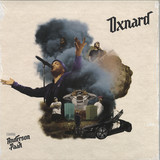
Anderson .Paak's new album, Oxnard, is a nod to the Southern California city where Anderson grew up. It is the Grammy-nominated artist's 3rd studio album and the first to be released on Dr. Dre's label Aftermath Entertainment. Oxnard will include his latest single, 'Tints' featuring Kendrick Lamar along with album features from J. Cole, Pusha T and many more. Earlier this year, Anderson .Paak shared with Rolling Stone that "... this is the album (he) dreamed of making in high school, when (he) was listening to (Jay-Z)'s The Blueprint, The Game's The Documentary, and (Kanye West)'s The College Dropout."

out of Stock

Order now and we will order the item for you at our supplier.


Last In: 7 years ago
Kaitlyn Aurelia Smith - The Kid

In 2017, the musical term electronic' is nearly obsolete given the ubiquity of computerized processes in producing music. Even so, the prevailing assumption is that musicians working under this broad umbrella must be inspired by concepts equally as electrified as their equipment. Kaitlyn Aurelia Smith has demonstrated in her still-blooming discography that this notion couldn't be further from the truth, and that more often than not, rich worlds of synthesized
sound are born from deep reverence of the natural world. Smith (who by no coincidence, cites naturalist David Attenborough as a contemporary muse) has embodied such an appreciation on
The Kid in as direct and sincere a way as possible by sonically charting the phases of life itself.
The album, which punctually follows up her 2016 breakthrough EARS, chronicles four defining cognitive and emotional stages of the human lifespan across four sides of a double LP.
The first side takes us through the confused astonishment of a newborn, unaware of itself, existing in an unwitting nirvana. Smith's music has always woven a youthful thread befitting of the
aforementioned subject. Here she articulates it in signature fashion on the track An Intention,' which serves not only as a soaring spire on The Kid, but on her entire output. There is playfulness here, but it's elevated by an undertone of gravity into something compelling and majestic that is fast becoming Smith's watermark. The emotional focus of side two is the vital but underreported moment in early youth when we cross the threshold into self awareness. The subject is profound enough to fill an entire album, but rarely makes its way into a single track, indicating Smith's ambition to broach subtler and deeper subjects than the average composer. This side offers up another highlight in the form of In The World But Not Of The World' which serves its subject well with epiphanic, climbing strings and decidedly noisy textures over a near-Bollywood low end pulse.

Side three emphasizes a feeling of being confirmed enough in one's own identity to begin giving back to the formative forces of one's upbringing, which is arguably the duty that all great artists
aim to fulfill. This side ends with the exploratory album cut Who I Am & Why I Am Where I Am' recorded in a single take without overdubs on the rare EMS Synthi 100 synthesizer. This humble
piece of sound design serves as a contrast to side four's verdant orchestral moments, all written and arranged for the EU-based Stargaze quartet by Smith herself. This final side represents a
return to pure being, the kind of wisdom and peace that eludes most of us until the autumn of life. On To Feel Your Best' this concept is voiced in the bittersweet refrain one day I'll wake up
and you won't be there' which Smith intended to be a grateful acknowledgement of life rather than a melancholy resentment of loss. The song has both effects depending on the mood of the
listener, and both interpretations are equally moving.
Kaitlyn Aurelia Smith belongs to an ilk of modern musicians who are defined by their commitment to creating experiential albums despite the singles-oriented habits of modern listeners,
and here she represents her kind proudly. The subjects on The Kid are not simple to convey, and yet through both emotional tone and lyrical content, Smith does just that. There is a similar
gravity to both birth and death, and rarely is that correlation as accurately and enthusiastically mapped as it is here.

Alan Watts, another logical inspiration of Smith's, once expounded that people record themselves to confirm their own existence, and as such, echoes and resonance are reminders that we are alive. You're not there unless you're recorded,' Watts muses, if you shout, and it doesn't come back and echo, it didn't happen.' The Kid speaks to this idea directly. As Kaitlyn Aurelia
Smith explores her existence through music, she guides us in gleefully contemplating our own.

out of Stock

Order now and we will order the item for you at our supplier.


Last In: 8 years ago
Passarani - Analog Fingerprints Vol. 0 (2x12")

Analog Fingerprints Vol. 0 is a compilation bringing together the early 2000s works of Marco Passarani under his Analog Fingerprints alias, collecting key tracks originally released on Rome’s Plasmek and Pigna labels.

For Numbers, the story starts long before the label itself. In their formative years, digging in Glasgow’s Rubadub, Passarani’s records felt like dispatches from a future city. Releases on his own Nature Records and on labels such as Generator and Interr-Ference Communications were mind blowing: rooted in Detroit techno, Chicago house and electro, yet pushing somewhere new. Much like fellow travellers Autechre, who would remix him in 2001, Passarani’s music balanced machine funk with restless experimentation.

Information was scarce, and you would hear these records first on the dancefloor or at listening stations in shops like Rubadub. Print fanzines like Ear and early web outposts such as Forcefield offered only fragments. But there was a palpable axis forming between Detroit techno and a new European wave of record labels including Skam, Rephlex, Clone, Viewlexx and Nature itself. It was the sound that defined Saturday nights at Rubadub’s ‘69’ parties in Paisley, just outside of Glasgow.

Passarani’s records, in particular, were instrumental in bringing together the future Numbers co-founders. Richard had already booked him pre-Numbers; meanwhile Calum (Spencer) and Jack (Jackmaster), then 16/17 year olds working alternate Saturdays in Rubadub, were so enamoured with the Roman sound that they travelled to Rome for the Bitz Festival in 2003 to seek out Passarani and Lory D at their source.

The first Analog Fingerprints release landed as a 12” on Plasmek in 2001, following the fractured, IDM-leaning 6 Katun material. For Passarani, the project marked a recalibration. A DJ first and foremost, he had moved into production via early computer setups, from a Commodore Amiga through primitive PC audio, Cubase and Logic, later experimenting with Ableton. The IDM scene had offered a playground for trial and error, but there was always a tension between abstraction and the dancefloor. Analog Fingerprints became the bridge: still intelligent, but with more dance than distance. After years of broken beats and complex arrangements, he wanted directness without surrendering identity.

Working closely with Francesco de Bellis and Mario Pierro in the Pigneto district, the trio formed Pigna as a vehicle for reclaiming a more accessible dance sound, deliberately steering away from the minimal wave beginning to dominate Europe. Sessions were fast, instinctive, often stretching late into the night with friends dropping by. It was a studio as social space, production as collective energy.

“In that constant search for balance, Analog Fingerprints was my way of expressing something closer to the classic dance floor. The track 'Tribute' - a tribute to my favourite early Detroit techno track of all time, 'First Bass' by Separate Minds - came after I realised I had almost lost my connection with the dance floor. The simplest step was to take inspiration from early Chicago and Detroit and twist it in our Roman ‘Pigna’ way. My goal was to create more accessible dancefloor tracks by mixing my unconscious Italo roots with my teenage love for that early US sound, ensuring the result was as far as possible from the minimal sound that was starting to dominate everywhere.” - Marco Passarani

Technically, the Analog Fingerprints tracks span a transitional era: Roland TR-909, SH-101 and Alpha Juno hardware met early software experiments. A Novation Drumstation rack stood in for the unattainable TR-808, syncing with TB-303 and TR-606. Yet the true secret weapon was Jeskola Buzz, a tracker-style modular environment that allowed step-by-step parameter control and strange melodic constructions, later exported into the audio sequencer. Even the lead on ‘Tribute’ came from an early PPG Wave-style plugin. It was hybrid thinking at a moment when digital tools still felt unstable but full of possibility for technologists like Passarani.

Behind the music sat Finalfrontier, a loose Roman collective orbiting Nature and Plasmek. Distribution and production were intertwined; importing obscure records into Italy built connections with like-minded outsiders across Europe and the US. Expensive phone bills and fax machines forged an “electronix network” that linked Rome to Clone, Viewlexx, Skam, Rephlex, Rubadub and Detroit’s Underground Resistance. There was a shared sense of survival and resistance, of operating against commercial systems.

Passarani recalls “The first time I found a sheet of paper inside an Underground Resistance 12” with info about upcoming releases... and a huge picture of Spock on the back. Imagine that: you love the music, you love Star Trek, and there’s someone on the other side of the ocean sharing those same values and sounds. It was the perfect match. We even gave our original company the suffix ‘Finalfrontier’: that says it all.”

Feedback in that era arrived physically: distributor faxes, conversations with visiting DJs, the experience of playing abroad and meeting kids who had connected with the records. Glasgow became a key node in a scattered outlier network. Passarani personally brought the first two Nature releases to Fat Cat in London, playing them in-store. Shortly after, a fax arrived from Rubadub in Glasgow requesting copies.

“I still remember that phone buzz and the fax paper slowly sliding out, with someone I didn’t know saying they wanted 75 copies of Nature 001. Or like the time we got a fax from the Rephlex crew just saying, “Hello Nature Records, Keep up the good work.” That was how we knew the message was getting through. It was a fantastic feeling; just one piece of thermal fax paper as an analog notification - the mood for the entire week would change.” - Passarani

The connection to Glasgow has since stretched across generations. As Passarani reflects, links often fracture as scenes renew themselves, but in Glasgow something different happened. New and old mixed seamlessly. There was a visible trust in what came before, and a willingness to carry it forward rather than discard it. Observed from Rome, it was deeply encouraging.

Analog Fingerprints Vol. 0 captures that moment of exchange: Rome to Glasgow, Detroit to Europe, experiment to dancefloor. It documents an artist recalibrating his sound and a network of scenes discovering one another in real time, connected by vinyl, faxes and shared intent.

pre-order now26.03.2026

expected to be published on 26.03.2026


Last In: 2026 years ago
anaiis & Grupo Cosmo - anaiis & Grupo Cosmo LP

The process of making this mini-album “anaiis & Grupo Cosmo” was truly life-altering for me. It changed my approach to making music and really brought me back to the roots of what creation is about. I went to Salvador for a month-long artist residency in February 2020 and during that time, I not only fell in love with Brasil’s culture and music, but I also wrote “Toda Cor” with the wonderful Luedji Luna. A few years later, I reached out Biel who’d co-produced “Estrela Acesa” with Sessa to see if they’d be interested in re-developing “Toda Cor” with me. They were enthusiastic and we fully reproduced the record in December, remotely. The connection between us all was electric and it felt like there was a collective enthusiasm for creating more together so I flew out to Brasil in April 2023 to continue this exploration. The beauty behind this record really lies in the experience of making it. We all stayed together in Biel’s house in Ilhabela for a week with Cabral, who co-produced the record with us and plays bass. We would go to the beach, eat communally, share stories, be around the kids, but then spend most of the days creating and jamming together. Each day we would record our songs live to tape, not a computer in the room. By the end of the week we had this album. It was refreshing to make music in this way. The music and approach really held us in that moment and gave us a chance to create freely, in a big moment of transition in our lives in a way that truly embraces imperfection, spontaneity, just very human.

pre-order now27.03.2026

expected to be published on 27.03.2026


Last In: 2026 years ago
Masta Ace & MF DOOM - MA DOOM : Son Of Yvonne

Repress incoming!

Following the success of two collaborative releases (EMC “The Show”/2008 and Ace & Edo G “Arts & Entertainment” /2009), Masta Ace joins forces with the metal faced MF Doom for Son of Yvonne, a highly personal concept album that celebrates the life and legacy of Ace’s recently departed Mother. Like his 2004 landmark Disposable Arts, Son of Yvonne is meticulously constructed with stories, settings, and characters that resonate with flesh and bone humanity. Interstitial vignettes provide a thematic backbone to the experience, and each track complements and completes the previous to form a narrative whole: a sometimes visceral, sometimes nostalgic slice of Ace’s young life in Brownsville, Brooklyn. Entirely underscored by MF Doom’s iconic Special Herbs instrumentals, Son of Yvonne features the Juice Crew general Big Daddy Kane, new comers Pav Bundy (The Bundies), Reggie B and even MF Doom on the mic. It’s Masta Ace’s no frills flow, however, that looms largest above the dusty samples and digger loops that define Doom’s production. Ace’s photo-realistic rhymes about stick-up kids, spraycan artists and wack emcees add extra gravity to his already celebrated reputation as “truly an under-appreciated rap veteran and underground luminary” (Allmusic Guide). Like Eminem recalls in his 2008 autobiography The Way I Am, “Masta Ace had amazing storytelling skills. His thoughts were so vivid.” TRACKLIST: A1. DJ Ski's Intro A2. Ninteen Seventy Something A3. Son Of Yvonne B1. Da Pro B2. Store Frontin B3. Me & My Gang B4. Crush Hour feat Pav Bundy C1. Think I Am feat Big Daddy Kane & Mf Doom C2. Fresh Fest Reggie B C3. Hoe-Tel-leftovers C4. Slow Down D1. Home Sweet Home feat Pav Bundy D2. Dedication D3. I Did It D4. In Da Spot feat Milani The Artis D5. Outtakes

pre-order now27.03.2026

expected to be published on 27.03.2026


Last In: 2026 years ago
Music Travel Love - How Deep Is Your Love

The Project "Music Travel Love" is to film music videos while travelling around the world started by brothers Bob and Clint Moffatt, who worked on major labels in the 90s as kids band The Moffatts.
From the video series, covers of Bee Gees and Marvin Gaye will be released on vinyl.
Filipino singers Anthony Uy and Julia Serad join the project. Relaxin', chill-out acoustic sound.

pre-order now27.03.2026

expected to be published on 27.03.2026


Last In: 2026 years ago
Genevieve Artadi & Real Bad Man - Everything Is Under Control
  • A1: I Need A Break
  • A2: Little Claws
  • A3: Kill The Lie
  • A4: Set In Motion
  • A5: Wrong Shape
  • B1: Don’t Gotta Think About U
  • B2: No Regular No Chance
  • B3: Everything’s Under Control (Feat. Pink Siifu)
  • B4: Really Really Right

LA-based producer Real Bad Man and LA musician Genevieve Artadi announce their new collaborative album Everything Is Under Control, out October 3rd via the producer’s own Real Bad Man Records. Alongside the announcement, the duo are sharing two new singles from the forthcoming album, “Don’t Gotta Think About U” and “Little Claws”. The former is an electro pop banger that propels Artadi’s intoxicating vocals to the forefront and arrives with an accompanying visual. With Everything Is Under Control, Real Bad Man is proving his versatility as a producer, crafting intricate and lively electronic-forward foundations for an old friend in Genevieve to explore an eclectic, funky approach to her vocals.

Speaking about the single, Artadi says, "'Don’t Gotta Think About U' is about a person celebrating the explosion of her most recent unhealthy romantic relationship. Her spitefulness and delusion of freedom indicate she’s still inside the pattern she hasn’t yet realized she keeps signing herself up for. The sound is melancholic pop, the thread that has always tied Adam and me together despite our musical differences."

"I love juxtaposing dense drums and a very pretty voice," Real Bad Man says of collaborating with Artadi. "That’s what 'Don’t Wanna Think About U' is. We’re also trying to make something catchy at the same time, that’s what I’ve always been drawn to musically is blending genres and moods and get them to work together. As well as pulling Genevieve away from what she does with Knower and her solo stuff.

Real Bad Man’s collaboration with Artadi is a radical shift in approach for the producer, whose previous full-length projects this year were rooted in the distinct strain of underground hip-hop that he’s amassed an extensive catalog in. Everything Is Under Control marks an entirely different, and unpredictable, sonic approach for the duo, embracing experimentation and synth-led electronica that’s reminiscent of Artadi’s work as part with Pollyn (her former band with Adam/Real Bad Man) as well as current duo KNOWER with Louis Cole. Real Bad Man’s latest project extends his prolific run of collaborations this year, embarking in a new genre and sound entirely after releasing full-length projects with ZelooperZ (Dear Psilocybin), Boldly James (Conversational Pieces) and Willie The Kid (Midnight) in the first half of 2025.

Known for her complex, yet playful writing style, Genevieve Artadi has made a name for herself through four solo albums that stretch the gambit of jazz, dream pop and dance music. The last three albums were released on iconic label Brainfeeder Records and the fourth (Another Leaf) was made as part of her being a composer-in-residence with Sweden’s Norrbotten Big Band. She’s also been an accomplished collaborator with her bands Expensive Magnets, Pollyn and KNOWER, and performing and recording with the likes of Thundercat and Snarky Puppy.

Check out “Don’t Gotta Think About U” and “Little Claws” above, see below for more details on Everything Is Under Control and stay tuned for more from Real Bad Man coming soon.

pre-order now03.04.2026

expected to be published on 03.04.2026


Last In: 2026 years ago
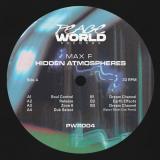
Max F - Hidden Atmospheres

Peace World Records returns with Hidden Atmospheres, the debut release produced by Max F and mixed by Space Ghost. Drawing from classic deep house and esoteric club sounds of the '90s and early 2000s, this seven-track collection channels these influences into fresh territory while preserving the digital grit and dreamlike essence of the era.

The release strikes a delicate balance between the meditative and the kinetic. On the A Side, tracks “Soul Control” and “Zone 6” highlight subtle yet hard-hitting percussion grooves and deep basslines that anchor the mix beneath ethereal pads and sweeps. Each track builds through hypnotic, evolving arrangements that reward close listening. On the B side, “Dream Channel” and “Earth Effects" both feature airy, spectral synth progressions that interweave with ephemeral yet decisive melodies, demonstrating a refined insight of space and dynamics. To round things off, Space Ghost took a crack at an energetic club remix of “Dream Channel. ” Carried by a classic 909 house rhythm and a bubbly bassline, the remix offers a fun, uplifting take on the original, complete with organ stabs and MIDI sax!

As a whole, Hidden Atmospheres delivers something new for fans of 90s and 2000s era house music. Think Ronin, Hanna, Chris Brann, Wamdue Kids—artists whose work holds its own in the club while remaining equally suited for intimate late-night listening. Throughout the record, tracks drift seamlessly between shimmering dancefloor functionality and liminal, introspective ambience, inviting repeat listens that reveal new details and "hidden atmospheres" with eachpass.

Hidden Atmospheres lands on Peace World Records April 9th, 2026.


[g] B3. Dream Channel [Space Ghost Club Remix]

pre-order now09.04.2026

expected to be published on 09.04.2026


Last In: 2026 years ago
Anderson .Paak - Malibu (10 Year Anniversary) (Lp 2x12")
  • A1: The Bird
  • A2: Heart Don't Stand A Chance
  • A3: The Waters (Feat. Bj The Chicago Kid)
  • A4: The Season / Carry Me
  • B1: Put Me Thru
  • B2: Am I Wrong (Feat. Schoolboy Q)
  • B3: Without You (Feat. Rapsody)
  • B4: Parking Lot
  • C1: Lite Weight (Feat. The Free Nationals United Fellowship Choir)
  • C2: Room In Here (Feat. The Game & Sonyae Elise)
  • C3: Water Fall (Interlude)
  • C4: Your Prime
  • D1: Come Down
  • D2: Silicon Valley
  • D3: Celebrate
  • D4: The Dreamer (Feat. Talib Kweli & Timan Family Choir)

Ten years ago, Anderson .Paak didn't just release an album; he staged a full-scale takeover of the soul and hip-hop landscape. Released on January 15, 2016, Malibu served as the definitive arrival of an artist who had spent years grinding in the underground before a star-making turn on Dr. Dre’s Compton. While his previous work hinted at his potential, Malibu was the moment the world met the "Cheeky Andy" persona in full—a virtuosic drummer, a raspy-voiced crooner, and a sharp-witted rapper all rolled into one. The album is a sprawling, sun-drenched journey through the Southern California coast, blending 1970s funk, church-reared gospel, and gritty boom-bap into something that feels both nostalgic and entirely futuristic. With a heavyweight production lineup including 9th Wonder, Madlib, Kaytranada, and Hi-Tek, the record maintains a warm, analog texture that was a breath of fresh air in an increasingly digital era. It’s an album that breathes, full of intentional imperfections and the kind of "in-the-pocket" groove that can only come from a seasoned live performer. Beyond the infectious, dance-floor-ready energy of tracks like "Am I Wrong" and "Come Down," the album is a deeply autobiographical masterwork. .Paak uses the 65-minute runtime to unpack his life story with startling clarity, touching on his mother’s gambling addiction, his father’s incarceration, and his own brushes with homelessness with a sense of resilience that never feels heavy-handed. He weaves these heavy themes through a lens of triumph, grounded by vintage surfing documentary samples that give the project its cinematic, coastal atmosphere. It’s a celebratory record born out of struggle, anchored by his impeccable technicality on the drums and a guest list—featuring ScHoolboy Q, Rapsody, and The Game—that feels hand-picked to complement his specific brand of West Coast swagger. A decade later, Malibu stands as a modern classic and the blueprint for the soulful revivalism that would eventually lead .Paak to global superstardom and Grammy-winning heights. It remains a testament to the idea that the most profound music often comes from the most personal places, proving ten years on that the best way to move forward is to stay rooted in the groove.

pre-order now17.04.2026

expected to be published on 17.04.2026


Last In: 2026 years ago
Anderson .Paak - Malibu (10 Year Anniversary) (Lp 2x12")

Ten years ago, Anderson .Paak didn't just release an album; he staged a full-scale takeover of the soul and hip-hop landscape. Released on January 15, 2016, Malibu served as the definitive arrival of an artist who had spent years grinding in the underground before a star-making turn on Dr. Dre’s Compton. While his previous work hinted at his potential, Malibu was the moment the world met the "Cheeky Andy" persona in full—a virtuosic drummer, a raspy-voiced crooner, and a sharp-witted rapper all rolled into one. The album is a sprawling, sun-drenched journey through the Southern California coast, blending 1970s funk, church-reared gospel, and gritty boom-bap into something that feels both nostalgic and entirely futuristic. With a heavyweight production lineup including 9th Wonder, Madlib, Kaytranada, and Hi-Tek, the record maintains a warm, analog texture that was a breath of fresh air in an increasingly digital era. It’s an album that breathes, full of intentional imperfections and the kind of "in-the-pocket" groove that can only come from a seasoned live performer. Beyond the infectious, dance-floor-ready energy of tracks like "Am I Wrong" and "Come Down," the album is a deeply autobiographical masterwork. .Paak uses the 65-minute runtime to unpack his life story with startling clarity, touching on his mother’s gambling addiction, his father’s incarceration, and his own brushes with homelessness with a sense of resilience that never feels heavy-handed. He weaves these heavy themes through a lens of triumph, grounded by vintage surfing documentary samples that give the project its cinematic, coastal atmosphere. It’s a celebratory record born out of struggle, anchored by his impeccable technicality on the drums and a guest list—featuring ScHoolboy Q, Rapsody, and The Game—that feels hand-picked to complement his specific brand of West Coast swagger. A decade later, Malibu stands as a modern classic and the blueprint for the soulful revivalism that would eventually lead .Paak to global superstardom and Grammy-winning heights. It remains a testament to the idea that the most profound music often comes from the most personal places, proving ten years on that the best way to move forward is to stay rooted in the groove.

pre-order now17.04.2026

expected to be published on 17.04.2026


Last In: 2026 years ago
Anderson .Paak - Malibu (10 Year Anniversary) (MC)

Ten years ago, Anderson .Paak didn't just release an album; he staged a full-scale takeover of the soul and hip-hop landscape. Released on January 15, 2016, Malibu served as the definitive arrival of an artist who had spent years grinding in the underground before a star-making turn on Dr. Dre’s Compton. While his previous work hinted at his potential, Malibu was the moment the world met the "Cheeky Andy" persona in full—a virtuosic drummer, a raspy-voiced crooner, and a sharp-witted rapper all rolled into one. The album is a sprawling, sun-drenched journey through the Southern California coast, blending 1970s funk, church-reared gospel, and gritty boom-bap into something that feels both nostalgic and entirely futuristic. With a heavyweight production lineup including 9th Wonder, Madlib, Kaytranada, and Hi-Tek, the record maintains a warm, analog texture that was a breath of fresh air in an increasingly digital era. It’s an album that breathes, full of intentional imperfections and the kind of "in-the-pocket" groove that can only come from a seasoned live performer. Beyond the infectious, dance-floor-ready energy of tracks like "Am I Wrong" and "Come Down," the album is a deeply autobiographical masterwork. .Paak uses the 65-minute runtime to unpack his life story with startling clarity, touching on his mother’s gambling addiction, his father’s incarceration, and his own brushes with homelessness with a sense of resilience that never feels heavy-handed. He weaves these heavy themes through a lens of triumph, grounded by vintage surfing documentary samples that give the project its cinematic, coastal atmosphere. It’s a celebratory record born out of struggle, anchored by his impeccable technicality on the drums and a guest list—featuring ScHoolboy Q, Rapsody, and The Game—that feels hand-picked to complement his specific brand of West Coast swagger. A decade later, Malibu stands as a modern classic and the blueprint for the soulful revivalism that would eventually lead .Paak to global superstardom and Grammy-winning heights. It remains a testament to the idea that the most profound music often comes from the most personal places, proving ten years on that the best way to move forward is to stay rooted in the groove.

pre-order now17.04.2026

expected to be published on 17.04.2026


Last In: 2026 years ago
Anderson .Paak - Malibu (10 Year Anniversary) (2x12")
  • A1: The Bird
  • A2: Heart Don't Stand A Chance
  • A3: The Waters (Feat. Bj The Chicago Kid)
  • A4: The Season / Carry Me
  • B1: Put Me Thru
  • B2: Am I Wrong (Feat. Schoolboy Q)
  • B3: Without You (Feat. Rapsody)
  • B4: Parking Lot
  • C1: Lite Weight (Feat. The Free Nationals United Fellowship Choir)
  • C2: Room In Here (Feat. The Game & Sonyae Elise)
  • C3: Water Fall (Interlude)
  • C4: Your Prime
  • D1: Come Down
  • D2: Silicon Valley
  • D3: Celebrate
  • D4: The Dreamer (Feat. Talib Kweli & Timan Family Choir)

Ten years ago, Anderson .Paak didn't just release an album; he staged a full-scale takeover of the soul and hip-hop landscape. Released on January 15, 2016, Malibu served as the definitive arrival of an artist who had spent years grinding in the underground before a star-making turn on Dr. Dre’s Compton. While his previous work hinted at his potential, Malibu was the moment the world met the "Cheeky Andy" persona in full—a virtuosic drummer, a raspy-voiced crooner, and a sharp-witted rapper all rolled into one. The album is a sprawling, sun-drenched journey through the Southern California coast, blending 1970s funk, church-reared gospel, and gritty boom-bap into something that feels both nostalgic and entirely futuristic. With a heavyweight production lineup including 9th Wonder, Madlib, Kaytranada, and Hi-Tek, the record maintains a warm, analog texture that was a breath of fresh air in an increasingly digital era. It’s an album that breathes, full of intentional imperfections and the kind of "in-the-pocket" groove that can only come from a seasoned live performer. Beyond the infectious, dance-floor-ready energy of tracks like "Am I Wrong" and "Come Down," the album is a deeply autobiographical masterwork. .Paak uses the 65-minute runtime to unpack his life story with startling clarity, touching on his mother’s gambling addiction, his father’s incarceration, and his own brushes with homelessness with a sense of resilience that never feels heavy-handed. He weaves these heavy themes through a lens of triumph, grounded by vintage surfing documentary samples that give the project its cinematic, coastal atmosphere. It’s a celebratory record born out of struggle, anchored by his impeccable technicality on the drums and a guest list—featuring ScHoolboy Q, Rapsody, and The Game—that feels hand-picked to complement his specific brand of West Coast swagger. A decade later, Malibu stands as a modern classic and the blueprint for the soulful revivalism that would eventually lead .Paak to global superstardom and Grammy-winning heights. It remains a testament to the idea that the most profound music often comes from the most personal places, proving ten years on that the best way to move forward is to stay rooted in the groove.

pre-order now17.04.2026

expected to be published on 17.04.2026


Last In: 2026 years ago
Conic Rose - wedding  LP

Conic Rose

wedding LP

12inchCONICROSELP03
Conic Rose
17.04.2026

A guitar stands alone in Wedding, that metropolitan biotope in the western center of Berlin, caught in constant transformation between idyll and abyss. It lets its gaze wander, unsettled, almost shy, until it encounters a trumpet, with which it begins a cautious, then ever more intimate pas de deux.
Welcome to the second studio album by the Berlin-based band Conic Rose.
The album title Wedding is no coincidence. The story of Conic Rose is closely intertwined with the Berlin neighborhood that gives the record its name. The band's studio is located here, and both studio albums were created in the immediate vicinity of the small river Panke. This place settles over the music like a warming patina. The album feels as though the musicians and the neighborhood have invited one another to get to know each other. Not least because Wedding also means marriage. These marriages between a band and an urban landscape, a fading past and an emerging future, fear and hope - unfold in every single song on Wedding.
For their second album, Conic Rose repositioned themselves completely. Not in terms of personnel, but in the question of how to move forward. Conic Rose still sound like Conic Rose; their distinctive blend of cinematic jazz, ambient textures and guitar-led contemporary music remains untouched. And yet Wedding is, in many ways, the conceptual counterpart to their debut album Heller Tag. Where the debut documented movement within an urban setting, Wedding describes a state of being. Behind every piece seems to hover a large question mark.The group opens up its palette, allowing more influences, becoming at once more subtle, more profound, more filigree. It is less about definition than about the spaces in between. The most immediately striking difference from the previous album is the strong presence of the guitar. In Bertram Burkert's playing, many voices seem to converge. His yearning openness forms an equal counterpoint to Döben's trumpet and flugelhorn. Blurred and layered sounds occasionally make the ground seem to slip away beneath one's feet, while Döben's gliding lines create both closeness and distance. Together, the band express in a deeply subtle way a sense of life that corresponds precisely to our time. Something lurks in the background, omnipresent yet still unnameable. Conic Rose need no words to convey this feeling of uncertainty with remarkable eloquence. Perhaps this has something to do with Wedding being a place of confrontational introspection, but Conic Rose confront the escape from escape itself. With the recording and release of Wedding, this process is far from complete. The seed only begins to grow in the listener's ear. With every listen and the echo it leaves behind in memory, the studio bud continues to bloom. The album is merely the point of departure. What ultimately matters is what it sets in motion within those who encounter it.

pre-order now17.04.2026

expected to be published on 17.04.2026


Last In: 2026 years ago
New Bomb Turks - Nightmare Scenario LP
  • A1: Point To A Point Blank
  • A2: Automatic Teller
  • A3: End Of The Great Credibility Race
  • A4: Too Much
  • A5: Killer's Kiss
  • A6: Continental Cats
  • A7: Instrumental Bonus Track
  • B1: Spanish Fly By Night
  • B2: The Roof
  • B3: Your Beaten Heart
  • B4: Turning Tricks
  • B5: Wine & Depression
  • B6: Quarter To Four

Back in 1990 the New Bomb Turks got together as four Ohio State University students who just wanted to rock. 10 years later they are already on their 7th studio album: Nightmare Scenario.

New Bomb Turks return to their snaggle-toothed first mistress — hard-driving, no-holds-barred American punk rock. With the guitar jive of Chuck Berry, the blinding ferocity of Motörhead and the snot of The Dead Boys, singer Eric Davidson and his backing trio fire off a dozen grenades of authentic old-school three-chord riff-rock in little over a half-hour, with nary a pause for breath between tracks. You can’t quibble with the four-on-the-floor intensity of tunes like opening salvo Point To A Point Blank. It was recorded over four days and nights, the only break being a jaunt over to a bar to see a reunited Real Kids, their first show in years, which floored the band and only added more mezcal to the fire.

Nightmare Scenario is available as a limited edition of 500 individually numbered copies on violet vinyl and includes an insert.

pre-order now24.04.2026

expected to be published on 24.04.2026


Last In: 2026 years ago
NOFX - THE WAR ON ERRORISM
  • Separation Of Church And Skate
  • Irrationality Of Rationality
  • Franco Un-American
  • Idiots Are Taking Over
  • She's Nubs
  • Mattersville
  • Decom-Poseur
  • Medio-Core
  • Anarchy Camp
  • American Errorist(I Hate Hate Haters)
  • We Got Two Jealous Agains
  • 13: Stitches
  • Re-Gaining Unconsciousness
  • Whoops, I Od'd

Ein PUNK-ROCK-MEISTERWERK neu aufgelegt - mit, aus aktuellem Anlass, aktualisiertem 2026 Cover-Artwork! Das erste Studioalbum von NOFX auf Fat! Die Band behandelte ernste Themen (Punk-Kultur und Politik) mit ihrem typischen Witz und Sarkasmus und zielte auf George W. Bush. Nun ist ein neuer Clown am Start! Damals (2003) schaffte es das Album sowohl in Großbritannien als auch in den USA in die Top 50 und war auch auf dem europäischen Festland erfolgreich, wo es in der Schweiz und in Deutschland die Top 30 erreichte, in Österreich die Top 50 und in Frankreich die Top 100. "Musically, NOFX fuses its political cynicism with criticism of punk rock itself and suggests that the best thing for all the kids and the bands might be to close ranks and start their own little hardcore community. 'Irrationality of Rationality' and 'Franco Un-American'_two of the album's most melodic, catchy songs_are also two of War on Errorism's most biting commentaries. The first personalizes the trickle-down effect of corporate decision-making over a lockstep hardcore rhythm; the second gets all-new wavy as Fat Mike reasons out his own world view, and somehow rhymes "apathy" with "Noam Chomsky.'" - NOFX hat sich zwar aufgelöst, aber das Vermächtnis lebt weiter. Die Band ist derzeit Gegenstand ihrer ersten umfassenden Ausstellung im Punk Rock Museum in Las Vegas. Die Dokumentation "40 Years of Fuckin Upmakes" feiert beim SXSW 2026 Premiere und ist ab April umfassend zu sehen (Score & Original Soundtrack mit neuer Musik von NOFX folgen in Kürze). Der zweite Teil der A-Z-Raritäten-Trilogie "I to Q" soll Ende 2026 erscheinen. Und behaltet Fat Mike im Auge, denn Gerüchten zufolge hat er eine eigene Meinung zur aktuellen Weltlage. Warning: owning this record might piss off (more than ever) your army recruiter, grizzled grampa, or those wacky flag-wavin' nationalist buddies of yours.

pre-order now01.05.2026

expected to be published on 01.05.2026


Last In: 2026 years ago
NOFX - THE WAR ON ERRORISM

NOFX

THE WAR ON ERRORISM

12inchFAT1198
Fat Wreck Chords
01.05.2026

Ein PUNK-ROCK-MEISTERWERK neu aufgelegt - mit, aus aktuellem Anlass, aktualisiertem 2026 Cover-Artwork! Das erste Studioalbum von NOFX auf Fat! Die Band behandelte ernste Themen (Punk-Kultur und Politik) mit ihrem typischen Witz und Sarkasmus und zielte auf George W. Bush. Nun ist ein neuer Clown am Start! Damals (2003) schaffte es das Album sowohl in Großbritannien als auch in den USA in die Top 50 und war auch auf dem europäischen Festland erfolgreich, wo es in der Schweiz und in Deutschland die Top 30 erreichte, in Österreich die Top 50 und in Frankreich die Top 100. "Musically, NOFX fuses its political cynicism with criticism of punk rock itself and suggests that the best thing for all the kids and the bands might be to close ranks and start their own little hardcore community. 'Irrationality of Rationality' and 'Franco Un-American'_two of the album's most melodic, catchy songs_are also two of War on Errorism's most biting commentaries. The first personalizes the trickle-down effect of corporate decision-making over a lockstep hardcore rhythm; the second gets all-new wavy as Fat Mike reasons out his own world view, and somehow rhymes "apathy" with "Noam Chomsky.'" - NOFX hat sich zwar aufgelöst, aber das Vermächtnis lebt weiter. Die Band ist derzeit Gegenstand ihrer ersten umfassenden Ausstellung im Punk Rock Museum in Las Vegas. Die Dokumentation "40 Years of Fuckin Upmakes" feiert beim SXSW 2026 Premiere und ist ab April umfassend zu sehen (Score & Original Soundtrack mit neuer Musik von NOFX folgen in Kürze). Der zweite Teil der A-Z-Raritäten-Trilogie "I to Q" soll Ende 2026 erscheinen. Und behaltet Fat Mike im Auge, denn Gerüchten zufolge hat er eine eigene Meinung zur aktuellen Weltlage. Warning: owning this record might piss off (more than ever) your army recruiter, grizzled grampa, or those wacky flag-wavin' nationalist buddies of yours.

pre-order now01.05.2026

expected to be published on 01.05.2026


Last In: 2026 years ago
Various - Wa Wave Vol. 1 New Wave Sounds from the Land of the Rising Sun
 
8
also available

Vol.2


From the depths of the most independent and revolutionary underground, a handful of tracks from the repertoires (often limited even to a single flexi disc) of some of the heroes who rode the wave, extracting from it—more for themselves and expressive necessity than for us—its most mystical and expressionist essence. New and No Wave, minimal and minimalist electronics, Avant Wave from the land where the sun still rises for now.

pre-order now01.05.2026

expected to be published on 01.05.2026


Last In: 2026 years ago
Various - Category 1 Music Sampler - Vol. 4

Category 1 Music Sampler - Vol. 4 represents a unique blend of contemporary house music’s most influential and respected personalities. “What I Want” showcases the remixing wizardry of Eric Kupper, who has worked with numerous superstars including Usher, Alicia Keys, Donna Summer & Miley Cyrus; along with the producing genius of Chicago’s great house trailblazer, Ron Carroll. “Call Me” showcases a multi continent contingent of musical talent from the UK, South Africa and the U.S. combining to deliver a soulful house gem that’s highlighted by Stacy Kidd’s distinctive Chicago influenced vibe. Joe Smooth, another Chicago house legend, lends his deep house sound to the appropriately titled, “Soul Deep”, featuring the classic vocals of Ed Ramsey coupled with Sweet Georgie’s impeccable production.

Concluding this house music journey is Ron Carroll’s “Underground”, a Garage banger that’s the creative concept of Marc Cotterell, 1 of the leaders of the U.S./UK Garage genre. “Underground” is the perfect way to end another Category 1 Music house excursion.

In Stock

On Stock and ready to ship

Guilty Razors - Complete Recordings 1977 - 1978
  • A1: Hurts And Noises
  • A2: Wake Up
  • A3: I Don't Wanna Be A Rich
  • A4: Terrorist Bad Heart
  • A5: Provocate
  • A6: Lucifer Sam (Pink Floyd)
  • B1: Happy!?
  • B2: So Lazy
  • B3: I Feel Down
  • B4: Stupido
  • B5: Guilty
  • B6: Caroline Says (Loo Reed)

UILTY RAZORS, BONA FIDE PUNKS.


Writings on the topic that go off in all directions, mind-numbing lectures given by academics, and testimonies, most of them heavily doctored, from those who “lived through that era”: so many people today fantasize about the early days of punk in our country… This blessed moment when no one had yet thought of flaunting a ridiculous green mohawk, taking Sid Vicious as a hero, or – even worse – making the so-called alternative scene both festive and boorish. There was no such thing in 1976 or 1977, when it wasn’t easy to get hold of the first 45s by the Pistols or the Clash. Few people were aware of what was happening on the fringes of the fringes at the time. Malcolm McLaren was virtually unknown, and having short hair made you seem strange. Who knew then that rock music, which had taken a very bad turn since the early 1970s, would once again become an essential element of liberation? That, thanks to short and fast songs, it would once again rediscover that primitive, social side that was so hated by older generations? Who knew that, besides a few loners who read the music press (it was even better if they read it in English) and frequented the right record stores? Many of these formed bands, because it was impossible to do otherwise. We quickly went from listening to the Velvet Underground to trying to play the Stooges’ intros. It’s a somewhat collective story, even though there weren’t many people to start it.
The Guilty Razors were among those who took part in this initial upheaval in Paris. They were far from being the worst. They had something special and even released a single that was well above the national average. They also had enough songs to fill an album, the one you’re holding. In everyone’s opinion, they were definitely not among the punk impostors that followed in their wake. They were, at least, genuine and credible.

Guilty Razors, Parisian punk band (1975-1978). To understand something about their somewhat linear but very energetic sound, we might need to talk about the context in which it was born and, more broadly, recall the boredom (a theme that would become capital in punk songs) coupled with the desire to blow everything off, which were the basis for the formation of bands playing a rejuvenated rock music ; about the passion for a few records by the Kinks or the early Who, by the Stooges, by the Velvet mostly, which set you apart from the crowd.
And of course, we should remember this new wave, which was promoted by a few articles in the specialized press and some cutting-edge record stores, coming from New York or London, whose small but powerful influence could be felt in Paris and in a handful of isolated places in the provinces, lulled to sleep by so many appalling things, from Tangerine Dream to President Giscard d’Estaing...
In 1975-76, French music was, as almost always, in a sorry state ; it was still dominated by Johnny Hallyday and Sylvie Vartan. Local rock music was also rather bleak, apart from Bijou and Little Bob who tried to revive this small scene with poorly sound-engineered gigs played to almost no one.
In the working class suburbs at the time, it was mainly hard rock music played to 11 that helped people forget about their gruelling shifts at the factory. Here and there, on the outskirts of major cities, you still could find a few rockers with sideburns wearing black armbands since the death of Gene Vincent, but it wasn’t a proper mass movement, just a source of real danger to anyone they came across who wasn't like them. In August 1976, a festival unlike any other took place in Mont-de-Marsan – the First European Punk Festival as the poster said – with almost as many people on stage as in the audience. Yet, on that day, a quasi historical event happened, when, under the blazing afternoon sun, a band of unknowns called The Damned made an unprecedented noise in the arena, reminiscent of the chaotic Stooges in their early adolescence. They were the first genuine punk band to perform in our country: from then on, anything was possible, almost anything seemed permissible.

It makes sense that the four+1 members of Guilty Razors, who initially amplified acoustic guitars with crappy tape recorder microphones, would adopt punk music (pronounced paink in French) naturally and instinctively, since it combines liberating noise with speed of execution and – crucially – a very healthy sense of rebellion (the protesters of May 1968 proclaimed, and it was even a slogan, that they weren’t against old people, but against what had made them grow old. In the mid-1970s, it seemed normal and obvious that old people should now ALSO be targeted!!!).
At the time, the desire to fight back, and break down authority and apathy, was either red or black, often taking the form of leafleting, tumultuous general assemblies in the schoolyard, and massive or shabby demonstrations, most of the time overflowing with an exciting vitality that sometimes turned into fights with the riot police. Indeed, soon after the end of the Vietnam War and following Pinochet’s coup in Chile, all over France, Trotskyist and anarcho-libertarian fervour was firmly entrenched among parts of the educated youth population, who were equally rebellious and troublemakers whenever they had the chance. It should also be noted that when the single "Anarchy in the UK" was first heard, even though not many of us had access to it, both the title and its explosive sound immediately resonated with some of those troublemakers crying out for ANARCHY!!! Meanwhile, the left-wing majority still equated punks with reckless young neo-Nazis. Of course, the widely circulated photos in the mainstream press of Siouxsie Sioux with her swastikas didn’t necessarily help to win over the theorists of the Great Revolution. It took Joe Strummer to introduce The Clash as an anti-racist, anti-fascist and anti-ignorance band for the rejection of old-school revolutionaries to fade a little.

The Lycée Jean-Baptiste Say at Porte d’Auteuil, despite being located in the very posh and very exclusive 16th arrondissement of Paris, didn’t escape these "committed" upheavals, which doubled as the perfect outlet for the less timid members of this generation.
“Back then, politics were fun,” says Tristam Nada, who studied there and went on to become Guilty Razors’ frontman. “Jean-Baptiste was the leftist high-school in the neighbourhood. When the far right guys from the GUD came down there, the Communist League guys from elsewhere helped us fight them off.”
Anything that could challenge authority was fair game and of course, strikes for just about any reason would lead to increasingly frequent truancy (with a definitive farewell to education that would soon follow). Tristam Nada spent his 10th and 11th unfinished grades with José Perez, who had come from Spain, where his father, a janitor, had been sentenced to death by Franco. “José steered my tastes towards solid acts such as The Who. Like most teenagers, I had previously absorbed just about everything that came my way, from Yes to Led Zeppelin to Genesis. I was exploring… And then one day, he told me that he and his brother Carlos wanted to start a rock band.” The Perez brothers already played guitar. “Of course, they were Spanish!”, jokes their singer. “Then, somewhat reluctantly, José took up the bass and we were soon joined by Jano – who called himself Jano Homicid – who took up the rhythm guitar.” Several drummers would later join this core of not easily intimidated young guys who didn’t let adversity get the better of them.

The first rehearsals of the newly named Guilty Razors took place in the bedroom of a Perez aunt. There, the three rookies tried to cover a few standards, songs that often were an integral part of their lives. During a first, short gig, in front of a bewildered audience of tough old-school rockers, they launched into a clunky version of the Velvet Underground's “Heroin”. Challenge or recklessness? A bit of both, probably… And then, step by step, their limited repertoire expanded as they decided to write their own songs, sung in a not always very accurate or academic English, but who cared about proper grammar or the right vocabulary, since what truly mattered was to make the words sound as good as possible while playing very, very fast music? And spitting out those words in a language that left no doubt as to what it conveyed mattered as well.
Trying their hand a the kind of rock music disliked by most of the neighbourhood, making noise, being fiercely provocative: they still belonged to a tiny clique who, at this very moment, had chosen to impose this difference. And there were very few places in France or elsewhere, where one could witness the first stirrings of something that wasn’t a trend yet, let alone a movement.

In the provinces, in late 1976 or early 1977, there couldn’t be more than thirty record stores that were a bit more discerning than average, where you could hear this new kind of short-haired rock music called “punk”. The old clientele, who previously had no problem coming in to buy the latest McCartney or Aerosmith LP, now felt a little less comfortable there…
In Paris, these enlightened places were quite rare and often located nex to what would become the Forum des Halles, a big shopping mall. Between three aging sex workers, a couple of second-hand clothes shops, sellers of hippie paraphernalia and small fashion designers, the good word was loudly spread in two pioneering places – propagators of what was still only a new underground movement. Historically, the first one was the Open Market, a kind of poorly, but tastefully stocked cave. Speakers blasted out the sound of sixties garage bands from the Nuggets compilation (a crucial reference for José Perez) or the badly dressed English kids of Eddie and the Hot Rods. This black-painted den was opened a few years earlier by Marc Zermati, a character who wasn’t always in a sunny disposition, but always quite radical in his (good) choices and his opinions. He founded the independent label Skydog and was one of the promoters of the Mont-de-Marsan punk festivals. Not far from there was Harry Cover, another store more in tune with the new New York scene, which was amply covered in the house fanzine, Rock News (even though it was in it that the photos of the Sex Pistols were first published in France).
It was a favorite hang-out of the Perez brothers and Tristam Nada, as the latter explained. “It’s at Harry Cover’s that we first heard the Pistols and Clash’s 45s, and after that, we decided to start writing our first songs. If they could do it, so could we!”
The sonic shocks that were “Anarchy in the UK”, “White Riot” or the Buzzcocks’s EP, “Spiral Scratch” – which Guilty Razors' sound is reminiscent of – were soon to be amplified by an unparalleled visual shock. In April 1977, right after the release of their first LP, The Clash performed at the Palais des Glaces in Paris, during a punk night organised by Marc Zermati. For many who were there, it was the gig of a lifetime…
Of course, Guilty Razors and Tristam were in the audience: “That concert was fabulous… We Parisian punks were almost all dressed in black and white, with white shirts, skinny leather ties, bikers jackets or light jackets, etc. The Clash, on the other hand, wore colourful clothes. Well, the next day, at the Gibus, you’d spot everyone who had been at this concert, but they weren’t wearing anything black, they were all wearing colours.”

It makes sense to mention the Gibus club, as Guilty Razors often played there (sometimes in front of a hostile audience). It was also the only place in Paris that regularly scheduled new Parisian or Anglo-Saxon acts, such as Generation X, Siouxsie and the Banshees, the Slits, and Johnny Thunders who would become a kind of messed-up mascot for the venue. A little later, in 1978, the Rose Bonbon – formerly the Nashville – also attracted nightly owls in search of electric thrills… In 1977, the iconic but not necessarily excellent Asphalt Jungle often played at the Gibus, sometimes sharing the bill with Metal Urbain, the only band whose aura would later transcend the French borders (“I saw them as the French Sex Pistols,” said Geoff Travis, head of their British label Rough Trade). Already established in this small scene, Metal Urbain helped the young and restless Guilty Razors who had just arrived. Guitarist for Metal Urbain Hermann Schwartz remembers it: “They were younger than us, we were a bit like their mentors even if it’s too strong a word… At least they were credible. We thought they were good, and they had good songs which reminded of the Buzzcocks that I liked a lot. But at some point, they started hanging out with the Hells Angels. That’s when we stopped following them.”

The break-up was mutual, since, Guilty Razors, for their part, were shocked when they saw a fringe element of the audience at Metal Urbain concerts who repeatedly shouted “Sieg Heil” and gave Nazi salutes. These provocations, even still minor (the bulk of the skinhead crowd would later make their presence felt during concerts), weren’t really to the liking of the Perez brothers, whose anti-fascist convictions were firmly rooted. Some things are non-negotiable.
A few months earlier (in July 1978), Guilty Razors had nevertheless opened very successfully for Metal Urbain at the Bus Palladium, a more traditonally old-school rock night-club. But, as was sometimes the case back then, the night turned into a mass brawl when suburban rockers came to “beat up punks”.

Back then, Parisian nights weren’t always sweet and serene.

So, after opening as best as they could for The Jam (their sound having been ruined by the PA system), our local heroes were – once again – met outside by a horde of greasers out to get them. “Thankfully,” says Tristam, “we were with our roadies, motorless bikers who acted as a protective barrier. We were chased in the neighbouring streets and the whole thing ended in front of a bar, with the owner coming out with a rifle…”
Although Tristam and the Perez brothers narrowly escaped various, potentially bloody, incidents, they weren’t completely innocent of wrongdoing either. They still find amusing their mugging of two strangers in the street for example (“We were broke and we simply wanted to buy tickets for the Heartbreakers concert that night,” says Tristam). It so happened that their victims were two key figures in the rock business at the time: radio presenter Alain Manneval and music publisher Philippe Constantin. They filed a complaint and sought monetary compensation, but somehow the band’s manager, the skilful but very controversial Alexis, managed to get the complaint withdrawn and Guilty Razors ended up signing with Constantin with a substantial advance.

They also signed with Polydor and the label released in 1978 their only three-track 45, featuring “I Don't Wanna be A Rich”, “Hurts and Noises” and “Provocate” (songs that exuded perpetual rebellion and an unquenchable desire for “class” confrontation). It was a very good record, but due to a lack of promotion (radio stations didn’t play French artists singing in English), it didn’t sell very well. Only 800 copies were allegedly sold and the rest of the stock was pulped… Initially, the three tracks were to be included on a LP that never came to be, since they were dropped by Polydor (“Let’s say we sometimes caused a ruckus in their offices!” laughs Tristam.) In order to perfect the long-awaited LP, the band recorded demos of other tracks. There was a cover of Pink Floyd's “Lucifer Sam” from the Syd Barrett era – proof of an enduring love for the sixties’ greats –, “Wake Up” a hangover tale and “Bad Heart” about the Baader-Meinhof gang, whose actions had a profound impact on the era and on a generation seeking extreme dissent... On the album you’re now discovering, you can also hear five previously unreleased tracks recorded a bit later during an extended and freezing stay in Madrid, in a makeshift studio with the invaluable help of a drummer also acting as sound engineer. He was both an enthusiastic old hippie and a proper whizz at sound engineering. Here too, certain influences from the fifties and sixties (Link Wray, the Troggs) are more than obvious in the band’s music.

Shortly after a final stormy and rather barbaric (on the audience’s side) “Punk night” at the Olympia in June 1978, Tristam left the band ; his bandmates continued without him for a short while.

But like most pioneering punk bands of the era, Guilty Razors eventually split up for good after three years (besides once in Spain, they’d only played in Paris). The reason for ceasing business activities were more or less the same for everyone: there were no venues outside one’s small circuit to play this kind of rock music, which was still frightening, unknown, or of little interest to most people. The chances of recording an LP were virtually null, since major labels were only signing unoriginal but reassuring sub-Téléphone clones, and the smaller ones were only interested in progressive rock or French chanson for youth clubs. And what about self-production? No one in our small safety-pinned world had thought about it yet. There wasn’t enough money to embark on that sort of venture anyway.

So yes, the early days of punk in France were truly No Future!

pre-order now22.05.2026

expected to be published on 22.05.2026


Last In: 2026 years ago
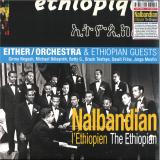
NALBANDIAN THE ETHIOPIAN & EITHER/ORCHESTRA - NALBANDIAN THE ETHIOPIAN (ETHIOPIQUES)

The Éthiopiques series returns! Essential archive recordings from an extremely fruitful period in Ethiopian music.

Before “Swinging Addis” took over the world, there was Moussié Nerses Nalbandian — the Armenian-born composer who shaped modern Ethiopian music. Mentor, arranger, and pioneer, he laid the foundations of Ethio-jazz.

This Éthiopiques volume revives his forgotten legacy, recorded live by Either/ Orchestra First issue ever with new exclusive photos and in depth liner 8-page insert.

“Ethiopian jazzmen are the best musicians that we have seen so far in Africa.
They really are promising handlers of jazz instruments.”

Wilbur De Paris
(1959, after a concert in Addis Ababa)

አዲስ፡ዘመን። *Addis zèmèn* **A new era.**
The time is the mid-1950s and early 1960s, just before "Swinging Addis" bloomed – or rather boomed – onto the scene. Brass instruments are still dominant, but the advent of the electric guitar, and the very first electronic organs, are just around the corner. Rock’n'Roll, R’n’B, Soul and the Twist have not yet barged their way in. Addis Ababa is steeped in the big band atmosphere of the post-war era, with Glenn Miller's *In the* *Mood* as its world-wide theme song, neck and neck with the Latin craze that was in vogue at the same period. Life has become enjoyable once again, with the return of peace after the terrible Italian Fascist invasion of Ethiopia (1935-1941). The redeployment of modern music is part and parcel of the postwar reconstruction. *Addis zèmèn* – a new era – is the watchword of the postwar period, just as it was all across war-torn Europe.
The generation who were the young parents of baby boomers** were the first to enjoy this musical renaissance, before the baby boomers themselves took over and forever super-charged the soundtrack of the final days of imperial reign. Music is Ethiopia's most popular art form, and very often serves as the best barometer for the upsurge of energy that is critical for reconstruction. Whether it be jazz in Saint-Germain-des-Prés or the *zazous* who revolutionised both jazz and French *chanson* after the *Libération*, be it Madrid's post-Franco Movida, or Dada, the Surrealists and *les années folles* that followed World War I, the periods just after mourning and hardship always give rise to brighter and more tuneful tomorrows. Addis Ababa, as the country's capital, and the epicentre of change, was no exception to this vital rule.

**Two generations of Nalbandian musicians**
Nersès Nalbandian belonged to a family of Armenian exiles, who had moved to Ethiopia in the mid-1920s. The uncle Kevork arrived along with the fabled "*Arba Lidjotch*", the** "*40 Kids*", young Armenian orphans and musicians that the Ras Tafari had recruited when he visited Jerusalem in 1924, intending to turn their brass band into the official imperial band. If Kevork Nalbandian was the one who first opened the way of modernism, pushing innovation so far as to invent musical theatre, it was his nephew Nersès who would go on to become, from the 1940s and until his death in 1977, a pivotal figure of modern Ethiopian music and of the heights it. Going all the way back to the 1950s. Nothing less. And it is Nersès who is largely to thank for the brassy colours that so greatly contributed to the international renown of Ethiopian groove. While the younger generations today venture timidly into the genealogy of their country's modern music, often losing their way amidst a distinctly xenophobic historiographical complacency, many survivors of the imperial period are still around to bear witness and pay tribute to the essential role that "Moussié Nersès" played in the rise of Abyssinia's musical modernity.
Given the year of his birth (15 March 1915), no one knows for sure if Nersès Nalbandian was born in Aintab, today Gaziantep (Turkiye/former Ottoman Empire) or on the other side of the border in Alep, Syria... What is certain is that his family, like the entire Armenian community, was amongst the victims of the genocide perpetrated by the Turks. Alep, the place of safety – today in ruins.
Before Nersès then, there was uncle Kevork (1887-1963). For a quarter of a century, he was a whirlwind of activity in music teaching and theatrical innovation. *Guèbrè Mariam le Gondaré* (የጎንደሬ ገብረ ማርያም አጥቶ ማግኘት, 1926 EC=1934) is his most famous creation. This play included "ten Ethiopian songs" — a totally innovative approach. According to his autobiographical notes, preserved by the Nalbandian family, Kevork indicates that he composed some 50 such pieces over the course of his career. This shows just how much he understood, very early on, the critical importance of song as Ethiopia's crowning artistic form. Indeed, for Ethiopian listeners, the most important thing is the lyrics, with all their multifarious mischief, far more than a strong melody, sophisticated arrangements or even an exceptional voice. (This is also why Ethiopians by and large, and beginning with the artists and producers themselves, believed for a long time — and wrongly — that their music could not possibly be exported, and could never win over audiences abroad, who did not speak the country's languages).

Last but not least, one of Kevork's major contributions remains composing Ethiopia's first national anthem – with lyrics by Yoftahé Negussié.
Nersès Nalbandian moved to Ethiopia at the end of the 1930s, at the behest of his ground-breaking uncle. Proficient in many instruments (pretty much everything but the drums), conductor, choir director, composer, arranger, adapter, creator, piano tuner, purveyor of rented pianos,... he was above all an energetic and influential teacher. From 1946 onwards, thanks to Kevork's connexion, Nersès was appointed musical director of the Addis Ababa Municipality Band. In just a few years, Nersès transformed it into the first truly modern ensemble, thanks to the quality of his teaching, his choice of repertoire, and the sophistication of his arrangements. It was this group that would go on to become the orchestra of the Haile Selassie Theatre shortly after its inauguration in 1955, which was a major celebration of the Emperor's jubilee, marking the 25th anniversary of his on-again-off-again reign.

At some point or other in his long career, Nersès Nalbandian had a hand in the creation of just about every institutional band (Municipality Band, Police Orchestra, Imperial Bodyguard Band, Army Band, Yared Music School…), but it was with the Haile Selassie Theatre – today the National Theatre – that his abilities were most on display, up until his death in 1977. To this must be added the development of choral singing in Ethiopia, hitherto unknown, and a sort of secret garden dedicated to the memory of Armenian sacred music, and brought together in two thick, unpublished volumes. Shortly before his death (November 13, 1977), he was appointed to lead the impressive Ethiopian delegation at Festac in Lagos, Nigeria (January-February 1977).

His status as a stateless foreigner regularly excluded him from the most senior positions, in spite of the respect he commanded (and commands to this day) from the musicians of his era. Naturally gifted and largely self-taught, Nerses was tirelessly curious about new musical developments, drawing inspiration from the very first imported records, and especially from listening intensely to the musical programmes broadcast over short-wave radio – BBC *First*. A prolific composer and arranger, he was constantly mindful of formalising and integrating Ethiopian parameters (specific “musical modes”, pentatonic scale, and the dominance of ternary rhythms) into his “modernisation” of the musical culture, rather than trying to over-westernise it. It even seems very probable that *Moussié* Nerses made a decisive contribution to the development of tighter music-teaching methods, in order to revitalise musical education during this period of prodigious cultural ferment. Flying in the face of all the historiographical and musicological evidence, it is taken as sacrosanct dogma that the four musical modes or chords officially recognised today, the *qǝñǝt* or *qiñit* (ቅኝት), are every bit as millennial as Ethiopia itself. It would appear however that some streamlining of these chords actually took place in around 1960. It was only from this time onward that music teaching was structured around these four fundamental musical modes and chords: *Ambassel*, *Bati*, *Tezeta* and *Antchi Hoyé*. A historical and musical “details” that is, apparently, difficult to swallow, especially if that should honour a *foreigner*. Modern Ethiopian music has Nersès to thank for many of its standards and, to this day, it is not unusual for the National Radio to broadcast thunderous oldies that bear unmistakable traces of his outrageously groovy touch.

In Stock

On Stock and ready to ship

Jasper Van’t Hof’s Pili Pili - Selected Works 1984 to 2002 LP

DJ Support: Antal, I Cube, Noel Watson, Colleen Cosmo Murphy, Sean Johnston, San Soda, Takaya Nagase, Tina Edwards, Pete Herbert, Kenneth Bager, Severino, Aaron Paar, Felix Joy, Harri Harrigan, Laroye, Telford, Darker Than Wax, Rocky (X Press 2), Shane Johnson, Dan Tyler, Felix Dickinson and many more

Having previously released selected retrospectives focused on the musical output of Ryo Kawasaki and Joan Bibiloni, NuNorthern Soul has now turned its attention to the vast back catalogue of Jasper Van’t Hof’s pioneering electro-acoustic, Afro-fusion collective, Pili Pili.

The band was established in 1984 by Van’t Hof, a Dutch pianist who began his career in Europe’s jazz scene of the late 1960s, as a way of combining his love of jazz-fusion and the music of North-West Africa. Van’t Hof already had a reputation for combining roles in traditional jazz combos with more experimental and abstract projects. These included a spell in violinist Jean-Luc Ponty’s first band, years spent masterminding jazz-rock outfit Jasper Van’t Hof’s Porkpie, the recording of an all- electronic album (1982’s Visitors), and a celebrated collaborative live album with the great Archie Shepp, Mama Rose.

Pili Pili, though, was another step forward for Van’t Hof. Working with percussionists and vocalists from Benin and Mali (including the now legendary Angelique Kidou) and a string of adventurous jazz soloists (saxophonist Tony Lakoto and trumpeter Annie Whitehead included), Van’t Hof’s collective frequently combined live and programmed percussion, electronic and acoustic instrumentation, and the talented improvisor’s own memorable melodies and impactful solos.

NuNorthern Soul’s retrospective focuses on the most productive and celebrated period of Pili Pili’s near three-decade history, showcasing tracks originally recorded and released on studio albums released between 1984 and 2002. The six tracks on show offer an essential glimpse into the musical gold to be found across the Pili Pili catalogue.

In keeping with NuNorthern Soul’s previous retrospectives, the vinyl version of Selected Works 1984-95 comes with extended liner notes telling the remarkable story of this most unusual of cross-cultural collaborations. These feature extensive quotes, reflections and memories from Jasper Van’t Hof and were written by music historian Matt Anniss.

In Stock

On Stock and ready to ship

William Djoko - Dirty Talk

A song about Colostomy - from the opening bars you might think so. but it gets worse. 'X rated' stuff.
the label say 'Djoko is no stranger to Voyage Direct. Having first appeared on the label way back in 2012, he's returned numerous times since, becoming an integral member of the imprint's growing family of artists. Elsewhere, he's delivered material on Tuskegee, Mobilee and Leftroom, amongst others, developing an approach that takes inspiration from numerous styles of house and techno. However, little he's previously released can match the raw, eyebrow-raising lust and sexually charged funk of Dirty Talk'.

Driven forward by Djoko's sleazy, whispered spoken word vocal, the original version combines the rubbery, bass-heavy rhythms of classic, Dance Mania-style ghetto house, the delay-laden guitar flashes of vintage NYC proto-house, and the kind of darting, funk-fuelled keys - provided by fellow Dutch producer Kid Sublime - that recall the glory days of '80s electrofunk. Djoko provides an alternate version in the shape of the thrusting, stripped-back Club Dub', with his breathy Accapella' rounding off the A-side.

On the flip, two Voyage Direct stalwarts take it in turns to rework the track. First up is label boss Tom Trago, who builds on Djoko's elastic percussion with some dense new drum hits of his own. These are combined with spacey synths and sharp string stabs, giving Dirty Talk' a more classic techno/house fusion flavour. In contrast, Werner uses the opportunity to turn in a triple-X-rated interpretation full of bounding, Chicago-influenced beats, intergalactic pads, sleazy acid lines, and sweaty, surging drum fills. It's a fittingly breathless remix.'

In Stock

On Stock and ready to ship

Nonfiction / Kid Enigma - Make It Look Good

Nonfiction / Kid Enigma

Make It Look Good

12inchVESSELRECORDINGS010
VESSEL RECORDINGS
01.12.2025

It's ten up for Ira James's so-far-so-superb Vessel Recordings Group label as the duo of Nonfiction and Kid Enigma step up for a fresh new single. 'Make It Look Good' is an instant house classic with all the key elements nailed: the drums are deep but driving, while the percussion adds texture and bite. And who better to add some further layers of house authenticity than the one and only Chicago don DJ Sneak. First up he goes raw and loop as you would expect, then dubs things out with his second offering. Another doozy from this imprint.

In Stock

On Stock and ready to ship

Joshua Sithole - Joshua Sithole's Africa LP

The album delivers masterful arrangements, inventive rhythms, rich harmonies, and a perfect balance of flute and saxophone interplay. Funk, Jazz, Gospel, Afro, and traditional elements all merge seamlessly into something unique and timeless.
Joshua Sithole (1947–1999) was a self-taught multi-instrumentalist and vocalist from South Africa who first started busking with the Kwela kids in 1959 and then went solo in 1978. He became popular in the 80’s, performing widely in Durban and Cape Town.

Originally released in 1975, this overlooked masterpiece is now reissued for the first time by Voom Voom Records — the first 500 copies include a poster of Vladimir Tretchikoff's painting, "The Pennywhistlers" which captures the beauty of Joshua's playing.

“Joshua Sithole, Errol Dyers, and Jonathan Butler come from some of the most influential and esteemed musical families in South Africa. You cannot write about Jazz in Cape Town and not mention some of these families and their contributions to the art form.” — Fanie Jason (Music Photographer - Cape Town)

"South African spiritual funk gem. slick guitar, banks of horns" - Chris Albertyn (Matsuli Records)
"Dynamic South African funk. An album that will make you want to dance from start to finish" - Franck Descollonges (Heavenly Sweetness)

In Stock

On Stock and ready to ship

Romain FX - Floating World

Romain FX

Floating World

12inchMEMU001
Memory Muscle
21.11.2025

France via Hong Kong, Taiwan and now Lisbon–based producer and DJ Romain FX delivers his Memory Muscle label debut, Floating World EP. As a true kid of the world, Romain FX draws on a life across continents to create a sound that fuses global influences with overground club sensibilities.

A prolific name on the scene over the past few years, he has released on Sound Metaphor’s Bless You, Sound of Vast, Kalahari Oyster Kult, Toy Tonics, and his own label Fauve. The EP opens with the title track Floating World, a percussive roller packed with drums, colourful synth stabs, and hypnotic swirling melodies that build into an ethereal vocal hook. Who Knows takes things further with crunchy acid lines locked to a pummelling breakbeat groove.

On the flip, Track ID? channels classic 90s house vibes with a stomping 909, bubbling basslines, organ stabs, and euphoric vocal samples. Rounding out the release, Memory Muscle’s London duo deliver a direct club remix of Who Knows, featuring filtered pads, driving breaks, 808 thump, and their signature M1 organ bass.

In Stock

On Stock and ready to ship

KID SUBLIME - THE PARADIGM SHIFT

Natural Element proudly presents the long-awaited album The Paradigm Shift by one of Amsterdam’s finest and most prolific producers, Kid Sublime. Following on from the 12” single ‘You Got Me Runnin’’ which dropped in the summer, this 8 track, double LP offering is a special piece of work crafted during the pandemic years and Turbulence recording sessions with maestros Beka Gochiashvili and Mishulino.

The album showcases the evolution of Kid Sublime’s sound and the influence of London’s vibrant broken beat scene, with him having connected with some of the artists around the time of the passing of the legendary Phil Asher. It touches on house, bruk and even techno, with his signature soulful touch palpable across the whole record. Features include talented London artist Oliver Night, Sydney-based vocalist Natalie Slade and long time collaborator, flautist Han Litz, amongst others.

The Paradigm Shift takes you on a deep sonic journey straight from the heart, celebrating love, connection, spirituality and human evolution. There’s introspective moments with the jazzy house drifter ‘The Awakening’ and the dubbed out bass of ‘Kingz’, as well as joyful moments such as the uplifting ‘Heaven’s Glory’ and the romantic ‘Stay Over’, which is as soulful as it gets. ‘Bring It Come’ brings some minimal bruk flavours reminiscent of Bugz in the Attic, and the title track takes things a bit darker with a club-ready roller.

Sitting somewhere between the living room and the dancefloor, this album is sure to enliven the spirits of many a discerning listener and bring some much needed radiance and hope into people’s lives.

In Stock

On Stock and ready to ship

Various - Orange

Various

Orange

12inchRCR001
Raw Cuts Records
06.11.2025

Brooklyn's RAW CUTS Records makes its debut with ORANGE RCR001, a forward-thinking VA that showcases four cutting edge producers whose music captures the energy, intimacy, and spirit of a dance floor ready for something new.

Opening the record, Lubelski delivers 'I Love You So Much, It's Not The Drugs', a deep, psychedelic journey layered with raw emotion and rolling grooves. Donnie Cosmo follows with 'Three or Triangles', a driving slice of deep tech where subtle textures meet irresistible rhythm. On the flip, Boss Priester's 'Different Room' explores hypnotic layers over a commanding bassline, before Occibel closes the EP with 'Naughty Kids', a playful yet sophisticated house cut designed for peak-time moments.

With its focus on quality, artistry, and the communal spirit of dance culture, this first release sets the tone for what's to come from RAW CUTS Records: timeless club music built for the floor.

In Stock

On Stock and ready to ship

Jack Horner - FR044

A bit of backstory behind this release, I first met Hilton (Jack Horner) at an event in 2012 that took place in a venue called Crucifix Lane (also known as Jack's, now defunct due to expansion of London Bridge station). He's good friends with Krome & Time who were performing that night and I remember chatting with him about jungle (I was still a very eager young lad that was in his first year of raving and very keen to talk about jungle/hardcore/d&b to anyone that would be willing to endure it!) and he mentioned that he used to make jungle in the 90s. I asked who he was and when he told me he was Jack Horner, I went mental because I was a big fan of the 2nd release on Spectrum Records (The Hoover & I Got This Feeling) and to actually meet the person behind those tunes was a really special situation for me to be in.

Unfortunately, I was too shy to get any contact details for him and I never saw him again or knew anyone that had a way of getting in touch with him. That was until very recently, when he had started attending Distant Planet events in London & I got the chance to meet him again, only to be shocked by him telling me that he had been following me & my music and was a fan of me & my label! This time, I made sure that I was able to get contact details for him, I was not going to make the same mistake as last time!

Last December, he messaged me asking if I would be up for doing a remix of The Hoover & I was quite unsure about doing it because of how much I really enjoy the original and feel like it does pretty much everything it needs to do with the sounds used. But, I thought it would be worth a try so I gave it a go and Hilton really liked the outcome (which was a huge relief ????), even though I was a bit too scared to change too much of it haha.

He then asked if I would be interested in releasing it on Future Retro London, which I'd never considered doing because I thought he would have had his own plans for it but I was willing to try & see if we could make a release out of this. I messaged Dwarde & Kid Lib to ask if they'd be up for doing remixes of the same tune (at the time, we only had access to the samples from The Hoover) and they both were and they did great work taking the original track in different directions, each in their own way.

Around the time of making The Hoover, Hilton made another tune with similar samples called After The Pain, which was never released, but he still had the tune. The problem is that he only had it in the form of a cassette recording, which wasn't very good quality and probably would not be easily cleaned up for release. So, I decided to remake the tune from scratch, using the samples I had from The Hoover, as well as sourcing & recreating other sounds used. I was able to remake the whole tune arrangement & then Kid Lib mixed it down to make it sound more sonically similar to how it would have sounded when it was originally made back in 94/95.

Anyway, story time over, big thanks to Hilton for his co-operation & assistance on making this release happen, to Dwarde & Kid Lib for their remix work & a special shout going out to Hughesee for going through Hilton's collection of floppy disks to find & record the samples for The Hoover.

In Stock

On Stock and ready to ship

Ocean Dawn - FR045

For those that don't know who Ocean Dawn is, it's a new alias from Kid Drama (1/2 of Instra:mental), mainly focusing on atmospheric jungle. I've previously worked with Damon (Ocean Dawn) on Ambien Sequence (which came out on Meeting Of The Minds Vol. 10, before he had established this alias for his solo atmospheric jungle tunes) as well as a track called Transitions, which came out on the Nine Windows (him & DJ Trace) album called Rule Of Thirds.

Last year, I booked him to play at one of the Future Retro London nights in Peckham Audio and I really enjoyed his set & his selection, which was mainly made up of his own work. He was quite keen on doing a release for the label so we started with Fingerprints.

Even though this tune is by just him, the original version of it is actually my remix, which was going to be a collaboration & was actually started by him. I finished the track & he liked it but thought it could be taken down a different path, so I sent him back the sounds and he made his own version from it, which is now the original & the "collaboration" became my remix of the tune.

Shortly after we had Fingerprints & the remix done, he sent me Progressive Future Music & Wax Cool which he had recently made and I loved both of those tracks, which give us enough tracks by him to complete the release.

Big up to Damon for his work on this release & look out for more to come from Ocean Dawn, including a collaborative release me & him are currently working on! :)

In Stock

On Stock and ready to ship

Kid Ginseng - I Go Off

Kid Ginseng

I Go Off

12inchKJ080
KRAFTJERKZ
14.10.2025

“Oh my God! Super dope!” - DJ Qbert (Invisibl Skratch Piklz)

Kid Ginseng’s 3rd in a series of sample-delic electro 12»s embracing the sound of the diskette between 8-16 bit sound influenced by DJ Di’jital, Arabian Prince, and the LA X-men which consisted of Unknown DJ and DJ Slip. The whole LA Techno Hop label is a massive influence. Of course compatible with a Detroit electro set. Kid Ginseng is an individual.

In Stock

On Stock and ready to ship

Various - When The Two Thousands Clash - Electronica In The new Millennium
  • A1: Emerge / Fischerspooner
  • A2: Seventeen / Ladytron
  • A3: Strict Machine/ Goldfrapp
  • A4: Girls On Pills / The Droyds
  • A5: Hooked On Radiation (Pet Shop Boys Orange Alert Mix) / Atomizer
  • B1: Fuck The Pain Away / Peaches
  • B2: Do I Look Like A Slut? (Original Version) / Avenue D
  • B3: Galang / M.i.a
  • B4: Kernkraft 400 (Dj Gius Mix) (Radio Edit) / Zombie Nation
  • B5: Poney Pt. 1. (Edit) / Vitalic
  • B6: The Game Is Not Over / T. Raumschmiere Feat. Miss Kittin
  • C1: Over And Over (Naum Gabo Remix) / Hot Chip (7.05)
  • C2: Banquet (Phones Disco Remix) / Bloc Party (5.25)
  • C3: E Talking (Nite Version) / Soulwax (6.08)
  • C4: ?Zdarlight» / Digitalism (5.44)
  • D1: Daft Punk Is Playing At My House (Edit) / Lcd Soundsystem (3.23)
  • D2: Hustler / Simian Mobile Disco (3.43)
  • D3: We Share Our Mother's Health / The Knife (4.09)
  • D4: Missy Queen's Gonna Die / Tok Tok Vs. Soffy O (4.13)
  • D5: What Was Her Name (Radio Edit) / Dave Clarke Featuring Chicks On Speed (4.44)
  • D6: I Am The Fly / Adam Sky And Crossover (4.59)
  • E1: We Are Your Friends / Justice Vs. Simian
  • E2: Take Me Out (Daft Punk Remix) / Franz Ferdinand
  • E3: Slow (Chemical Brothers Remix Edit) / Kylie Minogue
  • F2: Warm Leatherette / The Normal
  • F3: Empire State Human / The Human League
  • F4: Tryouts For The Human Race / Sparks
  • F5: Telephone Operator / Pete Shelley
  • F6: Nag Nag Nag / Cabaret Voltaire
  • E4: Let's Make Love And Listen To Death From Above / Css
  • E5: Solta O Frango / Bonde De Rolê
  • E6: Club Action / Yo Majesty
  • F1: Numbers / Kraftwerk

‘When The 2000s Clashed: Machine Music For A New Millenium’ is the story of how, 25 years ago, a new form of electronic music – known as electroclash - reignited a tired clubland and gave the indie scene and mainstream pop a shot in the arm in the process. Over this 3LP highlights set, carefully curated from the 5CD box of the same name (also released, 3rd October) the collection showcases the back-to-basics electronic beats that heralded in a new generation of exciting and innovative new artists - Hot Chip, Peaches, LCD Soundystem, and Ladytron, to name a handful. It also shows how the sound and attitude of electroclash plugged into the decade’s cutting-edge indie bands, (Franz Ferdinand, Bloc Party), and became intrinsic to the way chart pop would sound in the first decade of the 2000s (Kylie, Goldfrapp).

The collection also shows how the scene’s underground DIY ethos evolved and inspired the next generation of electronic buccaneers (Simian Mobile Disco, Justice Vs. Simian). ‘When The 2000s Clashed’ brings together a dazzling, diverse selection of artists, producers and remixers from right across the 2000s zeitgeist – from The Chemical Brothers and Daft Punk, from M.I.A. to Soulwax and many points in-between. For good measure, there’s also one side of LP3 given over to the original post punk and electronic sounds (including Kraftwerk, The Human League and Cabaret Voltaire) who’d played such a big influence on the electroclash sound. ‘

When The 2000s Clashed’ was compiled and sequenced for Demon / Edsel by Jonny Slut, founder of London’s electroclash citadel Nag Nag Nag. Established in 2002, in a small Soho venue called Ghetto, ‘Nag’ quickly became THE hottest club, first in London and then in the whole world. A glorious mess and hedonists’ hotspot, a night at ‘Nag Nag Nag’ (if you could get in!) saw the capital’s club kids, students and creatives rub up alongside names from the fashion and music worlds - Björk, Pet Shop Boys, Kate Moss, Boy George, Alexander McQueen, and Pam Hogg were among the regulars. Madonna visited, so did John Peel, Yoko Ono asked to perform and did, Throbbing Gristle’s Chris and Cosey DJ’d, so did Marc Almond, and Too Many DJ’s.

Justin Timberlake was refused entry (too many bodyguards)… even Cilla Black was spotted getting down! Jonny shares these reminisces – and many more - in the collection’s sleevenotes. Named after the 1979 Cabaret Voltaire classic, ‘Nag, Nag, Nag’ became the first place to hear the seemingly endless flow of thrilling new tunes coming from every direction during that decade of dance. Many of them are included on this collection.

In Stock

On Stock and ready to ship

Eril Fjord - Lost Tapes Of Interkosmos

26th May 1980. We were kids, or we were not even born yet. This day changed the thinking and the future of an entire nation. That day one man carried the weight of history and all the hope of a whole country, to infinity and back.

Bertalan Farkas was the first Hungarian to make a successful landing aboard SOYUZ-36 as part of the Interkosmos program led by the Soviet Union. Together with his partner Valery Kubasov, on 26th May 1980 he launched into outer space from the Baikonur Cosmodrome. With this space travel Hungary became the seventh nation to enter outer space.

In addition to his professional knowledge and merits, an entire country celebrated him for his humanity and loyalty to his people. The national hero of the 80's inspired generations. As children we wanted to be astronauts, and as adults we look up to the stars and the endless sky with the same childlike enthusiasm.

In Stock

On Stock and ready to ship

PRINZ EZO - KURIER

PRINZ EZO

KURIER

12inchTNLP02BLCK
Tech-Nology
22.08.2025

Tech-Nology was launched in 2003 specifically to make records with the artist Bjorn Svin. Bjorn was the first Danish artist who made underground crossover into commercial hit territory via "Mer Strom" - but still keeping respect in the "real" music world for his enthusiasm, non-compromising style, persona, and sweaty live performance skills - his musical understanding and need to explore new directions took the crowd on a personal musical journey from jazz and classical musicians to early electronic pioneers - but always in a tone of his own. Bjorn always felt a need to escape norms, to grow and not to repeat, but investigate and create. The first record on Tech-Nology was born under the alias - El Far: Couples of lonely dancers. "Bjorn is maybe the most talented electronic producer ever in Denmark" and he was celebrated as a wonder kid by the media back in the 90's. An insider with new knowledge of Bjorn told us: "Yeah I think its good music.. It's not for everyone I must add, but it's definitely quality music for those who dig this sound.. sometimes a bit too deep.. which kind of works against it, cause you really need to listen to it.. you cannot just skip through it, cause then you don't really grasp the soul of it.. so this is what makes it more difficult to sell - but if a guy like this was a bigger name he would sell much better.."

We love Bjorn and we agree - We have tried to sell Bjorn and his music for over 2 decades now - But you can't capture Bjorn, you can't own him - he is only making music for himself - and you can get on the ride if you want to, but don't expect all the rides to be fun - sometimes it hurts! Bjorn is difficult to sell, but we don't think Bjorn really would like to sell much better if he had the option to do a more commercial approach to his music - because Bjorn is about not selling out, he's a purist at heart, making music documents for the few. Bjorn is bigger than superficial success and streaming numbers. He made jingles for Nokia, toured and played Roskilde's main stage, the biggest Festival in Denmark, but he still doesn't care... and that is important if you want to make interesting music that last for the future. When Bjorn met Mester Jakobsen, label boss of Tech-Nology, he has been releasing on numerous underground labels, made the jump to a major label, and everything more or less turned out as a big disappointment, so Bjorn presented a completely experimental album to the Tech-Nology label under the moniker Prinz Ezo - The Body Offset. We loved it then - we still love it now - and a truly collectors item and a secret DJ tool.

Today, Bjorn is still breaking all habits and rules, still doing the same thing - just in new ways, but he has gained insight on another level, adding even more nuances and textures to his post-genre compositions.

Welcome to the second album by Prinz Ezo on Tech-Nology: KURIER Why Kurier? Because Bjorn left to explore the Berlin Underground, shortly after the first two releases on Tech-Nology - he left his roots to search for a bigger meaning, a bigger understanding, to compose real mature sounds and understanding his skills, at the point where you understand why you have to cross borders, still incognito, doing smuggler-sounds, always in transit - between cities, between cultures, between worlds, time and space. Not Restless nor rootless, just forever on the move, always discovering new landscapes! But now Bjorn is settling down - accordingly with the music - to find - not inner peace, but to be completely in balance with the music inside of him. Prinz Ezo is raw, narrative, minimalistic electronic storytelling that refuses to freeze. Tension builds and releases - feel the energy and the drama for the last 2 decades if you dare to take the journey?

Almost twenty years after the first Prinz Ezo album, it has now been possible to make the music for those who never arrived.

In Stock

On Stock and ready to ship

Arkan - Gaman

Arkan

Gaman

12inchDR036
Drawner Records
25.07.2025

This is a tribute & was made during a place of sadness & grief for two amazing humans we lost last years, Rob Maguire on 18 december 2023 & Lea-Rose Besson aka Radical Softness on 15 February 2024.

They were the most unconditional loving persons I ever met, sharing love, breathing love, teaching us so much about being better everyday, leaving us as their mission on Earth were completed.

Still, the ones who stay, stand still. With only our memories to remember their souls, being infused by their aura of life forever. Its from those people when you feel instantly good around, making you feel comfortable, loving yourself more, accepting yourself & being vulnerable while powerful.

From all over the world and especially in Berlin, many of us where impacted so much by their kindness and souls, offering us a space to be heard & seen, when so many of us couldn't. We all know that it was such a privilege to knew them & shared wisdom with and timeless experiences, being kids around old souls, teaching us how to love beyond time & space.

Its from this place that most of the tracks of this EP were created, fighting for resilience through dark times. I felt the need to make them this tribute while healing from pain to find love in myself and others. Being grateful for everything that happens in life even if it never last.

Gaman, from the Japanese means, perseverance. That illustrate never giving up on ourselves, our dreams, our life, keep shining one day after the other, because being alive is the most unique privilege we will ever have.

While everything is temporary, music still belong, making them heard a little bit longer through vibrations.

My dear Rob, my dear Lea, may you rest in peace, may we see us again in another realm. We love you.

In Stock

On Stock and ready to ship

Eagles - Hotel California LP 2x12"
  • Hotel California
  • New Kid In Town
  • Life In The Fast Lane
  • Wasted Time
  • Wasted Time (Reprise)
  • Victim Of Love
  • Pretty Maids All In A Row
  • Try And Love Again
  • The Last Resort

The moment the instantly recognizable intertwined guitar passage on the title track to the Eagles' Hotel California begins, the record's genius becomes obvious all over again. Ranked the 118th Greatest Album of All Time by Rolling Stone, certified by RIAA as the third best-selling LP in history, and considered the foundation on which the Golden State's mid-‘70s music scene was built, the 1976 landmark is a music staple immune to shifts in trends, eras, and styles. Fearlessly addressing the chaos and consequences of American life, its songs remain strikingly prescient and gain creedence with each passing day.

Mastered from the original analogue master tapes, pressed on MoFi SuperVinyl, and limited to 17,500 numbered copies, Mobile Fidelity's UltraDisc One-Step 180g 45RPM 2LP vinyl box set ensures you will want to permanently check into and never leave this particular Hotel California. Up to the herculean task of standing head and shoulders above all prior reissues, this collectible edition plays with extreme clarity, organic richness, tube-like warmth, massive dynamics, and microscopic levels of detail. You'll be able to practically smell the colitas and feel the breeze in your hair. Songs come across with an epic sweep and feature immersive, front-to-back soundstages that allow the music unprecedented air, roominess, and separation. As for the noise floor? It's basically as invisible as the spirits that waft in the corridors of the unforgettable title song.

Aesthetically, the premium packaging and presentation of the UD1S Hotel California pressing befit its esteemed status. Housed in a deluxe box, it features gorgeous foil-stamped jackets and faithful-to-the-original graphics that illuminate the splendour of the recording. From every angle, this UD1S reissue exists as a curatorial artefact meant to be preserved, touched, and examined. It is made for discerning listeners that prize sound quality and production, and who desire to fully immerse themselves in the art – and everything involved with the album, from the renowned cover art to the meticulous finishes.

Indeed, the opportunity to zero in on all the particulars of the 26-million-selling Eagles record dubbed "a legitimate rock masterpiece" by vaunted Los Angeles Times scribe Robert Hilburn has never been better. A global phenomenon that marked the band debut of guitarist-singer Joe Walsh, Hotel California continues to resonate and connect with listeners of all generations taken by its narrative depth, stark directness, picturesque melodies, daring majesty, and ardent emotionalism. Adorned with a breathtaking exterior photograph of the Beverly Hills Hotel that serves as the simultaneously haunting and alluring cover art, and rounded out by a rear-cover shot of the Lido Hotel lobby that reinforces a notion that teeters between permanence and transience, Hotel California is brilliantly tied to a specific place that functions as a universally understood metaphor for the American Dream.

Confronting the darker undercurrents and oft-ignored constructs attached to that romantic notion, the record's songs revolve around a host of shared themes: excess, mobility, stability, illusion, fame, destruction, and idealism included. Notably, Hotel California appeared at a crucial junction in American history: During the country's bicentennial and amid escalating controversies related to the Vietnam War, energy crisis, and governmental corruption. That the Eagles manage to channel such cultural, social, and economical matters into a cohesive, stately, big-picture statement is alone a stupendous feat. That the album's reach, boldness, vitality, accessibility, and understated intensity have never waned make it a marvel.

Reflecting on Hotel California 40 years after its original release, and indirectly explaining its enduring appeal and increasing relevance, singer-songwriter Don Henley confirmed the record pertains to the "loss of innocence, the cost of naiveté...the difficulties of balancing loving relationships and work, trying to square the conflicting relationship between business and art; the corruption in politics, the fading away of the Sixties dream of ‘peace, love and understanding.'"

It can be argued that Henley and company squarely hit on and drove home those ideas in the surreal title track, chart-topping "Life in the Fast Lane," and grand "The Last Resort" alone. But that would miss the forest for the trees. Experienced as an unbroken whole, complete with the pristinely shot imagery and physical grooves, Hotel California unfolds like a geography-conscious saga by James Michener and plays like colour-saturated movie shot on 70mm film by Martin Scorsese. It's about our collective and individual decisions – and the shape of our past, present, and future. And, just like that conjured by our imaginations, Hotel California continues to take on a life of its own.

More About Mobile Fidelity UltraDisc One-Step and Why It Is Superior
Mobile Fidelity Sound Lab's UltraDisc One-Step (UD1S) technique bypasses generational losses inherent to the traditional three-step plating process by removing two steps: the production of father and mother plates, which are created to yield numerous stampers from each lacquer that is cut. For UD1S plating, stampers (also called "converts") are made directly from the lacquers. Since each lacquer yields only one stamper, multiple lacquers need to be cut. Mobile Fidelity's UD1S process produces a final LP with the lowest-possible noise floor. The removal of two steps of the plating process also reveals musical details and dynamics that would otherwise be lost due to the standard multi-step process. With UD1S, every aspect of vinyl production is optimized to produce the best-sounding vinyl album available today.

MoFi SuperVinyl
Developed by NEOTECH and RTI, MoFi SuperVinyl is the most exacting-to-specification vinyl compound ever devised. Analogue lovers have never seen (or heard) anything like it. Extraordinarily expensive and extremely painstaking to produce, the special proprietary compound addresses two specific areas of improvement: noise floor reduction and enhanced groove definition. The vinyl composition features a new carbonless dye (hold the disc up to the light and see) and produces the world's quietest surfaces. This high-definition formula also allows for the creation of cleaner grooves that are indistinguishable from the original lacquer. MoFi SuperVinyl provides the closest approximation of what the label's engineers hear in the mastering lab.

pre-order now

This item has not yet been released. You can pre-order the product now.


Last In: 2026 years ago
Items per Page:
N/ABPM
Vinyl