dovrebbe essere pubblicato su 01.05.2026
Last In: 2026 years ago
dovrebbe essere pubblicato su 01.05.2026
An’archives is proud to present Hanabi, a compilation of material from legendary Japanese folk singer, actor and writer, Kazuki Tomokawa. Hanabi draws from Tomokawa’s three most recent albums, Vengeance Bourbon (2014), Gleaming Crayon (2016) and Going To Buy Squid (2024), all released in Japan only on the Modest Launch imprint. Pulling together highlights from these three extraordinary albums, Hanabi collects ten songs of shattering intensity, with Tomokawa performing at an ecstatic peak, a mere six decades into his musical career.
Tomokawa’s life story is one of change, risk and dedication. He appeared on the Japanese folk music circuit in the early 1970s, performing at such significant events as the legendary 1971 Folk Music Jamboree. Over the second half of the decade, he released five stunning albums that cemented his reputation as an expansive, lyrical singer-songwriter and performer whose music jack-knifed between pensive melancholy and righteous fury. His recorded output slowed in the 1980s as he became immersed in theatre, acting and painting, but his connection with the sainted Japanese label P.S.F. led to a prodigious burst of albums across the 1990s and 2000s.
Some of those albums had Tomokawa playing alongside free jazz musicians, such as his long-standing collaborator Toshiaki Ishizuka (Brain Police, Vajra, Cinorama), and late double-bass improviser Motoharu Yoshizawa. Some of that spirit can be found amidst the songs on Hanabi, leavened by a more romantic sensibility on a song like “Night Play”, where Tomokawa’s impassioned vocals and guitar swim and bob amongst a drifting string arrangement. The ferocity of “To The Dead Man” is reinforced by a guest appearance, on saxophone, by upcoming free jazz player Harutaka Mochizuki; the two spar with each other while Hiromichi Sakamoto’s cello and electronics swarm under the surface.
For those who’ve missed the three albums that Tomokawa has released across the past fifteen years – understandably so, given the relative impossibility of finding them outside of Japan – Hanabi is a welcome re-introduction to one of Japan’s most significant, poetic and quixotic folk singers and songwriters. As Michel Henritzi notes in his typically perceptive liner notes, capturing the oneiric and unique spirit of Tomokawa’s song, he is nothing less than “a poet who cries out, opening the darkness and shadows with his song, throwing handfuls of ashes from lives that have fled into the wind, to us, his fellow human beings.”
Disponibile in Stock e pronto per la spedizione
In a generation of musicians that came of age in postwar Japan, Kazuki Tomokawa stands as a pioneer of radical individualism, with a sound marked by shocking intimacy and blistering honesty. In his third album, A String of Paper Cranes Clenched between My Teeth, released by Harvest Records in 1977, Tomokawa creeps "ever more inward," as Kiichi Takahara writes in the record's original introductory text-embracing an attitude pervasive amongst musicians of the time who interrogated the prosaic and the profound alike, eschewing politics and society in favor of an "attitude of total self-containment." Tomokawa recorded the album over the course of a month-from August 24 to September 25, 1977-at Tokyo's famed Onkio Haus studio in the bustling Ginza district. The arrangements, accordingly, are amped up: paired with the Black Panther Orchestra, Tomokawa's "screaming philosopher" vocals find their match with the orchestra's electric guitar, bass, piano, tuba, and ground-thumping drums played by the Brain Police's Toshi Ishizuka-who appears on Tomokawa's first three records and remains his collaborator to this day. "This is Kazuki Tomokawa in the flesh," concludes Takahara. A String of Paper Cranes Clenched between My Teeth is, in Tomokawa's uncanny way, able to cut through facade and artifice in pursuit of truth. "You call that life?" he heckles, exhausted by the melodrama and nihilism of youth counterculture, "try saying you're alive!"
dovrebbe essere pubblicato su 13.05.2022
At the tender age of twenty-five, while he was working part-time at an Italian restaurant in Tokyo's Kamata district, Kazuki Tomokawa released his debut record, fittingly titled Finally, His First Album. While he had already penned hundreds of songs, including his first single "Try Saying You're Alive!," written on a long train ride past fields and rice paddies, it was this recording that introduced Japan to one of its most unique musicians of the postwar era. Each track, as record label exec Kiichi Takahara writes in the LP's liner notes (here translated for the first time), is not a song but a "flesh-and-blood human being," birthed by the singer-songwriter and the raw, guttural cries that would become a hallmark of his incomparable sound. 1970s Japan was a time and place marked by a profound desire for authenticity amidst the onset of television and media saturation. Tomokawa arrived on the scene as a musician with "the personality of a hydrogen bomb," to borrow a phrase from his frequent collaborator Toshi Ishizuka. In an unwieldy interview included here, members of the notorious leftist band Zun? Keisatsu (Brain Police) put it bluntly: here was a man surrounded by the "disingenuous," the "wishy-washy," and the "superficial," who was delivering "real life, unvarnished." These songs are lullabies for the lost, staring not into the void but-as the fourth track declares-from inside it. Finally, His First Album is the first of three Tomokawa records to be reissued by Blank Forms Editions in conjunction with the US release of Tomokawa's memoir, Try Saying You're Alive!, the first-ever English translation of his writing. This debut captures the self-assured trademarks that Tomokawa would hone over the course of decades. Multiple tracks are performed in his native Akita dialect, a distinct and highly regional vernacular of northern Japan seldom heard outside the prefecture-and even more rarely heard in music. Tomokawa's lyrics locate profound interiority in the rituals of everyday life, and are sung against sparse folk arrangements of tender, lilting chords-a prelude to the rock and electronic stylings to come in later years. A self-proclaimed "living corpse," Tomokawa wallows, whispers, shouts, and cries, yet still, through his existential doubt, asks to be heard.
dovrebbe essere pubblicato su 13.05.2022
In the 1970s, Kazuki Tomokawa catapulted into Tokyo's avant-garde scene with his cathartic and utterly electrifying performances. Straight from the Throat, Tomokawa's second album, released in July 1976 by Harvest Records, finds the musician in his truest form: as the "screaming philosopher" he would come to be called-cynical but fair, cheeky and melancholic, and looking at the world with truth-seeking eyes. In Straight from the Throat, Tomokawa shrieks and shouts and wallows with ritualistic abandon-his avant-folk stylings are cosmic and, at times, well to ground-shaking rock. He speaks of adolescence, passing hearses, and wedding chapel cars in a poem to his younger brother, Tomoharu, and watches ice melt on the Mitane River with spring's turn. Tomokawa's sound is, as Kiichi Takahara would later dub it, "I-music": revelatory and deeply intimate songs that turn to the everyday and the interior. They are portraits of a man in search of meaning, who is taking stubborn control of his life by doing so. As he croons in "The Spring Is Here Again Song," "I'll drink till I've had my fill / And fall in love until I die."
dovrebbe essere pubblicato su 13.05.2022
COLLECTION OF SIGH'S EARLY DEMOS, EP & RARITIES ON VINYL -
INCLUDES AN INTERVIEW & LINER NOTES COURTESY OF MAINMAN
MIRAI KAWASHIMA ON THE FORMATIVE YEARS OF THE JAPANESE
LEGENDS.
Cult Japanese black metal legends Sigh formed in 1989/90, featuring
mainman Mirai Kawashima, Satoshi Fujinami & Kazuki Ozeki
Following initial demos, Shinichi Ishikawa was brought into the band. It was following this shift that the band set about recording the masterpiece debut 'Scorn Defeat' for Euronymous' Deathlike Silence Productions, going on to become one of the country's greatest & most revered metal exports. With a journey through the strange & the psychedelic, incorporating a whole eclectic mix of genre styles & experimentation throughout their career, Sigh has remained a
vital creative force in the avantgarde field. However, at its core, Sigh has always remained true to its roots of old school metal.
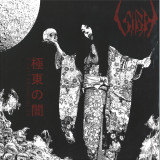
'Eastern Darkness' contains a collection of Sigh's early rare works showing their swift musical evolution as well as the strong utilisation of keyboards in their compositional process throughout. The collection includes the band's legendary demo tapes, 'Desolation' & 'Tragedies', plus their 'Requiem For Fools' EP, along with the 'Far East Gate In Inferno' version of 'The Zombie Terror'. 'Eastern Darkness' is presented on the vinyl format & includes an interview with Mirai Kawashima about the early years of the band, along with his recollections of the origins of each title contained within the release, three decades on from Sigh's formation.
Disponibile in Stock e pronto per la spedizione
One of the leading Japanese alternative rock band, GEZAN’s leader, MahitoThePeople’s director debut film, i ai was released in March 2024, and it is an atypical coming-of-age film decorated with tinge of red.
The film takes place in Akashi and Kobe, Hyogo prefecture. This film’s main characters are Ko (Kentaro Tomita), a rookie member of a band and a brother-like figure of his, Hee (Mirai Moriyama) who Ko idolizes and the story of this movie is based on their struggles with life and death. The story is also based on Mahito's real-life experiences and while reality and fiction are duplicated, the boundary between them slowly melts away. The film co-stars Honami Satoh, Kazuki Horike, Mitsuru Fukikoshi, Eita Nagayama, Kyoko Koizumi, K-BOMB, Ichi Omiya and many other unique personalities. It should also be noted that the transparent images filmed by photographer, Masafumi Sanai gives the film, a special emotional quality.
The film is not bound by any film theory but it poses a theme common to GEZAN's recent works and Mahito's writing activities: How can we live in a crumbling society while interacting with others? We can never live alone but living with others is also never easy. How can we overcome this time of extreme division of the world?
What left quite a strong impression in this film that not only Mahito personally directed but also wrote the script and composed the soundtrack as well was the main theme song, entitled “i ai”. This new piece of GEZAN is an extension of the work that this band has continued doing over the last few years. This 12" single, contains the song, “i ai” and it will be the first time released on vinyl.
Led by soft guitar arpeggios, the song gradually builds to a fever pitch, condensing the mood of the film which encompasses both tranquillity and intensity. The chorus of ineffable, multiple voices united together sounds like a lament that has spilled out of society or a cry of joy. GEZAN's collaboration with the 15-member chorus group, Million Wish Collective has been in development of late and the cultivated sensibilities through their activities are put to use in this song.
The song can also be considered a slow, relaxed dance track that lasts 9 minutes and 8 seconds. It has something in common with organic dance tracks from South America and other regions, and it is significant that GLOCAL RECORDS which represents glocal music from around the world in Japan are releasing it as a DJ-friendly 12-inch single.
The B-side features a remix by COMPUMA who is also closely associated with GEZAN. The song starts with an African styled percussion, with a thumb piano in the middle of the song and then returns to that memorable chorus. This song feels like a 18 minutes and 18 seconds long short movie like suite, with some dizzying changes from the beginning to the end. It is remix filled with enormous drama!
The cutting and mastering of this 12” was done by TOREI who is also active as a DJ and the artwork was created by jvnpey, a visual artist and graphic designer based in Tokyo. Their loving work also makes this 12" very special.
When I asked AI to find a synonym for the word, “division,” it displayed in succession, a series of words: “integration,” “consolidation,” “unification,” “unity”, and “reconciliation". All of these phrases are somewhat whitewashed and embarrassing but the mirage-like chorus echoing in the song, “i ai” seems to be trying to find a new word, that is a synonym for the word, "division. In this film, “i ai”, the message, “Let's live together after the end roll” was thrown out but included in this 12-inch, the message, “Let's live together after the music stops”, emerges.

dovrebbe essere pubblicato su 23.01.2026
Last release of a productive year for Feral Child sees a fabulous mini LP from London based, Japanese Psych band BARBICAN ESTATE. Six beguiling tracks of atmospheric, occasionally acid folk flavoured, melodic > freakout shifts, taking in tips of the hat to Popol Vuh (check Miri’s beautiful vox on “Angel”), Amon Duul and fellow countrymen Acid Mothers Temple and Kikagaku Moyo amongst others. Formed in 2019, this three-piece consists of Kazuki Toneri (guitar, sitar), Miri (bass, flute, vocals), and Koh Hamada (drums, percussion). Each member is well-versed in music, film, and various other arts, drawing inspiration not only from experimental, psychedelic rock, and noise music but also from art across the world, both past and present. Their music weaves solid, architectural elements with destruction into a dark and gloomy soundscape, is often described as "dark psychedelic." They released their first album, “Way Down East”, in 2021. In 2022, they relocated to London, where they performed on UK tours and at festivals. Having already played nearly 50 live shows, they are gaining attention in the local scene. Their latest EP, "Viscum" was released in June 2024. “Barbican City of Tokyo” is a compilation of tunes previously consigned to digital release only that label head, Dom had free rein to assemble an EP from, which luckily the band wholeheartedly agreed upon! …and all four tracks appear on vinyl here for the first time. This release hopefully cements a growing interest in the band’s fabulous music, and early reviews of both the LP here and their live shows are overwhelmingly positive.
dovrebbe essere pubblicato su 17.01.2025
Kumio Kurachi is a Japanese singer-songwriter who has been active since the 1980's.
This is his 11th solo album and only the second to be released outside of Japan following ‘Sound of Turning Earth’ (2018) on bison. Though his songs are written and performed primarily on guitar, “Open Today” is a return to Kurachi’s full, multi-instrumental recording style - featuring drums, bass, strings, keys and Kurachi’s rich, distinctive vocals in multiple voicings. Incredibly, all instrumental performances and arrangements were performed and recorded by Kurachi himself - marking a brilliant return to the fully fleshed out visionary world we fell in love with on Supermarket Chitose (Enban, 2006). The super fine detail and dense landscapes of ‘Open Today’ should come as no surprise really - Kurachi is an illustrator by trade and it bleeds right through to his music. Even to the non-native speaker Kurachi’s vocals hold centre stage - at times enormous and thundering over urgent guitar and toms, then switching to softly spoken words amongst keys. Frequently Kurachi multiplies, whether multitracking himself or summoning voices for the characters he writes from sightings on train platforms or supermarkets. His lyrics - translated to English for both formats - are more like poetry, and though written about the mundane they quickly become surreal, bringing the quality of dreams into the everyday. The hours spent on buses, trains or walking home towards a cheap flat - familiar to us all - are catalysts for microcosms of detail.
Again, we shouldn’t be surprised - Kurachi is well known in Japan for winning the national championship of NHK's "Poetry Boxing" in 2002, which also might explain his amazing Discogs photo. Poet, illustrator, multi-instrumentalist - Kurachi is thought of by many as a genius. He’s worked with Jim O’Rourke, Tori Kudo, Eiko Ishibashi and Taku Unami (who did the mastering on this LP). There are lines to be drawn between Kurachi and Kazuki Tomokawa or Kan Mikami, but also Francis Plagne and Fairport Convention.
Ultimately though there is nothing else like it - it’s a brand of strange songcraft that’s totally captivating.
dovrebbe essere pubblicato su 06.12.2024
Trailblazing instrumental synth pop experiments created to soundtrack Japan’s booming 1980s cartoon and comic industries. The brightly futuristic instrumentals on this collection reflect the mindset of composers and musicians who believed in a technological future where everything was possible.
In the late 1980s Japan experienced a brief but heady period where societal changes combined with new-found wealth to open up a world of possibilities. A huge influx of cash - artificially created by slashed interest rates after an agreement with the US to weaken the dollar relative to the yen - resulted in the inflation of real estate and stock market at a rapid pace. While the economic bubble it created was unprecedented and impossible to sustain, for a while money was in plentiful supply.
The musical genre City Pop reflected the aspirations of the country’s booming leisure class. Video games flourished with Nintendo's 1983 launch of their Family Computer (or FamiCom). Studio Ghibli was founded 1985 to later became one of the most famous and respected animation studios in the world, and Anime and Manga were established as major forms of entertainment for all generations of the Japanese public.
Music was no mere footnote to the anime and manga boom: the two forms of media often went hand in hand, and not simply through the presence of background melodies. With generous budgets available, even two-dimensional static manga comics could be released with an accompanying soundtrack of original music known as an ‘Image Album’.
Composer and arranger Kazuhiko Izu was one such beneficiary of this open budget approach. Written to accompany artist Katsuhiro Otomo’s manga comic Domu, the composer and arranger took advantage of the world-leading (and wallet-busting) Japanese synthesiser technology available at King Records’ fully equipped studio. Featured on this compilation, A3: Act 2 Scene 26 reflected the story’s sci fi themes with a blazingly futuristic yet warmly funky slice of synth pop that presents a joyful celebration of synthesisers and their seemingly endless possibilities.
Kan Ogasawara was another composer who made early mastery of the litany of synthesisers, drum machines and sequencers that had become available. Two tracks written to accompany the 1985 period manga Yume No Ishibumi are featured here; Honowo’s experimental electronic textures add spice to a jaunty electro pop melody that recalls the Rah band’s 1983 hit Messages From Stars; the jazz-tinged Utage rounds out Ogasawara’s shimmering synth textures with beautifully crafted backing from legendary musicians Yuji Toriyama (guitar), Pecker (percussion) and Jun Fukamachi (piano).
Before becoming one of the pioneers of Japanese Kankyo Ongaku (Ambient Music), Takashi Kokubo worked on the proto techno track Kiki (Jungle At Night). It was put together for the 1984 anime film Shonen Keniya (Kenya Boy) using some of the most expensive music technologies available at the time. This Africa-Inspired dance track offers a contemporary parallel to the early techno music that young Detroit based producers were then creating using cheap Japanese Roland drum machines and synthesisers.
This is the first compilation of Japanese anime and manga soundtracks curated by Kay Suzuki and Rintaro Sekizuka from Vinyl Delivery Service (a Tokyo based online record shop which also operates in East London's renowned wine and hifi shop Idle Moments). With a cover by artist Kazuki Takakura and two pages of liner notes, this vinyl only compilation of music never before released outside of Japan, captures a vital aural snapshot of an era whose forward-thinking sounds went hand in hand with cutting edge technology.
Questo articolo non è stato ancora rilasciato. È possibile pre-ordinare il prodotto ora.
THE NEW STUDIO ALBUM FROM THE JAPANESE LEGENDS - AN OPUS
OF DARK & ECLECTIC BLACKENED HEAVY METAL, SHROUDED IN
TRADITIONAL EASTERN INFLUENCES..
Cult Japanese black metal legends Sigh formed in 1989/90, featuring
mainman Mirai Kawashima, Satoshi Fujinami & Kazuki Ozeki
Following initial demos, Shinichi Ishikawa was brought in & Sigh set about
recording the masterpiece debut 'Scorn Defeat' for Euronymous' Deathlike Silence
Productions, going on to become one of the country's greatest & most revered
metal exports. With a journey through the strange & the psychedelic,
incorporating a whole eclectic mix of genre styles & experimentation throughout
their career, Sigh has remained a vital creative force in the avantgarde field whilst
maintaining their old school roots.
'Shiki' marks the latest chapter in the Sigh legacy & includes some of the band's
heaviest & darkest material for some years; a fine hybrid of at times primitive
black metal akin to early influences such as Celtic Frost amid more epic melodic
heavy metal riffing & solos. The album also utilises a whole host of instruments
to give further texture & dynamics to the compositions & eerie atmosphere,
incorporating traditional oriental instruments such as the Shakuhachi & Sinobue
flutes.
The word "Shiki" itself has various meanings in Japanese such as four seasons,
time to die, conducting an orchestra, ceremony, motivation, colour. The two
primary themes for the album are "four seasons" & "time to die".
The concept & artwork is based around a traditional Japanese poem & on 'Shiki'
Mirai explores how at this stage of life he himself is going through Autumn, with
Winter coming soon & so empathises with the contrasting sentimental feelings
from watching cherry blossoms (a symbol of spring) in full bloom.
Joining Mirai & Dr Mikannibal for this release are Frédéric Leclercq of Kreator,
plus US drummer extraordinaire, Mike Heller of Fear Factory, along with an
appearance by long-time member Satoshi Fujinami on bass. 'Shiki' was recorded
across multiple studios & mixed & mastered by Lasse Lammert at LSD studios in
Germany.
dovrebbe essere pubblicato su 14.10.2022
EXTENSIVE COLLECTION OF SIGH'S EARLY DEMOS, EP's & RARITIES,
PRESENTED ON DOUBLE CD FORMAT - INCLUDES INTERVIEW & LINER
NOTES COURTESY OF MAINMAN MIRAI KAWASHIMA ON THE
FORMATIVE YEARS OF THE JAPANESE LEGENDS.Cult Japanese black
metal legends Sigh formed in 1989/90, featuring mainman Mirai
Kawashima, Satoshi Fujinami & Kazuki Ozeki
Following initial demos, Shinichi Ishikawa was brought into the band, & Kazuki
removed from the line- up. It was following this shift that the band set about
recording the masterpiece debut 'Scorn Defeat' for Euronymous' Deathlike Silence
Productions, going on to become one of the country's greatest & most revered
metal exports. With a journey through the strange & the psychedelic,
incorporating a whole eclectic mix of genre styles & experimentation throughout
their career, Sigh has remained a vital creative force in the avantgarde field.
However, at its core, Sigh has always remained true to its roots of old school
metal. 'Eastern Darkness' contains a comprehensive collection of Sigh's early rare
works showing their swift musical evolution as well as the strong utilisation of
keyboards in their compositional process throughout. The collection includes the
band's legendary demo tapes, 'Desolation', & 'Tragedies', plus their EP's & rarities,
as well as contributions to various compilation releases in the mid 1990's.
Considering Sigh's well- known regard for UK legends Venom throughout their
career, 'Eastern Darkness' also contains the band's own tribute to the 1980's black
metal pioneers, in the form of tribute 'To Hell & Back', originally released on tape
in 1995.
This edition of 'Eastern Darkness' is presented on double disc CD format &
includes a 12- page booklet featuring an interview with Mirai Kawashima about
the early years of the band, along with his recollections of the origins of each title
contained within the release, three decades on from Sigh's formation.
dovrebbe essere pubblicato su 06.05.2022
After his stellar 'Stride EP' release (FACES 1210) and his latest offering 'Late Night Blue Sound EP' (on the UK's City Fly's Records/ featuring Andrés remix), Japanese deep house king- Kez YM is back on FACES Records!
Bringing delicious beatdown flavors to the cooking pot that blends Kazuki Yamaguchi into a serving of signature recipe Kez YM.
With ongoing support from influential peers such as Moodymann, Theo Parrish, Rick Wade & Cassy, this is one delicious treat that will leave the fans salivating for more.
His reputation extends beyond his delicious creations, as one of the standout Japanese House Djs currently holding it down in his hometown and Europe.
Mixing ingredients from Detroit, Chicago House, Funk, Disco & Afro and endlessly rocking dance floors and hearts from Panorama Bar in Berlin to Eleven in Tokyo.
The 'Root Bound' EP journeys beyond his past offerings, fresh ingredients and mouth watering grooves, with a sprinkle of that typical Kez YM signature sound!
Ordina ora e ordineremo l'articolo per te presso il nostro fornitore.