quête:i am halo

Genres
Tout
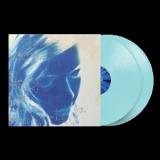
I Am Halo - Garden Ep

I Am Halo

Garden Ep

12inchACKER42
Acker Records
21.10.2013

Dan Morrow, singer of Funkwerkstatt, going to a world of music with a high atmospheric density.


Funkwerkstat-Sänger Dan Morrow wandelt auf Solopfaden. Wohin In eine musikalische
Welt, deren hohe atmosphärische Dichte zwischen poppiger Leichtgkeit und tefsinniger Melancholie oszilliert. Es sind klassische Songs, die er hier unter dem Namen 'i Am Halo' vorlegt. Denn immer ist es die Textur seiner einzigartgen Stmme, um die herum sich Rhythmen und Melodien kristallisieren. Dies geschieht mal mit tanzbarer, mal mit eher bedächtger Dynamik, mal mit orchestralen Motven, mal mit elektronischem Gefrickel, aber immer mit ganz viel Gefühl und Stmmung. So ganz allein ist - i Am Halo' übrigens doch nicht unterwegs. The Micronaut steuert einen Remix zu Litle Planet bei, in dem die jazzige Vertracktheit seiner Beats immer wieder punktgenau auf der Eins landet. Gluid hebt unter die ießende Melancholie des Titels Not Invented gradlinige Rhythmen, die das symphonisch anmutende Original voll und ganz tanzächenkompatbel machen. Und Mollono.Bass arbeitet sorgfältg die sonnigsten Aspekte von Queen of Queens heraus um sie zu einem ungezwungen Groove zu verdichten.

pas en stock

Commandez maintenant et nous commanderons l'article pour vous chez notre fournisseur.


Last In: 7 years ago
The Micronaut - Forms

The Micronaut

Forms

12inchACKERLP005
Acker Records
09.12.2016

The Micronaut creates the soundtrack for those moments when the screeching of the subway and the steps on the wet pavement have echoed away into the dark city sky. Those moments when the ghosts of fumes and stop lights haunt the empty streets, when behind glowing windows dreams and urban exit strategies get ready for bed. When everybody is close to each other, but everyone is on his own. When the city comes to a standstill, but the wheels inside the heads of its inhabitants keep spinning. Stefan Streck discovers the musical equivalent for this epic atmosphere somewhere between Bass Music, Electronica and Pop. The cinematic soundscapes of his nocturnal City Blues have a somewhat tragic vibe, which is very noticeable both during the impulsive, passionate live shows of The Micronaut and on 'Forms', his third studio album on Acker Records, distributed through Kompakt. Between moments of deep melancholy and sudden eruptions of blissful euphoria he creates a feverish state of tension.

pas en stock

Commandez maintenant et nous commanderons l'article pour vous chez notre fournisseur.


Last In: 7 years ago
Metallica - Hardwired... To Self-destruct LP 2x12"

Double LP heavyweight vinyl, gatefold sleeves, printed inserts and download code.

Metallica will release their eleventh studio album, Hardwired...To Self-Destruct, on November 18th, via Blackened Recordings. The 2 CD / 2 Vinyl set is the Grammy® Award winning Rock and Roll Hall of Fame inductee's first studio album since 2008's multi-platinum Death Magnetic. Hardwired...To Self-Destruct is available on various configurations including: CD, Vinyl, Digital, Deluxe, and Deluxe Deluxe Versions. The album is produced by Greg Fidelman, who engineered and mixed Death Magnetic.

pas en stock

Commandez maintenant et nous commanderons l'article pour vous chez notre fournisseur.


Last In: 9 years ago
Various - Water Bodies TAPE

Gravity Pleasure's inaugural release is a rippling compilation of womxn, trans, and non-binary artists and
collaborators that invites listeners into an aqueous paraworld of fluid resistance and sonic kinship. Across 21 tracks from the likes of Yetsuby, Flora Yin Wong, Felisha Ledesma, Ursula Sereghy, tibslc, and more, Water Bodies spans a post-genre miasma of ethereal mermaid music, cathartic flows, and glistening sibilants. Inspired by a poetic prompt from Lou Croff Blake, each track is an exquisite message in a bottle of deep diving emotionality. Pulling from a wide range of musical perspectives – field recording, lovesick ballads, shimmering downtempo, post-party comedown, and percolating ambient – the compilation contains multitudes yet maintains deep sentimental coherence. Like a wave crashing in slow motion, each artist sonifies possible ways of being, insisting on the porous, the interdependent, and the deep and unruly. Water Bodies reminds us that home is a body made of water, to which we all belong.


Credits Curated by Ashlynn White & Madelyn Byrd
Artwork by Dre Roelandt
Layout by Madelyn Byrd Mastered by Estle
Distributed by Rubadub
Published by Gravity Pleasure ❊ GP01 ❊ 2025

pré-commande27.03.2026

il devrait être publié sur 27.03.2026


Last In: 2026 years ago
POT-POT - WRSW 480KM

POT-POT

WRSW 480KM

12inchFLTLPC1114
Felte
15.12.2025

Warsaw 480km ist das Debütalbum des irisch/portugiesischen Quintetts pôt-pot, das die treibenden Grooves des Krautrock mit einer phosphoreszierenden Psych-Rock-Ausstrahlung verbindet, unterstrichen von Harmonium-Drones, hypnotischen männlich-weiblichen Gesangsharmonien und tiefen Schichten rauer Texturen. Das Album entstand in erster Linie aus Demos des Multiinstrumentalisten und Leadsängers Mark Waldron-Hyden während einer Zeit der Trauer und des persönlichen Umbruchs und wurde durch eine Reihe von Live-Studio-Sessions in voller Besetzung zum Leben erweckt, die ein außergewöhnliches Spektrum an Talenten dokumentieren, die sich in einer Umarmung der rohen Katharsis mit einer süßlich düsteren Kante vereinen. Ein entscheidendes Element von Warsaw 480km ist die beeindruckende Bandbreite an Einflüssen und atmosphärischen Landschaften. Waldron-Hyden beschreibt: ,Ich habe die ersten Songs geschrieben, als ich noch nicht wirklich an einem Ort lebte, daher denke ich, dass sie sich irgendwie vergänglich anfühlen - sie mit der Band zu entwickeln half mir, eine Zeit zu verarbeiten, in der ich emotional frei war, daher erinnern sie mich gleichermaßen an die schönen Erfahrungen, die wir als kreative Einheit teilten, und an die schwierigen Zeiten, die sie inspirierten." Die Leadsingle ,WRSW" ist ein Beispiel für diese Komplexität, denn ihr robustes rhythmisches Rückgrat trägt Tremolo-Gitarren, ein wummerndes Harmonium und eine halb gesprochene, an Lou Reed erinnernde Gesangslinie, in der Strophe und Refrain wunderbar miteinander verschmelzen. Vor allem ist Warsaw 480km ein Album, das seinen Reichtum und seine Aura durch bewusste Sparsamkeit erreicht, wie Waldron-Hyden erklärt: "Ollie Oliver Smith und Sara Sara Leslie sind Experten darin, das Beste aus einem Pedal, einem beschissenen Verstärker und einer geliehenen Gitarre herauszuholen, ein Ergebnis von angeborenem Talent und jahrelanger Erfahrung; sie verwenden einige Modulationen für dröhnende Passagen, aber es sind ihre Spielstile und ihr Verständnis für ,den Vibe`, die die geheimen Zutaten sind." Diese Art von intuitiver Verbindung und Zusammenarbeit ist unglaublich selten, und mit diesen zehn Stücken vollbringen pôt-pot etwas wahrhaft Entrücktes, indem sie tiefen Schmerz in eine leuchtende Träumerei alchemisieren. Für Fans von Lewsberg, Spacemen 3, Spiritualized, Brian Jonestown Massacre, Velvet Underground, The Oh Sees, Ty Segall, Uranium Club, Night Beats, Goat, Black Lips.

En stock

Disponible en stock et prêt pour l'expédition

Various - Archeo 10 Years Anniversary - Volume 2

Archeo Recordings is a record label. Old, lost, obscure and forgotten gems and a boundless focus on the new Balearic scene for a wider audience of collectors, DJs and music lovers. All releases are limited edition. This release is the second in a series of EPs on which the label's favourite contemporaries pay homage to past masters for ‘10 Year Anniversary’. 4 new Remixes: limited edition on black vinyl (AR032). With the first volume still singing out both in our ears and on our turntables, Archeo Recordings lifts the veil on the second chapter of its celebratory EP series - another shimmering tribute to the timeless and the timely. Once again, the torch is passed to a new ensemble of sonic sculptors, who delve into the archives and emerge with reimagined treasures, equal parts reverence and reinvention. Philosopher and musical polymath Riccardo Giagni made his name as a cultural curator for RAI TV and radio, before lending his expertise in ethnomusicology as a studio musician and songwriter. Originally released to little fanfare and long overlooked until its Archeo reissue in 2019, his 1988 debut LP Kaunis Maa is a masterwork of Balearic ethno-jazz - a guitar-led journey through imagined geographies and dreamt-up dialects. Its closing track, Passeggera, pairs Mediterranean nylon with synth halos, sampled percussion, and the unplaceable vocals of Matia Bazar’s Antonella Ruggiero, singing not in language but in emotion. Now, Claremont 56’s Paul Murphy aka Mudd lends his gentle hand to the piece, reworking its al fresco fusion into something even more languorous. Highlighting the South American sway hinted at in the original, Mudd introduces jazzy synth flourishes, airy percussion, and occasional organ bass, casting the piece anew as a hammock-swung hymn - less a remix than a relocation, from the hills of Lazio to the lush gardens of Mudd’s imagination.

En stock

Disponible en stock et prêt pour l'expédition

Various - Archeo 10 Years Anniversary - Volume 2

Archeo Recordings is a record label. Old, lost, obscure and forgotten gems and a boundless focus on the new Balearic scene for a wider audience of collectors, DJs and music lovers. All releases are limited edition. This release is the second in a series of EPs on which the label's favourite contemporaries pay homage to past masters for ‘10 Year Anniversary’. 4 new Remixes: limited edition on black vinyl (AR032). With the first volume still singing out both in our ears and on our turntables, Archeo Recordings lifts the veil on the second chapter of its celebratory EP series - another shimmering tribute to the timeless and the timely. Once again, the torch is passed to a new ensemble of sonic sculptors, who delve into the archives and emerge with reimagined treasures, equal parts reverence and reinvention. Philosopher and musical polymath Riccardo Giagni made his name as a cultural curator for RAI TV and radio, before lending his expertise in ethnomusicology as a studio musician and songwriter. Originally released to little fanfare and long overlooked until its Archeo reissue in 2019, his 1988 debut LP Kaunis Maa is a masterwork of Balearic ethno-jazz - a guitar-led journey through imagined geographies and dreamt-up dialects. Its closing track, Passeggera, pairs Mediterranean nylon with synth halos, sampled percussion, and the unplaceable vocals of Matia Bazar’s Antonella Ruggiero, singing not in language but in emotion. Now, Claremont 56’s Paul Murphy aka Mudd lends his gentle hand to the piece, reworking its al fresco fusion into something even more languorous. Highlighting the South American sway hinted at in the original, Mudd introduces jazzy synth flourishes, airy percussion, and occasional organ bass, casting the piece anew as a hammock-swung hymn - less a remix than a relocation, from the hills of Lazio to the lush gardens of Mudd’s imagination.

En stock

Disponible en stock et prêt pour l'expédition

Various - ECHOES OF ITALY – THE BIRDS OF PARADISE – EARLY 90S HOUSE VIBES VOL.2 (2x12")

Googling “paradise house”, the first results to pop up are an endless list of European b&b’s with whitewashed lime façades, all of them promising “…an unmatched travel experience a few steps from the sea”. Next, a little further down, are the institutional websites of a few select semi-luxury retirement homes (no photos shown, but lots of stock images of smiling nurses with reassuring looks). To find the “paradise house” we’re after, we have to scroll even further down. Much further down.

It feels like yesterday, and at the same time it seems like a million years ago. The Eighties had just ended, and it was still unclear what to expect from the Nineties. Mobile phones that were not the size of a briefcase and did not cost as much as a car? A frightening economic crisis? The guitar-rock revival?! Certainly, the best place to observe that moment of transition was the dancefloor. Truly epochal transformations were happening there. From America, within a short distance one from the other, two revolutionary new musical styles had arrived: the first one sounded a bit like an “on a budget” version of the best Seventies disco-music – Philly sound made with a set of piano-bar keyboards! – the other was even more sparse, futuristic and extraterrestrial. It was a music with a quite distinct “physical” component, which at the same time, to be fully grasped, seemed to call for the knotty theories of certain French post-modern philosophers: Gilles Deleuze, Félix Guattari, Paul Virilio... Both those genres – we would learn shortly after – were born in the black communities of Chicago and Detroit, although listening to those vinyl 12” (often wrapped in generic white covers, and with little indication in the label) you could not easily guess whether behind them there was a black boy from somewhere in the Usa, or a girl from Berlin, or a pale kid from a Cornish coastal town.

Quickly, similar sounds began to show up from all corners of Europe. A thousand variations of the same intuition: leaner, less lean, happier, slightly less intoxicated, more broken, slower, faster, much faster... Boom! From the dancefloors – the London ones at least, whose chronicles we eagerly read every month in the pages of The Face and i-D – came tales of a new generation of clubbers who had completely stopped “dressing up” to go dancing; of hot tempered hooligans bursting into tears and hugging everyone under the strobe lights as the notes of Strings of Life rose up through the fumes of dry ice (certain “smiling” pills were also involved, sure). At this point, however, we must move on to Switzerland.

In Switzerland, in the quiet and diligent town of Lugano, between the 1980s and 1990s there was a club called “Morandi”. Its hot night was on Wednesdays, when the audience also came from Milan, Como, Varese and Zurich. Legend goes that, one night, none less than Prince and Sheila E were spotted hiding among the sofas, on a day-off of the Italian dates of the Nude Tour… The Wednesday resident and superstar was an Italian dj with an exotic name: Don Carlos. The soundtrack he devised was a mixture of Chicago, Detroit, the most progressive R&B and certain forgotten classics of old disco music: practically, what the Paradise Garage in New York might have sounded like had it not closed in 1987. In between, Don Carlos also managed to squeeze in some tracks he had worked on in his studio on Lago Maggiore. One in particular: a track that was rather slow compared to the BPM in fashion at the time, but which was a perfect bridge between house and R&B. The title was Alone: Don Carlos would explain years later that it had to be intended both in the English meaning of “by itself” and like the Italian word meaning “halo”. That wasn’t the only double entendre about the song, anyway. Its own very deep nature was, indeed, double. On the one hand, Alone was built around an angelic keyboard pattern and a romantic piano riff that took you straight to heaven; on the other, it showcased enough electronic squelches (plus a sax part that sounded like it had been dissolved by acid rain) to pigeonhole the tune into the “junk modernity” section, aka the hallmark of all the most innovative sounds of the time: music that sounded like it was hand-crafted from the scraps of glittering overground pop.

No one knows who was the first to call it “paradise house”, nor when it happened. Alternative definitions on the same topic one happened to hear included “ambient house”, “dream house”, “Mediterranean progressive”… but of course none were as good (and alluring) as “paradise house”. What is certain is that such inclination for sounds that were in equal measure angelic and neurotic, romantic and unaffective, quickly became the trademark of the second generation of Italian house. Music that seemed shyly equidistant from all the rhythmic and electronic revolutions that had happened up to that moment (“Music perfectly adept at going nowhere slowly” as noted by English journalist Craig McLean in a legendary field report for Blah Blah Blah magazine). Music that to a inattentive ear might have sounded as anonymous as a snapshot of a random group of passers-by at 10AM in the centre of any major city, but perfectly described the (slow) awakening in the real world after the universal love binge of the so-called Second Summer of Love.

For a brief but unforgettable season, in Italy “paradise house” was the official soundtrack of interminable weekends spent inside the car, darting from one club to another, cutting the peninsula from North to centre, from East to West coast in pursuit of the latest after-hours disco, trading kilometres per hour with beats per minute: practically, a new New Year’s Eve every Friday and Saturday night. This too was no small transformation, as well as a shock for an adult Italy that was encountering for the first time – thanks to its sons and daughters – the wild side of industrial modernity. The clubbers of the so-called “fuoriorario” scene were the balls gone mad in the pinball machine most feared by newspapers, magazines and TV pundits. What they did each and every weekend, apart from going crazy to the sound of the current white labels, was linking distant geographical points and non-places (thank you Marc Augé!) – old dance halls, farmhouses and business centres – transformed for one night into house music heaven. As Marco D’Eramo wrote in his 1995 essay on Chicago, Il maiale e il grattacielo: “Four-wheeled capitalism distorts our age-old image of the city, it allows the suburbs to be connected to each other, whereas before they were connected only by the centre (…) It makes possible a metropolitan area without a metropolis, without a city centre, without downtown. The periphery is no longer a periphery of any centre, but is self-centred”.

“Paradise house” perfectly understood all of this and turned it into a sort of cyber-blues that didn’t even need words, and unexpectedly brought back a drop of melancholic (post?)-humanity within a world that by then – as we would wholly realise in the decades to come – was fully inhuman and heartless. A world where we were all alone, and surrounded by a sinister yellowish halo, like a neon at the end of its life cycle. But, for one night at least, happy."

En stock

Disponible en stock et prêt pour l'expédition

Weval - The Weight  2x12"

Weval

The Weight 2x12"

2x12inchKOM396
Kompakt
04.06.2024

2024 Repress

Straight in the wake of their eponymous debut LP released on the label back in 2016, Weval return to Kompakt this year with their sophomore album, 'The Weight', breaking their pop-mellow, nostalgia-friendly facet further out in the open as they arrive "at this place again were everything felt spontaneous, new and exciting, like we had in the beginning". Orbiting around that ever luminous yet wistful melodic halo that surrounds their music, this second full-length effort sweeps an extra-wide and languidly woven palette of emotions and moods, making for a uniquely ambitious and generously coloured mosaic of sound. If the recording sessions "often started grumpy and emotionless" by Harm and Merijn's own admission, the pair was "surprised by the joy it gave us, which can be compared to the emotions we felt back in the first days of making music together"; subsequently reconnecting with that fresh, naïve feeling of "absolute creative freedom" they were after. The album is also the fruit of a whole new working process for them - more playful and unpredictable - which saw them switch from "guitars lying around to piano, onto our own synths and the most cheap quirky toys synths you can imagine", and involved "recording all of our own samples, voice and almost every instrument out of the box - which for us was a totally new way of working". "We've always wanted a narrative for the album, and finding the right order perhaps took the most effort" they explain; "we felt anxious, felt insanely positive, felt heartbroken again, felt in love again, and there was death, and even suicide around us. It was quite chaotic. As a whole, 'The Weight' breathes with that transformative richness, free of limits and rules, except perhaps to "do quick and not think too much". Amidst this collection of songs and instrumentals that live by Weval's singularly positive take on music - one that can "lift you up, and make you feel hopeful without being necessarily straight out 'happy'" as they define it, the title-track and lead single stays true to the duo's dynamic approach, putting on a fine balance of floor and dream inducing adaptability that sound engineer David Wrench (Frank Ocean, The XX, FKA Twigs, Caribou… etc.) subtly made palpable. There's heavy showers of funk drops pouring from endless bars of thunderstorm clouds and laid-back riffs beating a restrained poolside-party kind of pulse, but also sensual vocals rising from beneath the sheets and rueful polaroid-filtered ambiences to soundtrack all possible moments in life - from the most euphoric to those when music seems the only viable healing potion. More on the post-KLF, BoC-inflected electronica side of things, 'Are You Even Real' takes its listener for a round-trip across the star-studded dome and beyond, before songs like 'Someday' and 'Same Little Thing' head back down to a state of pulsating, earthly organicity, tense and mercurial as get. An arpeggiated slice of piano-strewn kosmische, 'Heaven' is another invitation to an epic-scale odyssey from the inner-spheres into the distant fringes of the outer-world. Weightless and airy, yet texturally dense and widely magnetic overall, Weval second LP is a synthesis of the duo's multi-angle take on electronics: blissed-out, heartening and infinitely free.
Nur zweieinhalb Jahre nach der Veröffentlichung ihres selbstbetitelten Debutalbums finden sich WEVAL zurück "an jenem Ort, an dem sich alles spontan, neu und aufregend anfühlt - so wie als wir anfingen zusammen Musik zu schreiben". An diesem Ort entstand "The Weight", ihr zweiter Longplayer, auf dem Weval sich ganz den Pop-verliebten, Nostalgie-freundlichen Facetten ihres Sounds öffnen. Stetig um den sehnsuchtsvollen Strahlenkranz ihrer Melodien tanzend, legt diese Platte noch vielschichtigere, mit feinster Präzision gewobene Gefühlswelten frei.

Obwohl die Aufnahmesessions nach eigenem Bekunden oftmals "miesepetrig und emotionsarm" begannen, so war das Duo überrascht darüber, wie schnell sich bei der Arbeit jene Freude einstellte, die sie aus ihren künstlerischen Anfangstagen kannten, eine Woge des frischen, naiven Gefühls der "absoluten kreativen Freiheit". Dieses Album ist die Frucht eines verspielteren und unvorhersehbareren Arbeitsprozesses innerhalb der Band, in welchem alles zum Einsatz kam, was ihnen in die Finger kam - von der ollen Gitarre, die in der Studioecke stand, über ein Piano und den bandeigenen Sythesizern und den sonderbarsten Spielzeuginstrumenten, die man sich vorstellen kann. All dies sowie zahlreiche Vocalaufnahmen dienten als alleinige Samplequelle - "was für uns eine völlig neue Arbeitsweise war". "Es war uns wichtig für das Album den perfekten Erzählbogen zu spannen. Die richtige Reihenfolge zu finden war ein extrem aufwendiger Vorgang", erklären Harm und Merjin. "Uns war bange, wir fühlten uns total selbstsicher, uns zerbrach das Herz und wir verliebten uns erneut. Wir waren sogar von Tod und Selbstmord umgeben. Alles war Chaos. Insgesamt atmet "The Weight" die Reichhaltigkeit dieser sich ständig verändernden Gefühlslagen, frei von Einschränkungen und Regeln - außer vielleicht "mach es schnell und zerdenke die Dinge nicht." Inmitten dieser Ansammlung von Songs und Instrumentals, die aus Wevals einzigartiger, von Zuversicht geprägter Herangehensweise entstanden sind - "Musik, die dich hochzieht und Hoffnung spendet, ohne dich notwendigerweise happy zu machen. Der Titeltrack "The Weight" steht exemplarisch für Wevals ambivalenten Ansatz, die feine Balance zwischen Dancefloor und Traumzuständen, perfekt in Szene gesetzt von Soundengineer David Wrench (Frank Ocean, The XX, FKA Twigs, Caribou… etc.).

Der schwer aus gewaltigen Gewitterwolken tropfende Funk, die eine verhaltene Poolparty suggerierenden Riffs, die sinnlichen, geisterhaften Vocals und ein verwaschenes Ambiente, das wie ein Album alter Polaroidaufnahmen alle erdenklichen Momente des Lebens festhält - von den euphorischsten bis hin zu jenen, in denen Musik der einzige Trank ist, der Linderung verheißt. Das post-KLF und Boards of Canada evozierende "Are You Even Real" führt den Hörer auf einen imaginären Flug ins Sternenzelt, während organisch-klingende Songs wie "Someday" oder "Same Little Thing" wie Quecksilber am Boden haften. "Heaven" ist eines jener "kosmische" Stücke mit wilden Arpeggios und Pianosprengseln, die Weval in den vergangenen zwei Jahren zu einer Live-Sensation werden liessen. Wevals Musik ist schwerelos und luftig, aber gleichermassen von dichter Struktur und von einer magnetischen Anziehungskraft. Ihr zweites Album "The Weight" ist eine Synthese aus dem multi-perspektivischem, kaleidoskopischen Verständnis von elektronischer Musik: Herzerwärmend, alles umschmeichelnd und unendlich frei.

En stock

Disponible en stock et prêt pour l'expédition

CLARAGUILAR - Figura LP

The scenic artist and multi-instrumentalist CLARAGUILAR moves from performing arts to cinema as a composer and live performer. Over the last few years he has created soundscapes that blend electronics and sampled elements with orchestral arrangements, becoming one of the main names of the Spanish theater scene when it comes to soundtrack and sound design creation.

After her acclaimed EP 'Mystery is All' Lapsus is proud to present 'Figura', CLARAGUILAR's debut album, a heartfelt tribute to her connection with the scenic world, and especially with the operatic universe. The starting point of this project was born with the concept of an "invisible orchestra", an imaginary that aesthetically becomes a reality on stage thanks to the collaboration with the Barcelona studio Oscila, as well as with the help of the stylist Joan Ros, who has been in charge of the costume design.

'Figure' is a space in which electronica, ambient, and chamber-pop coexist; all under an operatic halo full of drama. Once again, the producer locked herself down from late 2022 to the beginning of 2023 to compose all the tracks in a very intimate and closed composition process. The album dives into the melodic landscapes, merged with orchestral samples and chopped voices containing mysterious messages inside.

Each track is a pixelated lightshow and a live electronic instrumentation, presented onstage as an elegant performance with an expansive emotional range

En stock

Disponible en stock et prêt pour l'expédition

Gregor Tresher - Black Halo

Cocoon Recordings' next 12” vinyl comes from a well-known face. No introduction needed as nobody less than Gregor Tresher once again delivers a superb and surprising pair of tracks.

“Black Halo” is down-the-line and perhaps one of the catchiest tracks by Gregor Tresher.
The wobbling driving bassline builds up a rising tension that increases through the vast, detuned, and powerful string parts appearing to extend out to light years, reaching far beyond. Zaps drive the rhythm forward while rushing cymbals push the groove and weld everything together to absolute unity. For Gregor, techno and club culture have certain transcendental qualities, “Black Halo” is concerned with these sentiments and tells an ambivalent story. The onset of bliss oscillates between melancholy and hope, making it an exuberant roller coaster of emotions. A classic Gregor Tresher track, which perfectly represents Gregor’s signature sound!

“Phantom Dancer” literally pulls you onto the dance floor. Discharging beats, which hit you heavily but pleasant. The atmosphere violently evolves with a twisted noise-like signal sound and gets even more brute through the low-pitched filter vocals. An exceptionally deep techno production by Gregor Tresher, which will definitely come to full fruition in the clubs at peak time.

En stock

Disponible en stock et prêt pour l'expédition

Eldritch Priest - Omphaloskepsis LP 2x12"

It might seem tongue-in-cheek on the surface, but the fact that the title of Eldritch Priest's sprawling debut vinyl release, Omphaloskepsis, is the Greek translation for “navel-gazing” unlocks something essential to the Vancouver-based composer and writer's singular outlook.

Perhaps even more telling is the title of Priest's 2013 book Boring Formless Nonsense: Experimental Music and the Aesthetics of Failure (Bloomsbury), whose 300-odd pages read as though you've been dosed with potent hallucinogens. Throughout the text Priest addresses—celebrates, even—the titular elements via various musical examples, including that of his peers. What's so bewildering it is that his descriptions of how boredom, formlessness, and nonsense manifest are laced with the very tactics he's depicting. Passages tie themselves in knots, footnotes engulf the “primary text,” he even deliberately misleads the reader.

The restless stasis of Omphaloskepsis could be regarded as an extension of this book's wayward spirit. Things unfold fairly slowly and consistently but it'd be a stretch to describe it as properly contemplative. Like attempting to meditate with a high fever, any sense of tranquility is constantly derailed as one succumbs to queasy agitation. The piece's foundation is a seemingly endless guitar melody; an organic meander that neither seems to repeat or offer any concessions to narrative directionality. Priest unfurls this rambling cantus firmus in a rich, clean, jazz-like tone, but as it's played, it's repeatedly tangled with snarls of dense digital processing and shadowed by stumbling virtual “band.” These strident interjections blatantly contrast with the guitar, yet they aren't so violent as to offer more than a faint itch of distraction. As such, the distinctive amorphousness that this piece asks us to inhabit for its 54-minute duration leaves a strong impression, but also feels utterly intangible.

In addition to his recorded forays, Priest's disorienting music has also been performed by top-tier interpreters such as the Arditti Quartet, Quatuor Bozzini, Philip Thomas, Anton Lukoszevieze, and Continuum. While living in Toronto he co-founded the collective neither/nor with John Mark Sherlock, which featured a cross section of musician-composers playing each other's work including Eric Chenaux, Doug Tielli, Eric KM Clark, Heather Roche, and Rob Clutton. “Though the name refers specifically to a loosely knit group of composers and performers,” remark's the collective's website “neither/nor is also a sensibility that refuses art’s messianic pretensions and the gaping maw of commercialized society, opting instead for art’s right to be esoteric.” In 2021, when Eric Chenaux and Martin Arnold relaunched their neither/nor-adjacent Rat-drifting imprint, an album by Priest, Many Traceries, was among the first to be released. Perhaps unsurprisingly, Priest was a student at the University of Victoria, a school that's come to be known for fostering such staunch individualists as Arnold, Linda Catlin Smith, Allison Cameron, and Anna Höstman.

As a scholar, Priest writes from a 'pataphysical perspective and deals with topics such as sonic culture, experimental aesthetics and the philosophy of experience. Priest brings these interests to his job as an Associate Professor in the School for the Contemporary Arts at Simon Fraser University, interests that also inform his work as a member the experimental theory group The Occulture. In addition to Omphaloskepsis, his new book, Earworm and Event: Music, Daydreams and Other Imaginary Refrains,

En stock

Disponible en stock et prêt pour l'expédition

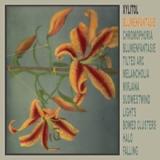
Xylitol - Blumenfantasie LP

Xylitol, aka producer and DJ Catherine Backhouse, shifts up the refinement and musical breadth for her second album Blumenfantasie, the follow-up to her Planet Mu debut Anemones.
With Blumenfantasie, Xylitol wanted “to make space and for the music to float and propel at once”, finding routes through the pointillistic figures, cascading synths and the meditative stillness of kosmische musik and bolder breakbeat programming. She reaches this delicate balance through careful subtraction, hoping “to convey a sense of intimacy and sadness but without sentimentality” which she manages with a feel and sound that's raw and intuitive.

Blumenfantasie rolls through detailed jungle workouts that flutter and bleep, through beatless ambience, taking a rare dip below 160 bpm for the elegiac Mirjana, the album’s most explicit nod to Krautrock with a drum break chopped up from Amon Duul II’s anthemic ‘Archangel’s Thunderbird’, through to Halo, a bare bones grime rhythm that calls to mind the missing link between industrial pioneers Nurse With Wound and Wiley's Eskibeat.

Catherine cast her net to draw in experimental audiovisual duo Sculpture and Reading based post-rock band The Leaf Library as collaborators, pulling the former’s whirling eddies of musique concrète into a slice of sublime aquatic jungle, and the latter’s radiophonic folksong into a dark and disorientating breakbeat workout equally indebted to Source Direct as to Broadcast.
Blumenfantasie moves with a confident, self-effacing fluidity which has been informed by DJ Bunnyhausen’s more regular DJ gigs. She speculates ‘if this album feels more cohesive than its predecessor it's likely because I've been DJing a lot more, with Worthing Techno Militia, with central and eastern european electronica collective Slav to the Rhythm, as well as being part of Italo Disco crew Flex. Moving between these zones seemed to open up hidden pathways between the disparate musical trajectories they represent.'
While Anemones contrasted the rough and the delicate, its successor is an album built for the head, hips and heart, with painterly sounds and a sense of intimacy that encourages deep listening while keeping its eyes on the strobelight and its feet on the dancefloor.

pré-commande20.03.2026

il devrait être publié sur 20.03.2026


Last In: 2026 years ago
Laurel Halo - Midnight Zone (Original Soundtrack to the Film by Julian Charrière) LP
  • A1: Sunlight Zone
  • A2: Clarion-Clipperton Zone
  • A3: Oreison
  • B1: Twilight Zone
  • B2: Fracture
  • B3: Abyss
  • B4: Polymetallic Nodule
  • B5: Hadal
  • B6: Sunlight Zone (Strings Version) *

Laurel Halo returns with an album of original soundtrack music, composed for the film Midnight Zone by visual artist Julian Charrière. Following the path of a drifting Fresnel lighthouse lens as it descends through the Clarion-Clipperton Fracture Zone — a remote abyssal plain in the Pacific Ocean, rich in rare metals and increasingly targeted for deep-sea mining — the film traces a descent into one of Earth’s last untouched ecosystems.


Charrière’s film reveals the deep not as void, but as a luminous biome teeming with fragile life: bioluminescent creatures, swirling schools of fish, and elusive predators. The suspended lens becomes an abyssal campfire, attracting species caught in the tides of uncertainty, their futures hanging in the balance.


Echoing this tension, Halo’s compositions evoke a sensory freefall, where gravity falters and light and sound flicker in uncertain rhythms. Midnight Zone is a sonic drift through the space between what we seek to extract, fail to understand, and must protect.


Halo’s score evokes the life that exists beyond our physical airbound capacity. The material features long, subtle passages of electro-acoustic ambient, drone and sound design, slowly flowing and unfolding with rich detail. The music, composed largely on a Montage 8 synthesizer and Yamaha TransAcoustic piano at the Yamaha studios in New York City, possesses an uncanny quality: that of synthetic waveforms being amplified and sung through the stringboard of the physical body of the TransAcoustic piano. Combined with stacks of violin and viol da gamba, the music on Midnight Zone possesses trace elements of a human hand in an otherwise sunken landscape. Patient, submerged, and alive. The album will be the third on Halo’s imprint, Awe.


The film is central to Charrière’s current solo exhibition Midnight Zone. The exhibition engages with underwater ecologies, exploring the complexity of water as an elemental medium affected by anthropogenic degradation. Reflecting upon its flow and materiality, profundity and politics, its mundane and sacral dimensions, the solo show acts as a kaleidoscope, inviting us to dive deep.

pré-commande13.03.2026

il devrait être publié sur 13.03.2026


Last In: 2026 years ago
EGYPTRIXX - How Tidal

EGYPTRIXX

How Tidal

12inchHTRA053
Halocline Trance
19.02.2026

Toronto-based musician and producer David Psutka’s long dormant Egyptrixx alias returns, with How Tidal. A compendium of sorts, which retells the story so far, reworks of highlights from his catalogue sit alongside brand new tracks, serving as a bridge between the past and the future, preceding more fresh music in 2026.
With the originals still sounding remarkably current, a straight best-of wouldn’t have been out of question, but ever the tinkering student of sound, Psutka thought he’d break them apart, just to see how he could put them back together again.

The music on is How Tidal is cutting-edge and futuristic, but never difficult, instead offering accessible gems where multiple strains of bass music are infused with a zingy, techno-pop bounce, whilst ambient moments gift sonic lozenges for maximum contentment. Psutka creates optimistically welcoming environments, where synthetic birds chirrup in cyan skies over babbling rainbow brooks, as 15 inch subwoofers boom by.

Egyptrixx gained renown across the 2010s with his hard hitting yet tranquil experimental dance music dubbed ‘celestial jeep music for a Saturn moon’. Colourful sound design was braided with dancefloor structures, creating an exhilarating tension between melodic and dissonant, euphoric and inward. The debut album Bible Eyes was released in March of 2011 to critical acclaim.

As Egyptrixx, Psutka has released four studio albums, collaborated, remixed, and toured with some of the biggest names in electronic music.
The widely acclaimed moniker is foundational to Psutka’s complex body of work that encompasses multiple solo projects, plus a diverse range of collaborative work. He has performed live at Sonar Festival, Roskilde, Mutek, MOMA PS1 Warm-UP and CTM Festival, and presented sound installations at Galeria Civica Commune di Modena and Art Gallery of Ontario (AGO).

In 2015, Psutka launched Halocline Trance as a home for his various sound projects, events and collaborations. In recent years, the label has quietly established itself as a platform that facilitates many of Canada’s most exciting creative music projects.

pas en stock

Commandez maintenant et nous commanderons l'article pour vous chez notre fournisseur.


Derniere entrée: 6 jours
CHROMOGEN - CHROMOGEN

CHROMOGEN

CHROMOGEN

12inchSGH00002
Irma Records
13.02.2026
  • A1: Bleach
  • A2: Ether
  • B1: In Bloom
  • B2: Opiate
  • B3: Halogen

The Italian music scene is enriched by an intriguing new jazz trio: Chromogen.
Led by bassist and composer Matteo Magnaterra, the project features three members: tenor saxophone, bass, and drums. Using an unconventional lineup, they pursue a well-defined exploration of sound and timbre, creating ample space for dialogue and experimentation. They
pave the way for a new, holistic jazz style, clearly defined in their first album, "Chromogen."
The name is inspired by a parallel passion of the artist-composer: analog photography.
Chromogen is, in fact, the English name for the chemical compound capable of transforming a negative image, dyeing it with color. Those
same colors will then animate the artist's songs, developing imagery tied to his way of observing, portraying the world around him in vivid
colors.
CREDITS
Matteo Magnaterra: compositions, electric bass
Matteo Diego Scarcella: tenor saxophone
Vincenzo Messina: drums
Jacopo Trapani: recording, mixing
Francesco Brini: mastering

pré-commande13.02.2026

il devrait être publié sur 13.02.2026


Last In: 2026 years ago
Archy Marshall - A New Place 2 Drown (Instrumentals)
  • 1: Any God Of Yours (Instrumental)
  • 2: Swell (Instrumental)
  • 3: Arise Dear Brother (Instrumental)
  • 4: Ammi Ammi (Instrumental)
  • 5: Buffed Sky (Instrumental)
  • 6: Sex With Nobody (Instrumental)
  • 7: Eye’s Drift (Instrumental)
  • 8: The Sea Liner Mk 1 (Instrumental)
  • 9: Empty Vessels (Instrumental)
  • 10: New Builds (Instrumental)
  • 11: Dull Boys (Instrumental)
  • 12: Thames Water (Instrumental)

XL Recordings is proud to mark the 10th anniversary of Archy Marshall’s (aka King Krule) A New Place 2 Drown with the release of a newly remastered instrumental edition.
Originally released on 10 December 2015, A New Place 2 Drown remains a singular entry in the Archy Marshall catalogue. Known to many for his work as King Krule, Marshall released A New Place 2 Drown under his own name, highlighting a different facet of his creative identity. An atmospheric blend of submerged beats, woozy textures, and diaristic storytelling, the project earned widespread acclaim upon release, including Pitchfork’s Best New Music.
Developed in parallel with a visual world shaped with his brother and longtime collaborator Jack Marshall, the quietly influential project stands as a multidisciplinary love letter to their home of South London, originally released alongside a Will Robson-Scott–directed short film and a book of artworks, photography, and poetry by the Marshall brothers.
The 2025 instrumental edition offers a newly illuminated perspective on the record’s sonic core, drawing fresh attention to the production craft that underpins the project. By stripping the songs back to their foundations, the release highlights the intricate textures, rhythmic detail, and atmospheric depth that have helped A New Place 2 Drown grow into a cult favourite over the past decade.
“A New Place 2 Drown evokes a septic world filled with flickering halogen bulbs, sticky synth keys, and corroded outputs. Marshall has made tremendous strides as a producer, gorgeously reproducing the gloom and loneliness of early '90s hip-hop and finding a way to integrate it into his own style.” - PITCHFORK

pré-commande16.01.2026

il devrait être publié sur 16.01.2026


Last In: 2026 years ago
Beatrice Dillon - Workaround LP
  • 1: Workaround One
  • 2: Workaround Two
  • 3: Workaround Three
  • 4: Workaround Four
  • 5: Workaround Five
  • 6: Clouds Strum
  • 7: Workaround Six
  • 8: Workaround Seven
  • 9: Workaround Eight
  • 10: Workaround Nine
  • 11: Square Fifths
  • 12: Workaround Bass
  • 13: Pause
  • 14: Workaround Ten

‘Workaround’ is the lucidly playful and ambitious solo debut album by rhythm-obsessive musician and DJ, Beatrice Dillon for PAN. It combines her love of UK club music’s syncopated suss and Afro-Caribbean influences with a gamely experimental approach to modern composition and stylistic fusion, using inventive sampling and luminous mixing techniques adapted from modern pop to express fresh ideas about groove-driven music and perpetuate its form with timeless, future-proofed clarity. Recorded over 2017-19 between studios in London, Berlin and New York, ‘Workaround’ renders a hypnotic series of polymetric permutations at a fixed 150bpm tempo.

Mixing meticulous FM synthesis and harmonics with crisply edited acoustic samples from a wide range of guests including UK Bhangra pioneer Kuljit Bhamra (tabla); Pharoah Sanders Band’s Jonny Lam (pedal steel guitar); techno innovators Laurel Halo (synth/vocal) and Batu (samples); Senegalese Griot Kadialy Kouyaté (Kora), Hemlock’s Untold and new music specialist Lucy Railton (cello); amongst others, Dillon deftly absorbs their distinct instrumental colours and melody into 14 bright and spacious computerised frameworks that suggest immersive, nuanced options for dancers, DJs and domestic play. ‘Workaround’ evolves Dillon’s notions in a coolly unfolding manner that speaks directly to the album’s literary and visual inspirations, ranging from James P. Carse’s book ‘Finite And Infinite Games’ to the abstract drawings of Tomma Abts or Jorinde Voigt as well as painter Bridget Riley’s essays on grids and colour. Operating inside this rooted but mutable theoretical wireframe, Dillon’s ideas come to life as interrelated, efficient patterns in a self-sufficient system.

With a naturally fractal-not-fractional logic, Dillon’s rhythms unfold between unresolved 5/4 tresillo patterns, complex tabla strokes and spark-jumping tics in a fluid, tactile dance of dynamic contrasts between strong/light, sudden/restrained, and bound/free made in reference to the notational instructions of choreographer Rudolf Laban. Working in and around the beat and philosophy, the album’s freehand physics contract and expand between the lissom rolls of Bhamra’s tabla in the first, to a harmonious balance of hard drum angles and swooping FM synth cadence featuring additional synth and vocal from Laurel Halo in ‘Workaround Two’, while the extruded strings of Lucy Railton create a sublime tension at the album’s palatecleansing denouement, triggering a scintillating run of technoid pieces that riff on the kind of swung physics found in Artwork’s seminal ‘Basic G’, or Rian Treanor’s disruptive flux with a singularly tight yet loose motion and infectious joy. Crucially, the album sees Dillon focus on dub music’s pliable emptiness, rather than the moody dematerialisation of reverb and echo. The substance of her music is rematerialised in supple, concise emotional curves
and soberly freed to enact its ideas in balletic plies, rugged parries and sweeping, capoeira-like floor action. Applying deeply canny insight drawn from her years of practice as sound designer, musician and hugely knowledgable/intuitive DJ, ‘Workaround’ can be heard as Dillon’s ingenious solution or key to unlocking to perceptions of stiffness, darkness or grid-locked rigidity in electronic music. And as such it speaks to an ideal of rhythm-based and experimental music ranging from the hypnotic senegalese mbalax of Mark Ernestus’ Ndagga Rhythm Force, through SND and, more currently, the hard drum torque of DJ Plead; to adroitly exert the sensation of weightlessness and freedom in the dance and personal headspace.

pré-commande05.12.2025

il devrait être publié sur 05.12.2025


Last In: 2026 years ago
PERIO - THE SHARP BONES OF MY SLEEP
  • Graffiti Palace
  • Dance The Crisis
  • The Last Goodbye
  • Feel The Rage
  • The Cradle
  • The Game
  • Invisible Trade
  • Widow Club
  • Screens
  • The Sharp Bones Of My Sleep

"From the very first seconds of the opening track "Graffiti Palace", this album establishes itself as one of the clearest and strongest in the band's discography. Eric Deleporte assumes his new ambitions and deploys his song-writing across 10 panoramic, dreamy songs. Seven years after "Black Condensed" and 31 years after a debut album "Icy Morning in Paris" released on the legendary French label Lithium (1994), "The Sharp Bones of my Sleep" marks a major turning point in the band's history. Rémy Poncet (Chevalrex) accompanied the construction of this sound architecture and Angy Laperdrix (Tahiti 80, Aquaserge, Chassol, Zombie Zombie, Halo Maud...) produced the mix. The light-dark atmospheres and heartbreaking melodies are more sensitive than ever in Perio's work, and summon the best of US indie (Deerhunter, Devendra Banhart...), the ghosts of punk and new-wave, and the urban poetry so dear to Eric Deleporte. ""Perio is a rare band. Because it sounds like no other, resolutely French-American, in a folk vein that bridges the gap between tradition as recorded in Harry Smith's Anthology of American Folk Music and resolutely contemporary sounds."" -La Blogothèque

pré-commande07.11.2025

il devrait être publié sur 07.11.2025


Last In: 2026 years ago
The Buttshakers - Lessons In Love

With their musical roots deeply immersed in the fertile soil of Afro-American music, the Buttshakers have found a new direction for their nostalgia-heavy soul music. With Lessons In Love, their third album on Underdog Records, their early heartaches and furies have faded in favor of a more composed harmony – a sound enveloped in love and soaked in the blues. Guided by their singer Ciara Thompson, the Buttshakers have taken a more intimate path, whose compass, in the chaos of emotions and the modern world, points only in one direction: the light.


Seen from the sky, the view appears limitless. Accentuated by the sun, the ochre and sandy hues of the open road only reinforce this feeling of immensity. The sky stretches and the green stands out in striking contrast. In lighter tones, a road is drawn -- without bends or contours. This is the worn and weary road of soul music, which The Buttshakers explore on each album in new and unique ways. Soul music – a rare place to find a French band.

Vast, the musical direction could have taken them to lighter pastures. Yet the Buttshakers chose to evolve in a different way; to take a heavier load. Two paths – one sparked by social unrest, the other purely sentimental, Lessons In Love explores the deep roots of soul music, in the steps of Curtis Mayfield or Al Green. It is here that the heart and mind cross paths, merge, and become one. A weary road -- that brings together the agitation of a world where good intentions never rise above the level of digital outrage, and a faith in love which, however it manifests and expresses itself, remains the only truth that never loses its power.


Less rage and more compassion, it is through the haunting words and now tempered inflection of Ciara Thompson's voice, which opens to distinct emotions and perspectives, that the listener is guided. With its gaze fixed on the horizon, the acoustic guitar of Gotta Believe invites us on an intimate stroll through the open plains, while Dream On carries us away with a clavinet riff and a possessed saxophone; reconnecting the electric heat and neurosis of a city full of dreams. The senses are moved by the conjuring potion of the guitar which distills throughout Troubled Waters; the body is brought back into a visceral dance by the keys and brass section that are put to the test by Sure As Sin and its irrepressible rhythm. Passing through clouds of dust and sand has left a bluesy imprint on their groove: the miles travelled became hundreds, then thousands.


All of this leaves the listener bewitched by the halo of resilience that now surrounds Ciara's performance, as the ten tracks let the light fade. But certainly not hope in a better day. Like the sunflower that always lifts its head towards the sun’s rays, the Buttshakers continue to resource their sounds in the deep roots of soul music. Into the rich layers of African-American music of the 60s and 70s, The Buttshakers capture the spirit as much as the musical aesthetics of the epoch. A sound that reaches into the meanderings of the soul, bringing light to dark places and hope for all. A sound for the most parched of hearts, living in a damaged world, Lessons In Love confirms that even the tiniest beam of light can illuminate one’s path.

pas en stock

Commandez maintenant et nous commanderons l'article pour vous chez notre fournisseur.


Last In: 5 months ago
WEDNESDAY - RAT SAW GOD

Wednesday

RAT SAW GOD

12inchDOCLPC2328
Dead Oceans
03.10.2025
  • Hot Rotten Grass Smell
  • Bull Believer
  • Got Shocked
  • Formula One
  • Chosen To Deserve
  • Bath County
  • Quarry
  • Turkey Vultures
  • What's So Funny
  • Tv In The Gas Pump

END[GER] Die Band Wednesday aus Asheville, North Carolina errichtet im Laufe der zehn Songs von "Rat Saw God" einen Schrein voller aufregender Details: Halb lustige, halb tragische Botschaften aus den Südstaaten, die sich klanglich irgendwo zwischen dem wimmernden Skuzz von Neunzigerjahre-Shoegaze und klassischem Country-Twang entfalten - mit verzerrter Pedal Steel und Frontfrau Karly Hartzman, die mit ihrer Stimme, den Lärm durchschneidet. Ein Song von Wednesday ist wie ein Quilt. Eine Kurzgeschichtensammlung, eine verschwommene Erinnerung, ein Flickenteppich aus Porträts des amerikanischen Südens, der disparate Momente einfängt und als Ganzes doch irgendwie einen Sinn ergibt. Karly Hartzman, die Songschreiberin, Sängerin, Gitarristin und Leiterin der Band, ist eine Geschichtensammlerin als auch eine Geschichtenerzählerin: Eine aufmerksame Beobachterin von Menschen und witzigen Bemerkungen. "Rat Saw God", das neue und beste Album des Quintetts aus Asheville, ist ekphrastisch, aber ebenso autobiografisch und vor allem sehr einfühlsam. Es wurde in den Monaten unmittelbar nach der Fertigstellung von dem zweiten Album der Band, "Twin Plagues", geschrieben und innerhalb einer Woche im Drop Of Sun Studio in Asheville aufgenommen. Die Songs auf "Rat Saw God" erzählen keine Epen, sondern das Alltägliche. Sie sind lebensnah, erzählen vom wahren Leben, sie sind verschwommen und chaotisch und seltsam zugleich - was Hartzmans eigenem Ethos entspricht: "Everyone's story is worthy. Literally every life story is worth writing down, because people are so fascinating." A Wednesday song is a quilt. A short story collection, a half-memory, a patchwork of portraits of the American south, disparate moments that somehow make sense as a whole. Karly Hartzman, the songwriter/ vocalist/guitarist at the helm of the project, is a story collector as much as she is a storyteller: a scholar of people and one-liners. Rat Saw God, the Asheville quintet's new and best record, is ekphrastic but autobiographical and above all, deeply empathetic. Across the album's ten tracks Hartzman, guitarist MJ Lenderman, bassist Margo Shultz, drummer Alan Miller, and lap/pedal steel player Xandy Chelmis build a shrine to minutiae. Half-funny, half-tragic dispatches from North Carolina unfurling somewhere between the wailing skuzz of Nineties shoegaze and classic country twang, that distorted lap steel and Hartzman's voice slicing through the din. Rat Saw God is an album about riding a bike down a suburban stretch in Greensboro while listening to My Bloody Valentine for the first time on an iPod Nano, past a creek that runs through the neighborhood riddled with broken glass bottles and condoms, a front yard filled with broken and rusted car parts, a lonely and dilapidated house reclaimed by kudzu. Four Lokos and rodeo clowns and a kid who burns down a corn field. Roadside monuments, church marquees, poppers and vodka in a plastic water bottle, the shit you get away with at Jewish summer camp, strange sentimental family heirlooms at the thrift stores. The way the South hums alive all night in the summers and into fall, the sound of high school football games, the halo effect from the lights polluting the darkness. It's not really bright enough to see in front of you, but in that stretch of inky void - somehow - you see everything. The songs on Rat Saw God don't recount epics, just the everyday. They're true, they're real life, blurry and chaotic and strange - which is in-line with Hartzman's own ethos: "Everyone's story is worthy," she says, plainly. "Literally every life story is worth writing down, because people are so fascinating." But the thing about Rat Saw God - and about any Wednesday song, really - is you don't necessarily even need all the references to get it, the weirdly specific elation of a song that really hits. Yeah, it's all in the details - how fucked up you got or get, how you break a heart, how you fall in love, how you make yourself and others feel seen - but it's mostly the way those tiny moments add up into a song or album or a person.

pré-commande03.10.2025

il devrait être publié sur 03.10.2025


Last In: 2026 years ago
Bendik Giske - Remixed

Bendik Giske

Remixed

12inchSTSLJN444LP
SMALLTOWN SUPERSOUND
05.09.2025

Bendik Giske’s Beatrice Dillon-produced 2023 album gets an addendum with reworks from Carmen Villain, aya, Hanne Lippard, Hieroglyphic Being, Wacław Zimpel and Dillon herself.

Giske’s clearly got his ear to the ground; his last remix record was an invitation for Laurel Halo to put her stamp on »Cruising«, while 2018’s »Adjust EP« roped in Deathprod, Total Freedom, Lotic, and Rezzett. Now comes this new LP of remixes and it’s one of the best we’ve heard in aeons. Carmen Villain boots things off with a remix of »Slipping«, following her excellent (and way, way too underrated) »Nutrition EP« with a giddy, subtle roller that sounds as if it’s been constructed using only Giske’s raw stems. His breaths and leathery key presses – already amped up by Dillon’s detailed recording – are magicked into a dubby concrète groove that’s enhanced with the sparest melodic elements: echoing rainforest-at-night horn blasts, and lopped off decay trails that help fuel the momentum.

aya’s revision of the same track takes a different approach, forming forceful overlapping polyrhythms from Giske’s clanks, using the gamelan-like arpeggios for melodic weight and repetition. The result is a constantly shifting, hypnotic trancer that’s achingly organic – more Raja Kirik than Paul Van Dyke. Polish clarinetist and producer Wacław Zimpel, meanwhile, supplements his trippy recent collaboration with James Holden on a similarly levitational wrinkle of »Slipping« that twists Giske’s quivering sequences with microtonal synth prangs, and gusty echoes. But it’s Jamal Moss who plays fastest and loosest with Giske’s source material, calling back to April’s psy-house stunner »Dance Music 4 Bad People« with a powdery, sexualised banger that buries the breathy »Start« stems underneath neon synths, and brittle drum loops.

»I’m a digital nomad,« Lippard deadpans over Giske’s »Not Yet«. »I’m addicted you know that.« It’s a typically dry treatment from the conceptual artist that unexpectedly amps up the hypnotic qualities of Giske’s original, adding her circuitous charm to his concertina-ing sax sequences. And to tie things up perfectly, Beatrice Dillon returns with her diaphanous remix of »Rise and Fall«, built to emphasise the radically different approaches of each artist.

pré-commande05.09.2025

il devrait être publié sur 05.09.2025


Last In: 2026 years ago
MELAINE DALIBERT & DAVID SYLVIAN - VERMILLION HOURS
  • Musique Pour Le Lever Du Jour
  • Arabesque

With Vermilion Hours, Melaine Dalibert offers a condensed rereading of his Musique pour le lever du jour, still exploring minimal variations and subtle piano resonances. This new version, enriched by David Sylvian's discreet electronic textures, retains the atmospheric magic of the original while offering a new density. Sylvian, best known as the singer of Japan, is also an important figure in ambient music, collaborating with Czukay, Hassell and Sakamoto. Their collaboration, born of a sincere artistic affinity, acts here as a transmission between generations. The two tracks on the album - Musique pour le lever du jour and Arabesque - evoke a soundscape where each note is reflected and diffracted infinitely. The electronic work acts like a halo, a vibrant aura. Dalibert speaks of a desire to humanize his theoretical processes, to touch through the organic. Like a Klee painting, each stratum of sound builds depth. This is, indeed, "landscape music," where, if you listen closely, you might hear birds singing in the background. And that is the true essence of these suspended harmonies, these vermilion hours-which transport us, as only the contemplation of nature can, into another space-time, a sonic bath that is also a renewal of the senses. Since his career with Japan began in 1974, David Sylvian has explored a wide range of musical territories, collaborating with the likes of Robert Fripp, Jon Hassell, Readymade FC and Ryuichi Sakamoto - venturing as far as ambient music, which he further develops here in tandem with Melaine Dalibert. While continuing to teach at the Rennes Conservatoire, Melaine Dalibert regularly releases albums on various labels and performs both his own works and those of other composers - most recently, a reworking of Keith Jarrett's Köln Concert. He also co-curates the Autres Mesures festival. The two pieces forming Vermilion Hours feel like transcending the generations. Between Melaine Dalibert (born in 1979) and David Sylvian (1958) lies the same generational gap as between Sylvian and Czukay (1938-2017) or Hassell (1937-2021). The CD versions adds two edit versions of both long tracks.

pré-commande15.08.2025

il devrait être publié sur 15.08.2025


Last In: 2026 years ago
2Cellos - Dedicated

2Cellos

Dedicated

12inchMOVCLW071
Music On Vinyl
18.07.2025
  • 1: Wherever I Go
  • 2: Bad Guy
  • 3: Sweet Child O Mine
  • 4: Halo
  • 5: Shallow
  • 6: Demons
  • 7: I Don T Care
  • 8: Cryin
  • 9: Livin On A Prayer
  • 10: The Sound Of Silence

Croatian cellists Luka Šulić and HAUSER, together known as 2CELLOS, celebrated their 10th anniversary in 2021 with a brand new album, titled Dedicated. The album was led by the first single, a cover of Bon Jovi’s anthem “Livin’ On A Prayer”. Dedicated showcases their unique playing style on ten new arrangements that reinvent both recent hits such as One Republic's “Wherever I Go”, Ed Sheeran/Justin Bieber's “I Don’t Care” and Billie Eilish's “Bad Guy”, and iconic classics such as Guns ‘N Roses' “Sweet Child O’ Mine” and Aerosmith's “Cryin’”. In 2011, 2CELLOS went viral with their self-uploaded version of Michael Jackon’s “Smooth Criminal”. Since then, they’ve released five chart-topping studio albums, amassed over 2.5 billion streams and surpassed 20 million followers on their socials. They shared the stages with Elton John, Steven Tyler, Andrea Bocelli, George Michael and Queens Of The Stone Age amongst others. Dedicated is available as a limited edition of 1000 numbered copies on white coloured vinyl and includes an insert.

pré-commande18.07.2025

il devrait être publié sur 18.07.2025


Last In: 2026 years ago
METALLICA - HARDWIRED TO SELF-DESTRUCT
  • A1: Hardwired
  • A2: Atlas, Rise!
  • A3: Now That We're Dead
  • B1: Moth Into Flame
  • B2: Am I Savage
  • B3: Halo On Fire
  • C1: Confusion
  • C2: Dream No More
  • C3: Manunkind
  • D1: Here Comes Revenge
  • D2: Murder One
  • D3: Spit Out The Bone
pré-commande27.06.2025

il devrait être publié sur 27.06.2025


Last In: 2026 years ago
Orchestroll - Corrosiv LP 2x12"

Corrosiv, the sophomore album from Orchestroll, reveals the duo at their most mature and vulnerable. Originally conceived as a reflection on hybridity and bastardization, the album deploys New Age and ambient compositional tropes as a launchpad, exposing their trite sanctity to the realities of corrosion. Having come of age in the 1970s and 1980s, the New Age movement perdures today as a domain of contradictions; its promise of transcendence riddled with the very commercialized dogma from which its adherents claim to flee. Healing modalities such as reiki, crystal therapy, and sound baths are simultaneously pathways to solace and sites of exploitation; their sonic counterparts—ethereal synth pads, shimmering textures, celestial drones—claim to facilitate meditation and enlightenment while devolving into empty signifiers of vitality. With Corrosiv, Orchestroll displays neither reverence nor disdain toward New Age: they exhume it instead, revealing the saccharine effervescence and commodified murk undergirding its aesthetics. The result is intoxicating—disquieting.

Born from a two-week residency at EMS Studios and expanded through a performance at MUTEK Montreal’s 25th anniversary, Corrosiv has since outgrown its original conceptual nucleus, taking on a broader scope. Its inquiry into New Age ideology’s voided rhetoric and aesthetic mysticism now informs a broader interrogation of cultural mediocrity, anti-authoritarianism, gatekeeping, music industry toxicity, and the crumbling edifice of late capitalism and techno-feudalism—all the mechanisms by which meaning is stripped from ceremony, and once-potent forms of knowledge are subsumed into the machinery of economic extraction, severed from their original essence, and transformed into hollow simulacra. Corrosiv distills these themes through a loose narrative: a soul, fixated on wellness as dictated by cosmetic economism, becomes ensnared in an endless afterlife, unable to transcend and shed its dilapidated consciousness.

Framed as an act of audio dissolution, the album thus engages in an alchemical process, whereby complex waveshaping, morphing synthesis, and distortion enact a ritual of fragmentation. There is also friction: between the rigid, mechanical imposition of systematized order and the untamed, chaotic force of organic metamorphosis. Here corrosion and confinement are not solely conceptual motifs; they are enacted in real time, sculpting the album’s terrain. Scraping, tarnishing, degradation—the languid wear of form and substance—become instruments in their own right: buffing as abrasion, entrapment as transformation, corrosion as a means of reconfiguration. The ‘protagonist,’ if there must be one, is the listener, caught within the throes of structural determinism and the potential for emancipation, unable to pass into something greater as the specters of collapsed futures accumulate in the margins.

Corrosiv extends its reach through collaborations with familiar voices: Heith (PAN), VISIO (Haunter), Femminielli (Drowned by Locals), Habib Bardi (Interzone), and Jiyoung Wi (Enmossed, Psychic Liberation, Doyenne) each leave their imprint on its sprawling landscape. At 1h16m, it is a procession, dense with earworms that burrow into the listener’s unconscious.

Misshapen, broken-down metals leach copper into blood, acid reflux burning through the core. Psyche disaggregates into cosmic turmoil, drifting between planes—tongue on rustline, gullet laced with solvent hymns, molars unlatching, bitcrushed to marrowspill. A spasm of brine, ferrous scripture, venomtext blooming in leaden rivulets, cartilage smoldering in phosphor decomposition, synapses drowning in a quicksilver choir. Crest of bile, churning ore, breath clotting into arsenic mist, vein-thread cinched, a corrosive gospel, limb by limb, oxidized to silence.

Ultimately, as the music exhales its final breath, its residue refuses to dissipate—and stillness alone remains. There are no conclusions here—no resolution, no collapse—only the slow drift outward of a vessel unmoored, lost in the sea of symbolic souring. Corrosiv sings the song of a world barren of prophecy, littered with aesthetic detritus. Whether this magic has been transfigured or simply worn away is unclear: the last breath dissipates, but the oxidation does not stop. The silence, too, will decay.

Conceptualized, composed, performed, recorded, mixed, engineered and produced by Jesse Osborne-Lanthier, and Asaël Richard-Robitaille in 2023 and 2024 at Elektron Musik Studion (EMS) - Stockholm, Sweden and Landsc8pe Studio - Montréal, QC, Canada.
Artwork by Jesse Osborne-Lanthier.
Mastered by Stephan Mathieu @ Schwebung Mastering.

pré-commande02.06.2025

il devrait être publié sur 02.06.2025


Last In: 2026 years ago
Various - THE MALE BODY WILL BE NEXT PT1 (Tape)

In 2022, Osàre! Editions founder Elena Colombi approached artists and musicians with a prompt: Every body, everyone needs love to flourish. In her book The Will to Change, the eminent author and social activist, Bell Hooks, invites men to excavate their innermost selves, challenging the way that patriarchal society limits their capacity for intimacy, tenderness, care and emotion. As hooks lays out, feminist thought and work requires the collective participation of all genders in order to realise a liberated world. How can we imagine cross-gender solidarity through music and art? And how can we tell sonic stories that facilitate our full potential as desiring beings? These are the questions that The Male Body Will Be Next starts out from.

The title of the record draws connections between hooks' writing, a film by Rebecca Salvadori and Peter de Potter's stunning photo series of the same name. In de Potter and Salvadori's depictions, men's bodies appear as vulnerable, naked and exposed.

Divided into two parts, the first instalment of The Male Body Will Be Next hinges on colliding energies – the melding of club dance floors and haunting ambient textures, agile techno and noisy experimentation.

'The sun on my skin… it’s so warm and gentle,’ speak-sings Olivia Salvadori on ‘Su Di Te M’Infrango’, visualising utopias. Laurel Halo crafts a dreamscape spun from golden threads of synth and strings. Pensive and reflective, Ben Bertrand’s bass clarinet roams searchingly, its piercing tonality full of longing. Yet, in between these lucid, cinematic passages and spoken word, The Male Body Will Be Next finds space to dance together. Moving in fervent, rhythmic patterns, Sepehr’s ‘Divooneh’ pivots between tension and release. Filmmaker unleashes a wave of energy and The Spy delivers a potent take on vintage electro, the track title hinting at the double-bind of gendered expectations. Propelled between these eclectic styles, the record encapsulates the full spectrum of sonic expression.

pas en stock

Commandez maintenant et nous commanderons l'article pour vous chez notre fournisseur.


Last In: 10 months ago
MARIA SOMERVILLE - LUSTER

Maria Somerville

LUSTER

12inchADLPE40755
4AD/BEGGARS Group
07.05.2025

Die irische Musikerin Maria Somerville kündigt ihr zweites Album "Luster" für den 25. April an. Es ist zugleich ihr Debüt bei 4AD. Mit dem Announcement erscheint die Single "Garden". Der Track taucht ihre sirenenhaften Vocals in einen Sound aus schwirrendem Feedback, luftiger Percussion und nostalgischen Gitarren, der Erinnerungen an die klassische 4AD-Phase heraufbeschwört. Bereits im letzten Jahr war der hypnotische Shoegaze-Track "Projections" erschienen, mit dem Somerville eine erste Spur in Richtung des Sounds ihres kommenden Albums gelegt hatte. Somerville wuchs im ländlichen County Galway an der bergigen und rauen irischen Westküste auf. Sie zog später nach Dublin, wo sie an ihrem Signature-Sound arbeitete: atmosphärischem Dreampop, der von der Landschaft ihrer Jugend geprägt bleibt. Die ätherischen Gitarrenklänge, spärlichen Rhythmen und elektronischen Ambient-Sounds hielt sie erstmals auf dem 2019 selbst veröffentlichten Album "All My People" fest, einem Werk, das knietief in Nostalgie und Sehnsucht watet. Erst als sie nach Connemara zurückkehrte, in ein Haus nicht weit von dem, in dem sie aufwuchs - und von wo aus man einen der größten Seen des Landes, den Lough Corrib, überblicken konnte - begann Somerville mit der Arbeit an Musik, die schließlich zum neuen Album "Luster" werden sollte. Während ihr DIY-Debüt Erinnerungen und Melancholie in nebligen Slowcore hüllte, zeigen die zwölf neuen Tracks eine Künstlerin, die sich des Weges, den sie eingeschlagen hat, viel sicherer ist. "I can see more clearly than I could before. I know now what"s true for me", singt sie passend in "Trip". Gestärkt durch die neue, alte Umgebung und ermutigt durch ihre Community, entwickelte Somerville wieder kreative Energien. Der Boden erwies sich im wahrsten Sinne als fruchtbar, als sie in lockeren Wohnzimmer-Sessions erste Demos aufnahm, die später u. a. mit J. Colleran und Ian Lynch (Lankum) ausgearbeitet und schließlich vom New Yorker Engineer Gabriel Schuman (Oneohtrix Point Never, Princess Nokia, David Byrne) gemixt wurden. Eine gewisse Popularität erreichte Somerville auch durch ihre "Early Bird Show" auf NTS Radio, wo sie seit 2021 zwei Mal die Woche ein Morgenprogramm hostet, in dem sie Musik zwischen Shoegaze und traditionellem irischen Folk vorstellt. Im selben Jahr unterschrieb sie ihren Vertrag bei 4AD, wo sie bislang zwei Compilation-Beiträge veröffentlichte und mit ihren Labelmates Dry Cleaning auf Tour ging. 2025 wird sie mit Band Shows auf der ganzen Welt spielen, darunter auch Konzerte in Deutschland.

pas en stock

Commandez maintenant et nous commanderons l'article pour vous chez notre fournisseur.


Derniere entrée: 27 jours
Martin O'Donnell, Michael Salvatori - Halo 2 LP 3x12"
  • A1: Halo Theme Mjolnir Mix
  • A2: Peril
  • A3: Ghosts Of Reach
  • A4: Heretic, Hero
  • A5: Flawed Legacy
  • A6: Impend
  • B1: Ancient Machine
  • B2: In Amber Clad
  • B3: The Last Spartan
  • B4: Orbit Of Glass
  • B5: Heavy Price Paid
  • B6: Earth City
  • B7: High Charity
  • B8: Remembrance
  • C1: Prologue
  • C2: Cairo Suite
  • C3: Mombasa Suite
  • D1: Unyielding
  • D2: Mausoleum Suite
  • D3: Unforgotten
  • E1: Delta Halo Suite
  • E2: Sacred Icon Suite
  • F1: Reclaimer
  • F2: High Charity Suite
  • F3: Finale
  • F4: Epilogue

Halo Studios und Laced Records haben sich zusammengetan, um die ikonische Musik der ursprünglichen Halo-Trilogie zum ersten Mal auf Vinyl zu veröffentlichen.

Dieses 3-teilige LP-Set enthält die Musik des monumentalen Sequel, die speziell für Vinyl neu gemastert und auf Heavyweight-LPs gepresst wurde. Die Platten befinden sich in einer breitrandigen Außenhülle und drei bedruckten Innenhüllen.

Das Original-Cover-Artwork stammt von Art Director und Concept Artist Isaac Hannaford (alias Rhizus / Space Ship Guru), dem ehemaligen Lead Concept Artist und Mitwirkenden an Halo 3, Halo 3: ODST und Halo Reach. Das zusätzliche Artwork des Sets wurde von der Grafikdesignerin Maren Landsnes erstellt.

Für Halo 2 haben sich die Komponisten mit hochkarätigen Musikern zusammengetan und dem Halo-Thema mit dem neuen „Mjolnir Mix“ ein Heavy-Metal-Makeover verpasst. Es war auch der erste Soundtrack zu einem Videospiel, der es in die Billboard 200 schaffte.

- 26 speziell remasterte Titel aus dem Spiel von 2004
- Cover-Artwork von Isaac Hannaford (ehemaliger Lead Concept Artist bei Bungie)

pré-commande02.05.2025

il devrait être publié sur 02.05.2025


Last In: 2026 years ago
KARATE - UNSOLVED LP 2x12"

Karate

UNSOLVED LP 2x12"

2x12inchNUMLPB906
Numero Group
18.04.2025
  • Small Fires
  • The Lived-But-Yet-Named
  • Sever
  • The Roots And The Ruins
  • Number Six
  • One Less Blues
  • The Halo Of The Strange
  • The Angels Just Have To Show
  • This Day Next Year
  • Cherry Coke
  • Death Kit
  • Nerve

Als Warped Tour Pop-Punk und American Apparel Indie-Rock das seltsame Post-Y2K-Milieu Gitarren-Band-Milieu dominierten, lieferten Bostons Karate einen fesselnden Schuss Rock, der sich ständig zwischen verschiedenen Schattierungen von unterirdischen Klängen bewegte. Die ruhigen Momente auf Karates viertem Album haben viel von der alten, ungezügelten Intensität, verwoben mit gedämpften Jazz-Melodien und Slowcore-Zurückhaltung. Diese 25-jährige Jubiläumsausgabe von Unsolved entspricht der Originalpressung aus dem Jahr 2000 und enthält auf Seite D die zwei Tracks der "Death Kit" 7" und den Song von der Crownhate Ruin Splitsingle.

pré-commande18.04.2025

il devrait être publié sur 18.04.2025


Last In: 2026 years ago
KARATE - UNSOLVED LP 2x12"

Karate

UNSOLVED LP 2x12"

2x12inchNUMLPB2906
Numero Group
18.04.2025

Cherrie Coke Bottle Vinyl. Als Warped Tour Pop-Punk und American Apparel Indie-Rock das seltsame Post-Y2K-Milieu Gitarren-Band-Milieu dominierten, lieferten Bostons Karate einen fesselnden Schuss Rock, der sich ständig zwischen verschiedenen Schattierungen von unterirdischen Klängen bewegte. Die ruhigen Momente auf Karates viertem Album haben viel von der alten, ungezügelten Intensität, verwoben mit gedämpften Jazz-Melodien und Slowcore-Zurückhaltung. Diese 25-jährige Jubiläumsausgabe von Unsolved entspricht der Originalpressung aus dem Jahr 2000 und enthält auf Seite D die zwei Tracks der "Death Kit" 7" und den Song von der Crownhate Ruin Splitsingle.

pré-commande18.04.2025

il devrait être publié sur 18.04.2025


Last In: 2026 years ago
Various - Halo Original Trilogy LP 8x12"
  • A1: Opening Suite
  • A2: Truth And Reconciliation Suite
  • A3: Brothers In Arms
  • A4: Enough Dead Heroes
  • B1: Perilous Journey
  • B2: A Walk In The Woods
  • B3: Ambient Wonder
  • B4: The Gun Pointed At The Head Of The Universe
  • B5: Trace Amounts
  • B6: Under Cover Of Night
  • B7: What Once Was Lost
  • B8: Lament For Pvt. Jenkins
  • C1: Devils… Monsters…
  • C2: Covenant Dance
  • C3: Alien Corridors
  • C4: Rock Anthem For Saving The World
  • C5: The Maw
  • C6: Drumrun
  • C7: On A Pale Horse
  • C8: Perchance To Dream
  • C9: Library Suite
  • D1: The Long Run
  • D2: Suite Autumn
  • D3: Shadows
  • D4: Dust And Echoes
  • D5: Halo
  • E1: Halo Theme Mjolnir Mix
  • E2: Peril
  • E3: Ghosts Of Reach
  • E4: Heretic, Hero
  • E5: Flawed Legacy
  • E6: Impend
  • F1: Ancient Machine
  • F2: In Amber Clad
  • F3: The Last Spartan
  • F4: Orbit Of Glass
  • F5: Heavy Price Paid
  • F6: Earth City
  • F7: High Charity
  • F8: Remembrance
  • G1: Prologue
  • G2: Cairo Suite
  • G3: Mombasa Suite
  • H1: Unyielding
  • H2: Mausoleum Suite
  • H3: Unforgotten
  • I1: Delta Halo Suite
  • I2: Sacred Icon Suite
  • J1: Reclaimer
  • J2: High Charity Suite
  • J3: Finale
  • J4: Epilogue
  • K1: Luck
  • K2: Released
  • K3: Infiltrate
  • K4: Honorable Intentions
  • K5: Last Of The Brave
  • L1: Brutes
  • L2: Out Of Shadow
  • L3: To Kill A Demon
  • L4: This Is Our Land
  • L5: This Is The Hour
  • M1: Dread Intrusion
  • M2: Follow Our Brothers
  • M3: Farthest Outpost
  • M4: Behold A Pale Horse
  • N1: Edge Closer
  • N2: Three Gates
  • N3: Black Tower
  • N4: One Final Effort
  • N5: Keep What You Steal
  • O1: Gravemind
  • O2: No More Dead Heroes
  • O3: Halo Reborn
  • O4: Greatest Journey
  • P1: Tribute
  • P2: Roll Call
  • P3: Wake Me Up When You Need Me
  • P4: Legend
  • P5: Choose Wisely
  • P6: Movement
  • P7: Never Forget
  • P8: Finish The Fight

Halo Studios und Laced Records haben sich zusammengetan, um die ikonische Musik der ursprünglichen Halo-Trilogie zum ersten Mal auf Vinyl zu veröffentlichen.

Diese Box enthält 83 Titel aus den ersten drei Halo-Alben, die speziell für Vinyl neu gemastert und auf acht heavyweight LPs gepresst wurden. Jeder Soundtrack befindet sich in einer breitrandige Außenhülle und einer bedruckten Innenhülle. Diese wiederum befinden sich in einer stabilen Sammlerbox aus Karton mit silbernem Laminatüberzug und geprägtem Halo-Logo.

Das Original-Cover-Artwork stammt von Art Director und Concept Artist Isaac Hannaford (alias Rhizus / Space Ship Guru), dem ehemaligen Lead Concept Artist und Mitwirkenden an Halo 3, Halo 3: ODST und Halo Reach. Das zusätzliche Artwork der Box wurde von der Grafikdesignerin Maren Landsnes erstellt.

Halo: Combat Evolved war der Inbegriff des Konsolen-Ego-Shooters und sein Soundtrack legte den Grundstein für den legendären Sound der Serie. Der Soundtrack ist von verschiedenen Genres inspiriert und kombiniert schwungvolle Orchesterklänge mit marschierenden Militär-Snares, Prog-Rock-Percussion und - wer könnte den gregorianischen Mönchsgesang vergessen?

Für Halo 2 taten sich die Komponisten mit hochkarätigen Musikern zusammen und verpassten dem Halo-Thema mit dem neuen „Mjolnir Mix“ ein Heavy-Metal-Makeover. Es war der erste Videospiel-Soundtrack, der es in die Billboard 200 schaffte.

Halo 3 zeichnete sich durch Tribal-Drums und Prog-Rock-Refrains aus, während Klaviermelodien, begleitet von einem 60-köpfigen Orchester und einem 24-stimmigen Chor, dem Soundtrack emotionale Tiefe verliehen.

- 83 Tracks aus Halo: Combat Evolved, Halo 2 und Halo 3
- Speziell für Vinyl neu gemastert
- Cover-Artwork von Isaac Hannaford (ehemaliger Lead Concept Artist, Bungie)

pré-commande04.04.2025

il devrait être publié sur 04.04.2025


Last In: 2026 years ago
Martin O'Donnell, Michael Salvatori - Halo: Combat Evolved LP 2x12"
  • A1: Opening Suite
  • A2: Truth And Reconciliation Suite
  • A3: Brothers In Arms
  • A4: Enough Dead Heroes
  • B1: Perilous Journey
  • B2: A Walk In The Woods
  • B3: Ambient Wonder
  • B4: The Gun Pointed At The Head Of The Universe
  • B5: Trace Amounts
  • B6: Under Cover Of Night
  • B7: What Once Was Lost
  • B8: Lament For Pvt. Jenkins
  • C1: Devils… Monsters…
  • C2: Covenant Dance
  • C3: Alien Corridors
  • C4: Rock Anthem For Saving The World
  • C5: The Maw
  • C6: Drumrun
  • C7: On A Pale Horse
  • C8: Perchance To Dream
  • C9: Library Suite
  • D1: The Long Run
  • D2: Suite Autumn
  • D3: Shadows
  • D4: Dust And Echoes
  • D5: Halo

Halo Studios und Laced Records haben sich zusammengetan, um die ikonische Musik der ursprünglichen Halo-Trilogie zum ersten Mal auf Vinyl zu veröffentlichen.

Dieses Doppel-LP-Set enthält die Musik aus dem Spiel, mit dem alles begann, speziell für Vinyl neu gemastert und auf heavyweight LPs gepresst. Die Schallplatten befinden sich in einer breitrandigen Außenhülle und zwei bedruckten Innenhüllen.

Das Original-Cover-Artwork stammt von Art Director und Concept Artist Isaac Hannaford (alias Rhizus / Space Ship Guru), dem ehemaligen Lead Concept Artist und Mitwirkenden an Halo 3, Halo 3: ODST und Halo Reach. Das zusätzliche Artwork des Sets wurde von der Grafikdesignerin Maren Landsnes erstellt.

Halo: Combat Evolved war der Inbegriff des Konsolen-Ego-Shooters und sein Soundtrack legte den Grundstein für den legendären Sound der Serie. Der Soundtrack ist von verschiedenen Genres inspiriert und kombiniert schwungvolle Orchesterklänge mit marschierenden Militär-Snares, Prog-Rock-Percussion und - wer könnte den gregorianischen Mönchsgesang vergessen?

- 26 speziell remasterte Titel aus dem Spiel von 2001
- Cover-Artwork von Isaac Hannaford (ehemaliger Lead Concept Artist bei Bungie)

pré-commande04.04.2025

il devrait être publié sur 04.04.2025


Last In: 2026 years ago
Various - ECHOES OF ITALY - ARTISTS IN WONDERLAND – EARLY 90S HOUSE VIBES VOL.1 LP 2x12"

Volume 1 of this expertly curated project of 90s Italian House - put together by Don Carlos.

If Paradise was half as nice… by Fabio De Luca.

Googling “paradise house”, the first results to pop up are an endless list of European b&b’s with whitewashed lime façades, all of them promising “…an unmatched travel experience a few steps from the sea”. Next, a little further down, are the institutional websites of a few select semi-luxury retirement homes (no photos shown, but lots of stock images of smiling nurses with reassuring looks). To find the “paradise house” we’re after, we have to scroll even further down. Much further down.

It feels like yesterday, and at the same time it seems like a million years ago. The Eighties had just ended, and it was still unclear what to expect from the Nineties. Mobile phones that were not the size of a briefcase and did not cost as much as a car? A frightening economic crisis? The guitar-rock revival?! Certainly, the best place to observe that moment of transition was the dancefloor. Truly epochal transformations were happening there. From America, within a short distance one from the other, two revolutionary new musical styles had arrived: the first one sounded a bit like an “on a budget” version of the best Seventies disco-music – Philly sound made with a set of piano-bar keyboards! – the other was even more sparse, futuristic and extraterrestrial. It was a music with a quite distinct “physical” component, which at the same time, to be fully grasped, seemed to call for the knotty theories of certain French post-modern philosophers: Gilles Deleuze, Félix Guattari, Paul Virilio... Both those genres – we would learn shortly after – were born in the black communities of Chicago and Detroit, although listening to those vinyl 12” (often wrapped in generic white covers, and with little indication in the label) you could not easily guess whether behind them there was a black boy from somewhere in the Usa, or a girl from Berlin, or a pale kid from a Cornish coastal town.

Quickly, similar sounds began to show up from all corners of Europe. A thousand variations of the same intuition: leaner, less lean, happier, slightly less intoxicated, more broken, slower, faster, much faster... Boom! From the dancefloors – the London ones at least, whose chronicles we eagerly read every month in the pages of The Face and i-D – came tales of a new generation of clubbers who had completely stopped “dressing up” to go dancing; of hot tempered hooligans bursting into tears and hugging everyone under the strobe lights as the notes of Strings of Life rose up through the fumes of dry ice (certain “smiling” pills were also involved, sure). At this point, however, we must move on to Switzerland.

In Switzerland, in the quiet and diligent town of Lugano, between the 1980s and 1990s there was a club called “Morandi”. Its hot night was on Wednesdays, when the audience also came from Milan, Como, Varese and Zurich. Legend goes that, one night, none less than Prince and Sheila E were spotted hiding among the sofas, on a day-off of the Italian dates of the Nude Tour… The Wednesday resident and superstar was an Italian dj with an exotic name: Don Carlos. The soundtrack he devised was a mixture of Chicago, Detroit, the most progressive R&B and certain forgotten classics of old disco music: practically, what the Paradise Garage in New York might have sounded like had it not closed in 1987. In between, Don Carlos also managed to squeeze in some tracks he had worked on in his studio on Lago Maggiore. One in particular: a track that was rather slow compared to the BPM in fashion at the time, but which was a perfect bridge between house and R&B. The title was Alone: Don Carlos would explain years later that it had to be intended both in the English meaning of “by itself” and like the Italian word meaning “halo”. That wasn’t the only double entendre about the song, anyway. Its own very deep nature was, indeed, double. On the one hand, Alone was built around an angelic keyboard pattern and a romantic piano riff that took you straight to heaven; on the other, it showcased enough electronic squelches (plus a sax part that sounded like it had been dissolved by acid rain) to pigeonhole the tune into the “junk modernity” section, aka the hallmark of all the most innovative sounds of the time: music that sounded like it was hand-crafted from the scraps of glittering overground pop.

No one knows who was the first to call it “paradise house”, nor when it happened. Alternative definitions on the same topic one happened to hear included “ambient house”, “dream house”, “Mediterranean progressive”… but of course none were as good (and alluring) as “paradise house”. What is certain is that such inclination for sounds that were in equal measure angelic and neurotic, romantic and unaffective, quickly became the trademark of the second generation of Italian house. Music that seemed shyly equidistant from all the rhythmic and electronic revolutions that had happened up to that moment (“Music perfectly adept at going nowhere slowly” as noted by English journalist Craig McLean in a legendary field report for Blah Blah Blah magazine). Music that to a inattentive ear might have sounded as anonymous as a snapshot of a random group of passers-by at 10AM in the centre of any major city, but perfectly described the (slow) awakening in the real world after the universal love binge of the so-called Second Summer of Love.

For a brief but unforgettable season, in Italy “paradise house” was the official soundtrack of interminable weekends spent inside the car, darting from one club to another, cutting the peninsula from North to centre, from East to West coast in pursuit of the latest after-hours disco, trading kilometres per hour with beats per minute: practically, a new New Year’s Eve every Friday and Saturday night. This too was no small transformation, as well as a shock for an adult Italy that was encountering for the first time – thanks to its sons and daughters – the wild side of industrial modernity. The clubbers of the so-called “fuoriorario” scene were the balls gone mad in the pinball machine most feared by newspapers, magazines and TV pundits. What they did each and every weekend, apart from going crazy to the sound of the current white labels, was linking distant geographical points and non-places (thank you Marc Augé!) – old dance halls, farmhouses and business centres – transformed for one night into house music heaven. As Marco D’Eramo wrote in his 1995 essay on Chicago, Il maiale e il grattacielo: “Four-wheeled capitalism distorts our age-old image of the city, it allows the suburbs to be connected to each other, whereas before they were connected only by the centre (…) It makes possible a metropolitan area without a metropolis, without a city centre, without downtown. The periphery is no longer a periphery of any centre, but is self-centred”.

“Paradise house” perfectly understood all of this and turned it into a sort of cyber-blues that didn’t even need words, and unexpectedly brought back a drop of melancholic (post?)-humanity within a world that by then – as we would wholly realise in the decades to come – was fully inhuman and heartless. A world where we were all alone, and surrounded by a sinister yellowish halo, like a neon at the end of its life cycle. But, for one night at least, happy.

pas en stock

Commandez maintenant et nous commanderons l'article pour vous chez notre fournisseur.


Last In: 5 months ago
Expose - ETC LP

Expose

ETC LP

12inchQUI016
Quindi Records
24.01.2025

In a continued disruption to the airwaves following releases from Bondo and Monde UFO, Quindi returns to the Californian noise rock scene-not-scene to dig on the gnarled riffs of Expose. On their new release, the LA outfit double-down on a unique blend of bloated guitar fuzz and grimy analogue synths, and come out with a curiously cosmic kind of kick-ass.
If there was a dreamy, sun-bleached quality to Bondo and Monde UFO, their label mates Expose sound more wrought from sweat-drenched jam sessions under halogen strip lights in grease-stained garages. But the guttural quality of their blown-out guitar tone is matched for vibrancy by the dexterity of their playing, bringing angular free jazz to post hardcore and sludge rock, capped off with the unearthly sonic possibilities of flamboyant synthesis.
This dual-layered wall of sound lends extra weight to the likes of shit-kicking 'Speed Dial', which thunders like a kosmische juggernaut with amped up leads and a dead-eyed vocal condensed into a visceral minute, all with enough time for a dramatic breakdown, synth eruption and a final thrust. Similarly scooped out of the trash compactor, 'Description' rides for longer with one foot pressed firmly on the fuzz pedal, letting the electronics squeal around the punked-up rush of the guitars.
But Expose are not a one-dimensional band constantly thrashing it out. By contrast, 'The Constant' hits a crushing emotional note in its more structured push and pull between delicacy and heaviness, hitting bittersweet notes along the way throughout the peaks and troughs of the arrangement. 'Self Terror' washes languid, discordant guitar strum into swirling FX accompanied by sax from Monde UFO's Ray Monde.
Smart as a whip, sharp as a tack and boiling over with an untameable urgency, Expose make their presence felt in brilliant, bruising form on this particularly fierce addition to the Quindi catalogue.

pré-commande24.01.2025

il devrait être publié sur 24.01.2025


Last In: 2026 years ago
Various - Succinct 2024 LP 2x12"

Various

Succinct 2024 LP 2x12"

2x12inchONEF070
1985 Music
26.11.2024

DJ support from: Alix Perez, Hybrid Minds, DJ Marky, Wilkinson, Fabio, Pola & Bryson, Kasra, Halogenix, Youngsta, Coki, Disclosure, EPROM, Ivy Lab, Hamdi and more.

2024 was an amazing year for 1985 Music as they kicked off the year selling out the ironic Roundhouse London and released a record number of releases. SUCCINCT brings together all the key tracks from the year putting them on wax for the first time. Including tracks from the label's head honcho Alix Perez and exclusive artists Visages, Monty, Trail to name a few.

Radio support: Tom Ravenscroft BBC 6Music, Charlie Tee BBCR1, Mary Anne Hobbs BBC 6 Music, Fred V KissFM, RinseFM, KoolFM and more.

pas en stock

Commandez maintenant et nous commanderons l'article pour vous chez notre fournisseur.


Last In: 3 months ago
PILO - G.L.A.M.

Pilo

G.L.A.M.

12inchBNR243LP
Boysnoize Records
08.11.2024

The Boysnoize Records catalogue contains more than a decade of milestones in the life of Angeleno DJ and producer PILO. His signatures—a focus on sound design, and a digital crunch evocative of hardware rather than software—are present from the very beginning, but the evolution of Pilo’s skill and sophistication is clear as he stretches from electro to experimental to techno and back again in a slowly oscillating gradient. Yet despite his dozen or so releases in just as many years, G.L.A.M. (dropping November 8th, 2024 from BNR) is Pilo’s first proper album. That the record embraces the cyclical nature of time is apropos; the artist’s journey towards self-actualized mastery always ends with a new beginning.


Over the eight tracks of G.L.A.M., Pilo reaches deep into the dream that first ignited the passion that has driven him since. For a chosen few internet-connected American teens in the aughts, the sounds of European electro (and electroclash) trickled down their ethernet cables and instilled a fantasy of exotic, sartorial, sexually-fluid hedonism that felt a world away from the hard-edged masculinity of the hip-hop and skate cultures dominant at home. Pilo opens G.L.A.M. expressing this idealized fantasy with the track “Superstar DJ,” channeling the tongue-in-cheek self-celebritizing of Miss Kitten and The Hacker’s seminal work. “I’m a superstar, come meet me at the bar,” hiss Pilo’s heavily effected vocals, over a bassline of chopped mentasm synths driven by a swift, club-ready rhythm. The fingerprint of 2000’s electro a la International Deejay Gigolo Records is recognizably present, yet Pilo is too adept, too confident in his studio abilities to let his tracks rely on the retro. A great joy of this album is the future-facing richness of its production, always nodding to its spiritual guide of the past, while constantly breaking new sonic ground.


G.L.A.M. continues with “Girls Rule The World,” its vicious, droning bassline and sticky, titular hook making it the perfect electroclash soundtrack for a revenge plot on an ex-boyfriend. “What you Want” offers an instrumental exercise in “synthesizers are the new guitars,” and Pilo’s FX chops really shine as he warps and distorts his sounds into an undiscovered dimension existing somewhere between both. “Loverboy” enters the more melodic, Legowelt-inspired realm of electro, pushing above and beyond the foundation of analogue minimalism with flourishes of impressive sound design to construct something both climactic and cathartic. Scopa lends her perfect coldwave sprechgesang to titular track “G.L.A.M.,” with Pilo’s vocal processing offering surprises throughout and his FX chains wielded as instruments unto themselves.


On the track “A Slow Thinning Halo,” Pilo might be conjuring the haunting vocal chops and chiptune simplicity of early Crystal Castles, but the whiplash snap of his drums and sizzling production are all his own. “Spend the Night” is G.L.A.M.’s least nostalgic—and most unashamedly pop—offering, with the mic being passed between Sana and DEEVIOUS (previously featured on Pilo and Boys Noize’s 2023 track “Pvssy.”) DEEVIOUS’ sultry singing rides atop the bassline as it hypnotically struts across the floor, while Pilo’s skillful arrangement, deft rhythm programming, and atmospheric control elevate the songcraft into full-spectrum worldbuilding.


As the penultimate track, the contemporaneity of “Spend the Night” serves as transition away from the album’s previous, past-leaning exercises, allowing Pilo to step fully into the future with “One Last Embrace.” The closing track still references aughts sounds, but it borrows so widely and prolifically that Pilo’s reassemblage can only be described as singular. Here, Pilo pushes his engineering into psychoacoustic territory, as the eerie, beautiful melancholy of “One Last Embrace” explodes into a thrashing bassline that warbles like a drowning memory, struggling against the sinking weight of time. Pilo allows it to survive for 16 electrifying, gut-wrenching bars before letting go. In G.L.A.M., as in Pilo’s career, as in life, every ending can only be a new beginning.

pas en stock

Commandez maintenant et nous commanderons l'article pour vous chez notre fournisseur.


Last In: 13 months ago
Cemetery Skyline - Nordic Gothic LP

"Wer hätte gewollt, dass wir eine neue Extrem-Metal-Band gründen? Nun, vielleicht tatsächlich jemand, aber das ist diesmal nicht der Fall, denn wir haben etwas ganz anderes auf dem Teller..." Die nachdenkliche Stimme gehört dem außergewöhnlichen Gitarristen Markus Vanhala (Insomnium, Omnium Gatherum). In der neuen düsteren Band CEMETERY SKYLINE wird Vanhala von Keyboarder Santeri Kallio (Amorphis), Schlagzeuger Vesa Ranta (Sentenced, The Abbey), Bassist Victor Brandt (Dimmu Borgir und viele mehr) und Sänger Mikael Stanne (Dark Tranquillity, The Halo Effect) verstärkt. "Mit CEMETERY SKYLINE begeben wir uns in bisher unbetretene musikalische Richtungen - in jene dunkleren Gassen, die uns am Herzen liegen, die wir aber bisher nicht wirklich durchwandert haben. Und wir sind kollektiv sehr begeistert!" Eines der Schlüsselwörter, Gothic, wurde bereits erwähnt. "Wir alle teilen eine tiefe Liebe für den Goth-Rock der 80er und 90er Jahre - egal, ob es sich um eher synthiegetriebene oder härtere, gitarrenlastige Sachen handelt. Du kennst das mit den besten Bands von The Sisters of Mercy bis Type O Negative", sagt Santeri Kallio, der sich das Songwriting mit Vanhala teilt. "Aber ist CEMETERY SKYLINE eine Gothic-Band? Vielleicht bis zu einem gewissen Grad, aber das ist sicherlich nicht die ganze Geschichte. Wenn ihr die vielfältige Musik von CEMETERY SKYLINE irgendwie beschreiben müsst, tut uns einen Gefallen und nennt uns Botschafter des melodischen, melancholischen und dunklen Rock. Danke." Der Inhalt der Texte ist tief in eine düstere Gothic-Atmosphäre eingebettet. Das von Stanne geschriebene Konzept - zum ersten Mal in seiner bemerkenswerten Karriere verwendet Mikael während des gesamten Albums Clean Vocals - taucht unwiderstehlich in die paradoxe Welt der "nördlichen Einsamkeit" ein. "Die Texte sind tief verwurzelt in der selbstgewählten Einsamkeit der nordischen Menschen, ihrem anti-sozialen Verhalten und ihrem düsteren Sinn für Humor... Beim Schreiben der Texte habe ich mir diese Besonderheit zu Nutze gemacht, die man als den skandinavischen Gothic-Lifestyle bezeichnen könnte", sagt Stanne. "Nordic Gothic" ist erhältlich als: Ltd. CD Digipak, als 180g LP sowie als digitales Album.

pré-commande11.10.2024

il devrait être publié sur 11.10.2024


Last In: 2026 years ago
Articles par page:
N/ABPM
Vinyl