Поиск:how i became a wave

Стили
Все
How I Became a Wave - How I Became a Wave LP
 
4

Lush in strings and pedal steel, the nine-track 'How I Became A Wave' album features contributions from some of Ireland's most accomplished musicians, headed up by Pat Carey, and featuring string and piano arrangements by Cormac McCarthy (RT Concert Orchestra). 'How I Became A Wave' will be available as a limited edition 12" gatefold vinyl that brings together music and visual art, featuring cover artwork based on the original oil painting 'Towards Pabaigh' by Scottish artist Ellis O'Connor, design by West Cork creative Megan Clancy, insert image by Cork- based artist Leslie Allen Spillane, and handwritten liner notes and lyrics from Pat Carey, who steers How I Became A Wave as a collaborative, multidisciplinary project. Pat Carey says: "At the heart of How I Became A Wave is a sense of collaboration - of connection between artists. Inviting artists of different disciplines into the creative process has been key to the journey. Understanding how other people see, hear and feel my work has been enlightening, affirming and vital, making sure that what we have created is a living body of work that I hope will continue to be expressed in changing ways."

Сделать предзаказ27.03.2026

он должен быть опубликован на 27.03.2026


Последний логин: 2026 г. назад
Passarani - Analog Fingerprints Vol. 0 (2x12")

Analog Fingerprints Vol. 0 is a compilation bringing together the early 2000s works of Marco Passarani under his Analog Fingerprints alias, collecting key tracks originally released on Rome’s Plasmek and Pigna labels.

For Numbers, the story starts long before the label itself. In their formative years, digging in Glasgow’s Rubadub, Passarani’s records felt like dispatches from a future city. Releases on his own Nature Records and on labels such as Generator and Interr-Ference Communications were mind blowing: rooted in Detroit techno, Chicago house and electro, yet pushing somewhere new. Much like fellow travellers Autechre, who would remix him in 2001, Passarani’s music balanced machine funk with restless experimentation.

Information was scarce, and you would hear these records first on the dancefloor or at listening stations in shops like Rubadub. Print fanzines like Ear and early web outposts such as Forcefield offered only fragments. But there was a palpable axis forming between Detroit techno and a new European wave of record labels including Skam, Rephlex, Clone, Viewlexx and Nature itself. It was the sound that defined Saturday nights at Rubadub’s ‘69’ parties in Paisley, just outside of Glasgow.

Passarani’s records, in particular, were instrumental in bringing together the future Numbers co-founders. Richard had already booked him pre-Numbers; meanwhile Calum (Spencer) and Jack (Jackmaster), then 16/17 year olds working alternate Saturdays in Rubadub, were so enamoured with the Roman sound that they travelled to Rome for the Bitz Festival in 2003 to seek out Passarani and Lory D at their source.

The first Analog Fingerprints release landed as a 12” on Plasmek in 2001, following the fractured, IDM-leaning 6 Katun material. For Passarani, the project marked a recalibration. A DJ first and foremost, he had moved into production via early computer setups, from a Commodore Amiga through primitive PC audio, Cubase and Logic, later experimenting with Ableton. The IDM scene had offered a playground for trial and error, but there was always a tension between abstraction and the dancefloor. Analog Fingerprints became the bridge: still intelligent, but with more dance than distance. After years of broken beats and complex arrangements, he wanted directness without surrendering identity.

Working closely with Francesco de Bellis and Mario Pierro in the Pigneto district, the trio formed Pigna as a vehicle for reclaiming a more accessible dance sound, deliberately steering away from the minimal wave beginning to dominate Europe. Sessions were fast, instinctive, often stretching late into the night with friends dropping by. It was a studio as social space, production as collective energy.

“In that constant search for balance, Analog Fingerprints was my way of expressing something closer to the classic dance floor. The track 'Tribute' - a tribute to my favourite early Detroit techno track of all time, 'First Bass' by Separate Minds - came after I realised I had almost lost my connection with the dance floor. The simplest step was to take inspiration from early Chicago and Detroit and twist it in our Roman ‘Pigna’ way. My goal was to create more accessible dancefloor tracks by mixing my unconscious Italo roots with my teenage love for that early US sound, ensuring the result was as far as possible from the minimal sound that was starting to dominate everywhere.” - Marco Passarani

Technically, the Analog Fingerprints tracks span a transitional era: Roland TR-909, SH-101 and Alpha Juno hardware met early software experiments. A Novation Drumstation rack stood in for the unattainable TR-808, syncing with TB-303 and TR-606. Yet the true secret weapon was Jeskola Buzz, a tracker-style modular environment that allowed step-by-step parameter control and strange melodic constructions, later exported into the audio sequencer. Even the lead on ‘Tribute’ came from an early PPG Wave-style plugin. It was hybrid thinking at a moment when digital tools still felt unstable but full of possibility for technologists like Passarani.

Behind the music sat Finalfrontier, a loose Roman collective orbiting Nature and Plasmek. Distribution and production were intertwined; importing obscure records into Italy built connections with like-minded outsiders across Europe and the US. Expensive phone bills and fax machines forged an “electronix network” that linked Rome to Clone, Viewlexx, Skam, Rephlex, Rubadub and Detroit’s Underground Resistance. There was a shared sense of survival and resistance, of operating against commercial systems.

Passarani recalls “The first time I found a sheet of paper inside an Underground Resistance 12” with info about upcoming releases... and a huge picture of Spock on the back. Imagine that: you love the music, you love Star Trek, and there’s someone on the other side of the ocean sharing those same values and sounds. It was the perfect match. We even gave our original company the suffix ‘Finalfrontier’: that says it all.”

Feedback in that era arrived physically: distributor faxes, conversations with visiting DJs, the experience of playing abroad and meeting kids who had connected with the records. Glasgow became a key node in a scattered outlier network. Passarani personally brought the first two Nature releases to Fat Cat in London, playing them in-store. Shortly after, a fax arrived from Rubadub in Glasgow requesting copies.

“I still remember that phone buzz and the fax paper slowly sliding out, with someone I didn’t know saying they wanted 75 copies of Nature 001. Or like the time we got a fax from the Rephlex crew just saying, “Hello Nature Records, Keep up the good work.” That was how we knew the message was getting through. It was a fantastic feeling; just one piece of thermal fax paper as an analog notification - the mood for the entire week would change.” - Passarani

The connection to Glasgow has since stretched across generations. As Passarani reflects, links often fracture as scenes renew themselves, but in Glasgow something different happened. New and old mixed seamlessly. There was a visible trust in what came before, and a willingness to carry it forward rather than discard it. Observed from Rome, it was deeply encouraging.

Analog Fingerprints Vol. 0 captures that moment of exchange: Rome to Glasgow, Detroit to Europe, experiment to dancefloor. It documents an artist recalibrating his sound and a network of scenes discovering one another in real time, connected by vinyl, faxes and shared intent.

Сделать предзаказ26.03.2026

он должен быть опубликован на 26.03.2026


Последний логин: 2026 г. назад
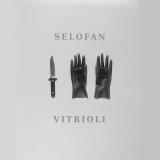
Selofan - Vitroli LP

Selofan

Vitroli LP

12inchFP025-E
Fabrika Records
27.03.2026

As Selofan's fifth studio album, Vitrioli, from 2018, is a testament to the tragedy of life. The Greek duo, Joanna Pavlidou and Dimitris Pavlidis, who recorded the album in the Fabrika Records home studio, continue on in their poetic, but heartbreaking, music set to a dance beat. Between languages (Greek, English, German, and Spanish), Selofan feels on the brink of mania with Vitroli. However, the madness is controlled, the songs are restrained hysterics that culminate into the alchemic perfection of the band's specific moody sound.
From synthpop to synthpunk elements, the twelve-track LP leads listeners through dark corridors and into haunted, empty beds. There is a resignation to a doomed destiny with Vitroli—a trait that connects all Selofan releases—as a bitter pain and loneliness that cannot, or will not, subside.

The album begins with "Give Me a Reason" whose lyrics feel universal in this day and age: Give me a reason, to get out of bed / I could just watch the ceiling instead. Its heartbreak is profound as bells and voice pads echo under Joanna's voice. The adjacent music video for the song was directed by Dimitris Chaz Lee, and the band describes the video as "depicting the fragile nature, conflicts, emotional demands, and vulnerability of each person in a relationship."
"Billie Was a Vampire" is a story about an undead creature who works at a nightclub followed by the urgency of "Black Box." Brass sounds moan against the fast beat and suggest a frenzied need to escape.

"I'm Addicted" became the second single for the LP. I am addicted, you are mine, Joanna demands of the lover. The music video, also directed by Dimitris Chaz Lee, depicts a clean, white photoshoot primed for the most beautiful creatures of the Athenian wave scene. Alex Macharias, from the legendary Greek band In Trance 95, acts as the photographer for the session, as the models pose and flail under the bright bulbs. The director states: "Addiction is a mental state, something inside all of us. It altered our perception and created a parallel world of avant-garde beings and flashy lights making us part of this everlasting bond."

Сделать предзаказ27.03.2026

он должен быть опубликован на 27.03.2026


Последний логин: 2026 г. назад
Selofan - Vitroli LP

Selofan

Vitroli LP

12inchFP025-D
Fabrika Records
27.03.2026
  • 1: Give Me A Reason
  • 2: Billie Was A Vampire
  • 3: Black Box
  • 4: I'm Addicted
  • 5: Ist Die Liebe Tot?
  • 6: Un Amor Eterno
  • 7: The Language Of Love
  • 8: Living Scandal
  • 9: Βιτριόλι - Vitrioli
  • 10: Φούξια Χαμαιλέων - Fuchsia Chameleon
  • 11: Η Μοναξιά Είναι Της Μόδας - Loneliness Is In Fashion
  • 12: Υστερία - Hysteria
также имеющийся в продаже

Black / White Splatter Vinyl


As Selofan's fifth studio album, Vitrioli, from 2018, is a testament to the tragedy of life. The Greek duo, Joanna Pavlidou and Dimitris Pavlidis, who recorded the album in the Fabrika Records home studio, continue on in their poetic, but heartbreaking, music set to a dance beat. Between languages (Greek, English, German, and Spanish), Selofan feels on the brink of mania with Vitroli. However, the madness is controlled, the songs are restrained hysterics that culminate into the alchemic perfection of the band's specific moody sound.
From synthpop to synthpunk elements, the twelve-track LP leads listeners through dark corridors and into haunted, empty beds. There is a resignation to a doomed destiny with Vitroli—a trait that connects all Selofan releases—as a bitter pain and loneliness that cannot, or will not, subside.

The album begins with "Give Me a Reason" whose lyrics feel universal in this day and age: Give me a reason, to get out of bed / I could just watch the ceiling instead. Its heartbreak is profound as bells and voice pads echo under Joanna's voice. The adjacent music video for the song was directed by Dimitris Chaz Lee, and the band describes the video as "depicting the fragile nature, conflicts, emotional demands, and vulnerability of each person in a relationship."
"Billie Was a Vampire" is a story about an undead creature who works at a nightclub followed by the urgency of "Black Box." Brass sounds moan against the fast beat and suggest a frenzied need to escape.

"I'm Addicted" became the second single for the LP. I am addicted, you are mine, Joanna demands of the lover. The music video, also directed by Dimitris Chaz Lee, depicts a clean, white photoshoot primed for the most beautiful creatures of the Athenian wave scene. Alex Macharias, from the legendary Greek band In Trance 95, acts as the photographer for the session, as the models pose and flail under the bright bulbs. The director states: "Addiction is a mental state, something inside all of us. It altered our perception and created a parallel world of avant-garde beings and flashy lights making us part of this everlasting bond."

Сделать предзаказ27.03.2026

он должен быть опубликован на 27.03.2026


Последний логин: 2026 г. назад
Various - Tchic Tchic: French Bossa Nova 1963-1974  Colored Edition LP 2x12"
  • A1: Les Masques - Il Faut Tenir (1969)
  • A2: Isabelle Aubret - Casa Forte (1971)
  • A3: Christianne Legrand - Hlm Et Ciné Roman (1972)
  • A4: Jean Constantin - Pas Tant D'chichi Ponpon (1972)
  • A5: Billy Nencioli & Baden Powell - Si Rien Ne Va (1969)
  • B1-: Marpessa Dawn - Le Petit Cuica (1963)
  • B2: Jean-Pierre Sabar - Vai Vai (1974)
  • B3: Sophia Loren - De Jour En Jour (1963)
  • B4: Isabelle - Jusqu’à La Tombée Du Jour (1969)
  • B5: Sylvia Fels - Corto Maltesse (1974)
  • C1: Frank Gérard - Comme Une Samba (1972)
  • C2: Ann Sorel - La Poupée Des Favellas (1971)
  • C3: Charles Level - Un Enfant Café Au Lait (1971)
  • C4: Andrea Parisy - Les Mains Qui Font Du Bien (1970)
  • C5: Audrey Arno - Quand Jean-Paul Rentrera (1969)
  • C6: Aldo Frank - T’as Vu Ce Printemps (1970)
  • D1: Christianne Legrand - Cent Mille Poissons Dans Ton Filet (1972)
  • D2: Clarinha - Lemenja (1970)
  • D3: Hit Parade Des Enfants - Aquarela (1976)
  • D4: Jean-Pierre Lang - Tendresse (1965)
  • D5: Magalie Noël - Une Énorme Samba (1970)
  • D6: Françoise Legrand - La Lune

Ever since the late 1950s bossa-nova revolution, Brazil’s influence on French music has been undeniable. Pierre Barouh, Georges Moustaki and a vast array of lesser known artists, all made the Musica Popular Brasileira (MPB) an axis of promotion at the service of a cool and metaphysical, modern and mixed Brazilian lifestyle. Some were seduced by the poetic languors of the bossa, some were looking for fun, and others just loved the American hybridization of jazz-bossa, jazz-samba.


What is bossa nova? One of its creators, Joao Gilberto said: "Its style, cadence, everything is samba. At the very start, we didn't call it bossa nova, we sang a little samba made up of a single note - Samba de uma nota so .... The discussion around the origins of bossa nova is therefore useless”. It is nevertheless useful to remember that these magnificent Brazilian songs, which the guitarist describes as samba, were shifted and balanced around improbable chords. "I like things that lean, the in-betweens that limp with grace," said Pierre Barrouh, quoting Jean Cocteau.


With emotion, arrangements for violin and supple guitar licks, bossa nova rapidly changed. A transformation that can be heard in the Tchic, tchic, French Bossa Nova 1963-1974 compilation, the result of a cultural reappropriation, which traveled through the United States and supplemented itself in France.

A musical revolution that has remained significant, bossa nova was born in Rio. From 1956 to 1961, Brazil lived through its golden years. In five years, the country had invented its modernist style. Elected president in 1956, Juscelino Kubitschek de Oliveira, an elegant man with a broad forehead, brandished a promising slogan: "Fifty years of progress in five years". He quickly got to work. Not worried about increasing debt, he launched the project for a new federal capital, Brasilia, designed by the communist architect Oscar Niemeyer. Volkswagen opened state-of-the-art factories and created the “fusquinha”, the Beetle. In Rio, the Vespa made its first appearance. The Arpoador Surf Club crew run into the “girl” from Ipanema, Helô Pinheiro - the tanned garota ("chick"), between a flower and mermaid, who at 17 walked by the Veloso bar, where the fiery author and composer, Tom Jobim and Vinicius de Moraes, were getting drunk on whiskey. From then on, bossa symbolized cool.

In 1958, Joao Gilberto recorded Chega de Saudade, which the directors of Philips denied, calling it "music for fagots". The marketing director, who believed in it, secretly pressed 3000 78-inch vinyls and distributed them at schools around Rio, creating a tidal wave.

American jazzmen then took over. In particular, trumpeter Dizzy Gillespie and guitarist Charlie Byrd. In November 1962, the Brazilian Ministry of Foreign Affairs funded a "Bossa-Nova" concert at Carnegie Hall in New York, inviting the genre’s pioneers. Unprepared, the show soon turned to disaster. But the troupe was invited to the White House by Jackie Kennedy. The first lady loved "the new beat" and in particular Maria Ninguem, a song by Carlos Lyra, later covered by Brigitte Bardot.

In Brazil, the 1964 military coup quickly ended this euphoria. The destructive atmosphere that ensued pushed many Brazilian musicians to leave, if not to exile. Thus, Tom Jobim, Sergio Mendes and Joao Gilberto arrived to the United States. In New York, Joao Gilberto met saxophonist Stan Getz. At the time, he was married to the Bahianese Astrud Weinert Gilberto, who had a German father. She had never sung before, but she knew how to speak English. Getz therefore asked her to replace her husband on The Girl From Ipanema. The Getz/Gilberto record with Tom Jobim on piano, was released in March 1964. Phil Ramone, the "pope of pop" was in charge of sound.

Bossa nova arrived in Paris through the classic “guitar-voice” channel (Pierre Barouh, Baden Powell, Moustaki…) But France loved jazz and Paris had already welcomed its American contributors. All these good people were to pass through Saint-Germain-des-Prés. The cabaret l'Escale became the Mecca of Latin American sound where one could find Pierre Barrouh and his friends, such as the Camara Trio, samba-jazz aces, whose only record was published by the Saravah label. With a band strangely called Les Masques (a band that included Nicole Croisille and Pierre Vassiliu, among others), the Camara Trio recorded an interesting Brazilian Sound, including the track Il faut tenir which is present on this tasty compilation of rarities.

Other enlightened musicians can also be found on the compilation, such as Jean-Pierre Sabar (songwriter for Hardy, Auffray, Leforestier ...) and the French pop rock organist Balthazar. In 1975, Sabar recorded Aurinkoinen Musiikkimatka on a Finnish label, which featured the crazy Vai, Vai, included on this record. We are now following the footsteps of Brazilian electronic musicians such as Sergio Mendes, Eumir Deodato or Marcos Valle who created funk and disco sounds on their keyboards and synthesizers. A style that influenced Véronique Sanson when she wrote Jusqu’à la Tombée de la nuit in 1969 for Isabelle de Funès, the niece of Louis and a great friend of Michel Berger - Sanson did end up singing this track on her 1992 Sans Regret record.


The pinnacle of exoticism and travel, Sylvia Fels’ Corto Maltese includes bongos, sea mist and ocean sounds. The title was taken from Jacky Chalard’s concept album written in 1974, Je suis vivant, mais j’ai peur (I am alive, but I am scared), based on Gilbert Deflez’s science fiction novel.


However, bossa nova extended the scope of popularity. "In the 1970s, I was a fan of Sergio Mendes, Getz / Gilberto. I fell in love with this music that I knew because I had been an orchestral singer, " explained Isabelle Aubret, who in 1971 delivered a composite record of covers by the very funky Jorge Ben, Orfeu Negro, Tom Jobim, Vinicius de Morais and Jean Ferrat. "I recorded this album for Meys Records in Paris, far from Brazil, with wonderful musicians, François Raubert, Roland Vincent, Alain Goraguer...". The latter wrote the arrangements for Casa Forte, a very percussive title borrowed from Edu Lobo, one of the initiators of the bossa who spent time in California. "Jazz and bossa came together and produced very rhythmic music. I love singing, it allows me to dream, to have fun, to feel a high on stage, and these songs brought me joy, made me swing, my singing felt like a dance.”


The world tours of French singers and their desire for the tropics, often brought them to Rio with its hills, forests, caipirinhas and tanned bodies. There are surprises though, like this Iemenja (Iemenja is the goddess of the sea in the Afro-Brazilian candomblé religion). Not unlike the composer and musician Jean-Pierre Lang, based in Sao Paulo, Claire Chevalier taught Brazil to Brazil. In 1970, the singer and painter published a 45-inch vinyl, Mon mari et mes amants (My husband and my lovers), under the improbable pseudonym of Clarinha (little Claire). She was then living in Rio, with her husband, Joël Leibovitz, who founded a band called Azimuth, and who owned a record label specialized in "sambas enredos" songs for samba school parades.


For its B side, she asked Pierre Perret to come up with lyrics for a song composed by Carlos Imperial: "Oh goddess of the sea, o goddess Iemenja, I bring a white rose to adorn your long hair ..." . "Perret came to see us, and we had fun, remembers Joël Leibovitz. We wrote Lemenja for fun, we recorded it at the Havaí studio, behind the Central do Brasil the central station. Erlon Chaves, the arranger who worked with Elis Regina, joined us" adding his share of Afro-Brazilian percussions and funky brass to the mix.

There is a common misunderstanding in Franco-Brazilian history: that bossa, admittedly hedonistic, is perceived as funny, even though the poets who wrote the texts are often philosophizing on the human condition. Its French interpreters pull it towards a carnival inspired universe, far removed from its fundamental essence. Thus, Jean Constantin covered the famous Samba da minha terra, an ode to the art of samba written by the classic Bahian composer Dorival Caymmi, renaming it with the enticing title of Pas tant de tchi tchi pompon: "On your pier there is no tchi tchi / when you arch your back, you know everything is alright ”(lyrics by Gérard Calvi). This expedited bossa aims for the absurd, but retains a certain elegance.

Indeed, Jean Constantin was not an idiot, the rather large man had a huge mustache and liked fantasy, (Les pantoufles à papa, Le pacha, inspired by cha-cha-cha-cha, salsa and jazz) but he was also the lyricist of Mon manège à moi interpreted by Edith Piaf, the composer of Mon Truc en plume by Zizi Jeanmaire and the soundtrack of François Truffaut’s 400 Blows. Le Poulpe, published in 1970, from which this bossa is extract, was arranged by Jean-Claude Vannier, an accomplice of Serge Gainsbourg’s Melody Nelson. In short: "There is enough of samba / By looking at the parasol / Because my poor cabeza / Is going to die in the sun".

Even the American actress Marpessa Down, who was at the heart of the bossa nova revolution with her role as Euridyce in Marcel Camus’ film Orfeu Negro, winner of the 1959 Cannes Palme d'or, fed the clichée with Je voudrais parler au petit cuica - "Tell me how you manage to always make people want to dance / It's true, I must admit that I cannot resist your magic" - in consequence, once can hear the cuica, a little drum inherited from the Bantu.


But bossa nova had many angles. Societal, of course, pushing actresses who were symbols of women's liberation like Brigitte Bardot, Jeanne Moreau, or Sophia Loren to engage in the exercise of accelerated bossa. In February of 1963, Sophia Loren made a record in French in Rome, Je ne t'aime plus, featuring the song De jour en jour, a bossa written by two Italians, Armando Trovajoli and Tino Fornai, which was released a little later by Barclay. Bossa accompanied the 1960s, a decade of moral liberation. Ann Sorel, who interpreted La Poupée des favellas, caused a sensation with L’amour à plusieurs, a provocative song written by Frédéric Bottom and Jean-Claude Vannier. As for the actress Andrea Parisy, she displayed her bourgeois cheekiness in Marcel Carné's Les Tricheurs before interpreting Les mains qui font du bien. And Magalie Noël, the friend of Boris Vian, who sung Johnny fais-moi mal, was hired to sing Une énorme Samba, composed by Alain Goraguer (arranger to Gainsbourg, Bobby Lapointe and Jean Ferrat) with lyrics by Frédéric Botton.

But in the end, of what wood is bossa nova made of? The answer is given by Christianne Legrand, daughter of Raymond the conductor, and sister to Michel the composer: "With me, with jà" - jà means "immediately" in Portuguese. In 1972, the singer, an expert in vocal jazz and a member of the Double Six, published Le Brésil de Christianne Legrand. Two songs included on the Tchic Tchic compilation that demonstrate how bossa, jazz, funk, rock, etc. work like a swiss army knife: the music is used to denounce broken systems, or miracles, HLM et ciné roman, Cent mille poissons dans ton filet, two songs from the O Cafona soundtrack, a successful telenovela broadcast, at the time in black and white, on TV Globo. The first was adapted in French by the fighter and friend of the Legrand tribe, Agnès Varda. The second is content with a play on words, jostling them into a summer fun.


Véronique Mortaigne

Сделать предзаказ17.04.2026

он должен быть опубликован на 17.04.2026


Последний логин: 2026 г. назад
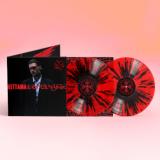
KETTAMA - Archangel LP 2x12"

One of electronic music’s most sought-after names, producer and DJ KETTAMA today announces the release of his long-awaited debut album, Archangel, out 3rd of October. The announcement arrives in tandem with new single “Sort It Out” featuring Clouds, and a landmark moment in his career: his biggest ever London headline show, taking over Brixton Academy on Saturday, October 4th, followed by an expansive tour across Europe, North America, and Australia.



A decade in the making, Archangel is the definitive statement from KETTAMA (Evan Cambell), the Galway-born, London-based artist. The 15-track project is a powerful blend of hard-house energy, trance-inflected euphoria, hip-hop sample-based attitude, and unmistakable emotional depth—sonic signatures that have placed KETTAMA at the cutting edge of contemporary dance music.


The album showcases a curated roster of collaborators who reflect KETTAMA’s reach and relevance across today’s underground and mainstream scenes, including Interplanetary Criminal, Fred again.., Clouds, Prospa, DJ HEARTSTRING, Shady Nasty, SØLV and seantommy. Their contributions amplify the project's scope, offering a multi-sided view into KETTAMA’s musical universe.


Among its early singles, the Interplanetary Criminal collaboration “Yosemite” is a high-velocity anthem marrying speed-garage grit with ecstatic rave melodies, while his track “Air Maxes” with Fred again.. And Shady Nasty blends introspective vocal sampling with wide-eyed club emotion. On “If U Want My Heart” with DJ HEARTSTRING featuring KLP, the ensemble channels high-energy trance, breakbeats, and vocal euphoria into a soaring anthem that fuses emotional intensity with peak-time club energy. Meanwhile, his collaboration with Clouds, released today, “Sort It Out” dives headfirst into industrial-techno territory, conjuring a dark, cathartic energy destined for warehouse euphoria. And reigning as one of the undeniable anthems of the summer so far, “It Get’s Better (Forever Mix)” delivers euphoric waves of uplifting synths and relentless rhythm, bringing an irresistible surge of energy that’s become synonymous with this summer’s club moments.


Archangel has already found a home on the world’s biggest stages and radio airwaves, with early support from key tastemakers including Jack Saunders, Danny Howard, Sarah Story, and Tim Sweeney. Simultaneously, a grassroots groundswell continues to bloom across social platforms—where viral snippets and show footage capture the visceral reaction of a fast-growing, global fanbase.


This year, KETTAMA has elevated his status to a full-blown festival phenomenon, performing at major stages including Coachella, Glastonbury, Creamfields, Portola, Seismic, and ARC Festival, to name a few. In June, he played to 20,000 people in Belfast for a b2b with Chris Stussy—one of the UK’s largest DJ events in recent memory—and is currently mid-way through a 16-week Ibiza residency at Amnesia, playing every Monday night throughout summer. Full list of upcoming live dates can be found below.


Perhaps the clearest signal of his surging popularity is the jaw-dropping response to his upcoming Boiler Room live set, with over 15,000 fans signing up to attend— the set’s release is now highly anticipated as a time capsule moment in a breakout year for the artist.


KETTAMA’s rise to prominence has been anything but conventional. Eschewing the traditional gatekeepers of the industry, KETTAMA cultivated an underground following through the likes of SoundCloud and TikTok, where raw uploads, bootlegs, and viral edits generated a tidal wave of grassroots momentum. Over the years, these platforms became launching pads for a fiercely loyal global community, drawn to his unfiltered energy and boundary-pushing sound. This subversive path to recognition has made him not just a fixture of the scene but a symbol of how new-generation artists can forge success on their own terms.


From his humble roots in the Irish underground to the world stage KETTAMA is now pushing the limits of what a next-gen DJ-producer can achieve. With Archangel, he fuses the sound of his native ‘G-Town’ with a futuristic vision that’s unapologetically global—marking a creative milestone that cements his place among electronic music’s most compelling voices.

Сделать предзаказ15.05.2026

он должен быть опубликован на 15.05.2026


Последний логин: 49 дн. назад
Jamie Cullum - The Pianoman At Christmas: The Complete Edition
 
23

Multi platinum-selling musician and multi-instrumentalist Jamie Cullum today announces The Pianoman At Christmas - The Complete Edition. Due for release on 19th November via Island Records. The deluxe album completes last year’s critically acclaimed hit album The Pianoman At Christmas Part 1, with its Second Part - featuring 11 covers of classic Christmas songs, as well as two original songs, including lead single ‘Christmas Don’t Let Me Down’, out now.

Drawing from the past and inspired by the present, The Pianoman At Christmas - The Complete Edition sees Jamie team up with London jazz innovators Kansas Smitty’s, as well as composer and producer The Vernon Spring and acclaimed LA-based jazz singer Lady Blackbird to complete a piece of work that is imbued with seasonal sophistication. Alongside his two original tracks, Jamie breathes new life into classics such as ‘Winter Wonderland’, ‘Silent Night’ and ‘Frosty The Snowman’, ranging from ‘Amazing Grace’ to ‘Man With The Bag’ and ‘Sleigh Ride’. The Complete Edition will be released on double CD and double black vinyl formats, alongside a limited run of 180G Heavyweight coloured vinyl in red and gold.

Speaking on the release, Jamie said -

“I had a huge amount of fun creating part two of TPAC. Recorded live, all in the room together - it’s the party after the big show, with friends, drinks and some of the finest musicians on planet earth.”

Released almost a year to the day before The Complete Edition is due out, The Pianoman At Christmas featured 11 original songs played by 57 of Britain’s best musicians, recorded in Abbey Road’s famous Studio 2 and produced by Greg Wells whose The Greatest Showman soundtrack spent 28 weeks at number 1. The album sold over 37,000 copies, spending 6 weeks in the album chart and peaking at number 11. In December Jamie broke the Guinness World Record for the largest music lesson ever, when he held a virtual piano lesson for 2,282 people, teaching them the carol ‘In The Bleak Midwinter’ with special guests Robbie Williams, Sigrid and Dodie.
With 10 million album sales and over 890 million streams to date, Jamie is a celebrated musician the world over with loyal fans in every corner of the globe. With a career spanning over 20 years, his legendary live shows have seen him perform and work alongside artists as diverse as Herbie Hancock, Pharrell Williams, Kendrick Lamar and IDLES - Jamie writing on the latter’s album Ultra Mono. The success of Jamie’s major label breakthrough, Twentysomething in 2003 and its follow up Catching Tales saw him nominated for a BRIT, Grammy and numerous other awards around the world. In 2020 he won an Ivor Novello Award for his track ‘Age of Anxiety’, taken from his acclaimed 9th studio album Taller. In addition to his enduringly successful recording career, Jamie has also established himself as a multi-award winning music broadcaster; his BBC Radio 2 show celebrated its 11th year on air this year.

With her debut album Black Acid Soul earning critical praise, Lady Blackbird is a revelatory new talent with music that transcends the jazz scene through which the LA-based artist is rooted. Reflecting influences as varied as Billie Holiday, Gladys Knight, Tina Turner and Chaka Khan, with critics drawing comparisons to Adele, Amy and Celeste, Lady Blackbird’s distinct and beguiling voice is not one to be missed.

UK band Kansas Smitty’s have developed a musical voice wholly unique from what’s happening around them. They are led by band leader and producer Giacomo Smith who's cinematic compositions feature on their releases, most recently 2021's acclaimed Things Happened Here for Berlin based label !K7. In 2015 they launched their own east London venue and bar, of the same name, which became one of the conception points for the current UK jazz boom.

Londoner Sam Beste aka The Vernon Spring is a polymath in music who has production, writing and performance credits as eclectic as Amy Winehouse, Matthew Herbert, Kano, Joy Crookes, Beth Orton, Blood Orange, Gabriels and MF DOOM. Since 2019 he has been making waves with solo project The Vernon Spring, which foregrounds his rare capacity to hold sophistication and simplicity in the same hands through highly intimate muted-piano compositions and improvisations.

В наличии на складе

Есть у нас в наличии и готов к отправке

Obscure Desire - Obscure Desire

Repress!

Emotional Rescue and Utopia Originals join forces to release the pop, new wave, funk of Obscure Desire, a one-off project and EP from effervescent 80s Auckland, New Zealand that saw three friends come together to make a perfect piece of club pop history.

Revolving around the musical talent of Andrew Waldergrave, a trained pianist, music degree drop-out, who moved to the island’s cultural centre of Auckland and emersed himself in the arts and nightlife scene the city had to offer.

Working at Obscure Desire, a Fashion Boutique meets Salon, he became friends with Grant Mitchell and Giselle Trezevant, together forming not a band, but as they saw it, a project to make a record for their scene and beyond.

Coming from outside of the established band route of endless rehearsals, local gigs, growing a fan base and home recordings, they fell did not have the support network of indigenous New Zealand labels. As so often the case in unearthing these lost reissue gems, the artists took matters into their own hands, seeking to write, record and release themselves.

After meeting Trevor Reekie, head of the local Pagan Records label, he took on production duties. Collating the necessary musicians, the project grew from the one song to become a full EP, recording between a home 16 track studio and a full 24 track desk at Harlequin Studios.

Centred around the title song, it is a perfect pop moment. Waldergrave’s piano leads into an infectious groove of slap bass, gated drums, Reekie’s acoustic guitar and cut vocals, before Trezevant’s vocals propel the song to an 80s swing out vibrations. Coming in Extended, Harlequin and Instrumental (digital only) mixes, this was an overload of White Funk.

Here reduced to the best two versions, more room is given to let the other recordings breathe, first the gloriously anthemic instrumental Bullet. Intricate programming and production, lead into the pop sensibility of I Wonder, some kind of wonderful antipodean reimagining of Chris & Cosey finest pop moments, an optimistic paene that permeates the whole EP. Closing 4A, espouses the Jazz Funk, with Trezevant’s simple French lyrics telling of dreams of a lover’s image.

Released in 1986 with no local support from radio and TV, it became something of a “hit” record in New Zealand’s more discerning clubs, however the members soon moved to London and the project remained a one-off moment. Over time the EP has gained cult status to become globally desired that sees copies of the original 12” selling for $000s. Now at last available for a global reach, while remaining a personal, uplifting moment of time.

В наличии на складе

Есть у нас в наличии и готов к отправке

RED PIG FLOWER - PRACTICE LOVE LP 2x12"

Red Pig Flower brings you her sensational debut album Practice Love, available on Sound Of Vast from 10th April. Her unique sound sits upon the apex of a three-sided pyramid. With Berlin, Tokyo and Seoul as the base, Red is a third culture kid, greater than the sum of her parts. The centre is filled with her incredible appreciation and knowledge of house and electronic music from every pin drop through history.

So taken with Red Pig Flower’s sound, Honey Dijon invited Red to her Southbank Centre show to play alongside her. Moxie loves her that much, that she invited Red to record a mix and to guest on her NTS show. Alan Fitzpatrick, and Just Her are amongst Red’s growing posse of followers.

Practice Love is a culmination of all of Red Pig Flower’s life experiences, brimming with her positive energy and an outlook on life of pure love. Red has collaborated with like-minded artists at every level: the music, the cover art and video all produced with talented friends, who get Red as the wonderful person she is and understand her vision. Her label partner and good friend, Knock in particular helped make Practice Love the incredible album it is. So intuitive is their musical symbiosis, they made 20 tracks and carefully curated and ordered nine of these, making an album of tracks that stand out on their own, yet flow perfectly as an album. Practice Love will make you feel joyous when you play it. By the end, you will feel like you know Red like a friend.

Practice Love kicks off with I don’t care, it makes you feel good: a dreamy, tribal mantra of a track that does exactly what it says on the tin. Next up is I Love To Dance. Red’s beautiful soft vocal is sweet yet poignant, leaving you in no doubt of her sincerity. Thirdly comes Feel Good Music. Are you getting a feel from the track names yet that this is an album of warmth and positivity? You can imagine this one at a Café Del Mar sunset, where those who get the spirituality of Ibiza come together, in the moment to appreciate the beauty of a sunset and understand that no matter how many you see, each is magical and unique.

The three tracks so far have taken you to twilight. The titular Practice Love takes you by the hand onto the dancefloor. There is a double meaning to ‘Practice Love’- The first is to make love your practice. The second is that you need to practice love to be able to become a practitioner of love. The video, shot by her friend Jelly, features Red Pig Flower in Brick Lane, London, wearing a little piggy mask and offering free hugs. The first passersby ignore her sign, but Red isn’t disheartened, spreading the right message, dancing with joy. Her optimism is rewarded, making peoples day better on a cold English afternoon.

Fifth track Sax and Drugs takes things a little sleazier, the beat is filthy and the synths are sexy. Your body starts to move to this one before your brain even realises. The incredible Declan McDermott joins on saxophone, the funkiest synths and Red’s sultry vocal washing your soul with Laurent Garnier inspired sunlight. On Thisiz House Music, again featuring Declan, Red takes you even further back. About Frankie Knuckles O’Clock, with a portal straight to 2025.

By now, you will agree with me that Practice Love flows so, so well. I Wanna Meet Somebody follows incredibly, continuing the feeling that if you close your eyes, you’re dancing with David Mancuso at the Loft. No Money completes this EP-within-an-album. Perfect vocal samples, valve synth riff and 808 drum patterns showing that producers as good as Red Pig Flower make it sound effortless. The best albums finish memorably and No Genre is one of those perfect finishers. Think Andrew Wetherall’s production on Screamadelica. The lights are up in the club, nobody wants to go home, arms in the air wanting more.

Red Pig Flower explains: Practice Love resonates deeply with me because house music has always been a sanctuary—a place for unity, joy, and self-expression. As a nomad and outsider, club culture and house music became my shelter. The cities I’ve lived in—Seoul, Tokyo, Berlin, and London and more—nurtured me and shaped who I am today. That’s why the cover, by the incredible Carlos Sulpizio features their skylines, and the album is multilingual, representing the diverse influences in my life.

Practice Love is like a meal that has been prepared lovingly. They always taste better. And there’s plenty more to come from Red Pig Flower. How was your appetizer?

В наличии на складе

Есть у нас в наличии и готов к отправке

Studio - West Coast LP

Studio, the influential project of Swedish musicians Dan Lissvik and Rasmus Hägg, presents their legendary 2006 debut in remastered form, in partnership with Ghostly International. Available in limited edition "Fog Machine Vinyl", CD, and cassette. "One of the finest pieces of electronic music you'll hear this year.” - The Guardian (2006). Included in year-end best-of write-ups by Pitchfork, FACT Magazine, and Rough Trade. Physical copies have long been out of print for West Coast, and the album has also been notably absent from most streaming services until now.

“Somehow, I knew I wanted to make a conceptual record that, although only imaginary at that point, could represent or define how our city sounded,” says Lissvik of Gothenburg's influence on West Coast. Some called Studio, the project of Swedish musicians Dan Lissvik and Rasmus Hägg, “the missing link between The Cure and Lindstrøm,” Pitchfork heard Durutti Column and Can, as the duo’s story became swept up in a loosely developing scene — adjacent first to the label Service (Jens Lekman, The Whitest Boy Alive) and later Sincerely Yours (The Tough Alliance, jj) — and a precursor to the 2010s boom at the axis of electronic and psychedelic music guided by indie greats like Caribou, Four Tet, and Darkside.

West Coast, their seminal 2006 debut, captured a faraway romanticism of Balearic brushed up against Krautrock, disco, dub, and afrobeat, with pop lyricism lifted from new wave, all made modern by two art school grads in Gothenburg. First pressed in a small vinyl-only run via their own Information label, the album has been notably absent from most streaming services, and the internet’s record of its initial impact is all but fossilized from a bygone blog era, while its sound is simply untraceable to any one moment in music.

Outside of three 7” releases, they’d keep the music to themselves for several more years. In 2005, Hägg remembers, “We got our degrees and were kicked out of our studio spaces so all these recordings were just piled up. A year later we dusted them off and started to deconstruct and assemble them in a more drawn-out fashion.” In the same breadth, they cite DJ Screw, J Dilla, and Joy Division, along with early ‘80s European live DJ sets from the likes of Beppe Loda, Dj Mozart, and Baldelli as reference points.

“The anything-goes mentality was very encouraging and was a big cornerstone to the Studio sound,” says Hägg. “But there’s so much more to the picture, we were not that young then and had lots of musical baggage in our suitcases, the new thing was that we finally let it all come through, not bound by any borders that was often the case with music identity in Sweden during the 90s.” In the afterglow of the record’s 2007 reception, Studio receded from view, clouded behind a mountain of remix requests (including one for Kylie Minogue that saw release) and label bureaucracy. “It’s easy to wish we would have done some proper recordings of our own instead,” Hägg reflects. But both artists, now well into respective careers beyond Studio, have come to peace with West Coast as their most enduring effort together. Lissvik adds, “It serves as a good reminder for me to keep to that decision and promise and to continue exploring and growing

В наличии на складе

Есть у нас в наличии и готов к отправке

Nexus 21 - Mind Machines LP 2x12"

You’re NEXUS 21, central to the dizzy zeitgeist of the 1991 adrenaline rammed UK House Music juggernaut, and you have just recorded a masterpiece of an album MIND MACHINES.

DON’T DO IT LIKE THAT - somehow even though your record label love the album it does not get released.
DO IT LIKE THIS - it finally gets issued now.

When Mark Archer and Chris Peat flew back from a seminal recording session at Kevin Saunderson’s KMS Studio in Detroit there was a palpable feel of excitement. Instead of merely paying homage to their Techno forerunners, they were now creating their own just as innovative waveforms.

In the can was a gem - DON’T DO IT LIKE THIS, DO IT LIKE THAT. Motor City songstress Donna Black had unconsciously seemed to add Ma to the start of her name and her recorded in the dark vocals helped conjure up an almost Madonna and a drum machine meets Techno hybrid. This it was agreed could be a huge breakthrough single which - preceded by strategically released set up tracks - would build up Nexus 21’s surely inevitable rise to glory. And the release of the MIND MACHINES album. But it never happened. Instead one day Mark and Chris burst into Network’s Birmingham office excitedly brandishing no less than 8 new recordings infused with a propulsive Rave energy flash compared to their more cerebral Nexus 21 work. The label agreed that the new tracks should be released under a new artist name and an initial suggestion. Alien 8 replaced by Altern 8. What was planned as temporary dalliance became a long term relationship. You all know the score - Altern 8 became surf riders supreme on the rave tsunami, not just music makers but myth creators. The plan has been to run Nexus 21 and Altern 8 parallel, a kind of schizophrenic experiment by two men, a drum machine and a mad for it record company. History shows that Altern 8 became too DOMIN 8 and the lovingly recorded Nexus 21 album was left on the proverbial shelf (actually a box in Birmingham)

So now MIND MACHINES finally meets the World. First thing that screams out that it hasn’t half aged well. Obviously it is a wet dream for the anoraks of electronica, that goes without saying. But above and beyond the history lesson of how 2 young UK techno mad kids got the dots from Detroit and deconstructed them to create something very British the music they created, sometimes naive but frequently knowledgeable, sounds .. well just great.

The four Detroit recordings - NEXODUS, TOGETHER, DON’T DO IT LIKE THAT, DO IT LIKE THIS and EVERYTHING (NO STATUES) - variously feature contributions from Motor City luminaries Marc Kinchen and Anthony Shakir.

Only two of the twelve recordings were properly released in 1990/1991 with two more making it on a withdrawn white label 12 inch at the time. Three of the tracks, including a live recording at London’s Brain Club that has been retrieved from a DAT that was thought to have disappeared, are previously unreleased. And as well as two previously unreleased much altered versions of Nexus 21 gems there is the legendary much tougher mix of the duo’s signature techno treasure Self Hypnosis.

NEXUS 21

LOST AND NOW FOUND

В наличии на складе

Есть у нас в наличии и готов к отправке

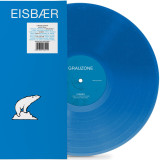
Grauzone - Eisbär

Grauzone

Eisbär

12inchWRWTFWW041
WRWTFWW Records
14.06.2024

2024 repress

WRWTFWW Records is very honored to announce the official reissue of Grauzone's essential 1981 maxi single with timeless classic "Eisbär", proto-techno beast "FILM 2", and romantic synth ballad "Ich Lieb Sie", just in time for the 40th anniversary of the Swiss band's formation. The three-track vinyl is sourced from the original reels, cut at 45rpm, and comes with its iconic artwork on a 350gsm sleeve.

Ich möchte ein Eisbär sein...Written by Martin Eicher after a nightmare in which he saw talking polar bears on the walls, and with music by the Grauzone crew consisting of Martin and his brother Stephan Eicher, Marco Repetto, Christian "GT" Trüssel, and Claudine Chirac (on saxophone), "Eisbär" is the most recognizable title from the band, a sublime mix of ingredients reflecting the transitional era it comes from - the raw energy of punk music still palpable, combined with the audacity of early electronics, the warm groove of a disco gem, beautifully fragile lyrics, and one of the best basslines ever. It became a mega hit, totally unplanned, but how could you resist such a track

"FILM 2" is the ultimate b-side monster, a menacing all-instrumental pre-techno masterpiece, slowly building to a magnetizing frenzy. An instant underground favorite, it was famously heard played at both speeds depending on the scenes and DJs you were frequenting, 45rpm as it was first intended, and 33rpm for the cosmic experience (search Daniele Baldelli's Cosmic C75 1982 mixtape online for a great example of this).

The maxi single ends with "Ich Lieb Sie", a synth-pop meets doo-wop ballad, a true love song oozing with innocence. Simple, stylish, and just right.

At the crossroads of post-punk, new wave, pop, and electronic experimentation, the Eisbär maxi offers three songs that are technically different but hold the same spirit, the perfect embodiment of Grauzone's music - wild, unpredictable, and youthful, yet sophisticated, catchy, and ingenious. The magic recipe for the good stuff.

Stephan Eicher went on to be, arguably, the most successful Swiss musician ever, with an international career extending from pop chanson to experimental escapades and collaborations with Moondog, artists Sophie Calle and John Armleder, and author Martin Suter among many other luminaries. Marco Repetto flourished as a techno and ambient producer, releasing multiple projects including releases on Aphex Twin's Rephlex label.

Grauzone and WRWTFWW will continue to collaborate on the band's 40th anniversary reissue campaign, with numerous projects planned for the year, including a vast selection of music, visuals, and literature never available before.

В наличии на складе

Есть у нас в наличии и готов к отправке

Various - Jason Boardman & Moonboots present 25 years of Aficionado LP 2x12"

Celebrating twenty-five years of Aficionado as a place to play away from suffocating mainstream club culture, DJs Jason Boardman and Moonboots have compiled a contemplative set of 16 tracks that holds a deep meaning to both themselves and attendees of their now legendary parties. The compilation includes two new tracks exclusive to the release: J Walk’s ‘Cool Bright Northern Morning’ and Begin’s remix of Canyons ‘Akasha’.
Reflecting on how it all started 25 years ago, Moon considers their no-plan-plan to be a makeshift plateau which evolved organically: “All we did was try to play good records one after the other without any consideration for fashion. And people wanted that”. Alternative approaches were not unknown at the time, but Aficionado, as Jason and Moon’s Sunday sessions became known, pressed the reset button with unique resolve.
Jason elaborates: “It was 1998 when we started. It was our own 'fuck you’ to the Super Club regime - almost everywhere then. The ‘anything goes’ Balearic ethos was in abeyance. It wasn’t cool at the time, but we both just wanted to keep that original spirit alive. ‘Keep it open’ had always been my approach to DJing - even from playing at Youth Clubs as a teenager. No rules or generic constrictions. Play anything that you like from any era, any style from any time. We always encouraged our guests to dig deep and play outside of their comfort zones, their usual styles”.
The lovingly crafted musical mystery tour of this compilation, considering its pleasantly hypnagogic intent, may not reflect the madness of these now distant memories. This is an older and considerably more responsible collection and this is what we need right now - a temporary respite from a world almost capsized. A mood, a meditation created by masters of their craft. Odd socks from disparate global locations making new sense side by side. An assemblage, if you like. A thread through many different kinds of thinking. A new picture pieced together from the lost pieces of many jigsaws.

В наличии на складе

Есть у нас в наличии и готов к отправке

Art P / Die Synthetische Republik - Genscher Pull N Push / Der böse Osten

We're thrilled to release two exciting electro tracks by Art P, as well as the classic minimal synthwave tune 'Der böse Osten' by related band project Die Synthetische Republik on this limited split 12".

The single kicks off with 'Genscher Pull and Push', an incredible and previously unreleased electro/wave/proto-techno tune from the P.A.P. archives, recorded in October 1982 with a political background. The song was only available on a demo cassette for a radio show and had been forgotten since then. Genscher was a long-time Federal Minister for Foreign Affairs and Vice Chancellor of Germany, who played a key role in a coalition change in September/October 1982, leading his party, the FDP, to leave the Helmut Schmidt cabinet with the SPD and continue with the opposition, the CDU/CSU. As a result, the German lyrics of the song shout 'bitte geh nach links / bitte geh nach rechts' ('please go to the left' - meaning the left-leaning SPD, and 'please go to the right' - meaning the right-leaning CDU), and so on.

Unfortunately, this track was never released, as the topic of the coalition change quickly became uninteresting and outdated. If it had been issued on vinyl in late 1982, it would probably be considered one of the first proto-techno tracks ever. With its driving and heavily-punching 808 rhythms, and the bending synth bass leads played on the Jupiter 4 synthesizer, it gives you a groove that owes as much to Kraftwerk's 'Computerwelt' album as it may rhythmically pre-date the sound of Detroit's Juan Atkins. The energetic German vocals are giving the track a unique Neue Deutsche Welle touch. They are heavily left/right panned to fit the political topic.

Next up on the Art P side is a remix of 'Polaroid', originally found on the No Message LP that we re-released last year. The track was recorded in 1985, and at that time, the duo of Frank Grotelüschen and Jens-Markus Wegener had become bored with the sound of the Roland 808 drum machine, so they made the track with a DrumTraks by Sequential Circuits. However, for this remix, DJ Scientist, the curator of this 12", wanted to recreate the typical electro-funk sound of the era and added 808 bass drums and claps. The track was also shortened to a more DJ-friendly arrangement. The result is a dancefloor delight for all lovers of classic electro and SVC-350 vocoder sounds!

Die Synthetische Republik was a project by Wegener of Art P and Olav Neander. The track 'Der böse Osten' can originally be found on the cassette album 'Faktor D', recorded in just two weeks on a Tascam Portastudio 245. The original recording sessions were pure fun but also rushed. Hence, none of the tracks was perfectly mixed. With digital technologies, we remastered 'Der böse Osten' to achieve the best possible result and are pleased to release this serious synth wave gem on a loud 12" for the first time as an exclusive extended mix.

The split 12" is released in a picture sleeve with a unique artwork on each side. It is limited to 500 copies.

В наличии на складе

Есть у нас в наличии и готов к отправке

Philippe Maté & Jef Gilson - Workshop

In October 1974, the first number of “L'Indépendant du Jazz”, a small self-produced magazine DIY -before punk supposedly invented the concept- was launched by Jef Gilson, Gérard Terronès, Jean-Jacques Pussiau and a few other specialists of a different kind of jazz in France, it looked at the already long career of Jef Gilson and in detail at the album with saxophonist Philippe Maté:
“The ‘Workshop’ is, with Philippe Maté (alto-sax), an undeniable success. Maté is genuinely ‘the’ most inventive French saxophonist since Michel Portal burst onto the jazz scene (who has also worked with Jef Gilson on both “Enfin” and “Gaveau”).”

Even though the author of the article is a mysterious I.H. Dubiniou, and it is difficult to know if it is a real person or a pseudonym used by one of the merry bunch, it is also tempting to hear it as what Jef Gilson really thought about his new discovery. Even more so as the two men would work together over a long period, as Maté became one of the key figures of Gilson’s Europamerica orchestra up until the 1980s.

Philippe Maté had started to make a name for himself with the Acting Trio when they released an album on the BYG label in 1969, and he was also one of the regular sidemen for the Saravah studios (he can notably be heard on albums by Higelin, Fontaine or his cult duo album with Daniel Vallancien).

The album was recorded on 4 February 1972, at the Foyer de Montorgueuil, where Gilson had set up his studio, with more or less the same team found on “La Marche Dans Le Désert” by Sahib Shihab + Gilson Unit (recorded ten days later). This was drummer Jean-Claude Pourtier and pianist Pierre Moret (regular Gilson accomplices since “Le Massacre Du Printemps”), alongside Maurice Bouhana and Bruno Di Gioa on various percussions and/or wind instruments. On bass is Didier Levallet, of the now mythical Perception, (Jean-François Catoire would replace him with Shihab) and Philippe Maté who took top billing, rather than the American saxophonist afterwards. The two albums are however quite different. This “Workshop” is more abrasive, more free. Made up of two long improvisations each of over 22mn, “L'Œil” on side A and “Vision” on side B (Gilson specialists would recognise the nod to one of his albums from the 60s), the album plunges you into the depths, attempting to drown you in electronic waves, dragging you back to the surface by the collar, giving you a good shakedown, before showing you the light, leaving you breathless on the shore after 46mn of the most intense music French has to offer. “An undeniable success”, they said. (by Jérôme "Kalcha" Simonneau)

В наличии на складе

Есть у нас в наличии и готов к отправке

Various - Nervous Records 30 Years (Part 2) 4x12"
 
17
также имеющийся в продаже

Black Vinyl


Nervous Records, the iconic label synonymous with the rise of house from the streets of New York City, will mark 30 years in the music industry by releasing the celebratory compilation LP ‘Nervous Records: 30 Years’ on October 1st (Part 1) and October 15th (Part 2).

Featuring original mixes of the label’s biggest tracks, plus remixes by some of its most celebrated acts, ‘Nervous Records: 30 Years’ is both a celebration of the past and of the future. Featuring a who’s who of electronic dance music, the long player sees names including Louie Vega, David Morales Darius Syrossian, Tensnake, Monki, Franky Rizardo, Danny Howard and more take on iconic Nervous cuts: ‘You Make Me Feel Mighty Real’, ‘Treat Me Right’, ‘Future Groove’, ‘Feel Like Singing’, ‘Get Up Everybody’, ‘Break You’, ‘Hot’, ‘End This Hate’, ‘Unspeakable Joy’, ‘Can Ya Tell Me’, ‘Jerk It’, ‘The Anthem’, ‘It Makes A Difference’, ‘Learn 2 Luv’ and ‘Don’t You Ever Give Up’.

The album marks one of the most enduring, extraordinary legacies to grace America’s illustrious music history, not just in electronica but far beyond. Founded in 1991 by Michael and his father Sam Weiss, and recognizable immediately by its distinctive character logo, the label grew rapidly, in no small part due to Michael Weiss’ practically unmatched passion for discovering new music.

“Louie Vega and Kenny Dope woke me at 4am on Tuesday night, Wednesday morning from their studio telling me they had something really different that I needed to hear,” Michael recollects. “I asked if they could play it over the phone. They said if I wanted to hear it I had to come to the studio. So of course I got myself up, got dressed and went there. That “really different track” ended up being ‘The Nervous Track’, a tune that became our signature release and was also highly instrumental in the emergency of London’s ‘Broken Beat’ movement.”

The label’s willingness to take chances on fresh sounds and innovative concepts rising up from the melting pot sidewalks of NYC ensured a body of work that has become a living musical history of the city. House cuts ‘Unspeakable Joy’ and ‘Nitelife’ (Kim English), ‘Get Up (Everybody)’ (Byron Stingily) and ‘Feel Like Singing’ (Sandy B) bump up against hip-hop anthems like ‘Who Got Da Props’ (Black Moon) and “Bucktown” (Smif-n-Wessun) and reggae cut ‘Take It Easy’ (Mad Lion); soulful flows from Mood II Swing (Kim English ‘Learn 2 Luv’, Loni Clark “Rushing”), Armand Van Helden (‘The Anthem’) and Nuyorican Soul (‘Mind Fluid’) sit alongside seminal techno singles like Winx’ ‘Don’t Laugh’. The young artists and producers who joined the Nervous Records’ family have gone on to become some of the most hallowed and celebrated dance acts of all time: Louie Vega, Kenny Dope, David Morales, Tony Humphries, Roger Sanchez, Armand Van Helden, Kerri Chandler, Kim English, Byron Stingily, Josh Wink, to name just a handful.

“We did a release with Josh Wink under his Winx alias entitled ‘Nervous Build-Up’,” Michael said. “It did well and it was obvious how talented Josh was. Subsequent to that release I was pretty persistent in asking him to continue to play me his new demos. During one phone conversation he said, “Mike I’m gonna play you something over the phone but don’t laugh when you hear it.” That demo ended up being ‘Don’t Laugh’, which became one of our biggest international hits and still to this day is one of America’s earliest and most impactful techno hits.”

As much a celebration of the label’s future as it is of their past, Nervous Records: 30 Years is but a marker in the imprints’ history, a clear sign of where they’ve been and also where they’re going. With 30 years behind them, the label’s determination to unearth new raw diamonds in the rough is as unwavering as ever.

“I’ve always been one to look at what others are doing (the industry at large) and think, “ok, are they doing this specific thing for a reason, or doing it because everyone else is doing the same thing” and make my decision based on that,” says Nervous Records’ General Manager Andrew Salsano. “In an age where data metrics and analytics reign supreme, I remain steadfast that they should be complementary to your decision and not the sole indicator to make one. So many songs today are written with 15 second hooks in mind for social media, and while there’s nothing wrong with that business model you will always be chasing the wave instead of carving out your own path and identity.

“My primary focus for the sound of the label has and will continue to revolve around signing good songs and music that has the ability to react at the street level first. The best results come from artists that are firstly given a bit of local love that grows into a global impact. Fresh ideas that express child-like curiosity and artists showing vulnerability in their music are also something I look for, artists and producers that are not making music with certain markets in mind, but rather their own style and signature that is unique but able to straddle the fine line of underground and overground.”

Still as raw, as underground and as finely tuned to the dance floor as they ever have been, perhaps the secret to the success - and the longevity - of Nervous Records has something to do with that hard, dogged, no-holds-barred NYC edge that runs through the veins of the label. With the next generation of producers rising from the clubs of New York, one thing is certain; Nervous Records will be there to find them, nurture them and bring them to the world at large, over the next decade and beyond.

В наличии на складе

Есть у нас в наличии и готов к отправке

The Roots of Chicha - Psychedelic Cumbias from Peru 2x12"
 
23

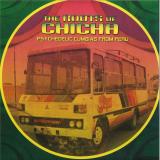
The Roots of Chicha, compiled by Barbès Records, was originally released in 2007 and became the first recording to popularize psychedelic cumbia around the world.

From the late 60's through the 80's, Peruvians invented a new popular musical hybrid inspired by music from the Americas. In 1968, Enrique Delgado released his first record on Odeon with his new group, Los Destellos, single-handedly creating Peruvian cumbia. He codified the genre early on by using the electric guitar as the primary melodic instrument, and mixing cumbia rhythms with folkloric huaynos, criollo voicings, Cuban guarachas and guajiras, rock, boogaloo, surf, psychedelia, oriental music, classical music, and bits and pieces from Brazil, France, Chile... All Peruvian cumbia bands for the next thirty years would end up drawing from the exact same sources (Grupo Celeste, Los Mirlos, Juaneco Y Su Combo, Manzanita Y Su Conjunto...).

This new wave of Peruvian cumbia came to be known as chicha. Chicha is originally the name of an alcoholic drink, made of fermented maize, which the Incas were especially fond of. In the past thirty years, however, the word has taken on a pejorative connotation. Peruvian cumbia started being called chicha in the late 70s, around the same time that the music came to be viewed as the expression of the slums – the pueblos jovenes. Little by little, the word became an adjective, and people now talk of chicha culture, chicha press, chicha architecture, even of a chicha president, and none if it – you guessed right – is meant as a compliment. Chicha suggests corruption, shady deals, and cholos – a derogatory term for a person of Andean heritage that, of late, is being reclaimed and worn as a badge of honor by the very cholos it was supposed to demean in the first place.

нет на складе

Закажите сейчас, и мы закажем товар для вас у нашего поставщика.


Последний логин: 2 дн. назад
Debit - Desaceleradas

Debit

Desaceleradas

12inchLOVE141
Modern Love
26.01.2026

A chopped-and-screwed love letter to the sounds of rebajada – half-speed cumbia, pioneered by Sonido Dueñez in the 1990s, and born from an overheated turntable motor that didn’t make the crowd stop dancing. With Debit’s treatment, rebajada becomes an ethereal, at times intense ambient tapestry that’s also a history lesson.

Spend any amount of time pacing the streets of Monterrey, the bustling city in the north of Mexico where Delia Beatriz, aka Debit, grew up, and you’ll be sure to catch traces of cumbia echoing from Bluetooth speakers, DIY soundsystems, or car stereos. An Afro-Latin dance form and »practica cultural« originating in Colombia in the early 19th century, cumbia evolved rapidly in the early 1900s, as a localised sound played on drums and flutes quickly modernised to integrate European instrumentation like the accordion. When it reached Mexico in the 1940s, the sound shifted again, fusing with mariachi styles and integrating further vallenato folk elements. Eventually, cumbia spread across the entirety of Latin America, splintering into a spectrum of different musical styles such as chicha in Peru, and cumbia villera in Argentina. And over in Monterrey, cumbia inadvertently found its own idiosyncratic groove.

From the 1950s to the 1970s, waves of immigrants from across Mexico and Latin America headed to Monterrey to find work, making a home in Colonia Independencia. Colombian cumbia records, shipped in from Mexico City, Houston, and Miami, became the soundtrack of the neighbourhood, relaying familiar stories to a rural working class adjusting to their new industrial reality. The sound struck a chord with locals, and huge street parties hosted by ramshackle soundsystems known as sonideros unified the diverse community. So when cumbia rebajada materialised serendipitously in the 1990s, it emphasised and highlighted the memory distortions at the heart of the immigrant experience. Local record collector, selector, and sonidero Gabriel Dueñez had been playing cumbia for hours one night when disaster struck: his turntable’s motor overheated and slowed down, turning the music into a warped groan, with half-speed voices echoing over wobbly accordion drones and splashy drums. But the crowd kept dancing, and Sonido Dueñez realised he’d struck gold – cumbia rebajada was born.

Over the next few years, he dubbed a popular series of mixtapes, hawking them at the flea market on the dried-up Santa Catarina riverbed beneath El Puente del Papa, the bridge that links downtown Monterrey with Independencia. These woozy archives became the stuff of legend, poetically but subconsciously shadowing DJ Screw’s series of epochal cassettes that appeared over the border in Houston. Beatriz uses Sonido Dueñez’s first two tapes as the starting point for »Desaceleradas«, entering into a dialogue with time, culture, and geography as she recalls the sonic ecosystem that surrounded her decades ago, long before she emigrated to the USA. If 2022’s acclaimed »The Long Count« was an attempt to recover concealed pre-Columbian history in the face of colonisation, »Desaceleradas« jumps forward, figuring out how memory and shared celebration can resist a more contemporary form of cultural erasure. As AI systems scrape, blend, and decontextualise culture around us, leaving vapid slop, »Desaceleradas« proposes a slower, more careful, and ultimately more human kind of engagement. It’s an archive with a pulse.

нет на складе

Закажите сейчас, и мы закажем товар для вас у нашего поставщика.


Последний логин: 35 дн. назад
JOEL SHEARER - LISTENING

JOEL SHEARER

LISTENING

12inchISCHF-005
ISC HI-FI SELECTS
09.12.2025

Joel Shearer’s Listening Immerses Itself in Ambient Guitar, Restraint, and the Beauty of Repetition

With guitarist and ambient composer Joel Shearer’s new album, Listening, he took the path of repetition, subtle movement, and pure sound rather than conventional songwriting. What began as a disciplined experiment — limiting himself to just electric guitar — soon expanded. At various points, he introduced piano, cello, and trumpet, allowing the record to evolve organically. "I didn’t know I was making another record,” Shearer says. “I was experimenting, wanting to do something beyond just the electric guitar. So, I started these other tracks, and that’s how Listening came about.”

Unlike albums built around hooks or dramatic shifts, Listening unfolds gradually, moving with patience and restraint. There are no choruses, no obvious climaxes — just sound evolving over time. “Instead of a traditional song structure with a verse, chorus, or B section, it’s one continuous movement that grows and dissolves,” Shearer explains. “It’s not about anticipating the next moment—it’s about sitting inside the sound, getting comfortable with patience.” A Topanga-based session musician, composer, and producer, Shearer’s previous solo albums, Morning Loops and Hours, explored the manipulation of only the electric guitar, using texture and repetition to push beyond conventions. Listening continues that journey, offering music that resists distraction and rewards deep attention.

Shearer recorded Listening without a click track, working in long, freeform takes. His shimmering, clean guitar tones—often unrecognizable, processed through looping pedals and effects—became a foundation, with layers of sound building around it. “I love making the guitar sound like anything but a guitar,” he says. “I might play for just a minute, but once the sound enters the effects chain, it takes on a life of its own. The music keeps evolving, stretching time in ways I couldn’t predict.”

The opening piece, “Big Sur,” is an 11-minute meditation that drifts in slow, hypnotic waves, its layered guitar textures sparkling like light over water. The piece moves without urgency, subtly transforming as it pulls the listener deeper into its atmosphere. “Threshold” features a delicate piano melody that gradually unfurls, allowing its essence to fully settle before the next emerges. Subtle layers of ambient guitar weave around the piano, stretching and dissolving into the background, creating a sense of stillness and slow expansion.

At nearly 15-minutes, “The Clear Light of the Void” is a slow-burning study in sustain and resonance. Layers of guitar stretch and dissolve into an open, drifting soundscape, each note lingering and shifting like a breath held in suspension. Subtle tonal variations emerge over time, creating a sense of vastness—an expanse where sound is less about movement and more about presence.

“The world is noisy—so much information, so much distraction,” Shearer says. “I wanted to create something that allows people to just be present with the sound, without expectation.” It’s an album that demands nothing from the listener but offers space — to focus, to drift, to listen without waiting for what comes next.

нет на складе

Закажите сейчас, и мы закажем товар для вас у нашего поставщика.


Последний логин: 3 мес. назад
Various - Stars from Another Sky Pt. 1: Film Songs from the Subcontinent Before the World Was Torn Asunder, 19

"It may surprise some that, after two decades of silent films, when Alam Ara broke the silence in 1931, it and every South Asian talkie that followed was what we in the West think of as a "musical." Music had been integral to the culture's staged drama going back to the Gupta Dynasty — sometime between the 4 th and 6 th Century CE. Since its inception, South Asian cinema drew heavily from Marathi, Parsi, and Bengali musical theatre and silent film screenings were often accompanied by live music to mimic a live staged experience.

When sound films arrived, actors with serious singing skills became the next wave of stars. Songs were performed live while shooting, with musicians hidden off-camera, to the side or sometimes even in trees. Playback singing — the practice of dubbing a real singer's voice over a lip-syncing actor — didn't become standard until the 1940s.

Thus, the biggest stars of the 1930s were also the greatest singers, with some, like Govindrao Tembe and Pankaj Mullick, excelling as both composers and vocalists. None, however, were more beloved than K.L. Saigal, whose emotional, untrained crooning captivated audiences across the subcontinent. Saigal's voice inspired a young Lata Mangeshkar, who vowed to become India's greatest filmi singer to win his heart. Sadly, Saigal grew increasingly addicted to alcohol, unable to perform without it, and passed away at age 42, seven months before the Partition. Lata never married.

This collection features some of the earliest songs from South Asian cinema, sourced from CDs and LPs found in Jackson Heights, Queens, Coney Island Avenue in Brooklyn, Lexington Avenue in Manhattan, and Oak Tree Road in Iselin, New Jersey — areas home to vibrant immigrant communities. South Asian immigration to New York and New Jersey surged after the 1965 Immigration and Nationality Act, which lifted non-European quotas. By the 1990s and 2000s, the region's Indian, Pakistani, and Bangladeshi media outlets flourished, especially in Jackson Heights, where such stores outnumbered the total number of regular record shops throughout the five boroughs.

The nascent period of sound film featured a limited palette of musical styles, predominantly Marathi Bhagveet, like the Ghazal, but with greater flexibility of subject matter and rhythm, and Rabindra Sangeet, the approximately 2,000 songs and poems composed by Bengali Nobel laureate Rabindranath Tagore. But there was some evolution as well, with the success of South Asian cinema's first woman composer, the classically trained Saraswati Devi, and the introduction of Western instruments including the piano and Hawaiian guitar.

While much of the music was dark and brooding, perhaps exemplified best by Devika Rani's interpretation of Saraswati Devi's "Udi Hawa Mein" from 1936's Achhut Kannya (Untouchable Maiden), there were moments of brightness, such as R.C. Boral's "Lachhmi Murat Daras Dikhaye" sung by Kanan Devi in Street Singer, an otherwise thoroughly depressing film from 1938 that cemented Devi's and co-star K.L. Saigal's superstardom.

This selection was chosen to emphasise a range of expressivity, instrumentation and style achieved even within the decade's relatively limited scope, setting the listener up for the relative explosion of possibility in the 1940s, to be covered in the next installment of this series."

нет на складе

Закажите сейчас, и мы закажем товар для вас у нашего поставщика.


Последний логин: 4 мес. назад
Le Matos - Turbo Kid

Le Matos

Turbo Kid

12inch0810155840822
MUTANT
25.07.2025

Mutant is proud to present another contemporary classic from Quebec duo Le Matos, a follow-up to their acclaimed science fiction score, TURBO KID. Released in 2015, the movie TURBO KID became an instant cult hit, and since then, fans have been aching for a video game. This is the future; the world as we know it is gone. You are The Kid, a lone warrior on a journey to cross the Wasteland in search of hope. What you will find on your way, however, is a land riddled with scoundrels and creeps, which you’ll have to go through – sometimes quite literally – to survive. Propelling this madness is an incredible soundtrack by Le Matos returning to the wasteland they helped create in 2015. They cherry-pick influences from the best of electronic music from the past forty years; John Carpenter, Vangelis, and Tangerine Dream are all touchstones, but so are Daft Punk or Justice, all put through an 80's synthpop blender. Creating some incredible retro-futuristic synth wave sounds, including an astonishing re-teaming with Pawws for the single To Tomorrow. TURBO KID – A place beyond your dreams, a record beyond your imagination.

Сделать предзаказ25.07.2025

он должен быть опубликован на 25.07.2025


Последний логин: 2026 г. назад
Talk Talk - La Transmision en Espanol 1986
  • Talk Talk
  • Dum Dum Girl
  • Call In The Night Boys
  • Tomorrow Started
  • My Foolish Friend
  • Life's What You Make It
  • Does Caroline Know?
  • It's You
  • Chameleon Day - Living In Another World
  • Give It Up
  • It's My Life
  • Such A Shame
  • Renee

Unlike other broadcasts from this tour, this recording captured their entire
performance that night. What makes this release so special, is that Talk Talk sleeve
designer James Mash, has designed the artwork. This is a very special limited edition
on blue and orange vinyl.
Talk Talk was an English band formed in 1981, initially gaining recognition for their
synth- pop sound in the early 1980s. The band was fronted by Mark Hollis, whose
distinctive voice and introspective lyrics became a defning feature of their music.
Their early hits, such as "Talk Talk" and "It's My Life," showcased a polished, new wave
style that earned them commercial success and a place in the burgeoning pop scene
of the era. However, Talk Talk's true artistic legacy lies in their later work, where they
transitioned from pop- oriented music to pioneering a more experimental and
atmospheric sound, embracing a more ambitious and avant-garde approach. Albums
like 'The Colour of Spring' (1986) marked a turning point, blending lush
instrumentation with deeply emotional themes. This evolution culminated in their
critically acclaimed masterpieces, 'Spirit of Eden' (1988) and 'Laughing Stock' (1991).
These albums, characterised by their improvisational style, sparse arrangements, and
use of silence as a musical element, are often credited with laying the groundwork for
the post-rock genre

Сделать предзаказ18.07.2025

он должен быть опубликован на 18.07.2025


Последний логин: 2026 г. назад
Botch - 061524 LP 2x12"

Botch

061524 LP 2x12"

2x12inchSH297LPBS
SARGENT HOUSE
10.07.2025

Influential hardcore innovators Botch have delivered their electrifying new live album 061524, recorded at the iconic Showbox in Seattle on June 15, 2024—exactly 22 years to the day after their original farewell show at the same venue in 2002. 061524 captures a band still pushing sonic and emotional boundaries, now sharper, louder, and more dynamic than ever. Botch’s impact on aggressive music is undeniable. Their chaotic, math-laced brand of hardcore helped shape the genre’s landscape well after the band’s abrupt breakup in 2002.

For years, a reunion seemed unlikely—until a chain of unexpected events brought the original lineup back together for the band’s first new recording in over 20 years: 2022’s “One Twenty Two.” The song was released to critical acclaim, building into a frenzy of anticipation for Botch to reunite. What started as a nostalgic experiment quickly became a full-circle celebration, with the band reconnecting both personally and musically. That spark unleashed a wave of activity: secret warm-up shows, sold-out headlining gigs, and eventually a carefully curated international reunion tour, culminating in their hometown return at the Showbox—where 061524 was recorded in front of a packed, exhilarated crowd. 061524 is a blistering, unflinching document of a band reawakened—not as a legacy act, but as a vital force.

The album captures the energy, grit, and heart of a group that’s not only older and wiser—but more rehearsed and way more ambitious. The performances are tight but still full of the raw unpredictability that defined their early years. Fan favorites like “To Our Friends in the Great White North” and “Transitions from Persona to Object” are more complex and invigorating than ever before. Other songs, like “Afghamistam” and “Oma,” never considered feasible to pull off live previously, are delivered with the intricacy and intensity that has earned the band a lasting legacy and fresh legion of followers.

Сделать предзаказ10.07.2025

он должен быть опубликован на 10.07.2025


Последний логин: 2026 г. назад
Botch - 061524 LP 2x12"

Botch

061524 LP 2x12"

2x12inchSH297LP
SARGENT HOUSE
10.07.2025
  • 1: Intro
  • 2: To Our Friends In The Great White North
  • 3: Mondrian Was A Liar
  • 4: John Woo
  • 5: Spaim
  • 6: Japam
  • 7: Framce
  • 8: Oma
  • 9: Thank God For Worker Bees
  • 10: One Twenty Two
  • 11: Vietmam
  • 12: Transitions From Persona To Object
  • 13: Hutton’s Great Heat Engine
  • 14: Afghamistam
  • 15: C. Thomas Howell As The “Soul Man”
  • 16: St. Matthew Returns To The Womb
также имеющийся в продаже

Coloured


Influential hardcore innovators Botch have delivered their electrifying new live album 061524, recorded at the iconic Showbox in Seattle on June 15, 2024—exactly 22 years to the day after their original farewell show at the same venue in 2002. 061524 captures a band still pushing sonic and emotional boundaries, now sharper, louder, and more dynamic than ever. Botch’s impact on aggressive music is undeniable. Their chaotic, math-laced brand of hardcore helped shape the genre’s landscape well after the band’s abrupt breakup in 2002.

For years, a reunion seemed unlikely—until a chain of unexpected events brought the original lineup back together for the band’s first new recording in over 20 years: 2022’s “One Twenty Two.” The song was released to critical acclaim, building into a frenzy of anticipation for Botch to reunite. What started as a nostalgic experiment quickly became a full-circle celebration, with the band reconnecting both personally and musically. That spark unleashed a wave of activity: secret warm-up shows, sold-out headlining gigs, and eventually a carefully curated international reunion tour, culminating in their hometown return at the Showbox—where 061524 was recorded in front of a packed, exhilarated crowd. 061524 is a blistering, unflinching document of a band reawakened—not as a legacy act, but as a vital force.

The album captures the energy, grit, and heart of a group that’s not only older and wiser—but more rehearsed and way more ambitious. The performances are tight but still full of the raw unpredictability that defined their early years. Fan favorites like “To Our Friends in the Great White North” and “Transitions from Persona to Object” are more complex and invigorating than ever before. Other songs, like “Afghamistam” and “Oma,” never considered feasible to pull off live previously, are delivered with the intricacy and intensity that has earned the band a lasting legacy and fresh legion of followers.

Сделать предзаказ10.07.2025

он должен быть опубликован на 10.07.2025


Последний логин: 2026 г. назад
Abul Mogard - Quiet Pieces

Abul Mogard

Quiet Pieces

12inchECH001LP
Soft Echoes
21.05.2025

'Quiet Pieces' initiates Abul Mogard’s personal imprint Soft Echoes with a definitive self-portrait of calm, contemplative, and discreet inner landscapes made audible. It is the first solo album on vinyl in four years. RIYL Alessandro Cortini, William Basinski, The Caretaker.

While sifting through archived material left idle from earlier projects, a chance encounter with a late uncle’s trove of beloved 78rpm classical and opera records prompted the reworking and completion of what would eventually become the album. Spinning dusty records at 33 and 45rpm, Abul Mogard recombined their enduring spectres with unfinished sketches from his archive. The resulting soundscape blurs distinctions between his memories and those of another, exquisitely short-circuiting the senses with its waking, dream-like lucidity.

This was a process I hadn’t explored in my earlier works. I began sampling brief moments from these records, altering them with studio effects and playing them at slower speeds. In many cases, I wasn’t entirely sure how the original music sounded. These fragments, once further processed, became a source of inspiration for my new compositions. Over time, I realised that the old pieces from the archive and the new material derived from the samples naturally complemented each other.”

The resulting pieces hover over a threshold, a liminal space that harmonises the old and older material. Voluminous waves of quiet and loud undulate between consonance and dissonance, conjuring imagery of a decaying grandeur that humanity’s decadence has surrendered to the elements. Abul Mogard’s seemingly abandoned yet vast landscapes are nevertheless intimate with timbral frissons of red-lined distortion. Elusive, yet as tangible as sea spray or smog, they affect the olfactory senses with a rarified, synesthetic quality that modestly engages one’s emotional register – a hypnotic, distinguishing feature long hailed as one of the hallmarks of his work. A fidelity to memory and dream recall is sensitively probed in the journey from the stately symphonic stasis of 'Following a dream' to the almost industrial, untethered brutality evoked by a looming silhouette that’s never fully visible in 'Constantly slipping away', culminating in the foreboding coda of 'Like a bird'. Those pieces appear to shield the album’s sentimental core, where the tempestuous play of light and shadow of 'In a studded procession' escalates to breathtaking, panoramic climax, while 'Through whispers' evokes an out-of-body-like experience encountered with visceral poignancy.

Looking back, Mogard notes an unexpected influence: “I realise being inspired by Phill Niblock, whose work I had barely known at the time but explored after his passing in 2024. His album 'Boston Tenor Index' changed the way I approached dissonance. It encouraged me to push my sound further, to the edge of a space where I began to feel uncomfortable.”

The album artwork, created by longtime collaborator Marja de Sanctis, features a photograph taken at the Temple of Jupiter Anxur, an archaeological site overlooking the Mediterranean Sea. Captured with an iPhone, the image traces the residual presence of construction techniques and architectural forms of the Romans, where material history is transcribed through contemporary tools. The convergence of ancient and modern technology aims to reverberate the site’s lasting spiritual presence – an echo persisting in what is now perceived as a quiet, emptied space. The spiral gestures towards infinity and light. Past and present dissolve into one another, reflecting 'Quiet Pieces' meditation on sound, memory, and time.

RIYL Alessandro Cortini, William Basinski, The Caretaker

нет на складе

Закажите сейчас, и мы закажем товар для вас у нашего поставщика.


Последний логин: 69 дн. назад
Grauzone - Eisbär

Grauzone

Eisbär

12inchWRWTFWW041BLUE
WRWTFWW Records
23.04.2025

2025 Blue Vinyl Repress

WRWTFWW Records is very honored to announce the official reissue of Grauzone's essential 1981 maxi single with timeless classic "Eisbär", proto-techno beast "FILM 2", and romantic synth ballad "Ich Lieb Sie", just in time for the 40th anniversary of the Swiss band's formation. The three-track vinyl is sourced from the original reels, cut at 45rpm, and comes with its iconic artwork on a 350gsm sleeve.

Ich möchte ein Eisbär sein...Written by Martin Eicher after a nightmare in which he saw talking polar bears on the walls, and with music by the Grauzone crew consisting of Martin and his brother Stephan Eicher, Marco Repetto, Christian "GT" Trüssel, and Claudine Chirac (on saxophone), "Eisbär" is the most recognizable title from the band, a sublime mix of ingredients reflecting the transitional era it comes from - the raw energy of punk music still palpable, combined with the audacity of early electronics, the warm groove of a disco gem, beautifully fragile lyrics, and one of the best basslines ever. It became a mega hit, totally unplanned, but how could you resist such a track

"FILM 2" is the ultimate b-side monster, a menacing all-instrumental pre-techno masterpiece, slowly building to a magnetizing frenzy. An instant underground favorite, it was famously heard played at both speeds depending on the scenes and DJs you were frequenting, 45rpm as it was first intended, and 33rpm for the cosmic experience (search Daniele Baldelli's Cosmic C75 1982 mixtape online for a great example of this).

The maxi single ends with "Ich Lieb Sie", a synth-pop meets doo-wop ballad, a true love song oozing with innocence. Simple, stylish, and just right.

At the crossroads of post-punk, new wave, pop, and electronic experimentation, the Eisbär maxi offers three songs that are technically different but hold the same spirit, the perfect embodiment of Grauzone's music - wild, unpredictable, and youthful, yet sophisticated, catchy, and ingenious. The magic recipe for the good stuff.

Stephan Eicher went on to be, arguably, the most successful Swiss musician ever, with an international career extending from pop chanson to experimental escapades and collaborations with Moondog, artists Sophie Calle and John Armleder, and author Martin Suter among many other luminaries. Marco Repetto flourished as a techno and ambient producer, releasing multiple projects including releases on Aphex Twin's Rephlex label.

Grauzone and WRWTFWW will continue to collaborate on the band's 40th anniversary reissue campaign, with numerous projects planned for the year, including a vast selection of music, visuals, and literature never available before.

нет на складе

Закажите сейчас, и мы закажем товар для вас у нашего поставщика.


Последний логин: 44 дн. назад
Nengue - Los Ninos Del Parque EP

The Italian 80s avant garde / anarcho scene is explored in this limited 12” release presenting Nengue and their previously unreleased cover version of the new wave classic Los Ninos Del Parque and the electro pop wave African Beat.

The tumultuous political climate of the 1960s through 1980s inspired Italian artists to craft an introspective, psychological musical landscape. As civil unrest, violent demonstrations, and political murders became commonplace, Italy's centres of intellect vibrated with activist energy. This atmosphere gave birth to a unique, mechanized sound that blended electronic elements with a raw, discordant aesthetic, reflecting the chaotic spirit of the times.

Through vintage forms of social networking and music sharing, a community led process steered the scene, publishing zines and records that grasped alternative concepts of music and lifestyle.

Nengue, were similar to many of these lo-fi, retro-future electronic music pioneers. Based in Rome, their music / art backgrounds flowed with anti-art, extreme noise, futurism, industrial, experimental, martial, folk, free jazz and exotica.

With a couple of releases as a duo, as was often the case, they appeared in numerous other projects and the music was a mixture of their individual backgrounds.

Extraordinarily, only appearing on a couple of obscure cassette compilations, indicative of the time, the quality of Nengue’s productions stands testament. Originally approached to reissue their Cosmic meets Kraftwerk inspired African Beat, a wonderful yet simple electronic idiom, layers of electronica rising, each element an addition flow, vocals the release’s waves.

However, the discovery of their cover of Los Ninos Del Parque – describing it as ‘powerful anarchic nonsense’ – is rightfully now the primary focus.

Acting as some Brutalist interpretation, its sharp electronics and industrial vocals, propel you to a brick-strewn squat party and a place in anarcho folklore.

These are matched with a remix / remake by Berlin’s Bionda e Lupo. Presenting a ‘Neumisch’, Sneaker’s exacting studio mastery and Sano’s additional vocals are a blessing – a new duo version – dynamic and wonderfully special.

To complete, the powerful dub of African Beat closes. Stepping out of his time as one half of Romanian duo Khidja (DFA / Hivern Discs), Andrei Rusu builds on his recent solo releases / remixes for Malka Tuti with a fantastic, bottom heavy version, perfectly building with expertise, an EP for the basements of today that was made in the dark times of the past.

нет на складе

Закажите сейчас, и мы закажем товар для вас у нашего поставщика.


Последний логин: 9 мес. назад
Studio - West Coast MC (TAPE)
 
6
также имеющийся в продаже

Black


Studio, the influential project of Swedish musicians Dan Lissvik and Rasmus Hägg, presents their legendary 2006 debut in remastered form, in partnership with Ghostly International. Available in limited edition "Fog Machine Vinyl", CD, and cassette. "One of the finest pieces of electronic music you'll hear this year.” - The Guardian (2006). Included in year-end best-of write-ups by Pitchfork, FACT Magazine, and Rough Trade. Physical copies have long been out of print for West Coast, and the album has also been notably absent from most streaming services until now.

“Somehow, I knew I wanted to make a conceptual record that, although only imaginary at that point, could represent or define how our city sounded,” says Lissvik of Gothenburg's influence on West Coast. Some called Studio, the project of Swedish musicians Dan Lissvik and Rasmus Hägg, “the missing link between The Cure and Lindstrøm,” Pitchfork heard Durutti Column and Can, as the duo’s story became swept up in a loosely developing scene — adjacent first to the label Service (Jens Lekman, The Whitest Boy Alive) and later Sincerely Yours (The Tough Alliance, jj) — and a precursor to the 2010s boom at the axis of electronic and psychedelic music guided by indie greats like Caribou, Four Tet, and Darkside.

West Coast, their seminal 2006 debut, captured a faraway romanticism of Balearic brushed up against Krautrock, disco, dub, and afrobeat, with pop lyricism lifted from new wave, all made modern by two art school grads in Gothenburg. First pressed in a small vinyl-only run via their own Information label, the album has been notably absent from most streaming services, and the internet’s record of its initial impact is all but fossilized from a bygone blog era, while its sound is simply untraceable to any one moment in music.

Outside of three 7” releases, they’d keep the music to themselves for several more years. In 2005, Hägg remembers, “We got our degrees and were kicked out of our studio spaces so all these recordings were just piled up. A year later we dusted them off and started to deconstruct and assemble them in a more drawn-out fashion.” In the same breadth, they cite DJ Screw, J Dilla, and Joy Division, along with early ‘80s European live DJ sets from the likes of Beppe Loda, Dj Mozart, and Baldelli as reference points.

“The anything-goes mentality was very encouraging and was a big cornerstone to the Studio sound,” says Hägg. “But there’s so much more to the picture, we were not that young then and had lots of musical baggage in our suitcases, the new thing was that we finally let it all come through, not bound by any borders that was often the case with music identity in Sweden during the 90s.” In the afterglow of the record’s 2007 reception, Studio receded from view, clouded behind a mountain of remix requests (including one for Kylie Minogue that saw release) and label bureaucracy. “It’s easy to wish we would have done some proper recordings of our own instead,” Hägg reflects. But both artists, now well into respective careers beyond Studio, have come to peace with West Coast as their most enduring effort together. Lissvik adds, “It serves as a good reminder for me to keep to that decision and promise and to continue exploring and growing

Сделать предзаказ24.01.2025

он должен быть опубликован на 24.01.2025


Последний логин: 2026 г. назад
Sonic Youth - Anagrama

While 1995's Washing Machine LP moniker was a thinly-veiled jab at the corporate aesthetic ("no, you cannot turn Sonic Youth into a household appliance brand", the band even considered changing its name to Washing Machine but settled on the album title instead), their major label relationship was indeed a curious buzzpoint of talk on the street after their intake to DGC in 1990. It wouldn't be fair to say that this state of existence propelled the band to reinforce its independent mindset by releasing a series of opaque-looking, French-language-dipping, highbrow-looking releases on their own that focused on the more abstract improv/compositional side of the band; in all truths they had been heavily steeped in self-releasing spillover material prior to that. But after a pressure pot of the early 90's indoctrination into a new operational mode for the band and its visibility, and the forces around it attempting to shape their direction, it seemed like a good time to create a strong show of radical concept.

The Anagrama EP became the first in a series of the SYR label's Perspective Musicales releases seemingly cementing Sonic Youth's connectivity to an increasing public awareness in experimental composers of the 20th century (French or otherwise). The irony was that many of those original avant composers being rediscovered by the indie audience (Partch, Neuhaus, Reich, Messaien) often found themselves on major labels anyway! So, perhaps this reverse approach was a necessary concept/comment given the music biz climate of the 90's. Regardless of how apples and oranges fell in Xenakian probability/theory, it was clear that both Sonic Youth's stature in progressive music, aided by now unlimited taperoll time thanks to a home base studio downtown established after their Lollapalooza stint, gave the band plenty of trailblazing time for their self examination of untraveled avenues.

"Anagrama" unfolds into nine minutes of delicate textures, starting with thick drone segueing into moments reminiscent of the post-crescendo flutter/comedown of "Marquee Moon's" trail-out; Thurston, Lee and Kim's guitars all circling round each other taking delicate pokes and stabs before drifting into some post-rock rhythmic moves tapered with delicate percussive guidance from Steve Shelley. "Improvisation Ajoutée" reaches further out into dissolve with whirring oscillations, guitars hissing and clanking radiator-style in a short blast format that continues into "Tremens" and a spooked-out landscape of gelatinous notes snaking up slowly. The sparseness of attack is colorful, textures emit and linger, silent spots shine, all flanked by tasteful drumming that provides the thread to all the abstraction. Shelley's approach here is interestingly sideways to any kind of usual rock action, it's tempered, mutant and metronomic simultaneously. The finale track "Mieux: De Corrosion" is a real pedal-palatte showcase. Here, Plutonian guitar wash flanges upwards to buoy a myriad of colorful eruptions of amp-spuzz, chopped up tone blasts and general confusion. Out of the blue, some metallic one-note choogle kicks in and threatens to explode into some Judas Priestly motion, before it all sputters into aural glass showers, clang, and finally a ferocious wave of more flange hiss that crashes down on a dime.

This initial foray into SY's Perspectives Musicales series continued onward with releases featuring other co-conspirators, peaking with the ambitious 2CD Goodbye 20th Century that finally connects the band into full-on interpretations of other composers' pieces (as well as displaying their own new ones). The whole series is not so much an outlet for another "side" of the band, but a run that went hand in hand building new approaches of songcraft onto their own, more overground direction which included Jim O'Rourke (who hopped on during SYR3), adding additional density to A Thousand Leaves and other LPs of his era. Fans of the '86 Spinhead Sessions as well as the recently-exhumed later jams of In/Out/In will take in the sounds of SYR1 with glee.

нет на складе

Закажите сейчас, и мы закажем товар для вас у нашего поставщика.


Последний логин: 14 мес. назад
Shifted Phases - The Cosmic Memoirs Of The Late LP 3x12"

2024 Repress
In early 2023, Tresor Records will reissue the sole output from Shifted Phases entitled The Cosmic Memoirs Of The Late
Great Rupert J. Rosinthrope. Initially released in 2002, soon after James Stinson passed away, this LP plays a mysterious and
compelling role in the Drexciya journey. While other records of Drexciya and related projects have received numerous reprints
and editions, The Cosmic Memoirs... has remained out of print since its release. This rarity leaves it more open to
interpretation with its place in the Drexciyan storm series, as it became increasingly hard to find and underexplored.
Track titles Solar Wind, White Dwarf, and Lonely Journey of the Comet Bopp reveal a focus on cosmic realms, suggesting a link
with the Drexciya LP Grava 4 that moves from the underwater to the galactic. As it launches with mechanical blows on a
precise orbit, each repetition entrenches the gravitational pull in the galaxy of Shifted Phases. In many places, it sounds like
the readout of frequencies harvested from outer space, pockmarked with packet loss from the millions of kilometres distance
travelled.
The music is hard to contain, intuitively restless in motion through its unfolding universe and achingly resonant. It shapeshifts
across aectedly melodic sequences such as in Lonely Journey..., to the sparse, hard-hitting timbres found in Alien Vessel
Distress Call and the mangled reverse vocals in The Freak Show, somewhat reminiscent of another Drexciya side-project, Glass
Domain. The mythology of Drexciya is evident in how keenly James Stinson and Gerald Donald created their imaginary worlds.
In Crossing Of The Sun-Ra Nebula, there is an undisputable reference to another Afro-futurist who delved deep into a galaxy of
their own making.
This reissue does not merely close the loop on Tresor's reissue series of the Drexciya catalogue but brings Shifted Phases to
fresh ears more than other records. Accompanied by newly commissioned artwork from Matthew Angelo Harrison, the 3xLP
vinyl reissue also features the tracks Crossing Of The Sun-Ra Nebula and Alien Vessel Distress Call, which were previously only
on the original CD release.

нет на складе

Закажите сейчас, и мы закажем товар для вас у нашего поставщика.


Последний логин: 10 мес. назад
Lex & Locke - 7 Day Path EP

Lex first grabbed our attention following his brilliant release on B2 Recordings which became a staple vibe setter in Jimpster’s DJ sets and Sofa Sessions streams in 2021. Gaining his deep musical knowledge through his own revered record store Radical Soundz, the Greek DJ and producer has been immersed in dance music for over 20 years and considered one of the key figures in the Athens underground house scene. With releases and remixes on labels such as Leng, Samosa, King Street and Black Riot, Lex is making waves internationally with a unique sound that fuses live elements and expansive arrangements taking influence from masters such as Ron Trent but adding a warm, cosmic glow. Fellow Greek artist Locke joins pro- ceedings for this EP bringing his own psychedelic sound garnered from his years playing crazy events taking in South American jungle parties, burning hot African desert raves, the underground clubs of Berlin to the sparkling coastal shores of Baja California. Locke is more than just a DJ. He is a connector, educator and traveler whose soulful music has the crowds chasing the sun as he brings love and celebra- tion to the events he plays.

On title track 7 Day Path we’re treated to a beautiful spacious jam which unfolds across 7 minutes, driving, live percussion keeping the energy high whilst Herbie- esque synth leads help to create a beautifully paced and dynamic arrangement.

Next up we have Italian legend DJ Rocca onboard for a remix of 7 Day Path. The prolific producer and DJ has been a tour de force since the late 90’s collaborating with the likes of Howie B, Dimitri From Paris, Chris Coco, Daniele Baldelli and Jazzanova producing singles, remixes and albums for labels such as Sonar Kollekt- iv, Compost, Classic, Rekids, Futureboogie, !K7, Tirk, International Feel, Defected, Rotters Golf Club and Faze Action Recordings. Here he adds his trademark dubby disco wiggle pushing the original in a jazzy direction with live flute. Definitely one to be heard under the stars on a Croatian beach for maximum Adriatica effect!

Flipping over, things head deeper and darker with See No Ball featuring Locomot- ives, a more straight-up heads-down stripped back club jam with a repeated vocal, funky guitar chops and a smattering of improvised synth and Hammond B3 keeping things jazzy and musical.

Closing out this brilliant EP we have Catch Up With The Sun which drops the BPM’s for a low-slung cosmic jam loaded with good vibes.

нет на складе

Закажите сейчас, и мы закажем товар для вас у нашего поставщика.


Последний логин: 15 мес. назад
The Damned - AD 2022 Live In Manchester LP 2x12"

Formed in London in 1976, The Damned became one of the most groundbreaking and influential bands coming out of the 70s British punk rock scene. Their debut single “New Rose” (1976) is considered the first punk single to be ever released in the UK. Throughout their impressive 45+ year career (and counting), The Damned have experimented with various musical styles, incorporating elements of gothic rock, psychedelia, and new wave into their sound. In October 2020, over 40 years after the founding members parted ways, The Damned announced a series of reunion shows with the original line-up consisting of Dave Vanian (vocals), Brian James (guitar), Captain Sensible (bass), and Rat Scabies (drums). However, due to the pandemic, they were forced to postpone the shows until 2022. November 3rd, 2022, saw the band performing at the fully packed O2 Apollo in Manchester, UK, delivering an energetic 21-song set drawn from the first two albums, the 1977’s “Damned Damned Damned” and “Music for Pleasure”, the only albums to feature the four founding members. This legendary reunion show is captured on the worldwide release “AD 2022 – Live In Manchester” which perfectly portrays the unique magic around The Damned.

Сделать предзаказ13.09.2024

он должен быть опубликован на 13.09.2024


Последний логин: 2026 г. назад
AD 2022 - Live In Mancheste LP 2x12"

The long awaited reunion show! Founded in London in 1976, The Damned became one of the most successful and influential bands in the British punk rock scene of the 70s.

Their debut single "New Rose" (1976) is considered to be the first punk single ever released in the UK. Over the course of their 45-year career, The Damned have experimented with different musical styles and integrated elements of gothic rock, psychedelia and new wave into their sound. In October 2020, more than 40 years after the founding members split up, The Damned announced a series of reunion shows with the original line-up consisting of Dave Vanian (vocals), Brian James (guitar), Captain Sensible (bass) and Rat Scabies (drums).

However, due to the pandemic, they were forced to postpone the shows until 2022. On November 3, 2022, the original line-up performed at the sold-out O2 Apollo in Manchester, UK, and presented an energetic 21-song set from the first two 1977 albums "Damned Damned Damned" and "Music for Pleasure"; the only albums to feature all four founding members. "AD 2022 - Live In Manchester" presents not only a legendary reunion show, but also the unique magic surrounding The Damned.

Сделать предзаказ13.09.2024

он должен быть опубликован на 13.09.2024


Последний логин: 2026 г. назад
American Cream Band - Presents

At once a spiritually-charged journey and a shit-kicking party record, American Cream Band comes to Quindi covering all the bases.
American Cream Band was formed by Twin-Cities musician Nathan Nelson around 10 years ago, taking the form of improvised live shows and albums Frankensteined from these sessions into exultant, fully-formed records you can sink your teeth into. The trick with improvised music is to start with intentions, however abstract they might be, and Nelson leads his rolling cast of collaborators into the creative fray with subtle guidance which drives the impulsive musical moment forward.
The band's previous records have manifested on labels like Moon Glyph and Medium Sound, and now Presents arrives in a freewheeling flash of snappy new wave, skronky sax, call and response sass and some krautrock-minded sonic cosmology. The album came together in December 2021, when Nelson took ten musicians to legendary studio Pachyderm in Cannon Falls, Minnesota. Living together, eating together, and with Nelson quietly setting up his low-key magick intentions around Jupiter's planetary frequency and the studio's abundance of elephant statues and carpets, they laid down some drum-heavy sessions that became the building blocks of the record.
'Taste What We Taste' is the perfect example of an exuberant groove pounded on skins as a vessel for a joyous get-down, with the singers and players free to freak out on top. Nelson remains at the centre of the melee, throwing half-sardonic, half-heartfelt calls out for connection. 'Banana' celebrates nonsense and holds down the most serious of beats - a disco-not-disco deadeye dripping in late night sleaze and lysergic potential. On 'Royal Tears', the jagged guitar chops call back to Gang Of Four, while the hot n' heavy sax from Cole Pulice baits James Chance and all the other angular New York un-jazz misfits.
Amongst his other implied intentions for the recordings, Nelson wanted to channel opposites, not least the distinct male-female energies in his vocal sparring with the girls on assistance duties. It wouldn't be right to call them backing singers as they shoot back at his punchy mantras, bringing a certain fierce femininity that tips its hat to The B-52's Cindy Wilson and Kate Pierson, not to mention iconic post-punk bands like Au Pairs, Delta 5 and Bush Tetras.
There's space for the dreamier kosmische which has crept into the American Cream oeuvre in the past, as 'Sirens' opens the album up in a swirling pond of rag tag percussion and molten synths. 'Words Would Handcuff Us' cools the whole riotous assembly down in unmoored perfection, a strung-out Bossa nova seance dusted with celestial drips from analogue spaceships.
Equally treading the line between light and dark, conscious and unconscious, the sacred and profane, Presents is a life-affirming, creep-under-the-skin listening experience - a joyously transient chapter in the evolution of American Cream Band.

нет на складе

Закажите сейчас, и мы закажем товар для вас у нашего поставщика.


Последний логин: 18 мес. назад
Laurie Anderson - Amelia LP

Laurie Anderson

Amelia LP

12inch75597909340
Nonesuch
28.08.2024

Nonesuch Records releases Laurie Anderson’s Amelia, the 2024 Grammy Lifetime Achievement Award recipient's first new album since 2018’s Grammy-winning Landfall. The record comprises 22 tracks about renowned female aviator Amelia Earhart’s tragic last flight. Anderson, who Pitchfork says, ‘sees the future, but she starts by paying attention’, wrote the music and lyrics for this subjective narrative piece. On the album, she is joined by the Czech orchestra Filharmonie Brno, conducted by Dennis Russell Davies, and Anohni, Gabriel Cabezas, Rob Moose, Ryan Kelly, Martha Mooke, Marc Ribot, Tony Scherr, Nadia Sirota, and Kenny Wolleson.


Earhart was a passionate pioneer of early aviation, achieving fame as the first woman to cross the Atlantic, in 1932. Five years later, she embarked on a flight around the world. Before she could complete the voyage, her plane disappeared without a trace; it has never been found. “The words used in Amelia are inspired by her pilot diaries, the telegrams she wrote to her husband, and my idea of what a woman flying around the world might think about,” Anderson says. First premiered at Carnegie Hall in 2000, the updated piece was recently performed across Europe.


Laurie Anderson is one of America’s most renowned – and daring – creative pioneers. Her work, which encompasses music, visual art, poetry, film, and photography, has challenged and delighted audiences around the world for more than 40 years. In a recent 60 Minutes profile, Anderson Cooper said she ‘is a pioneer of the avant-garde, but ... that doesn’t begin to describe what she creates. Her work isn’t sold in galleries. It’s experienced by audiences who come to see her perform: singing, telling stories, and playing strange violins of her own invention... she blends the beautiful and the bizarre, challenging audiences with homilies and humor. She blurs boundaries across music, theater, dance, and film.’ The Washington Post has said she ‘doesn’t just tell stories; she draws out every word with a kind of physical pleasure, tasting its flavor as she probes the everyday mysteries of life,’ and the Guardian has called Anderson ‘one of the great popular artists and storytellers of our time.’


Anderson released her first album with Nonesuch Records in 2001, the critically lauded Life on a String. Her subsequent releases on the label include Live in New York (2002), Homeland (2010), the soundtrack to Anderson’s acclaimed film Heart of a Dog (2015), and her Grammy-winning collaboration with Kronos Quartet, Landfall (2018). Additionally, Anderson’s virtual-reality film La Camera Insabbiata, with Hsin-Chien Huang, won the 2017 Venice Film Festival Award for Best VR Experience, and, in 2018, Skira Rizzoli published her book All the Things I Lost in the Flood: Essays on Pictures, Language and Code, the most comprehensive collection of her artwork to date.


Recent exhibitions and installations of Anderson’s work include Habeas Corpus at New York’s Park Avenue Armory; her largest exhibition to date, The Weather, at Washington, DC’s Smithsonian’s Hirshhorn Museum of Modern Art; and Looking into a Mirror Sideways at Stockholm’s Moderna Museet, which was her largest European exhibition to date. Anderson recently toured with Sex Mob, performing her piece Let X=X. Earlier this year, she was awarded the 2024 Stephen Hawking Medal for Science Communication, along with Christopher Nolan and David Attenborough, and the International Astronomical Union named a minor planet in her honour: Asteroid 270588, Laurieanderson.


Nonesuch released a re-mastered edition of Anderson’s landmark 1982 album Big Science in 2007 for its 25th anniversary, followed by a vinyl LP re-issue in 2021; its beloved single, ‘O Superman’, became a surprise viral hit on TikTok earlier this year.

нет на складе

Закажите сейчас, и мы закажем товар для вас у нашего поставщика.


Последний логин: 18 мес. назад
Various - HEISEI NO OTO - JAPANESE LEFT-FIELD POP FROM THE CD AGE (1989-1996) LP 2x12"

2024 repress

Music From Memory is excited to announce a special compilation that they’ve been working on for some time now; MFM053 – VA – Heisei No Oto – Japanese Left-field Pop From The CD Age (1989-1996). Compiled by long-time friends of the label, Eiji Taniguchi and Norio Sato, Heisei No Oto delves into a world of music released almost exclusively on CD and brings together a fascinating selection of discoveries from a little known and overlooked part of Japan’s musical history.

The last ten or so years have seen a global wave of interest in Japanese music encompassing ambient, jazz, new wave and pop records from the 1980s, some of which is increasingly considered the most innovative and visionary music of that time. Although some music from this period, in the form of ‘City Pop’ or ‘rare groove’ records, had been coveted by collectors and DJs for a number of years, most Japanese music from the time was little known outside and often even within Japan.

Sometime around the mid 2000s, two Osaka record store owners, Eiji Taniguchi of Revelation Time and Norio Sato of Rare Groove, along with a handful of deep Japanese diggers such as Chee Shimizu of Organic Music records in Tokyo, began to explore beyond the typical ‘grooves’ or ‘breaks’. Much like their counterparts in Europe and the US, they began delving into home-grown ambient, jazz, new wave and pop records, discovering visionary music, often driven by synthesizers or drum computers, that broke beyond the typical confines of their genres.

Spending tireless hours in local record stores and embarking on digging trips across the country, Eiji Taniguchi and Norio Sato, much like Chee Shimizu, have been at the forefront of unearthing and introducing many of the very Japanese records now loved and sought after around the world. Yet as YouTube algorithms and vinyl reissues would transport such music into the global consciousness and demand and therefore scarcity intensified for such records, so Eiji and Norio have recently begun to turn their attention to CDs.

The title of the compilation Heisei No Oto refers to the sound of the Heisei era, which began in 1989 and corresponds to the reign of Emperor Akihito until his abdication in 2019. Marking the culmination of one of the most rapid economic growths in Japanese history, 1989 also coincided with the music industry’s final shift away from vinyl in favour of CDs. And, although compact discs were first introduced seven years earlier it wasn’t until late into the ‘80s that, beyond dance music labels, CDs became the exclusive format for major and independent labels in Japan and throughout the world.

This however didn’t signal the end of the innovation in Japan. Many of those same musicians who have become known for their work in the ‘80s would continue to produce outstanding music well into the mid ‘90s, as greater innovation and advances in musical equipment allowed Japanese musicians and producers to refine and explore new sounds. While musicians such as the seminal Haruomi Hosono, whose productions feature on a number of tracks, would continue to push the boundaries of these new technologies, these technological advances also meant less established musicians were able to make use of increasingly affordable but state-of-the-art equipment.

Including music by Haruomi Hosono as well as Yasuaki Shimizu, Toshifumi Hinata and Ichiko Hashimoto who have become known and loved around the world in recent years, Hesei No Oto also features Japanese pop star Yosui Inoue, producers Jun Sato and Keisuke Kikuchi in aaddition to less established artists from the contemporary, jazz, new wave, pop and dance music scenes. Bringing together a selection of tracks that seem to define these specific genres and in fact move fluidly between a number of them, the music on the compilation is again underscored by experimentations with synthesizers and drum computers though with something of a gentle Pop sensibility. Reimagined here then under the encompassing term ‘Left-field Pop’, this is an exciting chapter in Japanese musical history that has only just begun to be fully explored.

VA - Heisei No Oto - Japanese Left-field Pop From The CD Age (1989-1996) is a 2xLP/2xCD that includes liner notes by Chee Shimizu and artwork by Hagihara Takuya and is released on February 28th.

нет на складе

Закажите сейчас, и мы закажем товар для вас у нашего поставщика.


Последний логин: 10 мес. назад
FELIX HESS - FROGS, A SELECTION OF FIELD RECORDING

About 10 years ago I tried to contact Dutch artist and scientist Felix Hess, when he was still alive, but never got a reply. Years later, in 2022, I was talking to Frans de Waard, who told me he was administering the sound archive of the late Hess together with Mark Poysden. Together we started working on an album to celebrate his life and many accomplishments. It includes selections from all the highly collectible Frogs releases from the 80's and 90's, while the artwork is sourced from his Zenga collection, unifying his two greatest passions.

While in Australia conducting research for his PhD thesis on the aerodynamics and motion of returning boomerangs in 1975, Felix Hess heard frog choruses for the first time. The hills, close to Adelaide, generating amazing natural rhythms and waves of spatial sounds. He started traveling to the outback to record similar frog choruses, camping in quit places to enjoy these wonderful nightly concerts.

Mystified by how the waves and rhythms of frog choruses could emerge without a conductor or a score and by the physics of this method of communication, he started to research the phenomenon in 1982 by designing and building small electronic sound creatures that could respond to each other in a similar way. These creatures and his various other installations earned him international acclaim.

During the 1990s, Hess was invited to Japan many times to present his work and he became interested in Zen Buddhism. One summer evening in 2001 he visited a museum in Berlin and saw actual Zen art for the first time. Overwhelmed by the extraordinary power radiating from this and similar artworks he became addicted to Zenga and gradually built up one of the world's most representative collections of hanging Zen scrolls. A collection he named Kaeru-An (Frog Hut) to honor his original teachers, the frogs

Сделать предзаказ07.06.2024

он должен быть опубликован на 07.06.2024


Последний логин: 2026 г. назад
RICHARD KING - TRAVELS OVER FEELING: ARTHUR RUSSELL, A LIFE

A landmark publication celebrating the life and work of American musician and composer Arthur Russell, the man the Guardian called 'One of the 20th century's true musical visionaries'

The music of Arthur Russell defies classification. From his pioneering compositions as part of New York's vibrant avant-garde scene (alongside artists including Philip Glass, David Byrne, Laurie Anderson, John Cage, and Allen Ginsberg) to his genre-expanding disco productions, from his new wave and art pop to his posthumously released folk songs, Russell crafted timeless and foundationally influential work until his premature death in 1992 from AIDS-related illnesses.

Now, in a landmark publication assembled by critically-acclaimed writer Richard King, Travels Over Feeling collects the extensive ephemera found in Russell’s New York Public Library archive, along with pieces from the personal collections of those who were closest to him. Combining unseen visual material—handwritten scores, lyrics, photos, letters, and drawings—with new texts by King and extensive original interviews with Arthur’s collaborators, contemporaries, family, and friends, Travels Over Feeling paints a portrait of Arthur Russell unlike any which has come before, revealing a true picture of one of the most distinctive artists of the last fifty years.

Charles Arthur Russell Jr., better known as Arthur Russell (May 21, 1951—April 4, 1992) was an American cellist, composer, producer, singer, and musician from Iowa whose work spanned a disparate range of styles. After studying contemporary composition and Indian classical music in California, Russell relocated to New York City in the mid-1970s, where he became involved with both Lower Manhattan's avant-garde community and the city's burgeoning disco scene. His eclectic music was often marked by adventurous production choices and his distinctive voice. He died from AIDS-related illnesses in 1992.

Richard King was born in South Wales and for the last twenty years has lived in the rural county of Powys, in mid-Wales. He is author of Original Rockers (2015), which was shortlisted for the Gordon Burn Prize, and How Soon Is Now? (2012), which was Sunday Times Music Book of the Year. The Lark Ascending was published in 2019, and was a Rough Trade, Mojo, and Evening Standard Book of the Year. His latest book, Brittle with Relics, was published in February 2022.

Сделать предзаказ01.06.2024

он должен быть опубликован на 01.06.2024


Последний логин: 2026 г. назад
Billy Mahonie - Field Of Heads LP

180GM BLACK VINYL : 500 PRESSED WORLDWIDE.

Furthermore, Billy Mahonie now have their own label, Whistling Sam Projects, an almost sold-out London launch show at The Lexington on May 4th, and they are confirmed to play Portals Festival Saturday May 25th in East London. After nearly quarter of a century, Billy Mahonie are very much back.
Formed in the first wave of British post-rock alongside the likes of Mogwai in the late 90s, John Peel favourites Billy Mahonie are set to return with the first new music from their original line-up in some twenty-four years. Whilst their debut album ‘The Big Dig’, released in 1999 on Too Pure Records, is considered a classic of the post rock genre, Billy Mahonie always crafted their intricate music with memorable hooks and melodies and performed it with energy and gusto. Theirs was not an aimless, meandering sound, instead the songs and attitude were rooted in punk rock, and still are. Billy Mahonie put the rock into post-rock.
Set for release this coming May 24th via Whistling Sam Projects, ‘Field Of Heads’ sees the band returning with their classic original line-up of Gavin Baker (guitar), Howard Monk (drums), Hywell Dinsdale (bass and guitar) and Kevin Penney (bass and guitar). Whilst this line-up has been semi active for a few years, no new material came to fruition. After their last gig in 2017, however, the band decided it was time to get back into the studio, but with two members living abroad new challenges were faced, but ideas were shared, old ones were resurrected and finally in October of 2019, Billy Mahonie were back in the studio.
Recorded over two long weekends on either side of the Covid 19 lockdowns, the band tracked at The Church studios, owned by their former collaborator and front of house engineer Paul Epworth, with senior engineer Luke Pickering at the controls, allowing ‘Field Of Heads’ to quickly take shape.
New single ‘Kaiju’ gives the music world the first taste of ‘Field Of Heads’ and right from the off, it’s classic Billy Mahonie. Immediately bursting into life with the energy and melody that is so unique to their sound, Howard’s driving drums thrust the music ahead as the guitars and synths weave their way around them. Intricate and shifting, but never at the expense of a tune that sticks in your head.
“This one came from a chord progression myself and Gav first tried out jamming in 2010,” explains drummer Howard. “Needless to say, when Hywell and Kev got their hands on it, it became something no-one ever envisaged. Kev's great title is, of course, the Japanese name for the subgenre of monster-based science fiction. A frenetic riff opens the song and for a counter guitar part only two options remain, play in the minimal gaps or find an overarching theme. We chose both. Kaiju films influence the additional Synths, echoes of those early Japanese movie themes. Some people we have played this to in advance have suggested this track is one we should lead with, as it is kind of where we left off. We agree. It rocks pretty hard. And is a bit funky too. What’s not to like?!”
 
Furthermore, Billy Mahonie now have their own label, Whistling Sam Projects, set up for global distribution through SRD, an almost sold-out London launch show at The Lexington on May 4th, and they are confirmed to play Portals Festival Saturday May 25th in East London. After nearly quarter of a century, Billy Mahonie are very much back.

Сделать предзаказ24.05.2024

он должен быть опубликован на 24.05.2024


Последний логин: 2026 г. назад
Billy Mahonie - Field Of Heads LP

180GM BLACK VINYL : 500 PRESSED WORLDWIDE.

Furthermore, Billy Mahonie now have their own label, Whistling Sam Projects, an almost sold-out London launch show at The Lexington on May 4th, and they are confirmed to play Portals Festival Saturday May 25th in East London. After nearly quarter of a century, Billy Mahonie are very much back.
Formed in the first wave of British post-rock alongside the likes of Mogwai in the late 90s, John Peel favourites Billy Mahonie are set to return with the first new music from their original line-up in some twenty-four years. Whilst their debut album ‘The Big Dig’, released in 1999 on Too Pure Records, is considered a classic of the post rock genre, Billy Mahonie always crafted their intricate music with memorable hooks and melodies and performed it with energy and gusto. Theirs was not an aimless, meandering sound, instead the songs and attitude were rooted in punk rock, and still are. Billy Mahonie put the rock into post-rock.
Set for release this coming May 24th via Whistling Sam Projects, ‘Field Of Heads’ sees the band returning with their classic original line-up of Gavin Baker (guitar), Howard Monk (drums), Hywell Dinsdale (bass and guitar) and Kevin Penney (bass and guitar). Whilst this line-up has been semi active for a few years, no new material came to fruition. After their last gig in 2017, however, the band decided it was time to get back into the studio, but with two members living abroad new challenges were faced, but ideas were shared, old ones were resurrected and finally in October of 2019, Billy Mahonie were back in the studio.
Recorded over two long weekends on either side of the Covid 19 lockdowns, the band tracked at The Church studios, owned by their former collaborator and front of house engineer Paul Epworth, with senior engineer Luke Pickering at the controls, allowing ‘Field Of Heads’ to quickly take shape.
New single ‘Kaiju’ gives the music world the first taste of ‘Field Of Heads’ and right from the off, it’s classic Billy Mahonie. Immediately bursting into life with the energy and melody that is so unique to their sound, Howard’s driving drums thrust the music ahead as the guitars and synths weave their way around them. Intricate and shifting, but never at the expense of a tune that sticks in your head.
“This one came from a chord progression myself and Gav first tried out jamming in 2010,” explains drummer Howard. “Needless to say, when Hywell and Kev got their hands on it, it became something no-one ever envisaged. Kev's great title is, of course, the Japanese name for the subgenre of monster-based science fiction. A frenetic riff opens the song and for a counter guitar part only two options remain, play in the minimal gaps or find an overarching theme. We chose both. Kaiju films influence the additional Synths, echoes of those early Japanese movie themes. Some people we have played this to in advance have suggested this track is one we should lead with, as it is kind of where we left off. We agree. It rocks pretty hard. And is a bit funky too. What’s not to like?!”
 
Furthermore, Billy Mahonie now have their own label, Whistling Sam Projects, set up for global distribution through SRD, an almost sold-out London launch show at The Lexington on May 4th, and they are confirmed to play Portals Festival Saturday May 25th in East London. After nearly quarter of a century, Billy Mahonie are very much back.

нет на складе

Закажите сейчас, и мы закажем товар для вас у нашего поставщика.


Последний логин: 22 мес. назад
Продуктов на странице:
N/ABPM
Vinyl