Suche:francoise hardy

Styles
Alle
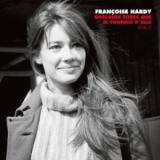
Françoise Hardy - Tous les Garçons et les Filles (Gatefold Edition) LP

One of the most popular French TV extracts of all time is the black and white image of a young and extremely nervous-looking Françoise Hardy being given a firm dressing-down by Mireille Hartush (the famous music teacher who ran La Petite Conservatoire de la Chanson in the 1960s). Presented here is her debut studio album Françoise Hardy (issued as The Yeh-Yeh Girl from Paris! in the USA). It was released in France in December 1962 by Disques Vogue with the catalogue number LD 600-30. Originally issued with no title, except for her name on the cover, the album has therefore colloquially become known by the title of its most successful song, Tous les garçons et les filles, and later reissues added this title. This sensational album compiles the twelve original French versions from her first three EPs released by Vogue during 1962. Hardy would also record versions of songs from the album in Italian (1962, four tracks released on singles have been added here as a bonus), English (1964) and German (1965). The iconic LP combines rockabilly, folk, jazz and blues, and has been noted for its simplicity, featuring a minimalist jazz percussion, bass, and both acoustic and electric guitar. 180 GRAM - GATEFOLD COVER - LIMITED EDITION

Auf Lager

Bei uns am Lager und sofort versandfertig

Françoise Hardy - Voilà ! The Very Best of LP 2x12"
auch erhältlich

Crystal Clear vinyl


"As iconic as she was discreet, Françoise Hardy established herself in the '60s as a major artist in the genre of ""French chanson."" Her voice, songwriting, and ability to surround herself with talented collaborators helped her seduce the whole world and, over the decades, shape a discography of the highest caliber.
This brand-new Best Of compilation is the very first to cover Françoise Hardy’s entire career, spanning from her 1962 debut to her final recordings in 2018. Featuring a timeless 1960s-inspired cover, it brings together her most iconic songs, from early classics like ""Tous les garçons et les filles"" and ""Le temps de l’amour"" to signature hits such as ""Comment te dire adieu"" (a streaming and sync favorite), ""Message personnel,"" the viral sensation ""Voilà"" (#1 viral hit, with over 300k TikTok creations), and ""Le large."""

vorbestellen21.11.2025

erscheint voraussichtlich am 21.11.2025


Last In: vor 2026 Jahren
Françoise Hardy - Voilà ! The Very Best of LP 2x12"
auch erhältlich

Black vinyl


"As iconic as she was discreet, Françoise Hardy established herself in the '60s as a major artist in the genre of ""French chanson."" Her voice, songwriting, and ability to surround herself with talented collaborators helped her seduce the whole world and, over the decades, shape a discography of the highest caliber.
This brand-new Best Of compilation is the very first to cover Françoise Hardy’s entire career, spanning from her 1962 debut to her final recordings in 2018. Featuring a timeless 1960s-inspired cover, it brings together her most iconic songs, from early classics like ""Tous les garçons et les filles"" and ""Le temps de l’amour"" to signature hits such as ""Comment te dire adieu"" (a streaming and sync favorite), ""Message personnel,"" the viral sensation ""Voilà"" (#1 viral hit, with over 300k TikTok creations), and ""Le large."""

vorbestellen21.11.2025

erscheint voraussichtlich am 21.11.2025


Last In: vor 2026 Jahren
FRANCOISE HARDY - FRANCOISE HARDY EN VOGUE: BEST OF 1962-1967 LP 2x12"
  • A1: Tous Les Garçons Et Les Filles 3:06
  • A2: Le Temps De L'amour 2:22
  • A3: Le Premier Bonheur Du Jour 1:51
  • A4: J'aurais Voulu 2:08
  • A5: Pourtant Tu M'aimes 2:18
  • A6: Et Même 2:11
  • B1: Mon Amie La Rose 2:15
  • B2: Je N'attends Plus Personne 3:15
  • B3: Je Veux Qu'il Revienne 2:39
  • B4: La Nuit Est Sur La Ville 2:13
  • B5: Dis-Lui Non 2:33
  • B6: All Over The World 2:29
  • C1: L'amitié 2:21
  • C2: Le Temps Des Souvenirs 2:29
  • C3: Tout Ce Qu'on Dit 2:09
  • C4: Ce Petit Coeur 2:06
  • C5: Je Ne Suis Là Pour Personne 2:55
  • C6: Il Est Des Choses 2:30
  • D1: La Maison Où J'ai Grandi 3:38
  • D2: Comme 1:53
  • D3: Je Changerais D'avis 2:55
  • D4: Rendez-Vous D'automne 2:38
  • D5: Au Fond Du Rêve Doré 1:57
  • D6: Voilà 3:20

Francoise Hardy's Vogue years have marked the history of French and international music. Even today, the five years between 1962-67 remain an exceptional moment in her career, the one when she exploded in the eyes of a generation that was born during or just after the Second World War, the generation that would be part of the May 1968 Paris protests. Hardy exploded not only in France alongside her fellow 'Yeyes', but also internationally where she became the symbol of French elegance, talent and charm: the United States, Japan, the United Kingdom, Germany, Italy, Spain... no one could resist Francoise, and she recorded most of her hits in English, Italian and German. 'Tous les garcons et les filles', 'Mon amie la rose', 'L'amitie', 'Le temps de l'amour', etc. are songs that have crossed generations and can be heard in recent movies (Wes Anderson loves Francoise Hardy and has included her songs several times in his films), international television series ('The Walking Dead', 'Industry', 'Week-end family') and advertising spots (Dior 2022 campaign). Available on x24 trk, double Black LP Vinyl & single CD formats. Marketing activity.

vorbestellen29.11.2024

erscheint voraussichtlich am 29.11.2024


Last In: vor 2026 Jahren
Francoise Hardy - Tous Les Garcons et Les Filles LP

Françoise Hardy auditioned for Vogue Records at 18 and went on to top charts with her very first release, a 1962 self-titled record now known as

“Tous Les Garcons Et Les Filles” based on its hit song. From there, the infamously timid Hardy became one of the few French pop stars of the era to

cross over, jetting from England to France to record, serving as a muse to designers like Yves Saint Laurent, and inspiring Bob Dylan and Mick Jagger.

That debut showcases Hardy at her simplest, wringing rockabilly-tinged pop magic from modest jazz percussion and steel guitar. Hardy wrote most

of her own material, setting her far apart from her peers, and on her debut she penned every song but two. Her lyrics would never be this close to yé-yé traditions again.

vorbestellen12.07.2024

erscheint voraussichtlich am 12.07.2024


Last In: vor 2026 Jahren
Francoise Hardy - Francoise Hardy with Ezio Leoni and his orchestra

The actress and singer Francoise Madeleine Hardy was born in Paris on 17 January 1944. She made her debut in 1960 and was launched in 1962 by the show "Salut les copains"

which popularized her song “Tous les garçons et les filles”. The success was immediate and extraordinary, Francoise became a symbol of the adolescent discomfort of young people all over the world.

She performed the songs accompanying herself on the guitar (she was the author of some). In the sixties her popularity was skyrocketing, even in Italy. So much so that herdebut album was recorded in Italian and released on Jolly Records.

SAAR Records with its Jolly label is re-releasing in Limited Edition the LPJ 5034 including a bonus track: IL RAGAZZO DELLA VIA GLUCK, a song that has never been released on LP until today.

vorbestellen15.12.2023

erscheint voraussichtlich am 15.12.2023


Last In: vor 2026 Jahren
Francoise Hardy - s/t

Francoise Hardy

s/t

12inchDMOO001
Destination Moon
30.06.2021

Françoise Hardy became an international sensation during the early 1960s through her albums on Disques Vogue, the French jazz label that then began showcasing chanson. She signed to the label at seventeen after answering a newspaper advertisement recruiting unknown singers while she was a freshman at the Sorbonne, the B-side of debut single, ‘Tous Les Garçons Et Les Filles,’ brought her to the forefront of the Yé-yé movement, mixing chanson with Anglophone rock and pop, and paving the way for this debut LP, which was lauded by the likes of Bob Dylan and Mick Jagger. This first offering is still arguably her best – grab it now to understand why!

vorbestellen30.06.2021

erscheint voraussichtlich am 30.06.2021


Last In: vor 2026 Jahren
FRANCOISE HARDY - FRANCOISE HARDY

Francoise Hardy

FRANCOISE HARDY

12inch3385146
Wagram
28.10.2020

Jump into the universe of 10 cult artists thanks to the iconic photos of Jean-Marie Périer Famous throughout the world, the photographer Jean-Marie Périer is known for his iconic colour shots of the "Yéyé" period.

nicht am Lager

Bestelle jetzt und wir bestellen den Artikel für dich beim Lieferanten.


Last In: vor 4 Jahren
Various - Tchic Tchic: French Bossa Nova 1963-1974  Colored Edition LP 2x12"
  • A1: Les Masques - Il Faut Tenir (1969)
  • A2: Isabelle Aubret - Casa Forte (1971)
  • A3: Christianne Legrand - Hlm Et Ciné Roman (1972)
  • A4: Jean Constantin - Pas Tant D'chichi Ponpon (1972)
  • A5: Billy Nencioli & Baden Powell - Si Rien Ne Va (1969)
  • B1-: Marpessa Dawn - Le Petit Cuica (1963)
  • B2: Jean-Pierre Sabar - Vai Vai (1974)
  • B3: Sophia Loren - De Jour En Jour (1963)
  • B4: Isabelle - Jusqu’à La Tombée Du Jour (1969)
  • B5: Sylvia Fels - Corto Maltesse (1974)
  • C1: Frank Gérard - Comme Une Samba (1972)
  • C2: Ann Sorel - La Poupée Des Favellas (1971)
  • C3: Charles Level - Un Enfant Café Au Lait (1971)
  • C4: Andrea Parisy - Les Mains Qui Font Du Bien (1970)
  • C5: Audrey Arno - Quand Jean-Paul Rentrera (1969)
  • C6: Aldo Frank - T’as Vu Ce Printemps (1970)
  • D1: Christianne Legrand - Cent Mille Poissons Dans Ton Filet (1972)
  • D2: Clarinha - Lemenja (1970)
  • D3: Hit Parade Des Enfants - Aquarela (1976)
  • D4: Jean-Pierre Lang - Tendresse (1965)
  • D5: Magalie Noël - Une Énorme Samba (1970)
  • D6: Françoise Legrand - La Lune

Ever since the late 1950s bossa-nova revolution, Brazil’s influence on French music has been undeniable. Pierre Barouh, Georges Moustaki and a vast array of lesser known artists, all made the Musica Popular Brasileira (MPB) an axis of promotion at the service of a cool and metaphysical, modern and mixed Brazilian lifestyle. Some were seduced by the poetic languors of the bossa, some were looking for fun, and others just loved the American hybridization of jazz-bossa, jazz-samba.


What is bossa nova? One of its creators, Joao Gilberto said: "Its style, cadence, everything is samba. At the very start, we didn't call it bossa nova, we sang a little samba made up of a single note - Samba de uma nota so .... The discussion around the origins of bossa nova is therefore useless”. It is nevertheless useful to remember that these magnificent Brazilian songs, which the guitarist describes as samba, were shifted and balanced around improbable chords. "I like things that lean, the in-betweens that limp with grace," said Pierre Barrouh, quoting Jean Cocteau.


With emotion, arrangements for violin and supple guitar licks, bossa nova rapidly changed. A transformation that can be heard in the Tchic, tchic, French Bossa Nova 1963-1974 compilation, the result of a cultural reappropriation, which traveled through the United States and supplemented itself in France.

A musical revolution that has remained significant, bossa nova was born in Rio. From 1956 to 1961, Brazil lived through its golden years. In five years, the country had invented its modernist style. Elected president in 1956, Juscelino Kubitschek de Oliveira, an elegant man with a broad forehead, brandished a promising slogan: "Fifty years of progress in five years". He quickly got to work. Not worried about increasing debt, he launched the project for a new federal capital, Brasilia, designed by the communist architect Oscar Niemeyer. Volkswagen opened state-of-the-art factories and created the “fusquinha”, the Beetle. In Rio, the Vespa made its first appearance. The Arpoador Surf Club crew run into the “girl” from Ipanema, Helô Pinheiro - the tanned garota ("chick"), between a flower and mermaid, who at 17 walked by the Veloso bar, where the fiery author and composer, Tom Jobim and Vinicius de Moraes, were getting drunk on whiskey. From then on, bossa symbolized cool.

In 1958, Joao Gilberto recorded Chega de Saudade, which the directors of Philips denied, calling it "music for fagots". The marketing director, who believed in it, secretly pressed 3000 78-inch vinyls and distributed them at schools around Rio, creating a tidal wave.

American jazzmen then took over. In particular, trumpeter Dizzy Gillespie and guitarist Charlie Byrd. In November 1962, the Brazilian Ministry of Foreign Affairs funded a "Bossa-Nova" concert at Carnegie Hall in New York, inviting the genre’s pioneers. Unprepared, the show soon turned to disaster. But the troupe was invited to the White House by Jackie Kennedy. The first lady loved "the new beat" and in particular Maria Ninguem, a song by Carlos Lyra, later covered by Brigitte Bardot.

In Brazil, the 1964 military coup quickly ended this euphoria. The destructive atmosphere that ensued pushed many Brazilian musicians to leave, if not to exile. Thus, Tom Jobim, Sergio Mendes and Joao Gilberto arrived to the United States. In New York, Joao Gilberto met saxophonist Stan Getz. At the time, he was married to the Bahianese Astrud Weinert Gilberto, who had a German father. She had never sung before, but she knew how to speak English. Getz therefore asked her to replace her husband on The Girl From Ipanema. The Getz/Gilberto record with Tom Jobim on piano, was released in March 1964. Phil Ramone, the "pope of pop" was in charge of sound.

Bossa nova arrived in Paris through the classic “guitar-voice” channel (Pierre Barouh, Baden Powell, Moustaki…) But France loved jazz and Paris had already welcomed its American contributors. All these good people were to pass through Saint-Germain-des-Prés. The cabaret l'Escale became the Mecca of Latin American sound where one could find Pierre Barrouh and his friends, such as the Camara Trio, samba-jazz aces, whose only record was published by the Saravah label. With a band strangely called Les Masques (a band that included Nicole Croisille and Pierre Vassiliu, among others), the Camara Trio recorded an interesting Brazilian Sound, including the track Il faut tenir which is present on this tasty compilation of rarities.

Other enlightened musicians can also be found on the compilation, such as Jean-Pierre Sabar (songwriter for Hardy, Auffray, Leforestier ...) and the French pop rock organist Balthazar. In 1975, Sabar recorded Aurinkoinen Musiikkimatka on a Finnish label, which featured the crazy Vai, Vai, included on this record. We are now following the footsteps of Brazilian electronic musicians such as Sergio Mendes, Eumir Deodato or Marcos Valle who created funk and disco sounds on their keyboards and synthesizers. A style that influenced Véronique Sanson when she wrote Jusqu’à la Tombée de la nuit in 1969 for Isabelle de Funès, the niece of Louis and a great friend of Michel Berger - Sanson did end up singing this track on her 1992 Sans Regret record.


The pinnacle of exoticism and travel, Sylvia Fels’ Corto Maltese includes bongos, sea mist and ocean sounds. The title was taken from Jacky Chalard’s concept album written in 1974, Je suis vivant, mais j’ai peur (I am alive, but I am scared), based on Gilbert Deflez’s science fiction novel.


However, bossa nova extended the scope of popularity. "In the 1970s, I was a fan of Sergio Mendes, Getz / Gilberto. I fell in love with this music that I knew because I had been an orchestral singer, " explained Isabelle Aubret, who in 1971 delivered a composite record of covers by the very funky Jorge Ben, Orfeu Negro, Tom Jobim, Vinicius de Morais and Jean Ferrat. "I recorded this album for Meys Records in Paris, far from Brazil, with wonderful musicians, François Raubert, Roland Vincent, Alain Goraguer...". The latter wrote the arrangements for Casa Forte, a very percussive title borrowed from Edu Lobo, one of the initiators of the bossa who spent time in California. "Jazz and bossa came together and produced very rhythmic music. I love singing, it allows me to dream, to have fun, to feel a high on stage, and these songs brought me joy, made me swing, my singing felt like a dance.”


The world tours of French singers and their desire for the tropics, often brought them to Rio with its hills, forests, caipirinhas and tanned bodies. There are surprises though, like this Iemenja (Iemenja is the goddess of the sea in the Afro-Brazilian candomblé religion). Not unlike the composer and musician Jean-Pierre Lang, based in Sao Paulo, Claire Chevalier taught Brazil to Brazil. In 1970, the singer and painter published a 45-inch vinyl, Mon mari et mes amants (My husband and my lovers), under the improbable pseudonym of Clarinha (little Claire). She was then living in Rio, with her husband, Joël Leibovitz, who founded a band called Azimuth, and who owned a record label specialized in "sambas enredos" songs for samba school parades.


For its B side, she asked Pierre Perret to come up with lyrics for a song composed by Carlos Imperial: "Oh goddess of the sea, o goddess Iemenja, I bring a white rose to adorn your long hair ..." . "Perret came to see us, and we had fun, remembers Joël Leibovitz. We wrote Lemenja for fun, we recorded it at the Havaí studio, behind the Central do Brasil the central station. Erlon Chaves, the arranger who worked with Elis Regina, joined us" adding his share of Afro-Brazilian percussions and funky brass to the mix.

There is a common misunderstanding in Franco-Brazilian history: that bossa, admittedly hedonistic, is perceived as funny, even though the poets who wrote the texts are often philosophizing on the human condition. Its French interpreters pull it towards a carnival inspired universe, far removed from its fundamental essence. Thus, Jean Constantin covered the famous Samba da minha terra, an ode to the art of samba written by the classic Bahian composer Dorival Caymmi, renaming it with the enticing title of Pas tant de tchi tchi pompon: "On your pier there is no tchi tchi / when you arch your back, you know everything is alright ”(lyrics by Gérard Calvi). This expedited bossa aims for the absurd, but retains a certain elegance.

Indeed, Jean Constantin was not an idiot, the rather large man had a huge mustache and liked fantasy, (Les pantoufles à papa, Le pacha, inspired by cha-cha-cha-cha, salsa and jazz) but he was also the lyricist of Mon manège à moi interpreted by Edith Piaf, the composer of Mon Truc en plume by Zizi Jeanmaire and the soundtrack of François Truffaut’s 400 Blows. Le Poulpe, published in 1970, from which this bossa is extract, was arranged by Jean-Claude Vannier, an accomplice of Serge Gainsbourg’s Melody Nelson. In short: "There is enough of samba / By looking at the parasol / Because my poor cabeza / Is going to die in the sun".

Even the American actress Marpessa Down, who was at the heart of the bossa nova revolution with her role as Euridyce in Marcel Camus’ film Orfeu Negro, winner of the 1959 Cannes Palme d'or, fed the clichée with Je voudrais parler au petit cuica - "Tell me how you manage to always make people want to dance / It's true, I must admit that I cannot resist your magic" - in consequence, once can hear the cuica, a little drum inherited from the Bantu.


But bossa nova had many angles. Societal, of course, pushing actresses who were symbols of women's liberation like Brigitte Bardot, Jeanne Moreau, or Sophia Loren to engage in the exercise of accelerated bossa. In February of 1963, Sophia Loren made a record in French in Rome, Je ne t'aime plus, featuring the song De jour en jour, a bossa written by two Italians, Armando Trovajoli and Tino Fornai, which was released a little later by Barclay. Bossa accompanied the 1960s, a decade of moral liberation. Ann Sorel, who interpreted La Poupée des favellas, caused a sensation with L’amour à plusieurs, a provocative song written by Frédéric Bottom and Jean-Claude Vannier. As for the actress Andrea Parisy, she displayed her bourgeois cheekiness in Marcel Carné's Les Tricheurs before interpreting Les mains qui font du bien. And Magalie Noël, the friend of Boris Vian, who sung Johnny fais-moi mal, was hired to sing Une énorme Samba, composed by Alain Goraguer (arranger to Gainsbourg, Bobby Lapointe and Jean Ferrat) with lyrics by Frédéric Botton.

But in the end, of what wood is bossa nova made of? The answer is given by Christianne Legrand, daughter of Raymond the conductor, and sister to Michel the composer: "With me, with jà" - jà means "immediately" in Portuguese. In 1972, the singer, an expert in vocal jazz and a member of the Double Six, published Le Brésil de Christianne Legrand. Two songs included on the Tchic Tchic compilation that demonstrate how bossa, jazz, funk, rock, etc. work like a swiss army knife: the music is used to denounce broken systems, or miracles, HLM et ciné roman, Cent mille poissons dans ton filet, two songs from the O Cafona soundtrack, a successful telenovela broadcast, at the time in black and white, on TV Globo. The first was adapted in French by the fighter and friend of the Legrand tribe, Agnès Varda. The second is content with a play on words, jostling them into a summer fun.


Véronique Mortaigne

vorbestellen17.04.2026

erscheint voraussichtlich am 17.04.2026


Last In: vor 2026 Jahren
Blur - The Great Escape (30th Anniversary Edition) 2x12

t 5To the End (La Comedie) feat. Françoise Hardy


t 5To the End (La Comedie) feat. Françoise Hardy


t 5To the End (La Comedie) [feat. Françoise Hardy]


[t] c5 To the End (La Comedie) [feat. Françoise Hardy]


[t] c5 To the End (La Comedie) [feat. Françoise Hardy]


[t] c5 | To the End (La Comedie) [feat Françoise Hardy]

Auf Lager

Bei uns am Lager und sofort versandfertig

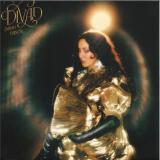
Sarah Maison - Divad

Sarah Maison

Divad

12inchCAPLP114
CAPITANE RECORDS
20.11.2025

After two self-produced EPs, Sarah Maison (2018) and Soleils (2021), and the EP Karma (2021) with Anoraak, French singer, musician, author, composer, arranger, and producer Sarah Maison finally unveils her first album, DIVAD, the fruit of four years of creation. Sarah opens up, tackling personal themes through an exploration of the soul and existential questions. She also ventures into more autobiographical subjects such as melancholy, derealization, the search for meaning, and the breakdown of romantic or friendly relationships: often through coded language but always with a touch of humor. DIVAD is a manifesto of artistic independence, boldly and uncompromisingly fusing French chanson, Egyptian music, 70s disco, synth-pop, and English pop. Her influences draw on musical history while reinventing it, bringing together Alan Vega and Martin Rev, the 70s Egyptian band Al Massrieen, the king of Iranian psychedelia Kourosh Yaghmei, as well as Brigitte Fontaine and Françoise Hardy. Each track is a cinematic tableau, where the artist"s theatrical voice, both imperious and vulnerable, carries an intimate narrative with universal overtones. Co-produced with Steve Surmely (sound engineer) and Timotée Pédron (sound designer), the album blurs the lines and asserts an artist who defies categorization. Throughout these twelve tracks, we witnessa rebirth, with Sarah fully embracing her character as a dark, grandiose, and tragicomic diva straight out of a Dario Argentofilm, a sort of tribute to her Italian muses. Danceable, elegant, and elusive, DIVAD is a flamboyant work that reflects Sarah Maison"s image: free, sunny, and daring.

Auf Lager

Bei uns am Lager und sofort versandfertig

Various - Wizzz! French Psychorama Volume 5 (67-75)

The journey through French-speaking pop archives continues with this fifth volume, packed with fuzz, gimmicks, and dissent. Far from the charts, the selected tracks display a great creative freedom, often backed by corrosive humor. Welcome to the surprising, kaleidoscopic, and colorful world of the late sixties and early seventies, Wizzz!
Born in Montauban, Robert Pico stumbled into music by chance when he met René Vaneste, then artistic director at Pathé-Marconi. René brought him to Paris to record his first 45 RPM EP in 1964. A year later, Pierre Perret introduced him to Vogue, where he recorded his second album with Claude Nougaro’s orchestra. Sylvie Vartan then introduced him to RCA, where he recorded four singles, including the astonishing "Chien Fidèle," a track backed by a hair-rising fuzz guitar. Alongside his solo career, he also composed for other artists like Alain Delon (the song was recorded but remains unreleased), Magali Noël, Bourvil, and Georges Guétary. In the Paris of the sixties, he mingled with Mireille Darc, Elsa Martinelli, Marie Laforêt, France Gall, Françoise Hardy, Petula Clark, Régine, Dani, Serge Gainsbourg, Joe Dassin, Franck Fernandel, Charles Level, and Roland Vincent. Despite his efforts and winning a Grand Prix Sacem for his final record, Robert Pico didn’t achieve the expected success in show business and decided to leave Paris and return to the Southwest, where he devoted himself to writing. He is the author of 23 books (including Delon et Compagnie, Jean-Marc Savary Editions 2025, a memoir about his youth and his many encounters). Today, he is relieved to never have become a celebrity and devotes himself to his work with passion.
In 1969, the Franco-Italian movie Erotissimo was released, directed by Gérard Pirès (who later directed Taxi in 1998, written and produced by Luc Besson). This pop comedy features Annie Girardot, Jean Yanne, Francis Blanche, Serge Gainsbourg, Nicole Croisille, Jacques Martin, and Patrick Topaloff. The soundtrack was written by Michel Polnareff and William Sheller, with lyrics by Jean-Lou Dabadie. "La Femme Faux-cils," performed by Annie Girardot. It recounts the feelings of a rich CEO's wife who seeks to develop her sex appeal under the influence of advertisement and magazines. Groovy, sparkling and light, this track, with ITS lush arrangements humorously critiques consumer society and feminine beauty standards.
“Je suis l’Etat” (1967) is the flagship track of the first EP by singer-songwriter Spauv Georges, aka Georges Larriaga, better known as Jim Larriaga (1941-2022). Born into a family of bakers, the young man was initially planning to become a hairdresser when he discovered English-speaking music through Elvis Presley and the Beatles. After this revelation, he decided he would become a songwriter and gave himself five years to succeed. He recorded his first two EP’s independently for RCA under the pseudonym Spauv Georges; meaning “that poor George”, a nickname given to him by the mother of her friend Jean-Pierre Prévotat (future drummer of the Players, Triangle, or Johnny Hallyday). Portraying a depressed and eccentric young man, Spauv Georges created corrosive and amusing songs that didn’t reach a wide audience, despite a TV appearance with Jean-Christophe Averty.
Supported by his loyal friend and fellow songwriter Jean-Max Rivière, Georges Larriaga met the future singer Carlos in the early '70s, then Sylvie Vartan’s assistant. He wrote songs for Carlos, including the popular "La vie est belle," "Y’a des indiens partout," and "La cantine", which went onto become a huge hit in 1972. He also composed for Claude François (“Anne-Marie”, 1971), Charlotte Julian (“Fleur de province”, 1972), helped launch child singer Roméo (who sold 4 million records), and later wrote the hit "Pas besoin d’éducation sexuelle" (1975) for the young Julie Bataille. In 1971, Jim recorded an album for Disc'Az: “L’univers étrange et fou de Jim Larriaga”, which featured pop gems like “La maison de mon père”.
The story of the song "Zoé" began when Pierre Dorsay, artistic director at Vogue Records, asked Swiss singer and musician Pierre Alain to write a song for a new female singer. The inspiration came when he realized that Zoé (the artist's name) was also the name of France's first atomic battery, created in 1948, which consisted of uranium oxide immersed in heavy water! The lyrics reflect a bubbling energy that must be handled with caution, while the instrumentation echoes this atomic theme, notably with the use of a theremin.
Zoé’s career lasted only as long as a single 45 RPM, but it seems Christine Fontane was the vocalist behind this pseudonym, who is known for several EPs, a good "popcorn" album in 1964, and a handful of children’s singles in the '70s. Regardless, the photograph on the cover is of a different girl entirely.
Later, Pierre Alain continued his career, writing songs for himself, Marie Laforêt, Danièle Licari, Alice Dona, Arlette Zola (3rd place in Eurovision 1982), and achieving multiple gold and platinum records in Canada. Also an inventor with several patents, president of the Romande Academy, and head of the French Alliance in Geneva, he now composes atonal music, books, and poetry. Moreover, he is also the host of "Les Mardis de Pierre Alain" at "Le P'tit Music'Hohl" in Geneva.
Filled with oriental choruses and fuzz guitar, "Fou" is from Jacques Da Sylva's only EP released by Vogue in 1967. Despite the quality of this recording, all traces of this singer disappear after this first effort.
Valentin is a baroque pop singer born in Belgium. He is the songwriter and composer of most of the tracks on his three singles released in the late 60s in Canada. A legend says that he reincarnated himself as Jacky Valentin during the 1970s for a rock'n'roll revival career in Belgium, but his older brother sadly debunked this story. Valentin's first two singles were arranged by Claude Rogen, a Parisian session pianist who had come to Canada to promote the song “Mister A Gogo”, a cover of David Bowie’s “Laughing Gnome”, adapted by singer Delphine, his wife at the time. Far from his usual network, Claude Rogen arranged music for Polydor, including the arrangements for “Je suis un vagabond” in 1969, a jerk tune with string arrangements and a furious optimism.
Jacques Malia wrote, composed, and recorded his only 45 EP for Festival in 1966. “Histoire de gitan” is an incredible beat track with bohemian scat that tells the story of a gypsy musician who came to Paris to make it in the Music-Hall, to no avail. The hero of the song and its author probably shared a similar fate, as Jacques Malia faded into anonymity after this remarkable attempt.
Bernard Jamet recorded two EPs for Barclay in the late sixties and co-wrote several songs with Christine Pilzer, Pascal Danel, and prolific songwriters Michel Delancray and Mya Simile. The track “Raison Légale” (1968), his masterpiece, immerses the listener in a courtroom right when a murderer is being judged, with jerk rhythm and free arrangements. A unique, paranoid, judicial, and psychedelic oddity.
Jean-Pierre Lebrot-Millers started his career in show business in 1967 as a singer and songwriter for the Philips label. After three singles, he wrote several songs of a new kind with his friend Pierre Halioche, in the midst of the sexual liberation movement and the democratization of drugs. With provocative lyrics, “Les filles du hasard” and “Barbara au Chapeau Rose” were released on a Philips singles in 1968. The character of Barbara was inspired by a queen of Parisian nightlife during the psychedelic years: model Charlotte Martin, who dated Eric Clapton from 1965 to 1968, then Jimmy Page from 1970 to 1983. Jean-Claude Petit’s arrangements, with a table-filled intro, soul brass, and Hendrixian guitar, emphasize the flamboyance of a hedonistic and sexy character, whose dog is named Junkie because “Junkie est un nom exquis”! The track was recorded live in three takes with a full orchestra.
Upon its release, the record was censored by Europe 1 and RTL due to its references to drug use. Jean-Pierre Lebrot was then banned from the airwaves and later dismissed by his record label. He changed his artist name to Jean-Pierre Millers, while his companion Pierre Halioche became D. Dolby for a new dreamy composition, “Chilla”, which Jean-Pierre produced himself with arrangements by Jean Musy. Once again, the song was immediately censored everywhere. After this setback, he decided to stop singing and started taking on odd jobs to support his Swedish wife and their son until the day he met Jean-Pierre Martin, then production manager at Decca, who had worked with Manu Dibango. Martin offered Jean-Pierre Lebrot-Millers, then employed at Rank Xerox, the position of artistic director at Decca. He accepted and became, a year later, promotion director (radio, press, TV). He worked on Julio Iglesias’s first album for Decca, which became a massive hit and allowed him to meet Claude Carrère. The latter asked him to write new songs and find their performers, much like a “talent scout.” It’s through him that Jean-Pierre discovered Julie Pietri and Corinne Hermès. He composed “Ma Pompadour” for Ringo, Sheila’s husband, and took the microphone again for the syncope hit “Rendez-Vous” in 1982.
That same year, Jean-Pierre Lebrot-Millers tried to release a track for which he had heavily gone into debt: “Si la vie est un cadeau”. Having recorded it in London, he presented it to numerous professionals, all of whom refused to get involved. The same thing happened with Antenne 2 and the Sacem when he proposed the song as France’s entry for Eurovision. He then met Haïm Saban, who was producing cartoon soundtracks and had just launched the Goldorak theme song. Saban, having listened to the song, declared it had the potential to become a hit. He sent Jean-Pierre and Corinne Hermès to meet the CEO of the Luxembourg radio and television network. The latter received them, asked to hear a verse and chorus a cappella in his office, and immediately hired them to represent Luxembourg at Eurovision 1983. They reworked the arrangements and recorded a new version with Haïm Saban as co-producer. The song ended up winning Eurovision 1983, a great comeback for our hero. He continued producing and hung out with the band Nacash in Belgium when a couple came to introduce their daughter for an impromptu audition in a hotel room. The girl sang “Les démons de minuit” while dancing to a radio cassette. Impressed, he had her take singing lessons for a year and composed a song for her (for which he had the melody and title, but no lyrics). This required him to go on the hunt for a lyricist, who ended up being Guy Carlier. They recorded the song, which was initially a ballad, at Bernard Estardy’s CBE studio, and gave the singer a new name: Melody. They showed the song around their industry network without success. Later, Estardy called Jean-Pierre to suggest changing the rhythm and making it pop-rock. Orlando, Dalida’s brother, liked the result and decided to co-produce the track. “Y’a pas que les grands qui rêvent » became a classic hit. The song has since been covered by Juliette Armanet (as a ballad, like the original) and Valentina.

Born into an aristocratic Breton family, Hervé Mettais-Cartier worked as a DJ at Queen Kiss, a nightclub in Poitiers, where he formed the band Les Concentrés with Michel (an actor) and Christian (a radio technician). Together, they created a repertoire of whimsical songs (“Ma bique est morte”, “J’suis un salaud”, “Fils de dégénéré”...) that they performed on stage dressed in white (in homage to “concentrated milk”). They performed at Bliboquet and Olympia in 1968 for the 10th edition of the “Relais de la chanson Française” organized by L’Humanité-Dimanche and Nous les Garçons et les Filles, sponsored by Pepsi Cola. Winners in the author-composer category, alongside Danish singer Dorte, their visibility allowed them to record a 45, and appear on television in Jean-Christophe Averty’s show. The A-side of the disc features Bruno le ravageur, a casatchok dedicated to Bruno Caquatrix, the director of Olympia, nicknamed in the song “Coq Atroce” or “croque-actrices”. The B-side is dedicated to “Fils de dégénéré”, a quirky tribute to Hervé's aristocratic roots, mixing absurdity with sophisticated vocal harmonies.
After Les Concentrés, Hervé Mettais-Cartier formed the duo La Paire et sa Bêtise with his friend Olivier Robert. They performed in Parisian cabarets and toured with Pierre Vassiliu. In the late 1970s, Hervé began a solo career. He recorded two albums for the Motors label in 1978 and 1979, which did not achieve their anticipated success due to lack of promotion. In 1980, he met Bernadette, with whom he started a family and created a “Chansons à voir” (songs to see) show that he performed until his death at the end of 2024.

Publicité comes from the final EP by the Missiles (Ducretet Thomson, 1966), a disc that also includes “La (nouvelle) guerre de cent ans”, featured on Volume 4 of our Wizzz! series. Please refer to the booklet for the story of the band.

“He’s 1.82 meters tall, 28 years old, weighs 135 kg, is black and Belgian”: this is the description of singer Hegesippe on the back of his sole single (Decca, 1967). He appears on the album cover wearing a Greek toga, like a hippie gag – we are at the end of the year 1967. In “Le crédo d’Hegesippe”, this former bodyguard of Antoine and the Charlots plays the delightful card of the thick brute converted to Flower-Power and non-violence, with arrangements by Jean-Daniel Mercier, aka Paul Mille.
“Ethéro-disco” was released on a promotional record for clients of the Maréchal company (Liège, Belgium) for the New Year 1979. Over a funky rhythm, celebrity impersonations (Brigitte Bardot, Jacques Dutronc, Fernandel…) deliver an enigmatic text about pharmaceutical products like ether, bismuth, and aspartate. The track was composed by Dan Sarravah (responsible for Joanna's “Hold-up inusité” featured on Wizzz! Volume 3) and Tony Talado, who was also a singer (one 45 in 1967), songwriter (with over a dozen credits between 1964 and 1985 in various styles from surf music to disco), author (Devenez Végétarien, Dricot Editions, 1985), ad designer, and psychologist.

Décollez-les is on the A-side of Mamlouk's only single, a pseudonym for Marsel Hurten, who is known for his work on several EPs in the late sixties, as well as composing music for Hervé Vilard’s “Capri, c’est fini”, Claude Channes' “La Haine”, Annie Philippe’s “On m’a toujours dit”, and Nancy Holloway’s “Panne de Cœur”.
This strange song, with Afrobeat horns and absurd dialogues between a chef and his kitchen staff, is the result of a collaboration between Marsel Hurten and one of his neighbors, a photographer from Pavillon-sous-Bois (93), where the musician settled after returning from the Algerian War. A music video was shot to promote the record.
Marsel Hurten was born in Tourcoing (59) into a musical family. At a young age, he joined the brass band founded by his grandfather, playing the piston before studying trumpet at the conservatory, as well as teaching himself how to play the guitar. As an orchestra musician, he toured in France, Belgium, Germany, and England. He released a series of solo 45’s between 1965 and 1968 for the DMF and Az labels before stopping recording to focus on working for other artists (Gilles Olivier, Noëlle Cordier…).
“L’amour nu” (Vogue, 1971) is the work of the short-lived Belgian band Mozaïque. The track, written by singer Jacques Albin, closely resembles another of his compositions, “Carré Blanc”, which he recorded in 1969 for Disc’AZ.
Represented by the Lumi Son micro-label based in Marignane (Côte d'Azur), Jean-Marc Garrigues released two 45 RPMs in the late sixties, defending the French jerk sound. The song “Je dis Non” is a short, joyful ode to youth, pop music, and rebellion.
Songwriter and performer Jacques Penuel released three singles. The first one, “Astronef 328” (Fontana, 1969), features a dizzying series of chords punctuated by sound effects, a sci-fi story, and arrangements by Jean-Claude Vannier.

We would like to sincerely thank Pierre Alain, Moon Blaha, Marsel Hurten, Bastien Larriaga, Jean-Pierre Lebrot-Millers, Bernadette Mettais-Cartier, Robert Pico, Olivier Robert, Claude Rogen, Micky Segura.


nicht am Lager

Bestelle jetzt und wir bestellen den Artikel für dich beim Lieferanten.


Last In: vor 54 Tagen
Iliona - Tête Brulée

Iliona

Tête Brulée

12inchART202202
Artside
16.01.2026
  • 1: Micha
  • 2: Si Tu M’aimes Demain
  • 3: Garçon Manqué
  • 4: Tête Brûlée
  • 5: Wherever You Hide, The Party Finds You
  • 6: Cocoon
  • 7: Ta Vedette
  • 8: Cent Fois
  • 9: Quelque Chose De

French chanson, electro beats, pared-down or synthetic piano: at 21, Iliona draws on all of this. Plural, multifaceted, elusive. Yet her lyrics resonate as if one were singing heartache—and the love one hopes for—for the very first time.
She composes, records, and produces her tracks alone, determined to keep them as close as possible to the tunes, harmonies, and silhouettes she holds in her mind. This time, they are infused with the light of an intense love, and still carried by extreme sparseness in their arrangements: nothing—from electronic arpeggios to melodic autotune—is ever superfluous; everything has its place. Lifted by a new lightness, the tracks also echo the spirit of the yéyé sound Iliona has been listening to for a few years, without necessarily knowing the name of every songwriter or the mark they left behind. It’s their longing for carefree abandon that hovers over the hypnotic Si tu m’aimes demain and its music video inspired by the New Wave, the Beatles, and all those future memories you begin to build when you’re in love.


A gentle warmth also sweeps through the hazy doo-wop contours of Tête brûlée, and the lo-fi twist of Cocoon; but always with that veil of shadow that once floated over the apparent nonchalance of Françoise Hardy’s songs. That unease, that worried smile, resurfaces in the lovely pop gallop of Garçon manqué, an ode to the deepest friendships—the ones you hold in your arms to dance or, sometimes, to cry. Or in the delicate Cent fois, which whispers, “when will the movie scenes we quietly dreamed of come to life?”
The answer, perhaps, lies in wherever you hide, the party finds you, a superb soundtrack to an imaginary drama, whose venomous keyboards unfold the pictorial strength of Iliona’s songs.

vorbestellen16.01.2026

erscheint voraussichtlich am 16.01.2026


Last In: vor 2026 Jahren
NATACHA ATLAS - THE BEST OF (REMASTERED)
  • Leysh Nat'arak - New Version
  • Mon Amie La Rose
  • Eye Of The Duck
  • Ezzay
  • Fakrenha
  • Mistaneek - 2005 Edit
  • Leysh Nat'arak - Tj Rehmi Remix
  • You Only Live Twice
  • Yalla Chant - 2005 Edit
  • Fun Does Not Exist - New Mix
  • I Put A Spell On You
  • (It's A Man's Man's) Man's World
  • Amulet - 2005 Edit
  • Kidda
  • Leysh Nat'arak - 2005 Dub Mix
  • Le Printemps (For Mona)
  • Moustahil - Live

Natacha Atlas ist eine international gefeierte Künstlerin mit einer der markantesten Stimmen der Welt. Die anglo-ägyptische Sängerin verbindet seit mehr als zwei Jahrzehnten elektronische Beats mit nordafrikanischer und arabischer Musik, entdeckt Verbindungen zwischen scheinbar gegensätzlichen Musikgenres, erforscht neue klangliche Welten und arbeitet dabei mit zahlreichen gleichgesinnten Künstler:innen aus aller Welt zusammen. The Best Of Natacha Atlas wurde ursprünglich im Mai 2005 veröffentlicht und ist jetzt erstmals als Vinyl erhältlich. Als dieses Best-of damals erschien, wollte Natacha nicht einfach nur eine Sammlung von Albumtiteln herausbringen. Mehrere Stücke wurden neu gemischt oder überarbeitet, was Natacha selbst in die Hand nahm. Damals sagte sie: "Ich habe beschlossen, ein paar Titel neu aufzunehmen, von denen ich fand, dass sie eine Überarbeitung oder Aktualisierung brauchten." Ebenfalls enthalten sind ihre atemberaubenden Versionen des Françoise-Hardy- Klassikers , des James-Bond-Themes , und James Browns.

vorbestellen14.11.2025

erscheint voraussichtlich am 14.11.2025


Last In: vor 2026 Jahren
DIANE DENOIR & EDUARDO MATEO - INEDITAS
  • Je Suis Sans Toi
  • Rendez-Vous D'automne
  • La Dernière Valse
  • Le Lendemain
  • Un Amour, Un Sourire, Une Fleur
  • Corcovado
  • Gua De Beber
  • Berimbau
  • Vivo Sonhando
  • Fever
  • Garota De Ipanema
  • So Nice
  • Las Flores Nuevas
  • Y Hoy Te Vi
  • Esa Tristeza
  • Mejor Me Voy

Born as Diana Reches, Diane Denoir made her debut as a singer in 1966, backed by Eduardo Mateo on guitar. Influenced by Françoise Hardy and Astrud Gilberto, along with her own unique style, she performed a special blend of chanson française, bossa nova (sung in Portuguese, English, and French), and jazz. By then, Mateo was already a well-known guitarist in the Uruguayan music scene and a sought-after arranger. He was also beginning to establish himself as an incredible songwriter, connecting different musical universes in unique ways. The two formed a fruitful artistic partnership that lasted until the early seventies. This album, originally released in 1998 on CD, is a compilation of various unreleased recordings from different sources (concerts, radio and TV recordings, homemade tapes) made between 1966 and 1968. It is a unique document that showcases their incredible musicianship and creativity in their early years. The duo swings from bossa nova classics like "The Girl from Ipanema" to the rhythm and blues of "Fever," including chanson française standards like "Le lendemain" and "La Dernière Valse." The album also features earlier versions of the three best-known Mateo songs performed by Diane: "Y hoy te vi," "Esa tristeza," and "Mejor me voy," all of which were inspired by Diane. Inéditas unveils a new dimension of South American music from an unforgettable era.

vorbestellen05.09.2025

erscheint voraussichtlich am 05.09.2025


Last In: vor 2026 Jahren
OS MUTANTES - OS MUTANTES

Os Mutantes

OS MUTANTES

12inchLRC141
Lilith
11.06.2025

Distortion and feedback on Brazilian classics? Only these Sao Paulo mutants dared to reinterpret the standards of the giants of Música Popular Brasileira. Exceptionally talented, curious, and inventive, Os Mutantes infused tropicália with a generous dose of psychedelia. While some listeners were outraged at the time, they stood firm, and their debut album went on to become one of the gems of Brazilian music. Don"t miss their delightfully eccentric coversof "Tempo No Tempo"(The Mamas and The Papas) and "Le Premier Bonheur du Jour" (Françoise Hardy). A true treasure.

nicht am Lager

Bestelle jetzt und wir bestellen den Artikel für dich beim Lieferanten.


Last In: vor 9 Monaten
THE LIMIÑANAS - Faded LP 2x12"

The Limiñanas

Faded LP 2x12"

2x12inchBEC5614669
Because Music
28.02.2025

Following "Shadow People" (2018) and "De Pelicula" (2021) done with Laurent Garnier , The Limiñanas are making their big comeback with their new album entitled "Faded" , whose first single is "Prisoner of Beauty" featuring Bobby Gillespie (Primal Scream), supporter of the band for years. The French psychedelic - garage duo has also gathered on " Faded" for duets artists such as Jon Spencer, Bertrand Belin, Rover, Penny, Anna Jean & Pascal Comelade.

nicht am Lager

Bestelle jetzt und wir bestellen den Artikel für dich beim Lieferanten.


Last In: vor 12 Monaten
THE LIMIÑANAS - Faded LP 2x12"

The Limiñanas

Faded LP 2x12"

2x12inchBEC5614668
Because Music
21.02.2025

Following "Shadow People" (2018) and "De Pelicula" (2021) done with Laurent Garnier , The Limiñanas are making their big comeback with their new album entitled "Faded" , whose first single is "Prisoner of Beauty" featuring Bobby Gillespie (Primal Scream), supporter of the band for years. The French psychedelic - garage duo has also gathered on " Faded" for duets artists such as Jon Spencer, Bertrand Belin, Rover, Penny, Anna Jean & Pascal Comelade.

vorbestellen21.02.2025

erscheint voraussichtlich am 21.02.2025


Last In: vor 2026 Jahren
Nara Leao - Dez Anos Depois LP 2x12"
  • A1: Por Toda A Minha Vida
  • A2: Desafinado
  • A3: Minha Namorada
  • A4: Rapaz De Bem
  • A5: Vou Por Aí
  • A6: O Amor Em Paz
  • B1: Sabiá
  • B2: Meditação
  • B3: Primavera
  • B4: Este Seu Olhar
  • B5: Outra Vez
  • B6: Demais

Nara Leão’s Dez Anos Depois, released in 1971, is a stunning double album that revisits her musical journey and celebrates her contributions to Brazilian music.

Known as the “Muse of Bossa Nova,” Leão recorded this reflective and intimate collection of reinterpreted classics in both Paris and Rio de Janeiro.

The recordings also include the involvement of Tuca, renowned for her work on Françoise Hardy’s La Question, whose contributions enrich the album with her distinctive guitar playing and musical sensitivity.

Dez Anos Depois captures the essence of Brazil’s rich musical heritage while highlighting Leão’s versatility and artistry.

This album serves as both a tribute to her earlier works and a timeless introduction to her legacy, making it essential listening for fans of bossa nova and Brazilian music. Dez Anos Depois is available on black vinyl

vorbestellen07.02.2025

erscheint voraussichtlich am 07.02.2025


Last In: vor 2026 Jahren
Fleur - Nous Continuerons a marcher ensemble

Mesdames et Messieurs! Another 7" from FLEUR! If you dig THE KINKS, HOLLY GOLIGHTLY, FRANCOISE HARDY and THE REMAINS, this 7" is essential!

A-side "Nous Continuerons a Marcher Ensemble" is a stop-and-go pounder that starts with a biting guitar riff and builds to the catchy and powerful chorus. This song will also feature on her upcoming new album later this year.

B-side (and 7" exclusive!) "Tu M'as Mise a Genoux" is a fast moving punker with leading fuzzbass.

Two uptempo pounders written by Mark ten Hoor from THE KRYNG. These cats also recorded all the backing tracks for this 7", the previous 7" "Tu Es Un Etre Parfait" and the upcoming album.

This fabulous black vinyl 7" comes with a sticker!

vorbestellen06.09.2024

erscheint voraussichtlich am 06.09.2024


Last In: vor 2026 Jahren
MALCOLM McLAREN - PARIS LP 2x12"

Malcolm Mclaren

PARIS LP 2x12"

2x12inch19802803501
Sony UK
17.06.2024

Malcolm McLaren, New York Dolls and Sex Pistols’ manager, writer, musician, fashion designer, marked the history of pop culture. His album “Paris” released in 1994 on the French Vogue label was produced by Robin Millar (Sade, The Style Council, Everything But The Girl). This is the first time the album has been available on vinyl and arrives a few weeks before the opening of Paris Olympic Games which should see lead track ‘Paris Paris’ with Catherine Devenue on vocals widely referenced. Also features Francoise Hardy & Amina. This is a x19 trk double Black LP Vinyl in gatefold sleeve. Promo & marketing activity..

nicht am Lager

Bestelle jetzt und wir bestellen den Artikel für dich beim Lieferanten.


Last In: vor 8 Monaten
Camille Avec The Le Chiffre Organ-ization - Rodin

She loves jazz, art and fashion and last summer she wrote her very first song. If you are an undeniable fan of Jaqueline Taeib, Cleo, Suzanne Gabriello, Gillian Hills, Catherine Spaak, Sylvie Vartan, Francoise Hardy, Sheila, "Rodin" will most certainly take you right back in time. Camille sings about love, life and loneliness, an original composition about the love affair between Auguste Rodin and his student Camille Claudel and also includes a fantastic cover song from an artiste we all adore, NINO FERRER's "Alexandre"

vorbestellen15.06.2024

erscheint voraussichtlich am 15.06.2024


Last In: vor 2026 Jahren
Jowe Head - The Other Side Of The Forest LP

Original Movie Soundtrack to Grant McPhee's film 'The Other Side Of The Forest (AKA Lori and the Six Sixties' by Jowe Head (Swell Maps/TV Personalites. Original Score by Joe Head, featuring vocal performances by the film's star Lori Stott on Physic TV's 'Godstar', Marianne Faithfull's 'As Tears Go By', the Velvet Underground's 'Sunday Morning', Francoise Hardy's 'Tous les Garcons' and Strawberry Switchblade's 'Since Yesterday'. Also includes a previously unreleased Swell Maps track 'Elegia'.

vorbestellen20.04.2024

erscheint voraussichtlich am 20.04.2024


Last In: vor 2026 Jahren
SUGAR CANDY MOUNTAIN - 666

LA/Joshua Tree based Sugar Candy Mountain deliver carefully built psychedelic odes in the style of Jacco Gardner and Tame Impala. Their breakout album 666 feels like something unearthed from a box of records found in your dad's garage, glowing wistfully with vintage inspired tones, rambling organs, fuzzed out guitars, shimmering keys and sprawling drums. Ash Reiter's woolly voice croons with the icy warmth of Francoise Hardy, while Will Halsey's tender Lennon-esque vocals uncoil with easy languor. Recorded with Jason Quever of Papercuts, the bands sophomore album sits comfortably between 60's Laurel Canyon bliss and more modern production of Dave Fridmann (Flaming Lips/Tame Impala). 666 is the band's first record after deciding to retire Ash Reiter's eponymous solo project to focus solely on Sugar Candy Mountain. With this shift Ash became more heavily invested in writing for the project. On 666 the band moves away from the grandiose production of their previous album, Mystic Hits, on which some songs featured over two hundred instrument tracks. The majority of basic tracking was done on Jason Quever's 16 track Ampex tape machine through a Neve console, and completed at the bands home studio. Under Quever's guiding hand, production on 666 is significantly simplified, favoring featuring strong melodies over the wildly playful orchestrations of Mystic Hits. Quever is also significantly featured on the record as a player, with his influence distinctly coloring the album.

vorbestellen22.03.2024

erscheint voraussichtlich am 22.03.2024


Last In: vor 2026 Jahren
VARIOUS - HARCOURT EDITION - CHANCON FRANCAISE
vorbestellen15.12.2023

erscheint voraussichtlich am 15.12.2023


Last In: vor 2026 Jahren
Suzan Köcher - Suprafon LP

Das zweite Kapitel von Suzan Köchers musikalischer Reise, die vor zwei Jahren mit dem Debütalbum "Moon Bordeaux" Fahrt aufnahm, begann Anfang diesen Jahres mit der Single "Peaky Blinders" und einem neuen Namen. Suzan Köcher's Suprafon heißt das mittlerweile zur festen Band zusammengewachsene Ensemble, das so HLJHQZLOOLJHZLHHLQJlQJLJH0XVLNPDFKW0LW3RLVRQRXV,YXQG+ODYQt1iGUDåtIROJWHQZHLZHLWHUH6LQJOHVGLHDNWXHOOJlQJLJH0XVLNPXVWHUOLQNVOLHJHQODVVHQXQG sich lieber ganz auf die eigene Inspiration und Ideen-Welt verlassen. Verspielte Psychedelik, düstere Krautrock-Anleihen, melancholischer Dream Pop - all diese Elemente verweben zu einer unwiderstehlichen Klangwelt. Suzan singt dabei mit einer leichten und unaufgeregten Schwere, die sich wohl am ehesten mit Sängerinnen wie Francoise Hardy oder Dusty Springfield vergleichen lässt. Dazu spielt ihre Band neue Musik auf alten Instrumenten und klingt dabei zeitlos und aus der Zeit gefallen zugleich. Aufgenommen haben sie die Platte in Austin, Texas. Auf der B-Seite gibt es einen Song-Zyklus über einen Tag in Prag - die Bandmitglieder haben Wurzeln in der Türkei, Indonesien und Deutschland. Grenzen sind in der Kunst meistens Hindernisse - Suzan Köcher's Suprafon haben diese daher bewusst ignoriert.

vorbestellen15.12.2023

erscheint voraussichtlich am 15.12.2023


Last In: vor 2026 Jahren
Les Masques - Brasilian Sound LP

At the end of the 60s and early 70s Brazil was a dream. It was fashionable everywhere in Europe and therefore in France too. One thinks of 'Samba Saravah' from the Un homme et une femme OST, Françoise Hardy and her record produced by Tuca, Isabelle Aubret and her 'Casa Forte' or France Gall with 'Zozoi'. Three Brazilian musicians exiled in France, Edson Lobo (bass), Fernando Martins (piano) and Nelson Serra (drums) form the Trio Camara. They met a group of friends who loved Brazilian music, all professional musicians, but who wanted to remain anonymous, hence the name of the band : Les Masques (The Masks)…

Claude Germain (Les double six), José Bartel, Marie Vassiliu, Pierre Vassiliu … Indeed the singers forming Les Masques are from being unknown. In 1969 they entered Studio Davout with le Trio Camara to record "Brasilian Sound". Composed of 11 tracks, it is a superb album, masterfully produced and recorded, a gripping record to listen in one go and transports us in atmospheres both dreamy and naïve which belong to that period. Produced in 500 copies on CBS, 'Brazilian Sound' was not, unfortunately, a success and it is today impossible to find the original French pressing (which sounds much better than the Canadian pressing released at the same time). This reissue on Le Très Groove Club is welcome, so that 50 years after its release, a larger audience can discover this beautiful record, echo of a once and for all past era.

vorbestellen08.09.2023

erscheint voraussichtlich am 08.09.2023


Last In: vor 2026 Jahren
Perry Blake - Perry Blake 2x12"

Perry Blakes von der Kritik hochgelobtes, selbstbetiteltes Debütalbum wird zum ersten Mal auf Vinyl veröffentlicht, inklusive dreier Bonustracks: Killing Time, Ulysses und The Sorrow of Spring.

Perry Blake ist ein tiefgründiges und komplexes Album voller düsterer, melancholischer Meisterwerke, ein Wirbel aus tiefem, emotionalem und eindringlichem Gesang, der ihm eine Fülle von 5-Sterne-Rezensionen in Großbritannien und Europa einbrachte.

Diese limitierte Sonderausgabe erscheint auf 2 x rotem und goldenem Vinyl, mit bisher noch nicht gesehenen Fotos und aktualisierten Sleeve Notes von Perry.

Perry Blake, der in Sligo geborene Sänger und Songwriter, ist eine der großen unerschlossenen musikalischen Quellen. Nachdem seine ersten 3 Singles aus seinem Debütalbum bei Jo Wiley BBC Radio 1 als Singles der Woche ausgezeichnet wurden, zog Blake nach Frankreich, wo er mit seinen nächsten 4 Alben von der Kritik gefeiert wurde. Er tourte mit Carla Bruni durch Europa und schrieb 2 Songs für Francoise Hardys Platin-Album "Tant de belles choses", mit dem er in verschiedenen TV-Shows in Frankreich als ihr Special Guest auftrat...

vorbestellen08.09.2023

erscheint voraussichtlich am 08.09.2023


Last In: vor 2026 Jahren
Various - Tele Music, 26 Classics French Music Library, Vol. 3
 
26

Welcome to the third part of the TELE MUSIC saga, the label founded by Roger Tokarz. He deeply marked the era with his audacity and his vision of music on film. This irresistible new selection tells the story from 1968 to 1985 of a prolific label that sometimes produced ten albums a year, and which delighted many French and foreign film directors who, to 'flavour' their films, drew on this sumptuous catalogue.
In this volume 3 TELE MUSIC, we have highlighted legendary artists who have left an indelible mark on the history of the music bookshop and on the history of music in general:

• Janko Nilovic (also known as Yanko Nilovic, Anady Loore, E. Orti or Alan Blackwell),
• Jean-Jacques Debout with his irresistible “Mitsuko” released in 1967 and re-released in 1969 on “Music Bazaar”, • Bernard Lubat, the impressive percussionist, vibraphonist, multi-instrumentalist and very good “scator” (Bernard played in the Doubles Six with Quincy Jones and Eddy Louiss),
• Gabriel Yared, the man with a hundred film scores. Arranger and composer for Johnny Hallyday and Charles Aznavour, among others!
• Hervé Roy conductor and writer for Nancy Holloway,
• George Chatelain, pianist, guitarist, clarinettist, founder of the famous studio “CBE” created in 1966 with his sister Janine Bisson and his high school friend Bernard Estardy.

All these composers were renowned for their acute sense of composition, arrangement, conducting and inter- pretation, and in their own way left their mark on many sound recordings of musical illustration "made in France!
CBE, the Chatelain, Bisson and Estardy studio is located in the 18th arrondissement of Paris. Still in operation and run by Julie Estardy, it has been receiving major artists for over half a century. It is a place of reference. At the time: Johnny Hallyday, Claude François, Sheila, Carlos, Françoise Hardy, Nino Ferrer recorded their hits there.
Now it's the turn of Sebastien Tellier, Bertrand Burgalat, Keziah Jones, Tony Allen, Jeff Miles to name but a few. CBE and its giant Bernard Estardy put TELE MUSIC in the best conditions to produce an atypical and powerful sound.
Bernard Estardy had a custom- built mixing console built by his German friend Gunther Loof, offering the perfect tool for recording 4 and then 32-track Arp 2000, Moog, Korg, Prophet synthesizers and all acoustic instruments. The field of experi- mentation was limitless.
Until now, the titles of this collection were only available in vinyl format, via rare and expensive prints that collectors sell for a high price on dedicated websites. This volume 3 gives you access to the "crème de la crème" of the legendary repertoire made in France!

nicht am Lager

Bestelle jetzt und wir bestellen den Artikel für dich beim Lieferanten.


Last In: vor 3 Jahren
Tonio Rubio - Rhythms LP

Tonio Rubio

Rhythms LP

12inchBEWITH119LP
Be With Records
20.01.2023

2023 re-issue, 140g vinyl, reproduction of the classic Tele Music sleeve, full colour insert with liner notes and archive photographs

Wow! Tonio Rubio's Rhythms is a stone-cold killer, a heavyweight library breaks LP and the inaugural release in Be With's new partnership with legendary French library label Tele Music. Yes, you lucky people, there's lots to come. For this extremely special 50 year anniversary re-issue, we've reproduced the classic Tele Music sleeve with a full colour insert featuring rare photographs, fresh liner notes and personal memories of Tonio from the likes of Jean-Claude Vannier, Jean-Claude Petit and Janko Nilovic.

Sumptuous opener “Latin Leitmotiv” is all funky phasing effects and a killer montuno, with what sounds like piano and bass in tandem, stoking straight up Latin fire. The gritty hard funk of blaxploitation groove "Red Medium" is dripping in wah-wah attitude and head-nod oddness. The atmospheric, exotica-tinged "Dead Slow" emulates the languid, sensual afro groove of Quincy Jones’ wild masterpiece “Gula Matari” whilst the proggy, electric jazz fusion epic "Rock 73" is 9+ minutes of moody, rolling menace.

But the *real* highlight of this cult classic - and why it has long been *so* desirable - is the devastating, deep, hypnotic minimalist groove of "Bass In Action N°1". Very much in conversation with Quincy's rendition of "Hummin'", the loping, rumbling bassline and sweet electric piano over clean, crisp drums making it one of those tracks that sounds like a hip-hop beat 20 years ahead of time. Sensational. “Bass In Action N°2“ features Tonio's own vocal scat performance. Remarkable.

Antonio "Tonio" Rubio Garcia got his start playing the double bass in jazz clubs. In 1962, Tonio joined the Golden Stars, the first backing band of France’s teenage idol Johnny Hallyday. A genius musician with a unique guitar sound, he played on standards of French chanson including Serge Gainsbourg and Brigitte Bardot’s "Bonnie and Clyde", Françoise Hardy’s "Tous les Garçons et les Filles", Gainsbourg and Jane Birkin’s "Je T’aime, Moi Non Plus" and Serge and Charlotte Gainsbourg’s infamous "Lemon Incest". Tonio also lent his brilliance to such legendary figures as Janko Nilovic, Jean-Claude Petit, Hervé Roy, and Jean-Claude Vannier. The latter remembers Tonio as “a secretive, mysterious man, with an endearing personality, albeit difficult to reach out to. His virtuosity as a bass player allowed me to write very innovative basslines, because he was able to play any of my eccentricities!”

The audio for Rhythms has been remastered by Be With regular Simon Francis whilst Christopher Stevenson has brought the original and iconic Tele Music sleeve back to life in all its striking glory as the finishing touch to this long overdue re-issue.

nicht am Lager

Bestelle jetzt und wir bestellen den Artikel für dich beim Lieferanten.


Last In: vor 3 Jahren
Artikel pro Seite:
N/ABPM
Vinyl