
out of Stock
Order now and we will order the item for you at our supplier.
Last In: 12 months ago
Order now and we will order the item for you at our supplier.

repressed !
First Ep (of four) announcing the forthcoming Orlando Voorn COLLECTED double CD that will showcase what we believe is the best from the Dutch producer in his early days. This EP focuses on the housier side of Orlando Voorn and gather on one slice of wax 4 useful classic tracks for the djs.
Orlando Voorn, the artist:
He who started in the late 80's as a successful DMC DJ in The Netherlands, mixing electro and hip-hop tracks, established thenafter an historic musical connection between Amsterdam and Detroit. Orlando Voorn's unique signature of early productions, analog tweaks, funky beats and cosmic chords, quickly attracted the attention of the like of Juan Atkins and Kevin Saunderson, for which he produced game changing classic tracks like "Game One (as Infiniti)" and "Fix (as Flash)" in the early 90's only to continue to do so until today on numerous labels (R&S, Fragile, Nightvision...) and under various aliases (Playboy, Ghetto Brothers, Format...).
Musique Pour La Danse, the serie:
COLLECTED is about... collecting definitive and inestimably valuable works by key dance producers from the past and digging with them classics, hard-to-find and unreleased gems from their vaults to bring them back for your sole and only pleasure. Stay tuned for more house music and beyond.
Order now and we will order the item for you at our supplier.
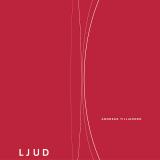
Andreas Tilliander released »Ljud« in 2001 as the first full-length album under his real name. The year before, the Swedish producer’s »Cliphop« album under his Mokira moniker had established him in the world of adventurous electronic music and the clicks’n’cuts scene. »Ljud« was just as minimalistic, warm, and playful as its predecessor while also notably inspired by house music. It is a timeless record based on happy accidents, playful loops, and lively spontaneity. For its 25th anniversary, Keplar presents a vinyl reissue with adjusted artwork by graphic designer Marc Hohmann and updated mastering by the artist himself.
Tilliander laid the foundation for his two first albums when he got rid of most of his music gear in 1998 after meeting Joel Brindefalk, who was already releasing music on the legendary Börft label. Brindefalk was using a computer as his main instrument and introduced Tilliander to the audio editing suite Sonic Foundry Sound Forge. »What he did with that software is what made me sell most of the hardware except my Nord Modular and a Korg MS-20.« The former synthesizer played an integral role while Tilliander made the tracks for »Ljud,« working primarily in the modular studio environment Jeskola Buzz.
»Ljud« came together in an intuitive process. »It’s still how I work 25 years later: I first make loops, create bits and pieces, and build up my own sound library as a foundation,« Tilliander explains. The Nord Modular and Buzz, which allowed him to swap samples and produce new sounds out of pre-existing ones, provided him with material for loops that formed the basis of the ten tracks. »I would start with a few elements, add more into the mix, then take them out again—arranging the pieces in real time while recording.« The casualness and vivacity of this improvisational approach becomes tangible throughout »Ljud.«
»Ljud« was released on Achim Szepanski’s Mille Plateaux, which had published the seminal »Clicks+Cuts« compilation in 2000. »I was part of that scene and I liked the digital aesthetic of the label,« says Tilliander »Coming from a very analogue setup, working with computer music and this kind of minimalism was very inspiring.« When preparing »Ljud« for the Keplar reissue, he ran the music through an analogue outboard and noticed he was still happy with the way it sounded. »It brought back fond memories. I hope the same is true for people who heard it back then, and that everyone who discovers it now will enjoy it, too!«
expected to be published on 20.11.2026

Inventing Importance - With its third vinyl release CLIKNO starts the MAT editions, which brings together contemporary art with profound texts and deep techno music equally, a conceptual and collectible series for heart, soul and mind - conceived by Dr.Nojoke.
music - Dr.Nojoke throws in three tunes in his unmistakable style hitting the dancefloors of a parallel universe. Stomping beats with gravitational bass-lines are folded with deep textured moods, dub delays and a plethora of subtle sounds and strange loops all in an intricate and organic production build from diverse noises and field recordings. This music aims as much for the dancefloor as it is enjoyable at home.
art - "You Brew Stew" is a digital painting by Denver-based artist Jonathan Canupp. The painting was created in 2018, took 25 hours and is made of 28,000 strokes, original size: 24" x 24". Jonathan is a multi-faceted artist also working as sound designer for video games and films and producing music under diverse monikers such as Ten and Tracer and Petrichoir.
text - Over the course of the MAT editions, philosopher, actress, director and performer Marianne Kjaer Klausen will contribute writings about humanity, society and freedom. Sample from MAT ed.01: "The owl of Minerva spreads its wings only with the falling of the dusk. The paradox, to know when she has landed, would be one true turning point for the wisdom of humanity."
MAT 01 is a strictly limited vinyl-only release with a 12" x 12" inlay in a thick transparent PVC sleeve.
Artwork and text are reproduced in an offset print on offset paper for a premium look and feel.
On Stock and ready to ship

2026 Repress
Flickering in ultraviolet, there is an elusive place where blue pill meets red, ups become downs, and day merges with night. Those liminal spaces where anything is possible is where you’ll find Nightbus and their hypnotic debut album Passenger. Doom, uncertainty, and opportunity lurk in the shadowy corners of their murky existence with stops at disassociation, co-dependency, and addiction before reaching its final destination - a glimmer of hope.
The in-between of Nightbus’ own Gotham lies where Manchester’s city pulse meets Stockport’s outer realm. An audio-visual entity formed among a musical family of friends, freaks, and foes in messy mills and after hours on dancefloors alike, their sound bleeds from tension where collective creative forces are bound together and collide with the fallout of being torn apart. Before even playing a show, their So Young released single ‘Mirrors’ – a knowing nod of respect to some well-known gloomy Northerners - may have made old school indie heads shimmy at shows in Salford’s The White Hotel but also signalled the duo’s knack for offering listeners a Bandersnatch approach to hitchhiking their own personal Nightbus in whatever direction they choose to take. “Everyone can have their moment with our songs; the music is our response to who we are as young people, living in the city full of this energy right now,” they say.
Whilst reverb hefty melodies and dread-filled loops embody isolation from writing at each of their home studio set-ups, magic happens in the ether across 90s trip-hop, indie sleaze and electronica; Jake’s production layers Olive’s pop sentimentality with drums and samples whilst tales of a cast of faceless characters place Olive as puppet master; her severed self’s perspective manipulating their stringed limbs at arm’s length to see how their stories play out when scenes reflecting her own lie close to the bone. “It’s a bit fucked; like having this out of body experience with a made-up movie running through my head,” she says. “As I write I can see they’re all from a similar world, but they allow me to explore different feelings without giving away part of myself.”
Recorded at The Nave in Leeds with producer-engineer Alex Greaves (Heavy Lungs, Working Men’s Club), surprise and danger lies in every crevice. Brooding whispers turn to chants on 6-minute opus ‘Host.’ Improvised when performed live, its immersive shift in tempo leads to hefty dub courtesy of Jake’s pedals. Even then, you won’t know shit’s hit the fan until its mid-point reveal when ominous bass blasts a thunderous soundtrack as its protagonist defiantly walks away after committing the perfect crime. “It makes you wait, and more songs should have sirens,” Olive grins.
Leaning deeper into alter-egos via the video game-psychological horror of a Silent Hill dystopia, the band’s Fight Club moment ‘Angles Mortz’ turns its literal translation of death angles on its head as it reflects upon kink and internalised shame reincarnated as pride. Elsewhere the ice cool ‘Landslide’ is a Requiem for a Dream about the addiction of being in a band; ‘The Void’ explores co-dependency and estranged relationships; and carefully selected samples revive house track ‘Just A Kid’ from the band’s early incarnation. Passenger’s every direction is to face challenges head on. “That is what’s so great about horror; you can see through predictable patterns so when the unexpected occurs it's more realistic and uncomfortable… I want to own the dark stuff!”
As for Passenger’s first single, the pulsating ‘Ascension’ is a spiralling deep dive into death, suicide, and legacy around who or what we leave behind. A noughties club banger by way of NYC beats - ergonomically designed for those who like to stay out a little too often and too late - it throbs like a house party’s partition wall as the literal levelling up undergoes a neon transformation; blue glitching to pink, diffusing the white construct of the Nightbus Matrix. “It really does feel like the end of something and was purposely written that way,” they say, “the ascension is like a firework going off!”
With wheels in motion, Nightbus has become a movement surpassing sonic realms. Between shows from Porto to Brighton taking in The Great Escape, Rotterdam’s Left Of The Dial and Paris’ Supersonic; DJing; remixing; guesting (BDRMM’s Microtonic album); and even enlisting talented like-minds to craft a 3-part queer coming-of-age music video series which ties in with a new ‘hyperpop’ phase in the evolution of their popular Nightbus Soundsystem club night, heads are now being turned from sports brands to high-end fashion designers. “There are things we can’t reveal just yet,” tells Olive, “but we’re excited about the direction this beast we’ve created is heading.” As the album philosophises and asks one ultimate question; what does it truly mean to be ‘Passenger’? Nightbus may not claim to offer a definitive answer, but it might make you feel a bit better about those demons.
expected to be published on 16.01.2026

Ostinato as resistance: Rafael Anton Irisarri’s landmark work reimagined. Marking the tenth anniversary of the American composer’s critically acclaimed album 'A Fragile Geography', this new edition arrives renewed, both sonically and visually.
First released in 2015 (Room40) during a period of personal upheaval and creative reinvention, it endures as a testament to resilience, transformation, and the connection we hold with the places that shape us.
Written in the aftermath of a devastating theft, A Fragile Geography was born out of loss. Just days before a cross-country move to New York, Irisarri’s entire Seattle-based studio was wiped out. Instruments. Recordings. Archives. Gone without a trace. He arrived on the East Coast to an empty room and the daunting task of starting over.
“This album wasn’t just a record; it was a lifeline,” Irisarri reflects. “It became a way to process the emotional chaos that followed: uprooting, instability, and ultimately, the slow, intuitive rebuilding of a life.”
Composed and recorded in the rural woods of the Hudson Valley, the album took shape in seclusion, surrounded by nature, and through a process guided by improvisation. Embracing limitations, Irisarri wove textural layers of field recordings with half-remembered melodies from his Seattle years, piecing them together like fragments of memory. Tracks like “Displacement,” “Hiatus,” and “Persistence” juxtaposed haunting stillness with restless momentum, mapping an inner terrain of grief, catharsis, and rebirth.
Among its defining sounds is “Empire Systems,” a monumental centerpiece built around a simple four-chord progression, organ textures, and guitar drones. Gradually, the track expands into layers of immersive loops and thick, enveloping distortion that wash over the listener like a rolling wave. Often cited as the album’s most majestic passage, it captures Irisarri at his most sonically ambitious. With a harmonically saturated structure crafted from restraint and repetition, it remains one of his most recognizable compositions: an exercise in the art of maximal minimalism.
From the outset, “Reprisal” received praise from BBC’s Mary Anne Hobbs, who championed the track on her radio show. Her support played a key role in introducing Irisarri’s work to wider audiences and solidifying his place within the lineage of electronic, drone, and experimental sound artists. A slow-burning elegy, the piece emerges from a haze of distortion and sub-bass, with dense, unrelenting drones carrying a sense of mounting tension. Just as it seems to collapse under its own weight, flickers of guitar emerge like distant light through fog. It’s a meditation on dissonance, resolve, and the elusive possibility of release.
The closing track, “Secretly Wishing for Rain,” is steeped in saudade: a longing for Seattle’s dour grey skies, lush green landscapes, and desaturated sunsets. Through it, Irisarri mourns a vanished chapter of life bound to the city, a time documented in scattered mementos and cherished collections, now permanently gone. A reflection on what could never be recovered: an era lost to time. Julia Kent’s looped cello motifs added a melancholic warmth to the track, marking the first collaboration between the two artists and sparking a musical dialogue that would keep growing in the years that followed.
More than a career highlight, A Fragile Geography has laid the foundation for Black Knoll studio, which Irisarri rebuilt from the ground up. The studio has since grown into a creative hub for countless projects, with Irisarri engineering records for iconic music figures like Terry Riley, Ryuichi Sakamoto, William Basinski, MONO, Devendra Banhart, Grouper, Emeralds, Steve Hauschildt, Julianna Barwick, and many others. Carried by its lasting influence, the album has quietly captured the ear of a younger generation, its sound and emotional arc finding new listeners in unexpected corners.
The album’s new visual language was reimagined in collaboration with Mexico City–based designer Daniel Castrejón. Irisarri captured ghostly images at Gaztelugatxeko Doniene, a historic coastal site in Bermeo, Euskal Herria. Castrejón then treated the photographs with distressed textures and spectral overlays. The final artwork channels the rugged, elemental forces that shaped both the music and Irisarri’s aesthetic, renewing his ties to ancestral ground inspired by the Basque homeland of his bloodline.
Mastered by Stephan Mathieu with exceptional attention to detail, this anniversary edition uncovers every nuance in the sound design, enhancing clarity and presence. With each listen, new elements emerge, inviting discovery and reconnection.
“I don’t experience this album as a document of grief anymore,” says Irisarri. “I hear adaptation and I'm reminded that when everything falls apart, something meaningful, maybe even beautiful, can emerge.”
Order now and we will order the item for you at our supplier.

Ostinato as resistance: Rafael Anton Irisarri’s landmark work reimagined. Marking the tenth anniversary of the American composer’s critically acclaimed album 'A Fragile Geography', this new edition arrives renewed, both sonically and visually.
First released in 2015 (Room40) during a period of personal upheaval and creative reinvention, it endures as a testament to resilience, transformation, and the connection we hold with the places that shape us.
Written in the aftermath of a devastating theft, A Fragile Geography was born out of loss. Just days before a cross-country move to New York, Irisarri’s entire Seattle-based studio was wiped out. Instruments. Recordings. Archives. Gone without a trace. He arrived on the East Coast to an empty room and the daunting task of starting over.
“This album wasn’t just a record; it was a lifeline,” Irisarri reflects. “It became a way to process the emotional chaos that followed: uprooting, instability, and ultimately, the slow, intuitive rebuilding of a life.”
Composed and recorded in the rural woods of the Hudson Valley, the album took shape in seclusion, surrounded by nature, and through a process guided by improvisation. Embracing limitations, Irisarri wove textural layers of field recordings with half-remembered melodies from his Seattle years, piecing them together like fragments of memory. Tracks like “Displacement,” “Hiatus,” and “Persistence” juxtaposed haunting stillness with restless momentum, mapping an inner terrain of grief, catharsis, and rebirth.
Among its defining sounds is “Empire Systems,” a monumental centerpiece built around a simple four-chord progression, organ textures, and guitar drones. Gradually, the track expands into layers of immersive loops and thick, enveloping distortion that wash over the listener like a rolling wave. Often cited as the album’s most majestic passage, it captures Irisarri at his most sonically ambitious. With a harmonically saturated structure crafted from restraint and repetition, it remains one of his most recognizable compositions: an exercise in the art of maximal minimalism.
From the outset, “Reprisal” received praise from BBC’s Mary Anne Hobbs, who championed the track on her radio show. Her support played a key role in introducing Irisarri’s work to wider audiences and solidifying his place within the lineage of electronic, drone, and experimental sound artists. A slow-burning elegy, the piece emerges from a haze of distortion and sub-bass, with dense, unrelenting drones carrying a sense of mounting tension. Just as it seems to collapse under its own weight, flickers of guitar emerge like distant light through fog. It’s a meditation on dissonance, resolve, and the elusive possibility of release.
The closing track, “Secretly Wishing for Rain,” is steeped in saudade: a longing for Seattle’s dour grey skies, lush green landscapes, and desaturated sunsets. Through it, Irisarri mourns a vanished chapter of life bound to the city, a time documented in scattered mementos and cherished collections, now permanently gone. A reflection on what could never be recovered: an era lost to time. Julia Kent’s looped cello motifs added a melancholic warmth to the track, marking the first collaboration between the two artists and sparking a musical dialogue that would keep growing in the years that followed.
More than a career highlight, A Fragile Geography has laid the foundation for Black Knoll studio, which Irisarri rebuilt from the ground up. The studio has since grown into a creative hub for countless projects, with Irisarri engineering records for iconic music figures like Terry Riley, Ryuichi Sakamoto, William Basinski, MONO, Devendra Banhart, Grouper, Emeralds, Steve Hauschildt, Julianna Barwick, and many others. Carried by its lasting influence, the album has quietly captured the ear of a younger generation, its sound and emotional arc finding new listeners in unexpected corners.
The album’s new visual language was reimagined in collaboration with Mexico City–based designer Daniel Castrejón. Irisarri captured ghostly images at Gaztelugatxeko Doniene, a historic coastal site in Bermeo, Euskal Herria. Castrejón then treated the photographs with distressed textures and spectral overlays. The final artwork channels the rugged, elemental forces that shaped both the music and Irisarri’s aesthetic, renewing his ties to ancestral ground inspired by the Basque homeland of his bloodline.
Mastered by Stephan Mathieu with exceptional attention to detail, this anniversary edition uncovers every nuance in the sound design, enhancing clarity and presence. With each listen, new elements emerge, inviting discovery and reconnection.
“I don’t experience this album as a document of grief anymore,” says Irisarri. “I hear adaptation and I'm reminded that when everything falls apart, something meaningful, maybe even beautiful, can emerge.”
Order now and we will order the item for you at our supplier.

Limited edition white vinyl (800 copies) The self-styled ritualistic electro-mechanical ensemble OSMIUM is a veritable supergroup. Made up of Oscar-winning composer and instrumentalist Hildur Gudnadóttir, veteran engineer and producer James Ginzburg, Senyawa's idiosyncratic vocalist Rully Shabara and Grammy-winning sound designer / producer Sam Slater, while each member brings along a laundry list of accolades, the project is far greater than the sum of its parts. Alloying burnished electroacoustic soundscapes with dense, metallic drones, barbed rhythms and buckled, bio-mechanical vocalizations, OSMIUM's eagerly awaited debut album doesn't try to cast a rigid future. Rather, it tempers a viscous flow of unorthodox speculations that smolders through the distant past, blazing a trail all the way to the frontier of fate. Absorbed by questions about the relationship between humans and technology, tradition and progression, the individual and the group, OSMIUM channel their experience and expertise into a set of forward-thinking sonic interrogations that skewer established cultural preconceptions. And although genre is acknowledged - the album draws from folk, doom metal, 20th century minimalism, industrial music and extreme noise - there's never a sense that it's riveted firmly in place. Widely known for her soundtrack work (including `Joker' and `Chernobyl') Gudnadóttir plays the halldorophone, a unique cello-like electroacoustic instrument designed by Halldór Ulfarsson that allows the performer to harness unstable feedback loops. Taking his cues from this process, Slater (who has worked alongside Jóhann Jóhannsson, Ben Frost and others) generates rhythms using a self-oscillating drum he designed with KOMA Elektronik and Subtext boss and Emptyset member Ginzburg responds in kind, producing booming tambura-like sonorities from a device he developed himself based on the monocord, an ancient single- stringed resonator. OSMIUM synchronize the three unique instruments using a custom system of robotics to generate basic rhythms that underpin their improvisations and experiments, and Shabara's alien tones supply the band with their conceptual fulcrum. The vocalist is one of South Asia's most recognizable underground artists, and the sounds he's able to create using exhaustively rehearsed extended techniques are so distinctive that he's been studied by scientists back home in Indonesia. Never weighed down by needless sound design or modish ornamentation, it's music that feels authentically experimental; OSMIUM have figured out an awkward symmetry between their discrete approaches, concentrating their gaze on the outcome rather than the process. The result is a work of science fiction that's driven by interaction, conversation and sensation.
expected to be published on 20.06.2025

London-based vocal and electronic collective NYX have announced their long-anticipated eponymous debut album, to be released digitally and on vinyl on 28th March 2025 via their own label, NYX Collective Records.
Alongside today’s news, they’ve also shared the first single, “Daughters”: a hair-raising, untamed cry that surrenders to the intensity of the human experience. With the lead vocal recorded in a beach-side kitchen in New Zealand, cicadas bleed through the soaring chant and heavy, visceral drums. The track opens soft and earnest, expanding in their rage, resilience, and liberation, transforming pain into a re-wilding of the spirit, a celebration of their collective power.
NYX say of the track: "Daughters” is an initiation into the underworld - an invitation to come face to face with our losses. To look towards the shame, rage, and pain embedded in our bodies, and open through the fear that has closed down our throats. These are our wild voices that want to be heard and loved - by ourselves, by our pack."
NYX is the result of years of collaboration and transformation, reflecting the collective’s signature blend of experimental vocal techniques and electronic alchemy. NYX’s debut album pulses with primal energy and delicate introspection, weaving together the ancient and the futuristic. It’s a spellbinding journey through the human experience, crafted not just to be heard, but also deeply felt.
The album brings together the group's full evolution and experimentation, collaborators on the album include sound designer, composer and NYX string player Alicia Jane Turner, harpist Miriam Adefris, as well as additional drums and production by Memory Play and Sebastian Gainsbourgh (Vessel), artwork by NYX member Shireen Qureshi, co-produced by Marta Salogni and mastered by Heba Kadry.
NYX showcases the choir's far-reaching emotional breadth. The introduction, “Mother”, is inspired by the first chapter of the foundational work of Taoism, Lao Tzu’s Tao Te Ching. In this, NYX’s opening prayer, the listener finds themselves in a swelling crescendo of NYX’s all-encompassing vocals and synth drones. The album spirals through swirling loops of haunting voices and layered strings that come together like crashing waves, bursting through in feral upheaval. “Through Fire” and “Daughters” erupt into heart-wrenching post-apocalyptic chorus and pounding bass-heavy drums, then slip into a blissful sound bath, “Awe”, whose choir harmonies layered with lush harps radiate pure wonderment, and the closing track, a cover of Suicide’s 1979 “Dream Baby Dream”, dissolves into reverberating echoes. NYX leaves an indelible mark, reminding us of the radical potential of healing and love.
In Greek mythology, NYX is the primordial goddess of the night, born from chaos giving birth to light and day. Inspired by this duality, NYX’s music harnesses the voice as a limitless medium for profound emotion, capturing the vast spectrum of human experience with power and authenticity.
expected to be published on 28.03.2025

London-based vocal and electronic collective NYX have announced their long-anticipated eponymous debut album, to be released digitally and on vinyl on 28th March 2025 via their own label, NYX Collective Records.
Alongside today’s news, they’ve also shared the first single, “Daughters”: a hair-raising, untamed cry that surrenders to the intensity of the human experience. With the lead vocal recorded in a beach-side kitchen in New Zealand, cicadas bleed through the soaring chant and heavy, visceral drums. The track opens soft and earnest, expanding in their rage, resilience, and liberation, transforming pain into a re-wilding of the spirit, a celebration of their collective power.
NYX say of the track: "Daughters” is an initiation into the underworld - an invitation to come face to face with our losses. To look towards the shame, rage, and pain embedded in our bodies, and open through the fear that has closed down our throats. These are our wild voices that want to be heard and loved - by ourselves, by our pack."
NYX is the result of years of collaboration and transformation, reflecting the collective’s signature blend of experimental vocal techniques and electronic alchemy. NYX’s debut album pulses with primal energy and delicate introspection, weaving together the ancient and the futuristic. It’s a spellbinding journey through the human experience, crafted not just to be heard, but also deeply felt.
The album brings together the group's full evolution and experimentation, collaborators on the album include sound designer, composer and NYX string player Alicia Jane Turner, harpist Miriam Adefris, as well as additional drums and production by Memory Play and Sebastian Gainsbourgh (Vessel), artwork by NYX member Shireen Qureshi, co-produced by Marta Salogni and mastered by Heba Kadry.
NYX showcases the choir's far-reaching emotional breadth. The introduction, “Mother”, is inspired by the first chapter of the foundational work of Taoism, Lao Tzu’s Tao Te Ching. In this, NYX’s opening prayer, the listener finds themselves in a swelling crescendo of NYX’s all-encompassing vocals and synth drones. The album spirals through swirling loops of haunting voices and layered strings that come together like crashing waves, bursting through in feral upheaval. “Through Fire” and “Daughters” erupt into heart-wrenching post-apocalyptic chorus and pounding bass-heavy drums, then slip into a blissful sound bath, “Awe”, whose choir harmonies layered with lush harps radiate pure wonderment, and the closing track, a cover of Suicide’s 1979 “Dream Baby Dream”, dissolves into reverberating echoes. NYX leaves an indelible mark, reminding us of the radical potential of healing and love.
In Greek mythology, NYX is the primordial goddess of the night, born from chaos giving birth to light and day. Inspired by this duality, NYX’s music harnesses the voice as a limitless medium for profound emotion, capturing the vast spectrum of human experience with power and authenticity.
expected to be published on 28.03.2025
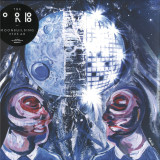
The long-awaited new full-length from legendary electronic pioneers THE ORB with cover design from iconic graphic wizards THE DESIGNERS REPUBLIC • A fascinating sonic journey over four epic tracks, constantly switching between psychedelic flourishes and beat-driven focus
Veritable pioneers of electronic music, iconic act THE ORB returns to Kompakt with the new full-length MOONBUILDING 2703 AD - another major slice of psychedelic synth bliss, obscure loops and deep ambient textures tossed in swinging breakbeats and powerful basslines. Installing a forward momentum rather unusual for a genre-defying project like this, the latest effort from masterminds Alex Paterson and Thomas Fehlmann follows their 2005 album success on Kompakt, the cheekily named "Okie Dokie It's The Orb On Kompakt" (KOMPAKT CD 45), as well as several contributions to our Speicher and Pop Ambient series - but more importantly, it finds the legendary duo at the peak of its creativity, ringing in another essential phase in what can only be called a ground-breaking career.
True to form, the new offering MOONBUILDING 2703 AD features a small track list, but turns each one of its four cuts into a mini epic in its own right. Opener GOD'S MIRRORBALL hits the ground floating, employing a handful of cozy statics to great effect before finally discharging into an intricate mosaic of atmospheric melodic sketches and gripping rhythms. With a hypnotic runtime of more than 14 minutes, it immediately establishes a blueprint for the other album tracks to follow, perfectly illustrating the vast extent of the artists' vision and their impressive skills in luring in listeners - welcome to THE ORB's sonic labyrinth, where nothing is what it seems and the unexpected waits just around the corner.
Likewise, follow-up track MOONSCAPES 2703 BC presents itself as a uniquely versatile affair sitting comfortably between ambient flourishes and beat-driven focus, holding as many twists and turns as a caper movie, but carefully grounding every single one of its cliffhangers in its impeccable flow. With a runtime of approximately 9 minutes, LUNAR CAVES is the shortest jam of the bunch - and also the most ethereal, keeping its rhythmic content to a bare, pulse-like minimum and opting for enticing, freewheeling synth textures instead. Album closer and title cut MOONBUILDING 2703 AD introduces a surprisingly jazzy vibe mingling rather well with the wealth of electronic tricks up its sleeve - even indulging in abrasive bass sweeps and a breathtaking multitude of different rhythm sections constantly switching places. It's a fitting closing act for a full-length as multifaceted as this, as idiosyncratic as possible and as muscling as needed.
• Das langerwartete neue Album der legendären Elektronikpioniere THE ORB mit einem Coverdesign der gefeierten Graphikschmiede THE DESIGNERS REBUBLIC • Eine faszinierende Klangreise über vier epische Tracks hinweg, permanent zwischen psychedelischen Schlüsselreizen und beatgetriebenem Fokus changierend
Mit THE ORB kehren echte Pioniere der elektronischen Musik zu Kompakt zurück - der Langspieler MOONBUILDING 2703 AD präsentiert erneut einen grossen Wurf in Richtung psychedelischen Synthie-Segens, obskurer Loops und porentiefer Ambient-Texturen, geschwenkt in schwungvollen Breakbeats und wirkmächtigen Basslines. Mit einem für genresprengende Projekte wie diesem hier eher unüblichen Vorwärtsdrang beerbt das neue Album von den Großmeistern Alex Paterson und Thomas Fehlmann ihren 2005er Erfolg auf Kompakt, das augenzwinkernd benannte "Okie Dokie It's The Orb On Kompakt" (KOMPAKT CD 45), sowie einige Beiträge zu unseren Speicher- und Pop-Ambient-Serien - viel wichtiger allerdings, daß wir das legendäre Duo auf der Höhe ihrer Schaffenskraft antreffen, eine neue wesentliche Phase einläutend in einer Laufbahn, die nur als bahnbrechend bezeichnet werden kann.
In bekannter Manier hat das neue Werk MOONBUILDING 2703 AD eine eher kleine Tracklist vorzuweisen, baut dafür aber jeden seiner vier Tracks zu Mini-Epen von eigenem Recht um. Der Eröffnungsakt GOD'S MIRRORBALL schwebt einem da vor Ohren, zuerst nur mit einer Handvoll gemütlichen Rauschens bewaffnet, später dann in ein feingliedriges Mosaik von atmosphärischen Melodieskizzen und mitreissenden Rhythmen explodierend. Mit einer hypnotisierenden Lauflänge von über 14 Minuten etabliert das Stück die Blaupause für die folgenden Ereignisse, perfekt die enorme Reichweite der künstlerischen Vision und ihre Fähigkeit zur massenhaften Verführung nichtsahnender Tänzer illustrierend - willkommen in THE ORB's Klanglabyrinth, wo nichts ist wie es scheint und das Unerwartete um jede Ecke lauert.
Ähnlich präsentiert sich der Folgetrack MOONSCAPES 2703 BC als einzigartig vielseitige Angelegenheit, bequem zwischen ambienten Ornamenten und beatgetriebenem Fokus sitzend und mit sovielen Drehungen und Wendungen wie ein Gaunerfilm - doch stets seine Cliffhanger im makellosen Flow erdend. Ein wenig über 9 Minuten lang, ist LUNAR CAVES der kürzeste Entwurf in der Gruppe - und auch der ätherischste, hält er doch die Rhythmusanteile auf einem puls-ähnlichem Minimum und optiert stattdessen für freilaufende Synthie-Texturen. Das letzte Kapitel des Albums schließlich ist auch der Titeltrack: MOONBUILDING 2703 AD besitzt eine überraschend jazzige Note, die sich ziemlich gut in den Reichtum an elektronischen Tricks einfügt, welche hier aus dem Ärmel geschüttelt werden - sogar in rauem Bass schwelgend und eine atemberaubende Vielfalt an Rhythmussektionen aufrufend, die ständig die Plätze tauschen. Es ist ein passender Abschluss für ein derart facettenreiches Album, so idiosynkratisch wie möglich und so anschiebend wie nötig.
Order now and we will order the item for you at our supplier.

“Music is my forever cove,” writes Portland, Oregon’s Luke Wyland of the ideas that give shape to Kuma Cove, his latest album under his own name. Though named after a real place on the Oregon coast, Kuma Cove casts its gaze far beyond the sightseer’s line of vision. Recorded live in the studio and blurring obvious lines between computer-based composition and electro-acoustic instrumentation, it is an album about flow, borders, transitory states, and shelter. Composed of discontinuous ripples and repetitions (“I’m forever searching for a better descriptor than looping, which feels too simple and flattened by overuse,” Wyland says), shaped into richly emotive arcs, and informed by his experience as a person who stutters, it is also an album about identity, self-expression, and the energies that sluice through and across what we perceive as linear time—like floodwaters seeking an exit, like streams running into the sea.
Artist’s Statement:
I made this record while spending significant time in the woods by the Sandy River in Corbett, Oregon,
where I've had my studio for the last five years. It is a diary of spontaneous live recordings edited to highlight the moments of clarity that emerge from long-form improvisations. These compositions express a slowing internal rhythm. An unwinding. A somatic recalibration as I enter middle age. A newly empowered vulnerability.
Here are the internalized cadences of my stutter, flowing freely from my fingers. The musicality of my disfluency is revealed in its frictions, elongations, and foreshortenings. Disruptions in linear time, where the bubbling cadences of my stutter find unexpected pathways, reveal the elasticity of the present moment. This is my idiosyncratic language, shaped and inspired by my disability. Subliminally mirroring internal processes, neural firings, cognitive entanglements...
The title, Kuma Cove, refers to a beloved cove on the coast of Oregon my wife and I return to yearly. There has always been something so magnetic about coves. The way they cradle one from the overwhelming enormity of the ocean beyond, muting a primordial fear. I experience these improvisations as ecosystems I'm able to inhabit for stretches of time, embodying the particular rhythms and sensorial textures within each. Music is my forever cove. Everything you hear is created live in Ableton on a setup I've been honing for 15 years. I celebrate MIDI and computer music as an extension of self and strive to make it as expressive as any analog instrument. I was a visual artist for the first half of my life and quickly adapted those skills to composing and producing on a computer. The transition felt natural within the landscape of DAW's interfaces, especially as a synesthete. Ableton and its community of Max creators continue to surprise me with its expansiveness.
I'm forever searching for a better descriptor than looping, which feels too simple and flattened by overuse. I envision sonic loops as tangled masses of time, three-dimensional knots spinning on tilted axes, or overlapping wreaths refracting out a myriad of colors. My practice is continually refocusing my ear to what is revealed in the repetitions, searching for the fingerprint of each. I find it incredible how technology lets us manipulate time like this. Nothing on this record is quantized or locked to a universal bpm. Experiencing numerous tempos at once feels important. Recordings as mirrors. Freedom from expected (conversational) flow as we hold time for each other.
-Luke Wyland, August 2024
Artist Bio:
Luke Wyland is an interdisciplinary artist, composer, and performer based in Portland, OR (USA). Wyland has been releasing critically acclaimed records for the past 20 years in the groups AU and Methods Body, as LWW, and under his own name, working with such labels as New Amsterdam, Beacon Sound, Balmat, The Leaf Label, and Aagoo Records. As a person who stutters, Wyland’s approach to music is informed by his idiosyncratic relationship with language. Wyland believes deeply in the cathartic power of live performance as a means for collective healing. Through an interdisciplinary art practice that focuses on improvisation, somatic embodiment, bespoke tuning systems, the cadences of disfluent speech, and time manipulation technologies, he’s collaborated with choreographers, high-school choirs, filmmakers, sound designers, and renowned musicians such as John Niekrasz, Holland Andrews, Colin Stetson, and Abraham Gomez-Delgado. He’s also the co-creator of the “It’s A Fucking Miracle” dance class with Tahni Holt.
Wyland has toured nationally and internationally and performed at the Whitney Museum, Ecstatic Music Festival, Issue Project Room, PICA’s Time-Based Arts Festival, End of the Road Festival, and Les Nuits Botanique, among others.
Order now and we will order the item for you at our supplier.

A Gilles Peterson-approved deep jazz-rap classic.
2024 first time vinyl release, 140g double vinyl, remastered audio with restored artwork.
Limited and Non-Returnable.
Holy grail hip-hop alert! Superstar Quamallah's Invisible Man was never released on wax so, to celebrate the 15th anniversary of this astounding record, we present the first ever vinyl edition. A stunning record which gained accolades upon its initial release, such as a prominent feature on Gilles Peterson's renowned Best Of 2009 show, it's one of the most essential jazz rap albums of all time.
Deep jazz rap on that mellow-melodic tip, Invisible Man is an unforgettable album with nothing but dope beats and dope bars. There's a strong chance this album has passed you by but we truly believe it to be a lost hip-hop masterpiece. It supremely captures the essence of a golden age classic without being slavish to the past. No, this ain't some facile throwback rap. It's a fresh and deeply soulful, original album shot through straight from the heart. Perfect to chill to, Invisible Man is profoundly jazz-oriented and captures with simplicity and sincerity the essence of hip-hop circa 1983-1994. It sounds like vibing with your nearest, dearest and oldest friends on a long hot summer night as the tantalising thought that anything is possible fills the air. You know what, we can just call this "magic hour rap" and we think you'll know what we mean. It's just beautiful. Just Listen.
Brooklyn-born, California-based emcee, DJ, and producer Superstar Quamallah was active in the West Coast underground scene throughout the 90s and recorded extensively with such revered names as Defari and Tajai. His parents were some serious artistic heavyweights, too; his father was soul organist Big John Patton, a giant in the jazz world known for his releases on Blue Note whilst his mother was an active designer. However, he remains relatively unknown. Invisible Man, named ostensibly after the classic Ralph Ellison novel, could also refer to how he is viewed by the public at large. With close affiliations to the Hieroglyphics, Dilated Peoples and Likwit crew, his debut EP "Don't Call Me John" arrived in 1999 on ABB Records, after which he took a sabbatical from recording which included graduate school, travelling, teaching at Inglewood High and eventually a professorship of African Studies at Berkeley.
With a laidback flow and deep, relaxing presence on the mic, Superstar Quamallah is equal parts Big Daddy Kane, Rakim and Guru. Invisible Man is refined, soulful, feel-good hip-hop of the old school. Its wise, spiritual and literate sound, combined with the summertime vibes projected by the smooth beats and the nostalgia-inducing samples and vocal scratches, created jazzy boom-bap rap reminiscent of prime De La Soul, A Tribe Called Quest and Gang Starr.
Irresistibly bouncing opener "You Need Knowledge" loops sparkling pianos, horns and a nagging whistle refrain with scratched vocal refrains from Slick Rick, Mobb Deep and Guru. The super-smooth head-nod classic "88 Soul" also utilises a beautifully swelling piano line and dusty breaks whilst Quamé reminisces about his childhood in NYC. Deeply moving, the silky, sultry "Black Shakespeare" is built around an elegant piano loop and goes hard on the superman lover tip whilst "For My People...It's Spiritual" is transcendental rap in conversation with Rakim and older gods. The "Moment Of Truth"-sampling "Lonely At The Top" is striking for its undiluted boom-bap stylings and the staccato flute-hop of "Just Listen" is riddled with soulful refinement. The deeply-affecting, wistful-yet-triumphant bells and horn-drenched single "California Dreamin'" is top-tier rap of unimpeachable quality. What a flow!
Another highlight is the rich melodic piano-rap of "Purity", a beautiful ode to the foundations of rap and those keeping the culture authentically alive. Beautifully played instruments and spiritual jazz samples elevate the deep thinking present on "Kunta Kente" whilst the darker jazz-tinged battle-rap of "93 Shit" goes super hard both in a lyrical sense and with its no-holds drum punches. The breezy Rhodes and string loops that serve as the sonic backdrop to the slinky jazz rap of "We Got Plots" are just gorgeous as our hero evokes Common's "I Used To Love H.E.R." with a head-spinning tale of crime, deception and double crossing. And some twist! "Do Win-Dis" has a tense crime-funk backing and rolling beats which complement Quamé's flow perfectly before the record is rounded out by the tough yet jazzy brilliance of rap confessional "Hope She Remembers Me". Just sensational.
Upon its original release, Quamallah himself declared: "My favorite time period for Hip Hop music was definitely between 1983 and 1994 with 1988 and 1993 being two years that standout as extremely impressive years musically and culturally. The fashion, slang, movies, TV shows and vibe during those years was incredible. While totally submerged in the feelings and music of that entire time period, I went to work on Invisible Man and I am excited for people to hear the result! It is an album that I would want to hear from some of my favorite artists of the past and present today. This is not a RETRO trip for me; this is me at my best lyrically and spiritually using the accessories of the 80s and 90s to fuel me. I am a 88 soul as the song states!"
This album goes deep. It goes all in. When Invisible Man first came out it had a real hold on us here at Be With HQ. We couldn't stop listening to it. We'd venture to say it's one of the top 25 rap records of the 2000s. In the years since its release, it has remained a criminally underrated record, an increasingly hidden gem. We sincerely hope this first time double LP release will go some way to correct this.
It's been mastered for vinyl by Simon Francis, cut by Cicely Balston and pressed at Record Industry. Finally available on the format it should always have been on, it must never be rendered invisible again.
Order now and we will order the item for you at our supplier.

If there's one specific component that grounds 'Sky Flesh', it's focus. Italian musician and sound designer Marta De Pascalis flexed her technical muscle on 2020's 'Sonus Ruinae', layering various sounds and processes in an attempt to touch the sublime. In contrast, 'Sky Flesh' is a single thought, composed using just one instrument: the Yamaha CS-60. A slimmed-down sibling to the gargantuan CS-80 - the analog synthesizer used by Vangelis to create his iconic 'Blade Runner' score - the CS-60 was released in 1977, a few years before the MIDI protocol was introduced to help standardize production methods. MIDI would change the electronic music landscape completely, offering a level of control that De Pascalis consciously relinquishes, preferring to highlight expressiveness and timbre, elements more readily associated with acoustic instruments. The album arrives as much of the wider experimental scene busies itself with algorithmic composition and AI-assisted modeling; De Pascalis chooses to work instead like an organologist, harnessing the CS-60's mercurial magic to suggest deeper truths about our evolving relationship with machines.
Currently based in Berlin, De Pascalis grew up in Rome, where she was surrounded by atrophied ruins that piqued her interest in decay and memory. Over her last three albums, she used tape loops and advanced synthesizer techniques to create a unique sound world that's guided by her musical philosophy, rather than a specific aesthetic. As she's developed her technique and confidence, her music has become even more idiosyncratic, and at this stage in her career she's stripped her sound down to its core elements, focusing on emotion, narrative and mystery. Using timbres that recall a time when electronic music still waved towards the future
Order now and we will order the item for you at our supplier.

Built around recordings by the acclaimed pedal steel player Henry Senior, the album's six hypnotic and enveloping tracks are supplemented with piano, strings, synths and field recordings performed by Wallis.
The making of the album took an unplanned route. During the winter 2021 lockdown, Wallis began work on an album of more conventional songs, sending several to Henry Senior (Danny & The Champions Of The World, Honey Harper) to record pedal steel parts remotely. Though subsequently deciding to shelve the album, he realised that Senior's pedal steel outlines of the songs formed the basis of something completely different.
The result is an immersive, meticulously crafted album that recalls the ambient pedal steel work of Chuck Johnson and Daniel Lanois mixed with the ethereal post- classical instrumentation of Stars Of The Lid and the field recording work of Claire Rousay.
In Huge Gesturing Loops' is Wallis' fourth release in as many years. The album's title comes from a poem by Philip Larkin. The artwork was put together by designer Luke Jarvis based on the 1930s swimming pool on Marshall Street in Soho, where Wallis swam regularly while working on the album.
expected to be published on 22.09.2023

Marc Richter aka Black To Comm released his debut record 20 years ago. In 2023 he is still busy releasing music under various disguises and is currently signed to the Thrill Jockey label. To celebrate this anniversary his own Cellule 75 label is re-releasing some classic out-of-print vinyl albums that originally came out on the defunct Type and De Stijl labels. The LP will feature a full-colour printed inner sleeve exclusive to this edition.
In 2009 the Type Recordings label run by John Twells had just released seminal records by Grouper, Jóhann Jóhannsson and Yellow Swans when they signed Richter and put out his breakthrough Alphabet 1968 album. The LP sold out within two weeks, receiving a glowing full-page review in The Wire Magazine by the late Mark Fisher (later reprinted in his book Ghosts Of My Life), was selected for Boomkat's Top 10 releases of the year (alongside debut albums by Leyland Kirby, Demdike Stare and Oneohtrix Point Never) and was greeted with universal praise in the underground blog network as well as established magazines such as The New Yorker and Pitchfork.
The music itself played with the notion of nostalgia without being nostalgic itself. It's the sound of half-remembered dreams, a surreal distorted vision of the past, an aural polaroid of long forgotten musics, a ghostly voice from a non-existent era.
From the original Type one-sheet:
"The mission statement for Alphabet 1968 was to write an album of "songs" for want of a better word. Short tracks which represented genre points, the milestones which stuck in Richter's mind when he thought back to his favorite records. What we arrive at is a breathtaking 10-track album which, over the course of 45 minutes, explores world music, techno, noise, avant-garde, ambient music and even exotica. Each track is linked with a loose thread of radio static or environmental sound, dragging you through the album, as if tuning in to a stray broadcast or a particularly adventurous mix. Richter has pieced the album together from hours of recordings made at his studio with home made gamelan, small instruments and loops gathered from a collection of ancient vinyl and 78 records. The scope of the album is admirable, but ignoring this, it is simply a shockingly arresting collection of experimental oddities, with references ranging from Moondog to Basic Channel by way of Bernard Herrmann. It's not hard to fall in love with Alphabet 1968, far harder would be to place exactly where the record should fit into your collection."
Mark Fisher in The Wire:
"But what if we were to take Richter's provocation seriously - what would a song without a singer be like? What would it be like, that is to say, if objects themselves could sing? It’s a question that connects fairy tales with cybernetics, and listening to Alphabet 1968, I’m reminded of a filmic space in which magic and mechanism meet: JF Sebastian’s apartment in Blade Runner. The tracks on the LP are crafted with the same minute attention to detail that the genetic designer and toymaker brought to his miniature automata, with their bizarre mixture of the clockwork and the computerised, the antique and the ultramodern, the playful and the sinister. Richter’s musical pieces have been built from similarly heterogeneous materials - record crackle, shortwave radio, glockenspiels, all manner of samples, mostly of acoustic instruments. ….. JF Sebastian's apartment was itself an update of older spaces in which science and sorcery co-existed: the workshops of ETA Hoffmann's inventor-magicians, or of Pinocchio's creator, Geppetto. I think, too, of Auguste Villiers de l'Isle-Adam's astonishing 1886 tale The Future Eve in which Edison, using the expertise he has recently acquired from inventing the phonograph, sets himself the task of constructing an artificial woman. But if there are songs here, they are sung by the gramophone and other recording and playback machines. Richter so successfully effaces himself as author that it is as if he has snuck into a room and recorded the objects as they played (to) themselves. Rather than simply automating his music, as in the case of Pierre Bastien and his mechanical machines, Richter makes us feel that he has merely recorded the unlife of objects. ….. Indeed, the impression of things winding down is persistent on Alphabet 1968. Entropy has not been excluded from Richter's enchanted soundworld. It feels as if the magic is always about to wear off, that the enchanted objects will slip back into the inanimate again at any moment."
expected to be published on 30.06.2023
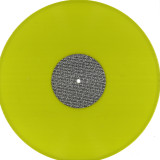
Limited Edition COLOR green lime Vinyl – 75 units Hand numbered
Orlando Voorn is a Dutch DJ and electronic music producer. As a solo artist he has released work since the early 80s under a large amount of aliases containing Balance, Frequency, Baruka, Basic Bastard, Fix, Dope Dog, Boy, Stalker and The Nighttripper. He also produced tracks with Blake Baxter under the name Ghetto Brothers and with Jeff Porter as Designer Loops.
Voorn won the Dutch DMC DJ Championships in 1986 which meant the beginning of a large number of released tracks. As a professional DJ he released his first club tracks under the record label Lower East Side Records. Together with Detroit techno music pioneers Juan Atkins, Derrick May and Blake Baxter he produced tracks under various labels. Voorn's music is characterized by its variety of styles such as Techno, Drum n bass, Ambient, Hip hop and Electro. By many people Orlando Voorn is considered the first one to establish a connection (in music) between Detroit and Amsterdam.
Order now and we will order the item for you at our supplier.

Lasse Marhaug is one of those characters that operates at the nexus of so much stuff that’s important to us here - working as a producer (over the last couple of years alone he’s helped shape albums by Jenny Hval, Kelly Lee Owens, Okkyung Lee, Hillary Woods etc etc), a mastering engineer (far too many releases to mention), a prolific sleeve designer (likewise), publisher (his occasional Personal Best magazine is still going strong) and, perhaps most importantly - a recording artist in his own right. ‘Context’ is his most substantial release in years - a crushing assembly of bone-dry/darkside drone/machine malfunctions that’s bursting with a visceral, throbbing, mass of feeling. If yr into anything on the spectrum from Mika Vainio to Grouper to Kevin Drumm or Deathprod - this one’s as good as it gets
Over almost three decades of activity, Marhaug has carved out notoriety as a solo performer, a prolific collaborator (working with everyone from Sunn O))) to Jim O'Rourke) and as a busy producer, who's notched up credits on some of the most striking-sounding albums of the last few years. This new album was created as a swan song for the infamous Oslo studio that he's inhabited for 17 years, prior to his move back to the Arctic Circle where he originally came from. Recorded over a 14-month period and painstakingly edited from hours upon hours of material, it might just be the most impressive, moving record we’ve heard from him so far.
The interplay between piercing softness and deafening noise is the key to "Context", displaying a philosophy Marhaug has been exploring for years. Few other artists are able to balance chaos and harmony with such ease; Marhaug does it without grandstanding, it's music that sounds as simultaneously beautiful and as daunting as the Arctic landscape he's returning to. At any moment a sound can be alluring or treacherous, like the frozen sun reflecting on a snowy mountaintop. Marhaug's deftness with rhythm and bass emerges on 'Context 3', as he pairs Vainio-esque low-end pulses with crumpled noise and widescreen tones; as disquieting music-box chimes absorbed into the blasted soundscape on 'Context 5', while we're thrust into the freezing cold on 'Context 6', subjected to punctuating gusts of white noise and trapped string loops.
Trust it’s a rare and near-mythical beast, conjuring vast, treacherous soundscapes illuminated with pangs of sentiment that naturally weave strands of his non-musical practice in their psychosensual lustre and gritty attrition. As he steps into a new phase of his career, we're left with a concluding chapter that stands as a summation and open-ended post-credits reveal.
Order now and we will order the item for you at our supplier.

Pye Corner Audio releases a new album, Let’s Emerge!, for Sonic Cathedral. It’s his first studio outing for the label following the acclaimed live recording Social Dissonance, which came out earlier this year, and it features Ride guitarist Andy Bell playing on five of its ten tracks. From the first glimpse of the artwork to the first note of the music it’s a marked deviation from Pye Corner Audio’s more traditional shadowy sounds. Whereas his last outing for Ghost Box (2021’s Entangled Routes) was inspired by the underground fungal pathways through which plants communicate, this one is very much above ground, bathed in sunlight and acid-bright psychedelia.
“This is a departure to sunnier climes, but a departure nonetheless,” says Pye Corner Audio, aka Martin Jenkins. “It’s something that I’d been thinking about for a while. I try to tailor my work slightly differently for the various labels that I work with, and this seems to fit nicely with Sonic Cathedral’s ethos.” Designer Marc Jones’ bold and ultra vivid artwork consciously references the likes of LFO, Spacemen 3 and the early output of Stereolab. “I think it mixes together many of my earliest influences,” explains Martin. “I’ve been a long-time fan of Spacemen 3 and Stereolab.
Their moments of repetition and drone have always seeped into what I’ve tried to create.
“I was living in a small apartment and I’d stripped down my studio set-up when I was recording this album. This enabled me to focus on a few key pieces of equipment and explore them fully.” The recordings were fleshed out by Andy Bell, who Martin first met at the Sonic Cathedral 15th birthday party at The Social in London back in 2019 – the same show that became the live album Social Dissonance.
“New alliances were formed and friendships made in that basement in Little Portland Street,” recalls Martin. “When I met Andy, we agreed that we needed to work together in some way. After I’d remixed a few tracks from his album The View From Halfway Down, he kindly repaid the favour.” The end results – mastered in New York by acclaimed engineer Heba Kadry – are incredible, from the first stirrings of opener ‘De-Hibernate’, via the glorious ‘Haze Loops’ and ‘Saturation Point’, the album slowly but surely awakens, blinking and feeling its way into the light. It all culminates in the epic closing track ‘Warmth Of The Sun’ which, with its vocal harmonies and acid breakdown, is seven and a half minutes of pure release.
“That one’s about life’s simple pleasures,” concludes Martin. “The Beach Boys, tremolo guitars, infinite drones, Spacemen 3. Let’s emerge from this darkened era and feel the ‘Warmth Of The Sun’. “The last few years have seen huge changes, both personally and in a wider perspective. The album title is a reaction to this, a collective (tentative) sigh of relief. Here’s to new beginnings and a sense of hope.”
Order now and we will order the item for you at our supplier.

Cocteau Twins, Jefre Cantu-Ledesma, Julia Holter, DIIV, Washed Out, Broadcast, Insides, Beach House, Drug Store Romeos. Introducing Beneather, a BAFTA-nominated composer from North London obsessively crafting sad, lo-fi, cinematic, ambient scandi-dreampop submerged in gently fuzzy tape loops. Much like the paintings of Gerhard Richter or a heavy mist rolling through a familiar landscape, the debut long player from Beneather obscures and blurs ten beautiful tracks beneath washes of cinematic, ambient scandi-dreampop – details emerge and fade, voices ooze and flow, tunes soothe and unnerve, metronomic beats click and swing. It would not be out of place on a David Lynch or Jim Jarmusch soundtrack. Inspired by the likes of Jefre Cantu-Ledesma, Hammock, Grouper, Low, GAS, Huerco S., Emeralds, Jenny Holzer, William Basinski & ABBA!! Beneather is the solo project of Lewis Young - composer and collaborator in The Leaf Library, drone pop from north London. As a composer, Lewis recently scored the British short ‘Lucky Break’ which found its way into the BAFTAs short list only to narrowly miss out on the gong. Lewis is a multi-instrumentalist, producer, designer and filmmaker currently living in Walthamstow, London. He started as a guitarist in noughties math-rockers Tea with the Queen, shifting to bass for multi-harmonied Naomi Hates Humans before returning to thumping roots as drummer for The Leaf Library. Objects Forever - the imprint label created by The Leaf Library - has provided Lewis with the vehicle to jump back into experimental song craft, inspiring the genesis of Beneather. “I just needed to make a project which spoke to all the aspects of music I’ve loved creating as a multi-instrumentalist. Plugging things into things to make satisfying little electronic loops, then layering extremely minimal bass and guitar lines with a lo-fi aesthetic. Melinda and I spent a few days in the studio - picking out objects, patterns… items that could inspire a thread of instinctive wordless melody. I took that expressionism and sliced it to pieces, rearranging it into ambient vocal hooks.” Beneather is an exercise in hypnotic simplicity. Experimental, dream-like music built on layers of scratchy electronic tape loops, chiming spacious guitars and abstract pulsing vocals. These cinematic songs combine Grouper's wistful deviations with the warm fuzz of Jefre Cantu-Ledesma, the nocturnal hum of Emeralds, the crackling collapse of William Basinski and Low's glacial pop melancholy. Outside of compositions for film, TV and Podcasts - Lewis plays with the indie drone-pop band The Leaf Library, featuring Matt Ashton from John Peel faves Saloon (“World-weary yet innocent, blissful dream-pop” - UNCUT - 8/10). Lewis has supported the likes of Lali Puna, Joanna Newsom, Lætitia Sadier & Alexis Taylor.
expected to be published on 13.05.2022

Turkish-born sound designer Işık Kural embraces the joys of improvisation on his second full-length album. The twelve short tracks of ‘in february’ were all composed on the fly, based around loops of unconventional recordings - short piano phrases, humming synths and field recordings - and moulded into beautiful ruminations on the passing of time.
expected to be published on 25.03.2022

Turkish-born sound designer Işık Kural embraces the joys of improvisation on his second full-length album. The twelve short tracks of ‘in february’ were all composed on the fly, based around loops of unconventional recordings - short piano phrases, humming synths and field recordings - and moulded into beautiful ruminations on the passing of time.
expected to be published on 25.03.2022

Avont is a music project by Amsterdam based artist Arjan Timmermans The music on Avont's #1 EP was mainly created with the use of a four-track tape machine, guitar, hardware synths and a eurorack modular synthesizer. Avont juxtaposes the element of chance and the glitches that are inherent in the use of tape loops, with meticulous sound design and synthesizer programming.
Genres that influenced this collection of recordings range from krautrock and noise to jazz and ambient. This resulted in combining atmospheric tape loops with the lush Rhodes piano improvisations of Onno Beukenhorst on "Camtas", while the ambient of "Even" is based on a classic jazz chord progression. Arjan Timmermans studied music at London's Middlesex University, has been a successful sound designer for creative brands such as Van Gogh Museum and Bas Kosters and gained notoriety with new wave and electro infused solo performances in European clubs in the early 00's. For the music on this EP, he was equally influenced by electronic acts like Bitchin Bajas, the krautrock of Harmonia and jazz artists such as Jakob Bro and The Necks.
Unobvious Creative Studio created the concept & design for the cover. They asked Amsterdam based collage artist Dewy Karouw to create artwork. Dewy combined fragments of black and white photo's from vintage adult magazines. By omitting the genitals of the original photos, she prevents an explicit sexual image, in favour of sensual, organic shapes. By adding geometric shapes and colour to these images, Unobvious found a way to underpin the contrast of organic and artificial sounds found in the music.
Warning: don't pull off the fluorescent sticker! Enjoy!
Order now and we will order the item for you at our supplier.

Both tracks produced by Robin The Fog at The Sticky Shed, Penge during lockdown 2020. Side A features a recording of a wine glass. Side B is created entirely from closed input sounds of the tape machines themselves. One take, no edits, no overdubs, no artificial FX. Mastered by Steven McInerney. A.H.M.F. and long live the Wyrm.
Robin The Fog is a sound designer, radio producer, audio archivist, educator and occasional DJ based in London. His work falls under the broad term "radiophonics" and includes composition, sound installation, field recording and documentary. Best known as founder and chief strategist of "tape loop quintet" Howlround, he also produces work alongside DJ Food and Chris Weaver as The New Obsolescents and with Ken Hollings as The Howling. Originally described as a "second wave hauntologist", his current obsession is attempting to use closed-input feedback loops to create primitive techno, which is quite a long way from where he started. His biggest fear is being swallowed by a python, but living in South London he appreciates the contingency is a remote one.
expected to be published on 12.03.2021

The Danish label/imprint arbitrary announces the release of Framework 3 (arbitrary11) by Mads Emil Nielsen. Framework 3 is the latest instalment in Nielsen’s sequence of graphic scores and recordings. The series includes the Danish composer’s own subjective translations of visual materials and sound pieces accompanied by visual notations.
On this release he collaborates with Katja Gretzinger and Nicola Ratti. Published as a limited edition art print folder, Framework 3 consists of risographed scores and recordings on 10” vinyl and CD – with recordings by Nielsen, along with graphic scores by Gretzinger and contributions by Ratti.
Raised in a family of architects Nielsen has for several years been occupied with the question of “how do you intuitively sonify an image?” along with the complementary processes of translating sounds and music into illustrations and scores. In early 2019, he produced various drawings and sound pieces which formed the starting point for the three tracks on this 10” vinyl EP. The audio is derived from synthesizer recordings and basic electronic sound sources (sine waves, feedback, noise) and percussive loops combined with recordings made in the studios at EMS (Elektronmusikstudion, Stockholm).
The audio material was translated by graphic designer Katja Gretzinger into a series of visual notations made while listening to the music. Gretzinger developed various symbols, forms and structures, such as points, bars, 3D balls, irregular patterns / “swarms” and regular patterns (vertical hatchings). These were combined with found image materials and cut-outs from old prints and layered with large geometric forms, which define the individual character of each of the three parts. The resulting 18-page graphic score is included in the release in the form of risograph printed sheets.
Nielsen then invited musician Nicola Ratti, who is also trained as an architect, to create sonic re-interpretations of the graphic score. Ratti reinterpreted the imagery as a selection of sound elements positioned in a three-dimensional area; which he visualized as the space between the composer / artist, Ratti himself and the loudspeakers. These recordings are included on the CD.
1, 2, 3 written & produced by Mads Emil Nielsen, Copenhagen / Berlin, 2019 / 2020 (reworked and combined with a live recording from Standards, Milan, September 2019). Recording by + thanks to URSSS. CD: 1, 2, 3 written & produced by Nicola Ratti, Milan, 2020.
Scores by Katja Gretzinger. Artwork/design (packaging, discs, text) by Mads Emil Nielsen.
Order now and we will order the item for you at our supplier.

IMA (Intense Molecular Activity) is the duo of Don Hunerberg (synthesizers) and Andy Blinx (drums and percussion). Based in New York City and active between 1979 and 1982. Don, a studio Sound / music engineer and musician, Andy an electronic clothing designer, drummer and sound reinforcement engineer at downtown clubs like Max's Kansas City, Mudd Club and CBGB. In between doing sessions at Radio City Music Hall Studios for groups such as Ramones, Richard Hell, Sonic Youth, Liquid Liquid, John Zorn, Glenn Branca and many others, IMA took advantage of off hours to create their own music. As far as influences go, Don's background was in electronic music and Andy's in prog rock. To produce the songs, Don used his own method of creating patterns from 2-track tape loops and then edited them together on to a 24-track recorder adding more tracks of overdubs, In a very similar way that sequencers are used today. By 1980 the duo honed their own unique sound and version of Post Punk and No-Wave with the tools of the trade of the early 80s. Situated above the proscenium of the Radio City Music Hall stage, the studio was outfitted with a variety of orchestral instruments (timpani, bells, xylophone, etc). They self-released a 4-song EP titled 'IMA' on an 8' flexi-disc which was distributed by Ed Bahlman of 99 Records. The music bridges the wild psychedelic-rock of the 60s, the synth-punk of the late-70s and the elaborate constructions of progressive-rock. There are nods to the freak-outs of Chrome and the super neurosis of Suicide, but IMA takes a more clinical approach which also takes notice of Hawkwind and Pink Floyd's interstellar overdrive. We've added 4 bonus tracks recorded during the same studio sessions and included them here for the first time on vinyl. DJ Hell lifted elements of IMA's song "Blurb" virtually intact and uncredited for his electroclash club hit "Keep On Waiting" 20 years later. All songs have been remastered by George Horn at Fantasy Studios in Berkeley. The record is housed in an exact replica of the original jacket featuring a spray painted IMA tag a top a red dashed 'Do Not Enter' sign. Each copy includes a double-sided postcard with notes. This Album Is dedicated to the memory of Andy (Blinx) George.
Order now and we will order the item for you at our supplier.

With 44 releases across 12 years since its inception, Butane's infamous Alphahouse imprint closes its doors this June as he welcomes long time colleagues and friends Alexi Delano and Worldline to shape up the final EP on the label 'Omega'.
Having established the imprint back in 2005, Andrew Rasse aka Butane's Alphahouse has served as an example of unapologetic underground quality and curation for over a decade. With previous releases from the likes of Ricardo Villalobos, Ryan Crosson, Ion Ludwig, Quenum, Mark Broom and of course Rasse himself, the final Alphahouse EP welcomes back another staple of the imprints success, Chilean Alexi Delano, and mysterious American talent Worldline who marks his debut on the label.
'Sometimes in order to grow, you have to leave things behind. It's time for a fresh start... the final Alphahouse record. Alpha/Omega' - Butane.
The A-side sees Delano and Rasse effortlessly re-combine and pick up where they left off in 2013. 'Bass Theory' is an energetic, blooming production that lays the focus on raw crunchy drum licks, chunky bass slabs and an ever- evolving melody that eases listeners into a state of trance, before 'Jazz Lick' reveals a lighter aesthetic with a delicate jazz-infused lead line, filtered vocal loops and crisp organic percussion that hold the production in sync.
On the flip Butane is joined by a new collaborator, Los Angeles-based underground fashion designer Worldline for two brooding cuts. 'How Deep' kicks things off showcasing eerie low ends layered beneath tripped out vocals and hypnotic, meandering chords. 'What We Do' wraps up the esteemed Alphahouse catalog in style. An underground manifesto with a trademark Butane groove and Wordline's vocals punctuating over a decade of work. That's a wrap.
In true Alphahouse style, Rasse signs off here alongside two extremely talented artists with an EP that radiates understated sophistication and intricacy throughout, whilst opening the door to his new project 'Extrasketch' in the most fitting and suitable way imaginable. Stay tuned; this is only just the beginning...
Order now and we will order the item for you at our supplier.
