Search:doctor house

Styles
All
DOCTOR HOUSE - MIX TO GROOVE

Originally released in 1994.

The legendary album from South Africa’s House and Kwaito master Doctor House being reissued for the first time with a full remaster from the original DAT tapes. Nelson Phetole Mohale released a series of albums as Doctor House. Cutting his teeth in the 80s as a session player for a host of big names like Volcano, Senyaka and Obed Ngobeni, he moved on to programming for acts like La Viva and Jivaro, also contributing to Carlos Djedje and others. Still barely out of his teens he became one of South Africa’s first rappers as part of PT House, co-written and produced by Danny Bridgens. Their debut album Big World was released in 1991 and followed by Big City Taste a year later.

In Stock

On Stock and ready to ship

The Gloaming - The Gloaming 3 (2x12")

World-renowned Irish American group The Gloaming return with their highly anticipated third studio album.

The Gloaming is four master musicians and one singer, seemingly suspended in time as their music unfurls around them, its tendrils reaching out into every nook and cranny of the room.

It's undoubtedly Irish music - with violinists Martin Hayes and Caoimhín Ó Raghallaigh, guitarist Dennis Cahill and Iarla Ó Lionáird, one of the greatest contemporary Sean-nós singers. However, it's also more than that: pianist and producer Thomas Bartlett steers the music towards a place where modernity and the old world become one. The heart of The Gloaming remains but there are touches throughout that signal its points of difference.

out of Stock

Order now and we will order the item for you at our supplier.


Last In: 3 years ago
Coldcut - What's That Noise

Coldcut

What's That Noise

12inch88985459671
Sony UK
09.01.2018

Spin your ears back to 1989 and enjoy the debut album of Coldcut once again! The bouncy good-time cut-up party people got started with What's That Noise, a particularly lively swirl of breaks, acid house and hip-hop. The guest vocalists on the album includes Lisa Stansfield, Queen Latifah and Mark E. Smith. Reissued by Sony.
11 track album on standard black vinyl with download code insert

out of Stock

Order now and we will order the item for you at our supplier.


Last In: 8 years ago
Various - Djax-Up-Beats 1990-2005: Volume 1 - The Acid Trip LP 3x12"

Delsin is pleased to announce an extensive compilation series combing through the catalogue of landmark Dutch techno label Djax-Up-Beats. The series, curated by Rush Hour co-founder Christiaan Macdonald, launches with a look at the label's legacy in the development of acid music through the 90s. In total, this first entry in the Djax-Up-Beats 1990-2005 series comprises 20 tracks, presented as a main triple-vinyl album plus two additional 12" EPs. The compilation also features all-new illustrations from Alan Oldham, the Detroit-rooted visual artist who gave Djax-Up-Beats a distinctive visual identity from very early on, and design by Lost Communication. Each volume of the series also features liner notes from music journalist Oli Warwick. Crucially, every track featured on the series has been carefully mastered by Johanz Westerman, bringing the best out of tracks that often had very little post-production treatment before they were originally pressed to wax. Volume 1 - The Acid Trip focuses on an area the label is best known for - acid house and techno. After the pioneering breakthroughs Chicago-based producers made with the Roland TB-303 in the late 1980s, acid music creation was starting to become more widespread when Djax-Up started in late 1990. The rebellious, rave-ready sound was an instant draw for label founder Miss Djax, and so her label ended up reflecting the development of acid as it spread from the Chicago roots across the world. Volume 1 - The Acid Trip looks at the diverse approaches to acid taken by artists on Djax-Up. Tracks on the compilation include an early outing from Ludovic 'St Germain' Navarre and Bjorn Torske's Ismistik alias, as well as Dutch pioneers such as Edge Of Motion, Spasms, Random XS and Acid Junkies, and Chicago heavyweights Mike Dearborn and Gene Hunt. With five more, equally extensive, volumes to come in this series, Djax-Up-Beats 1990-2005 is a thorough exploration of a true totem of techno culture - a renegade label that operated on its own terms and carried surprises and slammers in equal measure.

pre-order now27.03.2026

expected to be published on 27.03.2026


Last In: 2026 years ago
Guilty Razors - Complete Recordings 1977 - 1978
  • A1: Hurts And Noises
  • A2: Wake Up
  • A3: I Don't Wanna Be A Rich
  • A4: Terrorist Bad Heart
  • A5: Provocate
  • A6: Lucifer Sam (Pink Floyd)
  • B1: Happy!?
  • B2: So Lazy
  • B3: I Feel Down
  • B4: Stupido
  • B5: Guilty
  • B6: Caroline Says (Loo Reed)

UILTY RAZORS, BONA FIDE PUNKS.


Writings on the topic that go off in all directions, mind-numbing lectures given by academics, and testimonies, most of them heavily doctored, from those who “lived through that era”: so many people today fantasize about the early days of punk in our country… This blessed moment when no one had yet thought of flaunting a ridiculous green mohawk, taking Sid Vicious as a hero, or – even worse – making the so-called alternative scene both festive and boorish. There was no such thing in 1976 or 1977, when it wasn’t easy to get hold of the first 45s by the Pistols or the Clash. Few people were aware of what was happening on the fringes of the fringes at the time. Malcolm McLaren was virtually unknown, and having short hair made you seem strange. Who knew then that rock music, which had taken a very bad turn since the early 1970s, would once again become an essential element of liberation? That, thanks to short and fast songs, it would once again rediscover that primitive, social side that was so hated by older generations? Who knew that, besides a few loners who read the music press (it was even better if they read it in English) and frequented the right record stores? Many of these formed bands, because it was impossible to do otherwise. We quickly went from listening to the Velvet Underground to trying to play the Stooges’ intros. It’s a somewhat collective story, even though there weren’t many people to start it.
The Guilty Razors were among those who took part in this initial upheaval in Paris. They were far from being the worst. They had something special and even released a single that was well above the national average. They also had enough songs to fill an album, the one you’re holding. In everyone’s opinion, they were definitely not among the punk impostors that followed in their wake. They were, at least, genuine and credible.

Guilty Razors, Parisian punk band (1975-1978). To understand something about their somewhat linear but very energetic sound, we might need to talk about the context in which it was born and, more broadly, recall the boredom (a theme that would become capital in punk songs) coupled with the desire to blow everything off, which were the basis for the formation of bands playing a rejuvenated rock music ; about the passion for a few records by the Kinks or the early Who, by the Stooges, by the Velvet mostly, which set you apart from the crowd.
And of course, we should remember this new wave, which was promoted by a few articles in the specialized press and some cutting-edge record stores, coming from New York or London, whose small but powerful influence could be felt in Paris and in a handful of isolated places in the provinces, lulled to sleep by so many appalling things, from Tangerine Dream to President Giscard d’Estaing...
In 1975-76, French music was, as almost always, in a sorry state ; it was still dominated by Johnny Hallyday and Sylvie Vartan. Local rock music was also rather bleak, apart from Bijou and Little Bob who tried to revive this small scene with poorly sound-engineered gigs played to almost no one.
In the working class suburbs at the time, it was mainly hard rock music played to 11 that helped people forget about their gruelling shifts at the factory. Here and there, on the outskirts of major cities, you still could find a few rockers with sideburns wearing black armbands since the death of Gene Vincent, but it wasn’t a proper mass movement, just a source of real danger to anyone they came across who wasn't like them. In August 1976, a festival unlike any other took place in Mont-de-Marsan – the First European Punk Festival as the poster said – with almost as many people on stage as in the audience. Yet, on that day, a quasi historical event happened, when, under the blazing afternoon sun, a band of unknowns called The Damned made an unprecedented noise in the arena, reminiscent of the chaotic Stooges in their early adolescence. They were the first genuine punk band to perform in our country: from then on, anything was possible, almost anything seemed permissible.

It makes sense that the four+1 members of Guilty Razors, who initially amplified acoustic guitars with crappy tape recorder microphones, would adopt punk music (pronounced paink in French) naturally and instinctively, since it combines liberating noise with speed of execution and – crucially – a very healthy sense of rebellion (the protesters of May 1968 proclaimed, and it was even a slogan, that they weren’t against old people, but against what had made them grow old. In the mid-1970s, it seemed normal and obvious that old people should now ALSO be targeted!!!).
At the time, the desire to fight back, and break down authority and apathy, was either red or black, often taking the form of leafleting, tumultuous general assemblies in the schoolyard, and massive or shabby demonstrations, most of the time overflowing with an exciting vitality that sometimes turned into fights with the riot police. Indeed, soon after the end of the Vietnam War and following Pinochet’s coup in Chile, all over France, Trotskyist and anarcho-libertarian fervour was firmly entrenched among parts of the educated youth population, who were equally rebellious and troublemakers whenever they had the chance. It should also be noted that when the single "Anarchy in the UK" was first heard, even though not many of us had access to it, both the title and its explosive sound immediately resonated with some of those troublemakers crying out for ANARCHY!!! Meanwhile, the left-wing majority still equated punks with reckless young neo-Nazis. Of course, the widely circulated photos in the mainstream press of Siouxsie Sioux with her swastikas didn’t necessarily help to win over the theorists of the Great Revolution. It took Joe Strummer to introduce The Clash as an anti-racist, anti-fascist and anti-ignorance band for the rejection of old-school revolutionaries to fade a little.

The Lycée Jean-Baptiste Say at Porte d’Auteuil, despite being located in the very posh and very exclusive 16th arrondissement of Paris, didn’t escape these "committed" upheavals, which doubled as the perfect outlet for the less timid members of this generation.
“Back then, politics were fun,” says Tristam Nada, who studied there and went on to become Guilty Razors’ frontman. “Jean-Baptiste was the leftist high-school in the neighbourhood. When the far right guys from the GUD came down there, the Communist League guys from elsewhere helped us fight them off.”
Anything that could challenge authority was fair game and of course, strikes for just about any reason would lead to increasingly frequent truancy (with a definitive farewell to education that would soon follow). Tristam Nada spent his 10th and 11th unfinished grades with José Perez, who had come from Spain, where his father, a janitor, had been sentenced to death by Franco. “José steered my tastes towards solid acts such as The Who. Like most teenagers, I had previously absorbed just about everything that came my way, from Yes to Led Zeppelin to Genesis. I was exploring… And then one day, he told me that he and his brother Carlos wanted to start a rock band.” The Perez brothers already played guitar. “Of course, they were Spanish!”, jokes their singer. “Then, somewhat reluctantly, José took up the bass and we were soon joined by Jano – who called himself Jano Homicid – who took up the rhythm guitar.” Several drummers would later join this core of not easily intimidated young guys who didn’t let adversity get the better of them.

The first rehearsals of the newly named Guilty Razors took place in the bedroom of a Perez aunt. There, the three rookies tried to cover a few standards, songs that often were an integral part of their lives. During a first, short gig, in front of a bewildered audience of tough old-school rockers, they launched into a clunky version of the Velvet Underground's “Heroin”. Challenge or recklessness? A bit of both, probably… And then, step by step, their limited repertoire expanded as they decided to write their own songs, sung in a not always very accurate or academic English, but who cared about proper grammar or the right vocabulary, since what truly mattered was to make the words sound as good as possible while playing very, very fast music? And spitting out those words in a language that left no doubt as to what it conveyed mattered as well.
Trying their hand a the kind of rock music disliked by most of the neighbourhood, making noise, being fiercely provocative: they still belonged to a tiny clique who, at this very moment, had chosen to impose this difference. And there were very few places in France or elsewhere, where one could witness the first stirrings of something that wasn’t a trend yet, let alone a movement.

In the provinces, in late 1976 or early 1977, there couldn’t be more than thirty record stores that were a bit more discerning than average, where you could hear this new kind of short-haired rock music called “punk”. The old clientele, who previously had no problem coming in to buy the latest McCartney or Aerosmith LP, now felt a little less comfortable there…
In Paris, these enlightened places were quite rare and often located nex to what would become the Forum des Halles, a big shopping mall. Between three aging sex workers, a couple of second-hand clothes shops, sellers of hippie paraphernalia and small fashion designers, the good word was loudly spread in two pioneering places – propagators of what was still only a new underground movement. Historically, the first one was the Open Market, a kind of poorly, but tastefully stocked cave. Speakers blasted out the sound of sixties garage bands from the Nuggets compilation (a crucial reference for José Perez) or the badly dressed English kids of Eddie and the Hot Rods. This black-painted den was opened a few years earlier by Marc Zermati, a character who wasn’t always in a sunny disposition, but always quite radical in his (good) choices and his opinions. He founded the independent label Skydog and was one of the promoters of the Mont-de-Marsan punk festivals. Not far from there was Harry Cover, another store more in tune with the new New York scene, which was amply covered in the house fanzine, Rock News (even though it was in it that the photos of the Sex Pistols were first published in France).
It was a favorite hang-out of the Perez brothers and Tristam Nada, as the latter explained. “It’s at Harry Cover’s that we first heard the Pistols and Clash’s 45s, and after that, we decided to start writing our first songs. If they could do it, so could we!”
The sonic shocks that were “Anarchy in the UK”, “White Riot” or the Buzzcocks’s EP, “Spiral Scratch” – which Guilty Razors' sound is reminiscent of – were soon to be amplified by an unparalleled visual shock. In April 1977, right after the release of their first LP, The Clash performed at the Palais des Glaces in Paris, during a punk night organised by Marc Zermati. For many who were there, it was the gig of a lifetime…
Of course, Guilty Razors and Tristam were in the audience: “That concert was fabulous… We Parisian punks were almost all dressed in black and white, with white shirts, skinny leather ties, bikers jackets or light jackets, etc. The Clash, on the other hand, wore colourful clothes. Well, the next day, at the Gibus, you’d spot everyone who had been at this concert, but they weren’t wearing anything black, they were all wearing colours.”

It makes sense to mention the Gibus club, as Guilty Razors often played there (sometimes in front of a hostile audience). It was also the only place in Paris that regularly scheduled new Parisian or Anglo-Saxon acts, such as Generation X, Siouxsie and the Banshees, the Slits, and Johnny Thunders who would become a kind of messed-up mascot for the venue. A little later, in 1978, the Rose Bonbon – formerly the Nashville – also attracted nightly owls in search of electric thrills… In 1977, the iconic but not necessarily excellent Asphalt Jungle often played at the Gibus, sometimes sharing the bill with Metal Urbain, the only band whose aura would later transcend the French borders (“I saw them as the French Sex Pistols,” said Geoff Travis, head of their British label Rough Trade). Already established in this small scene, Metal Urbain helped the young and restless Guilty Razors who had just arrived. Guitarist for Metal Urbain Hermann Schwartz remembers it: “They were younger than us, we were a bit like their mentors even if it’s too strong a word… At least they were credible. We thought they were good, and they had good songs which reminded of the Buzzcocks that I liked a lot. But at some point, they started hanging out with the Hells Angels. That’s when we stopped following them.”

The break-up was mutual, since, Guilty Razors, for their part, were shocked when they saw a fringe element of the audience at Metal Urbain concerts who repeatedly shouted “Sieg Heil” and gave Nazi salutes. These provocations, even still minor (the bulk of the skinhead crowd would later make their presence felt during concerts), weren’t really to the liking of the Perez brothers, whose anti-fascist convictions were firmly rooted. Some things are non-negotiable.
A few months earlier (in July 1978), Guilty Razors had nevertheless opened very successfully for Metal Urbain at the Bus Palladium, a more traditonally old-school rock night-club. But, as was sometimes the case back then, the night turned into a mass brawl when suburban rockers came to “beat up punks”.

Back then, Parisian nights weren’t always sweet and serene.

So, after opening as best as they could for The Jam (their sound having been ruined by the PA system), our local heroes were – once again – met outside by a horde of greasers out to get them. “Thankfully,” says Tristam, “we were with our roadies, motorless bikers who acted as a protective barrier. We were chased in the neighbouring streets and the whole thing ended in front of a bar, with the owner coming out with a rifle…”
Although Tristam and the Perez brothers narrowly escaped various, potentially bloody, incidents, they weren’t completely innocent of wrongdoing either. They still find amusing their mugging of two strangers in the street for example (“We were broke and we simply wanted to buy tickets for the Heartbreakers concert that night,” says Tristam). It so happened that their victims were two key figures in the rock business at the time: radio presenter Alain Manneval and music publisher Philippe Constantin. They filed a complaint and sought monetary compensation, but somehow the band’s manager, the skilful but very controversial Alexis, managed to get the complaint withdrawn and Guilty Razors ended up signing with Constantin with a substantial advance.

They also signed with Polydor and the label released in 1978 their only three-track 45, featuring “I Don't Wanna be A Rich”, “Hurts and Noises” and “Provocate” (songs that exuded perpetual rebellion and an unquenchable desire for “class” confrontation). It was a very good record, but due to a lack of promotion (radio stations didn’t play French artists singing in English), it didn’t sell very well. Only 800 copies were allegedly sold and the rest of the stock was pulped… Initially, the three tracks were to be included on a LP that never came to be, since they were dropped by Polydor (“Let’s say we sometimes caused a ruckus in their offices!” laughs Tristam.) In order to perfect the long-awaited LP, the band recorded demos of other tracks. There was a cover of Pink Floyd's “Lucifer Sam” from the Syd Barrett era – proof of an enduring love for the sixties’ greats –, “Wake Up” a hangover tale and “Bad Heart” about the Baader-Meinhof gang, whose actions had a profound impact on the era and on a generation seeking extreme dissent... On the album you’re now discovering, you can also hear five previously unreleased tracks recorded a bit later during an extended and freezing stay in Madrid, in a makeshift studio with the invaluable help of a drummer also acting as sound engineer. He was both an enthusiastic old hippie and a proper whizz at sound engineering. Here too, certain influences from the fifties and sixties (Link Wray, the Troggs) are more than obvious in the band’s music.

Shortly after a final stormy and rather barbaric (on the audience’s side) “Punk night” at the Olympia in June 1978, Tristam left the band ; his bandmates continued without him for a short while.

But like most pioneering punk bands of the era, Guilty Razors eventually split up for good after three years (besides once in Spain, they’d only played in Paris). The reason for ceasing business activities were more or less the same for everyone: there were no venues outside one’s small circuit to play this kind of rock music, which was still frightening, unknown, or of little interest to most people. The chances of recording an LP were virtually null, since major labels were only signing unoriginal but reassuring sub-Téléphone clones, and the smaller ones were only interested in progressive rock or French chanson for youth clubs. And what about self-production? No one in our small safety-pinned world had thought about it yet. There wasn’t enough money to embark on that sort of venture anyway.

So yes, the early days of punk in France were truly No Future!
pre-order now22.05.2026

expected to be published on 22.05.2026


Last In: 2026 years ago
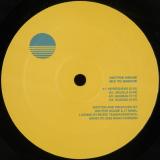
Cornelius Doctor & Tushen Raï - Where Is Acid Eric ?

Some records are answers to questions no one asked out loud. With Where is Acid Eric, Cornelius Doctor & Tushen Raï deliver a psychedelic missive from a parallel timeline — a time-traveling tribute to Goa’s golden age, filtered through their unmistakable signature.

Returning to their home base, Hard Fist, the duo steps into new territory with this release, and yet, it feels like they’ve been heading here all along. This isn’t a retro-fetishist trip, nor a copy-paste homage. It’s a reimagination of a sound, a space, and most of all, a spirit.

The EP is rooted in the mythic nights of late-80s and early-90s Disco Valley, where British acid house collided with Indian hedonism, where freedom wasn’t a pose but a necessity, and where dancefloors became temporary utopias. But in the hands of Cornelius Doctor & Tushen Raï, this past gets warped, stretched and reanimated with 2025’s tools and sensitivities.

Across three extended tracks, the duo summons a sound that’s dense yet breathable, tribal yet precise, nostalgic yet futuristic.

They weave Goa’s swirling trance lines with broken rhythms, analog squelches, and post-industrial textures. The acid lines are sharp, but never cliché — more mantra than gimmick. Voices float in and out like half-remembered chants. Basslines slide, hypnotize, and then vanish in a cloud of smoke. It’s not a flashback. It’s a vision.

The title, Where is Acid Eric, feels like a lost broadcast — part question, part invocation. Eric is a symbol. IS Eric a ghost ? The true legend of a forgotten raver on a dusty Anjuna morning. What matters is the search. The longing. The dance.

Hard Fist, true to its form, continues to blur the lines between ritual and rave, tradition and invention. And with this record, Cornelius Doctor & Tushen Raï don’t just revive a genre — they reconnect with an ideal: dance music as exploration, as transcendence, as resistance.

One foot in the dust, one foot in the cosmos. The answer isn’t important. The trip is.

In Stock

On Stock and ready to ship

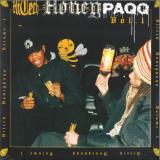
HiTech - Honeypaqq Vol.1

Following a breakout year that saw them torch the Sonora Stage at Coachella, storm Europe on the HONEYPAQQ TOUR, and rack up co-signs from Carl Craig, LSDXOXO, Jamie xx, Crystalmess, SHERELLE, TELFAR, Tinashe, Smino, Nia Archives, Earl Sweatshirt, and Denzel Curry, HONEYPAQQ VOL. 1 captures HiTech at their most ambitious: unfiltered, explosive, and impossible to pin down.

Across a stacked track list, the trio bring together the raw DNA of Detroit techno, Chicago house, rap, and punk, honouring the roots of Black electronic music while taking the scene to new global heights. Features include boundary-pushing collaborators like George Riley, ZelooperZ, and Na-Kel Smith, adding warped soul, razor-edge bars, and unruly energy to the HiTech universe and demonstrating how HiTech are the only act straddling underground chaos and mainstage euphoria while unifying global scenes across electronic, rap, and rock in one breathless body of work.

In Stock

On Stock and ready to ship

VARIOUS - Erotiques New Beat

VARIOUS

Erotiques New Beat

Pict-VinylMPD026PIC
MUSIQUE POUR LA DANSE
03.09.2025

The year is 1989 and it's the peak of the Belgium New Beat craze. Not limited to records and clubs, the New Beat lifestyle was marketed to death with all sorts of fashion items, a plethora of accessories, and at least one erotic movie.

Fast forward a few decades. In the middle of nowhere, Switzerland, tucked inside a long-forgotten video store that closed its doors in 1999 and sat untouched for 20 years, we stumbled upon a strange treasure amongst tons of VHS hidden in the adult section. A mysterious VHS labeled "Erotiques New Beat."

What we found was pure 1989 Belgian erotica-low budget, fog-drenched, and neon-soaked. Minimalist sets. Girls in PVC. Flashing lights. Mirrors. Fog machines. Loud colors. It was erotic, sure-but also oddly sweet, almost innocent in its surreal, lo-fi dreaminess.

And then came the soundtrack.

That's what really floored us. A collection of New Beat gems, raw, simple, irresistible. Somehow, it captured the full spectrum of the genre: 100-110 bpm grooves with shades of EBM, sleazy coldwave rhythms, sensual synths, proto-Goa pulses, monk choirs, oriental melodies, and a healthy dose of movie samples. It felt alive. Timeless. Utterly perfect.

We had to know more. We dug, tracked down the source, and in 2020, reissued the soundtrack on vinyl. It sold out fast. Now, five years later, we thought about pressing one final batch. A special edition on picture disc, featuring the original smileys from the VHS.

In Stock

On Stock and ready to ship

Horatio Luna - Yes Doctor

Horatio Luna

Yes Doctor

12inchSAPE00825
La Sape
16.05.2025

Australia's left-field club renaissance keeps flowering, and Horatio Luna's cult 2020 debut Yes Doctor remains an essential root document. The LP welds dub-soaked bass pressure, broken-beat jack and smoky nu-jazz improv onto a house chassis—picture Moodymann deep cuts drifting through Dadawah's spiritual haze. Championed by Gilles Peterson after Luna appeared on Brownswood's Sunny Side Up compilation—where drummer Phil Stroud and synth maestro Dufresne also featured—the record was pieced together across 2019 during a run of late-night sessions while Hicks was living in the La Sape house. La Sape's brand-new 2025 pressing (cat. SAPE00825) uses freshly cut plates and presents the full ten-track programme on 140 g black vinyl. The package features subtle touch-ups to the jacket artwork and refreshed centre-label stickers while preserving the original aesthetic. "Yes Doctor is my coming-of-age—mixing every style I could think of into house, pushing aesthetic boundaries, making 'un-boxable' music," Luna says. File next to Theo Parrish and Yesterday's New Quintet: DJs will lock onto the title track's seven-minute bruk workout, while deeplistening customers will cherish the front-to-back journey in groove alchemy.

In Stock

On Stock and ready to ship

Edictum - A Cosmic Scale

The album’s title deftly gestures to the sheer vastness of astronomical dimensions, while simultaneously capturing the musical breadth within, where the eight planets are imagined as the eight notes of an octave. The work draws inspiration not only from earlier compositions —most notably Gustav Holst’s The Planets—but also from the rich astronomical and cultural contexts surrounding these celestial bodies. Here, the focus transcends direct citation of melodic motifs, instead embracing an intriguing conceptual approach on a meta level, unfolding in a series of vividly contrasting soundscapes. These contrasts shape a sweeping sonic journey, one that fully embraces the album format with both arms, inviting the listener to venture into realms both strange and wondrous, feeling the immensity of the interstellar space that lies between them. Contrast, after all, is the brushstroke that enriches our world.

Embarking on an auditory voyage, "Astral Guide" establishes the sonic framework that propels us into the boundless expanses of the cosmos. Its ethereal tones evoke the vastness of space, crafting a mood ripe for exploration within the realms of sci-fi. The subsequent tracks unfold like constellations, weaving a rich tapestry of sound that seamlessly marries cinematic soundscapes with pulsating, club-oriented rhythms. This album invites listeners to traverse its immersive landscapes, whether nestled in the comfort of home or dancing under the starlit sky, each note a guide through the transcendent experience of a nocturnal journey.

"Solar Flares" draws its inspiration from the awe-inspiring expanse of solar phenomena, capturing the majestic power of the sun as it reaches into the cosmos. This track resonates with the idea that energy, while vital, can also be a force of destruction when unleashed with overwhelming intensity. The composition beautifully mirrors the sun’s duality, where brilliance and devastation coexist, inviting listeners to reflect on the delicate balance between creation and annihilation. Through its rich textures and dynamic shifts, "Solar Flares" serves as both a homage to the celestial and a poignant reminder of nature's formidable power.

"Mercury – The Winged Messenger" embodies a meticulously crafted soundscape where artistry meets astronomy. The tempo of 173.6 BPM, derived from precise astronomical data, propels the composition into a vibrant realm that resonates with cosmic energy. Synthwave sound design intertwines seamlessly with the fluid rhythms of Drum’n’Bass, imbuing the piece with an uplifting dynamism that evokes the ethereal grace of Mercury itself. In this sonic exploration, listeners are invited to ascend on wings of sound, navigating the celestial tapestry of the universe with each invigorating beat.

"Venus, The Bringer of Peace" strikes a decidedly cozy note, presenting a poignant contrast to the more tempestuous themes often found in cosmic narratives. This composition evokes a nostalgic vision of an optimistic era, one in which humanity transcended borders and embraced the infinite possibilities of space exploration, where no destination felt too distant. The dense, languid atmosphere envelops the listener, creating a tangible sense of serenity that unfolds gradually, allowing for a meditative journey through sound. Each note serves as an invitation to linger in this tranquil embrace, reflecting on the harmonious potential of our collective aspirations and the beauty of connection in a vast universe.

The central theme of „Gaia, The Bringer of Life“ —originally not part of the planetary cycle— is the profound enabler of life on Earth. The arrangement delicately mirrors the slow, tentative unfolding of this potential, marked by an initially sparse orchestration that gradually builds in momentum. This progression crescendos, embodying the explosive dynamism of the Cambrian burst of life, ultimately culminating in a euphoric fanfare—a triumphant, celebratory flourish echoing life’s victorious emergence.

"Blue Moon" unfolds as a contemplative reverie on the tranquil clarity of a night sky, now seldom glimpsed in its natural purity, unclouded by the relentless haze of urban light. The listener is drawn into the vast embrace of the star-strewn firmament, a journey that sways between euphoric awe at nature’s sublime beauty and a profound melancholy for its fragile and imperiled state. Musically, this duality finds expression in the delicate interplay of modal mixtures, while an ever-shifting triplet groove, poised at the intersection of Outrun and melodic house, lends a pulse that is both nostalgic and forward-looking—echoing the beauty and transience of a world on the brink.

Rather than replicating the original composition of „Mars, The Bringer of War“, this interpretation seeks to evoke its profound, foreboding atmosphere. Cyberpunk emerges here as an ideal genre, channeling the dark, relentless march synonymous with Mars, the ancient god of war. The piece reverberates with intensity, as distorted vocalizations rise, embodying the anguish and visceral torment that shadow war’s violent crescendo. This auditory descent into conflict captures the relentless pulse of warfare, where sound itself becomes an embodiment of suffering and fury.

Majestically, "Jupiter, the Bringer of Jollity" emerges on the celestial stage, sweeping away the somber tones with its radiant vigor. Drawing inspiration from the triumphant strains of the original, and borrowing a melodic motif in the refrain, the piece expresses joy and buoyancy through a shift to a major key and the lilting sway of a danceable 12/8 meter. Spirited and exuberant, it leaps boldly from major to minor and back again, playfully shifting time signatures to capture a mood of unbridled festivity and jollity.

Here, a more conciliatory concept is chosen than in the original inspiration. „Saturn“ aligns with the number six, being the sixth planet from the Sun and bearing the iconic hexagonal pattern at its northern pole. What, then, could be more fitting than to render this piece in a 6/8 time signature? The arrangement unfolds with a multifaceted richness, mirroring the countless stones and ice fragments that form the foundations of Saturn’s majestic rings.

„Uranus“ adopts the theme of a light-footed, dancing instrumentation, giving the impression of perpetual motion, never quite settling. This musical choice harmonizes with the planet’s own orbit, as it spins with breathtaking velocity, teetering and swaying, seemingly unable to attain rest or stability.

The chill and vastness of the cosmos find expression in „Neptune, The Mystic“. At its core, an electronic soundscape envelops a classical arrangement, its unreachability intensified by an ethereal, otherworldly choir. Hovering at the outermost boundaries of the solar system, where warmth is but a distant memory, the composition lingers in a slow, contemplative tempo, evoking a realm where space for speculation stretches wide and silence reigns supreme.

Though Pluto may have lost its planetary status, and its companion Charon never achieved one, this shift in classification subtly aligns with the cosmic scale invoked here—one that mirrors the musical tradition of an eight-note sequence. Fittingly, the album closes with „Kuiper Belt“, a composition emblematic of the turbulence and vitality of countless smaller

celestial bodies that, though diminutive, find their rightful place within the vast architecture of the solar system.

They say nature is the greatest composer, shaping the universe with a symphony of chaos and order, beauty and danger. It is this duality that fuels the artistic vision of Edictum—a producer who, armed with a doctorate in chemistry, delves as deeply into the mysteries of molecules as he does into the depths of sound. In the tension between the vastness of the cosmos and the microscopic processes that dictate life’s rhythm, Edictum creates sonic landscapes that dissolve the boundaries between science and art.

His music is a story of contrasts—a sonic tale where the raw forces of nature clash with the intricate structures of human culture. Opposites intertwine to form a harmonious whole: the primal rhythms of the earth meet the celestial melodies of the cosmos, the rigid laws of physics blend with the boundless freedom of art. Edictum explores these polarities with meticulous devotion, each composition an expedition into uncharted soundscapes—a quest to give voice to the unfathomable.

With over 20 years immersed in the realms of electronic music, Edictum has honed a keen sense for rhythm and movement. His driving beats compel both body and mind into a hypnotic flow. Yet beyond the pulse of dance lies a complex framework of conceptual thought. Today, his creative focus revolves around holistic album projects—self-contained worlds with overarching narratives that embrace contrast and complexity. Each track stands alone as a fragment of the whole, but together, they weave a cohesive tapestry, much like the chapters of a novel that guide the listener on an emotional and sonic journey.

Edictum’s distinctive musical signature has earned him international recognition. With over 150 releases, many on prestigious platforms like the iconic *NewRetroWave* label, and collaborations with artists such as Jan Johnston, Azumi Inoue, Powernerd, and Turbo Knight, he has solidified his place in the global electronic music scene. His latest work, *A Cosmic Scale*, marks his seventh vinyl album and is released under his own label, *Echoes of Expanse*. The label’s name is no coincidence—it captures the essence of his art: echoes of infinity, the vibrations of the universe distilled into a singular sonic experience that carries the listener ever further into the boundless expanse of sound and space.

In Stock

On Stock and ready to ship

Joe T. Vannelli - God Is A DJ LP 2x12"

“God Is A DJ” is the new full-length by Joe T Vannelli, an album the DJ and producer has been working on for years, 13 to be exact, since his latest LP came out. The album features sixteen unreleased tracks and features huge names from all over the musical scene, both italian and international. God Is A DJ is already a cult musical project, that the house music lovers all around the world have been waiting for for years.

The two LPs take the listener through a musical journey mixing different sounds and styles: the first four tracks on Side A lean towards a melodic house sound, the very same genre that JTV took to the top of the game with his “Live On Tour” series of streaming – 62 streamed gigs from different places in Italy, from April 2020 throughout the pandemic. Fifteen million views with a valuable representation of the italian territory.

Amongst the tracks on Side A, the 2022 remix of “Voice In Harmony”, one of JTV's biggest hits, and the long-awaited new version of “Children”, by Robert Miles, which was taken to the top of the charts by the same Joe T Vannelli in 1996.

Side B features collaborative works with some italian producers fresh off the top of international house charts: Moreno Pezzolato for “Doctor House” and “Paradise” remixed by Federico Scavo e Cassimm, licensed worldwide by Happy Music and Kontor Records.

Side C opens with the Angelo Ferreri remix of “Where Is My Man”, #1 on Traxsource, then moves on to two big featured artists: the first one is Saturnino. His bass is perfect, on this 70s funky style piece which echoes the biggest and boldest productions of music history. The second one is the remix of “Paradise” by Mario Biondi, made by JTV
himself who gives the track a soul/funky mood and an international sound inspired by Alicia Myers, who already worked as a muse for “Thank You” by Busta Rhymes. A song like “Sacrifice” by The Weeknd works along the same lines.

Side D, instead, is pure, distilled Vannelli-sound: house music for house music lovers, led by the afro-house beat by Silvano del Gado for “Booma Beat” and followed by the “Harlem” remix by Angelo Ferreri, and “Across The Universe” reinvented by the young producer from Veneto Reboq. The album closes with “Shavasana”, a meditative yoga number inspiring total relaxation.

In Stock

On Stock and ready to ship

Dr Packer - Tinted Love Sampler Vol 1 EP

Dr Packer's work has been showcased by labels such as Salsoul, Defected, Glitterbox, Z Records, Masterworks, Disco Dat, Hot Digits & Midnight Riot' and received support from DJs such as 'Dimitri From Paris, Joey Negro, John Morales, Greg Wilson, Late Night Tuff Guy, Simon Dunmore to name a few.

The Tinted Love E.P is a selection of remixes that the good doctor has done for Tinted Records.

In Stock

On Stock and ready to ship

Robosonic - Worst Love Ep

finally repressed !

Big with Maya Jane Coles, Round Table Knights, Homework, Claude Von Stroke, Robert Owens, Wildkats, Nhan Solo, Shir Khan,..Berlin-based Robosonic welcome the springtime with their first OFF EP. "Worst Love" uses an anthemic sample to create a groovy dancefloor burner with tight groove. Doctor Dru delivers a contemporary underground pop remix. Fritz Zander from the Suol collective made a "Panorama Bar 9 am"-styled remix for the real house-heads. And with "Thankful", Robosonic give us a 2nd original track, slightly more toolish than Worst Love.

collecting

Order now. Collecting orders for repress.


Last In: 6 years ago
Jane Fitz, David Fogarty - Mysterious Vastness

Barking-born Jane Fitz, and Transmigration label founder David Fogarty, curate a collection of tracks from East London and Essex’s rich but largely overlooked constellation of independent record labels and distributors operating from London’s E16 to the edges of the Thames estuary during the 1990s.

Mysterious Vastness documents a hidden and largely detached scene that only forms into something coherent with hindsight. From a time when record labels could press and hand-distribute 1000 copies locally, the late 80s acid house and outdoor rave scenes were moving from the fields to the clubs of London and DJs such as Colin Dale, Colin Faver and Darren Emerson were dominating the airwaves and parties with a distinct mix of other-worldly techno, trance and out-there house music. Among the seemingly bland post-war housing estates and factories, a scattered handful of producers were experimenting with early versions of music production software to create an exotic, end-of-the-century soundtrack to the suburban-meets-industrial landscape.

The compilation features a selection of finds from East London’s second hand record or charity shops over a period of 15 years. Many of which have featured in Jane’s sets over the years, most notably the “Beyond The A13" Podcast for Furthur Electronix. A mix she described at the time as the soundtrack to an area of London “totally bereft of natural beauty, but to me, somehow always full of mystery and wonder.”

out of Stock

Order now and we will order the item for you at our supplier.


Last In: 6 days ago
Doctor Who - The Wheel In Space (3x12")

In time for Doctor Who Day on 23rd November 2025, the complete full-cast soundtrack of this classic ‘lost’ BBC TV adventure is presented for the first time on 3LP vinyl by Demon Records, with linking narration by Wendy Padbury.

With a striking cover illustration, the three ‘Bernalium Blue’ coloured 12” discs are housed in inner sleeves with vintage TV guide-style listings for each episode.
Written by David Whitaker from a story by Kit Pedler, and directed by Tristan de Vere Cole, only two episodes are known to exist on film. Thankfully all six survive as sound recordings, complete with incidental music and the BBC Radiophonic Workshop’s familiar Doctor Who theme music.

pre-order now13.02.2026

expected to be published on 13.02.2026


Last In: 2026 years ago
THE ALAN PARSONS PROJECT - TALES OF MYSTERY AND IMAGINATION LP (2025 REMASTER)

THE ALAN PARSONS PROJECT

TALES OF MYSTERY AND IMAGINATION LP (2025 REMASTER)

12inchCOOKLP840
Cooking Vinyl
12.12.2025

180g Black Vinyl Half-speed Remaster by Miles Showell at Abbey Road Studios, includes a sleevenote featuring quotes from Alan Parsons & Eric Woolfson. The Alan Parsons Project debut studio album was originally released in June 1976. The lyrical and musical themes of the album are retellings of horror stories and poetry by Edgar Allan Poe. Musicians featured on the album include vocalists Arthur Brown of The Crazy World of Arthur Brown on "The Tell Tale Heart", John Miles on "The Cask of Amontillado" and "(The System of) Dr. Tarr and Professor Fether", and Terry Sylvester of The Hollies on "To One in Paradise". The complete line-up of bands Ambrosia and Pilot play on the record, along with keyboardist Francis Monkman of Curved Air and Sky. The album was a worldwide hit selling almost a million copies and achieving platinum status in a number of countries including Germany and Canada.

pre-order now12.12.2025

expected to be published on 12.12.2025


Last In: 2026 years ago
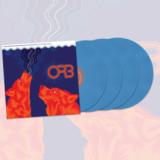
Doctor Who - The Moonbase (2x12")

Doctor Who

The Moonbase (2x12")

2x12inchDEMWHOLP017
Demon Records
19.09.2025
  • A1: Episode One – Originally Broadcast 11Th February 1967
  • A2: Episode Two - Originally Broadcast 18Th February 1967
  • B1: Episode Three - Originally Broadcast 25Th February 1967
  • B2: Episode Four - Originally Broadcast 4Th March 1967

“There are some corners of the universe which have bred the most terrible things…They must be fought.” Demon Records presents, for the first time on 2LP vinyl, the complete full-cast soundtrack of this ‘lost’ classic BBC TV adventure, with linking narration by Frazer Hines. The Second Doctor (Patrick Troughton) is thrown into his first rematch with the Cybermen in the year 2070. Humans have colonized the Moon, and the Cybermen have identified their base as a strategic vantage point from which to invade Earth!

Can the Doctor and his companions Polly (Anneke Wills), Ben (Michael Craze) and Jamie (Frazer Hines) stop them? First broadcast in 1967, this exciting adventure was written by Kit Pedler and directed by Morris Barry, with a guest cast including Patrick Barr, Andrew Maranne, Michael Wolf and John Rolfe. Whilst only two of the four episodes are known to survive on film, thankfully all four are available as sound recordings, complete with the BBC Radiophonic Workshop’s familiar Doctor Who theme music. With a superb cover illustration depicting the Cybermen on the Moon, these two translucent ‘Blue Moon’ discs are housed in beautifully designed inner sleeves with vintage TV guide-style listings for each episode.

pre-order now19.09.2025

expected to be published on 19.09.2025


Last In: 2026 years ago
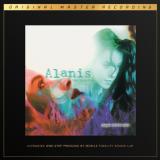
ALANIS MORISSETTE - Jagged Little Pill 2x12"
  • All I Really Want
  • You Oughta Know
  • Perfect
  • Hand In My Pocket
  • Right Through You
  • Forgiven
  • You Learn
  • Head Over Feet
  • Mary Jane
  • Ironic
  • Not The Doctor
  • Wake Up

When Alanis Morissette took direct aim at an ex who wronged her on the eviscerating “You Oughta Know” in 1995, everything about the Top 10 song communicated it wasn’t the usual narrative about love gone south. Or the typical wounded singer wallowing in self pity. Morissette, and both the lead single from and her entire American major-label debut — the profoundly personal Jagged Little Pill — represented a sea change. They kickstarted a movement, one whose impact continues to echo throughout the mainstream nearly three decades later.

Ranked the 69th Greatest Album of All Time by Rolling Stone, included on the Rock and Roll Hall of Fame’s list of 200 Definitive Albums, and featured in several books about essential albums, Jagged Little Pill remains more than a blockbuster that has sold more than 17 million copies in the U.S. and 33 million units worldwide. It’s a statement, an attitude, a soundtrack for anyone seeking inspiration, an outlet, or permission to be themselves.

Sourced from the original master tapes, pressed at Fidelity Record Pressing on MoFi SuperVinyl, and strictly limited to 4,000 numbered copies, Mobile Fidelity’s UltraDisc One-Step 180g 45RPM 2LP box set of Jagged Little Pill presents the landmark effort in audiophile-grade sound for the first time. A key part of the record’s appeal and accessibility — Glen Ballard’s smooth production, touches that help Morissette’s exposed-nerve fare seem more accessible and melodic — comes through on this special 30th anniversary edition with an openness, presence, and dynamic explosiveness that make the vocalist’s songs that much more real and visceral.

The singer’s distinctive mezzo-soprano deliveries — the octave-rippling highs, dark-hued lows, dramatic crescendos, belted choruses, wispy reflections, occasional yodels — resonate with full-range ardor and depth. As crucial as anything on the record, Morissette’s confessional words take center stage like never before. Ditto the instrumentation and atmospherics that form the magnetic backgrounds of the songs. Key in on the contributions from Red Hot Chili Peppers Dave Navarro and Flea on “You Oughta Know” to Tom Petty & the Heartbreakers' co-founder Benmont Tench’s organ playing on six tracks.

The deluxe packaging of Mobile Fidelity’s Jagged Little Pill UD1S set underscores the work’s distinguished status. Housed in a slipcase, the LPs come in special foil-stamped jackets with faithful-to-the-original graphics that illuminate the splendor of the recording. Benefitting from an ultra-low noise floor, superior groove definition, and dead-quiet surfaces, this UD1S reissue is for listeners who prize sound quality and desire to engage themselves in everything involved with the album, including the now-iconic cover art that juxtaposes two portraits of the then-21-year-old singer-songwriter and features typewriter font.

That script — which suggests a raw, blood-on-the-floor document created without modern aids like spell check or language correction — hints at the heightened level of unvarnished intimacy, honesty, and catharsis Morissette offers throughout Jagged Little Pill. Named after a phrase uttered on the astute “You Learn,” the album explores the frank emotions, inherent contradictions, and wishful desires people feel everyday but are often too afraid to express. Morissette displays no such fear or shyness.

Akin to a woman reading from a diary, Morissette leaves nothing to the imagination as she skewers hypocrisy during the poignant “Forgiven,” seeks recompense on the vengeful “You Oughta Know,” and spills her guts on the soul-purging “All I Really Want.” For all the anger and bile ascribed to the singer and record, Jagged Little Pill is incredibly healthy and upbeat. Morissette uses the catchy pop-rock frameworks and moody ambience to suss out situations, to learn, to give hope. There’s the clever yearning of “Hand in My Pocket”; wry contrarianism of “Ironic”; kind-heartedness of “Hand over Feet”; the live-and-let-live spirit of “You Learn” – all positive and amiable.

Throughout Jagged Little Pill, the ever-approachable Morissette connects with listeners who recognize themselves in her — and has an intelligent conversation with anyone who wants to participate. It seemed almost everyone did. In addition to the mammoth sales that make the effort the 17th-best-selling album in American history, Jagged Little Pill collected four Grammy Awards, two American Music Awards, three Billboard Music Awards, and eight Juno Awards. In 2018, the record became the basis for a musical that netted 15 Tony nominations on Broadway.

Ironic? Anything but. Jagged Little Pill transcends generations, gender, and trends. As Morissette sings on the opening “All I Really Want,”, the album represents “deliverance” — “a place to find common ground.”

pre-order now03.07.2025

expected to be published on 03.07.2025


Last In: 2026 years ago
THE ALAN PARSONS PROJECT - TALES OF MYSTERY AND IMAGINATION LP

"Tales Of Mystery And Imagination Edgar Allan Poe" is re-issued in a variety of different formats including as a 180g Heavyweight half-speed remastered Clear Vinyl LP. The Alan Parsons Project debut studio album was originally released in June 1976. The lyrical and musical themes of the album are retellings of horror stories and poetry by Edgar Allan Poe. The album was a worldwide hit selling almost a million copies and achieving platinum status in a number of territories including Germany and Canada. Featuring a half speed remaster by Miles Showell at Abbey Road Studio. Printed insert contains a sleevenote featuring quotes from Alan Parsons and Eric Woolfson.

out of Stock

Order now and we will order the item for you at our supplier.


Last In: 11 months ago
Rattle - Encircle LP

Rattle

Encircle LP

12inchUTR169LPX
Upset the Rhythm
28.02.2025

"Every night we've been listening to RATTLE. They have a stark yet deep trance percussion vibe that is both holistic and rocking." Thurston Moore
“Quietly dramatic and loudly intimate.” The Quietus
“Two drum sets. Two voices. One great idea.” MOJO
Rattle are Katharine Eira Brown and Theresa Wrigley, they formed in 2011 after meeting on the live circuit whilst both playing in other bands. Katharine was a guitarist who had recently started playing drums in the band Kogumaza, whilst Theresa was the drummer in Nottingham band Fists. They’ve since released two long-players, 2016’s self-titled debut album Rattle (Upset The Rhythm / I Own You) and 2018’s Sequence (Upset The Rhythm) to much critical acclaim in the music press, and with James Acaster discussing the debut on his BBC Sounds podcast Perfect Sounds!
Rattle have honed the four songs that make up ‘Encircle’ by playing them live over the last few years, adapting and stretching them into endlessly inventive new shapes, playing with the concept of time and expectation. ‘Encircle’ was recorded at Foel Studios, Wales, produced and mixed by Mark Jasper, and mastered at Liminal Audio by Shaun Crook. The stunningly colourful artwork was created by Martha Glazzard, who was also responsible for Rattle’s other mesmeric covers.
‘All Burning’ opens the album, a live favourite of cyclical tumbling and evolving wordplay. ‘All Burning’ was built up gradually layer by layer with Theresa’s cumulative snare work and Katherine’s urgent calls for action: “hold your doctor, hold your daughter, hold your horses”. If ‘All Burning’ represents fire, then it’s accompanying 12-minute long track on Side 1, ‘Argot’, is informed by the air. ‘Argot’ is a song about uncertainty, with Katherine singing wordlessly across the majority of the track. “I prefer to sing wordlessly often because it feels a bit more expressive and universal” asserts Katherine. The track feels truly epic with a satisfying release that comes with the eventual introduction of the bass drum and snappy hi-hat section.

Side 2 also pairs a shorter song with a long-form composition. ‘Ritual’ is worked up from a simple snare drum pattern which becomes more and more overlapped into an elliptical form of waltz. Katherine considers ‘Ritual’ as “very earthy song - lots of low lying mist on the ground swirling around and the drums coming together to summon something”! ‘Ritual’ was inspired by a visit to the ruins of Boleskine House so multi-dimensional themes and occult practice loom large. ‘Your Move’ is a step-up gear change with the band wanting it to feel like the tape had suddenly started to spin faster, urging movement, venturing action. Clocking in at over 15 minutes, ‘Your Move’, is mesmeric and boundless, hypnotic in its minimalism of doubled-drums and almost tribal vocal cycles.
With ‘Encircle’ Rattle have grown again, these songs are alive with elemental power. They build-up and disintegrate, existing in two places at once, embracing the nuance, tracing the circle’s edge. These are modes of song as pure gesture and eternal imagination, refined in mirrors after midnight.
Rattle has performed at The Barbican, London and toured the UK with Animal Collective and Thurston Moore Group and Europe with The Julie Ruin and Protomartyr, and performed with Hot Snakes, Bill Orcutt Quartetand Codeine.

pre-order now28.02.2025

expected to be published on 28.02.2025


Last In: 2026 years ago
Rattle - Encircle LP

Rattle

Encircle LP

12inchUTR169LP
Upset the Rhythm
28.02.2025
 
1
also available

Pink Vinyl


"Every night we've been listening to RATTLE. They have a stark yet deep trance percussion vibe that is both holistic and rocking." Thurston Moore
“Quietly dramatic and loudly intimate.” The Quietus
“Two drum sets. Two voices. One great idea.” MOJO
Rattle are Katharine Eira Brown and Theresa Wrigley, they formed in 2011 after meeting on the live circuit whilst both playing in other bands. Katharine was a guitarist who had recently started playing drums in the band Kogumaza, whilst Theresa was the drummer in Nottingham band Fists. They’ve since released two long-players, 2016’s self-titled debut album Rattle (Upset The Rhythm / I Own You) and 2018’s Sequence (Upset The Rhythm) to much critical acclaim in the music press, and with James Acaster discussing the debut on his BBC Sounds podcast Perfect Sounds!
Rattle have honed the four songs that make up ‘Encircle’ by playing them live over the last few years, adapting and stretching them into endlessly inventive new shapes, playing with the concept of time and expectation. ‘Encircle’ was recorded at Foel Studios, Wales, produced and mixed by Mark Jasper, and mastered at Liminal Audio by Shaun Crook. The stunningly colourful artwork was created by Martha Glazzard, who was also responsible for Rattle’s other mesmeric covers.
‘All Burning’ opens the album, a live favourite of cyclical tumbling and evolving wordplay. ‘All Burning’ was built up gradually layer by layer with Theresa’s cumulative snare work and Katherine’s urgent calls for action: “hold your doctor, hold your daughter, hold your horses”. If ‘All Burning’ represents fire, then it’s accompanying 12-minute long track on Side 1, ‘Argot’, is informed by the air. ‘Argot’ is a song about uncertainty, with Katherine singing wordlessly across the majority of the track. “I prefer to sing wordlessly often because it feels a bit more expressive and universal” asserts Katherine. The track feels truly epic with a satisfying release that comes with the eventual introduction of the bass drum and snappy hi-hat section.

Side 2 also pairs a shorter song with a long-form composition. ‘Ritual’ is worked up from a simple snare drum pattern which becomes more and more overlapped into an elliptical form of waltz. Katherine considers ‘Ritual’ as “very earthy song - lots of low lying mist on the ground swirling around and the drums coming together to summon something”! ‘Ritual’ was inspired by a visit to the ruins of Boleskine House so multi-dimensional themes and occult practice loom large. ‘Your Move’ is a step-up gear change with the band wanting it to feel like the tape had suddenly started to spin faster, urging movement, venturing action. Clocking in at over 15 minutes, ‘Your Move’, is mesmeric and boundless, hypnotic in its minimalism of doubled-drums and almost tribal vocal cycles.
With ‘Encircle’ Rattle have grown again, these songs are alive with elemental power. They build-up and disintegrate, existing in two places at once, embracing the nuance, tracing the circle’s edge. These are modes of song as pure gesture and eternal imagination, refined in mirrors after midnight.
Rattle has performed at The Barbican, London and toured the UK with Animal Collective and Thurston Moore Group and Europe with The Julie Ruin and Protomartyr, and performed with Hot Snakes, Bill Orcutt Quartetand Codeine.

pre-order now28.02.2025

expected to be published on 28.02.2025


Last In: 2026 years ago
Fairport Convention - Full House

This re-issue faithfully replicates the original 1970 Island Records UK release in gatefold sleeve and is pressed onto high quality 180g vinyl. After their 1969 album Liege and Leif paved the way, Fairport Convention pushed further into traditional music, led by charismatic and renown fiddle-player Dave Swarbrick, who had joined the group in 1969 after making his name with Martin Carthy earlier in the decade. Vocalist Sandy Denny and bassist Ashley Hutchings left after Liege and Leif, and for the first time since the group's inception in 1967, there would be no female voice on a Fairport album.Guitarists Richard Thompson and Simon Nicol took vocal leads with Swarbrick and, with new bassist Dave Pegg joining drummer Dave Mattacks, the group made Full House, released in July 1970. Picking up where its predecessor left off, and again recorded with Joe Boyd at London's Sound Techniques, the album continued the standards set by their previous four albums. Four of the seven songs on Full House were adapted from traditional folk melodies, such as Dirty Linen and Sir Patrick Spens, while of the originals, Thompson and Swarbrick's nine-minute opus Sloth gave the group one of their all-time anthems. The sleeve sent up their new role as ambassadors of the rustic by inventing a string of traditional British games that didn't really exist.

pre-order now15.11.2024

expected to be published on 15.11.2024


Last In: 2026 years ago
JENNIFER CASTLE - Camelot

Camelot, the legendary seat of King Arthur's court in Early Middle Ages Britain, was probably not a real place. A corruption of the name of a real Romano-Briton city, the word "Camelot" accumulated symbolic, mythic resonances over centuries, until achieving its present usage as a near-synonym of "utopia." In the mid-20th century alone, Camelot inspired an explosion of representations and appropriations, among them the violent, affectless Arthurian court of Robert Bresson's 1974 film Lancelot du Lac and the absurdist iteration of Monty Python's 1975 Holy Grail, both of which feature armored knights erupting into fountains of blood; the mystical Welsh world of novelist John Cowper Powys's profoundly weird 1951 novel Porius, with its Roman cults, wizards and witches, and wanton giants; and the nationalist nostalgia of President John F. Kennedy's White House. Unsurprisingly there are fewer Camelots in more recent memory. Camelot, Canadian songwriter Jennifer Castle's extraordinary, moving 2024 chronicle of the artist in early middle age, charts a realer, more rooted, and more metaphorical place than the fabled Camelot of the Early Middle Ages (or its myriad depictions), but it too is a space more psychic than physical. In Castle's Camelot, the fantastic interpenetrates the mundane, and the Grail, if there is one, distills everyday experience into art and art into faith, subliming terrestrial concerns into sublime celestial prayers to Mother Nature, and to the unfolding process of perfecting imperfection in one's own nature. Co-produced by Jennifer and longtime collaborator Jeff McMurrich, her seventh record is at once her most monumental and unguarded to date, demonstrating a mastery of rendering her verse and melodies alike with crisply poignant economy. For all their pointedly plainspoken lyrical detail and exhilarating full-band musical flourishes, these songs sound inevitable, eternal as morning devotions. "Back in Camelot," she sings on the lilting, vulnerable title track, "I really learned a lot / circles in the crops and / sky-high geometry." The album opens with a candid admission of sleeping "in the unfinished basement," an embarrassing joke that comes true. But the dreamer is redeemed by dreaming, setting sail in her airborne bed above "sirens and desert deities." If she questions her own agency_whether she is "wishing stones were standing" or just "pissing in the wind"_it does not diminish the ineffable existential jolt of such signs and wonders. This abiding tension between belief and doubt, magic and pragmatism, self and other, sacred and profane, and even, arguably, paganism and monotheism, suffuses these ten songs, which limn an interior landscape shot through with sunstriped shadows of "multi-felt dimensions" both mystical and quotidian. The epic scale and transport of "Camelot," with its swooning strings, gives way dramatically to "Some Friends," an acoustic-guitar-and-vocals meditation in miniature on Janus-faced friends and the lunar and solar temperatures of their promises_"bright and beaming verses" versus hot curses_which recalls her minimalist last album, 2020's achingly intimate Monarch Season. (In a symmetrical sequencing gesture, the penultimate track, the incantatory "Earthsong," bookends the central six with a similarly spare solo performance and coiled chord progression, this time an ambiguous appeal to _ a wounded lover? a wounded saint? our wounded planet?) Those whom "Trust" accuses of treacherous oaths spit through "gilded and golden tooth"_cynics, critics, hypocrites, gurus, scientists, doctors, lovers, government, the so-called entertainment industry_sow uncertainty that can infect the artist, as in "Louis": "What's that dance / and can it be done? What's that song / and can it be sung?" Answering affirmatively are "Lucky #8," an irrepressible ode to dancing as a bulwark against the "tidal pools of pain" and the "theory of collapse," and "Full Moon in Leo," which finds the narrator dancing around the house with a broom, wearing nothing but her underwear and "big hair." But the central question remains: who can we trust, and at what cost faith, in art or angels or otherwise? Castle's confidence in her collaborators is the cornerstone of Camelot. Carl Didur (piano and keys), Evan Cartwright (drums and percussion), and steadfast sideman Mike Smith (bass) comprise a rhythm section of exquisite delicacy and depth. This fundamental trio anchors the airiness of regular backing vocalists Victoria Cheong and Isla Craig and frames the guitars of Castle, McMurrich, and Paul Mortimer (and on "Lucky #8," special guest Cass McCombs). Reprising his decennial role on Castle's beloved 2014 Pink City, Owen Pallett arranged the strings for Estonia's FAMES Skopje Studio Orchestra. On the ravishing country-soul ballad "Blowing Kisses"_Pallett's crowning achievement here, which can be heard in its entirety in the penultimate episode of the third season of FX's The Bear_Jennifer contemplates time and presence, love and prayer_and how songwriting and poetry both manifest and limit all four dimensions: "No words to fumble with / I'm not a beggar to language any longer." Such rare moments of speechlessness_"I'm so fucking honoured," she bluntly proclaims_suggest a state "only a god could come up with." (If Camelot affirms Castle as one of the great song-poets of her generation, she is not immune to the despairing linguistic beggary that plagues all writers.) Camelot evinces a thoroughgoing faith not only in the natural world_including human bodies, which can, miraculously, dance and swim and bleed and embrace and birth_but also in our interpretations of and interventions in it: the "charts and diagrams" of "Lucky #8," a daydreamt billboard on Fairfax Ave. in LA in "Full Moon in Leo," the bloody invocations of the organ-stained "Mary Miracle," and all manner of water worship, rivers in particular. (Notably, Jennifer has worked as a farmer and a doula.) The album ends with "Fractal Canyon"'s repeated, exalted insistence that she's "not alone here." But where is here? The word "utopia" itself constitutes a pun, indicating in its ambiguous first syllable both the Greek "eutopia," or "good-place"_the facet most remembered today_and "outopia," or "no-place," a negative, impossible geography of the mind. Utopia, like its metonym Camelot, is imaginary. Or as fellow Canadian songwriter Neil Young once sang, "Everyone knows this is nowhere." "Can you see how I'd be tempted," Castle asks out of nowhere, held in the mystery, "to pretend I'm not alone and let the memory bend?"

pre-order now01.11.2024

expected to be published on 01.11.2024


Last In: 2026 years ago
Jennifer Castle - Camelot	LP

. For Fans Of: The Weather Station, Weyes Blood, Adrianne Lenker, Phoebe Bridgers, Joan Shelley, Lana Del Rey, Cass McCombs, Angel Olsen & Neil Young. Camelot, the legendary seat of King Arthur’s court in Early Middle Ages Britain, was probably not a real place. A corruption of the name of a real Romano-Briton city, the word “Camelot” accumulated symbolic, mythic resonances over centuries, until achieving its present usage as a near-synonym of “utopia.” In the mid-20th century alone, Camelot inspired an explosion of representations and appropriations, among them the violent, affectless Arthurian court of Robert Bresson’s 1974 film Lancelot du Lac and the absurdist iteration of Monty Python’s 1975 Holy Grail, both of which feature armoured knights erupting into fountains of blood; the mystical Welsh world of novelist John Cowper Powys’s profoundly weird 1951 novel Porius, with its Roman cults, wizards and witches, and wanton giants; and the nationalist nostalgia of President John F. Kennedy’s White House. Unsurprisingly there are fewer Camelots in more recent memory. Camelot, Canadian songwriter Jennifer Castle’s extraordinary, moving 2024 chronicle of the artist in early middle age, charts a realer, more rooted, and more metaphorical place than the fabled Camelot of the Early Middle Ages (or its myriad depictions), but it too is a space more psychic than physical. In Castle’s Camelot, the fantastic interpenetrates the mundane, and the Grail, if there is one, distills everyday experience into art and art into faith, subliming terrestrial concerns into sublime celestial prayers to Mother Nature, and to the unfolding process of perfecting imperfection in one’s own nature. Co-produced by Jennifer and longtime collaborator Jeff McMurrich, her seventh record is at once her most monumental and unguarded to date, demonstrating a mastery of rendering her verse and melodies alike with crisply poignant economy. For all their pointedly plainspoken lyrical detail and exhilarating full-band musical flourishes, these songs sound inevitable, eternal as morning devotions. “Back in Camelot,” she sings on the lilting, vulnerable title track, “I really learned a lot / circles in the crops and / sky-high geometry.” The album opens with a candid admission of sleeping “in the unfinished basement,” an embarrassing joke that comes true. But the dreamer is redeemed by dreaming, setting sail in her airborne bed above “sirens and desert deities.” If she questions her own agency whether she is “wishing stones were standing” or just “pissing in the wind” it does not diminish the ineffable existential jolt of such signs and wonders. This abiding tension between belief and doubt, magic and pragmatism, self and other, sacred and profane, and even, arguably, paganism and monotheism, suffuses these ten songs, which limn an interior landscape shot through with sunstriped shadows of “multi-felt dimensions” both mystical and quotidian. The epic scale and transport of “Camelot,” with its swooning strings, gives way dramatically to “Some Friends,” an acoustic-guitar-and-vocals meditation in miniature on Janus-faced friends and the lunar and solar temperatures of their promises—“bright and beaming verses” versus hot curses which recalls her minimalist last album, 2020’s achingly intimate Monarch Season. (In a symmetrical sequencing gesture, the penultimate track, the incantatory “Earthsong,” bookends the central six with a similarly spare solo performance and coiled chord progression, this time an ambiguous appeal to … a wounded lover? a wounded saint? our wounded planet?). Those whom “Trust” accuses of treacherous oaths spit through “gilded and golden tooth” cynics, critics, hypocrites, gurus, scientists, doctors, lovers, government, the so-called entertainment industry sow uncertainty that can infect the artist, as in “Louis”: “What’s that dance / and can it be done? What’s that song / and can it be sung?” Answering affirmatively are “Lucky #8,” an irrepressible ode to dancing as a bulwark against the “tidal pools of pain” and the “theory of collapse,” and “Full Moon in Leo,” which finds the narrator dancing around the house with a broom, wearing nothing but her underwear and “big hair.” But the central question remains: who can we trust, and at what cost faith, in art or angels or otherwise? Castle’s confidence in her collaborators is the cornerstone of Camelot. Carl Didur (piano and keys), Evan Cartwright (drums and percussion), and steadfast sideman Mike Smith (bass) comprise a rhythm section of exquisite delicacy and depth. This fundamental trio anchors the airiness of regular backing vocalists Victoria Cheong and Isla Craig and frames the guitars of Castle, McMurrich, and Paul Mortimer (and on “Lucky #8,” special guest Cass McCombs). Reprising his decennial role on Castle’s beloved 2014 Pink City, Owen Pallett arranged the strings for Estonia’s FAMES Skopje Studio Orchestra. On the ravishing country-soul ballad “Blowing Kisses” Pallett’s crowning achievement here, which can be heard in its entirety in the penultimate episode of the third season of FX’s The Bear Jennifer contemplates time and presence, love and prayer and how songwriting and poetry both manifest and limit all four dimensions: “No words to fumble with / I’m not a beggar to language any longer.” Such rare moments of speechlessness “I’m so fucking honoured,” she bluntly proclaims suggest a state “only a god could come up with.” (If Camelot affirms Castle as one of the great song-poets of her generation, she is not immune to the despairing linguistic beggary that plagues all writers.) Camelot evinces a thoroughgoing faith not only in the natural world including human bodies, which can, miraculously, dance and swim and bleed and embrace and birth but also in our interpretations of and interventions in it: the “charts and diagrams” of “Lucky #8,” a daydreamt billboard on Fairfax Ave. in LA in “Full Moon in Leo,” the bloody invocations of the organ-stained “Mary Miracle,” and all manner of water worship, rivers in particular. (Notably, Jennifer has worked as a farmer and a doula.) The album ends with “Fractal Canyon”s repeated, exalted insistence that she’s “not alone here.” But where is here? The word “utopia” itself constitutes a pun, indicating in its ambiguous first syllable both the Greek “eutopia,” or “good-place” the facet most remembered today and “outopia,” or “no-place,” a negative, impossible geography of the mind. Utopia, like its metonym Camelot, is imaginary

pre-order now01.11.2024

expected to be published on 01.11.2024


Last In: 2026 years ago
SLY & ROBBIE - MEET BUNNY LEE AT DUB STATION
  • A1: Dub Takeover
  • A2: Nobodies Dub
  • A3: A Dub Tribulation
  • A4: Liquidator Dub
  • A5: African Dub Child ( Part 1)
  • A6: None Shall Escape The House Of Dub
  • B1: Legalise The Dub
  • B2: Satta Massa Dub
  • B3: A Bad Way To Dub
  • B4: Dub To The Roots
  • B5: Zion Gates Of Dub

Sly Dunbar and Robbie Shakespeare or Sly and Robbie as they are affectionately known are the drum and bass backbone of Reggae Music, they have played on, produced, invented, reinvented more records then many of their contemporaries put together.

Sly Dunbar born Lowell Charles Dunbar on 10 May 1952, Kingston, Jamaica, drummed his first session for Mr Lee Perry which included a Jamaican hit ,a track called 'Night Doctor', before moving on to the group Skin, Flesh & Bones who had a residency at Kingston's famous 'Tit for Tat' club. This band would evolve into the Channel One house band The Revolutionaries where Sly named after his fondness of the band Sly and the Family Stone would begin to play alongside a bass player who would become his long standing partner in music, namely one Robbie Shakespeare.

Robbie Shakespeare born 27 September 1953, Kingston, Jamaica, had worked his way through session bands including the legendary Aggrovators before uniting with Sly Dunbar in The Revolutionaries. Both musicians had worked with other respective bass / drum players including such figures as Lloyd Parks bass, Carlton 'Santa' Davis drums, but everything seemed to fall into place when they worked together.

They also both had a quest to push the boundaries of reggae music, which they would do throughout their careers, over many sessions to numerous to mention. But highlights would include the groundbreaking Mighty Diamonds 1976 set 'Right Time' with its fresh rockers rhythms which lead the way in the 1970's. Also their work with the bands Culture and Black Uhuru the later of which they toured extensively with, spreading the reggae vibes across Europe and America. Not to forget to mention their Taxi label / productions which are always inventitive whether its in the reggae field or outside where their playing / production skills are much in demand.

The third piece of this jigsaw is the mighty Mr Bunny 'Striker' Lee who brought these legends together. Born Edward O'Sullivan Lee 23 August 1941, he must be one of reggae's most underrated producers. Leading the way in the 1970's especially in the dub field and being one of the early exponents of a King Tubby remix ,which would see nearly all his 7'' releases carrying a Tubby reworking on its flip side. Bunny started his musical career in 1962 working for Duke Reid's Treasure Isle label and soon moved into the world of production gaining his first hit in 1967 with 'Musical Field' by Roy Shirley for the WIRL label. The 1970's was a very productive time for Bunny Lee and saw the launch of his LEE'S label which was producing hits in Jamaica. Not having a studio of his own and renting studio time from the existing establishments like Randy's Studio 17 and Channel One he had to have a crack team of session players to carry out this task, fast and efficiently. This happened firstly under the guise of THE AGGROVATORS see The Aggrovators dubbing it studio 1 style JRCD005 and then with the group of musicians THE REVOLUTIONARIES[ see The Revolutionaries at Channel 1 dub plate specials JRCDOO3]. It’s here in the latter of these groups that Bunny matched Sly and Robbie together for the first time and it’s this match made in heaven that these tracks on this release are culled from. Sessions that Bunny Lee produced with Sly and Robbie during this magical 70's period. These rare dubs are taken from the original master tapes, you may have heard the tune before but not these versions. So sit back and enjoy Reggae Musical History in the making....

out of Stock

Order now and we will order the item for you at our supplier.


Last In: 16 months ago
Charles ‘Poppy Bob’ Walker - Dirt Bike Vacation LP

“Friends, they are my ticket out of this place I am in… feels like nothing more than a dirt bike vacation stop between Phoenix and San Diego.” Dirt Bike Vacation—for Worried Songs Records—explores the sonic world of the late amateur guitar player, Charles ‘Poppy Bob’ Walker, through a captivating set of instrumental songs made in the mid-1980s. Recorded on a single-track, Marantz field recorder, the project is a transportive document of Walker’s days spent as a meatpacking employee in Yuma, Arizona and the dailiness of that existence: driving to work, sitting in his backyard, walking around drunkenly, unwinding on the couch with a friend. These sketches, showing an experimental tendency, are surprisingly ahead of their time; some exhibit ad hoc tape delay (“Granite Bluffs,” “Goodbye YMCA”), while others make use of primitive overdubbing (“Continuation to Moon Doctor”). Not dissimilar to works such as Bruce Langhorne’s The Hired Hand soundtrack, Walker’s guitar playing is melodic, texturally rich and beautifully sober. On a musical tour from Nashville to Los Angeles, musician-archivist, Cameron Knowler, uncovered these songs from a series of dusty cassette tapes housed at a branch of the Yuma County Library. Originally tipped off by cryptic metadata entries found through an online finding aid, Knowler requested a sound sample and was immediately drawn in by their eerie, yet hopeful nature: “I didn’t care what they sounded like at first, but once I heard just a few seconds, I had to find out everything I could about Charles, who he was, and if he was still alive.” As it turns out, the two had miraculously crossed paths over 20 years prior when Cameron was a young boy accompanying his mother, a gem trader, on a biyearly sojourn to Quartzsite, a town 80 miles north of Yuma: “Charles, sitting down and smoking in a recliner, withdrawn, held what I now understand to be a mid-1990s Martin D-28 guitar. Unlike other old-timers, his instrument was sharply tuned and had a nice sound, even to my young and uncalibrated ears. Though his left hand showed signs of highly developed arthritis, his musical ideas were animated by a palpably deep understanding of fretboard anatomy, arrangement and harmony.” Sorting through the index cards associated with these tapes, Knowler was able to gain a detailed sense of most recording’s provenance, whereabouts and time: Walker’s Datsun pickup truck chugging along boiling hot Interstate 80, the Marine Corps Air Station parking lot, the Eastern Wetlands on the banks of the Colorado River, a fishing trip to Martinez Lake. Trying to reduce the amount of his own subjectivities coloring the work, Cameron constructed titles and track sequences by borrowing information gleaned from Charles’ handwritten notes: “I tried to organize everything by time of day, giving the listener the sense of how a Yuma day might sound and feel like, and each song title—even the record itself—is borrowed from his own words.” This proved no small task, as many notecards had to be deciphered and then coupled with their native tapes which needed extensive restoration treatments. The result is a project very much out of the blue, and one that is intensely personal to Knowler, having grown up in the same town under similar circumstances. “It feels like a part of my own journey as a guitarist reckoning with the defining marks of a gothic border town,” he remarks. “At the time I would’ve met Walker, I didn’t have much outside influence, but he has been in there all the while.” In their current form, the tracks combine to create a sonic journey that boldly contributes to the traditions of acoustic guitar soli, archival digs and field recordings all the same; most importantly, it is a creative document which shows a day-in-the-life of a man grappling with the human experience under a ubiquitous Yuma sun.

pre-order now25.10.2024

expected to be published on 25.10.2024


Last In: 2026 years ago
Solid Space - Space Museum LP

2024 Repress

Dark Entries is honored to finally present the first ever official vinyl reissue of Space Museum by Solid Space. Solid Space was the British duo of Dan Goldstein (keyboards, vocals) and Matthew 'Maf' Vosburgh (guitar, bass, keyboards, vocals) formed in 1980. Dan and Matthew met at the age of 11 while attending school in north London. In late 1978 at at the age of 14, they formed Exhibit 'A' with Paul Platypus' and Andrew Lunchbox' Bynghall. They recorded two EPs in 1979 and 1980, self-released on Irrelevant Wombat Records and appeared on 'The Thing From The Crypt' compilation. After the dissolution of the group, Mathew started taking his guitar over to Dan's house where he'd play his Casio MT-30 and they would record songs. Eventually a second hand drum machine and Wasp synthesizer were acquired from classified ads in Melody Maker and the Solid Space sound was born. By this time they were just turning 18 and finally found the freedom to make the music they'd had in their heads. Over the course of the next two years the band assembled eleven bedroom recordings that would become one of the most cherished DIY obscurities of its kind. Their debut album 'Space Museum' was released in 1982 on cassette by In Phaze Records. All of the songs were mixed by label boss Pat Bermingham on 8-track tape at The Shed, in Ilford, which was literally a garden shed. The band's music and lyrics were heavily indebted to science fiction, in particular the 1960s television series Doctor Who. 'Space Museum' is an unveiling of atmospheric, minimalist post punk supported by bright melodies. The music combines drum machines and synths with acoustic guitar and toy drums whilst also experimenting with samples between tracks. Lyrics deal with space travel and a general sense of dejection. Representing a bubbling spirit within the underground, they foreshadowed an entire world of independent music which would emerge across the 80's and well into the 90's. For this reissue we've included two bonus tracks from the band's archive, Platform 6' originally released on the B-side of the second single by Exhibit 'A', this song features only Dan and Matthew and is the first Solid Space track ever recorded. Tutti Lo Sanno' is a cover of In Phaze label mates Marine Girls, though the lyrics have been changed to suit the gender of the new singer.Each song has been carefully remastered for vinyl by George Horn at Fantasy Studios in Berkeley. The record is sleeved in a replica of the cassette artwork featuring the Cybermen and Jamie from the Doctor Who episode "The Wheel in Space". Every copy includes a double sided 11x11 insert with lyrics, notes and never before seen photographs of the band taken by Maf as well as a postcard featuring an original advert for the cassette.

out of Stock

Order now and we will order the item for you at our supplier.


Last In: 30 days ago
Frankie Stein and His Ghouls - Monster Melodies

After years of visiting graveyards, combing through haunted houses, and pursuing (heh heh) dead ends, we finally tracked down the rights to the legendary Frankie Stein and His Ghouls series! Why did we risk life, limb, and livelihood to find these records? Well, first of all, long-time Real Goners know we LOVE these campy ‘60s takes on horror rock—witness our previous macabre moves into the Zacherle, Munsters and Groovie Goolies franchises. But there’s something extra special about these Frankie Stein and His Ghouls records. You wouldn’t think that Halloween records released by a subsidiary (Power Records) of a children’s specialty label (Peter Pan Records) would be so…er…visceral, but these records are definitely the most out there of their kind. And there might be a reason for that…you see, it has been revealed that the Power label enlisted the aid of some very, very interesting musicians for some of its projects. For instance, the imprint’s 1966 album Batman and Robin by The Sensational Guitars of Dan and Dale was actually produced by Tom Wilson of Bob Dylan, Velvet Underground, and Mothers of Invention fame—and the band was made up free jazz legend Sun Ra and members of The Blues Project! Which has led to all sorts of speculation about who Frankie Stein and His Ghouls actually were; among the names bandied about are guitarist Duane Eddy, jazz saxophonist Max Greger, and, yes, Sun Ra and the Blues Project again. At any rate, prepare yourself for frenetic rock-and-twist workouts punctuated by deranged howls and shattering sound effects. And with a back story like this, it’s no wonder original copies of these albums sell for downright horrifying prices…here come the last two for a truly fiendish finale!

pre-order now06.09.2024

expected to be published on 06.09.2024


Last In: 2026 years ago
The Night Monitor - This House Is Haunted LP

Blue marbled vinyl LP. First time available on vinyl since 2020. The Night Monitor's 2019 debut album 'This House Is Haunted' returns to vinyl in its 5th anniversary year. Limited to 200 copies on blue marbled vinyl. 'This House Is Haunted' is an audio accompaniment to Guy Lyon Playfair's classic book documenting the infamous Enfield Poltergeist case of the late 1970s. "...an eerie radiophonic soundtrack... The album is strong on verisimilitude: there are knockings, white noise and tantalisingly indecipherable hints of electronic voice phenomena, amidst slabs of atmospheric music concrète that Doctor Who fans will find deliciously reminiscent of Roger Limb's percussive, synth-drive compositions for the show

pre-order now10.07.2024

expected to be published on 10.07.2024


Last In: 2026 years ago
LA FUNK MOB - TRIBULATIONS EXTRA SENSORIELLES LP

A duo of producers who had worked with rapper MC Solaar released their first EP Tribulations Extra Sensorielles in 1994. Philippe Zdar and Hubert Boombass became known under the name La Funk Mob, offering a timeless trip-hop sound with jazz and funk influences. Signed to British label Mo" Wax, a benchmark in the genre, they proved that French artists were to be taken seriously across the Channel. A few years later, the two friends embarked on a more house-oriented project: Cassius.

out of Stock

Order now and we will order the item for you at our supplier.


Last In: 9 months ago
Nightmares On Wax - Late Night Tales 2x12"

The Late Night Tales compilation is a bit of a ‘stealth’ project for me personally. I’m very proud of it, but at the time, I probably didn’t appreciate it as much as I do now because there was so much going on. You do these things in-between touring and you don’t really have time to reflect on them because you’re immediately onto the next thing. It’s nice to know that it’s getting re-released. George Evelyn - Nightmares on Wax May 2024 This ain't no normal nightmare, kid. This is Nightmares On Wax, aka DJ EASE, aka George Evelyn. Born under a bad sign, with lino in hand, Mr. Evelyn went forth into the world and breakdanced (brokedance?). It's what you did in the 80s when you were young, loved hip hop and couldn't rap for toffee. When house arrived they turned their clever hands to it. Bleeps and beats is what it was. That's what everyone said. But there was always a bit more than a bunch of bleeps to what Nightmares On Wax did. The north never really took the name very seriously (Sweet Exorcist even named their album Clonk as a pisstake). Then George flipped the script and went and did Smokers Delight, the beats not so much seminal as semolina: gloopy and slow and sweet and lovely. And now we have this: a 2024 reissue of his seminal Late Night Tales compilation. Tom Scott's 'Sneakin' In The Back' — one of the most sampled beats in hip hop — makes an appearance in its full glory, while Quincy Jones, the inspiration for NOW's 'Nights Interlude', backs up the classics with ‘Listen (What It Is)’. Evelyn's hip hop sensibility is to the fore throughout and nowhere is this more evident than on ‘Intergalactic Throwdown' by former Freestylers' DJ, Mad Doctor X. And can we forget the sublime version of the Classic IV's 'Spooky' by darling Dusty? No, we can't. Finally — oh, finally! — there is the now-traditional cover version, with George serving up a soupy version of 'Brothers On The Slide' that gives a nod of respect to the original British funk soul brothers, Cymande. This ain't no nightmare at all: it's Nightmares On Wax.

out of Stock

Order now and we will order the item for you at our supplier.


Last In: 4 months ago
Doctor Who - David Tennant & Catherine Tate - Pest Control & The Forever Trap LP 6x12"

“There goes my TARDIS!” Demon Records celebrates David Tennant and Catherine Tate’s partnership as the Doctor and Donna with two audio-exclusive stories, read by the actors themselves. In Pest Control, read by David Tennant, the Doctor and Donna face monstrous insects and a ruthless robot exterminator when the TARDIS is lost in battle on a distant planet. The Doctor sets off in pursuit of his craft, while Donna finds herself accepting a commission in the Pioneer Corps. Something is transforming soldiers into monstrous beetles - and she could be the next victim. In The Forever Trap, read by Catherine Tate, the duo find themselves imprisoned in a complex of luxury apartments in space, and neighbours to a terrifying assortment of aliens. Deadly mobs wage battle in the corridors and on the stairwells, and the travellers must cross their paths as they search for the ultimate authority. Who, or what, lies at the heart of the Edifice? This stunning box set, with an illustrated lift-off lid, features 6 x 140g vinyl LPs - three in Transparent Red and three in Transparent Yellow - each housed in a unique inner sleeve. A four page booklet features sleeve notes by authors Peter Anghelides and Dan Abnett, who reflect on the process of writing for the Tenth Doctor and Donna, and how they regard the stories 17 years later. Now for the first time on vinyl, accompanied by original sound design and Murray Gold’s Series 4 arrangement of the familiar theme music, these two high-octane adventures are a reminder of the excitement, humour and magical wonder of Doctor Who

pre-order now31.05.2024

expected to be published on 31.05.2024


Last In: 2026 years ago
Have a Nice Life - Voids LP 2x12"

For fans of Duster, LSD and The Search for God, The Microphones. Double LP (NO BOOKS!) First official physical copy of fan-made compilation of alternate tracks and demos from cult phenomenon album Deathconsciousness. Freshly remastered. With the broader adoption of the internet around the turn of the century, how people would engage with and discover underground music would change forever. As a result of the new digital era, DIY was now worldwide, and no band embraced this new frontier better than Have A Nice Life. Formed in 2000 by duo Dan Barrett and Tim Macuga, the Middletown, CT-based pair would, throughout the 00s, self-release and share a number of demos and home recordings via early social media channels as well as establish its in-house label ENEMIES LIST HOME RECORDINGS. These first steps set in motion Have A Nice Life’s rise to renown as an icon of underground music in the internet age, culminating with the release of its pivotal 2008 debut album, Deathconsciousness. Through word of mouth and online discussion, Deathconsciousness became subject to viral praise thanks to its synthesis of bleak post-punk, lo-fi shoegaze, and carpets of hypnotic drone music. Eventually, this humble self-released project would attain the status of a post-internet cult classic, amassing Have A Nice Life a fervent online following that the band would interact with in kind. In an effort to thank and continue to engage with Have A Nice Life’s internet cult following, Barrett and Macuga would regularly share links to old demos, works in progress, and outtakes from the recording of Deathconsciousness. Over time, a group of fans would compile these demos into an unofficial release. Dubbed Voids, this fan-made compilation several alternate takes of tracks from Deathconsciousness, as well as a handful of early versions of songs that would appear on Have A Nice Life’s two following albums, The Unnatural World and Sea of Worry. While undeniably reminiscent of their final album version counterparts, the earlier versions of these tracks each feel distinct in a way that makes the moody, decidedly lo-fi aura of Voids an essential slice of the Have A Nice Life discography. Hungry for more from the enigmatic duo, fans swarmed around this compilation, accompanied by loud calls for it to receive a physical release. Seeing that demand and with the band’s blessing, a pair of fan-made tape pressings of Voids would be released via Music Ruins Lives, a DIY label run by Have A Nice Life superfan Thom Wasluck, also known for his band Planning for Burial. Between both instances of the tape swiftly selling out and the compilation’s long absence from streaming services, Voids has historically been an elusive release to track down, only available in the obscurest corners of the internet or physically on the secondary market at eye-wateringly high prices.
Over a decade since its initial, unofficial release in 2011, The Flenser is proud to reissue Have A Nice Life’s Voids for the first time ever in an official capacity in physical form. Originally released digitally in early 2023 and freshly remastered for the occasion, this reissue of the beloved compilation will receive its first-ever wide release on physical formats (CD/LP/Cassette). This release also marks the first time fan-favorite tracks from Voids “Sisyphus”, “I’m Doctor House”, and “Human Error” will be available on vinyl and CD. Like a symbolic passing of the torch, the physical versions of the 2023 Voids reissue come with a foreword essay written by Wasluck, the previous custodian of Voids during the Music Ruins Lives days.

pre-order now31.05.2024

expected to be published on 31.05.2024


Last In: 2026 years ago
The House Of Love - Real Animal

Part of The Optic Sevens 5.0 Reissue Series
Limited to 750 copies worldwide. Pressed on White Vinyl. Includes poster.
Second single released by The House of Love in 1987.
Previously issued as a 12” only single on Creation records. It appears here for the first time on 7” and includes all three tracks from the original .
‘Ushered in by deceptively innocent vocal trilligs and sha-las. The House of Love suddenly rip off the mask of Doctor Jekyll to become Mr. Hyde and burst out of the speakers like shrapnel”
NME

out of Stock

Order now and we will order the item for you at our supplier.


Last In: 2 years ago
Doctor Jeep - Machine Learning

Nerve Collect goes global with its new and futuristic Machine Learning EP - a thrilling blend of worldly rhythms and twisted electronics from New York based Brazilian-American producer Doctor Jeep aka Andre Lira.

Lira is a producer who is able to weave together threads from many different genres into his own new forms. His forward-thinking sounds draw on everything from drum & bass to techno, dancehall to electro, always with an unwavering focus on the dance floor. So far they have come on the eclectic likes of Medellin's TraTraTrax, Berlin’s SPE:C, and his own label DRX (amongst others).

The 6 tracks on this EP showcase Jeep's variety, from the distorted kicks and zippy synths of 'Machine Learning' and 'Mad T', to more straight forward 4x4 techno/tech-house crossovers of 'Shake The Club' and 'Largatixa, to futuristic grime mutations in 'Phase Morph' and ravey dancehall of 'Oil Drum' featuring Montreal-based SIM.

This is another fresh and unpredictable EP from Nerve Collect, although its impact on the club is very predictable: pure carnage.

out of Stock

Order now and we will order the item for you at our supplier.


Last In: 14 months ago
DR. JOHN - In The Right Place

Dr. John

In The Right Place

12inchAAPA006-45
Atlantic
16.11.2023

180-gram 45 RPM double LP
Mastered by Ryan K. Smith at Sterling Sound from the original analogue master tape
Pressed at Quality Record Pressings and RTI
Gatefold old-style "tip-on" jacket by Stoughton Printing

In The Right Place is the sixth, and biggest-selling album of the late iconic music legend, six-time Grammy-winner, and Rock And Roll Hall of Fame inductee, Dr. John. Dr. John, the stage name of Malcolm John Rebennack, Jr., was one of the most original, distinctive and influential voices to ever come out of New Orleans. His career spanned six decades as a songwriter, composer, producer and performer. His unique blend of music carried his hometown of New Orleans at its heart.

His colorful musical career began in the 1950s when he wrote and played guitar on some of the greatest records to come out of the Crescent City, including recordings by Professor Longhair, Art Neville, Joe Tex, Frankie Ford and Allen Toussaint. Dr. John headed west in the 1960s, where he continued to be in demand as a session musician, playing keyboards on records by Sonny and Cher, Van Morrison, Aretha Franklin and The Rolling Stones' Exile On Main St. During that time he launched his solo career, developing the charismatic persona of Dr. John The Nite Tripper. A legend was born with his breakthrough 1968 album Gris-Gris, which introduced to the world his unique blend of voodoo mysticism, funk, rhythm & blues, psychedelic rock and Creole roots.

1973's In The Right Place contained the chart hits "Right Place Wrong Time" and "Such A Night." In addition to his six Grammy wins (1989, 1992, 1996, 2000, 2008 and 2013), he has received six other Grammy nominations over the years. In 2007 he was nominated for "Sippiana Hericane," his Hurricane Katrina benefit disc.

AllMusic says that with In The Right Place, Dr. John struck mainstream paydirt, especially with his hit single "Right Place Wrong Time" bounding up the charts and initiating listeners into New Orleans-style rock (the song hit No. 9 in 1973 on the Billboard Hot 100 songs chart).

Also including Allen Toussaint's "Life," and a funky little number entitled "Traveling Mood," which shows off the good doctor's fine piano styling, and with able help from the Meters as backup group, In the Right Place is still a fine collection to own.

With mastering by Sterling Sound's Ryan K. Smith direct from the original tape, and two sides of premium 180-gram vinyl (pressed by the best — Quality Record Pressings and RTI), our 45 RPM edition of In The Right Place emphasizes Dr. John's gravelly bayou drawl and sonically creates the hoodoo-infused stage persona he brought to his performances.

After Hurricane Katrina Dr. John immediately stepped up to the plate with generous relief fund-raising concerts and recordings. In 2007 he was inducted into the Louisiana Music Hall of Fame and Blues Hall of Fame. In 2008 he released City That Care Forgot, winning him a Grammy for Best Contemporary Blues Album.

His numerous other awards included the Louie Award from the Louis Armstrong House Museum and the Jazz Foundation of America's Hank Jones Award, presented in October 2016 at "A Great Night in Harlem" which pleged $1 million to help musicians recovering from the 2016 Louisiana flood.

We are so pleased to bring you this deluxe 180-gram 45 RPM 2LP Analogue Productions (Atlantic Series) reissue of the timeless Dr. John classic In The Right Place. Cue it up and prepare to be transported.

pre-order now16.11.2023

expected to be published on 16.11.2023


Last In: 2026 years ago
Sound Dimension - Jamaica Soul Shake Vol.1  LP 2x12"

New one-off press limited edition silver coloured double vinyl edition of Soul Jazz Records long unavailable 'Jamaica Soul Shake' collection of tracks from The Sound Dimension, probably the funkiest reggae groups to ever to exist on the planet! Features classic tracks recorded at Studio One.

This is the first ever collection of the music of The Sound Dimension - a mixture of classic tracks alongside super-rare singles only ever released in Jamaica. Alongside The Skatalites, The Sound Dimension were perhaps the most important group in the history of reggae music. That they remain relatively unknown is explained by the fact that they mostly functioned as the in-house studio group at Studio One Records performing anonymously behind the stars of the day - the reggae equivalent of Motown’s Funk Brothers.

pre-order now15.11.2023

expected to be published on 15.11.2023


Last In: 2026 years ago
Peter Tosh - Best Of 1978 - 1987 LP 2x12"

The words "Wolde Senayet" are scrawled in silver ink across a black-and-white image of Peter Tosh on the cover of Best Of 1978 - 1987. these words are an honorific Rastafarian title meaning "Son of Thunder", which does this collection justice. The 14-track compilation is seamless in their quality and are more than representative of Tosh's vision - one that has been adopted and reworked in all sorts of reggae subgenres since his death.

Listen to classics like "Bush Doctor," "Mystic Man," "Oh Bumbo Klaat," "The Day the Dollar Die," and ofcourse the single version of "(You Gotta Walk And) Don't Look Back" with Rolling Stones frontman Mick Jagger.

Best Of 1978 - 1987 is available on vinyl for the first time as a limited edition of 2000 individually numbered copies on silver coloured vinyl. This 2LP is housed in a gatefold sleeve, including a 4-page photo booklet.

pre-order now10.11.2023

expected to be published on 10.11.2023


Last In: 2026 years ago
Items per Page:
N/ABPM
Vinyl