Search:closed paradise

Styles
All
  • 1
Closed Paradise - Something Else

Closed Paradise brings his inimitably smooth ethos to Lovedancing. His sampladelic originals are a pastiche of sources, glued together for the booty and soul. At his request, none other than Whiskey Disco's own, Pontchartrain and The Silver Rider remix to round out and bring added funk and flex to the array.

out of Stock

Order now and we will order the item for you at our supplier.


Last In: 4 years ago
Closed Paradise - Secrets Ep

The always-deep Closed Paradise serves up the first release for Better Listen Black Label, which will look to show off the moodier, house side of the DC imprint. The Secrets EP is four tracks of deep tackle, pulling from lush r&b soundscapes and vibes from far away places alike.

out of Stock

Order now and we will order the item for you at our supplier.


Last In: 16 months ago
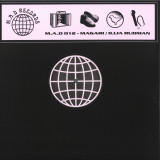
Magari / Ilija Rudman - M.A.D RECORDS 012

MAD012 has arrived! or as we’ve been referring to it the ‘M.A.D Garage’ EP. (as in Paradise Garage)

After receiving Magari and Ilija Rudman’s tracks within a short time of each other it felt like a perfect fit to pair them together. Both productions give a nod to the 80s House sound whilst expertly bringing the aesthetic up to date.

Magari has provided us with an eyes closed dub’d out groover and Rudman supplies a winding and weaving synthesised journey, giving a sonic glimpse in to his fully stocked studio.

It’s always been top of our list to work with the inimitable Mark Seven. His music is a staple of our sets and as many of you know, is somewhat of guiding light of our scene. Any fan of Parkway Records knows it’s always an exciting day when they announce something new, needless to say we are proud to present a Parkway Powermix on M.A.D.

Finally, our good friend, the extremely versatile Producer/DJ Manuel Darquart finishes off the record with a sublime rolling take on ‘Danceteria’. If somehow you didn’t know him already consider yourself informed.

In Stock

On Stock and ready to ship

Various - ECHOES OF ITALY – THE BIRDS OF PARADISE – EARLY 90S HOUSE VIBES VOL.2 (2x12")

Googling “paradise house”, the first results to pop up are an endless list of European b&b’s with whitewashed lime façades, all of them promising “…an unmatched travel experience a few steps from the sea”. Next, a little further down, are the institutional websites of a few select semi-luxury retirement homes (no photos shown, but lots of stock images of smiling nurses with reassuring looks). To find the “paradise house” we’re after, we have to scroll even further down. Much further down.

It feels like yesterday, and at the same time it seems like a million years ago. The Eighties had just ended, and it was still unclear what to expect from the Nineties. Mobile phones that were not the size of a briefcase and did not cost as much as a car? A frightening economic crisis? The guitar-rock revival?! Certainly, the best place to observe that moment of transition was the dancefloor. Truly epochal transformations were happening there. From America, within a short distance one from the other, two revolutionary new musical styles had arrived: the first one sounded a bit like an “on a budget” version of the best Seventies disco-music – Philly sound made with a set of piano-bar keyboards! – the other was even more sparse, futuristic and extraterrestrial. It was a music with a quite distinct “physical” component, which at the same time, to be fully grasped, seemed to call for the knotty theories of certain French post-modern philosophers: Gilles Deleuze, Félix Guattari, Paul Virilio... Both those genres – we would learn shortly after – were born in the black communities of Chicago and Detroit, although listening to those vinyl 12” (often wrapped in generic white covers, and with little indication in the label) you could not easily guess whether behind them there was a black boy from somewhere in the Usa, or a girl from Berlin, or a pale kid from a Cornish coastal town.

Quickly, similar sounds began to show up from all corners of Europe. A thousand variations of the same intuition: leaner, less lean, happier, slightly less intoxicated, more broken, slower, faster, much faster... Boom! From the dancefloors – the London ones at least, whose chronicles we eagerly read every month in the pages of The Face and i-D – came tales of a new generation of clubbers who had completely stopped “dressing up” to go dancing; of hot tempered hooligans bursting into tears and hugging everyone under the strobe lights as the notes of Strings of Life rose up through the fumes of dry ice (certain “smiling” pills were also involved, sure). At this point, however, we must move on to Switzerland.

In Switzerland, in the quiet and diligent town of Lugano, between the 1980s and 1990s there was a club called “Morandi”. Its hot night was on Wednesdays, when the audience also came from Milan, Como, Varese and Zurich. Legend goes that, one night, none less than Prince and Sheila E were spotted hiding among the sofas, on a day-off of the Italian dates of the Nude Tour… The Wednesday resident and superstar was an Italian dj with an exotic name: Don Carlos. The soundtrack he devised was a mixture of Chicago, Detroit, the most progressive R&B and certain forgotten classics of old disco music: practically, what the Paradise Garage in New York might have sounded like had it not closed in 1987. In between, Don Carlos also managed to squeeze in some tracks he had worked on in his studio on Lago Maggiore. One in particular: a track that was rather slow compared to the BPM in fashion at the time, but which was a perfect bridge between house and R&B. The title was Alone: Don Carlos would explain years later that it had to be intended both in the English meaning of “by itself” and like the Italian word meaning “halo”. That wasn’t the only double entendre about the song, anyway. Its own very deep nature was, indeed, double. On the one hand, Alone was built around an angelic keyboard pattern and a romantic piano riff that took you straight to heaven; on the other, it showcased enough electronic squelches (plus a sax part that sounded like it had been dissolved by acid rain) to pigeonhole the tune into the “junk modernity” section, aka the hallmark of all the most innovative sounds of the time: music that sounded like it was hand-crafted from the scraps of glittering overground pop.

No one knows who was the first to call it “paradise house”, nor when it happened. Alternative definitions on the same topic one happened to hear included “ambient house”, “dream house”, “Mediterranean progressive”… but of course none were as good (and alluring) as “paradise house”. What is certain is that such inclination for sounds that were in equal measure angelic and neurotic, romantic and unaffective, quickly became the trademark of the second generation of Italian house. Music that seemed shyly equidistant from all the rhythmic and electronic revolutions that had happened up to that moment (“Music perfectly adept at going nowhere slowly” as noted by English journalist Craig McLean in a legendary field report for Blah Blah Blah magazine). Music that to a inattentive ear might have sounded as anonymous as a snapshot of a random group of passers-by at 10AM in the centre of any major city, but perfectly described the (slow) awakening in the real world after the universal love binge of the so-called Second Summer of Love.

For a brief but unforgettable season, in Italy “paradise house” was the official soundtrack of interminable weekends spent inside the car, darting from one club to another, cutting the peninsula from North to centre, from East to West coast in pursuit of the latest after-hours disco, trading kilometres per hour with beats per minute: practically, a new New Year’s Eve every Friday and Saturday night. This too was no small transformation, as well as a shock for an adult Italy that was encountering for the first time – thanks to its sons and daughters – the wild side of industrial modernity. The clubbers of the so-called “fuoriorario” scene were the balls gone mad in the pinball machine most feared by newspapers, magazines and TV pundits. What they did each and every weekend, apart from going crazy to the sound of the current white labels, was linking distant geographical points and non-places (thank you Marc Augé!) – old dance halls, farmhouses and business centres – transformed for one night into house music heaven. As Marco D’Eramo wrote in his 1995 essay on Chicago, Il maiale e il grattacielo: “Four-wheeled capitalism distorts our age-old image of the city, it allows the suburbs to be connected to each other, whereas before they were connected only by the centre (…) It makes possible a metropolitan area without a metropolis, without a city centre, without downtown. The periphery is no longer a periphery of any centre, but is self-centred”.

“Paradise house” perfectly understood all of this and turned it into a sort of cyber-blues that didn’t even need words, and unexpectedly brought back a drop of melancholic (post?)-humanity within a world that by then – as we would wholly realise in the decades to come – was fully inhuman and heartless. A world where we were all alone, and surrounded by a sinister yellowish halo, like a neon at the end of its life cycle. But, for one night at least, happy."

In Stock

On Stock and ready to ship

Various - ECHOES OF ITALY - ARTISTS IN WONDERLAND – EARLY 90S HOUSE VIBES VOL.1 LP 2x12"

Volume 1 of this expertly curated project of 90s Italian House - put together by Don Carlos.

If Paradise was half as nice… by Fabio De Luca.

Googling “paradise house”, the first results to pop up are an endless list of European b&b’s with whitewashed lime façades, all of them promising “…an unmatched travel experience a few steps from the sea”. Next, a little further down, are the institutional websites of a few select semi-luxury retirement homes (no photos shown, but lots of stock images of smiling nurses with reassuring looks). To find the “paradise house” we’re after, we have to scroll even further down. Much further down.

It feels like yesterday, and at the same time it seems like a million years ago. The Eighties had just ended, and it was still unclear what to expect from the Nineties. Mobile phones that were not the size of a briefcase and did not cost as much as a car? A frightening economic crisis? The guitar-rock revival?! Certainly, the best place to observe that moment of transition was the dancefloor. Truly epochal transformations were happening there. From America, within a short distance one from the other, two revolutionary new musical styles had arrived: the first one sounded a bit like an “on a budget” version of the best Seventies disco-music – Philly sound made with a set of piano-bar keyboards! – the other was even more sparse, futuristic and extraterrestrial. It was a music with a quite distinct “physical” component, which at the same time, to be fully grasped, seemed to call for the knotty theories of certain French post-modern philosophers: Gilles Deleuze, Félix Guattari, Paul Virilio... Both those genres – we would learn shortly after – were born in the black communities of Chicago and Detroit, although listening to those vinyl 12” (often wrapped in generic white covers, and with little indication in the label) you could not easily guess whether behind them there was a black boy from somewhere in the Usa, or a girl from Berlin, or a pale kid from a Cornish coastal town.

Quickly, similar sounds began to show up from all corners of Europe. A thousand variations of the same intuition: leaner, less lean, happier, slightly less intoxicated, more broken, slower, faster, much faster... Boom! From the dancefloors – the London ones at least, whose chronicles we eagerly read every month in the pages of The Face and i-D – came tales of a new generation of clubbers who had completely stopped “dressing up” to go dancing; of hot tempered hooligans bursting into tears and hugging everyone under the strobe lights as the notes of Strings of Life rose up through the fumes of dry ice (certain “smiling” pills were also involved, sure). At this point, however, we must move on to Switzerland.

In Switzerland, in the quiet and diligent town of Lugano, between the 1980s and 1990s there was a club called “Morandi”. Its hot night was on Wednesdays, when the audience also came from Milan, Como, Varese and Zurich. Legend goes that, one night, none less than Prince and Sheila E were spotted hiding among the sofas, on a day-off of the Italian dates of the Nude Tour… The Wednesday resident and superstar was an Italian dj with an exotic name: Don Carlos. The soundtrack he devised was a mixture of Chicago, Detroit, the most progressive R&B and certain forgotten classics of old disco music: practically, what the Paradise Garage in New York might have sounded like had it not closed in 1987. In between, Don Carlos also managed to squeeze in some tracks he had worked on in his studio on Lago Maggiore. One in particular: a track that was rather slow compared to the BPM in fashion at the time, but which was a perfect bridge between house and R&B. The title was Alone: Don Carlos would explain years later that it had to be intended both in the English meaning of “by itself” and like the Italian word meaning “halo”. That wasn’t the only double entendre about the song, anyway. Its own very deep nature was, indeed, double. On the one hand, Alone was built around an angelic keyboard pattern and a romantic piano riff that took you straight to heaven; on the other, it showcased enough electronic squelches (plus a sax part that sounded like it had been dissolved by acid rain) to pigeonhole the tune into the “junk modernity” section, aka the hallmark of all the most innovative sounds of the time: music that sounded like it was hand-crafted from the scraps of glittering overground pop.

No one knows who was the first to call it “paradise house”, nor when it happened. Alternative definitions on the same topic one happened to hear included “ambient house”, “dream house”, “Mediterranean progressive”… but of course none were as good (and alluring) as “paradise house”. What is certain is that such inclination for sounds that were in equal measure angelic and neurotic, romantic and unaffective, quickly became the trademark of the second generation of Italian house. Music that seemed shyly equidistant from all the rhythmic and electronic revolutions that had happened up to that moment (“Music perfectly adept at going nowhere slowly” as noted by English journalist Craig McLean in a legendary field report for Blah Blah Blah magazine). Music that to a inattentive ear might have sounded as anonymous as a snapshot of a random group of passers-by at 10AM in the centre of any major city, but perfectly described the (slow) awakening in the real world after the universal love binge of the so-called Second Summer of Love.

For a brief but unforgettable season, in Italy “paradise house” was the official soundtrack of interminable weekends spent inside the car, darting from one club to another, cutting the peninsula from North to centre, from East to West coast in pursuit of the latest after-hours disco, trading kilometres per hour with beats per minute: practically, a new New Year’s Eve every Friday and Saturday night. This too was no small transformation, as well as a shock for an adult Italy that was encountering for the first time – thanks to its sons and daughters – the wild side of industrial modernity. The clubbers of the so-called “fuoriorario” scene were the balls gone mad in the pinball machine most feared by newspapers, magazines and TV pundits. What they did each and every weekend, apart from going crazy to the sound of the current white labels, was linking distant geographical points and non-places (thank you Marc Augé!) – old dance halls, farmhouses and business centres – transformed for one night into house music heaven. As Marco D’Eramo wrote in his 1995 essay on Chicago, Il maiale e il grattacielo: “Four-wheeled capitalism distorts our age-old image of the city, it allows the suburbs to be connected to each other, whereas before they were connected only by the centre (…) It makes possible a metropolitan area without a metropolis, without a city centre, without downtown. The periphery is no longer a periphery of any centre, but is self-centred”.

“Paradise house” perfectly understood all of this and turned it into a sort of cyber-blues that didn’t even need words, and unexpectedly brought back a drop of melancholic (post?)-humanity within a world that by then – as we would wholly realise in the decades to come – was fully inhuman and heartless. A world where we were all alone, and surrounded by a sinister yellowish halo, like a neon at the end of its life cycle. But, for one night at least, happy.

out of Stock

Order now and we will order the item for you at our supplier.


Last In: 5 months ago
Naomie Klaus - A Story Of A Global Disease

After a crush at the Brussels World Fair in 1900, King Leopold II decided, for his own personal pleasure, to have the Japanese Tower and Japanese Gardens built. In order to create this little relocated Asian paradise, he had the wood, sculptures, paintings, ornaments, trees, workers, and their know-how imported. For a few years, he invited his entourage to enjoy it during large banquets and private receptions. He then had the idea of transforming the Japanese Tower into a luxury restaurant, but he died. This magnificent place remains closed to the public except during an annual opening.

"A Story of a Global Disease" is a short tale about artificial paradises of globalization, a melancholic walk through the exotic relics of free trade, where whim, appropriation, and appearances take precedence over otherness. Here, geishas eat chips, Europeans confuse Tokyo and Beijing, and tribal ceremonies begin with samples and drumkits.

These tracks have been initially recorded for the “ON THE GO” Beursschouwburg’s project in Oct. 2020. It has been originally and properly released on shiny pinky tape by the fantastic Bamboo Shows imprint and includes an unreleased track (Walk With Your Romance).

Naomie Klaus is a young artist from Marseille based in Brussels. In love with performance, constantly flirting with cinema and acting, Naomie seems to conceive her music as a big playground, a free zone of mischief in which she likes to experiment and interpret different identities, different characters. The result is funambulistic, a hybrid and synthetic form of a thousand influences that we can't really characterize: 90' Techno, loud Trip-hop, languid Pop, nonchalant Post-punk, dracular mass... Naomie Klaus doesn't know on which foot to dance and invites us to join a zone of in-between, has fun to plunge us in her strange tales for adults, where the princesses we meet are armed, hysterical, nymphos and badly dressed.

Following a B.F.E proposal to release on a limited vinyl edition, Teenage Menopause from France & Moli Del Tro from Brussels joined the project. Rude66 remastered these gems and Harrisson made the artwork.

pre-order now21.10.2022

expected to be published on 21.10.2022


Last In: 2026 years ago
Various - Heavenly remixes 4 -  Andrew Weatherall volume 2 LP 2x12"

Heavenly Recordings announce the release of ‘Heavenly remixes 3&4 - Andrew Weatherall volume 1&2’, a brace of compilation albums collecting together some of the finest remixes from the label’s long-time friend, collaborator and go-to remixer. These compilations follow ‘Heavenly remixes 1 & 2’, which showcases some of the label’s other great remixes.

 By the time Heavenly was born in the spring of 1990, Andrew Weatherall was already an inspirational sounding board, as well as a fellow traveller on the bright new road that stretched out ahead, thanks to the massive cultural liberation of acid house. Back then every energised meeting could be turned into a fortuitous opportunity in this burgeoning new underground economy. Bored of your job? Start playing records out! Start a club night! Get in the studio!
Start a label! Just don’t stand still. Commandments Andrew would follow for the rest of his life.

 At the start of things, Andrew was a regular visitor to Capersville - the pre-Heavenly press office run by label founder Jeff Barrett (soon to become Andrew’s manager). It was there that he famously picked up a copy of Primal Scream’s unloved second album and singled out a
track that would later become ‘Loaded’, after being given an instruction to “fucking destroy” it by the band’s Andrew Innes; it was there too that the idea to remix the first Heavenly release
came about.

 Andrew’s mix of that first Heavenly record is very much a product of its time. ‘The World According To Sly and Lovechild’ is a swirling bass punch topped with a hypnotic marimba line and the kind of ecstatic diva vocal that you’d hear coming out of the speakers all night at postShoom clubs like Yellow Book.

 His take on the label’s next release - Saint Etienne’s ‘Only Love Can Break Your Heart (A Mix of Two Halves’) - would set the template for his next three decades of audio exploration. A drawn-out imperial dub, the track builds and builds with a moody intensity (partly down to the
melodica played by Weather Prophets legend Pete Astor) that’s far more Kingston JA at dusk than Kingston-upon-Thames at kicking out time. It’s both a dancefloor record to get lost in and
headphone psychedelia of the highest order - a perfect example of what he did better than anyone else.

 Between 1990 and his untimely death in 2020, Andrew fed more Heavenly bands through the mixing desk than those of any other label. Consistently, he returned visionary music to the
office, often in person for (at least) one ceremonial playback - a ritual that would involve the volume cranked up high and Andrew rocking back on his heels, eyes closed, lost in the alchemy of it all.

 Each time, he would warp and twist originals into beautiful new shapes - elasticated club records that might evoke Detroit techno one second and Throbbing Gristle the next, before wheel-spinning into something akin to The Fall produced by King Tubby.

 Andrew’s studio adventures would always be guided by that early advice to destroy the source material. It’s why he was the first name that came up when remixes were discussed; the first number on the speed dial. Listening back to these remixes now - to thirty years of glorious outsider sounds - it bangs home again just how fucking good Andrew was.

out of Stock

Order now and we will order the item for you at our supplier.


Last In: 3 years ago
Monchan - NEWYORK HOUSE EDITS VOL.2

The series 2 of NewYork House Edits. Monchan edited 90's NY Garage House from the legendary record label & Shop "Vinylmania".
“Vinylmania" Owner Charlie Grappone opened the Vinylmania’s doors in 1978. He opened the store with a sparse selection of Rock records
but after crowds from the Paradise Garage started showing up he realized his market was with the house heads. Vinylmania quickly became the goto spot for house in NYC eventually spawning a record label under the same name and it’s legacy began. Sadly Vinylmania closed its doors in 2007 after almost 3 decades of business.

out of Stock

Order now and we will order the item for you at our supplier.


Last In: 5 years ago
Ella Haber - Clay

Ella Haber

Clay

12inchSHNT7
Soul Has No Tempo
13.05.2019

The only woman featured on Worldwide FM's Sydney broadcast, and having recently produced her first old out all-female showcase featuring musicians, visual artists, poets and DJs, 20-year-old Ella Haber has worked toward her debut for 15 years.

Shocked by a hushed crowd reaction at her first public performance, Ella's realisation her voice could halt and occupy an audience's thoughts bleeds into all aspects of her life. With early demos of her debut EP, CLAY, reaching the ears of Brisbane-raised, London-based musician Jordan Rakei, the recent Ninja Tune signee - impressed with her vibrant songwriting and compositions - lent his production chops to the project, arranging and recording live instrumentation at Old Paradise Audio in London, while Ella worked on vocal recordings in Sydney.

'Ella's timeless vocals and mature songwriting sensibility was the reason I wanted to work with her on this project. In a climate where artists often take shortcuts, Ella's determination and strong vision will make her stand out from the rest. It was a pleasure bringing her songwriting to life and I can't wait for the world to hear her music!' - Jordan Rakei

A multi-lingual multi-instrumentalist deftly weaving her songwriting prowess with trumpet, piano, spoken word, fresh lyricism and powerful jazz/soul performance, Ella's ease within music is in stark contrast to her feeling for every other established structure. Set to release her debut single, Old Friends, written when Haber was only 17, she reflects on the impact Amy Winehouse's debut album, Frank, had on her songwriting: 'I had been writing music since I was a kid, but listening to Frank just gave me permission to write about love and all its pains and confusions in this way of transparency and brutal honesty I never had before. Old Friends was actually the first track I wrote from the EP, and, the first song I ever really felt proud of'

In a genre, and society, where identity is increasingly scrutinised, Ella Haber resists, comfortable only in the confines of music composition. Challenging, with full colour love and intelligence, she's not letting anyone off lightly. Her debut EP, CLAY, is out April 26 via Soul Has No Tempo.

out of Stock

Order now and we will order the item for you at our supplier.


Last In: 6 years ago
  • 1
Items per Page:
N/ABPM
Vinyl