
disponibile anche
pre-ordina ora02.08.2024
dovrebbe essere pubblicato su 02.08.2024
dovrebbe essere pubblicato su 02.08.2024

dovrebbe essere pubblicato su 02.08.2024

dovrebbe essere pubblicato su 28.07.2023
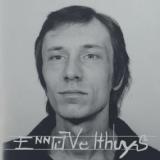
A collection of previously unreleased material (between '75 & '90) by Enno Velthuys.
Compiled by Hessel Veldman.
"Hello boys and girls, my name is Enno Velthuys and I am the idiot of the group (and also the
most intelligent, the most sensitive, the most artistic and he who has to carry the heaviest
load, because this boy's luggage, DAMN, it's pretty heavy).
Luckily, I had already been through a lot when I got this ‘knock in the head’. Sex, drugs, lots
of rock and roll and a sunny childhood with beautiful views I look back on with nostalgia.
Later on I lost my focus and I only thought about one thing: how to get out of it (that damn
problem, my shifted reality, my blind spot, that piece of poisoned apple of forbidden
knowledge choking my throat)!
But I can't think my way out of it, psychiatrists are just ordinary people, and very heavy pills
suppress everything (I'll just take my pills) FLASH!
You ask me what it takes to create music or art that is meaningful and tells a story. It’s hard
when you haven't had enough setbacks, nothing more than maybe a little blues. I'm not
saying it was the right path, but at least I've come a long way. And now I'm a fish in a pool.
Please understand that this is very disturbing. It's not my waterway. A fish belongs in a river.
And my star sign is fish. >))D
See you soon, EnnO"
Questo articolo non è stato ancora rilasciato. È possibile pre-ordinare il prodotto ora.

The extroverted blend of attitude, energy, and ostentatiousness that spills from the New York Dolls’ self-titled debut can be seen in full view on the album cover. Depicting the quintet in its hallmark flash-and-trash apparel and in drag appearance, the 1973 album scared away a considerable amount of potential listeners while capturing the attention of a sizable audience that recognized the band for what it was: zeitgeist pioneers who helped develop the punk and glam rock movements.
Named by Rolling Stone the 301st Greatest Album of All Time and by Mojo the 49th greatest album of all time, New York Dolls receives long-overdue audiophile treatment on Mobile Fidelity’s numbered-edition 180g 45RPM 2LP set. Sourced from the original master tapes, pressed at Fidelity Record Pressing in California, and housed in a Stoughton gatefold jacket, this collectible version marks the first time the group’s career-making statement is available to be experienced in audiophile quality.
Far from harboring the crude elements that became associated with the punk scene, New York Dolls benefits from keen production overseen by none other than Todd Rundgren. Though more accustomed to working far higher-caliber musicians, Rundgren — taken by the New York Dolls’ charisma and cool, if not their instrumental approach — fully understood the ensemble’s aesthetic. He captured what went down at New York City’s Record Plant with an astute blend of live-on-the-floor feel, raw authenticity, and professional acumen.
On Mobile Fidelity’s definitive-sounding reissue, you can hear those facets as well as key details, dynamics, and textures with previously unimaginable insight. Rundgren preserved generous degrees of grit, grime, and grease while bestowing the raucous music with elevated levels of separation, solidity, and impact every landmark recording deserves. His vision extends to introducing choice accents — barroom piano notes, Moog synthesizer passages, Buddy Bowser’s honking saxophones — that add to the songs’ appeal without interfering with the primary architecture.
Afforded extra groove space on this pressing, the tenor, presentation, and attack of both vocalist David Johansen and now-iconic guitarists Johnny Thunders and Sylvain Sylvain come across with stunning vibrancy and vitality. The New York Dolls often seem headed off the rails and into the red, but somehow, the strut, swagger, and sloppiness — and the associated sleaze and scruff, scrape and snarl, frenzy and feverishness those characteristics entail — remain together as a whole that shakes its collective fist at the frustrations, isolation, disarray, and disillusionment of youth chaos and urban decay.
Kicking off its debut with “Personality Crisis,” cited by Rolling Stone as one of the 500 Greatest Songs of All Time, the band makes obvious its grasp of alienation, deviance, displacement, and suburban disaffection — as well as its capacity to play hanging-by-a-thread boogie, noisy rock ‘n’ roll, and Brill Building-inspired pop. The lipstick-kissed New York Dolls possesses traits many of its harsher predecessors would overlook: joyfulness and melody, topped with a knack for knowing how and where to take a song inside of three-and-a-half minutes.
Dive and dash with the belligerent “Looking for a Kiss”; stomp your feet and clap your hands to the big choruses of “Jet Boy”; surrender to the demands and provocations of the coded “Vietnamese Baby”; decide whether “Bad Girl” yearns to explode or implode. It’s one of several tunes here that allude to the world coming to end. Of course, that doesn’t mean there isn’t time for a fling before everything burns. “There’s no place I gotta go,” yowls Johansen. And he means it.
Adorned with tonal crunch, glitter, and gristle, New York Dolls takes pride in its brashness and brattiness. The rambunctious effort, which earned the band the distinction of being voted both “Best New Group of the Year” and “Worst New Group of the Year” in the pages of Creem, displays knowing reverence for the blues without calling attention to the style. The folk-laden “Lonely Planet Boy” is nothing if not a collision of heart-on-the-sleeve emotions and the desire in the face of challenges to maintain a tough-skinned exterior. An interpretation of Bo Diddley’s “Pills,” complete with shivering harmonica and clattering rhythms, announces there’s no cure for what infects this band. It’s that contagious. And how.
His deliveries gushing with campy fun, playful irreverence, and sheer decadence, Johansen doubles as the equivalent of an open fire hydrant that spouts at will. He’s at once tender and vicious, serious and tongue-in-cheek. On arguably his finest hour on the album, Johansen’s phrasing, passion, and lyrical ambiguity alone turn “Trash” into an insistent glam-rock gem whose echoing harmonies and girl-group references stamp it a pop classic.
Too much, too soon? Only for those averse to some of the finest rock ‘n’ roll ever put on tape.
dovrebbe essere pubblicato su 31.07.2025
dovrebbe essere pubblicato su 16.05.2025

Googling “paradise house”, the first results to pop up are an endless list of European b&b’s with whitewashed lime façades, all of them promising “…an unmatched travel experience a few steps from the sea”. Next, a little further down, are the institutional websites of a few select semi-luxury retirement homes (no photos shown, but lots of stock images of smiling nurses with reassuring looks). To find the “paradise house” we’re after, we have to scroll even further down. Much further down.
It feels like yesterday, and at the same time it seems like a million years ago. The Eighties had just ended, and it was still unclear what to expect from the Nineties. Mobile phones that were not the size of a briefcase and did not cost as much as a car? A frightening economic crisis? The guitar-rock revival?! Certainly, the best place to observe that moment of transition was the dancefloor. Truly epochal transformations were happening there. From America, within a short distance one from the other, two revolutionary new musical styles had arrived: the first one sounded a bit like an “on a budget” version of the best Seventies disco-music – Philly sound made with a set of piano-bar keyboards! – the other was even more sparse, futuristic and extraterrestrial. It was a music with a quite distinct “physical” component, which at the same time, to be fully grasped, seemed to call for the knotty theories of certain French post-modern philosophers: Gilles Deleuze, Félix Guattari, Paul Virilio... Both those genres – we would learn shortly after – were born in the black communities of Chicago and Detroit, although listening to those vinyl 12” (often wrapped in generic white covers, and with little indication in the label) you could not easily guess whether behind them there was a black boy from somewhere in the Usa, or a girl from Berlin, or a pale kid from a Cornish coastal town.
Quickly, similar sounds began to show up from all corners of Europe. A thousand variations of the same intuition: leaner, less lean, happier, slightly less intoxicated, more broken, slower, faster, much faster... Boom! From the dancefloors – the London ones at least, whose chronicles we eagerly read every month in the pages of The Face and i-D – came tales of a new generation of clubbers who had completely stopped “dressing up” to go dancing; of hot tempered hooligans bursting into tears and hugging everyone under the strobe lights as the notes of Strings of Life rose up through the fumes of dry ice (certain “smiling” pills were also involved, sure). At this point, however, we must move on to Switzerland.
In Switzerland, in the quiet and diligent town of Lugano, between the 1980s and 1990s there was a club called “Morandi”. Its hot night was on Wednesdays, when the audience also came from Milan, Como, Varese and Zurich. Legend goes that, one night, none less than Prince and Sheila E were spotted hiding among the sofas, on a day-off of the Italian dates of the Nude Tour… The Wednesday resident and superstar was an Italian dj with an exotic name: Don Carlos. The soundtrack he devised was a mixture of Chicago, Detroit, the most progressive R&B and certain forgotten classics of old disco music: practically, what the Paradise Garage in New York might have sounded like had it not closed in 1987. In between, Don Carlos also managed to squeeze in some tracks he had worked on in his studio on Lago Maggiore. One in particular: a track that was rather slow compared to the BPM in fashion at the time, but which was a perfect bridge between house and R&B. The title was Alone: Don Carlos would explain years later that it had to be intended both in the English meaning of “by itself” and like the Italian word meaning “halo”. That wasn’t the only double entendre about the song, anyway. Its own very deep nature was, indeed, double. On the one hand, Alone was built around an angelic keyboard pattern and a romantic piano riff that took you straight to heaven; on the other, it showcased enough electronic squelches (plus a sax part that sounded like it had been dissolved by acid rain) to pigeonhole the tune into the “junk modernity” section, aka the hallmark of all the most innovative sounds of the time: music that sounded like it was hand-crafted from the scraps of glittering overground pop.
No one knows who was the first to call it “paradise house”, nor when it happened. Alternative definitions on the same topic one happened to hear included “ambient house”, “dream house”, “Mediterranean progressive”… but of course none were as good (and alluring) as “paradise house”. What is certain is that such inclination for sounds that were in equal measure angelic and neurotic, romantic and unaffective, quickly became the trademark of the second generation of Italian house. Music that seemed shyly equidistant from all the rhythmic and electronic revolutions that had happened up to that moment (“Music perfectly adept at going nowhere slowly” as noted by English journalist Craig McLean in a legendary field report for Blah Blah Blah magazine). Music that to a inattentive ear might have sounded as anonymous as a snapshot of a random group of passers-by at 10AM in the centre of any major city, but perfectly described the (slow) awakening in the real world after the universal love binge of the so-called Second Summer of Love.
For a brief but unforgettable season, in Italy “paradise house” was the official soundtrack of interminable weekends spent inside the car, darting from one club to another, cutting the peninsula from North to centre, from East to West coast in pursuit of the latest after-hours disco, trading kilometres per hour with beats per minute: practically, a new New Year’s Eve every Friday and Saturday night. This too was no small transformation, as well as a shock for an adult Italy that was encountering for the first time – thanks to its sons and daughters – the wild side of industrial modernity. The clubbers of the so-called “fuoriorario” scene were the balls gone mad in the pinball machine most feared by newspapers, magazines and TV pundits. What they did each and every weekend, apart from going crazy to the sound of the current white labels, was linking distant geographical points and non-places (thank you Marc Augé!) – old dance halls, farmhouses and business centres – transformed for one night into house music heaven. As Marco D’Eramo wrote in his 1995 essay on Chicago, Il maiale e il grattacielo: “Four-wheeled capitalism distorts our age-old image of the city, it allows the suburbs to be connected to each other, whereas before they were connected only by the centre (…) It makes possible a metropolitan area without a metropolis, without a city centre, without downtown. The periphery is no longer a periphery of any centre, but is self-centred”.
“Paradise house” perfectly understood all of this and turned it into a sort of cyber-blues that didn’t even need words, and unexpectedly brought back a drop of melancholic (post?)-humanity within a world that by then – as we would wholly realise in the decades to come – was fully inhuman and heartless. A world where we were all alone, and surrounded by a sinister yellowish halo, like a neon at the end of its life cycle. But, for one night at least, happy."
Ordina ora e ordineremo l'articolo per te presso il nostro fornitore.

Volume 1 of this expertly curated project of 90s Italian House - put together by Don Carlos.
If Paradise was half as nice… by Fabio De Luca.
Googling “paradise house”, the first results to pop up are an endless list of European b&b’s with whitewashed lime façades, all of them promising “…an unmatched travel experience a few steps from the sea”. Next, a little further down, are the institutional websites of a few select semi-luxury retirement homes (no photos shown, but lots of stock images of smiling nurses with reassuring looks). To find the “paradise house” we’re after, we have to scroll even further down. Much further down.
It feels like yesterday, and at the same time it seems like a million years ago. The Eighties had just ended, and it was still unclear what to expect from the Nineties. Mobile phones that were not the size of a briefcase and did not cost as much as a car? A frightening economic crisis? The guitar-rock revival?! Certainly, the best place to observe that moment of transition was the dancefloor. Truly epochal transformations were happening there. From America, within a short distance one from the other, two revolutionary new musical styles had arrived: the first one sounded a bit like an “on a budget” version of the best Seventies disco-music – Philly sound made with a set of piano-bar keyboards! – the other was even more sparse, futuristic and extraterrestrial. It was a music with a quite distinct “physical” component, which at the same time, to be fully grasped, seemed to call for the knotty theories of certain French post-modern philosophers: Gilles Deleuze, Félix Guattari, Paul Virilio... Both those genres – we would learn shortly after – were born in the black communities of Chicago and Detroit, although listening to those vinyl 12” (often wrapped in generic white covers, and with little indication in the label) you could not easily guess whether behind them there was a black boy from somewhere in the Usa, or a girl from Berlin, or a pale kid from a Cornish coastal town.
Quickly, similar sounds began to show up from all corners of Europe. A thousand variations of the same intuition: leaner, less lean, happier, slightly less intoxicated, more broken, slower, faster, much faster... Boom! From the dancefloors – the London ones at least, whose chronicles we eagerly read every month in the pages of The Face and i-D – came tales of a new generation of clubbers who had completely stopped “dressing up” to go dancing; of hot tempered hooligans bursting into tears and hugging everyone under the strobe lights as the notes of Strings of Life rose up through the fumes of dry ice (certain “smiling” pills were also involved, sure). At this point, however, we must move on to Switzerland.
In Switzerland, in the quiet and diligent town of Lugano, between the 1980s and 1990s there was a club called “Morandi”. Its hot night was on Wednesdays, when the audience also came from Milan, Como, Varese and Zurich. Legend goes that, one night, none less than Prince and Sheila E were spotted hiding among the sofas, on a day-off of the Italian dates of the Nude Tour… The Wednesday resident and superstar was an Italian dj with an exotic name: Don Carlos. The soundtrack he devised was a mixture of Chicago, Detroit, the most progressive R&B and certain forgotten classics of old disco music: practically, what the Paradise Garage in New York might have sounded like had it not closed in 1987. In between, Don Carlos also managed to squeeze in some tracks he had worked on in his studio on Lago Maggiore. One in particular: a track that was rather slow compared to the BPM in fashion at the time, but which was a perfect bridge between house and R&B. The title was Alone: Don Carlos would explain years later that it had to be intended both in the English meaning of “by itself” and like the Italian word meaning “halo”. That wasn’t the only double entendre about the song, anyway. Its own very deep nature was, indeed, double. On the one hand, Alone was built around an angelic keyboard pattern and a romantic piano riff that took you straight to heaven; on the other, it showcased enough electronic squelches (plus a sax part that sounded like it had been dissolved by acid rain) to pigeonhole the tune into the “junk modernity” section, aka the hallmark of all the most innovative sounds of the time: music that sounded like it was hand-crafted from the scraps of glittering overground pop.
No one knows who was the first to call it “paradise house”, nor when it happened. Alternative definitions on the same topic one happened to hear included “ambient house”, “dream house”, “Mediterranean progressive”… but of course none were as good (and alluring) as “paradise house”. What is certain is that such inclination for sounds that were in equal measure angelic and neurotic, romantic and unaffective, quickly became the trademark of the second generation of Italian house. Music that seemed shyly equidistant from all the rhythmic and electronic revolutions that had happened up to that moment (“Music perfectly adept at going nowhere slowly” as noted by English journalist Craig McLean in a legendary field report for Blah Blah Blah magazine). Music that to a inattentive ear might have sounded as anonymous as a snapshot of a random group of passers-by at 10AM in the centre of any major city, but perfectly described the (slow) awakening in the real world after the universal love binge of the so-called Second Summer of Love.
For a brief but unforgettable season, in Italy “paradise house” was the official soundtrack of interminable weekends spent inside the car, darting from one club to another, cutting the peninsula from North to centre, from East to West coast in pursuit of the latest after-hours disco, trading kilometres per hour with beats per minute: practically, a new New Year’s Eve every Friday and Saturday night. This too was no small transformation, as well as a shock for an adult Italy that was encountering for the first time – thanks to its sons and daughters – the wild side of industrial modernity. The clubbers of the so-called “fuoriorario” scene were the balls gone mad in the pinball machine most feared by newspapers, magazines and TV pundits. What they did each and every weekend, apart from going crazy to the sound of the current white labels, was linking distant geographical points and non-places (thank you Marc Augé!) – old dance halls, farmhouses and business centres – transformed for one night into house music heaven. As Marco D’Eramo wrote in his 1995 essay on Chicago, Il maiale e il grattacielo: “Four-wheeled capitalism distorts our age-old image of the city, it allows the suburbs to be connected to each other, whereas before they were connected only by the centre (…) It makes possible a metropolitan area without a metropolis, without a city centre, without downtown. The periphery is no longer a periphery of any centre, but is self-centred”.
“Paradise house” perfectly understood all of this and turned it into a sort of cyber-blues that didn’t even need words, and unexpectedly brought back a drop of melancholic (post?)-humanity within a world that by then – as we would wholly realise in the decades to come – was fully inhuman and heartless. A world where we were all alone, and surrounded by a sinister yellowish halo, like a neon at the end of its life cycle. But, for one night at least, happy.
Ordina ora e ordineremo l'articolo per te presso il nostro fornitore.

”Road Runner” is the debut album by Gothenburg, Sweden’s Upploppet. A perfect mix between punk and rock, this electrifying 10 track studio recorded release pays homage to the old punk and rock ‘n’ roll legends while at the same time embracing the new. Upploppet injects a vibrant and youthful energy into their performance resulting in a release that’s equal parts fresh and vintage sounding. Filled to the brim with fast paced, guitar-driven tracks, ”Road Runner” is an 28 minute minute, hard hitting explosion that is destined please the rock-yearning ears of any fan of Turbonegro, The Sonics, Gluecifer, The Hellacopters, and New Bomb Turks, and other high octane acts. ”Road Runner” was recorded at Welfare Sounds. The album is produced, recorded, and mixed by Per Stålberg (Division of Laura Lee, Pablo Matisse) and Pontus Robertsson. Mastered by Hans Olsson Brookes (Bombus, Spiders, Graveyard, Blues Pills) in Svenska Grammofonstudion. ”Road Runner” is released by The Sign Records on vinyl and digital formats.
"Road Runner" by Upploppet includes the following tracks: "I Want To Love You", "Ibuprofen", "Thinking of me ", "Bombay Boogie" and more.
This version of the album comes as a 1LP on transparent red vinyl.
dovrebbe essere pubblicato su 12.04.2024

The 1st album released in August 2021 attracted attention in the overseas scene, and labels from various countries such as Italy, Argentina, US and Poland. More release realized. Only half a year after that, they completed the remarkable 2nd album. Based on the royal road doom sound and the music with the blues feeling derived from 70's, the band ensemble with more euphoric feeling gets a lot of attention. A full lineup of songs such as "Devastator", which freely grooves from a side-beating beat to double bass, and "Agua De Vida", which enhances smoke and trip feeling under the direction of Mr. Okazaki. In the mellow "Underneath the Sky" and "Running In my Vein", the taste that has withered moderately is impressive. With the help of an effectively crafted album composition, it can be argued that they have reached the next level in this work. Don't miss the further leap of "Tokyo samurai doom" !!
dovrebbe essere pubblicato su 02.06.2023

Clear Vinyl
Clear Vinyl. Limitiert auf 300 Exemplare. Classic Rock, Vintage Rock oder Retro-Rock. Wie auch immer man diese bluesige, gelegentlich psychedelische, von den großen Acts der späten Sixties und Seventies inspirierte Variante des Hardrocks nennen will: Die besten Vertreter des Sujets kommen seit jeher aus dem Norden Europas. Je weiter nördlich ihr Ursprung, desto besser sind sie - so scheint es. Und viel nördlicher als Tromso, die über 300 Kilometer jenseits des Polarkreises gelegene Heimatstadt der Norweger Pristine, geht es kaum _ Pristine sind eine der begeisterndsten und überzeugendsten Live-Bands des Genres. Die Gruppe hat bereits Hunderte von Konzerten absolviert - von intimen Club-Shows bis hin zu Slots im Rahmen der großen Festivals auf unserem Kontinent. Heidi freut sich darauf, nun mit dem neuen Pristine-Album THE LINES WE CROSS endlich wieder auf Tournee gehen zu können. "Wir hatten im letzten Jahr eine Handvoll kleinerer Shows in Norwegen gespielt, als dies für kurze Zeit wieder möglich war. Die Regierung hatte alle Restriktionen aufgehoben, bevor dann die Omikron-Welle kam und alles erneut vorbei war. Diese viel zu wenigen Abende waren wundervoll für uns, aber offenbar ebenso für die Fans. Man merkte förmlich, wie ausgehungert beide Seiten nach Live-Musik waren. Es fühlte sich fast so an wie damals, als wir die Band starteten und unsere ersten Konzerte gaben." Damals war 2006: Heidi besuchte das Musikkonservatorium in Tromso, wo sie Gesang studierte, als sie die erste Inkarnation von Pristine aus der Taufe hob. Nach einigen Jahren der Sound- und Mitglieder-Findung sowie zwei exklusiv in Norwegen veröffentlichten Alben startete die Band 2016 mit REBOOT international durch. Es folgten ausführliche Europa-Konzertreisen mit stilistisch ähnlich gesinnten Acts wie The Brew und Blues Pills. Bereits im Jahr darauf legten Pristine mit NINJA nach und 2019 konnten die Skandinavier dank ROAD BACK TO RUIN erstmals die deutschen Album-Charts knacken. Mit THE LINES WE CROSS kommt Anfang 2023 nun Album Nummer sechs auf uns zu.
dovrebbe essere pubblicato su 27.01.2023

Clear Vinyl. Limitiert auf 300 Exemplare. Classic Rock, Vintage Rock oder Retro-Rock. Wie auch immer man diese bluesige, gelegentlich psychedelische, von den großen Acts der späten Sixties und Seventies inspirierte Variante des Hardrocks nennen will: Die besten Vertreter des Sujets kommen seit jeher aus dem Norden Europas. Je weiter nördlich ihr Ursprung, desto besser sind sie - so scheint es. Und viel nördlicher als Tromso, die über 300 Kilometer jenseits des Polarkreises gelegene Heimatstadt der Norweger Pristine, geht es kaum _ Pristine sind eine der begeisterndsten und überzeugendsten Live-Bands des Genres. Die Gruppe hat bereits Hunderte von Konzerten absolviert - von intimen Club-Shows bis hin zu Slots im Rahmen der großen Festivals auf unserem Kontinent. Heidi freut sich darauf, nun mit dem neuen Pristine-Album THE LINES WE CROSS endlich wieder auf Tournee gehen zu können. "Wir hatten im letzten Jahr eine Handvoll kleinerer Shows in Norwegen gespielt, als dies für kurze Zeit wieder möglich war. Die Regierung hatte alle Restriktionen aufgehoben, bevor dann die Omikron-Welle kam und alles erneut vorbei war. Diese viel zu wenigen Abende waren wundervoll für uns, aber offenbar ebenso für die Fans. Man merkte förmlich, wie ausgehungert beide Seiten nach Live-Musik waren. Es fühlte sich fast so an wie damals, als wir die Band starteten und unsere ersten Konzerte gaben." Damals war 2006: Heidi besuchte das Musikkonservatorium in Tromso, wo sie Gesang studierte, als sie die erste Inkarnation von Pristine aus der Taufe hob. Nach einigen Jahren der Sound- und Mitglieder-Findung sowie zwei exklusiv in Norwegen veröffentlichten Alben startete die Band 2016 mit REBOOT international durch. Es folgten ausführliche Europa-Konzertreisen mit stilistisch ähnlich gesinnten Acts wie The Brew und Blues Pills. Bereits im Jahr darauf legten Pristine mit NINJA nach und 2019 konnten die Skandinavier dank ROAD BACK TO RUIN erstmals die deutschen Album-Charts knacken. Mit THE LINES WE CROSS kommt Anfang 2023 nun Album Nummer sechs auf uns zu.
dovrebbe essere pubblicato su 27.01.2023

Since 2013 Jail Job Eve has become an indispensable part of the German
rockstages - Whether festival stage, live club or rustic rockmusic venue -
for more than eight years now the five musicians from Osnabrueck,
Germany, have been playing their way across the country
After their first release "Bird of Passage" in 2015, the band signed a contract with
MiG - music in 2018, the label that, among other things, distributes the legendary
"Rockpalast" recordings of the German TV- and radio-station WDR and with bands
such as Siena Root, Br selmaschine and Wucan, the label has signed in the field
of retro rock under contract.Jail Job Eve's album "The Misson" received
recommended reviews in the music press throughout Europe, and the band thus
earned the reputation: "the hope of the national blues rock scene" (eclipsed
Magazine, Germany).With their upcoming release "Wildfire", Jail Job Eve is once
again setting new standards. The album, recorded entirely live, confirms the band
as a finely balanced rock machinery. The music is much harder, more
experimental and coarser, while the lyrics deal offensively and aggressively with
the most important ideological issues of our time, such as climate change,
sexism, LGBTQ + rights or the responsibility of art and culture as a mirror of
society and an instrument of peaceful protest. For example, the first single "Lost"
is a song about female empowerment and therefore an energetic, feminist
statement to sing along to.The band's audible role models include Rival Sons,
Blues Pills, Greta Van Fleet, but also the classic rockers of Deep Purple or the
omnipresent ubiquitous instance Led Zeppelin. The clearest fist in the face of the
listeners still is Victoria Semel, who virtuously puts her heart and soul into her
singing. Benedikt Schlereth, who plays his way through the album with his
distinctive guitar sound coined by the grand repertoire of rock history, Jens
Niemann, who lets his Hammond wobble sonorously and suffer shriekingly, as
well as Tim Beckers on bass and Josef R hner on drums, who create fulminant,
cast-iron floors under their bandmates
dovrebbe essere pubblicato su 13.01.2023

Highly topical with their upcoming sophomore full-length album, "Peace
And Conflict", through The Sign Records
- Reissue of the critically acclaimed self-titled debut album, from 2019.Produced
by Ola Ersfjord (Lucifer, Primordial, Dead Lord). - The album got massively hyped
worlwide, taking the band all over Europe in three separate head-line tours around
France, Germany, Spain, Switzerland and Sweden. - Sweden Rock Magazine,
Sweden's leading Rock magazine described the album as - "Glowingly performed
and with a clear direction towards future great deeds. You can't ask for more from
this fully- fledged debut album" - The vinyl reissue is pressed on Black/ White
Splatter vinyl, and Purple vinyl, each limited to 500 copies. - For fans of early
Rush, Thin Lizzy, Spiders, Blues Pills, Graveyard, MaidaVale, and Swedish Rock!
dovrebbe essere pubblicato su 13.01.2023

Since their debut in 2017 and the highly acclaimed
latest album ‘No God? No Problem’ (released in
2019,’ Detroit freak rockers The Lucid Furs have
performed over 100 out of state shows, invading
music venues to wash minds with their heavy
blues rock concoctions.
The band‘s live performances build up with a big,
head bang energy, winding down to sultry blues,
then blasting back into hard rock with a dash of
funk you can’t help but dance to.
Their new album won’t make any exception. The
band’s heavily grooving talent and soul of the
blues is immediately evident, driven by a vibrant
70’s vintage vibe.
Their songs embody a culmination of each
member’s early influences, ranging from rock
classics like Alice Cooper and Heart, to Chicago
blues like Howlin’ Wolf and Buddy Guy, to the era
of alternative rock groups like Soundgarden and
Queens Of The Stone Age.
For fans of All Them Witches, Janis Joplin, Led
Zeppelin, Rival Sons, Cream, Queens Of The
Stone Age, Jefferson Airplane, Blues Pills.
Red coloured vinyl LP.
dovrebbe essere pubblicato su 18.02.2022

Controversial glam act New York Dolls were the epitome of rock ‘n’ roll excess, prefacing
the rough edges of punk. Formed in late 1971 and initially known as Actress, the earliest
incarnation featured bassist Arthur Kane, guitarist Rick Rivets and the guitarist that would
become Johnny Thunders, with drummer Billy Murcia and singer David Johansen; soon,
Rivets was replaced by Egyptian-born Sylvain Sylvain. Decked out in androgynous clothing,
including platform boots, lipstick and body stockings, The Dolls toured England in 1972,
which was ruptured by Murcia’s tragic alcohol-and-drugs-related death, bringing Jerry Nolan
into the group. Signing to Mercury, they issued a self-titled debut, followed by Too Much Too
Soon, but disappointing sales saw Mercury drop them. Live At Radio Luxembourg was
recorded in December 1973 and features hot live versions of songs from these two seminal
studio albums; with plenty of banter delivered in cod-French accents between the tracks, the
set reveals the group in their prime, their no-limits attitude taking the form of raucous guitar
riffs, shouted vocals, crashing drums and driving bass, and in addition to classic Dolls like
“Puss N Boots” and “Jet Boy,” there are some blues references too.
dovrebbe essere pubblicato su 06.04.2021
