pré-commande03.07.2026
il devrait être publié sur 03.07.2026
il devrait être publié sur 03.07.2026

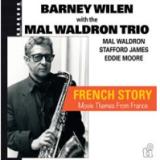
Recorded in 1957, Paris.
Original LP issue: Guilde du Jazz J-1239.
When Miles Davis heard Barney Wilen for the first time during a jam session at the Club Saint-Germain in Paris, he exclaimed: “This is the best tenor saxophone I’ve heard in Europe, he plays tenor in an authentic way, much better than many current stars in the States.”
Barney Wilen’s mother was French, his father a successful American dentist-turned-inventor. He grew up mostly on the French Riviera; the family left during World War II but returned upon its conclusion. According to Wilen himself, he was convinced to become a musician by his mother’s friend, the poet Blaise Cendrars. As a teenager he started a youth jazz club in Nice, where he played often.
He moved to Paris in the mid-’50s and worked with such American musicians as Bud Powell, Benny Golson, Miles Davis, and J.J. Johnson at the Club St. Germain. His emerging reputation received a boost in 1957 when he played with Davis on the soundtrack to the Louis Malle film Lift to the Scaffold. Two years later, he performed with Art Blakey and Thelonious Monk on the soundtrack to Roger Vadim’s Les Liaisons Dangereuses (1960). He’s probably the first non-US musician to play at the Newport Jazz Festival – it was in 1959.
In 1957 he made his very first album as leader, The Barney Wilen Quintet for the US label Guilde du Jazz / Jazztone at the age of 20. Unfortunately, this record was not widely distributed in France because Barney was under contract with the French label Vogue. This album reflects joy and sadness on an emotional level by the subtletly of Wilen’s musical imagination and physical releasing the essential siprit of jazz swing. On this so rare record, Barney plays with : on alto Hubert Fol, who recorded couple of times with Django Reinhardt. On Piano Nico Buninck, born in Amsterdam, is considered one of the best Young pianist in his country. Lloyd Thompson is a Young talented bassist who played with Lester Young, Dizzy Gillespie and Kenny Clarke. On drums Al Levitt, 25, has already toured in the USA with Charles Mingus, Lennie Tristano, Stan Getz and Lee Konitz.
il devrait être publié sur 22.03.2024

il devrait être publié sur 21.10.2022

il devrait être publié sur 20.03.2022

In 1970 Barney Wilen assembled a team of filmmakers, technicians and musicians to travel to Africa for the purpose of recordi ng the music of the native pygmy tribes. Upon returning to Paris two years later, he created Moshi, a dark, eccentric effort fusing avantjazz sensibilities with African rhythms, ambient sound effects and melodies rootedin American blues traditions. Cut withFrench and African players including guitarist Pierre Chaze, pianist Michel Graillier and percussionist Didier Leon , this is music with few precedents or followers, spanning from extraterrestrial dissonance to earthbound, streetlegal funk. Wilen pays little heed to conventional structure, assembling tracks like "Afrika Freak Out" and "Zombizar" from spare parts of inde terminate origins. (Jason Ankeny, AMG)
Revelatory reissue of Barney Wilen’s ambitious jazz-fusion journey, Moshi (1972), presenting the legendary French jazzman and Miles Davis-sideman’s wildly ambitious effort fusing recordings of Pygmy tribes with African rhythms and stellar avantjazz leanings, sounding little like anything before or since its release. (boomkat)
Super rare and long out of print, the ground-breaking 1972 album from saxophonist Barney Wilen receives a reissue treatment of the highest order. Complete with a 20-page booklet and a never before seen DVD chronicling Wilen’s trip to Africa, this one is sure to be a delight for fans old and new. The deepest spiritual jazz grooves meet field recordings from the Upper Volta and b eyond, whilst psych rock influences collide with hypnotic and shamanistic percussion work. Truly one of the most out -there jazz records we’ve stocked for a long time! (bleep)
Originally issued by the seminal imprint Saravah in 1972, and among the most uncategorizable and sought after artefacts of the French avant-garde, Barney Wilen’s Moshi is nothing short of a masterpiece - long holding a coveted spot in the hearts of adventurous listeners and record collectors alike. A wild unkept cultural collage. A series of sonic experiments. A spiritual, psychedelic pilgrimage into the unknown - darting from one continent to the next, each of its tangents building toward a more optimist world view through ordered sound. Its scope remains as difficult to understand today as it was when it was released. Now brought back into the light by Souffle Continu, this is a moment to be celebrated far and wide. (Soundohm)
Deluxe reissue with additional artwork & remastered audio. 20-page booklet including rare pictures, sheet music & original liner notes. Bonus DVD with exclusive artwork of Caroline de Bendern’s movie « à l’intention de Mlle Issoufou à Bilma » documenting this incredible african journey.
il devrait être publié sur 21.05.2021

In 1970 Barney Wilen assembled a team of filmmakers, technicians and musicians to travel to Africa for the purpose of recordi ng the music of the native pygmy tribes. Upon returning to Paris two years later, he created Moshi, a dark, eccentric effort fusing avantjazz sensibilities with African rhythms, ambient sound effects and melodies rootedin American blues traditions. Cut withFrench and African players including guitarist Pierre Chaze, pianist Michel Graillier and percussionist Didier Leon , this is music with few precedents or followers, spanning from extraterrestrial dissonance to earthbound, streetlegal funk. Wilen pays little heed to conventional structure, assembling tracks like "Afrika Freak Out" and "Zombizar" from spare parts of inde terminate origins. (Jason Ankeny, AMG)
Revelatory reissue of Barney Wilen’s ambitious jazz-fusion journey, Moshi (1972), presenting the legendary French jazzman and Miles Davis-sideman’s wildly ambitious effort fusing recordings of Pygmy tribes with African rhythms and stellar avantjazz leanings, sounding little like anything before or since its release. (boomkat)
Super rare and long out of print, the ground-breaking 1972 album from saxophonist Barney Wilen receives a reissue treatment of the highest order. Complete with a 20-page booklet and a never before seen DVD chronicling Wilen’s trip to Africa, this one is sure to be a delight for fans old and new. The deepest spiritual jazz grooves meet field recordings from the Upper Volta and b eyond, whilst psych rock influences collide with hypnotic and shamanistic percussion work. Truly one of the most out -there jazz records we’ve stocked for a long time! (bleep)
Originally issued by the seminal imprint Saravah in 1972, and among the most uncategorizable and sought after artefacts of the French avant-garde, Barney Wilen’s Moshi is nothing short of a masterpiece - long holding a coveted spot in the hearts of adventurous listeners and record collectors alike. A wild unkept cultural collage. A series of sonic experiments. A spiritual, psychedelic pilgrimage into the unknown - darting from one continent to the next, each of its tangents building toward a more optimist world view through ordered sound. Its scope remains as difficult to understand today as it was when it was released. Now brought back into the light by Souffle Continu, this is a moment to be celebrated far and wide. (Soundohm)
Deluxe reissue with additional artwork & remastered audio. 20-page booklet including rare pictures, sheet music & original liner notes. Bonus DVD with exclusive artwork of Caroline de Bendern’s movie « à l’intention de Mlle Issoufou à Bilma » documenting this incredible african journey.
Commandez maintenant et nous commanderons l'article pour vous chez notre fournisseur.

Tenor saxophonist Barney Wilen was not quite 21 years old at the time of this meeting with Milt Jackson, Percy Heath, and Kenny Clarke, three veterans of the Modern Jazz Quartet. But the young man is surprising mature and confident throughout the session, interpreting several of Django Reinhardt's compositions, along with a few by his French contemporaries and a pair of his own works. What's surprising about this session is the rare opportunity to hear Jackson exclusively as a pianist, as his playing is a bit more reserved than on vibes. The leader digs into his rhythm section's element with his original "B.B.B. (Bag's Barney Blues)", giving them a full chorus before making a convincing statement himself. The quartet's fluid arrangement of Thelonious Monk's "Epistrophy" swings. Percussionist Gana M'Bow is added for both "Swing 39" and "Minor Swing" to add an exotic touch. Barney Wilen easily holds his own on his first major meeting on a record date with major American jazz stars.
Miles Davis recruited Wilen for his European tour dates at this time (1957), a measure of Davis’s estimation of the young Barney.
il devrait être publié sur 23.04.2021

This previously unreleased session from 1988 features the French saxophonist Barney Wilen and the Spanish pianist Tete Montoliu. Recorded live at the Grenoble Jazz Festival they are accompanied by Riccardo Del Fra on bass and Aaron Scott on drums.
The programme of standards includes ‘Round Midnight, Summertime, Someday My Prince Will Come and All The Things You Are.
“To my knowledge, Barney Wilen and Tete Montoliu had never played together before. The uniqueness of the event gives it even more flavour.”
Philippe Vincent
il devrait être publié sur 15.01.2021
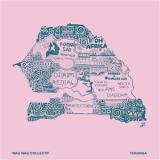
,Teranga", das letzte Album der Wau Wau Collectif-Trilogie - dieser verträumten, kulturübergreifenden Zusammenarbeit -, zeigt, wie die Band endlich zu einer Einheit zusammenwächst. Der Name leitet sich vom Wolof-Wort ,Teranga" ab, das für Herzlichkeit, Gastfreundschaft gegenüber anderen und - ganz allgemein - für ein gemeinsames Zusammentreffen steht - ein passender Titel für das Album, das selbst Ausdruck einer solchen Begegnung ist. Das Projekt begann 2018 im Dorf Toubab Dialaw, wo die beiden Musiker Arouna Kane und Karl-Jonas Winquist die Idee erstmals hatten. In den folgenden Jahren entwickelte sich das Projekt weiter: Die beiden Produzenten tauschten über WhatsApp Dateien aus und bezogen ihr Netzwerk aus Freunden und Kollegen in das ein, was später zum Wau Wau Collectif werden sollte - was schließlich in ihren ersten Alben ,Yaral Sa Doom" (2021) und ,Mariage" (2022) gipfelte. Ihr neuestes Album, ,Teranga", ist der dritte und letzte Teil dieser Trilogie, der während der ersten Live-Tour der Band fertiggestellt und abgemischt wurde - eine fünfwöchige, weitreichende Reise quer durch Europa mit ,drei Schweden, drei Senegalesinnen und einem französischen Fahrer, ein herrliches Sprachengewirr", wie Karl-Jonas erklärt. Das Herzstück von Wau Wau Collectif ist ein starkes musikalisches Fundament, das nicht nur auf dem breiten kulturellen Spektrum beruht, aus dem sich das Kollektiv inspirieren lässt, sondern auch auf den äußerst talentierten Musikern - komponiert und eingespielt von sage und schreibe 26 verschiedenen Songwritern und Musikern, die eine beeindruckende Bandbreite an Instrumenten spielen, darunter Balfon, Ngoni, Calabasse, Violine, Cello, Saxophon und Omnicord. Der daraus resultierende Sound lässt sich nur schwer einordnen, hat aber klanglich zweifellos seinen Platz in Teranga gefunden. Mal verträumt und meditativ, aber durchdrungen von einer organischen Seele - ein völlig einzigartiger Sound, der zugleich anachronistisch und zukunftsweisend ist. ,Oh, Africa" könnte auf einer klassischen Neuauflage zu Hause sein, mit einem fast türkisch anmutenden Gitarrenriff, während ,100 ans" (ihre erste Live-Studioaufnahme) an Amadou et Mariam aus den frühen 2000er Jahren erinnert. Mit Wurzeln in der Avantgarde (Karl-Jonas hat Barney Wilens ,Moshi" als Inspiration genannt), während Wau Wau sich von diesen Experimenten inspirieren lässt, auch wenn sie in ihrem Bekenntnis zum Gemeinschaftsgeist davon abweichen - ein Projekt, das durch Handys, WhatsApp und im Internet kursierende MP3s ermöglicht wird -, was leicht ironisch wirkt, wenn man bedenkt, wie akustisch, bodenständig und menschlich es sich anfühlt. Während wir das Kapitel der Trilogie abschließen, betont Karl-Jonas, dass dies vielleicht erst der Anfang ist: ,In gewisser Weise haben wir gerade erst angefangen", sagt er. Für das nächste Jahr zeichnen sich Pläne ab, die ganze Band zusammenzubringen, und es stehen weitere Tourneen bevor - mehr Hoffnung, mehr Menschlichkeit und mehr Zusammenhalt.
il devrait être publié sur 18.09.2026
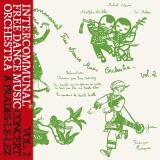
Concert at Prades-le-Lez marks the origins of the Intercommunal Free Dance Music Orchestra. In 1974, François Tusques and his companions (Michel Marre, Jo Maka, Adolf Winkler and Guem), in the spirit of Don Cherry or Chris McGregor, playfully dismantle all borders and all styles of creative music.
On this second volume, the Intercommunal builds unprecedented soundscapes around a song of revolt, a dance tune, or a burst of dissonance. The journey is unforgettable, no question about it. On repeat listening, it even becomes… lunar!
“The music that we make is primarily meant to be listened to live,” warned a leaflet from the Intercommunal Free Dance Music Orchestra. This is precisely why the (restored!) reissue of the two volumes of Concert at Prades-le-Lez, recorded on January 25 and 26, 1974 by François Tusques and his comrades, is such an important event.
In 1971, after recording a series of albums that would leave a lasting mark on French jazz (Free Jazz, of course, with Michel Portal, François Jeanneau, Bernard Vitet, Beb Guérin and Charles Saudrais, but also Le Nouveau Jazz with Barney Wilen, or the solo Piano Dazibao), François Tusques founded the Intercommunal—a grouping whose very name called for the fraternization of the various communities making up the country: Our music will help, we hope, to resolve the contradictions that exist between workers be longing to different communities, by breaking down various forms of national chauvinism, and more particularly the chauvinism of certain French people toward the cultures of Third World countries… Long live the friendship between the peoples of the whole world!
Among the great records made by the Intercommunal Free Dance Music Orchestra, the two volumes of Concert at Prades-le-Lez come first, before L’Inter Communal, Vol. 4, Le Musichien, and Après la marée noire (four titles already reissued by Souffle Continu). François Tusques and his companions (Michel Marre and Jo Maka on saxophones, Adolf Winkler on trombone, and Guem on percussion) performed on January 25 and 26, 1974 at the Moulin de Prades-le-Lez, a few kilometers from Montpellier. It was thus in the southern region of Occitanie that the first echoes of this musical vision of a borderless brotherhood were recorded.
“We’re not among the Colonels,” the Intercommunal reassures us right away, performing a stride piano tune carried by African winds that the audience cannot resist for long. The energy is already striking and it never lets up throughout these two recordings, from start to finish: jazz, blues, traditional music, minimalism, even funk… The musicians of the Intercommunal have heard a lot of great music and now delight in reinventing it by mixing it all together.
“We want the song form to take its place as a weapon in the struggle against capitalist exploitation and all those who oppress us morally and materially,” declared an Intercommunal leaflet, quoting Jean-Baptiste Clément, author of the lyrics to “Le Temps des cerises.” The struggle was therefore serious—but it did not prevent François Tusques and his group from waging it in a festive spirit: each piece on Concert at Prades-le- Lez sends out a call for love and fraternity. Fifty years later, the message remains as relevant as ever—and once again, it is François Tusques who makes it heard.
il devrait être publié sur 17.04.2026

Concert at Prades-le-Lez marks the origins of the Intercommunal Free Dance Music Orchestra. In 1974, François Tusques and his companions (Michel Marre, Jo Maka, Adolf Winkler and Guem), in the spirit of Don Cherry or Chris McGregor, playfully dismantle all borders and all styles of creative music.
On this first volume, the Intercommunal takes its audience from New Orleans to Brittany and on to North Africa. The journey was bold, without a doubt—and its memory remains unforgettable.
“The music that we make is primarily meant to be listened to live,” warned a leaflet from the Intercommunal Free Dance Music Orchestra. This is precisely why the (restored!) reissue of the two volumes of Concert at Prades-le-Lez, recorded on January 25 and 26, 1974 by François Tusques and his comrades, is such an important event.
In 1971, after recording a series of albums that would leave a lasting mark on French jazz (Free Jazz, of course, with Michel Portal, François Jeanneau, Bernard Vitet, Beb Guérin and Charles Saudrais, but also Le Nouveau Jazz with Barney Wilen, or the solo Piano Dazibao), François Tusques founded the Intercommunal—a grouping whose very name called for the fraternization of the various communities making up the country: Our music will help, we hope, to resolve the contradictions that exist between workers be longing to different communities, by breaking down various forms of national chauvinism, and more particularly the chauvinism of certain French people toward the cultures of Third World countries… Long live the friendship between the peoples of the whole world!
Among the great records made by the Intercommunal Free Dance Music Orchestra, the two volumes of Concert at Prades-le-Lez come first, before L’Inter Communal, Vol. 4, Le Musichien, and Après la marée noire (four titles already reissued by Souffle Continu). François Tusques and his companions (Michel Marre and Jo Maka on saxophones, Adolf Winkler on trombone, and Guem on percussion) performed on January 25 and 26, 1974 at the Moulin de Prades-le-Lez, a few kilometers from Montpellier. It was thus in the southern region of Occitanie that the first echoes of this musical vision of a borderless brotherhood were recorded.
“We’re not among the Colonels,” the Intercommunal reassures us right away, performing a stride piano tune carried by African winds that the audience cannot resist for long. The energy is already striking and it never lets up throughout these two recordings, from start to finish: jazz, blues, traditional music, minimalism, even funk… The musicians of the Intercommunal have heard a lot of great music and now delight in reinventing it by mixing it all together.
“We want the song form to take its place as a weapon in the struggle against capitalist exploitation and all those who oppress us morally and materially,” declared an Intercommunal leaflet, quoting Jean-Baptiste Clément, author of the lyrics to “Le Temps des cerises.” The struggle was therefore serious—but it did not prevent François Tusques and his group from waging it in a festive spirit: each piece on Concert at Prades-le- Lez sends out a call for love and fraternity. Fifty years later, the message remains as relevant as ever—and once again, it is François Tusques who makes it heard.
il devrait être publié sur 17.04.2026

If the jazz of François Tusques is “free”, his spirit is even more so: having recorded Free Jazz with other like-minded Frenchmen (Michel Portal, François Jeanneau, Bernard Vitet, Beb Guérin and Charles Saudrais), the pianist had covered a lot of ground, with Barney Wilen (Le Nouveau Jazz) or even solo (Piano Dazibao and Dazibao N°2), so as not to repeat himself…
In 1971 he founded the Inter Communal Free Dance Music Orchestra which, as the notes the this album stated, “is an interpretation of a music which synthesizes the different communities living and working in France.” In 1976, on the first album (L’Inter Communal) we can already hear Tusques playing without borders in the company of Carlos Andreu (vocals), Michel Marre (trumpet and saxophone), Jo Maka (saxophone) and Ramadolf (trombone). It is a meeting between jazz and music from Catalonia, Occitanie and Africa. So far so good, but what about Brittany, that, Tusques knows “by heart”? Having lived for a long time in Nantes, he would expand his ‘brittanitude’ on the canal linking the city to Brest by playing with, for example the Diaouled-Ar-Menez. With these “devils from the mountain” who, under the baton of Yann Goasdoué, worked throughout the 1970s on the renewal of music from Brittany, Tusques met, notably, Tanguy Ledoré and invited him one day, with trois bombards and some bagpipes (Jean-Louis Le Vallegant, Gaby Kerdoncuff and Philippe Lestrat), to join the ranks of the Intercommunal. And so they set of towards a new music from Brittany, as the title states; Vers une Musique bretonne nouvelle!
With percussion from Samuel Ateba and Kilikus, the association launches the ‘bombardier’: the repetitions and dissonance of the different members all serve a common cause however: the dance, which is always the reason for the party. This sets a whole universe spinning, which can bring to mind Chris McGregor’s Brotherhood of Breath (“La rencontre”) when not taking on board waltz, swing, blues and gavotta or even revealing mysteries like those of Gurdjieff (“Les racines de la montagne” or “Le cheval” sung by Andreu). Only one thing to say to this Brotherhood Of Breizh: Mersi!
il devrait être publié sur 04.04.2025

The Intercommunal Free Dance Music Orchestra was created in 1971 by French free jazz pianist legend, François Tusques. Free Jazz, was also the name of the 1965 recording Tusques made along with and other Michel Portal, François Jeanneau, Bernard Vitet, Beb Guérin and Charles Saudrais. Six years later, in 1971 Tusques would go ahead of free jazz.
Wondering if free jazz wasn’t a bit of a dead end together with Barney Wilen (Le Nouveau Jazz) or even solo (Piano Dazibao and Dazibao N°2), Tusques formed the Inter Communal Free Dance Music Orchestra, an association under the banner of which the different communities of the country would come together and compose, quite simply. If at first the structure was made up of professional musicians from the jazz scene it would rapidly seek out talent in the lively world of the MPF (Musique Populaire Française).French Popular Music, ndlt
As with L’Inter Communal a few years earlier, Le Musichien follows on from the group of varying musicians that Tusques had conceived as a “people’s jazz workshop”. In 1981, at the famous Paris address, 28 rue Dunois, the pianist sang with his partner Carlos Andreu “Le Musichien”, an Afro-Catalan tale over an exceptional bass line from Jean-Jacques Avenel backed by percussion from Kilikus, saxophones from Sylvain Kassap and Yebga Likoba and trombone from Ramadolf which presented a myriad of constellations. The sky has no limits, let’s make the most of it.
“Les Amis d’Afrique” is recorded the following year, at the ‘Tombées de la Nuit’ festival in Rennes, bassist Tanguy Le Doré would weave with Tusques the fabric on which would evolve an explosive “brotherhood of breath”: Bernard Vitet on trumpet, Danièle Dumas and Sylvain Kassap on saxophones, Jean-Louis Le Vallegant and Philippe Le Strat on... bombards. With hints of modal jazz inspired by Coltrane or Pharoah Sanders, the Intercommunal Free Dance Music Orchestra is an ecumenical project which speaks to the whole world.
Commandez maintenant et nous commanderons l'article pour vous chez notre fournisseur.

The Intercommunal Free Dance Music Orchestra was created in 1971 by French free jazz pianist legend, François Tusques. Free Jazz, was also the name of the 1965 recording Tusques made along with and other Michel Portal, François Jeanneau, Bernard Vitet, Beb Guérin and Charles Saudrais. Six years later, in 1971 Tusques would go ahead of free jazz.
Wondering if free jazz wasn’t a bit of a dead end together with Barney Wilen (Le Nouveau Jazz) or even solo (Piano Dazibao and Dazibao N°2), Tusques formed the Inter Communal Free Dance Music Orchestra, an association under the banner of which the different communities of the country would come together and compose, quite simply. If at first the structure was made up of professional musicians from the jazz scene it would rapidly seek out talent in the lively world of the MPF (Musique Populaire Française).French Popular Music, ndlt
Compiling extracts from concerts given between 1976 and 1978, L’Inter Communal demonstrate the “social function” which inhabited free jazz and popular music at the time calling upon Spanish singer Carlos Andreu along with Michel Marre, Jo Maka, Adolf Winkler and Jean Méreu. Andreu, claimed Tusques, was a griot “who created of new genre of popular song improvised with our music, based on events going on at the time”.
L’Inter Communal can start the festivities: on “Blues pour Miguel Enriquez”, it is first Thelonious Monk who is invoked in an homage to one of the leading figures of the Chilean revolution, and a victim of Pinochet. The circumstances may be serious, the music, though, is not. The musicians light a bonfire to bring together on the same frequency France and Spain, the Americas and Africa: “L’heure est à la lutte” (the time to fight is here ndlt), is the new song offered by the l’Intercommunal Free Dance Music Orchestra... As if proof were needed that their music is still more than timely!
il devrait être publié sur 14.06.2024

With Les Liaisons dangereuses 1960, Roger Vadim stirred up a scandal. Based on the famous epistolary novel by Laclos, the director presented audiences in the early 1960s with a film in which libertinism, scheming and the upper middle classes intertwine in 1960s Paris. Gérard Philipe and Jeanne Moreau excel, and the film is often considered one of Vadim's best. It also owes much to its music, which reflects Vadim's taste for jazz. For the soundtrack to Les Liaisons dangereuses, the director called on Art Blakey and his Jazz Messengerswhose exceptional musical qualities make for a record full of daring musical ideas and a marvellous choice of brilliant themes. The majority of the tracks feature Art Blakey's Jazz Messengers of mid-1959 with trumpeter Lee Morgan, tenorman Barney Wilen, pianist Boby Timmons and bassist Jymie Merritt joining the explosive drummer/leader. This beautiful re-issue of the original recording is pressed on 180g vinyl at GZ, and packaged in a deluxe gatefold tip-on jacket with the original liner notes and a photo of Gérard Philippe and Jeanne Moreau from the film, and additional notes by recording producer Marcel Romano from 1988.
il devrait être publié sur 03.05.2024

Personnel: "Ascenseur pour l'échafaud" - Miles Davis (tp); Barney Wilen (ts); René Urtreger (p); Pierre Michelot (b); Kenny Clarke (dr
In 1957, Miles Davis is in Paris for an engagement at the Club Saint-Germain and a wonderful concert at the Olympia Theatre. Once in Paris, Miles came into contact with many members of the modern existentialist cultural environment in the neighborhood of Saint-Germain-des-Près. These include the director Louis Malle who had just finished his first movie : "Ascenseur Pour L'échafaud".
Jean-Paul Rappeneau, a Jazz fan and Louis Malle's assistant at the time, suggested asking Miles Davis to create the film's soundtrack. A private sceening has been organized.
On December 4 1957, Miles Davis brought three French Jazzmen - Barney Wilen on tenor saxophone, René Urtreger on piano, Pierre Michelot on bass and his american compatriot Kenny Clarke on drums - to the recording studio Le Poste Parisien without having them prepare anything. Miles Davis only gave the musicians a few rudimentary harmonic sequences he had assembled in his hotel room.
This recording was made at night in a most informal atmosphere.
The soundtrack was not released on it's own in the USA but ten songs from this soundtrack were released as one side of the album "Jazz Track" which received a 1960 Grammy nomination for Best Jazz Performance, Solo or Small Group.
"Ascenseur Pour L'échafaud" has become a great achievement of artistic excellence.
il devrait être publié sur 30.12.2022

Repress !
It was in Paris that John Lewis co-led this 1956 date with Sacha Distel, a French guitarist who never became well known in the U.S. but commanded a lot of respect in French jazz circles. The same can be said about the other French players employed on "Afternoon In Paris" -- neither tenor saxophonist Barney Wilen nor bassist Pierre Michelot were huge names in the U.S., although both were well known in European jazz circles. With Lewis on piano, Distel on guitar, Wilen on tenor, Michelot or Percy Heath on bass, and Kenny Clarke or Connie Kay on drums, the part-American, part-French group of improvisers provides an above-average bop album that ranges from "Willow Weep For Me", "All The Things You Are", and "I Cover The Waterfront" to Milt Jackson's "Bags' Groove" and Lewis' title song. The big-toned Wilen was only 19 when "Afternoon In Paris" was recorded, but as his lyrical yet hard-swinging solos demonstrate, he matured quickly as a sax man. A mythic LP and one of the best recorded in France!!!
il devrait être publié sur 09.12.2022

To avoid the “Quésaco?” on the sleeve of Piano Dazibao, François Tusques explains everything: A wall mural on which the Red Guard expressed their opinions during the Chinese proletarian cultural revolution. So much for the “Dazibao”, very good; but the piano in all that?
The piano, François Tusques was self-taught and his work was influenced by Jelly Roll Morton and Earl Hines before discovering Thelonious Monk, Bud Powell and then... free jazz. In Paris in 1965, Tusques mixed with Michel Portal, François Jeanneau, Jean-François Jenny-Clark, Aldo Romano or Jacques Thollot. He also met Don Cherry and above all recorded, with other like-minded Frenchmen (Portal and Jeanneau alongside Bernard Vitet, Beb Guérin and Charles Saudrais), the first album of free jazz in France, named... Free Jazz.
In 1967, Tusques again served up Le Nouveau Jazz, this time in the company of Barney Wilen (and Guérin, Jenny-Clark, Romano). Three years later his thirst for freedom led him to isolation; between May and September 1970, the pianist recorded, at his home, the first of two albums that he would release on Futura Records: Piano Dazibao and Dazibao N°2.
Under the influence of Mao and Lewis Carroll, the free spirit roamed and composed seven tracks which are not so much free as libertarian. As an homage to some friends (Don Cherry, Sunny Murray, Archie Shepp, Clifford Thornton but also Colette Magny, Michel Le Bris or the Théâtre du Chêne Noir), the pianist played cascading bouquets of notes, free-form wanderings, blues-ambushed dances, growls, discords, a fatal requiem... A cherished freedom, songs of hope and demands, François Tusques offers the most unrelenting of independent records.
il devrait être publié sur 22.04.2022

Commandez maintenant et nous commanderons l'article pour vous chez notre fournisseur.

To write these few lines, we spoke to saxophonist François Jeanneau, an old friend of Jacques Thollot who also played on several of his albums, including the “Watch Devil Go” which interests us here. He told us a story which, according to him, sums up the personality of Thollot. A noted studio had reserved three days for a Thollot recording session. The first morning was devoted to sound checks and putting some order in the score sheets which Jacques would hand out in a somewhat anarchic manner. Then everyone went for lunch. When the musicians returned to the studio, Thollot had disappeared. He wasn’t seen again for the three days. When he reappeared, he had already forgotten why he had left, The music of Jacques Thollot is in the image of its’ author: it takes you somewhere, suddenly escapes and disappears, returning in an unexpected place as if nothing had happened.
Four years after a first album on the Futura label in 1971, Jacques Thollot returned, this time on the Palm label of Jef Gilson, still with just as much surrealist poetry in his jazz. In thirty-five minutes and a few seconds, the French composer and drummer, who had been on the scene since he was thirteen, established himself as a link between Arnold Schoenberg and Don Cherry. Resistant to any imposed framework and always excessive, Thollot allows himself to do anything and everything: suspended time of an extraordinary delicacy, a stealthy explosion of the brass section, hallucinatory improvisation of the synthesisers, tight writing, teetering on the classical, and in the middle of all that, a hit; the title-track - that Madlib would one day end up hearing and sampling.
“Watch Devil Go” was in the right place in the Palm catalogue, which welcomed the cream of the French avant-garde in the 70s. But it is also the story of a long friendship between two men. Jacques Thollot and Jef Gilson had known and respected one another for a long time. Though barely sixteen years old, Thollot was already on drums on the first albums by Gilson starting in 1963 and would play in his big band (alongside François Jeanneau once again), ‘Europamerica’, until the end of the 70s.
In a career lasting half a century and centred on freedom Jacques Thollot played with the most important experimental musicians (Don Cherry, Sonny Sharrock, Michel Roques, Barney Wilen, Steve Lacy, François Tusques, Michel Portal, Jac Berrocal, Noël Akchoté...) and they all heard in him a pulsation coming from another world. (Jérôme "Kalcha" Simonneau)
il devrait être publié sur 26.11.2021

Salvador Font studied violin, clarinet, composition and harmony at the Conservatori Municipal de Barcelona, but very soon started to gain notoriety as a saxophonist in the rich jazz scene of 1940s Barcelona. Font would soon be playing tenor sax and clarinet in the Orquesta Gran Casino. He was in his early twenties and his hot swing technique was already praised through the citiy's scene, he would grow to be considered the best saxophonist in Spain by playing in many orchestras and combos, among them: José Puertas', Antonio Vilá's Virgina, Bonet de San Pedro's band, Pierre Michel, El Lirio Campestre, Los Marios, Luis Rovira y su orquesta, Orquesta brasileña Fon-Fon, Jaime Camino, Los Embajadores, Italo Leone's... With these and others, Font toured constantly, visiting many countries and even staying on some for long seasons: Mexico, Morocco, Switzerland, Egypt... Hungarian violinst of Turkish ancestry Kurt Dogan gave him the "Mantequilla" surname - he felt "Mantequilla" (which means "butter") fit Font's mellow yet swinging improvisation style.
Mantequilla y su conjunto
In the early sixties, "Mantequilla" had the chance to lead his own combo, Mantequilla y su conjunto, with which he was to record the three splendid EPs that are compiled on the present album. All these 7" have become elusive collector pieces in the record market, with sellers demanding from 200 to as much as 950 euros per copy.
In 1961 "Mantequilla" was at his best moment, his gigs at the Jamboree Jazz Cava had brought him back to the first line of Barcelona's jazzmen after he had been working abroad for a long time, and was approached by the Belter label to record an EP. On the sessions he was accompanied by Manolo Mercedes on trumpet, Pedro Ferré on piano, Rafael Lizandra on double bass and Rafael Verdura on Drums. The material chosen for the disc were four original compositions by Salvador Font which had a high West Coast flavour all over: "La Tuna Club", "Whisky Jazz" and "Jamboree" named after famous jazz clubs and "Azul Trompeta", dedicated to Manolo Mercedes.
In late 1962, after spending some time in Madrid working as members of the Italo Leone combo, "Mantequilla" and pianist Manuel Gas came back to Barcelona for the recording of the second "Mantequilla" EP, also on Belter. We find again Manolo Mercedes on trumpet, Pedro Ferré on piano and Rafael Lizandra on double bass, the drummer this time was José Farreras. Another news is that Manuel Gas also sat on piano and vibraphone. The songs chosen for the occasion were two tunes from the Art Blakey Jazz Messengers repertoire: Bobby Timmons' classic "Moanin'" and the Jacques Marray track "No Problem" from the soundtrack of the Les liaisons dangereuses film (mispelled "Not Problem" on the sleeve and label), plus the Salvador Font penned "Blue Note" and "Full de ases" - on "Full de ases" "Mantequilla" trades his sax for the violin, which he also mastered under high influence from Stephane Grapelli. The record was released on Belter in early 1963 and showed "Mantequilla" adding a certain aggressivity to his sound, in a soloist style which has been compared to that of tenor saxophonists Barney Wilen or Benny Golson.
1965 was the year of release of Mantequilla y su conjunto's third EP, now on the Discophon label. Mercedes and Farreras are again present in the recording sessions, joined by Ricardo Miralles on piano and Enrique Ponsa on double bass. Four original Font compositions make up the fantastic EP: "Blues 3/4", "Atmósfera", "Vat 69" and "Balada".
There would be a further EP on Belter, released in 1971 as Mantequilla Group it was a cash-in operation to take some redits of the ye-yé discothèque phenomenon, it gets quite afar in style from the jazz works of Mantequilla y su conjunto, so we just left it aside for the present edition.
"Mantequilla"'s career would continue, in 1968 he would settle in Majorca and form a swing band with Bonet de San Pedro and Manuel Bolao. He played in local orquestras and also with first class world acts like Gerry Mulligan, Tete Montoliu, Errol Gardner, a.o. He was even approached by Henry Mancini to play sax on The Pink Panther Theme in a gig Mancini did with his orchestra in Palma de Mallorca in 1975, He also joined his son Salvador Font (a demanded drummer himself who has played with Máquina!, Orquestra Mirasol, Música Urbana, Gary Burton Quartet, Georgie Fame, and many others) and his peers Carles Benavent, Emili Baleriola, Josep Mas 'Kitflus' and Jordi Bonell with whom he recorded his acclaimed "Mantequilla" album in 1987.
Now, for the first time ever, the legendary three ultra rare and imposible to find EPs by Mantequilla y su conjunto are compiled in a lavish vinyl LP with remastered sound, featuring liner notes and photos and a fantastic period inspired, three backflaped, front laminated sleeve. It is a stricly limited edition of only 500 copies and they are expected to sell out very soon, do not miss your chance of getting yours - it may be the last chance of chasing the Mantequilla sound on vinyl at a reasonable price!
l
Commandez maintenant et nous commanderons l'article pour vous chez notre fournisseur.

Lift To The Scaffold Or, In The Original French Title, Ascenseur Pour L'échafaud, Is A Brilliant Film Noir From 1958 That Helped To Establish The Nouvelle Vague And The New Modern Cinema Scenes. No Less Brilliant Is The Score, Composed By Miles Davis And Featuring Mostly French Musicians, Including The Great Barney Wilen On Tenor Saxophone, As Well As Kenny Clarke On Drums, This Is Some Of The Most Lonesome And Morose Music Davis Recorded In His Career. Perfectly Matching The Stark, Dangerous, And Grim Moods Of The Film, This Is A Truly Amazing Score By One Of The Biggest Names In Jazz Music History.
Commandez maintenant et nous commanderons l'article pour vous chez notre fournisseur.

Only those who read all the credits on record liner notes will know the full details: Areski is of course Brigitte Fontaine's partner in life, but also her creative alter ego, and the composer of the music of most of her songs. Even though it was his wife Brigitte and not him who wrote the lyrics, Areski is a poet in his own right. Furthermore, he is polyvalent: composing, arranging, singing, improvising, playing every possible instrument and even acting! Areski, to sum up, is the perfect mix of the tradition of Munir Bashir with the European sophistication' of someone like Jean-Claude Vannier, one foot permanently in Versailles (where he was born) and the maghreb. Areski, is left bank French songs without the stylistic effects, revised and updated through contact with arab-andalusian music. He is a Living Theatre style happening with a dose of cosmic free jazz, surrealist poetry viewed through the prism of Kabyle culture... All that and a lot more!
Areski honed his talent observing the stars of traditional chaâbi, testing it out in bars and dives before meeting, during military service, the singer Jacques Higelin with whom he would record his first cult album, and who would present him to his wife-to-be, Brigitte Fontaine. Between 1969 and 1980, with her, Areski would contribute an essential chapter to French underground music including classics such as Comme à la radio (with the Art Ensemble of Chicago), Je ne connais pas cet homme, L'Incendie, Le Bonheur and Vous et nous. For all that, Areski has never really tried to have a career under his own name, in spite of the wonderful Un Beau matin first published in 1970, and which it is high time to de (re)discover (better late than never). Those already in the know will not be surprised to see, especially, Jean-Charles Capon, author of the inspired L'Univers-solitude, Brigitte Fontaine of course, or Daniel Vallancien, author of a no-less inspired duo with saxophonist Philippe Maté. All contributing to an acerbic poetic universe, concerned but never militant, and open to worldwide influences long before they became a fashion.
Inspired, poetic, in a word essential: Un Beau Matin is one of the best albums of the French underground produced by Pierre Barouh on his label Saravah, alongside those by Maurice Lemaître, Catharsis, Claude Yvans, Mahjun, Barney Wilen, Cohelmec Ensemble et Michel Roques.
Commandez maintenant et nous commanderons l'article pour vous chez notre fournisseur.
