Cerca:arnold dreyblatt

Generi
Tutto
  • 1
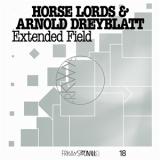
HORSE LORDS & ARNOLD DREYBLATT - FRKWYS VOL. 18: EXTENDED FIELD
  • Advance
  • Extended Field
  • Suspension
  • Impulse Array

Extended Field vereint Horse Lords und Arnold Dreyblatt für die achtzehnte Ausgabe von FRKWYS, einer generationsübergreifenden Zusammenarbeit abenteuerlustiger Musiker, die sich von der klanglich strahlenden Welt der reinen Stimmung angezogen fühlen - einem alten Stimmungssystem, bei dem die Tonintervalle aus ganzzahligen Verhältnissen abgeleitet werden. Dreyblatt tauchte erstmals in den 1970er Jahren in New York in diesen Ansatz ein, während Horse Lords fast vier Jahrzehnte später begannen, dessen Möglichkeiten zu erforschen und anzuwenden. Gemeinsam schaffen sie eine lebendige harmonische Umgebung, die von ihrer gemeinsamen Leidenschaft für Rhythmus angetrieben wird und eine Verbindung von diskreter, aber verwandter Ästhetik für die Ewigkeit herstellt. Dreyblatt ist ein Pionier des psychoakustischen Phänomens und war von 1975 bis 1977 Assistent von La Monte Young, bevor er bei dem legendären Alvin Lucier an der Wesleyan University studierte. Er entdeckte die klangliche Kraft angeregter Saiten, rüstete einen Kontrabass mit Klaviersaiten nach und schlug mit schnellen Schlägen darauf, um einhüllende Wolken metallischer Obertöne zu erzeugen. Dreyblatts Album Nodal Excitation aus dem Jahr 1982 legte einen klanglichen Entwurf fest, der bis heute das Herzstück seiner pulsierenden Musik bildet. Schließlich zog er nach Berlin und leitete im Laufe der Jahre verschiedene Ensembles, die das kompositorische Gerüst, das er um seine klingenden Töne herum aufgebaut hatte, verstärkten und interpretierten. Im Gegensatz zu Dreyblatts hyperfokussierter Praxis haben Horse Lords einen ganz eigenen ekstatischen, hybriden Sound entwickelt: Hard-Driving-Rhythmen unterstützen eine Kollision aus traditioneller Ritualmusik, Free Jazz und spektral brillanten elektronischen Schauern psychoakustischer Klänge. Nachdem sie sich mit ihrem 2020 erschienenen Album ,The Common Task" eine treue Fangemeinde aufgebaut hatten, zog der Großteil der Band 2021 nach Deutschland, wobei sich Gitarrist Owen Gardner und Bassist Max Eilbacher in Berlin niederließen und Saxophonist Andrew Bernstein nur wenige Stunden entfernt in Bayern. Schlagzeuger Sam Haberman blieb in Baltimore, trifft sich aber weiterhin mit der Band für Albumaufnahmen, darunter das 2023 erscheinende Album ,Comradely Objects", und ausgedehnte Tourneen. Ohne es zu wissen, teilten beide Seiten ein gegenseitiges Interesse an der Musik des anderen. Anfang 2017 schlug Dreyblatts langjähriger Kollege und Freund Werner Durand ihm vor, sich die Band anzuhören. Er erinnert sich: ,Nachdem ich sie gehört hatte, antwortete ich schnell: ,Klingt großartig! Ein bisschen wie meine Musik. Ich habe noch nie von ihnen gehört!` Ich schickte ihnen eine Nachricht über ihre Bandcamp-Seite, und sie antworteten: ,Hallo! Danke für die Nachricht, wir sind große Fans deiner Musik!` Aber erst als Dreyblatt die Band im Oktober 2021 in Berlin sah, kreuzten sich ihre Wege endlich. Einige Tage später schlug Bernstein eine Zusammenarbeit vor. Dieser Prozess verlief langsam, aber sicher; beide Seiten waren sehr beschäftigt, und als die Musiker schließlich zusammenkamen, mussten sie unterschiedliche harmonische Vorstellungen miteinander in Einklang bringen und brauchten jemanden, der Haberman am Schlagzeug ersetzte. Dreyblatt schlug Andrea Belfi vor, einen angesehenen italienischen Schlagzeuger und Komponisten, der in Berlin lebt. In den folgenden Kompositionssitzungen lernten Horse Lords und Dreyblatt die Feinheiten der harmonischen Vorlieben des jeweils anderen kennen und fanden Wege, diese zu einem einheitlichen Klang zu verschmelzen. ,Andrew und Owen schlugen Strukturen für die Navigation durch meine Tonsysteme vor", erklärt Dreyblatt, ,während Max in SuperCollider gewichtete algorithmische Frequenzmuster entwickelte." Viele Bewohner des Stimmungsuniversums haben hartnäckige Überzeugungen darüber, was richtig und was falsch ist, daher ist die Geduld und Offenheit beider Seiten ziemlich ungewöhnlich, wobei die Partnerschaft faszinierende Akzente und Veränderungen hervorbringt. ,Als Fans von eingeschränkter/algorithmischer Kunst (nicht der schlechten Art!) haben wir beschlossen, diese Matrix in den Mittelpunkt unserer Entscheidungsfindung zu stellen, um uns sowohl eine nicht willkürliche Möglichkeit zu geben, die ansonsten unendlichen Möglichkeiten zu begrenzen, mit denen man bei der Komposition mit Zahlen konfrontiert ist, als auch einen Ausweg aus festgefahrenen Gewohnheiten", schreibt Gardner über die Schaffung von Grenzen für ihre harmonischen Welten. Anstatt den Prozess einzuschränken, zwang diese Entscheidung die Musiker, ihre Komfortzone zu verlassen, und erforderte mehr Einfallsreichtum und Bedachtsamkeit bei ihren Entscheidungen. Das Endergebnis ist weit mehr als die Summe seiner Teile, da beide Parteien sich auf die Ideen des anderen einlassen, ohne die Vorrangstellung ihrer eigenen Ideen zu opfern. Der galoppierende polyrhythmische Antrieb, der ein charakteristisches Merkmal der Musik von Horse Lords ist, bleibt allgegenwärtig, und ein Stück wie ,Extended Field" nutzt die numerische Matrix von Dreyblatts System sowohl harmonisch als auch rhythmisch. In dem sich endlos wandelnden Drone-Stück ,Suspension" umschmeicheln Horse Lords Dreyblatts gestreifte Bogenstriche mit ihren eigenen pulsierenden Tönen. Obwohl ihre Rolle in den jeweiligen Werken unterschiedlich ist und sie im Verhältnis zu anderen Elementen in unterschiedlichen Anteilen vorkommen, ist die harmonische Erforschung das Herzstück dieser atemberaubenden Zusammenarbeit. Wie man im Schlussstück ,Impulse Array" erkennen kann, führt das Stöbern der Horse Lords in Dreyblatts Matrix zu den klanglichen Entdeckungen, für die sie leben. Wie Gardner bemerkt: ,Jede Wendung offenbart einen überraschenden, aber irgendwie unvermeidlichen neuen Akkord, dessen Verlauf seltsamerweise an einen Bach-Choral erinnert, der sowohl sehr zielgerichtet als auch ohne Ziel ist."

pre-ordina ora21.11.2025

dovrebbe essere pubblicato su 21.11.2025


Last In: 2026 years ago
ARNOLD DREYBLATT & ORCHESTRA OF EXCITED STRINGS - RESOLVE LP

Dreyblatt"s minimalist conception - a rhythmic drone played on a double-bass strung with piano wire, playing in concert with other stringed instruments performing in 20 unequal microtones per octave and changing key but keeping the same fundamental pitch - dates back to the 1970s, while he studied under La Monte Young and Pauline Oliveros. Resolve acts in intermittent dialogue with the first Orchestra of Excited Strings release, 1982"s Nodal Excitation.

Since then, Dreyblatt has formed new orchestras across various countries and decades, with each phase of his music requiring several overlapping periods of gestation and arrangement.

The current Orchestra is formed by Konrad Sprenger, Joachim Schütz and Oren Ambarchi. On Resolve, each of the members" playing brings new angles to the compositions. Konrad Sprenger"s involves solenoids, sine waves and a computer-controlled multi-channel electric guitar (as well as a relentless style behind the drum kit and oversight of the album production), while Joachim Schütz"s individual conception of electronics and electric guitar and Oren Ambarchi"s undeniable innovations with signal path work together with Dreyblatt"s bass (still strung with piano wire) as magnetic component parts of Resolve.

These contributions lead to Resolve"s dialogue with the early Orchestra of Excited Strings canon - for instance, the track previewed here, "Flight Path" takes off at a pace not often found in the minimalist genre - a rolling lope! Yet the sense of play is palpable: the ensemble scale their microtonal keys with punkish brio, a stance sharing much with the original Orchestra"s downtown pulse, even as as the new Orchestra burn their own path through Dreyblatt"s music.

Approaching his 70th birthday, with over 40 years of work as a solo artist, collaborator, composer, educator and bandleader, Arnold Dreyblatt views Resolve as an important expression within the long story of The Orchestra of Excited Strings. The album title"s tendency to mean different things is an indicator of the dynamic qualities of his music in all its different phases - an evolution that continues to produce new dimensions in acoustic sound with every new release.

non in magazzino

Ordina ora e ordineremo l'articolo per te presso il nostro fornitore.


Last In: 17 months ago
Tony Conrad / Arnold Dreyblatt / Jim O'Rourke - Tonic 19-01-2001
 
2

Celebrating its one hundredth release, Black Truffle is honoured to present a major archival discovery: a stunning document of the only performance by the trio of Tony Conrad, Arnold Dreyblatt and Jim O’Rourke. Across a two-night programme organised by David Weinstein at legendary New York experimental venue Tonic in January 2001, Conrad, Dreyblatt and O’Rourke presented individual projects before performing a collaborative set each night, the first with members of Dreyblatt’s ensemble and the second the trio heard here. As Dreyblatt points out in the wonderfully informative and reflective liner notes written for this release, this was a collaboration across generations, reflecting the profound impact of Conrad’s pioneering minimalism on Dreyblatt and O’Rourke. Both Dreyblatt and O’Rourke came to this collaboration armed with a deep appreciation of Conrad’s music and the just intonation principles at its core, Dreyblatt having first encountered the incredible power of Conrad’s precisely tuned violin chords during his tenure as an archivist for La Monte Young in 1975, while O’Rourke had performed with Conrad in various settings since the mid-1990s (as well as admiring, reissuing, and performing Dreyblatt's music). The flyer for the concert promised ‘massive, ecstatic, pulsating overtones’, and the trio certainly delivered. From the moment this keening stream of bowed strings begins, it is clear, as Dreyblatt writes, that we are in ‘Tony’s sonic universe’, as massively amplified, slowly shifting combinations of precisely chosen pitches fill the room with complex beating patterns and ghostly difference tones. For more than twenty-five minutes, the music operates at a level of intensity comparable to classic recordings such as Conrad’s Four Violins, until the texture thins out slightly in the performance’s final quarter, allowing for the listener’s first recognition of the individual voices that make up this enormous, overwhelming harmonic edifice. The constant stream of bowed tones is broken by a beautifully rich pizzicato from Conrad on monochord, the sliding low tones and metallic shimmer of the other strings taking the set's final moments on an unexpected detour into spacious pastoral psychedelia.

Though produced by three individuals known for their own distinctive bodies of the work, this is egoless music, the perfect expression of Conrad's desire 'to move away from composing to listening', to 'working "on" the sound from "inside" the sound'. Historically important and overwhelming in sonic impact, this release also serves as a moving tribute to Tony Conrad from two musicians profoundly marked by the example set by his art and life.

non in magazzino

Ordina ora e ordineremo l'articolo per te presso il nostro fornitore.


Last In: 3 years ago
Arnold Dreyblatt & Paul Panhuysen - Duo Geloso

Black Truffle is thrilled to continue its program of archival releases from Arnold Dreyblatt with a recently unearthed concert recording from Dreyblatt and Paul Panhuysen’s "Duo Geloso". While isolated examples of Dreyblatt’s collaboration with the legendary Dutch multi-media artist appeared on the CD reissue of Propellers in Love and Black Truffle’s wide-ranging archival Second Selection, this is the first release to document the variety and playfulness of the concerts that Duo Geloso performed throughout Europe in 1987-88. Both working across sonic and visual forms, fascinated by numerical relationship and the infinite complexity of string harmonics, Dreyblatt and Panhuysen had a natural affinity for each other’s work, strengthened through Dreyblatt’s many visits to Het Apollohuis, the important experimental art space Panhuysen helped to found in Eindhoven. However, as René van Peer suggests in the liner notes enclosed within this release, Dreyblatt and Panhuysen took very different approaches to these shared interests; the wonderful energy of these Duo Geloso performances results from the meeting of Dreyblatt’s more austere, compositional process with Panhuysen’s spontaneity.

Recorded at a concert at Het Apollohuis in December 1987 (a series of beautiful photographs of which adorn the LP’s packaging), each of the six pieces presented here is distinctive in terms of instrumentation and performance approach. Using electric guitar and bass tuned by Dreyblatt and played using E-Bow and Panhuysen’s motorised plectrums, the opening ‘Razorburg’ moves slowly through a long series of held notes with a madly insistent tremolo that crosses Dick Dale with a mechanised take on the layered guitars of Günter Schickert. The same pair of instruments returns on ‘Duo for Guitars’, where the mechanised attacks dissolve into a harmonic wash, reminiscent of the machine guitar work of fellow Het Apollohuis alumni Remko Scha. On ‘Love Call’, the guitars and bass are accompanied by Panhuysen’s distant warbled vocals, familiar to Maciunas Ensemble listeners. On the remarkable ‘Synsonic Batterie’, Panhuysen begins proceedings with a solo barrage of electronic percussion on the Synsonics Drum Machine (a simple drum synthesiser produced by the toy manufacturer Mattell), joined eventually by Dreyblatt performing his signature percussive natural harmonics on pedal steel guitar. When Panhuysen adds his bird whistle to the mix, the performance becomes the perfect exemplar of the Duo Geloso’s unique mix of studious close listening and subtle absurdity.

Presented in a gatefold sleeve with archival photos and illuminating liner notes from René van Peer.

non in magazzino

Ordina ora e ordineremo l'articolo per te presso il nostro fornitore.


Last In: 3 years ago
Oren Ambarchi - Hubris (10th Anniversary Remaster) (LP)

Newly remastered version of Oren Ambarchi’s long out-of-print classic Hubris originally released on Editions Mego in 2016. Expertly remastered by audio wizard Joe Talia who worked with the original mixes, highlighting the myriad details of the audio with forensic precision, previously unheard up until now.

From the 2016 press release:
Hubris continues the exploration of relentless, driving rhythms heard on Ambarchi’s Sagittarian Domain (2012) and Quixotism (2014). Where those records looked to Krautrock and techno for their starting points, the sidelong opening track here begins from the perhaps unlikely inspirations of disco and new wave, drawing particularly from Ambarchi’s love of Wang Chung’s soundtrack to William Friedkin’s To Live and Die in L.A. Leaving behind the song-forms of these reference points, Ambarchi weaves a sustained and pulsating web of layered palm-muted guitars from which individual voices rise up and recede, eventually setting the stage for some lush guitar synth from Jim O’Rourke. Arnold Dreyblatt collaborator Konrad Sprenger contributes overtone-rich motorized guitar, pushing the piece into a satisfying intersection of shimmering minimalism and rhythmic drive that smoothly builds up until the entrance of Mark Fell’s electronic percussion in its final section.
After a short second part, in which Ambarchi, O’Rourke and crys cole pay tribute to the skewed harmonic sense of Albert Marcoeur with a track built from layered guitar figures and abstracted speech, the long final piece pushes the concept of the first side into darker and denser areas. Joined by electronics from Ricardo Villalobos and the twin drums of Will Guthrie and Joe Talia, the layered guitars of the first piece are transformed into a raw and tumbling fusion-funk groove that calls to mind early Weather Report or even the first Golden Palominos LP. As this stellar rhythm section rides a single repeated chord change into oblivion, a series of spectacular events emerge in the foreground: first, aleatoric synthesizer burbles from Keith Fullerton Whitman, then slashing skronk guitar from Arto Lindsay, until finally Ambarchi’s own fuzzed-out harmonics take center stage as the piece builds to an ecstatic frenzy. Few artists could hope to include such an incredible variety of collaborators on one record and still hope for it to have a unique identity, but Ambarchi manages to do just that, crafting three pieces that emerge directly out of his previous work while also pushing ahead into new dimensions.
Players: Oren Ambarchi, crys cole, Mark Fell, Will Guthrie,
Arto Lindsay, Jim O’Rourke, Konrad Sprenger, Joe Talia, Ricardo Villalobos, Keith Fullerton Whitman.

pre-ordina ora24.04.2026

dovrebbe essere pubblicato su 24.04.2026


Last In: 2026 years ago
Konrad Sprenger - Set

Konrad Sprenger

Set

12inchBT127
Black Truffle
17.01.2025

Black Truffle is thrilled to begin 2025 with a rare solo release from Konrad Sprenger, alias of elusive Berlin composer-producer-instrument builder Jörg Hiller. A prolific collaborator, Sprenger has worked extensively with icons of American minimalism such as Ellen Fullman (with whom her recorded the gloriously eccentric song album Ort) and Arnold Dreyblatt (as a core member of the Orchestra of Excited Strings since 2009), as well as releasing their music on his impeccably curated label, Choose. As an instrument builder and installation artist, he has overseen the creation of a computer-controlled multi-channel electric guitar and, with Phillip Sollmann, a modular pipe organ system designed to be reconfigured from space to space.

In much of Hiller’s work, a scientific approach to acoustic phenomena co-exists with a pop sensibility and a sly sense of humour. Nowhere is this unique combination more in evidence than in his slim body of solo work, beginning with the startling diversity of instrumentation and compositional approaches heard on the short pieces of Miniaturen (2006) and Versprochen (2009), followed by the more single-minded exploration of the computer-controlled electric guitar on Stack Music (2017). Set brings together these various strands of Sprenger’s work into a wildly infectious, playful epic, performed by the composer and the mysterious Ensemble Risonanze Moderne. On the LP’s second side, we are also treated to a guest appearance from longtime collaborator Oren Ambarchi, on whose recent solo releases Simian Angel and Shebang Sprenger has made key production contributions. Ambarchi’s signature stuttering, swirling harmonics weave through a sparkling assemblage of electric guitars, acoustic instruments, percussion and electronics—though, given the deft use that much of Sprenger’s recent production work makes of midi-controlled sampled instrumentation, it’s anyone’s guess where the acoustic ends and the digital begins here.

As soon as the needle drops on the first side, we are inside a musical world that Set will inhabit for its 33 minutes: sparkling guitar harmonics and palm-muted notes, tuned percussion, crisp electronic drum hits, flashes of horns, and untraceable bursts of synthetic sound are arranged into a skittering polyrhythmic framework calling up the detail-rich percussive constructions of contemporary techno filtered through the pointillism of the post-serialist European avant-garde. Behind this shifting mist of particulate sound, winds and strings sound out held chords, reminiscent of Arthur Russell’s Tower of Meaning in their epic yet seemingly aimless drift. The relationship between elements is mysterious, appearing both carefully considered and almost random. Though never straying too far from where it begins, as the piece moves along, it spotlights increasingly bizarre instrument choices (shakuhachi and steel drums, anyone?) as well as momentary liftoffs into motorik propulsion. Set is a fascinating, mercurial thing: at once propulsive and fragmented, essentially static in form yet ever-changing in detail, unabashedly egghead in its construction yet sure to get the feet tapping.

non in magazzino

Ordina ora e ordineremo l'articolo per te presso il nostro fornitore.


Last In: 10 months ago
Chico Mello / Helinho Brandão - Chico Mello / Helinho Brandão LP

Black Truffle is thrilled to announce a reissue of Chico Mello and Helinho Brandão’s self-titled release from 1984, the first return to vinyl of this classic of Brazilian experimental music with its original cover art and complete track listing. An under-recognised figure whose work inhabits a singular terrain where radical new music techniques and music theatre meet musica popular brasileira, Mello has lived and worked in Berlin since the late 1980s. A student of Dieter Schnebel, Mello played in the 90s iteration of Arnold Dreyblatt’s Orchestra of Excited Strings alongside compatriot Silvia Ocougne, with whom he produced a radical and hilarious deconstruction of MPB classics on Musica Brasileira De(s)composta (an early and rather atypical release on Edition Wandelweiser).

On this release, his only recording predating his move to Europe, Mello works with the alto saxophonist Helinho Brandão, who appears to be otherwise unknown outside Brazil. The record’s six tracks range from solo saxophone improvisation to densely layered ensemble works bridging minimalism, acoustic sound art and a plaintive melodic sensibility that calls up Edu Lobo or Milton Nascimento. Beginning with a dramatic, dissonant wind and string surge from which emerge ominously pounding piano chords, opener ‘Água’ slowly builds in intensity, a halo of clustered vocal harmonies gradually closing in on Brandão’s squealing sax until the piece opens up to reveal a gorgeous passage of melodic singing. The piano accompaniment reduces to tolling bass notes as the voice begins a repeated incantation, suggesting a ritualistic atmosphere reminiscent of parts of Xenakis’ setting of Oresteia. Dissonant, sawing tremolos on the strings climb to a crescendo before disappearing into the sounds of water being poured and splashed into metal vessels, presented not as a field recording but as a percussive element performed by the ensemble. A child’s voice then appears, singing to piano accompaniment the same melody heard earlier in the piece. After a brief solo alto improvisation from Brandão, working with the guttural pops and fleeting melodic gestures of Braxton or Roscoe Mitchell, the remainder of the first side is dedicated to the leisurely unfolding of ‘Baiando’ over the course of twelve minutes. A trio for Brandão on soprano saxophone, Mello on a very period-appropriate phased nylon string guitar and Edu Dequech on bongos, the performance eases its way hypnotically through subtle variations on a set of rhythmic and melodic patterns, almost derailed at points by Brandão’s wild forays into extended technique but held together by Mello’s droning guitar notes.

The second side opens with another multi-part epic for a larger ensemble, ‘Matraca’, which makes use of strings, electric guitars and a wide range of South American percussion instruments. Rasping violin harmonics hover as drum hits, repeated guitar notes and triangle accompany a slowly descending bass glissando. A sudden change in direction introduces a thrumming, incessantly repeated bowed bass tone, beginning a series of episodes of minimalist phasing and pattern variation, the combinations of electric guitars and orchestral instruments giving the ensemble an ad hoc charm like the early Penguin Café Orchestra but with more percussive drive. Eventually the piece is overrun by a cacophony of the titular matracas (a kind of ratchet/cog rattle). Following a lyrical trio improvisation by Mello, Brandão and Gerson Kornin on bass, the final ‘Danca’ focuses entirely on Mello’s layered acoustic guitars and vocals, using this restricted palette to build up a haunting piece of almost orchestral density, reminiscent of the 70s work of Egberto Gismonti in how it thickens a folkish ambience with harmonic sophistication.

Arriving in a starkly beautiful gatefold sleeve and sounding better than ever in its new remaster, one might call the stunning music contained on Chico Mello/Helinho Brandão ahead of its time. But what (other than some of Mello’s own work) produced in the years since its initial release has really touched the organic fusion of minimalism, free improvisation, radical instrumental technique and popular song achieved here? Forty years after its first release, Chico Mello/Helinho Brandão remains music of the future.

non in magazzino

Ordina ora e ordineremo l'articolo per te presso il nostro fornitore.


Last In: 19 months ago
Ex-Easter Island Head - Norther LP

In meteorology, the word Norther refers to a cold wind that blows down from the north. For Liverpool’s Ex-Easter Island Head, it’s also an apt title for the strange and multi-faceted sound of their new album
that now descends upon the world at large: ever shifting, a multiplicity of sounds both acoustic and manipulated, and yet one that still moves as part of a single mighty breeze. At times it might recall the
experiments of Rhys Chatham and Glenn Branca, the widescreen beauty of The Necks, the relentless experimentation of Arnold Dreyblatt or the boundary-pushing roster of Kompakt Records, yet ultimately this is music that has no direct compare

pre-ordina ora17.05.2024

dovrebbe essere pubblicato su 17.05.2024


Last In: 2026 years ago
Olivia Block - The Mountains Pass

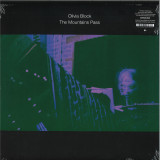
Black Truffle is pleased to announce The Mountains Pass, a major new work from Olivia Block. A key player in Chicago’s vibrant experimental music scene since the late 1990s, Block has developed an extensive body of work grounded in a personalised, at times emotive approach to the studio-based practices of the musique concrète tradition, while also encompassing improvisation, orchestral pieces, sound installations, and a sustained engagement with the piano. On The Mountains Pass, recorded by Greg Norman at Steve Albini’s Electrical Audio and meticulously edited and constructed over the course of three years, Block pushes into new terrain, introducing her singing voice and drums played by Jon Mueller into flowing assemblages that move seamlessly from ruminative organ tones and fragmented piano airs to explosions of sizzling synths and thundering percussion. Like many of Block’s past works, which include, for example, a sculptural installation using the sound of oyster beds, The Mountains Pass draws inspiration from nature and the animal world. Time spent in a particular mountain range in Northern New Mexico informs this suite of pieces, whose lyrics and titles refer particularly to animal life in the area. Beginning with bursts of white noise and delicate synthetic pops and squeaks, opener ‘Northward’ very soon reveals the special direction the album will take, as lyrical piano lines are joined by Block’s fragile voice, singing words written from the perspective of f2754, an endangered Mexican gray wolf who wandered more than five hundred miles from Arizona to New Mexico in 2022. The fragment of song quickly breaks off, leaving us with a ghostly electronic hum. ‘The Hermit’s Peak’ follows, one of two epic pieces at the album’s core. Beginning with chiming, almost harpsichord-like tones, it moves through episodes of spacious, ruminative piano, Jon Mueller’s sparkling cymbals, stuttering cut-up piano sounds, and a climax of keening organ and trumpet tones (performed by Thomas Madeja). Continuing the exploration of vintage keyboard and synth tones heard on Block’s Innocent Passage in the Territorial Sea (Room 40, 2021), the music sometimes suggests the great outer-limits works of 70s Italian prog figures like Franco Battiato or Arturo Stalteri in the languorous drift of synthesizer, organ, and piano tones and the meticulous yet organic flow of its construction. ‘Violet-Green’ opens the second side with another epic journey, its lyrical content concerning ‘a mysterious bird die-off and a forest fire’. Block’s crystalline voice and rich piano chords at times call up the restrained chamber songs of Janet Sherbourne, but fragmented and threaded through passages of woozy pitch-bent keyboards, hypnotic distant thuds, tinkling bells, and searing distorted synth tones. On ‘f2754’, the freedom of the roaming wolf surges through dense layers of rapid keyboard attacks and long organ tones over a propulsive drum performance straight out of Animal Magnetism-era Arnold Dreyblatt. This distinctive sound world is then reencountered in a darkened mirror image in the uneasy, metallic shimmer of the closing ‘Ungulates’, named in reference to a heard of elk roaming through the mountains. Like Battiato’s Clic or Gastr del Sol’s Upgrade & Afterlife, The Mountains Pass inhabits the underexplored terrain where the beauty of song coexists with a radical formal openness, illuminating the deep musicality and warmth that have been present in Block’s work all along.

non in magazzino

Ordina ora e ordineremo l'articolo per te presso il nostro fornitore.


Last In: 23 months ago
Mary Jane Leach - Woodwind Multiples

Mary Jane Leach is a composer focussed on the physicality of sound, its acoustic properties and how they interact with space. She has played an instrumental role in NYC’s pioneering Downtown scene alongside Arthur Russell, Ellen Fullman, Peter Zummo, Philip Corner and Arnold Dreyblatt, as well as devoting years to the preservation and reappraisal of Julius Eastman’s work since his death in 1990, compiling the »Unjust Malaise« 3CD set in 2005 and editing the 2015 book »Gay Guerrilla: Julius Eastman and His Music«. »Woodwind Multiples« is her second album for Modern Love, following »(f)lute songs« (2018).

»Woodwind Multiples« features four pieces for multiples of the same instrument: four bass flutes, nine oboes, nine clarinets, and seven bassoons. Each piece works closely with the unique sound of each instrument, combining pitches that create other, sometimes unexpected, tones, primarily combination and interference tones, as well as rhythmic patterns. What you hear is what happens naturally - there is no processing or manipulation.

»8B4 (1985/2022)«, played by Manuel Zurria, is for four bass flutes. It is a revision of 8x4, which was written in 1985 for the DownTown Ensemble and was only performed once, due to its unusual instrumentation: alto flute, English horn (originally bass oboe), clarinet, and voice.

»Xantippe’s Rebuke« (1993) was written for Libby Van Cleve, for eight taped oboes and one live, solo oboe. The eight taped parts are equal and dependent, while the solo part is meant to be a solo with the tape as accompaniment. The piece works with the unique sound of the oboe, starting with unison pitches that create the richest sound, building the piece from there. Pitches and rhythmic patterns that occur naturally are notated and then played later, which in turn create other pitches and rhythmic patterns. So, in effect, the nature of the oboe and its natural sound determine the direction of the piece.

»Charybdis« (2020), played by Sam Dunscombe, is for solo clarinet and eight taped clarinets. It combines a somewhat obscured reference to Weep You No More, a John Dowland piece, which combines with the sound phenomena created from the melody and supporting chords of the Dowland.

»Feu de Joie« (1992) was written for bassoonist Shannon Peet and is an homage to the bassoon and its wonderful sound. It is for seven parts—six taped and one »live.« The taped bassoons combine to create a bed of sound that exploits the unique qualities of the bassoon, creating combination and interference tones, starting off with unison pitches, creating a rich sound that builds from there. Most of the subsequent pitches and phrases occur naturally, and are then notated later on in the piece, which in turn creates other notes and phrases.

pre-ordina ora04.08.2023

dovrebbe essere pubblicato su 04.08.2023


Last In: 2026 years ago
Schluss - 28

Schluss

28

12inchSKYWALKING04
Sky Walking
02.02.2018

From the circles of Hamburg's Golden Pudel Club the duo Schluss presents their debut album '28' on Sky Walking. Éric Falconnier and Joachim Schütz join another adventure into Spontaneous Music- free and intense, demanding and magical.

A life dedicated to Noise, Experimental Music and Free Jazz, Éric Falconnier played in several formations such as Gebrochene Beine who appeared with the most notable piece on the previous Sky Walking compilation. Joachim Schütz is known for his collaborations with Ellen Fullman, Konrad Sprenger, Arnold Dreyblatt and Samara Lubelsky to only name a few. Schütz is also part of the Metabolismus collective.

With their dynamic, fragile and highly surprising Live sets and recordings, Schluss are on the path to decline expectations and burst conventions.
6, 7, 2, 1, 3, 5, 4!

non in magazzino

Ordina ora e ordineremo l'articolo per te presso il nostro fornitore.


Last In: 8 years ago
  • 1
Articoli per pagina:
N/ABPM
Vinyl