Cerca:adele sebastian

Generi
Tutto
  • 1
Adele Sebastian - Desert Fairy Princess

Adele Sebastian was an Afro American jazz flutist and singer, active from the early 70s (when she was still a teenager) until her untimely death at the age of 27 (!) in 1983 from a kidney failure. In fact she had been depending on monthly dialysis to stay alive for years. She lived through and for the music and you can hear it on her only solo album 'Desert Fairy Princess' which was first issued in 1981. The mostly acoustic instrumentation brings a very natural and therefore rather retrospective sound considering the year the album was recorded. Adele and her band pull it off right from the start as if it had been 1966 and it was time for a revolution to shake the dust from the old time jazz. In a perfect way she mixes classic American vocal jazz elements with playful and more free passages, Latin music and tribal African sounds in the lengthy and quite rhythm oriented 'Man From Tanganyika' and makes the title track start with a mystical 'Allahu akbar' chant while it turns more and more into a dark and gloomy song with something like a psychedelic edge reminiscent of Pharoah Sanders on his early works. Wild rhythms from drums, percussions with tons of bells and chimes weave a thick groove carpet and conjure a magical atmosphere. Those jazz aficionados who love the mid 60s John Coltrane, his sidekick Pharoah Sanders and Alice Coltrane will go crazy for this album.

non in magazzino

Ordina ora e ordineremo l'articolo per te presso il nostro fornitore.


Last In: 6 years ago
Rickey Kelly - My Kind Of Music LP + Mp3
  • 01: The Ark
  • 02: The Masai
  • 03: Dream Dance
  • 04: Belize
  • 05: As You Are
  • 06: Danakil Warrior

Our latest Holy Grail reissue is this private press spiritual jazz gem out of California from Rickey Kelly and his vibes & marimba. Features Diane Reeves (vocals) & Adele Sebastian (flute)!

Heavyweight 180g LP with tip-on sleeve, individually numbered 1-1000, card enclosed for liner notes & audio download

"Rickey, I know these are your friends, the guys you went to school with, but if you wanna record an album, you record with musicians who have been playing their whole life; whatever you write, they'll put their whole life into it. You play with your friends; they may not even play in tune."

These are the words of Slave guitarist Kevin Johnson, and they were to change the course of young Rickey Kelly's life.

It was 1978, and music student Kelly had approached Johnson with a tape of rough demos of some songs he'd written. A San Francisco native, Kelly had recently moved the short distance south to study music at LA City College in East Hollywood. He was a member of E.W. Wainwright Jr.'s African Roots of Jazz, and was spending up to 10 hours a day in practice on both vibes and marimba. He also played with Horace Tapscott, and had his own band made up of fellow students, but it was his ambition to make an album that led to the conversation with Johnson. It was a turning point in his education, and a decision was looming.

The next thing Johnson said was "You call the best jazz musicians. How'd you like to play with Billy Higgins?", a line that would seal it for anyone; for a youngster like Rickey just starting out in the business, you just don't turn down the opportunity to play with the likes of highly accomplished musicians, especially those of the calibre of legendary jazz drummer Billy Higgins.

Some calls were made and the date was set to record at Studio Masters on Beverly Blvd, a studio set up just a few years previous in 1973, owned and operated by Dot Records founder Randy Wood with his son John. Some of the other music professionals set to record with Kelley that day were flautist Adele Sebastian, bass player Tony Dumas, saxophonist Charles Owens and vocalist Diane Reeves, none of whom had previously played with Kelly before.

Kelly was impressed with the studio, with the gold records displayed on the walls and the famous musicians hanging out. 'It took a lot of humility for me to record with them, I mean I was nobody, nothing, and for not a lot of money either' remembers Rickey in a later interview with Calvin Lincoln, 'It taught me a lot, to practice hard, and study for the rest of your life, to give your all, and there's a lot of all to give'.

As the recording session took place, John Wood was listening in. He was impressed. Kelly didn't have the funds to manufacture and release the album himself, so Wood suggested it was pressed up on his in-house studio label, Los Angeles Phonograph Records, and thus the LP 'My Kind of Music' was released early in 1979. The album also saw a subsequent pressing soon afterwards on Dennis Sullivan's New Note label.

Kelly remains humble and proud of his debut album to this day. 'I was still a beginner' he says, 'These masters walked in, smiling, and gave me something worth gold'.

pre-ordina ora10.04.2026

dovrebbe essere pubblicato su 10.04.2026


Last In: 2026 years ago
Finding Ways - Finding Ways

Finding Ways

Finding Ways

12inchEDNLP1284
Edition Records
07.11.2025

Finding Ways is a new project from Sebastian Rochford (Polar Bear).

Sebastian Rochford is a singular force in British music, an extraordinary drummer, composer, and producer. His work with theiconic group Polar Bear helped redefine the boundaries of jazz and earned multiple Mercury Prize nominations. With a careerspanning collaborations with Patti Smith, Damon Albarn, Brian Eno, Adele and Grace Jones, and his 2023 ECM duo album A ShortDiary with Kit Downes, an album written for his father described as a “ quiet masterpiece” , Rochford has carved out a uniquespace in contemporary music.Finding Ways, his new major project, marks a bold new chapter for Seb Rochford. The first album focuses on the guitar, featuringamong others, the dynamic lineup of Tara Cunningham, David Preston, Adrian Utley (Portishead), and Simon Tong(The Verve,Gorillaz), exploring various combinations and layering up to three guitars at once. The result is a striking blend of jaggedexperimental grooves and raw emotional depth, with an unaffected, pedal-less sound that evokes a timeless, exploratory edge.Rochford’s music, as ever, defies categorisation—a sound that feels alive, fractured, and profoundly human, and all mixed by thesingular talent and master of sound, Tchad Blake.The title Finding Ways refers to a frame of mind he chose to adopt after multiple significant life events happening in a smallamount of time. "It’s about finding ways to keep ourselves moving forward and buoyant, transforming life’s challenges intosomething meaningful, also in a practical, everyday type of way.In Finding Ways, it’s direct, energetic music that refuses to be boxed in, a reflection of Seb Rochford's trailblazing spirit. For fansof his previous work and newcomers alike, this album is a testament to his ongoing quest to find emotional truth in sound.

pre-ordina ora07.11.2025

dovrebbe essere pubblicato su 07.11.2025


Last In: 2026 years ago
Lester Robertson - Akirfa/Untitled Ballad

On this 7”, we present two lost jazz tracks by the trombonist and Horace Tapscott-collaborator, Lester Robertson. Lester has worked with some of the greats of jazz including Gerald Wilson, Anita O'Day, Lionel Hampton and Roy Porter Sound Machine on the classic 'Jessica' album.

Lester was a member of Horace Tapscott's The Pan-Afrikan Peoples Arkestra and features on the iconic underground jazz albums 'The Call' and 'Live At I.U.C.C.'. The Arkestra was set up in 1961 in Los Angeles and over the years has included wonderful, inspirational musicians such as Adele Sebastian, Kamasi Washington, Dwight Trible, Phil Ranelin, Arthur Blythe, Jesse Sharps and Nate Morgan.

These two recordings have recently been discovered on an archived master tape that little information on it other than Lester's name and the track titles. Sadly, the other players on the tracks aren’t credited on the tape, so a line-up can’t be 100% confirmed. Still, the magic of what they laid down in the session pays testament to their artistry. First up is the lively popping track 'Akirfa' in which Lester gets space to let rip and exercise his talents. On the flip is the euphonious 'Untitled Ballad', a mellifluent lullaby for an end-of-the-day wind-down.

Lost for a while, but thankfully not forgotten, these beautiful recordings finally get their chance to shine.

pre-ordina ora14.10.2022

dovrebbe essere pubblicato su 14.10.2022


Last In: 2026 years ago
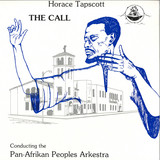
Horace Tapscott - The Call

Through his dedication to the Los Angeles grassroots projects that gave so much stability and focus to many younger musicians, artists and the community, Horace Tapscott became a neighbourhood hero at a time when the world wanted his presence. He stayed in Los Angeles and focused instead on building a community, rarely giving interviews and instead focusing on passing on the message from his mentors. He shaped a unique sound with his arkestra and community minded musicians. It was a close-knit family that emanated a sound that was deep and unique, flowing with a creative spirit that definitely comes through on this album.

In 1961 he founded the Pan-African Peoples Arkestra, which aimed to preserve, develop and publicise African-American music through the ever-growing family that emanated within many of the deprived areas of Los Angeles. Through his subsequent collaboration with Bruce Albach, a producer and founder of Nimbus West Records, they sought to document the importance of this music alongside many artists who were energetically linked to the ethos and understanding which came from the collective dialogue.

Here the composer leads four extensive arrangements through his 16 piece orchestra, featuring many of the Nimbus West artists including Adele Sebastian, Jesse Sharps and Linda Hill. The music weaves the sound of afro-futuristic music through changing tempos and a relentless dynamic expressive sound that is complex and beguiling with a deep spiritual sound throughout all four tracks.

The ceremonial ‘Peyete Song no. III’ is a great swirling evocative piece from the large collective, with amazing solos from especially Horace Tapscott who seems to find a sound from the piano that is from another dimension. The arrangement airs an important message of a people and their rituals.

Horace Tapscott gives Cal Massey’s composition ‘Nakatini Suite’ a splendid futuristic big band interpretation. The composition had been earlier illuminated by both Lee Morgan on his ‘Lee-Way’ album and John Coltrane on his ‘Believer’ album titled ‘Nakatini Serenade’. Through the more expansive soundscape, the interpretation allows for some great interplay between saxophonist Jesse Sharps and drummer Everett Brown Jr. with the whole orchestra led by Horace Tapscott capturing the essence of Cal Massey’s message.

Vocalist Adele Sebastian opens up the free probing arrangement ‘Quagmire Manor at 5am’ composition with a similar delivery as with her ‘Day Dream’ from the classic ‘Desert Fairy Princess’ album before the music takes off onto the mothership adding a sense of what time and space within the manner was about amongst many great musicians and artists. Their journey and moments encapsulated within the music.

There are certain albums you hear something new every time you revisit the music and this is one of those albums. An important part of Afro-American history; the politics and art which surrounded the album. If you get a chance check out the film ‘Horace Tapscott, Musical Griot’, by filmmaker Barbara McCullough, or buy the book ‘Songs Of The Unsung’: The Musical & Social Journey of Horace Tapscott’. Mark Jones/UK Vibe

pre-ordina ora08.10.2021

dovrebbe essere pubblicato su 08.10.2021


Last In: 2026 years ago
Horace Tapscott - The Call

Available on vinyl for the first time in 40 years, Outernational Sounds is proud to present a masterpiece from the Los Angeles jazz underground - Horace Tapscott's burning, spiritualised 1978 set, The Call.

One of the unsung giants of jazz music, the composer, bandleader, arranger, pianist and community activist Horace Tapscott was the undisputed keystone in the grassroots Los Angeles jazz scene. Throughout the 1960s and 1970s, his radical community arts and music formations the UGMA (Underground Musicians Association, later changed to UGMAA - Union of God's Musicians and Artists Ascension), and his protean big band, the Pan Afrikan Peoples Arkestra, were at the epicentre of music, culture and politics in the Los Angeles area.

From their 1960s base at the Watt's Happening Coffee House on 103rd St, to their decade-plus- long 1970s residency at the Immanuel United Church of Christ on 85thE St and Holmes Ave, Tapscott's groups were the beating heart of underground music in LA. Hundreds of musicians passed through and played their part. Major figures in LA jazz such as Arthur Blythe, Azar Lawrence, Jimmy Woods, John Carter, Bobby Bradford, Sonny Criss, Ndugu Chancler and dozens of others all paid dues or just got down with Tapscott, not to mention the core Arkestra regulars who have since become celebrated names - Nate Morgan, Jesse Sharps, Adele Sebastian, Dadisi Komolafe, Gary Bias, to mention only a few.

Tapscott and the Arkestra were down on the ground - playing fundraisers in park and street, organising teach-ins and workshops for young and old, mixing it with radical theatre groups, firebrand poets, political radicals, Black separatists, community groups and churches. They lived communally, and built an ark for the Black arts in the heart of the city. But as a result of this grassroots community focus and Tapscott's antipathy to the music industry, the Arkestra didn't record for nearly two decades. That only changed when long-time jazz fan Tom Albach started Nimbus Records. The label was initiated specifically in order to document Tapscott and his circle, and the first three records showcased Horace and the Arkestra.

The Call was put together from two studio sessions in April 1978, one at Hollywood Sage and Sound, one at United Western - the latter session had the addition of a string section, who can be heard on the moody Cal Massey composition 'Nakatini Suite' and Jesse Sharps' swinging modal trip, 'Peyote Song No. III', with its swirling soprano solo. In keeping with the communal nature of the Arkestra, the other two compositions, 'The Call' and 'Quagmire Manor at Five A.M.' are also by Arkestra members. But at the centre of the music is the builder of the Ark, the visionary whose original call to action started a movement whose legacy continues to this day - Horace Tapscott.
Heed The Call!

non in magazzino

Ordina ora e ordineremo l'articolo per te presso il nostro fornitore.


Last In: 6 years ago
  • 1
Articoli per pagina:
N/ABPM
Vinyl