Cerca:alain goraguer

Generi
Tutto
  • 1
Alain Goraguer - Rare Soundtracks & Lost Tapes LP

Transversales Disques proudly presents Alain Goraguer Rare Soundtracks & Lost Tapes.
French composer Alain Goraguer who first made a name for himself as a sideman and arranger for Serge Gainsbourg wrote very few soundtracks, but amongst them, the legendary La Planète Sauvage (1973) is an absolute staple of France’s essential music.

During that same period of time, Goraguer wrote two rare and beautiful scores using the same masterclass arrangements. On L’Affaire Dominici (1975), Alain Goraguer creates a theme of great melodic clarity from a palette of breathy flutes, clavinet D6 baroque textures, wah-wah guitars and slow-paced drums that clearly reminds La Planete Sauvage’s atmosphere. The same can be said about the score of Au delà de la peur (1975) with its descending clavinet melody, twanging bass riff, funky drums and flashes of bended electric guitars. This record also includes never before released tracks found in the vaults of French national radio: beautiful and timeless orchestral compositions recorded at Studio 105, Maison de la radio.

REMASTERED FROM THE ORIGINAL MASTER TAPES

In Stock

Disponibile in Stock e pronto per la spedizione

SERGE GAINSBOURG / ALAIN GORAGUER - STRIP TEASE - ORIGINAL SOUNDTRACK
  • A1: Strip-Tease
  • A2: Wake Me Up At Five
  • A3: Solitude
  • A4: At Maxim's
  • A5: Rafa Temporel
  • A6: Ariane Audition
  • A7: Some Small Chance
  • A8: Safari
  • A9: Bath Dance
  • A10: Serge At Sam's
  • B1: Strip-Tease Instrumental
  • B2: At Elephant Blanc
  • B3: Pourpée La Rose
  • B4: Effeuillage
  • B5: Serge And Sam
  • B6: Crazy-Horse Swing
  • B7: Hurry
  • B8: Strip-Tease Piano
  • B9: Rendez-Vous A La Calavados
pre-ordina ora05.09.2025

dovrebbe essere pubblicato su 05.09.2025


Last In: 2026 years ago
ALAIN GORAGUER - LA PLANÈTE SAUVAGE LP 2x12"

At the 1973 Cannes Film Festival, a feature-length animated film caused a sensation and won the Special Jury Prize: La Planète Sauvage by René Laloux, with phantasmagorical drawings by Roland Topor. For this philosophical tale of anticipation, where men are used as domestic toys by blue giants, the Draags, the celebrated composer Alain Goraguer unleashes his inspiration with a haunting main theme of great melodic clarity, soaring and hypnotic atmospheres, but also pursues funky rhythms with wah-wah on guitar, as if reaching out to Isaac Hayes from Shaft. Over the decades, the acclaim of La Planète Sauvage has been growing in crescendo, both the film and its score, revered by new generations as a psychedelic summit, an Everest of French pop. Artists from the new world, from rap and hip-hop cultures, such as A$ap Mob, Madlib, Mac Miller and many others, have dipped into it for samples or remixes. As La Planète Sauvage celebrates its half-century, Cam Sugar presents a new deluxe edition of the soundtrack, mixed from the recently discovered multi-track tapes, including 7 previously unreleased tracks and 3 alternate mixes. Produced under the expert supervision of Patrick Goraguer, Alain's son, this is released as Deluxe gatefold 2LP (including a special illustrated zine) and CD digipack. Listening to this complete album will confirm the spellbinding power of La Planète Sauvage is intact.

non in magazzino

Ordina ora e ordineremo l'articolo per te presso il nostro fornitore.


Last In: 2 years ago
Alain Goraguer - Musique Classée X

2022 Repress

A brand new selection of unreleased musics composed by the great Alain Goraguer (working with Serge Gainsbourg & Boris Vian, as well as having released on the great "Cosmic Machine" Compilation and known for his Cult Soundtrack "The Fantastic Planet. ".

Today we present his works

for movies from the golden age of french pornography, brought together on a collector vinyl, object of all desires.

To stress the Cult Status of this, MCX was previously released only through a crowfuding campaign in july 2018 - which reached 700% of ist initial goal

Eight never released before tracks composed by Alain Goraguer, orchestrator and composer of an impressive number of monumental french pop songs, from Boris Vian to Serge Gainsbourg, and well known by hip-hop fans and sampling lovers for his cult soundtrack for The Fantastic Planet.

Tracks saved from oblivion and fully restored, from the soundtracks of these evocative titles : Swinging Couple Cruise, Private Nurses, Right of the First Night and A Foreign Girl in Paris

Comes with a 12 pages color X-Rated Excercise book, with the classics : coloring, points to link and carvings, with a gallery of characters to carve and to layout of the included locations, to elaborate your own orgy, with any outside help ! Designed by famous french illustrateor Erwann Terrier.

non in magazzino

Ordina ora e ordineremo l'articolo per te presso il nostro fornitore.


Last In: 3 years ago
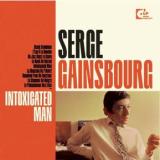
Serge Gainsbourg & Alain Goraguer - Strip-Tease

Another side of Serge Gainsbourg permeates this 1963 film soundtrack about ‘a stripper lost in the nocturnal world’ of Paris, according to director Jacques Poitrenaud, who cast Nico in the lead role (after her appearance in La Dolce Vita and just prior to the single she cut with Jimmy Page for Andrew Loog Oldham). Created by Gainsbourg with arranger and longstanding collaborator Alain Goraguer, the music is fittingly the cool jazz of dingy nightclubs and seedy bordellos, with Gainsbourg on piano, and there’s the sultry title track, delivered breathlessly by Juliette Greco. Another lost gem for all serious Gainsbourg and Goraguer fans.

non in magazzino

Ordina ora e ordineremo l'articolo per te presso il nostro fornitore.


Last In: 3 years ago
Various - Tchic Tchic: French Bossa Nova 1963-1974  Colored Edition LP 2x12"
  • A1: Les Masques - Il Faut Tenir (1969)
  • A2: Isabelle Aubret - Casa Forte (1971)
  • A3: Christianne Legrand - Hlm Et Ciné Roman (1972)
  • A4: Jean Constantin - Pas Tant D'chichi Ponpon (1972)
  • A5: Billy Nencioli & Baden Powell - Si Rien Ne Va (1969)
  • B1-: Marpessa Dawn - Le Petit Cuica (1963)
  • B2: Jean-Pierre Sabar - Vai Vai (1974)
  • B3: Sophia Loren - De Jour En Jour (1963)
  • B4: Isabelle - Jusqu’à La Tombée Du Jour (1969)
  • B5: Sylvia Fels - Corto Maltesse (1974)
  • C1: Frank Gérard - Comme Une Samba (1972)
  • C2: Ann Sorel - La Poupée Des Favellas (1971)
  • C3: Charles Level - Un Enfant Café Au Lait (1971)
  • C4: Andrea Parisy - Les Mains Qui Font Du Bien (1970)
  • C5: Audrey Arno - Quand Jean-Paul Rentrera (1969)
  • C6: Aldo Frank - T’as Vu Ce Printemps (1970)
  • D1: Christianne Legrand - Cent Mille Poissons Dans Ton Filet (1972)
  • D2: Clarinha - Lemenja (1970)
  • D3: Hit Parade Des Enfants - Aquarela (1976)
  • D4: Jean-Pierre Lang - Tendresse (1965)
  • D5: Magalie Noël - Une Énorme Samba (1970)
  • D6: Françoise Legrand - La Lune

Ever since the late 1950s bossa-nova revolution, Brazil’s influence on French music has been undeniable. Pierre Barouh, Georges Moustaki and a vast array of lesser known artists, all made the Musica Popular Brasileira (MPB) an axis of promotion at the service of a cool and metaphysical, modern and mixed Brazilian lifestyle. Some were seduced by the poetic languors of the bossa, some were looking for fun, and others just loved the American hybridization of jazz-bossa, jazz-samba.


What is bossa nova? One of its creators, Joao Gilberto said: "Its style, cadence, everything is samba. At the very start, we didn't call it bossa nova, we sang a little samba made up of a single note - Samba de uma nota so .... The discussion around the origins of bossa nova is therefore useless”. It is nevertheless useful to remember that these magnificent Brazilian songs, which the guitarist describes as samba, were shifted and balanced around improbable chords. "I like things that lean, the in-betweens that limp with grace," said Pierre Barrouh, quoting Jean Cocteau.


With emotion, arrangements for violin and supple guitar licks, bossa nova rapidly changed. A transformation that can be heard in the Tchic, tchic, French Bossa Nova 1963-1974 compilation, the result of a cultural reappropriation, which traveled through the United States and supplemented itself in France.

A musical revolution that has remained significant, bossa nova was born in Rio. From 1956 to 1961, Brazil lived through its golden years. In five years, the country had invented its modernist style. Elected president in 1956, Juscelino Kubitschek de Oliveira, an elegant man with a broad forehead, brandished a promising slogan: "Fifty years of progress in five years". He quickly got to work. Not worried about increasing debt, he launched the project for a new federal capital, Brasilia, designed by the communist architect Oscar Niemeyer. Volkswagen opened state-of-the-art factories and created the “fusquinha”, the Beetle. In Rio, the Vespa made its first appearance. The Arpoador Surf Club crew run into the “girl” from Ipanema, Helô Pinheiro - the tanned garota ("chick"), between a flower and mermaid, who at 17 walked by the Veloso bar, where the fiery author and composer, Tom Jobim and Vinicius de Moraes, were getting drunk on whiskey. From then on, bossa symbolized cool.

In 1958, Joao Gilberto recorded Chega de Saudade, which the directors of Philips denied, calling it "music for fagots". The marketing director, who believed in it, secretly pressed 3000 78-inch vinyls and distributed them at schools around Rio, creating a tidal wave.

American jazzmen then took over. In particular, trumpeter Dizzy Gillespie and guitarist Charlie Byrd. In November 1962, the Brazilian Ministry of Foreign Affairs funded a "Bossa-Nova" concert at Carnegie Hall in New York, inviting the genre’s pioneers. Unprepared, the show soon turned to disaster. But the troupe was invited to the White House by Jackie Kennedy. The first lady loved "the new beat" and in particular Maria Ninguem, a song by Carlos Lyra, later covered by Brigitte Bardot.

In Brazil, the 1964 military coup quickly ended this euphoria. The destructive atmosphere that ensued pushed many Brazilian musicians to leave, if not to exile. Thus, Tom Jobim, Sergio Mendes and Joao Gilberto arrived to the United States. In New York, Joao Gilberto met saxophonist Stan Getz. At the time, he was married to the Bahianese Astrud Weinert Gilberto, who had a German father. She had never sung before, but she knew how to speak English. Getz therefore asked her to replace her husband on The Girl From Ipanema. The Getz/Gilberto record with Tom Jobim on piano, was released in March 1964. Phil Ramone, the "pope of pop" was in charge of sound.

Bossa nova arrived in Paris through the classic “guitar-voice” channel (Pierre Barouh, Baden Powell, Moustaki…) But France loved jazz and Paris had already welcomed its American contributors. All these good people were to pass through Saint-Germain-des-Prés. The cabaret l'Escale became the Mecca of Latin American sound where one could find Pierre Barrouh and his friends, such as the Camara Trio, samba-jazz aces, whose only record was published by the Saravah label. With a band strangely called Les Masques (a band that included Nicole Croisille and Pierre Vassiliu, among others), the Camara Trio recorded an interesting Brazilian Sound, including the track Il faut tenir which is present on this tasty compilation of rarities.

Other enlightened musicians can also be found on the compilation, such as Jean-Pierre Sabar (songwriter for Hardy, Auffray, Leforestier ...) and the French pop rock organist Balthazar. In 1975, Sabar recorded Aurinkoinen Musiikkimatka on a Finnish label, which featured the crazy Vai, Vai, included on this record. We are now following the footsteps of Brazilian electronic musicians such as Sergio Mendes, Eumir Deodato or Marcos Valle who created funk and disco sounds on their keyboards and synthesizers. A style that influenced Véronique Sanson when she wrote Jusqu’à la Tombée de la nuit in 1969 for Isabelle de Funès, the niece of Louis and a great friend of Michel Berger - Sanson did end up singing this track on her 1992 Sans Regret record.


The pinnacle of exoticism and travel, Sylvia Fels’ Corto Maltese includes bongos, sea mist and ocean sounds. The title was taken from Jacky Chalard’s concept album written in 1974, Je suis vivant, mais j’ai peur (I am alive, but I am scared), based on Gilbert Deflez’s science fiction novel.


However, bossa nova extended the scope of popularity. "In the 1970s, I was a fan of Sergio Mendes, Getz / Gilberto. I fell in love with this music that I knew because I had been an orchestral singer, " explained Isabelle Aubret, who in 1971 delivered a composite record of covers by the very funky Jorge Ben, Orfeu Negro, Tom Jobim, Vinicius de Morais and Jean Ferrat. "I recorded this album for Meys Records in Paris, far from Brazil, with wonderful musicians, François Raubert, Roland Vincent, Alain Goraguer...". The latter wrote the arrangements for Casa Forte, a very percussive title borrowed from Edu Lobo, one of the initiators of the bossa who spent time in California. "Jazz and bossa came together and produced very rhythmic music. I love singing, it allows me to dream, to have fun, to feel a high on stage, and these songs brought me joy, made me swing, my singing felt like a dance.”


The world tours of French singers and their desire for the tropics, often brought them to Rio with its hills, forests, caipirinhas and tanned bodies. There are surprises though, like this Iemenja (Iemenja is the goddess of the sea in the Afro-Brazilian candomblé religion). Not unlike the composer and musician Jean-Pierre Lang, based in Sao Paulo, Claire Chevalier taught Brazil to Brazil. In 1970, the singer and painter published a 45-inch vinyl, Mon mari et mes amants (My husband and my lovers), under the improbable pseudonym of Clarinha (little Claire). She was then living in Rio, with her husband, Joël Leibovitz, who founded a band called Azimuth, and who owned a record label specialized in "sambas enredos" songs for samba school parades.


For its B side, she asked Pierre Perret to come up with lyrics for a song composed by Carlos Imperial: "Oh goddess of the sea, o goddess Iemenja, I bring a white rose to adorn your long hair ..." . "Perret came to see us, and we had fun, remembers Joël Leibovitz. We wrote Lemenja for fun, we recorded it at the Havaí studio, behind the Central do Brasil the central station. Erlon Chaves, the arranger who worked with Elis Regina, joined us" adding his share of Afro-Brazilian percussions and funky brass to the mix.

There is a common misunderstanding in Franco-Brazilian history: that bossa, admittedly hedonistic, is perceived as funny, even though the poets who wrote the texts are often philosophizing on the human condition. Its French interpreters pull it towards a carnival inspired universe, far removed from its fundamental essence. Thus, Jean Constantin covered the famous Samba da minha terra, an ode to the art of samba written by the classic Bahian composer Dorival Caymmi, renaming it with the enticing title of Pas tant de tchi tchi pompon: "On your pier there is no tchi tchi / when you arch your back, you know everything is alright ”(lyrics by Gérard Calvi). This expedited bossa aims for the absurd, but retains a certain elegance.

Indeed, Jean Constantin was not an idiot, the rather large man had a huge mustache and liked fantasy, (Les pantoufles à papa, Le pacha, inspired by cha-cha-cha-cha, salsa and jazz) but he was also the lyricist of Mon manège à moi interpreted by Edith Piaf, the composer of Mon Truc en plume by Zizi Jeanmaire and the soundtrack of François Truffaut’s 400 Blows. Le Poulpe, published in 1970, from which this bossa is extract, was arranged by Jean-Claude Vannier, an accomplice of Serge Gainsbourg’s Melody Nelson. In short: "There is enough of samba / By looking at the parasol / Because my poor cabeza / Is going to die in the sun".

Even the American actress Marpessa Down, who was at the heart of the bossa nova revolution with her role as Euridyce in Marcel Camus’ film Orfeu Negro, winner of the 1959 Cannes Palme d'or, fed the clichée with Je voudrais parler au petit cuica - "Tell me how you manage to always make people want to dance / It's true, I must admit that I cannot resist your magic" - in consequence, once can hear the cuica, a little drum inherited from the Bantu.


But bossa nova had many angles. Societal, of course, pushing actresses who were symbols of women's liberation like Brigitte Bardot, Jeanne Moreau, or Sophia Loren to engage in the exercise of accelerated bossa. In February of 1963, Sophia Loren made a record in French in Rome, Je ne t'aime plus, featuring the song De jour en jour, a bossa written by two Italians, Armando Trovajoli and Tino Fornai, which was released a little later by Barclay. Bossa accompanied the 1960s, a decade of moral liberation. Ann Sorel, who interpreted La Poupée des favellas, caused a sensation with L’amour à plusieurs, a provocative song written by Frédéric Bottom and Jean-Claude Vannier. As for the actress Andrea Parisy, she displayed her bourgeois cheekiness in Marcel Carné's Les Tricheurs before interpreting Les mains qui font du bien. And Magalie Noël, the friend of Boris Vian, who sung Johnny fais-moi mal, was hired to sing Une énorme Samba, composed by Alain Goraguer (arranger to Gainsbourg, Bobby Lapointe and Jean Ferrat) with lyrics by Frédéric Botton.

But in the end, of what wood is bossa nova made of? The answer is given by Christianne Legrand, daughter of Raymond the conductor, and sister to Michel the composer: "With me, with jà" - jà means "immediately" in Portuguese. In 1972, the singer, an expert in vocal jazz and a member of the Double Six, published Le Brésil de Christianne Legrand. Two songs included on the Tchic Tchic compilation that demonstrate how bossa, jazz, funk, rock, etc. work like a swiss army knife: the music is used to denounce broken systems, or miracles, HLM et ciné roman, Cent mille poissons dans ton filet, two songs from the O Cafona soundtrack, a successful telenovela broadcast, at the time in black and white, on TV Globo. The first was adapted in French by the fighter and friend of the Legrand tribe, Agnès Varda. The second is content with a play on words, jostling them into a summer fun.


Véronique Mortaigne

pre-ordina ora17.04.2026

dovrebbe essere pubblicato su 17.04.2026


Last In: 2026 years ago
JEREMY DOWER & TETRPHNM - PERSONAL COMPUTER MUSIC, 1997-2022
  • See You Soon
  • Double Transgression
  • Faux Jazz
  • Aesthetic Memory
  • A Limited Release Of Exclusive Graves
  • Flemington Dream House
  • Transmodal Projection
  • Sentimental Techno Music
  • Personal Computer Ensemble
  • Shareware
  • Peak Leisure

Der zurückgezogen lebende Elektronikmusiker Jeremy Dower aus Melbourne kündigt eine Compilation mit bisher unveröffentlichten Stücken aus einem Vierteljahrhundert an, die in zwei Hälften unterteilt ist, um sein unaussprechliches Ambient-Techno-Projekt Tetrphnm aus den 90er Jahren sowie die melancholischen Faux-Jazz-Aufnahmen, die er später unter seinem eigenen Namen veröffentlichte, zu präsentieren. Personal Computer Music, 1997-2022 ist der Höhepunkt der laufenden Reissue-Reihe von Chapter Music für Jeremy. Im August veröffentlichte Chapter seine früheren Alben erstmals digital - Sentimental Dance Music For Couples (ursprünglich 2000 über das US-Label Plug Research, Heimat von Veröffentlichungen von Flying Lotus und Jon Tejada) und Music For the Young and the Restless (ursprünglich 2004 auf dem japanischen Label Bit Of Heaven). Zunächst inspiriert von strengem deutschen Techno wie Monolake und Mouse on Mars, wuchs Jeremys Klangwelt und nahm so unterschiedliche Einflüsse wie The Sea and Cake, Joao Gilberto, Jaki Liebezeit und Alain Goraguer auf. Jeremy arbeitete jedoch ganz allein auf der anderen Seite der Welt an diesen Meilensteinen und improvisierte Systeme der ,subtraktiven Komposition" mit billigen Soundkarten aus den 90er Jahren, 12-Bit-Samplern und gebufferten Noise Gates. Seine Musik entwickelte sich in einer parallelen, aber separaten Welt zu Genres, die später als IDM oder Microhouse bezeichnet wurden, aber eigentlich klingt sie wie nichts anderes als Jeremy Dower - magisch einfallsreich, berührend und persönlich. Efficient Space hat einen Tetrphnm-Track auf ihrer beliebten 2018er-Compilation mit australischer Elektronikmusik der 90er Jahre, 3AM Spares, veröffentlicht. Aber Personal Computer Music, 1997-2022 ist Ihre erste Gelegenheit, Jeremy Dowers faszinierende Musikgeschichte mit der Tiefe zu erkunden, die sie verdient.

pre-ordina ora14.11.2025

dovrebbe essere pubblicato su 14.11.2025


Last In: 2026 years ago
VINCENT TAEGER - ET LE JAZZ KAMASUTRA	OK CROONER

Back in the day, when he was the drummer for Poni Hoax, Vincent Taeger would sing in French whatever came to his mind backstage after concerts, just for fun, to amuse his friend the late Nicolas Ker. Since then, time has flown by, undoubtedly bringing its share of ups and downs. Nonetheless, today, this artist with a long career is finally releasing his debut album as a singer, OK Crooner. It's indeed an album for a singer, but also one for a musician. For this part, Taeger doesn't come alone; he brings along the Jazz Kamasutra, a sexy sextet that knows how to play everything and will later accompany him on stage. To get to this point, Vincent Taeger had to stop playing around with big names like Air, Damon Albarn, Justice, Lenny Kravitz, Skepta, Tony Allen, Oumou Sangaré, Jeff Mills, Archie Shepp, Sampa the Great, Andrea Laszlo de Simone... More than half of the major artists with whom he once collaborated, contributing to their albums or simply laying down a drum, bass, or any other heavy instrument line. Before OK Crooner, he also transformed into Tiger Tigre. This roaring alias was used for a first solo album, instrumental and so deep that one might have thought the ghost of François de Roubaix had taken shape. But that was before, before this exceptional musician decided to dive into the vast ocean of French variety to give a sequel, a culmination to this project. During COVID, Vincent Taeger started frantically listening to Souchon, Chamfort, Gotainer, and Christophe. Inspired by his elders, while not renouncing his attachment to the meticulous arrangements reminiscent of Alain Goraguer's soundtracks, he picked up a pen to jot down snippets of songs to accompany his increasingly sophisticated compositions. And the worst part is that he enjoyed it! Coming from rap, he has a knack for punchlines. Throughout the album, he delivers just as many harsh or soft words as good ones, alternating between risqué humor, Gaulish wit, and poetry. Partially recorded at Studio Ferber, but mainly at home with his partner, known by the alias La Plongée, who co-produced the album for the occasion, OK Crooner is a key album in Vincent Taeger's discography. Besides being the one where he finally unveils his voice to the public, without pretense as it is prominently featured and minimally, if at all, retouched, Taeger also offers music that suits him perfectly. Sharp yet accessible, jazz, pop, baroque, classical, modern, and resolutely marked by Tony Allen's legacy, which he daringly mixes with Beethoven in the Fifth Symphony. His alter ego, Vincent Taurelle, with whom he has produced many albums, took care of mixing this one.

pre-ordina ora14.02.2025

dovrebbe essere pubblicato su 14.02.2025


Last In: 2026 years ago
Vincent Taeger & Le Jazz Kamasutra - OK Crooner LP
  • Prologue Amateur
  • Sax Addict
  • Notre Soleil Est Mort
  • Tinder Surprise
  • Igor Stravestit
  • Amoureuse
  • 5: Th
  • Ok Boomer
  • Ouais
  • Je Cours
  • En Conversation
  • Laura Palmer
  • Yahourt A L'italienne
  • Ou T'es?

'OK Crooner' the debut LP from French drummer and percussionist Vincent Taeger under his own name (after previous album under his alter ego Tiger Tigre) and his debut on vocals - mixes avant pop with jazz-fink and AOR.

Taeger, who has worked with Air, Damon Albarn, Justice, Lenny Kravitz, Skepta, Tony Allen, Oumou Sangare, Jeff Mills, Archie Shepp and Sampa the Great, during COVID started frantically listening to French vocalists such as Alain Souchon, Alain Chamfort, Richard Gotainer, and Christophe. Inspired by his elders, while not renouncing his attachment to the meticulous arrangements reminiscent of Alain Goraguer's soundtracks, he picked up a pen to jot down snippets of songs to accompany his increasingly sophisticated compositions. Coming from rap, he has a knack for punchlines. Throughout the album, he alternates between risque humour, Gaulish wit, and poetry.

While Vincent Taeger is the chief fireworks maker, playing most of the instruments, some of his longtime collaborators come to support him on a few tracks, forming the Jazz Kamasutra: Ludovic Bruni (bass), Sylvain Daniel (bass), Arnaud Roulin (piano, synth), Fred Soulard (synth), Maud Chabanis (vocals), Bettina Kee (vocals), Mathias Allamane (double bass), Emile Sornin (ondioline), and Remi Sciuto (saxophones). Vincent Taurelle, mixed the abum. Recently, he has worked on albums by Justice, Seun Kuti, Raphael, and Clara Luciani.

pre-ordina ora10.01.2025

dovrebbe essere pubblicato su 10.01.2025


Last In: 2026 years ago
Various - Panorama LP

Transversales Disques proudly presents PANORAMA, an excursion through rare French soundtracks & other rarities mostly never reissued or compiled.
11 forgotten nuggets recorded between 1969 and 1980 by famous masters like Francis Lai, Alain Goraguer and Michel Magne alongside underrated composers like Jean Schwarz, Christian Gaubert or Maurice Lecoeur. A cinematic journey overflowing with moody strings arrangements, funky drum breaks, typical French basslines and psyched atmospheres.

Deluxe Tip-On jacket LP including exclusive and extensive liner notes.
Vinyl Only / No Digital
Remastered from the original master tapes

non in magazzino

Ordina ora e ordineremo l'articolo per te presso il nostro fornitore.


Last In: 16 months ago
Various - Lounge Psychedelique (Best Of Exotica 1954-2022) 2x12"
pre-ordina ora15.07.2024

dovrebbe essere pubblicato su 15.07.2024


Last In: 2026 years ago
Various - Lounge Psychedelique (Best Of Exotica 1954-2022) 2x12"
pre-ordina ora21.07.2023

dovrebbe essere pubblicato su 21.07.2023


Last In: 2026 years ago
VARIOUS - Hong Kong Score

Wan Chai Records is a Hong Kong based label, specialized in rare Asian records and quality reissues.
For their third release, after a few years of hard diggin and historical researches, they went deeper with HONG KONG SCORE, introspection into the music of the Chinese's Cinema industry. A selection of tracks from Hong-Kong, Singapore, and Taiwan, specially produced for movies and illustrations.
The result is a compilation of 12 totally unknown gems sung mostly in Mandarin and Cantonese, from real deep instrumentals, Hip-Hop breaks, Ethio style crazy drums, to heavy Bass in the Alain Goraguer' style. This is an amazing introduction to 60's and 70's Chinese music, an inspiration for beatmakers, a must have for novices or Asian vintage music lovers.

non in magazzino

Ordina ora e ordineremo l'articolo per te presso il nostro fornitore.


Last In: 6 years ago
  • 1
Articoli per pagina:
N/ABPM
Vinyl